Sailing beyond the boundaries of electronic music, Purelink embrace liquidity on their second album, washing live instrumentation and exposed vocals over their patented cascade of dubbed ambience and ebbing rhythmic experimentation. Since 2020, Tommy Paslaski (aka Concave Reflection), Ben Paulson (aka kindtree) and Akeem Asani (aka Millia) have channeled their most euphoric musical whims into the Purelink project. Drifting between brittle '90s drum 'n bass and dub techno on their cult debut 12" 'Bliss / Swivel' and vaporizing Windy City jazz and post-rock motifs with muggy soundscapes on 2023's critically revered first full-length 'Signs', the trio have managed to define a painterly signature sound that's reflective but not reverent. Sure, Purelink's music can be graceful and bucolic, but it's powered by their innate devotion to the dancefloor's soundsystem.
'Faith' illustrates a period of upheaval for the three friends; relocating from Chicago to New York City, they found themselves surrounded by new scenery and fresh inspirations that permeated their compositions as they adapted to the change. On their previous records, the production process was relatively simple, just three laptops jacked into an interface in Paslaski's living room. Here, they augment the intermixed electronics with acoustic and electric timbres, opening up space for vocal contributions from Hyperdub luminary Loraine James and poet Angelina Nonaj. "Always time for rest," James ponders candidly on 'Rookie', "we settle." Her voice floats like smoke over the trio's familiar pattering rhythms and light-headed synths, now enhanced by capsized guitar motifs and subtle bass plucks.
On 'First Iota' meanwhile, Nonaj's deadpan narration grounds Purelink's dissociated echoes, sub swells and delicate improvisations. "Not everything beautiful has to be real," Nonaj repeats as organic and digital sounds sublime into a lysergic haze. And the softly propulsive 4/4 thuds that steered 'Signs' haven't disappeared entirely, either. On 'Kite Scene' a heartbeat-like pulse underpins Purelink's balmy pads and acidic synths, tactfully disrupted by hollow live percussion, and 'Yoke' muffles its chugging, broken beat sequences with swaddled trance hallucinations, gesturing cautiously towards euphoria. Each element falls into place on the album's final track, 'Circle of Dust', when Paslaski, Paulson and Asani find a fertile middle ground, ornamenting the kinetic, reverberating beats with evaporating whispers, evocative instrumental scrapes and hopeful, ecstatic harmonies.
Search:new rhythmic
Vinyl A Black Vinyl[12,56 €]
Vinyl A Coloured Vinyl[20,59 €]
Vinyl B Coloured Vinyl[20,59 €]
Known for his ability to create captivating, emotionally charged techno, Jonathan Kaspar eventually returns to Cocoon Recordings with his third contribution Twofold Split. One, yet simultaneously two releases that once again showcase his extraordinary talent through condensed techno with a pinch of trance, weaving together driving rhythms and atmospheric textures in a way that feels innovatively progressive.
Rooted in a minimalist rhythmic structure, ‘Power’ takes us in a new direction, steadily building momentum as its energy billows upwards, with the intensity never wavering throughout. A large, dented, tinny tuba sounds imposingly as Jonathan blows louder and louder into the old thing, its raw, metallic tone instantly commanding attention. What an explosion in the break, leading us into a wild, almost chaotic energy, before Kaspar’s meticulous attention to detail ensures that the shimmering synths feel perfectly placed, guiding us to the absolute freak-out moment. After all the insanity, Jonathan Kaspar takes us by the hand and leads us into a melodic, trancy after-hours mood with “1993,” bringing a sense of release after the wild ride of the previous tracks. What a successful closing track to this outstanding release. With its melodic trance influences, it offers a soothing, almost nostalgic atmosphere, bringing a sense of calm and closure, a perfect moment of introspection and euphoria as
the EP winds down
SIDE B returns with the second installment of its newly established label, this time with Rill at the helm. Staying true to effect, the young German producer has honed his percussively forward style with a string of steady releases and performances over the past three years. In his EP 'Friss', Rill delivers three highly concentrated club tracks with a Beste Hira remix closing out the project, assembling a record destined for unforgiving sound systems and frenzied dance floors.
Driving and mental, Rill brews up a viscous first track 'Silky Stones' to make his intentions clear. Shooting through a bubbling lead with percussive stabs wide in the stereo field, the producer uses the element of surprise by sharpening the edge with a sharp key sequence, doubling down on tension to an already hypnotic cut. With no time to waste, the needle slides to 'Rakija', with an imposing groove and quick, dry hats. Characteristically, a dystopian melody warbles over a robust rhythm to ensure maximum movement. Two tracks in and Rill already proves to balance his tools with attitude. Taking a turn on the record flip, the B1 ups the audacity with the title track 'Friss'. Techno usually prioritising kicks is a rule that Rill sweeps aside in exchange for an intimidating bassline with an ecosystem of high frequency ambiance. A testament to balance and spatial definition, the German adopts in fitting chord stabs in the second half to up the ante in a contained manner. To conclude, celebrated Beste Hira puts her spin on the latter for a drum forward eye roller, versatile for almost any dancefloor. Reconceptualizing the rhythmic identity of 'Friss', Beste Hira is able to weather the far off atmospheres while maintaining an emphasized festivity. Combining the best of groove-focused club music with a touch of niche psychedelia, Rill and SIDE B prove that techno is very much alive no matter what side of Europe you search for it.
Words by Noah Hocker
The discovery of Doris Dennison's score represents a genuine musicological breakthrough—what once would have been "a tree falling in the woods" thirty years ago now holds the potential to render "a thunderous clap in our minds." While researching Anna Halprin's lesser-known collaborators, scholar Tom Welsh uncovered the archives of AA Leath, one of Halprin's principal dancers. Buried within these materials was Dennison's handwritten score for Earth Interval, dated May 1956. Born in Saskatchewan, Canada, in 1908, and raised near Seattle, Dennison (1908-2009) encountered John Cage while teaching Dalcroze eurythmics at the Cornish College of the Arts. She joined Cage's earliest percussion quartet—alongside Margaret Jansen, the composer and his wife Xenia—in the group widely regarded as having performed the first complete concert of percussion music in the United States. This historic December 1938 concert was followed by tours and the landmark May 1941 performance at the California Club, comprising Cage and Lou Harrison's Double Music, the premiere of Cage's Third Construction, and Harrison's 13th Simfony.
As Bradford Bailey observes in his extensive liner notes, Earth Interval demonstrates "an extraordinary balance of elements that imbues the piece with a sense of clarity, directness, and constraint that is both distinct and ahead of its time." The work's most remarkable innovation lies in its approach to extended techniques, particularly Dennison's notation for the central movement: "In 2nd movement, 1st player lowers + raises a gong into a tub of water while beating." This technique, absorbed from Cage's experimental vocabulary, generates what Bailey describes as "fields of acoustic abstraction that bend and warp time through sustained resonances, beat, and space." The temporal sophistication of these manipulations anticipated Karlheinz Stockhausen's Mikrophonie I (1964) and Annea Lockwood's water-based sound investigations by over a decade. After joining Mills College as dance accompanist, Dennison maintained crucial connections to the Bay Area's experimental scene, collaborating with figures like Merce Cunningham and programming Cage's music throughout the 1950s.
Comprising three movements—Land Form, Air Tide, and Earth Play—Earth Interval is scored for recorder, drums, gongs, maracas, muted gongs, and bowl gongs. In total, the piece is just under eight minutes: "a fleeting glimmer of moment in time, a life spent at the cutting edge, and a singular creative vision that packs a powerful punch." When viewed in historical context, placed in contrast to roughly contemporaneous avant-garde percussion works by Cage, Harrison, Louis Thomas Hardin (Moondog), and Harry Partch, or important precursors like Edgard Varèse's Ionisation (1931) and Henry Cowell's Ostinato Pianissimo (1934), it's clear that Dennison was following her own path. Earth Interval is not derivative. It is a precursor to what was yet to come, alluding to developments of avant-garde and experimental music that wouldn't begin to appear on the cultural landscape until the 1970s and '80s, with the emergence of Post-Minimalism and more idiosyncratic artists and ensembles like Midori Takada, Ros Bandt, Peter Giger, Frank Perry, Christopher Tree, Michael Ranta, Gamelan Son of Lion, and Niagara.
This recording by Chicago's Third Coast Percussion, captured in March 2022, represents the first complete documentation of this pioneering work. The ensemble's interpretation reveals the piece's remarkable contemporaneity while maintaining its historical specificity. Where Cage, Harrison, and Partch employed "self-consciously off-kilter polyrhythms," Dennison's rhythmic sensibility anticipates minimalist developments by nearly a decade, yet integrates "forceful rests, as well as sharp shifts in sonic character, tempo, and meter, that break the momentum and breathe a sense of life into the piece's structure." This positions her work closer to Post-Minimalism decades before its emergence. The architectural approach demonstrates Dennison's understanding that "the composer almost entirely disappears" in favor of phenomenological listening experience, creating what might be called an egoless music that places its realities and meaning entirely in the ear of the beholder. The present recording, realized by Chicago's distinguished Third Coast Percussion ensemble, represents a significant achievement in experimental music scholarship and performance practice. As specialists in the Cage tradition and contemporary percussion repertoire, Third Coast Percussion approached Earth Interval with the historical sensitivity and technical precision required to illuminate Dennison's subtle compositional innovations. The March 2022 recording sessions, engineered by Colin Campbell, capture both the work's intimate chamber music qualities and its bold exploration of extended techniques. The ensemble's interpretation reveals the piece's remarkable contemporaneity—its ability to speak directly to current musical concerns while maintaining its historical specificity.
This recording serves multiple scholarly functions: it provides the first complete documentation of Dennison's compositional voice, offers insight into the broader network of experimental music practitioners surrounding Cage and Harrison, and demonstrates the sophisticated level of compositional thinking that was occurring within the Bay Area's dance-music collaborations of the 1950s. The work's emphasis on phenomenological listening—what might be called an "egoless" approach to musical experience—places it within a lineage of American experimental music that prioritizes perceptual process over compositional personality. The work's original obscurity—limited to AA Leath's performances at venues like the 1957 Pacific Coast Arts Festival at Reed College—paradoxically allowed it to remain "entirely on its own terms," free from the constraints of historical categorization. Drawing on Jacques Derrida's Archive Fever, the argument emerges that "the archive can acknowledge, celebrate, and resurrect" overlooked voices, transforming our understanding of experimental music history. The present Blume edition, featuring Third Coast Percussion's authoritative interpretation, includes a lavishly illustrated 16-page booklet designed by Bruno Stucchi / dinamomilano, containing complete scholarly apparatus, historical photographs, and detailed production notes. This recording enables "cross-temporal intersectionality," allowing Dennison to "belong to a newly formed and more dynamic understanding of the present and past," demonstrating how forgotten voices can reshape entire historical narratives when given proper scholarly attention and performance advocacy.
There’s a reason they call it deep House. On 'The New Jersey' EP, DJ Romain doesn’t just nod to his roots, he digs into them, scooping out a warm, rhythmic core that pulses with sweat, memory, and reverence. This is not a revival or a pastiche; it’s a love letter etched in drum machines and delay, from a producer who’s lived the lineage.
A fixture of late-’90s NYC dance floors, Romain cut his teeth in the city’s thumping underbelly, learning from the likes of Todd Terry and later carving his own signature into the genre’s sidewalk. Across these four freshly cut tracks, Romain channels the same urgency that once drove dance crews, celebrities, and nightlifers alike into motion, and still does.
Lead track “Hello New York” is a no-nonsense DJ tool, a serrated slice of big room energy built around snapping snares, a jackhammer kick, and a spoken word vocal that bristles with pride and uplift. “Put more cut in your strut… pride in your stride” - it’s part mantra, part mission statement. “But It’s Alright” flips the vibe, conjuring up basement jazz sessions through dusky chords and a muted, plucked bassline that slinks like a late-night subway ride.
On “Check Your Pockets,” the energy turns inward and abstract, a woozy, psychedelic House jam that feels like dancing through a heatwave haze. He wraps the record with “Deep Inferno,” a peak-time burner full of sticky Afro-funk polyrhythms, clashing vocal chops, and steam-pressure percussion. It’s unhinged, hypnotic, and gloriously raw.
Having revisited his archive with ‘The Lost D.A.T.S.' series, Romain returns to Hard Times not as a nostalgia act but as a flamekeeper - still innovating, still sweating, still firmly on the floor. The New Jersey EP is a love letter, yes, but it’s also a reminder: House never left. It just got deeper.
Announcing "Obsolete Music" by Juri Seo, an anachronistic mixture of old forms with modern harmonic and rhythmic devices. Seo utilizes her masterful command over traditional classical forms to build intricate, driving, and surprising compositions which are brilliantly executed by the energetic sextet, Latitude 49, who is known for blending the finesse of a classical ensemble with the drive and precision of a finely tuned rock band, via New Amsterdam Records.
- Mecanno Giraffe
- Duty Holster
Following their rattling 45 Cry / I’ll Be There Now and the wiry full-length My Mother Was a Friend of an Enemy of the People, Blurt returns to All City with Mecanno Giraffe - a new 12" capturing Ted Milton’s band of beat-punk absurdists in full, surreal stride.
The A-side delivers the title track: Mecanno Giraffe, a spiky, off-kilter groove threaded with Milton’s unmistakable bark, rhythmic sax blurts, and angular momentum that feels both mechanical and oddly animal. It’s Blurt as alwaya: driving, dry-witted, and defiantly out of sync with any prevailing trends.
On the flip, Milton shifts gear with a number of spoken word pieces. Stripped bare, intimate, incantatory. More Artaud than Allen, these pieces reveal another facet of Blurt’s singular frontman, echoing threads found in recent interviews tracing his ongoing collision of poetry, punk, and performance.
Third strike on the label and still no sign of softening. Mecanno Giraffe proves that Blurt still remains gloriously out of step, part animal, part machine!.
Experience the magic of a timeless classic reborn: this exclusive 7" vinyl features a brand-new remake of the iconic "I Believe in Miracles", produced by French groove maestro MonsieurWilly and performed by the radiant soul vocalist Natalie Nova. With a perfect balance of vintage disco vibes and fresh production finesse, this release breathes new life into the legendary track, making it both nostalgic and clubready. Adding to its irresistible charm, the remake is infused with a Latin summerinspired rhythm—a driving, syncopated beat that designs the heartbeat of Latin music. Ment to be upbeat and danceable, the track incorporates percussive grooves, rhythmic guitars, and tasteful electronic elements to create a vibrant, sun-soaked atmosphere that feels right at home from beach bars to dancefloors. The collaboration between MonsieurWilly and Natalie Nova delivers a unique blend of soulful warmth, infectious energy, and rhythmic flair. Natalie Nova’s powerful vocals shine with emotion and style, while MonsieurWilly’s production wraps it all in a groove-heavy, analog-inspired soundscape. This 7" is pressed on high-quality vinyl and is ideal for collectors, DJs, and lovers of soul, disco, and feel-good summer anthems. Don't miss this limited edition release - proof that miracles still happen on wax.
Cosey Fanni Tutti has announced details of a new album, 2t2, set for release on the artist’s own imprint, Conspiracy International, on 13 June 2025 on vinyl & CD. Composed, performed and produced by Cosey Fanni Tutti, the 9-track album moves between propulsive beat constructions and expansive electronic explorations, continuing themes from 2019’s acclaimed album TUTTI. It is a personal reflection; a sonic realisation of her life, drawing on her powerful inner resolve and expressing it through music. The album finds Cosey making sense of some very tough years, dealing with personal bereavements alongside swingeing world events that have impacted us all. Centring on her own strength and self will, the album’s two distinct sides – one rhythmic, one more meditative – are connected by an overwhelmingly positive mood. She explains, “My overtone chanting on the track ‘Stound’ was part of that, tapping into the inner self, to the core of your being, emotionally, physically, allowing the sounds to permeate and soothe as well as create a sense of power, resistance and resilience to what we face.” Even in the more melancholic moments, there’s a lightness that she explains is an “acknowledgement that it’s alright to be sad, that’s part of life, but there is so much joy too in our memories of people we lose and in the moments we share with each other. Joy is our resistance.” There are also threads from her most recent projects running through 2t2. Her latest book RE-SISTERS and the score she wrote for Caroline Catz’s film Delia Derbyshire: The Myths and Legendary Tapes are acknowledged, most directly on ‘Threnody’ which is dedicated to Delia Derbyshire and Andy Christian, an artist friend of Delia’s. He sent Cosey an abstract drawing of the same name, created one night from an improvised evening where he drew while Derbyshire intoned and sang softly as she looked at the drawings, as if reading a score expressing how they made her feel. Cosey’s process and the different strands that make up her work form a totality of vision. She goes on to say, “Once you get creating and listening, weaving, collaging sound it’s a wonderfully fulfilling feeling that takes you both out of yourself at the same time as essentially deep within.”
The artwork reflects this idea that the album is a “sound cameo”, reflecting the light within the music, and the buzz of life that exists within all of Cosey’s work. Musician, artist and author Cosey Fanni Tutti has continually challenged boundaries and conventions through her work. As a founding member of the hugely influential avant-garde band Throbbing Gristle, one half of electronic pioneers Chris and Cosey, and as an artist channelling her experience in pornographic modelling and striptease, her work on the margins has reshaped the mainstream. Her first solo album, Time To Tell (1983) was followed by 2019’s Tutti and 2022’s Delia Derbyshire: The Myths and the Legendary Tapes. Her debut book, the Penderyn Music Book Prize shortlisted Art Sex Music, was published in 2017, followed by RE-SISTERS in 2022 (both Faber), which will soon get a Spanish edition.
Alpenglühen continues to establish itself as a trusted source for forward-thinking ambient techno with its latest vinyl release, introducing Vanertia, the new collaborative alias from Vand and !nertia. This debut offering fuses the distinctive sonic DNA of both artists into a deeply textured and rhythmically intricate EP.
The record draws heavily from the dub techno tradition, with spacious delay lines and submerged chord stabs setting the tone across all tracks. Yet it’s the subtle interplay between syncopated grooves and classic 4x4 pulse that gives the record its driving energy. The percussion is detailed and organic, riding a bed of carefully sculpted low-end that never overwhelms but always supports the movement.
The result is a hypnotic, immersive listen that balances club functionality with introspective richness.
With Vanertia, Vand and !nertia have laid the groundwork for what promises to be a highly fruitful collaboration.
- 1: Seedling
- 2: Soaring
- 3: From Dirt
- 4: Small Lives
- 5: Dog Happy
- 6: Oryzae
After years of sonic exploration with guitars and electronics in addition to other projects (Lost Girls, Moon Relay, Jenny Hval), Håvard Volden has returned to his main instrument with renewed curiosity and a new band. On this album, the guitar takes center stage, with alternative tunings and an exploratory approach forming the foundation for a new musical direction. The result is a beautiful album with an honest and organic sound, and the perfect blend of jazz and alternative pop/rock. The music is rooted in jazz but also draws inspiration from early tape music—think Joe Meek, and Luc Ferrari—as well as folk traditions from all over, new age, and the raw energy of experimental rock, likeVelvet Underground. The result is a collection of instrumental compositions where guitar, synthesizers, bass, and drums interweave in dynamic interplay. At times, the pieces are loose and expansive; at others, they are rhythmically precise and compressed—like instrumental pop songs with an open structure. And to add to the pop cultural pallett; the cover photo is taken on tour with Jenny Hval in front of the ”Twin Peaks” mountains. With music that thrives on dynamics and improvisation, most of the album was recorded live in the studio. This album is an exploration of the guitar’s potential, where echoes and tape machines extend the instrument’s rhythm, resonance, and tonality. A playful, dreamlike, and uncompromising record that embraces the power of collaboration.
- A1: Coro Del Amanecer (Feat. Vero´nica Valerio)
- A2: Corazon De Rubi (Feat. Minu¨k)
- A3: Tlacotlan
- A4: Juku (Feat. Rumbo Tumba)
- A5: Chucum
- A6: Complete (Feat. Feat. Dina El Wedidi)
- B1: Xica Xica (Feat. Uji & Barrio Lindo)
- B2: Brigantes
- B3: Papan (Feat. Citlaly Malpica & Pablo Emiliano)
- B4: Ynglingtal (Feat. Jhon Montoya)
- B5: Madre Tierra (Feat. Luzmila Carpio)
Black repress[26,85 €]
Repress!
Wonderwheel recordings is proud to present the first full-length album from
producer Robin Perkins, aka El Buho. Balance represents a meeting of different currents that make up Buho's music: a fascination with the natural world, and its protection, a fascination with the rhythms, traditions and sounds of Latin America and a fascination with modern electronic music and production aesthetics. The album is peppered with Cumbia, Son Jarocho, Andean instrumentation & Afro-Colombian rhythms. Mixed with this, Robin integrates this idea of "nature music" - putting the sound of a misty forest, the songs of birds, of crunching leaves under foot or the rhythmic tapping of rain alongside synthesized sounds, electronic clicks or claps, deep basses. Trying at once to give them their own space but in a new, surprising perspective - it draws electronic music into something more soft, natural, different and appealing.
Balance is also an album that celebrates community and collaboration, showcasing collaborations with ten different artists form Latin America and beyond, both producers, instrumentalists and singers. Including more of a lyrical presence than his previous EPs, Perkins solicited the participation of talented singers like Dina al Wedidi from Cairo, Luzmila Carpio from Bolivia and the incredible decimas of Mexican poet Citlaly Malpica. The album also features the likes of harpist Veronica Valerio, Argentine multi-instrumentalist Rumo Tumba, jarana player Pablo Emiliano from Mexican Son Jarocho group Semilla and members of the Shika Shika family (the global collective he co-run's) Uji, Barrio Lindo, Kaleema, Minük and Jhon Montoya.
El Buho's music has an incredible power to convey feelings, atmospheres, memories or messages. The message that sits behind this music is to value on the one hand the power of community, of collaboration and of our modern, globally, connected world but also the remembrance, protection and celebration of the very earth we depend upon for our existence.
Token presents the 6th chapter of the Fuga series. Challenging new faces to complete the label's sound, Fuga VI is another focused compilation that balances spatial detail and rhythmic bite.
Skipping any introduction to dive straight into the essence of the compilation, Skjöld portrays 'Forbidden City' as a tense aquatic exploration. With pressure in the low end, he keeps the record alive by conjuring obscure pads to give dimension and intrigue to an already nervous track. This persistence is quickly met with weight; Tapefeed's 'Residual Memory' follows up to tap into the label's more aggressive side. Riddled with mechanical sound design bordering on the industrial, the Tapefeed duo creates dancefloor dominating energy that sets them apart with an all-out approach. The density of this second track feeds smoothly into Stephen Disario's 'Out Of Tune' - a drum-forward record with dispersed texture. The LA based producer puts his hi hats brutally forward to cut through the space, finding a remarkable balance between its two sides and exploiting its confrontation. Returning to the label's recognizable resonance, Merino steps in with 'Memoria' - a manic 5 minute synth loop with minimal percussion. Dealing in restraint and dissonance, Merino naturally finds a home in Fuga VI with this track before heading back into the peak time paranoia of JSPRV35 in 'Question'. Pushing up the intensity and flicking through vintage percussion lines, 'Question' is an extraverted homage to the origins of techno that embodies flair. The track drives through the middle of Fuga with ease, bouncing rhythm off a sharp bassline with thundering claps and snares. 'Catch 22' by Terminus restores balance with minimalism but pace. A hypnotic break in the second half is sure to mesmerize dancers and home listeners alike. Stuttering hats shake throughout 'Catch 22' to push the track along, keeping the harmony low and maintaining focus on the movement. With a similar tempo, Sanna Mun follows up with 'Binary Systems'. A speedrun through an acid-like bassline, the track's rhythm is obsessive and persistent as we reach the conclusion of the compilation. Fuga VI comes full circle with a ghostly track by Mode_1 called 'Lifespan', stretching time and tunneling through with booming toms and shuffled hats. Keeping the pressure high and maintaining that never ending energy is the only way to wrap up such a high energy release and Mode_1 does just that.
At this point the vast swathes of unreleased Muslimgauze material Bryn Jones left behind when he passed away over 25 years ago is as legendary as any of his work. And sure enough, there's still some being unearthed today. The new »Single #One« is the first in a series of four (three 7"s and one 12") taken from one of Jones' customary completely unlabelled DATs he sent to labels seemingly as fast as he finished them. Both sides here indicate that, even on what might have been throwaway efforts for other artists, Jones was constantly chasing his muse around new corners.
Side A begins with the kind of tough percussion loop often found on Muslimgauze releases, but even as foreboding synths start to swell in the background, Jones introduces a rhythmic, peppy little keyboard riff far jauntier than most things he created. Side B, meanwhile, takes Jones' looped hand percussion in a dubbier direction, but unlike other times he explored that space there are some elements (phased zaps, a slightly skanking rhythm) that, while not reggae exactly, makes this feel more like a traditional dub than Jones tended to make. Both sides stand in testament to a creator who never stayed in one place for very long.
Reissue of in-demand Italo title, with accompanying edits by Hysteric. "For the much-requested 12'' reissue of Roaring Mosquitoes, Best Record followed the hint by a die-hard German researcher and esteemed DJ of 'hidden musical treasures' Frinda Di Lanco. Further enriching this reissue - masterfully remastered by Dom Scuteri - with two of his splendid edits is the Australian DJ-producer George Hysteric, one of the world's leading authorities and a leading figure in Italo Disco. The juxtaposition of the two songs performed with grit and physicality by Agostina Casalino and her cousin Antonietta Casalino (aka Roaring Mosquitoes) highlights two aesthetically and rhythmically similar approaches, albeit with different roots and inspirations. "You Aren't With Me" has the merit of not wanting to reinvent the genre, but exploits the familiarity of pop-dance forms, obtaining an immediate catchiness. The piece stands out for its linearity while reworking melodic mechanisms typical of the 80s new wave: short instrumental intro, well-defined verse-chorus, obsessive repetition of melodic hooks that make it an immediate and "dragging" song on the dance floor. The arrangement focuses on a solid electronic drum groove, sinuous basslines, clean guitar riffs, "cutting" keyboards and the use of the chorus typical of the Italo Disco of those years. Some passages recall the melodic line and rhythmic progression of "Tonight... Crazy Night", an intriguing song that the Canadian artist Dorine Hollier created in 1984 at the Titania Studios in Rome with Pierluigi Giombini. Even with "Ah Ah Ah Ah" which features a vibrant and cheerful sound there's a playful use of citation for some idea that Diego Pepe took from a Micky & Joyce track. It evokes the "space disco" spirit of Jean-Pierre Massiera and the influence of the French scene of 1979: polyphonic synthetic strings, echo effects on electronic hi-hats and a vaguely futuristic atmosphere, but with an even more captivating sound revitalized with more scratchy modern touches and compressed basslines. A mix of vintage and contemporary that enhance its charm."
SMFORMA returns with Quiet Collapse, their third EP, continuing to explore the boundaries between techno, industrial, and EBM. With a career defined by hard-hitting, direct sounds, their new work reinforces their identity through three original tracks where rhythmic tension and raw energy merge uncompromisingly.
Additionally, the EP features remixes by Statiqbloom, Radical G, and Nghtly—key names in the European EBM-Techno scene—who each bring their own vision to SMFORMA’s sonic power. Expect sweeping bass, electric textures, and a sound crafted for both the club and immersive listening.
New Environments & Rhythm Studies finds Andrew Pekler returning to the humid zones he explored on previous albums such as Sounds From Phantom Islands and Tristes Tropiques. Split between longer immersive compositions and shorter glimpse-like sketches, these 12 tracks feature new juxtapositions of Pekler's familiar palette of synthetic field recordings, warm, undulating electronic textures, shifting percussion patterns and serene melodies.
As with much of his recent work, Pekler's compositions here are structured around the beguiling effect of synthetic and non-synthetic sounds mirroring, mimicking and modulating one another. The teeming atmospheres within tracks such as Globestructures, Cymbals In The Mist or Globestructures: Option II are, despite their seemingly anthropogenic nature, entirely synthetic. Elsewhere, the lopsided grooves of Cumbia Para Los Grillos or Fabulation For K are derived from recordings of crickets and other insects which Pekler loops and uses to trigger electronic percussion – producing a pleasantly skewed rhythmic base for the fragments of melody which are layered on top. The six Rhythm Studies also follow the same principle – a playful interweaving of the organic and synthetic.
New Environments & Rhythm Studies is a further attempt to re-describe past tropes which laid claims to authentically represent music and sound from beyond the Western world (exotica, ethnomusicology, field recording) as undertakings of the imaginary.
Written and produced by Andrew Pekler, mastered by Giuseppe Ielasi, artwork by Morgan Cuinet, graphic design by Dmytro Nikolaienko.
- Puccio Roelens E La Sua Grande Orchestra Tv - Caravan
- Gegè Munari Percussion Modern - Police Man
- Don Marino Barreto Junior- Napolitano D'o Brazil
- Tony Esposito - Pagaia
- Naco - Volando Con Milton
- Rosario Jermano - Grand Oceano
- Tullio De Piscopo - Temptation
- Tony Cercola - Lumumba
- Gabriele Poso – Ritmo Italiano
- Agostino Marangolo - Certi Giorni Mi Sento Bene, Certi Giorni Mi Sento Male
- Tony Cercola - Lumumba (Clap! Clap! Version)
- Vico Anthony And His Percussion
Black[25,17 €]
Mr Bongo proudly presents Ritmo Italiano ‘Unspoken Sounds of Italian Tamburo’ a captivating compilation of percussive-driven, Italian gems curated by Sardinian multi-instrumentalist, percussionist and producer, Gabriele Poso. A journey into the heart of Italian musical history, it celebrates Italy’s rich rhythmic traditions, showcasing a selection of genre-traversing, Italian treasures from the ‘60s to the early ‘90s. Honouring the timeless rhythms of Italian percussion masters, alongside a brand-new exclusive composition by Gabriele, ‘Ritmo Italiano’ shines a light on the universal, primal language of the drum.
A connection sparked from an early age; percussion has always deeply resonated with Gabriele. It led to years of studying percussion traditions across Cuba, Puerto Rico, and Brazil, crafting his own songwriting skills in the process. An acclaimed producer and compiler, his releases on Yoruba Records, BBE and Soundway Records have garnered global support. Yet a growing need to rediscover the essence of his country’s cultural heritage laid the foundations for this new compilation.
In Gabriele’s own words, “Italy has always been a crossroads of civilizations, with influences from the Mediterranean, North Africa, the Middle East, and Europe converging over centuries. Ports like Naples, Genoa, and Venice played a crucial role as gateways for musical exchange, a melting pot of sounds and cultures brought by sailors, merchants and travellers. These influences blended with Italy’s own folk and religious traditions, creating Italy’s unique and emotionally resonant rhythms.”
Across the 12 absorbing tracks, there’s jazz influences, Italian library music aesthetics and experimental beats mixing with Afro-Cuban and Mediterranean rhythms. It’s a broad selection anchored by the drums. The synth-heavy, ‘80s jazz funk flavours of Gegè Munari's ‘Police Man’, sit side-by-side with the samba-infused ‘Napulitano D' 'O Brasil’ by Don Marino Barreto Jr. Tribal, earthly energy radiates from Naco’s ‘Volando Con Milton’, with Tullio De Piscopo serving up cosmic disco brilliance, and blistering jazz funk mastery coming courtesy of Agostino Marangolo. Taking the name of the compilation, a new original track by Gabriele, ‘Ritmo Italiano’, blends traditional rhythms with contemporary energy, Afro-Latin influences with Italian jazz essence. Recorded live in one take, it captures a raw, unfiltered vibe.
“Each track tells a story, connecting the past with the present, and highlighting the deep-rooted traditions that shape Italy’s rhythms. The collection also offers a glimpse into the diversity of Italian music with a variety of styles from the organic, earthy beats to the more experimental and modern takes on traditional rhythms. It’s a reflection of how these rhythms have not only shaped Italian culture but also influenced global music.”
- A1: Dawn/Go Within
- A2: Carnaval
- A3: Let The Children Play
- A4: Jugando
- A5: I’ll Be Waiting
- A6: Zulu
- B1: Bahia
- B2: Black Magic Woman/Gypsy Queen
- B3: Dance Sister Dance (Baila Mi Hermana)
- B4: Europa (Earth’s Cry Heaven’s Smile)
- C1: She’s Not There
- C2: Flor D’luna (Moonflower)
- C3: Soul Sacrifice/Head, Hands & Feet
- D1: El Morocco
- D2: Transcendence
- D3: Savor/Toussaint L’overture
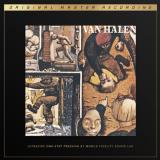
Santana Bridges the Divide Between Live and Studio Material on Moonflower: 1977 Double Album Features Extraordinary Performances, Soulful Vibes, and Dynamic Mix of Latin, Rock, Funk, and Blues
Sourced from the Original Master Tapes and Strictly Limited to 3,000 Numbered Copies: Mobile Fidelity’s 180g 33RPM 2LP Set Plays with Audiophile-Quality Detail, Balance, and Imaging
1/4” / 15 IPS original analogue non-Dolby master to DSD 256 to analogue console to lathe
Though it may seem strange now, Moonflower stood for nearly 15 years as Santana’s first and only live record released in the United States. This despite the fact that roughly half of the double album consists of new studio songs, including a zesty cover of the Zombies classic “She’s Not There” that reached the Top 30 of the singles charts.
However unconventional, the “split” strategy went over like gangbusters. Moonflower reached the Top 10 of the Billboard Top 200 and achieved double-platinum status — feats the group would not again replicate for 22 years. These, and the beautiful quality of the program itself, are among the reasons why the 1977 effort remains viewed by critics and fans alike as must-have Santana.
Sourced from the original master tapes, pressed at Fidelity Record Pressing in California, housed in a Stoughton jacket, and strictly limited to 3,000 numbered copies, Mobile Fidelity’s 180g 33RPM 2LP set of Moonflower presents the record in audiophile sound for the first time on a domestic reissue. Part of the MoFi’s Santana catalog restoration series, this collectible version features quiet surfaces and black backgrounds that expose the critical details, liquid tones, and dynamic interplay central to Santana’s music.
The enhanced sonics extend not only to Carlos Santana’s six-string wizardry, but to the rhythmic, melodic, and vocal elements that course throughout both the studio and live cuts on Moonflower. The grip and depth of the bass lines; the wash of the organ; the scope and carry of the vocals; the extension and weight of the low-end frequencies; the rich textures of the guitars, percussive devices, and keyboards: all appear amid wide, balanced soundstages and image with right-sized dimensionality.
Significantly rooted in the styles and approaches that inform the group’s first three records, Moonflower captures the final appearances of iconic percussionist Jose “Chepito” Areas and go-to keyboardist Tom Coster on a Santana album. As he did during the preceding five-year stretch, Coster inhabits a large role here, sharing songwriting credits on a majority of the new cuts and helping steer the arrangements toward spiritually minded albeit concise directions that encompass vibrant Latin, rock, and blues themes that began to escape the ensemble shortly after his departure.
Close your eyes and feel the warmth of the sun on the R&B-kissed “I’ll Be Waiting,” anchored by Carlos Santana’s gliding fretwork and Greg Walker’s creamy vocals. Enter the cosmic universe of “Zulu,” on which Coster’s nimble phrasing opens the gate to polyrhythmic beats, knotty grooves, and interlocking funk. Grab the album cover and drift off to paradise amid the equally evocative “Flor d’Luna (Moonflower),” a romantic slow dance that Carlos Santana ensures tiptoes en route to its blissful destination. Channeling a different spirit animal, the guitarist later lets loose on the hard-hitting “El Morocco,” on which he seemingly engages in a shootout with himself and wades into the rippling psychedelia that elevated the band’s early material.
Speaking of the past, Moonflower triumphs on that level as well. In more ways than one, the live selections — and the caliber of the performances — chosen for inclusion represent an abbreviated greatest-hits survey of the band up to that point. And, at the very least, a convincing argument about why Santana had progressed into one of the most formidable bands you could hope to see on a stage in the mid ‘70s.
Simultaneously representative and illustrative of the group’s breadth, tracks stem from the collective’s eponymous debut, Abraxas, and Santana III as well as the then-more recent Amigos and Festival. Whether you fall for the sidewinding spell of a spicy rendition of “Black Magic Woman/Gypsy Queen,” lose your head to the positively epic momentum of “Soul Sacrifice/Head, Hands & Feet,” or keep dropping the needle on the savory grace of the brilliant reading of “Europa (Earth’s Cry Heaven’s Smile),” this pressing of Moonflower puts you — and Santana’s first-chapter legacy — in good hands.
This Project is really a two in one offering. Combining the three tracks from Ringer’s 2021 release, the “Meta Music EP” and his darker more aggressive moniker, Black Sued’s offering the “Rogue EP”. The EP is sort of a yin and yang. Monotone is a deep chordal track with uplifting vocals and a pulsing almost distorted bassline. This track is complimented with minimal drums and a simple yet beautiful synth riffs that bring it all together. New Plan is a fast paced cut that insights the listener to move. The drums and chords wrestle in a rhythmic dance while Ringer’s voice projects the essence of this side of the 12”. Positivity and persistence, the energy is alive in this track. YIA, an acronym that stands for Yes I Am, is meditative and filled with affirmations for the listener. Deep solemn chords, and the sounds of a thunder storm take the listener into a inner place of self reflection. The affirmations are for the listener to embody, a solid thought provoking end to this side of the 12”.
Rogue, the title track of this side of the record, is an intelligent, dark and jazz filled groove, that takes the listener on a journey. The groove is easy to catch, and wraps the listener into an almost mysterious landscape of rhythm and melody. Keeping the tone of this side of the 12” is Maze. The chords and rhythm walk in tandem to a beat that almost favors a marching band. A higher energy feel arrives as the 16th high hats meet a long defining chord that take this track to the next level. Deep Dirt reminds me of a drum machine tweaking or malfunctioning. The ominous chords paired with the distorted synth and bass lines that carry the listener through the filth that is this track.