"On the Huh" is taken from the deepest UK slang term 'on the huh' meaning: Not level, crooked or wonky. Comprised of singer Sloss (Braindance), guitarist Chris (Infa Riot), bassist Dave (Special Duties) and drummer Tom (Infa Riot), "ON THE HUH" from Norwich have taken the scene by storm with their first album "Bit on the side", which was sold out in a few weeks. Now it's time for their new album "Second Time Around"! The 12 new songs are a perfect match of glam, brickwall, and streetpunk with strong Oi! and rock and roll influences. "On the Huh" are "on our own way" and what really sets this record miles apart, however, is the sense for catchy songwriting and the fun and authenticity they convey with every chord. "Class of 65" is a melodic homage to the original Mods from the 1960s and the youth cult that like rock and roll, influenced rebels and subcultures from Punk, Oi to Brit-Pop and beyond. Society is changing, but good old British punk rock will never go out of style. Songs like "Generation apart" or "Spirit unbroken" hit the bullseye. When you sit at the bar in an English pub after work, watching the guys at the dartboard, 'On the Huh' could be sitting at the next table. From the jukebox, 'Sussed Out' and 'Don't Wanna Be Like You' are blasting. You take a big sip of your pint, smile quietly to yourself, and nod. Outside, the world keeps spinning rapidly and has forgotten what really matters. "'Second time around' is like an old friend to you_ `Is there a more beautiful compliment for a band and their music?
quête:new sense
"On the Huh" is taken from the deepest UK slang term 'on the huh' meaning: Not level, crooked or wonky. Comprised of singer Sloss (Braindance), guitarist Chris (Infa Riot), bassist Dave (Special Duties) and drummer Tom (Infa Riot), "ON THE HUH" from Norwich have taken the scene by storm with their first album "Bit on the side", which was sold out in a few weeks. Now it's time for their new album "Second Time Around"! The 12 new songs are a perfect match of glam, brickwall, and streetpunk with strong Oi! and rock and roll influences. "On the Huh" are "on our own way" and what really sets this record miles apart, however, is the sense for catchy songwriting and the fun and authenticity they convey with every chord. "Class of 65" is a melodic homage to the original Mods from the 1960s and the youth cult that like rock and roll, influenced rebels and subcultures from Punk, Oi to Brit-Pop and beyond. Society is changing, but good old British punk rock will never go out of style. Songs like "Generation apart" or "Spirit unbroken" hit the bullseye. When you sit at the bar in an English pub after work, watching the guys at the dartboard, 'On the Huh' could be sitting at the next table. From the jukebox, 'Sussed Out' and 'Don't Wanna Be Like You' are blasting. You take a big sip of your pint, smile quietly to yourself, and nod. Outside, the world keeps spinning rapidly and has forgotten what really matters. "'Second time around' is like an old friend to you_ `Is there a more beautiful compliment for a band and their music?
- 1: Violin Concerto In D Major, Op. 6: I. Allegro Ma Non Troppo
- 2: Violin Concerto In D Major, Op. 61: Ii. Larghetto
- 3: Violin Concerto In D Major, Op. 61: Iii. Rondo
- 1: Violin Concerto In D Major, Op. 77: I. Allegro Non Troppo
- 2: Violin Concerto In D Major, Op. 77: Ii. Adagio
- 3: Violin Concerto In D Major, Op. 77: Iii. Allegro Giocoso, Ma Non Troppo Vivace
On the occasion of their 50th anniversary, the Australian Chamber Orchestra presents a landmark new album that celebrates the orchestra’s remarkable legacy while also honouring Artistic Director Richard Tognetti’s extraordinary 35 years of leadership: the violin concertos of Beethoven and Brahms, with Tognetti himself as soloist. These works, now pillars of the repertoire, were once radical and new; this recording invites us to reconnect with that sense of first hearing – to imagine being present at the premiere, when the ink was still fresh and the ideas still raw.
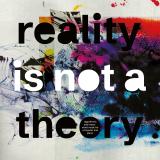
Recorded in concert at the University of Sheffield in March 2025, Reality Is Not A Theory is the first collaboration between Mark Fell and Pat Thomas. Major figures in British experimental music since the 1990s, Fell and Thomas have developed their rigorous practices from radically different backgrounds and perspectives: where Fell’s singular take on synthetic abstraction emerged from Sheffield’s electronic underground, Thomas is a virtuoso improvising pianist steeped in jazz and modernist art music who has simultaneously worked with sampler-based electronics for decades. As the record’s wonderfully academic subtitle explains, we are presented here with two sides of ‘algorithmic and improvised music for computer and piano’, exemplifying both players’ insatiable search for new (and sometimes uncomfortable) playing situations.
The performance begins with Fell’s electronics close to the timbres of acoustic percussion, attacks that suggest wood, metal or glass threaded along a rapid pulse while Thomas focuses on the lowest registers of the piano, deadening the strings. As Fell’s electronics start to ring out and occupy more harmonic space, Thomas turns to wide, repeated clusters, which slowly expand into patterns of chords. Like in his recent solo recordings and his trio work with Joel Grip and Anton Gerbal, Thomas’ playing combines extreme dissonance with a deep lyrical sense. Fell’s work gradually shifts its focus toward drum sounds, drawing on the microtemporal processes that have characterized his practice in recent decades. Heard together with Thomas’ probing piano, the computer sounds call up unexpected associations with the klangfarben antics of improv drummers like Paul Lovens or Tony Oxley. Throughout its second half, the music grows increasingly frenetic, as Thomas sounds out rapid, irregularly repeated figures and beautifully sour chords in the upper register, while Fell’s percussion develops into angular pan-pipe-like feedback and waves of glissandi.
With great confidence and patience, Fell and Thomas often let their individual contributions remain rhythmically distinct and unsynchronised, allowing unexpected correspondence and coincidence to guide the music’s development. Recorded in a hall named after Sheffield steel manufacturer and Master Cutler Mark Firth, the location might suggest a model for understanding how Fell and Thomas interact here: two workers in the same workshop, each immersed in their own part of the production process. Arriving in a striking sleeve designed by Mark Fell, with liner notes by Francis Plagne, Reality Is Not A Theory is an invigorating document of the meeting of two mavericks of contemporary music.
The story begins with Kevin Morby absentmindedly flipping through a box of old family photos in the basement of his childhood home in Kansas City. Just hours before, at a family dinner, his father had collapsed in front of him and had to be rushed to the hospital. That night Morby still felt the shock and fear lodged in his bones. So he gazed at the images until one of the pictures jumped out at him: his father as a young man, proud and strong and filled with confidence, posing on a lawn with his shirt off. This was in January of 2020. As the months went on and the world dramatically changed around him, Morby felt an eerie similarity between his feelings of that night and the atmosphere of those spring days. Fear, anxiety, hope and resilience all churning together. The themes began twisting in his mind. History, trauma and the grand fight against time. Having the courage to dream, even while knowing the tragedy that often awaits those who dare to dream. While his father regained his strength, Morby meditated on these ideas. And then, he headed to Memphis. He moved into the Peabody Hotel and spent his days paying tribute and genuflecting to the dreamers he admired. In the evening, he would return to his room and document his ideas on a makeshift recording set-up, with just his guitar and a microphone. The songs, elegiac in nature, befitting all he had seen, poured out of him.Produced by Sam Cohen (who also worked on Morby’s Singing Saw and Oh My God), This Is A Photograph features musical contributions from longtime staples of Morby’s live band, as well as old friends and new collaborators alike. If Oh My God saw Morby getting celestial and in constant motion and Sundowner was a study in localized intent, This Is A Photograph finds Morby making an Americana paean, a visceral life and death, blood on the canvas outpouring. As Morby reminds us early on, time is undefeated. So what do we do while we’re still here? This is a photograph of that sense of yearning
Amand returns to All Day I Dream alongside Belgian newcomer Capoon for their collaborative two-track Ouverture EP. The release arrives with a bonus remix from producer/DJ Khen.
Guided by a shared sense of musical storytelling, Amand and Capoon find common ground in organic instrumentation and cinematic rhythm. Across its two movements, Ouverture unfolds like a passage through dusk and dawn part meditative, part ascendant. The title track’s first part opens in a space of gentle introspection, carried by fluid percussion and softly woven synths. Its counterpart rises with quiet momentum, layering melodic phrasing, captivating vocals, and subtle rhythmic tension into a transportive finale. It’s a delicate and dreamy 12-minute journey that encapsulates the wondrous imagination of All Day I Dream curation.
Khen’s remix expands the emotional arc further, blending the original’s warmth with his signature precision and dynamic melodic control. The result feels both grounded and dreamlike, aligning seamlessly with the label’s ethos of soulful progression and timeless sound design.
ORANGE SWIRL VINYL
Public Memory is the solo project of Brooklyn's Robert Toher, recorded over the course of a year as he lived in Los Angeles temporarily. Previously of the group ERAAS, Robert places a greater emphasis on electronics in this new project. Rhythm is at the forefront, with the tone informed by stripped down, narcotic impressions of krautrock, hypnotic percussion, and subtly layered atmospherics. Spectral vocals meld with delicate piano against hip hop beats and a dub sensibility, conjuring clouded lights, foggy glass in empty buildings, urban wraiths.To call it minimal would, on the surface, seem appropriate. Wuthering Drum does not need an abundance of flashes and frills to illustrate its point, nor does it need smoke and mirrors to mask a lack of vision. However, repeated listens yield layers of tonal variations, textural nuance, and tastefully placed overdubs. There is a slightly religious or spiritual element at Wuthering Drum's core; a sense of being in an existential crisis, while simultaneously being uplifted, in the face of change. This is the search for redemption in a far away place, away from comfort; it is adjustment to an inner dissonance, rather than the washing over of past fears and regrets with sterile holy waters.
The first ASFON release has been a year-long labour of love that has come into being from what felt like a lucid dream, off in the distance, too crazy to believe was real. From our first meeting in the Freerotation yurt to late-night exchanges in Bristol, Winkles (Jamie Slater) has been sharing tracks that lingered long after the party ended. Their raw textures and warped sense of time found a natural home in our sets, eventually leading to the emergence of ‘The Unavoidable EP’, a collection of four diverse tracks which form a singular, immersive experience.
On A1 journey, The Unavoidable Consequence Of Familiarity, a knocking kick opens the door to this new sound world, introducing us to the granular clicks, crazed telephony and vocoded grunts which populate the deep space of Winkles’ imagination. Machines whir and perception shifts in the space between distant synth stabs, while a pulsating bassline battles to break through the filter and create a throbbing low end. Hallucinatory and deep, this is the perfect introduction to both the EP and the ASFON outlook.
Semi Stretches sees Winkles pick up a signal from beyond the outer rim, fire up the hyperdrive and lock into the rolling hum of intergalactic techno. Juggernaut bass forms the perfect counterpoint to the rapid fire rim shots trembling away up top as this Venusian club craft battles static, drives through the milky cosmic and transports the dancing bodies to a Multicoloured Plasticine Universe.
Cutting the engines and switching to suspended animation, Winkles lets us drift through a hazy dream-space where there’s no up or down, where twinkling arps, insectile electronics and hazy sirens coalesce into a psychotropic swirl.
Out of this multicoloured mirage comes Osaka-based astral traveller Erik Luebs, who translates that peak-time ambient bubbler into a Balearic chugger which emerges from the ether to add another dimension to the EP. Rubberised bass, velvet pads and nuanced percussion ensure this is perfect for poolside play in a land of pink sand and sideways tides.
For our ninth offering we have ventured out of our small but fertile swamp in search of another source of magick. Meandering across boggy pastures new, we crossed paths with Steevio, who sat hovering serenely in the fern covered shade of a nearby valley. Instantly recognising the singular vision of this fabled artist, we hastily gathered our nets and cast them under Steevio’s branches, capturing four beautiful offerings as they wriggled towards us. Upon the return to our mulch, it became clear that we could not contain Steevio’s creations, so willful was their vitality. It was therefore all we could do to release them back to the universal dance from whence they came.
The dance germinates with the writhing polyrhythmic ‘Apricity’. Hearing the crunch of frost laden grass beneath our webbed toes, we look above us to search for the sun. Angular beams of light escape over the horizon, as the warmth of Steevio’s machines coalesce. A glistening hi hat breaks through the membrane to bind his creation and anchor its ever shifting arms.
‘Octopus’ glides gracefully through a sun-dappled kelp forest. Sub frequencies rumble up from the shadowy darkness below, rippling along the fronds as they ascend. As the ocean begins to churn, a wriggling melodic tentacle parts the foliage, gleaming with primordial energy. Its joyful visit to the surface realm leaves us with a brief yet powerful reminder of the mystery beneath.
The glow of the midwinter sun warms our bones on ‘Apricity (Sunrise Mix)’. Percussive elements bubble out of the depths, forming intricate cascading patterns as they grow over the perfectly formed kicks. The moog filter tames the brew with Steevio’s intuitive restraint , until he releases its mighty power upon the gleeful forest dwellers, to their rapturous gratitude.
With ‘Adref’ we return home. The sedate tempo provides oceanic space for a melody which inhales and exhales over a familiar landscape of perfectly tuned percussion. With each breath the melody seems to increase its reach, until it’s buried deep within our bones, its memory resonating on long after it’s gone.
Steevio’s music reflects the universal moments where seemingly chaotic and disparate elements are suddenly revealed to be perfectly harmonious. Of course examples of this are always universally present in nature, and have been eternally, but we have to be reminded to appreciate them. In the same way that a wave deposits a perfect line of shells on a beach, dew freezes on grass, or individual strands of mycelial hyphae bind together to form incredible patterns, Steevio’s music is likewise; effortlessly considered. For us, it has more in common with the unrelenting flow of a river than it does with dance music. It is psychedelic music in the same sense that nature is intuitively psychedelic; without ever leaning into any tried tropes of what is culturally considered ‘psychedelic’ music.
Three years after his debut album, London-based Jeigo levels up with a new long player that displays his knack for meaningful melodies and deft rhythms while blurring the lines between ambient, garage and breaks. Inspired by three months on an olive oil farm in rural Italy, there is a beautiful sense of isolation and inward reflection to these sounds, even when the energy ramps up. Sultry, airy vocals and delicate strings weave between organic grooves on the opener, while pitched-up and pained tones bring a futurist twist to the paddy garage beats of 'Echoes.' There is a more warped low end and hints of Burial's ghostly vocal and drum designs on 'Emptiness' while 'Groundwater' is shuffling house suffused with luminous synth work that brings a nostalgic pang. Etum is a masterfully melancholic study that leaves a lasting emotional impact.
- New Day Rising (Live January 30Th, 1985 At First Ave)
- Everything Falls Apart (Live January 30Th, 1985 At First Ave
- The Girl Who Lives On Heaven Hill (Live January 30Th, 1985 At First Ave)
- I Apologize (Live January 30Th, 1985 At First Ave)
- If I Told You (Live January 30Th, 1985 At First Ave)
- Every Everything (Live January 30Th, 1985 At First Ave)
- Makes No Sense At All (Live January 30Th, 1985 At First Ave)
- Terms Of Psychic Warfare (Live January 30Th, 1985 At First Ave)
- Powerline (Live January 30Th, 1985 At First Ave)
- Books About Ufos (Live January 30Th, 1985 At First Ave)
- Broken Home, Broken Heart (Live January 30Th, 1985 At First Ave)
- Diane (Live January 30Th, 1985 At First Ave)
- Hate Paper Doll (Live January 30Th, 1985 At First Ave)
- Green Eyes (Live January 30Th, 1985 At First Ave)
- Divide And Conquer (Live January 30Th, 1985 At First Ave)
- Pink Turns To Blue (Live January 30Th, 1985 At First Ave)
- Eight Miles High (Live January 30Th, 1985 At First Ave)
- Out On A Limb (Live January 30Th, 1985 At First Ave)
- Helter Skelter (Live January 30Th, 1985 At First Ave)
- Ticket To Ride (Live January 30Th, 1985 At First Ave)
- Love Is All Around (Live January 30Th, 1985 At First Ave)
- Don't Want To Know If You're Lonely (Live 1985)
- I Don't Know For Sure (Live 1985)
- Hardly Getting Over It (Live 1985)
- What's Going On (Live 1985)
- Private Plane (Live 1985)
- Celebrated Summer (Live 1985)
- All Work And No Play (Live 1985)
- Keep Hanging On (Live 1985)
- Find Me (Live 1985)
- Flexible Flyer (Live 1985)
- Sunshine Superman (Live 1985)
- In A Free Land (Live 1985)
- Somewhere (Live 1985)
- Flip Your Wig (Live 1985)
- Never Talking To You Again (Live 1985)
- Chartered Trips (Live 1985)
- The Wit And The Wisdom (Live 1985)
- Misty Modern Days (Live 1985)
- Sorry Somehow (Live 1985)
- Eiffffel Tower High (Live 1985)
Hüsker Dü. Live. 1985. Das transzendente Punk-Trio aus Minneapolis in seinem explosivsten Jahr, live aufgenommen auf der Bühne im First Avenue, in der vielleicht am besten klingenden Aufnahme der gefeierten SST-Ära der Band. Diese 4xLP/2xCD-Edition enthält Beau Sorensons Restaurierung der 21 Songs des gesamten Sets vom 30. Januar 1985, dazu 20 zusätzliche Live-Tracks aus dem weiteren Tourneeverlauf des Jahres und ein Deluxe-Booklet mit detaillierten Informationen zu den zwölf geschichtsträchtigen Monaten von Hüsker Dü. Wie klingt eine Legende, in dem Moment, wenn sie geschrieben wird? Betrachtet man das Jahr 1985 durch die dynamische Linse der Independent/DIY-Musik, so gab es Mitte des Jahrzehnts für Hüsker Dü einen kraftvollen und unbestreitbaren Sprint von der rauen Punk-Institution bei SST zur künstlerischen Empathie bei Warner Bros. Die New York Times bezeichnete die Band als "die beste, die aus der Hardcore-Szene hervorgegangen ist". Im Einklang mit diesem Lob zeigte Hüsker Dü ein kreatives Tempo, das in keiner anderen Musikära zuvor oder seitdem jemals erreicht wurde. Nachdem sie im Juli des Vorjahres mit dem Doppelalbum "Zen Arcade" die aufkeimende Alternative-Rock-Bewegung sprengte, veröffentlichte die Band nur sechs Monate später, am 14. Januar 1985, das epochale "New Day Rising" und hörte nie auf, dem Sonnenaufgang über dem Hidden Beach nachzujagen, der das Cover des Albums zierte. Am 30. Januar 1985 erreichte Minneapolis am Abend zum Zeitpunkt des Konzerts -11 °C, was einem gnadenlosen Temperatursturz von 19 Grad gegenüber dem Tageshöchstwert von 8 °C bedeutete. Die 1500 Besucher im First Avenue brauchten jedoch kein T-Shirt, geschweige denn eine Daunenjacke: Von den ersten blendenden Momenten von "New Day Rising" an war klar, dass Bob Mould, Grant Hart und Greg Norton fest entschlossen waren, jedes Molekül im Raum in Brand zu setzen. Ihre Setlist bot eine nächtliche Kaskade von Feuerbällen aus den Alben "Everything Falls Apart", "Metal Circus", "Zen Arcade" und "New Day Rising" sowie fünf neue Songs, die später auf "Flip Your Wig" wieder auftauchen sollten. Außerdem würdigten sie ihre rockigen Vorfahren: mit einer rasanten Version von "Eight Miles High" von The Byrds, einer turbulenten Interpretation von "Helter Skelter" von den Beatles mit Dave Pirner von Soul Asylum, einem Pop-Punk-Remake von "Ticket To Ride" ebenfalls von den Beatles und ihrem charakteristischen Cover von Sonny Curtis' Mary-Tyler-Moore-Titelsong "Love Is All Around" zum Abschluss. Die First-Avenue-Bänder von 1985 zeigen Hüsker Dü in Höchstform mit bereits beliebten Songs, ein paar Jahre bevor sie ihren Status als Blaupause für den kommenden Alternative-Rock-Boom endgültig gefestigt hatten. Dieses Box-Set feiert diese Aufnahmen, die vielleicht die besten Hüsker-Dü-Aufnahmen sind, die während der legendenhaften SST-Jahre der Band produziert wurden. "Wenn ich an diese Zeit zurückdenke", kommentiert Greg Norton, "waren das drei Jungs, die das taten, was sie liebten, Spaß hatten und im Grunde anderen Menschen zeigten, dass man sich selbst treu bleiben kann, seiner Musik treu bleiben kann und sich nicht der Mode oder den Erwartungen beugen muss, um etwas wirklich Großartiges zu schaffen."
Unchained is the long-standing guitar-based project of Nate Davis, originally from Providence, RI, and based in France for over a decade. In his two most recent LPs—Gabbeh (2024, A Colourful Storm) and Frontalier (2025, Stern Records)—Davis strives to describe a new path for outsider jazz instrumentalism that remains committed to harmonic and rhythmic form while placing greater emphasis on sonic texture through experimental production techniques.
Release Description:
Unchained—a name which at the project's inception or on earlier recordings spoke perhaps to the ecstatic saturation of high gain guitar—has over the past three albums (N.D. Visitor, Pic, and Gabbeh) come to represent more and more an acknowledgement of and sensitive remove from a crashing world. An excuse of oneself from trend towards a siloed artistic development.
On Frontalier, Nate Davis crosses further into this patient personal lexicon of guitar composition, presenting a new set of richly developed songs and leaps in arrangement which may very well shock Unchained fans the world over. The sympathetic geometric guitar themes of the earlier second-period Unchained style are almost entirely absent, making way for a fully realized presentation of the jazz, MPB, and fusion influence present to varying degrees on the previous three albums. Davis's keen sense of melody and songcraft have never been stronger, here landing on music which is at moments evocative of Wes Montgomery, Allan Holdsworth, Jobim, or the jazzier impulses of Lô Borges. Distinct in Davis's music, however, is what these references might belie: an innate tending towards repetition as an affective tool—one which has less to do with the aesthetics of the scene from which the project emerged than it does with devotional prayer. In this way it feels as if Unchained has always been music for living. What was once a maximalist expression of youth has matured into the sound of living with and in the world and an empathic transmuting of all the joy, disappointment, and ambivalence that comes with it. Songs that feel like the sort of thinking one does looking out the window on a long train ride, or the routinism of internal and external life and the breaking out of it. As much as it will be recognized by the fandom as a significant step forward, Frontalier serves also as a perfect gateway for new listeners to the singular music of Unchained.
- Refran Tradicional
- El Efecto Del Licor
- A Comer Merengue
- Ejemplo Boricua
- Con Que Corto Mi Caña
- Tres Amores
- Llevame En Tu Pico
- Me Quede Con Hambre
- Tiempos Que Se Fueron
- Quedate Con Tu Dinero
- Tu Ausencia
- La Belleza De Mi Prima
This is a reissue of the original 1963 album El Decano De Los Cantores 4. Chuíto el de Bayamón (Jesús Sánchez Erazo) was a legendary Puerto Rican troubadour and one of the earliest jíbaro singers to appear on the radio, also known as "el decano de los cantores" (the dean of the singers). Known for his witty décimas and lively improvisation, he helped popularize traditional Puerto Rican music. His work influenced generations, including salsa greats like Héctor Lavoe. In the 1940s, he became the lead-singer for cuatro player and composer Ladislao "Ladí" Martínez's Conjunto Típico Ladí, created in New York City. With Ladí, he recorded "Un jíbaro en Nueva York," a controversia with Ernestina Reyes "La Calandria." It was actually Ladí who baptized him as "Chuíto el de Bayamón". From 1949 to 1977 Chuíto collaborated with Abelardo Díaz Alfaro, the famous Puerto Rican author, in the radio program "La vida de Teyo Gracia y su mundo" aired in WIPR. In addition, Chuíto participated in the films "La trulla" (1951), "Preciosa" (1965), and "El otro camino" (1959). Throughout his career Chuíto recorded more than 40 LPs and performed in New York, Boston, Chicago, New Jersey, Hawai'i, Spain, Cuba and other Latin American cities. His repertoire is characterized by its witticism and sense of humor, and sophisticated musical arrangements. Along with Flor Morales Ramos "Ramito", Odilio González and Daniel Santos, he had a huge influence in the singing style of Puerto Rican salsa star Héctor Lavoe. In 1975 and 1976 he was recognized with the "Agüeybaná Gold Album" award. This is the forth edition of Ansonias Chuito reissue series.
As trans-Atlantic alchemists pulling from a shared dialectic that somehow encompassed both postmodern deconstructionist tendencies and a delightfully subversive sense of poptimism, it’s easy to see how David Cunningham and Peter Gordon immediately hit it off upon initially meeting each other back in the late-1970s at the height of their youthful transgressions. Having initially worked together on the second Flying Lizards’ LP fourth wall, with its ingenious fusion of dismantled rhythms and rearranged melodies juxtaposed against the slyly sultry singing of Snatch’s Patti Palladin— with Gordon adding a few sprinkles of mischievous sax in the mix— it’s no wonder the collaboration would lead to further musical adventures.
Which leads us directly to the genesis of The Yellow Box. Embarking on a collaborative exercise in the structural repurposing of music as untethered puzzle pieces in need of rearrangement with no predetermined outcomes, the duo gave birth to a project that would see them move through both time and recording studios across Europe, taking nearly two years from 1981-1983 to complete. Enlisting the great Anton Fier on drums from The Feelies/Lounge Lizards nexus and John Greaves on bass from Henry Cow/Soft Heap lore to round out their dueling creative counterparts, the album would be something of a lost treasure until its eventual release on Cunningham’s Piano imprint in 1996.
Cinematic in scope, and filled with drifting drones, beautiful counter-melodies, eery minimalism, Kraftwerkian synthesizers, looped voices, skronky interludes, and other shifting undercurrents of sound, it was an album that utilized both a diverse array of expressive languages, as well as early sampling techniques and prepared instruments, well before most people were thinking in such expansive, integrated terms at the dawn of the 80’s. But such is life at the vanguard of new music. And one of the reasons that it likely sat on the shelf for so long before finally being released well over a decade later. Like a sparser, less groove-oriented version of My Life in the Bush of Ghosts, or a more radical take on the experimental work of Can’s Holger Czukay, The Yellow Box stands at the crossroads of time and technology, fusing multiple strands of musical thought and compositional techniques into a disjointed whole that somehow still comes off as a conceptually complete record.
Now, here it is again, over 40 years later, with perhaps even more historical resonance than it had before, remade and remodeled just waiting to be rediscovered again.
Belgian violinist and composer Elisabeth Klinck announces the debut album of her ensemble, Klinck Trio, on VIERNULVIER Records. My Hair is Everywhere will be released on November 7, 2025 on vinyl LP and through all digital platforms.
Rooted in improvisation and guided by openness, the Klinck Trio — Adia Vanheerentals (saxophone, voice), Maya Dhondt (piano, voice), and Elisabeth Klinck (violin, voice) —crafts music where sound and silence are equally vital.
Their debut album is an exploration of fragility, unfolding like a delicate conversation in which each note is chosen with intention and every pause carries presence.
Recorded in the summer of 2024 at Studio Ledeberg, My Hair Is Everywhere captures a moment in time: three musicians meeting in sound, each bringing their own timbre, language and natural state of being into dialogue. Klinck offers seeds of material —metaphors, sketches, sonic ideas — that the ensemble shapes into fully formed pieces. The result is an album that stands complete, yet carries within it the openness to unfold further in live performance, where new layers and resonances can emerge.
In the spirit of American composer and pianist Meredith Monk, the trio embraces lightness andvulnerability, crafting soundscapes that feel both childlike in their intimacy and expansive in their emotional reach. My Hair is Everywhere balances melancholy, tenderness, and harmonic interplay with silence, breath, and resonance—the subtle negative space where music continues beyond the notes themselves. By recording in close proximity, every detail emerges: the strike of piano pedals, the clicking of saxophone keys, the intake of breath, and the faint displacement of air. Textures of dragging violin, whispered fragments, and soft humming become almost tangible, drawing the listener fully into this intimate, enveloping present
moment.
Above all, this compelling debut is an invitation to listen differently: to enter a transformative space where three distinct musical voices find each other in fragility.
The artwork, created by French artist Annabelle Guetatra, reflects the album’s sense of lightness through color and playful collage work.
Sanguis is the alias of Berlin-based producer Ludwig Wandinger, a fixture in the city's experimental scene.
On his debut album Wounding dark ambient textures and solo piano improvisations let the listener's attention slip in and out of focus creating a liminal state of dreaming, feeling and drifting through inner worlds and thoughts.
Wandinger tries to capture fleeting moments - all tracks are unedited first takes, some recorded only with his phone in various places, from a friend's flat in Neukölln to his family home in rural Bavaria. Background noises become a part of the music and create a tangible sense of place, urging the listener to keep an ear out for one's own surroundings.
Though firmly rooted in the ambient genre, the album is not just about finding comfort. It's an acknowledgement of the ambiguity of our world where menace and beauty coexist, a dichotomy most apparent in nature itself - a constant source of inspiration for Wandinger.
Wounding is about walking alone on damp foliage at night and being handed a blanket by a loved one at the earliest daylight.
funcionário delights in the freedom of creating freeform music for the first time in his career. On “horizonte”, he loosens the reins, his sound follows a wavy, organic structure rather than a rigid, formal one. If it feels freer and more colourful, that’s because it truly is.
Eight years ago, when we first encountered his work, he was composing soundtracks for imaginary video games and crafting sonic landscapes that felt like destinations for sci-fi anime characters. With “Cavalcante” (2022), he broke away from that past. It marked a turning point, he was ready to explore a “fourth world” in both sound and concept. The feedback was overwhelming.
Three years later, “horizonte” marks another evolution. He sends us music regularly, but this album stood out immediately. It felt right: more synth-driven, more open to improvisation. As he put it: “It’s like using oil pastels for the first time and discovering new possibilities. In a way, I’ve found new ways of creating using the same colours.”
Listening to horizonte is like waking up from a dream. Again and again. The opening track, “nascer”, suggests a new dawn, but it’s in “pássaros” that the vision fully takes flight: less processed, more raw, yet still detailed and expansive.
Finding new ways with the same colours has been his quiet mission all along. What’s new here aren't the tools, but the feeling. The movement. The invitation to travel with him. You can hear - and feel - his sense of wonder. Every sound radiates joy. Every moment sparks a new thought. The music moves quickly, but breathes slowly.
Tracks like “renascer” and “o caminho do regresso” echo the spirit of late-70s/early-80s Vangelis, in deep reverence. And just as you approach the end, “fantasma” arrives - a stunning closer, reminiscent of Eno’s “An Ending”. By then, it’s clear: the “fourth world” is behind him. funcionário has moved on. To where? We’re about to discover.
2025 Repress
It was only in 2018 that New York techno mainstay Joey Beltram revealed that he was the man behind 'SW37', a record which had been an underground classic since it first started doing the rounds in 1998. It remains an evergreen favourite almost 30 years on, which is why Damon Wild's Synewave is reissuing it here. The A-side is gloppy, dubby techno with impish percussion darting about the mix and drunken hits bring an off-kilter edge. On the flip, 'SW37B' is stripped back to pure deep techno serenity with deft ambient pads and a sense of unrelenting meditation that locks you in the here and now.
Repress 2025
The King of K-Pop Returns!
To those unfamiliar, G-Dragon is regarded by many as the Godfather of K-Pop. Rising to fame in the mid-00’s with his group, Big Bang, that later went on to become one of the world’s biggest selling boy groups. He quickly stood out with his unique and intricate songwriting as the leader of the group. A talented songwriter and trendsetter within the youth culture and fashion space, G-Dragon has received a bevy of awards, nominations for his music and fashion sense from the World Music Awards, to Hypebeast’s 100 list, to Forbes’ 30 Under 30 list, it’s apparent that G-Dragon has cemented his place in cultural relevance.
After serving his mandatory South Korean military service and a brief hiatus from music, the global superstar, G-Dragon has returned! He announced that he signed with indie-powerhouse, EMPIRE, and released his first comeback single on October 31, 2024 with POWER to immediate global fanfare and buzz, with the music video garnering over 44 MILLION views in a month and over 115 MILLION global streams. He soon followed that up with an electrifying performance at the 2024 MAMA Awards show in Osaka coupled with the release of his new single, Home Sweet Home which has garnered 100 MILLION global streams since release.
2025 will see the release of his first full length album since 2017 entitled Übermensch along with global tour dates. The album is expected to make a huge impact globally and further cement his place in music history!
Friend Of A Phantom is the third studio album by the Danish progressive metal band Vola, released under Mascot Label Group. This highly anticipated album showcases Vola's signature blend of intricate rhythms, soaring melodies, and thought-provoking lyrics.
With tracks like "Straight Lines" and "These Black Claws," Friend Of A Phantom takes listeners on a musical journey that seamlessly combines heavy riffs with electronic elements, creating a dynamic sound that is both captivating and innovative.
Vola's musicianship shines through in every song, from the complex drum patterns to the mesmerizing guitar solos. The band's ability to craft intricate arrangements while maintaining a strong sense of melody sets them apart in the progressive metal scene.
The production quality of Friend Of A Phantom is top-notch, allowing each instrument to shine through while still blending together to create a cohesive and immersive listening experience. The album's rich textures and layers reveal new details with each listen, making it a rewarding choice for fans of progressive music.
Overall, Friend Of A Phantom is a must-have for any music lover looking for an album that pushes boundaries and challenges traditional genre conventions. Vola's unique sound and innovative approach make this album a standout release in their discography.