“Big City Blues” is the title of the new – fifth – album by the Antwerp band Handkerchief , which will be released on September 27. As the title suggests, the big city now plays a more central role in the band's world. This results in a harder rocking sound, more guitars, but
still the bluesy feeling with a steamy horn section and the rough voice of Christof Annaert, which also sounds like he has single-handedly cleared every dark alley in the big city of every possible scum.
Their latest albums “Mutiny Ballads & Fishguarding Songs” and “Ghosts of this Town” were particularly well received by the press and fans. Singles such as “They Drive by Night”, “Human Sense” and “Lucky Day” were regularly heard on national radio: including Willy,
Radio 1… and the band played dozens of shows in Belgium and the Netherlands. This fall the band will go on tour to present the new album.
quête:new sense
Mamman Sani"s electronic organ music, first recorded in 1978, made him a national hero in Niger, led to him writing the Niger"s new national anthem, and has long been cherished by aficionados for its unique blend of traditional Nigerien melodies and synth experimentation. Mamman"s music embodies a sense of intimacy, echoing the presence of a solo artist in the room with the listener.
Rick Holmes’ breath-taking track, ‘Remember To Remember’ gets its first ever officially licensed, remastered reissue on Gold Mink Records. With prices of the original topping £60 this one will be a welcome sight for many.
Title track, ‘Remember To Remember’ is a celestial, emboldening downtempo cut. Beginning with the timeless line, ‘Pass the information, extend the knowledge…’ Rick dives into a spoken word stream of inspirational black artists and key figures whose most memorable words and song titles are framed into snippets of wisdom that get ever more significant the greater in number they become. A powerful monologue, in Rick’s warm reassuring tones, shining a light on those men and women who have made ‘strong contributions to mankind because of their compassion and humanitarianism’, laid over instrumentation you lose yourself in just as easily.
‘Remember to remember, to never forget.
How Long… how long… how long will it take man?
For us to come together.
It will take us as long as you make it…’
Words that ring just as true today, as they did 40 years ago, yet with a new sense hope in the air and prospect of progress approaching.
The B side houses another of Rick’s mesmerising monologues – ‘To The Unknowledgeable One’ motivational, moving and smooth as you like.
Licensed from Uno Melodic Records, Inc, courtesy of Expansion Records.
- A1: Sam Ruffillo & Fimiani - Mediterranea (Party Mix Extended)
- A2: Tommiboy Feat Dm Disco Band - La Sfinge
- B1: M¥Ss Keta & Kapote - Italomania Intermezzo
- B2: Severino & Giacomo Moras Ft M¥Ss Keta - Maledetto
- B3: Stump Valley Feat Femmina - Non Dire Di No (Extended Version)
- C1: Munk & Kapote - La Musica (Hot Dj Version)
- C2: Fimiani & Angeleri - Sessospaghetti (Extended Version)
- C3: Kapote - Sono Tropical (Extended Version)
- D1: Giovanni Damico - Tropica (Feat Martina)
- D2: Lele Sacchi Feat Elasi - Malamore (Extended Version)
- D3: Daniel Monaco Band - Milly
Toy Tonics ITALOMANIA Vol. 2 is a compilation dedicated to NEW ITALIAN DISCO. (Not Italo Disco.)
13 young contemporary Italian producers made new organic disco, indie dance, avant pop and house tracks with Italian vocals.
Everything on this compilation has been produced in 2023. Fresh dance music by Italian indie electronic star Myss Keta together with DJ Severino (of Horse Meat Disco) and newcomers Sam Ruffillo, Fimiani, Magou, Tommiboy, Daniel Monaco, Giovanni Damico. And new music by artists Stump Valley (from Dekmantel), Munk (Gomma records), Rodion (Slow Motion Records) and DJ legend Lele Sacchi,
The ITALOMANIA compilation was initiated by Toy Tonics boss Kapote. The idea is to show the status of Italian Disco of today. It’s like a „manifesto“!
Kapote invited the most relevant Italian producers to make new tracks with Italian vocals and show different styles of modern Italian disco, dance and house music.
with Italian vocals. All tracks compiled by Kapote aka Mathias Modica aka Munk. Italo-German producer, DJ, keyboarder and head of Toy Tonics and Gomma records.
Italian Disco is not Italo Disco.
While the last years the slightly trashy pop music of the 1980’s called Italo Disco (with English lyrics) had a big revival. But now also the attention for more quality and organic dance music with Italian language is rising. This compilation is about this Italian Disco,
It’s a fact that not just in Italy but also in France and Germany there are now artists singing in Italian or using Italian words and names - even if they are not Italian.
Let’s not forget: The world’s culture of party, dancing, showbizness and pop music would be unimaginable without the heritage and creativity that Italians contributed.
Italy is not just the country of good food, beautiful beaches and high fashion, but it’s also the original country of dance music. Since almost 3000 years, since the ancient roman times the Italians have been making (dance) music culture, creating popular culture and being the maestros in organizing parties.
Also the disco wave of the 1970ies and the Pop music of the 1980ies has been co-created by Italians (and Italo-americans in New York).
The ITALOMANIA artists & tracklist:
M¥SS KETA
The most famous artist on the compilation is singer M¥SS KETA. The Italian press calls her "the Italian Lady Gaga“. M¥SS KETA is an edgy performer that reached the top of the charts with indie pop songs, but is also well rooted in the Milan art, fashion and LGTB scene.
To create a song for Italomania she teamed up with DJ Severino. The Italian part of London’s Horse Meat Disco DJ collective. Probably the world leading queer DJ team. (M¥SS KETA recently was invited to perform Berghain in Berlin).
Sam Ruffillo
Sam Ruffilo has contributed a new (party) version of his song Mediterranea. A organic disco track with lyrics in Neapolitan dialect. Sam Ruffillo is an upcoming Italian DJ and producer and one of the lead artists of Toy Tonics (along with Coeo, Kapote and Cody Currie). He had a few underground hits combining leftfield disco and Lofi House with Italian vocals creating a new genre that is finding lot of fans right now. One of his songs (Chiamami Subito) made it into the rotation of big Italian radio station M20. On Instrgam you can see his DJ sets where hundreds of Italians sing his songs at Toy Tonics parties.
Munk
Toy Tonics head honcho Kapote reworked the Munk song ‚La Musica‘ for this compilation. Munk is the former producer name of Mathias Modica aka Kapote. The creative mind behind Toy Tonics and Gomma records. ‚La Musica‘ is an Italo house song that he originally released 2010 when he was doing his former label Gomma records. Now there is this new version of this catchy dance song with the Italian hookline that became almost iconic when first released.
It made sense to include a new version of this track on ITALOMANIA because its a blueprint of italian disco and sounds so fresh again now.
Giovanni Damico
The south Italian DJ, producer made „Tropica“. The song is a tribute to the music of the Italian discos of south Italy of the 1980ies. A Balearic session that can be great at a beach in the afternoon, but also for dancing in the early morning. Damico is part of the new Italian disco scene releasing his dance tracks on international labels like Lumberjacks in hell and White Rabbit records since 2013.
Kapote
His new song „Sono tropical“ is an ironic Latin pop song based on a classic salsa piano riff and a strong Latin soul bassline. It reminds the big tunes from the 1970ies New York Salsa Scene (Tito Puente, Willie Colon, Fania All Stars). The vocals performed by Kapote are a mix of Italian and Spanish. The girl’s voice is also performed by Kapote. But transferred into a female voice by an AI. All instruments played by Kapote who before starting to get into the DJ and label business used to to study jazz piano. Before starting Toy Tonics Kapote he released 3 albums under his former name Munk and produced records with big names from the electronic music scene like James Murphy of LCD Soundsystem, Peaches, The Rammellzee and three albums of Danish band WhoMadeWho. Mathias/ Kapote also worked with artists like Franz Ferdinand, The Rapture and Asia Argento.
Lele Sacchi
Lele Sacchi is an Italian DJ legend and host of Italy's most important DJ radio show on RAI national radio. He has been djing all around the world playing from Circoloco Ibiza to Avalon LA. He has Besides being on Italian national radio he has been doing shows on NTS Radio or guest on BBC Six. He produced for labels like Soul Clap, !K7, Internasjonal, Nervous, Snatch, Crosstown Rebels, Poker Flat and his own Stolen Goods imprint.
Sacchi teamed up with young vocalist Elasi, a new talent from Milano that is making waves in Italy for a few songs she released in a indie disco style. Their song is an interpretation of late 70’s cult slow disco pop classic ‘Malamore’ by the underdog Enzo Carella. A mix of slow house and playful pop with a slight touch of acid!
Tommiboy
Tommiboy made a nasty, disco rock song called Sfinge. Only 26 years old he is one of the most hyped up Italian disco diggers and collectors. Originally from Rimini, the capital of discos, he is the son of a father who was a regular dancer in Rimini’s clubs of the 1980is and fed his son with all things disco.
Tommiboy started to do parties and compilations under the name Disco Stupenda three years ago. By now he and his parties are a big thing in Italy and has fans all around the country. He also is DJ for fashion brands like Gucci and he is the guy who re-introduced 1980s stars like Pino D’Angio.
Fimiani aka BPlan
The DJ und producer from Napoli is part of the new, vibrant disco scene from Napoli. (NuGenea, Mystik Jungle, Manny Whodamanny )
His collabo with italian 1980ies crooner Angeleri called SessoSpaghetti is a remake of a song originally released in 1983, but never became famous when it came out. The drums on the song are played by Napoli legend Tullio De Piscopo and the guitar by Lucio Battisti guitar player Massimo Luca.
The new version is a ironic summer disco with sexy vocals and Italian fun rapping about beach life, beautiful girls and sex on the beach. Fimiani also does edits of rare italo disco under the name of BPlan
Daniel Monaco
Daniel Monaco is a multi-talented artist, producer, and bass player DJ, bandleader and producer from Napoli - but has been living for many years in Amsterdam where he hosted show on Red Light Radio released on Labels of the likes of Rush Hour and Bordello a Parigi. Is one of the key figures of the scene due to unique fusion of Italo Disco, Proto House, Obscure Disco, and a captivating tropical touch. His latest EPs came out on Slow Rush Hour records and Periodica Records contributed the song ‚Milly‘ for Italomania. Played with a 5 person band.
Stump Valley
The two DJs, producers and vinyl collector are experts in all things Italo Disco and Balearic music. Before joining Toy Tonics they released an album on Dekmantel records. One of the guys (Brain de Palma) is the favorite DJ of Peggy Gou. He is regularly opening the shows of Peggy as a warm up DJ and releases his solo records on Peggy's label Gudu records. For this compilation they made Non dire di no. An old school piano house track with catchy vocals in the finest tradition of the piano house style that Italians invented in the early 1990ies.
Ever-evolving the mythologies and magic of Dialect's sonic sphere, Andrew PM Hunt returns with Atlas of Green, elegantly molding unexacting details of memory and mistranslation into the framework of the British musician and composer's creative pursuit. The album imagines a young musician named Green working in a future dawning era where lost signals and enduring impulses are unearthed from the sediments of technology and time. Across twelve compositions, Green becomes the compass in an epoch of transition; one shaded with pastoral patinas and studded with the fragments of allegorical ruin. As tattered as it is tender, Atlas of Green is a patchwork of scavenged relics and bygone hues, cast through the iridescent shimmers of a mid-future in flux. Growing up on the Wirral Peninsula in North West England, Hunt was surrounded by stone age landmarks and rock carvings that infused the landscape with legend. It was beside those carvings on a residency at Bidston Artistic Research Center where he began the journey of Atlas of Green, experimenting with tape loops and exploring the center's library of sci-fi. Here Hunt also encountered the work of Italian philosopher Federico Campagna, a writer who believes we're at the end of our current world. This encouraged Hunt's exploration of how the fabric and fantasies of our current era might endure into the future of Green, as they try to make sense of the riddles of the past, utilizing broken electronics and simple acoustic instruments to create new mythic forms. This question of endurance led Hunt to inscribe Atlas of Green with its own lucid markings - sometimes almost anthemic adornments - which unfurl through the album's melancholic air as possible new metaphors for how the human spirit might persist through dark days and regain lost wisdom. As Hunt reflects, "We're not just on an endless procession through constantly better worlds. Our lack of action (on climate and inequality) feels hopeless at times. I find some comfort in the idea that maybe the world needs a new song in order to tell a new story about itself". The image of Green as a journeying adolescent in-between eras developed out of a burgeoning interest in the fantasy writing of Ursula K. Le Guin and Gene Wolfe and occurred at a point in Hunt's life where the question of starting a family was looming. Green became a device for thinking about the future, or futures, putting someone in another world and granting access to a slightly longer timeframe than one's own life. What would this person, in this as-yet-unsung world do with something as powerful as music? As Hunt notes, "I imagined them doing what we've always done with music - using it to build a map of feeling, providing boundaries and tracing the edges of our emotions, defining a space of possibility and giving voice to our intuition. This is an alternative future to the one of endless growth but one which still holds space for hopes and dreams." Mapping new folds in the passage of time, Atlas of Green is traced with an aura of sonic urgency which arises through its process-led construction. Following a series of live shows in early 2023, the record was created with an assemblage of analogue electronics and acoustic instruments, including scratched records and a broken four track, collaging studio work with recorded live recordings featuring work in progress. Where the indeterminate energies of Under~Between (2021) appeared through digital processing, Atlas of Green embraces chance encounters within the malfunctions of physical media and glitching gear. Within these interwoven clusters of organic and blemished sound, Dialect reclaims the joyfulness of the inner amateur and creates a soft landing for new seeds of magical possibility - rooted in the bounds and abundance of realism. "As a planet of people we have to deal one way or another with our finite existence. We have to deal with that loss with hope still in our hearts - our capacity to love cannot be contingent on things lasting forever, and so this image of Green is not a vision of dystopia, nor utopia but an expression of trust and an acceptance of limits."
Cassette[14,08 €]
'In `All This and So Much More' Tasha is an artist flung open. For Tasha, the last few years have been propulsive, dynamic, bursting at the seams. They've included painful encounters with grief; a sudden break up; new flirtation; new hair; the glitter of world travel and not least, a role in Tony-nominated Broadway musical `Illinoise' which adapts Sufjan Steven's `Illinois' for the stage. If `Tell Me What You Miss The Most' was an introspective meditation on love with a few moments of glancing toward what's next, `All this and So Much More' is Tasha turned outward, flourishing, telling us what it's like to take life by the chin and look it in the eye. Take, for example "Eric Song." This was the first song to be written on the album, penned while Tasha grappled with the sudden, tragic death of Eric Littman, the co-producer of her last album. Though the instrumentation is a familiar 3/4 guitar strum, lulling us into a comforting waltz, Tasha's voice is breathy with grief, adding depth and dimension to the hushed sound. "No, I'm not alone after all / You must be near / Facing this soaring sprawl," she sings, transforming the experience of loss into a talisman of love and courage meant to help usher in a new self. Said a different way, `All This and So Much More' is a full-throated ode to all of the ups and downs of becoming. In the opening track, "Pretend," when Tasha sings about "feelings outgrowing this little life," we get the sense, both lyrically and sonically, of someone in the throes of growth. This is an album crafted with a big, ambitious sound (in part, thanks to the production of Gregory Uhlmann)_cinematic droning, orchestral woodwinds, dazzling arrays of jangling guitar, all lining up to capture a sweeping moment in Tasha's life. Written over the course of 2022 and 2023, right on the cusp of Tasha being cast in Illinoise, the songs in this album invoke friendship, heart ache, flirtation, doubt. From the social anxiety of "Party" ("Do they think I'm funny? / Did they like my jokes last night?") to the questing for meaning in "So Much More," Tasha brings us along on a journey of finding out that the person you wanted to be was inside of yourself, just waiting to bloom all along. She sums it up neatly in her final track, "Love's Changing," charging us with a brilliant, sweeping vision of the future, singing: "Suddenly the world is bigger than it ever felt before / Feel the weight of my future sinking in / See the joy I'm running toward." In `All This and So Much More,' Tasha asks us to consider abundance in its truest form. Our lives, a deluge of possible experience if only we will surrender to it, all the way from the citric ache of heartbreak to the chest bloom of new adventure.
Black Vinyl[23,49 €]
'In `All This and So Much More' Tasha is an artist flung open. For Tasha, the last few years have been propulsive, dynamic, bursting at the seams. They've included painful encounters with grief; a sudden break up; new flirtation; new hair; the glitter of world travel and not least, a role in Tony-nominated Broadway musical `Illinoise' which adapts Sufjan Steven's `Illinois' for the stage. If `Tell Me What You Miss The Most' was an introspective meditation on love with a few moments of glancing toward what's next, `All this and So Much More' is Tasha turned outward, flourishing, telling us what it's like to take life by the chin and look it in the eye. Take, for example "Eric Song." This was the first song to be written on the album, penned while Tasha grappled with the sudden, tragic death of Eric Littman, the co-producer of her last album. Though the instrumentation is a familiar 3/4 guitar strum, lulling us into a comforting waltz, Tasha's voice is breathy with grief, adding depth and dimension to the hushed sound. "No, I'm not alone after all / You must be near / Facing this soaring sprawl," she sings, transforming the experience of loss into a talisman of love and courage meant to help usher in a new self. Said a different way, `All This and So Much More' is a full-throated ode to all of the ups and downs of becoming. In the opening track, "Pretend," when Tasha sings about "feelings outgrowing this little life," we get the sense, both lyrically and sonically, of someone in the throes of growth. This is an album crafted with a big, ambitious sound (in part, thanks to the production of Gregory Uhlmann)_cinematic droning, orchestral woodwinds, dazzling arrays of jangling guitar, all lining up to capture a sweeping moment in Tasha's life. Written over the course of 2022 and 2023, right on the cusp of Tasha being cast in Illinoise, the songs in this album invoke friendship, heart ache, flirtation, doubt. From the social anxiety of "Party" ("Do they think I'm funny? / Did they like my jokes last night?") to the questing for meaning in "So Much More," Tasha brings us along on a journey of finding out that the person you wanted to be was inside of yourself, just waiting to bloom all along. She sums it up neatly in her final track, "Love's Changing," charging us with a brilliant, sweeping vision of the future, singing: "Suddenly the world is bigger than it ever felt before / Feel the weight of my future sinking in / See the joy I'm running toward." In `All This and So Much More,' Tasha asks us to consider abundance in its truest form. Our lives, a deluge of possible experience if only we will surrender to it, all the way from the citric ache of heartbreak to the chest bloom of new adventure.
Tanukichan, the musical project of Oakland, CA’s Hannah van Loon, has been a prominent figure in modern shoegaze music since 2016, when she first collaborated with Chaz Bear of Toro y Moi. Together, they released an EP and two full-length albums under Bear's Company Records, culminating in 2023's GIZMO. With her new EP Circles, out September 20th, 2024, via Carpark Records, van Loon ventures into new territory by teaming up with a new producer for the first time – Franco Reid.
The genesis of their partnership dates back to the GIZMO campaign, when Reid noticed van Loon wearing an Incubus shirt in a press photo on Instagram. Intrigued by whether or not van Loon was a genuine fan, he sent her a DM. Their shared musical interest sparked a dialogue that eventually led to the creation of the single "NPC" in 2023.
Lead single “City Bus,” offers a reflection on van Loon's childhood bus rides in San Francisco, evoking the stop-and-go rhythm of commuter life through hard-hitting drums and heavy guitar feedback phasing in and out of the mix. Themes of self-reflection and societal belonging permeate the track, echoing van Loon's ongoing personal journey.
While much of Circles delves into internal struggles, “It Gets Easier” takes on a more celebratory tone as van Loon realizes she’s developed a heightened sense of maturity when dealing with hardship. “It feels easier to let go of situations or people that don’t serve me,” reflects van Loon, “Or if they can’t be avoided, at least I don’t have to dwell on the sadness or discomfort I feel when letting someone down.” Introduced by Reid, nu-gaze sensation Wisp, contributes a verse in her similarly ethereal vocal style.
There is a notable shift on Circles when you consider the first three Tanukichan releases were produced by a pioneer of the chillwave genre. With van Loon’s consistently dreamy songwriting and Reid at the helm, Tanukichan enters new sonic territory that feels larger, arena-ready, and more like a highspeed night drive than the hazy summer dream of its predecessors.
A/B Side Effect, Black & Gold, limited to 200 copies. More than 4 years after "Sculpture Of Violence," GIVER from Cologne, Germany, announce their third album "The Future Holds Nothing But Confrontation" for September 20, 2024, on End Hits Records. In recent years, GIVER have not only refined their hardcore sound to be more brutal and atmospheric with elements of metal and post-punk, but thematically, it's clear that their new album serves as an even more drastic political manifesto. Capitalism, culture wars, the climate crisis, and their societal implications and consequences are central themes on "The Future Holds Nothing But Confrontation." GIVER critique the prevailing neoliberalism and its ongoing agitation for the uncompromising pursuit of happiness and satisfaction. The band explains: "What neoliberalism has established is a lonely place. Its driving force is the individualized pursuit of constant fulfillment, altering the way we interact with each other. Whatever we do to achieve satisfaction, there's always a lingering sense of something missing. Happiness and contentment are never the goal; they've been replaced by profit margins and excess. These are endless and extremely unevenly distributed. Anger arises in this vacuum. With this album, we want to remind that it's the economic conditions and inequalities that should be the target of our collective frustration. They create depression, despair, and a downward spiral. Being anti-fascists is not enough; we must also be anti-capitalists." This anger is also reflected musically in the furious 11 new tracks. Filled with powerful guitar riffs and sometimes bilingual lyrics, some of the songs also introduce a new, deep style of spoken word for GIVER, making the eventual eruptions that much more impactful. With the release of their third album, GIVER venture into fresh and melodic territory, integrating elements of post-punk, black metal, and hardcore into a sound that sits somewhere between bands like Oathbreaker, Converge, or Chelsea Wolfe. Although "The Future Holds Nothing But Confrontation" builds on a foundation of biting, powerful metal, it also incorporates dark vocal lines that could be found on a Fontaines D.C. or IDLES record. "The Future Holds Nothing But Confrontation" was produced by Lewis Johns (Rolo Tomassi, Employed To Serve, Funeral For A Friend).
Aesthetically, Ed Schrader’s Music Beat hates to tread water. At the same time, the Baltimore-based two-piece of vocalist Ed Schrader and bassist Devlin Rice won’t force their songs to fit a preconceived style. “The next album’s always gotta be different from the last one. We’re different people from record to record. So, writing authentically to ourselves will always bring our work to a place that we haven’t been to yet,” Rice said. Schrader added, “We’re terrified of turning into AC/DC. We never want to be married to one scene or time or sound. We want to be the Boba Fett of bands! Constantly altering the way in which we make records has been pretty key in that process.”
For Orchestra Hits, the band’s latest, that alteration was welcoming longtime musical comrade Dylan Going into the fold as a co-writer and co-producer. A songwriter in his own right, a guitar sideman for ESMB on their last two tours, and a collaborator with Rice in the noise riffage band Mandate, Going had both a unique vision and an intimate familiarity with the ESMB vibe.
“Dylan came to every show we’ve ever played in New York—no matter how weird it was,” Schrader said. “He’d be standing there ready to move an amp or feed us barbecued cactus after the gig and toss on some Golden Girls so we could decompress. It felt like family as soon as we began working, but I honestly had no idea how damn good he was at tossing out these hooks.”
According to Schrader, the songs “just poured out of us” over the course of a highly caffeinated three-day weekend in a tiny room in Devlin’s house while his cat, Sandy Goose, screamed continually. “It was like three kids hiding from the world to get into some lovely mischief,” they said. The lack of external pressure in the process gives Orchestra Hits an almost paradoxical vibe. For all of the album’s layers, that mix live and sequenced instruments, it never loses the raw energy of a small handful of friends in the same room plugging in, cranking up, and playing until they pass out.
Lyrically, the album finds Schrader, now 45, meditating on experiences in their youth to make sense of the present moment. “We are not into the garden,” Schrader wails on the relentless “Roman Candle,” a song about the sad debacle of Woodstock ’99, and a direct response to Joni Mitchell’s “Woodstock,” a utopian ode to hippie idealism. A 19-year-old Schrader, having snuck into Woodstock ’99 through a hole in the fence, was there the night members of the crowd used candles intended for a vigil for victims of the Columbine High School massacre to set fires all over the grounds. Even before the fires, Schrader remembered feeling disconnected from the music, the nostalgic cash grab, and the meatheads in the crowd. After watching a press tower collapse, they boarded a random shuttle bus and were dropped off near a Denny’s. “It was a far cry from the Garden of Eden,” Schrader said. “That experience defined what I didn’t want to be a part of, and yet America is more like Woodstock ’99 than ever.”
With percolating synthesizer arpeggios, and climbing bass grooves, “IDKS” is the album’s dance-floor slapper. “’IDKS’ is a funny one,” Schrader said. “We already had a pretty satisfying suite of songs when Dylan was packing up to head back to New York, but he missed the train because of a freak snowstorm. Realizing he’d be stuck in town another day, he says to me, ‘Here’s this other weird thing I have.’ It was ‘IDKS.’ The hooks were so good I felt like Homer Simpson at a free donut convention. I just dove right in, and we cranked that baby out in like 20 minutes.”
Lyrically, “IDKS” is a letter from the true self to public-facing self. “It’s an angry song,” Schrader said. “Because the public-facing self is always looking for an easy escape, but it forces the true self into a cage. I honestly thought my lyrics were corny and was about to change them, but Dylan was digging it just the way it was. So that’s what you hear.”
With the soaring “Daylight Commander,” the band went against all of their musty-basement-bred instincts. “I went full High School Musical with the vocals,” Schrader said. “At first it felt almost embarrassing, but I remember reading somewhere that Bowie recommended always floating a little bit above your comfort zone, and that’s what we did here.” The song is part exercise in absurdity and part pop Trojan horse. “If ever we had a ‘Shiny Happy People’ moment, I guess this is it,” Schrader said.
Blending death growls with ethereal soundscapes and elements of progressive rock, Crimson Veil have been stunning audiences with their unique take on metal. The group of multi-instrumentalists emerge as a new project from their previous band, Birdeatsbaby, who worked with the likes of Paul Reeve (Muse fame) and John Fryer (Depeche Mode, Nine Inch Nails…). Their music was featured in ‘Close to Me’ (Channel 4 thriller starring Connie Nielson and Christopher Eccleston) and was reviewed by magazines such as Orkus and Prog. Stepping further into the heavy world of alternative metal, these accomplished musicians now embark upon a new chapter with a suitably esoteric name, Crimson Veil. Their debut album promises to engulf the senses with a dark visual aesthetic and a musical style that will challenge your preconceptions of metal. Lead singer, Mishkin Fitzgerald, having had most of her musical training at church, was strongly influenced by hymns, classical music and later on, all things rock and metal. Mishkin met guitarist and bassist, Garry Mitchell, when the two were studying music at University in Brighton. A thriving musical partnership was formed, with a mutual love for dark and progressive music. Later joined by infamous Hana Piranha on violin, cello and harp and renowned drummer Anna Mylee, the band have forged a musical path that’s a unique combination of their past and current passions. For their world debut, the four-piece from the UK joined Lordi as part of their Unliving Pictour Show. Dressed as deities of light and darkness, the band transform the stage into a sinister scene of flowers, thorns and animal skulls. Described as “ritualistic, even shamanic” their live performances are a blend of fragile beauty and fierce energy that pulls the audience into an unearthly world of their design, the world of Crimson Veil.
- A1: The Feathered Girl
- A2: Nineveh
- B1: Hashem
- B2: The Isle Of Apples
" The myths of our Western tradition have often captivated me, whether they be Greek, Roman, or Judeo-Christian. Myths are a transcendent collective narrative; a buried memory, not intellectual but spiritual, alive to all the senses of another world. These stories often describe forbidding passages guarded by terrifying monster-like creatures, which, if conquered, give access to other planes. 'Door 1 - Door 2' are two of these planes, opening to prophecy and kingship." (Christopher Chaplin)
Following the release of his powerful and dark album trilogy "Je suis le Ténébreux", "Paradise Lost" and "M", British avant-garde composer Christopher James Chaplin has unveiled his latest project in 2021: "Patriarchs", released to critical acclaim. This project is a musical exploration of the Antediluvian patriarchs, from Adam to Noah, and is another captivating and daring work of art that straddles experimental electronic music and the avant-garde. Chaplin has also been wowing audiences with his live performances, releasing the concert album "Patriarchs Live" to shorten the wait for his new studio album "Door 1 Door 2", which will be released on September 20, 2024.
It is another powerful work of art, located between electronic music and avant-garde. Once again, Christopher Chaplin breaks genre boundaries and manages to condense experimental and colorful electronics in chamber music in a unique way, transporting the listener into mental and spatiotemporal intermediate states. A completely unique musical microcosm that can also be experienced in his impressive solo live performances.
Mamman Sani"s electronic organ music, first recorded in 1978, made him a national hero in Niger, led to him writing the Niger"s new national anthem, and has long been cherished by aficionados for its unique blend of traditional Nigerien melodies and synth experimentation. Mamman"s music embodies a sense of intimacy, echoing the presence of a solo artist in the room with the listener.
The concept for and palette of Crystal Dorval aka White Poppy’s ‘Paradise Gardens’ trilogy first germinated in 2016 as a notion of “paradise music” combining new age, bedroom shoegaze, and bossa nova into “transcendental Tropicalia.” As she filled tapes of recordings exploring the idea, many of the songs gradually gravitated towards the hermetic dream pop her project is best known for, becoming the albums Paradise Gardens (2020) and Sound Of Blue (2023). Dorval describes these collections as a sort of “emotional purging or shadow work,” before arriving at “the state of inner paradise:” Ataraxia.
As the third, final, and most purist realisation of the original ‘Paradise Gardens’ vision, Ataraxia delivers. Nine instrumentals of nimble guitar, elevated bass, clean rhythm, and clear light, gliding like swans on a shimmering pond. There’s a sense throughout of playful tranquillity, of serenades at sunset, of kisses of blissful Muzak wafting along a boardwalk.
But behind the music is a patience, grace, and levity born of Dorval’s personal journey with spiritual healing that paralleled the trilogy. A process of transmuting pain into beauty, day by day, melody by melody, cleaving the darkness from the soul and re-entering one’s rightful home in the Garden.
Swiss intergalactic 3 piece experimentalists lean on a Dadaist theme for their late-night, jam-inspired, and smokey beat laden trip to the cosmos.
Distilling surf rock, jazz and ambience, energised and patched together with spoken word samples, wind instruments and, blunted hip hop beats, ali dada’s album SUM is their invitation to dadaversum’ - their eccentric universe of sound and emotion.
Featuring Orlando Ludens (guitar & ambient soundscapes), Rulla (beats & field recordings) and Max Licht (brass & trombone), experimentation is the trio’s constant and SUM is the result of jams and associative distillation’ always with a fluid sense of genre.
Whilst SUM clearly takes new and furtive steps, ali dada’s sound is wholly their own. Nothing feels rigid here and rules don’t apply. Improvisation lingers in the air, even after the last note fades. A series of sound sketches, dense in detail, stylistically rich, SUM gives licence to couch-melt, sungaze or for those used to wintry climes, add another log on the fire.
“The songs often emerge from imperfect elements or mistakes, like from a loop or glitch. or something I played that wasn’t quite clean and building on that becomes the challenge ” recalls Orlando. Rulla adds “I play a lot of instruments, very, very badly and in music production, I’m trained to craft something awesome out of wonky sounds. That’s how songs emerge from unusual sounds”.
As for who played the double bass, no one remembers. Who belongs to the band and who doesn’t is open to interpretation. Though a core group exists the spotlight remains on experimentation through jam sessions. ali dada is a construct, a dadaverse.
Highlights include the album’s opener 'abolish the police', a mix of guitars, weirded-out wind instruments and Häuserfrau’s ever chilled vocal presence. 'tone print' is the band’s first single from the album, which combines sliding guitar, the infamous psychedelic Tim as a narrator, some early CPU game sound-splats and a meteoric dope beat, providing the head nodding groove. 'ohnedi'’s ambient charm features some gorgeous manipulated choir moments and some fidgety electronic synths.
Few bands are as primed to capture their ecstatic live energy in masterful sonic detail like Terry Gross. Composed of three renowned engineer/producers (recording artists like Wooden Shjips, Moon Duo, Earthless, Big Business, and more) whose studio doubles as their jam spot and communal gathering place, the trio"s penchant for longform psychedelic escapades is able to be recorded with granular precision. The potency of the fellowship formed by drummer Phil Becker (Lower Forty-Eight, Peace Creeps, Pins of Light), bassist Donny Newenhouse, and guitarist Phil Manley (Trans Am, Oneida, Life Coach) lies in their ability to utilize their prowess as both players and record engineers to translate feeling with immaculate clarity. On Huge Improvement, Terry Gross embody a complex web of emotion with songs as ferocious and precise as they are agile and care-free, delighting in the catharsis of excising tension alongside one"s most trusted peers. Huge Improvement"s tongue-in-cheek title is rightfully earned. Like their debut Soft Opening, the pieces on Huge Improvement began as improvised studio jam sessions without expectations. The trio"s ability to plug in, play and have each experiment thoroughly documented opens up unparalleled avenues for further exploration and honing. The four mammoth slabs that make up Huge Improvement are driving, unrelenting excursions into the unknown. Whether burning white-hot or smoldering in plumes of smoke, the pieces stretch as much inwardly as they do cosmically, embracing every surprising turn. Terry Gross"s Huge Improvement morphs the trio"s search for communal connection and reprieve into a transcendent respite, a burst of focused energy to be enveloped in while facing the senselessness around us with a smile.
Tip!
Polido has been fantasizing with the idea of free music throughout his artistic career. Free from restraints, logos, musical genres, but also from this modern obsession with narratives, plans, business plans, algorithms and bubble wrapped ideas for comfort of those of you that can’t breathe without everything making sense.
“Hearing Smoke” has nothing of that. It has been four years since Holuzam released the double album “A Casa e os Cães / Sabor a Terra” and for four years I have been daydreaming about what would come next. This is it, eleven new pieces about the future of the future of music. It is the result of years of study, research and sound consolidation. Sound as matter, mutating, transforming, absorbing all around, a shapeshifting entity connecting with the principles of freedom.
"Polido has been researching Portuguese contemporary composition, its very own sounds and ideas. Its origins, the web of repression, tension and censorship before the April 25th revolution in 1974; secondly, as an afterthought, freedom, equality and a unique sense of community and belonging screaming through the music. He absorbed those states of mind and made an album that listens to the current world and presents globalization as a mental trap.
If the music that inspired him somehow comes from a post-colonial world, “Hearing Smoke” questions how we can create something new in this permanent state of cultural colonization, where new trends or forms of music only thrive if they are accepted by the dominant cultures. The physical world has been transformed, but ideas like “world music” or “ghetto music” still show that dominance, the Strange can only be accepted if it incorporates the rules and codes of that dominant force. What I am saying is that it is hard for Portuguese musicians to present themselves as original. They will never have that credit unless the music relates to something that exists in another
realm. Never for their benefit, but for the power of association. I may sound arrogant here, but Polido is unique, original, one of a kind (all those words, all those redundant synonyms). I knew it four years ago when I got lost in the way “A Casa e os Cães” is assembled and how he makes something memorable out of the most commonplace conversations. “Hearing Smoke” continues the flow and puts us in the centre of these ever evolving masses of sound.
Somehow his music finds you, it starts speaking with you until it asks you to be a part of it. Polido’s beats and harmonics are combined in such a tender way that you mellow out while listening to these beats - thinking of the brilliant “Saque”. Even when he exposes you to something more harsh - “Canto D’Amorte” or the closing moments of the last track “Custa A Crer” - there’s still a cradle effect.
But what keeps me returning to this album is how it seems to transform in my ears. Not every time I listen to it, but while I am listening to it. The sound seems to move, embracing me and controlling my inner thoughts. These start to move along at the same pace, with the same feeling of cloudiness. Nothing new here, the thing is how it feels different from time to time, how the music, because of something that changes or moves, comes as a catharsis/revelation. It drives me nuts how the beats come and go in tracks like “Fogo Firme (Encomendação)” or “The More I Think, The Less I Can Speak“, leaving everything suspended and, simultaneously, relieved. When dramatic - ”Prova De Existência“ - it is sad af and gorgeously epic.
Trap, bass music, dubstep, ambient, hauntology and contemporary music flow side by side here, no pushing around, free of interpretation, and you are free to feel or listen to whatever you want in “Hearing Smoke”. That’s free music for you. Not a hard concept, something for you to enjoy, feel, reflect about. This is what the future will sound like."
André Santos // Holuzam
"Allegra Krieger’s ""Art of the Unseen Infinity Machine"", her second full-length album with Double Double Whammy, is a collection of 12 songs that pick at the fragile membrane between life and death.
Krieger’s previous album, ""I Keep My Feet on the Fragile Plane"", hewed more closely to the domestic spaces of city and mind. Rolling Stone regarded the album as “ten songs of heady philosophical meanderings packed with emotional dynamite,” and likened her “finely phrased lyrics” to those of “Joni Mitchell, Leonard Cohen, and David Berman.” Krieger’s existential meditations remain on ""Art of the Unseen Infinity Machine"", however her meandering melodies have taken on a stronger sense of direction. She narrates candidly and assertively; the full-band arrangements never overpower, only offer a robust platform on which Krieger’s voice reaches new heights.
The full band brings a heightened sense of drama to the album’s arrangements, which contrasts the quieter approach of Krieger’s previous LP. There are noisy interludes, jazz-inflected discursions, impactful stops and starts, and occasional spaces for Krieger to stretch out her impressive vocal range (most prominently at the dazzling climax of album stand out “Came”). In ""Art of the Unseen Infinity Machine"", Krieger invites us to a place where transfiguration is not only possible but actively happening. From this place, the beautiful and the banal and the terrible are all laid out before us. And Krieger asks us not to look away. Instead, she invites us to stare down the beautiful and terrible in the world, and to realize that sometimes the only way out is through."
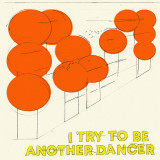
Brussels is a highway where rainbow-fuelled melancholia kids race its track, mountain and road bikes. Endless summers cherish the collective chosen chaos of the city; every corner displays wild micro-natures, buzzing insects, and rare weeds fourishing organically; tape hiss and AM radio compression are the soundtrack of everyday life. And hear! Originated in the Brussels DIY, indie rock and noise scene, a new kid on the block appears: Another Dancer.
They deal in utopian music - of the open, welcoming and whatsoeverish kind. It’s fresh, snotty, neurotic art-rock deeply rooted in 80s/90s DIY aesthetics. The songs on their debut album balance gently between forgotten pop hits and broken sound experiments. In their world, any shitload of weird, random, and badly synchronized sounds unveil broken-hearted pop mastery. In the Another Dancer universe, radios are stuck to WFMU and Soulseek is a self-conscious AI producing 80ies psychedelic FM-rock.
Brussels-based Another Dancer is outdated, wild at heart and elegantly shy. Their full album I Try to Be Another Dancer is out September 10th on Bruit Direct Disques and Aguirre.
"Flashes of the shambolic post-punk of Good Sad Happy Bad and the goofy, fraternal synth-pop of the blog-era gem Teenagers can be seen, often simultaneously, across the new single from the Brussels-based band Another Dancer. Vocals are layered on top of each other to a conversational near-cacophony, like you’ve been placed at the center of a Dry Cleaning show where everyone is, improbably, in a good mood. Sunny synth sweeps jostle next to bent, jangly guitar lines for a song that finds a special kind of vibrance in its mess. — Jordan Darville”
Chicago's blackened noise nihilists return to scene with their 5th full length album From All Purity. On From All Purity, INDIAN take their infamously hateful aggression to new levels of despair. Now augmented with an even keener sense of harsh noise, all the trademark elements of INDIAN's sound have been refined to reach new lows of powerful and punishing anguish. This is the opposite of easy listening.