Death To Techno'Death to Techno is a new, futuristic ep of "The White Screen", ever before into a world of ruff beats, dark electronics and analog effects. Musical producer Dori Sadovnik, the sound genius from Red Axes, produced this ep at Garzen Studios, diving together with the whites into a new world of unknown pleasures and sins.
A mind and body bender between techno rhythms and broken rock n 'roll tapes, between the dancefloor and a campfire, between darkness and light - the new recordings are asking big questions about past and future, vintage and electro, about the screen and about the white.
"Death to Techno," the main track that opens the record, is also treated in a wildly remix version of the RED AXES pair. The cover of the album - "Hellenic Plasticine Party" - was created by multidisciplinary artist Oren Fisher, who has been accompanying the band since its inception.
Produced by: Dori Sadovnik
Musicians:
Stav Ben Shahar - Drums
Noa Ayali - Chello
Liat Raz - Vocals
Nimrod Goldfarb - Contra Bas
Shay Landa - Organs
While notorious in the Chicago streets, RP Boo's music had been unfairly confined to a few white labels and self-released mixtapes until his two archival Planet Mu LPs Legacy and Fingers, Bank Pads & Shoe Prints introduced broader audiences to his sonic history, some of it fifteen years after it was first recorded. I'll Tell You What! is the next step in his mission, and the first time he's released an album of contemporary material. The title, a favorite maxim of his, welcomes listeners to sit down and let him narrate in the unforgettable abstract fashion he's known for. He explores familiar motifs such as the cosmos, movement, and opposition, using densely interwoven vocals, unpredictable percussion, and evil humming bass as his tools of choice. RP Boo's music doesn't follow the traditional rules that most compositions do. Layering decades of samples from yesteryear to the present over his commanding vocal cut-ups, he transports the listener to their own realm of the space-time continuum. The main difference between this record and his prior work is now we hear Boo tell new stories about preaching his gospel outside of Chicago, from his experiences frantically touring the globe over the last five years. The words 'things ain't been the same / since I hopped the plane' are repeated on top of engine sounds and rumbling bass on Flight 1235, a glorious paean to his new jet-setting adventures. The spirit of competition runs through RP's veins as much as blood does, something you can't unlearn when you've been making music for Chicago's footwork circuit as long as he has. The local culture has served as a shelter from the violence that has plagued the city, pitting kids against each other with their feet rather than weapons. On At War Boo reminds us 'we are at war in the streets', a double meaning to both the mayhem in this world and the sweetness of rivalry on the dance floor. Another battle-themed track Cloudy Back Yard, one of the spacier moments on this album, is an abstract on the state of footwork's home. Chicago remains the backyard of this artform even though it's left the porch and traveled to new neighborhoods worldwide. Back at home though, competition among the DJs and dancers continues, and as the man himself says, 'with all this hate, there's smoke, and it's cloudy'. I'll Tell You What! throws more than a few curveballs into the mix. Footwork has always borrowed from hip-hop, and many vocal tracks are almost condensed raps, dating back to the street chants pioneered on Dance Mania Records in the ghetto house days. On Bounty, Boo grabs the mic and brazenly lays down a full-on verse of terror over a thick atmosphere of his signature sweltering low-end and erratic Roland R-70 patterns. While he's most famous for his confrontational battle anthems, his melancholy moments are just as powerful. You get the best of both of those worlds on U-Don't No, with soulful samples finishing his own cocky sentences, one of the most elegant tracks RP has made to date. Deep Sole closes the record out, with the words 'It's always beautiful at the end' looping over waves of hypnotic synthesis, confidently looking death straight in the eyes.
Salvador Font studied violin, clarinet, composition and harmony at the Conservatori Municipal de Barcelona, but very soon started to gain notoriety as a saxophonist in the rich jazz scene of 1940s Barcelona. Font would soon be playing tenor sax and clarinet in the Orquesta Gran Casino. He was in his early twenties and his hot swing technique was already praised through the citiy's scene, he would grow to be considered the best saxophonist in Spain by playing in many orchestras and combos, among them: José Puertas', Antonio Vilá's Virgina, Bonet de San Pedro's band, Pierre Michel, El Lirio Campestre, Los Marios, Luis Rovira y su orquesta, Orquesta brasileña Fon-Fon, Jaime Camino, Los Embajadores, Italo Leone's... With these and others, Font toured constantly, visiting many countries and even staying on some for long seasons: Mexico, Morocco, Switzerland, Egypt... Hungarian violinst of Turkish ancestry Kurt Dogan gave him the "Mantequilla" surname - he felt "Mantequilla" (which means "butter") fit Font's mellow yet swinging improvisation style.
Mantequilla y su conjunto
In the early sixties, "Mantequilla" had the chance to lead his own combo, Mantequilla y su conjunto, with which he was to record the three splendid EPs that are compiled on the present album. All these 7" have become elusive collector pieces in the record market, with sellers demanding from 200 to as much as 950 euros per copy.
In 1961 "Mantequilla" was at his best moment, his gigs at the Jamboree Jazz Cava had brought him back to the first line of Barcelona's jazzmen after he had been working abroad for a long time, and was approached by the Belter label to record an EP. On the sessions he was accompanied by Manolo Mercedes on trumpet, Pedro Ferré on piano, Rafael Lizandra on double bass and Rafael Verdura on Drums. The material chosen for the disc were four original compositions by Salvador Font which had a high West Coast flavour all over: "La Tuna Club", "Whisky Jazz" and "Jamboree" named after famous jazz clubs and "Azul Trompeta", dedicated to Manolo Mercedes.
In late 1962, after spending some time in Madrid working as members of the Italo Leone combo, "Mantequilla" and pianist Manuel Gas came back to Barcelona for the recording of the second "Mantequilla" EP, also on Belter. We find again Manolo Mercedes on trumpet, Pedro Ferré on piano and Rafael Lizandra on double bass, the drummer this time was José Farreras. Another news is that Manuel Gas also sat on piano and vibraphone. The songs chosen for the occasion were two tunes from the Art Blakey Jazz Messengers repertoire: Bobby Timmons' classic "Moanin'" and the Jacques Marray track "No Problem" from the soundtrack of the Les liaisons dangereuses film (mispelled "Not Problem" on the sleeve and label), plus the Salvador Font penned "Blue Note" and "Full de ases" - on "Full de ases" "Mantequilla" trades his sax for the violin, which he also mastered under high influence from Stephane Grapelli. The record was released on Belter in early 1963 and showed "Mantequilla" adding a certain aggressivity to his sound, in a soloist style which has been compared to that of tenor saxophonists Barney Wilen or Benny Golson.
1965 was the year of release of Mantequilla y su conjunto's third EP, now on the Discophon label. Mercedes and Farreras are again present in the recording sessions, joined by Ricardo Miralles on piano and Enrique Ponsa on double bass. Four original Font compositions make up the fantastic EP: "Blues 3/4", "Atmósfera", "Vat 69" and "Balada".
There would be a further EP on Belter, released in 1971 as Mantequilla Group it was a cash-in operation to take some redits of the ye-yé discothèque phenomenon, it gets quite afar in style from the jazz works of Mantequilla y su conjunto, so we just left it aside for the present edition.
"Mantequilla"'s career would continue, in 1968 he would settle in Majorca and form a swing band with Bonet de San Pedro and Manuel Bolao. He played in local orquestras and also with first class world acts like Gerry Mulligan, Tete Montoliu, Errol Gardner, a.o. He was even approached by Henry Mancini to play sax on The Pink Panther Theme in a gig Mancini did with his orchestra in Palma de Mallorca in 1975, He also joined his son Salvador Font (a demanded drummer himself who has played with Máquina!, Orquestra Mirasol, Música Urbana, Gary Burton Quartet, Georgie Fame, and many others) and his peers Carles Benavent, Emili Baleriola, Josep Mas 'Kitflus' and Jordi Bonell with whom he recorded his acclaimed "Mantequilla" album in 1987.
Now, for the first time ever, the legendary three ultra rare and imposible to find EPs by Mantequilla y su conjunto are compiled in a lavish vinyl LP with remastered sound, featuring liner notes and photos and a fantastic period inspired, three backflaped, front laminated sleeve. It is a stricly limited edition of only 500 copies and they are expected to sell out very soon, do not miss your chance of getting yours - it may be the last chance of chasing the Mantequilla sound on vinyl at a reasonable price!
After releasing their Yantar LP digitally last year, Hell Yeah now serve up a much anticipated vinyl version of Richard Somerville and Craig Wilson's perfectly horizontal sounds. It features two of the superb originals with remixes from The Beat Broker and Los Gatos Escobar.
Somerville & Wilson have appeared on ISM Records, DWDK (Danny Was A Drag King), Paper Records and Music for Dreams and count the likes of Tensnake and Gerd Janson as fans of their laidback and charming grooves, and this EP is a real slab of heat that will surely sizzle souls across the world this summer.
First up, The Beat Broker proves he is on fire right now with a remix of the classic 'Melt'. His heart swelling remix has impossibly mellow chords ringing out into a yellow-orange sky as melodies rise and fall like a yacht bobbing on gentle waters. It's a blissed out musical sunset of the highest order.
Then comes Somerville & Wilson's 'Cero Gravity', eight minutes of cosmic synth workouts, yawning chords and long legged drums offset by soft acid. Drenched in reverb and rippling out in all directions, it's a warm musical rush that keeps washing over you until your soul melts away.
From New York, Los Gatos Escobar duo offer a more driving but just as tropical remix of 'Yantar' with big rubbery drums, zoned out chords and smeared pads. It's beautifully innocent and honest, heartfelt and meditative music that encourages you to escape to a seaside paradise.
Last of all, a melted Space Edit of Yantar is drowned in saturated chords, scorched pads and heat damaged keys that leave you adrift in a sea of sumptuousness.
Music doesn't come much more majestic, melodic and mellow than this.
During the recent years, Terence Fixmer kept on being prolific by producing and releasing his music output on well esteemed quality labels such as Ostgut Ton, Novamute, Jealous God and recently on Aufnahme+Wiedergabe. Following a constant workflow, Fixmer decided it is now time to restart his label Planete Rouge which he launched back in 1998 already but has always been irregular in terms of releases. The label will relaunch after a 4-year hiatus with his new 12'.
Terence Fixmer's 'Oppression' EP is a great resume of his unique sound design signature, delivering a collection of four energetic tracks that speaks to the soul.
On top of it, as an homage to one of his all time favourite tracks of 'The Normal / Warm Leatherette' from 1978, Fixmer decided to rewrite this 40 year old tune from Daniel Miller as a a personal pleasure and fun.
By using as well the Mini Korg 700 S Terence Fixmer recreated nearly the original sound, keeping a track that is loyal to his own sound as well as its original spirit.
"Things take a psychedelic turn for SchleiBen 7 with a welcome to the label of arch exponents of mind expansion in NYC's Georgia and the unlikely but no less diverse inclusion of Balearic stalwarts A Man Called Adam. Having Georgia in the series might not now be a surprise, however discussions with this open, genuine duo started during a visit to New York over 3 years ago and so here, finally realised in this fluid journey of confident pace and harmony, is the best of their freeform evocations. A duo in the everyday sense, Brian Close and Justin Tripp are video / music production teamsters of unnatural talent. Having gained a status of their own that has seen them release for the likes of Palto Flats and FTD, the five pieces that form their contribution drip with psychedelic intent. Culled from archives, the interest is how the tracks - made over different years, locations and situations in life - meld in to something poetic simply by being placed within a specific format. Avant-chimes ebb to rhythmic pulses and erudite teachings before dark percussion and Eastern melodies reach a clattering, but gentle finale. With an upcoming collaborative album with Secret Circuit due on the label later in 2018, as well as recent works with RVNG Intl's Matt Werth and recordings for Sacred Summits' brethren Firecracker Recordings, it's a warm, effusive glow of a welcome. In contrast, the inclusion of A Man Called Adam in the series may indeed surprise but is a false comprehension. The "Sketches" included here show AMCA away from their Balearic pop incarnation of the last thirty years and towards the academia that both members Sally Rodgers and Steve Jones have pursued in the last decade. With both completing PHDs, Sally ('The Diachronic Impact of Technology-Led Abstraction in Oral, Written and Music-based Poetries') is a senior lecturer at Leeds College Of Music, while Steve ('Mobilise: The Carry Principle, Sound and Mobile Media') is based out of de Montfort University, now is the perfect time to highlight the diverse sound environments they have been working in. The music that makes up these recordings are drawn from sound works and audio experiments completed in recent years. From sound toys and apps to home made glass organs and electro-acoustic sound, custom patches to spoken word manipulations, the sketches are excerpts - some evolved from commissions for the National Science Museum, BBC Radio 4 and live performances with the world renowned video artist Milosh JL - fused especially for this release. Bringing these generated pieces in to an audible "mix" creates a discourse of their work in performance, interactions and visual media. An intellectualised album therefore, but still in the premise of the series to allow artists to present something new, unique, discrete, hidden even, all with the aim of giving the recipient the chance to sit back and (un)listen. "
As naturally as X-Altera came to be, the music itself is a unique refraction of styles and bold, contradictory approaches. But it all blends together uncannily well—maybe because of the decades of production experience that went into it, or the holistic mindset Mullinix took from the beginning. The name itself reflects as much. "X-Altera references two things. It comes from Latin—ex altera—which means 'from or of the other side.' Which could be a metaphysical thing, or you could say it's jungle ethics brought into the techno world. And I spelled it this way as a reference to X-101 and X-102, the Underground Resistance project of Je- Mills, Mike Banks, and Robert Hood." Detroit meets London, deep techno meets drum & bass, old meets new—X-Altera unites these threads in order to take them in unknown directions.A fresh debut from one of the most vital electronic producers of the last 20 years, Tadd Mullinix (Dabrye, JTC, Charles Manier), who looks to the past of techno and jungle to find a new ways forward.
Transcendentally Beautiful, The Space Lady's Music Is Returning To Earth. Transmitting Messages Of Peace And Harmony, The Space Lady Began Her Odyssey On The Streets Of Boston In The Late 70s, Then San Francisco Ten Years Later, Playing Versions Of Contemporary Pop Music With An Accordion And Dressed Flamboyantly. Following The Theft And Destruction Of Her Accordion , The Space Lady Invested In A Then-new Casio Keyboard, Complete With A Phase Shifter And Headset Mic, Birthing An Otherworldly New Dimension To Popular Song That Has Captured The Imaginations Of The Underground And Its Leading Exponents Ever Since Having Toured Successfully All Around The World With Her Greatest 90s Hits Record, She Felt It Was Time To Record New Songs... And So She Did!
On their very first shot, Count Five, one of America's most exciting mid-60s garage rock groups, hit the bulls-eye. And, fittingly, on Double Shot Records, a hot new label that was also making its debut. For both, it was a giant hit, "Psychotic Reaction," a driving, pulsating sound that zoomed to the top of the charts. To the five youngsters from San Jose, CA, "over-night" success came after 18 months of rehearsals, experimentations and unique innovations. Thanks to a tip from popular disk jockey Brian Lord, Double-Shot Records signed Count Five to a long-term contract in the summer of '66. The instant success of "Psychotic Reaction" prompted the release of this album of the same name, their one and only full-length studio record, which also includes covers of The Who's "My Generation" and "Out In The Street." 180g vinyl reissue with Stoughton jacket packaging.
One of the world's most iconic drum & bass acts, Pendulum have announced their return for 2018 with a brand new album and brand new live shows. 'The Reworks' is a project unlike any
other released by the band before, and marks the end of their seven year hiatus, officially launching on 16th March.
To mark their return, the band have announced their first headline show since 2011 at London's unique new space, Printworks . The show sold out in under an hour and will be both an auditory and visual spectacle for fans.
Also announced is Pendulum's return to one of the UK's biggest events - Reading and Leeds Festival . Headlining the BBC Radio 1 stage - the same slot they graced the last time they played in 2010, the shows mark a welcome return for the band in the UK.
The news will undoubtedly be well received by Pendulum 's legions of fans, with the band having hinted at a comeback by returning to the live stage last year, headlining the UK's South
West Four and Nass Festival , and confirming for this years Snowbombing festival in Austria.
For 'The Reworks' , the internationally-renowned band have tapped some of the most innovative talents from over the past few years to deliver dynamic and refreshing interpretations of their
biggest hits and some of their personal favourites. Friends and collaborators Skrillex , Icarus ,Knife Party and Matrix & Futurebound take their turn on this who's who of electronic music
royalty, whilst Noisia 's explosive cut of the now-iconic track 'Hold Your Colour' will be available with the album preorder from the 16th March.
'The Reworks' album will be available in both CD and vinyl formats from the 29th June.
This exciting announcement marks the beginning of a new era for Pendulum , who have long been considered one of electronic music's most important and pioneering acts, famed for their
no-holds-barred live shows. With more huge festival dates TBA across the summer and new originals on the horizon, 2018 marks the an exciting chapter in Pendulum's already lengthy career.
Noisia' s remix of ' Hold your Colour' , the first single to be taken from Pendulum 's 'The Reworks' album, is set for release on 16th March alongside the preorder, with the full album set to drop on 29th June.
New age music from West Africa. Lush and hypnotic dreamscapes combine traditional instrumentation with sweeping electronics and field recordings. Bamako based composer Luka Productions delves into avant-griot, transforming ancient music for the 21st century. The songs are meditative and sage, as voices guide the listener through ways of living, from the village life to the modern world. Inspired by early electronic music, library records, and new age, this is easily one of the most leftfield recordings to ever come out of Mali. Limited to 500.
In its second venture into reissuing hidden gems of electronic music produced in Eastern Europe in the 20th Century, LITTLE BEAT DIFFERENT ISSUES focuses on the work of a Czech composer, musician and producer, Alexander Goldscheider. Born in Prague in 1950, Goldscheider started as a music orrespondent in New York in 1968/69, went onto reading Music at Charles University whilst continuing as a music critic and radio/club DJ, before becoming a record producer at the top Czech label, Supraphon. As a composer, he pioneered the use of synthesizers in his songs for major Czech pop/rock singers as well as in his own instrumental tracks. After moving to London in 1981, he first recorded two albums at the renowned Red Bus Studios, then proceeded to work at the legendary BBC Radiophonic Workshop, before co-founding and establishing Romantic Robot, a software and hardware design and manufacturing company which later moved into music recording and publishing. Of the many original products, THE MUSIC TYPEWRITER was ground-breaking software enabling the writing and printing of real notation on the Sinclair ZX Spectrum. Similarly TEREZÍN: THE MUSIC 1941-44 was the first ever release of CDs with music written in the Theresienstadt Concentration Camp during World War II. Goldscheider's 1980s LPs THEMES FOR A ONE-MAN BAND Vol I & II reflect his work as a solo artist, always writing, recording and producing single-handedly. He had, though, a team of technical aficionados and inventors back in Prague, who adapted and developed his electronic music equipment incl. synthesizers, sequencers and even a Studer multitrack recorder, thus creating a revolutionary set-up, on par with the much later MIDI.This LP samples Alexander Goldscheider's music produced for records, films, TV and even an art exhibition in the space of 25 years starting from 1975.
WHITE RING mark a triumphant return with a brand new full-length Gate Of Grief, due out on Rocket Girl on 22 June 2018. Their debut album arrives a full eight years since their benchmark EP, Black Earth That Made Me, which sold out almost instantly, making their records some of the most highly sought after on the underground scene and earning them a cult following across the globe. Swerving from aggressively abrasive to beautifully ethereal, musically they draw from varied and challenging palette, whilst tackling themes of loss and acceptance due to struggles with drug addiction and existential dread on a broader scope.
WHITE RING were originally formed by Bryan Kurkimilis and Kendra Malia, before they were joined by Adina Viarengo, with Bryan and Adina currently touring as a duo. One of the most acclaimed proponents of the "Witch House" movement, WHITE RING blend heavy, distorted electronics with eerie, unsettling vocals. However, their new material, created over the course of seven years, pushes the boundaries further, subverting genre ideas and mashing them all together, with industrial, metal, rave, chopped and screwed, rap, grunge, neo folk, post punk and new wave all in the mix. As Bryan Kurkimilis explains; 'We treat our influences like tools to create a certain feeling. We are interested in covering more ground than sticking to a certain formula.'
Bryan and Kendra originally met on Myspace in 2006. At the time Bryan lived in New Orleans and Kendra was in New York, and they didn't even meet face-to-face until 2008 after they had already released a few singles. In 2010 they released the EP Black Earth That Made Me, which was a collection of songs that they mostly recorded before they met in person. The record confounded expectations by selling out immediately on pre-order, making it very rare and highly sought after, with copies going on Ebay for large sums. It was reissued by Rocket Girl in 2011 and still continues to sell in voluminous amounts.
They started playing live in 2009 and rapidly grew a reputation for their captivating performances, usually bringing their own lighting equipment and putting on a spectacular laser show. They have played for large crowds in their hometown of NYC and toured the UK in 2010 in support of their sold out split 7" with oOoOO, playing InTheCity and SWN festivals - which were their first shows outside of New York. They have since shared the stage with the likes of Cold Cave, araabMUZIK, Liturgy, Blank Dogs, Gatekeeper, Blondes, oOoOO, Clams Casino, and others.
They started recording Gate Of Grief in 2010, with the hope of exploring new musical territory, however they took a while to find their path. Bryan and Kendra had some tough personal battles to fight, a sense that pervades the whole album. Thematically it delves in to some pretty dark places whilst exploring the concept of time and what it does to people, relationships and society. As Bryan explains; 'There is a lot of tragedy in this album but there is also hope at the end of it.'
By 2016 pressure was building to finish recording, however due to Kendra's ill health, they needed to bring in someone new to assist with vocals. Fortunately they found Adina Viarengo, who had played in various bands and gave them the impetus needed to complete the album. Shortly after meeting in Brooklyn, Bryan and Adina moved to Joshua Tree, California to finish recording the album, before settling in Massachusetts. Her vocal style fitted in seamlessly with what Kendra had been doing, and although she sang on half the songs, it's almost impossible to tell who is singing on which track, thus making her the perfect addition to the band.
Gate of Grief can be considered the second part of Black Earth That Made Me, or rather, they are the first two chapters in an overarching trilogy about evolution. As Bryan explains; 'First you are born but then you realize what you are and what is against you and it's a flood of emotion that you can only hope to hold on for and let it pass.'
The album title, Gate of Grief, refers to the real gate between Africa and Saudi Arabia that is believed to be the spot where the first humans migrated out of Africa and went on to populate the rest of the world. The album art ties in with this concept, with an image depicting a group of settlers in the USA in early 1900 during a parade. They were actually from a cult in the early 1900s in Bryan's hometown of Fort Myers, Florida.
'Middle of the Road Less Travelled' is not only the debut release by Michal Turtle on Light of Other Days, it is also his first new material released since the amazing reissues put out by Music From Memory in recent years. The three tracks on this EP were written and produced by Michal in 2017 with additional production and guitar playing by Light of Other Days' very own HOVE.
The two met back in 2016 when HOVE contacted Michal after he heard the 12' «Are you Psychic» and was blown away. As it turned out Michal was living in Basel which is only a short train ride away by train from the Light of Other Days home base in Zurich. The two started meeting and playing music together. Soon after, they put together a live-show for Michal's music which had its debut show at Phono Festival in Denmark in 2017. During this time, they started working on new music together as well. The result is this EP.
The music on 'Middle of the Road Less Travelled' is a continuation of Michal's musical exploration into other-worldly territory. Michal is a master in building hypnotic textures from repetitive rhythms that collide with trippy and atmospheric synthesizers. The delayed and dubby guitar lines by HOVE were recorded during rehearsal sessions in Michal's living room in Basel and the last track of the EP 'Agallo (Real)' ends with vocals performed by Lucianne Lassalle. Besides playing in local bands with Michal back in the 80s, Lucianne also performed and co- wrote early Michal Turtle tracks like 'Phantoms of Dreamland' or 'Village Voice' from his first record 'Music from the Living Room'.
Never one to be constrained by musical genres, multi-instrumentalist, composer and producer Adam Gibbons (aka Lack of Afro) has taken it up several notches with his sixth studio record 'Jack of All Trades', a multi-genre tour de force that combines soul, funk, hip-hop, disco, rock and everything in-between, all wrapped up in his signature chunky production to create arguably his finest work to date.
The album is blessed with some incredible vocal performances. Regular collaborator Elliott Cole, Nick Corbin (formally of New Street Adventure), ex I Am Giant vocalist Ed Martin, Wax & Herbal T, Alyssa Marie, Camila Recchio, Juliette Ashby & Emma Noble are all on scintillating form on an album that is crammed full of infectious hooks, top musicianship, and more importantly, vibe by the bucketload!
Classic soul ('Back To The Day', 'Reach Out'), hip-hop ('Back In Business', 'Take It Up A Notch'), disco ('Only You & Me'), rock ('Over & Out'), modern soul ('Baby Be Mine'), folk ('Home') and a healthy dose of funk ('The Messin' Around Intermission', 'Good Love'), all combine to create an album that is stuffed with gorgeous phonic gems of all varieties and represents a definite step up from anything he has done before.
Packed full of beautiful horns and lush strings (and all recorded onto tape through a 1970's mixing desk), 'Jack of All Trades' is Adam doing what he does best and then some - blending the old and new to come up with a crossover classic that's entirely his own, whilst all the while ensuring that the songwriting takes centre stage.
Lack of Afro continues to go from strength to strength. 2016's 'Hello Baby' picked up a BBC 6 Music 'Album Of The Year' nomination & appeared in the Top 10 of the iTunes R&B / Soul chart in 21 countries worldwide.
His music also continues to be in high demand across all aspects of film & TV by networks such as ABC, Fox, NBC, Sony Pictures & the BBC. More recently he has signed to licensing label A Remarkable Idea, an imprint of Universal Music alongside artists such as Maximo Park, Pulled Apart By Horses, Alt J & label boss Benson Taylor. A remix of his 2011 song 'P.A.R.T.Y' by French duo Ofenbach (released on Warner Music in March) is all set to be one of 2018's tracks of the year, whilst his debut album 'Press On' (2007) has just been given 'classic' status by Future Music Magazine.
'Jack of All Trades' is supported by a live band UK tour in May & also at various festivals throughout the summer.
Helsinki's We Jazz Records presents "Y-OTIS", the debut LP from Berlin-based Swedish saxophonist/composer Otis Sandsjö, joining forces with keyboardist Elias Stemeseder, bassist Petter Eldh and drummer Tilo Weber. The album is a forward-reaching, multilayered collection of eight originals penned by Sandsjö and produced by Sandsjö and Eldh. What you get is a form of "liquid jazz", born in an era where the understanding of jazz as a musical language has evolved way beyond the concept of the previous "modern". Informed by hiphop and electronic music, "Y-OTIS" is pure jazz in that the quartet stays true to its constant mission of creating a new form of musical communication. Sandjö's circular sax riffs, the album's rich production touch, and the chopped-up jazz form creates a musical concept which stays melodic and beat-laden while being "free" right to the edge of avantgarde. It's as if the music is sampling itself, constantly keeping ahead of the curve in the musical lineage of jazz.
Otis Sandsjö (b. 1987) hails from Gothenburg, Sweden. He is known previously for example for his inspired work on singer Lucia Cadotsch's globe-trotting trio formation "Speak Low", also featuring "Y-OTIS" co-producer and bassist Petter Eldh. Elias Stemeseder was dubbed one of the top 15 young European musicians to watch by All About Jazz in 2017. Tilo Weber ranks among the most creative young drummers in the scene. Stemeseder is currently based in New York, while the remaining three musicians here live in Berlin. Live on stage, the band performing the material on the new release is called Y-OTIS.
Extremely hot on the heels of 'A Library Excursion', Earl Jeffers teams up again with Don Leisure, his partner-in-beats for another EP of Darkhouse Family goodness. Following on from their highly acclaimed debut album 'The Offering' from late last year on First Word, the Cardiff duo have hand selected a group of friends, dons and legends (including DJ Spinna & Kaidi Tatham) to serve us up 'An Extra Offering'. Five remixes curated by the crew.
For the refix of 'The Accession' (which originally featured Kamaal Williams, Dave Newington and Daf Davies from Boy Azooga), label-mate Kaidi Tatham kicks off with some down-low bottom-heavy boom bap, before switching up the tempo mid-way for a blast of his inimitable jazz-funk bruk boogie.
Next up we're honoured to have not one, but TWO tracks from the Brooklyn legend, DJ Spinna. His Galactic Soul rub of 'Another World' flips the original into a deep soulful 4/4 house cut, featuring the lush vocals of Esther (and one Charlotte Church on backing vocals, pop fact fans).
Then there's DJ Spinna's Galactic Funk take on 'Just So You Know' with the marvellous Vanity Jay on vocals. This one is on the same mid-tempo tip as the original, but with that unmistakable Polyrhythm Addict flavour of big kicks, crisp snares, hench bassline and sweet spacey synths.
For the 'GAEA' remix we keep it Cardiff and introduce the man like Alfie Swan. Doubling up the tempo of the original, this adds some seriously wavy sonics and flips the groove entirely, creating a seriously innovative cocktail of riddims. One for those not shy of some jazz ethics in the dance.
And to close out this offering, Andromeda Jones lays down a ridiculously delectable broken beat mix of 'Journey To Love', this one again featuring Vanity Jay. No messing with this one, this is straight dancefloor fire, transforming the hip hop soul track into a future boogie heater. One for the ravers.
This EP illustrates once again Darkhouse Family's wide range of influences and sounds, as selectors and as music makers themselves, and is no doubt one that will stay in your box for a very long time...n
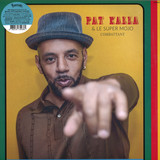
Favorite Recordings proudly presents Combattant, first EP by Pat Kalla produced by Bruno Patchworks' Hovart (aka VOILAAA).
PAT KALLA is a musician, singer and storyteller. Patrice of his birth name, in tribute to the great Lumumba! Lover of words, French language, and music of course. Born in Lyon, from a Cameroonian father, musician and political activist, and a French and literary mother, he explores from his childhood the Soul, the Slam, the Funk ... and the art of telling stories, life being a great one...
After years of touring alongside many bands (Conte & Soul, Legend of Eboa King, Mento Cloub, Voilaaa Sound System), and several acclaimed titles on the two albums by Voilaaa, he comes back with this project to put a bit of primordial lightness in a rainy world: A tribute to the African culture in honor of a father with "Sawa" origins, the tribe from the people of Makossa.
Jojo Ngallé, Moni Bilé, Pain, Manu Dibango, Franco, Rochereau, Kabaselé, Fela, François Nkotti & The Black Style, all these legends' vinyls have turned on the family turntable and the collection has whetted the child's appetite. Through this new trip, he revisits styles that are sometimes little known to Western audiences, such as High-Life, Makossa, Angolan Music, Afrobeat, Afro-Disco and others. We could talk about Franc CFA', we could talk about Jacques Foccart, but we will rather dance, because "the dancer seems naive, but his feet must be connected with earth to understand history..."
Backed by the "Super Mojo Disco", a hyperactive band from Lyon with deep groove and positive energy, Pat Kalla offers us an anti-crisis project, where swaying and feel-good humor is mandatory! An album soon in the crates, beware « c'est médicament » (it's medicine)!!
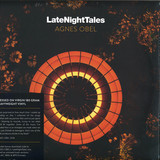
to Me, Sounds Have Always Been More Interesting Than Words,' Says Agnes Obel. i Love It When The Voice Becomes An Instrument And You Almost Forget It's A Human Voice.' Never Is This More Apt Than On This Beautifully Programmed And Bewitching Selection Of Music.
Agnes' 2010 Debut Album Philharmonics Went Platinum In France And Belgium And, Unsurprisingly, Quintuple Platinum In Her Native Denmark, Where She Also Won Five Danish Music Awards (equivalent To The Brits) In 2011. The Follow-up Aventine, Released In Late 2013, Was Imbued With The Same Measured Calmness As Her Debut. It Went Platinum In Belgium And Gold In Denmark And France.
For The Mix You Have In Your Hands It Feels Almost As If Agnes Has Scoured The World Looking For Kindred Spirits - Or Kindred Songs. There's A Quietude About It All, The Antithesis Of A Rush Hour, Like A Frozen Lake On A Sunday Morning. This Is Aided By A Veritable Cornucopia Of New Obel Material, Including A Haunting Reading Of Danish Song 'glemmer Du', Inger Christensen's 'poem About Death' Set To Original Music, And An Agnes Original, 'bee Dance'.
Among Them, There's The Enigmatic Jamaican Singer Nora Dean Who Weighs In With The Hypnotic And Slinky Duke Reid Production, 'ay Ay Ay Ay (angie-lala)' And The Sparse, Sardonic 'party Girl' By Michelle Gurevich, So Good It Inspired The Eponymous French Movie. There Are The Plangent Voices, The Bulgarian Folklore Choir, Nina Simone, Ray Davies And Agnes Herself, Ringing True. Somehow, Ms Obel Makes Even Makes The Electronic Tracks Bow To Her Needs As With Yello Whose 'great Mission' Is More Martin Denny Than Underworld And Cult Greek Composer Lena Platonos' 'bloody Shadows From A Distance' Pulses Gently Rather Than Throbs And Can's Recently Rediscovered 'obscura Primavera', Unusually Hushed.
"i Was Surprised At How Much Time I Ended Up Spending On This. I Collected All The Songs Together With My Partner Alex And We Just Spent Time Listening To Records, Trying To See What Would Fit Together. Some Of The Music I've Included Here Is On Mixtapes We Made When We Were Just Friends As Teenagers. Each One Of The Tracks Produces Stories In My Head." - Agnes Obel, February 2018
out of Stock
Last delivered 2 years ago available to reorder, subject to availability
Way back in 1967, an animated superhero cartoon was released into the world. It was created by Grantray-Lawrence Animation and was based on a web-spinning, crime fighting blue and red dressed character that had originated in1962, in Marvel Comics by Stan Lee and Steve Ditko. This amazing series (that we're not allowed to mention the name of for legal reasons) ran on ABC TV in the USA, then Canada, then a few years later started to spread its web further, running here in the UK throughout summer holidays, after school and possibly early mornings at weekends in the late 1970s. The series then got released on VHS video (and probably Betamax too) in the mid 1980s and still continues to spin its animated magic around the world through further broadcasts, YouTube and DVDs.
The series was notoriously low budget, with animated errors everywhere and numerous scenes, sequences and backgrounds being re-used all the time, often across the same episode. Even a certain spider logo on a costume would appear with six legs, then eight legs later on, then back to six again in the same show.
Series One opened with a newly written spider theme, a classic, hooky song all about doing whatever spiders can, and had, as Big George (RIP) once pointed out to me, a set of session singers falling slightly out of time with the backing track after the first verse. Series One also featured background music by jobbing composers Bob Harris and Ray Ellis but these cues and master tapes are now believed to be lost.
After Series One the company Grantray-Lawrence went bankrupt, so the amazing spider series (that we're not allowed to mention for legal reasons) was taken on by producer Steve Krantz. He brought in new talent, including animation director Ralph Bakshi who later went on to turn a Robert Crumb strip cartoon into the feature Fritz The Cat. Krantz also slashed the already cripplingly small spider budget, and brought in the idea of using economic library music. Here, thanks possibly to an independent sync agent (it has been suggested that a company called Music Sound Track Services may have been the one) production turned to the KPM catalogue. This was one of the few really established library catalogues around at the time with a modern edge, it was full of fabulous, modern dramatic music tracks - often all on the same LP. But more importantly all the tracks were far longer than the one minute musical cuts that many of the fledgling USA library companies were issuing at the time. Not only would this KPM music be efficient, affordable and very easy to use, it would also mean syndication worldwide would not be held up by any future musical issues. Krantz produced two amazing spider series (that we're not allowed to mention for legal reasons), and both were smothered with KPM music. In fact barely a spider second goes by without music playing in either the background or foreground.
For many years I - and many nostalgic others - have been thinking about putting this vinyl album together. For many enthusiasts this really is formative music - a junior foray into hip swinging crime jazz and esoteric musical grooviness. I've also read on line accounts by DJs from WFMU on the trail of original spider master tapes, and there's even a whole forum dedicated to Spidey-Jazz'. Then recently I was looking at an old spider tracklist and realized that several of my favourite KPM cues were there including Syd Dale's Hell Raisers' and Walk And Talk', both from one of the most elusive and desirable KPM albums of all time (yes, you just try and find yourself a copy of KPM 1002 right now), so I decided to push on and get the album made.
So, what features on this Spider-Jazz Lp Well it's music from the amazing TV series we are not allowed to mention for legal reasons, BUT, not music from Series One. No, but it is all from Series Two and Series Three. From looking at archival cue sheets, over 50 tracks from various early KPM 1000 series albums were used across episodes. I've distilled this down into one exciting and enthralling LP, and if this works a further Spider Jazz album may well swing in to production. If you're interested (and I'm sure you may well be) cues here came from KPM1001, KPM1002, KPM1015, KPM1017, KPM1018 and KPM1043 and were composed by master library composers of the era - Dale, Hawkshaw, Hawksworth, Mansfield etc.
And if you are listening over there in the USA, you may well recognize many of the cues here not just from the amazing TV series (that we're not allowed to mention for legal reasons) but also from classic 1960s and 1970s NFL highlight shows that we are allowed to mention.
Following 2017's 'Path of Ruin', DJ Richard returns to Dial with his much-anticipated sophomore LP, 'Dies Iræ Xerox'. Undoubtedly one of the most distinctive and fully-formed electronic producers in recent memory, DJ Richard imprinted the sound of a bubbling US underground with his label, White Material, founded in 2012 alongside Young Male. His first solo LP for Dial, 2015's 'Grind', found DJ Richard delicately establishing a discipline between his East Coast noise heritage and a physical, emotive tradition of house music, mastered during an extended stay in Berlin. Now firmly settled once more in his hometown of Providence, 'Dies Iræ Xerox' is a personal and uncompromising journey that finds the Rhode Island native in reflective form, journeying without compromise into both his creative influences and personal psyche. In part adapting its title from the Latin hymn 'Dies irae', otherwise known as 'Day of Wrath', 'Dies Iræ Xerox' melds the physical and psychological aspects of DJ Richard's production ethos in sharper, more widescreen vision than before; the oceanic swells of ambience yet more powerful, and the rigid basslines sharper still. With the chaos of the Berlin club scene an increasingly distant memory, the album is enriched with a contemplative, even brittle tone, as informed by film soundtracks and literature as the pulse of city living. Still, this is new material from DJ Richard, a touring DJ as distinctive as any other to be found behind the decks at some of the world's finest clubs and festivals. On 'Dies Iræ Xerox', the artist finds the space to write 'the records I really want to play', and each suggests a template for genuine dancefloor transcendence, beginning with the electrifying 'Vanguard' . The sludgy yet sophisticated crawl of 'Tunnel Stalker' sets the tone for the menacing yet somehow melancholy EBM of 'In Broad Daylight', while the record draws to a breathless close with the affecting, drum machine lethargy of 'Gate of Roses'. Drawing little distinction between his more physically rousing material and searching soundscapes, 'Dies Iræ Xerox' instead finds a passage of catharsis throughout both. 'Dissolving World', the album's breathtaking centerpiece, is a choral feature hypnotically overwhelmed by walls of electronic feedback, forging a dramatic link between old ways and new. On the bold and near-beatless 'Ancestral Helm' and 'Final Mercy', DJ Richard seems to grant both music and raw emotion the ability to simply float in the air, brilliantly, poignantly unresolved. If 'Grind,' inspired by the weathered coastlines of Rhode Island, was a record concerning "the border between civilization and the ocean," then 'Dies Iræ Xerox' is an unapologetic follow-up concerning that between macabre obsessions and fear of death. Produced during a murky, transitional period, DJ Richard found himself particularly drawn to Medieval European art and mysticism, fascinated by depictions and philosophies of the antichrist and end-times. Greatly influencing the uncompromising, apocalyptic tone of the album, these investigations have created an engaging and personal vision of the 'Day of Wrath.'
Uncanny Valley EP sonically explores the uneasy, obscure but familiar relationships between human and machine in contemporary life. This is the debut release on RESIST, the record label launched by experimental club/art hybrid event from Belfast, Northern Ireland. This debut release is by RESIST event and label founder, Koichi. Remix comes from electronic music innovator and Eotrax label owner, Eomac in an anxiety driven, frenzied remix of the title track.
Jagged and angular sonics, and warm organic artefacts are the defining sound of this release, which imitates the theme behind the music. Machines are being engineered to have a place in intimate and personal areas of human life. What does it mean to be human in this increasingly digital world Are we anything more than complicated robots made of flesh Where does humanity stop and the uncanny begin
Koichi returns with a new sound, signalling a departure away from his previous aesthetic and into a new direction breaking free from the boundaries and categories of restrictive genre definitions. His music continues to contain a heavy techno aspect, and also draws on raw industrial and experimental influences.
Koichi is an electronic musician, music researcher, and event curator who explores resisting exclusionary identities and disrupting discourses of power and prejudice through music and live digital art.
Geins't Naït Is Considered Legendary At Offen Music. Releasing Music Since 1986, Their Last 3 Albums Have Featured Laurent Petitgand (2011, 2014 & 2015). Now We Present A Collection Of New Unreleased Tracks That We Hope Will Plunge You Deep Into The Special World Of Gn & Lp.
Bluestaeb's Evolution From A Beatmaker To A Producer Is His Sophmore Album everything Is Always A Process'.
He Is One Of The Key Figures Of A New Generation Of Up And Coming Hiphop Beatmakers, Who Have Emancipated From Genre Thinking And Instead Merge Old School Aesthetics With A New School Attitude And Organic Instrumentation.
Everything Is Always A Process Re-iterates Bluestaeb's Overall Approach To Life (and Thinking), But Also Has Direct Reference To The Making Of The Album Itself, Which Began With Moving From Berlin To Paris In 2015 In The Search Of New Influences And A New Creative Environment.
Created Between 2015 And Early 2018, Eiaap Embodies The Process Of This Transition - As Well As Collaboration With Instrumentalists And Vocalists From All Over The World And Recording In Different Studios In Paris, London & Berlin.
"meeting All Those Musicians And Trying Out New Ways Of Producing By Using Real Analogue Synths, Rhodes, Drums And Percussion Etc. Made It Possible To Overcome The Creative Boundaries Of A Home Studio With Just A Midi Keyboard" / Bluestaeb
Influenced By Madlib's "shades Of Blue" And Trained In African Drum Techniques Such As Djembé And Daruka, Bluestaeb Had Been Crafting His Own Beats Since His Teenage Years And Gradually Found His Sound Identity Through Experimenting With Hiphop And Jazz - First To Be Heard By A Broader Music Community In 2013, When He Released His Debut Album "1991 Extraterrestrial" (radio Juicy). Since Then The Prolific Young Artist Has Released Numerous Solo And Collaboration Projects ("b.l.u.e. Friday" In 2015 And - sidekicks With S. Fidelity In 2016). In 2016, He Produced Collaborative Album "lit - Lost In Translation With Rapper Juju Rogers, A Keen Manifesto Against Racism, Xenophobia And The Rise Of Anti-heroes Such As Donald Trump.
Today, Bluestaeb Lives And Works In Paris And Berlin And Is Set To
Release His Third Solo Album everything Is Always A Process', A
Smooth Neo Soul-induced Epic Featuring Artists Such As Noah Slee, Harleighblu And Melodiesinfonie, Via Jakarta Records In 2018.
Shunter, the new album by the Berlin-based duo Driftmachine, is their most ambitious work to date. Although instantly recognizable, featuring their trademark Kosmische and Avant-garde sounds, it also presents a new journey into abstract and hallucinatory worlds. Filled with eerie textures, their electronic visions are darker and more vaporous than ever.
Driftmachine's fourth album (also the fourth one for Umor Rex) offers a new perspective on their ample sound spectrum and systemic narratives. Shunter overlaps and mutates their post-industrial-dub motives. It was conceived and produced in search of a very different kind of imagery, with sections of noise and field recordings intersecting with analogue sounds, a mixture of contrasted fragments, where the usual creative process of modular-synthesis leads Gerth and Zimmer to the discovery of a dark, hazy and diffused experience. There is a protean quality to the rhythmic elements, with tempos constantly contracting and expanding, a departure from the mono-beat-rhythms of "Nocturnes" and "Colliding Contours". The first half of Shunter is made of four pieces named "Shift", although individually separated, they are conceptually linked and can be understood as a sort of score. Imagine a late stage of the industrial revolution, with the interaction between heavy machinery and human beings. The second half of the album is not completely separated, but it has three other substantial melodic moments. Somewhere between the hauntological and the realms of archive-music, a huge range of subterranean beats and distinct patterns dotting the landscape of early electronic and post dub music.
All songs written & produced by Driftmachine (Andreas Gerth & Florian Zimmer), Berlin.
Mastered by Rafael Anton Irisarri. Design by Daniel Castrejón.
Music and Poetry of the Kesh is the documentation of an invented Pacific Coast peoples from a far distant time, and the soundtrack of famed science fiction author, Ursula K. Le Guin's Always Coming Home In the novel, the story of Stone Telling, a young woman of the Kesh, is woven within a larger anthropological folklore and fantasy. The ways of the Kesh were originally presented in 1985 as a five hundred plus page book accompanied with illustrations of instruments and tools, maps, a glossary of terms, recipes, poems, an alphabet (Le Guin's conlang, so she could write non-English lyrics), and with early editions, a cassette of field recordings' and indigenous song. Le Guin wanted to hear the people she'd imagined, she embarked on an elaborate process with her friend Todd Barton to invoke their spirit and tradition.
For Music and Poetry of the Kesh, the words and lyrics are attributed to Le Guin as composed by Barton, an Oregon-based musician, composer and Buchla synthesist (the two worked together previously on public radio projects). But the cassette notes credit the sounds and voices to the world of the Kesh, making origins ambiguous. For instance, The River Song' description reads, The prominent rhythm instrument is the doubure binga, a set of nine brass bowls struck with cloth-covered wooden mallets, here played by Ready.' According to writer and long-time friend of LeGuin, Moe Bowstern (who pens the liners for the Freedom To Spend edition of Kesh), Barton built and then taught himself to play several instruments of Le Guin's design, among them the seven-foot horn known to the Kesh as the Houmbúta and the Wéosai Medoud Teyahi bone flute.' Barton's crafting of original instruments lends an other-worldly texture to the recordings of the Kesh, not unlike fellow builders Bobby Brown and Lonnie Holley. Bowstern notes, Other musician / makers have crafted their own Kesh instruments after encountering the earlier cassette recordings that accompanied some editions of the book.' Both Barton and Le Guin are sensitive to the sovereignty of indigenous Californians and were careful not to trample the traditions of the Tolowa people who lived in the valley long before the Kesh. You research deeply, and then you bring your own voice to the table,' said Barton. Within the Kesh culture, the numbers four and five shape the lives, society and rituals. Barton composed loosely around these numbers, patiently listening to the land of Napa Valley for signs and audio signals from the natural elements. Todd incorporated ambient sounds of the creek by Le Guin's house and a campfire they built together. The songs of Kesh are joyful, soothing and meditative, while the instrumental works drift far past the imaginary lands. Heron Dance' is an uplifting first track, featuring a Wéosai Medoud Teyahi (made from a deer or lamb thigh bone with a cattail reed) and the great Houmbúta (used for theatre and ceremony). A Music of the Eighth House' sends gossamer waves of the faintest sounds to float on the wind.' Like the languages invented in the vocal work of Anna Homler, Meredith Monk, and Elizabeth Fraser, the Kesh songs and poems play with the shape of voice.
The Music and Poetry of the Kesh cassette was meant to accompany and enhance the experience of reading Always Coming Home. Presented in this edition as a long-playing album, where only traces of the book linger (the jacket offers some of Le Guin's illustration, and a letterpressed bookmark featuring the the narrative modes of western civilization and the Kesh valley is included), the music alone breaking the silence of what might be. It can transport—offering a landscape for imagining a future homecoming. One in which we are balanced, peaceful, and tend to the earth and its creatures. A line from the Sun Dance poem reminds us, We are nothing much without one another.' Freedom To Spend gives new life to the recordings of the Kesh people in the first ever vinyl edition of Music and Poetry of the Kesh, out on LP, and digital formats on March 23, 2018. The LP will include a deluxe spot printed jacket with illustrations from Always Coming Home, a facsimile of the original lyric sheet, liner notes by Moe Bowstern, multi-format digital download code and a limited edition bookmark letter pressed by Stumptown Printers in Portland, OR.
This past Monday, January 22, Ursula passed from this realm to another leaving a life spent building and exploring other worlds while challenging social concepts of the real word she inhabited.
Freedom To Spend had been working under Ursula's enthusiastic endorsement and with Todd Barton, her musical collaborator on Kesh, to give the music that accompanied her 1985 epoch a new life. With the Le Guin family's encouragement to move forward with our planned release, we are humbled to play this small role in sharing Ursula's work.
As Pete Swanson, one third of Freedom To Spend, stated, Ursula's legacy is her work which transformed the world, and this is another piece of the universe that her imagination birthed becoming real.' Listen to A Teaching Poem / Heron Dance' below.
Soul Jazz Records' latest album 'Yoruba! Songs and Rhythms for the Yoruba Gods in Nigeria' is newly recorded in Lagos, Nigeria. The album is co-produced by Soul Jazz Records label head Stuart Baker and Laolu Akins (founding member of the legendary 1970s Nigerian Afro-Funk/Rock group Blo). Yoruba! features an array of local master drummers led by Olatunji Samson Sotimirin and singers (featuring the lead vocals of Janet Olufanmilayo Abe) performing heavyweight Afro-rhythms, with talking drums, Bata and Dundun drums and a mass of percussion in these deep spiritual and sacred songs used to honour and worship the traditional and ancient Yoruba gods in Nigeria, West Africa.
The enormous impact of Yoruba and West African music and culture is worldwide - from the first Afro-centric explorations of African-American jazz musicians in the 1950s such as Art Blakey, Randy Weston and Dizzy Gillespie, the explosion of Nu Yorican Latin music in New York City starting in the 1960s - Mambo, Boogaloo, Latin funk and soul - through to the sacred and powerful Afro-derived music of the religions of Santería in Cuba, Candomblé in Brazil and Voodoo in Haiti, which all came into existence on account of the Atlantic slave trade which began over 400 years ago. On a wider scale West African music remains the primary root of all African-American musical forms - from New Orleans jazz to Bronx rap, gospel, soul and more.
This album features songs honouring the Nigerian gods of the Yoruba traditional religion - Yemoja, Obatala, Ogun, Sango and others - as well as a selection of instrumental cuts focussing on the Bata and Dundun drums. The album comes complete with extensive text and photography included in the 40-page outsize booklet/gatefold double vinyl + inners showing the influence of Yoruba culture throughout the world and the social and historical context for the music contained here.
Watch out for a limited edition remix of the project by Osunlade, also forthcoming on Soul Jazz Records.
Enigmatic producer Waxwood has a genuinely global outlook. Born in Russia, resident in Brooklyn and a regular visitor to Los Angeles, he can often be found jetting off to far-fung parts of the World in order to make feld recordings and immerse himself in different musical cultures.
You can hear these disparate global infuences and inspirations in
Waxwood's frst single for Claremont 56, which comes on the back of a near legendary 2015 cassette for NYC's Styles
Upon Styles, Sahasraha, which magically fused tropical hand
percussion and densely layered feld recordings with lilting ambient chords, hypnotic electronic rhythms and all manner of intoxicating
aural fourishes. 'Kama' is a slightly different beast from its' predecessor, with a sunny disposition and laidback breeziness throughout. Although underpinned
by a sturdy kick-drum pattern, its chiming melodies and metallic
percussion fourishes - reminiscent of indigenous music from far-
fung nations such as Malaysia and Indonesia - combine with gentle acoustic guitar motifs and waves of acid-esque electronics to create a beguiling and life-affrming mood. It offers more proof that Waxwood is a producer with a unique musical vision. The track's inherent gentle breeziness is explored in greater detail on the accompanying remix, which has been provided by Phantom Island regulars Fuga Ronto (AKA Swiss musicians/producers Ron Shiller and Tobi Schweizer). Riffng on Waxwood's original, they've added superb new vocals and instrumentation - think dreamy harmonies, tumbling synthesizer melodies and mesmerizing guitar parts - to create a sunset-friendly Balearic revision that's both stunningly beautiful and dazzlingly sun-kissed.
Fresh on Francis Harris' Kingdoms imprint comes Rasmus Juncker's 'Ophold' - six tracks of sublime atmospheres and textures. The Danish musician, sound composer and DJ fits perfectly with the label's aesthetic, joining the dots between ambient, leftfield electronica and modern classical.
Juncker has a background in studying jazz drumming and has been playing improvised music within the jazz domain for many years. He also started to DJ at the age of 14 and was introduced to the world of electronic music production at the same time.
When Rasmus started to think about his debut album he spent several months trying to find his own way to combine his favourite musical influences, improvisation, electronics and classical music. 'Almost a year later', Juncker says, "I went to a sensory deprivation floating tank in Copenhagen while researching for another performance and while I was lying there, floating in the water, deprived from most of my senses, I got the idea to do something drastic in my musical process. Philosophers like Immanuel Kant describe this deprived state as a mental 'Cesura', which became some sort of guideline for the album."
So Juncker decided to start working on the album by leaving the process as well as the final result completely open. 'I wanted to create sounds and music that I had no idea what they would sound like, but would feel like a mental 'Cesura', an 'Ophold' (in Danish)' he states.
He invited musicians, one after the other, to his studio. "I had an electronic musician to improvise patterns and new interesting sounds based on my experience in the deprivation tank. I chose some of the takes and some weeks later I invited a jazz guitarist to listen and improvise on top of what he heard. Then a classical string quartet and a double bass player came to my studio months later, and finally I recorded myself on percussion and drums.
Throughout the recording process I've been experimenting with special microphones in various setups, used noises from the recordings and the room became absolutely essential for the pieces." Juncker states.
"The material I used was all first take improvision which I arranged, layered and edited into compositions. The final pieces were mixed by Andreas Pallisgaard with the same improvised and experimental approach of the recording and the production. None of the musician met each other, but their sounds developed into something completely fantastic I think. The presence of the acoustic instruments and the depth and complexity of the synthesized layers gave some kind of an indescribable sounding music from another galaxy.
Track by track:
'Norddrum' starts proceedings - ethereal, grainy sounds merge and disassociate, as a distant rhythm gradually finds its way to the fore.
The second track, 'Sora' , clocking in at under 2 minutes, is an interlude full of strings, pads, and percussive hits, rich in feeling. This strong sense of sound design and seemingly disparate sounds woven together into a whole carries through into 'Eksotisk Tirsdag' - the strings, plucked instruments and electronics harking back to 4th world adventurers like Jon Hassel and Brian Eno.
'Cyklus' dives into drone textures, pulsing and modulating to create an unearthly soundtrack.
'Havekunst' is another 2 minutes interlude, this time bringing a fully charged rhythmic barrage to the front.
'Cesura', the final track is in essence the EP's centerpiece - a sprawling 8 minute journey that traverses tense, fibrous sections and on into pulsing modular passages, before opening up into glorious moments of wonder and brightness. It's a hugely bold yet fragile endeavour, in line with the whole release.
Jaar's Other People is pleased to present a new solo record of guitar and live custom electronics artist Patrick Higgins, an American avant-garde composer and producer from New York City. Higgins is known for his work in experimental and contemporary classical music, playing guitar and composing in the mythical avant-noise-jazz ensemble Zs. His solo work as a composer unites European avant-garde forms with the post-minimalist howl of New York. His upcoming release on Other People, 'Dossier,' is a four-movement piece performed live without overdubs or edits. All of the samples and synthetic patches were custom built and specifically engaged to become elements of live guitar manipulation. The sound world is post-apocalyptic in spirit but builds to an intimate and reflective end. The material was developed over a two-year period and finalized at the end of 2016. Cover art is by Alfredo Jaar.
Twenty-eight Years Ago, Pissed-off Twelve-year-olds Around The Universe Discovered A New Planet, A Black Planet. Public Enemy's Aggressive, Benihana Beats And Incendiary Lyrics Instilled Fear Among Parents And Teachers Everywhere, Even In The Border Town Of Laredo, Texas, Home Of The Future Founders Of The Latin-funk-soul-breaks Super Group, Brownout. The Band's Sixth Full-length Album (out May 25th) Fear Of A Brown Planet Is A Musical Manifesto Inspired By Public Enemy's Music And Revolutionary Spirit.
Chuck D., The Bomb Squad, Flava Flav And The Rest Of The P.e. Posse Couldn't Possibly Have Expected That Their Golden-era Hip Hop Albums Would Sow The Seeds For Countless Public Enemy Sleeper Cells, One That Would Emerge Nearly Three Decades Later In Austin, Texas. Greg Gonzalez (bass) Remembers A Kid Back In Junior High Hipped Him To The Fact That Public Enemy's bring The Noise' Is Built On James Brown Samples, While A Teenaged Beto Martinez (guitar) Alternated Between Metal And Hip-hop In His Walk-man, And Adrian Quesada (guitar/keys) Remembers Falling In Love With Public Enemy's Sound At An Early Age. when I Got Into Hip Hop, I Was Looking For This Aggressive Outlet . . . And I Didn't Even Understand What They Were Pissed Off About, Because I Was Twelve And Lived In Laredo . . . But I Loved It And I Felt Angry Along With Them.'
Joseph Abajian (fat Beats' Owner) Must Have Sensed The Deep Hip-hop Well Lying Beneath The Versatile Band's Latin-funk Veneer. i Thought Their Sound Would Work Covering Public Enemy Songs,' Abajian Says, And, it Was Good To Know They Were P.e. Fans . . . We Came Up With A Track Listing And They Went To Work.' Despite The Band's Eagerness To Work On New Original Material (an Album Of Original Songs Is Slated For Next Year), They Couldn't Pass Up The Opportunity To Pay Homage To This Iconic And Influential Posse.
Translating Sample-based Music To A Live Band Turned Out To Be More Of A Challenge Than They Anticipated. Adrian Tried To Get Inside The Bomb Squad's (public Enemy's Producers/beat-making Team) Head In Order To Find The Inspiration To Reinterpret P.e.'s Songs: imagine The Bomb Squad Going Back In Time And Getting The J.b.s (james Brown's Funky Backing Band) In The Studio And Setting Up A Couple Analog Synths And Then Playing Those Songs.' While Some Songs Closely Follow The Original Musical Blueprint, Others Use The Source Breakbeats As Jumping-off Points Later Sweetened By Trombonist Mark speedy' Gonzales' Horn Arrangements, Synth Wizardry Courtesy Of Friend-of-the-band Peter Stopschinski, And Dj Trackstar's Turntable Scratches. But Don't Listen Expecting To Hear Paint-by-numbers Recreations Of Classic Public Enemy Jams. our Approach Is Never In The Tribute Sense,' Adrian Explains. we've Always Taken It And Made It Our Own, Whether It's The Brown Sabbath Thing Or This Public Enemy Thing.' Coming Off Numerous Tours As Brown Sabbath And Even A Stint Backing The Late Legend Prince, Brownout Is Arguably The Tightest And Funkiest Band On The Road Today And They're Psyched To Bring This Revolutionary Music To The People. For A Band Without An Overt Political Agenda, They Collectively Couldn't Resist The Opportunity To Play This Music Live, Especially Now. if There's Any Way That We Can Use The Already Political And Protest Nature (of P.e.'s Music), We Would Like To Try,' Beto Says. the Album's Title, Fear Of Brown Planet Is Definitely A Relevant Idea Today And We're Not Afraid To Put It Out There, Because We Want To Speak Out.' By Reinterpreting These Hip Hop Classics In Their Unique Style And Channeling The Spirit Of Public Enemy That First Echoed Around The World And Captured Their Imaginations All Those Years Ago, Brownout Is Doing Exactly That.
Factory Benelux presents a new vinyl edition of Swimming, the debut album by Belgian new wave group The Names, originally issued in June 1982, and now issued in a limited edition of 300 copies on clear vinyl.
Between 1979 and 1982 The Names recorded a string of excellent records for Factory, Factory Benelux and Les Disques du Crepuscule, all helmed by legendary producer Martin Hannett. Recorded at Strawberry Studios in Manchester, Swimming has come to be regarded as a European cold wave classic, combining strong songwriting from Michel Sordinia and poised, tasteful delivery by guitarist Marc Deprez and keyboards player Christophe Den Tandt.
"Exhibits many of the fine qualities of early 80s avant-rock: icy brutalism, spectral reverb, tormented vocals, techno-tribal rumbles" (Uncut, 12/2000); "Swimming retains a gorgeously shrouded, sepulchral mood" (Mojo, 12/2011); "Intelligent and imaginative" (The Face, 7/1982)
Bonus tracks include the popular singles Calcutta, Nightshift, Spectators of Life and The Astronaut, as well as the band's John Peel session from February 1982 - the first ever recorded by a Belgian band. The gatefold sleeve features original artwork and poster design by Benoit Hennebert, and photographs by Marc Portee.
Max Loderbauer, who has so far made consistently engaging contributions to the Arjunamusic family, is back to lend his unique interpretive skills to the master recordings for the Brightbird album by João Paulo Esteves da Silva, Mário Franco and Samuel Rohrer. Loderbauer has set himself up for a chal- lenge, since the original album's completely improvised flow of small-ensemble, conversational jazz feels complete enough without outside intervention. However, Loderbauer's role as electronics operator in the similarly attuned Ambiq trio has already shown that, through his mastery of tone color, he has a talent for teasing out the additional hidden details within an apparently 'complete' sonic environment. It's a task he mana- ges to accomplish without ever overriding or contradicting the cohesive message provided by his collaborators.
Adding to the challenge here, Loderbauer chooses to re- mix using only sounds from the original recordings. By doing so, it might seem he is willfully denying himself the chance to use his own signature tools and turn Brightbird's source materi- al into stunningly new electro-acoustic hybrid blooms. Yet Loderbauer succeeds here by becoming something more like a translator than an augmenter - he finds a way to make mea- ningful syntactical changes to the trio's rich and versatile vo- cabulary, and once again unveils a verdant world of hidden details in the process.
The A-side 'Trusting Heart/Cosmos' has an anxious tone introduced by a set of Doppler-effected piano notes that seem to melt in the sun, and is soon complemented by a va- riegated, chattering rhythm line. Here Loderbauer builds up a tactile tension between rhythmic certainty and sharp-angled, de-tuned, and occasionally scrambled instrumentation, framing a disorienting (yet engaging) virtual space where ob- jects' bright hues rapidly change as they contract and expand along multiple dimensions. For the b-side 'Noontide', Lo- derbauer switches to a more focused and streamlined idiom with an uncanny ease, riding along steady waves of sequencer patterning and silvery, resonant shiverings. Reverberating, ho- lographic piano again provides the tonal center here, and the notes ring with a forward-thinking optimism not far removed from classics of the 'Krautrock' era.
Current supporters of all the artists involved will find this to be an invigorating synopsis of their work to date, while newcomers will be treated to a soundworld where skillful fu- sion (the act itself, rather than the music genre with the same name) is constantly on display.
Enfant Terrible was one of the first labels to give recognition and attention to the pioneers of minimal electronics / proto-elektro / avant-garde pop / experimental pop music from the late 1970's and early 1980's. Next to that it is one of the few labels in this field of music that truly invests in the development of new talents in this music tradition. In short: Enfant Terrible has been mapping the field of this counter culture and contributing to its development since the very start of its activities.
But in this world of followers and copycats we have an agenda of our own. We go furthur and dare to move into new territories. Both when it comes to content and ways of organizing the business part we are at the forefront of independent music culture. We keep it real, stay ourselves and a hundred percent independent.
While Enfant Terrible for an important part has built the current niche of minimal electronics we also have always looked beyond rigid style definitions and established artists. All our compilation releases have been highly acclaimed for this.
The time is now... we go for the logical next step... supporting and contributing to the local music scene.
'Kamp Holland' is an overview of the current independent electronic music scene from Holland. Some of the artists on this compilation have been inspired by the music tradition we have been building. Others are inspiring Enfant Terrible in its current development. Always furthur we go...
A great compilation can open the gate to another world. Who knew that some of the most exciting Afro-funk records of all time were actually made in the small West African country of Benin Once Analog Africa released the first African Scream Contest in 2008, the proof was there for all to hear, gut-busting yelps, lethally well- drilled horn sections and irresistibly insistent rhythms added up to a record that took you into its own space with the same electrifying sureness as any favourite blues or soul or funk or punk sampler you might care to mention.
Ten years on, intrepid crate-digger Samy Ben Redjeb unveils a new treasure- trove of Vodoun-inspired Afrobeat heavy funk crossover greatness. Right from the laceratingly raw guitar fanfare which kicks o Les Sympathics' pile-driving opener, it's clear that African Scream Contest II is going to be every bit as joyous a voyage of discovery as its predecessor. And just as you're trying to get o the canvas after this one-punch knock out, an irresistible Afro-ska romp with a more than subliminal echo of the Batman theme puts you right back there. Ignace De Souza and the Melody Aces' Asaw Fofor" would've been a killer instrumental but once you've factored in the improbably-rich-to-the-point-of-being-Nat-King-Cole-influenced lead vocal, it's a total revelation.
The screaming does not stop there, in fact it's only just beginning. But the
strange thing about African Scream Contest II's celebration of unfettered Beninese creativity is that it would not have been possible without the assistance of a musician who had been trained by the Russian secret services to "search and destroy" enemies of the country's (then) Marxist-Leninist president Mathieu Kerekou.
Already familiar to fans of the first African Scream Contest as a mainstay of ruthlessly disciplined military band Les Volcans de la Capitale, Lokonon André vanished in a cloud of dust at Ben Redjeb's behest with a list of names and some petrol money, only to return a few days later having miraculously tracked down every single name he'd been given. The source of this Afrobeat bounty-hunter's impressive people-finding skills - his training with the KGB - highlights the tension between encroaching authoritarian politics and fearless expressions of personal creative freedom which is the back-story of so much great African music of the 60s and 70s. Happily, in this instance, Lokonon was tracking the artists down to oer them licensing deals, rather than to arrest them.
Where some purveyors of vintage African sounds seem to be strip-mining the
continent's musical heritage with no less rapacious intent than the mining companies and colonial authorities who previously extracted its mineral wealth, Samy Ben Redjeb's determination to track this amazing music to its human sources pays huge karmic dividends.
Like every other Analog Africa release, African Scream Contest II is illuminated by meticulously researched text and eortlessly fashion-forward photography supplied by the artists themselves. Looming large - alongside Lokonon André - in the cast of biopic-worthy characters to emerge from this seductive tropical miasma is visionary space-nerd Bernard Dohounso, who laid the foundations for Benin's vinyl predominance by importing and assembling the turntables that would play the products of his Bond villain-acronymed pressing plant SATEL, a factory that would revolutionise the music industry in the whole region.
The scene documented here couldn't have been born anywhere else but in the Benin Republic , and the prime reason for that is Vodoun. It's one of the world's most complex religions, involving the worship of some 250 divinities, where each divinity has its own specific set of rhythms, and the bands introduced on the African Scream Contest series and other compilations from that country were no less diverse than that army of dierent Gods. At once restless pioneers and masters of the art of modernising their own folklore, the mystic sound of Vodoun was their prime source of inspiration.
One especially irascible Vodoun-adept was Antoine Dougbe, who styled himself The devil's prime minister' while turning ancestral rhythms into satanically alluring modern beats. As Orchestre Poly-Rythmo songwriter Pynasco has observed sagely, Evil is not elsewhere, evil extends into the house'. And African Scream Contest II is a gloriously cinematic road-trip through an undiscovered realm of music lore whose familiarity is every bit as thrilling as its otherness.
Multi-instrumentalist, composer and producer Adam Gibbons (aka Lack of Afro) is back in some style with 'Back To The Day', a beautifully produced summer sizzler crammed full of infectious hooks, top musicianship and most importantly, vibe by the bucketload! Taking a nod from classic material by artists such as The Jackson 5, Earth Wind & Fire (and more recently Vulfpeck), 'Back To The Day' is Lack of Afro doing what he does best and then some - blending the old and new with big drums and heavy percussion to come up with a crossover classic that's entirely his own, whilst all the while developing his abilities as a songwriter.
Providing a dynamite vocal once again is regular collaborator Elliott Cole. Not just the voice of the track, he also plays guitars and bass, whilst ably backed up by some stellar musicians including George Cooper (Haggis Horns) on keys, Rory Simmons (Blur, Jamie Cullum) on trumpet, string and horn arrangements and Harry Harding (Yola Carter) holding down the backbeat on drums.
Keeping the dancefloor packed and turning the party vibes right up to 11, 'Take It Up A Notch' (featuring the brilliant Wax & Herbal T and taken from the critically acclaimed 'Back In Business EP') completes what is arguably one of the strongest single packages of the year!
Lack of Afro continues to go from strength to strength. 2016's 'Hello Baby' (released on his own label LOA Records) picked up a BBC 6 Music 'Album Of The Year' nomination & appeared in the Top 10 of the iTunes R&B / Soul chart in 21 countries worldwide. More recently, Adam's music continues to be used across all aspects of film & TV by networks such as ABC, Fox, NBC, Sony Pictures & the BBC whilst he also has released music on Universal & Warner Brothers Records.
Both tracks are taken from the new album 'Jack Of All Trades', released on LOA Records in May 2018 and supported by a live band UK tour in May & throughout various festivals throughout the summer.
For his third album for Far Out Recordings, London based multi-instrumentalist and one of Europe's finest saxophonists Sean Khan ventures to Rio de Janeiro to collaborate with iconic Brazilian polymath Hermeto Pascoal. Taking its title from the escaped slave settlement 'Palmares' in the Northeast of Brazil during the 1600s, Palmares Fantasy is Khan's utopian jazz message for the world, and features Azymuth drummer Ivan 'Mamao' Conti, bassist Paulo Russo, guitarist Jim Mullen, and guest vocals from Brazilian chanteuse Sabrina Malheiros, and Cinematic Orchestra frontwoman Heidi Vogel.
Like Hermeto Pascoal, Sean Khan is a self-taught musician. Never able to afford his original dream of studying at Berklee, and having been turned away from Guildhall School of Music for being 'too raw', he became disillusioned with what he saw as the exclusivity, elitism and dangerous institutionalisation of the jazz world. Yet Sean's love for music and the drive to create never faltered.
Hermeto Pascoal, the man Miles Davis once dubbed the most impressive musician in the world', is a similarly independent artist. A true maverick whose ingenuity and freedom from conventional restraints is so great that he has essentially conceived his own musical language, made him the dream collaboration for Sean.
Aspiring to inclusivity and equality also informs the message in Khan's music. Inspired by the 17th Century settlement of Palmares in Brazil's Alagoas region, which was free from the Portuguese crown's murderous exploitation of South America for a century, Khan notes his fascination with the fact that while majoritively made up of escaped African slaves, many deserter conquistadors also joined the settlement.
Hearing the deep-grooving title track with this history in mind, the listener is transported to a futuristic musical eden, with Mamao's insatiable 10/8 rhythm back-boning Hermeto's wild improvised vocals, rhodes and whistles, while Sean's harmonically brilliant sax and flute add more layers of moody, characterful expression. 'Moment of Collapse' is Sean's poetic study on the uncertainties of modern day western civilisation, delicately presented by the gorgeous vocals of Heidi Vogel and drenched in lugubrious strings and Alice Coltrane-esque harp. The two covers on the album are of Hermeto's own 'Montreux' (on which Hermeto plays solos on a teapot and a pint of water), and an uplifting soulful jazz-funk take on Milton Nascimento & Lo Borges MPB classic 'Tudo Que Voce Podia Ser' featuring the vocals of pioneering nu-bossa voice Sabrina Malheiros.
The recording sessions for the album were part of an intensive and hugely productive eight-week excursion to South America for Far Out boss Joe Davis in the summer of 2016, which also saw the sessions for Azymuth's Fênix and a forthcoming album from Uruguayan fusion legend Hugo Fattoruso.
Fantastic' Gilles Peterson
Loving this!' Opolopo
Thank you!' Sassy J
Proper! Great track.' Colin Dale
this is great!' Yannick Elverfeld (RBMA / Needs Records)
I've enjoyed Sean Khan's earlier releases, but this really seems like he's grown into his fairly considerable talent.' Mark Sampson (Songlines)
His last album was his best so far, but I think this one may be even better.' Laurence Pragnell (Soul Brother Records)
dope!!!' Kyri (R2 Records)
this is great - really cool vibe!' Sam Redmore
wonderful track - can't wait to hear the lp.' Simon Harrison (Basic Soul Radio)
This is very tasty indeed.' Gavin Boyd (Soul Has No Tempo)
Rumored to be one of the most intriguing collaborations of 2018, Rocketgirl presents Pieter Nooten's 4th solo album 'STEM' as Nooten teams up with legendary producer/ mixer/sound-artist Stephen W Tayler (Kate Bush, Underworld) at Peter Gabriel's Real World Studios. 'STEM' is probably Nooten's finest work since collaborating with Michael Brook 30 years ago, producing the timeless cult classic 'Sleeps With The Fishes'.Setting the tone in his 2012 double cd 'HAVEN', Nooten further explores the boundaries between the neoclassical and ambient genre, delivering an album of heartwrenching, profound melodic compositions that invites you to listen to 'STEM' over and over again.
Stem is 60 minutes long (The CD includes a bonus track)
The vinyl has been specially edited by Stephen and Pieter and comes with a postcard and a download code of the full version.
Press:'Moments in life so often slip by with only the rusted acquaintance of memory to recall them but with a masterpiece like Haven in your collection you won't ever walk alone. No matter the slips and pitfalls you encounter or the loves you recriminate yourself for squandering, Pieter Nooten's newest will allow you to dwell with your thoughts in private with dignity...''Haven is the kind of record that gives modern composition a good name. It will also give countless budding musicians the belief that they can create a valid piece of work with nothing but a laptop. This may not be a bad thing, but it will be a while before anything in the genre matches the maturity, warmth and technical ability displayed by Nooten...'
Nooten's musical career began in the late 1970s. Starting out as the drummer in a local symphonic rock band,2 he quickly changed to bass guitar and later keyboards, playing in different bands. At the height of house squatting culture and new wave, Nooten met Anka Wolbert and Ronny Moorings who had just formed Clan of Xymox together. During the mid-eighties Clan of Xymox recorded two highly acclaimed albums on 4AD.
Comprised of Vancouver producers and multi-instrumentalists Nick Wisdom and Astrological, Canadian duo Potatohead People boast a number of noteworthy accolades thanks to a their signature sound drawing influences from 90's boom-bap, future soul, classic jazz, deep house and boogie/funk. Beginning with a series of EP's, including their landmark "Kosmichemusik" EP, Potatohead People's productions quickly made their way to artists like Illa J who tapped the duo to produce his now critically acclaimed self-titled album, as well as producers like Kaytranada (who co-produced Illa J's "Strippers" with the pair). Supporters such as Soulection, Nightmares on Wax, Pomo, DJ Spinna, Big Boi, and Phife Dawg have also played formidable roles in championing the sound of Potatohead People worldwide.
Now with three years since their last release, 2015's critically acclaimed debut album Big Luxury, Potatohead People are back their long awaited new album Nick & Astro's Guide To The Galaxy (due out May 11th via Brooklyn label Bastard Jazz) The record picks up right where the pair left off, showcasing a leap forward in production chops, musicality, and songwriting. The first single "Quest For Love" "with it's neck snapping drum break, lush rhodes chords, cosmic synths, guitar & horn flourishes and unexpected musical changeups bring in the hip-hop infected musicality the duo has become so loved for, while Nick & Astro collaborate vocally on top. "Morning Sun" featuring Danish vocalist (and Anderson.Paak collaborator) Nanna.B is in part a melancholy piece with knocking drums, an infectious bassline and a soulful, shimmering hook, while "Do My Thing" featuring Canadian singer Kapok and Illa J is a neck-snapping Hip-Hop joint perfect for the dancefloor. "Liftin' Up" featuring San Francisco's K-Maxx ventures into West Coast boogie territories, while the album's closer "Rituals" goes for a deeper more atmospheric electronic vibe.
Reissue of the very first Birds Of Passage album from 2010. Minimalistic Lo-Fi Shoegaze meets experimental pop with drone influences.
For someone who thinks it's difficult to describe music in general, it's even more difficult to describe the soundscapes of BIRDS OF PASSAGE. The influences of Alicia Merz - the girl behind BIRDS OF PASSAGE - are her memories, breathless-inspiring cold winds, the smell and atmosphere of a spring day, smoking cigarettes, sunshine and shadows. As a mixture of all these elements plus a minimalistic experimental instrumentation you as well can describe her music: sometimes shy, sometimes more energetic ( fantastic frown') but always intensely and extremly private. Listening to her debut record "Without The World" is like sharing one long day with Alicia and her thoughts in the diverse landscapes of her home country New Zealand.
Alicia doesn't need the orotund spectacle of a band to evoke emotions - with the help of different, in a minimalistic way, used instruments combined with field recordings, she doesn't create specific songs - she builds up a mood. There's no typical song structure, there's no melody to chase after - but there's a development which absorbs you and which makes you start to think about elements you block out in your everyday life.