Record Kicks presents "Brothers & Sisters / This is You" a limited edition 45 from Gospel-soul sensational Michelle David & The True-Tones forthcoming album. The 45 is limited to 500 copies on clear transparent vinyl.
This "double-sider" 45 features on the A side "Brothers And Sisters", the first single and title track of the upcoming album, a Marvin Gayesque uptight 70 soul stormer able to set every dancefloor on fire. The B-side is no exception with the blue-eyed soul stomper "This Is You".
The awaited album follows their 2022 full length "Truth & Soul", which was named one of the Albums of the Year at BBC Radio 6. Raised in New York in a church, Michelle David started singing at the age of four and joined her first group, The Mission of Love, when she was five. During her career, she toured the world with Broadway musical "Mama", contributed to successful theatre shows such as "The Sound of Motown", "Glory of Gospel" and "Mahalia" and recorded for artists such as Diana Ross and Michael Bolton. This all happened before releasingsix critically acclaimed gospel-infused albums with the True-Tones.
Michelle David & The True-Tones know how to put on a glowing evening of classic soul. With their upbeat grooves, powerful vocals, and strong melodies, they have already conquered many festivals and numerous clubs. Having played renowned Dutch festivals such as Pinkpop and North Sea Jazz, the band toured from Spain to Scandinavia, leaving memorable impressions wherever they play; delivering an unforgettable live experience. In addition, the band's discography has also been praised; receiving an Edison nomination (the Dutch Grammy), while their previous record "Truth & Soul" was named Album of the Month on FIP radio in France and Album of the Year at Craig Charles' BBC Radio 6 Music show. The group did numerous radio and TV performances and were even invited to play their music on the biggest National TV show during the Winter Olympics 2022.
Dark Entries flashes back to the grimy streets of New York City circa 1982 to bring us an unreleased album from cult outfit Ike Yard. Comprised of Stuart Argabright, Michael Diekmann, Kenneth Compton, and Fred Szymanski, Ike Yard sits between the sinewy proto-body music of the Neue Deutsche Welle and the shattered grooves of their No Wave peers in New York. The band’s initial run was short but blinding. They released an EP for Les Disques du Crépuscule in 1981, which was followed by their legendary self-titled LP for Factory in 1982. They disbanded within a year, frustrated by the slow pace at which the industry was able to release their increasingly challenging music. 1982 features 10 tracks which likely would have become the band’s second LP - only four of these songs have previously seen release on 2006’s 1980-82 Collected via Acute Records. Following the release of Ike Yard, they continued down their tortured path of hybrid electro-acoustic music with an arsenal of now-classic analog instruments, including the Korg MS-20 and the Roland TR-808. Skittering rhythms teeter on the verge of collapse while seasick synth warbles threaten to push us overboard. Electronic washes devolve into waves of feedback. Sneering basslines threaten dancers to move, but how can the body obey? This is dangerous music, gliding along the brink. The album features a live photo of the band by Makoto Iida and includes an insert with liner notes from Stuart Argabright. 1982 is essential for fans of post-punk and caustic electronics from Liaisons Dangereuses to Beau Wanzer.
Grupo Rebolu has been a mainstay in the extensive Colombian community of New York City for well over a decade, bringing the quintessential sounds of their home country to countless live shows and events throughout the five boroughs. Musically steeped in the folkloric traditions of the Afro-Caribbean discourse, the band has consistently combined first class musicianship with the echoes of their upbringing. Throughout their four self-produced albums, they have incorporated some of Colombia's most cherished traditions —gaita,cumbia, andbullerenguebeing just a few of the disciplines that Rebolu has infused with the modern songwriting and compositions of band leader Ronald Polo. As a natural step in the band's continued musical evolution, Rebolu has connected with Names You Can Trust for a one-off recording to deliver two original songs and productions that seamlessly fit the preferred format and the label's catalog, while further incorporating the group's sound into the wider NY musical spectrum. Whether it's champeta gone disco, or bullerengue gone reggae, this handy double-sided single packs a fresh take on the roots and traditions of Rebolu's musical lineage.
Black Rainbows is a musical project inspired by the objects and artworks collected by Theaster Gates at the Stoney Island Arts Bank in Chicago. Situated at the Great Grand Crossing neighborhoods of Chicago's South Side, Stoney Island Arts Bank is a cathedral to Black Art, a curated collection of Black archives comprising books, sculpture, records, furniture and problematic objects from America's past. As well as being a site for archive, the Arts bank is also a place for convening. Bailey Rae attended The Black Artists Retreat there in 2017 and performed in the space. Wide ranging in it's themes, Black Rainbows' subjects are drawn from encounters with objects in the Arts Bank. Taking us from the rock hewn churces of Ethiopia, to the journeys of Black Pioneers Westward, from Miss New York Transit Queen 1957, to how the sunset appears from Harriet Jacobs' loophole. Black Rainbows explores Black femininity, Spell Work, Inner Space/Outer Space, time collapse and ancestors, the erasure Black childhood and music as a vessel for transcendence. The project will be released in various iterations - live performances, books, visuals, lectures, exhibitions, and more. Sonically, the album is a multi-genre mix of the progressive R&B, neo soul sound that will be familiar to fans but it also contains rock, jazz and electronic elements. The album was produced by S.J. Brown and Corinne Bailey Rae.
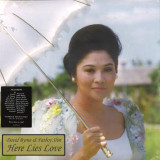
David Byrne & Fatboy Slim’s acclaimed 2010 album Here Lies Love receives its first-ever vinyl release to coincide with a new production opening on Broadway this summer. Here Lies Love is a double-disc song cycle – improbably poignant, decidedly surreal, surprisingly thought provoking – about the rise and fall of the Philippines' notorious Imelda Marcos. It was conceived by David Byrne; composed by Byrne and DJ/recording artist Fatboy Slim, AKA Norman Cook; and performed by a dream cast drawn from the worlds of indie rock, alt country, R&B and pop. Byrne's taste in collaborators is as imaginative as it is impeccable, including Cyndi Lauper (who recounts, to lighthearted disco beats, Imelda's courtship with Ferdinand Marcos), Steve Earle (as the power-hungry Ferdinand), Dap-Kings vocalist Sharon Jones (recalling Imelda's introduction into New York society) and Natalie Merchant (as spurned Imelda confidante Estrella, anticipating the onset of martial law). Along with vocals turns from such stars as Tori Amos and the B-52's Kate Pierson, Byrne works with rising indie rockers St. Vincent and My Brightest Diamond; New York chanteuses Nellie McKay and Martha Wainwright; and dance-music divas Róisín Murphy and Santigold. Byrne himself appears as the voice of imperialistic America on ‘American Troglodyte’, a send-up that wouldn't have seemed out of places in Talking Heads' True Stories.
Byrne originally envisioned this as a musical theatre piece, to be mounted in disco and nightclub settings, reflecting the globe-trotting Marcos' taste for such velvet-roped spots as Studio 54 and Regine's. In 2006, he performed work-in-progress versions to enthusiastic audiences at New York City's Carnegie Hall and the Adelaide Festival in Australia. While plans for a US theatrical production continued to evolve, he delivered this unique recording. The award-winning theatrical production eventually premiered at The Public Theater in New York in 2013, travelled to London’s National Theater for a sold-out run (2014–15), and was remounted at the Seattle Repertory Theater (2017).
Here Lies Love has an effervescent disco feel, redolent of Fatboy Slim's own dance-floor anthems, with warm undercurrents of the Latin rhythms that have percolated through Byrne's recent solo work. The sunny arrangements act in counterpoint to the reality of the Marcos' increasingly repressive regime, reflecting the imagined inner life of the glamour-obsessed Imelda. Explains Byrne, "For me, the darker side of the excesses are, for the most part, a matter of record. A lot of the audience is going to come with that knowledge already. What's more of a challenge is to get inside the head of the person who was behind all of that, and understand what made them tick." Byrne offers no judgment and avoids the obvious – there is no mention of Imelda's infamous shoe collection.
Many of Byrne's lyrics are, astonishingly enough, constructed from actual Imelda quotes, including the project's title, the words that Imelda, now returned to the Philippines from US-assisted exile in Hawaii, would like to have inscribed on her gravestone. In addition to his new liner note, Byrne illustrates the story with archival photos. In a detailed preface, he reveals what drew him to this subject and the bumpy route he took to launch the project and, ultimately, record this album. The booklet is indeed a page-turner, just as Here Lies Love is a wonderfully old-school album that rewards start-to-finish listening. Once again, Byrne – beloved as musician, thinker and bicyclist-about-town – reveals the breadth and singularity of his vision.
The new production of Here Lies Love will premiere at the Broadway Theatre in New York City. Performances begin June 17, ahead of an official opening night on July 20. Tony Award winner Alex Timbers (direction) and Olivier Award nominee Annie-B Parson (choreography) reunite with Byrne (concept, music, and lyrics) and Fatboy Slim (music) to bring Here Lies Love to Broadway, continuing a ten-plus year collaboration on the project. Tom Gandey and J Pardo contribute additional music. Here Lies Love is produced on Broadway by Hal Luftig, Patrick Catullo, Diana DiMenna for Plate Spinner Productions, Clint Ramos, and Jose Antonio Vargas. The staging at the Broadway Theatre will transform the venue’s traditional proscenium floor space into a dance club environment, where audiences will stand and move with the actors. A wide variety of standing and seating options will be available throughout the theatre’s reconstructed space. The producers of Here Lies Love said, “As a team of binational American producers – Filipinos among us – we are thrilled to bring Here Lies Love to Broadway! We welcome everyone to experience this singularly exuberant piece of theatre. The history of the Philippines is inseparable from the history of the United States, and as both evolve, we cannot think of a more appropriate time to stage this show. See you on the dance floor!”
David Byrne’s recent works include the launch of Reasons to be Cheerful, an online magazine focused on solutions-oriented stories about problems being solved all over the world (2019); Joan of Arc: Into the Fire, a theatrical exploration of the historical heroine that premiered at the Public Theater in New York (2017); The Institute Presents: NEUROSOCIETY, a series of interactive environments created in conjunction with PACE Arts + Technology that question human perception and bias (2016); Contemporary Color, an event inspired by the American folk tradition of color guard and performed at Brooklyn’s Barclays Center and Toronto’s Air Canada Centre (2015); Here Lies Love; Love This Giant, a studio album and worldwide tour created with St. Vincent (2012); and How Music Works, a book about the history, experience, and social aspects of music (2012).
Byrne curated Southbank Centre’s annual Meltdown festival in London in 2015. A co-founder of the group Talking Heads (1976–88), he has released eight studio albums as a solo artist and worked on multiple other projects, including collaborations with Brian Eno, Twyla Tharp, Robert Wilson, and Jonathan Demme, among others. He also founded the highly respected record label Luaka Bop. Recognition of Byrne’s various works include Obies, Drama Desk, Lortel, and Evening Standard awards for Here Lies Love; an Oscar, Grammy, and Golden Globe for the soundtrack to Bernardo Bertolucci’s The Last Emperor; and induction into the Rock and Roll Hall of Fame with Talking Heads. Byrne’s work as a visual artist has been published and exhibited since his college days, including photography, filmmaking, and writing. He lives in New York City. In addition to 2019’s cast album for American Utopia on Broadway, Nonesuch has released eight other David Byrne records since 2003, including 2018’s American Utopia studio album and two versions of his musical Here Lies Love.
The life of the solo electronic artist is equal parts privilege and loneliness. You hurtle across the sky to spend a few hours in a dark club, behind the decks or on stage at the microphone. A brief grasp at transcendence, then the lights are on. Afterwards, you chat with friends you made last month, last year, or an hour ago. Back on the train, the plane. A couple weeks of this, then home. Repeat. It was against this backdrop that Ana Roxanne and DJ Python (Brian Piñeyro) struck up a singular friendship and collaboration, culminating in the shared musical language of their new project, Natural Wonder Beauty Concept. Brian and Ana met in New York City in the winter of 2020. They’d respectively put out critically acclaimed albums but due to extenuating global circumstances, the real-world implications of those records were yet to be seen. Ana’s debut LP, Because of a Flower, released in fall 2020, trades in both ethereality and directness, stretching timeless pop and R&B forms into shimmering ambient magic. When the Bay Area-born, Mills-trained artist sings, on record or live, time slows down and we enter a languorous yet ecstatic present. The second album from Queens-based deep reggaeton innovator DJ Python, Mas Amable, also subverts easy temporality. Released in spring 2020, Mas Amable floats in liminal space—not quite a dance record, a downtempo record, nor an ambient record—unfurling at a wistful pace, naturally suited for a strange period when each day felt the same yet wildly different.
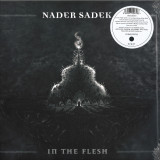
“In the Flesh” is the brainchild of Egyptian-born, New York-based conceptual artist Nader Sadek. Known for his impressively twisted sculptures, masks, and installations used for example by bands such as MAYHEM and SUNN O))), Sadek is now venturing into the realm of recorded music- including songwriting credits on this album! The band NADER SADEK emerges out of a collaboration between Sadek and some of extreme music’s most talented artists with its core made up out of songwriter/vocalist Steve Tucker (ex-MORBID ANGEL), CRYPTOPSY drummer Flo Mounier and Norwegian composer/guitarist Rune Eriksen (AVA INFERI, ex-MAYHEM). A host of guest-appearances lends additional weight to the musical impact of “In the Flesh” by leading artists such as Attila Csihar (MAYHEM), Travis Ryan (CATTLE DECAPITATION), Tony Norman (MONSTROSITY), Descructhor (MORBID ANGEL), and Nick McMaster (KRALLICE). “In the Flesh” is firmly based on a technically masterfully executed unique style of Death Metal with a pitch black twist that creates a multi-cultural symphonic abyss where melody and corrosion meet. As a work conceptual art “In the Flesh” is best explained like this: NADER SADEK invite you on a journey to the depths of the earth, where substances of a repulsive nature dwell. Beneath the earth’s crust, over millions of years creatures have disintegrated and decayed until taking on ghastly new life as petroleum. Like a return of the undead, petroleum and its derivates have wrought cross-cultural conflict, environmental pollution, and economic distress. With a visual and aural assault, Sadek’s new work “In The Flesh” re-interprets petroleum’s sinister insinuation into our everyday lives. Nine songs and a series of original drawings video works explore several aspects of the commodified resource we find ourselves fatally dependent on. “In the Flesh” exploits the sonic links between death metal and gasoline-dependent heavy machinery such as automobile and airplane engines. These links shaped the process of musical composition itself: The album opener, “Petrophilia”, kicks in with a sound evoking an engine starting up. Another song, “Of This Flesh (novus deus)”, follows the sonic structure of a car shifting gears. While continuing to link musical composition to mechanical transformations, other songs depart from engine-based references. The outro to the album, “Nigredo in Necromance” which is already accompanied by a video, dwells on an individual’s recognition that he must die in order to reunite with his deceased lover. The song riffs on the life-in-death of an oil-drenched society, as the lovers’ reunite in their decomposition and rebirth as petroleum. This theme also drives the track “Mechanic Idolatry”, which channels the uncanny thrust of Sadek’s recent artistic output, as live human beings provide the fuel for machines transforming themselves into flesh.
Hohe Erwartungen sind im Falle des britischen Brüder-Duos Overmono noch untertrieben - in den letzten, für Club-Musik sicher alles andere als leichten Jahren, haben sich die Russell-Brüder zu so etwas wie der Speerspitze der neuen Club-Szene gemausert, vollziehen nun den endgültigen Ausbruch aus der Genre-Schublade und lösen sich auch vom Geheimtipp-Stempel! Am 12. Mai erscheint mit "Good Lies" das langerwartete Debütalbum bei XL Recordings, welches aufgrund seiner emotionalen Tiefe zwischen Beats und Bässen noch lange durch die Straßenschluchten hallt, nachdem das Licht im Club angegangen ist und auch der hartnäckigste Tänzer nach Hause geschickt wurde. Ob auf Kopfhörern, im Club oder der heimischen Anlage - die 13 neuen Overmono-Songs wirken mal als würden verkopfte Jamie xx Dancefloor-Kracher auf den Bass von Mr. Oizo treffen, um im nächsten Moment Stimmungen aufzufangen, den Hörer komplett darin einzuhüllen und dann wieder befreit mit poppigeren House-Versatzstücken glücklich zurück auf die Tanzfläche zu schicken. Nicht umsonst gehören Overmono schon jetzt zu den gefeierten Newcomer-Acts aus UK - die ersten beiden EPs waren in Windeseile ausverkauft, beim prestigeträchtigen DJ Mag Best of British Awards wurden die Russell-Brüder als bester Live-Act ausgezeichnet, bei der ersten eigenen Headliner-Tour im vergangenen Jahr folgten ausverkaufte Shows in London, LA, New York oder zuletzt auch im SchwuZ in Berlin und gefeierte Festival-Auftritte beim Glastonbury, Dekmantel und Movement Festival! Daneben arbeiteten sie an einigen Tracks mit ihrem Label-Kollegen Joy Orbison und veröffentlichten einen "Fabric Presents" DJ-Mix.
Jazz music has more than its fair share of overshadowed figures that whilst contributing much to the music have little presence in its collective conscious. One such musician is the talented multi-reedist, Sahib Shihab. Born Edmond Gregory, as he was known before he adopted the Muslim faith in 1946, Sahib Shihab's music background shows a deep and significant evolution, influenced by Thelonious Monk, Dizzie Gillespie (his experience in Dizzie's band marked Sahib's switch to Baritone, the instrument he became most readily associated with), and above all by Charlie Parker's Bop. Had it not been for the post-war migration of many top American jazz musicians to Europe, it is quite likely that the legendary Clarke-Boland Big Band might never come into existence. Sahib, one of this musicians disillusioned with the politics and racism of the United States, accepted to join the band of Quincy Jones for an European tour in 1959. When the tour ended, Shihab he remained in Europe where he joined, in 1961, the Clarke-Boland Big Band. The collection 'Companionship', whose line up consists of seven elements which derives from this original band, spotlights the consummate musicianship and individuality of Sahib Shihab and is testimony to his special musical gifts - not only as a top-rank flautist and baritone saxophone but also as a composer. Furthermore, it provides a welcome reminder of the high quality of the Clarke-Boland Big Band's rhythm section, the lively style of vibraphonist Fats Sadi and the power and personality of two of the C-BBB's horn-playing stalwarts, Benny Bailey and Ake Persson. Here's a real rarity, surely a desert island disc. This double album has it all from frantic banging percussive workouts to modal numbers to beautiful ballads. It's a staggeringly good piece of music and worth every penny of the price tag it commands. Let's have a look to the most significant pieces. Francy Boland's "Om Mani Padme Hum", taken from a Tibetan prayer, shows Shihab in exuberant mood, playing against a vigorous percussion background and making dramatic use of his special technique of combining voice and flute. Boland contributes an incisive, effervescent solo. "Bohemia After Dark", a classic original by bassist Oscar Pettiford which he first recorded back in August 1955, finds Shihab in exultant form on baritone. "Companionship" has a Bossa Nova beat and features Bailey on flugelhorn and Shihab on flute, playing with a limpid, floating sound. Bailey's minor-key original, "Stoned Ghosts" was, he says, inspired by listening to some music written by Bela Bartok before he emigrated to the United States. The piece has an infectious back-beat pulse and showcases the superb walking technique of Jimmy Woode. In "Con Alma" Shihab's mellow flute set against a churning 12/8 beat in this stylish Boland arrangement. Woode's performance of the superb Mei Torme ballad, "Born To Be Blue", reveals his great affection for the song. "lt is the perfect combination," he says, "a beautiful melody married to a great lyric. I really love that tune." It is a song of rueful resignation, putting a brave face on the blues. "Balafon" is an up-tempo Francy Boland original written for the French mime artist, Marcel Marceau. The rhythm section really cooks on this track with Kenny Clarke's cymbal work outstanding. Boland's solo here is notable for its neat, left hand punctuations. "Calypso Blues" has been written by Nat King Cole and Don George. lt tells the wry and wistful tale of a Trinidadian in New York desperately homesick for the land where everything 5 so much cheaper (in New York "a dollar buy, a cup of coffee and a ham on rye") and the girls more natural than the artificial, painted beauties of New York. Woode's composition, "Sconsolato" is a haunting theme in A minor and it brings to a close a truly fascinating album. This is dynamic music played with vigour, verve and vitality - and it is an enormous pleasure to rediscover it. A shadowy fugitive from his home in the land of jazz, Sahib Shihab remains a true unsung figure, worthy of more attention. With his equally expert technique on Baritone, Flute, Alto and Soprano saxophones and his capacity to adapt easily to a variety of musical settings. His warm, individual, singsong sound in improvisation and his unusual and interesting compositions mark him out as a hidden treasure in the dusty corners of jazz archive.
After our last release titled “jazz Baileys” we are back with House Experience Vol.2., this time in Ep format, presented by Bs As deep.
The previous volume was clearly dedicated to being a various artists, also with the participation of Bs As deep.
We have been working since vinyl number 4 with musicians, who have a participation in almost all the tracks released.
When we talk about musicians, we are including keyboardists, saxophonists, percussionists, guitarists or bassists.
Our goal or common thread has always been to achieve a warm and forceful sound, so that it can be heard in any environment, and at the same time be used at any time of the night, on a dance floor.
With those involved in both past and current releases, we share a common idea, which guides us in the interpretation of each song.
We also base ourselves on house influences from the late 90s (96,97,98,99)
Personally, we are moved by those times in which the sounds become more sophisticated, more elaborated in detail, and that is when we believe that the house that we listen to today with soul and jazz sounds, take on more relevance.
They also promote Afro and Latin percussion, leaning towards that New York and Puerto Rican fusion.
For all this, we like to include classic instruments, such as roland rhodes, the much-loved Juno, or korg packages with their inevitable M1.
Many shots are made live through a session expressed by the musician, who improvises for a while, from there we extract some part, which can be used several times in several tracks.
It is always necessary to do an editing job to adapt and correct any dissonance or variation in time that implies desynchronization in the beat. All this working in the sequencer of the daw to use.
On this album you will be able to hear soulful house sounds strongly impacted by keyboards, flutes and session basses, as well as some perfectly adapted percussion samples.
Presence Unknown is a new vinyl and digital label curated by longtime producer and DJ, Neil Keating aka Controlled Weirdness. Neil has been behind the decks and deeply involved in all aspects of club and underground sound system culture since the early Eighties. He has released his music on numerous underground labels and performed all over the world, from plush clubs to dirty warehouses. Worth a read are a couple of published articles by Neil regarding his experiences on the dance floor of underground clubs in London and New York in the Eighties. See links at the bottom of this page for these as well as a detailed biography and discography. There is also a link to a recent 40-minute interview with Distant Planet TV that explores his cultured rave history.
The second release on Presence Unknown contains four future-retro house grooves from Controlled Weirdness crafted using a variety of analogue and digital hardware in his South London studio.
This boxset features remastered versions of all of Sade’s studio albums to date, on pure 180 gram black vinyl the first complete collection of their studio work up to the present day All six of the band’s acclaimed albums Diamond Life 1984 Promise 1985 Stronger Than Pride 1988 Love Deluxe 1992 Lovers Rock 2000 and Solder Of Love 2010 are packaged into the beautifully finished, white case bound box Revisiting the audio, the band worked from high resolution digital transfers of the stereo master mixes, from the original studio recordings, remastered at half speed at Abbey Road Studios The elaborate, half speed mastering process has produced exceptionally clean and detailed audio whilst remaining faithful to the band’s intended sound No additional digital limiting was used in the mastering process, so the six albums benefit from the advantage of extra clarity and pure fidelity, preserving the dynamic range of the original mixes for the very first time The six album sleeves have been meticulously reproduced in exact detail with authentic paper and printing methods, perfectly replicated for the first time since their original release.
Over an exceptional career spanning more than three decades, Sade’s six albums have amassed over 60 million worldwide sales and have been certified platinum 24 times over Producing singles such as ‘Your Love Is King’, ‘Smooth Operator’ and ‘By Your Side’, Sade have gone on to achieve Number 1 albums across the world, collected several Grammys, MTV Video Music Awards, and a BRIT Award along the way, quietly taking their "place in the pantheon of cultural influence” New York Times, October 2017. Their most recent studio album, Soldier Of Love, charted at number one in 15 countries, including the US, upon release in 2010.
Baby Buddha is David Javelosa and musical partner Charles Hornaday playing instruments and providing their own whacked-out vocals. Baby Buddha really was less of a band than a project; a side project in fact, for some members of another group, Los Microwaves. Baby Buddha would eventually record and release an album, 1981's provocatively-titled Music for Teenage Sex on Robbie Fields' L.A.-based Posh Boy label.
Happily, the project's guiding creative light, David Javelosa has recently seen to a vinyl reissue of the now-40-year-old record, mystifyingly retitled Music for Teenage Sects. Definitely among the stranger releases of the new wave era, Music for Teenage Sex/Sects could perhaps only have been created when and where it was made. But on the occasion of its 40th anniversary, the music sounds as weirdly wonderful as ever. "We Are Not" sounds like Human League stuck in a car with The Residents. And their cover of "All Shook Up" sounds like a musical kin to those inscrutable eyeball guys too; it wouldn't be out of place on Meet the Residents. "Little Things" is a house-of-mirrors, scary track, with spoken-word vocals by Los Microwaves' Meg Brazill and label head Fields.
The album cover is slightly different as well: it displays a bedroom scene like the original LP, but with the young female model absent. The new release (on Javelosa's own Hyperspace Communications label) is pressed on beautiful translucent blue vinyl and comes in a gatefold sleeve with a lively collage of photos, buttons, gig posters. Limited to 500 copies.This playfully titled release features David Javelosa (on synth and vocals) along with Meg Brazill (on bass and vocals) plus drummer Todd "Rosa" Rosencrans. Side One features five studio tracks, none of which were included on the band's 1981 Posh Boy LP, Life After Breakfast. Three of these tracks were recorded in '82; there's no information regarding the provenance of the other two songs. The records' second side collects five live recordings, capturing Los Microwaves onstage in New York City (The Peppermint Lounge) and Boston as well as at San Francisco's own I-Beam, a venue that often played host to the band. Those tracks date form roughly the same ear, 1980-83. Sonically the songs variously recall Blondie, Flying Lizards, Gang of Four and a far less dour Human League. Importantly, the band rocks, even when it's employing a spare drum kit, solid but elemental bass, and monophonic analog synthesizers. The stripped down aesthetics of the group – necessitated by its minimalist instrumental approach – are nonetheless thrilling. Even if you weren't there in 1980, this'll take you back.
When it comes to legendary albums, very few can match the cult status achieved on the international jazz and funk scene, by Alice Clark's eponymous album, recorded for Mainstream Records in 1972. The record which went unnoticed when it first came out has become one of the most sought-after albums ever since it became cult on the London jazz and funk scene in the late 80s. It is now being acknowledged as one of the best soul albums of all-times. Recorded live over two days at the Record Plant studios in New York City, the album was produced by Bob Shad and arranged by Jazz veteran Ernie Wilkins with a big band setting. The music is a superb mix of jazz and soul blessed by Clark's superb singing and including two all-time favourites, "Don't You Care" and "Never Did I Stop Loving You" plus a selection of heart-wrenching songs beautifully sung by Clark. Very little is known about Alice Clark and the legendary two-day session. All is known is she only ever recorded one album and passed away in the early 2000s. Wewantsounds will tell the Alice Clark story for the first time and give a unique insight into the birth of this cult album with a deluxe release that will pay tribute to her talent.
160 gram clear red vinyl, glossy sleeve, Cititrax presents rare live recordings from Birmingham techno legend Regis. The 12" EP features recently uncovered recordings of Regis playing live in New York City on January 4th, 1997 at the famed New York Film Academy. Original tapes discovered by Evan Kreeger, studio work / transfers done by James Ruskin in London and audio mastered by Veronica Vasicka in New York. The EP will be pressed on 160 gram clear red vinyl and housed in a gloss sleeve, featuring text by Evan Kreeger. An excerpt is below: Gymnastics broke techno - first time performed ! Regis has recreated this show for you - from the tapes in storage Over twenty years later - You're welcome! You are born! Now you can say you were there - rather than Skavoovee chore Damage and flame was our desire for this fight Two fans rebuffed tossed cinderblocks thru the front doors that night Locking up the Film Academy was only pageantry and a lie Nothing secure anymore - just crouch down - on your knees - crawl inside"
Since he started producing music, Berlin-based American sound artist Jake Muir has been obsessed with sampling. His 2018 album "Lady's Mantle" was based on manipulated chunks of vintage Californian surf rock, and its follow-up, 2020's midnight symphony "The Hum Of Your Veiled Voice" was sourced from a wide variety of old records, and inspired by the work of experimental turntablists like Marina Rosenfeld, Janek Schaefer and Philip Jeck.
On "Mana", Muir looks back to a misunderstood musical movement. Around 1995, a group of New York producers and DJs - including DJ Olive, DJ Spooky and Spectre - pioneered a genre-dissolving sound by unifying hip-hop techniques with ideas pulled from dub, jungle, ambient music and industrial noise. Badged "illbient", it was a short-lived genre that felt like a high-minded psychedelic cousin of the UK's trip-hop.
Muir uses illbient as the springboard for "Mana", utilizing a selection of samples to inform his frothy drones and foreboding atmospheres. He ushers the material into 2021 by diverting it through his own contemporary worldview, attempting to recreate the hyperreal fantasy histories of Japanese RPGs (think "Dark Souls" and "Final Fantasy") and nod to sensual, tactile soundscapes of European industrial labels Staalplaat and Soleilmoon. The result is a magickal, sensory journey that's as physical as it is representational.
If the illbient producers were encouraging a burgeoning experimental music landscape to emphasize the tactile feeling of turntablism and sample manipulation, Muir is doing the same with "Mana". Each track heaves and breathes not just with his cultural reference points, but with layered, complicated emotions. We can hear joy, sadness, desire and anguish, obscured by disintegrating noise, hallucinogenic harmonies and sub-aquatic bass. It's electronic music that's rooted not in technology, but in touch.
In 1982, Bukky's path led him to London, where he became one of the forerunners in the Acid Jazz scene. A young A&R man named Gilles Peterson signed him to the newly formed Acid Jazz label and his first release "Rejoice In Righteousness" went straight to the heart of the Acid Jazz world, reaching number 1 in the rhythm and blues, dance and jazz charts. The follow-up album "River Nile" led to a nomination at the US African Music Awards in New York. There he became acquainted with the legendary, late tenor saxophonist Joe Henderson who invited Bukky to his home in San Francisco.
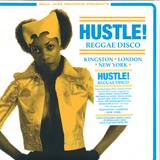
Soul Jazz Records' are releasing their long-out-of-print album 'Hustle! Reggae Disco' in a new expanded 2017 edition which now features five extra tracks. This ground-breaking album features non-stop killer reggae versions of original funk and soul classics in a disco style. Reggae disco updates of seminal classics by Anita Ward ('Ring
My Bell'), Chaka Khan ('I'm Every Woman'), Michael Jackson 'Don't Stop 'til You Get Enough,' Sugarhill Gang ('Rappers Delight' here performed by Derrick Laro and Trinity for producer Joe Gibbs) and more, all showing the hidden but inseparable link between the dance floors of New York, Kingston and London.
New bonus tracks to this collection include Derrick Harriott's funky take on Eddie Drennon's 'Do It Nice and Easy', the classic disco reggae of Risco Connection's take on McFadden and Whitehead's 'Ain't No Stopping Us Now' and the London rare groove lovers rock take on Barbara Acklin's soul classic 'Am I The Same Girl'.
'Hustle! Reggae Disco' has been one of Soul Jazz Records' best-selling releases since its first release 15 years ago (and subsequently featured heavily in the early Grand Theft Auto games!). This new edition comes complete fully re-mastered and with all original titles plus new tracks. This new expanded edition now comes a triple album (+ download code), CD and digital album.
'The effect of American R&B and soul music on Jamaican reggae is well documented, but the story doesn't stop there, for disco (and more so now for rap and hip-hop) have also been subsumed into the reggae mix, and while one might suspect that the resulting hybrid would die of its own implausibility, the feral mix of disco with reggae rhythms is so darn infectious that it hardly matters. Once you take your brain out of the frame and just let your feet go, this collection is a dancer's delight all done up in full-blown disco style, but with huge dub-style rhythm tracks ... if you're looking for an impossibly infectious dance collection, this is
it.' All Music
It was in 1973, on the 14 of October, late in the afternoon; on a pretty Sunday under the Big Top in the heart of the “Parc de la Pépinière”, in Nancy; it was the “premiere”, the world
first hearing, and it has so far remained the only one commissioned by composer and trumpet player lvan Jullien, for the first international Nancy Jazz Pulsations festival. In order to complete this work of composition and orchestration, Ivan asked the great Eddie Louiss on organ, and chose to do without a double bassist who would have been drowned in a telluric outburst, for the best drummers in Europe and beyond had accepted out of sympathy to offer their contribution to such a festival. The only melodist with Louiss was the English John Surman (born in 1944) here on soprano saxophone, discharging torrents of incandescent lava.
Conversing with drums, cymbals, xylophones, kettledrums, vibraphones, tumbas, djembes and all other percussive things that you’ll like to imagine – a bunch of talents such as those
of the French André Ceccarelli, Daniel Humair or Bernard Lubat, the New Yorker Stu Martin, who reminds of Paul Motian in his “breaks”, South African Louis Mo-Holo, young Lamont Hampton, the great trombonist “Slide” Hampton’s son and the Malagasy Franck
Raholison, the Senegalese Lamine Konte. And we will scrupulously refrain from omitting the four musketeers, here representing
percussion in classical music, namely the Percussion Quartet of Paris under the leadership of Mr. Lucien Lemaire.
Supported by Villalobos, Dorian Paic, Mattia Trani, DJ Tennis, Verrina & Ventura , Giorgia Angiuli, Carola Pisaturo, Julina Perez
There are people who place their soul at a border between two worlds that are completely different one from the other.
Giulio Paternò has always split his heart in two halves: one beating for Pink Floyd's, Dire Straits' and Deep Purple's rock; the other for an electronic sound influenced by the likes of John Talabot, Nicolas Jaar or David August.The final result by mixing these two different souls is all channeled into his project Swoosh, where house and techno meet the psychedelic sound from the '70s. So here is a captivating and a magnetic sound which is shaped exclusively by a live act with Ableton, a Gibson Les Paul and various controllers.Swoosh's peculiarity drew the attention of top national venues and festivals such as Tenax in Florence, Circolo degli Illuminati in Rome, or Amore and Spring Attitude Festivals.By Spring 2016 Swoosh will be releasing his first EP "Over and Above" with Autum Records, a label based in Rome and New York.Feedback:> DJ TENNIS: Great record, Swoosh is a producer to keep watching... / Gran disco, Swoosh è un producer da tenere sott'occhio...> VERRINA & VENTURA: Great, the slow one is fantastic! / Complimenti, traccia lenta fantastica!
> CAROLA PISATURO: Liked it so much. / Mi piace moltissimo.
> GIORGIA ANGIULI: I really enjoyed the whole EP, tracks are so stilish! / Mi piace molto l'EP, tracce super stilose!> JULIAN PEREZ: Good listening, a good listening. / Un ascolto piacevole > MATTIA TRANI:above mi piace moltissimo bell'atmosfera!
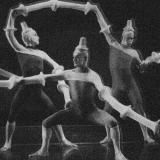
Often credited as the father of multi-media theatre, Alwin Nikolais (1910-1993) took complete creative control over his productions - including cutting-edge approaches to lighting and costume that transformed human bodies into shifting sculptural shapes, while also composing wildly innovative electro-acoustic and synth-based audio as accompaniment.
After initially experimenting with musique concrète and tape manipulation (as demonstrated on the 1959 LP Choreosonic Music of the New Dance Theatre of Alwin Nikolais) Nikolais became the first owner of Robert Moog's synthesizer at the Audio Engineering Society convention in New York in late 1964. Relying heavily on the Moog and later the Synclavier synth/sampler, these 21 tracks document Nikolais' highly-prescient compositions across the mid 1960s through to the late 1980s - existing not only as extensions of his other-worldly choreographic productions, but standalone pieces of foundational mid-century American electronic and experimental music.
"Born in Southington, Connecticut in 1910, Nikolais’s early years and early career were in acting, music and puppetry. It was not until the late 1930s that he began his work as dancer/choreographer in Hartford, Connecticut, where he was commissioned by the Avery Memorial Theatre, a part of the Wadsworth Atheneum, to create an evening-length work to the music of Ernst Krenek. Previously his work and study as a pianist-organist found him accompanying silent films. This sort of accompaniment required from the musician not only a playing skill but also a versatility in improvisation, matching movement to sound, and evoking mood to situation.
Nik was drawn initially to dance by his involvement with the percussion scores used by the illustrious early twentieth century German dancer Mary Wigman. In trying to learn more about percussion, he was lured into dance class and thus his career began. His development of music and dance occurred simultaneously. His introduction to the twelve-tone technique opened his mind to the expanding areas of atonal music, and his dealing with music as sound per se. In 1948, after being appointed director of the Henry Street Playhouse in New York, Nikolais formed the Playhouse Dance Company, later known as the Nikolais Dance Theater, and began his aesthetic orientation toward dance as a study of motion. By the 1950s, he had ceased creating literal dances and began his explorations and eventual milieu as an abstractionist.
Sound became an important part of his abstract theatre. For his first dances, which involved his new thinking of dance as both a visual and kinetic art, he used live percussion scores in which he directed his dancers to play instruments of all nature. There was a combination of children’s toy instruments as well as harsh and resonant automobile brake drums, and other pitched auto parts which he also used to accompany classes. Once he installed his own tape recording machines, he quickly used the limited range these instruments provided in a new way, slowing and increasing speed and reversing sound. He also made the sounds adhere to the choreographic structure (not the other way around), thereby giving the dance its independence from the musical phrasing. But the real need remained: the search for new sound. Nik made a sound library, recording noises and percussion and vocal sounds, which the French aptly called musique concrète. Needless to say, he became a master at splicing bits and pieces.
From 1956 to 1962 Nikolais composed eleven major scores for his theatre pieces using such techniques. In 1963, James Seawright, who at the time was assisting Nik in his productions and also working at the Columbia-Princeton Center for Electronic Music, recorded a sound bank for the production Imago (1963). With this material, Nikolais created his first synthesizer score. Imago won the Paris Grand Prix in 1968 and launched the Nikolais Dance Theatre towards its national and primarily international acclaim.
During the same period, Seawright came to Nik and told him of a young man who had invented and constructed a simplified synthesizer and insisted that Nik visit the electronic fair currently being held in New York. Nik did so and met Robert Moog. He was completely taken by the new machine and after making some suggestions to Moog, (which Moog made), Nik bought the inventor’s first machine with the aid of a Guggenheim Fellowship. Moog himself was astonished by what his machine could produce for Nik. This machine was later acquired by the Museum of Musical Instruments at the University of Michigan at Ann Arbor as the first Moog synthesizer. The Synclavier was Nik’s next source of sound and since the mid-1970s remained the major instrument in the Nikolais soundroom.
Alwin Nikolais has been honored and awarded throughout the world. He has received the French Legion of Honor, the Kennedy Center Honors, National Medal of the Arts, two Guggenheim Fellowships, as well as Mellon, Ford, and Rockefeller grants. He has been a recipient of NEA grants since 1966, been awarded five honorary doctorates, all for his remarkable achievements in Dance Theater. His genius has influenced several generations of artists."
—Murray Louis
Fast-rising pianist and producer Yoni Mayraz presents his debut LP ‘Dybbuk Tse!’ revealing the story of a malicious possession that is taking over one’s body and soul.
Dybbuk, known from Jewish folklore, is a malevolent wandering spirit that enters and possesses the body of a living person. It’s a cursed soul of a dead one that wanders tirelessly for sins committed during their life. The most vulnerable victims are the young and the sinful. Possession can be taken literally or as an analogy to the burden that young people carry generations back, which they have no influence on, and which they have to accept. Dybbuk can only be removed by exorcism. The titular ‘Dybbuk Tse!’ is a command to remove the spirit from the possessed body. The album is a story about possession but also about exorcism through music.
Recorded live with his band over the course of a spring week last year, ‘Dybbuk Tse!’ is indeed experimenting with the ‘darker side of things’, but yet with a somewhat lighthearted approach which is so typical of Yoni’s work. He easily combines jazz with the sound of 90’s New York hip hop and raw old school breakbeat. The album interweaves unique Middle Eastern melodies, sophisticated structures and sounds, and beautifully crafted solos played by some of the promising talents on the scene.
London based Israeli born pianist and producer Yoni Mayraz has set foot in the instrumental music scene with his EP ‘Rough Cuts’ released in 2020. Since then, Yoni and his band have been playing major venues and festivals around the world including the legendary Ronnie Scott’s and The Jazz Cafe, to name a few, bringing raw energy to stage with live versions of the studio materials, and stretching the melodies and structures into a Dancefloor-focused take on jazz.
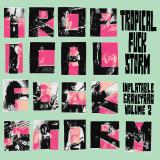
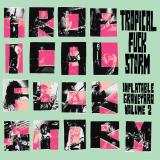
Tropical Fu*k Storm revisit the live album concept on ‘Inflatable Graveyard Vol. 2’, their second live album and the follow-up to the critically acclaimed ‘Fairyland Codex’. Recorded over three nights during a sold-out residency at New York venue TV Eye, the album finds the band at the height of their incendiary powers, turning already combustible songs into something even more ferocious and unpredictable.
Fine-tuned and road-tested through heavy touring, songs from ‘Fairyland Codex’ are stretched into new forms. Ballad “Stepping on a Rake” takes on heavier undertones, “Irukandji Syndrome” becomes a launchpad for a guitar solo worthy of the Velvets’ “I Heard Her Call My Name” and “Moscovium” sounds more urgent than ever.
The band also revisit back catalogue favourites including “Who’s My Eugene” and “You Let My Tyres Down”, alongside a cover of Australian punk heroes The Saints’ “This Perfect Day”.
Tropical Fu*k Storm have built a catalogue worth obsessing over, but their live show is where the band’s brilliance really breaks open, and ‘Inflatable Graveyard Vol. 2’ catches that chaos in the act.
Key Quotes:
“Tropical Fuck Storm are masters of tension and release.” The Guardian.
“If anyone's qualified to make music about all-encompassing terror, it ought to be Tropical Fuck Storm.” Pitchfork.
“Thrilling noise-rock pranksters” Uncut.
“End times chaos… A gloriously imperfect storm” MOJO.
“A galvanising opus of incredible political bite” The Line Of Best Fit.
“One of the most rewarding listens in rock music” Consequence Of Sound.
Legendary Gabber/Hardcore dj & producer Rob GEE is famous in New York as “the hardest DJ to ever play the Limelight.” In the early 90’s, GEE kept delirious audiences going – spinning at Limelight’s “Future Shock” dance/techno nights and performing with his live band and spinning at the club’s “Rock And Roll Church” metal/rock/industrial nights.
Rob GEE is the only artist of his kind to collaborate and create with members of respected rock, metal, hardcore and hip-hop acts such as Slipknot, Hatebreed, Biohazard, Wu-Tang Clan, Cypress Hill, & System Of A Down, creating a unification of electronic, metal, hardcore, hip-hop, and any other style for that matter known as gabber music. GEE is writing history launching gabber onto the world scene.
To celebrate its 30th anniversary, Rob GEE's legendary 1996 hardcore masterpiece Punk, Funk & Live is now officially available on vinyl again. For several years, this EP has become a highly sought-after holy grail, for both old-school gabbers and new harddance, hardtechno and hardstyle collectors.
Punk, Funk & Live features the classic anthems "Ecstasy, You Got What I Need", "Gabberslam", "Son Of Rob GEE" and exclusive bonustrack "Rob GEE Megamix", mixed by Bass-D & King Matthew.
This limited 30th anniversary edition of Punk, Funk & Live is available on purple vinyl.
Superfan is the songwriting veil of Kali Priya Flanagan, the Brooklyn-based multi-instrumentalist and producer. While initially imagined as a solo act, ambitious string arrangements crafted in collaboration with cellist Omeed Almassi have come to define Superfan’s noisy and magnetic pop soundscape.
Today, Superfan announces their forthcoming album ‘My Piledriver Heart’ (MPDH), out October 16 via new label home AD 93 (Joanne Robertson, Dagmar Zuniga, YHWH Nailgun). Along with the announcement, Superfan presents his new single “In the Gold Room” paired with the live version filmed by Garrett Winston inside Agger Fish Building in the Brooklyn Navy Yard.
MPDH marks the first release outside of the record deal Flanagan signed at age 14. The album finds Flanagan embracing a more expansive, experimental vision of indie rock - melding deeply tuned acoustic guitar, cello, and Eastern musical influences into what he calls his “Acousticello” sound. Recorded largely live with cellist Omeed Almassi and producer Hudson Pollock, the record explores heartbreak, independence, and hopeful melancholia. Kali says “This time around it was about being (myself) versus becoming myself. This album was made to acknowledge the ebbs and flows in chugging along with life and love, from a place of comfort within the self that opens you up to the beauty in everyday life.” He does so through intimate performances that blur the line between folk, chamber music, pop-rock ballads, and alternative rock. Last year, he released the singles “Apeiron (Fantasy Football)” and “Miss W Jones” and earlier this year he released “Picture of Return.”
Following his acclaimed debut Tow Truck Jesus, Flanagan opened for The Strokes at Red Rocks, and has quietly become a fixture of New York’s DIY scene, performing alongside artists like Horsegirl, Knifeplay, and Quiet Light, while also playing support shows with King Woman and Victoryland this summer. He is also in the rising emo band Holidays in United States.
Before Superfan, Flanagan found success during the pandemic under his first moniker, “KALI.” His initial releases garnered millions of streams and led to collaborations with seasoned high-profile producers and industry teams. Despite his budding career as an indie-pop star, Flanagan was dissatisfied with the conditions of his artistic output and community as he reached adulthood. His coming-of-age years in Los Angeles were marked by an ever-present new-wave pop music oblivion: “hits” made in 5-hour sessions with strangers, a social life suffocated by others’ aspirations for fame, and an absent audience for live music that pushed past the prescriptions of recorded music. On MPDH, Kali says “I can’t help my urge to write these pop-rock ballads, but we really wanted to push the boundary of genre and expressing the sentiments of the songs through experimentation.”
Corps Perdu emerges from Lamin Fofana’s ongoing practice of creating immersive and multisensory sound environments, informed and inspired by the historically rich texts of scholars and poets working in the tradition of Black Studies. The words of W.E.B. Du Bois, Sylvia Wynter, Dionne Brand, Fred Moten, Édouard Glissant, Suzanne Césaire and Aimé Césaire are transmuted and circulated as sound, offered to listeners through radio, live events, albums and installations. Fofana honours his sources with an audible historical awareness, yet his sounds always simultaneously open out into the turbulent uncertainties of the present.
The music we hear on the album Corps Perdu was previewed within a series of collective reading and listening sessions carried out in Paris, Barcelona, Tunis and New York City, where voices from the audience read aloud fragments from a body of texts Fofana had selected. The spontaneous unfolding of close reading and listening, mixed live by Fofana in these collective listening experiences, speaks to the open-ended quality of Corps Perdu. The album, now published, is but one iteration of this ongoing inquiry into the relationship between sound and text.
Corps Perdu presents an introspective journey with no return, and as such is full of omens of all kinds. Across ten tracks Lamin Fofana creates a sibling or companion to the transformation he initiated in his previous album Works in Metal, building a narrative that takes us into Krakatoa prior to its eruption, and lets us listen to Césaire’s ‘flying seed dreaming very loudly’. The album’s track titles and narrative arc hum in and out and alongside Césaire’s poetry, mainly Césaire’s 1950 collection Corps Perdu, in which the ten poems are accompanied by engravings by Picasso merging fragments of bodies and plants—a collaboration that emerged from their first encounter two years earlier, at the Communist-led World Congress of Intellectuals for Peace, in Wroclaw, Poland.
The music on Corps Perdu labours intuitive hand-held melodies through dense processing. There are many rhythms throughout, though these never surrender to the density of the dancefloor grooves we’ve heard Fofana craft on previous albums (think of the ‘Obscure Light’ pair from Works in Metal for example). Instead, Fofana gently releases the clenched hands Césaire’s Corps Perdu begins with: ‘Among me, from myself, to myself, outside any constellation, clenched in my hands only, the rare hiccup of an ultimate raving spasm, keep vibrating word’. The album carries through sound the scattering and liquid fragmentation that shape the desperate metamorphosis of a ‘lost body’.
out of Stock
Last delivered 5 days ago available to reorder, subject to availability
South Asian super-producers Lapgan and Baalti – the former a Madlib-disciple spinning hip-hop grooves out of dusty desi samples, the latter duo purveyors of intricately tapestried dance music – holed up in the California desert in early 2024 for a songwriting session to blend their complimentary styles. They ended up with several albums worth of club material built upon decades of Indian music history – floor fillers that move like early Four Tet meets The Avalanches. They’ve been teasing this material around the world during live sets – from Paris Fashion Week to Glastonbury, London Clubs to BK Warehouse parties, sessions at Lot Radio and Karachi Community Radio, and anywhere else they find an aux. The result has been endless ID requests for unreleased gems like “Ipa Ma” and “Lime Tikka”, calls which should finally be answered with the release of Threads.
Lapgan Bio
Chicago-based archivist and producer Lapgan has become renowned for his signature style: unearthing rare and forgotten Indian & Pakistani sounds and recontextualizing them into hip-hop and dance beats that evoke J Dilla and Madlib. He has cultivated a reputation for quietly revolutionary sample-work across his beloved solo projects History and Duniya Kya Hai, as well as LAFANDAR, his critically acclaimed team up with Heems (of Das Racist / Swet Shop Boys). He has worked with a range of artists from both the West (Your Old Droog, Saul Williams, Cool Calm Pete, Kool Keith, Open Mike Eagle, Blue, Quelle Chris) and the East (EXCISE DEPT, Baalti, Sid Sriram, Sid Vashi, Dynoman), and has been featured in global media including Pitchfork, FADER, Stereogum, Passion of the Weiss, Mixmag, Homegrown, and Vinyl Me, Please. Over the past year he has headlined clubs and performed at festivals across the world from Chicago and New York to London and India, and was personally invited to soundtrack back to back Paris Fashion Week shows for the similarly norm-shifting designer Kartik Research. In 2026 he will soundtrack his third Kartik Research runway show, as well as reissue Duniya Kya Hai for its five-year anniversary alongside a companion EP featuring remixes from peers and supporters Arushi Jain, Loris, Mera Bhai, Malkfunktion, and Maral.
Baalti Bio
Baalti makes electronic music built around rhythm, pressure, and collective release – weaving through leftfield bass, dusty hip hop, tripped out dub and raw house all while maintaining a throughline rooted in South Asian culture seen through the lens of a sweaty dancefloor. In the last year they have experienced a whirlwind rise and growing global recognition: from their EP Mela vividly evoking West Bengal’s sound system culture to their Tamil-cinema-infused filter-house project with Anish Kumar Stunt Doubles, in addition to wide-ranging collabs and remixes alongside DJ ADHD, Naya Beat, and A.R. RahmanThey have also built a reputation for their frenetic live show, with appearances at international festivals like Glastonbury and MELT, headlining shows across Australia and Europe and supporting influences turned peers like Four Tet and Disclosure across North America. Their explosive, percussion-heavy sets have been platformed by Rinse FM, NTS, The Lot Radio, Beats In Space, and Refuge Worldwide, and their music has been renowned by publications including Pitchfork, Bandcamp Daily, RA, and MixMag. Their forward momentum continues into 2026 with slated headline tours in India, Australia, and Asia along with appearances at Coachella, Party in the Paddock, Fvded in the Park, and We Out Here festivals.
Bella Kay will release her first-ever full length on vinyl, My Reckless Abandon on 9th of October via Atlantic Records.
At just 20 years old, Bella has quickly established herself as an unmatched songwriter and one of the most emotionally resonant new voices in pop
The Texas-born singer-songwriter experienced a meteoric rise after her series of 3-Pack song releases and singles, but My Reckless Abandon lives as a complete 13-song journey to self-acceptance and introspection after a lot of messy and ‘reckless’ ups and downs.
The album was written and produced by Bella Kay and executive produced by Idarose (Becky G, Suki Waterhouse, Joji) and was recorded between New York and Los Angeles throughout 2026.
Surprises are nice. Unexpected, delightful - Vision Fortune last released music in 2015, and so odds were off that we’d hear from them again.
But against all odds, Vision Fortune III is coming out on Gringo Records, following the release of their last album ‘Country Music’ on ATP Records.
The trio first agreed to record a new album as somewhat of a dare over a marathon pasta and wine heavy luncheon in Palermo, Sicily. Waking up with sore heads, they realised in mild panic that flight tickets had been purchased, a cottage in rural Wales was booked, and it was too late to pull out.
And so it was - the Fortunes arrived in Machynlleth Wales in Spring of the following year. The rules were simple - takes were live, songs minimal and the fireplace kept roaring.
Drummer Andres Ayerbe’s strict roast lamb dinner cooking schedule resulted in an album less frenetic and agitated than previous work - instead, III explores a softer, more subdued and subtle side of Vision Fortune. Additional overdubs were recorded in New York City and Birmingham, by AC Williams and Alex Townend. III was completed - a new, leaner Vision Fortune. Like a good lamb dinner - more meat, less fat.
Press Quotes for Country Music:
"An impressively brutal record" NME 8/10
"Immersive and introspective musique concréte rippling rippling with dub rhythms, orchestral strings, tolling bells and discordant drones coming close to the alien beauty of Mica Levi's sonically extreme soundtrack work." Uncut 7/10
"Unsettling, strangely cathartic and hook-free (in a good way)." Dazed ("Twenty albums to look out for in 2015")
"Assembling whole scrapyards of sound and turning them into something better than what went before" The Guardian
"Swaddling the senses in soundwaves, Minimal ambient sketches and harsh electronics abound on this fascinating 12-song affair" The FADER
"Basically just one long, connected droney throb. But it's an awesome long droney throb." Brooklyn Vegan
In August 2025, Lee Bains decamped to the Cherry Street Tavern in Chattanooga, Tennessee, a scene known for holding a light for collective good and personal freedom, in order to record a live album. Over that weekend, a group of anti-war activists, union workers, queer rights organizers, inclusive pastors, and people of goodwill—old-time folks—came from Tennessee, Alabama, and Georgia to gather at the Cherry Street Tavern. That weekend, that small group of people on Cherry Street, just like innumerable other groups that day and throughout history, demonstrated to each other and to the microphones, that, in 2025, the South was comprised of free people, no matter what. Free South 2025. Free South 2026. Free South forever. Lee Bains is a poet and songwriter from Birmingham, Alabama, who since 2012 has released four studio albums of what Rolling Stone calls “Southern gospel punk," and will publish his debut poetry collection Work Lunch with Hub City Press in 2026 after several of the poems were first published by the New Yorker in 2021. A cult songwriter forged in independent scenes, his work has carried him all over the U.S. and Europe, has received acclaim from the likes of Rolling Stone, The New York Times, NPR, The New Yorker, and The Guardian, and has led him to be a supporting musician for other artists like Lonnie Holley, Moor Mother, and Algiers. Lee has lent his work to support striking coal miners, immigrants’ rights groups, abortion funds, and anti-racism organizations. He has performed and read at Emory University, the University of Mississippi, Tulane University, Auburn University, and The Royal Institute of Technology (Stockholm, Sweden). He lives in Atlanta, Georgia, where he works between tours as a handyman.
For ten years Spike Fuck has existed more as a messy myth than an art- ist; sporadic works forever poised on the precipice of triumph, rumours of death or insanity and so on. Spike’s mission is to distill the sacred and profane, balancing the melancholy and humour of life; “to be alive is to be traumatised.” Luckily, the devotion to his music persevered, some- what bolstered by his inconsistency and inaccessibility. This inexplicable goodwill towards his artistry is perhaps partly due to Spike’s timeless, pained and confessional lyricism, though more pointedly, the fragility of a life mired in addiction. His being or works does not question the virtue of life, but simply addresses the numb, pragmatic and far more immediate matter of surviving another day, an almost ineffable senti- ment only justified by his distinct, poetic audaciousness. Free from his arresting thoughts, evidence, the long anticipated debut album, is a bra- zen proof of life statement. Convicted by the outlandish idea of evidenc- ing a ‘you had to be there’ mentality, the record honours the presence in body, a record to be felt, never to be rationalized.
The material on evidence touches on elements of new wave, glam, soul and doo-wop, citing Pere Ubu, New York Dolls, The Temptations and Bettye Swan as key influences. Melodically it emits the energy of a down- and-out CBGBs band who cashes in by recording a lucrative Christmas album.
Spike frequently uses sonic and lyrical juxtapositions to perform comic twists of sincerity, a reflection of society's obsession with ‘getting a rise’. On “Bored to Death,” a scuzzy, laidback and soulful tune, paired with morbid ragebait lyrics that payoff as a stand up joke “when I look up at the sun it makes me so happy cause I know one day it’s gonna kill me, and it’ll kill you too!” Lead single “All By Myself” carries on in this fashion; with feelgood, family-friendly punk doo-wop production, Spike is misleading on if his joy comes from the pride in solitude, or from lone- liness and a ‘give me everything’ mentality in the act of shooting heroin. The vocal performances oscillate between being blasé, vulnerable and manic; “Sweet Release” meets power-ballad criteria solely due to Spike’s deteriorating cries into the void, the jittery delivery on “Getting Sober” embodies religious fanaticism while sounding like a pop song written by Suicide for a David Lynch film.
evidence is an album that lives outside the limits of discourse; its purpose is eponymous and self-evident. It is what it is, and is subject to interpretation. There is no point in interrogating attachments, virtue or value. The only rightful way to live is to be.
a 01. CAN'T GET IT UP 4:38
b 02. HAD YOUR WAY 4:04
[c] 03. SWEET RELEASE [3:27]
[d] 04. BORED TO DEATH [3:31]
[e] 05. ALL BY MYSELF [2:38]
[f] 06. GETTING SOBER [3:33]
[g] 07. BLUELIGHT[4:35]
[h] 08. HATE ME [7:44]
[a] 01. CAN'T GET IT UP [4:38]
[b] 02. HAD YOUR WAY [4:04]
[c] 03. SWEET RELEASE [3:27]
[d] 04. BORED TO DEATH [3:31]
[e] 05. ALL BY MYSELF [2:38]
[f] 06. GETTING SOBER [3:33]
[g] 07. BLUELIGHT[4:35]
[h] 08. HATE ME [7:44]
[a] 01. CAN'T GET IT UP [4:38]
[b] 02. HAD YOUR WAY [4:04]
[c] 03. SWEET RELEASE [3:27]
[d] 04. BORED TO DEATH [3:31]
[e] 05. ALL BY MYSELF [2:38]
[f] 06. GETTING SOBER [3:33]
[g] 07. BLUELIGHT[4:35]
[h] 08. HATE ME [7:44]
[a] 01. CAN'T GET IT UP [4:38]
[b] 02. HAD YOUR WAY [4:04]
[c] 03. SWEET RELEASE [3:27]
[d] 04. BORED TO DEATH [3:31]
[e] 05. ALL BY MYSELF [2:38]
[f] 06. GETTING SOBER [3:33]
[g] 07. BLUELIGHT[4:35]
[h] 08. HATE ME [7:44]
[a] 01. CAN'T GET IT UP [4:38]
[b] 02. HAD YOUR WAY [4:04]
[c] 03. SWEET RELEASE [3:27]
[d] 04. BORED TO DEATH [3:31]
[e] 05. ALL BY MYSELF [2:38]
[f] 06. GETTING SOBER [3:33]
[g] 07. BLUELIGHT[4:35]
[h] 08. HATE ME [7:44]
Dead Poet Society haben mit ihrem aufsehenerregenden Debütalbum „-!-“ (ausgesprochen „The Exclamation Album“) aus dem Jahr 2021 und ihrem ebenso gefeierten zweiten Album „FISSION“ aus dem Jahr 2024 – beide erschienen bei Spinefarm – die Aufmerksamkeit der Rockwelt auf sich gezogen (und gehalten). Die Band verzeichnet weltweit insgesamt 200 Millionen Streams, mehrere Top-10-Radio-Singles und Platzierungen in wichtigen Playlists und trat bereits auf großen Festivals rund um den Globus auf, darunter „Welcome to Rockville“, „Sonic Temple“, „Graspop“, „Reading and Leeds“ und „2000Trees“. Dead Poet Society tourten bereits mit Alt-Rock-Größen wie Badflower, Biffy Clyro und Highly Suspect sowie weiteren Künstlern. Die Band hat sich endgültig als intensiver Live-Act etabliert, den man nicht verpassen sollte, und erhielt Lob von Medien wie der „New York Post“, „Riff“, „Rock Sound“, „American Songwriter“, „New Noise“ und „Guitar World“. Mit ihrem unverwechselbaren Sound beschreiten sie ihren ganz eigenen Weg – und genau so gefällt es ihnen.
Finnish-born, New York raised, and now Melbourne based Jani Ho has crafted a distinctive sound that can only be described as machine music with undeniable soul! Jani's hardware-driven live performances and studio productions are legendary and has earned him global recognition with multiple quality releases on the highly acclaimed soiree records. His contribution for the dolly TS series draws those direct lines with Detroit's soulful machinery techno and echo's the perfect union of rhythm and emotional depth, touching the deepest territories of techno.
Mit"Live on 29th Street Volume IV" veröffentlichen die texanischen Greyhounds einen mitreißenden Mitschnitt aus der renommierten New Yorker Live-Studio-Reihe Live on 29th Street. Das Duo um Anthony Farrell und Andrew Trube steht seit über zwei Jahrzehnten für eine unverwechselbare Mischung aus Soul, Rhythm & Blues, Funk und Texas Roots Rock. Begleitet von Schlagzeuger Jay Mumford präsentieren die Greyhounds neun Songs, die ihre musikalische Bandbreite und außergewöhnliche Spielfreude eindrucksvoll dokumentieren. Farrells charakteristischer Blue-Eyed-Soul-Gesang, virtuoses Keyboardspiel und Trubes prägnante Gitarrenarbeit verschmelzen zu einem warmen, organischen Sound, der gleichermaßen von klassischem Soul wie von amerikanischer Roots-Musik geprägt ist. Die Aufnahme fängt die Energie und Direktheit der Band in einer intimen Live-Atmosphäre ein und zeigt Greyhounds auf dem Höhepunkt ihres Könnens.
Die Legenden der elektronischen Musik, Soft Cell, bestehend aus Sänger & Frontmann Marc Almond und Multiinstrumentalist & Produzent Dave Ball, veröffentlichen mit "Danceteria" ihr sechstes und letztes Studioalbum - zugleich ein Liebesbrief an das New York der frühen 80er Jahre, wo Soft Cell ihre ersten drei Alben aufnahmen. "Danceteria" ist ein großartiger, stilvoller und verspielter Abschied von 47 Jahren gemeinsamer Musikgeschichte von Marc & Dave als Soft Cell und präsentiert Darbietungen, die für die Karriere dieser Electro-Pop-Legenden prägend sind. Mit Anklängen an Sparks und die Pet Shop Boys sowie Texten, für die Lady Gaga töten würde, nimmt das Album den Hörer mit auf eine lebendige Reise durch einen Tag im New York der frühen 80er Jahre – eine Reise, die rund um die Uhr von der Nacht über den verschwommenen Tagesanbruch bis zum direkten Wiedereintritt in den Club führt.
"Danceteria" ist gleichermaßen eine Hommage an den verstorbenen, großartigen Dave Ball. Dieses letzte Album gehört zu den letzten Werken, an denen Ball als Co-Autor und Produzent mitwirkte, bevor er am 22. Oktober 2025 auf tragische Weise viel zu früh verstarb. Marc Almond führte die Reihe der Nachrufe an und bezeichnete Dave als "geniales musikalisches Genie". Die weltweiten Medien und Musikstars wie Neil Tennant & Chris Lowe (Pet Shop Boys), Daniel Miller (Mute Records), Cabaret Voltaire sowie Richard Norris aus Daves Techno-Duo The Grid würdigten ihn voller Anerkennung und Wehmut als Pionier der elektronischen Musik. Dave stellte "Danceteria" zwei Tage vor seinem Tod fertig, und ganz in seinem Sinne wurde die Veröffentlichung des Albums wie geplant durchgeführt. Auch aufgrund von Daves Tod muss "Danceteria" zwangsläufig das letzte Soft Cell-Album sein, wie Marc erklärt: "Ohne Dave kann es keine weiteren Aufnahmen von Soft Cell geben; das wäre schlichtweg unmöglich. Die traurige Realität ist, dass Dave Ball die eine Hälfte von Soft Cell war, und abgesehen von Live-Auftritten kann ich ohne ihn keine Soft-Cell-Songs schreiben."
Iker is back with "Sinkronia". A gripping takes on Eastern and Western minimalist traditions influenced by the likes of Steve Reich, Suso Saiz or Midori Takada. Transcendental and esoteric rhythmic wonders that take time to unfold. A young percussionist and guitar player with electronic interests displaying a rich sonority and a great sense of structure and arrangements. This record shows the refinement of Iker's attributes, who initially worked in the noise/punk scene and now is part of the local Free Jazz/Improv landscape of San Sebastian, although he currently lives in New York where he has been playing several gigs including a rendition of Glenn Branca's Symphony No.13 at Lincoln center with 100 guitarists. For this new album he uses Xylophone, hand drums, electric guitar, synths and percussion instruments that guide us in an energetic way to territories somewhere between Italian avant-garde, Japanese New Age and American Minimalism. Iker Munduate Thusberg is a Basque multi-instrumentalist born and raised in San Sebastian and with strong ties to Mikkeli in Finland, where half of his family are from. A fine arts student at Bilbao's UPV (Basque university), his interest in sound, art and design has led him to combine all these different disciplines and convey them into his music and his work. "Iker Munduate is an artist and musician who brings a delicate sense of composition and design_ Inspired in part by new age music, Its rippling melodies and frictionless glide recall the futuristic utopias of Detroit Escalator Company and the interior reverie of Nobukazu Takemura (Derek Walmsley, The Wire Dec'24)"
The Go-Betweens zählen zu den beliebtesten und einflussreichsten australischen Bands aller Zeiten und galten als die Kultband schlechthin. Während ihrer vielfach gefeierten Karriere bewahrten sie eine außergewöhnliche künstlerische Konstanz und schufen Jahr für Jahr Musik auf dem Niveau der besten zeitgenössischen Künstler. Gegründet wurde die Band 1978 in Brisbane von Grant McLennan und Robert Forster, zwei Studenten der University of Queensland mit einer Leidenschaft für Filme, Bob Dylan der mittleren Sechzigerjahre und die New Yorker Punk-Szene. Beide sangen, spielten Gitarre und schrieben Songs. Die Konstellation mit zwei eigenständigen Singer-Songwritern an der Spitze war ungewöhnlich, funktionierte hier jedoch hervorragend. Roberts kantige, düster-romantische Kompositionen wurden perfekt ergänzt durch Grants hochmelodische, poetische Popsongs. Dieses beeindruckende Live-Album wurde im Mai 1987 professionell aufgenommen, unmittelbar vor der Veröffentlichung von Tallulah. Uncut schrieb darüber, dass es "detailliert die wachsende Selbstsicherheit der Band und ihr stetig verfeinertes Songwriting dokumentiert".
Space Afrika, das in Manchester und Berlin ansässige Duo aus Joshua Tarelle Reid und Joshua Inyang, schafft rohe, detailreiche und eindringliche Musik mit Anklängen an Ambient, Trip-Hop, Techno und moderne Klassik, wobei es aus den Konturen seiner Stadt weitläufige urbane Dub-Landschaften entwirft. ,Quiet Storm" erweitert ihren Klang und ihre Bandbreite zu einer weitläufigen, kollaborativen Vision, die mit tiefer Geduld und Absicht geformt wurde und ihre eigene Coming-of-Age-Geschichte in eine bewegende Suite kathartischer Abstraktion einbettet. Die Songs spielen auf Spiritualität und die conditio humana an, auf die Spannung zwischen Kühnheit und Sanftheit, Ehrgeiz und hartnäckigen inneren Dämonen. ,Quiet Storm" ist eine Antwort auf den Werdegang des Duos seit der Veröffentlichung von ,Honest Labour" im Jahr 2021. ,Wir haben uns selbst und unsere eigenen Vorstellungen von Identität herausgefordert, insbesondere in Bezug auf Klasse und Diaspora, und wie dies in verschiedenen Musikgenres dargestellt wird. Wir wollten die Charakteristika unseres Projekts durch die Menschen zeigen, mit denen wir zusammenarbeiten wollten", sagt Reid. Inyang merkt an: ,Bei der Entstehung dieses Albums haben wir keine Kompromisse gemacht. Die Idee begann als eine Hommage an die Kunst der Schwarzen. Unsere Kooperationen waren sehr bewusst gewählt, als wir die Grundpfeiler der Geschichte entdeckten." Von der multidisziplinären Natur des Projekts zeugt die Beteiligung des gefeierten Künstlers Glenn Ligon, dessen Werk sich mit schwarzer Identität und Queerness befasst. Ligon, der zu Beginn der Aufnahmen eine zentrale Inspirationsquelle darstellte, stellte sein Werk ,Figure #30" (2009) für das Cover-Artwork zur Verfügung und erklärte sich nach Abschluss der Aufnahmen bereit, dem Projekt seinen Namen zu geben - eine beispiellose Geste dieses wegweisenden Künstlers. Beim Anhören der endgültigen Fassung dachte Ligon an ,Quiet Storm", das Radioformat der 1970er Jahre, das für seine sanfte Late-Night-Programmgestaltung mit Themen rund um Leben und Liebe bekannt war. ,Quiet Storm" führt den Hörer durch verschiedene Szenen, Zwischenspiele und Handlungsbögen, geprägt von dem Gefühl, dass seine Bewegung fließend und seine Figuren flüchtig sind. Monologe vor dem Spiegel setzen sich mit dem Existentiellen und dem Unmittelbaren auseinander: Überleben, Autonomie, Sinn. Das Album beginnt mit dem explosiven, von Streichern begleiteten ,Vanity", bei dem die Grammy-Preisträgerin Axelle Fanyo zu hören ist. Zunächst auf die Spalten eines stillen Raumes fixiert, entfaltet sich ,Vanity" unter Fanyos ausdrucksstarkem Sopran und durchläuft ein breites emotionales Spektrum von erhabener Kontemplation bis hin zu ergreifendem, herzzerreißendem Schmerz. Auf dem gesamten Album werden gesprochene und gesungene Worte sparsam eingesetzt, um eine kraftvolle Wirkung zu erzielen. Die Schönheit und Katharsis von ,MLN" ist ein kollektiver, langsamer Marsch, bei dem der britisch-nigerianische Künstler Tony Njoku mitwirkt, begleitet von Gabriel Evans an Gitarre und Lead-Bass, PIKE aus London am Schlagzeug und GB aus Kopenhagen an Keyboards und Streichern. Der letzte Satz verleiht ,Quiet Storm" seinen krönenden Höhepunkt. ,If This Is Hell" ist in einem einzigen Take als Bewusstseinsstrom des New Yorkers Deuén aufgenommen, dessen nachvollziehbare Spirale geistiger Aktivität von jazzigen, frenetischen Percussion-Klängen begleitet wird. Das Druckventil öffnet sich, als die phasenverschobenen Drums und die scharf beobachtenden, dialogartigen Phrasen abrupt nach der Zeile ,I wonder if that's what heaven's like?" abbrechen. Wir bleiben in der Behaglichkeit des Album-Closers ,Regards" zurück. Regentropfen treffen auf Orgel, Drone, Streicher und Keyboards, während das Nachladen von Waffen dem ruhigen Summen gegenübergestellt wird. Schwer und doch hoffnungsvoll erinnern Joshua Tarelle Reid und Joshua Inyang an ihre bisherige Reise. Als passend geheimnisvolles und mitreißendes Outro für ihr offenes Opus ist ,Quiet Storm" ein Meilenstein: selbst produziert, selbst finanziert und aus purer Tatkraft und Überzeugung entstanden. Durch verzerrte Zeit und schummrigen Dunst ist Space Afrika zweifellos angekommen
out of Stock
Last delivered 7 days ago available to reorder, subject to availability