STANDFIRST Titanic, the project spearheaded by Mabe Fratti and Hector Tosta (aka I. la Católica), return with a sumptuous and life-affirming new album.
In her sensational 1929 biography Tiger Woman, dancer and socialite Betty May claimed her ‘coster’s eye’ meant she liked to wear as many colours as possible. “Colours to me are like children to a loving mother. Each is my favourite, yet I can never bring myself to deny the others by preferring one.” May’s bold and inclusive strategy is one that manages to transfer itself, almost a century later, to Hagen, the new record by Titanic.
Many will know Titanic as the Mexico City-based brainchild of cellist and singer Mabe Fratti and multiinstrumentalist Hector Tosta who is now operating under the pseudonym, I. la Católica, (taken, rather unusually, from the name of the street the pair live on). With Hagen, and their previous release, Vidrio, (2023), the pair are creating a distinctive signature sound in modern alternative pop music. Nobody else sounds quite like them. Both records have an open hearted nature and simple, winning melodies that play off against a taste for drama, spectacular orchestration and a feeling of otherworldly mystery. Hagen is the more ambitious, sometimes more mystical effort. From the opening handclaps of ‘Lágrima del Sol’, (a wonderfully uptempo playground chant translating as a tear from the sun but, surely, not referencing the brand of pineapple wine?), the record dances its way through various mid-to-late-eighties inspirations, lush and widescreen passages of melancholy and vertiginous contrasts.
Mystery is often found in the simple but slightly odd song titles. English translations of various track titles give, ‘you swallowed the gum’, ‘leak’, ‘a tear from the sun’, ‘raising the trophy’ ‘digging dimensions’, ‘the owner’, ‘the decapitated hen’ and ‘the trap is exposed’. All denote striking images, metaphysical hints and emotional cues or simple, even childlike actions. Though Fratti and Tosta don’t reveal its provenance, the album’s title could even be a crafty play on words: the listener would be forgiven in thinking the moments of brash contrast and eyebrow raising theatricalism in the music constitute a musical nod to German punk chanteuse, Nina Hagen.
On Hagen, singer and cellist Mabe Fratti once again displays her brilliant knack of speaking to us directly. There is never the suspicion of her playing to the gallery, and the directness of many of the lyrics don’t allow it. Parallel to this, Fratti has an almost magical ability to give Hector Tosta’s melodies, and her and Tosta’s lyrics ones imbued with an insight and meaning that feels otherworldly. Tosta admitted it was “pretty wild to hear Mabe take the interpretations to a different place” and the listener can pick up on the delight Fratti takes in (literally) adding a voice to the many narratives.
Two examples can be shown here: ‘Gotera’ (Leak) uses harsh slashes of cello and tough, gunfire-like guitars and drums and multiple vocal lines that could be acting as a Greek chorus. They play off brilliantly against Fratti’s soft, slightly baleful vocal take that delivers lyrics such as: ‘nobody knows where the leak is / but I know where it is / they fight in front of the door and / nobody can go in’. With ‘La Gallina Degollada’ the somewhat blithe melody melody line, sung with what could be sarcastic brio by Fratti, plays against an itchting rhythm and rasping guitar part. The punch comes when you see that the song is about a chicken that has been decapitated and read lyrics such as: ‘I already saw it, it moved, the decapitated chicken’ / ‘could it be that I'm broken’ and ‘Two people hurt each other by thinking that they no longer agree’/ ‘Hours pass and the chicken represents what scares me’.
There may be death and fights to deal with, but there is also a quality of chirpy self-reliance about Hagen that is a key part of its nature. Like Betty May and her colourful outfits, Hagen’s sound often revels in its own sense of richness. Throughout, the record delivers vaulting string sections or glutinous guitar squeals that could, like the powerful, driving ‘Escarbo Dimensiones’ (Digging Dimensions) have come directly from a glossy 1980s TV series. Fratti sees this “glam sound” developed by Tosta on the aforementioned track and ‘Te Tragaste el Chicle’ (You Swallowed The Gum), as moments that were truly “revealing” for the album as a whole during its making.
What else? The thud and thump of ‘La Trampa Sale’ (The Trap is Exposed), and its sudden change of tempo and mood betrays a monstrously ambitious piece of music, the players almost greedily creating the sounds. Other moments are heart wrenching: ‘Libra’ ends on a poppy chord switch that cleverly ramps up the emotion inherent in the music’s notation. You could almost imagine a teenager in a bedroom forty years ago, rewinding the track over and over on a small, cheap cassette player, unable to get enough of that sugarsweet switch. Elsewhere, Oneohtrix Point Never adds stardust and an unearthly sense of space on the changeable, slightly moody meditation, ‘Pájaro de Fuego’ (Firebird). The record ends with ‘Alzando el Trofeo’ (Lifting the Trophy), a track that could soundtrack a state wedding, what with its beautiful cascading piano parts, a sugary vocal and short triumphal guitar riffs that add a rich patina to the overall sound. Fratti: “When I doubled those vocals on ‘Alzando el Trofeo’ I felt there was an epiphany happening, right at that moment.”
Making a good record is a team game. Tosta and Fratti recall seeing Randall from Circular Ruin Studios in NYC “tweak the drums in ‘Libra’ to make that amazing effect of the gated reverb”, or the shaping of ‘Gotera’, “when (recording engineer) Nate Salon added some synths to the track.” Drummer Eli Keszler, “an amazing and versatile player” had the songs down pat in a couple of days” and, according to Tosta, Oneohtrix Point Never “just came to one of the sessions and we hung out, and after all the recordings he and Nate were together in some studio and out of nowhere they sent us some beautiful tracks for ‘Pájaro de Fuego’! Fratti concurs. “He decided that he wanted to record because he was listening to the record (Nate works closely with him) and he really liked it! It was a total honour, indeed!”
Bedazzled by the playing, the skyscraping ambition in the arrangements and the giddy moments of contrast thrown up by Hagen, we could allow ourselves a brief moment of flippancy and state that Titanic’s new record is Yacht Rock meets Aeschylus, full-on. It’s also worth speculating that, in this hyper-sensitive, intemperate age, Titanic’s music has the power, however fleetingly, to heal hurts. Hagen is a brilliant showcase for a fresh and enriching form of pop music: displaying a magpie eye for what glints and plundering what has gone before.
Like Vidrio, Hagen was partially and additionally recorded at Fratti and Tosta’s house, aka Tinho Studios in Mexico City, as well as Golden Girl Studios & Circular Ruin Studios in New York City. Mixing was done by Santiago Parra in Pedro y el Lobo Studios, Mexico City and mastered by Rafael Anton Irisarri at Black Knoll Studios, New York City. The recording engineer was Nate Salon.
Hagen featured Mabe Fratti on cello, vocals & backing vocals, I. la Católica on guitar, keyboards, prepared piano, bass & backing vocals, drums by Eli Keszler and synths in ‘Pájaro de Fuego’ from Daniel Lopatin and Nate Salon.
All compositions on Hagen are written by I. la Católica, except ‘Escarbo Dimensiones’ & ‘Pájaro de Fuego’, which were composed by I. la Católica and Mabe Fratti. The record was produced by I. la Católica and co-produced by Nate Salon & Mabe Fratti. And all lyrics are by I. la Católica except ‘Escarbo Dimensiones’, ‘Gotera’, ‘Gallina degollada’ & ‘Pájaro de Fuego’, which were written by I. la Católica & Mabe Fratti.
quête:new york
Another sureshot heater from a magnificent underground label with a cult following, Adeen Records drops AR026, a landmark release uniting two titans of house music: New York's legendary Pal Joey (Joseph Longo) and Chicago's iconic voice Robert Owens. Side A's 'The Me Inside' is a masterclass in deep, soulful club music. Joey lays down a signature groove-hard-hitting drums and lush piano chords-while Owens bares his soul, asking listeners to witness the vulnerable core of his artistry. It's a heartfelt vocal performance rooted in classic Chicago house, paired perfectly with Joey's unmistakable production style. An instrumental follows, ideal for DJs keeping the vibe deep and emotive. Flip to Side B and you'll find Paolo Aniello aka New Digital Fidelity bringing the heat. Known for his work on Snuff Trax and collaborations with house luminaries, Paolo delivers a pulsing, bass-heavy dub remix that's built for peak-time floors. When legends align, magic happens-AR026 is a future classic.
- A1: This Is A Never Ending Story (You Just Need To Close It)
- A2: Hidden Road (For Yoo Jae-Ha)
- A3: It Must've Been The Sunset (That Altered My Memory From That Day)
- A4: Good Morning, Harrison, It's Time To Go
- A5: Let's Walk Down To The Swamp Together
- B1: Rainy Night Ride With Roy
- B2: Crows Over My Shoulder (Take Me)
- B3: Spiral Dance (Up Or Down, I'm Not Too Sure)
- B4: Dear Oddie, Today Rainbows Are Falling From The Sky
- B5: Lying Here Half Awake, I Hear Kids Outside Laughing With Their Hearts
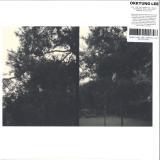
Unlike anything we have heard from her before, Okkyung Lee returns to Shelter Press with "Just Like Any Other Day: Background Music For Your Mundane Activities", a deeply intimate body of recordings at the juncture of ambient music, minimalism, and the baroque, that stands as radical intervention with what experimental music can be, and the place that organisations of sound occupy in our lives. For more than two decades, Okkyung Lee has stood at the forefront of the most radical trajectories of experimental music: a virtuosic cellist and improviser, renowned for her creative rigour and emotive depth. Particularly noteworthy for her range, dexterity, and adaptability, over the last five years Lee's output has revealed unexpected shifts and developments that move far afield from the realms of free improvisation for which she is most well known. 2020's "Yeo - Neun", a heart-wrenching, ambient chamber work - drawing inspiration from the Korean popular music of her youth - was issued by Shelter Press to great critical response, followed closely by "Teum (The Silvery Slit)" - one of a series engrossing electroacoustic works created at Groupe de Recherches Musicales in Paris - on Portraits GRM, and then "Na-Reul" in 2021, regarded by Lee as a closing statement of more than two decades living in New York, which set the precedent of her allowing her emotions to fully occupy the forefront of the music for the first time. Marking her return to Shelter press, "Just Like Any Other Day": Background Music For Your Mundane Activities", encounters Lee upturning the apple cart once again, weaving a profoundly intimate artistic statement on completely unexpected terms. Like its three aforementioned predecessors, "Just Like Any Other Day" belongs to broadening shift in Lee's approach to composing that roughly aligns with her return to her native South Korea, having lived in the United States since her late teens. Infused with a deep reengagement with her own culture and relationship to memory, it is equally a response to those critical challenges and questions provoked by significant life change. Worked on in isolation, and continuously returned to, over the course of four years, the album's nine pieces began with a simple recognition that experimental music is not always what we imagine it to be. It is a practice and a pursuit - a music for which, at its inception, the outcome is unknown - rather than an idiom defined by certain syntaxes, approaches, and qualities of structure and sound. From this departure point, Lee began to inquire after the utility of music itself: what is it for, what does it do, and what place does it (or can it) occupy in our lives? This solitary and durational journey, each composition gradually moving through different phases and evolutions over years, led Lee toward uncharted ground: a music that is not only playful, introspective, and seductive, but also intended to provoke a relationship to experimental music beyond its normative expectations. Rather active or deep listening, it pursues passive listening. Rather than a grand statement, it is discreet. Rather than virtuosity, it embraces the elegant and direct. Even more strikingly, for the first time, the music of "Just Like Any Other Day" encounters Lee leaving the cello entirely behind. Created at home on keyboard, computer, and an inexpensive cassette recorder, "Just Like Any Other Day" presents a remarkable form of ambient music - organisations of sound that become their own environment, to be occupied - intended, as the album's subheading infers, as Background Music For Your Mundane Activities. An expansion of the creative pathways opened by the Korean pop imbued compositions of Yeo - Neun, aspects of electronic process explored by "Teum (The Silvery Slit)", and the emotive foregrounding of "Na-Reul", each of the pieces presented across the two sides of "Just Like Any Other Day" implies something far greater than the limits of its own temporarily: a mood, provocations of memory and place, mirrors for the solitude within which it was made, and palpable emotion lingering just out of grasp. For Lee, each of the album's compositions could be continued or looped for an indeterminate duration: straddling a ground between the minimal and the baroque, enveloping the listener in endless cycles of appreciating, repetitive and rhythmical notes, flirting with the melodic and implying a disembodied imagism that borders on the profound. Remarkably beautiful and direct, Okkyung Lee's "Just Like Any Other Day: Background Music For Your Mundane Activities" - issued by Shelter Press on vinyl - represents a radical reconfiguration of experiential music, stripped to its bare essence in defiance of the widely presumed aesthetic signifiers. Unlike anything we've heard from her before, this immersive body of intimate recordings not only reveals new dimensions of Lee's striking range as an artist, but also of how we might regard and occupy music itself: an ambience to lived and felt like a second skin.
For Mal-One’s second dub album he pulled the dub versions of these tracks, as they seemed to work together as an album. New York City Punk (New York Dub), 45 Random Punk Memories (45 Random Dub), Machine Bubble Disco (Machine Bubble Dub), I Used To Play Bass In A Punk Rock Band (I used to play Dub), Never Seen A Bad Picture of Debbie Harry ( Never seen a Bad Dub), Punk Rock Fanzines (Punk Rock Fanzine Dub). JJ’s Alright (JJ is Dub) The Buzz-cocks Are Coming (The Buzz-cocks are Dub), Damned
Disciple (Damned Dub), The Satellite Kid (Satellite Dub), Punk Rock is Back! (Punk Rock is Dub) and The Revolution Is Coming ( Revolution Dub).
The cover of the album is a collage of various mementos culled together over a target painted canvas. The style and objects seemed to suit the cut up style of the tracks. To add another dub layer to the project he also took the lyrics to these tracks and cut and reworked them into a Punk Art Poem for the back side of the record sleeve. A dub reworking of words, music and image.
Hope you enjoy the indulgence.
- A1: Light It Up
- A2: Really Seen It
- A3: Cold Michigan Nights (Feat Boldy James)
- A4: Maxwells Peacot Collection
- A5: All Day (Feat Lord Sko)
- B1: And It's Like That (Feat Sonnyjim)
- B2: Hep Taxi
- B3: Not Going
- B4: Empires
- B5: Nowhere To Gob2. "Hansel & Gretel" (Feat. Boldy James)
- B3: Trenchblade
- B4: Past Life (Feat. Mavi)
- B5: Buggin
- B6: Kingdom Come (Hyping Me Up)
- B7: Arîba! Arîba!
LA-based producer Real Bad Man and Michigan rapper Willie the Kid release their new collaborative album, Midnight, via the producer’s own Real Bad Man Records label. The album, which marks the producer’s second collaborative project of the year following Dear Psilocybin with ZelooperZ, includes guest appearances from UK rapper Sonnyjim, New York’s Lord Sko and frequent RBM collaborator Boldy James, who will be releasing his own Real Bad Man-produced album in May.
The album came together naturally for the pair, letting each new song inform the identity of the project as a whole. Speaking about how they identified that central theme of the album, Willie says, “I think where Adam and I agreed upon is that the stand out records were all themes for the night, late night drive, after hours dinners, shopping, private rooftop hotel suites, it’s a thinking album, a cruising album preferably enjoyed at night…midnight””
Midnight marks the early stages of what’s shaping up to be a prolific run of collaborations for Real Bad Man in 2025. His second album of the year builds off of the momentum he sparked last month with his first full-length album with ZelooperZ, Dear Psilocybin, which The FADER called “clear-eyed and focused in its own fantastical way”. Working as a duo with the dynamic lyricism of Willie the Kid after the psychedelic sounds of Dear Psilocybin, Real Bad Man returns to the essential underground beatmaking that he first emerged onto the scene with through his On High Alert series. His crackling, lo-fi production pairs perfectly with Willie’s gritty delivery, laying a foundation for the longtime lyrical stylist who has worked alongside some of the genre’s modern heroes including Nas, Lil Wayne, The Alchemist, Roc Marciano, Curren$y and more.
Listen to Midnight above, see below for more details on Midnight and stay tuned for more from Real Bad Man coming soon
Dead Heat ist eine Crossover-Hardcore-Band aus Oxnard, Kalifornien, die 2016 gegründet wurde und für ihre energiegeladenen Live-Auftritte und ihren aggressiven Sound bekannt ist, der Einflüsse aus verschiedenen Subgenres von Punk und Metal vereint.Die Musik von Dead Heat zeichnet sich durch schnelle, thrashige Riffs, treibende Rhythmen, harmonische Leads und intensive Vocals aus, die oft ins Geschriene oder Gebrüllte übergehen. Die Texte der Band behandeln typischerweise soziale und politische Themen sowie persönliche Kämpfe und Erfahrungen.Im Laufe der Jahre hat Dead Heat mehrere EPs, ein Split mit den New Yorker Heavyweights Mindforce und zwei Alben veröffentlicht, darunter ihre neueste EP "Endless Torment", die 2023 über Triple B Records und Tank Crimes mit kritischer Anerkennung erschien. Sie haben auch ausgiebig getourt und Konzerte in den Vereinigten Staaten, Europa und Japan gespielt.Neben ihrer Musik ist Dead Heat auch für ihren DIY-Ansatz zur Punk/Metal-Kultur und ihre Beteiligung an der breiteren Hardcore-Szene bekannt. Die Bandmitglieder waren an der Organisation von Shows und Events beteiligt und unterstützen verschiedene soziale und politische Anliegen.Sales Points/Treiber (Karriere-Highlights/Fakten/Marketing-Info):• Shows und Tourneen mit Drain, Exodus, Cavalera Conspiracy, Mastodon, Harm's Way, Terror• Produziert von Paul Fig (Deftones, Alice in Chains)• Verfügbar auf Digital/Streaming, CD und LP• Authentischer Crossover-Sound mit Thrash-, Punk- und Hardcore-Einflüssen• DIY-Ethik und starke Verwurzelung in der Hardcore-Szene• Starke Live-Reputation mit Shows in USA, Europa und Japan• Kritisch gefeierte vorherige Veröffentlichungen
Mit "Cotton Crown" erweitert die Band ihre Klangpalette um eine kaleidoskopische Bandbreite an Einflüssen: Von gefühlvollem Pub-Rock über HÜSKER DÜ-Aggression bis hin zu melancholischem Sophisto-Pop ist alles dabei. Wie Pitchfork feststellte, sehen THE TUBS den Jangle als eine "riesige Welt der Stimmungen und Musen" und "Cotton Crown" zeigt, wie sie diese Welt weiter erforschen und dabei einen unverwechselbaren Tub-ular-Sound kreieren. Das liegt nicht zuletzt an der Gesangsleistung von Owen 'O' Williams, der oft mit einem jungen RICHARD THOMPSON verglichen wird, und an seinen offenen, düster-komischen Texten. In "Cotton Crown" widmet er sich weiter seinen Lieblingsthemen: Liebespsychose, unsympathisches, psychisch krankes Verhalten und die Demütigungen des Musikerdaseins in London. Dieses Mal ist jedoch ein Gefühl des Risikos in seinen Selbsteinschätzungen und Bekenntnissen spürbar. Im Mittelpunkt steht das Leben in der Zeit nach dem Selbstmord seiner Mutter (der Folksängerin Charlotte Greig), und Williams singt über die unbeholfenen, aufdringlichen und gut gemeinten sozialen Interaktionen, die darauf folgten. Das Albumcover zeigt ein Bild von Williams als Säugling, der von Greig auf einem Friedhof gestillt wird - ein Werbefoto, das um die Veröffentlichung des Debütalbums von Charlotte Greig herum aufgenommen wurde. Der wesentliche Trick von "Cotton Crown" besteht darin, die lyrische Düsternis von Williams durch fröhliche, hakengeladene Pop-Perfektion zu kompensieren. Das liegt vor allem an der Gitarrenarbeit von George Nicholls, der auf dem Album mühelos zwischen dem virtuosen Jangle von JOHNNY MARR, dem treibenden Folk-Rock von PENTANGLE und den Refrain-lastigen Hi-Fi-Grooves zeitgenössischer Bands wie TOPS oder THE 1975 hin- und herwechselt. Dazu kommt die halsbrecherische Rhythmusgruppe von Taylor Stewart (Schlagzeug) und Max Warren (Bass) - die jeden Song mit einer Power-Pop-Wut angreifen, die an GUIDED BY VOICES in ihren besten Zeiten erinnert - und schon hat man ein Rezept für großartigen Indie-Rock. Das Debütalbum der Band, "Dead Meat", wurde durch Mundpropaganda zu einer Sensation, die der Band Auszeichnungen von Pitchfork, The Guardian, MOJO, Uncut, SPIN und anderen einbrachte. Sie gewannen sogar einige prominente Fans: der unnachahmliche Mark Proksch (The Office, Better Call Saul, What We Do in the Shadows) spielte die Hauptrolle im Video zu ihrer Single "Round The Bend" und die Punk-Legende IGGY POP lobte sie in seiner BBC 6Music Radiosendung. Owen Williams, Max Warren und George Nicholls waren zuvor Mitglied von JOANNA GRUESOME - eine Band, die den Welsh Music Prize gewann, ausgiebig durch Großbritannien und die USA tourte und von Pitchfork, Rolling Stone, The New York Times, The Guardian und anderen gelobt wurde. Sängerin Lan McCardle, mit der Williams sowohl bei JOANNA GRUESOME als auch bei EX VOID zusammen musizierte, steuert bei einigen Stücken auf "Cotton Crown" Backing Vocals bei.
Zu Ehren der ONE TO ONE CONCERTS erscheint eine Veröffentlichung in mehreren Formaten mit zusätzlichen Live- und Studioaufnahmen von John Lennon und Yoko Ono aus ihrer politischsten Phase von 1969
bis 1972, als sie in New York City ihre neue Heimat fanden. Ab dem 10. Oktober ist ”Power To The
People als 1CD, 2CD, farbige 2LP, 2LP, 4LP und 9CD + 3Blu-ray Boxset erhältlich.
"Bandleader Lina Langendorf has been known in Sweden for a long time as one of the most skilled and forward thinking saxophone players. She has been staying in both Mali and Ethopia for longer periods and has performed in concerts with legendary artists like Alemayehu Eshete, Vieux Farka Touré and...Mulatu Astatke who, at his club African Jazz Village (in Addis Ababa/Ethiopia), introduced Lina to people in the audience with the words: 'Amazing saxophone player, big respect! We should play together some day'. Some minutes later they go on stage together. Joined by the legendary piano player Dawit Yifru and the bass player from Roha Band, Giovanni Rico Bonsignori. 'Fantastic. You're so strong. Everybody loves you, they say you are ethio-jazz' was Mulatu's words after the jam session.
Lina has also been invited to the live club Le Hogon in Bamako numerous times for jam sessions and concerts with Toumani Diabaté and his band. And for Lina, these jam sessions in Addis and Bamako has been a crucial part of shaping (and sharpening) her musical vision. Last year she was also touring the UK as part of James Yorkston, Nina Persson and the second hand orchestra.
But it wasn't until feb 2023 we got to hear her own music. The debut album with her newly formed band Langendorf United was co-released between Italian label Black Sweat records and Swedish label Sing A Song Fighter and it immediately resonated with music lovers around the world (Radiohead drummer Philip Selway called it 'as if Tinariwen and Fela Kuti had a Blue Note session').
But the band is not just the composer/Saxophone star and band leader Lina Langendorf. Oh, no. The other four musicians are all highly praised musicians in various jazz bands in Sweden and Norway and together they form this sacred thythmic unity with the pulsating bass at the centre.
Langendorf United's music is vibrant and spiritual and on fire!"
Lina Langendorf - saxophone
Daniel Bingert (son of legendary South American musician Hector Bingert) - keys, guitars
Martin Hederos (The Soundtrack Of Our Lives, Tonbruket) - keys, viola
Ole Morten Vågan (Trondheim Jazz Orchestra) - upright bass
Andreas Werliin (Fire!, Wildbirds & Peacedrums) - drums
- A1: Lotus - Within Or Without You (Mr Sam's Travel To New York Remix)
- A2: Madrid Inc - My Sunday's Love
- B1: Delerium Feat. Leigh Nash - Innocente (Mr Sam's The Space Between Us Remix)
- B2: Mr Sam Vs Human Resource - Dominator
- A1: D*Note - Shed My Skin (Mr Sam's One Night In San Francisco Remix)
- A2: Mojado Feat. Mr Sam - Naranja (Dimitri Andreas Vision)
- B1: Y-Traxx - Mystery Land (Fred Baker Vs Mr Sam's Magical Mystery Vocal Mix)
- B2: Mr Sam - Lyteo (Rank 1 Remix)
- A1: Jam & Spoon - Odyssey To Anyoona (Mr Sam Return Of The Phoenix Club Remix)
- A2: Red Screen - Friday Sickness
- B1: Catapila - Void (I Need You) (Mr Sam's The Heart Of Trance Remix)
- B2: Deadmau5 - Clockwork (Mr Sam Remix)
- A1: Timo Maas Presents Mad Dogs - Better Make Room (Mr Sam's Berlin Cookies Remix)
- A2: Mr Sam Feat. Crash Course In Science - Flying Around (Michael Forzza Remix)
- B1: Yellow Screen - Out Of Time
- B2: Mr Sam Vs T99 - Anasthasia
- A1: Urban Electro Squad - Ex Girlfriends (Mr Sam Sunset Remix)
- A2: Mojado - Kaktus
- B1: Mr Sam Vs Fred Baker Present As One - Forever Waiting
- B2: Mr Sam Feat. Kirsty Hawkshaw - One Day
- A1: Miro - Spaceman (Mr Sam & Marko's 'Definition Of Weird Minds' Remix)
- A2: Mr Sam Feat. T4L - Rydem Koba
- B1: Dillinger & Capone - Trysting Fields (Mr Sam & Mikka Maffia Remix)
- B2: Mr Sam - Tantra
- A1: Mr Sam Feat. Claud9 - Cygnes
- A2: Bt - Suddenly (Mr Sam Pop Model Remix)
- B1: Mr Sam - This Is Cocaine Speaking
- B2: Mojado - El Toro
- B3: Mr Sam - Alegrya
- A1: Mr Sam With Bt - Thegreat Opus
- A2: Mr Sam - Radar
- B1: Mr Sam Feat. Kirsty Hawkshaw - Split (Jonas Steur Remix)
- B2: Mr Sam Feat. Kirsty Hawkshaw - Insight (Acoustic For Sam)
- A1: Blue Screen - You & Me
- B1: A Split Second - Flesh (Mr Sam Vs Fred Baker's Back To The Neo Punk Attitude Remix)
- B2: Corvin Dalek - Pounds & Penz (Mr Sam's Wet&Hard Remix)
- A1: Laysia - With Or Without You (Mr Sam Vs Fred Baker Always By Your Side Mix)
- A2: Mr Sam - Seven 7 Seven
- B1: 2 Flying Stones - Maybe Tomorrow (Mr Sam's French Sinatra Remix)
- B2: Blank & Jones Feat. Claudia Brücken - Unknown Treasure (Mr Sam Beyond The Grace Of God Remix)
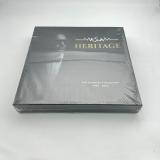
Mr Sam - HERITAGE (1995-2025)
HERITAGE celebrates 30 years of Mr Sam's career in a world-first collector's edition: a monumental best-of gathering 40 tracks across 10 vinyls. Never before has an electronic DJ and producer released such a project - an unprecedented box set that stands as a unique, sincere and intimate journey, blending emotion, innovation and musical memory.
Each track has been carefully selected, remastered, and placed as part of a personal narrative. More than just a compilation, HERITAGE is a musical journey - the story of an artist who has shaped the trance and progressive scene worldwide since 1995, and who continues to write history, with this release sealing his legacy forever.
The album features his most iconic productions (Lotus, the Screen series, Forever Waiting, Lyteo...) alongside timeless contributions from artists who influenced a generation, including D*Note, Timo Maas, Jam & Spoon...
This is more than a retrospective - with HERITAGE, Mr Sam permanently engraves his legacy in the history of electronic music.
The Rhythm Makers's Soul On Your Side is flawless proto-disco funk. The Bronx-based band - that later went on to form heavyweight disco outfit GQ - originally released this treasure in 1976 and it's long been a hard to find record. It's also rare to find a record this hard. Captivating funk at its rawest, no doubt.
Storming out the gate with the rollicking Loft/Garage staple "Can You Feel It (Part 1)", the listener is immediately put on notice that this LP is just a little bit special. The title track, "Soul On Your Side", is a classic dancer and the basis of GQ's future hit "Disco Nights". But it's perhaps "Zone", a huge Baldelli track, that the record is best known for. Hypnotic psyched-out cosmic-disco / cosmic funk, it's an unrelenting groove that really thrusts the party into hyperdrive. With doses of scintillating Latin and pulsating African rhythms driving the pumping tune, atop an unstoppable bassline and imaginative, soul-slathered keyboard figures, it's basically a full-on funk assault. You might need a lie-down after this.
But there's no let-up on the B-Side, immediately grooving thanks to "Funk-N-You", a laidback glider that just rolls in the sleek style. Gorgeous harmony skills are displayed on "Street Dreamin'". Beautiful and gritty funk, by turns. "You're My Last Girl" is an airy ballad with two leads before the legendary "Monterey" enters the fray. A much-sampled instrumental and heavy disco-funk nugget, it contains an amazing B-Boy drum break making the whole LP worth the price of admission. "Can You Feel It (Part 2)" closes out this spectacular set.
The Rhythm Makers had been gigging around New York City since the late ’60s, having initially come together as Sabu and the Survivors, named after bassist Keith “Sabu” Crier. They eventually - for this album at least! - settled on The Rhythm Makers and cut one record for the small De-Lite subsidiary Vigor. The core lineup featured Crier, keyboardist Herb Lane, drummer Kenny Banks and rhythm guitarist Rahiem Leblanc.
Mastered for vinyl by Simon Francis, cut by Cicely Balston for Alchemy at AIR Studios with artwork restored at Be With HQ, this new edition should hopefully bring this album into the homes and record boxes of many more people.
- A1: Ich Seh Dich Überall
- 2: Romy
- 3: Liebe
- 4: Tod
- 5: Ein Grab
- 6: Himmelerdenblau
- 7: Vergessen
- 8: Der Traum
- 9: Ein Herz
- 10: Intubieren, Du Arschgesicht!
- 11: Drei Tage Regen
- B1: Zeit Für Den Strick
- B2: Die Umarmung Der Magneten
- B3: Himmelerdenblau Reprise
- B4: Theos Theme
- B5: Der Blumenwalzer
- B6: Schlafen
- B7: Tabletten
- B8: Brüsseler Platz
- B9: Der See
- B10: Blood, Sweat, Fears
- B11: Vera, Mein Herz!
»Sie erschafft ein dunkles Sonnensystem, das mit funkelnden Sternen übersät ist«, schreibt die New York Times über Romy Hausmanns Kunst. Die Netflix Verfilmung ihres Debütromans »Liebes Kind« wurde 2024 mit dem EMMI ausgezeichnet.
»Was wäre, wenn man in besonderen Momenten zum Lesegenuss eines Buches eine maßgeschneiderte Musik abspielen könnte?« Mit »Himmelerdenblau - Der Soundtrack zum Buch« legen Romy Hausmann und Martin Bechler, partners in crime, eine tiefräumige, schwebende musikalische Eskorte vor, die die musikaffinen Lesenden begleiten und verzaubern wird.
DJ Support: Fred P, Mark Farina, Harvey Sutherland and more
When two underground icons like James Curd and Fred P join forces, the result is more than just acollaboration-it's a cross-continental meeting of deep house minds. The track was born in James Curd's Adelaide studio while Fred P was in Australia, capturing a rare and organic creative moment between two respected figures in house music. James Curd, known for his work with Greenskeepers and his extensive catalog across labels like Classic, Defected, and DFA, brings a playful yet precise groove, while Fred P, the introspective deep house pioneer behind Black Jazz Consortium, adds soulful depth and hypnotic finesse. The remix package elevates things even further. Harvey Sutherland, a staple in Australia's modern funk and electronic scene, brings his analog synth wizardry-his remix credentials include Disclosure and Jamiroquai. Austin Ato, a UK house innovator with a DFTD remix for Groove Armada, injects vibrant dancefloor energy. And Junior Sanchez, a long-time figure in New York's club culture, rounds it out with a heavyweight version - he's flipped everyone from A-Trak to Madonna. This is a lineup that speaks volumes before you even hit play.
- A1: Door Of No Return
- A2: Freedom Jazz Dance
- A3: Good Afternoon Everyone
- A4: The Haunting
- A5: Dying To Live
- B1: Politician
- B2: Black Fathom Five
- B3: Beautiful Bastard
- B4: My Little Zulu Babe
- B5: In Effigy
Wer seine 50-jährige Karriere verfolgt hat, kennt Vernon Reid als Künstler, der in allen Farben malt. Je nachdem, in welche Ära man eintaucht und welches Album auf dem Plattenteller liegt, findet man den New Yorker Universalgelehrten zwischen Jazz, Metal, Punk, Funk, Electronica und Hip-Hop pendelnd. Und das alles mit so vielseitigen Kollaborateuren wie Mick Jagger oder Public Enemy. Ein Künstler im Wandel und doch eine feste Größe, auf dessen Aussagen man bauen kann. “Hoodoo Telemetry”, sagt der 66-jährige über sein Werk, “ist wie ein Stück meines Geistes. Ich habe eine ganze Weile gebraucht, um mit diesem Album zu beginnen. Diese Songs kommen aus unterschiedlichen Zeiten und Lebenssituationen. Einige Songs sind ganz neu, andere sind aus älteren Ideen, die ich wieder aufgegriffen habe, entstanden.
Plötzlich fand ich den Fokus und mir war klar das ich jetzt mit der Arbeit an diesem neuen Album anfangen muss.
Ostinato as resistance: Rafael Anton Irisarri’s landmark work reimagined. Marking the tenth anniversary of the American composer’s critically acclaimed album 'A Fragile Geography', this new edition arrives renewed, both sonically and visually.
First released in 2015 (Room40) during a period of personal upheaval and creative reinvention, it endures as a testament to resilience, transformation, and the connection we hold with the places that shape us.
Written in the aftermath of a devastating theft, A Fragile Geography was born out of loss. Just days before a cross-country move to New York, Irisarri’s entire Seattle-based studio was wiped out. Instruments. Recordings. Archives. Gone without a trace. He arrived on the East Coast to an empty room and the daunting task of starting over.
“This album wasn’t just a record; it was a lifeline,” Irisarri reflects. “It became a way to process the emotional chaos that followed: uprooting, instability, and ultimately, the slow, intuitive rebuilding of a life.”
Composed and recorded in the rural woods of the Hudson Valley, the album took shape in seclusion, surrounded by nature, and through a process guided by improvisation. Embracing limitations, Irisarri wove textural layers of field recordings with half-remembered melodies from his Seattle years, piecing them together like fragments of memory. Tracks like “Displacement,” “Hiatus,” and “Persistence” juxtaposed haunting stillness with restless momentum, mapping an inner terrain of grief, catharsis, and rebirth.
Among its defining sounds is “Empire Systems,” a monumental centerpiece built around a simple four-chord progression, organ textures, and guitar drones. Gradually, the track expands into layers of immersive loops and thick, enveloping distortion that wash over the listener like a rolling wave. Often cited as the album’s most majestic passage, it captures Irisarri at his most sonically ambitious. With a harmonically saturated structure crafted from restraint and repetition, it remains one of his most recognizable compositions: an exercise in the art of maximal minimalism.
From the outset, “Reprisal” received praise from BBC’s Mary Anne Hobbs, who championed the track on her radio show. Her support played a key role in introducing Irisarri’s work to wider audiences and solidifying his place within the lineage of electronic, drone, and experimental sound artists. A slow-burning elegy, the piece emerges from a haze of distortion and sub-bass, with dense, unrelenting drones carrying a sense of mounting tension. Just as it seems to collapse under its own weight, flickers of guitar emerge like distant light through fog. It’s a meditation on dissonance, resolve, and the elusive possibility of release.
The closing track, “Secretly Wishing for Rain,” is steeped in saudade: a longing for Seattle’s dour grey skies, lush green landscapes, and desaturated sunsets. Through it, Irisarri mourns a vanished chapter of life bound to the city, a time documented in scattered mementos and cherished collections, now permanently gone. A reflection on what could never be recovered: an era lost to time. Julia Kent’s looped cello motifs added a melancholic warmth to the track, marking the first collaboration between the two artists and sparking a musical dialogue that would keep growing in the years that followed.
More than a career highlight, A Fragile Geography has laid the foundation for Black Knoll studio, which Irisarri rebuilt from the ground up. The studio has since grown into a creative hub for countless projects, with Irisarri engineering records for iconic music figures like Terry Riley, Ryuichi Sakamoto, William Basinski, MONO, Devendra Banhart, Grouper, Emeralds, Steve Hauschildt, Julianna Barwick, and many others. Carried by its lasting influence, the album has quietly captured the ear of a younger generation, its sound and emotional arc finding new listeners in unexpected corners.
The album’s new visual language was reimagined in collaboration with Mexico City–based designer Daniel Castrejón. Irisarri captured ghostly images at Gaztelugatxeko Doniene, a historic coastal site in Bermeo, Euskal Herria. Castrejón then treated the photographs with distressed textures and spectral overlays. The final artwork channels the rugged, elemental forces that shaped both the music and Irisarri’s aesthetic, renewing his ties to ancestral ground inspired by the Basque homeland of his bloodline.
Mastered by Stephan Mathieu with exceptional attention to detail, this anniversary edition uncovers every nuance in the sound design, enhancing clarity and presence. With each listen, new elements emerge, inviting discovery and reconnection.
“I don’t experience this album as a document of grief anymore,” says Irisarri. “I hear adaptation and I'm reminded that when everything falls apart, something meaningful, maybe even beautiful, can emerge.”
Ostinato as resistance: Rafael Anton Irisarri’s landmark work reimagined. Marking the tenth anniversary of the American composer’s critically acclaimed album 'A Fragile Geography', this new edition arrives renewed, both sonically and visually.
First released in 2015 (Room40) during a period of personal upheaval and creative reinvention, it endures as a testament to resilience, transformation, and the connection we hold with the places that shape us.
Written in the aftermath of a devastating theft, A Fragile Geography was born out of loss. Just days before a cross-country move to New York, Irisarri’s entire Seattle-based studio was wiped out. Instruments. Recordings. Archives. Gone without a trace. He arrived on the East Coast to an empty room and the daunting task of starting over.
“This album wasn’t just a record; it was a lifeline,” Irisarri reflects. “It became a way to process the emotional chaos that followed: uprooting, instability, and ultimately, the slow, intuitive rebuilding of a life.”
Composed and recorded in the rural woods of the Hudson Valley, the album took shape in seclusion, surrounded by nature, and through a process guided by improvisation. Embracing limitations, Irisarri wove textural layers of field recordings with half-remembered melodies from his Seattle years, piecing them together like fragments of memory. Tracks like “Displacement,” “Hiatus,” and “Persistence” juxtaposed haunting stillness with restless momentum, mapping an inner terrain of grief, catharsis, and rebirth.
Among its defining sounds is “Empire Systems,” a monumental centerpiece built around a simple four-chord progression, organ textures, and guitar drones. Gradually, the track expands into layers of immersive loops and thick, enveloping distortion that wash over the listener like a rolling wave. Often cited as the album’s most majestic passage, it captures Irisarri at his most sonically ambitious. With a harmonically saturated structure crafted from restraint and repetition, it remains one of his most recognizable compositions: an exercise in the art of maximal minimalism.
From the outset, “Reprisal” received praise from BBC’s Mary Anne Hobbs, who championed the track on her radio show. Her support played a key role in introducing Irisarri’s work to wider audiences and solidifying his place within the lineage of electronic, drone, and experimental sound artists. A slow-burning elegy, the piece emerges from a haze of distortion and sub-bass, with dense, unrelenting drones carrying a sense of mounting tension. Just as it seems to collapse under its own weight, flickers of guitar emerge like distant light through fog. It’s a meditation on dissonance, resolve, and the elusive possibility of release.
The closing track, “Secretly Wishing for Rain,” is steeped in saudade: a longing for Seattle’s dour grey skies, lush green landscapes, and desaturated sunsets. Through it, Irisarri mourns a vanished chapter of life bound to the city, a time documented in scattered mementos and cherished collections, now permanently gone. A reflection on what could never be recovered: an era lost to time. Julia Kent’s looped cello motifs added a melancholic warmth to the track, marking the first collaboration between the two artists and sparking a musical dialogue that would keep growing in the years that followed.
More than a career highlight, A Fragile Geography has laid the foundation for Black Knoll studio, which Irisarri rebuilt from the ground up. The studio has since grown into a creative hub for countless projects, with Irisarri engineering records for iconic music figures like Terry Riley, Ryuichi Sakamoto, William Basinski, MONO, Devendra Banhart, Grouper, Emeralds, Steve Hauschildt, Julianna Barwick, and many others. Carried by its lasting influence, the album has quietly captured the ear of a younger generation, its sound and emotional arc finding new listeners in unexpected corners.
The album’s new visual language was reimagined in collaboration with Mexico City–based designer Daniel Castrejón. Irisarri captured ghostly images at Gaztelugatxeko Doniene, a historic coastal site in Bermeo, Euskal Herria. Castrejón then treated the photographs with distressed textures and spectral overlays. The final artwork channels the rugged, elemental forces that shaped both the music and Irisarri’s aesthetic, renewing his ties to ancestral ground inspired by the Basque homeland of his bloodline.
Mastered by Stephan Mathieu with exceptional attention to detail, this anniversary edition uncovers every nuance in the sound design, enhancing clarity and presence. With each listen, new elements emerge, inviting discovery and reconnection.
“I don’t experience this album as a document of grief anymore,” says Irisarri. “I hear adaptation and I'm reminded that when everything falls apart, something meaningful, maybe even beautiful, can emerge.”
Daniil Trifonov, „einer der beeindruckendsten Pianisten unserer Zeit“ (New York Times) veröffentlicht sein
mit Spannung erwartetes Tschaikowsky-Album!
Der Starpianist erkundet darin ausgewählte Werke von Tschaikowsky für Klavier solo. Diese offenbaren die
intimere, private Seite des romantischen Komponisten, denn „Tschaikowsky war kein mürrischer Sonderling,
sondern pflegte vor allem in jüngeren Jahren sehr fröhliche Freundschaften und fand großen emotionalen
Rückhalt in seiner Familie“, sagt Trifonov.
Zu hören sind die frühe Klaviersonate in cis-Moll, „ein zu Unrecht übersehenes Meisterwerk“, welches
reich an wechselnden Stimmungen und originellen Ideen ist, das Thème original et variations in F-Dur und
das Kinderalbum op. 39. Zusammen eröffnen diese Werke einen Einblick in das, was Daniil Trifonov die
„private Ebene Tschaikowskys“ nennt – „einen Geist, geprägt von Erinnerungen an Jugend und Familie“.
Das Album endet mit der farbenprächtigen Suite aus Dornröschen. Diese wurde 1978 von dem damals erst
21-jährigen Pianisten und Dirigenten Mikhail Pletnev transkribiert, der im selben Jahr – genau wie Trifonov
33 Jahre später im Jahr 2011 mit einem spektakulären Sieg – den Internationalen Tschaikowsky-Wettbewerb
gewann. Pletnevs Bearbeitung für Soloklavier von Highlights aus dem beliebten Tschaikowsky-Ballett ist
für Daniil Trifonov „ein meisterhaftes Klavierwerk in sich“.
- A. Junior Kahdaffie - Special Request To All Notch
- B. Junior Kahdaffie - Special Effects Version
One of our all time favorite New York dancehall tunes, finally back again. 20+ years ago, in a different era of reggae record collecting where there was little to no information to be found about so many '80s reggae records, the original 12 inch single of this one was a mythical tune among our set of friends. In fact this one was on the earliest DKR wish lists, but all good things take time. By now we expect most of our followers know Junior's digital masterpiece "Rampers Music", which we first issued in 2014, and is now back in stock. But this one is his earliest and first tune, a heavy piece of a rub a dub cut at Munchie Jackson's Sunshine Studio in the Bronx, with Jackie Mittoo at the helm of the session. The original 12 inch was self released by Junior on his own label in 1985, with one of our all time favorite label designs. The lyrics are a great snapshot of mid 80s New York, a nod to all those making their way, for better or worse, thru the posses and cliques of the Jamaican scene of the day.
Pandemic, war, inflation, apocalyptic scenarios about climate change and artificial intelligence, all connected with widespread bonkers conspiracy narratives and growing fascist sentiments – in this crisis environment we re-emerge with a new issue.
What may appear like a ‘normal’ datacide issue – which it is indeed – is however also a part of a broader strategy. We’ve been busy expanding activities into the field of videos, documentaries and interviews. The very first signs of this are visible on our Noise & Politics YouTube channel.
There will be much more.
Datacide nineteen is now at the printers and will be available for the first time at the Hekate event at Forte Prenestino in Rome on October 6/7.
Subscribers, depending where they are based, will receive their copies soon after.
General distribution will commence later in October, our aim is to have the issue available in all the most important radical bookstores around Europe by early November. If you are interested to resell datacide in your area, please get in touch!
We will also have a table at the Radical Bookfair in London on November 4th, presenting the new magazine along with older issues.
With this issue we pick up the story where we left it with the last one. We’re unfolding a countercultural panorama, this time beginning in the mid-20th century with Howard Slater exploring the beginnings of the Electronic Disturbance Zone, multiple reflections of 1948 via the 1990s, sonic adumbrations of new social relations.
Christoph Fringeli then introduces us to a document from 1967 where situationist ideas popped up in the Extra-Parliamentary Opposition in West Berlin, in a text called Vietnam, the Third World and the Self-Deception of the Left, which contains a détournement of the Address to Revolutionaries of Algeria and of all Countries published by the Situationist International the previous year.
From 1967 we move on to 1978 with Ian Trowell, in an excerpt from his forthcoming book ‘Throbbing Gristle – An Endless Discontent’, tracking the movements of Throbbing Gristle as they play their first gig up north at the aptly named Wakefield Industrial Training College. Uncanny overlaps of the timelines of TG’s operation and The Yorkshire Ripper’s killing spree reveal themselves.
The time window from the 90s to the present day is illuminated by Nihil Fist, as we’re printing the interview previously published in video form on our YouTube channel.
This issue then moves into ficticious territory with stories and poetry by Joke Lanz, Dan Hekate, Howard Slater and Riccardo Balli. Book and record reviews follow, as do the charts and a short report of our wider activities since the last issue.
Please pre-order your copy now (6 euro incl. Shipping in Europe, 8 euro elsewhere) or, even better, take out a subscription (standard subscription for only 23 euros for 4 issues (Europe) or 3 issues (rest of the world) – or our super-subscription which includes also records, t-shirts, books and digital items.
Or just make a donation if you can’t be bothered with print, but want to support our work.
“New York’s Harlem River Drive is a dividing line, a highway where the rich zip past the poor,” says singer Jimmy Norman. Eddie Palmieri’s Latin-funk band of the same name tackled these hard truths, playing prisons and speaking to the common man. Ultimately, Norman and Palmieri made a powerful socio-political statement that continues to resonate to this day." Pablo Yglesias/Wax Poetics. When initially released in 1971, many critics panned Eddie Palmieri’s album Harlem River Drive. Those critics were wrong. Regardless of critical opinion, the release was not the crossover success Palmieri and Roulette Records had hoped for, at least in the immediate. Over the years the release has developed a following among listeners, DJs, and aficionados of rare-grooves. The record may have been recorded towards the end of the Latin soul era, yet it features that genre's wonderful mix of Puerto Rican soul, Spanish Harlem Latin, and New York funk. Palmieri worked with an incredibly talented crew of Latin and R&B session musicians to create this quintessential New York vibe, a synthesis of funk and Afro-Cuban sounds. Contributors include Victor Venegas from Mongo Santamaria’s band, Palmieri’s brother Charlie, an accomplished musician in his own right, Bruce Fowler who went on to join Frank Zappa’s band, Dick Meza who went on to great things with Tito Puente, Ray Barretto and Celia Cruz, as well as Andy Gonzalez who’s pedigree includes recordings with Barretto, Johnny Pacheco, Willie Colon and even Chico O’Farrill. Also appearing Randy Brecker and one of the all-time greatest of the greats Bernard Purdy. An over-arching theme of Harlem River Drive is the thought that, as Palmieri puts it “The U.S. is richest country, all this immense wealth, side by side with the most intense poverty, racial prejudice; how is that possible?” A question that’s perhaps more even more relevant today than it was in 1971. A question that can be further explored with Get On Down’s reissue of this seminal recording.