A cocktail of rebellious queer vocal fragments, deceptive percussive granules and swaying hammered vibrations, upsammy and Valentina Magaletti's first collaboration trembles with suspense. The seeds of 'Seismo' were sown following a commission from Amsterdam's Rijksmuseum to soundtrack an exhibition of work from the Museum Boijmans van Beuningen in Rotterdam and the duo didn't want to approach their collaboration flippantly. So, wandering the museum's maze of rooms, they recorded various improvised percussive sounds with their arsenal of microphones, using the space to inform various rhythms and textures that were sculpted later into electroacoustic vignettes. This was just the starting point, though; as Magaletti and upsammy began performing together, the project evolved and 'Seismo' began to take shape. The duo had struck on a salient aesthetic concept, using mostly digital and acoustic mallet instruments to blur the boundary between their roles and create friction between the synthetic and the authentic. And the finished record is a phantasmagoric push-and-pull between its various conflicting elements: harmony and dissonance, randomness and predictability, openness and constraint. 'Seismo' isn't the first time that upsammy has studied her environment in search of revelation. On her acclaimed second album, 2024's 'Germ in a Population of Buildings', the Amsterdam-based DJ, producer and multidisciplinary artist erected her complex, unorthodox rhythms and eerie melodies around a modernist frame of field recordings collected in various cityscapes, countering heavyweight basslines with subtle, microscopic sounds. London-based Italian vanguard Magaletti, meanwhile, has applied her unique logic to innumerable projects at this point, working with everyone from batida icon Nídia and hardcore-dub outfit Moin to French writer Fanny Chiarello and British bass scientist Shackleton. For years she's approached the drums with criticism, attempting to challenge any preconceptions, something that's most visible on 2020's 'A Queer Anthology of Drums'. And both artists' thoughtful perspectives are welded together seamlessly on 'Seismo', a dizzying suite of eight eccentric statements that's fragile but never insecure, gauzy but not indistinct. An unnerving sense of space characterizes 'It Comes to an End' as Magaletti's in situ improvisations herald for upsammy's microscopic glitches and chiming pitch-bent melodies. It's almost unbalancing to witness the track's impossible dimensionality, the interplay between reverberant marimba hits and bone-dry synths, or percussion that's been recorded and processed in consciously different settings. A new architecture emerges in the sound itself that the two artists scan and explore meticulously, testing its boundaries with undulating hybridized rhythms on the invigorating 'Superimposed' and offsetting the powdery drums with liquified smacks and alien voices. The duo's vibrations are knotted with piano flourishes on 'Hyperlocalize', balanced with artificial clanks and clangs that disappear into the track's sonorous atmosphere, replaced by whispers and half-hallucinated insectoid chirps. 'Seismo' is an album that feeds off the energy generated by its juxtapositions: the tension and anticipation that's melted by rapid, hyperactive movement and the finely drawn rhythms disrupted by a layer of indistinct, barely perceptible microsounds. It's a collaboration that sounds like two minds challenging each other but not wrestling, each peering from their own distinct vantage point and imagining a third landscape shaped by optimistic, queer vibrations.
quête:ni
2025 Reissue.
Münchenbuchsee, a suburb of Bern, Switzerland. Stephan Eicher is the youngest of three children. His father, a radio and TV repairman, is also a jazz violinist and a sound tinkerer in his spare time. In the family home's converted fallout shelter turned studio, Mr. Eicher experiments with homemade sequencers, tortures handcrafted drum machines, and abuses reel-to-reel tape recorders—all under the fascinated gaze of young Stephan.
The boy quickly develops a musical curiosity, exploring sound through various experiments and wanderings. Alongside his younger brother Martin, Stephan crafts audio plays on a homemade multi-track recorder (essentially several cassette decks hooked together!), which they write, record, add sound effects to, and perform for family and friends. Just a couple of nice kids, really...
Then comes 1972, and Lou Reed's Transformer album changes everything for the Eicher kids. For 13-year-old Stephan, it's a revelation—especially "Vicious", the opening track, which he plays on repeat for months. He convinces his father to buy him an electric guitar. Not stopping there, his father also builds him a tube amp using an old radio.
Then comes adolescence. A rough one. Stephan leaves home at 16 and moves to Zurich. With obvious artistic talent, he persuades his art teacher to help him get into F+F, a radical, alternative art school—despite his young age. Accepted, he starts learning video techniques, determined to become a filmmaker.
At F+F, Stephan organizes Dada-style happenings and concerts with a group of friends known as the Noise Boys. Among them: one of his teachers on bass, Veit Stauffer on drums (who would later found ReR/Recommended Records), his girlfriend Sacha on vocals, and Stephan on guitar. In one of their early performances, they release a remote-controlled mouse covered in dull razor blades into the audience to create panic and chaos. Keeping with this aggressive, confrontational spirit, they once played a concert while wearing headphones blasting Tristan and Isolde, trying to perform their own songs simultaneously—to maximize the cacophony. The goal was always the same: clear the room.
Their “songs,” if you can call them that, followed suit. Take "Hungeriges Afrika", for instance—performed entirely with power drills and some drum feedback.
To make ends meet, Stephan returns to Bern on weekends to work as a waiter at the Spex Club, the city’s main punk venue. On September 16, 1980, during a show by proto-electro group Starter, the police raid the club and arrest everyone. Stephan, who manages to avoid arrest, seizes the opportunity to “borrow” Starter’s gear left behind. He suddenly finds himself in possession of a Roland Promars synth, a Korg MS20, and a gorgeous CR78 drum machine, which he runs through a Big Muff distortion pedal to get that perfect gritty sound.
He then sets out to reinterpret some Noise Boys tracks, reworking them during impromptu sessions recorded on a dictaphone (yes, a dictaphone—now the lo-fi sound makes more sense, doesn’t it?). He ironically titles the resulting cassette "Stephan Eicher spielt Noise Boys" ("Stephan Eicher plays Noise Boys"). This gem features seven tracks, which are the ones reissued here.
Back in Zurich, he visits his friends Andrew Moore and Robert Vogel, who have a DIY cassette duplication setup. They make 25 copies of Stephan Eicher spielt Noise Boys for Stephan and his friends. Robert encourages him to visit Urs Steiger of Off Course Records and play him the tape.
Without much hope, Stephan shows up at Urs’s office. But Urs is instantly hooked and suggests releasing a 7” single. Due to space constraints, they reluctantly drop two of the seven tracks ("Hungeriges Afrika" and "One Second"). As for the musical score featured on the cover—it was randomly chosen and remains a mystery to this day. Calling all music theory nerds!
The 7-inch is pressed in 750 copies and released in the first week of December 1980—a date Stephan remembers well, as it’s the same week John Lennon was killed. Smartly, Urs sends a promo copy to François Murner, Switzerland’s answer to John Peel, who hosts a show on alternative station Sounds. Murner falls in love with the record and starts giving it airtime. To Stephan’s surprise, sales follow—and people actually seem interested in his music.
Even this modest underground success scares Stephan a bit. He stops making music for a year and moves to Bologna, where he works as a programmer at Radio Città, a feminist radio station.
Meanwhile, Stephan’s younger brother Martin, who’s also involved in the punk scene, joins the band Glueams as a singer and guitarist. Glueams, named after the fanzine run by two of its members (drummer Marco Repetto and bassist GT), eventually rebrands as Grauzone. Stephan is invited to their shows to project hacked Super 8 visuals live on stage.
Urs Steiger, now working on a compilation titled Swiss Wave – The Album, asks Grauzone to contribute alongside bands like Liliput, Jack and the Rippers, The Sick, and Ladyshave (Fall 1980).
For the album, Martin tasks Stephan with producing their recording sessions. Under Stephan's artistic direction, two tracks emerge: "Raum" and "Eisbär". During "Eisbär", Martin plays a minimalist bass line borrowed from post-punk band The Feelies (just an open string). Drummer Marco Repetto struggles to keep time. Later that evening, unhappy with the takes, Stephan builds a four-bar drum loop from a ¼-inch tape and uses it instead of the flawed original. He then adds bleepy synths and wind sounds to complete the track’s icy vibe before handing it over to Urs.
The Swiss Wave – The Album compilation is released quietly at first, but things snowball thanks to "Eisbär", which eventually becomes a smash hit—selling over 600,000 singles.
Meanwhile, Stephan plays in a rockabilly band called SMUV (named after Switzerland’s social security agency) and begins producing artists, including the debut album of Starter (1981), which includes a more pop-oriented version of "Minijupe".
By early 1982, Stephan starts spending time with the post-punk girl band Liliput (formerly Kleenex). They’re older than him, and he happily drives them around in his Renault Major, acting as their roadie.
By 1983, Grauzone—signed to the major label EMI, which turned out to be a misstep—is falling apart. Stephan begins to pivot toward a more mainstream pop sound with his debut solo album Les Chansons Bleues.
But that... is already another story.
- 1: Fuenarinu
- 2: Kaendaiko
- 3: Tsubakishishaku No Yuigon
- 4: Tengindoujiken
- 5: Kindaichikousuke Nishie Yuku
- 6: Ougonno Furuuto (Flute)
- 7: Yubi
- 8: A=X, B=X A=B
- 9: Chi To Suna
- 10: Tabiyukumonoyo
- 11: Akuma Fuewo Fukite Owaru
We've got a bit of an obsession with Hozan Yamamoto here at Mr Bongo! A legend of Japanese jazz, he is rightly regarded as a true master and was recognised as a "living national treasure" by the Japanese government in 2002. Over five decades he pushed the genre into new directions, absorbing fusion, funk, spiritual jazz and many other sounds, resulting in a discography studded with gems of rare beauty. Exploring his back catalogue has taken us on an engrossing journey that now sees us reissuing another work from this ground-breaking musician.
Though not translating perfectly into English 'Akuma Ga Kitarite Fue Wo Fuku', (kitarite has not been a modern expression in Japanese) roughly means 'The Devil Comes Playing The Flute' / 'The Devil Is Coming While Blowing The Whistle' or 'Devils Flute’. It is the original soundtrack to Kôsei Saitô’s 1979 mystery and suspense movie, ‘Devil’s Flute’. The film is based on a story by the famous author, Seishi Yokomizo, and is centred around a much-loved fictional Japanese detective, Kosuke Kindaichi. A Japanese Sherlock Holmes that has been popular for generations.
Hozan Yamamoto was invited to compose the soundtrack directly by the producer of the film, Haruki Kadokawa. Mr Kadokawa also hired keyboard player and producer Yu Imai as assistant producer on the project, resulting in a stunning cosmic, breaks and beats-laden, funk, disco soundtrack extravaganza.
When it comes to the soundtrack and the technology of the time, Hozan Yamamoto and Yu Imai got inventive, tripped out, funked up, and experimented, creating a quirky soundtrack masterpiece that needed to be heard more outside of Japan. Differing from the more traditional Japanese music orientation of some of his other albums such as 'Beautiful Bamboo-Flute' (also released on Mr Bongo) the album showcases a number of genres, from lush atmospheric incidental music to disco and funk grooves, experimental nuggets, drum and flute workouts, to neo-classical and more.
A special record that showcases the further depths of this wonderful musician's talents.
- A1: Chairman Of The Board - Life And Death In G&A (Part 2)
- A2: Curtis Mayfield - (Don't Worry) If There Is A Hell Below, We're All Going To Go
- A3: The Temptations - Psychedelic Shack
- A4: The Chambers Brothers - Time Has Come Today - Single Version
- A5: Brutal Force - The Number For Groove
- B1: Isaac Hayes – Hyperbolicsyllabicsesquedalymistic **
- B2: Bobby Womack - California Dreamin
- B3: The Five Stairsteps - Dear Prudence
- B4: Ebony Rhythm Band - Drugs Ain't Cool
- B5: Doris - You Never Come Closer
- C1: Terry Callier -You Goin' Miss Your Candyman
- C2: Rodriguez - Sugar Man
- C3: Patti Drew - Hard To Handle
- C4: Marlena Shaw - Liberation Conversation
- C5: El Michels Affair - Murkit Gem
- C6: Janko Nilovic - Drug Song
- D1: Kylie Auldist - Nothin' Else To Beat Me **
- D2: Khruangbin - Maria También
- D3: Christian Madden & The Enemy Chorus - Twice As Thick
- D4: Gabriels - Love And Hate In A Different Time
- D5: Michael Kiwanuka - Black Man In A White World
- D6: Mrcy – Purple Canyon
‘Soul Psychédélique’, released on Two-Piers, takes you on a journey into the world of Psychedelic Soul & Funk, from its early beginnings in the 1960s and 1970s to the current crop of artists championing the more Psychedelic, Trippy end of the Soul sound today.
‘Soul Psychédélique’ brings together legends of the Soul Psych scene, such as Curtis Mayfield, The Chambers Brothers, Marlena Shaw, The Temptations, and the brilliant ‘Sugar Man’ by Rodriguez. Place alongside Soul Titans like Isaac Hayes, Bobby Womack, Chairman of the Board, Terry Callier all delivering stunning Psychedelic Nuggets for your Listening pleasure. Throw in some covers like ‘Dear Prudence’ by The Five Stairsteps, ‘Hard to Handle’ by Patti Drew and ‘California Dreamin’’ Bobby Womack and finish with some brilliant modern-day exponents of the scene like Khruangbin, Gabriels and Michael Kiwanuka. The result is a crazy ride through the world of Psychedelic Soul and Funk. If you ain’t dancing and smiling by the end - what the hell is wrong with you!
‘Soul Psychédélique (The Best of Lounge & Exotica 1954-2022)’ is the fourth instalment in the ‘Psychédélique’ Compilation series on Two-Piers, following the critically acclaimed ‘Pop Psychédélique (The Best of French Psychedelic Pop 1964-2019)’, ‘Garage Psychédélique (The Best of Garage Psych and Pzyk Rock 1965-2019)’ and ‘Lounge Psychédélique (The Best of Lounge & Exotica 1954-2022)’ and is available on 2LP Coloured Vinyl
- A1: Sweet Fruity Brunch - Red Parrot (Scruscru 12" Remix)
- A2: Bralan Arias, Craftsmanship - Rhythm Roulette (Scruscru Remix)
- A3: Fred Aster - Matine (Scruscru Remix)
- B1: Delfonic - Gift Of Love (Scruscru Rework)
- B2: Dj Legeres - Walktowalkin (Scruscru Mustplayable Remix)
- B3: Nico Cortazzo - Empyrean Jazz (Scruscru Remix)
The super rework magician Scruscru has been cooking up more goodness for Volume two of Blur's ReWax EP, and it's packed with disco-meets-jazz house class. First up, he tackles Sweet Fruity Brunch's 'Red Parrot' and makes it into a rolling jam with lush pads. Elsewhere, 'Rhythm Roulette' has punchy drums but plenty of piano euphoria, 'Matine' becomes a coy and funky number and 'Gift Of Love' is a romantic heart 'WalkToWalkIN' is a shuffling and jazzy vibe and 'Empyrean Jazz' closes with some spiritual percussion and gentle horns that will always seduce once the lights go low.
The earliest foundations of the Detroit Harmony group ‘The Gaslight’ came when future lead singer Oliver “Butch” Cheatham via an introduction by his sister Jackie joined a group known as ‘The Young Sirs’ who recorded, “There’s Something The Matter (With Your Heart/African Love” for Magic City during 1969. The group included Oliver’s future brother -in-law Allen Cocker (Jackie’s future husband).
Oliver and Allen went on to form a new vocal quartet with Curtis “Kippy” Anderson and Michael Eatmon. Under the group name of ‘The Gaslight’ they signed to Uptight Productions Incorporated, a local production company founded by local businessmen Marvin Figgins and Arnold Wright. The Gaslight were the only vocal harmony group signed to Uptight Productions and as such, it was they who made the most recordings across two label imprints Grand Junction and Black Rock. The Gaslight’s first single “I Can’t Tell A Lie/Here’s Missing You” was released on Grand Junction (GJ1001) in 1970, For the groups second single Figgin’s placed them under the guidance of legendary producer/songwriter, the late George McGregor under whom they recording “Drifting Away/If You See Her” Grand Junction (GJ1002) released in 1971 For their next release Figgin’s switched the group to his Black Rock label to record “Out Of My Hand/I’m Only A Man” Black Rock (2002) under the pseudonym of Butch & The Newport’s With “Butch” being Oliver’s nickname. A later, second release of “I’m Only A Man” but with a different flip side “I’m Gonna Get You” came out on Grand Junction (GJ1100) in 1973 with the performing artist credits reverting back to ‘The Gaslight’.
Upon leaving Uptight Production’s the group found a new home when George McCregor took them to a new fledgling label T.E.A.I (an abbreviation for “Tellin’ Everybody About It”) owned by ‘The Dramatics’ Road Manager Charles Underwood. ‘The Gaslight’s’ first and only release for T.E.A.I, was the mellifluous 1975 double sider “Just Because Of You/It’s Just Like Magic”. Underwood had precured a working relationship with Polydor Records who picked the release up for national distribution three months later. As good as the record was due to poor promotion it failed to make any notable noise and eventually sank with the group soon after breaking up.
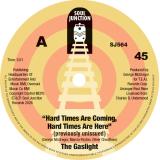
During Soul Junction’s later dealings with the late Oliver Cheatham, respected UK Collector Andy Rix mentioned he owned a three track acetate containing the two mentioned T.E.A.I/Polydor tracks plus a third unissued dance track “Hard Times” which through a licensing deal with Charles Underwood Soul Junction now present to you on a three track 45, released under its full title “Hard Times Are Coming, Hard Times Are Here” backed with a previously unissued mix of “Just Because Of You” alongside the issued 45 version of “It’s Just Like Magic”.
- A1: Bwi-Bwi - Nu Sides
- A2: Ayo B - Impact
- A3: Nico Belic - La Discoteca
- B1: Joziciu - Teknik
- B2: Prince De Takicardie - Free Love (Take Off 1 Mix)
- B3: Tibahuult - Alone With Me
- C1: Lamalice - Fiction
- C2: Dynasty Of Dreams - Syunik Horizons
- D1: Man/Ipulate - Voidance
- D2: Curtis Od - Electrical Energy
- D3: Djon Bull - Tidal Wave
11 artists. 11 tracks. 1 city.
From the heart of the most vibrant French city, Marseille, comes a project that redefines the enthusiasm, energy and growing talents around the underground music scene.
Consisting of eleven djs/producers bound to the Phocaean city, this 2x12LP is not just an ordinary album: It is a cultural marker in a city deeply rooted in urban music, reasserting its young and strongly emerging electronic landscape. It is a celebration of Marseille’s musical identity through house, techno and electro.
Originally a record shop, Mindtrip has been promoting and advocating for the electronic movement for 4 years. Olivier aka HI.lo now invites you to deep dive into Marseille’s sonic uproar with his new born label, an extension of the music he has been playing and representing through his shop, putting marseille on the map with an essential first release gathering the city’s finest: MAN/IPULATE, TIBAHUULT, LAMALICE, PRINCE DE TAKICARDIE, JO’Z, CURTIS OD, DJONN BULL, BWI-BWI, DYNASTY OF DREAMS, NICO BELIC & AYO’B.
- A1: Stay With Me (Feat Stephen Day) 03 40
- A2: Afterglow (Feat Elysia Biro, Ellis, Alex Bone 03 10
- A3: Better Than This (Feat Cody Fry) 04 03
- A4: Tongue Tied (Feat Stephen Day) 03 12
- A5: Blame It On The Moon (Feat Magic City Hippies) 03 00
- A6: The Big Payoff (Feat Ellis) 05 25
- B1: One Way Road (Feat Yam Haus) 03 39
- B2: All Night, Alright (Feat Taylor Hanson) 03 32
- B3: Lisa Never Wanted To Be Famous (Feat Theo Katzman) 04 37
- B4: Lost In The Wonder (Feat Benny Sings) 02 30
- B5: Roses Fade (Feat Devon Gilfillian) 05 23
- B6: From Now On (Feat Louis Cato) 03 46
CW06LIWIND[23,32 €]
Cory Wong's eagerly awaited new studio album, Lost In The Wonder! The collection spotlights Wong's remarkable gifts as a producer, writer, arranger, band leader, and master of modern pop craftsmanship, while of course never losing sight of his trademark guitar virtuosity. Lost In The Wonder further affirms Wong's enduring love of musical collaboration, boasting a truly eclectic range of guest artists that includes Taylor Hanson, Devon Gilfillian, Stephen Day, Cody Fry, Yam Haus, Louis Cato, Ellis, Elysia Biro, Benny Sings, Theo Katzman, and Magic City Hippies.
After delivering a killer track on our Diffraction EP compilation and a series of highlighted projects on Hiver Discs, Iro Aka returns to Polychrome Audio with club-ready 4-tracker Dimensions. We are really proud to release the music of friends who create such quality electronic music. On the A side, Dimensions and Direction 0 original mixes bring a driving and bleepy techno sound shaped by the duo’s characteristic psychedelic design. The B side is a strictly remix affair: Human Space Machine turns Dimensions into deeper techno territory while French duo Atomic Moog presents a slow-burning downtempo take on Direction 0 for early or late into the night. We hope you enjoy this record as much as we do!
Chinaski opens 2026 with SOULMEEX record label exactly where he thrives best: suspended between nostalgia and futurism, melody and motion. Known for his synth-forward language and cinematic instincts, the Berlin-based producer delivers a release that feels both playful and sharply intentional, channeling emotion without sacrificing precision.
Across the EP, Chinaski revisits the spirit of Italo through a contemporary lens, shaping glistening arpeggios, buoyant basslines, elastic grooves and joyful synth stabs into five tracks that move effortlessly between the dancefloor and the imagination. There’s an unmistakable sense of lightness here-music that doesn’t overthink itself, yet is clearly crafted by someone who understands form, tension and release.
Rather than leaning on retro tropes, Chinaski treats dance music as a living, breathing language. The melodies feel familiar but never predictable; the rhythms pulse with warmth and confidence. An unforced sense of freedom runs through the release, inviting repeated listens and late-night moments alike.
With this EP, SOULMEEX sets the tone for 2026 with clarity and purpose, and Chinaski delivers the spell-subtle, melodic, and quietly irresistible.
Berlin Based DJ & Producer Johannes Klingebiel returns to Claptrap with “Dolce” a four-track EP served sweet, rich, and ready for peak-time indulgence.
Three original cuts and a heavyweight remix combine for a release that’s equal parts playful and potent. Consider this your sugar rush warning.
The title track, “Dolce,” is a warm and irresistible disco-house groover. Creamy acoustic drums lay the foundation while spicy xylophones and syrupy flute lines weave through the mix, striking a perfect balance between sophistication and pure dancefloor pleasure. It’s smooth, infectious, and built to move bodies.
Next up, “Follow The Line” blends shuffled house rhythms with 303 basslines and grainy vocal stabs. On paper, it’s an unlikely combination, on the floor, it locks tight. The result is hypnotic, driving, and effortlessly smooth.
On the flip, “Pink Forest” ventures into more mysterious territory. Built around an elusive, shifting time signature (one that even jazz-trained drummer Johannes struggles to explain), the track somehow feels both unpredictable and deeply groovy. It bends perception without losing momentum, a heady but danceable excursion into the unknown.
Closing the EP, Sun Damage delivers a remix of “Follow The Line” that both sharpens and distorts the original’s trajectory. Chunkier, weightier, and slightly off-kilter, this rework injects a tougher edge while maintaining the track’s hypnotic core, primed for late-night floors and heavy systems.
“Dolce” is indulgent yet refined, a release that balances musicality with movement, sweetness with punch.
Consume responsibly.
The sonic worlds of Devon Rexi and John T. Gast collide in a vital meeting between two singular mavericks!
Following two lauded EPs on cult label South of North, Amsterdam-based Devon Rexi prepare to release their much-anticipated debut album, recorded by and featuring elusive 5 Gate Temple devotee, musician and producer John T. Gast, whose acclaimed catalogue continues to flourish.
Devon Rexi is a trio made up of Nicola Reverda (Nicolini), Nushin Naini and Goya van der Heyden (La Rat). They’ve quickly carved out their own sonic world, traversing krautfunk, post-punk and psyched-up no wave, all laced with a dub-heavy experimental mentality. Breathstep captures the band’s bass-heavy incantations, ripe with melodic chaos and rhythmic improvisation, while devilish cackles and processed vocals flirt over a jukebox of dubbed snippets and sliced textures.
The introduction of John T. Gast as producer and collaborator pulls the Devon Rexi sound deeper into bubbling dub territory, while his own palette is stretched and pushed into new terrain. Though Gast has firmly cemented his singular sound over the last decade, this interconnected process marks new ground for all involved. The result is a supreme convergence of esteemed musicians and a wickedly fine debut collaborative record.
Breathstep finds its home on Bristol imprint Accidental Meetings, whose ever-evolving sound and wide-ranging discography continue to grow. The album was recorded over the last year across Amsterdam, Lisbon and London.
The sun of Rio has never shined brighter in the streets of London. The human connection between Skinshape and Pedro has been growing for over a year now, leading to an incredible musical synergy between the two artists. Mostrando os Dentes is the second project born from this collaboration, once again offering a universe rich in colors and emotions.
Blending elements of Bossa Nova, MPB, and World Music, the distinct touch of both artists can be felt in every layer of this album’s narrative journey. A hint of sun-kissed melancholy brought to life by one of the key figures of the UK scene and a young prodigy deeply rooted in the classical influences of his culture.
*Kissa* is an immersive ambient electronic project crafted by Mathias, drawing inspiration from the serene and evocative atmosphere of Japanese jazz kissa cafés. These intimate spaces, known for their deep reverence for music, serve as the foundation for *Kissa’s* sonic landscape—where warm nostalgia and futuristic minimalism intertwine. Consisting of eight expansive compositions, *Kissa* abandons traditional rhythmic structures, allowing sound itself to guide the listener. Ethereal textures, evolving drones, and subtle harmonic shifts create a meditative experience that blurs the lines between memory and imagination. Each track is a portal—an invitation to lose oneself in sound, to explore the spaces between notes, and to embrace stillness as a form of movement. With *Kissa*, Mathias redefines the boundaries of electronic music, crafting an experience that is at once deeply personal and universally resonant. Whether serving as a soundtrack for introspection or a companion for late-night contemplation, *Kissa* embodies the essence of timeless listening—where music is felt, not just heard.
- Introduction
- One Light, Sunshine
- My Name
- Breaking Ground
- Directions
- Untitled
- Bridged
- Fade Away
- Friendly Face
- The North
Knumears sind sich bewusst, dass keine Band in einem Vakuum existiert. Sie sind die Verkörperung einer klanglichen Tradition, die über Jahrzehnte hinweg geprägt und geformt wurde und nur von denen weitergeführt werden kann, die sie wirklich schätzen. Ob man es nun Screamo, Skramz, Post-Hardcore oder anders bezeichnet - es ist ein Sound, der die wechselnden musikalischen Strömungen der Jahre überdauert hat und nun eine ganz neue Generation von Underground-Musikern beeinflusst. Das Debütalbum von Knumears, ,Directions", ist gleichermaßen Liebesbrief und Kartografieprojekt, das die tiefgreifende Geschichte einer komplexen Szene erforscht und gleichzeitig einen spannenden Entwurf für eine neue Szene schafft. Knumears sind nicht nur eine Gruppe leidenschaftlicher Musiker, sondern auch Freunde, deren Bindungen ebenso wichtig sind wie die Musik, die sie gemeinsam machen. Seit 2021 schreiben, touren und spielen die Knumears (Bassist Dante Garcia II, Schlagzeuger Frankie Lopez und Sänger/ Gitarrist Matthew Cole) ununterbrochen. Sie haben sich von ausverkauften lokalen Shows mit jubelnden, kletternden, schreienden und tanzenden Jugendlichen zu nationalen Tourneen entwickelt und stoßen im ganzen Land auf die gleiche begeisterte Resonanz. Doch abseits des Tourchaos fand die Gruppe gleichermaßen Wachstum in ihrem Privatleben, stärkte alte Bindungen zu den Daheimgebliebenen, entdeckte neue Verbindungen und kultivierte ihre eigenen Welten. ,Wir alle haben uns irgendwie selbst gefunden und neue Beziehungen aller Art geknüpft", sagt Cole und reflektiert über die Entstehung des Albums. ,Für jeden von uns gab es viele Veränderungen." Zunächst waren all diese persönlichen Umbrüche nicht gerade förderlich für das Schreiben eines neuen Albums. Die Band sollte mit dem legendären Produzenten/Toningenieur Jack Shirley (Deafheaven, Loma Prieta, Touche Amore) aufnehmen, aber der Prozess der Band fühlte sich etwas stagnierend an, bis es plötzlich nicht mehr so war: , Wir hatten alle große Schwierigkeiten, kreativ zu sein", erklärt Cole. ,Wir hatten alle in anderen Projekten ein Ventil gefunden, während wir versuchten, dieses Album zu schreiben. Aber ein paar Wochen vor unserer Zeit mit Jack setzten wir uns zusammen und schrieben im Grunde genommen das gesamte Album. Wir probten dreimal pro Woche, wahrscheinlich anderthalb Monate lang, und es floss praktisch aus uns heraus." Das Ergebnis ist ein Album, das außergewöhnlich eindringlich klingt - selbst für ein viszerales Genre wie Screamo. Knumears bedienen sich eines Sounds, der hyper-unmittelbar und dennoch notorisch schwer zu definieren ist: Er entwickelte sich aus dem Urschlamm des Hardcore der späten 80er Jahre und verdiente sich den Zusatz ,Post" im wahrsten Sinne des Wortes, bevor er sich in den 90er Jahren mit Bands wie Heroin, Pg. 99 und Orchid zu etwas noch Emotionalerem und musikalisch Chaotischerem entwickelte. Der Sound entwickelte sich weiter mit einem weiteren Boom in den späten 2000er/frühen 2010er Jahren, als Loma Prieta, Touche Amore und andere die Musik zu etwas Direkterem und manchmal sogar auf ihre eigene bissige Art Eingängigem verdichteten. Jetzt stehen Knumears und ihre Zeitgenossen an der Spitze der modernen Screamo-Landschaft.
- Ripples
- Driving To Austin
- Rewind
- Waiting For Sleep
- Fancy Free
- Water Montage
- Wake / The City / Sleep
- On Glass Ii
- In Motion
- Fancy Finish
- A Late Start
- Leaving Again
- Dazzling Showroom / Future City
- Winter Wave
- Swarm
- On Glass I
- Dap
- Ice Planet (Alt)
- Song From A Bedroom In Podunk Indiana
- Exiting
- Hi And Lo
- Sea Level
- Sequencer Sway
- Moonplay
- Aquarium
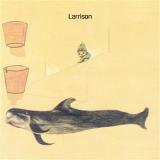
Connecters Vol. 1: Original Recordings, 1992-1999 ist die erste Veröffentlichung von Larrison, dem Pseudonym des bildenden Künstlers und Musikers Larrison Seidle aus dem Mittleren Westen. Larrison komponierte, programmierte und nahm alles komplett auf einem Casio CZ-5000 auf, während der guten alten Zeit der selbstgemachten Experimente und Entdeckungen in den frühen 90ern. Er lebte in einer Traumwelt, die er selbst erfunden hatte, mit Soundtracks aus Space-Age-Pop-Vignetten, gespickt mit hypnotischen, überschwänglichen, vielschichtigen Synthesizer-Melodien. Mit 26 Tracks, die alle neu restauriert und aus den Originalquellen gemastert wurden, erfindet sich Connecters Vol. 1 Song für Song neu, überwindet die Zeit und trotzt der vorbestimmten Vergessenheit dieser brillanten, diskreten Musik, die vor drei Jahrzehnten entstanden ist. Larrison Seidle wuchs in den 70er und 80er Jahren in Greenwood, Indiana, einem Arbeitervorort von Indianapolis, auf. Er stammte nicht aus einer Musikerfamilie, aber aus einem Haushalt, in dem Musikalität gefördert wurde. Sein Vater kaufte eine elektrische Orgel, in der Hoffnung, dass Larrison und sein älterer Bruder das Instrument lernen würden. ,Am Ende saß mein Vater einige Abende an der Orgel, improvisierte und spielte immer wieder dieses eine Lied, von dem ich mich noch an die ersten Takte erinnern kann", erinnert sich Larrison. Möglicherweise war es in diesem Moment, in dem es zwar keine formale Ausbildung gab, aber viel Ermutigung und Entdeckungsfreude, dass der Künstler seine ersten musikalischen Experimente machte. Diese Erlaubnis, sich auszuprobieren, sollte seine kreative Arbeit in den folgenden Jahren deutlich prägen. Während in Larrisons Elternhaus klassische Rockplatten leicht zugänglich waren, lieh sich sein Vater 35-mm-Dokumentarfilme aus der Bibliothek aus, um sie im Wohnzimmer zu zeigen, die alle mit skurrilen Instrumentalstücken unterlegt waren. Als Teenager nahm er John Carpenters und Alan Howarths Endthema aus ,Die Klapperschlange" mit einem kleinen Kassettenrekorder neben dem Fernsehlautsprecher auf und liebte Tangerine Dreams Beiträge zu Ridley Scotts düsterer Fantasy ,Legend". Seine Faszination für diese weitgehend textlosen, synthesizerbasierten Kompositionen führte zu einem eigenwilligen Verständnis davon, wie Musik nicht nur das ergänzt, was wir vor uns sehen, sondern auch das, was wir in den Tiefen unseres Bewusstseins erleben. 1985, als er dreizehn Jahre alt war, überzeugte Larrison seinen Vater, ihm ein Casio CZ-5000-Keyboard zu kaufen. Wie zuvor die Orgel war auch dieses Instrument eine Neuheit im Haushalt der Seidles. Erst nach seinem Highschool-Abschluss 1991 und dem Beginn seines Studiums an der Herron School of Art in Indianapolis entdeckte er den in das Casio integrierten Sequenzer und begann, seine Kompositionen auf Band aufzunehmen. ,Das CZ-5000 und sein 8-Spur-Sequenzer sind die einzigen Musikinstrumente, die ich benutzt habe. Es hat eine fast unbegrenzte Funktion zur Erzeugung neuer Klänge", erklärte Seidle. Während seiner Zeit an der Herron School of Art freundete sich Larrison mit seinem Kommilitonen und Klangkünstler Michael Northam an, den er bei einem Konzert auf dem Campus kennengelernt hatte. Nachdem Northam Larrison für die Musik von Severed Heads, Throbbing Gristle und Roger Doyle begeistert und damit seine Zuneigung und sein Vertrauen gewonnen hatte, überredete er ihn, nach Austin, Texas, zu ziehen, das in den frühen 90er Jahren für seine lebendige Kunst- und Musikszene bekannt war. Die beiden wohnten zunächst bei Northams Freund Daniel Plunkett, dem Herausgeber und Verleger von ND, einem einflussreichen Magazin, das sich von 1982 bis 1999 mit DIY-Musik und Tape-Trading beschäftigte. In seiner Blütezeit hatte ND Tausende von Lesern, und Plunkett verschickte die Ausgaben weltweit. In den letzten Monaten des Jahres 1993 und Anfang 1994 schrieb und nahm Larrison mit begrenzten Mitteln und grenzenloser Intuition eine Reihe von Songs mit seinem CZ-5000 in einer kleinen Wohnung nördlich der Innenstadt von Austin auf, bastelte eine farbenfrohe, illustrierte Beilage, in der einige Songtitel durch Linien oder Pfeile dargestellt waren, und gab sie an Plunkett weiter, damit er sie für ND rezensieren konnte. Diese einzelne Kassette mit dem Titel Connecters sic war eine von 1200, die im Laufe des Bestehens der Publikation bei ND eingereicht wurden und die Jed Bindeman, Mitbegründer von Freedom To Spend, 2020 erworben und fast wie durch ein Wunder entdeckt hat. ,Ich hatte große Schwierigkeiten, mir die Kassetten in dieser Sammlung anzuhören", gibt Bindeman zu. ,Aber dann legte ich Larrisons Connecters ein und dachte sofort: ,Wow! Was höre ich da?' Die Kassette war von Anfang bis Ende einfach fantastisch." Mit Musik von genau dieser Kassette und anderen Aufnahmen aus Larrisons Experimenten in den 90er Jahren ist Connecters eine Übersicht über Instrumentalmusik, die sowohl durch vielfältige konzeptionelle Strategien als auch durch spielerische Neugierde geprägt ist. Seidle arbeitete unter Bedingungen, die viele Musiker als Einschränkung empfinden würden, und entwickelte technisch innovative Ansätze, um die Klänge und integrierten Effekte des CZ-5000 zu modifizieren. Das Gerät ermöglichte es ihm, die Wellenform, die Hüllkurve und die Tonart von Klängen mithilfe der Phasenverzerrungssynthese zu verändern und so im Grunde genommen Instrumente zu schaffen, während er Songs komponierte. Die Tracks zeichnen sich durch eine durchdachte impressionistische Vielfalt aus, die mal lo-fi, mal symphonisch klingt. Inmitten der Zerlegung und Verstärkung der Fähigkeiten des CZ-5000 gibt es auch einen geschmackvollen Rückgriff auf eine kindliche Interaktion und Erfahrung von Klang. Vielleicht ist es diese Erfahrungsqualität, die es so schwierig macht, Larrisons Projekt einfach als Ambient oder Elektronik zu verstehen. Sein Wille, die ihm zur Verfügung stehenden Werkzeuge zu transformieren, hebt die daraus resultierenden Kompositionen auf eine persönliche Ebene und verleiht der Musik einen bezaubernden Sinn für Mystik. Connecters ist ein Beweis für eine künstlerische Vision, die sich nicht durch Grenzen einschränken lässt und keine Angst vor Informalität hat. Diese Aufnahmen, die dreißig Jahre nach ihrer Dokumentation auf magische Weise an die Oberfläche kommen, zeigen, wie personalisierte Produktionsmittel die Zeit ausdehnen und verkürzen können. Larrison lädt die Zuhörer ein, sich auf die Wunder der auditiven Vorstellungskraft einzulassen - eine Brücke zwischen visueller Erinnerung, emotionaler Resonanz und der grenzenlosen Möglichkeit, mit den uns zur Verfügung stehenden Mitteln Musik zu machen. Larrison's Connecters Vol. 1: Original Recordings, 1992-1999 wird am 3. April 2026 von Freedom To Spend als Vinyl- und Digitalausgabe veröffentlicht.
- A1: Intro - The Forum, Los Angeles, Ca Sep 15 2019
- A2: Man Like U - The Forum, Los Angeles, Ca Sep 15 2019
- A3: We (Feat Bizhiki) - Xcel Energy Center, St Paul, Mn. Oct 03 2019
- A4: Jelmore - Tennis Indoor Senayan, Jakarta, Id Jan 19 2020
- A5: 666 - The Pavilion At Toyota Music Factory, Irving, Tx Apr 03 2022
- A6: Heavenly Father - Mediolanum, Milan, It Nov 05 2022
- B1: P | D.l.i.f. - Red Hill Auditorium, Perth, Au. Feb 26 2023
- B2: Hey, | Ma - Pitchfork Music Festival, Chicago, Il July 23 2023
- B3: A Satisfied Mind - State Theatre, Portland, Me Dec 08 2017
- B4: 33 "God" - Womadelaide Festival, Adelaide, Au Mar 10 2023
- B5: Sh'diah (Boardmix) - Scotiabank Arena, Toronto, Ca Oct 06 2019
VOLUMES: ONE startet eine neue Archivreihe mit Live-Shows, Demos, unveröffentlichten Aufnahmen und anderem bisher unbekannten Material, das die vielen Epochen und Facetten von Bon Iver zeigt. VOLUMES: ONE "SELECTIONS FROM MUSIC CONCERTS 2019-2023 BON IVER 6 PIECE BAND" ist die erste Folge und vereint 10 Auftritte, die Bon Iver von ihrer wildesten, wärmsten und kraftvollsten Seite zeigen. "Diese 10 Songs sind so etwas wie ,Hier, wenn du Bon Iver noch nie gehört hast oder wenn du es gehört hast und es dir nicht gefallen hat, könnte das hier was für dich sein.' Das ist das, was wir geworden sind. Das ist wirklich unser Bestes. Das ist es", sagt Justin Vernon, der 2020 mit der Arbeit an VOLUMES: ONE begann und Dutzende von Stunden Live-Aufnahmen durchforstete, um die ultimative Trackliste zusammenzustellen. VOLUMES: ONE "SELECTIONS FROM MUSIC CONCERTS 2019-2023 BON IVER 6 PIECE BAND" ist das erste Nicht-Studioalbum von Bon Iver, aber es ist mehr als nur eine Compilation oder ein Live-Album. Die Bandmitglieder Andrew Fitzpatrick, Jenn Wasner, Justin Vernon, Matthew McCaughan, Michael Lewis und Sean Carey sind eine eigene Einheit. Gemeinsam liefern sie sowohl für Neulinge als auch für eingefleischte Fans die definitiven Versionen dieser Songs und lassen die Tracks durch die essentielle Live-Technik von Xandy Whitesel in ihrer reichhaltigsten Form explodieren. Aufgenommen zwischen 2019 und 2023, als Bon Iver ihr bisher letztes Live-Konzert gaben, hebt VOLUMES: ONE die Musik von "22, A Million" aus dem Jahr 2016 und "i,i" aus dem Jahr 2019 hervor, ergänzt durch drei wichtige Stücke. Der COVID-Hymnus "P.D.L.I.F." steht für eine neue Phase von Bon Iver; ein Cover von Mahalia Jacksons "A SATISFIED MIND" erinnert an die frühen Tage von DeYarmond Edison, als Vernon während privater Bandproben sein Falsett entdeckte; und nun endlich kehrt mit "HEAVENLY FATHER" ein beliebter Fan-Favorit zurück. Die berauschende, introvertierte und innovative Seite von Bon Iver, die die Studioalben ausmacht, kann ohne die Live-Band nicht existieren, und VOLUMES: ONE ist wie eine Zeitkapsel - ein prismatischer Blick auf einen alten Freund, der zeigt, wer sie waren und wer sie sind, all das Gute, zu dem sie fähig sind, aber manchmal vielleicht zu schüchtern sind, um es zu zeigen.