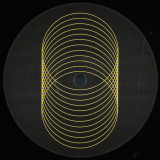
MCRV019 – VA – Phase Drift. Passage is a graceful and emotionally nuanced four-track journey through modern deep tech house. Blending reimagined echoes of early 2000s deep sounds with forward-thinking production, the release moves between moods and textures with surgical control and quiet sophistication. It’s an EP that balances warmth and restraint, melancholy and motion — built for selectors who appreciate finely tuned emotional arcs.
A1. Stephano Franca – Arriving opens with a fluid, introspective piece. Gentle and melancholic, it glides with cinematic poise, drawing listeners into a state of suspended reflection.
A2. Dot – Distance Call introduces a percussive, tribal undercurrent — earthy and grounded, yet full of bounce. It energizes the space while maintaining depth and groove.
Flipping over, B1. Reenday – Last Call (Nicolas Barnes Remix) brings a refined sense of cold elegance. Dubby and atmospheric, it’s a minimalist piece that evokes distance and stillness — a cool breath in the night.
Closing the release, B2. Jeronimo Watson – On The Prowl is a deep tech gem — emotive, seductive, and sharply detailed. With a slow-burning energy, it brings the record to a confident and composed close.
From Brazilian talent Stephano Franca to Dot and Nicolas Barnes, two of the label’s most precise and consistent producers, and rising standout Reenday, a finalist of the ANTS: NEXT GEN Artist Program 2025, this release represents the current essence of MixCult. It is sealed by the distinct touch of Jeronimo Watson, whose Los Angeles–rooted sound closes the circle with style.
Phase Drift. Passage is not just a collection of tracks — it’s a refined toolkit for navigating emotional shifts and dancefloor narratives, framed by elegance and intention.
Limited Edition.
Cerca:nicolas de angel
- 1
Mita Gami & EREZ join forces for collaboration ‘Where’s My Voice?’ Uniting the rich sounds of Tel Aviv and NYC via Los Angeles, Mita Gami and EREZ combine again for their latest collaboration, ‘Where’s My Voice?’. Marking their first collaborative appearance on Damian Lazarus’ esteemed Crosstown Rebels, the single follows their previous work together on Borders Of Light while welcoming EREZ to the label for the first time.
A mainstay within Tel Aviv’s thriving scene, Mita Gami returns to Crosstown Rebels following his acclaimed remix of Parallelle & Nicolas Masseyeff’s ‘Renegade’ alongside Adam Ten. With prior releases on labels such as Diynamic, REALM and his own Maccabi House imprint, he continues to showcase his artistry while pushing boundaries. Meanwhile, EREZ, an artist known for seamlessly blending her mesmerising vocals and intricate production, makes her label debut after recent standout material on Get Physical Music and Discotexas.
‘Where’s My Voice?’ is a driving composition that pairs EREZ’s intoxicating vocals with hypnotic rhythms. A journey through tension and release, the track builds a captivating and trippy atmosphere that showcases the duo’s ability to craft evocative trips for the late hours. On the flip, Brussels-based DJ/producer and Sanctuary Music founder Samer Soltan adds his own take and steers the original into deeper territory, guided by commanding stabs, brooding melodies and intricate textures.
Mita Gami’s artistic vision extends far beyond the studio, curating ‘Sunrise Kingdom’ at Midburn Festival and performing on global stages such as The Brooklyn Mirage, Lightning in a Bottle Festival, and Hï Ibiza. Similarly, EREZ’s dynamic live performances—effortlessly transitioning between instruments—have earned her spots at Coachella, Outside Lands, and The Brooklyn Mirage. With ‘Where’s My Voice?’, the pair explore sound, emotion, and rhythm, adding to their places as innovating talents in the electronic music sphere.
In ihrer bisher zwölfjährigen Band-Historie veröffentlichten Nicolás Jaar und Dave Harrington, zusammen bekannt als DARKSIDE, die beiden Alben ""Psychic" (2013) und ""Spiral" (2021). Mit ihrem langjährigen Freund und Kollaborateur Tlacael Esparza als neues Bandmitglied und Schlagzeuger kommt jetzt ihr drittes Album ""Nothing". Das Ergebnis ist faszinierend und vielschichtig. DARKSIDE schmücken ""Nothing" mit prägnanten Rhythmen, verzerrten Vocals und kreieren eine ganz eigene, wie ungewöhnlichen Ästhetik.
Um die Entwicklung zu verstehen, muss man die Hintergrundgeschichte kennen: Jaar und Harrington lernten sich in den frühen 2010ern während ihrer Schulzeit in Providence kennen. Während der Tour zu Jaars Solo-Debütalbum fand eine spontane Aufnahmesession an einem freien Tag in einem Berliner Hotelzimmer statt. Die Session war wortwörtlich brandheiß, denn sie endete mit durchgeschmorten Lautsprechern. Der Raum füllte sich mit Rauch und der an diesem Tag entstandene Song wurde ihre erste gemeinsame Single ""A1", DARKSIDE war geboren.
Zwischen den ersten beiden Alben legte das Duo eine sechsjährige Pause ein. In dieser Zeit verfolgten Jaar und Harrington jeweils eigene kreative Wege: Jaar etablierte sich als Solokünstler und Produzent, während Harrington als innovativer Gitarrist und Experimentalmusiker die Underground-Szene in L.A. aufmischte und die Rock-Band Taper"s Choice gründete. Die Geschichte setzt sich dann im Herbst 2022 in Los Angeles fort als das Duo eine Reihe von Shows buchte, um sich nach acht Jahren erstmals wieder als Live-Band zu vereinen. Esparza kam als festes Mitglied hinzu und veränderte grundlegend den Klang und die Energie der Band. Die Idee von ""Nothing" entstand während der Suche nach Achtsamkeit und Harringtons stillen Momenten mit seiner neugeborenen Tochter, in denen er Schönheit im Nichtstun fand. Für Jaar wurde ""Nothing" zu einem Symbol für die allgegenwärtigen, wie überwältigenden Probleme, unausgesprochene Gefühle und den Stillstand in globalen Krisen wie Klimawandel, politischer Heuchelei und wiederkehrender Gewalt.
Their debut album "Unbändige Kinder" by Angelo Repetto and Nicolas Balmer, alias Konstant, blossoms from the burdens of days gone by and describes their world in a phase of change and new beginnings.
Constantly looking ahead, driven by New Wave, Kraut and Post Punk, they define their own musical form. Both have been active in the Zurich scene for a long time and have come together to create their own language. The album is characterised by rawness, bluntness and the syllables from the heart. Honest and direct.
Recorded and produced by Domi Chansorn at Studio G5, the recording describes the rawness of our time. Perhaps the feeling of a generation – maybe just a breath of the wind.
For the release of "Unbändige Kinder", Subject To Restrictions Discs and Default Mode Records are joining forces and releasing the music into a world that needs it.
Madame E. is a musical setting of Georges Bataille's 'Madame Edwarda', a short novel that interlaces themes of eroticism, religiosity and death, and was written under the pseudonym Pierre Angelique in 1941, during the occupation of Paris.
Composer Mirco Magnani wrote eleven electronic pieces and presented them to actor/singer Ernesto Tomasini. They turned them into songs by adding vocal melodies and together they produced a libretto based on Bataille's French text. The result of their dynamic interpretation is a hypnotically spellbinding performance where the audience is transported through worlds - ancient and new - and where Tomasini's haunting falsetto conveys the tormented emotions in Bataille's work and becomes the instrument that articulates the writer's famously obscure themes.
The experimental operatic performance captures the atmosphere of heightened human passion, reminiscent of opera seria and revisited through hazy and minimalistic lens. The resulting dark and twitchy mood amalgamates old vintage electronic devices, string piano and Stella Veloce´s touching violoncello. The stage becomes a space where Eros and Thanatos, real and virtual, analogue and digital, cluster and melody, spirituality and technology are intermixed and turned unidentifiable, hence collapsing the binary logic of dualism.
Written by Magnani/Tomasini and produced by Mirco Magnani, with lyrics taken from "Madame Edwarda" by Georges Bataille, Madame E. was developed between Berlin and London where Magnani and Tomasini are respectively based. Recorded in Berlin, mastered by Murcof and released by Magnani's label Undogmatisch, a collective that also includes Nicolas Defawe (Urban Spree) and Valentina Bardazzi, the painter responsible for the album artwork.
A few words for the album
Moment’s Aeternity:
a 12/8 composition celebrating the raw power of the “moment”, marked by whirling improvised moments between drums, bass clarinet and Harris P’s Armenian duduk.
Pajko, fire in the forest on the mountain:
in Sokratis own words: “I have a really vivid memory as a child. I was staring at the Djena mountain from my window in Archangellos which sits on the Pajko mountain. A little beam of light shone far in the horizon; it was a fire that in my little eyes looked as if the giants of Almopia were trying to communicate with each other using phryktoria (a way of contacting through fire in Ancient Greece).”
Footprints of some Giant Steps:
While the classic compositions of two true Jazz Giants- Wayne Shorter and John Coltrane- are certainly different, they do both connect in a mystical way. Rearranged in 5/8 combining half of each melody and half of each one’s chord progression, keeping the form of the piece for improvisation, still in 5.
Oson Zeis Fainou (Seikilo’s Epitaph):
found in a tomb stone in the Northeast of Greece, this is the only melody saved from the ancient times. It is accompanied by lyrics contemplating the meaning of life:
Ὅσον ζῇς φαίνου
μηδὲν ὅλως σὺ λυποῦ πρὸς ὀλίγον ἐστὶ τὸ ζῆν τὸ τέλος ὁ xρόνος ἀπαιτεῖ.
‘’While you live, shine
don’t feel blue for anything because our life is short and time demands an end.’’
Here is to Oghene K:
’’Hey man, where is the groove?’’, he would say, just to trigger another wave of inspiration for Sokratis. Oghene was a true force of nature, a well of kindness, a masterful artist that left this world too early. This one is for him.
Balkan Riff (for Milcho Leviev):
Milcho Leviev (1936-2019), was a long-time friend and collaborator and a true inspiration for expression, creativity and colorfulness. Expressing the deep sentiments evoked by the Balkan sound and history, this is a sorrowful dialogue between bass clarinet and contrabass.
Spirits of Djena:
one of the most esoteric and personal moments of the album. Composed and recorded during the challenging times of the COVID-era, you can hear the baritone and tenor saxophone firmly grounded on a crispy, hypnotizing contrabass groove.
Sokratis Votskos Quartet
Kostas Anastasiadis / Giorgos Klountzos - Chrysidis: Drums
Leandros Pasias: Piano
Vaggelis Vrachnos: Contrabass
Sokratis Votskos: Soprano Saxophone, Bass Clarinet and Compositions
Sokratis Votskos is a jazz saxophonist, clarinetist, composer, educator, and bandleader from Greece. Deeply invested in unearthing the folk sounds and heritage music of Greece and Eastern Europe, he weaves these into modern jazz compositions though the use of melodies, polyrhythms, and his reedy, timeless tone. He leads the Sokratis Votskos Quartet, he is one half of Kolida Babo and member of the Reggetiko Project. A highly regarded sideman and ensemble player, he has worked extensively with renowned jazz musicians with several highly acclaimed releases (MiC, Jazzman, Walt Disney and now Fair Weather Friends Records).
He has performed his music in numerous venues and festivals worldwide from Vinterjazz in Copenhagen, to the EFG London Jazz Festival where he performed at the legendary Ronnie Scott’s alongside Greg Foat.
He is also an archaeoacoustics researcher and enthusiast, having completed his Master studies on the field of ancient ritualistic caves of Greece research.
Leandros Pasias was born in Thessaloniki, Greece. At age 10 was introduced to piano, continuing his studies at the Modern Conservatory of Thessaloniki and later at the Conservatorium van Amsterdam in the department of jazz piano.Ηe holds a classical harmony diploma and a BA at the Department of Music Studies at the Aristotle University of Thessaloniki. In 2020 he received jazz improvisation lessons from Aaron Parks.
With a series of appearances in multiple international jazz festivals, Leandros has collaborated with a wide range of musicians from Nicolas Masson and James Wylie to Marina Osk, Ivo Papasov and Haris Lambrakis, among others.
A member of the Yako Trio, he released “OdesSea” on Fair Weather Friends Records (2021).
Vangelis Vrachnos was born in Thessaloniki, Greece, in 1989. While he started playing the bass at the age of 12, alongside his brother, his studies would commence a few years later. Introduced to double bass at the age of 23, he undertook jazz double bass studies at the Codarts Αcademy of Rotterdam. He has participated in several festivals such as the Technopolis and Odessa international jazz festivals. Since returning to his hometown, in 2015, he has been a founding member of Mordana and Yako Trio and has collaborated with a series of musicians like James Wyllie, Sokrates Votskos and Dimitis Agelakis, among others.
Kostas Anastasiadis is a tireless researcher, that has been diligently studying Tradition and its evolution, creating a fresh amalgam of sound moods. His mature improvisational virtuosity highlights a uniquely individual artistic expression and was recognized with the ̈Unique Individual Stylist" award by the PIT (Percussion Institute of Technology) in Los Angeles, California. He has been associated with various ensembles that have garnered significant interest in the global music scene. As an educator, he is the founder of "The Harmony of Rhythm" musical method, which aims to explore and establish the elements that constitute the concept of rhythm.
Giorgos Klountzos-Chrysidis was born in Thessaloniki in 1991. Following studies at the Modern Conservatory of Thessaloniki, he moved to France and the Conservatoire de Nice. With performances at well-known festivals like Nice Jazz Festival, Nuits du Sud and Jazz à Vienne, he had the opportunity to meet the American drummer Leon Parker, who encouraged him to move to Paris, where he spent the next two years under his tutoring and guidance.
In 2016, came a defining moment in his career as he traveled to New York for the first time. He participated in the quartet of saxophonist Diego Rivera for a series of performances and attended lessons by Rodney Whitaker and Randy "Uncle G" Gelispie at Michigan's State University.
Collaborations include Xavier Davis, Ricky Ford, Nicolas Masson, Diego Rivera, Craig Bailey, Baptiste Herbin, Marc Abrams, Pantelis Stoikos, Antonis Anissegos, David Lynch, Ziad Rajab and Ivo Papasov, among others.
A meeting of worlds. A new kind of resonance. GODTET's upcoming release captures the alchemy of their landmark performance with the Sydney Symphony Orchestra at the Sydney Opera House.
At once bold and nuanced, this album explores the friction between improvisation and orchestration. Where the orchestra is anchored in fully composed material, GODTET remains free – navigating the work's harmonic architecture with instinct and spontaneity. Structures are fixed, but expression is fluid.
Orchestrated and brought vividly to life by Novak Manojlovic, GODTET's long-time collaborator and musical polymath, the work bridges the worlds of bedroom production and classical tradition. His arrangements offer not just translation but transformation. Amplifying the ensemble's rhythmic language through the rich sonic canvas of the Sydney Symphony Orchestra.
The result is a deeply textural suite that amplifies the best of both disciplines: GODTET's idiosyncratic groove and live sampling artistry converging with the symphonic weight and colour of the Sydney Symphony Orchestra.
Under the baton of Nicolas Buc,GODTET + The Sydney Symphony Orchestradoesn't just blend genres, it dissolves hierarchies. It's a declaration that music born in warehouses and bedrooms can belong in concert halls, and that authenticity transcends format. This is GODTET in full bloom, expansive, fearless, and profoundly moving.
a 01: New Sun (Live) feat. The Sydney Symphony Orchestra & Novak Manojlovic
b 02: Stepper (Live) feat. The Sydney Symphony Orchestra & Novak Manojlovic
[c] 03: The Fall Line (Live) [feat. The Sydney Symphony Orchestra & Novak Manojlovic]
[d] 04: Dub Angels (Live) [feat. The Sydney Symphony Orchestra & Novak Manojlovic]
[e] 05: Cantus (Live) [feat. The Sydney Symphony Orchestra & Novak Manojlovic]
[f] 06: Bliss Angels (Live) [feat. The Sydney Symphony Orchestra & Novak Manojlovic]
[feat. The Sydney Symphony Orchestra & Novak Manojlovic]
In ihrer bisher zwölfjährigen Band-Historie veröffentlichten Nicolás Jaar und Dave Harrington, zusammen bekannt als DARKSIDE, die beiden Alben ""Psychic" (2013) und ""Spiral" (2021). Mit ihrem langjährigen Freund und Kollaborateur Tlacael Esparza als neues Bandmitglied und Schlagzeuger kommt jetzt ihr drittes Album ""Nothing". Das Ergebnis ist faszinierend und vielschichtig. DARKSIDE schmücken ""Nothing" mit prägnanten Rhythmen, verzerrten Vocals und kreieren eine ganz eigene, wie ungewöhnlichen Ästhetik.
Um die Entwicklung zu verstehen, muss man die Hintergrundgeschichte kennen: Jaar und Harrington lernten sich in den frühen 2010ern während ihrer Schulzeit in Providence kennen. Während der Tour zu Jaars Solo-Debütalbum fand eine spontane Aufnahmesession an einem freien Tag in einem Berliner Hotelzimmer statt. Die Session war wortwörtlich brandheiß, denn sie endete mit durchgeschmorten Lautsprechern. Der Raum füllte sich mit Rauch und der an diesem Tag entstandene Song wurde ihre erste gemeinsame Single ""A1", DARKSIDE war geboren.
Zwischen den ersten beiden Alben legte das Duo eine sechsjährige Pause ein. In dieser Zeit verfolgten Jaar und Harrington jeweils eigene kreative Wege: Jaar etablierte sich als Solokünstler und Produzent, während Harrington als innovativer Gitarrist und Experimentalmusiker die Underground-Szene in L.A. aufmischte und die Rock-Band Taper"s Choice gründete. Die Geschichte setzt sich dann im Herbst 2022 in Los Angeles fort als das Duo eine Reihe von Shows buchte, um sich nach acht Jahren erstmals wieder als Live-Band zu vereinen. Esparza kam als festes Mitglied hinzu und veränderte grundlegend den Klang und die Energie der Band. Die Idee von ""Nothing" entstand während der Suche nach Achtsamkeit und Harringtons stillen Momenten mit seiner neugeborenen Tochter, in denen er Schönheit im Nichtstun fand. Für Jaar wurde ""Nothing" zu einem Symbol für die allgegenwärtigen, wie überwältigenden Probleme, unausgesprochene Gefühle und den Stillstand in globalen Krisen wie Klimawandel, politischer Heuchelei und wiederkehrender Gewalt.
A lost paradise, a lost innocence, and a lost culture; these are the dominant themes presented in Nicolas Roeg's 1971 masterpiece Walkabout, a survival story of two children lost in the scorched Australian wilderness. Together with other seminal Australian surrealistic outback films, (e.g. Wake In Fright) Walkabout was a film that reshaped the Australian film industry and defined the country's New Wave. On the cusp of the film's 45t h anniversary it is pertinent to observe that for decades the film's original soundtrack has also been considered lost. Composed and conducted by the acclaimed British film composer John Barry, the score is a hallucinogenic mix of exotic romanticism, children's nursery rhyme and potent psychedelic experimentation. For decades, the consensus among soundtrack circles was that the master tapes were officially missing with little chance that the music would ever see a legitimate release, but The Roundtable is pleased to announce that this is no longer the case. The complete soundtrack to one of cinema history's most visually spellbinding films has now finally been re-discovered, sourced from the original stereo master tapes and prepared to the guidelines of the original ill-fated 1970s LP release.
The premiere soundtrack release to Nicolas Roeg's 1971 New Wave Masterpiece.
Lost hallucinogenic orchestral score from acclaimed film composer John Barry.
12-track LP re-mastered from the original stereo master tapes.
180g vinyl and deluxe packaging including archival film stills and original press material.
6 Panel digipack CD.
- 1: Pura De Venta
- 2: Leyes Narcos
- 3: Sacrificio
- 4: Santa Lucía
- 5: Matando Güeros
- 6: Seis Seis Seis
- 7: Cruza La Frontera
- 8: Greñudos Locos
- 9: Chingo De Mecos
- 10: Narcos - Satánicos
- 11: Desperado
- 12: Culeros
- 13: Misas Negras (Sacrificio Iii)
- 14: Chinga Tú Madre
- 15: Verga Del Brujo / Estan Chingados
- 16: Molestando Niños Muertos
- 17: Machetazos (Sacrificio Ii)
- 18: Castigo Del Brujo
- 19: Cristo De La Roca
BRUJERIA is an extreme Mexican-American metal band founded in 1989 in Los Angeles. Under cover of pseudonyms, its original members were the guitarist Dino Cazares ( FEAR FACTORY ), Jello Biafra ( DEAD KENNEDYS ), the drummer Pat Hoed, bassist Billy Gould ( FAITH NO MORE ) and singer Juan Bruno. BRUJERIA first appears as a terrorist group having kidnapped the bosses of Roadrunner Records in order to be able to release a record. This joke having been denied, the group appears as a parallel project that is characterized by the themes of satanism, terrorism, sex, rebellion, and politics. The group forges a reputation of psychopaths by playing on stage , with hooded or masked with scarves, titles called "Marijuana" or "Brujerizmo ( the word "Brujeria" which means "witchcraft" ). BRUJERIA is Mexican hence the name and lyrics in Spanish. Dino Cazares ( exFEAR FACTORY ) was the guitarist. The musicians of BRUJERIA keep their identities secret but it is known that ex-FEAR FACTORY's Dino Cazares, FEAR FACTORY's Asesino and Raymond Herrera, as well as Billy Gould, ex-FAITH NO MORE, have worked on guitar, drums and bass, Nicolas Barker ( ex-CRADLE OF FILTH etc ) takes also part of the butchery, just to name a few...
- 1: Brujerizmo
- 2: Vayan Sin Miedo
- 3: La Traicion
- 4: Pititis,Te Invoco
- 5: Laboratorio Cristalitos
- 6: Division Del Norte
- 7: Marcha De Odio
- 8: Anti-Castro
- 9: Cuiden A Los Niños
- 10: El Bajon
- 11: Mecosario
- 12: El Desmadre
- 13: Sida De La Mente
BRUJERIA is an extreme Mexican-American metal band founded in 1989 in Los Angeles. Under cover of pseudonyms, its original members were the guitarist Dino Cazares ( FEAR FACTORY ), Jello Biafra ( DEAD KENNEDYS ), the drummer Pat Hoed, bassist Billy Gould ( FAITH NO MORE ) and singer Juan Bruno. BRUJERIA first appears as a terrorist group having kidnapped the bosses of Roadrunner Records in order to be able to release a record. This joke having been denied, the group appears as a parallel project that is characterized by the themes of satanism, terrorism, sex, rebellion, and politics. The group forges a reputation of psychopaths by playing on stage , with hooded or masked with scarves, titles called "Marijuana" or "Brujerizmo ( the word "Brujeria" which means "witchcraft" ). BRUJERIA is Mexican hence the name and lyrics in Spanish. Dino Cazares ( exFEAR FACTORY ) was the guitarist. The musicians of BRUJERIA keep their identities secret but it is known that ex-FEAR FACTORY's Dino Cazares, FEAR FACTORY's Asesino and Raymond Herrera, as well as Billy Gould, ex-FAITH NO MORE, have worked on guitar, drums and bass, Nicolas Barker ( ex-CRADLE OF FILTH etc ) takes also part of the butchery, just to name a few...
- 1: Raza Odiada (Pito Wilson)
- 2: Colas De Rata
- 3: Hechando Chingasos (Greñudos Locos Ii)
- 4: La Migra (Cruza La Frontera Ii)
- 5: Revolucion
- 6: Consejos Narcos
- 7: Almas De Venta
- 8: La Ley Del Plomo
- 9: Los Tengo Colgando (Chingo De Mecos Ii)
- 10: Sesos Humanos (Sacrificio Iv)
- 11: Primer Meco
- 12: El Patron
- 13: Hermanos Menendez
- 14: Padre Nuestro
- 15: Ritmos Satanicos
BRUJERIA is an extreme Mexican-American metal band founded in 1989 in Los Angeles. Under cover of pseudonyms, its original members were the guitarist Dino Cazares ( FEAR FACTORY ), Jello Biafra ( DEAD KENNEDYS ), the drummer Pat Hoed, bassist Billy Gould ( FAITH NO MORE ) and singer Juan Bruno. BRUJERIA first appears as a terrorist group having kidnapped the bosses of Roadrunner Records in order to be able to release a record. This joke having been denied, the group appears as a parallel project that is characterized by the themes of satanism, terrorism, sex, rebellion, and politics. The group forges a reputation of psychopaths by playing on stage , with hooded or masked with scarves, titles called "Marijuana" or "Brujerizmo ( the word "Brujeria" which means "witchcraft" ). BRUJERIA is Mexican hence the name and lyrics in Spanish. Dino Cazares ( exFEAR FACTORY ) was the guitarist. The musicians of BRUJERIA keep their identities secret but it is known that ex-FEAR FACTORY's Dino Cazares, FEAR FACTORY's Asesino and Raymond Herrera, as well as Billy Gould, ex-FAITH NO MORE, have worked on guitar, drums and bass, Nicolas Barker ( ex-CRADLE OF FILTH etc ) takes also part of the butchery, just to name a few...
Aho Ssan debuts on Other People with second solo album and book 'Rhizomes' featuring Nicolás Jaar, Moor Mother, Angel Bat Dawid, clipping., Blackhaine and more
Paris based composer Aho Ssan, the artist moniker of Niamké Désiré, presents his new full-length 'Rhizomes' on the Other People label following his debut LP 'Simulacrum' (2020) and collaborative record 'Limen' (2022) with fellow musician KMRU.
'Rhizomes' draws inspiration from a concept coined and developed between Gilles Deleuze and Felix Guatarri. The idea of an ever evolving structural model, constantly in motion and spreading out in all directions at once. It has no beginning and no end, but always remains in a middle, through which it grows and overflows.
"The root thought is the one that kills everything around itself while the rhizome is the root that stretches out to meet other roots," Désiré explains considering the works of French writer Édouard Glissant who addresses questions of identity, crossbreeding of cultures and its evolution.
Much like the name it borrows, Aho Ssan's 'Rhizomes' is a multimedia project that embarks on a myriad of disparate, unique musical and artistic partnerships. This piece adapts this concept to explore the influence of sound materials on creation, the appropriation of a sound object, and the collaborative nature of a composition that responds to modernity.
"Rhizome represents an underground stem system that fosters connections between various organisms and allows them to flourish collectively. It's an album that celebrates collaboration and brings together a diverse group of talented artists," Désiré continues.
Aho Ssan collaborated with a comprehensive cast of artists to create a musical rhizome including Nyokabi Kariuki, Josefa Ntjam, Blackhaine, Nicolás Jaar, Resina, R?n C?p ?uôi, Richie Culver, clipping., Lafawndah, 9T Antiope, James Ginzburg, Exzald S, Valentina Magaletti, Moor Mother, Angel Bat Dawid and Mondkopf. Cooperation and community are at the root of this project and the lens through which all the compositions can be understood through.
Aho Ssan will present 'Rhizomes' AV show together with visual artist Sevi Iko Dømochevsky at Berlin Atonal 2023. 'Rhizomes' received a Honorary Mention at Prix Ars Electronica 2023 Digital Music
Ouverture feat Nyokabi Kariuki
If you check the credits of The Rolling Stones' Goats Head Soup LP from 1973 you'll find a certain "Pascal" listed on the percussion section. That is none other than Los Angeles based artist Nicolas Pascal Raicevik (1933-1994), aka 107-34-8933, aka Head, aka Nik Pascal, aka Nik Raicevic. Besides his hitting the bongoes on the Stones album, Nik was a great artist on his own, both as a painter and as a musician. As a musician, he was a pioneer in the use of synthesizers, preceeding the Berlin school by some years when his Head LP was released on on Buddah in 1970. Buddah probably saw in Head the opportunity to cash in some money from the remains of the psychedelic scene - the three tracks on the LP are named after drugs used in the late sixties. The sounds, however, are accomplished works that show Raicevic as one of the most interesting pioneers in the use of synths. The album probably didn't do too well, since Buddah didn't renew the contract with Raicevic, who instead took his own way releasing his works on his very own Narco Records and Tapes label. Between 1968 and 1975 Narco would issue 4 LPs credited either to Nik Raicevic (Beyond The End... Eternity) or Nik Pascal (The Sixth Ear, Magnetic Web and Zero Gravity) plus one credited to 107-34-8933 (Numbers, which is in fact the same LP as Buddah's Head, albeit with different cover art). Copies of these LPs came with an ironic sticker over the shrinkwrap that read "Do not listen to this LP if you are stoned".
"Raicevic is clearly still in the early learning-curve stages," which it a key LP to understand Nik's evolution and setting the path for more evolved works to follow.
Besides his musical explorations, Nik was also an interesting painter. His paintings are auctioned from time to time, and are consciousness expanding works influenced by abstract cubism and surrealism, some kind of Salvador Dalí on drugs exploring the outter and inner space. All the artwork on the sleeves of his LPs is done by himself. Spacey landscapes and psychedelic colours that fit perfectly to the music they contain.
"Nik Raicevic's music is at the intersection of radical psycho-electronic weirdness and kraut kosmische music (in particular the scifi-hypno-minimal modules of Conrad Schnitzler in Grun, Rot and Blau). It presents mega epic & tripped out electronic improvisations.
"This is an absolute must for collectors and fans of visceral, neurotic soundscapes."
"As far as late-60s / early-70s American Bedroom' Electronic Music goes, these LPS have to be among the first transmissions from this sector, made all the more attractive when coupled with Raicevic's alien topographIes - the covers are high-color portrayals of Venusian lanes, knotted growths, & future-past architecture in a style you might equate with Vintage' sci-fi pulp-novel covers - & copious Downer' sentiment. This music is imbued with a sort of lonely, anti-social sensibility that's about as far as you can get from the Academic' Early Electronic vector. I will say that if the Steve Birchall, Cellutron & the Invisible, and/or Pythagoron™ seed your garden, this will likely do the same."
Never reissued before on vinyl format, the Wah Wah reissue features original sleeve artwork made of paintings and drawings by Nik himself and reproduction of the famous ironic "Do not listen if you are stoned" sticker. Limited edition, 500 copies only.
- A1: Move D / Dman - Badboy (Remix For Mc Uproar)
- A2: Sinoesin - Demiconductor
- A3: Robi - Two Spheres
- B1: Dogpatrol - South Side Pool Hall
- B2: Retrogott - Suckerdeejayz
- B3: Форм - Dve Gory
- C1: Ron Trent - 25 Strings (Remix For Dve)
- C2: Am Kinem - 4 Ava
- C3: Paradise Grey - 873
- D1: Lowtec - Roaming The Street
- D2: Jürgen Ratan - Display
- D3: U-I - Noon At Lagoon
- E1: Lauer - Pioneer Housing Area
- E2: Andy Hart - Water
- E3: Tito Wun - Thewayo
- F1: Paingel - Blind Backen
- F2: Will Saul - Avalon
- F3: Jus-Ed - Cachupa (Original Mix)
- G1: Axel Boman - Don’t Breathe Yet
- G2: Damiano Von Erckert - Desert Scorpion
- H1: Cinthie - Ibiza Rave Tune 3000
- H2: Wolfey - Optimism Bias
AVA. Records celebrates its 10th anniversary with 52 artists. “10 Yahre” is a 4LP compilation housing 22 tracks, a printed 30 pages magazin and a mixed CD. All wrapped in a custom made silkscreen sleeve, also including a textile keychain and stickers. Sonically spanning from ambient to techno, 10 Yahre carries new and exclusive material, all woven around the label’s decade focus on dance floor culture, started 2011 in Cologne, Germany.
The 4LP vinyl includes music by: Am Kinem, Andy Hart, Axel Boman, Cinthie, Damiano von Erckert, Dman, Dogpatrol, форм, Jürgen Ratan, Jus-Ed, Lauer, Lowtec, Move D, Paingel, Paradise Grey, Retrogott, Robi, Ron Trent, Sinoesin, Tito Wun, U-I, Will Saul and Wolfey.
The mixed version of the entire compilation is contributed by Sally C.
The full color magazin and video includes works by: Alina Bader, Andy Kassier, Angel, Anna Beil, Ata Macias, Bailey Keogh, Damiano von Erckert, Dirk Jeans & Lou de Bètoly, Funkycan, Guido, Jana Marei, Jana Maria Dohmann, Joana Pratschke, Johannes Wohnseifer, Juri Bader, Kuchenbaum, Manuel Fischer, Maria Sécio, Martin Fengel & Public Possession, Mathias Schmitt, Maximilian Schweizer, Michael Satter, Naum Hirsl, Nicolas Wenz, Peter Wolff, Rein Vollenga, Rucksack Leer, Stelan Mergenthaler, Suzanne Caroline de Carrasco, Twit One and Yves Taron Harouche.
Compiled by Juri Bader and Damiano von Erckert, mastered by Enyang Urbiks. Design and concept by DVE 1989.
The Fall is a deconstruction of November by Dennis Johnson.
Written for solo piano in 1959, November is the first example of minimalist music composition and was the inspiration for La Monte Young's The Well-Tuned Piano (1964). The 66 minute piece is a collaboration between legendary artist Lustmord and renowned classical pianist Nicolas Horvath, in which they reduces Johnson's original November to its core element and place it in a landscape of complimentary sound. The Fall echo's November but with further resonance.
Recorded in May-June 2019 in Los Angeles, and Misy-sur-Yonne, France.
Lustmord
Active since 1980, born of the original 'industrial' scene of the period. With its own distinctive approach, blurring the line between music and sound design Lustmord's work has featured in 45 motion pictures including The Crow and Underworld and also in video games, television and commercials. Recently Lustmord scored the music for Paul Schrader's movie First Reformed. While Lustmord is often credited for creating the 'dark ambient' genre there is much more nuance to its work than what that label implies. The music is not dark, but is a light that shines into and upon the darkness. Notable collaborations amongst many include Tool, Melvins, Jarboe, John Balance of Coil, Clock DVA, Chris & Cosey, Paul Haslinger, Karin Park and Robert Rich.
Nicolas Horvath
An unusual artist with an unconventional résumé, pianist and electroacoustic composer Nicolas Horvath is known for his boundariesless musical explorations. Horvath is both an enthusiastic promoter of contemporary music - he has commissioned numerous works (including no fewer than 120 as part of his Homages to Philip Glass project in 2014) and collaborated with leading contemporary composers from around the world, including Alvin Lucier, Mamoru Fujieda, Jaan Rääts, Alvin Curran and Valentyn Silvestrov - and a rediscoverer of forgotten or neglected composers such as Moondog, Nobuo Uematsu, Germaine Tailleferre, François-Adrien Boieldieu, Hélène de Montgeroult, Jean Catoire, Karl August Hermann.
- A1: Concrete & Glass
- A2: Back To Your Heart (Feat Kate Nv)
- A3: We Forgot To Love (Feat Kadhja Bonet)
- A4: What Makes Me Think About You
- A5: Time On My Hands (Feat Kirin J Callinan)
- B1: The Foundation (Feat Cola Boyy)
- B2: Catch Yourself Falling (Feat Alexis Taylor)
- B3: The Border
- B4: Turn Right, Turn Left
- B5: Cite Radieuse
- C1: Concrete & Glass
- C2: Back To Your Heart (Feat Kate Nv)
- C3: We Forgot To Love (Feat Kadhja Bonet)
- C4: What Makes Me Think About You
- C5: Time On My Hands (Feat Kirin J Callinan)
- C6: The Foundation (Feat Cola Boyy)
- C7: Catch Yourself Falling (Feat Alexis Taylor)
- C8: The Border
- C9: Turn Right, Turn Left
- C10: Cite Radieuse
When Air’s Nicolas Godin released his debut solo album, Contrepoint (2015), he channelled the influence of Bach into a rich, resonant and hugely rewarding spread of musical explorations. One soundtrack (A Very Secret Service) later, Godin builds on equally fertile conceptual foundations for the follow-up. Released through Because Music on 24th January, Concrete and Glass is an exquisitely crafted set of variations on architectural reference points: mounted with minimalist precision and delivered with an abundance of pop warmth, it finds Godin in his element, working seductive wonders with poise and style to spare.
For Godin, the album circles back to his formative work as half of ground-breaking French electronic group Air. Revered modern architect Le Corbusier was an influence on the young architecture graduate’s music, notably on his 1997 debut “Modular Mix”. Twenty-plus years later, Le Corbusier featured on a list of modernist architects Godin was invited to compose tributes for, tributes intended to be heard as the soundtrack to site-specific installations around the world.
In its soft ambient pulse and melting minimalism, lead track “The Border” is a perfect entry-point to Godin’s hymns to buildings, arranged and co-produced with Pierre Rousseau. Its levitating synths, vocoder vocals and scudding bass hove into view with understated elegance, all the better to accommodate the discreet slow-build of delicate details within. As with Air, Godin makes gorgeously light work of every angle: this is music that seems entirely unperturbed by gravity, occupying an elevated atmosphere of its own.
Elsewhere, the title-track’s clean synth lines, crisply apportioned arrangements and tender timpani offer another inviting entry-point, sculpted with architectural clarity. While Godin’s vocoder vocals also hark back to Air’s early work, the album accommodates a diverse spread of guest vocalists elsewhere. Hot Chip’s Alexis Taylor guests on the falsetto-soul dream-pop of “Catch Yourself Falling”, one of Godin’s sweetest melodies yet. Oxnard singer/activist Cola Boyy brings soul to the righteously engaged “The Foundation”; the squelchy synths and buoyant grooves burn slow, allowing the stealthy arrangements and message room to resonate. Psychedelic soul singer Kadhja Bonet sings with measured serenity over tremulous synths on “We Forgot Love”, while Russian experi-pop artist Kate NV brings a gracefully aching romanticism to the blissful swoon-pop of “Back to Your Heart”.
Additionally, Australian conceptual provocateur Kirin J Callinan contributes a vocal of restrained drama to “Time on My Hands”, a midnight-drift soft-pop ballad with a silky allure. One of the quickest tracks to record for the album, it emerged in collaborations between Los Angeles (”During some lively sessions in Mac DeMarco’s studio,” notes Godin) and Paris. After he missed his flight home, Callinan stayed in France for a day as the guitar solos were recorded, complementing the song's air of sleek luxuriousness.
Between its title-track and the sultry, smoky jazz stylings of closer “Cité Radieuse”, Concrete and Glass is an album that truly travels, in tune with its global pitch. For Godin, it marks another milestone in a musical journey that began when Air’s 1998 debut album, Moon Safari, became the sublimely weightless soundtrack of its time. For Concrete and Glass, Godin builds on his storied past with tremendous finesse, charm and fluency, opening fresh windows of perspective at every lovingly executed turn.
If you check the credits of The Rolling Stones' Goats Head Soup LP from 1973 you'll find a certain "Pascal" listed on the percussion section. That is none other than Los Angeles based artist Nicolas Pascal Raicevik (1933-1994), aka 107-34-8933, aka Head, aka Nik Pascal, aka Nik Raicevic. Besides his hitting the bongoes on the Stones album, Nik was a great artist on his own, both as a painter and as a musician. As a musician, he was a pioneer in the use of synthesizers, preceeding the Berlin school by some years when his Head LP was released on on Buddah in 1970. Buddah probably saw in Head the opportunity to cash in some money from the remains of the psychedelic scene - the three tracks on the LP are named after drugs used in the late sixties. The sounds, however, are accomplished works that show Raicevic as one of the most interesting pioneers in the use of synths. The album probably didn't do too well, since Buddah didn't renew the contract with Raicevic, who instead took his own way releasing his works on his very own Narco Records and Tapes label. Between 1968 and 1975 Narco would issue 4 LPs credited either to Nik Raicevic (Beyond The End... Eternity) or Nik Pascal (The Sixth Ear, Magnetic Web and Zero Gravity) plus one credited to 107-34-8933 (Numbers, which is in fact the same LP as Buddah's Head, albeit with different cover art). Copies of these LPs came with an ironic sticker over the shrinkwrap that read "Do not listen to this LP if you are stoned".
1972 saw the release of The Sixth Ear (Narco NR666), this time credited to Nik Pascal. A more complex work than Beyond The End..., it adds consistent rhythmic patterns to the mix with the addition of bongoes and also explores some interesting chord progressions.
Besides his musical explorations, Nik was also an interesting painter. His paintings are auctioned from time to time, and are consciousness expanding works influenced by abstract cubism and surrealism, some kind of Salvador Dalí on drugs exploring the outter and inner space. All the artwork on the sleeves of his LPs is done by himself. Spacey landscapes and psychedelic colours that fit perfectly to the music they contain.
"Nik Raicevic's music is at the intersection of radical psycho-electronic weirdness and kraut kosmische music (in particular the scifi-hypno-minimal modules of Conrad Schnitzler in Grun, Rot and Blau). It presents mega epic & tripped out electronic improvisations.
"This is an absolute must for collectors and fans of visceral, neurotic soundscapes." (progarchives)
"As far as late-60s / early-70s American Bedroom' Electronic Music goes, these LPS have to be among the first transmissions from this sector, made all the more attractive when coupled with Raicevic's alien topographIes - the covers are high-color portrayals of Venusian lanes, knotted growths, & future-past architecture in a style you might equate with Vintage' sci-fi pulp-novel covers - & copious Downer' sentiment. This music is imbued with a sort of lonely, anti-social sensibility that's about as far as you can get from the Academic' Early Electronic vector. I will say that if the Steve Birchall, Cellutron & the Invisible, and/or Pythagoron™ seed your garden, this will likely do the same." (twoheadeddog)
Never reissued before on vinyl format, the Wah Wah reissue features original sleeve artwork made of paintings and drawings by Nik himself and reproduction of the famous ironic "Do not listen if you are stoned" sticker. Limited edition, 500 copies only.
In 2017, Benedikt Frey released his breathtaking debut album with the ESP Institute, Artificial, and now as we finally come up for air, we're more than proud to offer an eclectic collection of remixes that's nothing short of essential. Side A leads with H For Hysteria remixed by a beloved hero, Nicolas Chaix a.k.a. I:Cube, one of the most prolific and respected electronic artists Paris has to offer. His touch is considered and elegant, imbuing the track with a tasteful 303+808 backbone to support an array of patiently floating melodies and angelic vocal samples. Following this, Tolouse Low Trax of Du¨sseldorf's infamous Salon Des Amateurs remixes the same track, stripping instrumentation down to a skeletal palette of bass guitar and stabbing percussive punctuations, chopped up inna minimalist stylee that has become his beat-making signature. Side B leads with a remix by another Du¨sseldorfer, DJ Normal 4, whose re-imagination of Private Crimes takes us for an even more menacing ride, half-timing the tempo and skillfully rolling out a barrage of jungle snares from rave days of yore. Closing the release is the most aggressive remix of them all, a bonafide techno beatdown of the same track by DALO, the co-producing artist to whose haunting vocals lace the original version. Her dark vision opens with sparse industrial drums that blossom into a driving assault of raw machinery, definitely not for the faint-of-heart. An all-around solid release here, fun for all the family... more than just the tip!
Hot on the heels of the critically acclaimed 2017 LP Windswept - which soundtracked David Lynch's Twin Peaks, Digital Rain is Johnny Jewel's latest album. Jewel is known for his extensive collaborations with film makers David Lynch, Nicolas Winding Refn, and Ryan Gosling, as well as for his work with groundbreaking musical groups such as Chromatics, Glass Candy, and Desire.
The 19 movements of Digital Rain are three dimensional beds of analogue warmth encompassed in raw electronic moisture. The result is an expansive pallet of soft color amid canyons of jagged oscillations. According to Jewel, "Digital Rain is a mirror image of itself designed to play as a singular liquid movement."
"After living a few years in a desert climate, I realized I was nostalgic for the constant presence of precipitation from every city I once called home. The sound of hail ricocheting off my roof in Houston...The floods crashing in from the Gulf of Mexico that would destroy my mother's house three times...The constant kiss of drizzle on the streets of Portland, and the morning rain against the windshield of Trimet city bus number 15 that I would ride home after recording all night...The snow buried row houses of Montreal where my daughter was born, and the rhythmic feel of ice cracking under my boots for six months straight."
"The desert is constant, and I love this repetitious ritual of Los Angeles so much. As moisture and humid weather seem more and more like a dream I once had or a fading memory of the places I fell in love with...I wanted to make a record without drums, without lyrics, vague in form. Each track morphing and eclipsing the next like the ever-changing movement of clouds obscuring the moon."
Cut By The Legendary Bernie Grundman In Hollywood. Recorded in Joshua Tree / Mixed in Los Angeles.
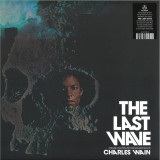
The premiere soundtrack release to Peter Weir's 1977 Australian New Wave classic.
Lost electronic score from the enigmatic composer Charles Wain.
12-track LP sourced from the original stereo master tapes.t.
180g vinyl and deluxe packaging including archival film stills and original press material
The Last Wave (also known as Black Rain in the US) was the final chapter in a trilogy of films scripted and directed by the leading auteur of the Australian New Wave, Peter Weir.
Beginning in 1974 with the absurdist black comedy-horror The Cars That Ate Paris, and followed a year later by the lush gothic mystery Picnic At Hanging Rock, The Last Wave was a landmark in existential horror. Sitting alongside other Australian eco-terror films (e.g. Long Weekend) the film featured a haunting electronic soundtrack that is as mysterious and beguiling as the spiritual themes of the film itself.
With no LP issued after the films premiere in 1977, and together with the mystery surrounding the true identity of its enigmatic composer 'Charles Wain', the score is a largely unheard recording of pioneering experimental film electronics, easily compared to the music that contemporaries Klaus Schulze and Tangerine Dream were composing for Australian films during the same period or the electronic soundtracks of John Carpenter.
Tense atonal electronics, synthesizer drones and manipulated Didjeridu all perfectly capture the film's ominous atmosphere, punctuating the slow hypnotic pace of this brooding supernatural thriller. The Last Wave soundtrack is released in conjunction with the lost film music to Nicolas Roeg's 1971 New Wave masterpiece Walkabout composed by John Barry.
- 1