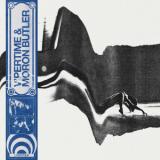
There’s an ancient Japanese legend in which a horde of demons, ghosts and other terrifying ghouls descend upon the sleeping villages once a year. Known as Hyakki Yagyō, or the Night Parade of One Hundred Demons, one version of the tale states that anyone who witnesses this otherworldly procession will die instantly—or be carried off by the creatures of the night. As a result, the villagers hide in their homes, lest they become victims of these supernatural invaders.
Such is the inspiration for the latest album from EARTHLESS. “My son is really into mythical creatures and old folk stories about monsters and ghosts,” bassist Mike Eginton explains. “We came across the ‘Night Parade of One Hundred Demons’ in a book of traditional Japanese ghost stories. I like the idea of people hiding and being able to hear the madness but not see it. It’s the fear of the unknown.”
Whereas 2018’s Black Heaven featured shorter songs and vocals from guitarist Isaiah Mitchell on much of the album—an unprecedented move for the San Diego power trio—their latest is a return to the epic instrumentals EARTHLESS made their unmistakable name on. Night Parade Of One Hundred Demons is comprised of two monster songs—the 41-minute, two-part title track and the 20-minute “Death To The Red Sun.”
The scenario that allowed for this kind of exploration was a stark contrast to that of Black Heaven. At that point, Mitchell was living in the Bay Area, which made it difficult for the band to get together and work on the type of long instrumental pieces they’re known for. But in March 2020, the guitarist moved back to San Diego. More specifically, he moved back the night the pandemic lockdown kicked in. Bad timing, perhaps—or maybe perfect timing.
Plus, they were all on the same page about not wanting to do another record with vocals. “In a way, I think this album was a reaction to our last record,” Eginton says. “Black Heaven was outside our comfort zone. I think it was a good record, but it was challenging to write songs in a more traditional verse-chorus-verse format. This one was more enjoyable. I’m sure we’ll do more vocal tracks in the future, but for the time being I see that album as a one-off.”
Given the record’s inspiration, it should come as no surprise that Night Parade of One Hundred Demons strikes a more sinister tone than the rest of the band’s catalogue. “It definitely has a darker, almost evil kind of vibe compared to stuff we’ve done in the past,” Rubalcaba says. “There’s more paranoia and noise, and some of Isaiah’s whammy-bar stuff kind of reminds me of these Jeff Hanneman moments in Reign In Blood, where it just seems like everything is going to hell. It’s pretty fun.”
Night Parade of One Hundred Demons was recorded in San Diego with Rubalcaba’s childhood friend Ben Moore, who’s worked with everyone from DIAMANDA GALAS and BURT BACHARACH to CEREMONY and HOT SNAKES. When Eginton wasn’t tracking his bass parts, he worked on the album’s incredible sleeve art. “He really dedicated himself to the project,” Rubalcaba says. “He’d be drawing in the studio with, like, a coal-miner’s lamp on his head while we were doing overdubs. He really knocked it out of the park.”
All told, Night Parade of One Hundred Demons isn’t just a return to the band’s traditional format—it’s a return to their very beginnings. “This album actually has the very first Earthless riff in it,” Eginton reveals. “We just recorded it 20 years after we wrote it. But we’re really happy with how this record came out. We feel it might be our finest to date.”
Поиск:night parade
Все
- A1: Dancing Alone (Actor's Studio)
- A2: Cold Summer (Fred Ventura)
- A3: Lazy Days (Fred Ventura)
- A4: Running In The Dark (Fred Ventura)
- A5: Dancefloor Theme (Actor's Studio)
- A6: Zeit - 1St Demo (Fred Ventura)
- A7: An Endless Night (Actor's Studio)
- A8: Brave Runner (Actor's Studio)
- B1: International Language - 1St Demo (Fred Ventura)
- B2: Hollywood Party - 1St Demo (Fred Ventura)
- B3: Love Parade (Actor's Studio)
- B4: Sunrise (Actor's Studio)
- B5: Summer Of '83 (Fred Ventura)
- B6: Follow Your Way (Actor's Studio)
Bordello A Parigi presents a compilation of demo tracks from the legendary Italo Disco icon: Federico di Bonaventura, better known as Fred Ventura. These demo tracks were supposed to remain secret until Fred started to digitalize them from tape a few years ago. Most of these tracks were part of the transitional period between the exit from his early 80's band State Of Art and start of his first solo project Actor's Studio and career as Fred Ventura. A versatile treasure of lost music recorded from 1982 until 1984 in Milan, Italy.
Comes with double front sleeve and printed inner sleeve.
- A1: Darlene Love - White Christmas (2:55)
- A2: The Ronettes - Frosty The Snowman (2:15)
- A3: Bob B Soxx & The Blue Jeans - The Bells Of St Mary
- A4: The Crystals - Santa Claus Is Comin' To Town (3:23)
- A5: The Ronettes - Sleigh Ride (2:57)
- A6: Darlene Love - (It's A) Marshmallow World (2:27)
- B1: The Ronettes - I Saw Mommy Kissing Santa Claus (2:40)
- B2: The Crystals - Rudolph The Red-Nosed Reindeer (2:29)
- B3: Darlene Love - Winter Wonderland (2:24)
- B4: The Crystals - Parade Of The Wooden Soldiers (2:55)
- B5: Darlene Love - Christmas (Baby Please Come Home)
- B6: Bob B Soxx & The Blue Jeans - Here Comes Santa Claus
- B7: Phil Spector & Artists - Silent Night (2:10)
- A1: Darlene Love - White Christmas
- A2: The Ronettes - Frosty The Snowman
- A3: Bob B. Soxx And The Blue Jeans - The Bells Of St. Mary
- A4: The Crystals - Santa Claus Is Coming To Town
- A5: The Ronettes - Sleigh Ride
- A6: Darlene Love - Marshmallow World
- B1: The Ronettes - I Saw Mommy Kissing Santa Claus
- B2: The Crystals - Rudolph The Red-Nosed Reindeer
- B3: Darlene Love - Winter Wonderland
- B4: The Crystals - Parade Of The Wooden Soldiers
- B5: Darlene Love - Christmas (Baby Please Come Home)
- B6: Bob B. Soxx And The Blue Jeans - Here Comes Santa Claus
- B7: Phil Spector And Artists - Silent Night
- A1: Handcarved Coffins
- A2: Waugh & Peace
- A3: A Month In The Country
- B1: The Old Man's Still An Artist With A Thompson
- B2: Slow Wurm
- B3: The Easter Parade
"It transported me back to 1979. Me as a 17 year old post-punk kid at Futurama Festival in Leeds watching PiL, Killing Joke, The Fall and Cabaret Volatire." Lubomir Jovenovic - Leeds Jazz Festival Curator.
Born out of a chaotic Saturday night in Hastings. A raucous double bill between Leeds Jazz troupe and Kent post punks resulting in feedback, mosh pits and a breakneck rendition of The Stooges TV Eye. A plan was hatched right there to record an album together.
"Really f**king happening. I dig this big time." Mike Watt (Minutemen, The Stooges)
Two ultra-rare Peruvian gems that reimagine the international hits 'Do You Think I'm Sexy?' and 'Saturday Night Fever' through the lens of hypnotic Andean rhythms, full of vibrant winds and pounding percussion. Disco music, reworked with huayno and Andean cumbia flair! Once again, Peru manages to surprise us. From the heights of the Andes come two incredible recordings that show how local folklore has embraced international hits-resulting in fun, unexpected fusions with a distinct Andean twist. 'Do You Think I'm Sexy?', Rod Stewart's 1978 classic, is transformed into a powerful huayno anthem-complete with driving percussion and bold brass that almost echo the sound of a New Orleans street parade. Raw, energetic, and unmistakably Andean. On the flip side, we find a playful nod to 'Saturday Night Fever'-retitled 'El Travoltoso'-infused with infectious rhythms of huayno and cumbia. Once again, wind instruments take center stage in this track, just like in the flip-side cut. Both songs come from some of the rarest and most sought-after records among collectors of Peruvian music. Reissued for the first time ever.
Daniele Baldelli and Jolly Mare come together for a record that feels less like a collaboration and more like a shared state of mind. Flusso Uno moves through Afro-cosmic kraut-inflected psychedelia and cinematic electronics with a natural, unforced flow, where rhythm, texture and narrative all pull in the same direction.
Rather than referencing the past, the EP treats it as a living language. The longform, ritualistic percussion of early cosmic dance culture meets the hypnotic motorik pulse of krautrock and the more structured, sample-driven tribalism that followed in later decades. What ties it all together is a deep sense of atmosphere and intention: music that feels physical, emotional and quietly transportive.
“We particularly focused on ritual percussions, hypnotic grooves and suspended atmospheres, trying to blend musical anthropology, auteur electronics and narrative instinct.”
Dhol Parade opens the journey like a slow-burning procession, drums circling and expanding as if guiding the listener into another space. With Icari the perspective lifts, melodic lines drifting and tilting, constantly searching for balance between gravity and flight. Huldufolk pulls everything back into a shadowy, nocturnal zone, where textures feel half-real, half-imagined.
Finally, Viaggio Tascabile loses the record in a quietly reflective way, a compact voyage that sums up the EP’s philosophy: small in scale, deep in meaning. Flusso Uno is not about nostalgia or revivalism. It is about taking the spirit of cosmic culture and letting it breathe in the present, where storytelling, dancefloor intuition and sonic exploration still meet. A record made for open ears, open minds and long nights.
- A1: Kim English - Treat Me Right (David Morales Club Mix)
- A2: Sandy B - Feel Like Singing (Adelphi Music Factory Remix)
- B1: Byron Stingily - Get Up Everybody (Darius Syrossian Remix)
- B2: Byron Stingily - Get Up Everybody (Parade Mix)
- C1: Pj - Can Ya Tell Me (Gerd Janson Piano Megamix)
- C2: Pj - Can Ya Tell Me (Gerd Janson Bonus Beat)
- C3: Pj - Can Ya Tell Me (Pierre’s Phat Dub)
- D1: Wonderboy - Jerk It (Sorley Street Mix)
- D2: Wonderboy - Jerk It (Felix Da Housecat Original Nooworld Underground Mix)
- E1: Innervision Ft Melonie Daniels - Don’t You Ever Give Up (Ian Friday Libation Vox)
- E2: Innervision Ft Melonie Daniels - Don’t You Ever Give Up (Ricanstruction Vocal)
- F1: Kim English - Learn 2 Luv (Ralf Gum Remix)
- F2: Kim English - Learn 2 Luv (Mood Ii Swing Club Mix)
- G1: Deep Creed - The Anthem (Monki Remix)
- G2: Deep Creed - The Anthem (Armand Van Helden Original Circle Mix)
- H1: Kim English - It Makes A Difference (Danny Howard Remix)
- H2: Danny Krivit & Kyle Smith Present Kim English - It Makes A Difference (Dub)
Black Vinyl[33,57 €]
Nervous Records, the iconic label synonymous with the rise of house from the streets of New York City, will mark 30 years in the music industry by releasing the celebratory compilation LP ‘Nervous Records: 30 Years’ on October 1st (Part 1) and October 15th (Part 2).
Featuring original mixes of the label’s biggest tracks, plus remixes by some of its most celebrated acts, ‘Nervous Records: 30 Years’ is both a celebration of the past and of the future. Featuring a who’s who of electronic dance music, the long player sees names including Louie Vega, David Morales Darius Syrossian, Tensnake, Monki, Franky Rizardo, Danny Howard and more take on iconic Nervous cuts: ‘You Make Me Feel Mighty Real’, ‘Treat Me Right’, ‘Future Groove’, ‘Feel Like Singing’, ‘Get Up Everybody’, ‘Break You’, ‘Hot’, ‘End This Hate’, ‘Unspeakable Joy’, ‘Can Ya Tell Me’, ‘Jerk It’, ‘The Anthem’, ‘It Makes A Difference’, ‘Learn 2 Luv’ and ‘Don’t You Ever Give Up’.
The album marks one of the most enduring, extraordinary legacies to grace America’s illustrious music history, not just in electronica but far beyond. Founded in 1991 by Michael and his father Sam Weiss, and recognizable immediately by its distinctive character logo, the label grew rapidly, in no small part due to Michael Weiss’ practically unmatched passion for discovering new music.
“Louie Vega and Kenny Dope woke me at 4am on Tuesday night, Wednesday morning from their studio telling me they had something really different that I needed to hear,” Michael recollects. “I asked if they could play it over the phone. They said if I wanted to hear it I had to come to the studio. So of course I got myself up, got dressed and went there. That “really different track” ended up being ‘The Nervous Track’, a tune that became our signature release and was also highly instrumental in the emergency of London’s ‘Broken Beat’ movement.”
The label’s willingness to take chances on fresh sounds and innovative concepts rising up from the melting pot sidewalks of NYC ensured a body of work that has become a living musical history of the city. House cuts ‘Unspeakable Joy’ and ‘Nitelife’ (Kim English), ‘Get Up (Everybody)’ (Byron Stingily) and ‘Feel Like Singing’ (Sandy B) bump up against hip-hop anthems like ‘Who Got Da Props’ (Black Moon) and “Bucktown” (Smif-n-Wessun) and reggae cut ‘Take It Easy’ (Mad Lion); soulful flows from Mood II Swing (Kim English ‘Learn 2 Luv’, Loni Clark “Rushing”), Armand Van Helden (‘The Anthem’) and Nuyorican Soul (‘Mind Fluid’) sit alongside seminal techno singles like Winx’ ‘Don’t Laugh’. The young artists and producers who joined the Nervous Records’ family have gone on to become some of the most hallowed and celebrated dance acts of all time: Louie Vega, Kenny Dope, David Morales, Tony Humphries, Roger Sanchez, Armand Van Helden, Kerri Chandler, Kim English, Byron Stingily, Josh Wink, to name just a handful.
“We did a release with Josh Wink under his Winx alias entitled ‘Nervous Build-Up’,” Michael said. “It did well and it was obvious how talented Josh was. Subsequent to that release I was pretty persistent in asking him to continue to play me his new demos. During one phone conversation he said, “Mike I’m gonna play you something over the phone but don’t laugh when you hear it.” That demo ended up being ‘Don’t Laugh’, which became one of our biggest international hits and still to this day is one of America’s earliest and most impactful techno hits.”
As much a celebration of the label’s future as it is of their past, Nervous Records: 30 Years is but a marker in the imprints’ history, a clear sign of where they’ve been and also where they’re going. With 30 years behind them, the label’s determination to unearth new raw diamonds in the rough is as unwavering as ever.
“I’ve always been one to look at what others are doing (the industry at large) and think, “ok, are they doing this specific thing for a reason, or doing it because everyone else is doing the same thing” and make my decision based on that,” says Nervous Records’ General Manager Andrew Salsano. “In an age where data metrics and analytics reign supreme, I remain steadfast that they should be complementary to your decision and not the sole indicator to make one. So many songs today are written with 15 second hooks in mind for social media, and while there’s nothing wrong with that business model you will always be chasing the wave instead of carving out your own path and identity.
“My primary focus for the sound of the label has and will continue to revolve around signing good songs and music that has the ability to react at the street level first. The best results come from artists that are firstly given a bit of local love that grows into a global impact. Fresh ideas that express child-like curiosity and artists showing vulnerability in their music are also something I look for, artists and producers that are not making music with certain markets in mind, but rather their own style and signature that is unique but able to straddle the fine line of underground and overground.”
Still as raw, as underground and as finely tuned to the dance floor as they ever have been, perhaps the secret to the success - and the longevity - of Nervous Records has something to do with that hard, dogged, no-holds-barred NYC edge that runs through the veins of the label. With the next generation of producers rising from the clubs of New York, one thing is certain; Nervous Records will be there to find them, nurture them and bring them to the world at large, over the next decade and beyond.
- Sounds Of The Beach
- Le Leader Negatif
- Beats For Katie S. Rap Song
- Selection From First Techno Mix
- Love Theme
- Rubber Band Improvisation
- My Days Are Not Over For Me
- Experimental Jazz Piano B Latin (Improvisation)
- A Mixture Of Musical Styles
- The Five Louises (Experimental Opera)
- Dreams Of Being Viola
- Acid Rain
- Distribution
- Instrumental Extension Of Marching To War (Act 1)
- War Of The Martian Ghosts
- Dance In Homage To The Stars Shining At Night
- Foggy, Cloudy And A Little Windy
- Second Movement Of "Jazz Sonata
- Underscore Music Before Dissolution Of Being (Act 2) Instrumental
- Dissolution Of Being - Orchestral Version
- Recapitulation
- Butterfly Study In F# Minor
- Final Descent
- An Unusual Welcoming Parade
- Council Of Elders
- March To War
- War Of The Martian Ghosts
- The Aftermath
- Restoration
- Flourishing Cities Of Undead
- Recapitulation
- Dissonance Of Being
"Collected Works and War of the Martian Ghosts" ist die ultimative Sammlung von Aufnahmen der lebenden Chicagoer DIY-Legende Dr. Charles Joseph Smith. Es ist auch die erste Archivveröffentlichung von Sooper Records aus Chicago. Die Musik hier ist zum ersten Mal überhaupt für alle zugänglich. Diese 90-minütige Sammlung umfasst 30 Jahre von Charles' selbstveröffentlichter Musik, darunter Konzertklavier, elektroakustische Experimente, elektronische Beats, freie Improvisation und zwei Instrumentalversionen seiner sich weiterentwickelnden Science-Fiction-Oper "War of the Martian Ghosts" (eine elektronische Version von 2023 und eine Klavierversion von 2018). Diese Doppel-Vinyl-/Dreifach-CD-Sammleredition enthält ein umfangreiches Booklet mit 9000 Wörtern über das Leben und Werk des Künstlers sowie Gedichten, Interviews, Zitaten und 30 Archivfotos. Dies ist ein Stück Musikgeschichte Chicagos. Die bemerkenswerte Geschichte von Dr. Charles Joseph Smith beginnt mit der musikalischen Begabung eines stummen Kindes und der zielstrebigen Art und Weise, wie er dieses Talent förderte, um es zu seiner Lebensaufgabe und Daseinsberechtigung zu machen. Charles erzählt von dieser künstlerischen Reise in seiner Autobiografie ,The 88 Keys that Opened Doors", einem selbst veröffentlichten Buch, das ein Leben beschreibt, in dem Musik der wichtigste Schlüssel war (und immer noch ist), um die großen Herausforderungen durch Autismus-Spektrum-Störungen (ASD) zu meistern. Seine Karriere als Musiker startet in der Kirche, führt ihn in die internationale Konzertszene und endet schließlich in Chicagos experimenteller Underground-Szene, wo sie seltsame Früchte trägt. Auf diesem Weg hat Charles Joseph Smiths kompositorische Stimme populäre Musik von Pop bis Jazz, den Gospel der Kirche, den Kanon des klassischen Konservatoriums, moderne Tanzmusik und den regelbrechenden Experimentalismus der DIY-Subkultur seiner Stadt, in der er seit über 30 Jahren eine tragende Rolle spielt, aufgenommen und verarbeitet. Seit Mitte der 1990er Jahre tritt Charles auf, tanzt und verkauft seine selbst veröffentlichten Musik- und Schriftwerke persönlich, oft bei lokalen Shows, die er regelmäßig besucht. In Chicago ist er als lebendes Symbol für die Kraft der Musik und den beliebten Gemeinschaftsgeist im Herzen der DIY-Szene bekannt. Dies ist die definitive Sammlung seiner Originalaufnahmen - auch wenn es unmöglich wäre, die ganze Bandbreite der Musik, Poesie und Prosa des produktiven Dr. Charles Joseph Smith zu erfassen.
- You Are A Runner And I Am My Father's Son
- Modern World
- Grounds For Divorce
- We Built Another World
- Fancy Claps
- Same Ghost Every Night
- Shine A Light
- Dear Sons And Daughters Of Hungry Ghosts
- I'll Believe In Anything
- It's A Curse
- Dinner Bells
- This Heart's On Fire
Sub Pop und Wolf Parade bringen eine neue Pressung ihres legendären Albums ,Apologies to the Queen Mary" auf pinkfarbenem Vinyl raus. Diese Ausgabe lässt das lange vergriffene Album wieder in seinem ursprünglichen Single-LP-Format erscheinen, kurz nachdem die TV-Serie ,Heated Rivalry" in 2025 die Single ,I'll Believe in Anything" aus dem Album einem riesigen neuen Publikum vorgestellt hat, wodurch der Song zu einem echten Viral-Hit wurde. Wolf Parade wurde 2003 in Montreal, Quebec, gegründet. Nach zwei selbstbetitelten EPs veröffentlichte die Band - Hadji Bakara (Elektronik), Dan Boeckner (Gitarre, Gesang), Spencer Krug (Keyboard, Gesang) und Arlen Thompson (Schlagzeug) - im September 2005 ,Apologies to the Queen Mary", das auf breite Zustimmung stieß. Das Album wurde von Modest Mouse-Frontmann Isaac Brock und Toningenieur Chris Chandler bei Audible Alchemy in Portland, Oregon, aufgenommen. ,Apologies to the Queen Mary" stürmt mit voller Kraft und atemlos durch Songs, die in den ersten Jahren der Band Wolf Parade geschrieben wurden. Die eingängige, energiegeladene Dringlichkeit des Albums machte sie sofort zu einer der prägenden Kräfte des Indie-Rock der 2000er Jahre. Es wurde 2006 für den renommierten kanadischen Polaris Music Prize nominiert; The Guardian schwärmte: ,insgesamt großartig"; Pitchfork gab ihm eine Bewertung von 9,2 und meinte: ,Das wahre Talent von Wolf Parade besteht darin, das Alltägliche in etwas Beispielloses zu verwandeln." Später schloss sich Pitchfork dem Chor der Kritiker an, die es zu den besten Alben der 2000er Jahre zählten. Zwei Jahrzehnte später hat "Apologies to the Queen Mary" nichts von seiner Lebendigkeit eingebüßt und gewinnt weiterhin neue Generationen von Fans für sich.
Swan Song
The vinyl LP at the heart of this éthiopiques 31 tracks 2 to 11 was one of the very last vinyl records ever released in Ethiopia. But above all it represents, we felt, the absolute masterpiece of the Ethiopian Groove – the Swan Song of Swinging Addis. The album leaves a clear idea for posterity of the level of sophistication and mastery that modern Ethiopian music had achieved, before being crushed under the Stalino-military heel of the Derg – as the bloody revolution that was unfolding came to be called.
Ethiopia1976.
The Revolution that broke out in February 1974 rolled on in a ruthless march. The whole of Ethiopian society was utterly stunned. The bouquets of flowers handed joyfully to the first tanks of the coup d'état were to wilt very rapidly. From September 1976 to February 1978, 18 months of Red Terror (the name given by the junta itself) spilled blood throughout the country. This fratricidal conflict took its heaviest toll among students and youth. The shift from feudalism to a cruel and primitive Stalinism left the country's citizens deeply traumatised, and snuffed out any pretence of activism, whatever the sector of society. This ice age was to last for seventeen long years.
ሙሉቀን፡መለሰ Mulukèn Mellèssè Muluqän Mälläsä
It was three tracks by Muluken that served as the opener for éthiopiques-1 more than 25 years ago. Seven more tracks appeared on éthiopiques-3 and 13, all accompanied by The Equators, which was soon to become the Dahlak Band.
The first track, Hédètch alu, also the very first piece that Muluken ever recorded, left audiences both unsettled and amazed. Reflecting the singer's extremely young age (he was just 17 at the time), this angelic voice mystified many, who thought they were in fact listening to a feminine voice. He was not yet 22 when he released his last vinyl record in 1976 with Kaifa Records (KF 39LP), one of the very last to be issued in Ethiopia, before the cassette tape became the dominant medium for music distribution – and before the new revolutionary regime put a stop to all independent musical life, via an unspeakable barrage of prohibitions and other persecutions.
Mulu qèn, literally, “A well filled day”. This tender maternal intention wasn't enough to ward off the cruelty of fate. His mother's premature death drove Muluken to leave his native Godjam, in northeast Ethiopia, to live with an uncle in Addis Ababa. Born Muluken Tamer, he took his uncle's last name – Mèllèssè.
The spelling Muluken appeared in his administrative records. Transcription of Amharic to the Latin alphabet, both in Ethiopia and for scholars, gives rise to controversies and quibbles that can never be neatly settled. French allows for a closer approximation of the original pronunciation, thanks to its battery of accent marks, confusing as they may be to anglophones.
Between rather accommodating administrative record-keepers and the various versions that pop up in interviews given by the artist, Muluken's year of birth oscillates between 1953 and 1955…
1954? One thing is certain: the artist's talent made itself known very early indeed, because he got his start in 1966-67, at the age of 13 or 14. Photos from the period attest to his extreme youth. It's a strange sort of initiation for a very young teenager to become a sensation in the heart of Addis's nightlife at the time, Woubé Bèrèha – the Wilds of Woubé. And what's more, in the club of the Queen of the Night, the Godjamé Assègèdètch Alamrèw herself, the very same that was portrayed by Sebhat Guèbrè-Egziabhér in his novel-memoir Les Nuits d’Addis Abeba2… The legendary female club owner who is remembered to this day by the capital's ageing boomers.
Muluken first tried his hand at the drums, before he grabbed the microphone. He emigrated briefly to the Zula Club, across the street from the old Addis Post Office, one of the ground-breaking bars of the burgeoning musical scene, before joining the Second Police Band in 1968, for around three years. He spent a few months with the short-lived Blue Nile Band founded by saxophonist Besrat Tammènè. As the musical scene grew increasingly successful, and pulled slowly but decisively away from its institutional ties, Muluken released his first 45rpm single in February 1972 (Amha Records AE 440). It was included in two LP Ethiopian Hit Parade compilation albums in September of the same year. All in all, Muluken released eight two-track 45s and the same number of original cassette tapes between February 1972 and 1984, the year that he departed for permanent exile in the USA. After converting to Pentecostalism in 1980, Muluken gradually abandoned all secular musical activity. In 1985, at the end of a concert in Philadelphia, he decided to quit concerts and recording for good. Mèlakè Gèbré, the historic bass player from the Walias band who was playing with him that night, recalls that everything appeared so irredeemably diabolical in Muluken's eyes, that it was to be the end of his contribution to Ethiopian Groove.
The end of the story, the beginning of a legend.
Dahlak Band, forgotten by History
Aside from his personal history and vocal talents, it must be remembered that Muluken Mèllèssè was one of the biggest names in the musical innovations that marked the end of the imperial period. These éthiopiques aim to convince those who are just discovering this hidden gem... As for Ethiopians themselves, they are to this day captivated by this singular and atypical figure in the Abyssinian pop landscape – even though he withdrew from public life some 40 years ago. Incorrigible devotees of poetic twists, of more or less hidden meanings, Ethiopians appreciate above all the care Muluken took in choosing his lyrics and the writers who penned them, such as Feqerte Haylou, Alemtsehay Wodajo and, here, Shewalul Mengistu (1944-1977). Love songs, written by women, a far cry from the conventional drivel that pleases sappy sentimentalists.
Muluken is equally acclaimed for his perfectionism when it came to music, the opposite of the overly casual approach that is all too common. He remained a faithful partner of musicians who came from a lineage that borrowed from several inventive and pioneering bands (Venus, Equators, Dahlak). Amongst them were certain artists who began their musical lives with Nersès Nalbandian at the Haile Sellassie Theatre and who come of age in around 1973 – at just the wrong time, you might say. Among them were the pillars Shimèlis Bèyènè (trumpet), Dawit Yifru (keyboards) and Tilayé Gèbrè (sax & flute). Most notably Tilayé Gèbrè, certainly one of the most important musicians, composers and arrangers of his generation, of the end of the imperial era, and of the early years of the Derg.
It was only in 1981 that a miraculous opportunity arose for Tilayé to escape the Stalinist paradise of the dictator Menguistou Haylè-Maryam. Once again it was Amha Eshèté (1946-2021) who provided a solution. The spirited and courageous producer, who had been in exile in Washington since 1975, succeeded, thanks to his incredible perseverence, in bringing the Walias Band to the USA. It was, in fact an extended Walias Band comprising ten musicians3, six of whom chose to slip away after a few concerts and the recording of an LP (The Best of Walias, WRS 100). Tilayé Gèbrè was one of these. He has been living in the USA ever since. There he joined the then-nascent Ethiopian diaspora, which lived largely unto itself, and was making only very modest headway in the American musical market. It seems unfair that Tilayé Gèbrè and the Dahlak Band were not able to benefit earlier from the public recognition that they do deserve.
A similar draining away of the top-rate talents would lead to the reorganization of the major groups of the “Derg Time”. The remaining artists spread themselves around between Ibex Band (renamed Roha Band), Ethio Star Band and a remodeled Walias Band. That spelled the end of the Dahlak Band.
With this record, produced by the essential Ali Abdella Kaifa a.k.a. Ali Tango, we can appreciate everything that the Derg not only destroyed, but also prevented from flourishing. This gem of Ethiopian-style afrobeat came out in 1976 (and, by way of a parenthesis, before the FESTAC 1977 in Lagos, which was attended by an impressive delegation of Ethiopian musicians — although Fela was already personna non grata in his own country). Despite everything that might distinguish this ethio-groove from Fela’s music – no colonial axe to grind, no question of political confrontation with the authorities, no claims to negritude or Africanism for the Ethiopian musicians, and less extrovertion! –, this LP fits beautifully into the saga of intense and electrified soul of the new “African” groove that Fela and Manu Dibango embodied so well from that point onwards.
In restoring this record to its place in the afrobeat epic, it can be seen that, if nothing else, the timeline bestows a legitimate pedigree and a historical primacy to works that had no international impact when they were originally released.
Warning! Masterpiece!
- 1: The Prince
- 2: One Step Beyond
- 3: My Girl
- 4: Night Boat To Cairo
- 5: Baggy Trousers
- 6: Embarrassment
- 7: The Return Of The Los Palmas
- 8: Grey Day
- 9: Shut Up (Single Edit)
- 10: It Must Be Love
- 11: Cardiac Arrest
- 12: House Of Fun
- 13: Driving In My Car
- 14: Our House
- 15: Tomorrow's (Just Another Day)
- 16: Wings Of A Dove
- 17: The Sun And The Rain
- 18: Michael Caine
- 19: One Better Day
- 20: Yesterday's Men (Single Edit)
- 21: Uncle Sam (Single Edit)
- 22: Sweetest Girl (Single Edit)
- 23: (Waiting For) The Ghost Train
- 1: The Harder They Come (Live At Madstock 992)
- 4: Drip Fed Fred (The Conspiracy Mix)
- 5: Shame And Scandal
- 6: Girl Why Don’t You
- 7: Sorry (Radio Edit)
- 8: Nw5 (Radio Edit)
- 9: Dust Devil (Radio Edit)
- 10: Sugar And Spice (Radio Edit)
- 11: Forever Young (Melt Music Radio Edit)
- 12: My Girl 2 (Radio Edit)
- 13: Never Knew Your Name
- 14: How Can I Tell You (Radio Edit)
- 15: Misery
- 16: La Luna
- 17: Mr.apples (Toerag Mix)
- 18: Can't Touch Us Now
- 19: Bullingdon Boys
- 20: C'est La Vie
- 21: Baby Burglar
- 22: Round We Go (Single Version)
- 2: Lovestruck
- 3: Johnny The Horse
Beautifully packaged in a deluxe slipcase, this 4LP box set combines the red vinyl.
Volume 1 and blue vinyl Volume 2 2LP collections. The fully illustrated inner sleeves contain new liner notes with various band members and long-time producers Clive Langer and Alan Winstanley,
in conversation with renowned author and journalist Paul Sexton.
- 1: The Prince
- 2: One Step Beyond
- 3: My Girl
- 4: Night Boat To Cairo
- 5: Baggy Trousers
- 6: Embarrassment
- 7: The Return Of The Los Palmas
- 8: Grey Day
- 9: Shut Up (Single Edit)
- 10: It Must Be Love
- 11: Cardiac Arrest
- 12: House Of Fun
- 13: Driving In My Car
- 14: Our House
- 15: Tomorrow's (Just Another Day)
- 16: Wings Of A Dove
- 17: The Sun And The Rain
- 18: Michael Caine
- 19: One Better Day
- 20: Yesterday's Men (Single Edit)
- 21: Uncle Sam (Single Edit)
- 22: Sweetest Girl (Single Edit)
- 23: (Waiting For) The Ghost Train
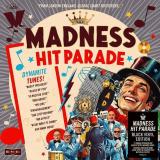
Relive the early years of Madness with 'Hit Parade Vol. 1 1979-1986'. This 23-track 2LP set remembers the early years of Madness; containing a selection of their biggest hits and best loved tunes. It includes 23 UK Top 40 hits such as 'One Step Beyond', 'Embarrassment', 'My Girl', and 'Night Boat To Cairo'.
Beautifully packaged in a deluxe, gatefold sleeve, this 2LP collection is pressed on translucent red vinyl. The fully illustrated inner sleeves contain new liner notes with various band members and long-time producers Clive Langer and Alan Winstanley, in conversation with renowned author and journalist Paul Sexton.
Firmly established as national treasures and as one of the UK’s most cherished and beloved bands, Madness are adored by their loyal and huge following. Their consistently sold-out shows illustrate their enduring qualities resulting in their popularity continuing to grow and grow.
- A1: Baggy Trousers
- A2: Our House
- A3: It Must Be Love
- A4: One Step Beyond
- A5: House Of Fun
- A6: Night Boat To Cairo
- A7: My Girl
- A8: Embarrassment
- B1: Wings Of A Dove
- B2: Mr.apples (Toerag Mix)
- B3: Michael Caine
- B4: Driving In My Car
- B5: Never Knew Your Name
- B6: Lovestruck
- B7: Nw5 (Radio Edit)
Enjoy a Madness career-spanning overview with Hit Parade; a 15-track highlights LP, featuring 13 UK Top 40 hits including Our House, It Must Be Love, Baggy Trousers, Lovestruck, and the No.1 single House of Fun.
Pressed on classic black vinyl, the fully illustrated inner sleeve contains new liner notes with various band members and long-time producers Clive Langer and Alan Winstanley, in conversation with renowned author and journalist Paul Sexton.
- Voce
- Faults
- Endgames
- Brightly
- Taper
- Offerings
- Shelter
Nach zwei gefeierten experimentellen Instrumentalalben, Feral Hymns (2021) und Acts of Light (2023), kehrt Hilary Woods auf ihrer neuen LP Night CRIU zur Songform und vor allem zu ihrer Stimme zurück. Sie lernt erneut, wie sie ihre Stimme einsetzen kann, und komponiert Songs, die sich um sie drehen. Das intime Ökosystem von Night CRIU mit sieben Songs nutzt Vokalharmonien und die Aussprache der Texte als Mittel, um wieder in den Körper einzutreten, mit dem Unbewussten zu sprechen und es bewusst zu machen. Night CRIU ist eine Zeremonie aus Licht und Schatten, ein Album, das sich gegen die erdrückende Monokultur auflehnt, indem es gleichzeitig verlorene Unschuld zurückerobert und betrauert. Woods' Klangpalette ist dynamisch und verletzlich zugleich, in ihrem Bestreben, verlorene und zersplitterte Teile des Ganzen zu integrieren. Losgelöste Klangfäden erinnern an die Risse, Ränder, vergessenen Handlungsmöglichkeiten und vielschichtigen, schlummernden Persönlichkeiten, die nachts an die Oberfläche kommen und darauf warten, bei Tageslicht wiedergefunden und integriert zu werden. Inspiriert und beflügelt von vielen Dingen, darunter die Wiederbelebung indigener Sprachen, persönliche Erfahrungen mit Paraden und Prozessionen, frühe irische Musik, die Freude am Northern Soul-Tanzen, Aspekte des tschechischen und frühen italienischen Kinos, die Unmittelbarkeit des Klangs und das Aufbegehren einer Gegenwartskollektivität, die sich mit ihrer Stimme und ihrem Eintreten für das Menschsein angesichts von Tyrannei und Unterdrückung zu Wort meldet. Night CRIU wurde zwischen 2023 und Januar 2025 an der Westküste Irlands, in Dublin, London und teilweise in Lettland aufgenommen. Diese Lieder für Gesang, Blechblasinstrumente, Streicher, Elektronik, Feldaufnahmen, Texturen, Synthesizer und Klavier wurden aus vielen frühen Heimaufnahmen ausgewählt, die Woods als Spiegelbilder einander gegenüberstellte. Night CRIU wurde von Hilary Woods geschrieben und produziert, von Dean Hurley gemischt, mit zusätzlicher Produktion von Dean Hurley und Oliver Turvey, gemastert von Brian Lucey und mit Beiträgen von Hannah Fallon, Hangleton Brass Band, Gabriel Ferrandini und Ajo Gonsenica. ,Jede Platte ist eine Rettungsboje, eine Momentaufnahme, eine Markierung im Sand, ein Termin, den ich einhalten muss", so Woods. ,Ein Floß, das gleichzeitig kathartisch, schwimmfähig und verspielt ist - Platten aufzunehmen ist eine Art zu sein."
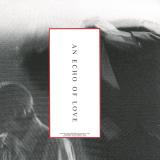
Kerala Dusts großartiges neues Album 'An Echo of Love' ist ein Paradebeispiel dafür, niemals stillzustehen. Im Mittelpunkt seiner musikalischen Hybridität - wo Artrock auf innovative Elektronik trifft und die warme Umarmung der Tanzfläche Raum für weite Ausblicke auf Americana, Wüstenblues und dämmrige Fahrten durch eine neonbeleuchtete Stadt lässt - steht ein Album, das die Möglichkeiten des ständigen Wandels lebt.
Es ist ein wunderbar wandelbares Album; eine rastlose Fusion, deren Bedeutung eher in Fragmenten als in etwas Festem oder Statischem liegt. Kurz gesagt: Es dreht sich alles um Dynamik. Dieses Gefühl der ständigen Bewegung spiegelt sich nicht nur in der wechselnden Besetzung der Band wieder - Keyboarder Tim Gardner und Schlagzeuger Pascal Karier sind Neuzugänge und gesellen sich zu den langjährigen Mitgliedern Edmund Kenny (Gesang und Elektronik) und Lawrence Howarth (Gitarre) -, sondern auch in den Orten, an denen das Album geschrieben und aufgenommen wurde. Die Sessions fanden in der Toskana, Austin, Berlin, Zürich und schließlich Rom statt. Für Sänger Edmund "existiert das Album in gewisser Weise an all diesen Orten". Im Oktober und September ist die Band auf GSA-Tour!
Kerala Dusts großartiges neues Album 'An Echo of Love' ist ein Paradebeispiel dafür, niemals stillzustehen. Im Mittelpunkt seiner musikalischen Hybridität - wo Artrock auf innovative Elektronik trifft und die warme Umarmung der Tanzfläche Raum für weite Ausblicke auf Americana, Wüstenblues und dämmrige Fahrten durch eine neonbeleuchtete Stadt lässt - steht ein Album, das die Möglichkeiten des ständigen Wandels lebt.
Es ist ein wunderbar wandelbares Album; eine rastlose Fusion, deren Bedeutung eher in Fragmenten als in etwas Festem oder Statischem liegt. Kurz gesagt: Es dreht sich alles um Dynamik. Dieses Gefühl der ständigen Bewegung spiegelt sich nicht nur in der wechselnden Besetzung der Band wieder - Keyboarder Tim Gardner und Schlagzeuger Pascal Karier sind Neuzugänge und gesellen sich zu den langjährigen Mitgliedern Edmund Kenny (Gesang und Elektronik) und Lawrence Howarth (Gitarre) -, sondern auch in den Orten, an denen das Album geschrieben und aufgenommen wurde. Die Sessions fanden in der Toskana, Austin, Berlin, Zürich und schließlich Rom statt. Für Sänger Edmund "existiert das Album in gewisser Weise an all diesen Orten". Im Oktober und September ist die Band auf GSA-Tour!
- Easter Parade
- Heatwave
- Family Life
- Body And Soul
- Mid Air
- Because Of Toledo
- The Downtown Lights
- Let's Go Out Tonight
Ladies & gentlemen - get ready for something truly special: Scotland"s best jazz musicians meet one of the best and most influential bands from Scotland! The Colin Steele Quartet play the music of The Blue Nile, undisputed masters of Sophisti-Pop. Especially their second album "Hats" (1989) is regarded as an all-time classic masterpiece. The beautiful and atmospheric, often synth-driven songs of The Blue Nile get the deluxe jazz treatment in exciting new arrangements. All-time classics like "Easter Parade", "Heatwave" and "Let"s Go Out Tonight" shine in bright new shades and colours, and get transformed into something unique by Colin Steele"s very own trumpet style. The album perfectly captures and even enhances the late-night moods and aural landscapes of The Blue Nile"s music, while also adding some unexpected, and, yes, even slightly funky turns to songs like "Body & Soul" and "Headlights On The Parade". Colin Steele"s smooth and emotive trumpet caresses and lifts these beautiful songs to new heights.
- The Death Of A King
- The Killer
- A Cold Morning
- Crucify Me
- My Valentine
- Losing Hand
- Loner Perpective
- Lovely Suzy
- Son Of The Atom
- After The Night
- Glamosaurus Rex
- The Farmer
- The Soldier
- Melatonine 1,9
- To Please You All
- The Pagan Truth
- Life Goes Wrong
- It's Over (The Last Dance)
Second solo album by Arthur Satan, released on Born Bad, after 'So Far So Good', his pop solo debut, which was a pleasant surprise for fans of his notthat-garage group JC Satan 'A Journey That Never Was' is so big you'll need special furniture to accommodate this unreasonable, maximalist parade, crammed full with 1960s pop influences.
The record plays with heritage like a kid would unabashedly plan for a birthday party. No stupid treasure hunt, we're bowling with the heads of our foes, guitars are literally bleeding through the mix. T-Rex burgers, fountains of chocolate choruses dripping on Brian Wilson - shaped giant cookies: let's indulge. Each song is a musical family, each verse is an album, each riff is a title. In his Christmas gift list, Arthur probably circled absolutely every toy: his taste for completism never disappoints. He played almost every instrument, mixed the album and designed a whole graphic universe to go along with it. A visual artist by trade, also made a point of drawing a monumental fresco spreading out the fantasy landscape that haunts this album.
- A1: Montego Bay - Everything (Paradise Mix) 04 59
- A2: Atelier - Got To Live Together (Club Mix) 06 06
- A3: Golem - Music Sensations 04 56
- B1: The True Underground Sound Of Rome Feat. Stefano Di Carlo - Gladiators 05 26
- B2: Eagle Parade - I Believe 04 26
- C1: Dj Le Roi - Bocachica (Detroit Version) 05 28
- C2: Green Baize - Synthetic Rhythm 01 41
- C3: M.c.j. Feat. Sima - Sexitivity (Deep Mix) 05 30
- D1: Kwanzaa Posse Feat. Funk Master Sweat - Wicked Funk (Afro Ambient Mix) 06 31
- D2: Progetto Tribale - The Bird Of Paradise 06 29
- D3: Mbg - The Quite 06 59
Vol 1[28,99 €]
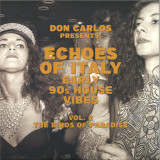
Googling “paradise house”, the first results to pop up are an endless list of European b&b’s with whitewashed lime façades, all of them promising “…an unmatched travel experience a few steps from the sea”. Next, a little further down, are the institutional websites of a few select semi-luxury retirement homes (no photos shown, but lots of stock images of smiling nurses with reassuring looks). To find the “paradise house” we’re after, we have to scroll even further down. Much further down.
It feels like yesterday, and at the same time it seems like a million years ago. The Eighties had just ended, and it was still unclear what to expect from the Nineties. Mobile phones that were not the size of a briefcase and did not cost as much as a car? A frightening economic crisis? The guitar-rock revival?! Certainly, the best place to observe that moment of transition was the dancefloor. Truly epochal transformations were happening there. From America, within a short distance one from the other, two revolutionary new musical styles had arrived: the first one sounded a bit like an “on a budget” version of the best Seventies disco-music – Philly sound made with a set of piano-bar keyboards! – the other was even more sparse, futuristic and extraterrestrial. It was a music with a quite distinct “physical” component, which at the same time, to be fully grasped, seemed to call for the knotty theories of certain French post-modern philosophers: Gilles Deleuze, Félix Guattari, Paul Virilio... Both those genres – we would learn shortly after – were born in the black communities of Chicago and Detroit, although listening to those vinyl 12” (often wrapped in generic white covers, and with little indication in the label) you could not easily guess whether behind them there was a black boy from somewhere in the Usa, or a girl from Berlin, or a pale kid from a Cornish coastal town.
Quickly, similar sounds began to show up from all corners of Europe. A thousand variations of the same intuition: leaner, less lean, happier, slightly less intoxicated, more broken, slower, faster, much faster... Boom! From the dancefloors – the London ones at least, whose chronicles we eagerly read every month in the pages of The Face and i-D – came tales of a new generation of clubbers who had completely stopped “dressing up” to go dancing; of hot tempered hooligans bursting into tears and hugging everyone under the strobe lights as the notes of Strings of Life rose up through the fumes of dry ice (certain “smiling” pills were also involved, sure). At this point, however, we must move on to Switzerland.
In Switzerland, in the quiet and diligent town of Lugano, between the 1980s and 1990s there was a club called “Morandi”. Its hot night was on Wednesdays, when the audience also came from Milan, Como, Varese and Zurich. Legend goes that, one night, none less than Prince and Sheila E were spotted hiding among the sofas, on a day-off of the Italian dates of the Nude Tour… The Wednesday resident and superstar was an Italian dj with an exotic name: Don Carlos. The soundtrack he devised was a mixture of Chicago, Detroit, the most progressive R&B and certain forgotten classics of old disco music: practically, what the Paradise Garage in New York might have sounded like had it not closed in 1987. In between, Don Carlos also managed to squeeze in some tracks he had worked on in his studio on Lago Maggiore. One in particular: a track that was rather slow compared to the BPM in fashion at the time, but which was a perfect bridge between house and R&B. The title was Alone: Don Carlos would explain years later that it had to be intended both in the English meaning of “by itself” and like the Italian word meaning “halo”. That wasn’t the only double entendre about the song, anyway. Its own very deep nature was, indeed, double. On the one hand, Alone was built around an angelic keyboard pattern and a romantic piano riff that took you straight to heaven; on the other, it showcased enough electronic squelches (plus a sax part that sounded like it had been dissolved by acid rain) to pigeonhole the tune into the “junk modernity” section, aka the hallmark of all the most innovative sounds of the time: music that sounded like it was hand-crafted from the scraps of glittering overground pop.
No one knows who was the first to call it “paradise house”, nor when it happened. Alternative definitions on the same topic one happened to hear included “ambient house”, “dream house”, “Mediterranean progressive”… but of course none were as good (and alluring) as “paradise house”. What is certain is that such inclination for sounds that were in equal measure angelic and neurotic, romantic and unaffective, quickly became the trademark of the second generation of Italian house. Music that seemed shyly equidistant from all the rhythmic and electronic revolutions that had happened up to that moment (“Music perfectly adept at going nowhere slowly” as noted by English journalist Craig McLean in a legendary field report for Blah Blah Blah magazine). Music that to a inattentive ear might have sounded as anonymous as a snapshot of a random group of passers-by at 10AM in the centre of any major city, but perfectly described the (slow) awakening in the real world after the universal love binge of the so-called Second Summer of Love.
For a brief but unforgettable season, in Italy “paradise house” was the official soundtrack of interminable weekends spent inside the car, darting from one club to another, cutting the peninsula from North to centre, from East to West coast in pursuit of the latest after-hours disco, trading kilometres per hour with beats per minute: practically, a new New Year’s Eve every Friday and Saturday night. This too was no small transformation, as well as a shock for an adult Italy that was encountering for the first time – thanks to its sons and daughters – the wild side of industrial modernity. The clubbers of the so-called “fuoriorario” scene were the balls gone mad in the pinball machine most feared by newspapers, magazines and TV pundits. What they did each and every weekend, apart from going crazy to the sound of the current white labels, was linking distant geographical points and non-places (thank you Marc Augé!) – old dance halls, farmhouses and business centres – transformed for one night into house music heaven. As Marco D’Eramo wrote in his 1995 essay on Chicago, Il maiale e il grattacielo: “Four-wheeled capitalism distorts our age-old image of the city, it allows the suburbs to be connected to each other, whereas before they were connected only by the centre (…) It makes possible a metropolitan area without a metropolis, without a city centre, without downtown. The periphery is no longer a periphery of any centre, but is self-centred”.
“Paradise house” perfectly understood all of this and turned it into a sort of cyber-blues that didn’t even need words, and unexpectedly brought back a drop of melancholic (post?)-humanity within a world that by then – as we would wholly realise in the decades to come – was fully inhuman and heartless. A world where we were all alone, and surrounded by a sinister yellowish halo, like a neon at the end of its life cycle. But, for one night at least, happy."
- A1: Yves Deruyter - The Rebel (40 Years Yves Deruyter Rework)
- A2: F.u.s.e. Vs Lfo - Loop
- B1: Two Pieces - Magic Bells (Final Mix)
- B2: Channel X - Rave The Rhythm
- B3: Master Techno - My Noise
- C1: Circuit Breaker - Overkill
- C2: Dj Misjah - Karin's Paradox
- D1: Technicida - Purgatorio
- D2: Meng Syndicate - Sonar System
- D3: Epilepsia - Epilepsia
- E1: Insider - Destiny
- E2: Symphony Of Love - Quantum Leap
- F1: Ramin Feat. 2 Stripes - Brainticket
- F2: Peyote - Alcatraz
- G1: A.paul - Juice
- G2: The Effect - Green Angel (Angel Mix)
- H1: Cybersonik - Technarchy
- H2: Dna - La Serenissima
- H3: Tronikhouse - The Savage & Beyond (Savage Reese Mix)
- I1: Yves Deruyter - Back To Earth (40 Years Yves Deruyter Rework)
- I2: Dream Concept - Shy Kid (In Rhythm Mix)
- I3: All In One - Mama's Kick
- J1: F.u.s.e. - Substance Abuse
- J2: Dj Bountyhunter - The Bountyhunter
- L2: The Wavecatcher - Flight Dh2126
- M1: Yves Deruyter - Feel Free (40 Years Yves Deruyter Rework)
- M2: Methadon - Synthetic Fruits
- N1: Edge Of Motion - Set Up 707
- N2: Reese & Santonio - Rock To The Beat
- N3: Mechanical Soul Saloon - Punos
- O1: Plastikman - Panikattack
- O2: Reese - Funky Funk Funk
- P1: The Prodigy - Charly (Alley Cat Mix)
- P2: Phantasia - Inner Light
- P3: Second Chance - In Paradise
- Q1: Final Exposure - Vortex
- Q2: Quazar - Dragonfighters
- R1: Ecstasy Club - Jesus Loves The Acid
- R2: Quadrophonia - Quadrophonia
- S1: Illuminatae - Tremora Del Terra
- S2: Josh Wink - Higher State Of Consciousness (Tweekin Acid Funk Mix)
- T1: Phuture - Rise From Your Grave (Wild Pitch Mix)
- T2: Black Scorpion Aka Steve Rachmad - Empyrion
- J3: Cybersonik - Backlash
- K1: Robert Armani - Circus Bells (Full Length Original Mix)
- K2: Photon Inc. Feat. Paula Brion - Generate Power (Wild Pitch Mix)
- L1: L.s.g. - Netherworld (Dj Randy's Smoke Free Remix)
Celebrating 40th anniversary of Yves Deruyter's musical career with this 10 x 12" Vinyl Box Set. Including tracks from F.U.S.E. vs LFO, Tronikhouse, Robert Armani, L.S.G., Edge Of Motion, Plastikman, The Prodigy, Ecstasy Club, and the master himselfYves Deruyter.
Yves Deruyter - 40 Years at the Pinnacle of the Night
Forty years. A rollercoaster of a musical career, meandering through five decades, leaving timeless marks on the collective dancefloor memory. Yves Deruyter is the exception that proves the rule. An icon behind the decks, celebrated far beyond national borders for his legendary sets, impeccable musical choices, and the anthems released under his name. The result of collective effort, where Yves, with his vision and unique touch, consistently left his mark-transforming good tracks into inescapable bombs that still resonate through time.
If you've spent forty years living to the pulse of music, the night is in your DNA. Yves Deruyter, a DJ to the core-the real deal. The man who bent the night to his will, dragging weekend vibes into the workweek like a warrior, a true master behind the turntables who made his people dance. His beats: the oxygen that generations lived on.
Yves sharpened his musical weapons in the early '90s within the iconic afterparty scene of Barocci and The Globe-places that became sanctuaries in Belgium's endless night. Here, die-hard dancefloor warriors, cutting-edge music lovers, and night owls from the four corners of the globe gathered. They willingly followed Yves' masterful mixing and his razor-sharp set construction. Clubs with a more conventional timeframe were the next step, with the iconic Cherrymoon as his home base for years-alongside endless guest DJ spots and global gigs. From there, the underground pulsed through Yves' hands and crates, reaching ever-larger crowds-without ever compromising for commercial or crossover sounds. Yves stayed true to his choices, lifting his audience to euphoric heights like a craftsman, armed with his hits, hidden gems, and freshly unearthed nuggets.
From the pounding energy of Rave City to the flippy, epic flashes of Calling Earth-tracks that not only captured the spirit of the times but conquered dancefloors worldwide. This isn't just music; it's a time capsule-a connection between generations and a reminder of the energy from a golden era.
With musical partners like Roel Butzen, Frederico Santini, M.I.K.E. Push, and more recently, Insider, Yves forged a sound that etched its place into rave and dance history. From The Rebel to The House of House, parts of Yves' musical taste have become immortal pillars of dance music heritage. In the early rave days, he topped Belgium's DJ rankings year after year, elevating every club he played to the highest echelons of popularity. The same held true for the records where his name appeared like a badge of honor.
From The Globe to the globe itself-it seemed almost written in the stars. Yves, thestar DJ, became one of the instigators of the electronic music storm that put Belgium on the global map-a storm that never subsided. Festivals like Love Parade, Mayday, I Love Techno, Nature One, and Tomorrowland saw Yves as a trusted force, effortlessly commanding crowds and turning dancefloors inside out. Forty years later, that storm still ignites partygoers, vibrates through dancefloors, and keeps entire generations moving.
Even today, Yves still holds a steady residency with Yves Deruyter and Friends at Club Moustache, where his concept always sells out. Here, both fresh talent and seasoned DJs deliver a killer blend of modern electronic dance music and timeless classics, creating an atmosphere that hooks the crowd every single time.
Because partying doesn't need an excuse. But forty years? That deserves the spotlight-not as a mere milestone, but as a showcase of timelessness. Music mutates, reinvents itself for new generations, yet retains the same impact as that very first time. Yves proves that forty is just a number, and relevance isn't about trends-it's about vision, energy, and an unmistakable touch. His sets? Indestructible. His sound? A heartbeat echoing through time.
And Yves? He doesn't live in the past. Today, Yves distills those four decades into a compilation capturing the essence of his career. Belgian beats, interpreted and refined into a sound that powered raves around the world. Ten vinyls featuring not just a fiercely curated selection that contextualizes the magic of his early days, but also new versions of three unbeatable anthems-potent hits designed to turn dancefloors upside down in wonder, without losing a shred of their soul. Yves remains a beacon in the night, a searchlight for that one perfect beat-always relevant, always chasing that magical moment.
Yves Deruyter-a name spoken in the same breath as the greats of the scene. A ten-vinyl compilation is more than a celebration; it's a well-earned trophy. As unique, indestructible, and uncompromising as the man himself.
- A1: Darlene Love - White Christmas
- A2: The Ronettes - Frosty The Snowman
- A3: Bob B Soxx & The Blue Jeans - The Bells Of St Mary
- A4: The Crystals - Santa Claus Is Comin' To Town
- A5: The Ronettes - Sleigh Ride
- A6: Darlene Love - (It's A) Marshmallow World (It's A)
- B1: The Ronettes - I Saw Mommy Kissing Santa Claus
- B2: The Crystals - Rudolph The Red-Nosed Reindeer
- B3: Darlene Love - Winter Wonderland
- B4: The Crystals - Parade Of The Wooden Soldiers
- B5: Darlene Love - Christmas (Baby Please Come Home) (Baby Please Come Home)
- B6: Bob B Soxx & The Blue Jeans - Here Comes Santa Claus
- B7: Phil Spector & Artists - Silent Night
At long last! Finally on vinyl! Can Fifteen Great Christmas Songs be collected together on one lovely 12-inch vinyl disc featuring bands and artists from the Damaged Goods archives? …you betcha bottom dollar they can! Each song has been recorded with the Christmas spirit in full flow and we’d guess the odd mince pie was consumed along the way as well. The full-on Christmas feeling that is flowing through these wonderful tracks is a joy to behold and we implore you to not just read these sleeve notes but to go crimble-crumble-crazy and actually buy this record and treasure it, not only this year but for many years to come. We are very proud to have put this album together as Christmas is our favourite time of the year. We love the feeling at special Christmas gigs - the over-inflated people and prices of things and the way everyone just has to go out and drink as much as they possibly can in the name of the good old lord Jesus. We did this for you, and only for you because we really, really care and want to share the joy that only Damaged Goods Records can bring you at this special time of the year. So enjoy some great music from the likes of Will Billy Childish, Miss Holly Golightly, Helen Love, Goldblade & Poly Styrene, The Courettes and so many more and remember, this LP is not just for Christmas it’s for LIFE! Ian Damaged, National Elf
- A1: Refrigerator Mothers - Yaya Suitor
- A2: Sikhara - Zenjouki Temple
- A3: Catherine Danger - Le Carburant
- A4: Thar Mapsal Program - Khubilgan
- A5: Microloop - Rapture In Malaysia
- B1: Tzii - Our Impact On Other Egos
- B2: Officium - Where Flesh Circulates
- B3: Nur - Lost In The Desert Of My Mind
- B4: Contagious Orgasm - Demolition Costs
- B5: Dissonant - Dimana Batas
- C1: Catastrophic Mermaids On Parade - New Drunk School Of Dying Love With Manners
- C2: Cham - The 4Th Day After The 23
- C3: Venimeuses - Soupirail
- C4: Indra Menus - Murkaning Dunyo
- C5: Excess Of Fat - Ain’t No Way To Leave No More
- C6: Jealousy Party - Vuota
- C7: Moineau Ecarlate - Rush Me No Badness
- D1: Rinus Van Alebeek - Let’s Make War
- D2: Ss Mylitta - Night On Earth
- D3: Âme De Boue - Green Moon Over Cintra Street
- D4: Ripit - Kraut Founding
- D5: The Radar Threat - Conflict Heroes
- D6: Solar Skeletons - We Won’t Kiss
Night On Earth records
is an independent structure/label created 20 years ago which deals with
the invisible and the deviant,
the void and the love,
the parallax and the unknown …
we release vinyls and tapes
we organise events
we are you and us
we are nothing and everything
we are oblivion and memory
we are your egotrip’s nightmare
we are your deviancy catharsis
meet us through this double LP which is one cartography of the night on earth vortex across 3 continents and several generations of music freaks and braincrackers
Some Artists missing there (there are too much : RINUS VAN ALEBEEK, SS MYLITTA, SOLAR SKELETONS, THE RADAR THREAT, ÂME DE BOUE, and.. RIPIT !
Art Blakey & The Jazz Messengers - A Night In Tunisia
Dieser Albumklassiker ist ein Paradebeispiel dafür, wie Art Blakey den jungen Talenten in seiner Band eine
Plattform zur eigenen Entfaltung bot. Er lässt sie nicht nur ausführlich in ihren Soli zu Wort kommen,
sondern vertraut auch blind auf ihr Können als Komponisten. Einzige Ausnahme im Repertoire ist der
Bebop-Klassiker von Dizzy Gillespie, der diesem Album aus dem Jahr 1960 seinen Titel verlieh.
Four years after their Discrepant debut - 'OOOO' -, Lisbon-based travellers Jibóia return to the fold with another offering of globetrotting psychedelia with 'Salar'. With the core trio of Óscar Silva, Ricardo Martins and Mestre André augmented by a stellar parade of collaborators on various roles, 'Salar' further expands on the transglobal visions by now pretty trademarked by the band. Intersped among shorter vignettes for drums, saxophone and bass, each of the more fully fleshed tracks casts a guest to elevate Jibóia's music to uncharted realms - both in a mystical and geographical sense.
Opener 'Selar' summons the cello of songstress Joana Guerra for a skewed dialogue with Silva's guitar, propelled by Martins' drums and percussion and André's electronic textures into 4 minutes and 20 seconds that feel epic - if there was any psychedelic numerological symbolism needed. On 'Solar', Silva's non-western plucking rides on for Yaw Tembe's trumpet to veer in a multitude in directions, while the mysterious 'Sitar' conjures the voice of moroccan musician Ayoub El Ayadi for a contemplative nighttime prayer. Elsewhere, guitarist Rui Carvalho aka Filho da Mãe injects dissonant guitar lines unto 'Sarar's pummelling dance and Pedro Augusto's electronics hover below the shapeshifting dynamics of 'Sonar', among mesmerising keyboard lines. 'Salir' featuring Daiyen Jone enchanted flute brings the album to a close at its most reflective, all crepuscular synth lines and reverbed handclaps.
Sunset Rubdown are set to release their fourth studio album_the first in fifteen years!_Always Happy To Explode.Twenty years ago Spencer Krug began using the name Sunset Rubdown for his solo bedroom recordings, experiments too low-fi and odd for what was then a blossoming Wolf Parade, but by 2005 Sunset Rubdown had evolved into a full band, with Michael Doerksen, Jordan Robson-Cramer, and Camilla Wynne joining Krug on stage and in the studio. The band recorded their third critically-acclaimed album, Dragon Slayer, in Chicago in 2008, then went on to play their last show in Tokyo in 2009, with the implicit knowledge it was their last. They broke up quietly, their certitude that they'd never reunite growing as the years rolled on. Then one night more than a dozen years after their final show Krug had a dream (he really did) that the band reunited, and the first thing he did upon awakening was email the band to see if the dream might be made real. The answer was a resounding yes, and soon enough Sunset Rubdown was onstage again. The first show in fourteen years was in Montreal, where they had formed so long ago. The tour was a success, most crucially in terms of having fun, the main condition of their continued pursuits. This fun was thanks in no small part to their blithesome new member, bassist Nicholas Merz. And thus they decided to make a new album together. The record is composed of nine songs cherry-picked from demos that Krug has been posting to his Patreon page over recent years, with the songs in many cases being pared down from their previous incarnations, yet no less lush. Being a band is no easy feat, perhaps especially as members age and spread across the continent, but it certainly is a privilege. With Always Happy to Explode, Sunset Rubdown have made something that captures their gratitude and the energy of their joyous (and sometimes difficult) reunion.
The Circus is a place of lights and colors, but also of shadows, even darkness. Admittedly, it delights children and makes adults laugh. But you only need one rainy autumn evening near a circus tent and the smell of fodder to think of the sadness of the clowns, the endless training of the animals and the freaks who are hidden in some caravan... cinema, the essence of the circus – movement, light, danger and burlesque – will have been admirably rendered in Notes on the circus by Jonas Mekas (1966), one of the inventors of the filmed diary. With Cirque, Michèle Bokanowski does similar work, entirely dedicated to spinning, in the musical field.
She distinguished herself in particular in the composition of musique concrète, among others Tabou and Trois chambres d'inquiétudes, after having studied with Pierre Schaeffer and Éliane Radigue. The latter, great lady of drone and minimalism, fell under the spell of Cirque and wrote the booklet for the piece as a poem.
The piece, divided into five movements, is based on the handling and editing of recordings captured within one or more circuses (this is not specified and is of no importance) between 1988 and 1993. The initial allegro reveals the gallop of a horse joined gradually by other images. The idea of the circular space of the circus tent is immediatly and magnificently rendered and will be constantly recalled by an insistent use of the loop technique. Children's laughter, applause and drum rolls are thus sheared, repeated before being brutally interrupted. Accordion interludes and the distortion of sounds create a dreamlike atmosphere. This beautiful nightmare reminds us, to quote Éliane Radigue, the "Magic of childhood still living in the heart of man even beyond its abrupt end."
Words by Alexandre Galand, from the book “Field Recording – L’usage sonore du monde en 100 albums” (ed. Le mot et le reste, 2012)
Major member of the french musique concrète scene, Michèle Bokanowski was born on August 9, 1943 in Cannes, FR, to a musician mother and a writer father. She now lives and works in Paris.
Music lover since adolescence, it was relatively late, at the age of 22, that Michèle Bokanowski decided to study composition. Reading In Search of a Concrete Music by Pierre Schaeffer was decisive. After classical training on harmony, she met Michel Puig, a student of René Leibowitz, who taught her writing and analysis based on the Treatise of Schönberg. In September 1970 she began a two-year internship in the ORTF Research Department under the direction of Pierre Schaeffer. She takes part in the same time in a research group on sound synthesis, studies musical computing at the Faculty of Vincennes and electronic music with Éliane Radigue.
Her main works are intended for concert: Pour un pianiste, Trois chambres d’inquiétude, Tabou, Phone Variations, Cirque, L’étoile Absinthe, Chant d’Ombre, Enfance, Rhapsodia, Cadence, Elsewhere. She has also composed for theater (with Catherine Dasté), dance (with choreographers Hideyuki Yano, Marceline Lartigue, Bernardo Montet) and cinema: music for the short films of Patrick Bokanowski and his two feature films L'Ange ( 1982) and A Solar Dream (2016).
The color green can represent many things. It can symbolize money, of course, but also weed. And envy. It implies newness, the rebirth of spring, but it can also evoke illness and infection. It’s an apt name for a band that is defined by its adaptability, by its knack for doing many different things all at once. On the Color Green’s second full-length—their first as a quartet—they ground their cosmic jams in earthy melodies, drawing from ‘60s SoCal folk-r0ck, ‘70s classic rock, ‘80s underground rock, ‘90s psychedelic dance-rock, and many other sources.
In the two years the band has been touring, it has already shared stages with a range of groups that reflect both the sophistication and the wild malleability of their sound, including Fuzz, Kikagaku Moyo, Circles Around the Sun, and Young Guv. “When we play live, I don’t really know what’s going to happen,” says guitarist Noah Kohll. “You really have no idea what you’re going to get with this band, which keeps things fresh for us and maybe makes the live experience special.”
Adds drummer Corey Rose, “One thing about this band that I really appreciate is that we can camouflage into any environment or any show. We can play with Hiss Golden Messenger and lean into that funky country vibe, or we can play with the Brian Jonestown Massacre and get evil. We all love a variety of music, so let’s not put ourselves in a box.”
That wild, mercurial quality is reflected on Fool’s Parade, a meditation on loss, grief, confusion, frustration, and the clarity to which they all lead. Their songs are vehicles for self-explorations, not just a means of putting their feelings into lyrics and notes but molding them, night after night, into different shapes to get different insights.
- A1: Polaris (북극성) 04:22
- A2: Insomnia (불면증) 04:49
- A3: Arrival (도착) 07:44
- B1: We Shine At Night (우리는 밤이 되면 빛난다) 06:27
- B2: Parade 07:34
- B3: Sketchbook 07:02
- C1: Imagination 04:37
- C2: Sound Inside Me, Waves Inside You 05:13
- C3: Blossom 05:13
- D1: After The Magic 06:11
- D2: Your Place 10:51
"A sprawling patchwork of the artist’s dreams and fears, Parannoul’s third album After the Magic explores the enigmatic solo artist’s life in the wake of his second album’s overnight success.
Expanding on the shoegaze-shaded emo that made Parannoul’s To See the Next Part of the Dream so beloved by lo-fi and indie rock fans alike, After the Magic sees the anonymous auteur striving to write a follow-up as worthy of acclaim as the last.
Across the album’s ten songs, Parannoul plunges yet deeper into his diverse pool of influences, coming back to the surface with a record that captures and extends the magic of its predecessor. Unexpected flashes of orchestral ambient and glitched-out electronica meld seamlessly with Parannoul’s signature passages of noisy, distortion-laden shoegaze, offering a real time glimpse into the maturation of one of indie rock’s most exciting artists.
In the artist’s own words, “This album is not what you expected, but what I always wanted.”"
- A1: Chakachas - Stories
- A2: Mad Unity - Funky Tramway
- A3: René Costy - Ostinato Bass
- A4: Alex Scorier - Topless
- B1: Open Sky Unit - Sunshine Star
- B2: Plus - Gimme Some More Of That
- B3: André Brasseur - Funky
- B4: Chicken Curry & His Pop Percussion Orchestra - Librium
- C1: Placebo - Balek
- C2: Les Hélions - Music & C°
- C3: Black Blood - Avenue Louise
- C4: S.s.o. Feat. Douglas Lucas & The Sugar Sisters - Tonight's The Night
- D1: Nico Gomez & His Afro Percussion Inc. - Ritual
- D2: André Brasseur - Saturnus
- D3: Chocolat's - El Caravanero
2024 Repress
Funky Chicken brings together some of the best Belgian dance tracks from the early seventies. Emerged in a country where virtually every musical wave passes through, most of these tunes were created and recorded by hired guns, in this case a few clusters of gifted session musicians and composers. The music on Funky Chicken is their take on (afro-)funk, soul and Latin. Some of their releases were hit parade cannon fodder, but occasionaly, some spare studio time or the urgent need for a B-side allowed for memorable musical experiments.
Funky Chicken is a post-fact documentation, the result of a quest into a period on which information is few and far between, the 'black hole' in Belgium's history of popular music. The barren wasteland between the variety orchestras of the sixties and the electronic revolution of the late seventies and early eighties. This series explores the ground the dance pioneers built upon.
The Samosa label gets its Re-Funk Head on once again with Part 2 of the exciting sonic laboratory project.
Opening this outrageously good EP are Samosa alumni Dirty Elements & Drunk Drivers feat E.M.E and their all-powerful and energy blasting ‘Disco Ball’ – a track that never even attempts to hide its sassiness. The brass ensemble fanfare (which is truly one of the best disco riffs in the known universe) acts as a victory parade through Samosa City – all tickertape and confetti raining down on smiling faces. A serious, serious groove which has featured in sets by Art of Tones on his Ultimate Mix Show for Glitterbox Ibiza and by Folamour in his Amsterdam gigs in March 2024.
Track 2 is respected Italian Maestro, Moplen and the wonderful ‘Ain’t No Doubt About It’. There’s an immediate dance floor lure to the disco beats and bongo rhythms here. Take a good helping of ‘pew-pew’ laser bolts, cow bells and hand claps; add a masterful bassline and you have some serious, serious disco business. You could be sipping evening cocktails in Club Coco Bongo or taking in a beach at sunrise - this track would make you want to dance regardless.
On the B-side the disco theme continues with the most aptly titled ‘Sexy Thing’ by Jazzyfunk. At 122bpm, this heads quickly into soaring, heavenly strings and punchy bassline territory, enveloping your ears like a warm duvet. The melody is a dance floor dream – it demands that you join the hands-in-the-air crowd and there really is no point in resisting. ‘Sexy Thing’ is one of those rare ‘moment in time’ tunes that could either kick a night off or act as the grandest of grand finales. Pure, unadulterated disco pleasure.
Closing the EP with Track 4 is DeGama himself and ‘Feel The Groove’. Make no mistake, this is a powerful, brooding beast of a tune that bursts out of the traps in no time at all. At a very deceptive 120bpm, ‘Feel The Groove’ starts with a warm, housey vibe that quickly breaks into a jumping, blues inspirerd guitar battle. The solid beat bounces gorgeously in tandem with the filthy rhythm guitar riffs and sultry saxophone in a knee-slapping, somersaulting, backsliding explosion. A seriously filthy tune from DeGama.
Re-Funk Head Part 2 acts as a perfect companion to its predecessor – featuring an all-star cast of some of the best talents to grace Samosa. A must for all serious record collectors.
- A1: The Soul Stirrers - Wade In The Water (Chatter - Lp1)
- D4: Sam Cooke - Yield Not To Temptation (Chatter)
- D5: Sam Cooke - Yield Not To Temptation
- D6: Sam Cooke - Couldn't Hear Nobody Pray
- D7: Sam Cooke - Somewhere There's A God
- D8: Mel Carter - That's Heaven To Me
- E1: The Simms Twins - You Send Me (Demo)
- E2: The Simms Twins - Just For You
- E3: The Valentinos - Somewhere There's A Girl
- E4: Johnnie Taylor - You Were Made For Me
- E5: Johnnie Taylor - When A Boy Falls In Love
- E6: Johnnie Taylor - Soothe Me
- E7: The Valentinos - That's Where It's At (Chatter)
- E8: Lc Cooke - That's Where It's At
- E9: Johnnie Taylor - Everybody Wants To Fall In Love
- F1: Billy Preston - Keep On Loving You
- F2: The Simms Twins - I'll Always Be In Love With You
- F3: Johnnie Morisette - Baby We've Got Love (Chatter)
- F4: Johnnie Taylor - Baby We've Got Love
- F5: Johnnie Morisette - Baby, Lots Of Luck
- F6: Johnnie Morisette - Put Me Down Easy
- F7: Johnnie Morisette - Rome (Wasn't Built In A Day) (Wasn't Built In A Day)
- F8: Johnnie Taylor - Greazee (Part 1 & 2)
- G1: Johnnie Morisette - I Gopher You
- G2: The Simms Twins - I Gopher You (Chatter)
- G3: Lc Cooke - You're Always On My Mind
- G4: The Valentinos - I Need Lots Of Love
- A2: The Soul Stirrers - Wade In The Water
- G5: The Valentinos - Don't Throw Your Love On Me So Strong
- G6: The Valentinos - Black Night
- G7: The Valentinos - Damper
- G8: The Valentinos - You Can Run (But You Can't Hide) (But You Can't Hide)
- G9: Meet Me At The Twisting Place (Chatter)
- G10: Meet Me At The Twisting Place
- H1: Good Good Loving
- H2: The Wobble
- H3: Lookin' For A Love (Chatter)
- H4: Lookin' For A Love
- H5: I've Got A Love For You
- H6: I've Got A Girl (Chatter)
- H7: I've Got A Girl
- H8: Tired Of Living In The Country
- H9: It's All Over Now
- A3: The Soul Stirrers - I'm A Pilgrim
- A4: Rh Harris & His Gospel Paraders - Praying Ground
- A5: Rh Harris & His Gospel Paraders - Somebody (Chatter)
- A6: The Soul Stirrers - Somebody
- A7: Rh Harris & His Gospel Paraders - Sometimes
- A8: The Soul Stirrers - Amazing Grace
- B1: The Soul Stirrers - Pass Me Not (Lp2)
- B2: The Soul Stirrers - Oh Mary, Don't You Weep (Chatter)
- B3: The Soul Stirrers - Oh Mary, Don't You Weep
- B4: The Soul Stirrers - Since I Met The Savior
- B5: The Soul Stirrers - God Is Standing By
- B6: The Soul Stirrers - Lead Me To Calvary (Rehearsal)
- B7: The Soul Stirrers - Listen To The Angels Sing
- B8: The Soul Stirrers - Don't Leave Me Alone
- C1: The Soul Stirrers - Stand By Me Father
- C2: The Soul Stirrers - Jesus Be A Fence Around Me
- C3: Rh Harris & His Gospel Paraders - Lead Me Jesus
- C4: Rh Harris & His Gospel Paraders - Free At Last
- C5: The Soul Stirrers - Looking Back (Chatter)
- C6: The Soul Stirrers - Looking Back
- C7: The Womack Brothers - Born Again
- D1: The Womack Brothers - Wait On Jesus
- D2: The Womack Brothers - Time Brings About A Change
- D3: Sam Cooke - Must Jesus Bear The Cross Alone
Sam Cooke’s SAR Records Story 1959-1965 gathers significant recordings of SAR Records – the label Sam Cooke co-founded, produced the majority of records for and was instrumental in operating. Groundbreaking artists such as The Soul Stirrers, Johnnie Taylor, Billy Preston, and Bobby Womack’s group The Valentinos are all featured, in addition to Sam himself. “The whole SAR Records Story is infused with Sam Cooke’s rapturous sense of how sacred gospel and sexual soul flow together, unbroken,” stated Milo Miles on NPR’s Fresh Air upon the set’s initial release almost three decades ago. In an era where black-owned labels were a rarity, Los Angeles based SAR Records was founded at almost exactly the same time as Motown, its Detroit counterpart. SAR was established in 1959 by Sam Cooke, music publisher J.W. Alexander, and S. Roy Crain, Cooke’s road manager and founder of gospel group The Soul Stirrers. The acronymous name standing for Sam Alex Roy, SAR sought to keep gospel music alive while simultaneously crossing over to pop audiences in the secular world. LPs 1 and 2 of the set focus on the former, while LPs 3 and 4 encompass the latter. From choosing talent, to writing a great number of songs, to producing, SAR was entirely the fulfillment of Cooke’s vision on a musical/creative level. The superstar singer, who had already crossed over from the gospel world himself, tirelessly coached the vocalists during SAR recording sessions, emphasizing diction. His methods are heard throughout the collection, as he is heard speaking to artists between takes. “And by Sam being there with you and just giving you that special attention, you wanted to give it to him like it was supposed to be. I think that’s what made SAR, SAR. Because he was selling himself through different artists.” – Bobby Womack. VERY LIMITED 1-2 COPIES ONLY PER SHOP
- 01: Absolutely Cuckoo
- 02: I Don't Believe In The Sun
- 03: All My Little Words
- 04: A Chicken With Its Head Cut Off
- 05: Reno Dakota
- 06: I Don't Want To Get Over You
- 07: Come Back From San Francisco
- 08: The Luckiest Guy On The Lower East Side
- 09: Let's Pretend We're Bunny Rabbits
- 10: The Cactus Where Your Heart Should Be
- 11: I Think I Need A New Heart
- 12: The Book Of Love
- 01: Fido, Your Leash Is Too Long
- 02: How Fucking Romantic
- 03: The One You Really Love
- 04: Punk Love
- 05: Parades Go By
- 06: Boa Constrictor
- 07: A Pretty Girl Is Like
- 08: My Sentimental Melody
- 09: Nothing Matters When We're Dancing
- 10: Sweet-Lovin' Man
- 11: The Things We Did And Didn't Do
- 01: Roses
- 02: Love Is Like Jazz
- 03: When My Boy Walks Down The Street
- 04: Time Enough For Rocking When We're Old
- 05: Very Funny
- 06: Grand Canyon
- 07: No One Will Ever Love You
- 08: If You Don't Cry
- 09: You're My Only Home
- 10: (Crazy For You But) Not That Crazy
- 11: My Only Friend
- 12: Promises Of Eternity
- 01: World Love
- 02: Washington, D.c
- 03: Long-Forgotten Fairytale
- 04: Kiss Me Like You Mean It
- 05: Papa Was A Rodeo
- 06: Epitaph For My Heart
- 07: Asleep And Dreaming
- 08: The Sun Goes Down And The World Goes Dancing
- 09: The Way You Say Good-Night
- 10: Abigal, Belle Of Kilronan
- 11: I Shatter
- 01: Underwear
- 02: It's A Crime
- 03: Busby Berkeley Dreams
- 04: I'm Sorry I Love You
- 05: Acoustic Guitar
- 06: The Death Of Ferdinand De Saussure
- 07: Love In The Shadows
- 08: Bitter Tears
- 09: Wi' Nae Wee Bairn Ye'll Me Beget
- 10: Yeah! Oh, Yeah!
- 11: Experimental Music Love
- 01: Meaningless
- 02: Love Is Like A Bottle Of Gin
- 03: Queen Of The Savages
- 04: Blue You
- 05: I Can't Touch You Anymore
- 06: Two Kinds Of People
- 07: How To Say Goodbye
- 08: The Night You Can't Remember
- 09: For We Are The King Of The Boudoir
- 10: Strange Eyes
- 11: Xylophone Track
- 12: Zebra
Limited edition silver vinyl anniversary reissue of the Magnetic Fields' classic 1999 rumination on, of course, love. Funny, smart, dark, memorable, and a lifetime's worth of listening. Stephin Merritt solidifies his songwriting genius on his "most ambitious and fully realized work". (AMG) This vinyl reissue is remastered for vinyl and beautifully packaged in a 10" slipcase box with three double gatefold sleeves and a 24 page booklet!
Nia Archives is the star at the forefront of the latest era of jungle. Since her emergence in 2020, her collagist soundscapes have helped bring the sound to a new generation of clubgoers (though fair warning: don’t call her a “revivalist” – she’s the first to point out that the scene never went away). So when it comes to talk of the 24-year-old producer, DJ, singer and songwriter’s much-anticipated debut album, the odds are you’re thinking of a full-length record of weightless jungle tracks with basslines so intense they’ll leave your ears ringing.
But the reality of the Bradford-born, Leeds-raised artist’s first ever album – while very much replete with that exquisite jungle sound she does so well – is also doing something a little different. On the thrilling and freeing Silence Is Loud, Nia Archives is looking to make music for beyond the rave. As she explains: “I think music can be experienced in different ways, and there’s different kinds of music for different scenarios. Say you’re at a festival listening to music with thousands of other people, that can feel really uniting. But then you might listen to an album on your own in the bus, or in a taxi; and this project is definitely more a record to sit and listen to than a collection of club tracks.” Nia is intent that Silence Is Loud is taken in as a full body of work of something “more song-focussed, putting interesting sounds on jungle.” It means that this is a record which finds gloomy Britpop, warm Motown, soaring indie, a love for Kings of Leon’s Aha Shake Heartbreak, skittering IDM, Madchester, classic rock, old skool hardcore and more, woven and fused into her ragga and junglist tapestry, all layered with feeling, imbued with her songwriterly lyricism about loneliness, relationships, family, navigating her 20s, and the intense potential power of silence.
The vast sonic palette on Silence Is Loud comes down to Nia’s broad array of influences through her life. With her Jamaican heritage, Nia remembers hearing jungle as a child via her nana, as well as at Bradford Carnival, where she was drawn to the soundsystem culture, dancing carefree on the floats in the parade. The first album she ever bought was Rihanna’s debut, Music of the Sun, and she also went to Pentecostal church back then, and was obsessed with gospel. Aged 16, she moved to Manchester, where she didn’t really know anybody: and so, her solution to meeting people was going out. “Partying was a huge part of my life,” she says, “They used to do little freestyle cyphers at the house parties and I would join in – that’s kind of how I got into singing.” She had found music boring at school, but in meeting all these new people she became interested in making her own music as a hobby. “I was making boom-bap kind of stuff which I didn’t really like in the end,” she laughs, “My lyrics are quite deep, so on a hip-hop beat it all sounds really depressing. I wanted people to dance to my music.” And so she began experimenting with faster tempos alongside that melancholy songwriting, teaching herself how to make beats on Logic: “It’s all been a lot of trial and error, really.”
Nia went to study music in London, and was also interested in visual art, making collages and VHS: “Before the music, I was trying to make a visual archive of my life and the people around me,” she explains, “And then my music was like my diary, and a sonic archive, as well.” Hence, she paired the word “archives” with her middle name, Nia. To this day, in her spare time she’s working on pulling together a documentary on the global nature of the jungle scene.
Back on those first two EPs, Headz Gone West (2021) and Forbidden Feelingz (2022), she honed that junglist sound, painting it with new flecks of colour and vibrance. It was only after she started releasing work that she realised pursuing music could be a viable life path for her. The decision has been paying off ever since. Nia Archives placed third in the prestigious BBC Sound Poll for 2023, alongside garnering a nomination for the Brit Awards’ Rising Star prize, plus wins at the DJ Mag, NME, the MOBOs and Artist and Manager Awards. She has also toured the world – be it North America, Europe or Asia – and even opened a show in London as part of a little something called Beyoncé’s Renaissance World Tour. She’s renowned as a party-starter in her own right, too, with takeovers at Glastonbury, Warehouse Project and her own Bad Gyalz day event. She’s done official remixes for the likes of Jorja Smith, had a huge summer hit with her Yeah Yeah Yeahs rework ‘Off Wiv Ya Headz’, and worked with brands like Corteiz, Nike, Flannels, Burberry, FIFA and Apple. In just three years, it’s fair to say that Nia Archives has become a need-to-know name in dance music.
But Nia is not interested in being one fixed thing. Building on the terrain from her third EP, Sunrise Bang Ur Head Against Tha Wall, the universe of Silence Is Loud is not totally unfamiliar territory; but it’s still emblematic of a bolder scope than we’ve heard from the artist before. Working with Ethan P. Flynn (the songwriter and producer known for his work with FKA twigs and David Byrne), the resulting record is an impressive feat of deftly-sculpted textures; sometimes big and euphoric, like the wobbly, lusty bass of ‘Forbidden Feelingz’, or elsewhere notably gentle and quiet – see: the gorgeous, surprisingly drumless ‘Silence Is Loud (Reprise)’, a heartfelt number that sits somewhere in the school of Adele. “I really sharpened my songwriting skill on this project,” Nia says, “I was really intentional about what I was writing about, and I really loved co-producing with Ethan. His process is so different to anyone I’ve worked with before, and he’s got a kind of DIY set-up like me.” Flynn’s flat overlooks the Barbican, adding that unquantifiable futurist urban quality that the area holds to the music. The pair enjoyed the collaborative process so much that the album was done within three and a half months.
Perhaps this is why Silence Is Loud maintains an exuberant immediacy while still being sleek and spacious, interspersed with flourishes of metallic beats, lush melody and topped with her sugary but powerful vocal, floating over it all. There is an intimacy to the record, perhaps in part due to Nia writing most of her lyrics while sitting in bed in her flat in Bow (once a bedroom producer, always a bedroom producer). You can hear it on the refrain for lead single ‘Crowded Roomz’, which finds rippling guitar lines cutting taut through the beats as Nia refrains: “I feel so lonely crowded rooms.” The song is an examination of life on tour, constantly surrounded by people, but not necessarily those she can be herself around; more than that, the track is exemplary in the category of sad bangers.
Silence Is Loud often finds itself in that push and pull between melancholy and euphoria. There’s a celebration of her unconditional love for her younger brother (the title track), a rumination of an evening with an Irish boy she met by Temple Bar (‘Cards On The Table), or a letter to herself on the light and airy ‘Unfinished Business’, even coming to terms with a lover having a past they haven’t quite processed yet (“nobody comes with a clean slate”). The latter was recorded the week after a music festival, and accordingly captures Nia’s vocal in its not quite healed, husky state.
Nia’s work is always a snapshot of where she’s at when she’s making it. This might not be the debut album you were expecting, but that’s what makes Silence Is Loud so special. Nia Archives has learned the rules of her sound, and is unafraid to break them, pushing jungle and herself into new, unchartered territories that, in turn, go some way to map the history of the greats of British dance music. More than that, it plants her firmly in that lineage.
ORANGE VINYL
Daniel Boeckner understands the grit and gravel that accumulates in the heart and that it takes an unwavering courage to crack through that clutter and burrow to the other side. And in Boeckner's hands, that quest comes via post-apocalyptic synth and guitar heroism, a rallying cry for those always coming home through the scorched clouds. Throughout his work with Wolf Parade, Handsome Furs, Divine Fits, Operators, Atlas Strategic, and more, the iconic Canadian indie rocker recognizes that few feelings are more gratifying-more memorable, more generative, more abundant-than hope. But it takes getting the hell out of your own way. A culmination of that deep library of musical reference, Boeckner is set to release his first album under his own name: Boeckner! No matter where his genre exploration has taken him, there's something about growing up in punk and DIY spaces that puts collaboration in Boeckner's blood. Composed of a collection of intimately familiar elements, Boeckner! elicits the same thrill of young passion and discovery. It's a jet-powered chase through a tech-noir cityscape-fueled by a dream and that special someone in the passenger seat. That urgency and passion have always been a trademark of Boeckner's, and writing on his own pushes those feelings further into the center of the scope. But while Boeckner may be the clear driving force behind the album, he's not without collaborators for his solo debut. After meeting producer Randall Dunn while contributing to the soundtrack to the Nicolas Cage-starring psychedelic horror film Mandy, Boeckner knew he'd found the perfect counterpart for his solo debut. "I'd been a fan of his forever, especially the Sunn0))) records he produced," Boeckner says. "Working with Randall really unlocked some suppressed musical urges, things that I enjoy in my private life but don't normally weave into what I'm releasing-like occult synth, pseudo-metal, krautrock, and heavy psych influences." That base allows Boeckner to thoughtfully weave between emotional imagism and more grounded storytelling. Throughout the record, his imagery delves into science fiction, but it's charged first and foremost by experience. The trio of Boeckner, Dunn, and drummer Matt Chamberlain (Pearl Jam, David Bowie, Fiona Apple) formed a sort of dark engine for the album, and Chamberlain's ingenious approach of triggering a vintage Arp synthesizer simultaneously with each drum track helped Boeckner shape the record's atmosphere. That tense futurism was influenced by Boeckner's time staying in Dunn's Circular Ruin studio, a dusky, electronic aura burned into every track. By the end of the album, Boeckner! eases from sci-fi epic into something more akin to a torched VHS copy of a John Cassevetes film, the chemtrails and nuclear fallout fading long in the distance. Like all good sci-fi, the emotion and pain hits home for the author and listener alike, and the genre flourishes bolster the human experience. In revealing more than ever before, Boeckner! ratchets up the musical intensity to unforeseen levels and hopes to find some peace at the end of the journey.
- A1: Scooter - Rhapsody In E
- A2: Marco V - Simulated
- B1: Fiocco - Afflitto
- B2: Da Hool - Meet Her At The Love Parade
- C1: Zolex - Beautiful Inside
- C2: Carlos - The Silmarillia
- D1: Tom Wilson - Techno Cat (Dance Like Your Dad Mix)
- D2: Der Dritte Raum - Hale Bopp (Raumgleiter Version)
- E1: Dave Swayze - Sunstroke
- E2: Lunatic House Sounds Feat. D.j.l.b. - The Day (Dj Lb Efficient Mix)
- F1: The Mackenzie Feat. Jessy - Innocence (Club Mix)
- F2: Dj Furax Vs Redshark - Big Orgus
- F3: Puncher - The Wall (Dub Wall Dub Mix)
- G1: Silvio Ecomo - In No Dip
- G2: Joe T Vannelli Feat. Csilla - Play With The Voice In Germany (Paul Van Dyk Remix)
- H1: 4 Strings - Take Me Away (Into The Night)
- H2: Team Deep - Morninglight
- I1: Mox Epoque Vs Bk - Be Sure!
- I2: X-Press 2 - Muzik X-Press
- J1: Rmb - Redemption
- J2: Dream Your Dream - Belgium Jump
- J3: Nikolai - Ready To Flow
TOPradio, the trailblazing force in dance music, proudly announces the release of its highly anticipated 5 x 12" Vinyl Box Set, showcasing the very essence of timeless classics through the revered Retro Arena brand.
Renowned for curating unforgettable musical experiences, Retro Arena has meticulously handpicked 22 iconic tracks that continue to set dancefloors ablaze. This limited edition vinyl collection is a testament to the enduring allure of the classics, encapsulating the spirit of an era that defined the electronic dance music landscape.
From anthems that resonate with the golden age of dance to tunes that have stood the test of time, the Retro Arena 5 x 12" Vinyl Box Set promises an immersive journey through the evolution of electronic dance music.
- 1: Ghosts" 4:42
- 2: Girls" 3
- 3: Last Night For A Table Of Two" :9
- 4: 12 Through 15" :58
- 5: The Torment Of Existence Weighed Against The Horror Of Nonbeing" 4:04
- 6: Even Robots Need Blankets" 3:24
- 7: Repent And Repeat" 2:54
- 8: Demons" 3:31
- 9: Sorry, Not Sorry" 3:25
- 10: Nothing You Can Live Without, Nothing You Can Do About" 3:55
- 11: Hold Onto Me" 3:15
- 12: Angels
Mayday Parade is celebrating the 10th Anniversary of their fourth studio album, Monsters In The Closet, with an expanded vinyl reissue. The LP includes six previously unreleased demos and alternate cover art, complete with an etching on the d-side. The original July 2013 release debuted at #10 on the Billboard 200, and #16 on the UK Independent Singles Breakers. Kill Your Stereo dubbed the album “Mayday Parade’
Die Psychedelic Porn Crumpets sind mit ihrem sechsten Studioalbum zurück. Das australische Psych-Rock-Fünfergespann hat seit der Veröffentlichung von "Night Gnomes" im Jahr 2022 an "Fronzoli" gearbeitet - ein Titel, der so viel bedeutet wie "etwas Unnötiges, das als Dekoration hinzugefügt wurde". Dilemma Us From Evil" ist die neueste Singleauskopplung aus dem Album und ein Paradebeispiel für Psychedelic Porn Crumpets' verblüffende Mischung aus schweren, melodischen Gitarren, harmonischen Texten und exzentrischem Songwriting. Es folgt auf die Singles "Nootmare (K-I-L-L-I-N-G) Meow!" und "(I'm a Kadaver) Alakazam", die Anfang des Jahres veröffentlicht wurden. Das Album strotzt nur so vor dem überdrehten, glitzernden Sound der Band aus Perth, der Einflüsse von klassischen Rockgrößen wie Black Sabbath, Led Zeppelin und den Beatles sowie experimentellen elektronischen Jazz enthält. Diese Rockeinflüsse sind auf "Fronzoli" deutlich zu hören, mit thrashigen Grunge-Tracks wie "Sierra Nevada" und dem frenetischen "Hot! Heat! Wow! Hot!", in denen die hyperaktiven Gitarren und die schrägen Texte der Band zur Geltung kommen. Die Band, die als Freunde begann, bevor sie sich zusammenfand, ist stolz auf ihre fröhliche und ungeschliffene Unordnung, wenn es um Songwriting und Produktion geht. "Diese Platte ist mein bisheriges Lieblingswerk", sagt Songwriter und Frontmann Jack McEwan, "jede Nuance wurde diskutiert, verleumdet und sorgfältig in die richtige Position gebracht, es wird sporadisch außerhalb der Linien gemalt, so dass diese extravertierten Schnörkel übrig bleiben." Jede LP-Farbe ist auf nur 250 Exemplare limitiert. Die CD ist ein aufklappbares Digipack, 500 Stück gepresst.
- A1: Darlene Love White Christmas 2:53
- A2: The Ronettes Frosty The Snowman 2:16
- A3: Bob B. Soxx And The Blue Jeans The Bells Of St. Mary 2:55
- A4: The Crystals Santa Claus Is Coming To Town 3:24
- A5: The Ronettes Sleigh Ride 3:01
- A6: Darlene Love A Marshmallow World 2:23
- B1: The Ronettes I Saw Mommy Kissing Santa Claus 2:37
- B2: The Crystals Rudolph The Red-Nosed Reindeer 2:31
- B3: Darlene Love Winter Wonderland 2:26
- B4: The Crystals Parade Of The Wooden Soldiers 2:55
- B5: Darlene Love Christmas (Baby Please Come Home) 2:46
- B6: Bob B. Soxx And The Blue Jeans Here Comes Santa Claus 2:04
- B7: Phil Spector / Bob B. Soxx And The Blue Jeans / Da Silent Night
Sony präsentiert die legendärsten Alben der Musikgeschichte in audiophilen 180g Vinyl Editionen.
A Christmas Gift for You von Phil Spector ist nicht nur das grösste Rock & Roll Weihnachtsalbum aller Zeiten, sondern überhaupt eines der besten Rock Alben überhaupt. Das Album von 1963 präsentiert The Ronettes, The Crystals, Darlene Love and Bob B. Soxx & the Blue Jeans mit ihren bemerkenswerten Versionen von "Sleigh Ride","Rudolph The Red-Nosed Reindeer", "Here Comes Santa Claus" und vielen mehr.