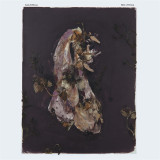
Japanese pianist Yumiko Morioka initially released Resonance, her first and only solo recording, on Akira Ito's ‘Green & Water’ imprint in 1987. Whilst by no means a commercial failure, the album was mostly found in the background of Japanese TV documentaries, maternity clinics and healing shops before drifting into relative obscurity.
By 1994, Morioka had relocated to America and her solo music career had given way to the joys of starting a family and her new life in California. It was, and still is, a shock for her to learn that Resonance had gained the attention of a new audience outside of Japan through blog posts and YouTube album uploads.
After hearing Resonance for the first time ourselves back in early 2017, we tried for months to track Morioka down about a reissue. This news reached her at a particularly trying time in her life following the devastating loss of her home in the 2017 California wildfires.
Her home had recently been razed, destroying all of her possessions, musical equipment, scores and recordings. Morioka was lucky to escape with her life; her quick thinking neighbour raised the alarm in the middle of the night giving her just enough time to escape safely before then tragically watching her home burn to the ground.
In the aftermath, Morioka returned to Japan in an attempt to rebuild her life. She found work writing music for commercial projects and pop acts before recently opening her own chocolate shop in the Jiyugaoka neighbourhood of Tokyo - back where it all began.
‘’Space and time moved at a different speed than now’’ – Yumiko Morioka
A lifelong student of the piano, Morioka was born in Tokyo in 1956. A child prodigy, she took up the instrument under her mother’s tutelage at just three years old and by her teens she had won multiple piano scholarships. Her talent was so obvious that she was invited to train in America, eventually graduating from the San Francisco Conservatory of Music with a piano major during John Adams’ reign as head of composition.
After graduation, Morioka returned to Japan but struggled to find her place musically, working mostly on commercial songwriting assignments. Frustrated, and at times embarrassed by her musical output, she turned to the works of Brian Eno and the surroundings of her coastal home in the Izu Peninsula south of Tokyo for inspiration. It was here that she began to work on the compositions that would eventually become Resonance.
Recorded on a Bösendorfer grand piano, much of Resonance was made in an attempt to soothe her creative soul. Constructed from unwritten improvisations with additional instrumentation added later, Resonance explores the space between notes. As such, it's a record that feels open and inviting, permeated throughout with a sense of confident serenity.
The sparse, delicately played notes are allowed to reverberate and echo through the spaces between themselves, giving each track a feeling of both grandeur and intimacy. Like the great pioneers of classical and ambient music, there's a timelessness to Resonance - a comforting, familiar feeling, as if these melodies have always existed.
Resonance drew influence from the popular environmental music culture prevalent in Japan during the late 80s, but it was also heavily inspired by Western musicians such as the avant-garde Parisian composer Erik Satie. Listening today, it still feels fresh and pertinent; a warm, contemplative reflection of a travelled woman.
Resonance has been lovingly remastered by Séance Centre's Brandon Hocura and given new artwork by Métron Records’ label head Jack Hardwicke.
Suche:night works
Spandau20, an imprint named after the Western Berlin district and focused on artists from the area, delivers techno in all diverse forms - from warehouse and electronic peak time beats to breaks and IDM, balancing the old and new school sounds flawlessly. With a focus on vinyl releases, for the collectors, Spandau20 has lately also focused on its label nights, with showcases at Fabric, Bassiani and many others. The label's 10th release features 10 tracks that epitomise the musical diversity of Spandau20 and the progressive musical mindset of its roster, calling on the label favourites and Spandau natives to deliver brand new and exciting music. This special release even features one track that all artists have worked on together: 'Come Closer', a swarming, slithering beginning featured as the VA's opener. Its barely coherent female vocal echoing amidst a cacophony of demon-like effects. The chilling ambience captured at the offset transcends into the first full length track by Elli Acula, 'Floating Eyes', a cur characterised by an authoritative, pounding bass featuring calculated percussive rolls and metallic overtones to make for a face-scrunching opener to this devilish collection of works. FJAAK follow for the first of twin cameo appearances, partnering up with fellow live supremo and hardware aficionado KiNK. On 'Overbridge' the trio deliver a cavernous, rolling number driven by a deep thrumming bass in addition to a razor-edged lead synth, and pulsating technopattern. Dajusch is known for incorporating his years of classical study in with his immersive musical style - and with his VA effort the Berlin native neatly showcases this. Easing the energy slightly, 'Move' escalates from its warm, melodic intro into rumbling goliath of a beat comprising a looping, slew of gassy harmonics. The momentum of the release shifts considerably with the introduction of acutely versatile producer, DJ and sound artist Claus. The artist from Spandau leans his track 'Bloomscroll' towards sparse, dubby sonics in which he intricately ties together to form churning, burgeoning soundscape. FJAAK jolt proceedings back into the techno groove with their signature blend of arresting sub-bass and reverberating rhythms, which come thick, fast and heavy on 'Jackfruit'. The abstract wonder of Anna Z's broken-beat like stylings is fully explored on 'Icy Liq'. It's outlandish and amorphous in its execution, causing a clattering percussive chaos that's choicely pieced together by the modular-extraordinaire. Nikk stealthy moves into breaks territory with his track 'Down In The Shadows', packing a trap-like snare with an acid-flecked melody and dawn-breaking, dream-like textures. The penultimate track on the VA is 'Tufted'. J.Manuel expertly employs a chorus of robot-like sonics that course through a short-circuiting low-end to produce a pacy, inescapable journey via a whirling, merciless beat. He is joined by the legendary producer Tobi Neumann for their menacingly ambient number titled 'Fennec.' In parts a nod to UK dubstep, the duo concocts a fierce admixture of styles bolstering tribal-like components with industrialised overtones and methodically crafted drum-fills.
Neon Orange & Black Vinyl. With Information (2019), Cleveland-raised, New York-based producer and DJ Galcher Lustwerk marked his debut LP on Ghostly International, having already carved out a lane of low-key hip-house music with his instant classic 100% GALCHER mixtape: deep, smooth, psychedelic, equally cut for the club, after-hours, night drives, and headphones. Lustwerk leveled up for Information, experimenting with more live drums and jazz saxophone to create a new dynamic, what he considered a hookier, more bittersweet, Midwest mindset. Lustwerk emerged in 2013 with the game-changing 100% GALCHER for the beloved mix series Blowing Up The Workshop, later named a mix of the decade by Resident Advisor. The signature sound - a smoky stream-of-consciousness baritone shadow-boxing with beats, informed by funk, rap, rhythm, and blues - felt like an epiphany distinctly linked to the expanse of Midwest driving and the strobe-lit detachment of club culture. Now over a decade into his musical vision, Lustwerk remains an elusive nightlife narrator, embodied by the hooks and a growing catalog that's proven influential and singular.
Following up their critically-acclaimed 2024 LP Avoude (5 stars and 'Top of the World' on Songlines, Bandcamp top pick, Le Monde, BBC Radio, Pop Matters and more), Sol Power Sound is proud to present a blistering EP of remixes from the thrilling psychedelic West African outfit, Dogo du Togo & the Alagaa Beat Band.
Combining iconic traditional Togolese rhythms and melodies, Dogo du Togo’s sound is anchored in the country’s often overlooked, but extraordinary rich cultural history, reflecting the local Vodun religion and traditions that permeate everyday life in Togo.
For the remixes, Sol Power Sound enlisted a cast of renowned producers to rework the scorching originals into deeper club-friendly burners.
Captain Planet leads off the A side with a modern and percussive African house groove that will get any room with a pulse up and jumping
Sol Power All-Stars ask the question 'what if Prince joined Dogo du Togo in 1983?' and answer with a blistering dance funk track laced with synths, arpeggios, and Moog.
Rounding out the A-side is Detroit legend John Beltran, who transports Dogo and crew to Bahia for an Afro-Brazilian balearic heat rock. Perfect for your next sunset soiree.
Blair French, another Detroit icon, leads off the B-side with a deep and organic house groove that works equally well day, night, or early morning.
Sol Power All-Stars reappear again on side b with their mid tempo groovy Afrobeats flip of Von Na Agbeto, the one track that was not featured on Dogo’s LP.
Finally, DC mystery man Glenn Echo gets loose and trippy on the boards with a psychedelic digi dub (in 12/8!) that rattles your chest and puts your being directly into the echo chamber.
- By The Line
- Casa Di Riposo, Gesu' Redentore
- Seventeen Fabrics Of Measure
- Bruststärke (Lung Song)
- Schloss, Night
- Neither From Nor Towards
Aunes is a rare solo album from peripatetic Australian cellist-composer-performer Judith Hamann, presenting six pieces recorded across several years and countries. Developing the collage techniques and expanded sound palettes heard on their previous releases, Aunes makes use of synthesizers, organ, voice and location recordings alongside the dazzlingly pure, enveloping tones of Hamann's cello. The record takes its name from an old French unit of measurement for fabric, varying around the country and from material to material. Unlike the platinum metre bar deposited in the National Archives after the Revolution as an immovable standard, an aune of silk differed from an aune of linen: the measure could not be separated from the material. In much the same way, in these six pieces_which Hamann thinks of as `songs'_formal aspects such as tuning, pacing, melodic shape and timbre are not abstractions applied universally to musical material but are inextricable from the instruments and sounds used, even from the places and communities in which the music was made. Audible location sound embeds the music in its place of making, as in the delicate duet for church organ and wordless singing `schloss, night', where shuffles and cluttering in the reverberant church space form a phantom accompaniment, gradually displaced by a uneasy shimmer of wavering tones from half-opened organ stops. `Casa Di Riposo, Gesu' Redentore' documents a walk up a hill to an outdoor mass in Chiusure, layering voices near and far with footsteps, insects and other incidental sounds. Like in the work of Moniek Darge or Luc Ferrari, location recordings are folded on themselves in space and time, their documentary function dislocated to dreamlike effect. On other pieces, it is the emphatic presence of the performing body that grounds the music, whether in the intimate fragility of Hamann's softly sung and hummed vocal tones or the clothing that rustles across a microphone on the opening `by the line'. The idea of a music inextricable from its material conditions is perhaps most strikingly communicated on the album's briefest piece `bruststärke (lung song)', composed from layered whistling recorded while Hamann suffered through an asthma flare up, the results halfway between field recordings of an imaginary aviary and the audiopoems of Henri Chopin. More than any of Hamann's previous solo works, a strong melodic sensibility runs through Aunes, even when, like on `seventeen fabrics of measure', the music hangs together by the merest thread. At other points, Hamann's love of pop music is more obvious: the rich synth harmonies of `by the line' could almost be a melting fragment of a backing track from Hounds of Love. The expansive closing piece `neither from nor toward' exemplifies the highly personal musical language that Hamann has developed in recent years through constant solo performance (and a rigorous discipline of instrumental practice), pairing two overdubbed voices with the boundless depth and harmonic richness of just-intoned cello notes, calling up Ockegham or Linda Caitlin Smith in its elegiac slow motion arcs. Hamann's most personal work yet, Aunes arrives in a striking sleeve reproducing a section of a painting made from sewn pieces of dyed wool by Wilder Alison, a friend and fellow resident at Akademie Schloss Solitude, one of the temporary homes where much of this music was recorded.
Electronic pioneer Sasha links up with Artche for dramatic new single 'Hold On', Artche also provides his own version of the track.
Last Night on Earth founder Sasha sits in his own world after more than 30 years of innovation as a DJ and producer. His meticulously crafted sounds have constantly redefined the underground, and with this label, he has spearheaded the melodic movement with his own music and careful A&R of exceptional contemporary talents. This latest release finds him working again with Newcastle-based producer and vocalist Artche, who has already collaborated to great effect with the likes of Franky Wah and Cristoph on Eric Prydz's Pryda Presents and also released solo on SHÈN Recordings. His mix of deep house and techno has won fans like Pete Tong and Lane B, and he asserts his skills once more here. Says Artche of his return to LNOE.
The fantastic 'Hold On' is a dramatic ride lit up with sweeping, spine-tingling synths. It has a grand architecture and widescreen atmosphere with profound melodies and moody bass rolling down below. Angelic vocal sounds shimmer amongst the epic chords and the whole sophisticated track makes an inescapably emotional impact. The Artche Mix works the drums into airy, dusty broken beats that bring a different vibe while the original vocals and lush synths remain in place and tugging at the heartstrings.
On his Discrepant debut Memotone aka Bristolian Will Yates collects some unreleased recordings under a most aptly titled name - »Pruning« - following a healthy stream of releases for such esteemed labels as Black Acre, The Trilogy Tapes or Soda Gong.
Considering the process of pruning as a practice of selective removal, the album takes its name at face value never falling into a mere collection of tossed off material or random B-side assemblage, making it a cohesive listen throughout its disparate timeframe and evasions.
A statement about Memotone's vision itself, »Pruning« veers closer to his Fourth World/ECM/Exotica meets Sci-fi transmutations in alignment with what would be expected from a Memotone release on Discrepant. »Moss Zone« briefly sets the tone with a warm but queasy synth bedsheet that flows into the »Weird Figures« cyber- jungle, all small twinkling percussions and rainforest pads slowly rising. 'Riders' brings the synth-flute to an early Warp meets John Hassell's »City: Works of Fiction« scenario that pops up again in more disrupted form on »Wisdom MOTHER«. »Not What I Thought's« skewed tropical guitar gets going on lo-fi percussion and dissonant synth chords while »Jim Starling and The Inverse Church« bring to mind »Autoditacker« era Mouse on Mars going jazz-fusion. Or what we should expect from their Smalltown Supersound stint. »Beach Scene« is exactly it, as the sun sets into »Come In Don't Mind the Ghost« summer night's stars with all the allure of Stereolab.
Alluring, that's exactly it. Do come in.
- A1: Yousui Inoue - Umi He Kinasai 5 29
- A2: Keiko Nosaka / George Murasaki - Oritatamu Umi 5 17
- A3: Higurashi - Natsuno Kowareru Koro 3 56
- B1: Blue - Mangrove 6 45
- B2: Rehabilual - Yaponesia Sakura 5 07
- B3: Sachiko Kanenobu - Asano Hitoshizuku 4 36
- C1: E S.island - Yumefurin 3 47
- C2: Akiko Kanazawa - Esashi Oiwake(Maeuta) (Virtual Reality Mix) 5 53
- C3: Voice From Asia - Sweet Ong Choh 4 43
- D1: Nami Hotatsu - Asa Hikari Ame Yume 1 53
- D2: Nav Katza - Heaven Electric 5 26
- D3: Naomi Akimoto - Tennessee Waltz 3 01
compiled by tsunaki kadowaki
artwork by yoshirotten
mastering by kuniyuki takahashi
Tsunaki Kadowaki, a staff member at Kyoto’s record store Meditations, the supervisor of "New Age Music Disc Guide", and the founder of Sad Disco, curates the fourth installment of "Midnight in Tokyo" themed around Ambient Kayō.
The Midnight in Tokyo series by Studio Mule focuses on Japanese music, serving as a soundtrack for Tokyo nights—whether for home listening, club play, or as a driving BGM, transcending location and space. After a six-year hiatus, the fourth volume takes "Ambient Kayō" as its new perspective, compiling genre-defying tracks released between 1977 and 1999 to explore the intersection of Japanese ambient and pop music.
For this long-awaited fourth installment, selections were made regardless of record label status (major or independent), era, format (vinyl or CD), original release price, or prior reissues. Instead, the focus was on music that deeply moves the listener, is open-minded and evocative, brims with inspiration and spiritual insight, and embodies the "utagokoro" (singing heart) of Japanese artists.
Opening the compilation is "Umi e Kinasai" by Yōsui Inoue, a legendary Japanese singer-songwriter whose works have recently gained renewed interest as hidden gems of Walearic and ambient pop
Composed and arranged by Katsu Hoshi—who is also known for his arrangements on Inoue’s masterpiece Ice World—the track features renowned players such as Masayoshi Takanaka, Hiroki Inui, and Shigeru Inoue. The song embodies a yearning for Balearic horizons, tinged with youthful vibrancy and sentimentality.
Next, "Oritatamu Umi", compiled from Keiko Nosaka, a 20-string koto player, and George Murasaki, a pioneer of Okinawan rock, is an instrumental track from their album "Niraikanai Requiem 1945". As the title suggests, it carries themes of requiem and remembrance, conveying poetic lyricism even without words. Blending Ryukyuan/Okinawan harmonies and indigenous elements, it unfolds as an intimate and nostalgic piece of progressive rock.
Also featured is "Natsu no Kowareru Koro" by Higurashi, a folk-rock band led by Seiichi Takeda, formerly a guitarist of The Remainders of The Clover, the predecessor of RC Succession. Like the opening track "Umi e Kinasai", this song was also produced by Katsu Hoshi. It stands as a folk/new music piece that takes a step into an "otherworldly" realm, recommended for fans of Twin Cosmos and Masumi Hara.
From the enigmatic Blue, the only work left by the mysterious composer S.R. Kinoshita, comes "Mangrove", a hidden treasure of Japan's ambient/new age scene from the CD era. With an oriental and enigmatic atmosphere, the track evokes a mystical world of deep, uncharted jungles, unfolding as an otherworldly New Age Kayō.
"Yaponesia Sakura", selected from Rehabilual’s sole album New Child, is a masterpiece of Japanese new age music. Produced by Swami Dhyan Akamo, a disciple of Indian meditation teacher Osho and a renowned balafon player, the track features Michio Ogawa (Chakra) and Atsuo Fujimoto (Colored Music). Their collective artistry creates an exquisite spiritual ambient pop sound.
"Asa no Hitoshizuku", the opening folk song from Sachiko Kanenobu’s album Sachiko, is also included. Known for her legendary folk album Misora, produced by Haruomi Hosono, Kanenobu’s fourth album after resuming her career was inspired by her experiences living in San Francisco and revolves around the theme of "love." This track carries the same intimate poetic world as Misora, imbued with a pure, crystalline innocence.
From the synth-pop band E.S. Island, known for the Haruomi Hosono-produced *Teku Teku Mami", comes "Yume Fūrin ", selected from their long-lost new age classic Nanpū from Hachijo. Created while the band’s core duo was living in Hachijō Island, the album aimed to sonically capture "the high and happy vibrations of everyday island life." This track offers a dynamic, tribal-infused New Age Kayō experience.
Dubbed "the world's first Min’yō House Mix" "Esashi Oiwake (Maeuta) " comes from Kanazawa Akiko HOUSE MIX Ⅰ, a collaboration between Japanese house music pioneer Soichi Terada and Akiko Kanazawa, a renowned min’yō singer. Through the prism of club music, Hokkaido's Esashi Oiwake, one of Japan’s most iconic folk songs, is transformed into a futuristic ambient pop piece with intricate sound design.
The compilation also includes "Sweet Ong Choh", a track from Voice From Asia, a group active between 1989 and 1992 featuring vocal artist Shizuru Ohtaka. Taken from their imaginative minimal work Voice From Asia, released under Aoyama Spiral’s music label Newsic, the song presents a tranquil, tribal-minimal soundscape enriched by ethnic instruments.
Hailed by Haruomi Hosono as having “a shaman residing in her voice,” singer-songwriter Nami Hōdatsu also appears in the selection. Known for her collaborations with Henry Kawahara, her debut album featured "Asa-Hikari-Ame-Yume", a track that now stands as a precursor to modern vocaloid/synthesized vocal music—a hidden gem of post-choir aesthetics that deserves rediscovery.
Likewise, "Tennessee Waltz", from Naomi Akimoto’s album One Night Stand, supported by members of Mariah, serves as another early prototype of vocaloid/synthesized vocal music. The track weaves fragmented vocal samples, pastoral yet sweetly minimal synth sounds, and mechanical beats into a strikingly unconventional piece in the history of Japanese music.
Closing the compilation is "Heaven Electric", a track from Nav Katze’s album Gentle & Elegance, which featured remixes by Autechre, Seefeel, and Sun Electric. Merging elements of IDM, ambient techno, and chillout, the song embodies an optimism reminiscent of space music while seamlessly blending a mystical Japanese aesthetic—an ambient pop masterpiece.
---
The album presents 12 exquisite pop tracks infused with an ambient feeling, resonating deeply with the evolving landscape of the mid-2020s—a time of post-hyperpop and Y2K revival.
Tsunaki Kadowaki (Compiler)
Born in 1993 in Yonago, Tottori, Tsunaki Kadowaki is a staff member and buyer at Kyoto’s Meditations record store. He is the editor of New Age Music Disc Guide (DU BOOKS) and a contributor to Music Magazine, Record Collectors' Magazine, ele-king, and more. Kadowaki has written liner notes for multiple Japanese releases (Brian Eno, Masahiro Sugaya etc.) and runs the Sad Disco music label under Disk Union. He also curates Spotify’s official New Age Music playlist and performed as a DJ at YCAM’s Audio Base Camp #3 in 2024.
First LP in the ‘Signature Series’, a small new series in the Metaphon catalog, documenting previously unreleased archive works of less known composers. Metaphon presents their ‘signature’ in the most personal and elementary way.
Raoul De Smet (1936), mainly known for his numerous instrumental and chamber music works, started composing in the early 1960’s. Between 1974 and 1989 he also recorded several electro-acoustic compositions at the IPEM in Ghent, one of the more approachable crossroads for experimental music creation at the time. His work carries different moods and contrasts, a sort of expressive eclecticism where straight forward evolution often prevails over far-fetched intemperance. However, his work is far from obvious. The four distinctive tracks on this album portray a fresh and unpretentious enthusiasm of a composer discovering new electronic tools.
Band leader, songwriter, arranger and producer of the now disbanded Pizzicato Five (1985-2001). Although having 2 successful world tours and 5 international albums under his belt, with fans ranging from London’s Karminsky Experience to Karl Lagerfeld, many of his fans know him as a DJ, spinning in Tokyo’s hotspots such as Shibuya’s ‘Organ Bar’. He tours regularly throughout Japan and abroad. In the Jackson 5 Remix Album, his remix ‘I want you back (readymade 524 mix)’ received an extraordinary amount of national radio play.
The remix album itself has scored healthy rankings in major record stores. In 1998, his own project ‘Punch the Monkey!’ (in which he remixes the theme tune of a popular Japanese cartoon series ‘Lupin the Third’) sold over 700,000 records, and this, some say, began Japan’s remix rush. His achievements truly invaded the mainstream when in 2000, he produced the No.1 single ‘Oha-Rock’ which became a social phenomenon in itself. Most
recently, he set up his own record label, ‘readymade international inc.’ from he which he plans to release new exciting solo works.
His talents also embrace film and photography and he is well known as a director in promotional videos, shows and advertisements. T-shirts and original goods which Konishi personally designed are sold in select shops such as BEAMS of Shibuya.
He is also a writer having regular columns in various magazines, and has also written several books. A collection of his essays have been published under the title ‘Kore wa koi de wa nai’ (’This is not love’)
SUNAGA tatsuo (sunaga t'experience)
DJ and Music Producer. Basing his activities around his own club ‘Shibuya Organ Bar’, holds regular club nights throughout Japan. Apart from his own mix CDs such as the ‘Organ b. SUITE’ which many say is in a class of its own, has produced remixes for the ‘Soul Source 2: Jackson 5 Remix’ and Yasuharu Konishi’s ‘Punch the Monkey’. He began his own label ‘AFTERS OR’ in 1998,acting both as artist and producer. Releasing records under the alias of ‘Sunaga t experience’ on avex/cutting edge records, the ‘It’s you’ 12 inch made record sales of 7,000 records, an incredibly large number in the vinyl market. His name is known in Europe through such labels as IRMA and SCHEMA records, and has remained in the forefront of the industry since the beginning of the Tokyo club scene.
2025 Repress
Anenon's tenor saxophone breathes an emotive contemplation on loss, meshed with sustained piano and field recordings. 'Moons Melt Milk Light' is a hyper-personal statement contained in a visceral beauty.
LA native Anenon returns with a highly anticipated new album 'Moons Melt Milk Light' on Tonal Union, bearing his most personal, expressive, and arresting works to date. Anenon is the ongoing solo studio and live project of Brian Allen Simon, whom since 2010 has released multiple albums and EPs to critical acclaim, including the highly revered 'Tongue' (2018) and 'Petrol' (2016).
'Moons Melt Milk Light' is direct, efficient, and unwavering in its immediacy. Anenon departs from the electronics of previous works, and embarks on a reductive, almost entirely acoustic approach consisting of piano, tenor saxophone, bass clarinet, and field recordings. All of the music was improvised with everything recorded as either a first or second take with no edits. Any layering happened fast and in the moment, and yet the sonic architecture of the whole feels both planned and refined.
"I feel a kinetic and messy honesty that doesn't exist in any of the other music I've ever made. There is also a sense of being settled, of calm. There is no faking it here."
(Limited edition to 500 copies, remastered audio, pressed and printed in Indonesia) The 13 tracks contained in this compilation “Begadang: Soneta Group Best Songs, 1975-1980” are some the most innovative music that came out of Indonesia’s music scene in the 1970s, tunes that has cemented Rhoma Irama’s status as the king of the genre.
Dangdut is the biggest musical genre in Indonesia. Dangdut, onomatopoetic name from the sound of hand drums used in this type of music, is what reggae to Jamaicans, country to Americans or skiffle to mid 20th century British people. And in this genre of dang dut, the name Rhoma Irama looms large. He is until today the undisputable king of dangdut and his role as pioneer of the music is already in the history book. In fact, there's one book documenting the outsized role of Rhoma in establishing dangdut as the father of this music. The book is aptly titled Dangdut Story, written by Pittsburgh University music professor Andrew N. Weintraub.
Among Indonesian fans of dangdut, there’s this one misconceptions that dangdut music is that it is an indigenous art form from Indonesia and that it constitutes an amalgamation of local, traditional music of this Southeast Asian nation, with Malay music being the most prominent feature in the mix.
Dangdut pioneer Rhoma Irama is among the first to reject this assertion. “Dangdut music may have originated in Deli (in North Sumatra) but then got the influences from the West and India”, he said.
Indeed, most of Rhoma’s well-known compositions may have been influenced by Indian tunes but some of his best quality works owed much to the West.
Rhoma had long found home in Western pop music. In the early 1960s, after honing his guitar playing skill, Rhoma set up his first band Gayhand to play the tunes of The Beatles, Paul Anka and Tom Jones. In 1972, Rhoma won best singer title in a Southeast Asia singing competition in Singapore playing Tom Jones “I Who Have Nothing.”
Yet, nothing changed Rhoma’s fortune in the music industry, to a point where he decided to leave pop and switched to playing Orkes Melayu (Malay Orchestra) music, first with Orkes Melayu Purnama and later with Soneta Group.
His career soon took off with Soneta, especially after he introduced what ethnomusicologist William H. Frederick considered as “theatre”, through which Rhoma borrows many elements from stage performances of British and American rock bands. These elements, kitsch and pomp, he liberally adopted and became an inseparable part of dangdut itself; tight pants, long hair, platform shoes, glitter and glamour which would not be out of place in Elton John and David Bowie stage show.
And this is actually the contradiction of Rhoma’s brand of Malay music. “One might legitimately ask how imaginative, not to say bizarre, costuming and dancing with abandon could be related to some of the objectives of Rhoma has set for himself and soneta group”, Frederick wrote on his seminal work on the singer, Rhoma Irama and the Dangdut Style: Aspects of Contemporary Indonesian Popular Culture, published in 1982.
From technical point of view, Rhoma not only replaced the acoustic elements from Melayu Music with electric instruments but also created new synthetic sounds that has never been attempted before in Indonesia’s music industry.
Detractors like to point out how much he was indebted to Deep Purple, but a closer inspection reveals how he in fact had mined his influences even deeper.
Notice how Rhoma reproduced funk, which is all the rage in early 1970s, in the song “Santai” (Relax), this album’s closer or “Credit Title (Instrumentalia)” which opens this Darah Muda (Young Blood) soundtrack. The rubbery bass lines that open both songs can easily find home in any Sly and the Family Stone’s or Isaac Hayes’ tunes from that era. Other highlights of the song is the funky guitar licks and the droning Hammond a la George Clinton that stabs deep in the record groove. In the guitar solo, you can also hear the bark of George Harrison’s licks from “Taxman”.
The 13 tracks contained in this compilation “Begadang: Soneta Group Best Songs, 1975-1980” are some the most innovative music that came out of Indonesia’s music scene in the 1970s, tunes that has cemented Rhoma Irama’s status as the king of the genre. Only 500 copies were pressed for this compilation.
The strange, carbonated eventide of Evigt Mörker's cosmos takes new dizzy routes in his latest EP, 'Ett Vilt Ljus'.
With the spectre of their more recent and stoic ambient works casting a shadow through the operational tics of this latest collection of tracks, the choppy psychedelia teases frenzied abandon with each bristling manoeuvre yet pitches us into the night again whenever light threatens to break.
'Hemliga eldar', 'Huggormen som vilar', and 'Det blåser en vind genom världen, och det har det alltid gjort' model three rudiments in polyrhythm, each curiously stabilised with choral-like backdrops, while the most flustered pieces can be found cut between.
- A1: I Cried Like A Child Of Three / Tôi Đã Khóc Như Một Đứa Trẻ Lên Ba
- A2: Xăm Hường
- A3: Early Night With Fa And The Dang Brothers / Đầu Hôm Với Fa Và Anh Em Nhà Họ Đặng
- A4: La Palanche / Đòn Gánh
- A5: The Universe Is A Rabid Creature / Vũ Trụ Là Con Thú Điên
- A6: Hanoi - The Motorcycle Empire / Hà Nội - Đế Chế Xe Ôm
- A7: A Conversation Under The Night Sky / Cuộc Chuyện Dưới Trời Đêm
- B1: Altar / Bàn Thờ
- B2: Roóng Poọc
- B3: Chàm Islands
- B4: Lục Bát
- B5: The Perfume River / Sông Hương
- B6: Tuj Lub
- B7: Đông Ba Market
- B8: Home Is A Fire / Nhà Là Một Ngọn Lửa
It took a village to create Le Motel’s Odd Numbers / Số Lẻ. Beneath its pulsing, shimmering tones, the record is alive with the sounds of everyday life—purring mopeds, idle whistling, the din of kitchens and whisper of rain, voices joyful and contemplative, scenes of bustling cities and domestic intimacy.
Le Motel—who runs the Brussels-based record label Maloca—gathered sounds, photographs, and videos while traveling in Vietnam in 2023. From Hanoi he ventured to Hmong communities in the mountains near the border with China, building out a network of contacts gathered from friends and friends of friends. But Odd Numbers / Số
Lẻ—which takes its title from traditional Vietnamese numerological beliefs and customs—is wholly unlike the extractive product typical of exploitative modes of Western tourism; the album’s final shape was deeply dependent upon the participation of the people the artist met in Vietnam.
Back in Brussels after his travels, as Le Motel began working with his materials, he sent early drafts to his contacts, inviting their input. This back-and-forth eventually yielded a dynamic collective effort in which nine of the album’s 15 tracks feature multiple composer credits. Among the album’s diverse collaborators are Yvonne Quỳnh-Lan Dươn, an educator and ethnomusicologist; Chi Chi, the daughter of a Hmong shaman; and Phapxa Chan, who contributes three poems inspired by landscape and Le Motel’s own music (and, in one case, psychedelics).
The result is an album that is not about making sound, broadcasting it as a one-way communication, but instead about the empathic practice of listening—about listening as an integral and even ethical part of musical creation, even (especially!) when that music is created on a computer, rather than conjured by a group of players sharing space in real time. It’s an album that adopts many of the traditional trappings of ambient music while reminding us of the importance of intentional modes of creation. Brian Eno famously said that ambient music must be as ignorable as it is interesting, but Le Motel’s Odd Numbers / Số Lẻ suggests, to the contrary, the richness of experience available to us should we make the effort to open our ears.
Complementing the album, Le Motel’s Odd Numbers / Số Lẻ also takes the form of a multimedia exhibition including photographs, video, and text-based works created in collaboration with Belgian designer and programmer Antoine Jaunard and Vietnamese poet Phapxa Chan. The exhibition is on view from January 23 until March 2, at Brussels’ 254Forest gallery, as part of Photo Brussels Festival 2025.
- A1: That's All Right
- A2: Mystery Train
- A3: Heartbreak Hotel
- A4: Blue Suede Shoes
- A5: Tutti Frutti
- A6: My Baby Left Me
- A7: Hound Dog
- B1: Don't Be Cruel
- B2: Love Me Tender
- B3: So Glad You're Mine
- B4: All Shook Up
- B5: Let Me Be Your Teddy Bear
- B6: Jailhouse Rock
- B7: Baby I Don't Care
- B8: Doncha' Think It's Me
- C1: King Creole
- C2: Trouble
- C3: Stuck On You
- C4: Fever
- C5: Such A Night
- C6: It's Now Or Never
- C7: Are You Lonesome Tonight?
- D1: Mess Of Blues
- D2: Tonight Is So Right For Love
- D7: Night Rider
- D8: Return To Sender
- D3: Surrender
- D4: (Marie's The Name) His Latest Fame (Marie's The Name)
- D5: Little Sister
- D6: Can't Help Falling In Love
Of all the nicknames given to Elvis, only one of them really seems to reflect his importance in the history of rock: they called him The King.
Together with Chuck Berry, Elvis represented the young generation that vibrated to the music with new rhythms that appeared in the Fifties: Rock’n’Roll. Presley’s personality, not to mention his voice, charm, and a whole series of chart hits, guaranteed Elvis a special place in the hearts of his fans; and not only in his own lifetime, because the same is true some fifty years later.
The thirty titles included in this album are a brilliant demonstration of Elvis’ talents, and the music alone is enough to explain the cult following of his fans, who will worship him forever.
Vincent Arthur’s masterpiece LP ‘Esi Vivian’, originally inspired by and named in tribute to his daughter Vivian, was the work of a skilled group of musicians from Africa, The Caribbean and Germany. The record remained relatively unknown for 30 years, apart from a small circle of collectors, until a very well known DJ closing Dekmantel reached the climax of his set with an 'unknown' euphoric afro disco track. Taking to the forums, internet sleuths didn’t stop until it was found that this anthem was ‘Travel With The Music’!
Remastered by the ever patient and talented Frank at The Carvery, SFA002 breathes new life into the 3 standout tracks from Esi Vivian, allowing these timeless sounds to be shared on new dancefloors. It is no understatement that we shared a goosebumps moment in the studio listening to the results, where we both looked at each other and realised how special the music sounds. All three tracks have been elevated whilst staying true to the original and cut at 45rpm for ideal club playback.
‘Travel With The Music’ takes pole position on the A-side, a piece of music perfect in every way. Mixing afro, disco and that euphoric gospel-like chorus, this is the record you want to hear played out with all your friends at once.
Leading the B-side is Afro Disco, a track that always works on the floor, it’s tempo shift injecting a playful energy that leads the party into it’s next stage. Closing out the release, ‘Jubilation’ takes us deeper and in the right dance, is a powerful end-of-the-nighter.
- Belt Of Orion
- Vestiges
Belt of Orion by Stockholm-based Isak Edberg is the composer's second solo release on XKatedral, and his first to focus solely on instrumental music in the form of two pieces of extended duration for solo piano. Isak Edberg is a composer of electronic and acoustic music as exemplified by Ondulations from 2017 and Lamé written in 2010 and released in 2022, both on XKatedral. Edberg was also a member of Golden Offense Orchestra, active from 2012 to 2014. Edberg writes that his music is informed by an enchantment of being and a search for holiness, rapture and transcendence through stillness, contemplation, dreaming and an attempt to uphold the present. Edberg regards his music to be an adornment of time. The two works presented here were composed in the south of France and in Stockholm during a period spanning the years 2016-2018. The music was inspired by the cold winds, starry nights and desolate, palely bright landscape of the provençal autumn, as well as reflections during a time of escapism and isolation in the life of the composer. More concretely, this music grew out of hours of improvised playing on an old piano while living alone on the countryside, during which harmonic structures and gestures were slowly worked out by means of performing and listening, assessing and balancing sounds and silences. Stylistically, the music draws on a range of sources, such as Feldman's use of space and resonance as projected through both harmonic and temporal distance, the ritualistic gestural repetitions of Satie, as well as Messiaen's resonant harmony, together with some of the harmonic lushness of Scriabin's late work. Belt of Orion is a piece that explores the contrast of two musical textures, the one being fluid, airy and progressive, the other being static, steady and repetitive. The music sequences through a series of harmonic tensions in search of a place of peace, exposing a rift in the weave of time where everything momentarily stands still. In Vestiges repetitive and rhythmic materials form a major part of the musical structure, while sections of sparse, floating harmonies temporarily interrupt with reflective pauses of stillness. The music thus employs two different and contrasting kinds of musical hypnosis, with the aim of cradling the listener into a dark and perhaps unsettling sleep. The music on this recording was performed by the renowned Swedish pianist Mats Persson, who has for many decades been a legend in the art music scene of Stockholm. Through his languid yet distinct interpretations the delicacy and intimacy of these works are elegantly brought to the fore. The recordings heard here were made over the course of two evenings at Fylkingen in Stockholm. Isak Edberg's music moves slowly through the seemingly endless world that is harmonic sound. In his practice he uses heavily reduced and carefully controlled materials to create states of maximum clarity.
- 1: Voice From A Starless Domain
- 2: A Black Odyssey
- 3: The Goddess’ Lake
- 4: The Dark Night Of Souls
- 5: Soulblight
- 6: Charge
- 7: Nightbreed
The 1998 Norwegian Black Metal classic ‘Soulblight’ re-issued! “Soulblight” is a worthy contender for one of the best Black Metal albums of the 90’s! 1997’s “Witchcraft” wass a challenging album to follow up with its cult status as one of the greatest Black Metal releases owing to its complex compositions and intricate orchestration. Yet Obtained Enslavement did exactly that, as “Soulblight” is a very different release but it maintained the quality and musicianship the band made themselves known for with “Witchcraft”.
This release discards the openness and mystique of the orchestral arrangements in place of a more guitar and drum-oriented sound, but this works for the much darker and aggressive tone of “Soulblight”. The structure of the album is a highlight compared to its predecessor as it feels more conceptual and complete as a whole, rather than just a collection of songs.
This makes sense as the lyrics tell an epic tale of a great war against the ‘soulblight’, a story that can be followed through the music itself too, thus making it a conceptual album in many ways. Speaking of instrumental work, the iconic and untouchable classically influenced composition (it would be insulting to call it songwriting) of guitarists ‘Heks’ and ‘Døden’, with its weaving and developed melodies to the complex chord sequences and intricate structures, is still an aspect that is so unique to this band; the composers truly have a great understanding of music in its high-art form.
The performances delivered by the band are done with terrifying precision and clarity, unusual for the genre where commonly a ‘that will do’ attitude is employed; nowhere on this album can you hear sloppiness of any kind. Pest’s vocals are consistent and hair-raising, nothing about it sounds human and this works in favour of this otherworldly suite. Pytten has once again cemented himself as one of the greats in the Black Metal world and even just knowing this album was recorded in the infamous Grieghallen, adds to its grandeur and appeal. To conclude, “Soulblight” is a worthy contender for one of the best Black Metal albums of the 90’s. The world will likely never again see two Black Metal albums as perfect as “Soulblight” and “Witchcraft”, evil in its intent yet majestic and epic in its final form.
- A1: Maxx Mann - Just Like A Razor
- A2: Boytronic - Tonight (Alternate Mix)
- A3: Muzak - The Happy Song
- A4: Dereck Higgins - This Was Something
- A5: Transistor Jet - Master Of The Universe (Bw's F-W)
- B1: Patrick Cowley - Love Me Hot (Feat Paul Parker)
- B2: Polar Praxis - (I Want) To Be Different
- B3: Nightmoves - Nightdrive
- B4: Megamen - Designed For Living
- B5: Bachelors Anonymous - A Stranger's Bed
Dark Entries has raided the bathhouse to bring us Deep Entries: Gay Electronic Excursions 1979-1985, 10 tracks of obscure queer synth bliss. One of Dark Entries' most important missions has been illuminating neglected facets of gay musical history, with crucial archival works by legends like Patrick Cowley, Sylvester, and Man Parrish. On Deep Entries, the label spans 6 years of gay electronics - from sultry to angsty to camp, these songs are overflowing with snappy 808 snares and sinewy analog synth leads. The '80s were a difficult period for many in the gay community as they grappled with the horrors of the HIV/AIDS crisis. The 10 tracks on Deep Entries, varied in genre and vibe, are united in their portraiture of 1980s gay life, and the hope for love or fleeting romance. Previously unreleased cruising soundtracks come courtesy of Patrick Cowley’s “Love Me Hot” featuring vocalist Paul Parker and Boytronic’s “Tonight (Alternate Mix)” set on Hamburg’s famous “Mile of Sin.” Brisbane-based Megamen deliver the proto-electroclash number “Designed for Living,” which prefigures Madonna’s Marlene Dietrich rap in “Vogue.” Trans vocalist Paula "Ula" Villagrá declares, “Everyone is gay!” on Muzak’s “Happy Song,” a skittering tecnopop anthem. Dereck Higgins' “This Was Something” rings like a lost Joy Division cut draped in bizarre effects, and Polar Praxis’ “(I Want) To Be Different” is a seething ode to alterity. Nightmoves’ “Nightdrive,” is best known as the brooding instrumental B-side to their epochal “Transdance.” Transistor Jet’s “Master Of The Universe (BW's f-w)”, Maxx Mann’s “Just Like a Razor” and Bachelor’s Anonymous’ “A Stranger’s Bed” are mood music for the pleasures of BDSM and one-night stands. The record comes housed in a retro bathhouse fantasy sleeve designed by Gwenaël Rattke and includes a double-sided poster with photographs and lyrics. Deep Entries arrives on December 1st in honor of World AIDS day, and proceeds will go to the San Francisco AIDS Foundation.
- I See Through You
- Waiting For Blood
- Deaths Door
- Shockwave City
- 13: Candles
- Dead Eyes Of London
- Pusher Man
- Ritual Knife
- Slow Death
- Crystal Spiders
- Blood Runner
- Desert Ceremony
- I'll Cut You Down
- No Return
14 songs deep and proudly devoid of gimmicks or distractions, Slaughter On First Avenue is a riveting and raw account of Uncle Acid in full flight. From early classics like I'll Cut You Down and Death's Door (both from Blood Lust), to more recent works of lysergic aggro like Shockwave City (from Wasteland) and sinister epic Slow Death (from The Night Creeper), this amalgamation of two fiery and unforgettable live shows has a mesmerising momentum all of its own. A throwback to the days when live albums were magical things, rather than cynical stopgaps, Slaughter On First Avenue is a jolting dose of dark electricity and psychedelic terror. Swollen with the greatest of riffs and performed with grit, power and haughty disdain, it loudly confirms that Uncle Acid & The Deadbeats have the raw, fuzzed-out power to drag everybody into their bewildering, bewitched vortex of doom. A dazzling, devilish squall to mark the beginning of a new chapter, Slaughter On First Avenue also clears the decks for this band's next malevolent move. Don't say we didn't warn you. "Yes, There will be another record which will hopefully appear at some point without warning or explanation," Kevin Starrs avows. "It will be completely different to anything else we've done. You can think of it as a late-night detour. Its appeal will be extremely limited but that's OK... 'When you're slapped, you'll take it and like it!'".