Born in San Francisco, Rickey Kelly moved to Los Angeles in 1982.
I first heard Rickey on the local Jazz station and that haunting sound on vibes was just too much to resist. He was working at Hughes Aircraft and didn't have time for gigging in the evening. He had to take care of his family which numbered about six children. I began booking his band soon after meeting him. An artist this blessed should not be working a day job I thought. Rickey soon quit his job at Hughes aircraft and began performing full time. Rickey stayed in his apartment for long periods of time just practising. He often mentioned to me that he needed to stay in isolation to keep his music pure. During Rickey's stay in L.A. he had worked with all the great jazz and R @ B bands. Musicians like altoist Bobby Watson, the legendary drummer Billy Higgins, The Jazz Crusaders, pianist Ahmad Jamal, and one of the most popular artists of his generation Marvin Gaye, often called on Rickey to perform with their bands. As great as these artists were, the addition of Rickey Kelly on vibes seemed to make their music better.Because of his isolation Rickey's music has developed a uniqueness and purity of sound that transcends styles. One reviewer described it as a "childlike quality, a profound innocence”. Relax and listen closely. This is music with a purpose
Raymond Charles Robinson was not just a legend, “the genius”, a “force of nature” and “a presence”. He was also pure energy, the source of a radiant glow that dazzled everyone who ever came near him. His passion for music, women, and rhythm, coupled with his love of life and laughter, were ingredients that made his work a monument of 20th century culture. He left essential traces – in jazz, blues, soul and R&B – because music is something inseparable and Ray lived its rhythms from the inside.
Born in poverty, raised in America’s racist South, blind at seven and an orphan at 15, Ray had all it took to be a success… Those attributes, plus a few titles in his case that he’d recorded for Swing Time, made such an impression on Ahmet Ertegun that he signed Ray to Atlantic in 1952. The next ten years forged the legend of Ray Charles. And now, six decades later, the tracks on this album are still hits hummed by all generations.
out of Stock
Last delivered 5 years ago available to reorder, subject to availability
Comet Records presents the Tony Allen & Afrika 70 reissue series with the classic late seventies first four solo albums of Tony Allen remastered and restored: Jealousy, Progress, No Accomodation for Lagos & No Discrimination, all coming in an heavy Deluxe Tip-On Jacket.
1978's No Accommodation for Lagos, Tony Allen's third solo album, is an effortless Afrobeat masterpiece. The Afrika 70 band floats through two of Tony's heaviest and most churning compositions.
With this album, we start to hear Tony Allen's unique style of Afro-Funk that he would explore for decades to come as a solo artist - it is groove-focused, a rolling meditation on rhythm.
The first track, "No Accommodation for Lagos" is one of Tony's most pointed and churning songs, recorded in a chaotic period following the army raid of Fela's compound. There is a seriousness to the funk, a real burning purpose in the performance of every instrument, from the horns to the shekere. Tony's performance is supercharged - he clearly showed up to the studio that day with a fire in his heart. The followup track, "African Message," is an Afrobeat compositional staple. Tony sits back in the cut through most of the supremely funky track until about seven minutes in, when he steps into the spotlight to express himself fully - his emotions, his frustrations, his convictions - in a fiery duet between his drumkit and his voice. The percussionists coalesce around him in support, lifting Tony up as he gives it his all.
Tony Allen was a musical and compositional visionary, and this album finds him beginning to explore that vision outside of Fela's immense gravitational pull. They are the start of a new era in Tony's fruitful career as a solo artist, opening the floodgates for his distinctive Afro-Funk sound and laying the foundation for the next generation of Afrobeat musicians to come.
out of Stock
Last delivered 5 years ago available to reorder, subject to availability
Cinema Paradiso Recordings is proud to announce the release of the soundtrack to the motion picture 'The Parallax View', on vinyl for the first time ever, this coming April 30th 2021. Based on the book by Loren Singer, ‘The Parallax View’ is directed and produced by Alan J Pakula as the second instalment of his Political Paranoia trilogy - alongside Klute (1971) and All the President's Men (1976). With cinematography by Gordon Willis (The Godfather trilogy, Annie Hall) and starring Warren Beatty, this political thriller from 1974 is perhaps even more relevant today than it was back then.
The legendary score by composer Michael Small is regarded as a benchmark in the sound of paranoia thrillers that dominated cinema in the 1970s, with revered film critic Pauline Kael hailing the film as an essential for all fans of the genre. Now, 47 years later, the soundtrack will finally be available to own on vinyl.
The CPR edition of ‘The Parallax View’ soundtrack includes for the first time the infamous brainwashing scene, an influence on countless films and TV shows over the years. Notably, most recently with the Watchmen series and shows Mr Robot and Homecoming even using the music from the film. Whilst researching to gain approval for this usage we discovered from Jon Boorstin, (Assistant to Pakula on The Parallax View), that the unaccredited disembodied voice from the ‘Parallax Test’ scene belonged to director Pakula himself.
The single LP, deluxe gatefold limited edition in coloured vinyl comes with liner notes that include two essays by Scott Bettencourt and Alexander Kaplan (of Film Score Monthly), which provide a fascinating insight into the making of the film and an analysis of the score.
“The Parallax View embodies a particularly paranoid moment for America, when assassination wounds were still fresh and the President’s bungling burglars were running him out of the White House. Michael Small’s music beautifully captures our hope, our dread, and our nostalgia for truer values. In the Parallax Test sequence, he brilliantly seduces the assassin in all of us. Watching this today, wrapped in Michael's music, what was once wild fantasy feels at least as credible as the pronouncements of our Kool-Aid drinking Congressmen. “
- Jon Boorstin
Debut solo album from the Black Slate singer originally released in 1979.
Now released on 180 gram vinyl.
‘Red Hot Dub’, originally released in 1979 through West London’s Burning
Sounds label and credited to Elroy Bailey, is a superior dub based collection
that showcases subtle, masterful musicianship rather than electronic pyrotechnics and studio trickery.
The album provides a perfect example of just how far UK reggae had progressed by that time and that the children of the Jamaican diaspora, together
with a multitude of musical accomplices, could now stand shoulder to shoulder
with their Kingston counterparts.
Promotion across social media platforms
Advertising in Riddim, Black Echoes and Record Collector Magazine
Billy Harper is one of the great tenor saxophonists in the post-Coltrane mold. Originally from Houston, TX and with a degree from the venerable University of North Texas College of Music, Harper emerged on the New York City jazz scene in the late 1960s performing with Art Blakey, Max Roach, Lee Morgan and others. Known for his soulful and propulsive tone, Harper was already a highly regarded and prolific session man before the release of his debut album as a leader on the cult favorite Strata-East label in 1973.
Recorded in 1975, Black Saint was the second album for Billy Harper as bandleader and is the most acclaimed and fully realized of his long career. The inaugural release of the Italian label Black Saint – to which the album lent its name – is comprised entirely of Harper compositions; the peaceful and subdued opener “Dance, Eternal Spirits, Dance!,” the swinging and fiery “Croquet Ballet” and the side-long epic “Call Of The Wild And Peaceful Heart.” Harper’s group features trumpeter Virgil Jones - a graduate of Roland Kirk’s mid-60s groups and session player for McCoy Tyner, Charles Tolliver and others - along with Joe Bonner on piano, David Friesen on bass and Malcom Pinson on drums.
Black Saint is too melodic and swinging to be free jazz but too forward-thinking to be described as modal post-bop; Harper’s advanced compositional sense and galvanic tenor work make this an album of pure fire music. This is a beautiful album back into print on its original format for the first time in over 40 years.
The band’s most experimental album, Anthem Of The Sun was an unprecedented mix of studio and live recordings stitched together to create a hybrid. More than fifty years later, it remains a pinnacle of psychedelic music. It also marked a departure for the band, as they began to channel their creativity into longer jams on songs like “Alligator” and “Caution (Do Not Stop On Tracks)” – two live staples of the Dead’s early days. During this period, the band included: Jerry Garcia, Bob Weir, Ron “Pigpen” McKernan, Phil Lesh, Mickey Hart, and Bill Kreutzmann. The LP features a remastered version of the 1971 mix, mastered by Grammy®-winning engineer David Glasser from the original analog master tapes.
For our 7th release we are delighted to be reissuing a single that has brought us a lot of joy in recent times. We first came to hear Delores Fuller’s beautiful single One More Chance Lord in the same way we have heard a lot of new music over the last year and a half – through a friend’s lockdown recommendation. Ever since, the single has been a staple in our collection and permanently on our turntable.Perfectly transcending the genres of gospel, modern soul and disco. One More Chance Lord kicks it off with a piano riff that’ll be stuck in your head for days, building to a soaring chorus with lyrics that would fit any uplifting category. My Greatest Desire on the flip, is a ballad reflecting Delores’ vocal talents. Stripped back with only the piano for accompaniment. Delores singing about values of life - “not searching for riches, not hungry for fame”. Perhaps inadvertently explaining why this single has never had the prominence it so deserves.
The single was originally released in 1983 on Intro Records, a US based label predominately active throughout the 1980s. After a little diggin’ we reached out to Dwain Jones who duly licensed us the both sides and informed us that the single features a truly amazing arrange of musicians. Stanley Banks; bassist on classics albums such as George Benson’s Breezin’, Jonathan DuBose, guitarist with renowned gospel group The Clark Sisters and not to mention Pee Wee Ellis; James Browns band leader in the late 1960s who’s sax can be found peppered throughout Delores’ album God’s Love.Remastered and now available again on the teal green label of Miles Away. Limited 500 pressing and set for release on 21st May. Get one quick!
out of Stock
Last delivered 5 years ago available to reorder, subject to availability
"Smoke" is a soul vocal group from Kansas City though soul music was not so popular at that time. The band had Larry Brown who is also a member ofAHarold Melvin & the Blue Notes, and Melvin Manning who is the younger brother of Marva Whitney.This album was originally released 1976 and P-VINE released this album 24 years ago as LP and that edition has gotten expensive recently. So we decided to present it again for sweet soul lovers all over the world as a limited edition LP with OBI strip.The outstanding slow ballad "I'm So Lonely" provesAthis LP is not only rare, but also has perfect quality!
The venerable composer and keyboardist Stale Storlokken follows up his previous Hubro release (and solo debut recording), The Haze of
Sleeplessness, with a second solo album performed entirely on pipe organ and recorded at Steinkjer Church by Stian Westerhus.
He describes the album as “a cavernous cathedral of sound”. While the Norwegian Grammy-nominated ‘The Haze of Sleeplessness’ used a whole keyboardmuseum’s worth of antique synths and contemporary digital software to create
its vast array of sounds, everything on ‘Ghost Caravan’ is the product of one organ’s pedals, pipes and sonic plumbing.
“There’s not so much of a relationship to ‘Haze’, says Stale Storlokken of the new album. “That album was more based on improvised ideas that were tweaked and arranged , while this one is all improvised with almost no editing at all. Everything you hear is from the church organ, with no additional instruments.
The basic concept of the record, and the arrangement of the titles and pieces, is done in such a way that they alternate between a fluent, “on the move”, abstract mood and a more recognisable, concrete and grounded mood. At the same time it should be so open that listeners will hopefully have their own unique experience. The organ at Steinkjer is not a big organ but it has some really nice sounds, with a number of quirks and mechanical eccentricities that suit my music.”
The organ is partly a reconstruction based on a Wagner organ in Nidarosdomen built originally in 1741, the organ is housed in the strikingly modernistic Steinkjer kirke, designed by Olav S. Platou in 1965, and featuring glass panels by the artist Annar Millidahl. What Ghost Caravan does share with its predecessor is a seemingly limitless acoustic space for the listener’s imagination to roam in, with Storlokken creating a cavernous cathedral of sound.
The audio dynamics span an enormous range, capable of stretching from the quietest breathy whisper to a basso profundo squawk or scream, sometimes within seconds of each other. Similarly, the incredible variety of sounds that Storlokken coaxes from the organ can defy rational analysis, with the resolutely analogue instrument appearing to echo the industrial, found-sounds of clanking machinery or buzzing electronics that one might expect to encounter through digital sampling or the tape-based experiments of musique concrete.
Over ten separate improvised pieces which connect into an informal suite through the repetition of key elements and sequential titles (with four ‘Spheres’ and four ‘Cloudlands’, plus ‘Ghost Caravan’ and ‘Drifting on Wasteland Ocean’), Storlokken has made a strikingly unified, self-referential aesthetic world that can stand as a true work of art.
Offering a multi-faceted LGBT+ experience, this stellar 1LP, pressed onto rose coloured vinyl, brings together old and new for the most fabulous musical accompaniment to your 2021 summer. £1 from each unit sold, will be donated to Stonewall in support of their work towards LGBT+ equality.
Side A, entitled ‘Queer Club Classics’, provides the perfect throwback snapshot of all your favourite queer tracks, including worldwide hits such as Cher’s “Believe” and Chaka Khan’s “I’m Every Woman”.
Whilst Side B, entitled ‘New Age Anthems’, is an assortment of the best music from more recent years. This collection combines tracks from LGBTQ+ artists such as the indie-legends Tegan and Sara, and pop pioneer L Devine, as well as popular songs within the LGBTQ+ community such as Lizzo’s charismatic feel-good bop, ‘Juice’.
After missing out on Pride celebrations in 2020 and with the summer of 2021 set to be the start of a long-awaited celebration of freedom, this vinyl release is a surefire way to keep up your spirits right the way through to summer 2022.
out of Stock
Last delivered 3 years ago available to reorder, subject to availability
Mondo and Vinyl Films are proud to present the premiere, expanded edition of the soundtrack to Cameron Crowe's essential, genre defining 1989 debut film SAY ANYTHING…
Containing the original soundtrack album, plus an entire additional disc of music - featuring demos written and recorded for the film, previously unreleased in any form - including long-lost demo recordings of the "Joe Lies" songs, as performed by Nancy Wilson for Lili Taylor.
Featuring a 16-page booklet, containing never before seen photos and liner notes with the film's writer/director Cameron Crowe, stars John Cusack, Ione Skye, Lili Taylor and composer Nancy Wilson and more!
Chicago soul girl group the Opals released three exquisite singles on the Okeh label between January 1964 and February 1965, all of them produced by Carl Davis, in addition to which they also recorded background vocals for other artists. When Tony Rounce compiled Kent’s CD of Billy Butler’s Okeh recordings in 2007, unexpectedly found on the master tape transfer of Billy’s ‘Right Track’ were two unidentified female tracks we eventually ascertained were by the Opals.
The uptempo ‘Can’t Give It Up’ is taken at a perfect dance beat for Northern Soul discos. It was written by Billy Butler and Gerald Sims, and likely recorded around the time of the ‘Right Track’ session in 1966. On the flip is the beautiful, mid-tempo ‘End My Suffering’, which bears a resemblance to Marvin Smith’s ‘Time Stopped’, also from 1966 and produced by Carl Davis. This is the first release for both tracks and will appeal to fans of many genres of vintage soul music.
• With help from fellow Go-Go Charlotte Caffey, producer Michael Lloyd and guest musicians Duran
Duran’s Andy Taylor, Susanna Hoffs and Jane Wiedlin, “Belinda” was Belinda Carlisle’s first solo album,
originally issued in 1986, now reissued on vinyl for the first time.
• Featuring the hit singles “Mad About You” and “I Feel The Magic”, this 2 LP anniversary edition also
features five bonus tracks on side three, including three mixes of Belinda’s version of “Band Of Gold”
recorded with Freda Payne.
• Side four features five live tracks taken from the “Belinda” video release. Also included are the lyrics
and a sleevenote based on an interview with Belinda.
k c1. Band Of Gold featuring Freda Payne single mix
[m] c3. Mad About You [extended version]
[n] c4. Band Of Gold [featuring Freda Payne] [extended mix]
[o] c5. Band Of Gold [featuring Freda Payne] [dub mix]
[k] c1. Band Of Gold [featuring Freda Payne] [single mix]
[m] c3. Mad About You [extended version]
[n] c4. Band Of Gold [featuring Freda Payne] [extended mix]
[o] c5. Band Of Gold [featuring Freda Payne] [dub mix]
If you collect vintage 70's soul-jazz vinyl, there is a good chance that you already own a record that features the amazing vocal talents of Dee Dee Bridgewater. Whether it be Roy Ayers, Norman Connors, Billy Parker or Carlos Garnett - Dee Dee is the glue that fuses these artists together. Although best known for her jazz work, Dee Dee has had a wonderfully rich and varied career encompassing soul, musicals, gospel, and underground disco from the 70's to the present day. She is still active as a vocalist, composer, and producer and remains one of our favourite vocalists at Mr Bongo HQ. We take things back to the early years of Dee Dee's career with her debut album 'Afro Blue'. Recorded in Tokyo in 1974, the album was released exclusively in Japan via two different Japanese labels (Trio Records in 1974 and All Art in 1985 respectively). Each release had unique cover art and we have opted to present the album in its original 1974 form.
'Afro Blue' features an exquisite collaboration of American and Japanese musicians, such as Cecil & Ron Bridgewater, Motohiko Hino and producer Takao Ishizuka. The result is a sublime deep soul-jazz masterpiece with timeless versions of 'People Make The World Go Round', 'Love From The Sun', and 'Afro Blue'. It is arguably one of the finest albums in its genre. This record has long been a sought-after item for DJs and collectors alike, so we are delighted to finally make this wonderful music from an understated great available to all.
out of Stock
Last delivered 5 years ago available to reorder, subject to availability
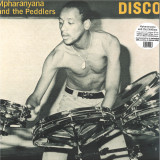
Kalita are proud to announce the first ever official re-release of Mpharanyana & The Peddler's 1979 South African disco and funk recordings 'Disco' and 'Freak Out With Botsotso', backed by a devastating extended edit of 'Disco' courtesy of Amsterdam-based DJ and producer Jamie 3:26. Cut on a loud 12" single and accompanied by an extended edit of 'Disco' courtesy of Jamie 3:26, this truly is another no-brainer from the Kalita camp.
Born on 15th November 1949 in Kattlehong, South Africa, Jacob ‘Mpharanyana’ Radebe was one of South Africa’s greatest ever musicians, releasing a canon of legendary soul, jazz and disco albums before his untimely death in August 1979 at the age of just twenty-nine.
Here, Kalita select his highly sought-after disco and funk recordings ‘Disco’ and ‘Freak Out With Botsotso’, both selected from his 1979 invisible final album, ‘Hela Ngwanana’, re-releasing them for the first time in forty years. Including Paul Simon and Herbie Hancock session musician Bakithi Kumalo on bass and Themba Mokena of Dick Khoza ‘Chapita’ fame on lead guitar, the recordings feature some of the country’s top contemporary musicians joining forces to glorious effect.
With the original album currently fetching eye-watering prices on the rare occasion that they turn up for sale, the time is now ripe to share this masterpiece with the world once more.
out of Stock
Last delivered 6 months ago available to reorder, subject to availability
RNXRX returns to VEYL for his debut album, 'Impreciso'. No stranger to the label, the artist first made an appearance on 'Previously Undisclosed Rituals' and then again with 'Sigil', a collection of B-sides which act as the perfect prelude to this offering.
Derived from an alchemy of inspiration, the album is the result of endless nights unearthing samples, vinyl oddities, effects databases from a bygone era and the artist’s own post-processed vocals - imprecise components which all combine perfectly to form this LP.
Unconstrained by genre, 'Impreciso' journeys through strains of body music, psychedelic rock, soundtrack and more, delivering electronic experimentations which expose the artist’s darkest tendencies while
revealing a long admiration of post-punk, hip hop and science fiction’s finest.
Twelve tracks falling somewhere between homage and reinvention, 'Impreciso' operates with 80’s circuitry, throws back to 90’s beat nostalgia and drills into a cyber-verse for a familiar yet unexpected trip perfect for this moment.
out of Stock
Last delivered 5 years ago available to reorder, subject to availability
Domino are immensely proud to announce the signing of my bloody
valentine, with new physical editions of the band’s seminal catalogue
being made available. ‘Isn’t Anything’ and ‘loveless’ have been
mastered fully analogue for deluxe LPs and also mastered from new
hi-res uncompressed digital sources for standard LPs, with each
being made available widely for the first time ever. Fully analogue
cuts of ‘m b v’ will also be available on deluxe and standard LPs
globally for the first time.
my bloody valentine, the quartet of Bilinda Butcher, Kevin Shields,
Deb Googe and Colm Ó Cíosóig, are widely revered as one of the
most ground-breaking and influential groups of the past forty years.
During an era in which guitar bands denoted, at best, a retroclassicism, not only did my bloody valentine sound unlike any of their
contemporaries, the band achieved the rare feat of sounding like the
future.
With their debut album, ‘Isn’t Anything’ (originally released in 1988),
my bloody valentine revolutionised alternative music and heralded a
new approach to guitar music for generations to come. The album
birthed a sound which became a template for thousands of new
subgenres, heralding a new approach to guitar music and studio
production. Not only was it a new type of music, it paved the way for a
new type of journalism; inciting comparisons to elemental
phenomenon, tapping into how the music affected the psyche.
Shields and Butcher frequently sang in a similar vocal range that
allowed their voices to blend together. This had the effect of making
their gender indistinguishable, to the point where their voices could
be used as another melodic layer to complement the vertigo-inducing
sounds made by Shields’ guitars. It is a record characterised by the
ominous sense of space that inhabits many of its songs, which
veered between the harried and propulsive, to the subdued and eerie.
In 1970 Barney Wilen assembled a team of filmmakers, technicians and musicians to travel to Africa for the purpose of recordi ng the music of the native pygmy tribes. Upon returning to Paris two years later, he created Moshi, a dark, eccentric effort fusing avantjazz sensibilities with African rhythms, ambient sound effects and melodies rootedin American blues traditions. Cut withFrench and African players including guitarist Pierre Chaze, pianist Michel Graillier and percussionist Didier Leon , this is music with few precedents or followers, spanning from extraterrestrial dissonance to earthbound, streetlegal funk. Wilen pays little heed to conventional structure, assembling tracks like "Afrika Freak Out" and "Zombizar" from spare parts of inde terminate origins. (Jason Ankeny, AMG)
Revelatory reissue of Barney Wilen’s ambitious jazz-fusion journey, Moshi (1972), presenting the legendary French jazzman and Miles Davis-sideman’s wildly ambitious effort fusing recordings of Pygmy tribes with African rhythms and stellar avantjazz leanings, sounding little like anything before or since its release. (boomkat)
Super rare and long out of print, the ground-breaking 1972 album from saxophonist Barney Wilen receives a reissue treatment of the highest order. Complete with a 20-page booklet and a never before seen DVD chronicling Wilen’s trip to Africa, this one is sure to be a delight for fans old and new. The deepest spiritual jazz grooves meet field recordings from the Upper Volta and b eyond, whilst psych rock influences collide with hypnotic and shamanistic percussion work. Truly one of the most out -there jazz records we’ve stocked for a long time! (bleep)
Originally issued by the seminal imprint Saravah in 1972, and among the most uncategorizable and sought after artefacts of the French avant-garde, Barney Wilen’s Moshi is nothing short of a masterpiece - long holding a coveted spot in the hearts of adventurous listeners and record collectors alike. A wild unkept cultural collage. A series of sonic experiments. A spiritual, psychedelic pilgrimage into the unknown - darting from one continent to the next, each of its tangents building toward a more optimist world view through ordered sound. Its scope remains as difficult to understand today as it was when it was released. Now brought back into the light by Souffle Continu, this is a moment to be celebrated far and wide. (Soundohm)
Deluxe reissue with additional artwork & remastered audio. 20-page booklet including rare pictures, sheet music & original liner notes. Bonus DVD with exclusive artwork of Caroline de Bendern’s movie « à l’intention de Mlle Issoufou à Bilma » documenting this incredible african journey.
In 1970 Barney Wilen assembled a team of filmmakers, technicians and musicians to travel to Africa for the purpose of recordi ng the music of the native pygmy tribes. Upon returning to Paris two years later, he created Moshi, a dark, eccentric effort fusing avantjazz sensibilities with African rhythms, ambient sound effects and melodies rootedin American blues traditions. Cut withFrench and African players including guitarist Pierre Chaze, pianist Michel Graillier and percussionist Didier Leon , this is music with few precedents or followers, spanning from extraterrestrial dissonance to earthbound, streetlegal funk. Wilen pays little heed to conventional structure, assembling tracks like "Afrika Freak Out" and "Zombizar" from spare parts of inde terminate origins. (Jason Ankeny, AMG)
Revelatory reissue of Barney Wilen’s ambitious jazz-fusion journey, Moshi (1972), presenting the legendary French jazzman and Miles Davis-sideman’s wildly ambitious effort fusing recordings of Pygmy tribes with African rhythms and stellar avantjazz leanings, sounding little like anything before or since its release. (boomkat)
Super rare and long out of print, the ground-breaking 1972 album from saxophonist Barney Wilen receives a reissue treatment of the highest order. Complete with a 20-page booklet and a never before seen DVD chronicling Wilen’s trip to Africa, this one is sure to be a delight for fans old and new. The deepest spiritual jazz grooves meet field recordings from the Upper Volta and b eyond, whilst psych rock influences collide with hypnotic and shamanistic percussion work. Truly one of the most out -there jazz records we’ve stocked for a long time! (bleep)
Originally issued by the seminal imprint Saravah in 1972, and among the most uncategorizable and sought after artefacts of the French avant-garde, Barney Wilen’s Moshi is nothing short of a masterpiece - long holding a coveted spot in the hearts of adventurous listeners and record collectors alike. A wild unkept cultural collage. A series of sonic experiments. A spiritual, psychedelic pilgrimage into the unknown - darting from one continent to the next, each of its tangents building toward a more optimist world view through ordered sound. Its scope remains as difficult to understand today as it was when it was released. Now brought back into the light by Souffle Continu, this is a moment to be celebrated far and wide. (Soundohm)
Deluxe reissue with additional artwork & remastered audio. 20-page booklet including rare pictures, sheet music & original liner notes. Bonus DVD with exclusive artwork of Caroline de Bendern’s movie « à l’intention de Mlle Issoufou à Bilma » documenting this incredible african journey.
“Behind The Mask” was originally to be the second Incognito album. Still floating on the high of the success of their debut album “Jazz Funk”, Jean-Paul ‘Bluey’ Maunick started work on new material recruiting friends and strangers from London’s buzzing music scene. Where “Jazz Funk” in 1981 had by name and nature been achieved from the influence of Jazz Funk and Soul music that we had been listening to in the 70’s, “Behind The Mask” from has a strong leaning towards the harder Fusion trend of that time. Innocence and earthy tones were replaced by a bright and bold flurry of cascading arpeggios and screaming solos. Brass arrangements that had been created by singing a man a line were now leaping out of reams of paper scored by the wizard that is Richard Niles. However, still present and leading the charge was the unmistakable, funky, pulsating and irresistible bass lines of the late Paul “Tubbs” Williams.
out of Stock
Last delivered 5 years ago available to reorder, subject to availability
A new title in the series of full-album reissues that Vampisoul (co-produced in collaboration with Little Butterfly Records) is releasing as a valuable addition to the largely acclaimed compilation “América Invertida”, focusing on the obscure leftfield pop and experimental folk scene from ‘80s Uruguay, making some of these elusive and essential albums available again.
Hugo Jasa aimed to merge the glamour of the 80s (drum machines and Yamaha DX7 and Roland D50 synthesizers command the timbre of the album) with Uruguayan Afro-candombe sound in his songs. A deep bench of national talent, as Eduardo Mateo, Hugo Fattoruso, Jorge Galemire or Mariana Ingold, took part in these sessions. The album was originally released in 1990 with a single pressing of 300 copies, and then recently rediscovered by new generation of DJs, musicians and hardcore record collectors around the world thanks to the internet, reaching a cult status and becoming a top want.
Hugo Jasa’s “Estados de ánimo” is reissued here for the first time, in its original artwork with an extra OBI and including an insert with liner notes by Uruguayan music writer Andrés Torrón.
out of Stock
Last delivered 2 years ago available to reorder, subject to availability
Domino are immensely proud to announce the signing of my bloody
valentine, with new physical editions of the band’s seminal catalogue
being made available. ‘Isn’t Anything’ and ‘loveless’ have been
mastered fully analogue for deluxe LPs and also mastered from new
hi-res uncompressed digital sources for standard LPs, with each
being made available widely for the first time ever. Fully analogue
cuts of ‘m b v’ will also be available on deluxe and standard LPs
globally for the first time.
my bloody valentine, the quartet of Bilinda Butcher, Kevin Shields,
Deb Googe and Colm Ó Cíosóig, are widely revered as one of the
most ground-breaking and influential groups of the past forty years.
During an era in which guitar bands denoted, at best, a retroclassicism, not only did my bloody valentine sound unlike any of their
contemporaries, the band achieved the rare feat of sounding like the
future.
The second my bloody valentine album, ‘loveless’, was released in
1991. Musically, it took an unexpected leap forwards, standing ahead
of anything released at the time. Shields and the band moved further
towards a music of pure sensation, creating textures and tones that
could be felt as much as heard; with ‘loveless’ the band created an
album that overwhelmed the senses. ‘loveless’ is widely considered a
flawless whole and rightly regarded as a masterpiece; a 1990s
equivalent to ‘Pet Sounds’, ‘In A Silent Way’ or ‘Innervisions’, a record
constructed by exploring the edges of what a recording studio is
capable of. It is a record best experienced as a whole, in one sitting -
a listening experience like no other and unmatchable in its sonic
brevity.
out of Stock
Last delivered 3 years ago available to reorder, subject to availability
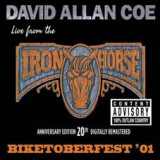
If there’s ever been a way to describe David Allan Coe, it’s got to be his ability to defy categorization. With over six decades of following his musical muse wherever it’s led, this craggy voiced outlaw has crossed the panorama of American roots music. As well as being a singer, guitarist, songwriter, David is also a magician and a ventriloquist, deep sea treasure hunter, and movie star. His movies included Stagecoach, The Last Days Of Frank and Jesse James, Lady Grey, Buckstone County Prison, Take This Job and Shove It, to mention a few. David signed with Sun Records in 1968 and recorded his first album Penitentiary Blues, all songs that David had written in prison. In 1973, Columbia Records bought David’s contract from Sun Records and he recorded his first Columbia album, titled “The Mysterious Rhinestone Cowboy”, several years before Glen Campbell had a hit with the song, “Rhinestone Cowboy.” Much has been written about David’s past and his lifestyle, but not much about his achievements over the years. From performing on Farm Aid to touring with Neil Young, Kid Rock and Willie Nelson. David’s song, “Take This Job and Shove It” has received multi-million airplays certificate from BMI. His “Greatest Hits” album is multi-platinum and his “First Ten Years” album is gold. David has had sixty three songs on the Billboard Singles Charts, including, “Mona Lisa Lost Her Smile”, “The Ride”, “Please Come To Boston”, “Willie, Waylon and Me”, “Jack Daniels If You Please” and “You Never Even Called Me By My Name” to name a few. David has written songs for Johnny Paycheck, Tanya Tucker, George Jones, Willie Nelson, Leon Russell, Charlie Louvin, Del Reeves, Tamy Wynette, Melba Montgomery, Stoney Edwards, The Oak Ridge Boys and Kid Rock. Both “Would You Lay With Me” and “Take This Job and Shove It” are multi- million seller songs penned by David. Johnny Cash has also recorded David’s songs including “Would You Lay With Me” on his chart topping album entitled, Cash. David has been through a lot in his life but has managed to put his past behind him and move forward with his life. This album was recorded in 2001 live from the Iron Horse Saloon in Daytona, Beach Florida and includes the only recorded version of, I’m An Ohio Boy.
Henry Cavill (Man of Steel) stars as Napoleon Solo opposite Armie Hammer (The Social Network) as Illya Kuryakin in director Guy Ritchie’s The Man From U.N.C.L.E., a fresh take on the hugely popular 1960s television series.
Ivor Novello-winning and multi-BAFTA nominated composer Daniel Pemberton (known for “The Awakening” and the Sundance Jury winning “Enemies Of The People”) created an exciting soundtrack with relaxing lounge instrumentals full of Jazz and Swing elements. Moreover, the soundtrack contains seven original classics like “Compared To What” by Roberta Flack and “Take Care Of Business” by Nina Simone. Pemberton has also scored countless Emmy, BAFTA, Grierson and RTS winning comedies, documentaries and lifestyle shows and worked with Oscar winning directors and editors.
The Man from U.N.C.L.E. also stars Alicia Vikander (“Anna Karenina”), Elisabeth Debicki (“The Great Gatsby”), with Jared Harris (“Sherlock Holmes: Game of Shadows”) and Hugh Grant as Waverly.
Wipers were a punk rock group formed in Portland, Oregon in 1977 formed by guitarist/songwriter Greg Sage. The group’s tight song structure and use of heavy distortion were hailed as very influential by many critics and musicians alike.
Land of the Lost is the band’s fourth studio album. It was very well received, with Maximum Rocknroll praising the title track for being “heavier and riffier” than the band had ever sounded before. Spin Alternative Record Guide called the album “the most definitive Wipers record for sound and songwriting”.
Land of the Lost remains a highly sought-after album, but now there’s a chance to get a hold of it again. It’s a limited edition of 1000 numbered copies on yellow coloured vinyl.
Never underestimate the power of a woman with her back to the wall. In March 2020, as Covid blew across the planet, the shutters came down on live venues and recording studios, and the music scene fell suddenly silent, Ghalia Volt faced the same dilemma as every other artist.
What now? The answer was One Woman Band. Having joined with the cream of the US roots scene for two acclaimed albums, 2017’s Let The Demons Out and 2019’s Mississppi Blend, Volt’s rebirth as a solo performer wasn’t a decision made lightly. But if an apprenticeship busking in her native Brussels taught Volt anything, it’s that she already had everything she needed to make magic.
“In March, I started playing on a real drum set,” she recalls.
“Playing a kick, snare and hi-hat plus a tambourine with my two feet, while playing slide/guitar and singing at the same time.” After road-testing the new format at shows across Mississippi, Volt realised that one was the magic number.
In August, she committed to the project, embarking on a month-long Amtrak train trip that became an intensive writing session, the shifting landscapes beyond the window inspiring her pen to scratch as never before. Tracked live in November at Memphis’s legendary Royal Sound Studios, One
Woman Band is Volt’s most lyrically honest and groove-driven material to date.
You can feel the turn of those train wheels in the addictive stomp of songs like
Reap What You Sow, while the rattle-and-shiver slide guitar of Espiritu Papago
evokes the scream of a locomotive whistle.
“Imagine John Lee Hooker on mushrooms, lost in the desert of Arizona, on a hot
summer day,” says Volt. “That’s the vibe of that song.” The Covid-19 pandemic
is an unprecedented chapter of human history, with no clear end in sight.
But Ghalia Volt has given us the soundtrack to better times ahead, and the
songs we’ll still be singing when we meet on the other side. This might be a
One Woman Band - but you’re always welcome to ride shotgun.
After getting a handful a couple of weeks back, we now have a good supply of this wonderful album coming in: in for 14th May release date.
With her ambidextrous and pedidextrous, multi-instrumental
techniques of her own making and influences ranging from video
games to West African griots subverting the predominantly
white male canon of fingerstyle guitar, Yasmin Williams is truly
a guitarist for the new century. So too is her stunning sophomore
release, Urban Driftwood, an album for and of these times.
Though the record is instrumental, its songs follow a narrative
arc of 2020, illustrating both a personal journey and a national
reckoning, through Williams’ evocative, lyrical compositions.
Williams, 24, began playing electric guitar in eighth grade,
after she beat the video game Guitar Hero 2 on expert level.
Initially inspired by Jimi Hendrix and other shredders she
was familiar with through the game, she quickly moved on to
acoustic guitar, finding that it allowed her to combine fingerstyle
techniques with the lap-tapping she had developed, as well as
perform as a solo artist. Deriving no lineage from “American
primitive” and rejecting the problematic connotations of the
term, Williams’ influences include the smooth jazz and R&B
she listened to growing up, Hendrix and Nirvana, go-go and
hip-hop. On Urban Driftwood, Williams references the music
of West African griots through the inclusion of kora and hand
drumming of 150th generation djeli Amadou Kouyate, on the
title track.
Yasmin Williams is virtuosic in her mastery of the guitar and
in the techniques of her own invention, but her playing never
sacrifices lyricism, melody, and rhythm for pure demonstration
of skill. Storytelling through sound is important to her too. As
detailed in the liner notes, the songs on Urban Driftwood were
completed during the COVID-19 pandemic and subsequent
lockdown, in the midst of a national uprising of Black Lives
Matter protests in response to the killings of George Floyd and
Breonna Taylor. But while Urban Driftwood illustrates current
struggle, can’t help but open-heartedly offer a timeless solace.
Every Dunbarrow album has a hauntingly classic sound of, in the band’s own
words, “an eerie rawness.” But their third album feels like you’ve discovered a
mysterious half-century old recording tucked away in a decrepit abandoned
mansion. Perhaps there’s a note attached, begging its courier to beware. Alas,
whoever possessed the tape apparently never survived. ...that is to say, it feels like there’s a solemn
story to this album, not just in the
lyrics, but in the sound itself. Much like
the eponymous debut of Black Sabbath,
the band uses subtle sound effects to
dramatically set the scene for its mostly
clean tones and masterful use of open
space for which the band has become
known. But unlike their first two albums,
this one does see the band branching
out just a bit into heavier, more distorted
guitars. The result is a much more
in-your-face sound, while retaining the
Haugesund, Norway quintet’s masterful
proto-metal sound.
The album opens with the sound of falling
rain as Lønning and Eirik Øvregård’s
guitars seep into the speakers like
funereal bells and haunted drones on
“Death That Never Dies.” Drummer Pål
Gunnar Dale slams down three snare
beats as bassist Sondre Berge Engedal
slinks in harmony over it all. Andersen’s
crisp vocals paint a bleak picture of
dark perdition until the band slips into
a swaggering piano-led coda reminiscent
of “Sabbra Cadabra.” The 7-minute
psychedelic folk masterpiece “Turn In
Your Grave” is the album centerpiece,
replete with mournfully shimmering
Mellotron and bleak folkloric lyrics. Its
hypnotically spinning guitar notes and
old European parlando-rubato singing
hearken to dark early Steeleye Span with
a sinister edge. “In My Heart” perfectly
showcases the band’s penchant for folk
based, yet head-banging riffs that break
with tradition that has stilted modern
heavy music.
“I think with this record, we have managed
to create our own unique sound
with its own Dunbarrow tag,” says the
band. With that sound comes the perfect
artwork: A cover illustration from the
early 1900’s by artist Harry Clarke from
his work for Edgar Allen Poe’s Tales of
Mystery and Imagination.
Deep spiritual jazz recorded in Germany, performed by Jamaican born saxophone player Fitz Gore and his international group The Talismen, featuring a.o. bassist Gérard Ebbo from Morocco and drummer Philippe Zobda-Quitman from Martinique. This is the first reissue of their second album, released in 1976 by the small private label GorBra from Bonn, including "Delilah" and "Requiem For Julian Cannonball Adderley". The rare LP comes in a newly mastered version with original cover design and sleeve notes. Fitz Gore's music is full of tremendous tension and movement between deep seriousness, inwardness and humility; it affects your life, it liberates and heals.
Original sleeve notes from 1976:
"Soundmagnificat" is the successor to "Soundnitia" (GorBra Records F 665 532), the first release from the Talismen, an international group with Jamaican Tenor saxophonist Fitz Gore (born1935) as founder, spiritual and musical leader, main soloist. "Soundnitia" contained concert performances of June, 1975, including compositions by John Coltrane, Horace Silver and one by Gérard "Prof. Dr. Splüm" Ebbo, bassist of the Talismen.
This second offering from the Talismen is more varied. It has four tracks recorded at four different occasions. It presents Fitz Gore as a singer, a composer, as well as, a tenor saxophonist. The opener, Requiem for Julian "Cannonball" Adderley, is a moving tribute to a great American artist, the late alto saxophonist "Cannonball" Adderley. On this track, Hungarian drummer Janos Sudy is heard with the Talismen, for the first time. The playing by the quartet on this slow lament very adequately illustrates the mood of the composition
For the next piece, a concert performance, Gore selected a gem from the American Negro Song Tradition and he displays a mighty, masculine and soulful voice in Steal Away. An example of a modern artist using an old traditional to express his own inner feelings. Delilah is taken from another concert performance, the same concert as the music on "Soundnitia". It has extensive playing by Gore, a bass solo by Gérard Ebbo, leading into some exciting conga playing by Lamont Hampton.
The final track, A Sinner Kissed An Angel, was recorded by another tenor player, Wardell Gray, in 1950, but this version is all Gore's. After the piano introduction, Gore delivers the melody with authority and with an expressive use especially of the high register of his instrument. In his improvisation, Gore's playing becomes more dissonant. Some of his playing here causes me to think of the way the late Albert Ayler sounded on his first recordings done in Sweden, in the beginning of the 60s. No drums here, but nice accompaniment and solo work of Jochen Paul on vibes.
I met Fitz Gore in Copenhagen in the fall of 1975. We were both listening to the trumpet playing of Harry "Sweets" Edison at the now defunct Café Montmartre. Prior to that time, I did not know Gore and his music, but listening to his playing on this album and the earlier one, has once more widened my musical horizon. His music has struck some chords within me. "Music is communication", John Coltrane once said. I feel sure that as you listen to the music of Fitz Gore and his Talismen, you will get the message.
In these notes, I have mentioned a couple of jazz artists and another one ought to be named primarily, because he has meant a lot to Gore: Sonny Rollins. The two met in Paris in 1966. Gore says of Rollins: "He openend my eyes ...big man … phenomenon … my man". As Sonny Rollins's artistry, the music of Fitz Gore holds many aspects, some being aggressive and even hysterical, others being those of beauty and peace. As life itself … (Roland Baggenaes, June 1976)
The music of Fitz Gore, rooted in the blues, is full of tremendous tension and movement between deep seriousness, inwardness, humility and humor, hardness and tenderness; it affects your life, it liberates and heals - a hopeful, a truly groundbreaking, a timeless, a new music - Newsic!
(Gisela Braasch, 1976)
In memory of Fitz Gore.
Mastered 2020 by Roskow Kretschmann at Audiomoto,
kindly supported by Tom Sky. Vinyl cut at SST.
Producer for reissue: Ekkehart Fleischhammer,
reproduction of original cover design by Gisela Gore:
Patrick Haase aka rab.bit.
out of Stock
Last delivered 5 years ago available to reorder, subject to availability
AEGEAN is the first offering by Argentine producer and Leipzig resident Accanto. His approach to mid tempo electronica is very rich in organic textures and deep atmospherics. The opening track Sentimental Sediments sounds deep, raw and dubby, a great opener for any set. Bokanovsky picks up the pace and brings in the sunshine uplifting vibes, while the title track Aegean completes the package with an exquisite progressive anthem that makes good use of a bass arpeggio to create a driving groove that will surely lift dancefloors to Cosmic dimentions. A must for Balearic lovers and adult ravers.
ACCANTO is Jorge Bonadeo Miguens, a young Argentine producer residing in Leipzig. Born in 1990 in the city of Buenos Aires, his relationship with music started at an early age while digging the cassettes of his older brothers. At the age of 13 he started playing bass guitar in a rock band with friends, with which he played
in several halls and bars, as well as recorded a studio album.
Around 2012 Jorge got into the electronic music scene of Buenos Aires. After years of traveling and getting immersed in the scenes of his city, Sydney and Europe, he settled in Barcelona and started producing, while also performing as DJ. Nowadays based in Germany, and after years of self knowledge and learning, he felt ready to share his music with the world.
out of Stock
Last delivered 5 years ago available to reorder, subject to availability
Be With is delighted to present Jorge López Ruiz’s El Grito (Suite Para Orquesta De Jazz), eternal Argentinian magic released on CBS in 1967 that must be one of the most sought-after South American jazz LPs.
Living in Buenos Aires in the 60s, driven by creative impulse and rage Jorge López Ruiz used music as his platform to protest the Argentine military dictatorship: “I could never stand dictatorships, to be told how you have to think, what you have to do. Nor did I endure discrimination”.
A young López Ruiz had appeared on a television panel alongside writer, politician and philosopher Arturo Jauretche, criticising the Onganía dictatorship. Jauretche told López Ruiz “Now say it with music”. This was the deep inhale that lead to El Grito, literally “The Scream”. As López Ruiz later explained “Jauretche urged me that my protests should not remain in words and acquire the consistency of a work… but it was not so much what he told me but how he told me, what prompted me to make the work take shape, first in a live concert and then in a recording”.
As the police and military began resorting to kidnapping, torture and summary executions to quiet dissent, with depressing inevitability the artist community and their work were a particular target of the increasingly brutal regime. El Grito was banned not long after it was released and the majority of original copies were unceremoniously destroyed.
The work of a genius artist living under an opressive dictatorship, erased by the government of the time, this is buried treasure in every sense and it’s been a rare record for over 50 years. But it isn’t just being hard to find that has pushed up the prices of those few original copies that survived, this is a foundational record in the development of jazz in South America.
El Grito (Suite Para Orquesta De Jazz) is a showcase for Jorge López Ruiz’s skills as a composer and arranger as he leads a virtuoso orchestra of the likes of Mario Cosentino (alto sax), Baby López Furst (piano), Pichi Mazzei (drums), Gustavo Bergalli (trumpet), Oscar López Ruiz (guitar), Arturo Schneider (flute) and Jorge López Ruiz himself plays double bass on the fourth and fifth movements.
As the album’s sub-title explains, The album is a Jazz orchestra concept suite. Five movements, to be heard as a whole, that end where they begin.
“When I wrote it there was no history of a cyclical work in jazz. But I didn't notice that, I needed to express something and I did it. At that time they told me I was crazy, that such a thing was very difficult to do. But hey, I like challenges”.
Yet this is not challenging jazz. There are certainly avant garde, free jazz flourishes, but the hard bop characteristics make this a very accessible album: easy to listen to without being easy listening. López Ruiz’s love of film brings a definite cinematic feel.
The title movement opens the album in bombastic style. “El Grito” grabs you by the lapels and refuses to let go. Raw then controlled, it’s by turns stabbing then soothing, with rage weaved in and out of the elegant styles. “M.A.B. = Amor” is our favourite here. With a tense introduction and a patient build, a gentle sax sweeps in to lift everything up to meet the serene piano and soft drums. Elegantly paced, it moves back and forth between deep contemplation and a more urgent call and response between strings and horns. A near-eight-minute, slow motion marvel.
The second side eases in with the beautifully-titled “Hasta El Cielo, Sin Nubes, Con Todas Las Estrellas” (“Up To The Sky, No Clouds, With All The Stars”) a relatively brief mid-tempo piece featuring López Ruiz’s insistent bass notes high in the mix, and again blending the sublime with the emotive with its wild horns and tight rhythm section.
It’s followed by “Tendré El Mundo” (“I Will Have The World”) which also leads with hypnotic bass, but this time swifter, driven by crashing drums, rapid horn conversations and effortlessly cool piano flourishes. Rounding out the suite, “De Nuevo El Grito” (something like “The Next Scream” or “The Scream Renewed”) is a stylish closer. Whilst López Ruiz’s bass shifts the track along, the horns and piano are more restrained, yet no less stunning.
This Be With edition of El Grito sounds sensational, if we do say so ourselves. Working with audio from the original analogue tapes, the vinyl mastering chops of Simon Francis are on full show here in what he considers to be some of his best ever work for Be With. Pete Norman’s cutting skills have made sure nothing is lost. The tortured artwork has been restored here at Be With HQ as the finishing touch to helping this revered work find a rightful place in every protest art collection.
out of Stock
Last delivered 5 years ago available to reorder, subject to availability
Originally released as a 12” single in 1982, ‘Every Brother Ain’t A Brother’ was the final record from Brooklyn multi-instrumentalist and producer Freddie Thompson’s Panaché band. Built around a fully cleared sampled bassline from ‘The Message’ by Grandmaster Flash & The Furious Five, ‘Every Brother Ain’t A Brother’ plays out like a summertime stroll through New York in the early 80s. The streets are full of excitement, but as the lyrics, written by vocalist Denise Williams (not to be confused with Deniece Williams of ‘Let’s Hear It For The Boy’ fame) make it clear, they’re dangerous as well.
Thirty-nine years later, Isle of Jura is proud to present the first official 12” reissue of ‘Every Brother Ain’t A Brother’. A cult classic from the disco-rap era, the reissue includes the original vocal and instrumental versions of ‘Every Brother Ain’t A Brother’ plus a Jura Soundsystem special version with additional live percussion.
Originally made up of Freddie, his wife, the singer Debra Thompson and keyboardist Douglas Glover, Panaché formed at the behest of a local disco DJ, Carl Nelson. In the wake of Chic’s early singles, Carl felt a French name would give Freddie a competitive edge. “He explained it to us that it was a French word for style and elegance. Panaché, a step above chic,” Freddie reflects.
Business minded, Freddie formed his own label, Roché Records and joined SIRMA - The Small Independent Music Manufacturers Association. “It was very hard for the independent manufacturers to get airplay and distribution at the time, so we all came together,” he remembers. Through SIRMA, Freddie met Joe and Sylvia Robinson from Sugar Hill Records, who several years later, let him sample ‘The Message’ for ‘Every Brother Ain’t A Brother’.
In 1979, Panaché scored some radioplay when they covered ‘Not On The Outside’ by ‘60s D.C R&B group The Moments. Emboldened, they brought onboard backing vocalists and recorded their only album. This Is Panache saw the band blurring the boundaries between soul, jazz-funk and disco and become a sought after collectible.
By 1982, Debra had stepped back, and one of Panaché’s backing singers was center stage, Denise Williams. “Denise was good with writing poetry,” says Freddie. "She had one called ‘Every Brother Ain’t A Brother’. It was about the unrest that was going on in the city at the time. I thought I could do something with that.”
After releasing ‘Every Brother Ain’t A Brother’ in 1982, Panaché quietly moved from center stage to behind the scenes. Over the last thirty-nine years, Freddie has continued to work in the music industry as a session musician and producer. “As soon as we stopped trying to become stars as Panaché, we became busy working in the industry,” Freddie laughs.
out of Stock
Last delivered 4 years ago available to reorder, subject to availability
Having already explored the archives of a number of overlooked Greek composers, Into The Light is now turning its attention to the uncharted territory of Greek film soundtracks of the 70s and 80s - a boom period for mystical, transcendental arthouse cinema in Greece.
GOST: A Spiritual Exploration into Greek Soundtracks (1975-1989) is a passion project from the Greek filmmaker and composer Yannis Veslemes, that took years of engagement, exhaustive research and persistence. The collection features a mixture of rare, hard-to-find and previously unreleased material from musicians and composers including Yannis Kostidakis, Thesia, Dimitris Papadimitriou, Michalis Christodoulides, Stamatis Spanoudakis, Haris Xanthoudakis, Vangelis Katsoulis and Charlotte Van Gelder . All material is accompanied by detailed linear notes from the curator Veslemes, explaining the stories behind the tracks and the movies they first featured on.
The compilation celebrates the inventiveness and experimentation of Greek soundtrack composers in the ‘70s and ‘80s, by presenting a surprising mixture of musical hybrids that bridge the worlds of electronic and acoustic music, and compositions that bring together Western and Eastern musical traditions, in uniquely idiosyncratic ways.
out of Stock
Last delivered 5 years ago available to reorder, subject to availability
Canadian bassist/vocalist Neil Merryweather relocated to Los Angeles in the late 1960s and hooked up with the singer, actress and future Penthouse pet, Lynn Carey. They would find greater fame upon forming the band Mama Lion in 1972, but Vacuum Cleaner captures th prototype of the group on this collaboration cut the year before, after RCA signed them as a duo. Merryweather’s bass is a solid anchor and his harmony and musical arrangements help keep everything in place; Canadian keyboardist JJ Velker adds atmosphere, but it is Carey’ powerful voice that really drives this hard rockin’ beast, gleaning comparisons with Janis Joplin. Merryweather & Carey notably appeared in Russ Meyer’s The Seven Minutes too.
Orange and black. Fire and ebony. Fury and pride. Wearing its signature colors proudly and raising its exclamation point high, Impulse! Records was the go-to label for music that harnessed the searching and political stand-taking of the Sixties. Launched in 1961, Impulse grew to become an inherent part of the era’s velocity as well as its volume, pulling jazz into the age of Black Power, Afrocentricity, and Spiritual Expansion. In its balance of tradition and transition, it bridged the golden age of jazz, that brief window from the late Fifties to the Seventies when players representing every jazz era were alive and active—from Louis Armstrong to Albert Ayler, from the legends of lore to a new generation of energy players. Impulse treated all its musicians as innovators, revolutionaries even—from swing and bebop, to free and Afrofuturist. The performances on Impulse Records: Music, Message and the Moment draw their staying power from a wide embrace of styles and sounds, as well as a tight focus on a historic moment when the promise of change was in the air and the message of racial harmony was in the music. Today that music has lost none of its relevance: the promise still deferred, the message still on time.
Osaka-born and New York-based pianist Erika Dohi is a multi-faceted
artist with an eclectic musical background. From highly polished
raditional classical to bold improvisation, she is a dynamic performer
whose timeless style and unidiomatic technique sets her apart in
contemporary NYC avant-garde circles.
Dohi’s vast repertory is impressive but what makes her truly such a
barrier-defying artist is what lies ahead. ‘I, Castorpollux’, Dohi’s debut
solo album, is a profound personal excavation set to a gripping
andscape of wild, genre-fluid composition, a virtuosic but emotionally
generous convergence of the technical and the spiritual. With
understated piano and keyboards at its centre, ‘I, Castorpollux’ is
equal parts hazy nostalgia, science-fiction soundtrack and
electroacoustic experimentation.
The project features contributions from Channy Leaneagh (Polica),
Andy Akiho and Immanuel Wilkins, among others, and is produced by
William Brittelle.
The central theme to the album is the ‘split-self’ and variable
perceptions of time that Dohi has faced at formative moments in her
ife. She experienced the 1995 Kobe earthquake at age 7. Hiding
under a table during the worst of it, she later emerged to find the
world around her crumbled. In her immediate vicinity, a fixture of her
childhood remained standing. The Tower of the Sun, a type of three
aced time machine itself from Expo 70, designed by artist Taro
Okamoto, is a trail-marker on Erika’s journey, a stand-in sigil to
unlock the mysterious sounds of her work, with 70s synths and retro
sci-fi aesthetics permeating the album’s narratives.
Much of the album was written while living in Texas where the split
between her Asian self and the idea of being an American
necessitated a near mountain of self-discovery to reconcile how she
elt and who she was within the social backdrop of a strongly
conservative environment. It is no wonder that the character of the
Dioscuri, Castor and Pollux from Greek and Roman mythology
esonate so deeply with her, or Haruki Murakami’s Two Moons and
heir strange light.
From her contributions to various projects and her participation in the
Artist in Residency collaborations, Erika has become a staple of the
37d03d community.
AL presents the first musical collaboration between Hamburg based Asmus Tietchens and Japanese artist Miki Yui, operating out of Düsseldorf for almost 20 years now. Highly respected and hugely influential artist Asmus Tietchens first made his mark on the electronic music scene in the late 1970s, whereas Miki Yui debuted her sonic settings in1999.
Their first joint album NEUES BOOT envelops the listener with a poetic sound sensibility and a conceptual clarity which was processed and passed back and forth between their individual studios in Hamburg and Düsseldorf.
Asmus Tietchens: After Stefan Schneider suggested to release a Yui-Tietchens album on his TAL imprint Miki and I quickly developed some ideas towards our eventual collaboration. We agreed upon an ongoing mutual exchange of material. We have both been very familiar with each other's music for a long time and we found our individual approach towards sound design to be uniquely compatible. We do not use our electronic tools in order to merely achieve the maximum of technical possibilities, but to illustrate aesthetic necessities. This entails a deliberate reduction and refined perception of the sonic characteristics of the material. Only this approach enabled us to fully realise the complete spectrum of the sounds and noises we were working with in order to construct this New Boat. Each and everyone of my treatments is e x c l u s i v e l y based on a track supplied by Miki. I added no new sound sources. Naturally the spatial and temporal dimensions of the source material were thus altered. These transformations are exactly what makes our collaboration special and unique. Very early on we had agreed on New Boat as a working title and a guiding light . Of course in the beginning we had no idea where this New Boat might take us. Now we do know. After several months of ship-building the boat has now set sails for new sonic horizons. Ahoi!
Miki Yui: The title of the album as well as the individual tracks have been inspired by conversations with Asmus. When we had a chat after one of his concerts, he told me about Kōdō, the Art or the Way of the Scent. It is a 8th century Japanese incense ceremony. Very frequently the names of Japanese incense sticks are derived from natural themes, e.g. Bairin is the plum grove, the scent of the first blossom heralding the end of winter. This poetry, the ephemeral nature of the world reminded me of Kigo, words from a Haiku (a form of Japanese poetry), which reference a particular season or a natural phenomenon. So I chose the names of the individual pieces from Kigo as if The Boat was exploring nature whilst sailing through the seasons. Only in retrospect I realised that the titles combined create this poem:
Early spring a hazy view in the night (Oboro)
Plum groves (Bairin)
Over a Dayfly (Kagerou)
A Milkyway (Amanogawa)
Dawn (Akatsuki)
Art of fragrance (Kōdō)
On fragile thin ice (Usurai)
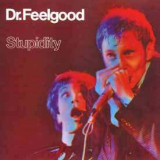
Black heavyweight vinyl pressing The third album / first live album from the British rock band, Dr. Feelgood.
Originally released in 1976, it was the first live album to ever hit number 1 on the UK charts in its first week.
Stupidity captures the relentless, hard-driving energy of Dr. Feelgood at their peak. Comprised of recordings taken from 1975 tours, the music is presented raw and without overdubs, making it clear that the dynamic friction between guitarist Wilko Johnson and vocalist Lee Brilleaux could propel the band toward greatness
21 Number Ones is celebrating it’s 15th Anniversary in 2021 and it will be available on vinyl for the first time! The album features 21 of GRAMMY Award-winning superstar Kenny Rogers’ number one hits including “The Gambler”, “Through The Years”, “Lady” and many more! Rogers sold over 120 million albums worldwide, making him one of the best-selling male artists of all-time according to the RIAA, with one Diamond album, 20 Platinum albums and 11 Gold. He recorded 24 No. 1 hits, 12 No. 1 albums and 25 Top 10 country albums. Miraculously, he charted a song within each of the last seven decades. His music has always crossed boundaries, with singles and albums finding frequent success on the Country, Top 40, and Adult Contemporary charts, and in a few instances, on the R&B and Christian charts.