Pavlov’s Dog, the 70’s AOR / Prog-rock band, was an odd crew. The band combined guitar, keyboards, percussion and bass with mellotrons, flutes, and violins. Pampered Menial was their first album, originally released on ABC Dunhill and re-released on Columbia in 1974. At the time the band was signed, they received a $600,000 advance from ABC which was a record advance for any new group signed at that time. The songs “Julia” and “Theme From Subway Sue” received the most airplay. Pampered Menial is a crossover albums of 70’s hard rock and progressive rock and is strongly recommended to fans of either of those genres.
Available as a limited 45th anniversary edition of 1000 individually numbered copies on transparent & black marbled vinyl.
• 180 GRAM AUDIOPHILE VINYL
• GATEFOLD SLEEVE WITH DELUXE LINEN LAMINATE
• LEGENDARY PROG-ROCK ALBUM FEATURING “JULIA” AND “SONG DANCE”
• LIMITED 45TH ANNIVERSARY EDITION OF 1000 INDIVIDUALLY NUMBERED COPIES ON TRANSPARENT & BLACK MARBLED VINYL
out of Stock
Last delivered 6 years ago available to reorder, subject to availability
LIMITED REMASTERED VINYL REPRESS WITH NEW COVER ART AND SLEEVE NOTES.
The mythology that has grown around The La’s has made them one of the most enigmatic bands of the last few decades. The story began in a hard hit Liverpool in 1984, when Mike Badger teamed up with local lad Lee Mavers to write and sing their way out of the rut the city was in.
Over the next two years they co-wrote material inspired by their love of 'roots' music such as: Bo Diddley, raw 1950s Rockabilly, Captain Beefheart and the punk bands they had both seen in local club Eric's a few years before. Early reviews called them ‘Surreal Rock ‘n’ Roll’ (Melody Maker) or 'Tom Waits could have dreamt up The La's 'Sweet 35' (NME)
These earliest La's recordings that now appear here on limited edition vinyl are raw & spirited, defining a unique, creative time in the band’s history and firmly point the way to future success.
'Had The La's been able to accommodate Badger and Mavers could world domination have been far away?'MOJO
out of Stock
Last delivered 6 years ago available to reorder, subject to availability
'Legend' is lofty praise that is often used lightly, however, Mike D from the Beastie Boys certainly is one in the truest of spirits. We are delighted after over 30 years of being involved in music to finally release a project involving such a hip-hop pioneer and icon as Mike. In keeping with the maverick attitude of the Beastie Boys, you don't always get what you expect. For this release there isn't a hip-hop beat, instrumental-funk or hardcore-punk joint in sight, rather an electronic-African club banger.
Mike took it upon himself to rework Malian artists Idrissa Soumaoro and L'Eclipse De L'I.J.A. and their track ’Nissodia', which is taken from the 'Le Tioko-Tioko' album originally released in 1978 on the German Democratic Republic (GDR) label ETERNA. The song was also featured on 'The Original Sound Of Mali' compilation released on Mr Bongo back in 2017.
It was November 2019 and the day before a Mr Bongo 30 years celebration event in Paris at the Pedro party in the 'New Morning' club, when out of the blue the remix landed in Dave Mr Bongo's inbox. We loved it straight away and decided to road test it the next night in the club. Whether it be a remix/re-edit/rework, it doesn't matter, what does matter is that it works spectacularly in the club and had people jumping on the stage to dance at the party. A sensational track and one which leaves a beautiful memory of good-times from a night out in Paris (and one which is in retrospect is even more poignant as the late-great maestro Tony Allen was in the club that night), and we are sure it will light up many more dancefloors to come.
out of Stock
Last delivered 4 years ago available to reorder, subject to availability
LSD (lysergic acid diethylamide), is a hallucinogenic chemical compound, first synthesized in 1938. Upon its introduction into popular culture in the 1960’s it quickly shifted not only the mind of the artist but also the person experiencing the art.
Hip-Hop artist Cambatta is known for his thought provoking and psychedelic-inspired rhyme techniques. His newest album entitled, “LSD”, is just as the title insinuates- mind-bending and consciousness-shifting. This album was created throughout four years of psychedelic usage and reality-based life changing events. This process has made the album a duality of both real and surreal interpretations.
The album’s title is also an acronym for “Lunar Solar Duality,” alluding to the album’s dichotomy of light and dark conceptualizations and countless other polarizing and multi-entendre-latent compositions. Whether you have ever experienced LSD or not, this album is sure to impact anyone receptive and perceptive enough to take a dose.
out of Stock
Last delivered 6 years ago available to reorder, subject to availability
Sangam comes to Forgot Imprint with a double cassette release.
The first release 'We Surrender in Grey' on the A side is all new material of dark, ambient dance music featuring Sangam's trademark synths recalling a lost void mixed with hard hitting kicks.
The second release 'Facing Reality, (You're not Here)' on the B side was released on Lost In The Rain of Our Tears and will now be available on cassette 9/19 in Edition of 25.
The prolific artist has released on labels such as Dream Catalogue, Lobster Theremin, Pure Life, and Doomtrip Records.
out of Stock
Last delivered 6 years ago available to reorder, subject to availability
Official Mr Bongo coloured vinyl re-issue for Record Store Day 2020
Asha's debut self-titled album is a wonderful fusion of jazz, soul, blues, and disco. It includes an outstanding cover version of J.J. Cale's ‘Right Down Here’; a track which Asha has made very much her own by flipping it into a deep-funk groove with sultry ethereal vocals and a drumbeat almost ready-made for samplers of the future.
The record was produced in the UK by Del Newman, who had worked with Carly Simon, Cat Stevens, and Elton John to name a few. It was released on London CBS records in 1973. Shortly after the release of the record, Asha (who was born in Mumbai), was banned by the Home Office from working in the UK for a period of time due to visa issues. These obstacles along with problems with her recording contract did not hold her back. Asha moved on and continued her musical journey elsewhere. This resulted in further astounding creative works that Mr Bongo will also be presenting soon.
For this special RSD special edition we have pressed on sky blue vinyl to bring out the colours of Asha's stunning dress that she wears for the cover portrait.
out of Stock
Last delivered 6 years ago available to reorder, subject to availability
It's been three years since the last vinyl by Ntogn was unveiled and now we're glad to share with you the result of his venture through the recent winter.
'Smedjan' is inspired by the dwarven craftsmanship of Norse mythology. It is made completely with organic sounds gathered from, and recorded in, the forests of Bålsta which is rich with northern heritage. Everything you hear is either processed textures of birch wood blocks, layers of a custom made Ukrainian artisan mouth harp or the artist's own voice.
There is no synthesis in this record. The kick drums are made by hitting these pieces of wood against each other with contact microphones. Bass layers are extracted from bark scraping against bark. Hi hats are crafted by recorded fire of the same wood logs burning and ambiance is built from the forests where the trees grew and from the woodshed where the artist chopped the wood during winter to keep his cabin warm. The rhythms and sounds in this shed is what inspired the making of this record.
By shaping these sounds of wood and metal Ntogn strives to create a sonic experience that connects the listener to the old Norse stories of the dwarven craftsmanship of Svartalfheim. It is they who made the famous trinkets and weapons that empower the gods of Asgård through stories of trickery and despair which has later inspired tales and literature for over a thousand years.
The record has been distilled from material that was meant to become a two-hour live set specifically made for Mo:dem festival which was unfortunately cancelled due to the corona pandemic. It was also the foundation of the artist's thesis at the university of sound design where he made a study of the effects of organic sound on an electronic expression such as techno music.
It will be released digitally and as a 200 copy limited edition black vinyl adorned with an artwork drawn by the artist's partner Gabriella Holmström using the ashes of the same birch wood blocks that was used to make the sonic content.
The record has received early support from Francois X, Takaaki Itoh, Abstract Division, BLNDR and Rambadu to name a few.
*:・゚✧*:・゚✧
Ntogn en'togg-n is a conceptual electro-acoustic project developed by Hypnus Records' founder and sound design graduate Michel Iseneld (b. 1988, Sweden). It aims to breath life into a fascination for magic with the use of contemporary and classic sound design techniques. This has resulted in what Resident Advisor's William Lynch describes as 'fierce, artistic techno that sounds like little else out there' and a discography ranging from earth-shattering techno to dark, throbbing ambient excursions.
After spending nearly three years in isolation, deeply lost in literature on history, philosophy, occultism and epic fairy-tales; Michel developed an inner world which eventually found an outlet through the means of music in 2013. By the use of field recordings and various samplings of his voice and surroundings, something peculiar sprouted as his inner images started to manifest and mature into an organic sound inspired by the emerging hypnotic deep techno scene.
Today, all music is released on his own imprint Tome in order to preserve the projects' artistic freedom and originality. After two years of sound design studies at the university and a new-found passion for modular synthesis; there's plenty of music in store aimed to satiate the curious minds.
out of Stock
Last delivered 4 years ago available to reorder, subject to availability
Mannequin Records is proud to celebrate 40th years of Nocturnal Emissions with more reissues setup for 2020.
"Tissue of Lies" is the Nocturnal Emissions first album, released on the band's own Sterile Records label as EMISS001 in 1980. "Tissue Of Lies"
shows you Nocturnal Emissions Industrial roots, from noisy collages to classic power noise, reminding the early Throbbing Gristle and Cabaret Voltaire, Faust ('Tapes' period) or Conrad Schitzler's 'Schwarz'.
The Nocturnal Emissions project, masterminded by Nigel Ayers, has been on the cutting edge of new music since the 1970s. Nigel Ayers has been described as a Guerrilla Sign Ontologist, cutting-up and pasting the contents of the human psyche. With a background in avant-garde art, his work has grown from audio visual installations through underground video works which changed the shape of British television.
In the early eighties Nocturnal Emissions hit London with a barrage of seminal funk; pioneering the use of sound samplers, multi-cultural
collage and electronic noise. They became a shape shifting chameleon lightening the darkness of post-industrial music, combining extremist performance art and video displays with apocalyptic beat music. Nocturnal Emissions have since been credited as a catalyst for a
generation or two of sound workers.
However, at the height of their success, the Emissions decided to shun the crass commercialism that had developed around them, and to develop their work as a secret alchemy. Nigel Ayers has continued to work with a strong underground of cult support, avoiding music industry fashions, and following his own creative path he concentrated on creating a strong sense of a wilderness identity through sound.
Limited edition of 600 copies, on solid white vinyl.
out of Stock
Last delivered 6 years ago available to reorder, subject to availability
"Lugar Alto's newest project is the idiosyncratic album MUMIA (portuguese for MUMMY). Never released before, it is a work that was originally recorded on cassette and combines elements of post-punk, industrial and ambient music.
Kodiak Bachine and Celso Alves formed the ephemeral and eponymous duo in 1988. The partnership resulted in a single recording derived from improvised sessions using minimal amounts of electronic equipment at Celso's country house, located in the interior of São Paulo.
Bachine was an important figure in the São Paulo underground. His most renowned project was the band Agentss from 1981, which also consisted of Miguel Barella, Eduardo Amarante, Elias Glik and Lyses Pupo (later replaced by Thomas Susemihl). In its brief duration, the band released only two seven inches that were considered seminal artifacts in the Brazilian post-punk scene: “Agentes / Angra” from 1982 and “Professor Digital / Cidade Industrial” from 1983. These two rare records are highly sought after by collectors and DJs from around the world for their inventiveness and originality.
Similar to Agentss, MUMIA brings with it extreme authenticity, managing to extrapolate the barriers of more traditional Brazilian music and interact with unorthodox elements. The lyrics are a mixture of Portuguese and English and it is still possible to identify picturesque fragments of Spanish, French and German. In addition, sonically, the record portrays aesthetics from the eighties and dialogues with themes relating to LSD. Another notable feature is the fixation on Egyptian post-mortem themes, providing a cinematic and lysergic experience of the desert landscapes from the African country.
It is a recording with comic passages which provokes an unpretentious reaction from the listener. However, it still has more ethereal and atmospheric moments, such as the opening song “Ave do Deserto”. In the final two tracks, it is possible to enjoy a darker MUMIA, which with “Massacre da Serra Elétrica I” and “Massacre da Serra Elétrica II”, provide a sound experience capable of accompanying intense scenes from the macabre productions by Tobe Hooper and George Romero.
The striking new artwork was created by the Sometimes Always studio, a partner of Lugar Alto and responsible for diverse graphic collaborations with artists, venues and parties in Brazil. The album, mastered by the prolific Arthur Joly, also has a booklet containing Kodiak’s texts in Portuguese and English, in addition to the lyrics, which serve as a logical exercise for further understanding of the album.
MUMIA was unearthed by the renowned Brazilian DJ Millos Kaiser, who in addition to kindly curating this album, put together the compilation “Onda de Amor: Synthesized Brazilian Hits That Never Were (1984-94)”, released by Soundway Records.
Now, after 32 years in its tomb, the MUMIA has risen and thanks to Lugar Alto it can finally be celebrated and appreciated."
out of Stock
Last delivered 5 years ago available to reorder, subject to availability
Mysterious and masked techno talent Paul Villard unveils more of his musical weaponry on the Lone Romantic label this August.
Nothing is known about this artist but from the fact that, “strange and unusual superhuman powers and abilities” came to him after a “gamma accident.” He has released on Blind Allies and Applied Research, remixed Carl Finlow and is a producer with a cinematic electro sound.
Futuristic opener 'Side Effects’ is a bumping electro cut with a stuttering drum pattern and squelchy synth funk from another planet. ‘Submarine Limousine’ keeps up the cyborg styles with a crisp electro groove that is run through by sci-fi vocals and effects, while ’Fluid Dynamics’ is all watery synth droplets and fractured vocals panning about the mix. Taught bass stabs keep you on your toes and make for an otherwordly robot disco vibe.
The second half of this well-crafted EP starts with the glowing pads and creepy atmospheres of
‘Bioluminescence’, a classic Drexcyian electro jam that charges hard and deep into the cosmos. ‘Neon Death’ is an explosion of coruscated synth lines and bumping bass, tripped out machine sounds and warped electro-techno before closer ‘C.A.R.R.I.O.N.’ zones you out with intense ambient pads and modulated synths that are restless and paranoid.
With this majestic EP, Paul Villard paints and vivid picture of some distant interplanetary world.
out of Stock
Last delivered 5 years ago available to reorder, subject to availability
Caiphus Semenya, AKA Mr Letta Mbulu, is a South African legend and Streams Today… Rivers Tomorrow, his second solo LP, is perfect. A ten out-of ten album if ever we heard one. It’s also incredibly rare, especially in good condition, so Be With is delighted to present this reissue.
Now a revered composer, musician, and arranger, Caiphus left apartheid South Africa in the 60s for self-imposed exile in Southern California together with his wife, Letta Mbulu. Settling in Los Angeles he started working with the likes of Hugh Masekela and Miriam Makeba and other exiled and semi-exiled South african artists, as well as, of course, his wife Letta.
Caiphus also found himself working with and composing for a broad range of jazz and pop artists, including Lou Rawls, Nina Simone and Cannonball Adderley. His facility with both jazz and African forms served him well. His LA stay also the beginning of an ongoing collaboration with Quincy Jones, the fruits of which can be tasted in Caiphus’s African compositions for the scores to Roots and Spielberg’s adaptation of The Color Purple.
Originally released in 1984, Streams Today… Rivers Tomorrow is not just a musical masterpiece, it is also the soundtrack to the life of many South Africans - both then and now. Fusing the US-heavy sounds of boogie, disco and funk with Afrobeat and traditional African elements, it’s truly a spectacular listen. Jabu Nkosi handles keyboards on the album, with synths by Caiphus and Craig Harris. Sipho Gumede is on bass and Condry Ziqubu is on guitars.
The Afro-Cuban grooves of “Mamase” open the record. Continuing where Listen To The Wind left off, this is another horn-heavy call-and-response ode to a positive life. Life as an invitation to party, to take part, to “get involved”. But only if you’re willing to let in the transcendent power of music. “There’s gonna be a Mardi Gras, there’s gonna be a carnival; there’s gonna be a jamboree, there’s gonna be a bacchanal”. Who can resist that? Vibrations everywhere.
It’s followed by the joy of “Aida”. Gleeful, dayglow keys and synths *just* on the right side of mid-80s sleaze are accompanied by a killer bassline, slick, skipping drums and proud horns. Infectious funk.
The tempo is taken down a few notches for the powerful “Nomalanga” and the lamentations of a heartbroken man who must leave his wife Nomalanga and their children to join the fight against apartheid. It’s an emotional song, no question, but it doesn’t bring you down. The uplifting music and optimistic vocal delivery from Caiphus and his backing singers in the second half offer hope.
Breezy drums and contemplative keys act as a backdrop for the stunning backing vocal harmonies in the intro of “Moshanyana”. This gives way to stuttering beats, a bassline to die for and Caiphus giving it his all, over guitars, marimba and synth strings. Another slo-mo winner.
Side two opens with “Dial Your Number”, an uptempo English-language boogie-funk workout, complete with mid-song cutaway to a random telephone call. Whether or not this propels the song into “key track” status, we’ll let you decide.
What’s not up for debate is the brilliance of “Matswale”. This was a hit in South Africa in the mid-80s and you can still hear why. It might just be our favourite Caiphus hit. Wow. This is some damn fine breezy, beautiful, emotional pop. The restrained playing, the guitar licks and the gentle keys are out of this world. The beats? Thundering, direct and slick. The singing? It’ll give you goosebumps. As for the sentiment? This is Caiphus singing to his in-laws about their daughter’s adultery, begging them to intervene and help him save his marriage. Not your typical pop single story-telling!
The ferocious “Ndi-Kulindile” closes the set with a nod to the coming sound of the States. The hard-edged, electro-influenced drum patterns and bouncing, elastic bassline are something of a departure from the album’s predominant sound, yet one wonderful constant, Caiphus’s exceptional delivery and his sparring with his backing vocalists, is satisfyingly present and warmly deployed.
With Simon Francis handling the mastering of this Be With edition, you know it sounds as fantastic as ever. The stunning sleeve has been restored, with its painting of a dream-like cosmic vista, as a lone figure takes in a scene that’s part distant planet, part urban sprawl. One listen and you’ll be transported.
Caiphus Semenya, AKA Mr Letta Mbulu, is a South African legend and Streams Today… Rivers Tomorrow, his second solo LP, is perfect. A ten out-of ten album if ever we heard one. It’s also incredibly rare, especially in good condition, so Be With is delighted to present this reissue.
Originally released in 1984, Streams Today… Rivers Tomorrow is not just a musical masterpiece, it is also the soundtrack to the life of many South Africans - both then and now. Fusing the US-heavy sounds of boogie, disco and funk with Afrobeat and traditional African elements, it’s truly a spectacular listen. Jabu Nkosi handles keyboards on the album, with synths by Caiphus and Craig Harris. Sipho Gumede is on bass and Condry Ziqubu is on guitars.
One listen and you’ll be transported.
out of Stock
Last delivered 53 days ago available to reorder, subject to availability
Caiphus Semenya, AKA Mr Letta Mbulu, is a South African legend, and Listen To The Wind, his iconic debut album, is simply a superb modern-soul/boogie album. It’s also incredibly rare, especially in good condition, so Be With is delighted to present this reissue.
Now a revered composer, musician, and arranger, Caiphus left apartheid South Africa in the 60s for self-imposed exile in Southern California together with his wife, Letta Mbulu. Settling in Los Angeles he started working with the likes of Hugh Masekela and Miriam Makeba and other exiled and semi-exiled South african artists, as well as, of course, his wife Letta.
Caiphus also found himself working with and composing for a broad range of jazz and pop artists, including Lou Rawls, Nina Simone and Cannonball Adderley. His facility with both jazz and African forms served him well. His LA stay was also the beginning of an ongoing collaboration with Quincy Jones, the fruits of which can be tasted in Caiphus’s African compositions for the scores to Roots and Spielberg’s adaptation of The Color Purple.
Given his decades of work behind the scenes, it’s no surprise that it took until 1982 for Caiphus to get around to putting out the first album of his own. But all that experience shows. Listen To The Wind is a deeply impressive synthesis of early 80s US production and instrumentation together with his traditional South African musical roots.
It’s stylistically diverse but the ingredients are never diluted. There are elements of boogie, soul, funk and jazz, all shot through with pan-African flavour, and moving effortlessly from uptempo floor fillers to more meditative, slower soulful tracks. Produced by Caiphus himself, he makes full use of a stellar line up of session musicians including Nathan East, Michael Stanton, Sonny Burke and Paulinho DaCosta. And of course, there are Letta’s show-stopping vocals. To our ears, Listen To The Wind is just one big party, and lord knows we need that more than ever right now.
Opener “Angelina” is one of Caiphus’s most beloved tracks at Be With HQ. It’s a breezy, feel-good SA boogie-funk classic. Harmonic and horn heavy, it sounds as fresh today as it would’ve done in the early 80s. If this one doesn’t make you move, you may need your pulse taking. The drum breakdown alone, a little over halfway through, is sensational.
It’s followed by the gentle reggae lilt of “Play With Fire”. A real melodic slo-mo delight, carried by the tropical vibes and, above all else, by the extraordinary performance of Caiphus himself and his backing singers.
Closing out side one, the spectacular “Umoya” is driven by triumphant horns and slick bass. With its proto-Graceland vibes, we reckon Paul Simon must’ve been listening. Hard. Caiphus trades verses with the unmistakable tones of Letta, and it sounds divine. Yes, it’s as good as anything on Letta’s canonical In The Music… The Village Never Ends. A wide-eyed wonder, made for unity and togetherness, it’s all infectious, smiling faces for nearly nine minutes. But never mind nine, we could party to this for ninety minutes and “Umoya” would leave us re-energised for ninety more.
Elegantly firing up side two is perhaps the album’s best known track. “Without You” is a heavenly slice of modern soul, an end-of-nighter to end them all. Smooth strutting, disco-fied funk with that unmistakably South African sound, it’s just sublime, with those lyrics that keep coming back to smiling faces and community, “without You the sun won’t shine”. Big with the likes of Rush Hour’s Antal, this is aural perfection.
“Ziph’inkomo” is a soul-soothing, swooning epic. Gently building throughout, its final few minutes are genuinely stirring as the backing vocals and instrumentation swell. Jaw-dropping. The irresistible groove of frantic, percussive workout “Gumba Boogie” closes out what must surely be one of the greatest artistic statements of the 1980s. If his friend Quincy wasn’t feverishly taking notes for Thriller, then you could’ve fooled us.
With Simon Francis handling the mastering of this Be With edition, you know it sounds as fantastic as ever. The cover art, as breezy as the music, has been faithfully restored. All that’s missing is you.
out of Stock
Last delivered 5 years ago available to reorder, subject to availability
In 1978, Roy Roberts produced and wrote a song for soul music legend Eddie Floyd; this melancholy storyliner has languished in the vaults for over forty years. IZIPHO SOUL are thrilled to release on a 45 and continue our Rock House Records/Westwood Music Group licensed collaboration.
Featuring on the A Side, Southern soul legends Barbara Carr and Roy Roberts duet on the supreme mid-pacer ‘It’s Only You’.
250 collectors’ copies pressed for the Real Soul Heads!
Please note ‘Guess It Wasn’t Meant To Be’ has been restored from the original tape to its best possible quality - unrepairable damage is evident in the final parts.
out of Stock
Last delivered 5 years ago available to reorder, subject to availability
The 80s owed everything to the punk revolution ... and betrayed it time and again.
ln 76-77, the incredible explosion of English-speaking bands focused the energies of a whole generation of Western youth - rebels ready to pick up a guitar and use it like a weapon. Yet more than punk music itself, it was the creative burst it triggered that radically shaped 80s pop and heralded an unending stream of inspired performers.
Although we often speak of the British and American golden age of post-punk from 78 to 84, with artists that included Talking Heads, Joy Division, PIL and Devo, France (together with Switzerland and Belgium) joined the movement too. Today, on a new album, the group Nouvelle Vague have paid tribute to this sumptuous "Frenchy" period clothed in the nihilism of punk, along with bitterness fuelled by the economic crisis and, paradoxically, the bewitching spirit of pop.
lts title, Couleurs sur Paris (Colours on Paris) is based on both a famous postcard collection and Oberkampf's 1981 punk anthem, and reflects the period, which oscillated between elation and despair. Written by artists sometimes known as "the modern young people" and including faux naïf electropop nursery rhymes by Elli & Jacno ("Anne cherchait l'amour", 1979), Lio ("Amoureux solitaires" , 1980)
and Etienne Daho ("Week-end à Rome", 1984), along with Lili Drop ("Sur ma mob", 1979) and Taxi Girl ("Je suis déjà parti", 1986), the songs clearly express the hopes and disappointments of the day.
The sense of melancholy suggested by the disenchanted lyrics of "Déréglée" - performed in 1977 by Marie-France, an icon of Paris nightlife - is even more noticeable on the 1981 hit by The Civils, who cynically sang, "Tonight, they're dying in Chad, but l'm buying my dream Walkman" before taking it to the chorus: "The economic crisis is fantastic, decadence is the right feel".
The punk shockwave con also be felt in the music of bands who radically shaped French culture and song. Like Rouen, with Les Dogs ("Sandy, Sandy", 1982), every provincial town and city in France began to produce bands at the end of the 70s and the start of the 80s. Wunderbach's 1983 punk pamphlet "Oublions l'Amérique" was a foretaste of what is now called alternative punk, a genre that won acclaim in 1988 with Mano Negra's "Mala Vida". Indochine, French pop legends for the last thirty years, also encouraged the trend in the summer of 1983 with "L'aventurier", after a first single brimming with the spirit of rebellion, "Dizzidence Politik".
Rita Mitsouko, the duo that emerged from the underground Parisian punk scene of the late 70s, rocketed to stardom in 1984 with "Marcia Baïla". Equally baroque, TC Matic - the first band fronted by Belgian singer Arno - released an ironic, political underground hit in 1983: "Putain, putain". Other artists fuelled a post-punk movement that explored the romanticism of machines and the darkness of new wave, including the cult, much-neglected duo from Nancy, Kas Product ("So Young but so Cold", 1982) and Switzerland's Stephan Eicher, whose "Two People ln A Room" (1985) followed on from "Eisbaer", a hit in a more underground style written with Grauzone in 1981. However, the genre's most influential practitioners were certainly Noir Désir. From their first single in 1987 ("Où veux-tu qu' je r'garde?"), they won mainstream success with their unique fusion of 80s gloom and power rock. Beyond from the meteoric success of Bordeaux's Gamine ("Voilà les anges", 1988) and the subversive spirit of Jad Wio ("Ophélie", 1989), French post-punk reached its climax with the success of Noir Désir, Rita Mitsouko, Stephan Eicher and Manu Chao, whose albums reigned supreme in the 90s French charts. From the underground scene to gold records: the eternal story of pop.
out of Stock
Last delivered 5 years ago available to reorder, subject to availability
Comet Records presents the Tony Allen & Africa 70 reissue series with the classic late seventies first four solo albums of Tony Allen remastered and restored: Jealousy, Progress, No Accomodation for Lagos & No Discrimination, all coming in an heavy Deluxe Tip-On Jacket.
Recorded with Afrika 70 at the height of their power as Fela Kuti’s band, these are seminal recordings in the pantheon of Afrobeat history. Once again, Comet Records has the opportunity to shine a light on the sheer musicality and originality of the humble drumming giant. Tony Allen’s passing in April 2020 sent a shockwave across the world, as fans and collaborators from Lagos to Brooklyn and everywhere in between mourned the loss of a generous and powerful being, the kind of being we thought would live forever. Thankfully, we have the gift of Tony’s timeless music, starting with these four special solo albums, through which his musical voice guides our dancing feet and full hearts forever.
Produced by Fela Kuti in 1975, Tony Allen’s first solo album with Afrika 70, Jealousy, is like the man himself: light on its feet yet deeply settled, spacious yet bursting with magical talent. On the title track “Jealousy,” Tony is joyously in his element, conducting one of the mightiest bands in the world - he is the head chef, and the band is cooking. The second track, “Hustler,” features one of the most iconic solos in drumming history, a rare glimpse into Tony’s gift of musical phrasing - it is possibly the best example of Tony’s ability to literally
speak through his beloved drumset.
Tony Allen possessed magic within him, which he spent his entire life sharing with us through his drumming hands, tapping feet and generous heart. That magic is ever-present and strong on these formative solo albums - they are must-haves for Afrobeat fans across the globe.
out of Stock
Last delivered 6 years ago available to reorder, subject to availability
FAR are excited to bring Chris Coco and DJ Rocca to the label for this release. Both artists need no introduction to Balearic /House and Disco aficionados, the pair have both notched up stunning solo musical releases.
Meeting at La Casella festival in Italy in the summer of 2019, the duo decided to team up in the studio resulting in the ''Discoteca'' EP, a shimmering slice of Balearic, Disco House containing all the right ingredients and forward motion required for maximum sunshine or nightime connection.
On A1 Discoteca (The Heavy Fun Dub Mix), they manage to create a heady cocktail of synth riffs, ARhodes and Guitars all underpinned by a solid bass line, nodding to the Jazz funk of Atmosphere with the edge of Dinosaur L recording in Italy circa 1982. AAntonio prosper turns up on vocals, whispering, and chanting, evoking imagery of a night out in the mid-summer heat somewhere in southern Europe.
out of Stock
Last delivered 5 years ago available to reorder, subject to availability
Walter ‘Junie’ Morrison released his third solo LP, Suzie Super Groupie, in 1976. A slick, smooth and soulful record, it’s a genre-melting tour de force with rich elements of proto-boogie, funk and jazz. In short, this is yet another essential album reissue from Be With.
The sublime “Suzie Thundertussy”, is a favourite of Harvey and Theo, and was brilliantly sampled by Madlib for Kanye West’s “No More Parties In LA”. The track opens with a sinuous synth and combines Junie’s storytelling abilities with an emphatic vocal style and funky arrangements. The powerful bass and sinister chords create an undeniable groove, and the explosive chorus is full of ambition and joy.
“If You Love Him” is a great, mid-tempo soul song. With a swinging jazz-infused middle-eight, it demonstrates Junie was much more than a mercurial funkateer. The laconic groove of “What Am I Gonna Do” recalls “Fresh”-era Sly Stone, whilst the frantic “Super Groupie” showcases his sharp imagination and sense of fun. The lyrics range from humorous to dirty, all fuelled by an infectious groove and tight horn arrangements.
The P-Funk of B-side opener “Surrender” bounces and sparkles, with a strutting Junie backed by great harmony vocals and joyous horns. “Suzie” is a sleek, softer affair albeit with a disco pulse; a beautiful combination of bright, funky horns, fluid basslines and vigorous rhythms. “Stone Face Joe” is another character song, this time one that chugs along on a sweet boogie rhythm.
The winner for us, however, is the closing piece. An extended funk-rock jam, “Spirit” has a heart-rending spoken-word intro and, as a nod to Jimi Hendrix, creates a live concert sound, complete with screaming crowd and fuzzy vocals.
Junie made his name as the lead singer and keyboardist of the Ohio Players. As the mastermind behind “Pain”, “Pleasure”, “Ecstasy”, and the oft-sampled “Funky Worm”, he was beloved by countless musicians, not least Prince. As co-writer of some of Funkadelic’s seminal works - “One Nation Under A Groove”, “(Not Just) Knee Deep” – his standing as one of the structural fathers of funk is undisputed.
In late 2016, Solange’s “A Seat At The Table” featured a track called “Junie”, a tribute to the freedom he created in music. His work continues to be as relavent and inspiring as it was when it was first recorded.
In February 2017, Junie died, aged just 62. With records as mighty as Suzie Super Groupie, his legacy will live forever and Be With is proud to be able to do our bit to make this LP accessible again on vinyl.
out of Stock
Last delivered 6 years ago available to reorder, subject to availability
JETZT GEHT’S AB ist das Debütalbum der HipHop Formation DIE FANTASTISCHEN VIER und wurde am 27.08.1991 veröffentlicht.
Im Dezember 1988 kehrten Smudo und Thomas D, die Teil der größtenteils auf Englisch rappenden Combo The Terminal Team waren, von einem gemeinsamen Aufenthalt in den USA zurück, wo sie auch einige Auftritte absolviert hatten. Während ihre englischsprachigen Texte weitgehend belächelt worden waren, hatten sie für die deutschsprachigen Raps Anerkennung erhalten. Nach ihrer Rückkehr schlugen sie DJ Hausmarke und And.Ypsilon, die ebenfalls Mitglieder des Terminal Teams waren, daher vor, dass sie fortan konsequent als deutschsprachige Band auftreten sollten, was auf Zustimmung stieß.
Smudo hierzu:
„Ab diesem Moment übersetzten wir alles. Wirklich alles. Wir sagten nicht mehr „scratchen“, sondern „Platten kratzen“. Unsere Musik hieß natürlich nicht mehr Rap, sondern Sprechgesang. Es war eine Mission. Es diente unserer Selbstfindung.“
Bereits 1990 hatten Die Fantastischen Vier mit dieser neuen Ausrichtung einen Ruf als gute Liveband erlangt. 1991 schließlich folgte der Plattenvertrag.
”Jetzt geht’s ab“ stellte in der deutschen Hip-Hop-Szene, die überwiegend anglophone Texte schrieb, ein Novum dar und schaffte es auf Platz 22 der deutschen Musikcharts.
out of Stock
Last delivered 3 years ago available to reorder, subject to availability
After the launch of his very own label LTF Records earlier in April, Franky Rizardo is presenting his second release ‘Polaris EP’, four tracks that capture the unique rollercoaster of emotions that the last few months have been:
“Polaris was made the day after the announcement of the lockdown measures in the Netherlands. The gravity of the situation started to settle in and for me it meant that my summer agenda had been cancelled. The feeling of trying to accept this fact and keeping my spirits up evolved into this track. Which is uplifting but hits the feels as well.”
Polaris reflects the melancholy over a lost summer, but channels POSITIVITY and determination to make the best out of the situation.
As one of the Netherlands finest house music exports Franky Rizardo has been making and playing music for most of his life. With the global Corona pandemic, he, as well as the industry as a whole, is looking towards an uncertain future when it comes to performances, clubbing and coming together on the dancefloor. However, Franky is keeping his spirits up and continues to focus on his own output and creativity through his newly founded label LTF Records.
In times of social distancing, he is connecting with his fans through live streams such as De Marktkantine, Verknipt and Straf_Werk, as well as at the first social distancing gigs (with COVID-19 safety rules) such as Thuishaven (Amsterdam) and Kiesgrube (Duisburg).
In tough and uncertain times like these, Polaris EP comes as a message of positivity and inspiration, to light up peoples’ days and remind them that regardless of the situation now, there’s a silver lining.
out of Stock
Last delivered 13 months ago available to reorder, subject to availability
Hypnoskull is part of the global anti-music conspiracy networkTM (since 1992). Hypnoskull was created in 1992 as a solo project in order to experiment in the area of electronic noise combined with rhythmical structures. In the first years of its existence, Hypnoskull was releasing cassettes and tracks on international labels in the so-called cassette network, a widely spread network of independent and experimental musicians and artists who expressed themselves throughout limited tape releases often including artworks, ideas, texts. In 1998, hypnoskull signed to the German label ant-zen and up to today he is still releasing his albums on this highly influential record label. That is not a coincidence: ant-zen stands for ‘anti-zensur’ (anti-censorship), one of the main starting points of the provocative hypnoskull project. Patrick Stevens does not limit himself to just producing music as such, albums always include a severe message, a thought-provoking underlying concept text, questions. The main philosophy: ‘the dance floors, the clubs, the festivals,… are staged warzones with a different set of rules – a therapeutic zone where hidden anger and even aggression of both the artists as well as the spectators can be released in a proper, human way. Music as a means to open up the deepest anger inside human beings, letting it out in a way which is not harmful to others. A strange symbiosis between the two worlds Patrick Stevens is a part of: the techno and the industrial scene. Techno being a genre promoting a peaceful yet hedonistic way of life, industrial on the other hand being a highly nihilistic, philosophic but pitch black reflection on society. The mix of both musical as well as content wise elements of these genres result in what hypnoskull is all about. Added to this an explosive mixture of post-war and contemporary western subversive philosophy – in a rather impulsive manner – makes the project what it is today, after 30 years of existence.
out of Stock
Last delivered 4 years ago available to reorder, subject to availability
In our latest chapter of Spiritual Jazz, we return to the source – the Impulse! label, and the monumental influence of its most prominent artist, John Coltrane.
Since the first release in the series back in 2008, we have mapped out the growth of the spiritual sound in jazz. Spiritually energised and politically conscious, the spiritual sound in jazz music is one of the most important currents in the music. Our series has charted the growth of the style from early experiments at Blue Note and Prestige to European excursions, exiled experimentalists, and sounds from across the globe. But whenever you think of spiritual jazz, it's a fair bet that the double exclamation mark and orange and black spine of Impulse quickly comes to mind. Home to John and Alice Coltrane, Pharaoh Sanders, Yusef Lateef, McCoy Tyner and countless other musical pioneers, Impulse! was the most important and forward-thinking jazz label of the 1960s. With the music-first attitude of an independent but the clout of a major, producers Creed Taylor and Bob Thiele made Impulse the defining imprint of a crucial decade. They hand picked the top players of the moment and gave them freedom to record the music they wanted, setting out their stall with a bold slogan – 'The New Wave Of Jazz Is On Impulse!'
Here we dive deep into the Impulse! catalogue, bringing celebrated masterpieces from Alice Coltrane and Pharaoh Sanders into the arena, together with lesser known cuts from Phil Woods and John Klemmer as well as straight-up classics such from Yusef Lateef and Elvin Jones. Fifty years on and the new wave of jazz still sounds fresh, vibrant and as relevant as ever.
out of Stock
Last delivered 5 years ago available to reorder, subject to availability
Reissue on vinyl of the third PJ Harvey studio album To Bring You My Love. Produced by PJ Harvey with Flood and John Parish, and originally released in February 1995, To Bring You My Love features the singles ‘Down By The Water’, ‘C’mon Billy’ and ‘Send His Love To Me’. The album – which celebrates its 25th Anniversary this year – received wide critical acclaim on release, with nominations for Grammy Awards and the Mercury Music Prize. Reissue is faithful to the original recording and package, cutting by Jason Mitchell at Loud Mastering under the guidance of longtime PJ Harvey collaborator John Parish.
out of Stock
Last delivered 6 years ago available to reorder, subject to availability
Reissue on vinyl of the third PJ Harvey studio album To Bring You My Love. Produced by PJ Harvey with Flood and John Parish, and originally released in February 1995, To Bring You My Love features the singles ‘Down By The Water’, ‘C’mon Billy’ and ‘Send His Love To Me’. The album – which celebrates its 25th Anniversary this year – received wide critical acclaim on release, with nominations for Grammy Awards and the Mercury Music Prize. Reissue is faithful to the original recording and package, cutting by Jason Mitchell at Loud Mastering under the guidance of longtime PJ Harvey collaborator John Parish.
out of Stock
Last delivered 6 years ago available to reorder, subject to availability
The Hammond organ was first manufactured in 1935. In 1954, the now famous Hammond B3 model was introduced with additional harmonic percussion feature. When the company went out of business in 1985, around two million of various models of the Hammond organ have been produced.
The Hammond B3 was originally marketed to churches as a lower-cost alternative to the wind-driven pipe organ. It quickly became popular with professional jazz musicians in organ trios. Jimmy Smith's use of the Hammond B3 inspired a generation of organ players, and its use became more widespread in the 1960s and 1970s in rhythm and blues, rock, reggae, and progressive rock.
This collection is centered on the exciting and dynamic sounds of the Hammond B3 organ!
out of Stock
Last delivered 6 years ago available to reorder, subject to availability
Faitiche presents a new album by Frank Bretschneider. abtasten_halten was made as part of the raster.labor installation first presented at CTM Festival in 2019. It is perhaps the most radical work in Bretschneider’s distinctive oeuvre: abtasten_halten is a self-generating composition for synthesizer modules whose sole sound source is the movement of two VU meter needles. The resulting percussive sounds coalesce into rhythmic combinations – all random, without repetition. The album resembles a meditation on infinite rhythmic variation. abtasten_halten is Frank Bretschneider’s first release on Faitiche.
One sound can give birth to thousands of tones through self-fertilization. Pierre Henry, 1982
Frank Bretschneider on abtasten_halten:
abtasten_halten (sample_hold) is a largely self-generating composition for a modular synthesizer system. Self-generating here means that as soon as a current flows, the various modules interact, but within limits set by the composer via the connections between the modules (patches): timing, tempo, timbres, dynamics. These conditions are kept variable to a certain extent or left to chance, so that the composition created is always similar but never the same. On the one hand, the use of random generators opens up possibilities that would not otherwise have been considered. On the other, it offers the fascination of the unfinished and the unique: totally unexpected musical events that you might hear only once.
abtasten_halten combines my preferences for percussive music in general and electronic music in particular. Largely avoiding repetitive structures, the piece is more like a free improvisation, quiet and diffuse, but also extremely dense, in ever-changing contrasts and transformations.
The tone generators are two modified VU meters whose needles, driven by trigger impulses, create a simple one-bar pattern by hitting against a metal spring that is connected to a piezo element (thanks to Gijs Gieskes / Gieskes.NL). The tempo is continuously varied over a period of about ten minutes by several mutually modulating LFOs, ranging from about 0.06 Hz up to the lower audio range of about 18Hz.
The percussive sounds thus obtained are then passed through low-pass filters with moderate resonance and random frequency modulation to additionally colour the sound. Further processing is then executed by an echo module whose tempo and repetitions are again determined by random parameters. Finally the audio signal is occasionally enriched with reverb to add more spaciousness to the sound.
The concept for the installation raster.labor was developed by Olaf Bender, Frank Bretschneider and David Letellier. Many thanks to raster - artistic platform.
On Frank Bretschneider:
Frank Bretschneider works as a musician, composer and video artist in Berlin, making mainly electronic work based on complex rhythmic structures and interlocking textures, whose many-layered sound is inspired by the experimental set-ups of modern physics, often supplemented by perfectly synchronized computer-generated visualizations. In 1986, he founded AG Geige, one of the most influential underground bands in East Germany. In 1996, he co-founded the label raster-noton and has since released many solo albums.
out of Stock
Last delivered 6 years ago available to reorder, subject to availability
Having previously brought together world-renowned Theremin soloist Carolina Eyck and electronic producer Eversines for a specially commissioned collaborative mini album, yeyeh founder Pieter Jansen has now conjured up another unlikely but inspired joint album, this time featuring award-winning free-jazz vocalist Greetje Bijma and leftfield house, techno and ambient producer Oceanic.
The project has its roots in a chance meeting between Jansen and Bijma, a legendary figure on the Dutch jazz scene who in 1990 became the first woman to win the country’s top jazz accolade, the VPRO/Boy Edgar award. Apart from having previously worked with the likes of Anna Homler (aka Breadwoman), Jasper van ’t Hof, Han Bennink, Louis Andriessen and Willem Breuker and her own solo projects, she’s in a league of her own.
Jansen is a big fan of Bijma’s 1996 heavily electronic collaboration with Jasper van’t Hof and Pierre Favre, Freezing Screens, and was with the friend who first introduced him to it when he bumped into Bijma.
Excited to meet someone who had made one of his favourite records, Jansen took the opportunity to ask Bijma if she would be interested in working with young electronic music producers. To Jansen’s delight, Bijma quickly agreed.
Weeks later, Bijma stepped into the studio with Oceanic, a rising star of the Dutch electronic underground whose releases as Oceanic for Nous’klaer Audio and BAKK Plafond revolve around mechanical rhythms, opaque ambient textures, minimalist melodic movements and effervescent electronics. The pair quickly connected on an emotional and musical level, with Bijma taking her cues from Oceanic’s electronic sounds and rhythms, and Oceanic drawing inspiration from Bijma’s dexterous, mind- bending and otherworldly vocalizations.
After two hugely productive days, the cross-generational duo had completed a couple of mesmerizing songs – breathlessly haunting album opener “Swallow a Party” and chilly ambient closer “A Window Drifting” – and recorded several hours or improvisations that Oceanic later edited, layered-up and re-modelled.
The results are little less than spellbinding. The range and versatility of Bijma’s vocalizations is breathtaking, while Oceanic’s music – which cleverly incorporates the free-jazz singer’s vocal notes, tones and proclamations – swings between becalmed beauty and breathless intensity.
Some of the set’s most striking moments are those where Oceanic re-contextualizes Bijma’s varied vocal sounds with the dancefloor in mind. On the pulsating “Technicolour Memories”, up-tempo “Step Snakes” and hypnotic “Never Done”, Bijma’s scat outbursts not only ride Oceanic’s rhythms, but also form part of the densely layered percussion tracks beneath.
Like the release’s more downtempo and ethereal moments, these hybrid organic- synthetic compositions defy easy categorization, offering a unique brand of alien electronic/acoustic musical fusion that lingers long in the memory.
out of Stock
Last delivered 6 years ago available to reorder, subject to availability
Widely and rightly regarded as one of the best ever soul and funk bands, the now legendary Average White Band tore-up the rule book and conquered the US, UK & International charts with a series of soul and disco hits between 1974 and 1980.
AWB’s repertoire has been a source of inspiration and influence for many R&B acts and they are one of the most sampled bands in history, remaining relevant today, continuing to reach new generations of younger audiences.
Snoop Dogg, Fatboy Slim, Ice Cube, Puff Daddy, TLC, Rick Ross, will.i.am and Mark Ronson amongst countless others, have all borrowed sections of their grooves.
Following a seven-year break, Average White Band returned in 2003, with their most recently released wholestudio album, ‘Living In Colour’, which includes two soul classics in ‘I’m Gonna Make You Love Me’ and Major Harris’ ‘Love Won’t Let Me Wait’.
The full album line-up comprised Alan Gorrie, Onnie McIntyre, Klyde Jones, Fred Vigdor and Brian Dunne, along with additional musicians Eliot Lewis ,Cliff Lyons, John Fumasoli, Tony Kadleck, Bill Harris, Carlos Gomez, Joe Najmy and Rob Aries.
Rare musical magic from the Bruton library catalogue – ambient, spacey, pastoral and electronic. Music by John Cameron, Alan Hawkshaw, Fran-cis Monkman, Brian Bennett and more – all total masters of the scene. All very cool. All very now. All will sell very fast.
Over the last three decades Jonny Trunk has collected and written about library music. But he’s never had a great deal of luck with the Bruton catalogue. By this he means that he’s never stumbled across a massive stash, or lucked-out buying a huge run for practically nothing –that’s the kind of thing that used to happen in the 1990s and the early noughties if you were out there looking hard for library music. But he did manage to get about 25 in one hit about 20 years ago when the BBC shut down their “TV Training Department” near Lime Grove and also when a box of Brutons ended up being dumped at a hospital radio, and they didn’t want the records, so Jonny got a call.
There are lots of Bruton albums in existence – over 330 LPs in the vinyl catalogue, issued between 1978 and 1985. That’s a lot of music to wade through if you are looking for sublime modern day sounds. For many years now the “trophies” from the Bruton catalogue have been the beat or action driven LPs – the two Drama Montage albums (BRJ2 and BRJ8) have always been the big hitters, and others such as High Adventure (BRK2) too.
But Jonny has always found himself drawn to the lime green LPs, the pastoral, peaceful albums (The BRDs), which were full of the kind of gentle, lovely music that would turn up in Take Hart as Tony was paint-ing a woodpecker or a badger or an Autumn tree. The other Brutons he likes are the orange ones (The BRIs) simply because they are full of ex-perimental futuristic electronics and would remind him of 1980s ITV backgrounds. This LP series includes Brian Bennett’s cosmic classic Fantasia (BRI 10). Jonny has been knows to refer to this style of library music as “Krypton Factor library”, because it’s exactly what that strange but successful 1980s TV quiz show sounded like.
In recent years as interest in library music has expanded, we’ve watched
the price of a handful of Brutons really going through the roof - not the just the action and drama ones, but the more esoteric and experimental LPs too – like the BRDs and the BRIs. Jonny gets the vibe that people fi-nally want to hear this other more interesting and experimental side of the Bruton catalogue. So what better time than now to put together a compilation of such sublime period sounds.
Not only does this album bring together a set of fabulous cues that would cost the average man in the street a month’s wages (if the origi-nals were all wanted and if you could even track them all down), but it also chops out the need to listen to other tracks on library albums that are nowhere near as good.
The cues here all date from between 1978 and 1984. They come from the BRD, BRI, BRH, BRJ, BRM, BRR and BRs catalogues.
The composers are all legends within the genre, and here, were doing what great library composers do best – fulfilling a brief and utilising modern studio equipment to both commercial and beguiling effect.
out of Stock
Last delivered 5 years ago available to reorder, subject to availability
Vox Populi!'s cult and highly sought after debut LP is finally reissued here after 30 years. Recorded after their first single - Ectoplasmies (1983) - between 1984 and 1985, the original band of Mitra and her (then) 14 year old brother Arash and Axel Kyrou, evolved from 2 early cassettes and the 7"s' rudimentary, idiosyncratic and improvisational structures to more cohesive edges. Living together, but with no formal music education, the nature of the disparate elements led to a sparseness of the recordings. Influenced by his mother, the concrete music pioneer, Mireille Kyrou and her work at GRM (State Institute for Musical Research), Axel challenged his creativity by utilising their Vox Man studio as an instrument. Building on minimal synth, rhythm box, hand percussion and Persian poetry, they experimented with tape manipulation - layering the music with forward, backward and echo simultaneously - creating a leap in the band's development. The dark nature Myscitismes was reflected in their increasing interest in industrial and ethnic music, with a great fascination for the religious traditional music of Tibet. Ceremonial, gothic, drone-folk, the progression is apparent; onward perceptions.
out of Stock
Last delivered 6 years ago available to reorder, subject to availability
1988: Six years after entering the music scene, and just a few months after the release of the teen, 80s earworm, “Bonne bonne humeur ce matin” by Tristan, the producer and arranger, Michel Bassignani, recorded “Tu me tues” in Belgium. Dissatisfied with the result, Michel went back to the drawing board at Waldbery Studios in Paris recording all instrumentals (except sax). After hearing his new work, Dominique, a high school pal, proposed to sing for Bassignani. Dominique's stage name became Maureen, and in addition to the single and extended versions, the duo recorded a “Dance mix”. We asked Jkriv to express is talent to produce a new version of this classic music track. Pardonnez-nous, but check it out!
out of Stock
Last delivered 4 years ago available to reorder, subject to availability
It was a busy 2019 for Asian Dub Foundation with the long-awaited reissue of their Mercury Prize-nominated 1998 classic Rafi’s Revenge. The reissue garnered ecstatic reviews, all of which agreed that the sound and the message that ADF threw down in 1998 is as relevant now as it was then-perhaps even more so. So it’s timely that in 2020 the band are set to release their 9th album “Access Denied” which finds them as uncompromising as ever. The album showcases ADF in full spectrum mode from the tough Jungle Punk sound of “Stealing The Future” and “Mind-lock” through to the orchestral meditation of “Realignment” and the reggae lament of the title track.
With guestspots from Greta Thunberg, incendiary Palestinian shamstep warriors 47 Soul, Chilean revolt’s rap main figure Ana Tijoux and radical UK comedian Stewart Lee, Asian Dub Foundation continue their sonic opposition to the powers that be and “Access Denied” kicks harder and higher than ever.
Asian Dub Foundation are a genre unto themselves. Their unique combination of tough jungle rhythms, dub bass lines and wild guitar overlaid by references to their South Asian roots and militant high-speed rap has established them as one of the best live bands in the world. During their long and productive career Asian Dub Foundation have shared the stage with the likes of Rage Against The Machine, the Beastie Boys and Primal Scream also collaborating on record with the likes of Radiohead, Sinead O’ Connor, Iggy Pop and Chuck D.
The story began in the early 90’s when ADF formed from a music workshop in East London at the institution which is their spiritual home, Community Music. Their unique beginnings in a music workshop in east London marked out both their sound and their wider educational aspirations, as showed by their early involvements with Roma Youth in Budapest, hooking up with the leg-endary Afro Reggae in the favelas of Rio, and setting up their own education organisation ADF Education (ADFED), not to mention their campaigns on behalf of those suffering miscarriages of justice. Building a solid live reputation in the mid-90’s, particularly in France, they eventually es-tablished themselves as an important worldwide force and particularly as an explosive alterna-tive to the backward-looking obsession with Britpop in the UK.
In addition to their blistering live reputation ADF were one of the first bands to experiment with the now more commonplace live film re-score, beginning with their rapturously-received interpre-tation of the French classic La Haine back in in 2001. They’ve continued to perform said project or nearly two decades, taking in David Bowie’s Meltdown at London’s South Bank and a contro-versial show at the Broadwater Farm Estate, scene of the events that led to the London Riots of 2011.They’ve also rescored George Lucas’ debut THX 1138 (with encouragement from Mr. Lu-cas himself) and they’ve recently revived their explosive live interpretation to the continually rele-vant Battle of Algiers at the Museum of Immigration in Paris.
out of Stock
Last delivered 4 years ago available to reorder, subject to availability
For every celebrated name in jazz, soul and related music, there are probably another 1000 musicians who had all the talent and potential but for whom widespread recognition remained elusive. Roscoe Weathers is one such figure, a jazzman who earned his chops the hard way, a sideman in smoky clubs from Memphis to Seattle, before finally settling in LA. He recorded a significant amount of music through the 1960s, but never found the slightest modicum of commercial acclaim nor the success that comes with it.
Overlooked by all but the tiniest of record labels, Weathers' released much of his material himself. Indeed, we can lay claim to be the first outside label to release any of his music since the early 1960s. That's sixty years of being overlooked by the record industry, so we are delighted to release this first full length album of his music in a first attempt at righting that historic wrong.
A multi-instrumentalist, Weathers mainly led on the flute in his recorded output. The music here spans the course of the 1960s, and moves from laid back beatnik jazz stylings through to percussion heavy Afro-Latin influenced workouts. As usual with Jazzman, we have not only dug deep to unearth Weathers' music but also his background and biographical details, shining much deserved light on this enigmatic and largely unheralded figure for the first time.
Music Mania and Indica Dubs is proud to present the 18th release: The Sacred Art Of Dub! Featuring two of the UK Dub top legends and pioneers; Alpha & Omega and The Disciples! This killer album was originally released only on CD format in 1998, and now on vinyl for the first time - over 20 years later + 2 bonus tracks!
This album includes the killer ‘Roaring Lion’ known by everyone across the Dub and sound system scene! Played heavily by all top sound systems!
This release will be a one-time limited edition on white colour vinyl for Record Store Day April 2020.
out of Stock
Last delivered 6 years ago available to reorder, subject to availability
Following the release of Milton Nascimento’s Maria Maria, Far Out Recordings proudly presents Nascimento’s 1980 follow up. With the success of Maria Maria in 1976 behind them, Nascimento reunited with his writing partner Fernando Brant in 1980 to produce another ballet, ‘Ultimo Trem (Last train)’. This time, they chose to tackle a more contemporarily relevant subject, the impact of the closure of a train line that connected certain towns and cities in the North East of Minas Gerais to the coast. “The military government shut down the route and the whole region began to fade away,” explains Milton. “I love train rides” adds the composer, “But today there are almost no trains to Brazil. So when I go to the US and Europe, any time I can, I go by train. The longer the journey the better.”
Featuring much of the same all-star line-up as Maria Maria – including legendary Brazilian musicians Naná Vasconcelos, João Donato, Paulinho Jobim and members of Som Imaginário, amongst many others, like Maria Maria, the album holds what Milton himself considers to be the definitive versions of some of his most beloved tracks, including 'Saídas E Bandeiras' and 'Ponte de Areia'.
The title track, ‘Ultimo Trem’ – performed exquisitely by Zezé Mota with a choir and piano – is a mournful lament about the human consequences of the axed line. The ballet brought great media attention to the campaign against closure. “Most of Fernando’s lyrics have some political tone,” says Milton, “This one helped the area a lot because the politicians grew concerned about the subjects.”
Fernando’s and Milton’s shared passion for the sounds, smells and memories of trains, inspired the soundtrack for the production which premièred in 1980. ‘A Viagem (The trip)’, launched with a train’s steam whistle, sees Milton’s guitar moving to a train’s rhythm. In contrast to the usual lyricism, ‘Bicho Homen (Beastly man)’ and ‘Decreto (Degree)’ are atypically upbeat and funky, their vocals a mesh of wordless male voices resembling the then fashionable Swingles Singers’ renderings of Bach. ‘E Daí? (And so what?)’, and ‘Olho d’Agua (Water’s Eye)’ were both drawn from ‘Clube Da Esquina’. ‘Olho d’Agua’ is mellow and delicate and Milton’s homage to the great voices of Brazil whilst ‘E Daí? (And so what?)’ is a stunning mosaic of voices. The unusual ‘O Velho (The Old Man)’ conjures up an image of an old shaman singing alone into the wind against the cries of nature. Perhaps the most affecting songs are Nascimento’s ‘Itamarandiba’ and ‘Oração (Prayer)’. The latter is a cry for a change in the situation whilst ‘Itamarandiba’ ends with an upbeat, whirling Hammond organ and guitar timepiece. The closing track ‘Ponta de Areia (Sand Edge)’, was based on one of Fernando’s newspaper stories and became one of Milton’s most famous pieces, covered by musicians across the planet, including Wayne Shorter and Earth, Wind and Fire. It reappeared as a ghostly 45-seconds memory on the ‘Milton e Gil’ album, his millennial collaboration with Gilberto Gil.
After 27 years of being locked inside contracts and record company legalities, these sublime songs were finally released in 2003 as a double CD package, along with Maria Maria. Set for its first ever vinyl release for this year’s Record Store Day, on limited edition red vinyl, Ultimo Trem sounds as fresh and relevant now as when Brazilian music was still a South American secret.
out of Stock
Last delivered 5 years ago available to reorder, subject to availability
We're glad to be back with our latest reissue, a couple undercover soul gems from the Midwest originally self-released in 1984: LaVerne Washington's "The Promise" and "I Found What I've Been Searching For".
LaVerne has dedicated her life to the arts in every possible way. As an artist herself but also behind the scenes, helping and supporting her contemporaries fulfil their callings. Charlie Parker, Count Basie, Ella Fitzgerald, Mary Lou Williams - LaVerne grew up in Kansas City listening to the all time jazz greats, and soon discovered she was blessed with a keen sense for playing music by ear, playing the piano to what she would hear on the radio. In her teens whilst the 60s transitioned to the 70s' disco and funk era, LaVerne was there to witness it all, and she would go on to study music at the Charlie Parker Academy where she was inspired to become an entertainer.
At Langston University, LaVerne kept studying music where her career blossomed, founding and touring the US with the gospel group "Emery Shaw and the Voices of Praise", singing in several college bands and with her choir "The Voices Of Bethel". LaVerne would go on to perform notably with her bands "LaVerne Washington and Rococo" and the "LaVerne Washington Quartet", and record several songs in KC including "The Promise" and "I Found What I've Been Searching For" in 1984 before moving to Washington DC.
In DC, LaVerne was offered a position as a Program specialist with the National Endowment For The Arts where she started supporting other artists through her work. Over the next couple decades, LaVerne became an associate producer for the Rhythm and Blues Foundation and the Pioneer Awards Ceremonies held in New York, Philadelphia and Los Angeles, which saw the likes of Prince, Aretha Franklin and Jerry Butler attending among others. She has also managed and was mentored by DeeDee Sharp and consulted with artists including Bonnie Raitt (who acted as a mentor to Laverne as well), Kim Weston, Kathy Sledge (SisterSledge), Smokey Robinson and G.C Cameron (Spinners). During that time, LaVerne has kept singing, on her own and as a backing vocalist for DeeDee Sharp and Freda Payne and has never stopped her lifelong dedication to music and the Arts.
The Promise original 7" was LaVerne's last recording in Kansas City before her move to DC and the beginning of her involvement behind the scenes. Channelling her gospel roots - with impeccable arrangement, a contagious drum machine led rhythm section, soaring vocals and relatable lyrics, "The Promise" is guaranteed to bring back smiles to dancefloors and living rooms alike! "I Found What I've Been Searching For" on the flip is a beautiful soul ballad which really showcases the strength and emotion in LaVerne's voice.
Back again in it's original 7" format, we've had the audio transferred and restored from the original 24 track tape provided by LaVerne, and got the recordings re-mixed for the best possible sound! Floating Points behind the mixing desk for this new iteration of a lost classic, comes with a 14"x14" poster of the original picture
out of Stock
Last delivered 5 years ago available to reorder, subject to availability
This is the 1973 solo album by Ghanaian percussionist Anthony Kwaku Bah, who was given the nickname „Reebop“ by American
jazz legend Dizzie Gillespie. He passed away early at the age of 39 in Stockholm in 1983, but before made himself a name for his
works with UK 70s rock heroes TRAFFIC and German Krautrockers CAN, amongst others. If you might expect here the prototypical
Afro Beat and Afro Rock you mostly know from British bands, you will be surprised that this is only one part of the deal. Yes, there
are African elements to be found, buried somewhere in this boiling cauldron where polyrhythmic grooves are the base for jazz
improvisations by the brass section, that range from naughty swing and bebop, to freaked out free jazz and enchanting soul jazz
the way it was popular in the late 60s. The arrangements are utterly lush with so much going on here in every aspect that you
would get lost if there was no trace of melody to be discovered, but there they are and they tell you fantastic stories of exotic
places that only exist in your wildest dreams. Kwaku Bah’s rhythm patterns grab you by the horns and pull you into a world of
their own. Hypnotical, irresistible, hot and vivid. The tunes combine jazz, soul, funk and each one is constructed like a self –
contained story. One could imagine these tunes being used as library music for 70s movies from action to romance. All pieces
though are characterized by the constantly pulsating rhythm. To avoid drifting into the field of insubstantial disco dance music,
the performances witnessed here were executed with the highest possible emotional intensity and dedication. Lay back, close
your eyes and float away on a raft of sound upon the wild river of grooves and melodies. Some haunting Exotica jazz passages
with a typical „jungle“ feel get thrown in for the good measure. There are even vocals in an African language hard to identify,
which create and even more mysterious atmosphere. This is just an introduction part of another powerful speed funk groover but
the vocals stay and make this a clear standout track. Saxophone and guitars seem to have a duel here. You will not sit still while
having this tune „Iphonohimine“ coming down on you like a thunderstorm. Blues, Afro Beat, Psychedelic Rock, Funk, it can all be
found in here and the band goes wild into an everlasting improvisation that deprives you of your breath. Can this record get even better? Do not ask, just enjoy what comes next. If you think that some melodies by the giant brass section sound a bit too catchy
just reach out beyond these harmony lines and find yourself in a thicket of grooves, pulsations, bits and pieces of melody with a
dense, sultry atmosphere. Some smaller parts might make you think of cruise ship big bands and white suits, but everybody will
soon drop these and dance in their underwear for the hot blooded power funk base of the tune called „Africa“, which will take
over one’s soul and set it on fire. So clean, so nice and so filthy and dangerous at the same time, this album is a masterpiece of it’s
style. The exciting and very sensual funk rock of „Lovin‘ you baby“ with crazy fuzz guitars and a dark and haunting approach is
another reason to kneel down when you put this record onto your turntable. Great clean lead guitars give it a latin garage rock
edge Carlos Santana would commit serious crimes for. If you love bands like OSIBISA, Eric Burden & WAR, GINGER BAKER
AIRFORCE, SANTANA, Miles Davis, all around 1969 to 1973, this is what you always wanted to listen to. Grab your copy now.
On the 12th of April 1961, Yuri Gagarin was launched into orbit for the first and - so they tell us - the last time. Upon returning to Earth, Yuri became a global hero, travelling the world to tell of his adventure.
Secretly, he was plagued by strange hallucinations and a persistent glow around his vision; a cornucopia of colour in a constant corona. In 1964 - following a silent coup by Leonid Brezhnev - Yuri was banned from embarking on further manned missions into space. At first fearing madness, the cosmonaut came to see these apparitions as a signal, an invitation, a welcoming beacon from a distant lighthouse blinking across the cosmic void.
On the 27th of March 1968, aided by trusted friends within the space program, Yuri Gagarin swapped places with another cosmonaut on a secret test flight and was once more blasted into outer space. Knocked unconscious by the extreme velocity of his experimental craft, Yuri awoke a mere 15 minutes later in view not of the rapidly shrinking Earth, but an entirely alien vista; he was elsewhere...
About Tony Neptune
Tony Neptune is a multi-media persona created by the Leeds-based artist and producer Sam Jefferies who, inspired by the narrative and musical legacies of early Detroit techno culture, aims to tell a complete story for the senses through a combination of image, sound and text. Asa member of the DimensionsDJ Directory three years running, some know Jefferies for his notorious DJ sets—whether he’s playing new wave or booty bass; as Tony Neptune or Yuri; solo or alongside Mark ‘Turbo’ Turner in another peak time marathon b2b, it doesn’t take long for crowds to catch on to his deep knowledge of all things riddled with Hi-Tech Funk and Soul. But this isn’t the only storm he’s cooking up: in his visual work, Jefferies uses oil paint to unveil the surreal and celestial adventures of the original cosmonaut and space pioneer, Yuri Gagarin, capturing every aspect of their dream-like surroundings with an eye devoted to detail and depth. This painting lies at the heart of his debut EP, Reflections on a Daring
out of Stock
Last delivered 5 years ago available to reorder, subject to availability
Classic, pioneering 1989 acid house track with new remixes by Serge Santiago, Mall Grab, Rebuke and Nathan Micay. The original featured Gary Haisman on vocals and reached no.3 in the UK Singles Chart in 1989. A truly legendary and genre-defining track - it was originally banned by the BBC and is a key part of the legacy of UK dance music. It was also no 1 in 1989 on the Billboard Dance chart.
out of Stock
Last delivered 5 years ago available to reorder, subject to availability
‘Love & Peace’ sees Steve mixing up all of his much-loved ingredients to deliver a fresh new record that offers the perfect antidote for the troubled times in which we live. Full of hope for the future, it’s a great mix of boogie, blues, rock, Americana and folk – all delivered in Seasick Steve’s unique style. It’s a sizzler of an album that he can’t wait to release.
“In these crazy times seems to me there just ain’t enough love and peace to go around,” says Steve. “I ain’t exactly sure what this here record got to do with love and peace, but I figured I’d call it that anyways!”
Produced and written by Seasick Steve, this album sees him breaking with tradition. While some of it was recorded in his barn, the majority was recorded in Los Angeles at Studio 606 and at East West Studio 3. The album was mixed by Vance Powell (Jack White, Chris Stapleton) and Steve at East West.
out of Stock
Last delivered 6 years ago available to reorder, subject to availability
A memorable name with an outstanding cover, Fuzzy Duck is a classic slice of underground London art rock and melodic psychedelia. Originally released on MAM in 1971, it’s truly a musical force of infectious riffs and fiery solos, sharp tempo changes, a tight rhythm section and heavy, Hammond-drenched grooves. With echoes of Spencer Davis Group, early Grand Funk and Vanilla Fudge, it comes on like a heavier Soft Machine or Caravan. No wonder Fuzzy Duck’s cult appeal has endured.
The album features Mick Hawksworth (Five Day Week Straw People, Andromeda) on bass, acoustic 12-string, electric cello and some of the vocal duties, and also Roy “Daze” Sharland (Crazy World of Arthur Brown, Spice) on organ and electric piano. Accompanying those two were Paul Francis on drums and percussion, and Grahame White on guitars and the rest of the vocals.
Originally released in an edition of 500, Fuzzy Duck became legendary all over the world through a holy trinity of scarcity, personnel and its sheer brilliance.
The album kicks off with a heavy, bass-fuelled, Hammond rocker titled “Time Will Be Your Doctor”. This is pure hard-edged blues rock, brilliantly played. Its drum break intro was sampled by DJ Premier for Gang Starr’s “Mostly Tha Voice” on 1994’s legendary Hard To Earn. And we can hear its personality all over Harvey and Thomas Bullock’s Map Of Africa.
Rollicking highlight “Mrs. Prout” follows. At nearly 7 minutes long, it incorporates more psych-leaning guitar and drawn-out keyboards à la Ray Manzarek with the band effortlessly switching from jazzy rhythm section to a progressive one. That magnificent instrumental jam that starts half-way and continues through to the end is a true wonder.
“Just Look Around You” is propulsive folk-rock with a soaring, proto power-pop chorus, backed by frenetic organ and heavy bass high in the rich, intoxicating mix. Back comes the heavy, strung-out psych to both close out side one with “Afternoon Out” and kick off side two with “More Than I Am”. Both tracks are improvisational winners that stylistically nod to the late sixties and “More Than I Am”’s guitar hook, catchy organ and memorable chorus would’ve surely made it a great single.
“Country Boy” quenches the thirst for rhythm and melody, only the lyrics and vibe are wonderfully creepy. The sudden cut of the groove and the drop into a more sinister tempo will make you stumble, before the band pick up speed and toss you back again into the opening jam, this time with a badass organ to ride you home. The final, fully fleshed out track is the majestic “In Our Time”, which oscillates between endless organ-driven boogie and heavenly, genuinely moving vocals. Just stunning.
Infamous instrumental cut “A Word from Big D” rounds out the album. Yes, that’s the band jamming with duck quack sound effects accompanying the music. “Ducking vocals” as the sleeve says. You know, just in case the whole “duck” theme had passed you by. It’s an appropriate closer for what sounds like an album that must have been *a lot* of fun to record. It’s definitely fun to listen to.
Mastered by Be With’s chief sound duck Simon Francis and cut with glee by the veteran Pete Norman, this reissue of Fuzzy Duck’s one-and-only LP sounds as mighty as it should. That unforgettable sleeve artwork has been carefully restored and the records pressed by the wonderful Record Industry in the Netherlands. Essential.
out of Stock
Last delivered 3 years ago available to reorder, subject to availability


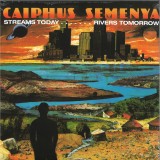








![D-Mob feat. Gary Haisman - We Call It Acieed Remixes [RSD 2020]](https://www.deejay.de/images/l/1/8/948218.jpg)

