40 Years Techno Club – The 80s Vinyl Edition (Limited Coloured Double Vinyl) Following the huge success of the 4-CD compilation 40 Years Techno Club, which thrilled countless fans with over 60 club hits, the eagerly awaited vinyl edition is finally here: ‘The 80s Vinyl Edition’ – a strictly limited, coloured double vinyl for lovers of electronic music.
This special edition pays tribute to the beginnings of the legendary techno club with iconic 80s tracks by Kraftwerk, Yello, Soft Cell, Tears For Fears, Front 242 and other artists who shaped the electronic sound and influenced an entire generation. The exclusive collage cover, accompanying band
poster and high-quality coloured vinyl pressing make this release a unique collector‘s item for connoisseurs and music lovers.
‘40 Years Techno Club – The 80s Vinyl Edition’ – vinyl that makes history – right on your turntable.
Hip-Hop-Legende Ghostface Killah liefert mit seinem neuen Album "Set The Tone" eine Mischung aus Tracks, die sowohl das männliche als auch das
weibliche Publikum ansprechen: Eine Mischung aus knallhartem New Yorker Rap und melodischen, entspannten Tracks.
Ghostface hat außerdem mit Hip-Hop-Schwergewichten wie Nas, Kanye West, Ja Rule und vielen anderen zusammengearbeitet.
Indo Warehouse presents ‘Bombay Acid’ on Crosstown Rebels, featuring Kunal Merchant and Raja Kumari. The hypnotic new single, fusing heritage and future-focused touches, lands with a remix from SYREETA
Making their debut on Crosstown Rebels, New York collective Indo Warehouse unveils ‘Bombay Acid’. The release is a collaboration between co-founder Kunal Merchant and acclaimed vocalist Raja Kumari, capturing the Indo Warehouse ethos: hypnotic grooves, ancestral textures,and underground energy fused into one expansive, ritualistic journey.‘Bombay Acid’ pairs Merchant’s meticulously layered production, melding deep, hypnotic grooves with textures drawn from South Asian musical traditions, with Kumari’s commanding vocals. The track unfolds as both a club-ready cut and an immersive ritual, bridging cultural heritage and contemporary electronic sounds. A Grammy-nominated rapper, singer, and classically trained dancer, Raja Kumari bridges Indian tradition with contemporary global music. She has collaborated with Timbaland, Dr. Dre, Gwen Stefani, John Legend, and Iggy Azalea, and has performed at Coachella, Wireless, and India’s NH7 Festival. Her imprint, Godmother Records, and projects such as ‘The Bridge’ (2023) and ‘Kashi to Kailash’ (2025) explore resilience and spiritual depth, making her one of the most distinctive voices in modern music.
On the flip, SYREETA delivers a striking rework. Authentic and fearless, the UK favourite has shattered glass ceilings while drawing on chunky basslines and energetic grooves from house and techno to craft her own sound and style. Her remix injects ‘Bombay Acid’ with that signature low-end punch, while driving and harnessing the track’s cosmic energy for late-night dancefloors.Kunal Merchant has spent years building a sound that is simultaneously drawn from his South Asian lineage and futuristic. From appearances at Coachella, Hï Ibiza, Fabric London, and Brooklyn Mirage, to releases across the Indo House spectrum, he has become a central figure in shaping the genre and bringing South Asian voices to the global electronic stage. Indo Warehouse, co-founded by Merchant and Kahani in 2022, has evolved from its underground origins in New York into an international movement. Their live shows are immersive experiences, rituals where identity, tradition, and club culture collide, and their releases continue to push the boundaries of house and techno while remaining deeply grounded in their origins. With ‘Bombay Acid’, Merchant and Kumari deliver a production that is both hypnotic and expansive, inviting listeners
into a universe where rhythm, culture, and underground energy meet in unison.
Following up a string of releases on labels such as Mana, Sun Ark, Orange Milk Records and Abyss, Other People are honoured to present the new album Fobia by Argentinian musician and sound artist aylu, real name Ailin Grad. Inspired in part of Grad's many collaborative projects over the last few years, Fobia sees her collecting and rearranging the music and sounds fostered within these to create an intimate, spiritually charged album that turns personal struggle into collective resistance and resilience. What initially started as a way for Grad to process her own experiences with agora- and claustrophobia, and an attempt to navigate feelings of shame and a perceived demand to keep these feelings bottled up and hidden from the world, she began to realise how mental health struggles are not isolated incidents but part of broader systems of collective suffering and injustice. “It took a long time for me to discover that my issues were part of a system that produces these kinds of symptoms and that it takes a lot of courage to find a way around them. I have the feeling that more and more people suffer from these kind of things in some way or another, and what was at first taught as something you should be silent about and keep private, I discovered that the more you talk about it and share it with people you trust, the more you realise that it’s part of something much bigger.” This tension and constant pull between fear and joy, light and dark, is present throughout the album. From the strained breathing featured in opening track Yodo echoing the suffocating feeling from claustrophobia interspersed with the lighter textures of Obelisco Elysium and Prospero offering up a sense of relief, to the almost cacophonous, immersive soundscapes of El Sol Mal, mirroring the complex, often contradictory emotions when navigating mental health challenges. Fobia invites listeners to move through pain with honesty, finding strength in shared experiences.
Having established a reputation as one of the most versatile and respected producers in the game - with over a decade at the forefront of UK bass music, spanning UKG, grime, bassline and drum & bass, Flava D needs no introduction. Now, with her debut drum & bass album Here & Now, she levels up once again, channelling years of dancefloor know-how into a project that's as weighty as it is emotionally dialled-in.
A self-proclaimed fan of Hospital Records from the age of 14 - the first drum & bass CD she ever bought being 'Hospital Mix Vol. 1' - Here & Now marks a particularly paramount milestone for the Bournemouth-born beatmaker. Across 15 tracks, Here & Now captures the breadth of Flava D's musicality, offering a bass-charged, genre-spanning statement that's rooted in experience but tuned into the present moment. With a star-studded bank of collaborators, including MPH, Anais, Unglued, SOLAH and more, the album highlights Flava D's curatorial ear and the strength of her network across the scene.
At its core, Here & Now is a meditation on presence - a fresh, fearless chapter from one of the UK's most consistently innovative producers. The album is equal parts masterful and functional, giving fans what they came for while revealing new layers of Flava D's ever-evolving sound. Through its stacked line-up of collaborators, Here & Now also connects voices who are helping shape the future of dance music, from the underground up.
The second release on Ben Kaczor and Lb Honne's new imprint "St. Odes" features Ben Oyefeso from Hamburg with a deep, glitchy 2x12" vinyl-only LP!
Ben Kaczor: “After a gig at the Golden Pudel in Hamburg last year, I stopped by Remoto Records the next day. The music playing in the shop struck me immediately — delicate, unusual, and soothing all at once. As I kept listening, I even noticed my headache fading away. Behind the counter was Ben Oyefeso, quietly playing his unreleased tracks. Since that moment, the rest is history.”
St. Odes emerges from the depths of Switzerland, born out of the friendship and shared sonic vision of Lb Honne and Ben Kaczor. Driven by a precise yet fearless approach to creative expression, the label embraces what they call “elegant punk” — a refusal to follow convention. While its roots lie in ambient, house, and techno, the focus remains singular: not on meaning, but on feeling.
The first release "Various Minds 001" sold out very quickly.
The second release features Ben Oyefeso from Hamburg with a deep, glitchy 2x12" vinyl-only LP!
Ben Kaczor: “After a gig at the Golden Pudel in Hamburg last year, I stopped by Remoto Records the next day. The music playing in the shop struck me immediately — delicate, unusual, and soothing all at once. As I kept listening, I even noticed my headache fading away. Behind the counter was Ben Oyefeso, quietly playing his unreleased tracks. Since that moment, the rest is history.”
More than once Jay Richford and Gary Stevan’s Feelings has been described as the greatest library record ever released. Of course Be With can’t be seen to be playing favourites, but we have to admit, it’s pretty good. Insanely rare and immensely sought-after, it’s a tough funk, street jazz masterpiece coveted for many years by collectors of all musical genres.
Since its original release on Italian label Carosello in 1974, Feelings has appeared on several labels with different sleeves and even under a different artist. Indeed cult library label Conroy put it out in one of their iconic red sleeves in 1976 and yes, Feelings has indeed had more than one modern re-issue since these “original” releases. But a record this special deserves to be kept in press and we think it deserves the Be With treatment.
No, Jay Richford and Gary Stevan aren’t two of the most Italian sounding names. As the story goes these were the pseudonyms adopted by Stefano Torossi and Giancarlo Gazzani who wrote the album but couldn’t use their real names on the original release for legal reasons. But Stefano Torossi himself later both clarified and confused the tale further by explaining that Feelings was the work of four people not just Gazzani and himself. Fellow composers and musicians Sandro Brugnolini and Puccio Roelens also worked on the album and as Torossi himself explained “we all worked together”, with all four gents “dividing the royalties in equal parts… that’s the story.” Right, so, with that all sorted out let’s get back to talking about the music. And what music it is.
Long hailed as a holy grail of library music, Feelings is the epitome of the sort of cinematic orchestral jazzy funk that is “that 70s library music sound”. Infectiously funky, deliciously melodic and with impeccible, elegant production, this record is the showcase for a stunning set of compositions and arrangements and with performances that are nothing short of virtuoso.
The record’s first side lifts off with “Flying High”, soaring brilliant and shimmering. Funk licks, menacing strings and swaggering horns combine for an ice-cold intro groove that Isaac Hayes would surely have envied, before the steady-paced drums deliver the slo-mo TKO. The string-drenched cop-funk of “Going Home” raises the tempo. All funky quick-fire bass lines and killer electric guitar soloing. A real thriller.
“Walking In The Dark” positively drips in blaxploitation-funk drama strings and horn struts, all laced with delicate drums, velvet piano and more filthy wah-wah. “Fighting For Life” is another funk-fuelled workout built around an effortlessly relentless drum track that refuses to give up until even the stiffest-necked head is nodding.
The loping, open drum break that guides the much-loved “Feeling Tense” through its early stages would be good enough on its own. The heavy bass gloss, swirling strings and ominous horns that follow take things to the next level.
The second side opens with another favourite “Running Fast”, and the track does precisely that. This is one fine rollicking chase theme underpinned by frenetic (yet funky) Fender Rhodes and skipping bass and drums. Those sweeping strings are a gorgeous extra. It’s a deliciously feel-good groove that sets the heart racing.
“Loving Tenderly” envelops us in warm, velvety night-time vibes with easy listening horns and slinky strings dialing up the seduction. Definitely one for the lithe lovers out there. The pace picks up on the electrifying “Fearing Much” where strings dart around deep bass, buzzing guitars and another funky drum break. The lush, melancholic “Being Friendly” is another easy beauty, all warm Rhodes and strings. Majestic stuff that puts an aural arm around you. The climactic “Having Fun” rides a pulsating, bass-heavy drum break with snatches of a funky guitar refrain, some luxurious keys, sweeping strings and triumphant horns. Sensational.
It had long been in the air, many had feared it, and now it's come true:
DJ Koze and Dirk von Lowtzow have recorded a single together.
The two have known and admired each other for so long that, in certain circles, people are already speaking of love. Fittingly, their song is called: “Nur um Liebe” ("Only About Love").
But, as Oscar Wilde once said, only the unfaithful know the tragedies of love—so this track is far from peace, joy, and sunshine.
Set to an ecstatically pulsing beat, we witness the story of a couple drawn together and pushed apart, full of passion and tenderness.
A miniature musical life drama!
A wild ride through the undergrowth!
A dark summer hit!
Dive into this darkly colorful world—let Kosi and Dirky seduce you.
And remember: "In the end, it was always only about love."
Der offizielle Soundtrack zu "Frieren: Beyond Journey's End" von Evan Call ist jetzt als Doppel-Vinyl erhältlich. Diese exklusive 2-LP-Ausgabe bringt die emotionalen Höhepunkte von Frierens Reise auf den Plattenteller - eine Reise voller Freundschaft, Verbundenheit und der Kostbarkeit gemeinsamer Zeit. Die zwei coloured LPs (in Smaragdgrün und Kobaltblau) kommen in einem liebevoll designten Gatefold und mit einem Insert mit Original-Illustrationen. Ein Must-Have für alle, die Frieren, Himmel, Heiter und Stark ins Herz geschlossen haben.
This 15-track album features the original score composed by Nicolas Godin (of AIR) for Fire of Love, the Oscar-nominated documentary directed by Sara Dosa in 2022 (available for streaming on Disney+), as well as original music inspired by the film.
Fire of Love tells the extraordinary love story of fearless French volcanologists Katia and Maurice Krafft, who died as spectacularly as they lived, capturing some of the most breathtaking footage ever recorded of their greatest passion: volcanoes.
The labels catalogue is welcoming a third full feature album by no other than the young and promising producer from the UK – Phase ‘O Matic. This body of work marks the second LP by the artist in five years therefore to say the excitement levels can be measured by the excitement meter and these levels would be scientifically speaking - through the roof. From the opening track “Welcome to the Night” to the closing “The Weapon” which is named after the title of the album, the artist has demonstrated his impeccable production skills and knowledge of the 90’s sound with the modern twist applied. Over the years of hard work, he has developed his own sound and from what can be heard here safely could be said that this release is most definitely the weapon of mass destruction which has been added to the artist’s collection of releases. Straight from the mind onto this 12” canvas for you to enjoy.
DJ Haram's debut album “Beside Myself” is about the survival of the spirit in day to day struggle. Following on from her collaboration with Moor Mother as 700 Bliss on “Nothing to Declare”, here she is joined by a swarm of collaborators, collectively navigating pain and rage, and in occasional moments of joyful respite, mocking the strife. Haram describes herself as a “multidisciplinary propagandist, contemporary anti-authoritarian Arab, gendered labor class, god fearing atheist” who makes “anti-format, audio propaganda, anti-lifestyle, immersive sonics”. Her music attests to this, as she brings in friends and collaborators, from MC's Armand Hammer, Bbymutha, SHA RAY, Moor Mother, and Dakn, through to co-producers August Fanon, Egyptian producer El Kontessa, and Jersey Club producer Kay Drizz, trumpeter Aquiles Navarro, and guitarist Abdul Hakim Bilal. It's immediately identifiable as her work, but simultaneously unclassifiable, finding equal space in its dusty live production for Jersey Club, punk noise, Central Asian and Middle Eastern Percussion, synths, 808's and lurking, rumbling bass. Often central to this is her own performance of unflinching sorrowful verses, comparable to the poets Audrey Lorde or Ai in tone and Kim Gordon in context, examining the material and the abstract in equal measure. Her grungy futurism offers no easy resolutions, yet the drama and catharsis it presents is rarely so defiantly delivered.
naemi follows last year’s excellent Erika de Casier-starring »Dust Devil« with a genius new album of ultra-catchy, perfectly executed shoegaze diamonds, powered by Ulla on drums and additional vox, flutes and extra vocals by Baptist Goth, and fuzz guitar by Kouhei.
»Breathless Shorn« is the Berlin-based Kansas-born producer's most compelling move thus far, featuring 11 perfectly fuzzed songs that almost completely shake off any electronic remnants in favour of a light-touched act of MBV worship. naemi has long nurtured an obsession with vintage dreampop and shoegaze, but until now they mostly blurred those influences with dubby ambience and delicate, heart-slicing production. On »Breathless Shorn« they completely re-draw their outlines, bristling with a much looser energy in a mode that feels like a big step up - more impactful, full of easy swagger and a bona fide emotional resonance.
Distorted, tremolo-bent guitars, boxy drums, electric bass and delirious multi-tracked vocals are the backbone here, mostly sounding like they could have been lifted off Kevin Shields' »Ecstasy and Wine« sessions. naemi's attention to detail is remarkable; no longer leaning on electronic masking or the influence of '90s British slacker rawk or twee pop, instead deploying the genuine article, with ambient music left as just a faint note wafting in the background.
It’s another space, it’s another time…a trip into eternity.
The mothership of Xistence takes us further away from Earth, this time the mission is to explore a collection of planets, moons, asteroids and comets in our solar system. Do not let your fears hold you back!”
The Fear EP is the 5th instalment of the Dublin based Detroit Techno inspired label. Arbilla brings his warm, classic and mysterious sound. Every track on here is filled with captured moments. Release includes a great remix from the Detroit legend Claude Young, expect some Motorcity techno funk ,Chicago acid twist…with spontaneous ideas and organic arrangements.
Florian Picasso returns with When I Saw U, a playful, feel-good track that sparks the thrill of young love, excitement, and electrifying anticipation. With pulsating beats, shimmering synths, and irresistibly catchy vocals, it’s an anthem designed to make everyone move. 'I wanted something fresh and fast-paced—built for dancing but with depth,' Picasso shares. 'It’s not just about making tracks; it’s about pushing sound and arrangement to new heights.'
With When I Saw U, Florian Picasso cements his place at the forefront of electronic music’s evolution, proving that his legacy is one of reinvention, innovation, and fearless artistry
“To Model Phenomena” is a scientific concept that describes a computer’s ability to emulate, regardless of whether the emulated phenomenon exists outside its circuits or is purely imaginary.
Modeling communication platforms enables us to interact with each other or with computers. Modeling behavior patterns, nuclear fusion, or, as in the case of scientists from the Human Brain Project, a virtual human brain, allows us to simulate cognitive processes such as perception, memory, and decision-making, providing insight into the nature of human thought.
In this record, the phenomena modeled are those moments when the mind leaps into the void, confronting new paradigms. For instance, when science, art, or mass media introduces new information, propelling us into a transformed reality.
From this starting point, European musician Shifting Heigo maps a path between realities, evolving his narrative as his music unfolds. This work draws inspiration from Curtis Roads (vice chair of Media Arts and Technology at the UCSB) and his studies on granular synthesis and time scales, where each track on To Model Phenomena evokes a sense of movement, where nothing begins or ends in quite the same way.
A musician with strong ties to new technologies, Shifting Heigo has collaborated with the University of Málaga (Spain) in its PH Degree Program in video game design, composing interactive music, while also singing as part of the tenor section in the Qatar Concert Choir, affiliated with the Qatar Philharmonic Orchestra.
Currently based in Abu Dhabi, he is now part of a circle of electronic musicians surrounding the New York University Abu Dhabi, an institution that supports electronic and experimental music across the Middle East.
To Model Phenomena is the result of his search for a unique voice as a musician, where ternary rhythms, noise, and silence shape the narrative. This is a discourse from a musician’s perspective on the changes that science, technology, art, and the rapid flow of information demand of us. A direct gaze into the fear of change.
Several Years Ago, the Disco Records Dj Crew Members Got Their Hands on a Couple of Original 70s Obscurities, While These Standout Records Shone Brightly in Their Own Right, the Team Finally Decided to Put Them Out as Those Obscure Old Records Fetch Eye-Wateringly High Prices on the Second-Hand Market. Due to Popular Request & Lovingly Mastered to the Highest Possible Standards, They Are Now Available to Play and Share in Very Special Moments at Parties Around the World. This Will Surely Be One of the Most Keenly Anticipated Disco Release of the Year. for Our First Release, We Are Extremely Proud to Bring You at Last, Three Very Hard to Find Disco Anthems on Sides a & B in Their Glorious Full Extended Versions...
“Traces”, the debut album from Vesto Comodo, presents a sonic meditation on the enduring power of human emotions and behaviors in an era where the boundaries between organic and artificial consciousness have dissolved.
Introspective, funky, earthy and deep: the album sound palette juxtaposes elements like century-old piano phrases with mysterious synth pads, while tape-squashed drum breaks and jazzy flute themes spiral together creating a journey into a prehistoric futurism.
A Strangely Isolated Place presents a long-lost collaboration between Polish artists Olga Wojciechowska and Tomasz Walkiewicz as Monoparts—a partnership formed many years ago that resulted in an album once destined to remain unreleased.
Olga Wojciechowska, known for her modern-classical masterpieces such as Infinite Distances (2019) and Unseen Traces (2020), as well as her 2022 collaboration with Scanner, breaks all known expectations with Soothsayers. In a dramatic departure, Olga unveils a new and unexpected side, debuting her haunting vocals—a delicate, spellbinding performance that recalls the golden era of trip-hop, and comparisons to the sounds pioneered by Tricky, Massive Attack, and Martina Topley-Bird.
With Tomasz adding layers of depth through intricate beats and electronics, Olga’s voice becomes the emotional core of the record, conjuring an intimate and nostalgic atmosphere.
"This album is like becoming one with the earth itself—feeling the rawness of the wood, tasting the earth in your mouth, and sensing the presence of ancient spirits. The music carries a deep, primal energy, like being part of the forest, with creatures watching you from the shadows." - Olga Wojciechowska
To complete the journey, ASC lends his signature touch with a stunning drum’n’bass reinterpretation, amplifying the album’s nostalgic essence. Soothsayers emerges as a spellbinding ode to times gone by, in more ways than one.
Featuring artwork by Moon Patrol, with mastering and lacquer by Andreas LUPO Lubich.
This EP contains 4 tracks inspired by the dance music boom in Europe from the late 80s to early 90s. Luis composed all the tracks using a Novation BassStation, an Akai MPC 2000XL for the drums and sampling, and a Korg M1 for the pads and melodies, using the occasional VST where appropriate.
A1 “Miedo aqui estoy” (Fear, here I am) combines a fast bassline with a hypnotic melody, New Wave influences and shades of electro unite to create an immersive atmosphere. The message ‘no to fear’ being transmitted through optimistic and euphoric pads.
A2 “Neminem Laedere”, inspired by New Wave sounds and rhythm, this track uses bright synths to create audio textures that invite introspection. The hypnotic melodies repeat throughout, enforcing the title's message ‘do no harm’.
B1 “Noches y Amaneceres” Taking the heavy and dark rhythms of new beat and entwining the contagious melodies of Italo provided by bright synths, this fusion gives the track a unique bouncy atmosphere.
B2 “Violines en el barrio”, A track that revolves around a focus on sampling. The breakbeat influence accompanying synths with an 80s flavour and pads providing a deeper texture.
‘Belgium is too small for pianist Alex Koo’ – De Tijd
‘Stunningly original’ – Downbeat Jazz Magazine
‘Fabulous technique, sounding downright genius at times.’ – London Jazz News
‘When listening, Keith Jarrett’s name came to mind several times. Not because Koo’s playing is similar to that of the American master, but because it is of the same exceptionally high level.’ – Trouw
‘Koo’s compositions and playing are absolutely world class.’ – Written in Music
The son of a Belgian missionary sent to Japan in the seventies and a Japanese peace activist, pianist and composer Alex Koo refuses to be boxed into any traditional category. As the renowned German Jazzthetik magazine put it, "Alex Koo defies categorization."
With ten uniquely personal tracks, Blame It on My Chromosomes is more than a musical statement; it is a form of self-therapy. "The only way not to spiral into depression as a jazz musician nowadays is to vent and lose yourself in the music," Koo shares. "Music needs a purpose beyond self-promotion. For me, it's about accepting who I am and letting go of anything else."
Featuring celebrated trumpeter Ambrose Akinmusire on two tracks, Blame It on My Chromosomes highlights Koo's fearless versatility. One of these tracks, "Jonass," is dedicated to Koo's childhood friend who tragically passed away, adding a deeply personal layer to the album. "When we were kids, we would skate and do stupid things with shopping carts, inspired by Jackass," Koo recalls. "That's why we called Jonas 'Jonass'-he had the biggest smile you could imagine, his laugh was contagious, yet he also was the most reckless one among us."
Koo, praised as "stunningly original" (Downbeat Jazz Magazine), is known for creating music that transcends genre boundaries, blending jazz, indie, contemporary classical and film music with innovative freedom. A native of rural West-Flanders, Belgium, he began his musical journey as a classical piano prodigy at the age of five. In his teens, he developed a passion for jazz and improvisation, earning praise from jazz legends such as Kurt Elling, Kenny Werner, and Brad Mehldau. Koo has even been described as "of the same rare high level as Keith Jarrett" (Trouw). His 2019 album, Appleblueseagreen, featuring Mark Turner and Ralph Alessi, was included in Downbeat's Best Albums of the Year.
Alongside Koo, Blame It on My Chromosomes features his longstanding trio, whose fearless interplay brings the album's narrative to life. The trio, with Koo on piano, Dré Pallemaerts on drums, and Lennart Heyndels on bass, represents the very best of the Belgian jazz scene. Their intuitive chemistry and artistry are the driving force behind the album's emotive power, with special guest Ambrose Akinmusire adding a transcendent layer on two standout tracks.
Bash Mans ‘Bash to Basics’ EP marks a major milestone for Scotlands Underground Techno scene.
Edinburgh, Scotland - Stepback Records proudly announce the highly anticipated release of ‘Bash to Basics ‘ EP the debut 12” vinyl from Glasgows own BASH MAN, aka Jamie Morrison. Dropping on Jan 31st 2025, the records captures the essence of raw, unfiltered techno and embodies Bash Mans unwavering dedication to the underground music scene.
With previous digital releases on labels like Scott-Fear Es Posh End Music, and Tom Carruthers Non Stop Rhythm and Data Sync labels, Bash Man has already carved out a name in the dance music world. However, this 12’ release promises to be a transformative highlight, cementing his reputations a force to be reckoned with in the techno community.
Fantastic Planet returns with its sixth release, "Survival Mode," a statement dedicated to the ongoing struggle for freedom in Georgia. This electrifying compilation brings together a diverse lineup of visionary artists, each channeling their own unique sound to amplify the message of resilience and resistance. Survival Mode - is a mindset, a relentless fight for existence when all other options have been stripped away. It's about the raw, primal instinct to keep moving forward, even when every door seems closed, and there's no way back. In this mode, every moment is a battle, a test of endurance and resilience. For the people fighting for freedom in Georgia, survival mode represents their unwavering determination to push through oppressive forces, refusing to be silenced or broken. It's the point where compromise is no longer an option, where you either rise or fall-but surrender is not part of the equation. This struggle is about more than just survival-it's about carving out a future, no matter the cost. Design Giorgi grdzelishvili
To coincide with its 20th anniversary, Clint Mansell's haunting score to Darren Aronofsky's 2000 film, Requiem for a Dream, performed by Kronos Quartet, returns to vinyl. This was Mansell’s second of several collaborations with Aronofsky, following 1997’s π, and features arrangements by David Lang of Bang on a Can. The film stars Academy Award-winner Ellen Burstyn, Jared Leto, Jennifer Connelly and Marlon Wayans, and was adapted from the 1978 novel by Hubert Selby, Jr. (Last Exit to Brooklyn), who also wrote the screenplay with Aronofsky. Set on the rusted mean streets of Coney Island, Brooklyn, Requiem for a Dream tells the parallel stories of four people pursuing their dreams of better lives. The reissue features the original soundtrack, plus two bonus tracks.
Clint Mansell, a musician, composer, and founding member of the band Pop Will Eat Itself, first worked with Darren Aronofsky on the score for his 1998 film π. Also released by Nonesuch are Mansell’s scores for Aronofsky's The Fountain (2006), nominated for a Golden Globe, and Noah (2014). His other scores include The Wrestler (2008), Moon (2009), Black Swan (2010), Filth (2013), Stoker (2013), High Rise (2016), for which he received an Ivor Novello nomination, and Loving Vincent (2017).
For more than 40 years, San Francisco’s Kronos Quartet – David Harrington (violin), John Sherba (violin), Hank Dutt (viola), and Sunny Yang (cello) – has combined a spirit of fearless exploration with a commitment to continually re-imagining the string quartet experience. In the process, Kronos has become one of the world’s most celebrated and influential ensembles, performing thousands of concerts, releasing more than 50 recordings, collaborating with many of the world’s most eclectic composers and performers, and commissioning over 850 works and arrangements for string quartet. A Grammy winner, Kronos is also the only recipient of both the Polar Music Prize and the Avery Fisher Prize. Most recently, in 2019, Nonesuch released Kronos’s ground-breaking collaboration with composer Terry Riley, Sun Rings, and, in 2017, Folk Songs, featuring Sam Amidon, Olivia Chaney, Rhiannon Giddens and Natalie Merchant.
In the late 1980s, three young musicians – Rick and Remon Melsert, along with Paul Nieuwenhuijsen – approached Michiel van der Kuy with a demo titled “She.” Their collaborative project, dubbed Kick The Habit, was poised to blend their talents with Michiel’s signature touch, infused with a hint of early house music. However, for reasons unknown, the project was shelved and remained hidden for over three decades.
Now, 35 years later, thanks to the efforts of Michiel Van Der Kuy, Sergi Elias and Vintage Pleasure Boutique label, this long-lost gem is finally seeing the light of day. The maxi single not only resurrects the original track but also features remixes by the amazing Prospero duo, adding a nostalgic layer of Michiel’s classic 1980s sound. The release includes five stunning versions of “She,” including the original, making this a must-listen for fans of vocal space synth, vocoders, Laser Dance, Michiel van de Kuy talent and vintage synth-driven music.
The world was a different place in June 2020. Most of us were coming out of a first lockdown and accepting limitations, new fears, and changes in our lives. There was some hope things were going to be better, optimism in the summer, a new beginning. For some, like Molero, it was. He released his first album in June 2020, one he had been working on over the previous years. “Ficciones Del Trópico” felt like a discovery, the synths approached a new world, raw, full of wonder, fresh. It was the sound we needed, the horizon we were longing for.
Four years have passed. Molero spent most of that time thinking about and creating the music for “Destellos Del Éxtasis”. If “Ficciones Del Trópico” lived in the depths of the Amazon jungle, “Destellos Del Éxtasis” releases itself from a physical location/idea and creates upon symbolism and the abstract. The more we listen to it, the more we get lost in how he created music that is shapeless, no angles, constantly morphing, transforming into something else.
Like magic, alchemy, but also like visions, hallucinatory visions, or dreams if dreams could step out into reality. And the more we get lost, the more we are convinced the music from “Destellos Del Éxtasis” is part of us, of our body, present as a permanently passing cloud. It gets into dark places, moving constantly into new ground, testing feelings, emotions and how they gravitate with sound. There’s something different in each track. Like magic. Not magical music (but there’s an argument for that). We prefer music for magic. Ritualistic, celebratory, transformative and increasingly visual. Close your eyes, it will open your perception. Follow the ecstasy, let yourself go. The reward is here.
A sonic portal to a parallel universe where neon-soaked dreamscapes transform the stark realities of a post-pandemic world. Music for a forgotten future, where echoes of the 80s cast long, enigmatic shadows through a rich tapestry of emotion that charts a journey from isolation and fear towards healing and hope. This is the journey of Season One and Season Two, the debut companion albums for the solo project of Italian composer Battaglia, both out this fall on Four Flies Records.
In 2020, as the world retreated onto itself due to the COVID-19 pandemic, Battaglia entered the recording studio. Driven by a desire for experimentation, she decided to focus on the classic synths that have made history to create a sonic and emotional alchemy that reimagines the 80s to resonate with our current experiences and sensibilities.
Drawing inspiration from the cinematic magic of iconic early-80s films, and especially the haunting soundtracks of Tangerine Dream and John Carpenter, she crafted a soundscape that goes beyond nostalgia to capture the spirit of a generation navigating uncertain times.
Season One and Season Two explore the complexities of a world grappling with lethal pandemics, climate catastrophes, and nuclear disasters through themes such as longing, fear, and hope, set against a scenario that blends elements of dystopian and post-apocalyptic science fiction and, at times, horror.
Season One delves deeper into the darker aspects of this new reality, evoking a sense of unease and uncertainty, occasionally interspersed with soothing flashes of light. In Season Two, while darkness still lingers, the sonic landscape is infused with a sense of optimism and determination, offering glimpses of a possible salvation.
With Battaglia's signature blend of dark wave, synth-pop, suspenseful electronica, and cinematic vibes, Season One and Season Two create a sonic world that is at once hauntingly familiar and utterly captivating -- the perfect soundtrack, one is tempted to say, for the countless sci-fi/horror-fantasy series that have been flooding streaming platforms in the last decade.
The covers of both albums were designed by Eric Adrian Lee, who conceived them as two sides of the same image, two versions of a world in crisis but whose ruins contain the potential for rebirth.
Battaglia's Season One and Season Two will be available on black vinyl LP starting from October 25th. Digital versions of both albums will also be released on the same date, featuring five bonus tracks (two on Season One and three on Season Two).
A sonic portal to a parallel universe where neon-soaked dreamscapes transform the stark realities of a post-pandemic world. Music for a forgotten future, where echoes of the 80s cast long, enigmatic shadows through a rich tapestry of emotion that charts a journey from isolation and fear towards healing and hope. This is the journey of Season One and Season Two, the debut companion albums for the solo project of Italian composer Battaglia, both out this fall on Four Flies Records.
In 2020, as the world retreated onto itself due to the COVID-19 pandemic, Battaglia entered the recording studio. Driven by a desire for experimentation, she decided to focus on the classic synths that have made history to create a sonic and emotional alchemy that reimagines the 80s to resonate with our current experiences and sensibilities.
Drawing inspiration from the cinematic magic of iconic early-80s films, and especially the haunting soundtracks of Tangerine Dream and John Carpenter, she crafted a soundscape that goes beyond nostalgia to capture the spirit of a generation navigating uncertain times.
Season One and Season Two explore the complexities of a world grappling with lethal pandemics, climate catastrophes, and nuclear disasters through themes such as longing, fear, and hope, set against a scenario that blends elements of dystopian and post-apocalyptic science fiction and, at times, horror.
Season One delves deeper into the darker aspects of this new reality, evoking a sense of unease and uncertainty, occasionally interspersed with soothing flashes of light. In Season Two, while darkness still lingers, the sonic landscape is infused with a sense of optimism and determination, offering glimpses of a possible salvation.
With Battaglia's signature blend of dark wave, synth-pop, suspenseful electronica, and cinematic vibes, Season One and Season Two create a sonic world that is at once hauntingly familiar and utterly captivating -- the perfect soundtrack, one is tempted to say, for the countless sci-fi/horror-fantasy series that have been flooding streaming platforms in the last decade.
The covers of both albums were designed by Eric Adrian Lee, who conceived them as two sides of the same image, two versions of a world in crisis but whose ruins contain the potential for rebirth.
Battaglia's Season One and Season Two will be available on black vinyl LP starting from October 25th. Digital versions of both albums will also be released on the same date, featuring five bonus tracks (two on Season One and three on Season Two).
I Want to Die in New Orleans is the debut studio album by American hip hop duo Suicideboys, which was released on September 7, 2018. The album chronicles semi-autobiographical stories of the duo's encounters with depression, drug addiction and suicidal ideation. Released to critical acclaim in the underground rap scene, the album debuted at number 9 on the US Billboard 200 with 49,000 album-equivalent units in its first week sales. The album also reached the top 10 in Australia and Finland.
A sense of destiny hangs over Sentir Que No Sabes, Mabe Fratti’s fourth solo-credited album released in a five year span. Her work has always possessed a finely tuned sense of drama capable of expressing a range of emotional states, and across this new album, she conveys the struggle to process various relationships or situations–and the actions that come next. Sentir Que No Sabes is urgent and clear, poppy, generous and approachable, while showcasing a considerable emotional hinterland. It is also, as Fratti is quick to mention, “groovy.”
Written and recorded with her partner, multi-instrumentalist, and co-composer Héctor Tosta (I.La Católica, Titanic), Sentir Que No Sabes is the result of an intense, detail-oriented process. Fueled by a new confidence gained in their collaborative project, Titanic, and its critically acclaimed 2023 LP, Vidrio, the two hunkered down in the familiarity of their studio (aka Tinho Studios) to bash out the initial sonic coordinates of her new record. “We talked and talked, and discussed ways of playing and recording, until things became inevitable,” Fratti explains. “We recorded a bunch of demos at our home studio and that meant we had a lot of time to re-edit and experiment. We really dug in. We were super focused on detail.” Tosta also took up the controls as producer and arranger-in-chief for all additional instruments. The album was later completed at Willem Twee Studios in Den Bosch in the Netherlands, and Pedro y el Lobo Studios and Soy Sauce Studios, in Mexico City.
For the final studio recordings, the pair were joined by drummer Gibran Andrade and trumpetist Jacob Wick to fill out and expand on Tosta’s percussion and brass arrangements. This small group of friends were able to work quickly and openly, and without fear: a testament to the exhaustive groundwork put in at Tinho Studios. This can be heard in three short, intermediary tracks that also manage to be the most aggressive on the record: “Kitana” (a scratch-laden instrumental that acts as a strange prelude for the last track, “Angel nuevo”) and a pair of two-minute instrumental interludes, “Elastica” I and II. None are throwaway mood pieces; rather they act as emotional cue cards, and hint at the way Fratti and Tosta created the overall atmosphere of Sentir Que No Sabes.
A strong sense of rhythm irrigates the sound from the jump, as heard on the glorious opening track, “Kravitz.” Here, the brilliant plucked cello line acts as a bassline and props up the steady thump of the kick drum. The cello’s growl serves as a conduit for a set of slightly paranoid lyrics that tell us “Quizás haya oídos en el techo” (“maybe there are ears in the ceiling”), while the song also introduces another staple of the record: the clever brass stabs, whistles, parps, and other interjections that paint a canvas of traffic in a city. It’s a postmodern, widescreen sound that for some might recall The Blue Nile’s Hats.
Sentir Que No Sabes is a record full to the brim with a modern pop sensibility, invoked by the sort of magpie spirit that ensnares anything it can find, repositioning sounds for the here and now. The keys and melody on the melancholy “Pantalla azul” (“Blue screen error”) transport us back to the glossy mid-1980s. “Oídos” (“Ears”) is a beautiful slice of contemporary, hybrid pop, in which Fratti’s vocal lines delicately spin themselves around the lean structures erected by the brass and drums, and the descending “plink” of a set of piano chords. Then we have a gloriously strong ending with the swell of “Angel nuevo” (“New angel”), another cinematic track full of gentle, instrument-rich swells and eddies that manages to be almost endless in its range–and yet intensely personal, as Fratti’s voice is close, almost whispering in your ear. A much needed lullaby for our fractious times.
The lyrics, for their part, have a stop-start quality to them, and hint at the small, incremental emotional taxes we pay through just living our lives. They circle around the music like birds waiting to swoop. There is something of the spiritual in all of Fratti’s work that expresses itself in a form of yearning: she looks to new horizons while personal dramas find themselves internalized, contextualized, and then dealt with through metaphor. Here, she was keen to mention Tosta’s constant encouragement in her finding a path to best sing or phrase her words to impart their maximum effect. “Hector was super inquisitive about my lyrics and asked me questions about what I meant, which sometimes is something you don't wonder so much about in isolation,” Fratti explains. “Besides, he is a great poet, and you can see that in what he did on the Titanic record. This made me go deeper into my lyric writing and definitely transformed it into something that I feel super happy about now.”
Take “Enfrente” (“In Front”), a track that initially comes across as a languid, glossy number, with plucked cello strings standing in for a bass line and brittle synth parts. Soon we catch on to a brilliant minor chord switch, which mirrors the fear and doubt expressed in the lyrics as someone “trembles up to the podium” in a “search for meaning.” There’s also the startling introduction of a vocoder in “Quieras o no” (“Whether you want it or not”); it comes precisely at the point Fratti sings “Quieras o no es un desastre” (“Whether you want it or not, it's a disaster”). Moments like these leave room for interpretation and, over time, create a strong bond between the listener and the record.
In fact, across Sentir Que No Sabes, each phrase–whether instrumental or vocal–becomes at some level emblematic of acts and moods that impart deep emotional significance. We see this best on “Intento fallido” (“Failed attempt”), which could be the score to feeling trapped in self-doubt, only to suddenly be sprung free by the song’s gloriously upbeat ending. On “Márgen del índice” (“Index margin”), the quicksilver switch between initial disharmony and a beautiful melody is breathtaking, all augmented by evocative arrangements, textured production, and the slightly playful, gnomic lyrics. The track’s emotional ecosystem allows another brilliant ending, which uses the simple repeated phrase, “Cómo lo va a ver?” (“How are you going to see it?”).
So what to make of Sentir Que No Sabes? High gloss Pastoralism? The sound of a city-bound, post-post modern soulscape? No matter the emotions evoked, it's the work of an artist coming into their own, and creating a benchmark record.
DJ support: Tim Sweeney, Make A Dance, Parris, Pleasure Voyage, Camillo Miranda
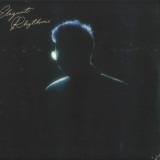
Back yard - Back yard is the first single from the new Teen Daze album, Elegant rhythms, and features singer-songwriter Andy Shauf on drums, and LA jazz staple, Sam Wilkes, on bass. This is a stark change in sound for Teen Daze, who’s last album Interior was an exploration of neon-lit House music. Back yard is a mellow groover, conjuring up images of Laurel Canyon in the 70s, yet still with its flourishes of contemporary sounds.
We’re out of phase again - We’re out of phase again is another vulnerable glimpse into the inner world of Teen Daze, and marks the release of his most personal album to date, Elegant rhythms. In contrast to the synthesized, digital world of his prior album, Interior, here we’ve been brought into a lush, organic arrangement, brought to you in large part to the stunning bass playing by Sam Wilkes. While the verses pulse forward, the chorus slows things down, and evokes the sophisti-pop sounds of The Blue Nile. This track is a stunning showcase of the world of Elegant rhythms.
Nothing’s gonna change my love - Teen Daze returns with his second single of the year, Nothing’s gonna change my love. The stark change in sound, as heard on previous single Back yard, is on display here again: a smouldering, 2 and a half minutes of slow jazz-pop, indebted to the great Sade, or perhaps the feeling of leaving downtown LA at 2 AM. Lyrically, we hear a story of a love, challenged by the unpredictable nature of our lives. This may be Teen Daze’s smoothest song to date.
Neighbourhood - Neighbourhood is the third single from the recently announced LP from Teen Daze, Elegant Rhythms. Along with Andy Shauf on the drums, and Sam Wilkes on the bass, Teen Daze gives us a languid tour of his quiet neighbourhood. The sun has set on the pleasant, tree-lined streets, and a stranger, more surreal environment presents itself. The song plods forward at an extremely comfortable pace, held down by the paradoxically loose-yet-tight rhythm section. Lyrically, we walk around the Neighbourhood at night, and while the chorus reveals a type of sobriety, the vibe of the song makes it easy to feel a little…effected.
Fade away - Fade away sets the tone for Elegant Rhythm’s side B: a deeply personal, though somewhat veiled, confession of loss. How does it feel to grieve something that was never really here? A smouldering, slowly progressing first half erupts in synthetic noise, and then fades into the ether with it’s repeating refrain, “I can feel you / feel you fade away / when there’s nothing / nothing left to say”.
Fall ahead - A sweet piano tune which serves as a quiet break in the record, intended to help the listener reflect and take a moment of pause before we reach the final two songs on the album.
HST underwater - The penultimate track on the record tells a story where the narrator finds themself in an alien, yet oddly familiar place. Arpeggios soaked in crystal blue water flow through the stereo field, while the narrator, vocoded and drenched in autotune, searches for meaning and purpose in a confusing world. This is one of Teen Daze’s most cinematic, emotional songs yet.
In the rain - It’s never really made explicitly clear on this record, but a lot of these songs find Teen Daze wrestling with life as a new father, and this song, the final on the album, expresses the fears of generational trauma. A touching, tender ode to his children, we hear Teen Daze at his most personal and vulnerable. The falling rain surrounds some absolutely breathtaking bass playing from Sam Wilkes, and Teen Daze’s signature ambient keyboard sounds.
Unrecognisable” is a story about a city where buildings are used as weapons in a war between the government and the people. The initial chapter, “Eiffel Shard”, was published as an online graphic novel with an interactive soundtrack. It depicts a phone call between Paris Hell and Geneva Heat, two members of the resistance group Unrecognisable. During the call, Paris informs Geneva that a deadly building, The Shard, is now under the authorities’ control. What’s worse — the government also got hold of a secret building transformation plan developed by the resistance. Paris tells Geneva that the Unrecognisables decided to abandon the plan due to the number of civilian casualties it would inevitably cause. A series of intricate explosions would force the building’s glass surface to rip through the surrounding areas, destroying everything in its path and leaving only a pointed metal structure standing: an Eiffel Shard.
The second chapter, “Paris’ Dream”, was performed by Lolina as an improvised gig. Samples from the soundtrack to chapter one accompanied a video showing the protagonist sneaking into The Shard at night. The narrative continues with Paris’ anxiety dream of her time working on the Eiffel Shard project alongside another Unrecognisables member who she fears has betrayed them by handing over their dangerous plan to the government.
The third chapter is now being released as an album of new music. In a declining city, Paris and Geneva are tour guides to be followed at your own risk. Lies and petty crimes, mistrust, betrayal and, inevitably, war are the setting in which they seek to devise a plan for resistance. As members of a secret group, they hide their identities and meet after dark. Under dim lights of city streets and closed-down clubs, it’s hard to tell a dodgy detective from an eager philosophy student, friends are enemies in disguise, and it’s advised to park your car sideways for a fast getaway.
On this concept album, Lolina performs the role of both characters, her own voice often made unrecognisable by pitch-shifts and distortion. It was recorded almost exclusively on a Casio SK-200 sampling keyboard boasting 1.62 seconds total sampling time. No beat preset (total of 20) is left untouched, unchopped or unlooped. Not one of the 49 mini keys is idle. Retains samples when turned off.
Mariah was a Japanese outfit in the field of art pop, way back in the very late 70s and early 80s with 5 albums up their score from 1980 to 1983. The album from 1979 entitled as “Mariah” was actually made before the band Mariah was formed, and was released as a solo album by Yasuaki Shimizu. The album at hand is the fifth and for the time being last album in this row, released as a double vinyl back in 1983. Original copies, that are at least in very good condition, are hard to find. The brand new reissue on Everland, unlike the original and the first vinyl reissue from 2015, comes housed in a thick and artfully designed gatefold sleeve with OBI, which finally does justice to the progressive spirit of the music you will find here.
The musical basement of Utakata No Hibi is a fusion of dreamy synthesizer pop and haunting new wave music, that could be found all around the globe back in 1983. In the vein of TEARS FOR FEARS or more adventurous DAVID BOWIE stuff, with a touch of KRAFTWERK or even BRIAN ENO here and there, but all this gets spiced up with an atmosphere of Japanese traditionalism, with a few bits and pieces from the old music from this Far East island, which sounds so magic to us Westeners. The progressive, wacky art pop of this project was led by the popular Japanese composer and musician Yasuaki Shimizu, a relentlessly exploratory saxophonist who even dared to rework Johann Sebastian Bach’s cello suites for saxophone.
As brilliant as this man is, the music on „Utakata No Hibi“ turns out to be. And the master himself approved and much appreciated the brandnew remastering of this album by assisting a highly professional team of sound engineers who dusted off the ancient tape reels. For certain the record sounds and feels 80s through and through, electronic to the very rhythmical bone of each song sugar coated with catchy melodies that resemble Japanese classic and Enka music, which is a kind of folksy pop music. The listener gets directly drawn into a feverish dream of steaming Far Eastern cities and their darkest and most depraved corners where you find everything cheap in sleazy bars and unlighted backyards and alleys. The next moment he strolls through a beautiful Japanese park surrounded by a sea of blossoms. This change in mood and style you will experience in the sparsely instrumented tune „Shisen“, which indeed comes closest to classic Japanese folk tunes without any too catchy and pop oriented melodies. But we certainly find these harmonies allover the album. Some tunes even feel like ancient BEACH BOYS compositions and Brian Wilson creations played by a then contemporary electronic pop act and sung in Japanese.
An amazingly colorful album with songs that are based on solid substance rather than cheap pop structures. This is music for the bold listeners and music lovers and this awesome reissue should quickly find it’s way into the record collections of 80s synth and art pop aficionadoes.
Yasuaki Shimizu did what he wanted with MARIAH, pushed the borders of popular music further than anybody would have thought. Listen to a track like „Shonen“ with a repetitive rhythm pattern that hypnotizes you and somehow silky melodylines by saxophone and synth piano upon which a female voice sings in a very spiritual way. Praising pop or whatever this can be called, it is sheer magic put in music. I wonder if this would have made it into the charts back then, but you never know. It is a piece of musical art that shall be listened to.
Mutual Rytm is back with more searing techno, this time in the form of a welcome return to wax from venerated Aussie mainstay Shane Yates, aka Alpharisc.
Melbourne's Alpharisc has been making music since 1993, initially with humble tools like the Commodore 64 and Amiga 500, before putting together and building a growing collection of hardware. He has always maintained a somewhat reclusive character since breaking through with the city's renowned Wetmusik party and label collective following the release of his first EP in 1999 and has always kept a nostalgic touch in his music alongside his signature Alpharisc sound. Following a string of digital EPs on the likes of Future Retro Music, this is his first vinyl 12" in two decades as he returns to Mutual Rytm following his appearance on the Federation Of Rytm II compilation, serving up his bustling 'Ram Face' EP.
The powerful 'Formation Filter' opens up with a powerful techno groove built from rock-solid kicks and rumbling bass that will rattle walls. Snares and synth rolls peel off the drums as they race onwards and grow ever wilder and more intense for maximum destruction. 'Circus Fear' is another stylish linear workout with lithe synth details and loopy drums peppered with coarse claps and hits to up the ante, while 'Hot Morning' brings even more fire with its big, churning percussive clatter and supersized hi-hats racing along over more bulky beats.
Things get more unhinged with the hard-edged 'Ram Face', which has pummelling drums and scraping hits forming a barrage of industrialised sound; a lead from a SID chip will bring a smile to those who are familiar with its sound playing a hypnotic lead over the top. The final track on wax, 'The Old One', builds up cosmic tension, haunting synth lines and howling solar winds into another peak time techno weapon. As always with the label, a digital bonus cut 'Hairyman' provides a special treat and delivers another frosty techno roller with pent-up energy and compelling drum programming.
Two versions available - limited hand numbered (100 copies) of red vinyl and normal black vinyl version.
"Balance", the artist's third album, is a return to the roots, i.e. towards club sounds - on the album you can hear several amazing guests - Dominik Płonek, YANA, Dizkret, Runforrest, Einar Indra from Iceland and DJ Eprom. A unique mix of artpop with sophisticated electronics, which Envee brought together with its amazing mixing and mastering. For dessert, Barrakuz, which took the title "Balance" from Wojtek Koziar's photo to a new dimension with its collage. Everything is perfect on this album.
The tune entitled 'Smite Dem' is a fully self-produced release that we had made entirely in a remote collaboration style between both our own studios (Selah Dub Studio & Blak Nile Studio) where we had both decided on doing 2 different grooves on the project after initially working tirelessly on the original one drop groove version (which you can hear mixed on the first 2 mixes of the record). This is what set the way for inspirations with the dubs to let loose after one morning waking up and messaging Mali together a serious warrior style steppas pattern for the project. He did that without fail as that being his forte. At this stage it then led us to both be very ecstatic with the outcome of the creation at hand.
With great honour we are pleased to share with you the fully completed first wave of collaborations from this booming link-up ready to blaze up plenty of sessions worldwide! The message is here and the word is clear; let us live in love and not have any fears! Keep your shining light bright for all mankind, oh Jah!
Adiel's "Il Significato Delle Parole Remixes" EP Returns with Captivating Remix Package includes Donato Dozzy & Pinch
In the ever-evolving landscape of electronic music, where sonic landscapes morph and intertwine, Adiel's "Il Significato Delle Parole" EP stands as a testament to the power of artistic collaboration and sonic exploration. Now, this boundary-pushing release returns with a mesmerizing remix package, featuring reinterpretations by acclaimed artists Donato Dozzy, Pinch and Adihell.
Originally conceived as a collaborative effort between Adiel and musician Flavio Accorinti, "Il Significato Delle Parole" delves deep into the intersection of techno and experimental sounds. Its tracks serve as conduits for a journey through fragmented realities, weaving together elements of cyberpunk futurism and introspective dreamscapes.
Leading the remix charge is none other than Donato Dozzy, whose masterful touch breathes new life into the EP's ethereal atmospheres. His reimagining of "Nulla Resta" takes listeners on a hypnotic voyage, layering intricate textures over a pulsating rhythm, while maintaining the track's emotive core.
Joining him is Pinch, a visionary producer known for his genre-defying approach to bass music. His Remix of "Sospesa" injects the track with a sense of urgency, blending dark trip-hop aesthetics with futuristic sound design to create a truly immersive sonic experience.
The EP also includes Adihells' captivating remix of "Nulla Resta," returning after leaving an indelible mark on the original release. This rendition adds another layer of depth and intrigue to the already mesmerizing collection. It's worthnoting that Adihells isn't merely an alias but rather a darker iteration of Adiel, embodying a distinct sonic persona.
Adiel is a visionary artist whose sonic explorations defy conventions and push boundaries. With a keen ear for intricate soundscapes and a fearless approach to experimentation, she continues to captivate audiences worldwide.
With these remixes, Adiel's "Il Significato Delle Parole" EP transcends its original boundaries, inviting listeners to explore new dimensions of sound and emotion. As words continue to shape our understanding of the world, this release serves as a reminder of the transformative power of music to unite and inspire.
Embrace the journey and let the music speak for itself.
Sleep Now Forever is the second and final album released by Sorrow, the post-Strawberry Switchblade group fronted by singer Rose McDowall. Originally released in 1999 and long since deleted it is a cornucopia of pastoral, elegiac folk music, swirling atmospherics, hymnal compositions and above it all the alternating towering and fragile vocal performances of McDowall. Recorded in the late 90s with fellow band member and co-songwriter Robert Lee, Sleep Now Forever is the definitive statement by the now defunct group and Rose McDowall’s most complete long-form work to date.
Released through the group’s own Piski Disk Records, Sleep Now Forever was distributed by World Serpent which struggled through the early 2000s with financial woes, eventually folding due to bankruptcy in 2004. Due to the company’s troubles, Sleep Now Forever was never distributed widely and was a victim of the company’s failure. Released on CD only, original copies are now rare and only traded on second hand channels. Remastered by Mikey Young for a limited vinyl release, Sleep Now Forever will be released on April 20th on double vinyl format, with one side an exclusive etching by Glasgow artist Holly Allan.
Despite its rarity, Sleep Now Forever enjoys a firm cult following. The album’s textures are expansive, lush, deliciously detailed and celestial. Recorded in home study Velvet Hole by Rose McDowall and then-husband Robert Lee, the album enlists an array of players from the underground Neo-folk / industrial scene: Nigel McKernaghan (Uilleann pipes, Whistles), Susan Franknel (Bassoon), John Contreras (Cello) and Lawrence Frankel (Oboe, Cor Anglais). The eleven songs here revolve around McDowall’s instantly recognisable voice. Brought up singing in the Catholic Church, McDowall’s vocals are impeccable and angelic, particularly on tracks like Turn Off The Light where her experiences with religion are canted over soaring oboe and guitar backing. By far the most evolved and realised version of Sorrow’s vision, it feels somewhat criminal that music this beautiful could be lost to time until now.
McDowall’s lyrics throughout Sleep Now Forever deal frankly with mental health, depression, altered states, death and redemption. Wave upon wave of harmony drench each song, McDowal’s vocal multi-tracked and imperious. Opener Soldier benefits from Robert Lee’s use of the studio as instrument, summoning forth a lilting group performance of sparkling guitar and percussion that recalls the Velvet Underground. Mikey Love’s master treats the compositions to brand new frequency dynamics and space. Harmonium and string drones form the counter to McDowall’s vocal on Love Dies, a slow, lurching lament that feels transcendent. On Haunting, the arrangement is orchestral and aching, bleeding into Fear Becomes You, with chord and harmony structure that recalls the baroque sixties pop of West Coast Pop Experimental Art Band or the 60s psychedelic folk movement. A towering, beautiful statement, this elegy for times lost and moonlit-illumination is finally resurfacing from the darkness.
microCastle’s first offering of 2024 welcomes Adrian Roman back to the label for his second artist showcase. Hailing from Spain, Adrian Roman first rose to prominence in 2021 with a string of superlative releases which redefined his sound, resulting in an aesthetic that was both cutting edge and effortlessly cool. F, nmully formed within the creative confines of his Castello studio, Adrian’s first microCastle project, 2022’s‘ Disturbing the Perception’ succeeded in showcasing his inventive approach to composition, while remaining club-effective, and in turn earning play from Aera, Fideles and Jimi Jules, amongst others. Moving forward the next eighteen months have proved to be impactful for the young Spaniard, recording standout projects for AZZUR and Sum Over Histories, releases which continued to build on his creative acumen, while remaining in the playlists of underground tastemakers Ame and Dixon. With 2024 beginning with Adrian’s latest Sum Over Histories vehicle ‘Oratorical Ability’, the Spaniard now makes a welcome return to microCastle with a six-track showcase entitled ‘This Is What I Was For A Moment’.
From the opening monochromes of ‘Le Sabbat’ Adrian’s craftsmanship reveals itself across this slow-burning piece, one where grating growls, granular flares and panoramic arps ultimately set the pace for the groove-centric ‘Customized Reality’. It’s here where Adrian puts a greater focus on the dancefloor, marrying hopeful vocal phrasing and silky chord stabs for a rejuvenating experience, while a drum-driven drop ultimately charts the course for a finale of deconstructed sonics and post-rave bliss. The haywire electricity of ‘Faces of Belmez’ finds the Spaniard once again flexing his creative muscles, as corrugated bleeps and cataclysmic rhythms provide a vast sense of space, creating the ultimate backdrop for distorted synths to propel choppy rhythms into dark underground passages, and perhaps onto some of the world’s most adventurous dancefloors.
The collection’s midway point is marked by the hypno-architecture of ‘Mind Design’. Trickling reverberations and long sighs of tonal tension wade through its pulsating framework, with frayed effects and thumping rhythms submerged beneath a buzzing panoramic glow. Played by Ame and sitting as one of the project's most enigmatic tracks is ‘TAGDI’ (They Are Gonna Do It). Tinted with contemplative synths and guttural vocals, Adrian’s unique emotionality peaks here, as he crafts a low-slung, slow-building dystopian romance, all while weaving in cerebral manipulations for an unforgettable ride. The mist breaks instantly on the collection’s final piece, as your thrusted into the muscular grooves of ‘Fear Track’. Horrifying vocal stabs strike, leaving the gauzy purple skies of ‘TAGDI’ behind for a more robust romp, one where anabolic bassline, retro-arps and off kilter percussion bring the release to a feverish peak. A fitting conclusion to a diverse collection of music, one where Adrian creates a journey that speaks to the complexities of life against an immersive and challenging backdrop.