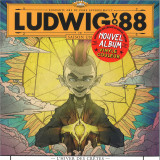
"L'Hiver Des Crêtes" is THE new vinyl chapter that signs 40 years of existence of Ludwig Von 88!
It's in a real marathon of approximate punk that they lead their audience, all together (hey hey), to blow out 40 candles joyfully lit by Archives de la Zone Mondiale! A festive and frantic anniversary that will last all year long in 2023!
Judge for yourself: a song to be discovered every week, an album every quarter and a tour of some 50 dates across the country. These true legends of French alternative rock come back full of energy and derision in this first opus with 14 new tracks (including an unreleased one that nobody knows, not even them!) Let the deaf wake up! In 2023, the world belongs to the Ludwigs (or will self-destruct).
This is another piece to my musical puzzle. After "The Forced..." album, I still felt there was further I could go in... So again, with David's support, we ended up here...what a place! Never stops amazing, what happens while making music from the soul. This album is dedicated to my amazing Mum Sylvia (all I am)! Pearls Don't Lay On The Shore will be released physically as 2 x 12" vinyl LP - each single copy coming in a unique coloured pressing - on March 27th 2023, followed by the digital release on March 31st 2023.
Our second installment is going to be a classic 4-track various artist release. Carefully curated and selected pieces of music, produced by close friends, this release fulfills the label's mission of providing a platform for our loved ones. This issue features some incredible artists and friends united on wax.
The Berlin and Munich-based duo Medus & Niko S. offer a hybrid track with nostalgic elements of techno, breaks, and progressive house, capable of busting any dancefloor. Longtime Munich resident DJ and producer Dancing Lessons contributes a hypnotic tech-house infused tune with elements of breakbeat and electro, taking the listener on a personal journey through time and space. Munich's young and upcoming producer Johnmon and label owner of Powerloader Records chips in a proper 90s bomb with driving drums, dark, and quirky synths. An all-round tool suited for any dance floor situation. Finally, Vienna-based Doesntmatter polishes off the VA with an expertly crafted electro track. He is the veteran out of the bunch with various releases under his belt on labels such as Traumschallplatten, Reboot Prague, Vienna Underground Track, and Zone Focus.
Alvars Orkester was formed in 1987 in Johannishus, a small village in the south-east of Sweden by a group of young boys interested in the mysteries of psychic sickness, mental institutions, industrial music culture and the power of sound. For the first very creative years, Alvars was very active within the independent cassette culture scene releasing their stuff (that quite soon drifted from the industrialism inspired by Test Dept, TG, SPK and z'ev to an atmospheric, psychedelic and quite ambient version of noise) on small labels in Italy, Portugal, USA etc.
Joachim Nordwall writes: "1990-1991. In the middle of all teen confusion going on, me and Zwarre had a long creative time together. Recording every weekend, connecting with like-minded (or at least we thought so) people around the world and trading tapes with whoever. Our world was analogue synths, Party Zone late Friday nights on MTV, zines and out-there experimental music. By then, we had a few tapes out and had "Nobody Finds Nothing" being released on the Italian super-label (in our opinion) Biotope Art Organization. We were in the midst of something and recorded "Nuthull" for another Italian top level label called Old Europa Café. However, they did not like it and the tape was abandoned and forgotten. Then years and years later, close to present time, Zwarre was in touch with OEC for some reason and had the master returned." - Joachim Nordwall, Gothenburg, 21 February 2023
Dies Lexic is a duo by Inês Tartaruga Água and Xavier Paes. Part of Favela Discos collective and label, they explore the channelling potentialities of sound, wandering between spectrums, ethereal soundscapes and zones of sonic subduction through means of DIY electro-acoustic instruments, amplified objects, electronics and composition processes based on repetition, language, chaosmosis and error.
Lexicon Hall, the long overdue debut album by the Portuguese duo of intrepid sound explorers, is a sort of digital ayahuasca, an intense psychedelic journey guided by drums and harshly bowed strings, channelling voices from other planes and fusing them with Dies Lexic’s very own distinctive voice. If you close your eyes hard enough you can probably see Tony Conrad waving hello in the middle of a dark jungle that is inhabited by tribes of our ancestors.
Artists bio:
Inês Tartaruga Água is a multidisciplinary artist, focused on the issues of deep ecology and radical regeneration, sound explorer and practitioner of DIY philosophy as well as collaborative and participatory practices in public space. Participates in collective exhibitions since 2013, highlighting the “XIII International Biennial of Artistic Ceramics” (Aveiro, 2017), “Убежище / Suoja / Shelter Festival - Laboratory” (Helsinki, 2019), «48 часов Новосибирск» (Siberia, 2019), or “Soundscapes” (Bahrain, 2019), and has her first individual artistic residency “Méhtēr: Matter, Form and Transformation” at Júlio Dinis Museum in Ovar (2018). Recently, Água has debuted sound pieces in Casa de Serralves (Porto, 2021) and in Casa das Conchas (Spain, 2021).
Xavier Paes is a transdisciplinary artist based in Porto. He divides his practice between visual arts, sound, performance, gleaning improvisation and multi-instrumentalism, focusing on ideas such as acoustic phenomena, repetition, resonant and sympathetic bodies, echo and ecology. He has presented his work at institutions, galleries, festivals, kiosks, raves and after-parties, highlighting places such as Serralves Museum, Oliva Arts Center, Porto Municipal Gallery, Stichting Centrum (The Hague), OCCII and Vondelbunker (Amsterdam), La Pointe Lafayette and L'international (Paris), STUK (Louven), Overtoon (Brussels) and Villa Arson (Nice).
In his foundational essay on Los Angeles, L.A. Glows, the essayist Lawrence Weschler speaks on the city's uncanny, immediately recognizable light; "The late-afternoon light of Los Angeles—golden pink off the bay through the smog and onto the palm fronds." Weschler traces the city's mysterious refracted light from the iconic paintings of David Hockney through the city's frequent portrayal on film and TV, noting its ability to put residents into a state of "egoless bliss."
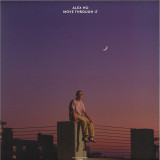
Similarly, Alex Ho's new album for Music From Memory, 'Move Through It', radiates with the unmistakable LA glow. While the Pasadena native's studio work is just now coming to light, Ho has long been a fixture in the Los Angeles dance music scene, throwing what are perhaps the city's most musically expansive warehouse events and carving out a singular voice as a DJ, as heard on his brilliant Moony Habits show for NTS. The eight-track record, however, lands in a more contemplative zone, better suited for a golden hour drive than a night out.
Though it's his first record, 'Move Through It' is the accomplished work of a fully-formed artist, produced patiently between 2017 and 2020 with help from friends including Baba Stiltz, Phil Cho, Damon Palermo and John Jones. "Mark," the Koanic track conclusion side A, is an arpeggiated slow burn reminiscent of Pino Donaggio's brilliant score for Brian De Palma's 1984 film Body Double. Ho's stunning, pure falsetto soars above gentle melodies. "Miss Suzuki," the piece that originally caught the ear of MFM's Jamie Tiller and Tako, opens the record with a blue, cinematic sway. Ho's facility for poignant melodies—easily conveyed through saxophone, vibes, various keyboards and his own voice—shines on "College Crest Drive," as well as the title track. The lyrical "Move Through It" and the restrained and beautiful closing cut, "TYFC," are abetted by glimmering Kraut guitar figures courtesy of John Jones.
While Ho's rhythms and melodies paint a crystal-clear musical vision, the music's emotional centre is more elusive, indicative of a yearning feeling synonymous with the City Of Angels. Hitting these hazy and subtle notes, Move Through It falls within a canon of sun-addled records spanning from Herb Alpert's "Rotation" to Dam-Funk's Private Life trilogy as Garrett. An immersive and concise statement, Alex Ho's 'Move Through It' is as warm and uncanny as the city that inspired it, a definitive LA album.
Arnaud le Texier (Cocoon Records): "Top quality! Really nice.." 10/10
Cio D'Or (Telrae): "An amazing double Vinyl of different interpretations from some music friends in techno for Hypnus! Thank you!" 9/10
David Att (ATT Series): "SUPER VARIOS ARTIST. THANKS: D" 10/10
Deepbass (Informa Records): "Great remix package here! Will be using most of them, a true showcase of the love for Hypnus" 10/10
Etapp Kyle (Klockworks): "Edit Select and Mike Parker are winners!" 8/10
Exium (PoleGroup): "Great stuff, thanks!" 8/10
Francois X (Dement3d): "Perfect Package of Remix!" 10/10
I/Y: "wow.. really good.. too many of them to choose one favourite" 10/10
Kwartz (Shapeless Records): "Congratulations for this great work, I love every song of the release" 10/10
Mattias Fridell (Gynoid): "This is a very solid compilation congrats." 8/10
MTD (Sonntag Morgen): "AMAZING release! hard to choose a favorite..." 10/10
Mod21 (Prologue): "No words for this release.. Hypnus is flying high!!" 10/10
Nima Khak (H-Productions): "Great bits! The Ness mix is outstanding, but a lot of great stuff in this package! Will play for sure!" 9/10
Nobody Home (Home Records): "Very nice release with many of my favorite musicians! Thank you very much :-)" 8/10
Reggy van Oers (Affin): "Some crazy stuff in here! love it!" 9/10
Samuli Kemppi (M_REC Ltd.): "Fan boy likes. Brilliant release. Full support." 10/10
Svreca (Semantica Records): "Excellent release. Full support." 8/10
Takaaki Itoh (Phobiq): "what a great trks. im sure to play all of them. full support!" 10/10
Terence Fixmer (CLR): "Top release, difficult to choose a favourite here...all are nice." 10/10
The Noisemaker (Par Recordings): "Hypnus is going to be one of the best label on earth! full support! all tracks have his own personality and are well designed.. top for opening a djset" 10/10
Tommy Four Seven (Stroboscopic Artefacts): "Big!" 8/10
Also supported by:
Dimi Angelis, Unam Zetineb, Antonio de Angelis, Artefakt, DARS, Gianluca Meloni, Jonas Kopp, Hector Oaks, Juho Kahilainen, Vilix, Eric Cloutier, Brendon Moeller (Echologist), Iori, Jose Pouj, VSK, AnD, Rasmus Hedlund, Victor Martinez, Antonio Vazquez, BLNDR, Luigi Tozzi and many more.
On his fourth album proper, Now Here No Where, Danish producer Kölsch (aka Rune Reilly Kölsch) is charting new terrain. Fans of his ‘years trilogy’ – 1977, 1983 and 1989, released on Kompakt over the past decade – were privy to a kind of sonic diary, an autobiography, tracking the artist’s early years through three albums of superior, meticulously rendered techno. Calling in collaborators where needed – most notably, the strings of Gregor Schwellenbach – there was still something deeply personal going down, not quite hermetic, but internally focused; the albums proved not only Kölsch’s mastery of his chosen form, but also his capacity to make techno personal, individual, and to trace histories of the self through music. But on Now Here No Where, Kölsch finds his feet firmly planted in the present. Reflecting on his new album, he notes, “It is fascinating to write about memories and feelings that have had years to manifest and develop, but how would I approach current emotions?” It’s a good question: our past coheres through the narratives we build around memories, but the moment we’re in, the newness of the now-ness, is harder to navigate; this story is as yet untold. For Kölsch, this makes Nowhere Now Here “an album about life in the year 2020. A time defined by confusion, misinformation and environmental challenges. It is an emotional interpretation of personal and mental challenges, observations and personal growth.” Kölsch does this with music that effortlessly balances emotional heft with the dancefloor’s brimming desires. It’s a space that Kölsch has navigated for a while now – one of techno’s breakthrough acts, an in-demand DJ across the globe and a prolific and restlessly creative producer, he’s also Kompakt’s biggest-selling act – but Now Here No Where ratchets up the lushness, making for a delirious drift across twelve tracks that are at once perfectly poised and deeply trippy. “Great Escape” is an elegant swoon, an opener that pivots on a sigh and a prayer; then “Shoulder Of Giants” bustles into view, subliminal clatter and an aching violin line giving way to a riff that glows with fluorescence and iridescence. “Remind You” combines an odd ECM jazziness with notes from a twenty-first century torch song; “Sleeper Must Awaken” mines huge buzzing synths and lets them float, in and out of sync, with reduced, ticking beats; “Traumfabrik” (dream factory – there’s a giveaway) is oddly lush, the tones malleable and plastic, morphing across a glitching undertow. There are sad, emotional washes of strings throughout the penultimate “While Waiting For Something To Care About”, while “Romtech User Manual”’s patterns twist and shape in the light. Throughout, Kölsch never keeps his eye off the dancefloor, and you can tell this is his still his home. “The amount of energy and joy I experience every time I perform, has a profound effect on me. It has inspired me so much of late and has become an integral part of my musicality.” “The way we join in expressing our hope for the future every weekend has given me so much,” Kölsch concludes. The club as a temporary autonomous zone, as a space both of freedom and of politics; somehow, that’s all here, Now Here No Where. “Most of all, it is an album about hope.”
Auf seinem vierten Album “Now Here No Where” betritt der dänische Produzent Kölsch (alias Rune Reilly Kölsch) neues Terrain. Seine Trilogie mit den Jahreszahlen 1977, 1983 und 1989, die in den letzten zehn Jahren bei Kompakt erschienen war, hatte seine Fans durch eine Art akustisches Tagebuch, eine Autobiografie geführt, die die frühen Jahre des Künstlers über die Länge von drei großartig produzierten Techno-Alben nachgezeichnet hatte. Wo es nötig war, wurden Kollaborateure hinzugezogen - allen voran für die Streicher, arrangiert von Gregor Schwellenbach -, dennoch zeichnete die Musik immer auch etwas zutiefst Persönliches aus, etwas nicht Hermetisches, auf eine bestimmte Art immer auch nach Innen fokussiert. Die Alben bewiesen nicht nur, wie sehr Kölsch die von ihm gewählte äußere Form beherrscht, sondern auch seine Fähigkeit, Techno zu etwas Persönlichem und Individuellem zu machen und der eigene Geschichte durch Musik näher zu kommen.
Auf “Now Here No Where” steht Kölsch nun mit beiden Beinen fest auf dem Boden der Gegenwart. Mit Blick auf sein neues Album stellt er fest: "Es ist faszinierend, über Erinnerungen und Gefühle zu schreiben, die Zeit hatten, sich zu manifestieren und zu entwickeln, aber wie nähere ich mich meinen aktuellen Emotionen?”. Eine gute Frage: Unsere Vergangenheit wird im Innersten zusammengehalten durch Geschichten, die aus Erinnerungen entstehen, aber der Moment, in dem wir uns befinden, die Neuheit des Neuen, ist schwieriger zu beschreiben; die Geschichte ist noch nicht erzählt. Für Kölsch ist “No Here Now Where” daher "ein Album über das Leben im Jahr 2020. Eine Zeit, die von Verwirrung, Desinformation und ökologischen Herausforderungen geprägt ist. Es geht dabei um die emotionale Interpretation von persönlichen und mentalen Herausforderungen, von Beobachtungen und der eigenen, individuellen Weiterentwicklung".
Kölsch tut dies mit Musik, die mühelos kleine Gefühlsausbrüche mit den großen Sehnsüchten der Tanzfläche in Einklang bringt. Es ist dieser Zwischenraum, in dem sich Kölsch schon seit einiger Zeit bewegt, als weltweit gefragter und gefeierter Live Act, DJ und so unermüdlicher wie kreativer Produzent (nicht umsonst ist Kölsch der “biggest-selling-artist” bei Kompakt), doch “Now Here No Where” treibt all das noch weiter auf die Spitze: ein enormer Sog entsteht, der uns über zwölf Tracks hinweg gefangen hält wie ein perfekt ausbalancierter Trip. Der Opener "Great Escape" ist pure Eleganz, ein Track, der irgendwo zwischen Seufzer und Gebet hin und her schwankt; dann drängt "Shoulder Of Giants" ins Blickfeld, ein unterschwelliges Geklapper, eine wehende Geige, schließlich ein schillernder Riff, der in der Dunkelheit zu leuchten und zu glühen scheint.
"Remind You" kombiniert seltsamen ECM-Jazz mit einem sentimentalen Liebeslied des 21. Jahrhunderts; "Sleeper Must Awaken" schürft im Bergwerk riesiger Synthesizer, mal im Takt, mal aus dem Takt ticken die minimalen Beats; "Traumfabrik" ist ungewöhnlich “lush”, die einzelnen Töne, geschmeidig und modelliert, zerfließen in einem glitzernden Abgrund. Das vorletzte Stück "While Waiting For Something To Care About" wird von traurigen, emotionalen Strings untermalt, während sich die Strukturen von "Romtech User Manual" im Licht drehen und immer wieder neu formieren. Die ganze Zeit über behält Kölsch die Tanzfläche im Auge, und man merkt ihm an, dass sie immer noch sein Zuhause ist: "Die Menge an Energie und Freude, die ich bei jedem Auftritt erlebe, hat eine tiefe Wirkung auf mich. Sie hat mich gerade in letzter Zeit stark inspiriert und ist zu einem integralen Bestandteil meiner Musik geworden.”
"Die Art und Weise, wie wir an jedem Wochenende gemeinsam unsere Hoffnung auf eine bessere Zukunft zum Ausdruck bringen, hat mir viel gegeben", so Kölsch abschließend. Die Vision des Clubs als eine temporäre autonome Zone, als ein Raum von großer Freiheit aber auch von politischen Ideen, das ist irgendwie alles hier drin, Now Here No Where. "Es ist vor allem ein Album über Hoffnung."
When we started Ilian Tape 10 years ago in 2007, we were both basically kids at the ages of 23 (Dario) and 18 (Marco). There was no plan behind it, no concept, no promotion campaign or any budget, but just an early vision of where it could go. We wanted to build something that lasts. After a few years of playing at parties and producing music, it was the next logical step to start a label. You can clearly see us growing up through the label in terms of artwork, compiling the records and handling things. We made some mistakes along the way and there are surely things we could have done better, but looking back after 10 years now it all makes sense as it was a natural and human development with all its ups and downs.It was always a very personal project, never about making money, but about creating a platform for music we believe in and building relationships with artists in a transparent and fair way. We really appreciate that we were able to work with so many great artists, who shared the same vision and trusted in us, over all the years. A while ago we moved away from the ordinary release info write ups, because in general writing about music is tricky and who isn't tired of the typical, full of praise for every detail of a record, release textsBut this might be starting to get boring for you too, so just buy this lovely triple vinyl package including a poster and download code, light one up and turn up the volume!One last thing though - we want to deeply thank our parents for teaching us to live our dreams and find out who we really are, our friends for the vibes and honesty, all the artists releasing on the label, all the supporters & fans for buying vinyl and files, all the DJ's playing out the stuff, all the diggers selling the stuff overpriced on Discogs, all the dancers working out on the dancefloors & all the clubs doing label nights over all the years.
Back from ‘96 — Abacus’ legendary The Abacus EP returns, now reissued as Erotic Illusions. Deep, soulful and hypnotic house at its finest, straight from the Guidance era. Pure timeless heat — grab it before it vanishes again.
DJ Feedbacks :
Laurent Garnier : Classic <3 <3
Nick Hoppner : OOOOOH YES
Dan Beaumont (Chapter 10 / NTS) : Decadent dub for me! lovely
Louise Chen (NTS) : Huge fan, this is a wonderfully sexy reissue!
Joel Martin (Quiet Village) : Timeless Classic from one of the masters - Essential!
Kölsch (IPSO / Kompakt) : Still sounds so fresh
Sven von Thuelen (SVT / Work Them) : Sublime!
Josh Wink (Ovum) : Sounds just as great as when it first came out!
Satoshi Tomiie (Abstract Architecture) : Soooo good! Every details tuned precisely
Carista : sickkkk
Crackazat (Freerange / Local Talk) : yes. of course
Anthony Collins (Frank & Tony / Scissor & Thread) : fantastic record
Hunee (Rush Hour) : classic!
Call Super (Houndstooth) : lovely thxxx
Erol Alkan (Phantasy Sound) : Downloading Thanks!
Radio Slave (Rekids) : Such a big fan !!! Full support and congrats on the re-release. Peeps need to know about "Abacus".
Ben Sims : Now downloading... will check asap!
nd_baumecker (Ostgut Ton) : YAAAAAS! Finally I have this in a better quality than my vinyl rip from the original 12". Vinyl is preordered. Thanks!
Jonnie Wilkes (Optimo) : SEMINAL.
Lawrence (Dial) : OMG Fave Classic!
Fouk (House of Disco / Razor N Tape / Room With A View / Heist) : Ooooh yes! <3
Hector Romero (Def Mix) : Love it. H
Aleqs Notal : Lovely repress
Alinka (Twirl / Classic / Crosstown Rebels / Batty Bass) : Beautiful tracks
Terry Farley : fantastic reissue for those that missed the golden era
Ian Pooley (Pooledmusic) : Sooooooooo good !
Marcia Carr : The Dub without a lot less of the sleazy vocal is cool.
Nick Holder : FIRE
DJ Bone (FURTHER) : Poetic Illusions and Decadent Dub both work for me.
Nat Wendell (Depth of My Soul / Courtesy of Balance / Love & Loops) : classy!!
Luke Solomon (Classic / Freaks / Music For Freaks) : absolute classic Kenny Hawkes special xxx
ROD / Benny Rodrigues : !!!!
Domenic Cappello (Subclub) : still sounds fresh
Alexkid (Rawax / FUSE / NG Trax) : Total Dopeness
Jimpster (Freerange) : An absolute classic from the golden era! Got the vinyl but I'm sure these new masters will sound better than my well worn vinyl rip! Will keep on banging this beauty.
Bake (All Caps / Rinse FM) : the best! thank you for reissuing :)
Dj Deep (Deeply Rooted) : Nice to see this beautiful release available again
Kai Alce (Real Soon) : CLASSIK!!
Mr. V (Sole Channel / Strictly Rhythm / Salter / Defected) : Solid work on this classic Thanks
Baby Rollen (Holding Hands / Slump / Futureboogie) : timeless
DJ Gregory (Point G / Faya Combo) : Alwayes loved that classic
Tom Esselle (YAM / Rhythm Section / WOLF Music) : Killer reissue!
Harri (Sub Club) : nice, will play and support
Hifi Sean (Defected / Plastique) : Diggin' this dub big time
Jenifa Mayanja (Bumako Recordings) : This reissue sounds just as good second time around. Straight dance floor magic. Moody and dubby perfect to zone out to in a dark corner somewhere.
Demuja (MUJA / Let's Play House / Madhouse / Freerange) : nice!!
Marcel Dettmann : thx
Kosh (Syncrophone) : doesnt get any better than this
Dj Hutch (Ambers / Rinse FM) : Lovely deep business! Thank you!
Geir Aspenes (G-Ha / Sunkissed) : Kool, thanks
D'Julz (Bass Culture) : classic alert!
Die Welt war nie bereit für The Monsters, und The Monsters waren nie bereit für diese Welt. Nach vierzig Jahren, in denen sie zu einem echten Monster aus Fleisch und Blut herangereift sind, präsentieren sie ihr neuntes Album: gut ein Dutzend kompromissloser, wilder, lärmiger und fuzz-geladener Tracks. Ein Mix aus Ein-Riff-Beat, Trash, Garage, "Bern Metal", Boogie, Punk und Grunge - Songs, die einen von innen nach außen stülpen, aufgenommen mit "Miracle" Robert "Worker" Butler und abgemischt von Jim "Dirtbomb" Diamond - ein echtes Garage-Punk-Dreamteam. Vor vierzig Jahren, 1986, war die Jugendkultur-Revolution in Bern (Schweiz) in vollem Gange, Jugendliche und junge Erwachsene wollten sich aus den konservativen Fesseln befreien. Die Straßen brannten, Clubs entstanden und eine neue Schweizer Musikkultur wurde geboren. Dies markierte auch den Beginn von The Monsters. Vierzig Jahre später hat sich der Zustand der Musikkultur - oder vielmehr der Welt im Allgemeinen - wohl eher verschlechtert. Individuelles Denken und Schaffen sind nach wie vor nicht sonderlich anerkannt oder gar erwünscht (Hey KI!). Im März 2026 blieb der Band also nichts anderes übrig, als ihre Instrumente, das Aufnahme-Equipment und ihre Ideen in den Proberaum zu verfrachten. Sie verbrachten einen Monat mit Robert Butler (u. a. The Miracle Workers) und seinem mobilen "Two Cent Recording Studio". Sie schrieben Texte (insgesamt etwa 100 Wörter - mal sinnvoll, mal unsinnig, über das ganze Album verstreut), tüftelten am Sound und nahmen Gitarren in allen erdenklichen Variationen auf. Das Ganze wurde gewürzt mit Percussion, Schlagzeug, Bass sowie obskuren Orgeln und Synthesizern, die sie auf Flohmärkten oder in den Kellern von Freunden aufgetrieben hatten. Nach diesem vierwöchigen Trip schickten sie das gesamte Chaos an Jim Diamond (Ghetto Recorders Studios in Detroit, Dirtbombs, White Stripes, Gories, André Williams... klar, worum es geht, ne?!), um es einem umwerfenden Mix-Abenteuer zu unterziehen. Das Ergebnis ist ein Dutzend Songs ohne Kompromisse, Schwächen oder Stärken. Einfach nur roher, ungeschliffener Lo-Fi-Garage-Punk'n'Roll voller Energie - und das mit vierzig Jahren "Nicht-Erfahrung". Erhältlich sind schwarzes Vinyl und eine pinke Picture-Disc (beide mit Insert & DLC), eine höchst audiophile CD sowie Kassette, die bei doppelter Geschwindigkeit leiert! Für Fans von Reverend Beat-Man, VRR, The Mummies, Oblivians, Billy Childish, Damaged Goods, Monks, very early Hives, Garagepunk, Lo-Fi-Roll, Alternative Beat
Die Welt war nie bereit für The Monsters, und The Monsters waren nie bereit für diese Welt. Nach vierzig Jahren, in denen sie zu einem echten Monster aus Fleisch und Blut herangereift sind, präsentieren sie ihr neuntes Album: gut ein Dutzend kompromissloser, wilder, lärmiger und fuzz-geladener Tracks. Ein Mix aus Ein-Riff-Beat, Trash, Garage, "Bern Metal", Boogie, Punk und Grunge - Songs, die einen von innen nach außen stülpen, aufgenommen mit "Miracle" Robert "Worker" Butler und abgemischt von Jim "Dirtbomb" Diamond - ein echtes Garage-Punk-Dreamteam. Vor vierzig Jahren, 1986, war die Jugendkultur-Revolution in Bern (Schweiz) in vollem Gange, Jugendliche und junge Erwachsene wollten sich aus den konservativen Fesseln befreien. Die Straßen brannten, Clubs entstanden und eine neue Schweizer Musikkultur wurde geboren. Dies markierte auch den Beginn von The Monsters. Vierzig Jahre später hat sich der Zustand der Musikkultur - oder vielmehr der Welt im Allgemeinen - wohl eher verschlechtert. Individuelles Denken und Schaffen sind nach wie vor nicht sonderlich anerkannt oder gar erwünscht (Hey KI!). Im März 2026 blieb der Band also nichts anderes übrig, als ihre Instrumente, das Aufnahme-Equipment und ihre Ideen in den Proberaum zu verfrachten. Sie verbrachten einen Monat mit Robert Butler (u. a. The Miracle Workers) und seinem mobilen "Two Cent Recording Studio". Sie schrieben Texte (insgesamt etwa 100 Wörter - mal sinnvoll, mal unsinnig, über das ganze Album verstreut), tüftelten am Sound und nahmen Gitarren in allen erdenklichen Variationen auf. Das Ganze wurde gewürzt mit Percussion, Schlagzeug, Bass sowie obskuren Orgeln und Synthesizern, die sie auf Flohmärkten oder in den Kellern von Freunden aufgetrieben hatten. Nach diesem vierwöchigen Trip schickten sie das gesamte Chaos an Jim Diamond (Ghetto Recorders Studios in Detroit, Dirtbombs, White Stripes, Gories, André Williams... klar, worum es geht, ne?!), um es einem umwerfenden Mix-Abenteuer zu unterziehen. Das Ergebnis ist ein Dutzend Songs ohne Kompromisse, Schwächen oder Stärken. Einfach nur roher, ungeschliffener Lo-Fi-Garage-Punk'n'Roll voller Energie - und das mit vierzig Jahren "Nicht-Erfahrung". Erhältlich sind schwarzes Vinyl und eine pinke Picture-Disc (beide mit Insert & DLC), eine höchst audiophile CD sowie Kassette, die bei doppelter Geschwindigkeit leiert! Für Fans von Reverend Beat-Man, VRR, The Mummies, Oblivians, Billy Childish, Damaged Goods, Monks, very early Hives, Garagepunk, Lo-Fi-Roll, Alternative Beat
Die Welt war nie bereit für The Monsters, und The Monsters waren nie bereit für diese Welt. Nach vierzig Jahren, in denen sie zu einem echten Monster aus Fleisch und Blut herangereift sind, präsentieren sie ihr neuntes Album: gut ein Dutzend kompromissloser, wilder, lärmiger und fuzz-geladener Tracks. Ein Mix aus Ein-Riff-Beat, Trash, Garage, "Bern Metal", Boogie, Punk und Grunge - Songs, die einen von innen nach außen stülpen, aufgenommen mit "Miracle" Robert "Worker" Butler und abgemischt von Jim "Dirtbomb" Diamond - ein echtes Garage-Punk-Dreamteam. Vor vierzig Jahren, 1986, war die Jugendkultur-Revolution in Bern (Schweiz) in vollem Gange, Jugendliche und junge Erwachsene wollten sich aus den konservativen Fesseln befreien. Die Straßen brannten, Clubs entstanden und eine neue Schweizer Musikkultur wurde geboren. Dies markierte auch den Beginn von The Monsters. Vierzig Jahre später hat sich der Zustand der Musikkultur - oder vielmehr der Welt im Allgemeinen - wohl eher verschlechtert. Individuelles Denken und Schaffen sind nach wie vor nicht sonderlich anerkannt oder gar erwünscht (Hey KI!). Im März 2026 blieb der Band also nichts anderes übrig, als ihre Instrumente, das Aufnahme-Equipment und ihre Ideen in den Proberaum zu verfrachten. Sie verbrachten einen Monat mit Robert Butler (u. a. The Miracle Workers) und seinem mobilen "Two Cent Recording Studio". Sie schrieben Texte (insgesamt etwa 100 Wörter - mal sinnvoll, mal unsinnig, über das ganze Album verstreut), tüftelten am Sound und nahmen Gitarren in allen erdenklichen Variationen auf. Das Ganze wurde gewürzt mit Percussion, Schlagzeug, Bass sowie obskuren Orgeln und Synthesizern, die sie auf Flohmärkten oder in den Kellern von Freunden aufgetrieben hatten. Nach diesem vierwöchigen Trip schickten sie das gesamte Chaos an Jim Diamond (Ghetto Recorders Studios in Detroit, Dirtbombs, White Stripes, Gories, André Williams... klar, worum es geht, ne?!), um es einem umwerfenden Mix-Abenteuer zu unterziehen. Das Ergebnis ist ein Dutzend Songs ohne Kompromisse, Schwächen oder Stärken. Einfach nur roher, ungeschliffener Lo-Fi-Garage-Punk'n'Roll voller Energie - und das mit vierzig Jahren "Nicht-Erfahrung". Erhältlich sind schwarzes Vinyl und eine pinke Picture-Disc (beide mit Insert & DLC), eine höchst audiophile CD sowie Kassette, die bei doppelter Geschwindigkeit leiert! Für Fans von Reverend Beat-Man, VRR, The Mummies, Oblivians, Billy Childish, Damaged Goods, Monks, very early Hives, Garagepunk, Lo-Fi-Roll, Alternative Beat
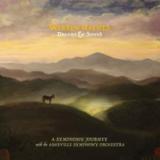
For more than three decades, this Grammy-winning US bandleader and roots master has outrun genre, classification and comfort zone, journeying between the acclaimed solo work with his own name on the marquee, his storied jam-band Gov't Mule, and America's fabled rock 'n' roll institutions from the Allman Brothers Band to the Grateful Dead. To represent this lifetime of roots and branches in a single project, while tearing down and reimagining his songbook with bold orchestral arrangements, acknowledges Haynes, was a daunting prospect that nonetheless exerted an irresistible pull. Now, the resulting live album - Dreams & Songs, released September 18, 2026 - is a living document of 2019's one- of- a- kind concert at the Thomas Wolfe Auditorium, with a visceral mix by the legendary Bob Clearmountain capturing the thrilling collision between Haynes' lineup of seasoned rock 'n' roll improvisers and the 64- piece Asheville Symphony Orchestra.
Golden Ape Records unleashes another foray from the outer reaches of bass, Luke’s Anger’s - One Machine to Rule Them All EP with a Radioactive Man remix! Available in super limited edition of 100.
His mastery of this one Analogue machine has brought forth a new EP of singular intent, to give the horns, tweeters and woofers of club sound systems a proper workout! Electro rules again - bass to crush bones, drums to jerk your body and synths to rewire your brain. The overall effect is an intense, exhilarating and liberating experience that breathes fresh life into a storied music genre.
He is ably assisted by Keith Tenniswood aka Radioactive Man on remix duties of the track No Undo. He brings to fore his sweet and nasty sides to create a growling bass ridden beast that begins with a blissful promise and then puts the boot into your pleasure zones.
Handle with caution!
out of Stock
Last delivered 46 days ago available to reorder, subject to availability
In 2021, Golden Earring announced their parting after more than 60-years as a group. This meant that their last live show, held at the Rotterdam Ahoy on 16th November 2019, was also their final performance as a band. With this knowledge, the excellent audio recordings of this tremendous concert were unshelved in close cooperation with the band and John Sonneveld – the band’s long-time technical assistant and producer. The result: You Know We Love You!
It's the ultimate goodbye of this legendary Dutch rock band and available as a limited edition of 500 individually numbered copies on transparent vinyl. This 3LP is packlaged in a deluxe trifold sleeve featuring a collage of photos that fans of Golden Earring submitted, plus a 4-page booklet including a replica of the original concert poster.
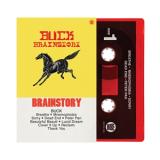
What is Buck? Buck is a state of mind, a way of life, a demeanor that gets you through the good times and the bad. If you ask Brainstory, It is also the energy that permeates their debut album. Kevin, Tony, and Eric are a trio of brothers bounded by blood, fate, and a small town with nothing to do. Their story begins in the long lost lands of the San Bernardino Valley, in the twilight zone known as Rialto, California: An arid wasteland of boredom and empty lots. Through punk rock and skateboarding they found temporary liberation from the local monotony. However, it wouldn't be long before a hunger for more led them to explore musical realms beyond that of the hardcore punk they admired. After stints at music school and steady disappointment trying to navigate their local jazz scene they moved to Los Angeles and Brainstory was born. Through a introduction from Chicano Batman's bassist, Brainstory caught the ears of Big Crown head honchos Danny Akalepse and Leon Michels. Shortly thereafter they were on their way to Queens, to record at The Legendary Diamond Mine with Michels at the helm. An instant chemistry yielded 10 songs in 10 days and now Brainstory has gifted the world with one hell of an introduction to all things Buck. Highlights include the sublime slow burner, "Dead End" which was the A-side to their first 45 on Big Crown that sold out in a matter of days. With Kevin's sublime falsetto floating atop Tony and Eric's unflappable and unmistakable backbeat, this tune has become a favorite with the ballad heads, the low-riders, and the slowie collectors. "Breathe" showcases another side of their sound taking a page out of the Shuggie Otis playbook and flipping the script with some stoned out west coast swag. Kev and Tony's father, Big Tone, an accomplished performer himself, steps in on "Peter Pan" to sing lead vocals over a chorus of friends and family. Bassist extraordinaire, Tony, takes over lead vocal duties on "Sorry", a smoked out, G Funk groove that is just waiting to be sampled. These guys have come a long way from their self released EPs and opening tours with Chicano Batman. Their musical growth is undeniable, and taking their California sunshine vibes and mixing them with Michels' NYC aesthetic has proven to be an amazing combination. It's a debut record that pulls influences from so many genres seamlessly it's hard to nail down. Call it Funk, call it Rock, call it Soul, but over here at Big Crown HQ, we've decided to call it BUCK.
Mariá Portugal has been active in the music scenes of Brazil and Europe as a drummer, composer, singer, and music producer. After graduating in composition, she has focused her research on free improvisation and its possible intersections with popular song. This exploration resulted in her acclaimed album EROSÃO (2021) and in the formation of two groups: the EROSÃO Septet and the EROSÃO Percussion Trio, both based in Germany.
She is also a member of the group Quartabê and has toured and recorded around the world with various artists, moving between pop, free jazz, free improvisation, and Brazilian popular music. She has performed and recorded with artists such as Elza Soares, Anthony Braxton, Joe McPhee, Fred Frith, and Tomeka Reid. She is a member of Fire! Orchestra, Fire! Trio, Endless Breakfast and MONSTER.
In 2020, Portugal was the 13th Improviser in Residence at the Moers Festival. As a curator, she has participated in the Soundtrips-NRW in Duisburg and currently coordinates the concert series “TOMA CHOCOLATE!” in Berlin, besides being the guest curator for this year's unlimited Wels festival. She also composes music for dance, theater, and film, including the award-winning soundtrack for the film “1976”, which earned her the Chilean Film Academy Award in 2025. She was nominated for the 2025 and 2026 German Jazz Prize in the drums and percussion category.
Emilio Gordoa is a Mexican sound artist, percussionist, and composer whose work focuses on sound and performance as primary means of expresion. Based in Berlin since 2012, he has been an active contributor to the city’s Echtzeitmusik scene and is involved in the international avant-garde music community.
His projects include solo and ensemble performances, sound installations, and compositions for film, theater and dance. He has collaborated with a wide range of artists, including Jérôme Noetinger, Ingrid Schomliner, Yuko Kaseki, Burkhard Beins, Don Malfon, John Butcher and Sabiene Vogel. Gordoa’s approach combines experimental percussive techniques with electronic elements, leading to invitations to perform at events such as the Moers Festival, Meakusma Festival in Belgium, A’larme!, and Maerzmusik in Berlin.
He founded WildSonico, a platform for experimental music, and has been part of artist residencies at institutions like the Akademie der Künste and Kunststiftung NRW. He also worked as the Improviser in Residence for the Moers Festival. His discography includes albums such as Substantial Myths (2022), Balderi Variations (2019), and GRIFF (2021), which reflect his ongoing engagement with music. His work has been supported by organizations such as the Goethe-Institut, Musikfonds e.V., and INM - initiative neue musik berlin, and he has received recognition, including an Honorary Mention at the Prix Ars Electronica.
Burkhard Beins was born in 1964 in Lower Saxony and has been living in Berlin since 1995. He is considered a stylistically influential percussionist as a composer/performer, due to his individually developed playing techniques. Additionally, he works with analog synthesizers and live electronics, plays electric bass, and has created various sound installations.
He collaborates as a soloist, as well as with artists such as Chris Abrahams, Keith Rowe, Sven-Åke Johansson, Axel Dörner, Andrea Neumann, and many others. He is also a member of several ensembles including Sawt Out, Activity Center, Polwechsel, The Sealed Knot, Zone Null, Perlonex, Trio Sowari, Vertigo Transport, the NoWave/Krautrock band Slurge, and the Berlin Splitter Orchestra.
Since the late 1980s, he has performed concerts and participated in international festivals for experimental and contemporary music across Europe, America, Asia, and Australia. He has released more than 70 CDs and LPs in collaboration with various artists.
Burkhard Beins has been an Artist-In-Residence at the Künstlerhäuser Worpswede (2009), EMS Stockholm (2014), Muong Studios, Hoa Binh/Vietnam (2015), the Robert Rauschenberg Foundation, Captiva/Florida (2017), as well as at DAR, Drsukininkai/Lithuania (2018), and the Agosto Foundation, Prague (2019).
BBE Music’s celebrated J Jazz compilation series reaches its fifth and final volume in early 2026, culminating in a track list that maintains the exceptionally high standard first set with volume one back in 2018. This final volume features a selection of tracks that is as diverse as it is deep, reflecting the rich and varied Japanese jazz scene that spanned from the late 1960s to the late 1980s, a golden era of innovation and creativity. J Jazz volume 5 sees compilers Tony Higgins and Mike Peden dig ever deeper into their respective record collections to reveal tracks that encompass myriad styles including white hot jazz funk fusion from Toshiyuki Honda (Eastern Legacy) and Mikio Masuda (Sonic Barrier), super rare ethnic jazz crossover by Christal Zone - their one-off 45 promo release from 1971, Rai Rai, a deconstructed and abstract jazz classic by Yasuhiro Kohno with his solo piano rendition of My Favourite Things, and Mile and Half’s skin-tearing, shredding freak-out from their mega rare private press album.
A track that is so relentless, it leaves the listener in need of oxygen and a Valium. These hand-picked selections sit alongside other specially chosen numbers that embrace hard-driving samba (Seiichi Nakumura’s Judy’s Samba), epic head-nodding soul jazz (Masaru Imada’s World Line), psychedelic private press fusion (Aoyama Gakuin 101’s Fervor), angular post-bop tear-ups (Akira Miyazawa’s Nijimasu), intense and insistent fusion (Motohiko Hino’s Olive Step), serene cinematic pianism (Hideo Ichikawa’s On the Trade Wind) and tripped-out hallucinogenic tribal funky jazz (Masahiko Sato’s Garandoh’s Africa to Africa). Most of the tracks on this collection are being reissued for the first time, many of them only available previously on extremely limited and mega-rare private press or independent releases. J Jazz volume 5 is a fitting end to a compilation series that helped create a new audience and appreciation of Japanese jazz Some of the albums the tracks are drawn from are featured in the large format book J Jazz: Modern and Free Jazz from Japan 1954-1988, by Tony Higgins and Mike Peden, published by BBE Music in 2024. With almost 7000 words of extensive sleeve notes, J Jazz volume 5 comes in a triple 180g vinyl set inside a deluxe gatefold sleeve with obi strip, and comes with a 4-page insert, with photographs from the renowned Tokyo Jazz Joints project. It is also available as a double CD and digital download. Mastered at the Grammy-nominated Carvery Studio by Frank Merritt, this latest collection is a worthy successor to the preceding four volumes that set the bar so high. The J Jazz series is curated for BBE Music by Tony Higgins and Mike Peden.
out of Stock
Last delivered 69 days ago available to reorder, subject to availability
'Where the Smoke Goes captures the conscious and unconscious of Johnny Coley in duet between 2020-2024 AD. Alabama-born, Marseille-based artist Turner Williams Jr. wraps a selection of his dear friend Johnny’s penultimate compositions in arresting tone poems.
'The music buzzes and hums with distant trains, trembling strings, and lapping water, haloing our protagonist in a humid glow as he considers whether horses can live to 70 years old, cigarettes potent enough to knock you on your ass, and orchids facing the wrath of winter storms.
'This work began in the first Covid spring, as Johnny's advancing multiple sclerosis gave way to a permanent domestic confinement and a final period of prolific creativity. Johnny braved the toxic gales of social media to share his thriving poetry and visual art practice and to keep in touch with friends like Turner, who had recently moved abroad. For the first time, Johnny recorded himself, sending Turner fresh poems, day and night.
'Taking cues from late era Coil and the operas of Robert Ashley, Turner approached these recordings both as language and pure sound, arranging accompanying mosaics that emerge as much from Johnny’s unseen text as his mercurial drawl. Tracks draw from Turner’s solo practice as well as sessions including Henry Birdsey of Old Saw, members of the French underground (Manoir Molle, Loto Retina, Mona Assayag) and close Birmingham collaborators (Jasper Lee, Jimmy Griffin, Ladonna Smith). The voice is parsed and played as an instrument and each poem becomes a score.
'There is Johnny’s poetry and Johnny’s voice. These are two independent yet interwoven instruments. For Turner, Johnny's vocabulary, cadence, and timbre carry all of the contradictions that he writes about. His work is a dialogue of rich contradictions. "He plays with Southern American vernacular speech in his poetry while embodying it with his speech, creating a zone of emotional frisson. He loved combining opposites. Rough yet soft was one of his favourite descriptors", Turner recalls, "That was Johnny. ” Upon hearing the completed record, Johnny likened it to "a beautiful wood box, that when you open it there are fabrics shot through with silk threads and sharp fall woods smells - supporting and decorating the poems that fall out of them. ”
'This record captures something unconscious, atmospheric, and gives it unexpected materiality. Smoke that you can feel like grass under your feet. Stars that you can touch like a lover. Meeting for the final time in the summer or 2025, the time for words had passed so they just held hands and listened to the album opener Stargazer in silence as Johnny drifted off to sleep.'
Archival release from Lagoss, the collaborative project between Discrepant founder Gonçalo F. Cardoso (Gonzo, Visions Congo, Papillon, Prophetas) and Tenerife-based electronic producers Tupperwear (Mladen Kurajica and Dani Tupper).
Tenerife Ghost Healing Mix ’78 draws on material originally recorded in 2020, these recordings capture an early phase of Lagoss’ sound: a humid, proto-cyber tropical zone where synthetic textures, degraded rhythms and softened melodic fragments drift into each other. Rather than foregrounding narrative or structure, the material leans into ambient saturation — layers accumulating slowly, colours bleeding, signals slightly overdriven and left unresolved.
Sonically, the mix occupies a proto-cyber tropical zone—humid, blurred, and gently unstable. Layers of noise, softened rhythms, and synthetic textures accumulate into a form of ambient saturation, where density replaces direction and repetition becomes restorative rather than functional. The approach remains rough, unhinged and no-frills: raw signal paths, little correction, and a willingness to let things run slightly out of control.
Assembled from outtakes, alternate versions and early sketches, the tape favours atmosphere over structure, presenting the material in a slower, more inward-facing state than earlier Lagoss releases. It functions less as a remix than as a refracted memory of the original sessions, viewed through time, heat, signal decay—and left deliberately unfinished.
Born in the Washington, DC area and raised in West Virginia, Miller has built a reputation as a thoughtful, boundary- pushing voice in alt- country and Americana, drawing from punk, traditional Appalachian music, and less conventional rock influences. For this record, he left his comfort zone behind and traveled to Tulsa to record at the legendary Church Studio, drawn by the city's deep musical legacy and its ties to artists like J.J. Cale. Co- produced with longtime collaborator Adam Meisterhans , the album was tracked live with a band of Tulsa- based musicians, including Grammy- nominated John Fullbright, under the steady hand of veteran engineers Gary Laney and Mike Prado. The result is John R. Miller 's most ambitious work to date - a spacious, textured collection that expands on the critically praised Depreciated and Heat Comes Down, blending road- worn storytelling, fuzzy atmospheres, and reflections on movement, memory, and change. Rooted in his West Virginia past yet shaped by constant travel and new collaborations, The Great Unknowing captures an artist trusting the process, embracing risk, and letting the groove lead the way.
ALERT: BIG 90s ITALIAN RAVE COMP - a lot of very in demand tunes on here.
Navigators
Franco Falsini and the Interactive Test Universe
There are musicians who follow their time.
And then there are those who seem to move along a different trajectory—like navigators crossing sonic eras without ever truly belonging to any one of them. The story of Franco Falsini belongs to the latter. It is a story that begins long before raves, before techno, before the word “electronic” had even become a recognizable musical genre. A story that moves across continents, technologies, and sonic visions, eventually arriving at a small creative laboratory born in Italy in the early 1990s: Interactive Test. This compilation is a fragment of that universe. But as often happens with the hidden histories of music, understanding it requires going back. Far back.
The Beginning: Machines, Tape and Space
In the late 1960s Franco Falsini leaves Italy and moves to the United States. It is not merely a geographical journey—it is also a journey into a new idea of music. At the time, synthesizers are only just emerging from research laboratories. Multitrack tape recorders allow musicians to build entire sonic worlds on their own. Technology is still far from standardized: every studio is almost an experimental workshop. In Virginia, Falsini builds one of his own. Among cables, oscillators, electric guitars and reels of magnetic tape, a kind of music begins to take shape that resembles nothing else being made at the time. It is not simply rock, and it is not yet truly electronic. It moves somewhere in the space between the two. Out of these explorations emerges Sensations' Fix, the project through which Falsini releases a series of albums during the 1970s. Records that seem to come from a parallel dimension: cosmic landscapes, electronically treated guitars, synthesizers drifting like satellites. Many years later those albums would be rediscovered as visionary works. But at the time they were simply the result of relentless curiosity. A curiosity that would never fade.
The City That Never Sleeps
In the 1980s Falsini’s trajectory leads him to New York. The city is a sonic organism in constant transformation. In its clubs and recording studios something entirely new is beginning to take shape: music built from drum machines, sequencers, and samplers, created for the body before the living room. It is the dawn of modern dance culture. Falsini works as a sound engineer, producer and experimenter. From close range he observes electronic music transforming into a global language. Machines become more accessible, computers begin entering studios, and rhythm takes on an increasingly central role. Yet even in this phase Falsini does not simply follow what is happening. He absorbs. Observes. Reimagines. When he eventually returns to Italy, he brings back not only technical experience but also a clear vision: the conviction that electronic music is an open space, a territory still waiting to be explored.
Tuscany, Early 1990s
At the beginning of the 1990s something is happening in Italy as well. In clubs, abandoned industrial warehouses and clandestine parties, a new scene is beginning to form. It is rave culture: a spontaneous movement bringing together DJs, producers and listeners in a collective experience driven by rhythm, technology, and creative freedom. It is within this context that Franco Falsini, together with his brother Riccardo, creates Interactive Test.
The name almost sounds like a scientific experiment. In many ways, it is. Interactive Test does not emerge as a traditional record label. It begins as a laboratory—a place where ideas, sounds and musical identities can be tested and explored. Around the Falsini studio in Tuscany a small constellation of artists and DJs begins to gather, helping to shape the sound of Italy’s emerging electronic scene. Among them are Andrea Giuditta, Francesco Farfa, Gabry Fasano, Roby Mastelloni, Roby J and many others. Each brings a different musical sensibility. But they all share the same intuition: electronic music is not a genre. It is a language.
The Laboratory of Identities
One of the most fascinating aspects of the Interactive Test universe is its constant play with identity. Franco Falsini releases music under several different names: Open Space, Youth Wave, Agent Fylfoyt, Man Myth Magic. These are not simply pseudonyms.
They are different sonic perspectives, as if each project were a window opening onto a parallel musical universe. Open Space, for example, explores more atmospheric and visionary territories. Youth Wave moves between electronic groove and club-oriented rhythms. Other projects experiment with digital psychedelia or hypnotic techno textures. Interactive Test becomes something more than a label. it becomes an ecosystem.
Domestic Machines, Infinite Worlds
Looking back today at the technology used in those productions, one might almost smile. Many tracks were created on Amiga computers, MIDI sequencers and analog synthesizers wired together in home studios—tools that appear modest when compared to today’s digital possibilities.
Yet precisely these limitations became a creative force. Every sound had to be built, shaped and reinvented. Sequences developed slowly, almost like living organisms. The tracks did not always follow traditional dance music structures; often they felt like genuine sonic journeys. Music built from space.
A Hidden Constellation
Many of the records released by Interactive Test in the 1990s remained for years almost invisible objects, circulating quietly among DJs, collectors, and devoted listeners. Yet it is precisely this underground existence that helped preserve them. Listening again today, one perceives something rare: the feeling of music that does not fully belong to its own time. Music suspended between different eras. Perhaps because it comes from a vision that both precedes and transcends trends.
Continuing the Journey
Looking at Franco Falsini’s entire path—from the electronic psychedelia of Sensations’ Fix to the rave culture of the 1990s—a surprisingly coherent line emerges.
A line defined by exploration.
Each project, each pseudonym, each record appears as a new route within the same great sonic voyage.
Interactive Test was one of its stations.
A laboratory.
A community.
A creative platform.
This compilation gathers some of its traces.
Not as a simple archive of the past, but as a map of a musical territory that continues to expand even today.
Like all true sonic explorations.
out of Stock
Last delivered 6 days ago available to reorder, subject to availability
"Chance animates the smallest parts of the universe: the scintillation of the stars is its power, a wildflower its incantation."
—Georges Bataille, Le Petit
"Even on my way to the gambling hall, as soon as I hear, two rooms away, the clink of the scattered money I almost go into convulsions." —Fyodor Dostoevsky, The Gambler
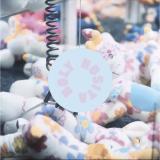
Video gambling addicts, academic researchers, and industry professionals alike describe the trancelike state into which problem gamblers suspend themselves with remarkable consistency: they unanimously call it the machine “zone,” a kind of inner experience during which the rhythmic flow of human-machine collusion borders on mysticism. Time is abolished in the act of contemporary video gambling —simulated slot reels roll, virtual poker decks deal, and all worldly concerns are lost—leaving only the aura of total zone immersion in its wake. Sometimes characterized as the crack cocaine of gambling, the intensity of the machine zone is a symptom of casino ergonomics: emotionally manipulative fragrance-saturation, mesmerizing lights, subtly controlling walkways and, as captured here, meticulously engineered sonic environments all play a role in evoking the timeless void of the zone.
Although I was not yet aware of the extent to which casinos tailor their environments for maximum comfort (and, correspondingly, profit), I did know as I crossed the threshold of my first casino floor last year that I would be back for more. Hit by a cornucopia of slot machine tones, triggering aleatorically and coalescing into shimmering masses, I was struck by the need to return and record the sounds that so entranced me. It wouldn't prove to be easy—casino security is intense—and due to the clandestine nature of the operation, my recording techniques were by no means sophisticated. Equipped with nothing but an Olympus LS-11 recorder's internal microphone stashed in a sweaty coat pocket, I allowed the lure of the zone to guide me through a series of ambling recording sessions, the best of which are included here.
I learned a lot about casino sonics in the process: game designers, for example, once tuned all their machines to the key of C major in order to optimize harmonic cohesion (strict adherence to the key is no more but C still dominates the game floor); one team of designers, the story goes, even spent a month perfecting a single 'ding' sound on one machine. In the interest of preserving the true ambient sounds of the casino these recordings are untreated, but lost in the sea of chance I did exert some affirmative control by means of meandering intent and my actual playing of the machines. And by participating in the games myself I got a taste of the financially debilitating consequences that accompany the enchantment of video gambling. The cassette in your hands represents my endeavor to bring you the zone experience without the harsh comedown of its unfortunate reality.
Maybe it was inevitable that Vilhelm Bromander and Fredrik Rasten would find each other. A symbiotic musical alliance of suggestive combinatory magic that stretches back to the interstitial two day space that separates their dates of birth and manifests here as the movement between ‘perfect’ or ‘just’ intonation and the ragged, psychoactive energy of the slippages from and towards that togetherness that render otherwise simple patterns or generally understood repetitions as wildly other and alive.
Astral Twins shares ‘twin’ works by each composer. The patiently unfolding real time retuning of Fredrik Rasten’s guitars on the a-side’s Sojourns and Vilhelm Bromander’s quickened steps and spry looping melodies on the flip’s Partially Dancing.
Both artists have history of going deep into the aesthetic and acoustic impact of intonation (how you think about what is ‘in tune’). Where their first LP (...for some reason that escapes us, 2019, Differ Records) shared a gorgeous set of sustained tone colour fields, this time they lean more explicitly into the folk music traditions of Scandinavia and further afield, whilst echoing the zoned minimalist atmosphere of Arthur Russell’s classic Instrumentals.
Recorded up close and in real time at Fylkingen’s soon-to-be-abandoned temporary location in Stockholm’s southern suburb of Bredäng, Astral Twins sings with the possibility that one plus one can equal more than two.
Fredrik Rasten: Sojourns explores the live retuning of guitar and double bass in a sequence of just intonation harmonies. A guitar ostinato runs throughout the piece where the retuning becomes an integral part of the composition. The slow pace reveals every detail in the transition from one harmonic arpeggio to another — how interfering waves emerge and disappear as the tonal interactions settle in electric clarity. The double bass shadows the guitar's process and comments with occasional pizzicato tones and register jumps, at times providing a low foundation for the sound and sometimes soaring together with the guitar. This is music that is deeply listening; experimental and at the same time humbly inviting many kinds of being with sound.
Vilhelm Bromander: As the title suggests, this song has a partially dancing character. The title also has a double meaning with reference to the partials and harmonics that dance together. The basic idea was to write music in just intonation that instead of being drone-based is reminiscent of a lightly dancing folk music, where the joyous feeling of just being in the music — “musicking" — is allowed to lead the way.
The double bass plays repeated overtone double stops in an open harmonic progression with subtle modulations that is inspired in equal parts by Steve Lacy's persistent repetition of phrases as east-asian khaen music. The guitars and mandolin have a freer role, with plucked retuned strings that enhance the bass's modulations and provide forward movement. The music invites to both melodic and spectral listening, suddenly halting so that other focal points can reveal themselves. For example, a chord sequence suddenly transitions to a more spectral part where Fredrik is playing a bowed guitar with a chain, several plucking guitars, voices, and pitch pipes. I wanted to make something ‘orchestral’ with just two people and no overdubs: a dance of overtones and open resonant strings, where we seamlessly take turns standing in the foreground.
• “Guerrilla Girls!”, Ace Records’ much-anticipated first release of 2023, takes us on a thrilling ride from punk’s mid-70s origins, via the left-field post-punk groups, jangly female combos, grunge bands and vigilante Riot Grrrls of the 80s and 90s, to the she-punk bands of recent years – a five-decade alternative to the macho hegemony of rock.
• The collection highlights songs that emerged out of a dynamic underculture of female creative expression. What unites the featured artists is a healthy disregard for the way the music industry ties up its female performers into pretty, neo-liberal packages. From Patti Smith, universal mother of the punk movement, to the Bags, Bikini Kill and Skinny Girl Diet, this music is anti-A&R. Including lesser-known names such as San Francisco street punk Mary Monday and London-based experimentalists pragVec, it shows that, rather than being a few novelty bands existing on the margins, these performers represent a stronger, more three-dimensional version of the female experience.
• Glorious resistance was on display in the first wave of UK female-fronted punk bands. Poly Styrene’s charged vocals on X-Ray Spex’s ‘Iama Poseur’, for instance, were a deliberate refusal to be a pretty punkette. With 15 year-old Lora Logic on saxophone, X-Ray Spex epitomised a fearless, self-defined agency that was at odds with the pastel shades and flowery, submissive Laura Ashley version of 1970s girlhood. By the early 80s, there was a hugely vibrant scene propelled by the diverse rhythms and voices of post-punk feminism. Lora Logic had left X-Ray Spex to form the interweaving textures of Essential Logic, the Mo-dettes mangled ska and off-kilter pop, and Birmingham band Au Pairs sliced political rigour into their lyrics and funky guitar work.
• Some female artists took that elemental energy into pop, creating pop-punk with a twist. We’ve Got A Fuzzbox And We’re Gonna Use It!! made a statement on music technology and female power with a cheeky play on words. Their song ‘Rules And Regulations’ shows that what Guerrilla Girls do well is debunking – taking genres of popular song and turning them inside out – like the way the Pandoras and the Pussywillows would amp up the driving beat and high vocals of the 60s girl group style, and subvert it with a DIY garage element.
• In its fanzine culture, use of montage and DIY music, 90s Riot Grrrl bands such as Bikini Kill and Bratmobile drew direct inspiration from 70s punk, articulated through the prism of Third Wave feminism. Too often, Riot Grrrl gigs were invaded by men intent on heckling “the enemy”. Liz Naylor, manager of British Riot Grrrl band Huggy Bear, says that their concerts became war zones. From the US grunge and Riot Grrrl scenes emerged more female instrumentalists, with bands such as L7 and Babes In Toyland proving that it was possible to recruit cutting-edge drummers, bass players and guitarists. Lori Barbero, whose relentless power drumming is a major element of Babes In Toyland, took the one instrument that has been a staple of male rock’n’roll and made it her muse.
• In the 2000s a new generation of girl-punk bands drew on the Riot Grrrl underculture to form their own sound. London trio the Tuts refashioned C86, Riot Grrrl and lush dream pop on songs like the ironically titled ‘Let Go Of The Past’, while the Regrettes injected shots of ska and doo wop into their explosive West Coast pop-punk. What began with Patti Smith and 70s punk has grown into a vast, spikey infrastructure of girl music. Many take inspiration from their foremothers, like Skinny Girl Diet whose vigilante feminism and punk distortion has been championed in return by Viv Albertine of the Slits. As long as these female artists stay aware of their musical vision and what they are trying to express – in a sense, A&R themselves – the underculture will continue to grow and flower. And this “Guerrilla Girls!” compilation is a celebration of that power.
• The back sleeve of the release features a scene-setting introductory essay by Lucy O’Brien (author of She Bop: The Definitive History Of Women In Popular Music). Each of the two discs come in a swanky inner bag containing a track commentary by compiler Mick Patrick (Ace Records’ long-serving champion of female artists of all persuasions) and exclusive interviews with many of the featured artists by Vim Renault and Lene Cortina (founders of the Punk Girl Diaries webzine).
out of Stock
Last delivered 5 months ago available to reorder, subject to availability
Just as you were getting your head straight coming off the 21st Trip … Brown Acid dose # 22 drops, continuing to fry your mind in a revolving trap-door Twilight Zone alternate world of early hard rock… populated by real life characters so far out they can look like a cheesy wedding band but sound like Blue Cheer! Uncanny! This music comes at you from many angles. Teens in a garage colliding with booze, drugs and girls for the first time, lounge lizard hustlers with snazzy stage clothes and fuzz boxes… gnarly backwoods troublemakers meet blow dried glam rock wannabes here, seamlessly clobbering your head with sound rather than each other! An electric post-psychedelic bar brawl for your mind awaits, unfasten your seat belt, crank it up and fly! Sounds Synonymous "Babylon" out of Flint, Michigan 1969 rip the devastating Blue Cheer classic a new one, immediately swarming you with organ swells and distortion before collapsing into a tuff funk groove, a psychedelic James Brown vibe shot through with dirty howling fuzz guitar, vocals nailing the messed up but confident relaxed sneering attitude of the original Cheer eruption. The Bumps "Shining" from Seattle 1969 resides right at the transition of ‘60s psych into early prog, well constructed, no diluting things artsy fartsy style, a compelling heavy riff, spacious vocal harmony hook floating above a turbulent take on getting your shit together and shining like a star. Fat chance, but you can dream, the band did and their dreams kick ass across time to right now or you wouldn’t be here.
Coulda been a hit back then, definitely a hit now. Riverside "Farmer" explodes out of Austin, Texas 1974, economical but brilliantly structured riffs and power chords, intense dynamic tension/release, fantastic screaming leads over shifting angles of attack during the middle break… it’s all here with a detached confidence in the vocal that swaggers back in time to the late ‘60s in its proto-heavy psych adjacent assault. Cincinnati Joe & Mad Lydia "Get It Together" for real in Cincinnati, Ohio 1970. The song says everything you need to know: “You may think that you’re the very best, miles and miles ahead of the rest, but be sure when you’re put to the test you get it together!” These words are deployed in a manner similar to Peter Green’s “Oh Well”, intermittently stated between killer gnarly guitar and gushy organ attacks. Bar band heaven and hell rolled up into one big ball, the vocals get all the way out there! Straight Up "Fire" takes the monster 1968 Crazy World Of Arthur Brown hit into faithfully executed but surreally minimalist territory, Minneapolis, Minnesota 1974. Genius version of a key song that presciently cuts to the chase regarding Brown Acid’s incinerations of psychedelic idealism, you’re gonna burn, burn, burn… as that moment climaxes you can gawk at their preposterous flashy lounge band stage outfits and realize side one must end because everything is totally scorched into eternity. Scrap Iron "Poopsie" is a primitive two chord stomper with spiraling fuzz and organ riffs, singer marking his territory caveman style. “Poopsie, you’re my woman” he commands, but gets weirdly insecure she’ll blow him off at the altar by the end of each verse. Snarly wah-wah ices this toxic cake out of Carteret, New Jersey 1973. Focused delivery so single-mindedly crude it creates an inescapable instant brain-worm. Lady "Live Show Tigers" is amongst the most potently life affirming trash rockers you’ll ever hear, one outrageously triumphant but fiercely sloppy anthem about living it up like a star, strutting the stage glammed up New York Dolls drag style but with a Dictators sense of humor. Tasty slightly off kilter guitar leads all through, going serendipitously berserk on the fade. Picture disc single out of L.A. 1980. Fantastic fun rock star rock at a very raw local street level where any time is party time.
Killer Frog "Hard Times" on Masochist Records from Chicago, Illinois 1972 takes less than two minutes, an action packed James Gang style bar band rocker with a bit of punky sneer in the face of misfortune. These guys never even heard of flower power. They are killer frogs. Good Humore "Killer" does kill in stripped down hard rock trio style, Warren, Michigan 1976. No frills guitar, bass and drums groove tight, snaky primordial riff, snarly licks. “She’s a killer of a woman, knows just what she’s doing…” The singer knows she’s a femme-fatale roadhouse predator but she’s so hot the inevitable wreckage seems a bargain. Ride it out like the extended jam on the fade knowing she’ll be back for more! Sarawest "Space Rider" winds up the 22nd Trip lost in a twisted two chord space adventure from the point of view of an alien visiting our planet seeking knowledge but finding out we are stupidly destroying ourselves, so he gotta split sneering back at us like we wasted his time “I got no time for loving… I wanna be a space rider, space rider”. Toronto, Canada 1974, a vibe lurking in some strange but funny void between late ‘60s outsider garage psychedelic rock complete with reverb-y acid guitar leads and late ‘70s retro-futuristic D.I.Y wisecracking from inner space… taking the piss out of outer space!
Just as you were getting your head straight coming off the 21st Trip … Brown Acid dose # 22 drops, continuing to fry your mind in a revolving trap-door Twilight Zone alternate world of early hard rock… populated by real life characters so far out they can look like a cheesy wedding band but sound like Blue Cheer! Uncanny! This music comes at you from many angles. Teens in a garage colliding with booze, drugs and girls for the first time, lounge lizard hustlers with snazzy stage clothes and fuzz boxes… gnarly backwoods troublemakers meet blow dried glam rock wannabes here, seamlessly clobbering your head with sound rather than each other! An electric post-psychedelic bar brawl for your mind awaits, unfasten your seat belt, crank it up and fly! Sounds Synonymous "Babylon" out of Flint, Michigan 1969 rip the devastating Blue Cheer classic a new one, immediately swarming you with organ swells and distortion before collapsing into a tuff funk groove, a psychedelic James Brown vibe shot through with dirty howling fuzz guitar, vocals nailing the messed up but confident relaxed sneering attitude of the original Cheer eruption. The Bumps "Shining" from Seattle 1969 resides right at the transition of ‘60s psych into early prog, well constructed, no diluting things artsy fartsy style, a compelling heavy riff, spacious vocal harmony hook floating above a turbulent take on getting your shit together and shining like a star. Fat chance, but you can dream, the band did and their dreams kick ass across time to right now or you wouldn’t be here.
Coulda been a hit back then, definitely a hit now. Riverside "Farmer" explodes out of Austin, Texas 1974, economical but brilliantly structured riffs and power chords, intense dynamic tension/release, fantastic screaming leads over shifting angles of attack during the middle break… it’s all here with a detached confidence in the vocal that swaggers back in time to the late ‘60s in its proto-heavy psych adjacent assault. Cincinnati Joe & Mad Lydia "Get It Together" for real in Cincinnati, Ohio 1970. The song says everything you need to know: “You may think that you’re the very best, miles and miles ahead of the rest, but be sure when you’re put to the test you get it together!” These words are deployed in a manner similar to Peter Green’s “Oh Well”, intermittently stated between killer gnarly guitar and gushy organ attacks. Bar band heaven and hell rolled up into one big ball, the vocals get all the way out there! Straight Up "Fire" takes the monster 1968 Crazy World Of Arthur Brown hit into faithfully executed but surreally minimalist territory, Minneapolis, Minnesota 1974. Genius version of a key song that presciently cuts to the chase regarding Brown Acid’s incinerations of psychedelic idealism, you’re gonna burn, burn, burn… as that moment climaxes you can gawk at their preposterous flashy lounge band stage outfits and realize side one must end because everything is totally scorched into eternity. Scrap Iron "Poopsie" is a primitive two chord stomper with spiraling fuzz and organ riffs, singer marking his territory caveman style. “Poopsie, you’re my woman” he commands, but gets weirdly insecure she’ll blow him off at the altar by the end of each verse. Snarly wah-wah ices this toxic cake out of Carteret, New Jersey 1973. Focused delivery so single-mindedly crude it creates an inescapable instant brain-worm. Lady "Live Show Tigers" is amongst the most potently life affirming trash rockers you’ll ever hear, one outrageously triumphant but fiercely sloppy anthem about living it up like a star, strutting the stage glammed up New York Dolls drag style but with a Dictators sense of humor. Tasty slightly off kilter guitar leads all through, going serendipitously berserk on the fade. Picture disc single out of L.A. 1980. Fantastic fun rock star rock at a very raw local street level where any time is party time.
Killer Frog "Hard Times" on Masochist Records from Chicago, Illinois 1972 takes less than two minutes, an action packed James Gang style bar band rocker with a bit of punky sneer in the face of misfortune. These guys never even heard of flower power. They are killer frogs. Good Humore "Killer" does kill in stripped down hard rock trio style, Warren, Michigan 1976. No frills guitar, bass and drums groove tight, snaky primordial riff, snarly licks. “She’s a killer of a woman, knows just what she’s doing…” The singer knows she’s a femme-fatale roadhouse predator but she’s so hot the inevitable wreckage seems a bargain. Ride it out like the extended jam on the fade knowing she’ll be back for more! Sarawest "Space Rider" winds up the 22nd Trip lost in a twisted two chord space adventure from the point of view of an alien visiting our planet seeking knowledge but finding out we are stupidly destroying ourselves, so he gotta split sneering back at us like we wasted his time “I got no time for loving… I wanna be a space rider, space rider”. Toronto, Canada 1974, a vibe lurking in some strange but funny void between late ‘60s outsider garage psychedelic rock complete with reverb-y acid guitar leads and late ‘70s retro-futuristic D.I.Y wisecracking from inner space… taking the piss out of outer space!
Rosita is a cheerful, well-liked woman with a fiery desire to have children. Those around her find it irresponsible because she can barely take care of herself. When Rosita does manage to become pregnant, she chooses to keep her pregnancy a secret.
David Martijn, guitarist and synth player in the electro-rock band GOOSE, wrote the music for the full-length album 'Holy Rosita'. His experience as a composer for projects such as 'De Dag', 'War of the Worlds', 'De Twaalf', and '1985' contributed to Martijn's desire to challenge himself again to come up with a fresh, distinctive sound, as he does with every project.
"My initial feeling was that I would have to step far out of my comfort zone to let the music tell this delicate story. I soon felt that the music needed to be light and open, in contrast to the uncertain and complex reality in which Rosita finds herself. Therefore, it seemed like a good plan to keep the score very close to Rosita and much less focused on her surroundings or reality. The music had to be, as it were, a reflection of the thoughts and feelings playing out in Rosita's mind. That is often hopeful, determined, lively, sometimes a bit naive, and at other times very lonely, sad, and uncertain." - David Martijn
The classic Fearless Iranians From Hell Die For Allah LP is now back in print after a twenty-five year hiatus. Remastered and repressed on nuclear green vinyl, this hardcore punk arsenal also includes all tracks from their literally explosive Blow Up The Embassy 7-inch debut. FIFH was a mysterious Texan monstrosity formed in 1983 by Iranian expat (and modern day hashashin) Amir Mamori, who gathered to his side various mutants and apocalyptic freaks from the San Antonio punk rock blast zone, even throwing in two Butthole Surfers rejects for good measure (including none other than the notorious Anus Presley himself). The subsequent recording sessions were a chaotic affair, as guitars were rarely in tune and the drums were seemingly scavenged from the trash. It was all directed by Amir who, with fanatical focus, would inspire the band on to victory from behind a stupifying cloud of hash smoke. The resulting releases were widely praised; from places like Maximum Rock n Roll and the Village Voice in the US, to Sounds and New Musical Express in the UK. They were even cited as forerunners of the musical genre known as Taqwacore. After touring the US in the late ’80s—and leaving in their wake crowd turbulence, police intimidation, and even bounties being place on the heads of the members—the band disbanded in 1989 upon the death of the Ayatollah Khomeini (may Allah have mercy on him). “We’re stoned as shit, and we’re ready to roll.” - F.I.F.H. ’87
out of Stock
Last delivered 5 months ago available to reorder, subject to availability
Le Futur c’est la drogue, which should here be translated as The Future Is the Drug, is not to be read as a promise, but as a statement of fact. The present is no longer an experience, but pure consumption. Life itself has taken the form of a dependency.
With this sixth album, Christophe Clébard goes straight to the point, driven by a free and repetitive form of writing, stripped of any syntactic rigidity. Words strike like balls against a wall, revealing darker zones of his mind where guilt, fear, and existential anxiety coexist.
The sound composition, equally minimal, sustains a dense and obsessive mental space, a vortex in which trance appears as the only escape. Driving drum machines, relentlessly hammered electronic loops, and a battered synthesizer, his music unfolds within a physical, strangely hypnotic synth-punk aesthetic that hits viscerally.
The Future Is the Drug is his sixth album.
out of Stock
Last delivered 5 months ago available to reorder, subject to availability
LA underground hubs DISCOS XXX aka DX3 and Elbow Grease join forces to proudly present Point Winona Sound Library Vol 1 — featuring 20 distinct artists from the inspired local dance music scene, working under one unified studio roof in various collaborative
formation at the mighty Los Feliz hilltop palace Point Winona, overseeing the city they collectively represent. These timeless warehouse-wrecking tracks all stand on their own, but the compilation as a whole offers a solid geographic sonic statement with shared rhythmic DNA and bold rooted-futurist production blueprints, guided by the champion efforts of studio executive producers/curators Tavish DJ and Dave Aju.
The BPS stage-setting opener evokes crispy A.M. hours with lush Detroit-meets-Cali feels on “Within Reason” — then studio dream team 5 ATMs bring the dubwise floor vibes up a notch on “A Dub Called Mondo” and Chitown-to-LA legend Scott K lays down an FM bass-laced acid house heater with “Tighter & Tighter”. Nashville-born producer Gryph funks things up on the live space boogie bump of “Winona at Sunset” while SSRI, comprised of Underground Resistance’s DJ Dex/Nomadico, Aju, and Black Lodge’s fearless leader Kosmik, drop fierce robo-Italo bliss on “Omnicallora”. Things take a further psychedelic twist with the PW edit of Scotty Coats’ sublime midtempo tripper “Be Work Zone Alert”, then Omakase’s own Gold Code alongside longtime rave brother Aju drop the nasty J Saul-salute “Yolo Jungle”, and Warehouse Preservation Society aka Tavish DJ & TK fully detonate floors inna raucous Wicked Crew stylee with “Data Bliss”. Undisputed LA scene queen Stacy Christine arrives with her shining debut “Smart Move”, where she and Aju trade sly vox lines of party advice over a bouncing tech banger for the ages, before the “Obsesion Romantica (Free Winona Dub)” sees Sisters Of Sound aka Maddy Maia and Tottie's, OG track getting stripped back and fired up to acidic peak time form. Then Dave Aju and SF homies Moniker aka EO & Kenneth Scott unleash wild uptempo melodic bruk heaven on “Chuy Luis”, and Vastir sends us home with the stratospheric drum n bass closer "Turnpike"
out of Stock
Last delivered 5 months ago available to reorder, subject to availability
BCUC – Bantu Continua Uhuru Consciousness – have been channeling the spirit of Soweto for over twenty years. Indigenous funk, hip-hop consciousness, and punk rock energy fused into something utterly original and deeply rooted. Their mantra: Music for the people, by the people, with the people. From humble beginnings rehearsing in a shipping container, a stone's throw from the church where Desmond Tutu organized the escape of the most wanted anti-Apartheid activists, they kept believing in their dream of self-empowerment. Today they command festival stages worldwide: Glastonbury West Holts, Roskilde, Afropunk Brooklyn, WOMAD, Fusion, Sziget, FMM Sines, Beaches Brew, Boomtown, Colours of Ostrava, Couleur Café – to name just a few. In 2023, BCUC were honoured with the prestigious WOMEX Artist Award, an accolade usually reserved for more established artists, in recognition of their fearless work and transcendent live performances.
THE ROAD IS NEVER EASY
The Road Is Never Easy is BCUC's fifth album and their debut on Outhere Records. On this new offering, BCUC take listeners on another Afro-psychedelic journey into the soul of Soweto. It feels like a gospel sermon colliding with a punk concert, "guaranteed to touch untapped corners of your soul" (OkayAfrica). BCUC's music is deeply rooted in history and echoes the voices of the ones who came before. The road was never easy for the people of Soweto who originally came to work in the mines of Egoli, the City of Gold, Johannesburg. When apartheid finally ended after a long struggle, it was hoped that life would improve. But more than 30 years later, many of those initial hopes and dreams are still waiting to be fulfilled. This album is about that struggle. The album contains 10 brand new songs – a record for BCUC, whose previous albums featured an average of 3 songs. It represents the culmination of more than two decades of performing together and building a reputation as a powerful live act. These ten songs encapsulate that same live energy, each one building gradually and drawing you into BCUC's Afro-psychedelic stream of consciousness. It's a seismic tour de force through life in Soweto today. Songs like Amakhandela (Breaking All the Chains) connect history to daily life: "How is this precious metal inflicting so much pain in us," sing BCUC, "this government has been telling us we are free, but we don't benefit from being free." The album also talks about all the hopes and dreams that remain: "I have too many wishes and dreams in my head," BCUC sing in Um duma khanda, "I think I am losing my mind". The album ends with the soothing Matla a rona ke Bophelo, "our strength is life", praising the spirits and thanking the elders for protection. The Road Is Never Easy is about the harsh reality of life in Soweto, where "people always carry heavy loads". BCUC are street poets trying to deal with that burden: sometimes revolutionary, sometimes soothing, but always hopeful and compassionate. "When you are from Soweto you can't retreat nor surrender." (Sebenzela)
RECORDING
The album was largely recorded in Munich, Germany during tour breaks over two sessions, each three days long. It took place in a small studio located in a German WW II bunker converted into rehearsal spaces. The songs were recorded in one take altogether in one room, with only a few overdubs added, mainly backing vocals, by BCUC at Fourways studio in Johannesburg. BCUC have created their own distinctive way of writing, or rather, finding and creating their songs. The recording process is like an improvised live performance. They bring their ideas into a zone where the music, the rhythm and the spirits take over until the song starts to form. In this Afro-psychedelic zone BCUC create their unique poetry that feeds on the dreams still dreamt, the hopes, the fears and the temptations lingering everywhere. BCUC's songs need to breathe and time to build. The right take was the one when the song took over, and just like their live performances, no one knew beforehand where the song would take them. During the recording, BCUC just let it all flow out: inner turmoil, cries of rebellion, but also resilience and a search for healing, love, unity and compassion. You don't have to be from Soweto to feel the deep meaning and impact of this music. In these times of so much hate and division, BCUC are like a campfire for people to gather around.
PRODUCTION & ARTWORK
"BCUC have a unique magic," says Outhere's Jay Rutledge, who produced the album. "It blew our minds. It's like punk and pure gospel at the same time. Their music can make you dance and it can make you cry, all at the same time. And when the song is over, you feel you're not alone in this world anymore. We felt compelled to do this." The album cover is based on a matchbox design, matches being a common household item in South Africa even today. "These were the matches people used to burn government buildings and cars," explain BCUC. Little messages, addresses, or phone numbers used to be scribbled on the back of these boxes; each one a reminder of the strength, resilience, and resistance that once drove the struggle for freedom in Soweto. BCUC keep this flame burning. The Road Is Never Easy is a heavy spiritual road trip, a deep dive into the subconscious of Soweto and a quest for truth, justice and sanity in this crazy world. BCUC tackle the harsh realities of the voiceless, guided by the spirit world of their ancestors. Rather than reinforcing stereotypes of poverty, BCUC's portrayal of Africa is one rich in tradition, rituals and beliefs. "We bring fun and Afro-psychedelic fire from the hood," says vocalist Kgomotso Mokone.
out of Stock
Last delivered 5 months ago available to reorder, subject to availability
The new album by L.Y.R., their third commercial release, begins with the idea that the furthest points of light - stars - can only be seen in the dark. It’s a kind of contradiction that finds musical expression in these new tracks, the band always navigating towards sightings of hopefulness and constancy in an increasingly bewildering and storm-battered world.
The term dark sky reservation has its origins in environmentalism, and several tracks on the album deal with the messed-up weather of our contemporary planet, both meteorological and psychological, from descriptions of an earth deluged by thunderstorms to the soggy back-gardens of suburbia, a climate crisis brought on by rampant urbanism. In that context, dark sky reservations are those regions of the landscape where light pollution is discouraged and even outlawed, to allow scientists and casual stargazers to peer into the cosmos and see the glory of the constellations, patterns of light that have entranced and mystified us for hundreds of thousands of years.
It’s from those designated zones that human beings get a sense of their place in the universe, and experience the wonder of the here and now against a context of eternity and infinity. An alternative to the hectic craziness of everyday life, so often virtual and synthetic, the dark sky reservation is a place of refuge and dreaming, and like L.Y.R.’s music, such spaces are earmarked for contemplation and thoughtfulness.
L.Y.R. is author and current British poet laureate Simon Armitage, singer-songwriter Richard Walters and multi-instrumentalist & producer Patrick Pearson.
Artist, painter, curator Leo Vincent, is fired up off the back of supporting Soulwax, on their recent Paris and Netherlands shows. Proudly presenting two debut songs “Hello it’s me again” and “Loving isn’t easy”, co-produced with the brothers, David & Stephen Dewaele, of Soulwax/2manydjs.
Seven years ago, Leo Vincent bluffed his way into a video editing job at DEEWEE. Despite being told to not touch or ruin their gear, he later resurfaced with demos that sounded like he had anyway.
"Don’t know much about history”
"Don’t know much about biographies"
But we do know that by the time Leo Vincent arrives in your town, he will probably have destroyed two more Tascam 8-tracks.
Brussels-based, failed goalkeeper-turned-painter-turned-cameraman-turned-musician Leo, doesn’t seem to be afraid to leave his faders in the red zone for an unorthodox period of time while repairing the pitch knob. Some say it’s disco for night janitors. Some say it’s glam-rock for ravers. Others haven’t found the time to listen yet because they have real jobs.
But to fully grasp Leo Vincent's essence, imagine yourself sitting in the home cinema of the late Marc Bolan while watching a documentary on Scatman John, directed by Jacques Tati and scored by Ween, using only the instruments of Cabaret Voltaire.
out of Stock
Last delivered 6 months ago available to reorder, subject to availability
And another new volume of the Meeting Of The Minds series is here, with 4 new collaborations I've done with other producers in the jungle scene!
"Casual Loop" is a collaboration that me & Submerse started working on in 2023 but it was another one of the tracks that I had lost due to my computer being stolen in early 2024, & I hadn't fully backed up everything I had done for a few months, including this track. This meant I had to re-do a lot of the work I had done with what Submerse had started but I was lucky enough to get it near identical to how it was sounding and ready for release. Submerse has been on Future Retro London a few times, with his EP release (FR033) & a track featured on the atmospheric VA EP (FR049) that came out late last year, I'm a huge fan of his musicality & his melodies, which made this track really fun to work on, even with all the obstacles faced!
My first interaction with Quaad goes way back to 2013, when he asked me for a guest mix for a radio show called The After Party that was on C89.5FM in Seattle (which is still up on my SoundCloud for anyone curious) and then before he started his current label (Heavy Sounds), he had started a label with Wetman called Vivid Recordings, which he was sending me the releases on (but I think in standard fashion, I kept forgetting to check them!). But it wasn't until 2022 when me & Dwarde played in Seattle with him and I saw his live Amiga set where he was playing a lot of his own music, & from then on, I was better aware of what he was doing & I got to hang out with him & know him a bit better, which is when I then fully started following what he was doing. Then eventually, we ended up doing a track together (he also uses FL Studio, just like me) and "Judge Dredd" is the end result of that.
Samurai Breaks is also someone that I've known of for a long time but didn't really properly connect with until recent years where I saw what he was doing with his label Super Sonic Booty Bangers, which also does events in Sheffield which I played for in 2024. It was quite an interesting collab because I don't think many people would have necessarily expected our styles to really gel well together but I think we managed to hit a nice midpoint between his craziness & mine haha
Fixate is most likely another person that people would not have anticipated as someone that I would collaborate with, mainly because the style of tune people know him for is more tied with the footwork/halftime sound that became popular in the 2010s, as well as his output as 1/2 of dubstep duo Leftlow, but he has made some jungle in the past & I'm always down for the challenge of stepping outside of my comfort zone to work with people who are not mainly based in the newskool jungle scene but have an appreciation for it. I found out about him through the releases he had on Exit Records from 2015 onwards, plus he was also a part of Richie Brains (the project in 2016 involving many artists forming a loose collective) so I was aware of what he was doing but I properly got to know him from when I went bowling with him, Dwarde & LMajor back in 2022 and then he sent me something to work on early last year (another FL Studio producer btw!), which I took my sweet time in starting it but eventually got done & here we are! And for those wondering, the track title (May Contain Traces) alludes to me & Fixate's shared allergy towards nuts (although his is a lot more severe than mine), which was the only thing I could think of to name the track after when it came down to it!
out of Stock
Last delivered 3 months ago available to reorder, subject to availability
Released in 2016, It’s Immaterial found Black Marble refining its coldwave and synth-pop foundations into a warmer, more melodic expression of isolation, longing, and quiet resilience. Guided by Chris Stewart’s unmistakable baritone and a palette of analog synths, pulsing basslines, and minimalist rhythms, the album feels simultaneously nostalgic and forward-leaning. Its songs drift between shadowy introspection and subtle hope, creating a cinematic atmosphere that’s both intimate and hypnotic.
With It’s Immaterial, Black Marble deepened its signature sound, offering a collection that resonates like a faded memory—soft, hazy, and endlessly replayable.
"Melodies twist inward and out of the comfort zone, but never overstep their boundaries or demand extra attention they don’t deserve. The fragments that have been found, from beginning to end, click and fall into place almost effortlessly. It’s surprising how nothing feels forced." - Drowned in Sound
CULT boogie funk release from ROBBIE M & The Midnight Express Show Band of Rock Island Illinois. A PPU follower's favorite, and after many requests the 7" reissue is now available..Includes the newly remastered 1983 7" version of "Danger Zone" and Robbie M's "I Need Good Lovin" from 1989.
out of Stock
Last delivered 2 years ago available to reorder, subject to availability
Ghetto Pop Life was Danger Mouse’s first full length album on Lex and a hip hop classic, harking back to the sound of the early 90s East Coast and resurrecting Brooklyn’s most soulful thug MC, Jemini The Gifted One. Incorporating a full church choir on the title track, Danger Mouse also brings in heavy hitting guest rappers J-Zone, Tha Alkaholiks, The Pharcyde and Prince Po. In the words of the NME "Ghetto Pop Life is a funk-fuelled hip hop record that virtually orders you to get down’. LEX010LPRT was originally an exclusive variant but now available to all.
out of Stock
Last delivered 2 years ago available to reorder, subject to availability
Ghetto Pop Life was Danger Mouse’s first full length album on Lex and a hip hop classic, harking back to the sound of the early 90s East Coast and resurrecting Brooklyn’s most soulful thug MC, Jemini The Gifted One. Incorporating a full church choir on the title track, Danger Mouse also brings in heavy hitting guest rappers J-Zone, Tha Alkaholiks, The Pharcyde and Prince Po. In the words of the NME "Ghetto Pop Life is a funk-fuelled hip hop record that virtually orders you to get down’. LEX010LPRT was originally an exclusive variant but now available to all.