
Search:no good

Here’s artist Max Kuhn on hearing the new Ralph White recordings for the first time: “I was driving a familiar round trip across the high desert when I first put it on. It immediately spoke to me. In the lyrics there's a familiar geography for me, a familiar emotional landscape for all of us. And maybe it was driving an almost 40 year old truck on sun baked & cracked asphalt in July, but it's like you can hear his songs coming apart- the cadence, the rhymes stumbling & defying expectations, consistency but they just keep moving. You have no choice but to go with it. Probably a good lesson for how to live in this era we're in, cracking up but keeping it all running somehow, trying to make something pretty with the time.” Recorded in Austin, Texas in March of 2020, just days before the city and the rest of the world shut down, Ralph White spent two days with producer, Jerry David DeCicca (Will Beeley, Ed Askew) and recording engineer, Don Cento, capturing a raw and wild set of performances. Ralph, having recently converted his van into a mobile living and touring quarters equipped with a wood-burning stove, left Austin, the city where he was born 70 years ago, and retreated to an Arizona commune where he began building a new house in the desert hills to escape the virus and insanity of daily living. Ralph takes us on a journey through his myriad of travels: from Dock Boggs to Syd Barrett to William Faulkner to Stella Chiweshe to Blind Uncle Gaspard…scratching banjo, rasping train whistle hollers, rolling kalimba, rousing accordion, taut shimmers of guitar, caustic fiddle and lyrics - that could have been hidden amongst the dusty inner groove of a lost Harry Smith 78 - weaving in and out of streams of consciousness, time and place. In addition to his solo work, White has recorded or performed with a diverse group of folk and avant-garde musicians: Thurston Moore of Sonic Youth, Jandek, Jack Rose, Eugene Chadbourne, Michelle Shocked, Sir Richard Bishop, and Michael Hurley. “This is what Ralph White really sounds like. It’s what time passing really sounds like. It’s what a look really feels like. This record is someone touching you all over!” --Bill Callahan “Striking, electrifying acoustic music from an underappreciated legend of the American Southwest. Here, tight song structures meet open, unadorned instrumentation: guitar, banjo, kalimba, accordion, fiddle, and White's elastic voice, unspooling pitches and syllables. White draws listeners in on his terms. Lyrics wind and twist and pull back: "Motel 6, Motel 6, Altoona, Altoona; missing you, missing you so, great big hole in my--..." Brave, beautiful, a high point in White's long career. And this is just Volume 1!” - Eli Winter. "What Ralph White puts on albums and onstage is so mind-boggling and vast, it forces those of us in the description business down a treacherous path." --Darcie Stevens, Austin Chronicle. “White was a member of well-loved punk bluegrass outfit Bad Livers, but his solo work is possessed of a much more lonesome spark, exaggerating the implied drone at the heart of the music of Dock Boggs and The Stanley Brothers…White plays wooden six-string banjo, violin, button accordion and kalimba and his voice has a high, eerie quality to it…extremely psychedelic.” --David Keenan, The Wire Tracklisting: 1. Gun Barrel Polka 2. Misinformation Shuffle 3. El Golfo 4. Something About Dreaming 5. Rye Straw 6. The Stovepipe Blues 7. No Stranger 8. Morning Sickness 9. Lord Franklin

- A1: Don't Be That Way
- A2: Makin' Whoopee
- A3: They All Laughed
- A4: Comes Love
- A5: Autumn In New York
- B1: Let's Do It (Let's Fall In Love) (Let's Fall In Love)
- B2: Stompin' At The Savoy
- B3: I Won't Dance
- B4: Gee, Baby, Ain't I Good To You?
- C1: Let's Call The Whole Thing Off
- C2: These Foolish Things (Remind Me Of You) (Remind Me Of You)
- C3: I've Got My Love To Keep Me Warm
- C4: Willow Weep For Me
- C5: I'm Puttin' All My Eggs In One Basket
- D1: A Fine Romance
- D2: Ill Wind
- D3: Love Is Here To Stay
- D4: I Get A Kick Out Of You
- D5: Learnin' The Blues
19
'Ella & Louis Again' pressed on limited edition 180g premium vinyl for
super fidelity and presented in a deluxe gatefold sleeve
This was the second album pairing Ella Fitzgerald and Louis Armstrong produced
by Norman Granz for his Verve label. After recording a series of duets in the late
1940s for Decca, Ella and Louis were invited by Granz in 1956 to make a series of
sessions which would result in the memorable 'Ella and Louis'. Such was the
commercial success of the LP, the formula was repeated the following year with
the making of 'Ella and Louis Again'. Like its predecessor, it received both critical
acclaim and commercial success.
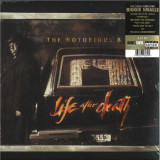
- A1: Life After Death (Intro)
- A2: Somebody's Gotta Die
- A3: Hypnotize
- A4: Kick In The Door
- B1: #!*@ You Tonight (Feat R Kelly)
- B2: Last Day (Feat The Lox)
- B3: I Love The Dough (Feat Jay Z & Angela Winbush)
- B4: Whats Beef?
- C1: Big (Interlude)
- C2: Mo Money Mo Problems (Feat Mase & Puff Daddy)
- C3: Niggas Bleed
- C4: I Got A Story To Tell
- D1: Notorious Thugs
- D2: Miss U
- D3: Another (Feat Lil Kim)
- D4: Going Back To Cali
- E1: Ten Crack Commandments
- E2: Playa Hater
- E3: Nasty Boy
- E4: Sky's The Limit (Feat 112)
- F1: The World Is Filled... (Feat Too Short & Puff Daddy)
- F2: My Downfall (Feat Dmc)
- F3: Long Kiss Goodnight
- F4: You're Nobody (Til Somebody Kills You) (Til Somebody Kills You)
24

2
Yellow Jackets number four follows the direction of the previous releases with more phat jams spread on a vinyl only 12’.
This time Fred P, who certainly doesnt need any introduction and who’s labels Private Society and Perpetual Sounds are distributed by Mother Tongue, offers the rhythmic yet melodic and spiritually engaging ‘Inspired By Dopeness’.
Chicago’s own Specter and Madrid’s Josè Rico, who often work together as Our Own Organization, go extradeep, raw and hipnotic on the other side with the aptly titled ‘You Don’t Believe’.
No frills, just the good shit!

Sniffany & The Nits are a deranged, genuinely troubling punk band
from London featuring members of Joanna Gruesome, Ex-Void and
The Tubs. Their debut album, ‘The Unscratchable Itch’, is released
via PRAH Recordings.
Drawing a through line between the British post-punk of The Fall and
the new wave of insolent hardcore typified by bands like Lumpy &
The Dumpers, The Nits have developed a knack for writing unhinged
punk earworms.
But it’s Sister Sniffany, and her singular lyrical and performance style,
who elevates the band beyond the sum of their influences. Her lyrics
inhabit the same world as her “macabre, visceral” (It’s Nice That)
cartoons - a world of hidden humiliations, girl abjection, crumpled
lager cans, clam chowder and lumpy, over-stuffed dollies.
Over the course of ‘The Unscratchable Itch’, Sniffany ventriloquises a
cast of pathetic, unbalanced characters: A secretarial administer tails
her Casanova husband to a suburban swingers party: “I can smell
him from here: a mix of Vaseline, foot cream and Stella beer.” A poor
old grandmother’s glasses fog up as she chastises her
granddaughter: “You self-entitled selfish little twat! / Left me to die in a
popcorn-walled flat! / Spotty little smelly little prick! / Making your poor
grandmother sick!”
But these characters aren’t detached, impersonal creations. As
Sniffany explains: “In Sniffany & The Nits I like to exorcise and exhibit
the deeply shameful parts of myself that I see as the toxic aspects of
my own femininity.” These are confessional songs about love
addiction, jealousy, possession, self-loathing and “egg smashingfury.” Though occasionally they are literally just about Sex & The City,
red-pilled incels or grandmothers.
O Williams (drums), Max ‘Wozza’ Warren (bass) and Matt Green
(guitar) have been entrenched in the UK DIY scene for years, having
played in the aforementio ned bands, as well as countless others.
Warren also runs the influential left-field label Gob Nation - a home
for ‘egg punks’ across the country. As such, the band veer between
atonal no-wave guitar assault, straight-up hardcore, goth/anarcho or
whatever takes their fancy, while remaining identifiably Nit-like.
Always grounded by a pounding, pogo-ing rhythm section, The Nits
provide the perfect backdrop for Sister Sniffany’s wild, relentless live
performances. See them live at 2022’s End of the Road Festival.
Cream vinyl LP.

12” black vinyl, lyrics insert, edition of 250. Let’s Whisper started many moons ago as a home recording project between Colin Clary and Dana Kaplan, during time off from their other outfit, The Smittens. Since then, the line up of the Vermont outfit has expanded, and now includes Brad Searles, The Essex Green’s Jeff Baron and Emma Kupa of Mammoth Penguins/Standard Fare. In addtion, Jeff’s bandmate from The Ladybug Transistor, Gary Olson, produced, engineered, plays trumpet and sings on the record. The In-Between Times is a leap forward for Let’s Whisper, taking the lush orchestration familiar to fans of The Essex Green and Ladybug Transistor. It’s a tender, brave, and earnest album, exploring grief, gender, and goodbyes. The times between pronounced transitions: life and death, pre- to post-testosterone, the storm to the calm after. Tracklist: A1) You Are Loved A2) The Thing That Defines You A3) Sing! A4) Simple Times A5) Hey You A6) This Might Not Be A Crush A7) 40 Ways To Love You B1) Balloon In The Sky B2) Long Run B3) I Don’t Know What I Would Do Without You B4) Hey There B5) When We Were Young B6) The Year Of Getting High
Joke Lanz and Sudden Infant once again return in their razor-sharp trio setting whereby the absurdist nature that Joke’s work is already cut with is reconfigured in a gnarled and beefy punk-fucked contorted rock setting. Short bursts of angular flex are heavily propelled by depth-charge rhythms, wry lyrical musings on modern living, and sensibilities hatched from years of experience in the worlds of sound art, abstract music, industrialised junk-noise and related areas have manifested in the perfect follow up to 2018’s Buddhist Nihilism album on Harbinger Sound. Aided by Christian Weber on bass and Alexandre Babel on drums, Joke lays on a battery of electronics, loops, field recordings and samples to complement mostly semi-spoken vocals that appear like they’ve been swept from the overflowing gutters of a shopping centre into a huge ball of malaise that can only be laughed at as world leaders look on perplexed. Exactly as the title suggests, 'Lunatic Asylum' depicts a world in absolute disarray as the seams binding it together slowly fall apart to reveal jesters whose best attempts to glue everything back in place are built on bigger lies more transparent than ever. Meanwhile, citizens of the developed world turn on each other for the stupidest of reasons or grow fatter with their descent into an ignorance nourished by half-baked cultural nuggets pre-packaged and sold as great and awe-inspiring work. And everything has to be recorded, photographed and shared as brain cells are decimated by false ideals, propaganda, exaggerated lifestyles and a huge tub of popcorn swimming in indiscernible yellow gloop. Such are the snapshots that resonate as Lunatic Asylum takes some well-aimed swipes at the human condition of the 21st Century. Featuring a fantastic guest appearance by Franz Treichler (The Young Gods) on ' Il y a des Enfants', each of the 12 songs that constitute Lunatic Asylum are bold, heavy, playful and rife with surprising twists and turns Joke’s mostly English splatter-poetry helps guide into a space that’s about as accessible as the outer reaches of rock can get. In a perfect world, this is the stuff even daytime airwaves should be pregnant with but, since the world is presently tripping over its own feet more so than ever, we will have to suffice with wherever this can nudge with the help of Fourth Dimension Records. One day, hopefully, more will catch up. The CD version of Lunatic Asylum features two exclusive bonus tracks. It was released in April 2022. TRACKLIST 1/Good Morning! 2/Head 3/I Ghore Es Gloeggli 4/Mood Swings 5/Damage Control 6/Happiness to Go 7/Pain is a Pain 8/Il y a des Enfants 9/The Lived Body 10/Ah-Ah-Ah 1921 11/Mika the Dog 12/Tuba Manifesto

- A1: Gigi Masin - Waterland (Otto Prospettive Veneziane)
- A2: Gigi Masin - Clouds (Otto Prospettive Veneziane)
- A3: Gigi Masin - La Giara Di Gesturi (Otto Prospettive Veneziane)
- A4: Gigi Masin - Three Bridges (Otto Prospettive Veneziane)
- A5: Gigi Masin - The Song Of The Masked Man (Otto Prospettive Veneziane)
- A6: Gigi Masin - Underwords (Otto Prospettive Veneziane)
- A7: Gigi Masin - First Time Ruth Saw The Sea (Otto Prospettive Veneziane)
- A8: Gigi Masin - Goodbye Kisses (Otto Prospettive Veneziane)
- A9: Charles Hayward - Thames Water Authority
9
This split album featured the Italian composer Gigi Masin on side-a with delicate piano movements rippling above undulating electronics. Its second track 'Clouds,' has become an ambient standard with Bjork, Nujabes and cloud-rap duo Main Attrakionz all sampling its rich and euphoric tones.
Side-b belonged to Charles Hayward and the twenty three minute sound portrait 'Thames Water Authority'. A founding member of post-punk and avant groups This Heat and Camberwell Now, Hayward's natural inclination towards percussive instrumentation is highlighted by shape-shifting cymbal recordings that trace the expansive systems that meander beneath Greater London.
P-VINE is thrilled to reissue Les Nouvelles Musiques de Chambre Volume 2 on limited edition vinyl with an iconic Japanese obi strip attached.

14
1998 esce l’atteso secondo album di Alexia dal titolo “The Party”. L'album contiene quattordici brani tra cui i due singoli più gettonati dell’estate 1998 ovvero “Gimme love” e “The music I like”. L’album si aggiudica numerosi dischi d’oro e di platino con le sue oltre cinquecentomila copie vendute. “Gimme love” e “The music I like” sono stati al no. 1 delle classifiche quasi simultaneamente, vendendo un totale di più di centomila copie, un vero record nel mercato italiano. Nell’estate del 1998 Alexia domina la scena musicale in vetta alle classifiche, più di ogni altra artista italiana della dance music. In quel periodo, in Inghilterra, esce il remix di “Uh la la la”. E’ il primo singolo di Alexia ad uscire in quel mercato e diventa subito un successo, top ten in classifica. Questo particolare remix é contenuto
nell’album “The Party” come bonus track.

"Tommy Womack has been a revered and fearless leader among his
generation of fellow artists and kindred spirits for a long time now
Even the stories he makes up are true" — Todd Snider."Tommy Womack is a multihyphenated treasure: what you get when you put Keith Richards, Billy Graham,
and Hunter S. Thompson in a blender and turn it on high." — Marshall Chapman,
author of Goodbye, Little Rock and Roller and They Came to Nashville"One of
Nashville's finest singer-songwriters. For round pegs in square holes everywhere."
- John Hiatt

10
What do notions of freedom and movement mean to us as we experience unprecedented restrictions on travel, culture and socialisation? Henry Keen’s Freedom In Movement offers a soundtrack to both remember and look forward to freedom through music, movement and community.
The memory and feeling of the Plastic People dancefloor were often in Henry Keen's thoughts as he produced the tracks on this new LP. Inspired by the London club nights he frequented – Balance, CDR, and CoOp – Freedom in Movement is Henry’s first vinyl self-release, an embodiment of self-expression that compliments his contributions to projects Electric Jalaba and Soundspecies.
The soulful tracks on the album pick up where Henry Keen’s 70's Baby (Maddjazz Recordings, 2017) record and EPs as The Room Below on the Don't Be Afraid label left off, bringing a range of tempos to get heads nodding while hips and feet work out. Lovingly made, the collection of songs offer meditations on questions evoked by the record's title and respite from the heaviness of challenging times.
The lead single from the album is Dexter’s Breakfast, featuring London-based woodwind expert, and previous collaborator Ben Hadwen on baritone/tenor saxophone, and flute.
Dexter’s Breakfast was released digitally on 25th June 2021 and gained support from the likes of Adam Rock (Jazz Re:freshed), Kev Beadle (Mind Fluid), Simon Harrsion (Basic Soul), Psycut (Music Is My Sanctuary) and Laani and Papaoul (Worldwide FM) amongst others

- A1: Rock This Mother
- A2: Talk To Me Girl
- A3: You Can Find Me
- A4: Check This Out
- A5: Jesus Going To Clean House
- A6: Hope You Understood
- A7: Is It What You Want
- A8: Love Is Everlasting
- A9: This Is Hip-Hop Art
- A10: Opposite Of Love
- A11: Do You Know What I Mean
- B1: Saving All My Love For You
- B2: Look Out Here I Come
- B3: Girl You Always Talking
- B4: Have A Great Day
- B5: Take My Hand
- B6: I Need Your Love
- B7: Your Town
- B8: Talk Around Town
- B9: Booty Head/Take A Little Walk
- B10: I Love My Mama
- B11: I Never Found Anyone Like You
22
also available
Cassette[11,72 €]
As the sun sets on a quaint East Nashville house, a young man bares a piece of his soul. Facing the camera, sporting a silky suit jacket/shirt/slacks/fingerless gloves ensemble that announces "singer" before he's even opened his mouth, Lee Tracy Johnson settles onto his stage, the front yard. He sways to the dirge-like drum machine pulse of a synth-soaked slow jam, extends his arms as if gaining his balance, and croons in affecting, fragile earnest, "I need your love… oh baby…"
Dogs in the yard next door begin barking. A mysterious cardboard robot figure, beamed in from galaxies unknown and affixed to a tree, is less vocal. Lee doesn't acknowledge either's presence. He's busy feeling it, arms and hands gesticulating. His voice rises in falsetto over the now-quiet dogs, over the ambient noise from the street that seeps into the handheld camcorder's microphone, over the recording of his own voice played back from a boombox off-camera. After six minutes the single, continuous shot ends. In this intimate creative universe there are no re-takes. There are many more music videos to shoot, and as Lee later puts it, "The first time you do it is actually the best. Because you can never get that again. You expressing yourself from within."
"I Need Your Love" dates from a lost heyday. From some time in the '80s or early '90s, when Lee Tracy (as he was known in performance) and his music partner/producer/manager Isaac Manning committed hours upon hours of their sonic and visual ideas to tape. Embracing drum machines and synthesizers – electronics that made their personal futurism palpable – they recorded exclusively at home, live in a room into a simple cassette deck. Soul, funk, electro and new wave informed their songs, yet Lee and Isaac eschewed the confinement of conventional categories and genres, preferring to let experimentation guide them.
"Anytime somebody put out a new record they had the same instruments or the same sound," explains Isaac. "So I basically wanted to find something that's really gonna stand out away from all of the rest of 'em." Their ethos meant that every idea they came up with was at least worth trying: echoed out half-rapped exhortations over frantic techno-style beats, gospel synth soul, modal electro-funk, oddball pop reinterpretations, emo AOR balladry, nods to Prince and the Fat Boys, or arrangements that might collapse mid-song into a mess of arcade game-ish blips before rallying to reach the finish line. All of it conjoined by consistent tape hiss, and most vitally, Lee's chameleonic voice, which managed to wildly shape shift and still evoke something sincere – whether toggling between falsetto and tenor exalting Jesus's return, or punctuating a melismatic romantic adlib with a succinct, "We all know how it feels to be alone."
"People think we went to a studio," says Isaac derisively. "We never went to no studio. We didn't have the money to go to no studio! We did this stuff at home. I shot videos in my front yard with whatever we could to get things together." Sometimes Isaac would just put on an instrumental record, be it "Planet Rock" or "Don't Cry For Me Argentina" (from Evita), press "record," and let Lee improvise over it, yielding peculiar love songs, would-be patriotic anthems, or Elvis Presley or Marilyn Monroe tributes. Technical limitations and a lack of professional polish never dissuaded them. They believed they were onto something.
"That struggle," Isaac says, "made that sound sound good to me."
In the parlance of modern music criticism Lee and Isaac's dizzying DIY efforts would inevitably be described as "outsider." But "outsider" carries the burden of untold additional layers of meaning if you're Black and from the South, creating on a budget, and trying to get someone, anyone within the country music capital of the world to take your vision seriously. "What category should we put it in?" Isaac asks rhetorically. "I don't know. All I know is feeling. I ain't gonna name it nothing. It's music. If it grabs your soul and touch your heart that's what it basically is supposed to do."
=
Born in 1963, the baby boy of nine siblings, Lee Tracy spent his earliest years living amidst the shotgun houses on Nashville's south side. "We was poor, man!" he says, recalling the outhouse his family used for a bathroom and the blocks of ice they kept in the kitchen to chill perishables. "But I actually don't think I really realized I was in poverty until I got grown and started thinking about it." Lee's mom worked at the Holiday Inn; his dad did whatever he had to do, from selling fruit from a horse drawn cart to bootlegging. "We didn't have much," Lee continues, "but my mother and my father got us the things we needed, the clothes on our back." By the end of the decade with the city's urban renewal programs razing entire neighborhoods to accommodate construction of the Interstate, the family moved to Edgehill Projects. Lee remembers music and art as a constant source of inspiration for he and his brothers and sisters – especially after seeing the Jackson 5 perform on Ed Sullivan. "As a small child I just knew that was what I wanted to do."
His older brother Don began musically mentoring him, introducing Lee to a variety of instruments and sounds. "He would never play one particular type of music, like R&B," says Lee. "I was surrounded by jazz, hard rock and roll, easy listening, gospel, reggae, country music; I mean I was a sponge absorbing all of that." Lee taught himself to play drums by beating on cardboard boxes, gaining a rep around the way for his timekeeping, and his singing voice. Emulating his favorites, Earth Wind & Fire and Cameo, he formed groups with other kids with era-evocative band names like Concept and TNT Connection, and emerged as the leader of disciplined rehearsals. "I made them practice," says Lee. "We practiced and practiced and practiced. Because I wanted that perfection." By high school the most accomplished of these bands would take top prize in a prominent local talent show. It was a big moment for Lee, and he felt ready to take things to the next level. But his band-mates had other ideas.
"I don't know what happened," he says, still miffed at the memory. "It must have blew they mind after we won and people started showing notice, because it's like everybody quit! I was like, where the hell did everybody go?" Lee had always made a point of interrogating prospective musicians about their intentions before joining his groups: were they really serious or just looking for a way to pick up girls? Now he understood even more the importance of finding a collaborator just as committed to the music as he was.
=
Isaac Manning had spent much of his life immersed in music and the arts – singing in the church choir with his family on Nashville's north side, writing, painting, dancing, and working various gigs within the entertainment industry. After serving in the armed forces, in the early '70s he ran The Teenage Place, a music and performance venue that catered to the local youth. But he was forced out of town when word of one of his recreational routines created a stir beyond the safe haven of his bohemian circles.
"I was growing marijuana," Isaac explains. "It wasn't no business, I was smoking it myself… I would put marijuana in scrambled eggs, cornbread and stuff." His weed use originated as a form of self-medication to combat severe tooth pain. But when he began sharing it with some of the other young people he hung out with, some of who just so happened to be the kids of Nashville politicians, the cops came calling. "When I got busted," he remembers, "they were talking about how they were gonna get rid of me because they didn't want me saying nothing about they children because of the politics and stuff. So I got my family, took two raggedy cars, and left Nashville and went to Vegas."
Out in the desert, Isaac happened to meet Chubby Checker of "The Twist" fame while the singer was gigging at The Flamingo. Impressed by Isaac's zeal, Checker invited him to go on the road with him as his tour manager/roadie/valet. The experience gave Isaac a window into a part of the entertainment world he'd never encountered – a glimpse of what a true pop act's audience looked like. "Chubby Checker, none of his shows were played for Black folks," he remembers. "All his gigs were done at high-class white people areas." Returning home after a few years with Chubby, Isaac was properly motivated to make it in Music City. He began writing songs and scouting around Nashville for local talent anywhere he could find it with an expressed goal: "Find someone who can deliver your songs the way you want 'em delivered and make people feel what you want them to feel."
One day while walking through Edgehill Projects Isaac heard someone playing the drums in a way that made him stop and take notice. "The music was so tight, just the drums made me feel like, oh I'm-a find this person," he recalls. "So I circled through the projects until I found who it was.
"That's how I met him – Lee Tracy. When I found him and he started singing and stuff, I said, ohhh, this is somebody different."
=
Theirs was a true complementary partnership: young Lee possessed the raw talent, the older Isaac the belief. "He's really the only one besides my brother and my family that really seen the potential in me," says Lee. "He made me see that I could do it."
Isaac long being a night owl, his house also made for a fertile collaborative environment – a space where there always seemed to be a new piece of his visual art on display: paintings, illustrations, and dolls and figures (including an enigmatic cardboard robot). Lee and Issac would hang out together and talk, listen to music, conjure ideas, and smoke the herb Isaac had resumed growing in his yard. "It got to where I could trust him, he could trust me," Isaac says of their bond. They also worked together for hours on drawings, spreading larges rolls of paper on the walls and sketching faces with abstract patterns and imagery: alien-like beings, tri-horned horse heads, inverted Janus-like characters where one visage blurred into the other.
Soon it became apparent that they didn't need other collaborators; self-sufficiency was the natural way forward. At Isaac's behest Lee, already fed up with dealing with band musicians, began playing around with a poly-sonic Yamaha keyboard at the local music store. "It had everything on it – trumpet, bass, drums, organ," remembers Lee. "And that's when I started recording my own stuff."
The technology afforded Lee the flexibility and independence he craved, setting him on a path other bedroom musicians and producers around the world were simultaneously following through the '80s into the early '90s. Saving up money from day jobs, he eventually supplemented the Yamaha Isaac had gotten him with Roland and Casio drum machines and a Moog. Lee was living in an apartment in Hillside at that point caring for his dad, who'd been partially paralyzed since early in life. In the evenings up in his second floor room, the music put him in a zone where he could tune out everything and lose himself in his ideas.
"Oh I loved it," he recalls. "I would really experiment with the instruments and use a lot of different sound effects. I was looking for something nobody else had. I wanted something totally different. And once I found the sound I was looking for, I would just smoke me a good joint and just let it go, hit the record button." More potent a creative stimulant than even Isaac's weed was the holistic flow and spontaneity of recording. Between sessions at Isaac's place and Lee's apartment, their volume of output quickly ballooned.
"We was always recording," says Lee. "That's why we have so much music. Even when I went to Isaac's and we start creating, I get home, my mind is racing, I gotta start creating, creating, creating. I remember there were times when I took a 90-minute tape from front to back and just filled it up."
"We never practiced," says Isaac. "See, that was just so odd about the whole thing. I could relate to him, and tell him about the songs I had ideas for and everything and stuff. And then he would bring it back or whatever, and we'd get together and put it down." Once the taskmaster hell bent on rehearsing, Lee had flipped a full 180. Perfection was no longer an aspiration, but the enemy of inspiration.
"I seen where practicing and practicing got me," says Lee. "A lot of musicians you get to playing and they gotta stop, they have to analyze the music. But while you analyzing you losing a lot of the greatness of what you creating. Stop analyzing what you play, just play! And it'll all take shape."
=
"I hope you understood the beginning of the record because this was invented from a dream I had today… (You tell me, I'll tell you, we'll figure it out together)" – Lee Tracy and Isaac Manning, "Hope You Understand"
Lee lets loose a maniacal cackle when he acknowledges that the material that he and Isaac recorded was by anyone's estimation pretty out there. It's the same laugh that commences "Hope You Understand" – a chaotic transmission that encapsulates the duality at the heart of their music: a stated desire to reach people and a compulsion to go as leftfield as they saw fit.
"We just did it," says Lee. "We cut the music on and cut loose. I don't sit around and write. I do it by listening, get a feeling, play the music, and the lyrics and stuff just come out of me."
The approach proved adaptable to interpreting other artists' material. While recording a cover of Whitney Houston's pop ballad "Saving All My Love For You," Lee played Whitney's version in his headphones as he laid down his own vocals – partially following the lyrics, partially using them as a departure point. The end result is barely recognizable compared with the original, Lee and Isaac having switched up the time signature and reinvented the melody along the way towards morphing a slick mainstream radio standard into something that sounds solely their own.
"I really used that song to get me started," says Lee. "Then I said, well I need something else, something is missing. Something just came over me. That's when I came up with 'Is It What You Want.'"
The song would become the centerpiece of Lee and Isaac's repertoire. Pushed along by a percolating metronomic Rhythm King style beat somewhere between a military march and a samba, "Is It What You Want" finds Lee pleading the sincerity of his commitment to a potential love interest embellished by vocal tics and hiccups subtlely reminiscent of his childhood hero MJ. Absent chord changes, only synth riffs gliding in and out like apparitions, the song achieves a lingering lo-fi power that leaves you feeling like it's still playing, somewhere, even after the fade out.
"I don't know, it's like a real spiritual song," Lee reflects. "But it's not just spiritual. To me the more I listen to it it's like about everything that you do in your everyday life, period. Is it what you want? Do you want a car or you don't want a car? Do you want Jesus or do you want the Devil? It's basically asking you the question. Can't nobody answer the question but you yourself."
In 1989 Lee won a lawsuit stemming from injuries sustained from a fight he'd gotten into. He took part of the settlement money and with Isaac pressed up "Saving All My Love For You" b/w "Is It What You Want" as a 45 single. Isaac christened the label One Chance Records. "Because that's all we wanted," he says with a laugh, "one chance."
Isaac sent the record out to radio stations and major labels, hoping for it to make enough noise to get picked up nationally. But the response he and Lee were hoping for never materialized. According to Isaac the closest the single got to getting played on the radio is when a disk jock from a local station made a highly unusual announcement on air: "The dude said on the radio, 107.5 – 'We are not gonna play 'Is It What You Want.' We cracked up! Wow, that's deep.
"It was a whole racist thing that was going on," he reflects. "So we just looked over and kept on going. That was it. That was about the way it goes… If you were Black and you were living in Nashville and stuff, that's the way you got treated." Isaac already knew as much from all the times he'd brought he and Lee's tapes (even their cache of country music tunes) over to Music Row to try to drum up interest to no avail.
"Isaac, he really worked his ass off," says Lee. "He probably been to every record place down on Music Row." Nashville's famed recording and music business corridor wasn't but a few blocks from where Lee grew up. Close enough, he remembers, for him to ride his bike along its back alleys and stumble upon the occasional random treasure, like a discarded box of harmonicas. Getting in through the front door, however, still felt a world away.
"I just don't think at the time our music fell into a category for them," he concedes. "It was before its time."
=
Lee stopped making music some time in the latter part of the '90s, around the time his mom passed away and life became increasingly tough to manage. "When my mother died I had a nervous breakdown," he says, "So I shut down for a long time. I was in such a sadness frame of mind. That's why nobody seen me. I had just disappeared off the map." He fell out of touch with Isaac, and in an indication of just how bad things had gotten for him, lost track of all the recordings they'd made together. Music became a distant memory.
Fortunately, Isaac kept the faith. In a self-published collection of his poetry – paeans to some of his favorite entertainment and public figures entitled Friends and Dick Clark – he'd written that he believed "music has a life of its own." But his prescience and presence of mind were truly manifested in the fact that he kept an archive of he and Lee's work. As perfectly imperfect as "Is It What You Want" now sounds in a post-Personal Space world, Lee and Isaac's lone official release was in fact just a taste. The bulk of the Is It What You Want album is culled from the pair's essentially unheard home recordings – complete songs, half-realized experiments, Isaac's blue monologues and pronouncements et al – compiled, mixed and programmed in the loose and impulsive creative spirit of their regular get-togethers from decades ago. The rest of us, it seems, may have finally caught up to them.
On the prospect of at long last reaching a wider audience, Isaac says simply, "I been trying for a long time, it feels good." Ever the survivor, he adds, "The only way I know how to make it to the top is to keep climbing. If one leg break on the ladder, hey, you gotta fix it and keep on going… That's where I be at. I'll kill death to make it out there."
For Lee it all feels akin to a personal resurrection: "It's like I was in a tomb and the tomb was opened and I'm back… Man, it feels so great. I feel like I'm gonna jump out of my skin." Success at this stage of his life, he realizes, probably means something different than what it did back when he was singing and dancing in Isaac's front yard. "What I really mean by 'making it,'" he explains isn't just the music being heard but, "the story being told."
Occasionally Lee will pull up "Is It What You Want" on YouTube on his phone, put on his headphones, and listen. He remembers the first time he heard his recorded voice. How surreal it was, how he thought to himself, "Is that really me?" What would he say to that younger version of himself now?
"I would probably tell myself, hang in there, don't give up. Keep striving for the goal. And everything will work out."
Despite what's printed on the record label, sometimes you do get more than one chance.

4
Like in a fever dream she’s calling out to you to let you know… She loves you…
Original copies of this feel-good evergreen are few and far between but now it’ll finally make its way to your bag as for the first time in 30 years, KSM’s “Te Quiero” will see an official reissue. Originally released on X-Energy Records, one of Italy’s OG independent dance labels, it has everything you’re looking for in Italian deep house: silky pads, pianos, flutes, a killer vibraphone solo, and of course a sultry vocal. Non dormire, molto bene!

7
Spanish producer Divorce From New York (AKA Alvaro Granda) returns with his brand new LP ‘Sausalito’ on London’s High Praise. With his previous full-length 2021 offering ‘This Ain’t Jazz No More’ having gained support from Tom Ravenscroft (BBC 6 Music), Jamz Supernova (BBC Radio 1Xtra), Worldwide FM, BBC Radio 1, Errol (Touching Bass), DJ Mag & many more - the stage is set for this heady and potent sophomore release.
Known for his work as one half of San Sebastian based production duo Reykjavik606 (who have previously collaborated with the likes of Tenderlonious and Ishmael Ensemble) Granda creates a rich web of broken beat flavours, uplifting sonics and syncopated rhythms - melding elements of jungle, house and bruk with jazz sensibilities.
Featuring seven brand-new and flavour-packed tracks, ‘Sausalito’ is an uplifting and joyous listen from start to finish. Immersing himself in his extensive collection of Jazz, Soul and Disco vinyl, Alvaro channels golden sunshine-injected influences into a wonderfully cohesive and infectious record. First single ‘Last Ray Of Sunset’ sees Alvaro join forces with long-term collaborator Piek. As its classic disco sounds meet jaunty, MPC- driven drums, and an irresistible bassline - leaving us dreaming of hazy summer terraces, and those last fleeting moments of daytime as evening takes hold.
‘Holly Grove’ evokes a sense of mystery and intrigue with it’s celestial rhodes and flute flourishes, before being joined by syncopated bruk-beats and the alluring vocals of Sarah Zoyaya, who’s tones entwine with some wild synth playing and twisting polyrhythms. Final single ‘I Haven’t Recovered From Last Night With You’ entrances the listener with it’s hypnotic saturated percussion, swirling vocals and reverb-laced key stabs. Creating visions of endless and vast expanses, it shows Alvaro’s ability to weave textures and melody to incredible effect.
With this record, Divorce From New York solidifies his position as one of Europe’s most authentic and original beatmakers. With a range of styles and influences ‘Sausalito’ takes us on a dancefloor leaning journey from sun drenched rhythms through to detroit-techno esque programming. With extensive live performances scheduled for Summer 22 (including a performance at Kala Festival) you can expect to hear this one doing damage on the world’s dancefloors.
Captained by Hugo Mari and Josh Byrne, High Praise is a london-based record label and party. A vessel for uplifting music, made with good energy - they have released music from Yadava, EVM128, Lay-Far, Partner Music & more.
Divorce From New York will release ‘Sausalito’ on 2nd September ‘22 via High Praise.

Constant Black is one of the numerous labels in UK artist Burnski's orbit. He's been a man on form on all fronts in recent years and here he snaps up Retrospect for a trio of super slick and funky minimal house cuts. 'Ay-up!' is a cheeky opener with subtle northern welcomes hidden in the mix as the lithe bass and 2-step tinged drums do their thang. It's reet good. 'Schneebly' gets more pacey and balmy, with silky and oily bass and kinetic drum work all underpinned by a sick bass tone. Last of all comes '4 U' which has something of an upright garage skip and downright irresistible groove. These are high functioning, charismatic cuts to pump up any floor.


13
El Goodo guitarist and songwriter 'Pixy Jones' has announced that his debut album entitled 'Bits n Bobs' is due for release on 16th of September via Strangetown Records.
After 4 albums with El Goodo, Welsh psych scene stalwart Pixy Jones has himself compiled a truly remarkable collection of tracks that fluctuate from 60's harmony-rich psych pop, to Alt-Country with ringing tremelo guitar.
The swaggering 'I'm Not There' is the first single to be taken from 'Bits n Bobs' accompanied by a magical version of Beatles track 'And Your Bird Can Sing' as it's B SIde, which will be released digitally on Friday 1st of July.
Pixy had this to say about the release:
The album was originally intended as a solo project under the pseudonym of “Wallace Russell”. I recorded it alongside the recording of Zombie (El Goodo) whenever I could get in the studio. There are some really old songs that have always been overlooked for 'El Goodo' albums for one reason or another, a few new ones which I wrote specifically for this, and a couple that would have probably ended up on the intended double album version of Zombie if we’d kept going with the double album idea. I’ve since ditched the 'Wallace Russell' name and gone back to 'Pixy Jones' as I figured there’s no need to have a pseudonym if nobody knows who you are in the first place. Even though I dropped the name I’ve kept the walrus mask for now as it is more photogenic than my actual face.
I had no recording budget so I had to fund it by quitting smoking and saving the money up to pay for studio time. It took, I think, two and a half years to record, which is by far the quickest I’ve ever recorded an album.
Originally I wanted it to just be a quickly recorded slap dash and get it out sort of thing but I had a year and a half during Covid to think about it a bit more and ended up taking more care to get it done properly. It was just me there so I played most of it myself apart from Stephen Black (Sweet Baboo) who played brass and woodwind on one song and Rhodri Brooks (AhGeeBe) plays some pedal steel on a couple.
Elliott and Canny from 'El Goodo' played drums and bass on Wind Street during the ‘Zombie’ recording sessions.
The album was recorded and mixed in Aerial Studios with Tim Lewis, (Thighpaulsandra), a couple of songs were finished in the house during the lockdowns.

- E1: You Turn Me On I’m A Radio (Live)
- E2: Big Yellow Taxi (Live)
- E4: Woodstock (Live)
- F1: Cactus Tree (Live)
- F2: Cold Blue Steel And Sweet Fire (Live)
- F3: Woman Of Heart And Mind (Live)
- F4: A Case Of You (Live)
- F5: Blue (Live)
- G1: Circle Game (Live)
- G2: People’s Parties (Live)
- G3: All I Want (Live)
- G4: Real Good For Free (Live)
- G5: Both Sides Now (Live)
- H1: Carey (Live)
- H2: The Last Time I Saw Richard (Live)
- H3: Jericho (Live)
- H4: Love Or Money (Live)
- A1: Banquet (2022 Remaster)
- A2: Cold Blue Steel And Sweet Fire (2022 Remaster)
- A3: Barangrill (2022 Remaster)
- A4: Lesson In Survival (2022 Remaster)
- A5: Let The Wind Carry Me (2022 Remaster)
- A6: For The Roses (2022 Remaster)
- B1: See You Sometime (2022 Remaster)
- B2: Electricity (2022 Remaster)
- B3: You Turn Me On I’m A Radio (2022 Remaster)
- B4: Blonde In The Bleachers (2022 Remaster)
- B5: Woman Of Heart And Mind (2022 Remaster)
- B6: Judgement Of The Moon And Stars (Ludwig’s Tune)
- C1: Court And Spark (2022 Remaster)
- C2: Help Me (2022 Remaster)
- C3: Free Man In Paris (2022 Remaster)
- C4: People’s Parties (2022 Remaster)
- C5: Same Situation (2022 Remaster)
- D1: Car On A Hill (2022 Remaster)
- D2: Down To You (2022 Remaster)
- D3: Just Like This Train (2022 Remaster)
- D4: Raised On Robbery (2022 Remaster)
- D5: Trouble Child (2022 Remaster)
- D6: Twisted (2022 Remaster)
- I1: In France They Kiss On Main Street (2022 Remaster)I
- I2: The Jungle Line (2022 Remaster)
- I3: Edith And The Kingpin (2022 Remaster)
- I4: Don’t Interrupt The Sorrow (2022 Remaster)
- I5: Shades Of Scarlett Conquering (2022 Remaster)
- J1: The Hissing Of Summer Lawns (2022 Remaster)
- J2: The Boho Dance (2022 Remaster)
- J3: Harry’s House/Centerpiece (2022 Remaster)
- J4: Sweet Bird (2022 Remaster)
- J5: Shadows And Light (2022 Remaster)
- E3: Rainy Night House (Live)
Joni Mitchell was at a turning point 50 years ago. After making four acclaimed albums with Reprise Records, including her 1971 masterpiece Blue, she left the label to join the brand-new Asylum Records in 1972. Over the next seven years, Mitchell would record some of the most acclaimed music of her career while changing her musical direction by adding more jazz elements into her song writing. The evolution culminated in 1979 with Mingus, her collaboration with jazz titan Charles Mingus, and her studio last album for Asylum.
The Asylum Albums (1972-1975), the next instalment in the Joni Mitchell archive series, explores the beginning of that prolific era. The collection features newly remastered versions of For The Roses (1972), Court And Spark (1974), the double live album Miles Of Aisles (1974), and The Hissing Of Summer Lawns (1975). All four were recently remastered by Bernie Grundman. The Asylum Albums (1972-1975 will be available on 23rd September on 5-LP 180-gram vinyl (Limited Edition Of 20,000) and as a 4CD set. The cover art for the set features a previously unseen painting by Mitchell. The set also includes an essay by friend and fellow Canadian Neil Young.
The Asylum Albums (1972-1975), follows Mitchell’s musical evolution over four albums as she embraced more jazz-inspired pieces and moved away from the folk and pop of her early years. It includes essential tracks like her first Top 40 hit, “You Turn Me On, I’m A Radio” and her highest-charting (#7) single “Help Me,” plus favourites like “Free Man In Paris,” “Raised On Robbery” and “In France They Kiss On Main Street.” Mitchell has been intimately involved in producing the collection, lending her vision and personal touch to every element.
l b6. Judgement Of The Moon And Stars (Ludwig’s Tune) 2022 Remaster
[x] e1. You Turn Me On I’m A Radio (Live) [2022 Remaster]
[y] e2. Big Yellow Taxi (Live) [2022 Remaster]
[2022 Remaster]
[xa] e4. Woodstock (Live) [2022 Remaster]
[xb] f1. Cactus Tree (Live) [2022 Remaster]
[xc] f2. Cold Blue Steel And Sweet Fire (Live) [2022 Remaster]
[xd] f3. Woman Of Heart And Mind (Live) [2022 Remaster]
[xe] f4. A Case Of You (Live) [2022 Remaster]
[xf] f5. Blue (Live) [2022 Remaster]
[xg] g1. Circle Game (Live) [2022 Remaster]
[xh] g2. People’s Parties (Live) [2022 Remaster]
[xi] g3. All I Want (Live) [2022 Remaster]
[xj] g4. Real Good For Free (Live) [2022 Remaster]
[xk] g5. Both Sides Now (Live) [2022 Remaster]
[xl] h1. Carey (Live) [2022 Remaster]
[xm] h2. The Last Time I Saw Richard (Live) [2022 Remaster]
[xn] h3. Jericho (Live) [2022 Remaster]
[xo] h4. Love Or Money (Live) [2022 Remaster]
Combining powerful and heartfelt vocals with thundering guitar riffs, Essex-based Blues Rock band When Rivers Meet offers originality with both talent and winning personalities. Grace Bond leads with her incredible vocals, as well as bringing ranched-up mandolin and violin instrumentals. Her husband Aaron Bond commands attention with his imaginative guitar and cigar box playing and complements with compelling vocal harmonies… a winning formula. Since bursting on to the UK music scene with their debut The Uprising EP in April 2019 followed by their second EP Innocence of Youth in May 2020, husband and wife Grace and Aaron Bond have released two critically acclaimed studio albums We Fly Free (2020), followed by their sophomore album Saving Grace (2021). When Rivers Meet were the first band to win four awards at the UK Blues Awards 2021 and another three awards in 2022, including “Blues Band of the Year” on both occasions. Last year WRM were voted Best New Band at Planet Rock’s The Rocks Awards 2021, and in 2022 won the “Blues Power Award” and “Album of the Year” (Saving Grace), beating Iron Maiden who came second place. In 2021, the husband-and-wife duo show their chemistry on stage, performing 17 dates along with powerhouse bass and drums on their first UK Headline Tour to mostly sold-out crowds, receiving rave reviews for their captivating stage presence and blistering performances. Tour dates: 14-Oct / Cardiff Clwb Ifor Bach - 16-Oct / Gloucester Guildhall - 21-Oct / Huddersfield The Parish - 23-Oct / York The Crescent - 27-Oct / Southend-on-Sea Chinnerys - 29-Oct / Liverpool Arts Club - 30-Oct / Milton Keynes The Stables The E.P
Track listing:
(The Uprising EP): Freeman; Like What You See; Tomorrow; Kill For Your Love
(Innocence Of Youth EP): Innocence Of Youth; A Dead Man Doesn’t Lie; My Babe Says That He Loves Me; Fire; Want Your Love We Fly Free: Track listing: Did I Break The Law; Bound For Nowhere; Walking On The Wire; I'd Have Fallen; Battleground; Kissing The Sky; Breaker of Chains; I Will Fight; Bury My Body; Take Me To The River; Friend of Mine; We Fly Free Saving Grace: Track listing: I Can't Fight This Feeling; Never Coming Home; He'll Drive You Crazy; Don't Tell Me Goodbye; Do You Remember My Name; Have No Doubt About It; Eye of The Hurricane
(Friend of Mine pt.2); Testify; Shoot The Breeze; Lost & Found; Talking in My Sleep; Make A Grown Man Cry Flying Free Tour Live: Track listing: Did I Break The Law; Walking On The Wire; My Babe Says That He Loves Me; Battleground; Don't Tell Me Goodbye; Free Man; Lost & Found; Innocence of Youth; Bury My Body; Tomorrow; Kissing The Sky; Want Your Love; Testify
