Rebecka Tarnqvist's new album Memo - The album is, as is often the
case with Rebecka Tarnqvist's albums, a shimmering collection of songs
that moves between the acoustic and the electronic, between the art
musical and classic pop
Like its predecessor Home Secretary, Memo was created in close collaboration
with Johan Lindstr m and several of the musicians also return here. Memo are
notes from life in a city and the music was created in an unusually complicated
time for our part of the world. Already October 7 My Neighbour is released, where
Tarnqvist and M. Ward wonder what happened in the house next door
Suche:no home
Repress !
Selva Discos returns to the LP reissue game with a bang – by giving a new life to the stunning and very sought-after Memória das Águas album by Fernando Falcão. Originally recorded in 1979 in Paris but only released independently in Brazil in 1981, the album comes complete with genre-hopping explorations that swirl around ambient soundscapes, lively jazz, experimental-leanings, Afro-rhythms and a unique blend of Latin grooves and French pop with a Brazilian accent, but it also comes with a story as deeply unique as the music.
To make a long story short, after participating in the political movements against the military regime in 1968 in Brazil, Fernando Falcão left the country and moved to France, where he lived in exile for 15 years. There, after working in music, acting, and sculpting, he involved himself in Jérôme Savary's legendary Grand Magic Circus, where he met his first wife, Valérie Kling. It was from this relationship that a partnership began between the musician and his father-in-law, the artist François-Xavier Lalanne, who guided Falcão in the process of inventing sound sculptures such as the balauê – a horizontal version of the berimbau string instrument whose sound was influenced by a water stream (since there was a hose soaking parts of the balauê wet during the performances). Much of this exploration and experimentation resulted in the album Memória das Águas.
The album still sounds like little else from the time. As audacious and experimental as it is seamlessly listenable, it takes in immersive textures one moment before breaking out into Fela Kuti-esque brass-soaked grooves the next. It’s ultimately a record that captures the spirit and rhythm of Falcão’s homeland combined with the lush production and art-pop approach associated with his exiled home; It’s a polished, well executed and glistening record. Its fusion of African, Brazilian, jazz, pop, classical and avant-garde collides to create a record that spans as many continents as it does genres.
Remastered from the original master tapes, not only the sound but the artwork of Memória das Águas was completely and faithfully restored. Also, the reissue comes with unprecedented liner notes featuring rare photos of the musician and his sound sculptures plus articles that help to explain who Fernando Falcão was and where Memória das Águas sits among other staples of Brazilian music, including one from DJ and selector John Gómez – who helped to connect Selva Discos' Augusto Olivani with Diana Lion, Fernando Falcão's daughter (since the musician died in 2002), for this project. After Memória das Águas, Selva Discos will also reissue another long lost Fernando Falcão LP album – Barracas Barrocas.
yellow marbled vinyl
Swoose makes his return to Shall Not Fade, joining the new Classic Cuts series, a year after his extremely popular Introspective EP. The Irish producer is known for his explosive nineties influenced style of house; think blissed out vocals over a headsy nightclub ready beat.
Bloom EP starts off with a bang, the title track a percussive trance of arpeggiating synths and a touch of nineties nostalgia with a classic sample. "Algo" is equally hypnotic; floaty melodies that glide across the deep bass edge of this sundowner party track.
"Polypore" hits hard with a purposeful kick drum, driving home the sidewinding acid inflections and making for a glitchy tool for dark club nights. The closing track changes things up; "Allure" takes natural piano loops and organic breaks to create a haunting piece of music which is a peaceful end to the EP, demonstrating Swoose's range and ability to move away from his comfort zone in production.
- 1: The Rocks And The Water
- 2: Wild Theme
- 3: Freeway Flyer
- 4: Boomtown (Variation Louis' Favourite)
- 5: The Way It Always Starts
- 6: The Rocks And The Thunder (I)
- 7: The Ceilidh And The Northern Lights
- 8: The Mist Covered Mountains
- 9: The Ceilidh: Louis' Favourite, Billy's Tune
- 10: Whistle Theme
- 11: Smooching
- 12: Stargazer
- 13: The Rocks And The Thunder (Ii)
- 14: Going Home (Theme Of The Local Hero)
Mastered from the original master tapes and pressed at RTI on dead-quiet 180g vinyl, Mobile Fidelity's numbered-edition 180g LP of Local Hero gives the beloved effort audiophile-grade sound on a par with the reference-quality sonics afforded Dire Straits' Mobile Fidelity reissues. In each arrangement, Knopfler's methodical guitar lines emerge with supreme transparency and multi-hued textural detail. The intricate notes, finger-picked passages, and cosmopolitan lines come across as if they're transmitted just feet away from you in real time.
Ditto the diverse accompaniment, including the Celtic-themed effects, supplemental jazz accents, and folk inflections. The keys to the nearly 44-minute effort's success and continuity relate not only to Knoplfer's laidback style and low-key approach, but his ear for uncanny melody and blues traces. Woven acoustically and electrically, his tapestries benefit from the newfound airiness, openness, and balance that live on this reissue. No matter the instrument or treatment, the music arrives with pinpoint imaging and vibrant liveliness. Close your eyes, and the Mobile Fidelity version of Local Hero projects movies in your head.
For instance, take the closing "Going Home," a cherished instrumental whose proud spirit resonates with English football fans and features saxophone playing by the late, great Michael Brecker. Heard before every Newcastle United F.C. home game, it has become an anthem on both sides of the Atlantic. Or, look to "The Ceilidh: Louis' Favorite Billy's Tune" on which Scottish-flavored vibes and dance tempos conjure a festive jig until a transition gives the number a more subdued, romantic feel. Then, the pattern repeats. Seeking to expand beyond the parameters of Dire Straits, Knoplfer taps into a global economy of structures and sounds, and takes anyone with a sense of adventure along for the ride.
Not that his hallmark six-string is absent from the proceedings. It frames the lovely tin-pan whistle motif of the aptly titled "Whistle Theme," acts as a beacon for the elegant, vibraphone-kissed "Smooching," and pushes forward the jovial, top-down momentum of "Freeway Flyer," among other highlights. Knopfler also receives assistance from session pros Mike Mainieri, Steve Jordan, and Terry Williams, as well as vocalist Gerry Rafferty on the set's sole vocal tune, "That's the Way It Always Starts."
- A1: The Ballad Of Bill Hubbard
- A2: What God Wants, Part I
- A3: Perfect Sense, Part I
- A4: Perfect Sense, Part Ii
- B1: The Bravery Of Being Out Of Range
- B2: Late Home Tonight, Part I
- B3: Late Home Tonight, Part Ii
- B4: Too Much Rope
- B5: What God Wants, Part Ii
- C1: What God Wants, Part Iii
- C2: Watching Tv
- C3: Three Wishes
- D1: It's A Miracle
- D3: Amused To Death
An unblinking look at an entertainment-obsessed society, Amused to Death addresses issues that have only grown in complexity and urgency over the past two decades. With Amused to Death, Roger Waters sounded the alarm about a society increasingly — and unthinkingly — in thrall to its television screens. Now in 2022, Amused to Death speaks to our present moment in ways that could scarcely have been anticipated three decades ago. In 2015, television is just one option in an endless array of distractions available to us anytime, anywhere, courtesy of our laptops, tablets and smartphones. With eyes glued to our screens, the dilemmas and injustices of the real world can easily recede from view.
"Even if you have one of the original issue vinyl LPs, the new version of Amused to Death on the Analogue Productions label is an essential upgrade to your listening experience. Like The Division Bell and The Endless River vinyl LPs before it, Analogue Productions has kept their commitment for quality meticulously high with Amused to Death. The record pressing is uniformly excellent..." Paul Powell Jr., Brain Damage U.K. Pink Floyd News, August 2015.
The 2015 2 LP 200-gram vinyl edition of Amused to Death features remastered audio completed by longtime Roger Waters / Pink Floyd collaborator and co-producer, James Guthrie, and has been pressed at Quality Record Pressings. The cover and gatefold art has been updated for 2015 by Sean Evans, the creative director of Waters' 2010-2013 "The Wall Live" tour and movie.
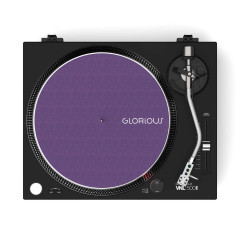
Features:
•Quartz-driven turntable with direct drive
•Perfect playback device for your home and for DJ or Studio use
•USB audio output making it easy to digitize your vinyl
•Precise motor control with 2 speed options (33 1/3 & 45 RPM)
•Powerful motor drive with 5.5 kg/cm torque
•Anti-resonant, die-cast aluminium platter with stable rotation
•Stroboscopic platter with speed indicator
•Statically balanced S-shaped tone arm with hydraulic lift and anti-skate control
•Universal connection for pick-up systems (SME)
•Built-in phono pre-amplifier (no grounding necessary)
•Switchable phono and line level output
•Shock-absorbing feet for vibration isolation
•Scratch-resistant finish in matt black
•Incl. removable hinged dust cover, platter, OM Black cartridge system (by Ortofon), headshell, slipmat, counterweight, detachable RCA output cable, power cord, operating instruction manual
Glasgow's First Lady of Jazz Carol Kidd, whose string of successful Linn recordings in the 1980's have made her a staple of international audiophile artists, returns with an all-new collection of delectable jazz and pop standards delivered in her inimitably smooth and heartfelt style.
Kidd has always been an artist celebrated for her cool, controlled phrasing and easy-going balladry, and her lovely new recording, BOTH SIDES NOW, is replete with her trademark inflection and warmth spread over classic songs by everyone from Rodgers & Hammerstein, Billy Joel, Joni Mitchell, and Richard Thompson. A songwriter of note, Kidd herself contributes two new tracks co-authored with Chris Anthony.
Impex's exclusive 180-gram 33 rpm LP, mastered by the superlative Kevin Gray at Cohearent Audio, features brilliantly detailed mid-tones, effortlessly stable bottom end, and crisp overtones. RTI's peerless pressing brings it all together for your listening pleasure.
Carol Kidd is an international award winning singer. She has been named 'Best Vocalist' at the British Jazz Awards on four occasions and was appointed MBE for Services to Jazz. In 2006, Carol was a winner of the prestigious Nordoff-Robbins Tartan Clef Music Award and in 2017 she received a Lifetime Achievement Award at the Scottish Jazz Awards. Renowned for her impeccable phrasing and delivery along with an unforgettable ability to breathe fresh life into any jazz standard, Carol has cut a distinctive path through the Great American Songbook throughout her career with orchestral and trio backing, as well as performing as a unique and intimate duo with guitarist Nigel Clark.
A long line of admirers has included Tony Bennett, Vic Damone and Frank Sinatra, who invited her to open for him at a stadium concert where he remarked that, "Carol Kidd is the best kept secret of British jazz." After a sensational performance at the Tribute to Johnny Mercer show at the Royal Concert Hall in Glasgow, Sir Michael Parkinson observed from the stage that "If there is a better jazz singer out there I have yet to hear them!" Luminaries who have performed alongside Carol as her guests include George Shearing, Georgie Fame, Annie Ross, Benny Carter, Joe Temperley, Bobby Watson and Martin Taylor.
Following a battle with cancer, Carol returned to the stage triumphant in the summer of 2013 to give a powerful, emotional performance at the Glasgow Jazz Festival. In the wake of this homecoming, it is impossible to deny that Kidd is one of the most remarkable artists and performers of our time.
The story of Del cuarto rojo (From The Red Room) began in March 2020, when the Peruvian composer and percussionist Manongo Mujica received a call notifying him that the visual artist Rafael Hastings, his friend of almost half a century, had passed away. Since then, and in the midst of the pandemic, Manongo Mujica began a personal journey searching for sounds, which has resulted in a new set of pieces that evoke the memory of a friendship. Del cuarto rojo (From The Red Room), subtitled Homenaje sonoro escuchando la pintura de Rafael Hastings (Sound Tribute Listening To Rafael Hastings' Paintings), is Manongo Mujica's new album, and it has also motivated the preparation of a new show by the dancer and choreographer Yvonne von Mollendorff, wife of Hastings. The history of this friendship dates back to 1974, when a young Manongo returned to Lima, after ten years living in London, while young Rafael Hastings and Yvonne von Mollendorff settled in Peru after a long period in Europe. Since then, the collaborations between these artists have been continuous, always marked by an experimental impetus. The attitude of listening to images and painting sounds was more than a metaphor and became a code that identified them and a way of working, where the crossing of disciplines set the tone, both in video works and in unusual visual / conceptual scores, works of dance and experimental music, in the context of a creative effervescence that renewed the arts and music in Lima in the 70s. Del cuarto rojo is an album that integrates many of the musical resources developed by Mujica. It is an amalgam that well sums up his own language: from the creation of environments with extended techniques and objects, to experiments in jazz fusion; from the use of field recordings and sound montages to compositions with string arrangements: everything around the hypnotic pulse of percussion and drums, which oscillate between moments of subtlety and explosive improvisation. The album features the participation of outstanding musicians such as Pauchi Sasaki (violin), José Quezada (cello), Terje Evensen (electronic effects), Jean Pierre Magnet (Saxophone), Cristobal, Daniel and Gabriel Mujica (sons of Manongo Mujica, on percussion, string and wind arrangements). It is published in vinyl LP and includes a full color 12-page booklet with a sample of Rafael Hastings' visual art, which also illustrates the album cover.
‘The Clocks' was originally issued in 2007 as a CD-only limited edition of 110 for members of 'The Bevis Frond Online Community'. It comprised 19 previously unissued tracks. Most of these were home demos featuring just Frond frontman Nick Saloman on all instruments and vocals. Since then, it has never been re-issued in any format. It is therefore with great pleasure that Blue Matter are re-issuing it for the first time, and now as a vinyl double album and limited CD. Due to certain circumstances, three of the original tracks could not be used, so these have been replaced these with another three previously unheard tracks from Nick Saloman's extensive archives. These songs include the seven minute 'She's Taken It All', originally intended for 2004's 'Hit Squad' album but dropped at the last minute due to timing constraints. The beautiful 'You Better Make Do' and the edgy 'Devil Doll' have also been added. We are delighted to be able to make this 'long lost' album available once again and think it will be a welcome addition to the Bevis Frond canon.
A double treat for those who love timeless Southern Soul flavoured with some of those good ol’ down home blues. Memphis born, and Minneapolis based, Willie Walker can comfortably be included in the pantheon of grittiest soul singers along with Wilson Pickett, Syl Johnson, Lou Rawls, James Carr, Eddie Floyd, Tyrone Davis and L.V. Johnson, to name but a few, but there has always been speculation about other Willie Walkers. The recordings on Eutor and Hi in the 70’s are not by the same Willie as those on Goldwax and Checker in the 60’s. He did, however, also record as Wee Willie Walker.
He was a member of The Rhythm Harmonizers, The Val-Dons, The Exciters, The Bound Band, Willie & The Bumblebees (although that Willie is actually Willie Murphy of The Val-Dons), and Canoise, spanning a long and varied career before hooking up with the Minneapolis based band The Butanes in 2004, with whom he made the next three albums. The first of these was mainly cover versions, but "Right Where I Belong" (2004) and "Memphisapolis" (2006) are notable for each providing the tracks that make up this latest Jai Alai release, a label that differs from sister label Soul4Real by featuring 21st century tracks previously CD only but now released on 7” vinyl for the first time. It also has to be noted that all the tracks on both these albums were written and produced by Curtis Obeda, who managed to track down Willie after so many years.
“I Feel It” will have been missed by most as it was on the CD "Right Where I Belong" which was released in 2004 on the most unlikely of UK imprints, the Wirral based One On One Records run by Colin Dilnot. The album is a lavish display of real instruments from a band that once backed John Lee Hooker and Little Johnny Taylor and the perfect setting for Willie’s powerful vocals.
Just tipping five glorious minutes, "Cry, Cry, Cry" is a perfect example of why soul music is inextricably linked to the blues, and when the gospel styled chorus joins in towards the end, you realise that this could, maybe should, have carried on for just a little bit longer. Perhaps a fuller length version exists? Sadly, Willie died peacefully in his sleep in November 2019, but to complete his story check out the two albums on Blue Dot as Wee Willie Walker & The Anthony Paule Soul Orchestra. To quote the great Quinton Claunch…”Willie was one of the best to come out of Memphis in the 60’s”.
Steve Hobbs
(Solar Radio, Totally Wired Radio)
If it's really a post-genre world, why does everything sound the same? The two halves of Tampa rap duo They Hate Change_Dre (he/him) and Vonne (they/them)_first came together in front of the apartment complex where they both lived as teens. Dre had just moved down from Rochester, NY; Vonne was trying to sell him bad weed. It was clear from the start that the two listen to music differently from most people_they're sonic omnivores, obsessive deep-divers, lovers of rare and radical sounds. Starting as kids trawling the internet for tracks, they've been collecting music from around the world and across the decades, amassing a shared sonic knowledge so deep that "encyclopedic" barely begins to cover it _ not just the East Coast hip-hop that Dre grew up on, or the hyperlocal bass-music variants like jook (the Gulf Coast's twerkably raunchy answer to house) and crank (think "Miami bass meets NOLA bounce"), but also drum `n' bass, Chicago footwork, post-punk, prog (they're, like, seriously into prog), grime, krautrock, emo, and basically any genre on the map. Once they graduated to DJs on the Tampa DIY scene _ which includes everything from punk rock house parties to the black "teen nights" that pop up in rec centers and ballrooms _ they figured out how to pull all these disparate sounds together into a cohesive style. More importantly, they figured out how to make it something people will actually move to. When they made the transition to rapping and making beats, they brought that pleasure-seeking approach to sonic experimentation with them. "With this album, Vonne says, "it's really like, okay, you know how you talk about the internet breaking down borders? Here's what that actually sounds like. It's not just a hip-hop record with a couple more weird sounds. You want homegrown DIY? This is a record that was written, produced, and recorded in a 150-squarefoot bedroom from the least cool city you could think of." Finally, New is what a truly post-genre musical landscape is supposed to be: building deep connections that transcend outdated distinctions between them, spilling over with the joy of exploration and possibility, and daring other artists to think broader, go deeper, take bigger risks. Let the rest of them keep playing by the old rules_They Hate Change will keep changing the game.
- A1: Noonday Yellows
- A2: Rain
- A3: Dusk
- A4: The Jantzen Rag (Raccoons)
- A5: Pleasant, This Garden
- B1: Bedroom Of The Absent Child Lost Creek Suite
- B2: Bedroom Of The Absent Child Lost Creek Suite Into The Groves
- B3: Bedroom Of The Absent Child Lost Creek Suite Warm Pathways
- B4: Bedroom Of The Absent Child Lost Creek Suite Sunny Banks
- B5: Bedroom Of The Absent Child Lost Creek Suite Fragrant Duff
- B6: Bedroom Of The Absent Child Lost Creek Suite Beaver's Pond
- B7: Track 12
Black Vinyl[22,48 €]
Written and recorded between 1972 and 1982 in Western Oregon, Back to the Woodlands is a previously unreleased, and nearly lost, album made by Ernest Hood during the same era as his near mythical album Neighborhoods . A visionary combination of field recordings, zithers, and synthesizers, Back to the Woodlands offers an unprecedented depth of access to this singular artistic mind. Born into a musical family, Ernest Hood began a promising career as a jazz guitarist during the 1940s, touring internationally with his brother Bill Hood and the saxophonist Charlie Barnet , before contracting polio in his late twenties. The disease left Ernest unable to play the guitar and confined him to a wheelchair for the rest of his life. It also forced him to adapt and innovate around his musical practices in the face of adversity; Hood's value of sound matured with a remarkably democratic and nonhierarchical approach and application. Taking up the zither, a less physically-demanding stringed instrument to the guitar, embarking upon the unprecedented process of incorporating field recordings into his work as early as 1956, and eventually discovering the synthesizer, Hood's music became imbued with optimism and subtle cultural critique. This ethos and technique - refined over the coming decades - would lay the groundwork for a sprawling body of radio work, mail order recordings for homebound listeners, and Neighborhoods , self- issued as a small vinyl edition in 1975. Where Neighborhoods , a nostalgic opus, drawing from a well of collective memory of the 1950s, is defined by traces of human activity, Back to the Woodlands leaves the modern world behind, delving into Hood's love for nature. Only recently discovered in his archives, the album dramatically expands his concept of "musical cinematography," imagistically triggering states of sensory memory from within its zither and synthesizer melodies, intertwined with field recordings made during Hood's extensive travels throughout Oregon. If Neighborhoods is a retreat into the gauzy joys of a romanticized past, Back to the Woodlands is an immersion in the timeless sanctuary of the natural world. A fascinating counterpoint to its predecessor, Back to the Woodlands brings us even closer to Hood's belief in the transportive qualities of sound; that field recordings could serve as a vehicle for the imagination and liberation, particularly for those with similar mobile disabilities as his own. Across the album's twelve compositions, the rippling instrumental harmonics - shifting between abstraction and playful melody - fold so seamlessly into the birdsong, bubbling brooks, and other environmental ambiences, that they often give the impression of having been recording within the landscapes toward which they whisper. Falling somewhere between the immersive calm of healing music and New Age, the creative field recording practices of sound ecologists world building for Folkways, and the jazz infected ambiences during Obscure / Editions EG's highest heights, Back to the Woodlands sculpts an singular proximity of music for its moment; a form of ambient sonic realism that draws the consciousness toward its surroundings as much as within. Working closely with his estate to maintain his original vision, Freedom to Spend has restored and remastered this never before released, lost masterpiece by Ernest Hood from the original tapes. Ernest Hood's Back to the Woodlands will be issued on vinyl, as well as on CD in combination with its contemporary Where the Woods Begin , with new liner notes by Michael Klausman . On behalf of Ernest Hood and Freedom To Spend, a portion of the proceeds from this release will benefit Oregon Wild, an organization dedicated to protecting and restoring Oregon's wildlands, wildlife, and waters as an enduring legacy for future generations.
Following up on the worldwide success of their new album Education & Recreation, Surprise Chef drops a must have two-sider for those of us who can't get enough 45s. The A side, "Money Music" is a bassline driven mid tempo tune that catches you from the first note and carries you through all the gorgeous changes. Piano, vibraphone, and guitar trade places over a watertight drum track that builds up, drops down, builds up again, and changes to half time to take it all home. The B side "Suburban Breeze" kicks in the door with an intro that is bound to be sampled and will get your blood racing and your head nodding. They lure you in with the neck snapping intro that is bound to be sampled and bring you from mood to mood as they change the energy from tough as nails to floaty and groovy, and back to tough as nails.
- 1: Mario Montalbetti-Música Para Quince Grullas Atadas De Las Patas (2008)
- 2: Jorge Eduardo Eielson - Colores (197)
- 3: Francisco Mariotti - Manifiesto Dadá 1918 Reordenado 1985 (1985)
- 4: Carlos Germán Belli - Expansión Sonora Biliar (1960/1990)
- 5: Ol-Ki-Ol (El Lamento Del Guerba) (1981/2010)
- 6: Omar Aramayo - Homenaje A Marcela Castro (2009)
- 7: E. Verástegui-Lectura Sensual Arquitectura Música Persistente (195-2021)
- 8: Virginia Benavides - Resonancia Magnética Nuclear (2021)
- 9: Florentino Díaz Ahumada - Poema Viento (2011)
- 10: Luisa Fernanda Lindo - Estado De Emergencia (Lugar Común) (2011)
- 11: Carlos Estela - Uncu Erpo (2008)
- 12: Frido Martin - Socos (2021)
- 13: Macri Cáceres - Pers.pec.ti.va (2021)
- 14: Paola Torres Núñez Del Prado - Cae El Cuadro De (2021)
- 15: Peru Saizprez - Huayno Europeo (2021)
- 16: Tilsa Otta - (Auto) Configuración De Voz De Una Máquina Inteligente (2011)
- 17: Rodrigo Vera Cubas - La Otra Mitad (2012)
- 18: Giancarlo Huapaya/Omar Córdova - Pop Es Cía (2011)
- 19: Sandra Suazo - Carteles (2021)
- 20: Michael Prado - Es To No (17)
- 21: Lisa Carrasco - Na Na Na Na Na Na Na (20)
- 22: Luis Alvarado - Hipercomunicación (2021)
This compilation brings together 22 sound poems, including both pioneering and current pieces, and constitutes itself as the first great overview of sound poetry from Peru. It continues a cycle that began in 2009 with the appearance of a CD called Inventar la voz: Nuevas tradiciones orales To Invent the Voice: New Oral Traditions and was followed up in 2011 with another one called Irse de lengua [To Let It Slip], both of which contributed to articulate diverse manifestations of poetry that used technological means, also in the context of intense activity in the local scenes of experimental music and sound art that opened spaces for interdisciplinary dialogues. What we know as sound poetry is the product of a technological revolution associated with the appearance of various means of recording, transmission and amplification of the voice. A long process that took shape in the 20th century, until it became a discipline, articulated as an international movement which, based on phonetic research, expanded into a universe of oral/vocal artistic practices as part of a new technological context. The recordings gathered here comprise a time frame that goes from 1972 to 2021. We find poems that work with montage techniques, either because they explore simultaneity or juxtaposition, such as those by Mario Montalbetti, Frido Martín, Florentino Díaz, Carlos Estela, Luisa Fernanda Lindo, Macri Cáceres, Rodrigo Vera Cubas, Tilsa Otta, Giancarlo Huapaya/Omar Córdova, Virginia Benavides, Lisa Carrasco and Luis Alvarado. Others emphasize vocal/oral performance: we find the phonetic poems of Carlos Germán Belli and Eduardo Chirinos, as well as the concrete conceptual poems of Michael Prado, Sandra Suazo, Peru Saizprez, and the oral/guttural poem of Omar Aramayo. Finally, we find another group of pieces where the poem starts with the creation of a computational parameter or algorithm, as is the case with the pieces by Jorge Eduardo Eielson and Enrique Verástegui, eventually reaching the use of Artificial Intelligence as in the poems by Francisco Mariotti and Paola Torres Núñez del Prado. The Verbal Matter: An Anthology of Peruvian Sound Poetry is part of a series produced by Buh Records for Centro del Sonido, a website set up as a digital archive of Peruvian experimental music and sound art. The compilation has been made by Luis Alvarado and is published in a limited edition of 300 copies in vinyl format. It includes extensive notes and visual documentation. Mastered by Alberto Cendra. Art by René Sánchez.
Although Los Hermanos Ballumbrosio are one of the most emblematic groups of Afro-Peruvian music, no single recording has been able to portray the essence of the group... Until now. "Homenaje a El Carmen" ("Homage to El Carmen"), their debut album for Buh Records, sets the record straight: it captures the true spirit of the musical tradition of El Carmen, a city located a few miles to the south of Lima that is home to the largest black community in Peru. Songs based on percussion and zapateo bring back the memories and experiences of a culture that has produced one of the greatest treasures of Peruvian music. "Homage to El Carmen", the third volume of the series "Perspectives on Afro-Peruvian Music", signals the return of the group to the recording studio, and also to the sources of rhythms such as festejo and panalivio, which they interpret with cajón, quijada (jawbone), congas, bongo and batá. The result is a distillation and a testimony of the memories and experiences that portray the cultural universe of El Carmen. We have access to a selection of traditional songs that are heard during the festivities, such as "Guanchivalito", which is played during the Yunza Negra, a ceremony in which a willow tree is cut to bring benefits to the community. "Panalivio " and "Serrana Vieja" are two traditional Christmas carols that are played in the "Hatajo de Negritos" and which reflect the syncretic character of the Afro-Peruvian culture. These songs speak of the difficulties of rural life, but they also serve as a vehicle to demonstrate the Ballumbrosio brother's mastery in the art of zapateo, a dance that is accompanied by violin and bells. The classic "La Esquina de El Carmen" is perhaps the song that best expresses the erotic character of festejo, also known as baile de cintura (waist dance). "Homage to El Carmen" is the highly anticipated return of the Ballumbrosio brothers to the recording studio. They have become indisputable references of Afro-Peruvian music and have displayed their sound and dances around the world. It was time for an album that portrays the essence of the group: a collective spirit, where the tutelary image of Amador Ballumbrosio always shines, and which traces a history from Africa to El Carmen. This album is published in vinyl format in a limited edition of 300 copies. Include 8 full-page booklet with liner notes in Spanish and English. Produced by Manongo Mujica and Daniel Mujica. Cover by Yerko Zlatar.
New York-based twin brothers Nick and Mike Rufolo are ultra-prolific musicians, one plays the drums and mixes the tracks, the other plays all the other instruments. For 13 years and counting, they have been releasing a large amount of music and feeding a growing community of fans on their YouTube channel with videos of sessions shot in their home studio.
In 2016 we released Golden Bagels, a compilation of some of their grooviest tracks to facilitate diving into their gigantic discography. We now present a sequel on record vinyl titled Lo-Fi Sauce, featuring 16 tracks, some of which are still unreleased to this day.
Landmarks and milestones are always memorable, but the 50th EP release on FUSE feels that little bit more special as head honcho Enzo Siragusa steps up to the mark and returns for the second time this year. Having launched the label in 2011 with his now iconic ‘The Sagamore’ EP, the renowned selector and producer has grown and shaped the FUSE from a Sunday after-hours to one of the most notable names within house and techno worldwide - anchoring the label at the heart of its identity and bringing its trademark sound to an international audience. Following material from original residents Rich NxT, Rossko, Seb Zito and Archie Hamilton through to regular guests and close friends such as Guti, East End Dubs, Michael James and Fabe, October sees Siragusa showcase both his and FUSE’s evolution over the past decade as he uncovers two bustling productions across his ‘Dreamscape’ EP.
A production oozing with his signature sound, yet introducing fresh subtleties in amongst the track’s snaking groove and hypnotic melodies, ‘Dreamscape’ welcomes a title cut full of energy as the FUSE boss picks up right where he left off to provide yet more heavily requested material on home turf. On the flip, ‘Bean That Talks’ sees Siragusa get playful while maintaining the vigour of his bustling live sets, combining chunky low-ends with skippy percussion and rich pads to showcase precisely why he and FUSE continue to flourish as leaders of a sound that they can truly call their own.
Needwant Records arrive with the latest in their ever-evolving roster showcasing the sounds of underground city life, proudly presenting label newcomer NATE08's kaleidoscopic debut LP, 'Furaha'.
London-based label Needwant Records have been tirelessly advancing dance music's esoteric fringes for well over a decade, with their immaculately curated catalogue routinely moving dancers and garnering respect and plays from the industry's most revered tastemakers. Here, the newest recruit to the label's glittering line-up, Mumbai-based musician, producer, and DJ, NATE08 brings forth his breathtaking inaugural album.
Equally adept as a producer, session bass player, and genre-spanning selector, Nathan Thomas has become an irrepressible force in India’s blossoming underground music scene. The Mumbai-based musician’s solo project, NATE08, treads the groove-oriented territories of funk, r&b, and house – with his elegantly spun productions firmly rooted in dance music's glorious heritage while imbued with a future-facing production gloss.
Title track 'Furaha' blissfully sets the tone for what's to follow, with dextrous Latin guitar gliding over intricate percussive waves as heavenly chords fill the sun-kissed panorama. Upping the energy just a touch, Azamaan Hoyvoy's honeyed vocal enlivens the summer haze of 'Trigger Fool', arriving over evocative chords and laser tight four/four rhythms to create a stunning slice of low-slung future house deepness.
The funk-flecked bump of 'Bunker' sees Nathan's bass mastery arrive in full force, with spirited slaps propelling misty chords and sublime guitar licks across a loose-limbed beat. Continuing the horizontal sensations, the captivating chord progressions of 'Hold Up' soar over thick, rolling bass notes and shimmering synth swells.
Lead single 'Sunrise Sundown' is a stunning example of NATE08's organically spun deep house prowess, with Jitwam's soul-drenched vocals cascading over succulent chords and dancing synth melodies as smokey beats and pulsating bass cement the heads-down groove. Next, hypnotic fusion guitar refrains soar over lively percussion and gentle pads for a life-affirming Balearic voyage, maintaining the carefree spirit while enlivening the senses as the arrangement heads for the horizon.
The 'Let's Go To Ibar' interlude makes way for the mesmerising deep house flex of 'Want You', where Megan Murray's yearning vocal provides the seductive hook as acidic bass notes bounce over glistening chords and propulsive beats. A prime example of NATE08's futurist intentions arrives in the form of r&b-meets-house hybrid 'Feel It', with Lojal's striking performance flitting between searing soul and street-ready swagger powers over an intoxicating, organ-infused bed.
The forward-thinking two-step rhythm of 'Cold Muse' sees broken drums drive emotion-heavy chords and bewitching guitar licks over sensual bass, before closing track 'Primrose' sees the album home with a fitting flourish. Here, Naisha's heartfelt vocals sail across an ocean of glassy chords and staccato synths, with kinetically charged congas enlivening the groove as the magnetic bass adds body to the celestial instrumentation.
Deniz Cuylan set out to explore his own distinctive sound on his 2021 solo debut album 'No Such Thing As Free Will.' The album signaled the Turkish musician's first bold step into the spotlight following a winding 15-year path in the music industry playing in multiple bands with home bases dotted all over the globe - Stockholm, NYC, Istanbul - and tackling a wide array of styles both on the stage and in the studio. Now settled into his current home in Los Angeles, Deniz lends his instrumental talents to create scores for independent films and recurring Netflix original series, yet these projects inevitably fulfill the sonic backdrop for another artist's vision. Looking inward on his own for the first time, 'No Such Thing As Free Will' laid the groundwork for his own personal soundtrack, one that fused his love of classical guitar, introspective jazz, and ambient expressionism with his whimsical compositional ear. Over a magical 6-track journey, 'No Such Thing As Free Will' painted a lush cinematic narrative with Deniz's guitar as its guide, delivering an album that "seems to invent new languages for the guitar" (The Guardian) and receiving glowing comparisons to legends like Steve Reich, The Durutti Colum's Vini Reilly, Glenn Branca, and Bert Jansch. With such a singular foundation exposed on a debut album, many artists would stay true to their inventive winning formula and find out if lightning could strike twice. Deniz is not one of those artists. An explorer at heart, Deniz unveils a beautifully alluring and lightly adjusted language on his mesmerizing second album 'Rings Of Juniper.' The record continues to spotlight Deniz's exquisite guitar work and hypnotic compositional skills, yet it boasts a punchier, refined, and more immediate tone right from the start. Accented by a desire to once again uncover a new shade of his sonic palette with the support of a talented cast of friends and artistic collaborators, 'Rings Of Juniper' lays bare a rich, dynamic, and evocative sound that Deniz lovingly refers to as Mediterranean Minimalism.
red/clear splatter vinyl
Shake Chain will also be performing at Marina Abramovic’s private view at Modern Art Oxford on September 23rd.
Shake Chain have been busy demolishing audiences and expectations for the best part of three years. Vocalist Kate Mahony sets that standard by starting each live performance by crawling from the back of the room through a disbelieving crowd’s legs in a shiny yellow raincoat. The resulting questions that frantically arise of ‘what’s going on?’, ‘am I hallucinating?’ and ‘is this part of the show?’ are hallmarks of how Shake Chain approach making their unruly, lyric-bespattered rock music.
The four-piece from London are completed by Robert Syres (guitar, synth), Chris Hopkins (bass, synth) and Joe Fergey (drums), all artists hailing from Goldsmiths College, Nottingham Trent and Wimbledon, University of the Arts. A mutual love of thought-provoking performance art and a yearning for disruption have helped Shake Chain lock into their wayward sound. Twitchy guitar lines jolt and jerk, synths burble noisily and tack-sharp drums pin things down for Kate’s reeling vocal to vault and slur. Kate’s singing has drawn comparisons with Yoko Ono, Su Tissue and even a seance with it’s unique embrace of flights of atonal fancy, head-first repetition and ecstatic frenzy. Opinion-dividing arguably, but singular in making Shake Chain dauntingly brilliant.
Shake Chain’s debut album ‘Snake Chain’ was recorded in the New Forest’s Chuckalumba Studios early in 2022. The tranquil setting only slightly skewed by the intense extratropical cyclone occuring outside. When asked to sum up the album the group collectively settled on it sounding like “crying in a Catholic sex dungeon with Eastenders on”, perhaps only half tongue in cheek given the soapy dramatics of opening track ‘Stace’. ‘RU’ is a stompy triumph of ad lib monotony, heavy and wonky, its vocal slowly unwinding into residual sense. Shake Chain’s songs are populated with cowboys, cherry-pickers, content-addicts, private investments, a careless driver called Mike, architects and by much lamentation at the state of our confusing existencies. This last point underlined in luminous marker pen with slow-building vortex ‘Highly Conpeptual’ and whispered closer ‘Duck’.
‘Copy Me’ races along with radiant headbangs of dynamic abandon, one part tumble, two parts pummel, “hold your breath til something changes” commands Kate whilst everything of course is in hammering flux. ‘Second Home’ is similarly coruscating yet bouyant, whilst ‘Arthur’ feels like it could tear inside in two amid sobbing wails and the twining of its disparate parts. Throughout all the unhinged freakouts, found sounds and blasting rhythms though is Kate’s questioning, resilient presence, anchoring everything. On bruising creeper ‘Birthday’ she asks most tellingly “Do we speak language or does language speak us? Is there a mouth in the middle of the desert? Do you ask how cups are designed? Would you say yes when you really mean I don’t know”? Shake Chain are cathartic and absurd, humorous and deadly serious yet always inspired. Its this tightrope walk which makes their album such a thrilling, vital listen.