When the first cargo ships from Western Europe docked in Klaipėda after the fall of the Iron Curtain, no one could have imagined that a completely new and unknown musical culture would arrive in Lithuania along with them. It was the first city in this country to get a taste of what was then called electronic rave music. This is why it is unsurprising that the most iconic Lithuanian electronic music band of the 1990s was born in Klaipėda, the port city of this country.
The first release from Lizdas Records is a nod to the past. Because if it weren’t for EXEM and their legendary tracks, which even made their way into the mainstream media in those days, today’s Lithuanian electronic music scene would be completely different.
You cannot pass up this absolute hit. A compelling catchy vocal on an iron beat that completely rocks the dance floor. Do not expect a dry kick but an energy that completely fills the room. Ideal ending if you want the tent to be on fire. As the track itself says, you will not be disappointed, on the contrary
Fred Hush - No way back
Very constructive violence with an incessant break that you do not expect.
Fred Hush - Momenstoch
You simply must have this DJ tool from Fred Hush in your arsenal. Minimalistic with an original sound
that is the steak of the record. It is exactly a futuristic old skool record.
Long Beach legend Scotty Coats links the West Coast eclecticism of Stones Throw to the NYC cool of DFA and Rong to the Balearic gods of DJ Harvey et al. He personally introduced Be With to Ned Doheny 10 years ago and he was immortalised on Smith & Mudd's last LP. And he's the main man behind the mysteriously titled duo Todd Russell & The Dangerous Coats, alongside Erick "Todd" Coomes (Lettuce founder/bassist).
In very real danger of being lost forever, we unearthed two of their private recordings and present them as a double A-Side 12", adorned with S-T-U-N-N-I-N-G artwork, courtesy of Arizona artist Frank Gonzales.
"Playa Larga" is a melodic, mellow masterpiece and is quintessentially Balearic. It's stretched out, low slung, guitar-soaked drum-machine soul music. It's multi-layered and contains multitudes: it builds and builds and builds and mesmerises as it does so. On the flip, "1900 Ocean Avenue" is a super slo-mo, sunbaked drug-chug which is already blowing minds thanks to early leaks of this cosmic, psychedelic detonation.
On first listen back, Erick said to Scotty: “So wait, nothing really happens, I mean nothing bad happens but nothing really happens”. Apparently these tracks were a bit foreign for Erick, musically, because of the lack of structure in the songs.
One morning, years later, Erick called Scotty and excitedly declared: “dude, I get it now!”. He was listening to random music with a lady friend while watching the sunrise in his 1900 Ocean Ave apartment and "Playa Larga" came on randomly. He'd forgotten all about it and said he had to get up and see what song it was because "it was the perfect soundtrack for a psychedelic sunrise over the ocean."
And that's exactly how we came across it, circa 2018, randomly popping up on a playlist while we were busy doing other things. It stopped us in our tracks but, when trying to find any info on iTunes, we were out of luck. It was only years later that we worked out Scotty had sent it to us. Ever since, we've been working on getting this out to you all. It's finally time.
We've only 500 pressed for the world, with many of them spoken for by those lucky enough to be already ITK, so these are gonna fly: be warned!
Scotty is a world class raconteur so we'll hand over to him to explain how these songs came about and why they mean so much to him in the context of his wider raison d'être:
"These were made 13 years ago when I was a new dad and left my job at Ubiquity Records to provide security for my newborn son, Nolan Liam Chai Coats. I became miserable working a job outside of music for the first time in my life and I was laid off 4 months into it. I was left wondering how the fuck am I going to provide for my family?
I lived in Long Beach and Erick lived a few blocks away. I would walk to his house when Jen finally got Nolan to sleep so I could escape my panic, drink some beers (is it beerlearic?) and make some music. He lived overlooking the ocean with the Queen Mary on the horizon, so I guess mellow Long Beach nights unintentionally inspired the music. These songs were the first two songs we ever made and they embody the desperation and hope I really needed at that time. 12 years later, when Rob at Be With expressed an interest in releasing it, we had Erick's brother Tyler Tycoon Coomes play drums on it at Jazzcats Studio in LBC, with Jonny Bell.
Shortly after I was laid off, I discovered The Stepkids. I was blown away by "Shadows On Behalf" and sent it on to Gilles Peterson. He played it on Worldwide the next day. The Stepkids pulled me back into music and made me realize I wasn't prepared to do anything but be involved with music. After I heard their unreleased album, I knew there was something there so I sent it to my good friend Jamie Strong who was at Stones Throw at the time. Jamie passed it along to Peanut Butter Wolf and the band asked me to be their manager. I didn't think I was the right guy for the job but wanted to see them do well so I told them I would help shop their album. Jamie suggested I take his place at Stones Throw, just as he did when he left Ubiquity Records. I always joke that Jamie can call me Scotty Coat Tails because I had been riding his for years.
Wolf told him that "Scotty is a nice guy but has horrible taste in music", which was ironic because he was literally trying to sign the band that I brought him. The Stepkids signed with Stones Throw and found a real manager. 6 or so months later Jamie sent me a note saying "Stones Throw is hiring and you should apply lol". I told him I was going to send my resume and the subject of the email was to read I HAVE GREAT FUCKING TASTE IN MUSIC. I did just that and got a call the next day from their new GM asking me to come in for an interview. When I walked in I was in Wolf's office where I had been 6 months before, signing The Stepkids
deal. Wolf and Jason McGuire were asking me some questions and wanted to introduce me to Jeff Jank. Jank walked in and said "Isn't this the guy that Jamie wanted to bring on 6 months ago?" They confirmed and he threw his hands up and walked out saying "I've seen enough". I got the job. I worked there for 2 or 3 years until I left to join forces with Jamie Strong at his label and stayed there for almost 7 years."
Scotty wanted to use a painting by his good friend, Frank Gonzales, for the front cover image. Frank was incredibly generous in letting us use this one, and Scotty was completely honoured. We think you'll agree, it's pretty striking. Simon Francis carefully mastered the original audio for both tracks and Cicely Balston's precise cut for Alchemy at AIR Studios ensures this double A-side 12" sounds appropriately outstanding. The immaculate Record Industry pressing will ensure these previously unheard, recently discovered recordings finally get a chance to shine.
Culture is the Jamaican roots reggae group who founded in 1976. The trio was led by Joseph Hill and also featured Kenneth Dayes and Albert Walker. Not long after releasing their classic debut album Two Sevens Clash, a dub version followed. This version having the tunes produced by Jamaica’s first female producers Sonia Pottinger and reworked by no less than Errol Brown. This dub-version, titled Culture Dub, was originally released on HighNote Records and consisted of cool, chilled tunes
Culture Dub is available as a limited edition of 750 individually numbered copies on orange coloured vinyl.
This summer fortunea head Klaus Benedek returns with a 2 track single!
The A-side features the title track „At The Shore“ and is not only a fitting piece for sunset and afterhour sessions. It brings back nostalgic memories of a simpler, laid-back and peaceful time on the beach. A smoove guitar is the key element in this track. It builds up to a break that dives into the waves of the ocean. Almost siren sounding vocal cut ups splash threw this journey and a beautiful haunting pad is giving it the icing on the cake.
The B-side -- although in a similar vibe as the title track -- has a more somber feeling to it. „South Bronx Depression“ reflects the mood of the troubled New York neighbourhood during the 70s and 80s. A pompous jazz fanfare has been sampled, filtered, chopped and transformed as the track’s hookline. Eerie synthesizer stings make their entrance, while the narrator tells his story.
Limited to 300 copies. Mastering by Patrick Pulsinger.
Support by Tensnake, Iron Curtis, Loz Goddard, Alkalino, Roman Rauch, Peletronic
The Viennese label forTunea finishes 2017 with another rendition of their forTunea Cookies recipe. The ingridients on the A-side were added by Klaus Benedek and the newest member of the forTunea bunch, Lukas Poellauer. - Splattered is another typical melancholic KB trip. A chopped hookline, heavy reverbed synths and a vocoder are the signature features in this track. Lukas delivers us on the other hand his interpretation of - Underground house music with Chicago and UK influences. The B-side gets a little spicier. Jakobin & Peletronic serve with - Morning Glory some funky seeds on the plate. Last but not least the Schampus Ghost teams up with Anemona to the baking session. What they are adding to the cookies What they are adding to the cookies Well, it is certanly not sugar. ;-) It is for the better not to unveil the secret ingridient. But lets just say, their tune has some cool disco-techy vibes innit. All in all an enjoyable treat
Already support by Iron Curtis, Blueshift, Dubble D, Paul Cut, Rainer Trüby, Manuel Sahagun, Roman Rauch, Franksen, Claudio Ricci. Tyree Cooper, Sarah Wild, Bart Ricardo, Janefondas, The Soulbrozerz, Eric Davenport, BTO Spider, Jaymz Nylon, Snooba
Chapter 1: 'The soul within them'
Beneath their rugged skin and scalding flesh, there is a human soul trapped in eternity, burning with excruciating and insatiable energy.
Chapter 2: 'Inside their lair'
In the mountains old as the world itself, warlocks from across the lands has gathered inside their cavernous lair to celebrate and bless the birth of a hundred dragons. As they chant, their mother roar.
Chapter 3: 'They soar through flames'
Up in the endless sky, the hunters are soaring in the flames blasting from their jaws. With scales hot as the sun, flesh like molten iron, the fly in honor of this day of legends.
Chapter 4: 'Hatchlings, hatching'
As the celestial portals align, the hatchlings start to hatch. Catching their first glimpse of starlight and screaming to the eternal void as their tiny wings start to flap.
Supported by:
Deepbass, Ness, Rraph, Svreca, Antonio de Angelis, Arnaud le Texier, Hector Sandoval (Exium), Kwartz, Takaaki Itoh, The Noisemaker, Unam Zetineb, Valentin Corujo (Exium), Vilix, Mattias Fridell, Oscar Mulero, Refracted, DJ Sandrien, Eric Cloutier, Giorgio Gigli, Nihad Tule, Attemporal, Ben Buitendijk, Brendon Moeller (Echologist), Etapp Kyle, Nima Khak, Rasmus Hedlund, Retina.IT, Victor Martinez, Antonio Ruscito, Dubit, Periskop, Shaded Explorer, Warmth, Astronomical Telegram to name a few.
- Adolars phantastische Abenteuer ist eine mit feinster Ironie
gespickte ungarische Zeichentrickserie, die als Bestandteil der
Familie Mézga-Serienreihe in einigen Ländern Kultstatus genießt.
Adolar Mézga könnte der große Zeichentrickbruder von Comfort
Fit sein. Denn so lässig wie Adolar sein aufblasbares Raumschiff
aus einem Geigenkasten zaubert, so locker knallen die ftten Beats voll mit wärmender Kraft in den Orbit. Ein Neuling ist hier nicht am Werk. Comfort Fit dürfte allen Beatspezialisten an der Borderline von HipHop, Electronica, Abstract, Jazz, Broken Beat und Detroit Techno ein Begriff sein. Bereits seit 2001 switcht er sich mit seinen Veröffentlichungen durch verschiedene Musikstile. Den richtigen Punch fürs Genick, hat er dabei immer im Okular.
Auf der frühen Musik Krause-EP - Rausgefogen ertönt stimmlich
- Auf dieser Feier bin ich On Fire . Auch wenn hier keiner brabbelt,
Comfort Fit ist mit zwei Tracks sowas von on Fire. Das beste daran, er liefert gleich noch zwei Lieder zum Anzünden und Ablöschen mit.
Musik Krause, the label with that special funk and the wide view releases the fourth album in their 10-year history. The circle is complete. In 2002 they started with Metaboman. Now there is the album. As a part of the record-spinning Krause Duo he's known a number of escapades having to do with the 'bash' or rather party culture. Inventively they go about things on a winding path. The have a developed a completely singular metaphoric like a Krauzy schroud and trashno effect. Even if on this long player there is a good deal of gravitation and disengaged handbrake, the beloved notorious krause-vibe swings in every beat, as Metaboman forges the iron. He wants to go further and let himself be taken away, and above all with the musicians he has won over with his live-project to massage the masses from the stage. Krause Duo remains. The album comes in this regard as a gesture providing the direction. Solo here is the conductor, the arranger and the composer in one. Various artists is the keyword, good ol' Metaboman. On all ten songs our friendly neighborhood sonic meister sets the notes and vibes between the skillful, grooving rhythms. In this way there is a bonafied club album in the room that understands rhythm-feeling. Music that in the club context brings an attribute that stands far above the plain acoustic shock and scream. Party But of course, yet still both feet in the game with not a little insubordination, depth, plumes of smoke and indulgence. Metaboman has always had his own vision, which plays out and mirrors his own authentic uniqueness. He doesn't find sounds. He finds shapes and forms and that is the progressive aspect, not the new sounds but rather the new forms. He 's not merely about the subteranean bassdrum, but rather telling his own story. He gives his pieces space and depth. The music itself is positioned somewhere within a sonic cosmos. The listener can functionally hear the record in a club. A freak and his freaks invite you and in your heart you know long before it is apparent that you belong. You can clearly hear that this dude and his folks want me to be there! This album encompasses the moment and keeps it safe for posterity. This music is the language of Metaboman and it is the understood. inkl. digital download code
The premise of this compilation is simple: music we’d like to hear at the airport.
The idea came after learning that Honolulu’s international airport has been playing AI-generated music over its speakers since November 2025. First reported by Civil Beat, the news has caused frustration and disappointment among residents and visitors, as well as within the local music community.
Everyone knows Hawaii is one of the most musically rich regions in the world — why then is the airport using AI music? 'Music For The Airport' is our response.
Located in the middle of the Pacific at the outskirts of one the most remote cities on the planet, Honolulu’s Daniel K. Inouye International Airport (HNL) is for most people the first place they encounter when they arrive in Hawaii. Warm sun, tropical tradewinds, playful palm trees and majestic mountains welcome every traveler, as do the sounds of birds, familiar music from Hawaiian artists like Aunty Genoa Keawe and Israel Kamakawiwo’ole, and—at least for now—seventeen “island-themed” AI-generated songs.
In late 1977, while sitting in Germany’s Cologne Bonn Airport on a Sunday morning, Brian Eno noticed how terribly uncomfortable he felt hearing the airport’s “muzak” overhead. For a harried, hurried place like the airport where travelers scramble to their gates, stand in long border control lines, and wait impatiently for their luggage at the carousels, music can create more anxiety than calm. Asking himself, "What should we be hearing here?", Eno soon created ‘Ambient 1: Music For Airports’, a sonic remedy aimed at reducing nervousness in public spaces.
When we heard the news that HNL airport is playing AI-generated “muzak”, we were immediately reminded of Eno’s genre-defying 1978 album. And we were similarly inspired to react. But how? Recreating an ambient masterpiece wasn’t in our wheelhouse. We started digging through our catalog of licensed music which we haven’t yet re-released. We quickly realized this was our chance to highlight some of favorite songs from the so-called CD era: the 1990s and 2000s (with a few exceptions). In less than 20 minutes, we pulled 17 original songs recorded by local artists between 1984 and 2017.
The speed at which this project came together surprised us; reactionary gut instinct often produces swift and lasting results. Ironically, our new compilation likely took less time than it did for the state Department of Transportation to commission its AI songs in question. But even though ‘Music for the Airport’ came together in less than one week, the truth is that this collection of 17 songs is the result of years of hard work, trust, sacrifice, patience, and understanding. Building relationships with and licensing music from artists doesn’t happen overnight, but more importantly: these songs are the result of people pouring their hearts and souls into something they believe in. This music wouldn’t exist today without the artists and their loved ones who supported them along the way.
As of this writing, the DOT states its intention in creating AI-generated songs is to “highlight different aspects of the islands, aviation and the airport” and that “no state funds were used to produce them”. Okay, but at what cost? Technology disrupting the music industry isn’t news to anyone. AI music in public spaces are cost-saving measures, since its users (airports, for example) don’t have to pay the licensing fees typically required, which can be a worthwhile source of revenue for artists. But what happens when a place like HNL airport, which hosts more than 21 million passengers annually, uses music created by machines instead of people to represent Hawaii? The identity of a place beings to erode, diluted by a language learning model’s conceptual summary of what a people and its culture sounds like. To echo Brian Eno: what should we be hearing here? In other words: what should the music of Hawaii sound like?
We believe in the power of music, especially when it comes from the soul. We believe in supporting artists, especially as AI disrupts our lives. We believe that Hawaii must be represented authentically, especially when it comes to song. And of course we believe in vinyl, especially since it was a record from 1978 (Mackey Feary Band’s debut LP) that inspired Aloha Got Soul’s origins in 2010.
We hope you find as much joy in this compilation as we have. Perhaps it’ll soundtrack your next journey to Hawaii. At the very least, we hope some people take a moment to hear these sounds: in your headphones for now‚ maybe someday overhead at the airport in Honolulu.
"Things are looking better than ever for GENERATION STEEL! The quintet from Wetzlar/Germany, has reinvented itself on all fronts and is set to take the music world by storm with its upcoming third studio album, Steelmachine.
With the addition of guitar wizard and songwriter Thilo Herrmann - who made his debut in 1985 on the FAITHFUL BREATH classic “Skol” and has written heavy metal history throughout his career with RISK (including “Ratman”), RUNNING WILD (including “Black Hand Inn”, “Masquerade”), and GRAVE DIGGER (including “Ballads of a Hangman”) - bandleader and guitarist Jack the Riffer now has a living legend by his side.
There has also been a change behind the mic: from now on, Swedish vocalist Mike Stark - who currently sings for the Argentinian band FEANOR and the Swedish group STORMBURNER - is setting the tone. His powerful, high-pitched yet dynamic voice gives the new tracks an absolute seal of quality.
GENERATION STEEL stands for authentic, traditional, '80s-influenced heavy metal, combining the styles of ACCEPT and JUDAS PRIEST.
The ten neck-breaking tracks on the band's third full-length album were produced by Piet Sielck (IRON SAVIOR), who has previously refined classics by GAMMA RAY, GRAVE DIGGER, HEADHUNTER, STORMWARRIOR and BLIND GUARDIAN.
The cover artwork, designed by Gyula Havancsak (who has also created artworks for POWERWOLF, ACCEPT and BLIND GUARDIAN, among others), is equally eye-catching.
Anyone who loves honest, traditional German metal will quickly embrace “Steelmachine”, because the quintet not only takes us back to the '80s, but also shows just how timeless true metal is. Ten home runs, including the four singles “Steelmachine”, “Witches Cross”, “Wings of Fire” and “Fields of Pain”.
Stay Metal – Stay Steel!"
Live Ones is an LP compilation of refixes and remixes of older material and brand new tracks that have all featured in New Jackson live sets in recent years available on vinyl for the first time.
It features contributions from Rory Sweeney and Rita Lynn and long-term collaborator Richie 'Jape' Egan. Cover photography shot by long time collaborator Rich Gilligan at a New Jackson show in Dublin.
According to New Jackson himself 'This started out as a way to put out new tracks and remixes of older stuff as quickfire digi releases without the pressure of making a cohesive body of work that normally comes with making an album yet ironically I feel this works better as a cohesive vinyl release then my last album proper and features some of my favourite music I've made.'
Mit „GAMER“ veröffentlicht CG5 sein bislang ambitioniertestes Album. Zwischen Pop, Rock und elektronischen Einflüssen widmet sich der YouTube-Star Gaming, Internetkultur und Fantasie und verbindet hymnische Hooks mit cineastischer Produktion und seinem charakteristischen, energiegeladenen Storytelling.
Moulded By Industry is William D Drake's six album, his first for ten years and a return to the richly layered sonic texture and epic production of his majestic Briny Hooves. He is joined by long time collaborators James Larcombe, Dean Gaisburgh-Watkyn and Steve Jackson, with the addition of a new crew member, singer Treana Morris. Moving on from his nine years of pianistic and compositional duties in Cardiacs, Drake's solo work has been known for its synthesis of Mellotron-driven grandeur with a surreal playfulness.
But the deep heart of Drake's work is in its powerful evocation of the landscape of the countryside and its connection with love, longing and loss. To this end, his own enigmatic lyrics have rubbed shoulders with poetry drawn from across the centuries. From obscure sources such as Samuel Spree to the poetry of Thomas Hardy and Rupert Brooke, his settings make old words shimmer with human emotion. The texture of his music also reflects an inspirational lack of concern for distances of time. The earthy breath of his harmonium is interwoven with tones teased from archaic instruments by James Larcombe – hurdy-gurdy, dulcitone and melodeon.
But Drake's sound-world is no museum. Here, ancient words and the timbres of ancient instruments become one with the rush of a moment's emotion. Moulded By Industry brings this approach a new sonic depth, intoxicatingly shaded by Treana's lush vocal harmonies and underpinned by Steve's rhythm. Dean's evocative guitar textures give an oceanic sense, tinged with Americana, recalling his work with Drake in their alt country band Nervous. These many layers of sound are drawn together into vivid soundscapes by the painterly mixing of producer Ott. Renowned for his work in electronica and dub, Ott's two decades of experience working with artists such as Sinéad O'Connor, the Orb and Brian Eno bring an organic touch here, more akin to the elemental forces of land and sky than grid electricity. More than any of Drake's previous albums, Moulded By Industry reignites the emotional urgency of old texts. The gorgeous single The Flickering Shade, haunted by glimmers of lost possibilities, is set from words by Thomas Ashe. Turtledove's heady evocation of the blissful madness of love sets the words of an anonymous 17th century ballad. above all, the album is a testament to Drake's love of John Clare, 'The Northamptonshire Peasant Poet'. Clare wrote as the centuries old process of enclosure, in which wild and common land was appropriated commercially, was accelerating.
His works, rather than representing simple sentimentality, are passionate love poems to the landscape and cries from a soul reeling from the creeping unfamiliarity devouring it. This sense of the tension between passion and ill-ease has its most potent expression in Green Shadows. The brooding, slow-tempo energy of Steve's drums drive a horizon-wide lament, alternately lulled by Treana's vocal textures and made restless by James' plaintive hurdy-gurdy and the emotive pull of Dean's slide guitar. The present moment is also a time of enclosure, both metaphorically, as our lives, memories and emotions are drawn into the commercial space of social media, and literally as land and water are swallowed by vast data centre developments. Moulded By Industry celebrates a regained sense of being in the moment in the landscape, in life and in love. The album closes with the utterly delightful single Love In The Universe. The kind of song that could make a cynic use the word 'joyous' without irony, this Harry Nilsson-esque romp reassures us, with a wink, that 'in an infinite universe everything has its place ... even the human race'.
A quick scan of the world’s favourite crowdsourced discography reveals that Sonic Youth co-founder Lee Ranaldo was not a total stranger to crackling electric experimentation in the years following his songwriting turns of the 20-teens. Yet »The System«, ingeniously culled and sequenced from Ranaldo’s soundtrack work for Dutch filmmaker Joris Postema’s ›eco-doc‹ of the same name, nonetheless feels like a reawakening. Quietly released in a vastly different (and much more ›filmic‹) form by Doxy Music/Riva Media Records in 2025, this LP reimagines and reconfigures the initial release, including unreleased material written and recorded for the film, to lend it new stature as both a return to drone-improv form and a reunion with introspective Downtown angst.
Given the state of the world, it’s not surprising that the film Ranaldo scores – a documentary on three climate activists bruising their fists on the black iron prison of techno-fascist deathkultur – is a study in despair and futility. But rather than wallowing in navel-gazing doom and gloom, the film documents the unstoppable spirit that has animated human resistance since the time of the Pharaohs.
As it turns out, the gorgeous scope of Lee Ranaldo’s guitar palette is a perfect manifestation of the hope and despair that animates the film. But like other high-water marks in the guitar-centric soundtrack canon – the high plains raga of Bruce Langhorne’s »Hired Hand«, Neil Young’s sparse and ghostly solo transmissions on »Dead Man«, or the monolithic mantras of Popol Vuh’s »Nosferatu« – its devotion to spectral gestures and meditative song forms launches it firmly outside of the OST orbit into a universe fully its own.
It might seem like a long journey from the Lower Manhattan rhythmic grime of the album’s opener »Tajikistan (Nice to Meet You)« (reminiscent of guitar opuses like Robert Quine and Jody Harris’s »Escape«) to the ringing cowboy chords of the final track, but the narrative logic of the LP pulls the listener along as solidly as a pack horse. As the LP unwinds, and collaborators like Jim Jarmusch, cellist Leila Boudreil, Yeah Yeah Yeahs snare shaman Brian Chase, and guitarist Yonatan Gat take their places, new vistas unfurl: the ritualistic thrum of »Berlin Blockade«, the haunted overtone palaces of »Bergelmir«, and the cavernous acoustic strumming of »Instruments of Violence«. It all winds up with the high lonesome standard »Cool Water«, each unhurried note trailing off into long-tail reverb, layers of shifting vocal harmonies pulling everything skyward – a hopeful note in an album where existential dread never lurks too deeply below the surface.
In the end, »The System« functions both as a film score and a hallucinatory (mostly) instrumental guitar record, revealing a sensibility not too often spotted in the 21st century – a liminal space where the song, the jam, and the meditation merge into a blurred whole. »The System«’s expansive fabric, emerging from a collective sound circling around Ranaldo’s signature tones, envelops and ampl amplifies the contributions of its community of creators – the perfect antidote to narcissistic despair. Much like the subjects of the film light the way towards intra-generational resistance, the music of »The System« reveals a path through gathering darkness. The world could be yours if you follow.
A quick scan of the world’s favourite crowdsourced discography reveals that Sonic Youth co-founder Lee Ranaldo was not a total stranger to crackling electric experimentation in the years following his songwriting turns of the 20-teens. Yet »The System«, ingeniously culled and sequenced from Ranaldo’s soundtrack work for Dutch filmmaker Joris Postema’s ›eco-doc‹ of the same name, nonetheless feels like a reawakening. Quietly released in a vastly different (and much more ›filmic‹) form by Doxy Music/Riva Media Records in 2025, this LP reimagines and reconfigures the initial release, including unreleased material written and recorded for the film, to lend it new stature as both a return to drone-improv form and a reunion with introspective Downtown angst.
Given the state of the world, it’s not surprising that the film Ranaldo scores – a documentary on three climate activists bruising their fists on the black iron prison of techno-fascist deathkultur – is a study in despair and futility. But rather than wallowing in navel-gazing doom and gloom, the film documents the unstoppable spirit that has animated human resistance since the time of the Pharaohs.
As it turns out, the gorgeous scope of Lee Ranaldo’s guitar palette is a perfect manifestation of the hope and despair that animates the film. But like other high-water marks in the guitar-centric soundtrack canon – the high plains raga of Bruce Langhorne’s »Hired Hand«, Neil Young’s sparse and ghostly solo transmissions on »Dead Man«, or the monolithic mantras of Popol Vuh’s »Nosferatu« – its devotion to spectral gestures and meditative song forms launches it firmly outside of the OST orbit into a universe fully its own.
It might seem like a long journey from the Lower Manhattan rhythmic grime of the album’s opener »Tajikistan (Nice to Meet You)« (reminiscent of guitar opuses like Robert Quine and Jody Harris’s »Escape«) to the ringing cowboy chords of the final track, but the narrative logic of the LP pulls the listener along as solidly as a pack horse. As the LP unwinds, and collaborators like Jim Jarmusch, cellist Leila Boudreil, Yeah Yeah Yeahs snare shaman Brian Chase, and guitarist Yonatan Gat take their places, new vistas unfurl: the ritualistic thrum of »Berlin Blockade«, the haunted overtone palaces of »Bergelmir«, and the cavernous acoustic strumming of »Instruments of Violence«. It all winds up with the high lonesome standard »Cool Water«, each unhurried note trailing off into long-tail reverb, layers of shifting vocal harmonies pulling everything skyward – a hopeful note in an album where existential dread never lurks too deeply below the surface.
In the end, »The System« functions both as a film score and a hallucinatory (mostly) instrumental guitar record, revealing a sensibility not too often spotted in the 21st century – a liminal space where the song, the jam, and the meditation merge into a blurred whole. »The System«’s expansive fabric, emerging from a collective sound circling around Ranaldo’s signature tones, envelops and ampl amplifies the contributions of its community of creators – the perfect antidote to narcissistic despair. Much like the subjects of the film light the way towards intra-generational resistance, the music of »The System« reveals a path through gathering darkness. The world could be yours if you follow.
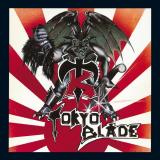
Die Wurzeln der NWOBHM-Legende Tokyo Blade gehen zurück bis in die frühen achtziger Jahre, als die Schulfreunde Andy Boulton (Gitarre), Andy Robbins (Bass) und Steve Pierce (Schlagzeug) in Wiltshire unter dem ursprünglichen Namen White Diamond starteten. Irgendwann tat man sich mit Sänger Alan Marsh zusammen und machte zuerst als Killer und dann als Genghis Khan weiter. Die Doppel-Single »Double Dealin’« erschien 1982 und sicherte Tokyo Blade einen Plattenvertrag beim neu gegründeten Label Powerstation Records. Im November 1983 stand schließlich das Debütalbum in den Läden.
Gründungsmitglied und Gitarrist Andy Boulton erläutert: “Die Platte wurde im Wickham Studio in Ost-London aufgenommen. Wir hatten lediglich vier Tage zur Verfügung und es war ein Albtraum. Immer wenn wir fertig waren, fielen wir todmüde um und schliefen sofort auf dem Studioboden ein. Und am nächsten Tag ging alles wieder von vorne los.“
Es wundert demnach kaum, dass Andy die Atmosphäre im Studio als angespannt bezeichnet: “Wir dachten, uns würden wenigstens zwei Wochen zur Verfügung stehen, aber am Ende mussten wir alles mehr oder weniger live aufnehmen. Im Grunde genommen haben wir die Songs für das Album ausgewählt, die uns am besten gefallen haben zu diesem Zeitpunkt.”
Während die Pressereaktionen im Vereinigten Königreich, speziell beim Kerrang!, nicht überwältigend waren, wurden Tokyo Blade in Kontinentaleuropa von Magazinen wie dem Aardschok (Niederlande) und Rock Hard (Deutschland) bereits als die neuen Iron Maiden gefeiert.
Diese erweiterte Re-Issue des ersten Albums von Tokyo Blade kommt mit einer Fülle von Bonus-Material: als da wären die vier Songs der »Midnight Rendezvous«-EP, nämlich “If Heaven Is Hell”, “Highway Passion”, “Midnight Rendezvous” und “Mean Streak”, sowie “Powergame” und ”Death On Main Street” von der »Powergame« 7”, plus ein Stück namens “Machine Run”, das 1982 auf der Ebony-Compilation »Metal Maniaxe« unter dem Bandnamen Madame Guillotine erschienen ist und in Hull aufgenommen wurde.
Transfer, Audio-Restaurierung und Mastering durch Patrick W. Engel bei TEMPLE OF DISHARMONY im Februar 2021 / Januar 2026. Cutting durch SST Germany auf Neumann-Geräten für optimale Qualität auf allen Ebenen. Die ultimative audiophile Ausgabe dieses zeitlosen NWOBHM-Klassikers!
Es war ein Coup, als Gründer und Bassist Lee Payne vor drei Jahren ankündigte, dass Harry „The Tyrant“ Conklin, der nach Griechenland gezogen war, seiner Band Cloven Hoof beitreten würde. Der ehemalige Jag-Panzer-Frontmann war der perfekte Nachfolger für Russ North, der für die Fans bis dahin als der ultimative Cloven-Hoof-Sänger galt – leider weilt er nicht mehr unter uns. Daher waren die Reaktionen auf das erste Album der Band mit Harry Conklin am Mikrofon herausragend. »Heathen Cross« wurde 2024 bei High Roller Records veröffentlicht.
Nun folgt Cloven Hoofs zehntes Studioalbum mit dem Titel »Never A Prophet In Your Own Land«. Wieder einmal ist die Gesangsleistung vom „Tyrant“ absolute Weltklasse. Lee Payne grinst: „Das Lob gebührt einzig und allein Harry. Wir können uns glücklich schätzen, einen so brillanten Sänger und Frontmann in der Band zu haben.“
Kontinuität ist für jede Band wichtig, und Cloven Hoof hatten in der Vergangenheit mehr als einen Besetzungswechsel zu verzeichnen. Diesmal nicht, wie der Bassist nicht ohne Stolz erklärt: „Wir haben dieselbe feste Besetzung wie auf »Heathen Cross«, das kann ich mit Freude sagen. Am Gesang der einzig wahre Harry Conklin und an den Gitarren Luke Hatton sowie Chris Coss. Dazu Ash Baker am Schlagzeug. Luke, Chris und Ash sind nun seit über zehn Jahren bei Cloven Hoof; sie kennen ihre Rollen in- und auswendig. Ich selbst bin seit 1979 in der Band, also sollte ich inzwischen eine Vorstellung davon haben, was ich mache (lacht).“
„»Never A Prophet In Your Own Land« ist keine direkte Fortsetzung von »Heathen Cross«“, fährt Payne fort. „»Heathen Cross« hatte seine eigene schwere und düstere Atmosphäre. »Never A Prophet In Your Own Land« ähnelt eher »A Sultan‘s Ransom«, doch diese Ähnlichkeit war weder konstruiert noch geplant. Es ist einfach so gekommen.“
Long overdue reissue of classic Scottish ambient techno banger ‘Mindweeds’, originally released in 1993 on the Pure-affiliated T&B Vinyl label run by Keith McIvor (JD Twitch) and Andy Watson (Brainstorm). With a Discogs demand ratio at about 300 have : 2000 want, and used prices peaking at over £100, now seems to be the right time for a re-release.
State of Flux were Roger Elliott and Dave Clark (aka Sparky, LUMA, Truffle Club and main man behind Kübler-Ross). They first met at Glasgow’s Strathclyde University in 1990, bonding over a shared love of weasel racing, German sausages and “man-duos” like The KLF and The Shamen. Dave was fully pubescent and already had a synth and drum machine, while Roger – a late developer – bought “another cheap synth, a Commodore Amiga for sequencing and a tiny mixer with no EQ”. For two long years they concentrated hard on “churning out unlistenable pish”, admittedly clueless about what they were trying to do.
Then – out of nowhere in the summer of 1992 – a flatmate’s Jello Biafra spoken word CD (‘I Blow Minds For A Living’) provided the inspiration to unlock the spark of dynamite that set the raving world on fire. Sampled using a Walkman* cassette** tape*** on playback (a decision the pair soon came to regret every time the track was subsequently performed live), Jello’s pilfered rant would soon become the crucial glue that held together the burgeoning kaleidoscopic helicopter spliff that is ‘Mindweeds’, loaded as it was – and indeed still is – with a veritably seething morass of cheeky electronic blims, nasal filter cheese and gay Caledonian spunk.
* a vintage portable listening device roughly the size of 4 iPhones stacked on top of one another and weighing the same as a small tub of yoghurt
** a plastic cartridge enclosing 2 miniature spools of magnetically coated, polyester-type plastic film (magnetic tape), notoriously convenient for pirating copyright material and secreting in one’s underpants for transporting between illicit market trader stalls
*** thin ribbon coated with ferromagnetic particles, usually ferric oxide but also chromium dioxide, "pseudochrome" ferricobalt or iron-cobalt-nickel “metal” formulations – with the latter types sounding marginally less crap
Playing demos of the track to friends, one thing led to another and a copy arrived with Twitch. Meeting the legends behind Pure in late 1992, a release was scheduled for summer 1993… but not before a promotional live gig in February of that year, supporting their heroes The Black Dog. Confessing that they “didn’t have a clue how to play live”, the duo played it safe, “went to a studio near Edinburgh airport to record the ‘live’ show” and then “mimed it off a DAT” at the gig, “standing in front of unplugged synths”. Soon after this, they recorded the full EP at Finitribe’s ‘Finiflex’ studio in Leith, Edinburgh and the record came out as planned that summer – the same week as Underworld’s ‘Rez’.
The record received high praise, appeared in many big-name DJ charts, sold out very quickly and was repressed within a few weeks, selling several thousand copies by the end of 1993 – no mean feat in an era when people had to use landline phones ****, faxes ***** or good old-fashioned carrier pigeons ****** to ascertain literally anything about the outside world, what was cool, where to buy the cool shit, or how to meet people and have fun.
**** a fixed communication device that connects to a telephone network using physical wires, cables, or a stationary base unit tied to a specific geographic address, using a handset incorporating a mouthpiece featuring a small metal disk and carbon grains, converting sound pressure from the human voice into a flow of electrical waves caused by these grains being squeezed together, before the variable signal is transmitted down DC voltage-powered copper wire and rerouted by a central exchange to arrive at the earpiece magnet of the target receiver’s handset, moving a small speaker cone accordingly so the message is intelligible WITHOUT THE PERSON SPEAKING ACTUALLY BEING PRESENT
***** as above, but for the d/Deaf
****** flying vermin riddled with diseases and capable of surviving nuclear armageddon
Soon Roger and Dave became sick of the Walkman being the only instrument played live in their set: with their new found fame and riches, they invested in a case for their Amiga to transport it around Scotland, while also putting in the hours on how to pretend to play live better with a sequencer and synths that were FINALLY plugged in. Following the release of ‘The Mercury EP' in April 1994, they embarked on a full tour of the UK and even managed to part ways and end the band by June that year.
This reissue includes the two original mixes of ‘Mindweeds’ recorded at Finiflex (‘Original’ and engineer ‘Fred's Fancy’), the original cassette demo (mastered directly from the actual recording sent to Twitch & Brainstorm in 1992) and a live version recorded at the Birmingham club night 'Oscillate' in April 1994.
Pain threaded with joy is the sound of survival. On The Hard Truth, Wynonna isn"t letting go of either one, carrying everything she"s endured and reinventing herself as an artist. This ten-track tribute to deep sorrow and dogged persistence strips away layer after layer of the lush production that defined Wynonna"s previous recordings, delivering in its place her most personal and powerful work yet. ANTI- is proud to continue its tradition of embracing American legends and giving them a platform to reach new heights. The Hard Truth has a major contributor in the form of producer Cactus Moser, Wynonna"s partner in music and life. Wynonna and Moser shared songwriting duties on The Hard Truth, and the resulting tracks were recorded to capture and compliment the raw power he"d witnessed decades ago. What they"ve created together is an unvarnished elegy to the dead and the missing, an album that pays tribute to choosing love in the face of suffering. Through instrumentation and arrangements unlike any record in Wynonna"s four-decade career, The Hard Truth rolls in like a night train hitting listeners on the blind side.
Die norwegische Punkband Aktiv Dödshjelp aus Oslo hat sich in den vergangenen Jahren in Ihrer Heimat
durch ihre explosiven Liveshows und nicht zuletzt durch ihre supermelodiösen Songs mit witzigen und
ironischen Texten einen hervorragenden Ruf erspielt. In den 17 Jahren seit ihrer Gründung im Jahre 2007
ist die Band pausenlos im Inland und Ausland getourt und präsentiert nun ihr zweites Album! Aktiv
Dödshjelp haben ihren Sound seit ihrem letzten Album ”Send Dudes” (das in 2025 für den norwegischen
Grammy als bestes Rockalbum nominiert war) perfektioniert und liefern auf dem neuen Album ”The Nasty
Piece” den perfekten Mix aus Punk und Rock. Wer auf norwegische Bands wie Turbonegro, The Good
The Bad and The Zugly und Kvelertak steht, wird Aktiv Dödshjelp lieben!
Für die neue Platte holte sich die Band diesmal Produzent Bendik Markovic Toming-Weston (brenn, TØFL,
Fred again.…) ins Boot, der laut der Band ”eine echte Pop-Hure” ist.
Natürlich haben es nur die stärksten Songs auf The Nasty Piece geschafft. Das Album enthält außerdem
die bereits veröffentlichten Singles „Jakter en Løve“, „Kjøttkverna“ und „Hun som sitter fast“ und mit
”Lazer Tag” den besten Turbonegro-Song, den Turbonegro nie geschrieben haben.
Es war ein Coup, als Gründer und Bassist Lee Payne vor drei Jahren ankündigte, dass Harry „The Tyrant“ Conklin, der nach Griechenland gezogen war, seiner Band Cloven Hoof beitreten würde. Der ehemalige Jag-Panzer-Frontmann war der perfekte Nachfolger für Russ North, der für die Fans bis dahin als der ultimative Cloven-Hoof-Sänger galt – leider weilt er nicht mehr unter uns. Daher waren die Reaktionen auf das erste Album der Band mit Harry Conklin am Mikrofon herausragend. »Heathen Cross« wurde 2024 bei High Roller Records veröffentlicht.
Nun folgt Cloven Hoofs zehntes Studioalbum mit dem Titel »Never A Prophet In Your Own Land«. Wieder einmal ist die Gesangsleistung vom „Tyrant“ absolute Weltklasse. Lee Payne grinst: „Das Lob gebührt einzig und allein Harry. Wir können uns glücklich schätzen, einen so brillanten Sänger und Frontmann in der Band zu haben.“
Kontinuität ist für jede Band wichtig, und Cloven Hoof hatten in der Vergangenheit mehr als einen Besetzungswechsel zu verzeichnen. Diesmal nicht, wie der Bassist nicht ohne Stolz erklärt: „Wir haben dieselbe feste Besetzung wie auf »Heathen Cross«, das kann ich mit Freude sagen. Am Gesang der einzig wahre Harry Conklin und an den Gitarren Luke Hatton sowie Chris Coss. Dazu Ash Baker am Schlagzeug. Luke, Chris und Ash sind nun seit über zehn Jahren bei Cloven Hoof; sie kennen ihre Rollen in- und auswendig. Ich selbst bin seit 1979 in der Band, also sollte ich inzwischen eine Vorstellung davon haben, was ich mache (lacht).“
„»Never A Prophet In Your Own Land« ist keine direkte Fortsetzung von »Heathen Cross«“, fährt Payne fort. „»Heathen Cross« hatte seine eigene schwere und düstere Atmosphäre. »Never A Prophet In Your Own Land« ähnelt eher »A Sultan‘s Ransom«, doch diese Ähnlichkeit war weder konstruiert noch geplant. Es ist einfach so gekommen.“
Crossover deviants IRON REAGAN call upon thee to join the holy order of thrash on their latest full-length, Crossover Ministry! Across 18 tracks and thirty minutes of frantic, punk-metal fury, IRON REAGAN mix a blitzkrieg of relentlessly catchy riffs and irresistible, mosh-ready grooves with punchy, thrash gallops and hardcore punk attitude. Crossover Ministry was recorded byIRON REAGAN guitarist Phil (Landphil) Hall at Blaze of Torment Studios, mixed by Kurt Ballou (Converge, High on Fire, Toxic Holocaust) at God City Studios and features stunning artwork by Bonethrower (Mastodon, Young Widows). On Crossover Ministry, IRON REAGAN prove that they are the new leaders of thrash evangelism. Hear their vicious sermon at a circle pit near you!
Clear vinyl. Originally released in 1999, The Sacred Talisman is the highly-acclaimed third studio album from Swedish power metal stalwarts Nocturnal Rites.
Antorcha are one of the best-kept secrets of the Mexican underground rock scene. Their influences came from Iron Butterfly, Black Sabbath, Blue Cheer, Vanilla Fudge, and others. At times they also sounded like MC5, with whom they shared an anarchist and anti-establishment spirit. After a brief period during which they recorded only a couple of 7-inch singles for the Orfeón label that had a very limited distribution, Mexican rockers Antorcha fully embraced a DIY approach to managing their own career. They had evolved into a heavy psychedelic rock group, with no metaphors and no compromises. Anarchists in a country that could barely utter the word without trembling. It was the final years of the 1960s. They recorded five self-produced EPs, sold exclusively at their live performances, passed from hand to hand as if each record were a clandestine act. While MC5 stirred the streets of Detroit alongside the White Panthers, Antorcha was doing much the same in a Mexico that preferred to look the other way. The band operated as a cooperative: agreements were reached collectively, and income was shared equally. Antorcha became a forgotten band in their own country, overlooked even by Mexican rock experts. Yet their legacy proved influential on an organizational level for later groups in the independent scene, which followed Antorcha's model of self-releasing and self-managing their work. This compilation brings together the best of their discography, collecting self-released 7-inch records originally issued between 1971 and 1976, along with material that never appeared on their EPs. Includes an insert featuring liner notes by Carlos Icaza "Tropicaza" and photographs of the band.
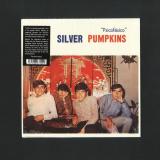
"Psicofásicos" by The Silver Pumpkins is a unique document: an EP that is virtually impossible to find in its original edition, offering an essential glimpse into Bolivia's thrilling 1960s rock scene-raw, wild, and unlike almost anything else. Beyond the ubiquitous covers of Cream and Jimi Hendrix recorded by countless South American bands, this EP features the far less common 'Pushing Too Hard' by The Seeds and, most notably, the dark, powerful 'You're Gonna Miss Me' by the 13th Floor Elevators. Bolivia boasts an extraordinary musical legacy of raw, garage-driven '60s sounds. Alongside Peru, it was one of the South American countries where the greatest number of recordings in this style were released-captured with limited resources but overflowing with spontaneity, energy, and attitude. The difficulty of obtaining the records that were shaping the latest Anglo-American rock trends of the 1960s in many Spanish-speaking Latin American countries led to a proliferation of local bands covering their musical heroes. Well-known artists such as Cream, Jimi Hendrix, and Iron Butterfly were reinterpreted by countless groups, making these songs available to local audiences without having to rely on imported records reaching their countries. By doing so, these bands helped spread the cutting-edge rock music already making waves elsewhere in the world. What makes this release particularly unusual is that the band chose to cover second-tier cult acts rather than the obvious classics-groups that only briefly cracked the U.S. Top 50 in the late '60s, such as The Seeds and 13th Floor Elevators. Originally released on the Bolivian Psicofásico label, this exceptionally rare EP pairs The Seeds' garage anthem 'Pushing Too Hard' with the ferocious, immortal 'You're Gonna Miss Me' by Roky Erickson and the 13th Floor Elevators. The raw power of the original songs is pushed even further here by the rudimentary recording techniques and the limited instrumental skills of the very young members of The Silver Pumpkins. The result is a one-of-a-kind document-virtually impossible to find in its original pressing-that helps complete the picture of Bolivia's fascinating '60s rock scene. First-ever reissue.
out of Stock
Last delivered 31 days ago available to reorder, subject to availability
While the sterile “professionalism” of some heavy bands can be like a clinical drone strike, Texas-based Judiciary feels personal. Like close combat with a knife. And it’s all in their chemistry. Judiciary is an amalgamation of four guys raised in the intersection of metal and hardcore—all devoted to pushing their craft further. Across two esteemed LPs, the band has proven their worth as a crucial entity in the crowded heavy music scene by evolving their sound further and further with each release. And now with the band’s latest Stalagmite Angels, due on September 4th via the venerable Closed Casket Activities, Judiciary can further showcase their status as a crucial, one-of-a-kind part of the evolution of hardcore in 2026. Life changes can bring about chaos and seismic shifts, but if Stalagmite Angels is any indication, then it’s all for the better. In the wake of the release of Judiciary’s second LP Flesh + Blood, the band called upon Juan Vazquez to pick up guitar duties, thereby changing the internal framework of the band for good, and unknowingly for the better. It’s this pivot in personnel that resulted in the band’s latest EP. “The goal with this EP was a hard reset, but we also wanted to chill the f— out a bit, have fun, and do something that felt true to the four of us,” recalls drummer Austin Looney. “We wanted time to reconfigure things and let the music come naturally–temper this new mindset that we've adopted post-Flesh + Blood.” Judiciary’s greatest strength lies in their musical singularity. Though Stalagmite Angels represents the collision of influences from across well-worn territories like metallic hardcore, death metal, black metal, d-beat and more, it’s the Lubbock-born band’s approach that makes it distinctly their own. Stalagmite Angels is a wholly new document that resembles a horde of bands ranging from Hatebreed to Carcass to Slayer to Iron Age, yet never aping any single band nor even revealing any single influence. It’s all familiar but none of it is specific. “90s hardcore and hardcore in general is always gonna be our natural inclination, but it manifests with different elements not only from song to song but within each song,” says vocalist Jake Collinson emphatically, who learned guitar specifically to help with writing new material. “Whether that’s Dying Breed or Cannibal Corpse or Crowbar or Machine Head or any number of other influences that any one of us may have, it all manifests in our work, and through our individual and collective lenses. With this EP, we transformed those ideas into the Judiciary approach.” Stalagmite Angels is an EP about anger at the world, belief in yourself, and how harnessing both in the pursuit of growth is necessary to achieve. But furthermore, it’s a concept record that envisions a subterranean world in both a literal and metaphorical sense—where hidden beauty lurks in the shadows (and in the eye of the beholder) and where triumph manifests in the ability to rise from the depths and into the world above.
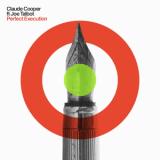
Illusive Bristolian beatmaker Claude Cooper returns with a visceral blast of psychedelic-hip-hop, enlisting IDLES frontman Joe Talbot and BEAK> bassist Billy Fuller for ‘Perfect Execution’, a limited edition 7" single in aid of War Child UK.
Claude Cooper has found a kindred spirit in Joe Talbot. The IDLES frontman has long worn his hip-hop influences as openly as his post-punk ones, and on ‘Perfect Execution’ that affinity finds its fullest expression yet. Cooper's raw, dissonant production collides with Talbot's breathless, confrontational lyricism in a track that draws its lineage from Public Enemy as readily as it does from Bristol's own bruised musical history.
The lyrics pull no punches. Talbot inhabits a landscape of public spectacle and private suffering, circling images of crowds, chains, hanging and the hollow comfort of slogans. The repeated refrain of “No pain no gain” hits differently when set against the track's subject matter, its bludgeoning repetition somewhere between protest chant and bitter irony.
Joe says, “It’s an honour to work with some beautiful Bristol heads on this track for Warchild. All is love”.
This Mirror Weighs a Ton, Interpol’s first album in four years and debut for Partisan Records, finds the band turning inward while continuing to move forward. Across the record, reflection, distortion and perception become a lens through which familiar shapes are refracted into something slightly alien, as if seen through a different kind of light.
Produced with Grammy- and Oscar-winning Andrew Wyatt (ROSALÍA, Charli xcx) and mixed by Dave Fridmann, the album introduces vibrant new textures into Interpol’s world. Synthesizers, strings, acoustic guitars and percussion are integrated into the fabric of the songs, expanding the palette while revealing colors already latent within it. Nothing feels imposed. Instead, the additions deepen the band’s language of restraint, atmosphere and tension. At its center remains the creative relationship between Paul Banks, Daniel Kessler and Sam Fogarino, a partnership now approaching three decades and defined by intuitive alignment and momentum that continues to generate new possibilities. The result is an album that feels expansive, uncanny and alive with forward motion, not a reinvention but an evolution that allows Interpol to continue transforming without losing their identity.
“This Mirror Weighs A Ton” / “See Out Loud” is a study in duality, with Interpol moving fluidly between familiarity and departure. The title track unfolds from a skeletal progression into something vast and textural, built from warped bass, a wordless female voice and a sense of motion that feels tidal, bending the band’s familiar language into somewhere more expansive and unfamiliar. By contrast, “See Out Loud” carries the DNA of Interpol’s earliest work, sharp, propulsive and direct, while complicating it through layered vocals, shifting perspectives and a rare lead vocal turn from Kessler. Both tracks reflect the interplay between structure and spontaneity that defines This Mirror Weighs a Ton, expanding Interpol’s world through fresh textures while keeping the instinctive chemistry between Banks, Kessler and Fogarino at the center.
The double single is accompanied by two visualizers directed by Nick Steinhardt.
This Mirror Weighs a Ton, Interpol’s first album in four years and debut for Partisan Records, finds the band turning inward while continuing to move forward. Across the record, reflection, distortion and perception become a lens through which familiar shapes are refracted into something slightly alien, as if seen through a different kind of light.
Produced with Grammy- and Oscar-winning Andrew Wyatt (ROSALÍA, Charli xcx) and mixed by Dave Fridmann, the album introduces vibrant new textures into Interpol’s world. Synthesizers, strings, acoustic guitars and percussion are integrated into the fabric of the songs, expanding the palette while revealing colors already latent within it. Nothing feels imposed. Instead, the additions deepen the band’s language of restraint, atmosphere and tension. At its center remains the creative relationship between Paul Banks, Daniel Kessler and Sam Fogarino, a partnership now approaching three decades and defined by intuitive alignment and momentum that continues to generate new possibilities. The result is an album that feels expansive, uncanny and alive with forward motion, not a reinvention but an evolution that allows Interpol to continue transforming without losing their identity.
“This Mirror Weighs A Ton” / “See Out Loud” is a study in duality, with Interpol moving fluidly between familiarity and departure. The title track unfolds from a skeletal progression into something vast and textural, built from warped bass, a wordless female voice and a sense of motion that feels tidal, bending the band’s familiar language into somewhere more expansive and unfamiliar. By contrast, “See Out Loud” carries the DNA of Interpol’s earliest work, sharp, propulsive and direct, while complicating it through layered vocals, shifting perspectives and a rare lead vocal turn from Kessler. Both tracks reflect the interplay between structure and spontaneity that defines This Mirror Weighs a Ton, expanding Interpol’s world through fresh textures while keeping the instinctive chemistry between Banks, Kessler and Fogarino at the center.
The double single is accompanied by two visualizers directed by Nick Steinhardt.
The Gates of Slumber’s debut album and EP reissued in August Svart Records continue to reissue the works of Indiana’s true doom metal legends The Gates of Slumber by bringing back their debut album The Awakening and early EP Like a Plague Upon the Land in late August 2026. The 2005 EP Like a Plague Upon the Land is a punchy release praised for its authenticity to the genre. Never before released on vinyl, this hard-hitting fan favorite is heavily rooted in 70s rock-influenced doom. Traditional, slow, and heavy in the vein of Reverend Bizarre and Saint Vitus. The Gates of Slumber was formed by Karl Simon in 1998. Various people were in and out of the group between 1998 and 2001, when the Blood Encrusted Deth Axe demo was recorded with Jamie Walters aka Dr. Phibes/Athenar (Boulder, Midnight) on drums and bass. In 2003 Jason McCash took over the bass duties and was a long-time member of the band until his untimely demise in 2014, after which Simon decided it was time to call it quits. That was until 2019 when the renowned metal festival Hell Over Hammaburg wanted to bring the band back on stage to perform at the festival’s 2020 edition. Simon reformed the band with its original member Chuck Brown on drums and Steve Janiak on bass and got back to work, which resulted in the new self-titled album released in 2024 on Svart Records.
The Gates of Slumber’s debut album and EP reissued in August Svart Records continue to reissue the works of Indiana’s true doom metal legends The Gates of Slumber by bringing back their debut album The Awakening and early EP Like a Plague Upon the Land in late August 2026. The 2005 EP Like a Plague Upon the Land is a punchy release praised for its authenticity to the genre. Never before released on vinyl, this hard-hitting fan favorite is heavily rooted in 70s rock-influenced doom. Traditional, slow, and heavy in the vein of Reverend Bizarre and Saint Vitus. The Gates of Slumber was formed by Karl Simon in 1998. Various people were in and out of the group between 1998 and 2001, when the Blood Encrusted Deth Axe demo was recorded with Jamie Walters aka Dr. Phibes/Athenar (Boulder, Midnight) on drums and bass. In 2003 Jason McCash took over the bass duties and was a long-time member of the band until his untimely demise in 2014, after which Simon decided it was time to call it quits. That was until 2019 when the renowned metal festival Hell Over Hammaburg wanted to bring the band back on stage to perform at the festival’s 2020 edition. Simon reformed the band with its original member Chuck Brown on drums and Steve Janiak on bass and got back to work, which resulted in the new self-titled album released in 2024 on Svart Records.
*Single/Focus Track
Auf Lambchops siebzehntem Album 'Punching the Clown' kehrt Kurt Wagner zu den Ursprüngen zurück. Angeregt durch eine nächtliche Radiobegegnung mit einer unbekannten Gospel-Aufnahme tauchte Wagner tief in die Welt des „Lined-Out-Singing“ ein – einer jahrhundertealten schottisch-appalachischen Call-and-Response-Tradition, bei der ein einzelner Vorsänger einen Chor Wort für Wort und ohne Schnörkel durch Hymnen führt. Dieser Geist roher, gemeinschaftlicher Stimmen prägt jeden Moment von „Punching the Clown“: Wagner verbrachte Jahre damit, große Songwriter zu studieren und sein Handwerk von Grund auf neu zu erlernen, wobei er Dutzende von Songs auf zwölf reduzierte. Aufgenommen in drei Tagen mit dem Gitarristen Andrew Broder, Justin Vernon (Bon Iver) am Banjo und einem sechstimmigen Chor, zusammengestellt von Blake Morgan und unter der Toningenieurschaft von Lambchop-Veteran Mark Nevers, ist das Album anmutig, ironisch und auf stille Weise erschütternd. Erscheint am 21. August 2026 bei City Slang.
Produziert von Ryan Olson und aufgenommen vom 25. bis 27. August 2025 im April Base, Wisconsin. Die Platte wurde in drei Tagen fertiggestellt und präsentiert Kurt Wagner (Gesang), Andrew Broder (Gitarre), Justin Vernon (Banjo) sowie ein sechststimmiges Vokalensemble, ergänzt durch zusätzliche Choraufnahmen in London und Minneapolis.
*Single/Focus Track
Auf Lambchops siebzehntem Album 'Punching the Clown' kehrt Kurt Wagner zu den Ursprüngen zurück. Angeregt durch eine nächtliche Radiobegegnung mit einer unbekannten Gospel-Aufnahme tauchte Wagner tief in die Welt des „Lined-Out-Singing“ ein – einer jahrhundertealten schottisch-appalachischen Call-and-Response-Tradition, bei der ein einzelner Vorsänger einen Chor Wort für Wort und ohne Schnörkel durch Hymnen führt. Dieser Geist roher, gemeinschaftlicher Stimmen prägt jeden Moment von „Punching the Clown“: Wagner verbrachte Jahre damit, große Songwriter zu studieren und sein Handwerk von Grund auf neu zu erlernen, wobei er Dutzende von Songs auf zwölf reduzierte. Aufgenommen in drei Tagen mit dem Gitarristen Andrew Broder, Justin Vernon (Bon Iver) am Banjo und einem sechstimmigen Chor, zusammengestellt von Blake Morgan und unter der Toningenieurschaft von Lambchop-Veteran Mark Nevers, ist das Album anmutig, ironisch und auf stille Weise erschütternd. Erscheint am 21. August 2026 bei City Slang.
Produziert von Ryan Olson und aufgenommen vom 25. bis 27. August 2025 im April Base, Wisconsin. Die Platte wurde in drei Tagen fertiggestellt und präsentiert Kurt Wagner (Gesang), Andrew Broder (Gitarre), Justin Vernon (Banjo) sowie ein sechststimmiges Vokalensemble, ergänzt durch zusätzliche Choraufnahmen in London und Minneapolis.
There's a confidence in calling something 'cheesy' before anyone else gets the chance to. The Lazy Eyes lean into it, they have an understanding that sincerity, when left out in the open long enough, will always risks ridicule. But what's remarkable on Cheesy Love Songs is how little they flinch for a young band dropping a sophomore album.
This is a record that understands its inheritance. You can hear the ghosts of bedroom psych, of records made by young people who discovered that distortion could double as a shield, that reverb could make even the most fragile confession feel infinite. But Cheesy Love Songs doesn't hide inside those textures, it lets them bloom until they almost overwhelm the room, like a feeling you tried to downplay that instead insists on becoming the only thing you can hear.
The kaleidoscopic guitars, the melodies that feel like they've been unearthed rather than written, the way it treats love as both spectacle and small disaster. These are songs that circle the same emotional drain: wanting too much, too quickly, and then sitting in the quiet aftermath of having said it out loud. The band doesn't pretend that intensity is sustainable; instead, they document the crash with the same care as the ascent.
In that way, Cheesy Love Songs feels like a document of early belief — the kind that arrives before irony calcifies, before restraint feels like wisdom. It's a record made by a band still willing to risk the embarrassment of being 'cheesy' in pursuit of something louder, brighter, and more honest than cool. And maybe that's what makes it an iconic modern Australian sophomore album: not just that it captures a moment in time for the band, but that it refuses to outgrow it.
Matrix Music Arhiv (MMA) are proud to announce a re-issue of the highly sought-after album 'Resistance' by the seminal Yugoslavian electronic rock band Borghesia, originally released in 1989 on Play It Again Sam/PIAS (Europe), Wax Trax (USA) and Jugoton (former Yugoslavia). Available on 2Lp, 2CD & 1MC (MC original album only). The re-issue features a carefully remastered edition along with the exclusive bonus live album "Dal Vivo A El Paso", recorded in December 1988 during their performance in Torino, Italy, on one of their European tours. This recording features very different, raw and at times 'dubbed up' versions of their early tracks such as 'Naked, Uniformed, Dead', Am I? and Him (On). The historical perfectly captures the atmosphere and energy of their live appearances at the time. Borghesia (Italian for 'bourgeoisie'), who were formed in Ljubljana (Slovenia) in 1982, had always considered its art to be far broader than just sonic. Borghesia's transgressive, transdisciplinary alloy of film expression, distinctively physical performative practices, usage of new technology and conveniently abrasive EBM (electronic body music) musical production hasn't only been ground-breaking in terms of the holistic, visual/sonic presence of an art collective, but had a rather decisive influence on the general aesthetics of the immensely important Yugoslav subcultural landscape of the 1980s. Borghesia was one of the first bands from the East of the Iron Curtain who used the VHS video medium to distribute their art and was also one of few projects from socialist Yugoslavia to successfully penetrate the curtain itself, reaching international audiences. A series of their releases in the fruitful period between the years 1987 and 1991, including the Resistance album itself, was released by the legendary Belgian label Play It Again Sam (PIAS). The band dissolved in the mid-1990s and then continued their work in 2014. In line with Borghesia's unique social engagement, progressiveness and political criticism, Resistance is one of their most powerful statements. It's the ultimate fight the power manifesto, which makes punk and hip-hop albums of the time sound like children's songs. This is not music for nodding your head to; it's tactical broadcast for the nocturnal resistance to this very day. Borghesia didn't address control only - they sampled the political top, the secret police and explicitly connected authority with dominance. The production of the album isn't clean or polished. On the contrary - Resistance sounds like it was created in a bunker, using stolen military equipment and synthesisers. Borghesia's genius lies in their understanding that the relentless, mechanical EBM beat was the sound of the State - and by hijacking it, turning the system's own rhythm against itself they created the most powerful form of sonic insurgency. And since history repeats itself while the little man learns slowly, the re-release of 'Resistance' comes at the right time. The dark clouds of violence are already looming over Europe, they've never really left the Middle East, and the levers of power and capital ever so louder, not even covertly at all incite: war, war, war! In these times the only appropriate answer is: revolt, rebel, Resistance!
Matrix Music Arhiv (MMA) are proud to announce a re-issue of the highly sought-after album 'Resistance' by the seminal Yugoslavian electronic rock band Borghesia, originally released in 1989 on Play It Again Sam/PIAS (Europe), Wax Trax (USA) and Jugoton (former Yugoslavia). Available on 2Lp, 2CD & 1MC (MC original album only). The re-issue features a carefully remastered edition along with the exclusive bonus live album "Dal Vivo A El Paso", recorded in December 1988 during their performance in Torino, Italy, on one of their European tours. This recording features very different, raw and at times 'dubbed up' versions of their early tracks such as 'Naked, Uniformed, Dead', Am I? and Him (On). The historical perfectly captures the atmosphere and energy of their live appearances at the time. Borghesia (Italian for 'bourgeoisie'), who were formed in Ljubljana (Slovenia) in 1982, had always considered its art to be far broader than just sonic. Borghesia's transgressive, transdisciplinary alloy of film expression, distinctively physical performative practices, usage of new technology and conveniently abrasive EBM (electronic body music) musical production hasn't only been ground-breaking in terms of the holistic, visual/sonic presence of an art collective, but had a rather decisive influence on the general aesthetics of the immensely important Yugoslav subcultural landscape of the 1980s. Borghesia was one of the first bands from the East of the Iron Curtain who used the VHS video medium to distribute their art and was also one of few projects from socialist Yugoslavia to successfully penetrate the curtain itself, reaching international audiences. A series of their releases in the fruitful period between the years 1987 and 1991, including the Resistance album itself, was released by the legendary Belgian label Play It Again Sam (PIAS). The band dissolved in the mid-1990s and then continued their work in 2014. In line with Borghesia's unique social engagement, progressiveness and political criticism, Resistance is one of their most powerful statements. It's the ultimate fight the power manifesto, which makes punk and hip-hop albums of the time sound like children's songs. This is not music for nodding your head to; it's tactical broadcast for the nocturnal resistance to this very day. Borghesia didn't address control only - they sampled the political top, the secret police and explicitly connected authority with dominance. The production of the album isn't clean or polished. On the contrary - Resistance sounds like it was created in a bunker, using stolen military equipment and synthesisers. Borghesia's genius lies in their understanding that the relentless, mechanical EBM beat was the sound of the State - and by hijacking it, turning the system's own rhythm against itself they created the most powerful form of sonic insurgency. And since history repeats itself while the little man learns slowly, the re-release of 'Resistance' comes at the right time. The dark clouds of violence are already looming over Europe, they've never really left the Middle East, and the levers of power and capital ever so louder, not even covertly at all incite: war, war, war! In these times the only appropriate answer is: revolt, rebel, Resistance!
Matrix Music Arhiv (MMA) are proud to announce a re-issue of the highly sought-after album 'Resistance' by the seminal Yugoslavian electronic rock band Borghesia, originally released in 1989 on Play It Again Sam/PIAS (Europe), Wax Trax (USA) and Jugoton (former Yugoslavia). Available on 2Lp, 2CD & 1MC (MC original album only). The re-issue features a carefully remastered edition along with the exclusive bonus live album "Dal Vivo A El Paso", recorded in December 1988 during their performance in Torino, Italy, on one of their European tours. This recording features very different, raw and at times 'dubbed up' versions of their early tracks such as 'Naked, Uniformed, Dead', Am I? and Him (On). The historical perfectly captures the atmosphere and energy of their live appearances at the time. Borghesia (Italian for 'bourgeoisie'), who were formed in Ljubljana (Slovenia) in 1982, had always considered its art to be far broader than just sonic. Borghesia's transgressive, transdisciplinary alloy of film expression, distinctively physical performative practices, usage of new technology and conveniently abrasive EBM (electronic body music) musical production hasn't only been ground-breaking in terms of the holistic, visual/sonic presence of an art collective, but had a rather decisive influence on the general aesthetics of the immensely important Yugoslav subcultural landscape of the 1980s. Borghesia was one of the first bands from the East of the Iron Curtain who used the VHS video medium to distribute their art and was also one of few projects from socialist Yugoslavia to successfully penetrate the curtain itself, reaching international audiences. A series of their releases in the fruitful period between the years 1987 and 1991, including the Resistance album itself, was released by the legendary Belgian label Play It Again Sam (PIAS). The band dissolved in the mid-1990s and then continued their work in 2014. In line with Borghesia's unique social engagement, progressiveness and political criticism, Resistance is one of their most powerful statements. It's the ultimate fight the power manifesto, which makes punk and hip-hop albums of the time sound like children's songs. This is not music for nodding your head to; it's tactical broadcast for the nocturnal resistance to this very day. Borghesia didn't address control only - they sampled the political top, the secret police and explicitly connected authority with dominance. The production of the album isn't clean or polished. On the contrary - Resistance sounds like it was created in a bunker, using stolen military equipment and synthesisers. Borghesia's genius lies in their understanding that the relentless, mechanical EBM beat was the sound of the State - and by hijacking it, turning the system's own rhythm against itself they created the most powerful form of sonic insurgency. And since history repeats itself while the little man learns slowly, the re-release of 'Resistance' comes at the right time. The dark clouds of violence are already looming over Europe, they've never really left the Middle East, and the levers of power and capital ever so louder, not even covertly at all incite: war, war, war! In these times the only appropriate answer is: revolt, rebel, Resistance!
With their ever-mutating brand of jazz-and-country-laced punk, Opus Kink have always cut a singular figure in a saturated landscape. Making their name with incendiary, cult-like live shows, the band - formed in Brighton (UK) in 2017 — has developed a sound as elusive as it is recognisable. Underscored by a formidable horn section and ragged, sardonic delivery, the band bear passing resemblance to post-punk and no-wave acts like The Pop Group, Birthday Party and Lounge Lizards, but it’s the weaving of older, more traditional influences - choral, folk, country, Latin, Weimar cabaret, cruise-ship-crooning - into the fabric of their music that sets them apart. Their highly anticipated debut album 'The Sweet Goodbye' is set for release on 31st July 2026 via So Recordings and follows a series of EPs and singles which have earned acclaim from NME, DORK, DIY, CLASH, SO YOUNG, BBC Radio 1 and playlisting on BBC Radio 6 Music. The album is produced by Grammy award-winning producer and mixer Craig Silvey (Arcade Fire, Florence & The Machine, Baxter Dury, REM, Kronos Quartet, Sam Fender), with album track 'The Head Tree' featuring The New Eves (No.1 Independent album in 2025). Opus Kink brings their alluring live show to audiences around the UK and Europe later this year, including a headline show at London's 2,300-cap venue o2 Kentish Town Forum, while the Summer sees them supporting The Libertines at Rochester Castle, Kent. TRACKLISTING A1. Come Over, Do Me Wrong A2. Will It Come For You? A3. I'm A Pretty Showboy A4. The Sweet Goodbye A5. Peckham Nocturne B1. I Have To Shine My Sunday Shoes B2. The Head Tree (ft. The New Eves) B3. 448C (The Colour of Love) B4. Crucify! B5. Oh, Irony QUOTES - ?"Horn-fuelled filth-funk, where punk and jazz combine in grimy circumstances." - NME - "One of the UK’s most exciting new bands?...A raucous, intense blast of guitar pop...as equally anxiety-inducing as it is sublime." - C?LASH - "Barnstorming, infectious" - Steve Lamacq, BBC 6 Music - "One of the most enjoyable genre fusions I've ever seen." - Nels Hylton, BBC Radio 1 - "(Their) ferocious live performances have earned them a reputation as? one of the best live bands in the country?." - So Young