Leonard Cohen had gained fame as a poet and singer in the late '60s and continued his creative output successfully throughout the '70s. But when the '80s came along, things didn't go so smoothly. That is, until he drastically changed his sound with the 1988 album 'I'm Your Man'. Synthesizers ruled, and a dark humour was added to his baritone. With enormous critical and commercial success, 'I'm Your Man' is ranked amongst Cohen's best albums. Now available on vinyl again for the first time since 1988!
Adrian Younge presents: The Delfonics is quintessential sweet-soul from The Delfonics lead vocalist William Hart produced by Adrian Younge. From the very beginning, it was Younge's intention to create an old-school Delfonics vibe but offer a very hip-hop-informed perspective. There are distinguishing musical elements that Delfonics fans will recognize, like the electric sitar guitar, the French horn, string arrangements, and the tympani. Recorded and mixed by Adrian Younge at Linear Labs, the preeminent analog studio of Los Angeles, CA.
a gatefold heavy card board sleeve and heavy vinyl !! remastered and recut from original masters !!! the artwork will be true to the original (including textured covers and embosses where appropriate) and will feature lyrics, and additional sleeve notes and artwork !!!
out of Stock
Last delivered 3 months ago available to reorder, subject to availability
Before Bob Marley came on the scene, many in Britain dismissed reggae as either the stuff of one-hit wonders or skinhead
dance music. Now it is recognised as influential style, which has not only sold millions of records worldwide but had a major effect on the mainstream. But only a few of his fans realise the man's recording career was as lengthy as it was: though he died aged just 36 in 1981, he'd been active in the studio since 1962 onwards.Despite some of the tracks featured here would be re-recorded on later albums, these 'prototypes' exhibit a rough-hewn, soulful feeling. We all knew his music was timeless, this was but further proof.
With the release of fourth album Crown Posada, Smoove & Turrell cement their position as one of the UK's most exceptional soul acts with their innate ability to deliver hard times social commentary in a dancefloor friendly medium. Proudly working class as a band - this album celebrates love, life, politics and the lows and the highs of growing up and raising families in the North East of England.
Gritty and powerful, the band make no attempt to sound or look like anyone else - not for them the sharp suits and trumpet twirls of some of their peers. Instead you get a wildly talented and vital crew of larger than life Geordie lads taking their rightful place on the international soul scene having already become figureheads within the UK.
Unreleased demos by Craig Peyton & Jolyon Skinner circa 1983-1985. The duo penned Howard Johnson's "Let This Dream Be Real", Melba Moore's "Love of a Lifetime" & Will Collins' "Where Ya Gonna Be Tonight", before they went their separate ways.
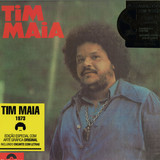
A great step forward for the legendary Tim Maia - working here in a style that's even tighter and more sophisticated than before - yet still equally filled with funk and soul! The arrangements are a bit bigger than before, and the production a bit more professional - but that change only brings Tim into even more heavenly soul territory - with a mix of grooves and strings that lays somewhere between the best early 70s work on labels like Curtom or Motown! Tim's got a new sense of majesty on the album - and also sings in English in a few spots - at a level that makes us wonder why he was never able to crack the American soul market at the time. An essential record from the man who brought American soul music to Brazil - with tracks that include "Over Again", "New Love", "Balanco", "Reu Confesso", "Preciso Ser Amado", "Amores", and "Do Your Thing Behave Yourself".
Raw electronix all the way from Medellin, Colombia. It's Retrograde Youth making his debut on Radio Matrix. By serving us three different kind of tunes, he shows us he is definitely an artist to keep your eyes and ears focused on. Where the first track shows his more melodic side with a grimy twist, the darkness really starts to unfold on the flip. 'Love Fantasy' will fill the room and leaves no escape with its haunting bassline, flanged hihats and Earth shattering leads. And on the B2, 'No Time' is the one for the dark basements, straight up acid for the tough kids! And this is only part 1...
Last year saw the mysterious Garage Shelter make their debut appearance on Skylax, and little is still known about them! All we know is they are back with some freshness on the Skylax Classic sublabel.
First up is Bring Back Love, a track that will sink its claws in with that infectious vocal sample hook. Sticking with the old school sample vibe is the Lonely Heart dub of Attempt; it's a bit more mellow but still has plenty of groove in it. Friend of the Garage Shelter, DJ La Foudre, appears over on the B side with It's Alright (Signal St Mix). Still on that catchy sample tip, it features one of the grooviest bassline and funky guitar pairings I've heard in a long time. Next up, Perception 66 is a smooth house affair from yet another friend, Asa No Hikari. Rounding out the package is Garage Shelter's own You (Still), a dreamy pad-driven track that may indeed be the pick of the release. While we don't know much about Garage Shelter, we can't help but look forward to what they come out with next!
Das 1965er-Album "Beach Boys' Party!" wurde remixed, remastert und erweitert zu "BEACH BOYS' PARTY! UNCOVERED AND UNPLUGGED". Zum 50jährigen Jubiläum erscheint es als Doppel-CD und enthält 81 Songs und Sprachtracks. Am 4. März erscheint die Vinyl Edition mit 12 Tracks, remixed and remastered im "Uncovered and Unplugged"-Style.
Teenage Jesus and the Jerks began to formulate their visionary brand of aural catharsis sometime during the first half of 1977, amidst the sordid ruins of a then fully down-and-out Lower Manhattan. The mastermind behind this juggernaut of sonic libertinage was a barely pubescent but world-weary runaway who called herself Lydia Lunch. Influenced strongly by the Marquis de Sade and Henry Miller, Lunch shrewdly decided to graft the existential horror of her own writing onto harsh, atonal music after being exposed to the room-clearing live output of other contemporary rock-music deconstructionists like Suicide and Mars. With an agenda of conjuring nightmarish intensity in lieu of technical instrumental ability, Teenage Jesus instantly made the supposedly nihilistic' and raw' current wave of so-called Punk acts sound like slick, good-timey pop music by comparison. Teenage Jesus and the Jerks were The Texas Chainsaw Massacre, lisa, She Wolf of the SS, and Salò, or the 120 Days of Sodom, transliterated into a blatant mockery of the increasingly tired, basic rock-band format. Posthumously, there have been numerous reissues of the primary Teenage Jesus corpus, namely the first side of the Lydia Lunch double compilation album Hysterie (CD Presents, 1986), a very incomplete anthology titled Everything (Atavistic, 1995) and Shut Up and Bleed (Cherry Red/Atavistic, 2008), which also featured Beirut Slump tracks. These less-than-fastidious documents contained reverb-laden transcriptions of the studio cuts directly from vinyl copies, as well as random live tracks of mediocre fidelity. This particular collection about to be released on Other-People is meticulously edited and mastered from rare bootlegs taped during the initial 1977-1979 period of classic band, and only one title (Crown of Thorns from January 17,1979) has been legitimately released to date, albeit in a completely different sound quality.
In the far reaches of space, an American pilot named Peter Quill finds himself the object of a manhunt after stealing an orb coveted by the villainous Ronan. In order to evade Ronan, Quill is forced into an uneasy truce with a group of misfits including Gamora, Rocket, Drax the Destroyer, and Groot. But when Quill discovers the true power of the orb and the menace it poses to the cosmos, he must rally his ragtag rivals for a last, desperate stand - with the galaxy's fate in the balance. Staring Chris Pratt, Zoe Saldana, John C. Reilly as well as the voices of Vin Diesel and Bradley Cooper.
This deluxe double vinyl edition of the soundtrack to the James Gunn-directed 2014 film Guardians Of The Galaxy includes classic 1970's songs from the movie like Blue Swede's "Hooked on a Feeling," David Bowie's "Moonage Daydream," 10cc's "I'm Not in Love," the Jackson 5's "I Want You Back," Redbone's "Come and Get Your Love," and The Runaways' "Cherry Bomb" plus the film's original score composed by Tyler Bates.
Music plays a major role in Guardians of the Galaxy as the 1970's songs featured in the film are part of the storyline in a unique way. Explaining how the songs come to play in the story, director James Gunn says, "One of the main story points in the movie is that Quill has this compilation tape (Awesome Mix #1) that he got from his mother before she died that she made for him. It was of songs that she loved, all songs from the 1970s, and that's the only thing he has left of his mother and that's the only thing he has left of his home on Earth. He uses that as a connection to his past and to the sadness that he feels of having left all that and lost all that."
Building on her first LP April Song Sara Mitra draws folk blues and psychadelic influences into her second LP. Recorded and produced by Ben lamdin / Nostalgia 77. The LP was previewed by Gilles Peterson on BBC 6 Music & Sara conducted an interview feature with Jamie Cullum on BBC Radio 2
Press quotes include the following:
Her skill as a songwriter and honesty as a performer shine through" Mercury Prize Recommends
Especially talented" The Daily Telegraph
Fresh sounding and free from cliche..., Sara is left to her own special devices and nails a good melody everytime." Blues and Soul Magazine
Mitra has a really fresh-sounding voice: a great night" The Sunday Times
I love her voice, I love her Englishness." Gilles Peterson
This EP was made during a period where my whole outlook on everything was transforming. The Voidloss project started as an investigation, I was conducting a lot of research and study on the mind, the occult, on different thought modes, and the Voidloss project represented this. The idea was about a leap in to the void. A leap of abandonment into the dark, with total acceptance, total commitment. The idea was to lose myself to the void. This was mainly a spiritual journey for me, and could be best explained by 3 things, the void of Miyamoto Musashi from Go Rin No Sho, The concept of the Tao from the writings of Lao Tzu, and the concept of the abyss from the works of Aleister Crowley. Part of this journey deep inside the self was frightening and horrific, the total loss of self, of all identity and ego, and part of it was beautiful and enlightening. I wanted the music to reflect this, and I wanted the music to change as I changed, as I went to and through all these interesting places. In essence this was about freedom. So fast forward some years and I felt I had sharpened my mind quite effectively, the music had twisted and changed and flowed with me. At the point I began making the music for this EP, I had grown quite angry with the amount of conformity I was perceiving in life. Politically, socially, musically, there was this drive of conformity in the world. I think part of it, and only a part, comes from the prevalence of social media, the need to belong and to be liked, the idea of judging yourself and your works through the perception of others. Musically I felt that within techno there was a tendency for the music to fit within a set of confines dictated by fashion and hype, and this was reducing the diversity of the music, it seemed also that the practices of commercial music were seeping in to techno as the music became more popular. Hype and business driven decisions, brand building and so on. I always felt techno was more about art, and I began to get frustrated. Equally I felt that politically there was less and less choice, as all decisions seemed to lead to the same outcomes. I became more interested in the concept of anarchism, of the idea that government was no longer needed. I have always in my life had a drive to question everything. I've always been 'naughty' and rebellious and done things my way, to my advantage or my disadvantage, I could never accept being anything other than myself all the way. If everyone walks in one direction, I will walk the other way, even if it takes me over the edge of a precipice, just to see what is there. All this stuff influences my music, and during the period of making this EP I was angry, kicking against the things I no longer liked or wanted, screaming dissent. There is a lot of anger and rage, and of course rebellion. I wanted the music to capture that unbridled fury you have when you are in your late teens, when you just start learning about yourself and you start rebelling and questioning things around the time the world is really pushing you to conform. I was soundtracking my own philosophical riot. Previous to this my Voidloss stuff had been more introverted, more pensive and melancholy, more self destructive, more cerebral. For this new music I wanted something more immediate but without being too obvious. In terms of the choices I made I still leaned more towards broken rhythms for beat structure. I find it very difficult to do anything interesting with 4x4 kicks any more, it's too rigid for me, it limits my freedom. I like the looseness you get from more 'drummer' like beats, I guess probably because I have been playing drums all my life. The challenge is to get the same rolling power from broken rhythms as you get from 4 to the floor. It's not easy, there is a ridiculous amount of trial and error and the rejection percentage is high. I also was trying to use less 'synthy' sounds. I wanted to try to take a more acousmatic approach to sound design. With the current modular synth revival in techno I was hearing a lot of 'old' synth sounds re-emerging, and this didn't seem like a progression to me. I wanted to make sounds that were hard to source for the listener, where they weren't sure if it was synth or real world sample, digital or analogue. This involved a lot of experimentation. My process involved a lot of field recording, especially with contact microphones, which open up a whole new world of interesting sounds. You are effectively recording sounds through objects in the environment, 'hearing' the world as these objects hear them, I was using guitars, feedback loops, handmade instruments as well. So I was combining this with different synthesis, granular synthesis, sample synthesis, physical modelling, FM synthesis and of course analogue. Everything was reprocessed and re-synthesised, I tried hard to obscure the source and make something new as much as possible. The stuff on this EP was part of my live PA for some time, so as I learned how the music worked live I could go back and make changes, sometimes the environment I was playing in transformed the sound as well, and so I would try to go back an incorporate this in to the music. For remixes I wanted to choose artists that I respected for their vision as well as for their output, so my list of people I wanted was extremely short. Inigo Kennedy has always been an artist I have respected greatly. His music has always been unique to himself, he remains outside of fashions and trends even though his name has become very big recently. He takes risks with his work, experimenting and exploring, yet remaining relevant to the club, and just tirelessly forging ahead, seemingly for the sake of art above all else. And he's just a really nice guy to deal with. His remix is everything I expected it to be in that it is the unexpected. Regis is another artist who forges his own path in music, you cant really even begin to discuss the avantgarde in techno without including his name, he is one of the foundation stones for artistry and the outsider mentality in techno. His music is always unique to his own vision, and along with it comes an interesting artistic philosophy taking in situationism, post punk and industrial ideology and a good dose of tricksterism ala PT Barnum, all of which comes out in his music and the way it is presented. The man is a truly singular force and it is an honour to have him on this record. Overall the concept here is that of rebellion and dissent. Of asking questions, following your own path, of maintaining some place in yourself that burns like a forest fire.
Whether or not I have succeeded I guess is down to the listener, I'm never happy with my music, I keep wanting to move forwards, or somewhere else, and am constantly trying and failing to capture some essence of perfection. But like Bukowski said
'It's the only good fight there is'
Machinefunk Veteran ''Eduardo De La Calle'' is bound to make his Planet Rhythm debut
with a 4-track analog synth laden voyage into the the more hypnotizing side of electronic music.
Opening track ''Alex Blaney Says No Again'' dives heavy into original synthesis and shakey drum/perc combinations for one of the most spiritual PRRUK releases thusfar. The follow up track called ''It's On My Brain''is just as emotive. Eduardo cleverly uses repetitive hats and unclear vocal samples to emphasize on that underwater atmosphere he so well puts together. On the B side we find ''I Love You" which thrives on wonderful pads and uplifting melodies which together, create a very uneasy, yet euphoric vibe. Govindaya Namah Dub is the closing down track of this 12'' as the name suggests, it's quite a dubby voyage which contains loads of FX tricks and should be very soothing for those 6 O clock in the morning spiritual club moments.




![Various - Reggae Bloodlines (ldt.back To Black Vinyl) [vinyl Lp]](https://www.deejay.de/images/l/1/3/152713.jpg)

