One of the last pieces in the vast discography of Link Wray not available on vinyl previously, this album captures the Rumble Man live on two dates in London and Manchester on one of his last tours in 1997. Over an hour of primal rock'n'roll from one of its absolute pioneers, captured in front of a live audience in the UK! The set lists feature brutally loud renditions of a select number of Wray classics with added cover tunes here and there. With updated cover art, the Svart vinyl edition comes in a gatefold sleeve and features liner notes.
One of the last pieces in the vast discography of Link Wray not available on vinyl previously, this album captures the Rumble Man live on two dates in London and Manchester on one of his last tours in 1997. Over an hour of primal rock'n'roll from one of its absolute pioneers, captured in front of a live audience in the UK! The set lists feature brutally loud renditions of a select number of Wray classics with added cover tunes here and there. With updated cover art, the Svart vinyl edition comes in a gatefold sleeve and features liner notes.
100% Analogue 33RPM 180g 1LP
Remastered from the Original Analogue Stereo Masters for the First Time!
Hear this album as it was meant to be heard! Absolutely Stunning!
The greatest assembly of musical talent ever on one album! Features Performances by John Coltrane, Miles Davis, Bill Evans, Ben Webster & 27 More Jazz Greats!
In 1958, a young, successful French composer-arranger with a major infatuation on American jazz, worked his way to New York and convinced the very best players of the time to record an album of largely jazz standards. Michel Legrand would go on to win numerous prizes and accolades (3 Oscars, 5 Grammies, 2 Palmes D'or, etc.), but little of what followed matched the sheer brilliance of Legrand Jazz.
Miles Davis, John Coltrane, Bill Evans, Ben Webster, Phil Woods and practically every other session man in town signed up for sessions with Legrand to record his idiosyncratic arrangements of standards ("Django", "Don’t Get Around Much Anymore", "Night in Tunisia", etc.). Instead of regurgitating then current bop styles, he reinvented the very nature of orchestral jazz band repertoire to make a unique and forward-looking statement on the genre.
The sound of Impex's all-analogue LP preserves the wide soundstage of late 50’s Columbia recordings while creating intimate spaces between players on the stage for maximum definition. This rare, highly-praised recording has never sounded as good as it does now. Go big with Legrand Jazz.
Legrand Jazz was greeted by an enthusiastic review in the magazine Down Beat. Dom Cerulli awarded it five stars out of a possible five.
The meticulously recreated outer jacket is packaged in a gatefold with an original photo montage inside honoring Michel Legrand's masterpiece of reinvention and sublime fan-boy enthusiasm.
"The music is luscious and this just may be one of the best-sounding records you'll ever hear." - Ken Kessler, Hi Fi News, Rated 95/100 Sound Quality!
Kings Bell, first made available to the world on CD and digital on November 1, 2011, is now being released on a 12" vinyl courtesy of Before Zero Records. This LP joined the best of St Croix with the best of Jamaica: an amazing lineup of players spearheaded by the venerable Jamaican production maestro Andrew "Bassie" Campbell. The result of this collaboration is Kings Bell – a modern roots masterpiece. As Vaughn Benjamin's first-ever full-length collaboration with a Jamaican producer, Kings Bell was a historic release and features some of the greatest musicians the genre has ever seen including Leroy "Horsemouth" Wallace, Earl "Chinna" Smith, Squidley Cole, Mikey "Boo" Richards and Sticky Thompson.
The driving musical force behind the album, producer and bassist Andrew "Bassie" Campbell has crafted beautiful rhythms that truly compliment the deep lyrics of Vaughn Benjamin. The power and authenticity of Andrew Bassie's productions stand out from the mass of slickly-produced modern roots coming out of Jamaica today. Much of the music was recorded organically in Jamaica at Tuff Gong Studio, with additional overdubs, vocal recording and mixing completed at I Grade's studio in St. Croix. The result is a collection of songs that capture not only the essence of classic roots from the hands and minds of some of the individuals who have literally helped build the genre, but also the urgency and innovation of the present time. In more than seventy albums and in over twenty years of Midnite music nothing like this cross-fertilization of Jamaican classic roots tradition mixed with St. Croix's own deep roots tradition has ever happened, making "Kings Bell" a glowing highlight in the expansive catalogue of Vaughn Benjamin. A catalogue born from a non-stop movement in pursuit of progressing his craft and delivering his message to the world. One of Benjamin's most fruitful stops along his journey was with I Grade Records, headed by producer/engineer/multi-instrumentalist Laurent "Tippy I" Alfred, regarded by many as some of the finest work of his career.
Compilation of our favorite Arvo Pärt pieces. All sparse and beautiful arrangements. Some solo piano pieces, some duets with piano, violin cello and viola and one string quartet. The pieces on this record are all unique to the style of Arvo Pärt - deceptively simple compositions that force you to live in the moment you are listening to them. A Pärt quote from the back of the record - "You can kill people with sound. And if you can kill, then maybe there is also the sound that is opposite of killing. And the distance between these two points is very big. And you are free -- you can choose. In art everything is possible, but everything is not necessary."
This record comes in a beautiful "tip on" old school cover with metallic gold foil and features an incredible painting from the 16th century manuscript Kometenbuch.
London-based leftfield electronic label BleeD makes a worthy return from a lengthy sabbatical, reinvigorated with a diverse collection of tracks from Berlin-based talent, Lårry. Having previously established trusted relationships with leading artists including Daniel Avery, DJ Nobu and Peder Mannerfelt, BleeD ably assists in delivering on the promise of one of the most notable young talents currently working on the fringes of contemporary techno. Thus far showcased on impeccably curated labels such as Uncertainty Principle, Super Hexagon, Fusion Diagnostics and Awkwardly Social, their flair for surgical sound-design and off-kilter arrangements puts them in good company with equally exciting contemporaries such as FFT and Panarorman/Patrick Conway.
The EP covers a lot of ground across 6 tracks, from the gloomy atmospherics of 'Plunicceteh' and 'CMml CoE3", and the peak-hours stomp of 'systems_component' on the A-side, to the warmer and more uplifting B-side tracks, 'Ria Ilso', 'We Are We Are' and 'Over The Why'. It's a fine showcase of an artist with a broad range of influences who with each successive release is carving out a genuinely unique sound.
out of Stock
Last delivered 3 years ago available to reorder, subject to availability
The debut of Hamburg trio Cloud Management stages the meeting of three proven exceptional figures: Thomas Korf and Sebastian Kokus have been responsible for some stunning leftfield neo-kraut releases with their band Love-Songs in recent years; Ulf Schütte has been one of the most productive, and innovative protagonists of experimental electronic music in Germany for many years (see Datashock, Phantom Horse, or his most recent collaboration with G. Steenkiste/Hellvete on Umor Rex, for example). Following Love-Songs' highly acclaimed collaboration with Schütte, »Spannende Musik«, released in 2021, the formation of Cloud Management as a group in its own right marks a new beginning, which is celebrated with the long player on Altin Village & Mine.
The album is characterized by a dense texture of repetitions in which (modular) synthesizers and bass go head-to-head. It is on this foundation that the formal grammar of the album develops over its nearly 45-minute running time, organized along precise interventions into the hypnotic pulse: What is recognizable as echoes of 1960s/70s minimalism or Cluster functions on »Cloud Management« not in the sense that the sequences or the sequencers are left to themselves, but as highly concentrated, microscopic work on repetition. This virtuosically arranged, groove-based and even danceable density of the seven pieces never sounds strained or as an end in itself, but floating, cloud-like. The polyrhythmic workouts are at all times in the service of a refreshing expanse that opens up from the sonic saturation and is far removed from the formulaic box-checking often associated with the attribute ›kosmisch‹. »Cloud Management«, thus, marks not an exercise in the traditions of a musical past, but a distinctive position within contemporary electronic music.
All songs are written, recorded and produced by Ulf Schütte, Thomas Korf and Sebastian Kokus.
out of Stock
Last delivered 3 years ago available to reorder, subject to availability
Emotional Response presents Elektronik Body Girl, a musical alter-ego of artist Shelbatra Jashari, with production by soFa elsewhere. Spontaneously born out of 2 souls in an imaginary industrial wasteland of earthly survivors, this Belgo-Albanian postpunk extravaganza is perfectly suited for our unreal times.
Infused with raw attitude and improvisational approach, Shelbatra is an artist, dancer, performer, and singer in search of challenges and expressive forms into new territory, with an individual way in dealing with the ""empowering feminine" and its representation - a vision central to her artistic creation.
Teaming up with Brussels based soFa DJ, they debut an EP of challenging story-telling comes backed with a wonderfully conjured beatdown remix by label associate, Tolouse Low Trax, to act as a seal of (dis)approval.
First known as a DJ and selector and then compilation curator of the "elsewhere" series of albums across multiple labels - including Emotional Response (ERS042) - soFa recent collaborations as Mameen 3 on Bongo Joe, CCCVVV on Strangelove Music and the highly praised album with Houschyar and Okay Temiz on Second Circle, has established him as a producer of repute in an incredibly short time space.
Taking a production backseat to underpin Jashari's performance, his percussive, atmospheric oeuvre allows her vocals to explore roots in both Kosova and Belgium, molding a focus on the art of "the other" or the outsider. Outside the "normality"", a different energy is heard. Exploring elements of the human body, the human condition and its representation in various "thinking" systems and political contexts, EBG is manifestation in sound and movement.
out of Stock
Last delivered 3 years ago available to reorder, subject to availability
JD Twitch loves Cumbia. The more out there it is the better and Crees Que Soy Sexy is pretty far out. It had been a secret track in his DJ sets, that has caused people to freak out, for many, many years.
Ten years ago he did an edit of it but always felt he could have made it better; it is not often one gets second chances, but here is a second chance to do it again! Everyone knows the Rod Stewart version of this song but of course Jorge Ben came up with that melody originally and Rod then used it, only for it to return to South America with this cover version. It feels like the true ownership of this song belongs to South America and we in Europe are just borrowing it.
out of Stock
Last delivered 2 years ago available to reorder, subject to availability
WEȽ∝KER's 'ENHANCER' offers a high dive into the soggy hands and lands of Dujat & Beedles.
Having planted their flag firmly at the forefront of modern computer music, WEȽ∝KER return with 'ENHANCER', an astonishingly dynamic display of technique and form. This isn't sound for sound's sake; the duo's playful approach to composition ties many discrete events together to weave a warm-bath narrative. A tug at the skittering top layer reveals something so rare: there's real musicality under there, aching chords snaking through the crunchy boot-up sequence of "Gator" and underpinning the pneumatic drift of "Ohmbase".
ENHANCER's tracks unfurl with an instinctive flow, pulling/pushing in all the right places and guiding the listener through aural aqueducts. WEȽ∝KER are just truly properly at it again. Dive in, isn't it?
ENHANCER's artwork is the result of an all-Mancunian collaboration with sculptural artist and dead-powder virtuoso Nicola Ellis. Photographed by Glen Cutwerk and Bazz Patel, shot in the spleen of Salford's The White Hotel. Drippy, oily notes with a hint of flesh.
---
Mastered by Giuseppe Ielasi.
Available on pad-printed solid white cassette housed in a clear double case w/ exclusive gloss laminated cover-art. Pro dubbed by Headlesstapes Includes free download code Limited Edition of 50.
out of Stock
Last delivered 3 years ago available to reorder, subject to availability
Heavenly Recording’s final long player release of 2022 is set to close the year on the dancefloor at home or in the clubs. More classic Heavenly remixes on wax and CD formats for your collection. Artwork by Luke Insect.
Released on Friday November 25th, these compilations follow Heavenly Remixes Volume 1 & 2 and Heavenly Remixes Volumes 3 & 4 (Andrew Weatherall Remixes).
Since the first Heavenly recording, there have been striking remixes that reframe the original track. These remakes offer a parallel reading of the last four decades of releases; they take the music to places where genres can be pulled inside out before being reassembled for different dancefloors, or for a different state of mind.
It’s a selection of those secret sounds that make up the latest in this series of flawless compilations. Each presents a parallel reading of the Heavenly Recordings story, a version that’s best heard as the light fades and the furniture gets shoved to one side of the room in decent work places the world over.
out of Stock
Last delivered 3 years ago available to reorder, subject to availability
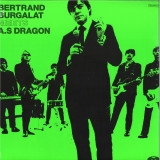
This album, recorded live after the release of Bertrand Burgalat's first album (The Sssound of Mmmusic, 2000), is a unique testimony of a passionate encounter, of explosive concerts and an exceptional musical adventure, a mixture of soulful rhythms, oniric keyboards and songs with chiseled lyrics and harmonies.
Out of stock on vinyl for decades, it will be reissued and published in December 2022, with a text by Philippe Manœuvre. 21 years after its first publication, it has not aged a bit. It includes tribute covers ("Follow Me" by Amanda Lear, "Tears Of A Clown" by Smokey Robinson), and a version of "Easy Tiger", recorded at the same time for Depeche Mode.
"This album brings back the great psychedelic concerts that Bertrand gave at the time. For me, Aux Cyclades électronique is in the running for the title of most beautiful song in the world, I haven't changed my mind."
Philippe Manoeuvre, excerpt from the innersleeve note, April 2022
"A.S Dragon is arguably the best French rock band of today. Nearly an hour of psyche-magnetic madness, the spectacular collision of a Gainsbourg theorist playing his melodies to a Jefferson Airplane from Clignancourt charged with pushing all galactic limits."
Philippe Manoeuvre, Rock & Folk, October 2001
"Bertrand Burgalat meets A.S Dragon could satisfy both French Touch fans and Rock'n'Roll purists. It sounds like the resurrection of a sixties garage rock band, somewhere between Detroit and Combs-la-ville. Burgalat for charity."
Philippe Barbot, Télérama, November 2001
"This is a fantastic remix! It sounds a bit like 70's funk. Bertrand has taken the song and reworked it from top to bottom, re-recording people on every part. It sounds like a James Bond song. It's really one of the best remixes we've ever done. "
Martin Gore (Depeche Mode) on "Easy Tiger", Magic, May 2001
"I wish this song could last my whole life..."
Virginie Despentes, on "Aux Cyclades électronique", "Vernon Subutex
out of Stock
Last delivered 3 years ago available to reorder, subject to availability
Debut album by Dutch producer w1b0, who passed away in August, to be released in November on U-TRAX.
Wibo Lammerts' sudden death on August 15thshocked the worldwide electro community, and also left the record label, that had been working on the debut album with the artist known as w1b0 for the past two years, dumbfounded and in grief.
Wibo had jokingly always called his upcoming debut album 'his legacy', which now sadly has become a painful truth. With the support of Wibo's family, U-TRAX is now doing the only thing that doesn't feel totally wrong: proceed as planned, and release 'When Humans Ruled The Earth' on November 11.
W1b0 made quite a name for himself with heavy electro tracks that he released on labels like Bass Agenda, Hilltown Disco and Discos Antónicos. Standing at 202 meters, and combined with a cheerful character, most people remember him as the gentle giant of electro.
For this album, Wibo wanted to steer away from the dark and heavy electro he mostly made until then. The idea of having a platform to create delicate electronic music in different styles, and make it a showcase of his versatility, was very appealing to him. And that is where he and U-TRAX found each other.
The full-length album (over 75 minutes on cd and digital) comes after 'The Pilex Program EP', released in October, that featured a remix by Detroit's Ectomorph of 'Pilex Driver' and saw 'Program Yourself To Feel' remixed by a well-known Dutch producer that recently created the new 'techno alias' Human Form.
As usual with U-TRAX, the album comes in three different editions, with the 11-track double vinyl version containing the Ectomorph and Human Form remixes. The CD and digital version boast original versions only, plus four additional tracks: 'Alternate Reality Interface', 'Mixed Matter Fluctator', 'Synthetic', and 'In There'. The cassette version more or less has the same track list as the CD/digi version, but has both aforementioned remixes and a bonus track in the incredibly hypnotizing 'I Wanted You', a track that unfortunately couldn't be on the CD and vinyl versions.
Buyers of the physical releases get treated on superior quality products, another trademark of U-TRAX. The vinyl edition boasts over one hour of music, on two 180 grams, green vinyl discs, in a black & white & neon green gatefold sleeve. The eye-catching artwork is created by Utrecht artist Leffe Goldstein, known amongst others for his psychedelic beer can designs for Utrecht brewery Maximus. Wibo, being the beer lover he was, had zero doubts about having Leffe Goldstein do the cover for his album. The CD has a total playing time of 75 minutes and comes in a beautiful 6-panel digipack, while the cassette will have full-color on-body print and comes in a plastic-free Maltese cross fold-up sleeve.
Buyers of the physical releases get treated on superior quality products, another trademark of U-TRAX. The vinyl edition boasts over one hour of music, on two 180 grams, green vinyl discs, in a black & white & neon green gatefold sleeve. The eye-catching artwork is created by Utrecht artist Leffe Goldstein, known amongst others for his psychedelic beer can designs for Utrecht brewery Maximus. Wibo, being the beer lover he was, had zero doubts about having Leffe Goldstein do the cover for his album. The CD has a total playing time of 75 minutes and comes in a beautiful 6-panel digipack, while the cassette will have full-color on-body print and comes in a plastic-free Maltese cross fold-up sleeve.
Opener 'Acid Whip' is one of the oldest compositions on this album, in which a dark 303 bassline hums over layers of spacey strings. Wibo named it after the legendary Whip It party in Amsterdam's De Melkweg. 'Alternate Reality Interface' then presents bouncy rhythms toying around with all sorts of analog (bass) synthesizers, before we go really deep with the epic ambient techno track 'Wandering Souls'.
Then things get a little lighter spirited: 'Mixed Matter Fluctator' is an electro track that builds on sounds created by Matt Buggins. It has very strong Detroit influences, the city Wibo loved so much and that he made a pilgrimage to with a group of friends that called themselves 'The Techno Tourists'. The tempo goes up a notch in 'Program Yourself To Feel', that halfway opens up in wide science fiction strings that evoke memories of Star Wars, the movie series that Wibo was a great fan of, and that was the source of many of his tracks' names. The Human Form remix opens the vinyl edition of this album and is a downright belter of a track.
Next is a somewhat experimental intermezzo named 'Synthetic'. Erratic beats and pounding bassdrums get accompanied by very subtle eerie-sounding strings, before melancholic synthesizers and piano chords take over. This is an excellent prelude to the epic 'Hologram Computing', a track that is one of our favorites. It slowly and softly builds and builds, before a pounding bassdrum breaks loose and a hypnotic arpeggio takes you to higher planes.
Not ready to letting the listener relax, w1bo then serves 'Beilstein Reference', which again presents his trademark cocktail of down-to-earth electro rhythms and catchy melodies, covered in all sort of little sounds and noises, giving the song a lot of energy. What follows is 'Hit me', a track loosely based on a song by Dutch indie rock band Mr. Joe Abe. Wibo met the band's singer on a camping site while being on holidays and the two decided Wibo should do a remix of one of their songs. Nothing was left of the original except the vocals, and the result is a remarkable cheerful, poppy electro song.
'Anticipated Input' is one of the more recent tracks Wibo made for this album, combining electro, acid and, yes: epic strings. But not all is peace and quiet on this album, as 'Pilex Driver' shows. This is w1b0 going experimental in a danceable fashion: Industrial sounds make the track sound like we're passing a construction site that is playing loud electro music. On the vinyl version of this album, Ectomorph totally decomposed the original and made it into a mysterious, almost subdued, and totally brilliant electro track that sees a main role for the retro Roland CR drum machines sounds.
TFHats, Wibo's fellow member of the Transhumanism collective, added lyrics to 'Cartesian Coordinates'. His vocals add a pleasant New Wave flavor to this song, that has breaks that remarkably reminds one of Nirvana's 'Smells Like Teen Spirit'. What follows is the most personal track on this album. 'Fornan' is a song that Wibo made for his wife Nanette, and was added as the last piece of the puzzle that creating an album is. The warm Detroit techno atmosphere in this electro song couldn't be a more beautiful tribute to his love, and mother of their two young boys.
The album then takes a surprising detour through a 1980s landscape with 'In There', that features the Joy Division-esque vocals of another one of Wibo's friends, indicated only as Vincent. The super slow and gloomy track is a treat for anyone that loved the darker side of New Wave. The album has a worthy closer in the sensitive, yet playful 'Schlegel Diagram'.
h 08: Hit Me (w1b0's Slugfest Assault Dub) feat. Mr Joe Abe
out of Stock
Last delivered 3 years ago available to reorder, subject to availability
Afro-Finnish band Maajo return with their third album, "Water of Life," a fluid celebration of various influences. Supported by two preceding singles, "Better Days" and "Unelmissani," the album is the group's first release with the Brooklyn, NY-based tastemaker label Wonderwheel Recordings. Maajo's signature Afro-Balearic sound meets late eighties new age and fusion, with touches of modern soul. The addition of two band members, Waina and Gilbert K, as well as featuring artists Issiaka Dembele and Ismaila Sané, has rooted the album's stories in a diverse range of backgrounds, featuring vocals in no less than six different languages.
Gilbert K's drum grooves pay tribute to the late Tony Allen's legendary heritage and the percussion experiments on a more melodic and atmospheric tip. Cold synth pads and 303 squeaks blend with warm guitars, fretless bass, and Issiaka Dembele's sublime kora harps and balafon mallets. "Water of Life" shows a band at its maturation point, reaching the cross-cultural coalescence of Finnish-African sound that's ready for the dancefloor or home-listening.
The three vocalists take centre-stage on the album: Waina hails from Zambia and sings in Nyanja, English and Finnish; a renowned musician in Zambia for over two decades who now calls Finland home, Waina wrote a song that reached the finals of the 2020 Afrimusic contest. Gilbert K primarily sings in his native Mauritian Creole while comprising part of the percussion line. He made his way to Finland by way of South Africa and China, eventually winning the Voice of Finland show. Gilbert K has played with such legends as Tony Allen, Andy Summers, Diana King, and Suzanne Vega. Ismaila Sané is from the Casamance region of Southern Senegal and sings in Wolof (a widely-spoken language in West Africa) on "Ndekete," and in Jola (a smaller language in Casamance) on "Èwàn".
Maajo is a sonic, linguistic, and cultural melting pot that has come together in Tampere, Finland, like a tropical breeze from the cold north. Their musical explorations lead from equatorial soundscapes to the woods and moods of their native Scandinavia. African influences, electronic beats and organic rhythms, ethereality and the sounds of nature all make up the patchwork sound of Maajo.
Not only is Maajo's music a way of travelling to faraway places, the songs themselves have travelled all over the globe. Maajo has evolved from a sample-based electronic music project to a full-sized band, including African vocalists and musicians. The group has put out two full-length albums and three EP's on Queen Nanny records, in addition to a release on German label Permanent Vacation. Maajo has received the remix treatment from artists such as Luke Vibert and Call Super, and has toured festivals and clubs internationally. The band has built a dedicated international following having been championed by the likes of Gilles Peterson (Worldwide FM), Tom Ravenscroft (BBC Radio 6), and Tim Sweeney (Beats In Space), while they've been featured by KEXP (Song of the Day), Resident Advisor, Ransom Note, and Pan-African Music.
"Water of Life" is out on Wonderwheel Recordings October 14th, 2022, both digitally and as an exclusive, limited-run 2xLP.
d 04: Better Days (Kumba) feat. Waina & Gilbert K
out of Stock
Last delivered 3 years ago available to reorder, subject to availability
Death Is Not The End launch sub-label 333 with a first-time vinyl reissue for the late Devon Russell's Darker Than Blue LP - put together as a tribute to the great Curtis Mayfield. First issued in 1993 but featuring material originally recorded as far back as 1979, the collection includes a cast of prominent players across it's 10 tracks - featuring musical contributions from Sly Dunbar, Aston "Family Man" Barrett, Earl "Wire" Lindo, Dean Fraser, Bobby Ellis, Leroy "Horsemouth" Wallace, Prince Lincoln Thompson and many others - plus production & arrangment from Earl "Chinna" Smith, Sly Dunbar & King Tubby's Firehouse Crew alongside Russell himself. Limited to 333 copies.
"The concept for Darker Than Blue dates back to 1979. Returning from South Amerrica with my partner (in duo Lloyd & Devon) Lloyd Robinson, we did "Red Bum Ball" which had been a massive hit in the 60's. It was around this time that Earl Chinna Smith (of The Wailers and Soul Syndicate fame) approached me with the idea of re-making some Curtis Mayfield songs. "Darker Than Blue" was the first track we did, followed by "Move On Up" in 1981, both of which received great reviews.
On returning to Jamaica from a UK tour in 1986, my good friend King Tubby had taken on five men from my school of music, from which the Firehouse Crew were born. Within 3 years they had matured to become Jamaica's No.1 instrumental band, winning the Rockers award. Then in the spring of 1990, together we managed to record the album "Money, Sex & Violence", during a tour of the UK & France, on which we did Mayfield's "Give Me Your Love". The track was played to Steve Barrow who suggested we do more Curtis tracks.
Sly Dunbar and I have known each other for as long as I can remember. We grew up in the same hood and used to jam regularly in our youth. I told Sly about the further Mayfield tracks I wanted to do and he agreed that it would be a good idea. So Sly, myself and The Firehouse Crew went to work at the Leggo Studios in Kingston, Jamaica and created the remaining tracks for the Darker Than Blue LP, a tribute to Curtis Mayfield.
We grew up on the sounds of Curtis Mayfield and The Impressions. Everyone in Jamaica loved them. His death was a terrible thing, but while there is life, there is hope."
- Devon Russell, 1994.
333, under license from Prestige Elite Records Ltd.
out of Stock
Last delivered 3 years ago available to reorder, subject to availability
The debut of Hamburg trio Cloud Management stages the meeting of three proven exceptional figures: Thomas Korf and Sebastian Kokus have been responsible for some stunning leftfield neo-kraut releases with their band Love-Songs in recent years; Ulf Schütte has been one of the most productive, and innovative protagonists of experimental electronic music in Germany for many years (see Datashock, Phantom Horse, or his most recent collaboration with G. Steenkiste/Hellvete on Umor Rex, for example). Following Love-Songs' highly acclaimed collaboration with Schütte, »Spannende Musik«, released in 2021, the formation of Cloud Management as a group in its own right marks a new beginning, which is celebrated with the long player on Altin Village & Mine.
The album is characterized by a dense texture of repetitions in which (modular) synthesizers and bass go head-to-head. It is on this foundation that the formal grammar of the album develops over its nearly 45-minute running time, organized along precise interventions into the hypnotic pulse: What is recognizable as echoes of 1960s/70s minimalism or Cluster functions on »Cloud Management« not in the sense that the sequences or the sequencers are left to themselves, but as highly concentrated, microscopic work on repetition. This virtuosically arranged, groove-based and even danceable density of the seven pieces never sounds strained or as an end in itself, but floating, cloud-like. The polyrhythmic workouts are at all times in the service of a refreshing expanse that opens up from the sonic saturation and is far removed from the formulaic box-checking often associated with the attribute ›kosmisch‹. »Cloud Management«, thus, marks not an exercise in the traditions of a musical past, but a distinctive position within contemporary electronic music.
All songs are written, recorded and produced by Ulf Schütte, Thomas Korf and Sebastian Kokus.
Die Musik von Surprise Chef basiert auf dem Hervorrufen von Stimmungen; ihre lebendigen Arrangements nutzen Zeit und Raum, um Klanglandschaften zu schaffen, die den Zuhörer in ihre Welt einladen. Der unverwechselbare Sound des Quintetts speist sich aus der Filmmusik der 70er Jahre, der funkigeren Seite des Jazz und den Samples, die die Grundlage des Hip-Hop bilden. Sie verschieben die Grenzen des instrumentalen Soul und Funk mit ihrem eigenen Ansatz, der durch unzählige Stunden im Studio, das Studium der Meister und - vielleicht am wichtigsten - durch die "Tyrannei der Distanz", die ihrer Musik eine einzigartige Perspektive diktiert, verfeinert wurde. Mit ihren ersten beiden Alben All News Is Good News und Daylight Savings haben sich die aus der Nähe von Melbourne, Australien, stammenden Musiker eine eingefleischte Fangemeinde erspielt und ihren Sound von ihrem Heimstudio aus in alle Ecken der Welt gebracht. Die Band ist nun bei Big Crown Records unter Vertrag und reiht sich damit in eine Reihe zeitgenössischer und klassischer Sounds ein, die die Musik von Surprise Chef seit ihrer Gründung im Jahr 2017 beeinflusst haben. Surprise Chef besteht aus Lachlan Stuckey (Gitarre), Jethro Curtin (Keyboards), Carl Lindeberg (Bass), Andrew Congues (Schlagzeug) und Hudson Whitlock - das jüngste Mitglied, das von der Percussion über das Komponieren bis zum Produzieren alles macht. Die selbsternannten "moody shades of instrumental jazz-funk" haben von allem etwas: druckvolle Drums, mitreißende Keys, eine Rhythmusgitarre, die man auf einer Studio One-Platte hören könnte, und Flötenlinien, die von einer Blue Note-Session stammen könnten. Aber wenn man einen Schritt zurücktritt und sich die Gesamtheit ihres Sounds und ihrer Herangehensweise anschaut, dann hört und sieht man eine Gruppe, die mehr ist als die Summe ihrer Teile. In vielerlei Hinsicht verkörpert Surprise Chef die Redewendung "the benefits of limits". Ihre Möglichkeiten waren insofern begrenzt, als es in Südost-Australien nicht viele Leute gab, die instrumentalen Jazz/Soul/Funk machten oder darüber sprachen, geschweige denn Platten herausbrachten. So mussten sie ihren Sound und ihre Herangehensweise in einer Art kreativer Isolation entwickeln, in der sich ein kleiner Kreis von Freunden und gleichgesinnten Musikern gegenseitig befruchtete. "Da wir in Australien so weit weg sind, bekommen wir nur flüchtige Einblicke in die Ursprünge dieser Musik", sagt Stuckey. "Aber als wir ein Label wie Big Crown hörten, wurde uns zum ersten Mal bewusst, dass man frische, neue Soulmusik machen kann, die nicht super retro oder einfach nur nostalgisch ist." Dieser Ansatz ist auf ihrem neuen Album Education & Recreation deutlich zu hören. Tracks wie "Velodrome" verbinden klobige Drums mit einer ohrwurmverdächtigen Synthie-Linie, die so klingt, als würde sie auf einer Ultimate Breaks & Beats-Compilation zu finden sein, während Nummern wie "Iconoclasts" zeigen, dass sie ein Händchen für die geschmackvolle Nutzung von Raum haben. Vom erdrückenden Intro von "Suburban Breeze" bis zum schwebenden, sanften Bop von "Spring's Theme" haben Surprise Chef ein Album zusammengestellt, das dich durch Höhen und Tiefen der Emotionen führt. Ein lebendiger, die Fantasie beflügelnder Sound! Dem weiten Spektrum dieser Instrumentalmusiksparte wird mit diesem neuen Album ein modernen Klassiker hinzugefügt.
out of Stock
Last delivered 3 years ago available to reorder, subject to availability
In hugo, there’s a central question that Loyle Carner keeps coming back to: “I’m young, Black, successful and have a platform - but where do I go next?” The answer is explored in this epic scream of a third album. With urgent delivery and gloriously widescreen production, Carner confronts both the deeply personal (“You can’t hate the roots of a tree, and not hate the tree. So how can I hate my father without hating me?) and the highly political (“I told the black man he didn’t understand I reached the white man he wouldn’t take my hand”). Cinematic in scale and scope, hugo is both a rallying war cry for a generation forged in fire and a study of the personal internal conflict that drives the rest of the album - as a mixed-race Black man, as an artist, as a father and as a son. With Mercury and Brits nominations, NME Awards and appearances in global brand campaigns (Nike, YSL, Timberland), Carner has undoubtedly had a meteoric rise to the top, culminating with his second album Not Waving, But Drowning charting at number 3 in the UK albums chart in 2019. However, hugo sees Carner taking a sharp detour from his previous work, putting it down to lockdown and the “hedonistic side of career being stripped away. There were no shows, no backstage, no festivals, no photoshoots”. By continuing to write in these tumultuous times with a renewed clarity and sense of artistic freedom, Carner reached deeper beneath the surface than he ever had before. The result is his most cathartic and ambitious record yet, a coruscating journey into the heart of what it means to be alive in these tumultuous times, and one which looks set to neatly cement his position as one of the most potent and vital young talents around today. Working alongside renowned producer kwes. (Solange, Kelela, Nao), Carner leaves no stone unturned on this album, in both its sound and its stories. In a 10-track album that moves from gorgeous neo-soul moments to thundering hip hop, with immediate, infectious bangers and sampled interludes from non musicians (mixed-race Guyanese poet John Agard and youth activist and politician Athian Akec) Carner shifts seamlessly from micro to macro, confronting everything from strained relationships with family to the societal tears caused by class stratification. It also lays bare bruises in his personal life that he has never revealed before – often in painful, deeply uncomfortable ways, focusing on Carner's experience of becoming a father in the context of growing up without contact with his biological father. With the song “Polyfilla”, against the backdrop of a warm melodic beat, Carner explores his desire to “break the chains in the cycle” of dysfunctional Black fatherhood, commenting on the narrative of fatherhood in the genre, and saying a key part of the process was realising that his father “grew up in a world where nobody showed him how to love or nurture”. The follow up track “A Lasting Place” is an exploration of the MC’s failure and inability to be perfect in this mission. The album closer is a powerful statement of love and forgiveness; with his signature lyrical dexterity, Carner declares his relentless commitment to his son and sees forgiving his father as a key part of this. The song closes with an emotional ending of Carner telling his dad “still I’m lucky yo that we talk”. There’s a striking duality of hugo’s bold, multilayered tracks and its often starkly intimate and tender lyricism, and that dichotomy is deliberate - it is a message for young Black men, but really, anyone, who is listening. Cognizant of the immense pain and fear and confusion that we are faced with everyday, Carner has thrown down the gauntlet, defying us not to rise above the fray, wake up each day and be ambitious. Ambitious in building strong personal relationships. Ambitious in our pursuit of our goals. Ambitious in never refusing to back down against injustice. Rejecting the title of leader, Loyle Carner sees himself “as holding up a mirror”, and that clearly translates into the album's universal messages.
out of Stock
Last delivered 3 years ago available to reorder, subject to availability
Verschwimmende Traumchroniken Ein Martin Rev Album ist stets eine unberechenbare Überraschung. So verwunderte das 2003er Werk "To Live" mit dem erstmaligen Einsatz schroffer Gitarren statt Synthesizer-Kompositionen und auch wenn Rev auf dem Folge-Album "Les Nymphes" aus dem Jahr 2008 zu seinen traumverhangenen Melodie-Miniaturen zurückkehrt, ist die Platte in ihrer Konsequenz noch einmal radikaler. War Martin Revs Oeuvre zumeist von einem durch und durch minimalistischen Ansatz geprägt, machen die Stücke auf "Les Nymphes" im Vergleich einen fast opulenten, überbordenden Eindruck. Bereits nach den ersten Sekunden des Openers "Sophie Eagle" hat man den Eindruck, eine riesige Sound-Welle aus sich überlagernden Echo-Schleifen, Rhythmus-Loops und Phasenverschiebungen, auf der Melodie-Fragmente und Revs sporadisch auftauchende Stimmenfetzen wie Schaumkronen treiben, würde einen davon schwemmen. Auch die in der kontemporären Clubmusik zu verortenden Verweise, die sich erstmals auf dem Vorgänger "To Live" andeuteten, finden hier ihre Fortsetzung. So hört man auf "Triton" und dem Titelstück "Les Nymphes Et La Mer" auch jene, ob ihrer Härte teils befremdlich anmutenden Gitarren-Samples wieder, die das vorige Album dominierten. Alle anderen Tracks auf "Les Nymphes" sind jedoch vor allem von einer unterkühlten, traumartigen Slow Rave und PostIndustiral Atmosphäre geprägt, die in ihrer dreidimensionalen Breitband-Klanglichkeit mitunter an Werke von Coil erinnern. "Die Ähnlichkeiten von "Les Nymphes" mit House und Dance waren natürlich offensichtlich, obwohl ich nicht speziell danach gesucht habe. Es war wahrscheinlich das erste Werk, das ich von Anfang bis Ende am Computer fertiggestellt habe. Viele der Tracks wurden digital aus interaktiven Programmen und nicht mit Outboard-Geräten erstellt. Die Atmosphäre und der Sound wurden durch viel Lektüre in der griechischen Mythologie inspiriert sowie dem Studium der gleichen Geschichten in verschiedenen Sprachen. Wahrscheinlich war mein mehrjähriger Aufenthalt in Montreal ein starker Einfluss, da es eine französischsprachige Umgebung ist und es in allen Buchläden eine große Auswahl an klassischer Literatur in Französisch und anderen Sprachen gibt." so Martin Rev. Speziell jene Inspiration, die sich aus kulturellen Mythologien speist und auf "Les Nymphes" zu einer, sämtliche Realitäten verschwimmenden Traumchronik wird, macht das Album so anziehend. Man fragt sich mitunter, wie ein ätherisches House oder Techno Album unter Revs Regie klingen würde. Einmal mehr beweist auch dieses Werk die Kompromisslosigkeit, mit der Martin Rev arbeitet und seiner Bereitschaft, stets Risiken einzugehen unter der konsequenten Verweigerung sich nur an einer Ästhetik allein abzuarbeiten. "Les Nymphes" ist fraglos das Album eines Künstlers, der immer auf der Suche ist.
An absolute sound system killer, this 2002 Jah Works classic is now available for distribution through Triple Vision. The enigmatic Mene Man joins Jah Rej on a riddim guaranteed to shake up your woofers.
Wu Tang & Staten Island MC/Producer come together again in new vinyl release Wutang x Remedy. Remedy is a MC/producer from Staten Island, New York who first made his mark with the song "Never Again" off the Wu-Tang Killa Beez' debut album The Swarm in the summer of '98. He eventually made his full-length debut The Genuine Article in the spring of '01 & followed it up with Code Red about 2« years later. The last we heard from him on his own was when It All Comes Down to This was released in 2010. But as the 12-year anniversary of that approaches in a few weeks, he's enlisting a star studded cast of veterans to be featured on his 4th album. Ghostface Killah tags along for the opener "Modern Day Miracle" working in an occultist loop to verbally abuse anyone who wants to challenge them whereas "Death Defying" with Inspectah Deck finds the 2 over an operatic instrumental talking about choosing whether to kill or be killed. "Sparrow" takes a more soulful route feeling comparing himself to the titular bird leading into Ghostface returning alongside Conway the Machine for "The Pulpit" incorporating some orchestral samples talking about the street life.The penultimate track "Noir Story" is a full-on Killah Priest solo cut with a drumless instrumental & his lyricism on here is a reminder as to why he's this reviewer's 2nd favorite affiliate right behind Killa Sin in terms of lyrical skill, the previous cuts. "Never Again" then ends the album by mournfully paying tribute to those we've lost along the way.If you're a diehard Wu fan like I am, then you're gonna come away from this highly impressed. It's great to hear Remedy completely rejuvenated & he does an awesome job of paying homage to my all-time favorite hip hop group from the guests to the production.
out of Stock
Last delivered 3 years ago available to reorder, subject to availability
Comprehensive box of 6 LPs / EPs and the band's first rare 7inch.
Aroma Di Amore is/was Belgian’s premier cult band. Since the early eighties ADA innovatively combined electronics with rock. With a mix of razor-sharp Flemish lyrics and unconventional song structures the group earned a cult status in Belgium and abroad. 40 years later they conclude their career with a few last concerts and a vinyl box set spanning the years 1983-1987.
At the notorious Rock Rally of 1982 Aroma Di Amore stands out with their wonderful handling of the Flemish language, a deep bass, typical cold new wave drums, biting guitar riffs with the occasional flavor of absolute madness. Frontman Jos Verlooy adopts the stage name Elvis Peeters. The explanation for this remarkable pseudonym choice: in 1977 – the period of the singer's musical awakening – one of the two famous rocking Elvises (not Costello, but Presley) succumbs to his pill addiction. So, dixit Verlooy, there is an Elvis vacant. A banal surname belongs next to that exotic first name. A combination that breathes rock 'n' roll, according to the singer.
His companion Gerry Vergult – who very much determines the sound with his metallic riffs, somewhat indebted to Jean-Marie Aerts – adopts the stage name Fred Angst. Completely in line with the depressing zeitgeist of the 1980s. Gerry eats and breathes music. Besides composing most of ADA’s songs, he records & self-produces a few fantastic dark en loner solo minimal wave tracks as Fred Angst. He is still musically active, more towards the electronic leftfield nowadays under the moniker Zool.
It is clear from an early age that companion Elvis Peeters possesses the gift of the word. As an adolescent he published the punkzine “Dus”. The punk spirit stimulates Peeters. He begins to transform the poetry that he has been entrusting to paper for some time into song lyrics. It is on a whim and without any stage experience that punk friends Peeters and Angst register for the Rock Rally as Aroma di Amore. On a bed of post-punk and cold wave (Joy Division, Wire and Sisters of Mercy are the main influences), they initially let out playful, minimalist and nonsensical slogans such as "Doe De Mafia" (1982) and "Gorilla Dans De Samba" (1983). Later on, the tone becomes more serious, although Peeters' choice of words continues to show a penchant for absurdism and sarcasm. No one in Dutch songwriting imitates this verbal elasticity, certainly at that time.
The numerous songs about war are downright horrifying. In the 1980s, an arms race is underway. When the Belgian government decides to install nuclear missiles in 1981, Aroma di Amore asks for one minute of silence in the hall during performances. In "Lauwe Oorlog" (1983), Peeters exposes the core of his unrest: “paraat voor de parade / de vrede wordt begraven / met militaire eer”. To this day, the frontman of AdA still proudly wears his at least 30 year old 'atomic energy, no thanks!' button.
In 1984 Aroma releases Koude Oorlog on the new and independent Brussels label Play It Again Sam. The traditional press and radio ignore the record, but in the alternative circuits the mini-album does not go unnoticed, and the group starts to build a solid fan base, resulting in more and more offers for gigs. There's also interest in the Netherlands, and due to the international contacts of PIAS, the record also ends up in France, Switzerland, Spain and Canada.
Encouraged by this modest success, the group returns to the studio for a 12" single. With new group member Frits De Cauter on sax, they record "Voor De Dood". To this day, Voor De Dood remains the most popular AdA song, as evidenced by the countless compilations on which the song has appeared.
AdA goes to the Netherlands to record their next album “De Sfeer Van Grote Dagen”. The people from Nasmak have built a new studio in Eindhoven and one of the members, Theo Van Eenbergen (later Henry Rollins), will be the producer. “De Sfeer Van Grote Dagen” is the group's most adventurous album, and the reviews are again unanimously favorable. However, sales are disappointing and PIAS proposes to recruit Chris Reed of Red Lorry Yellow Lorry and record a new single with him. "Zonder Omzien" is recorded at the prestigious Pyramid Studio. However, PIAS is waiting to release the album and in the meantime AdA is recording a number of extra tracks with producer Ludo Camberlin, including "Koekoek In De Stad". Towards the end of the year, Lo and Elvis travel to Africa for a few months and as a result the group comes to a standstill. In this period, Zonder Omzien is released.
At the beginning of 1986, Peeters and Meulen return, and Andrea Smits leaves the group. Luc Pillards is hired as a replacement, and when Ludo Camberlin presents himself as a new label boss and producer (Anything But Records), they start recording their first full album for the label. “Harde Feiten" kicks in immediately, and the group is back up to cruising speed. In the first week of release, the record even appears in the bestseller list of the record stores.
At the beginning of 1987 the recordings for the second album start, this time in a production by Peeters and Angst themselves. Shortly after the shooting, AdA goes to Switzerland for a short but successful tour, with Men 2nd and Cas & Organized Crime as support act. "Koudvuur" is published in the autumn and considered to be their strongest record so far by the group, the reactions are rather low. Both the reviews in the press and the sales are disappointing and put a damper on the joy. Nevertheless, the group is invited to perform in Valencia, Spain, where they have an unexpected success.
MUTANT SOUNDS BLOG
Aroma Di Amore have always been outsiders, even within the confinement of the alternative rock circuit. Their peculiar blend of raw guitars, electronics, Dutch lyrics and unconventional song structures was too hybrid for many. Those howewer who, without prejudice, would lend an ear to the band's music, discovered an energetic, authentic and uncompromising collective that stood above all trends. While so many Belgian "connaisseurs" had their doubts about the possibilities of international recognition for a band singing in Dutch, Aroma Di Amore toured France, Switzerland and Spain; their records figured in alternative charts from Poland to Canada.
From beginning to end the nucleus of Aroma Di Amore consisted of Elvis PEETERS, who in a inimitable, possessed way delivered his highly original lyrics, and Fred ANGST, guitarist mastering the heaviest riffs as well as refined tapestries of sound. Furthermore, the line-up varied throughout the band's carreer with:- H.K. (Guitarist from 1982 until 1983)- Andrea SMITS (Organ from 1982 until 1985)- Luc PILLARDS (Synthsizer in 1986)- Jan WANDELAAR (Guitar and synthesizer in 1986)- Pulcherie (Saxophone in 1983)- Wout DOCKX (Bass from 1987 until 1988)and especially- Lo MEULEN (Bass from 1983 until 1987)and the late Frits DE CAUTER (Saxophone from 1984 until 1986) contributing to the music.
Box Set includes: Gorilla Dans De Samba 7" (1983), Voor De Dood 12" (1984), Koude Oorlog LP (1984), De Sfeer Van Grote Dagen 12" (1985), Zonder Omzien 12" (1986), Harde Feiten LP (1986), Koudvuur LP (1987)
First-time reissue of Aroma Di Amore's debut album, originally released in 1984.
Aroma Di Amore is/was Belgian’s premier cult band. Since the early eighties ADA innovatively combined electronics with rock. With a mix of razor-sharp Flemish lyrics and unconventional song structures the group earned a cult status in Belgium and abroad. 40 years later they conclude their career with a few last concerts and a vinyl box set spanning the years 1983-1987.
At the notorious Rock Rally of 1982 Aroma Di Amore stands out with their wonderful handling of the Flemish language, a deep bass, typical cold new wave drums, biting guitar riffs with the occasional flavor of absolute madness. Frontman Jos Verlooy adopts the stage name Elvis Peeters. The explanation for this remarkable pseudonym choice: in 1977 – the period of the singer's musical awakening – one of the two famous rocking Elvises (not Costello, but Presley) succumbs to his pill addiction. So, dixit Verlooy, there is an Elvis vacant. A banal surname belongs next to that exotic first name. A combination that breathes rock 'n' roll, according to the singer.
His companion Gerry Vergult – who very much determines the sound with his metallic riffs, somewhat indebted to Jean-Marie Aerts – adopts the stage name Fred Angst. Completely in line with the depressing zeitgeist of the 1980s. Gerry eats and breathes music. Besides composing most of ADA’s songs, he records & self-produces a few fantastic dark en loner solo minimal wave tracks as Fred Angst. He is still musically active, more towards the electronic leftfield nowadays under the moniker Zool.
It is clear from an early age that companion Elvis Peeters possesses the gift of the word. As an adolescent he published the punkzine “Dus”. The punk spirit stimulates Peeters. He begins to transform the poetry that he has been entrusting to paper for some time into song lyrics. It is on a whim and without any stage experience that punk friends Peeters and Angst register for the Rock Rally as Aroma di Amore. On a bed of post-punk and cold wave (Joy Division, Wire and Sisters of Mercy are the main influences), they initially let out playful, minimalist and nonsensical slogans such as "Doe De Mafia" (1982) and "Gorilla Dans De Samba" (1983). Later on, the tone becomes more serious, although Peeters' choice of words continues to show a penchant for absurdism and sarcasm. No one in Dutch songwriting imitates this verbal elasticity, certainly at that time.
The numerous songs about war are downright horrifying. In the 1980s, an arms race is underway. When the Belgian government decides to install nuclear missiles in 1981, Aroma di Amore asks for one minute of silence in the hall during performances. In "Lauwe Oorlog" (1983), Peeters exposes the core of his unrest: “paraat voor de parade / de vrede wordt begraven / met militaire eer”. To this day, the frontman of AdA still proudly wears his at least 30 year old 'atomic energy, no thanks!' button.
In 1984 Aroma releases Koude Oorlog on the new and independent Brussels label Play It Again Sam. The traditional press and radio ignore the record, but in the alternative circuits the mini-album does not go unnoticed, and the group starts to build a solid fan base, resulting in more and more offers for gigs. There's also interest in the Netherlands, and due to the international contacts of PIAS, the record also ends up in France, Switzerland, Spain and Canada.
Encouraged by this modest success, the group returns to the studio for a 12" single. With new group member Frits De Cauter on sax, they record "Voor De Dood". To this day, Voor De Dood remains the most popular AdA song, as evidenced by the countless compilations on which the song has appeared.
AdA goes to the Netherlands to record their next album “De Sfeer Van Grote Dagen”. The people from Nasmak have built a new studio in Eindhoven and one of the members, Theo Van Eenbergen (later Henry Rollins), will be the producer. “De Sfeer Van Grote Dagen” is the group's most adventurous album, and the reviews are again unanimously favorable. However, sales are disappointing and PIAS proposes to recruit Chris Reed of Red Lorry Yellow Lorry and record a new single with him. "Zonder Omzien" is recorded at the prestigious Pyramid Studio. However, PIAS is waiting to release the album and in the meantime AdA is recording a number of extra tracks with producer Ludo Camberlin, including "Koekoek In De Stad". Towards the end of the year, Lo and Elvis travel to Africa for a few months and as a result the group comes to a standstill. In this period, Zonder Omzien is released.
At the beginning of 1986, Peeters and Meulen return, and Andrea Smits leaves the group. Luc Pillards is hired as a replacement, and when Ludo Camberlin presents himself as a new label boss and producer (Anything But Records), they start recording their first full album for the label. “Harde Feiten" kicks in immediately, and the group is back up to cruising speed. In the first week of release, the record even appears in the bestseller list of the record stores.
At the beginning of 1987 the recordings for the second album start, this time in a production by Peeters and Angst themselves. Shortly after the shooting, AdA goes to Switzerland for a short but successful tour, with Men 2nd and Cas & Organized Crime as support act. "Koudvuur" is published in the autumn and considered to be their strongest record so far by the group, the reactions are rather low. Both the reviews in the press and the sales are disappointing and put a damper on the joy. Nevertheless, the group is invited to perform in Valencia, Spain, where they have an unexpected success.
MUTANT SOUNDS BLOG
Aroma Di Amore have always been outsiders, even within the confinement of the alternative rock circuit. Their peculiar blend of raw guitars, electronics, Dutch lyrics and unconventional song structures was too hybrid for many. Those howewer who, without prejudice, would lend an ear to the band's music, discovered an energetic, authentic and uncompromising collective that stood above all trends. While so many Belgian "connaisseurs" had their doubts about the possibilities of international recognition for a band singing in Dutch, Aroma Di Amore toured France, Switzerland and Spain; their records figured in alternative charts from Poland to Canada.
From beginning to end the nucleus of Aroma Di Amore consisted of Elvis PEETERS, who in a inimitable, possessed way delivered his highly original lyrics, and Fred ANGST, guitarist mastering the heaviest riffs as well as refined tapestries of sound. Furthermore, the line-up varied throughout the band's carreer with:- H.K. (Guitarist from 1982 until 1983)- Andrea SMITS (Organ from 1982 until 1985)- Luc PILLARDS (Synthsizer in 1986)- Jan WANDELAAR (Guitar and synthesizer in 1986)- Pulcherie (Saxophone in 1983)- Wout DOCKX (Bass from 1987 until 1988)and especially- Lo MEULEN (Bass from 1983 until 1987)and the late Frits DE CAUTER (Saxophone from 1984 until 1986)contributing to the music.
First-time reissue of Aroma Di Amore's 2nd album, originally released in 1986.
Aroma Di Amore is/was Belgian’s premier cult band. Since the early eighties ADA innovatively combined electronics with rock. With a mix of razor-sharp Flemish lyrics and unconventional song structures the group earned a cult status in Belgium and abroad. 40 years later they conclude their career with a few last concerts and a vinyl box set spanning the years 1983-1987.
At the notorious Rock Rally of 1982 Aroma Di Amore stands out with their wonderful handling of the Flemish language, a deep bass, typical cold new wave drums, biting guitar riffs with the occasional flavor of absolute madness. Frontman Jos Verlooy adopts the stage name Elvis Peeters. The explanation for this remarkable pseudonym choice: in 1977 – the period of the singer's musical awakening – one of the two famous rocking Elvises (not Costello, but Presley) succumbs to his pill addiction. So, dixit Verlooy, there is an Elvis vacant. A banal surname belongs next to that exotic first name. A combination that breathes rock 'n' roll, according to the singer.
His companion Gerry Vergult – who very much determines the sound with his metallic riffs, somewhat indebted to Jean-Marie Aerts – adopts the stage name Fred Angst. Completely in line with the depressing zeitgeist of the 1980s. Gerry eats and breathes music. Besides composing most of ADA’s songs, he records & self-produces a few fantastic dark en loner solo minimal wave tracks as Fred Angst. He is still musically active, more towards the electronic leftfield nowadays under the moniker Zool.
It is clear from an early age that companion Elvis Peeters possesses the gift of the word. As an adolescent he published the punkzine “Dus”. The punk spirit stimulates Peeters. He begins to transform the poetry that he has been entrusting to paper for some time into song lyrics. It is on a whim and without any stage experience that punk friends Peeters and Angst register for the Rock Rally as Aroma di Amore. On a bed of post-punk and cold wave (Joy Division, Wire and Sisters of Mercy are the main influences), they initially let out playful, minimalist and nonsensical slogans such as "Doe De Mafia" (1982) and "Gorilla Dans De Samba" (1983). Later on, the tone becomes more serious, although Peeters' choice of words continues to show a penchant for absurdism and sarcasm. No one in Dutch songwriting imitates this verbal elasticity, certainly at that time.
The numerous songs about war are downright horrifying. In the 1980s, an arms race is underway. When the Belgian government decides to install nuclear missiles in 1981, Aroma di Amore asks for one minute of silence in the hall during performances. In "Lauwe Oorlog" (1983), Peeters exposes the core of his unrest: “paraat voor de parade / de vrede wordt begraven / met militaire eer”. To this day, the frontman of AdA still proudly wears his at least 30 year old 'atomic energy, no thanks!' button.
In 1984 Aroma releases Koude Oorlog on the new and independent Brussels label Play It Again Sam. The traditional press and radio ignore the record, but in the alternative circuits the mini-album does not go unnoticed, and the group starts to build a solid fan base, resulting in more and more offers for gigs. There's also interest in the Netherlands, and due to the international contacts of PIAS, the record also ends up in France, Switzerland, Spain and Canada.
Encouraged by this modest success, the group returns to the studio for a 12" single. With new group member Frits De Cauter on sax, they record "Voor De Dood". To this day, Voor De Dood remains the most popular AdA song, as evidenced by the countless compilations on which the song has appeared.
AdA goes to the Netherlands to record their next album “De Sfeer Van Grote Dagen”. The people from Nasmak have built a new studio in Eindhoven and one of the members, Theo Van Eenbergen (later Henry Rollins), will be the producer. “De Sfeer Van Grote Dagen” is the group's most adventurous album, and the reviews are again unanimously favorable. However, sales are disappointing and PIAS proposes to recruit Chris Reed of Red Lorry Yellow Lorry and record a new single with him. "Zonder Omzien" is recorded at the prestigious Pyramid Studio. However, PIAS is waiting to release the album and in the meantime AdA is recording a number of extra tracks with producer Ludo Camberlin, including "Koekoek In De Stad". Towards the end of the year, Lo and Elvis travel to Africa for a few months and as a result the group comes to a standstill. In this period, Zonder Omzien is released.
At the beginning of 1986, Peeters and Meulen return, and Andrea Smits leaves the group. Luc Pillards is hired as a replacement, and when Ludo Camberlin presents himself as a new label boss and producer (Anything But Records), they start recording their first full album for the label. “Harde Feiten" kicks in immediately, and the group is back up to cruising speed. In the first week of release, the record even appears in the bestseller list of the record stores.
At the beginning of 1987 the recordings for the second album start, this time in a production by Peeters and Angst themselves. Shortly after the shooting, AdA goes to Switzerland for a short but successful tour, with Men 2nd and Cas & Organized Crime as support act. "Koudvuur" is published in the autumn and considered to be their strongest record so far by the group, the reactions are rather low. Both the reviews in the press and the sales are disappointing and put a damper on the joy. Nevertheless, the group is invited to perform in Valencia, Spain, where they have an unexpected success.
MUTANT SOUNDS BLOG
Aroma Di Amore have always been outsiders, even within the confinement of the alternative rock circuit. Their peculiar blend of raw guitars, electronics, Dutch lyrics and unconventional song structures was too hybrid for many. Those howewer who, without prejudice, would lend an ear to the band's music, discovered an energetic, authentic and uncompromising collective that stood above all trends. While so many Belgian "connaisseurs" had their doubts about the possibilities of international recognition for a band singing in Dutch, Aroma Di Amore toured France, Switzerland and Spain; their records figured in alternative charts from Poland to Canada.
From beginning to end the nucleus of Aroma Di Amore consisted of Elvis PEETERS, who in a inimitable, possessed way delivered his highly original lyrics, and Fred ANGST, guitarist mastering the heaviest riffs as well as refined tapestries of sound. Furthermore, the line-up varied throughout the band's carreer with:- H.K. (Guitarist from 1982 until 1983)- Andrea SMITS (Organ from 1982 until 1985)- Luc PILLARDS (Synthsizer in 1986)- Jan WANDELAAR (Guitar and synthesizer in 1986)- Pulcherie (Saxophone in 1983)- Wout DOCKX (Bass from 1987 until 1988)and especially- Lo MEULEN (Bass from 1983 until 1987)and the late Frits DE CAUTER (Saxophone from 1984 until 1986)contributing to the music.
First-time reissue of Aroma Di Amore's 3rd album, originally released in 1987.
Aroma Di Amore is/was Belgian’s premier cult band. Since the early eighties ADA innovatively combined electronics with rock. With a mix of razor-sharp Flemish lyrics and unconventional song structures the group earned a cult status in Belgium and abroad. 40 years later they conclude their career with a few last concerts and a vinyl box set spanning the years 1983-1987.
At the notorious Rock Rally of 1982 Aroma Di Amore stands out with their wonderful handling of the Flemish language, a deep bass, typical cold new wave drums, biting guitar riffs with the occasional flavor of absolute madness. Frontman Jos Verlooy adopts the stage name Elvis Peeters. The explanation for this remarkable pseudonym choice: in 1977 – the period of the singer's musical awakening – one of the two famous rocking Elvises (not Costello, but Presley) succumbs to his pill addiction. So, dixit Verlooy, there is an Elvis vacant. A banal surname belongs next to that exotic first name. A combination that breathes rock 'n' roll, according to the singer.
His companion Gerry Vergult – who very much determines the sound with his metallic riffs, somewhat indebted to Jean-Marie Aerts – adopts the stage name Fred Angst. Completely in line with the depressing zeitgeist of the 1980s. Gerry eats and breathes music. Besides composing most of ADA’s songs, he records & self-produces a few fantastic dark en loner solo minimal wave tracks as Fred Angst. He is still musically active, more towards the electronic leftfield nowadays under the moniker Zool.
It is clear from an early age that companion Elvis Peeters possesses the gift of the word. As an adolescent he published the punkzine “Dus”. The punk spirit stimulates Peeters. He begins to transform the poetry that he has been entrusting to paper for some time into song lyrics. It is on a whim and without any stage experience that punk friends Peeters and Angst register for the Rock Rally as Aroma di Amore. On a bed of post-punk and cold wave (Joy Division, Wire and Sisters of Mercy are the main influences), they initially let out playful, minimalist and nonsensical slogans such as "Doe De Mafia" (1982) and "Gorilla Dans De Samba" (1983). Later on, the tone becomes more serious, although Peeters' choice of words continues to show a penchant for absurdism and sarcasm. No one in Dutch songwriting imitates this verbal elasticity, certainly at that time.
The numerous songs about war are downright horrifying. In the 1980s, an arms race is underway. When the Belgian government decides to install nuclear missiles in 1981, Aroma di Amore asks for one minute of silence in the hall during performances. In "Lauwe Oorlog" (1983), Peeters exposes the core of his unrest: “paraat voor de parade / de vrede wordt begraven / met militaire eer”. To this day, the frontman of AdA still proudly wears his at least 30 year old 'atomic energy, no thanks!' button.
In 1984 Aroma releases Koude Oorlog on the new and independent Brussels label Play It Again Sam. The traditional press and radio ignore the record, but in the alternative circuits the mini-album does not go unnoticed, and the group starts to build a solid fan base, resulting in more and more offers for gigs. There's also interest in the Netherlands, and due to the international contacts of PIAS, the record also ends up in France, Switzerland, Spain and Canada.
Encouraged by this modest success, the group returns to the studio for a 12" single. With new group member Frits De Cauter on sax, they record "Voor De Dood". To this day, Voor De Dood remains the most popular AdA song, as evidenced by the countless compilations on which the song has appeared.
AdA goes to the Netherlands to record their next album “De Sfeer Van Grote Dagen”. The people from Nasmak have built a new studio in Eindhoven and one of the members, Theo Van Eenbergen (later Henry Rollins), will be the producer. “De Sfeer Van Grote Dagen” is the group's most adventurous album, and the reviews are again unanimously favorable. However, sales are disappointing and PIAS proposes to recruit Chris Reed of Red Lorry Yellow Lorry and record a new single with him. "Zonder Omzien" is recorded at the prestigious Pyramid Studio. However, PIAS is waiting to release the album and in the meantime AdA is recording a number of extra tracks with producer Ludo Camberlin, including "Koekoek In De Stad". Towards the end of the year, Lo and Elvis travel to Africa for a few months and as a result the group comes to a standstill. In this period, Zonder Omzien is released.
At the beginning of 1986, Peeters and Meulen return, and Andrea Smits leaves the group. Luc Pillards is hired as a replacement, and when Ludo Camberlin presents himself as a new label boss and producer (Anything But Records), they start recording their first full album for the label. “Harde Feiten" kicks in immediately, and the group is back up to cruising speed. In the first week of release, the record even appears in the bestseller list of the record stores.
At the beginning of 1987 the recordings for the second album start, this time in a production by Peeters and Angst themselves. Shortly after the shooting, AdA goes to Switzerland for a short but successful tour, with Men 2nd and Cas & Organized Crime as support act. "Koudvuur" is published in the autumn and considered to be their strongest record so far by the group, the reactions are rather low. Both the reviews in the press and the sales are disappointing and put a damper on the joy. Nevertheless, the group is invited to perform in Valencia, Spain, where they have an unexpected success.
MUTANT SOUNDS BLOG
Aroma Di Amore have always been outsiders, even within the confinement of the alternative rock circuit. Their peculiar blend of raw guitars, electronics, Dutch lyrics and unconventional song structures was too hybrid for many. Those howewer who, without prejudice, would lend an ear to the band's music, discovered an energetic, authentic and uncompromising collective that stood above all trends. While so many Belgian "connaisseurs" had their doubts about the possibilities of international recognition for a band singing in Dutch, Aroma Di Amore toured France, Switzerland and Spain; their records figured in alternative charts from Poland to Canada.
From beginning to end the nucleus of Aroma Di Amore consisted of Elvis PEETERS, who in a inimitable, possessed way delivered his highly original lyrics, and Fred ANGST, guitarist mastering the heaviest riffs as well as refined tapestries of sound. Furthermore, the line-up varied throughout the band's carreer with:- H.K. (Guitarist from 1982 until 1983)- Andrea SMITS (Organ from 1982 until 1985)- Luc PILLARDS (Synthsizer in 1986)- Jan WANDELAAR (Guitar and synthesizer in 1986)- Pulcherie (Saxophone in 1983)- Wout DOCKX (Bass from 1987 until 1988)and especially- Lo MEULEN (Bass from 1983 until 1987)and the late Frits DE CAUTER (Saxophone from 1984 until 1986)contributing to the music.
First-time reissue of Aroma Di Amore's 3rd EP, originally released in 1985.
Aroma Di Amore is/was Belgian’s premier cult band. Since the early eighties ADA innovatively combined electronics with rock. With a mix of razor-sharp Flemish lyrics and unconventional song structures the group earned a cult status in Belgium and abroad. 40 years later they conclude their career with a few last concerts and a vinyl box set spanning the years 1983-1987.
At the notorious Rock Rally of 1982 Aroma Di Amore stands out with their wonderful handling of the Flemish language, a deep bass, typical cold new wave drums, biting guitar riffs with the occasional flavor of absolute madness. Frontman Jos Verlooy adopts the stage name Elvis Peeters. The explanation for this remarkable pseudonym choice: in 1977 – the period of the singer's musical awakening – one of the two famous rocking Elvises (not Costello, but Presley) succumbs to his pill addiction. So, dixit Verlooy, there is an Elvis vacant. A banal surname belongs next to that exotic first name. A combination that breathes rock 'n' roll, according to the singer.
His companion Gerry Vergult – who very much determines the sound with his metallic riffs, somewhat indebted to Jean-Marie Aerts – adopts the stage name Fred Angst. Completely in line with the depressing zeitgeist of the 1980s. Gerry eats and breathes music. Besides composing most of ADA’s songs, he records & self-produces a few fantastic dark en loner solo minimal wave tracks as Fred Angst. He is still musically active, more towards the electronic leftfield nowadays under the moniker Zool.
It is clear from an early age that companion Elvis Peeters possesses the gift of the word. As an adolescent he published the punkzine “Dus”. The punk spirit stimulates Peeters. He begins to transform the poetry that he has been entrusting to paper for some time into song lyrics. It is on a whim and without any stage experience that punk friends Peeters and Angst register for the Rock Rally as Aroma di Amore. On a bed of post-punk and cold wave (Joy Division, Wire and Sisters of Mercy are the main influences), they initially let out playful, minimalist and nonsensical slogans such as "Doe De Mafia" (1982) and "Gorilla Dans De Samba" (1983). Later on, the tone becomes more serious, although Peeters' choice of words continues to show a penchant for absurdism and sarcasm. No one in Dutch songwriting imitates this verbal elasticity, certainly at that time.
The numerous songs about war are downright horrifying. In the 1980s, an arms race is underway. When the Belgian government decides to install nuclear missiles in 1981, Aroma di Amore asks for one minute of silence in the hall during performances. In "Lauwe Oorlog" (1983), Peeters exposes the core of his unrest: “paraat voor de parade / de vrede wordt begraven / met militaire eer”. To this day, the frontman of AdA still proudly wears his at least 30 year old 'atomic energy, no thanks!' button.
In 1984 Aroma releases Koude Oorlog on the new and independent Brussels label Play It Again Sam. The traditional press and radio ignore the record, but in the alternative circuits the mini-album does not go unnoticed, and the group starts to build a solid fan base, resulting in more and more offers for gigs. There's also interest in the Netherlands, and due to the international contacts of PIAS, the record also ends up in France, Switzerland, Spain and Canada.
Encouraged by this modest success, the group returns to the studio for a 12" single. With new group member Frits De Cauter on sax, they record "Voor De Dood". To this day, Voor De Dood remains the most popular AdA song, as evidenced by the countless compilations on which the song has appeared.
AdA goes to the Netherlands to record their next album “De Sfeer Van Grote Dagen”. The people from Nasmak have built a new studio in Eindhoven and one of the members, Theo Van Eenbergen (later Henry Rollins), will be the producer. “De Sfeer Van Grote Dagen” is the group's most adventurous album, and the reviews are again unanimously favorable. However, sales are disappointing and PIAS proposes to recruit Chris Reed of Red Lorry Yellow Lorry and record a new single with him. "Zonder Omzien" is recorded at the prestigious Pyramid Studio. However, PIAS is waiting to release the album and in the meantime AdA is recording a number of extra tracks with producer Ludo Camberlin, including "Koekoek In De Stad". Towards the end of the year, Lo and Elvis travel to Africa for a few months and as a result the group comes to a standstill. In this period, Zonder Omzien is released.
At the beginning of 1986, Peeters and Meulen return, and Andrea Smits leaves the group. Luc Pillards is hired as a replacement, and when Ludo Camberlin presents himself as a new label boss and producer (Anything But Records), they start recording their first full album for the label. “Harde Feiten" kicks in immediately, and the group is back up to cruising speed. In the first week of release, the record even appears in the bestseller list of the record stores.
At the beginning of 1987 the recordings for the second album start, this time in a production by Peeters and Angst themselves. Shortly after the shooting, AdA goes to Switzerland for a short but successful tour, with Men 2nd and Cas & Organized Crime as support act. "Koudvuur" is published in the autumn and considered to be their strongest record so far by the group, the reactions are rather low. Both the reviews in the press and the sales are disappointing and put a damper on the joy. Nevertheless, the group is invited to perform in Valencia, Spain, where they have an unexpected success.
MUTANT SOUNDS BLOG
Aroma Di Amore have always been outsiders, even within the confinement of the alternative rock circuit. Their peculiar blend of raw guitars, electronics, Dutch lyrics and unconventional song structures was too hybrid for many. Those howewer who, without prejudice, would lend an ear to the band's music, discovered an energetic, authentic and uncompromising collective that stood above all trends. While so many Belgian "connaisseurs" had their doubts about the possibilities of international recognition for a band singing in Dutch, Aroma Di Amore toured France, Switzerland and Spain; their records figured in alternative charts from Poland to Canada.
From beginning to end the nucleus of Aroma Di Amore consisted of Elvis PEETERS, who in a inimitable, possessed way delivered his highly original lyrics, and Fred ANGST, guitarist mastering the heaviest riffs as well as refined tapestries of sound. Furthermore, the line-up varied throughout the band's carreer with:- H.K. (Guitarist from 1982 until 1983)- Andrea SMITS (Organ from 1982 until 1985)- Luc PILLARDS (Synthsizer in 1986)- Jan WANDELAAR (Guitar and synthesizer in 1986)- Pulcherie (Saxophone in 1983)- Wout DOCKX (Bass from 1987 until 1988)and especially- Lo MEULEN (Bass from 1983 until 1987)and the late Frits DE CAUTER (Saxophone from 1984 until 1986)contributing to the music
First-time reissue of Aroma Di Amore's 4th EP, originally released in 1986.
Aroma Di Amore is/was Belgian’s premier cult band. Since the early eighties ADA innovatively combined electronics with rock. With a mix of razor-sharp Flemish lyrics and unconventional song structures the group earned a cult status in Belgium and abroad. 40 years later they conclude their career with a few last concerts and a vinyl box set spanning the years 1983-1987.
At the notorious Rock Rally of 1982 Aroma Di Amore stands out with their wonderful handling of the Flemish language, a deep bass, typical cold new wave drums, biting guitar riffs with the occasional flavor of absolute madness. Frontman Jos Verlooy adopts the stage name Elvis Peeters. The explanation for this remarkable pseudonym choice: in 1977 – the period of the singer's musical awakening – one of the two famous rocking Elvises (not Costello, but Presley) succumbs to his pill addiction. So, dixit Verlooy, there is an Elvis vacant. A banal surname belongs next to that exotic first name. A combination that breathes rock 'n' roll, according to the singer.
His companion Gerry Vergult – who very much determines the sound with his metallic riffs, somewhat indebted to Jean-Marie Aerts – adopts the stage name Fred Angst. Completely in line with the depressing zeitgeist of the 1980s. Gerry eats and breathes music. Besides composing most of ADA’s songs, he records & self-produces a few fantastic dark en loner solo minimal wave tracks as Fred Angst. He is still musically active, more towards the electronic leftfield nowadays under the moniker Zool.
It is clear from an early age that companion Elvis Peeters possesses the gift of the word. As an adolescent he published the punkzine “Dus”. The punk spirit stimulates Peeters. He begins to transform the poetry that he has been entrusting to paper for some time into song lyrics. It is on a whim and without any stage experience that punk friends Peeters and Angst register for the Rock Rally as Aroma di Amore. On a bed of post-punk and cold wave (Joy Division, Wire and Sisters of Mercy are the main influences), they initially let out playful, minimalist and nonsensical slogans such as "Doe De Mafia" (1982) and "Gorilla Dans De Samba" (1983). Later on, the tone becomes more serious, although Peeters' choice of words continues to show a penchant for absurdism and sarcasm. No one in Dutch songwriting imitates this verbal elasticity, certainly at that time.
The numerous songs about war are downright horrifying. In the 1980s, an arms race is underway. When the Belgian government decides to install nuclear missiles in 1981, Aroma di Amore asks for one minute of silence in the hall during performances. In "Lauwe Oorlog" (1983), Peeters exposes the core of his unrest: “paraat voor de parade / de vrede wordt begraven / met militaire eer”. To this day, the frontman of AdA still proudly wears his at least 30 year old 'atomic energy, no thanks!' button.
In 1984 Aroma releases Koude Oorlog on the new and independent Brussels label Play It Again Sam. The traditional press and radio ignore the record, but in the alternative circuits the mini-album does not go unnoticed, and the group starts to build a solid fan base, resulting in more and more offers for gigs. There's also interest in the Netherlands, and due to the international contacts of PIAS, the record also ends up in France, Switzerland, Spain and Canada.
Encouraged by this modest success, the group returns to the studio for a 12" single. With new group member Frits De Cauter on sax, they record "Voor De Dood". To this day, Voor De Dood remains the most popular AdA song, as evidenced by the countless compilations on which the song has appeared.
AdA goes to the Netherlands to record their next album “De Sfeer Van Grote Dagen”. The people from Nasmak have built a new studio in Eindhoven and one of the members, Theo Van Eenbergen (later Henry Rollins), will be the producer. “De Sfeer Van Grote Dagen” is the group's most adventurous album, and the reviews are again unanimously favorable. However, sales are disappointing and PIAS proposes to recruit Chris Reed of Red Lorry Yellow Lorry and record a new single with him. "Zonder Omzien" is recorded at the prestigious Pyramid Studio. However, PIAS is waiting to release the album and in the meantime AdA is recording a number of extra tracks with producer Ludo Camberlin, including "Koekoek In De Stad". Towards the end of the year, Lo and Elvis travel to Africa for a few months and as a result the group comes to a standstill. In this period, Zonder Omzien is released.
At the beginning of 1986, Peeters and Meulen return, and Andrea Smits leaves the group. Luc Pillards is hired as a replacement, and when Ludo Camberlin presents himself as a new label boss and producer (Anything But Records), they start recording their first full album for the label. “Harde Feiten" kicks in immediately, and the group is back up to cruising speed. In the first week of release, the record even appears in the bestseller list of the record stores.
At the beginning of 1987 the recordings for the second album start, this time in a production by Peeters and Angst themselves. Shortly after the shooting, AdA goes to Switzerland for a short but successful tour, with Men 2nd and Cas & Organized Crime as support act. "Koudvuur" is published in the autumn and considered to be their strongest record so far by the group, the reactions are rather low. Both the reviews in the press and the sales are disappointing and put a damper on the joy. Nevertheless, the group is invited to perform in Valencia, Spain, where they have an unexpected success.
MUTANT SOUNDS BLOG
Aroma Di Amore have always been outsiders, even within the confinement of the alternative rock circuit. Their peculiar blend of raw guitars, electronics, Dutch lyrics and unconventional song structures was too hybrid for many. Those howewer who, without prejudice, would lend an ear to the band's music, discovered an energetic, authentic and uncompromising collective that stood above all trends. While so many Belgian "connaisseurs" had their doubts about the possibilities of international recognition for a band singing in Dutch, Aroma Di Amore toured France, Switzerland and Spain; their records figured in alternative charts from Poland to Canada.
From beginning to end the nucleus of Aroma Di Amore consisted of Elvis PEETERS, who in a inimitable, possessed way delivered his highly original lyrics, and Fred ANGST, guitarist mastering the heaviest riffs as well as refined tapestries of sound. Furthermore, the line-up varied throughout the band's carreer with:- H.K. (Guitarist from 1982 until 1983)- Andrea SMITS (Organ from 1982 until 1985)- Luc PILLARDS (Synthsizer in 1986)- Jan WANDELAAR (Guitar and synthesizer in 1986)- Pulcherie (Saxophone in 1983)- Wout DOCKX (Bass from 1987 until 1988)and especially- Lo MEULEN (Bass from 1983 until 1987)and the late Frits DE CAUTER (Saxophone from 1984 until 1986)contributing to the music.
Chicago-born composer, producer and arranger Charles Stepney is known to some for his work with Earth, Wind & Fire, Deniece Williams, and Ramsey Lewis, or for his work with Chess Records in the 1960s, where he was an essential creative force behind seminal recordings by Rotary Connection, Minnie Riperton, Marlena Shaw, Muddy Waters, Howlin Wolf, Terry Callier, The Dells, The Emotions, and many many more. In the decades since his untimely death in 1976, the presence of his name in liner notes and on vinyl labels has become a seal of quality for record collectors, music historians, and aficionados, while his sound has been used by countless samplers in the hip-hop world including Kanye West, A Tribe Called Quest, The Fugees, MF Doom, and Madlib. But in comparison to the post-mortem renown of his sound, or the music he created and the artists he supported while he was alive, Stepney is a greatly under-appreciated figure... a genius relegated to the shadows.
An Appointment with Mr Yeats sees the words of W B Yeats, one of Ireland's greatest literary sons, merged with the music of The Waterboys, one of Britain and Ireland's greatest rock bands, in a truly unique and ambitious musical undertaking. The album was originally released in 2011, and has been fully remastered for re-issue, and now contains 6 previously unreleased bonus tracks. The Waterboys vocalist Mike Scott, first delivered a new dimension to Yeats' poetry in 1988, when he wrote a musical accompaniment for the classic poem The Stolen Child, during the making of the Waterboys seminal album 'Fisherman's Blues'. Five years later he set another Yeats poem to music, Love and Death, which appeared on their 'Dream Harder' album. Over the years, Scott had been quietly crafting a wealth of material similarly based on the writings of Yeats. A number of these were performed by him at the Abbey Theatre during the Yeats International Festival in 1991, but most had remained in Scott's private songbook awaiting the right vehicle. An Appointment with Mr. Yeats was that long-awaited context. Scott's love of literature is firmly embedded throughout the work of The Waterboys. He has also put the writings of Robert Burns, James Stephens, Kenneth Grahame and George MacDonald to song. Speaking on his literary influences and loves, Scott explained: "I grew up in a house full of books so literature - and language - have always been important to me. Working with other peoples' words is something that comes as natural to me as working with my own. In a way it's even more immediate; I've always found writing music an easier process than the writing of lyrics, and setting words of the quality of Yeats' to music is an enormous privilege and treat." An Appointment with Mr. Yeats is a unique and memorable opportunity for lovers of great music and great literature to celebrate the union of song and word in one spectacular record.
Der Londoner Produzent & Multiinstrumentalist Mansur Brown meldet sich mit dem 'NAQI Mixtape' auf seinem Label AMAI Records zurück - einem Vinylrelease, der die beiden digitalen 'NAQI' EPs von Anfang des Jahres vereint. Side A ist für den Sommer gemacht, mit harten Drums und Low-End-Sub, während Side B eher für den Winter gedacht ist: introspektive Songs mit cineastischen und außerweltlichen Sounds.
out of Stock
Last delivered 3 years ago available to reorder, subject to availability
re-release Typische Weihnachtslieder wie "Stille Nacht" haben die Meisten wahrscheinlich schon so oft gehört, dass sie zu beiden Ohren raushängen. Deswegen muss man in der Adventszeit trotzdem nicht auf die bewährten Weihnachtsklassiker verzichten. Denn mit "Noël Gospel" bringt das französische Label Wagram eine Kompilation heraus, die 15 ergreifende Gospelversionen bekannter, und auch einiger weniger bekannter Weihnachtstitel versammelt, zum Beispiel "Oh Happy Day", "Silent Night" oder "White Christmas". So ist für besinnliche Stimmung und ein aufregend neues Hörerlebnis gesorgt. Mit auf der LP vertreten sind die Superstars des Gospels wie Aretha Franklin, Mahalia Jackson, The Edwin Hawkins Singers, Elvis Presley, The Staple Singers, Johnny Cash und The Golden Gate Quartet. Hinzu kommen mit Louis Armstrong, Nat "King" Cole und Little Richard stimmgewaltige Sänger, die man auch unterm Tannenbaum immer wieder gerne hören mag.
Summer at Land's End is not an interlude or tangent for The Reds, Pinks & Purples but rather a perfect fourth movement following the albums Anxiety Art, You Might Be Happy Someday, and Uncommon Weather. As with these self-recorded records (the primary work of songwriter Glenn Donaldson), the songs on Summer at Land's End were crafted slowly and then drawn together to make a unified statement. But here, and more than before, Summer at Land's End combines Donaldson's rueful pop sensibility with a parallel musical universe, one composed of pictures, dreams, and feelings without words. Even if the underlying theme of this collection is one of conflict or unhappiness, the vision of the music presents an escape to a new world, always fading in and out of sight. For listeners who may not be familiar with Donaldson's corner of San Francisco--the Richmond district--or the current wave of hazy, melodic DIY pop groups performing in the city, Summer at Land's End pulls in images and scenes that feel like a collision of the mundane and the sublime of this present landscape. With this record, The Reds, Pinks & Purples give less focus to the vanities of a subculture and more to the challenge of connecting with someone, to the ordinary goals of being human and finding harmony with others. This deliberate saturation in drama and ambiance, along with some of Donaldson's best songwriting to date, is what gives Summer at Land's End its special class in the project's discography. Of the album's cinematic mood, Donaldson refers to films like Summer of '42 and the influence of the classic 4AD catalogue of the 1990s. This style informs much of Donaldson's prior and current ventures of course (The Ivytree, Vacant Gardens, and a dozen projects in between) but now The Reds, Pinks & Purples have taken the mantle, embracing this instinct for instrumental or dreamier modes of pop songwriting. It's a pleasure to experience Summer at Land's End, as this record finds a thrilling balance between songs and sounds, instruments and voices, and the ironic twin poles of art and life.
Summer at Land's End is not an interlude or tangent for The Reds, Pinks & Purples but rather a perfect fourth movement following the albums Anxiety Art, You Might Be Happy Someday, and Uncommon Weather. As with these self-recorded records (the primary work of songwriter Glenn Donaldson), the songs on Summer at Land's End were crafted slowly and then drawn together to make a unified statement. But here, and more than before, Summer at Land's End combines Donaldson's rueful pop sensibility with a parallel musical universe, one composed of pictures, dreams, and feelings without words. Even if the underlying theme of this collection is one of conflict or unhappiness, the vision of the music presents an escape to a new world, always fading in and out of sight. For listeners who may not be familiar with Donaldson's corner of San Francisco--the Richmond district--or the current wave of hazy, melodic DIY pop groups performing in the city, Summer at Land's End pulls in images and scenes that feel like a collision of the mundane and the sublime of this present landscape. With this record, The Reds, Pinks & Purples give less focus to the vanities of a subculture and more to the challenge of connecting with someone, to the ordinary goals of being human and finding harmony with others. This deliberate saturation in drama and ambiance, along with some of Donaldson's best songwriting to date, is what gives Summer at Land's End its special class in the project's discography. Of the album's cinematic mood, Donaldson refers to films like Summer of '42 and the influence of the classic 4AD catalogue of the 1990s. This style informs much of Donaldson's prior and current ventures of course (The Ivytree, Vacant Gardens, and a dozen projects in between) but now The Reds, Pinks & Purples have taken the mantle, embracing this instinct for instrumental or dreamier modes of pop songwriting. It's a pleasure to experience Summer at Land's End, as this record finds a thrilling balance between songs and sounds, instruments and voices, and the ironic twin poles of art and life.
Yellow Vinyl, Gatefold
Wäre Johannes Oerding nicht großzügig Gold- und Platin dekoriert, hätte er nicht über eine Million Platten und ebenso viele Konzerttickets verkauft und gehörte er nicht zweifellos zur Liga der erfolgreichsten Musiker des Landes - was wäre sein Plan B? Eine Frage, auf die der Hamburger nie eine Antwort hatte, weil er sich keine Alternative zurechtgelegt hat. Es mag starkes Songwriting sein, außergewöhnlicher Fleiß, seine Stimme, die unstillbare Liebe zur Livebühne, Charme oder einfach Glück - Oerdings PLAN A ist aufgegangen. Eine Tatsache, die ihm erst kürzlich richtig bewusst geworden ist. "Ich war ehrlich überrascht, als ich den Award für diese unglaublichen Verkaufszahlen bekommen habe. Ich hatte das nicht auf dem Zettel und hab erst mal geheult wie ein Schlosshund. In dem Moment hat etwas Klick gemacht." Dabei ist der Weg, den der 40-jährige Künstler zurückgelegt hat kein kurzer. Seit 2009 erarbeitet er sich jeden seiner Erfolge hart und erntete 2019 mit dem Platinalbum "Konturen" seine erste Nr. 1 in den Charts. Seine Fans gehen seit Jahren jeden seiner Schritte mit und feiern ihn nicht nur wegen der Radiohits, sondern wegen eines Lebensgefühls, einer Haltung. Es ist das Glas, das immer halbvoll ist, die unbändige Freude am Moment und das Wissen, dass der Johnny auf der Bühne auch der ist, den man in der Kneipe trifft. Umso interessanter ist es, sein kommendes Album PLAN A zu hören, denn er lässt hier, wie er selbst sagt: "noch mehr die Hosen runter". Die Brennweite hat sich geändert. Der Meister des Weitwinkels mit Goldsingles wie "Alles brennt", "Kreise" oder "An guten Tagen", die den Nerv ganzer Pop-Jahre getroffen haben, hat sich auf diesem Album mit Freunden, Familie, Beziehung und sich selbst auseinandergesetzt. "Meine Songs waren immer persönlich, aber diesmal habe ich mich gefragt, was uns menschlich und emotional macht. Es hat vielleicht mit der Zeit zu tun, in der wir seit zweieinhalb Jahren leben oder vielleicht liegt es am Älterwerden - jedenfalls habe ich mich mehr als sonst mit dem befasst, was direkt um mich herum passiert." Belegen lässt sich das mit Texten, die intensiver und zugleich lässiger sind und einer Experimentierfreude, die die Messlatte des letzten Albums locker ein Stockwerk höher legt. PLAN A enttäuscht niemanden, der die ersten Singles des Albums schon in der Playlist hat, aber spielt an anderer Stelle genüsslich mit Gospel, Blues, Country, Disco und 80er-Rock, macht High Fives mit Prince, Springsteen und Swift und zitiert tiefenentspannt Lindenberg, Lennon und Michael Jackson. Die einen wird das an Oerdings Anfänge erinnern, die anderen werden eventuell überrascht sein - aber alle werden ihn hinterher noch ein bisschen besser kennen: "Ich habe alles aufs Album genommen, was aus mir rauskam. Den Kopf auszuschalten und noch mehr nach innen zu gehen, hat einfach Spaß gemacht."Die bereits veröffentlichten Albumtracks haben das Licht am Ende des Tunnels schon mal angemacht: Beide Songs sind Johannes Oerding pur. "Plan A ist aufgrund der politischen Entwicklungen vielleicht ein bisschen untergegangen, aber live geht er umso mehr ab und Kaleidoskop mag ich bis heute sehr, weil er etwas ganz Starkes in mir auslöst. Und die Reaktionen auf den Song zeigen, dass er zur richtigen Zeit kam - ich höre oft, dass die Leute genau so einen Song gebraucht haben. Einen mit Happy End."
Módulo 1000 were not messing around when they made 'Não Fale Com Paredes’. It holds its own, not just as a raw, heavy, experimental “Brazilian” psychedelic rock album, but as a raw, heavy, experimental psychedelic rock album, full-stop!
Formed in Rio de Janeiro in 1969, Módulo 1000 honed their craft as the house band in clubs and resorts in São Paulo where they predominantly covered American artists such as Jimmy Hendrix as well as British giants, Led Zeppelin. After acquiring a taste for fame following the performance of one of their tracks at the Rio International Song Festival, the band focussed their attention on composing original material. Their manager, Marinaldo Guimarães, encouraged the band to explore their experimental and creative sides. This, in parallel with the explosion of experimental music in Brazil, resulted in the band performing alongside heavyweights such as O Têrço; there was a happening in the air.
Módulo 1000 recorded just one album. Released on Top Tape records in 1972, it featured Eduardo Leal on bass, Candido Faria on drums, Daniel Cardone on guitar, violin and vocals, and Luiz Paulo Simas on organ, piano, and vocals. 'Não Fale Com Paredes' was produced by the popular DJ, Ademir Lemos, and came housed in a fold-out cover featuring tripped-out artwork and design by Wander Borges. However, due the uncompromising nature of its wild, heavy psychedelic rock sound, the album was destined not to be played on the radio in Brazil. Rumours suggest that the label didn't understand the album, and as a result, it wasn't promoted or marketed. Thus, like many other underground cult classics, it was lost in the ether, only later to be rediscovered by a new audience at a different time.
One thing is certain, you definitely know when you've heard Módulo 1000. The sound is raw, heavy and at points quite aggressive, more Black Sabbath than Os Mutantes. It floats between psychedelic rock, prog rock, early metal, and dare we say, displays elements of proto-math-rock.
The band’s discography includes a 7" single, as well as their music being featured on several compilations for Odeon Records, additionally they released a 7" single under their alias 'Love Machine' for Top Tape Records. These compositions are included as bonus tracks on the CD version of our reissue.
Melanchole is a collection of ambitious lo-fi pop songs recorded by Daniel Johann in the winter of 2012 in Wellington, New Zealand, when Johann was only 15 years old. The songs deal with the awkwardness of growing up, the pains of being apart, and the anxieties of being alive and real. Originally self-released on bandcamp, the album became a viral internet sensation, garnering over 100 million streams on Spotify and a large TikTok following. In 2018, Danger Collective remastered Melanchole and reissued it on vinyl with a new track listing; the first pressing sold out within the first 24 hours it was released. This third pressing will be released on doublemint green vinyl with a brand new album cover, packaged with an OBI strip and a 12x12 insert. Johann continues to remain somewhat of an enigma, rarely performing live or giving interviews. After almost a decade since his debut, Johann is currently in the midst of recording a follow-up album. “Really just the first of its kind. A study in experimental music and conceptualizing sounds that not many else would have a vision for.” // “The echoing soundtrack of loneliness in my head.” // “One of my favourite lo-fi records finally gets remastered and released on vinyl. I daresay that the changes to the track listing make this version of the album even better than the original.” // “I didn’t think it was possible for home to feel so melancholy.” // “Amazing amazing AMAZING lo-fi album.” // “This album habis a hazy, dreamily sedating effect on the careful and passionate listener. Simply put this album is entrancing with weeping, wistful melodies synchronized with Picasso’s blue period.” // Track Listing: 1. I Dont Know Anyone, I Am 2. Stones Pull Out Heart 3. I Dont Want To Ask Your Father Or Anything 4. Melanchole / Diary Pt. 1 5. I Was All Over Her 6. Like You Know I Get Old 7. Post-Traumatic All-Night-Long 8. Voice Vi 9. Reprise 10. (Dream) 11. Needs No Progress, I Will Lie 12. Girl 13. Te Ahora
out of Stock
Last delivered 3 years ago available to reorder, subject to availability
Creative offspring of Tushen Rai and Cornelius Doctor’s musical fantasies, Hard Fist has been a non-profit project encompassing producers, graphic designers, djs and dreamy party worshippers since its inception in 2017.
“We would never have thought that this collective story would bring us this far, that it would take such a place in our lives and that it would bring us so many beautiful encounters. It was only possible to celebrate our 5th anniversary with the unreasonable idea of making something out of the ordinary.
So we thought big, a digger’s dream: a double vinyl in limited edition with 20 artists from 17 countries gathered around exceptional collaborations: producers who have marked the history of the label these last 5 years, friends, but also peers, people who inspired us and gave us the desire to create Hard Fist.
In this Unidentified Noisy Object (U.N.O), you can expect borderless music flirting with Nu-Rave and No Wave, Cosmic Dub and Post-Punk, a slice of Psychedelic Electronica, a lot of Acid and a bit of Slow Goa Trance. As well as some beats of Krautrock played with an Afrobeat groove and a few Darkwave’s synths. But not only that. It’s never only that. But what is it then? Just a label without label, to dance and to explore.
out of Stock
Last delivered 2 years ago available to reorder, subject to availability
Augen zu und durch und Du wirst schon sehen...das Leben geht weiter!" Ja klar, aber wenn man dazu noch die richtige Musik als steten Begleiter hat, lebt es sich gleich noch um einiges entspannter.Gerade in diesen nicht ganz einfachen Zeiten kommt die neue Scheibe von Emscherkurve77 genau zur richtigen Zeit und meistert diesen Anspruch so treffsicher in Lyrics & Sound dass wir öfters beim Hören innehielten und dabei ertappt fühlten, woher Jemand weiß, was so in einem vorgeht. Die Ruhrpott-Institution ist zurück und was mit "Buch des Lebens" und "Brandgefährlich" schon in Punkto Weiterentwicklung, Maßstäbe und Ansprüche an sich selbst abzusehen war, schlägt trotzdem die Erwartungen um Längen!Doch das wichtigste zuerst: Emscherkurve77 sind und bleiben eine Punkband! Und ähnlich wie seinerzeit Green Day mit "American Idiot" darf Punk auch fernab des üblichen Schema´s mit 3 Akkorden und 3 Minuten die üblichen Wege spielerisch erweitern ohne abzubiegen.Genau das tut "Augen zu und Durch"! Unverkennbar Emscherkurve77 aber 4 neue, exklusive Lieder, die nicht mehr aus der Kurve kommen, sondern Ecken und Kanten mit jeder Menge Lebenserfahrung haben! Meilenweit vom oftmals weinerlichen Emo-Punk entfernt und mit Songs wie "Wieder Zwanzig sein", "Pirat" oder "Am Boden" oder dem Titelsong nicht kalt lassen! Rückblick - nach Vorne sehen - (das Leben) genießen! Wie ein gutgereifter Wein, der im Regal neben einem Sixpack Craft-Bier steht! Ein großartiger Vorbote auf den in 2023 erscheinenden neuen Longplayer "Stimmen der Stadt"! Halbclear in lumi-blue mit black angemischt wird sie durchlässig und gibt das weiss gedruckte Motiv erst richtig preis! Dazu ein 350gr. inside/out Cover, Inlay und ein Schmuckstück in dem Plattenregal.Offset printed B-side LP