Having released his debut album Around The Corner in 2018, as well as a critically acclaimed LP in collaboration with Los Angeles-based musician Tristan de Liège two years later, Keno aka David Hanke's latest opus, Out Past The Current, brings together not only some of his finest remixes from the past four years but also a handful of new and exclusive works.
Once again Hanke's love for more downtempo styles is on show - a passion that has immersed the producer into the electronic music scene since the early 2000s. Developing his own style over the last few years with lush instrumentations, more complex songwriting and distinctive drum programming, his songs and remixes ease the mind with echoes from the past.
out of Stock
Last delivered 4 years ago available to reorder, subject to availability
Parlophone Records/ISO Records are proud to announce TOY:BOX. The previously unreleased TOY album will be released on 7th January 2022, the day before David Bowie’s birthday. Available in six 10” vinyl versions, TOY:BOX is a special edition of the TOY album. The ‘capture the moment’ approach of the recording sessions are extended to the sleeve artwork designed by Bowie featuring a photo of him as a baby with a contemporary face. The package also contains a 16-page full-colour book featuring previously unseen photographs by Frank Ockenfels 3.
TOY was recorded following David's triumphant Glastonbury 2000 performance. Bowie entered the studio with his band, Mark Plati, Sterling Campbell, Gail Ann Dorsey, Earl Slick, Mike Garson, Holly Palmer and Emm Gryner, to record new interpretations of songs he’d first recorded from 1964-1971. David planned to record the album ‘old school’ with the band playing live, choose the best takes and then release it as soon as humanly possible in a remarkably prescient manner. Unfortunately, in 2001 the concept of the ‘surprise drop’ album release and the technology to support it were still quite a few years off, making it impossible to release TOY, as the album was now named, out to fans as instantly as David wanted. In the interim, David did what he did best; he moved on to something new, which began with a handful of new songs from the same sessions and ultimately became the album HEATHEN, released in 2002 and now acknowledged as one of his finest moments.
out of Stock
Last delivered 4 years ago available to reorder, subject to availability
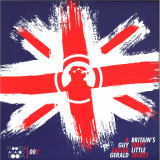
For a number of years now, A Guy Called Gerald has largely made music only for himself. But this special EP is borne from Gerald’s unique and long-lasting friendship with Analog Room founders Mehdi Ansari, Siamak Amidi and Salar Ansari. They first met in 2013 when Siamak booked Gerald to play his Analog Room party in Dubai – a leading underground light in the UAE’s then emergent scene. Away from the glossy VIP hotels and expensive bottle service parties
typically associated with Dubai, Analog Room only deals with quality bookings of the caliber of Move D, Roman Flügel, Moritz Von Oswald and the likes. Gerald immediately fell in love with the party. Its strict music-first, no-nonsense policy appealed to him and he’s returned many times over the years.
By then, of course, A Guy Called Gerald’s musical legacy was already assured. The Manchester icon is best known for his 1988 hit single Voodoo Ray – the touchstone of his hometown’s dawning acid house scene. As well as being an early member of 808 State, Gerald embraced breakbeat and jungle, ran his own Juice Box Records label and worked with the likes of Columbia, Perlon, K7! and many other vital labels. His skills on everything from synths to keys, samplers to
drum machines stood him apart then – and still do today.
“This release is based on a real friendship,” Gerald explains. “I feel part of the Analog Room family. Back in the early days, that’s how it was. These days, it’s like, ‘Oh, you’re famous, let’s do something.’ I’m not interested in that. I’m not interested in being a celebrity or living that life. I’m the same as I was 30 years ago, all I care about is the music. With Mehdi, we have spent hours jamming in private in Dubai, we have partied together. We’ve vibed together for so long and he’s shown me new parts of the world I should be making and playing music in, away from the trendy scenes in other places. So this is an exclusive just for him.
I’m not looking at doing anything else with anyone, and the music is just about celebrating individuality rather than trying to fit in anywhere.”
When Iranian-born Mehdi decided to start Moozikeh Analog Room – which translates from Farsi as “the music of the Analog Room” – Gerald was one of the first artists he asked to release on the label. It might have taken some time for Britain’s Dirty Little Secret to materialize, but boy it’s been worth the wait.
Says Mehdi, “The magic comes through proper relationships and friendships.
That’s why Analog Room worked. It was a great room, an amazing sound system, with amazing artists doing their thing. Bookings were so on-point because we had agents around the world, on the dancefloors, spying up artists who were killing it,
and Gerald was one of them. He was a perfect fit from the first gig and our friendship grew from there. He’s always been very kind to me. We have this common language of music without any bullshit, and that is where this EP comes from.”
The EP is a mixture of different things. Some of it is unreleased material from the vaults revisited, some of it is brand new. It opens up with the devastating Old Skool – a writhing, physical track with naughty bass. The drums hark back to Gerald’s early days of making jungle but reimagined through a modern perspective. As the synths spray about the mix and the percussion bounces atop the jostling drums, muttered vocals draw you in deeper. Sugoi is an experimental
track that fuses ambient synth design with the spacious and eerie atmospheres of jungle. Nimble drums get you on your toes as the spangled synths twist and turn in all directions. It is a thrillingly original, impossible to define track.
Flash Fight is built on a captivating rhythm that sits in the area where house, techno and jungle intersect. It is warm and cavernous, physical yet elegant as it bounces on rubbery kicks and lithe synths roam in and out of earshot. Perfect for those sweaty, cozy back rooms, it’s another masterclass from Gerald. Closing out the EP is False Religion, a deep-rooted house track with elastic drums and
haunting, wispy pads. As a subtle acid bassline rises and falls way down below,
Gerald’s own mystic whispers leave listeners hypnotized.
Following on from Analog Room co-founder Salar Ansari’s debut release on the label, this EP is a statement of intent. More releases will follow from some of Analog Room’s most frequent international guests, but only when the time is right. Moozikeh Analog Room is a label of love, one that is focused on putting out the best possible music at all times rather than chasing hype.
A timely reminder of why A Guy Called Gerald is one of the world’s most enduring electronic artists.
out of Stock
Last delivered 5 months ago available to reorder, subject to availability
Welcome to the jazz funk world of the late great Mr Weldon Johnathan Irvine. This great man managed to write music that both inspired and in awed 50 years ago, as it still does today. He takes you to another world, with his gentle yet almost crazy energy. He was way ahead of his time producing these monumental, instrumental masterpieces. Mr Irvine was such a calm and kind gentleman, who just oozed music. He sadly passed away in 2002. It is a great honour to be able to release some of his music from his Nodlow music label on to 7” for the first time.
In 1974 Weldon released his “In Harmony” LP. The two tracks we chose are, “Fat Mouth” which, as expected, features the signature Weldon rift. This Clavinet-heavy groove is backed up with the mighty Joe Jones on Hammond organ; and is all held steady with the pumping drums from Napoleon Revels
“Turkish Bath” is a laid-back jazz groove, with Weldon laying down a superb lead Rhodes story and melody. Backed up with Joe Jones on the piano. Weldon’s keyboard echoes throughout his music with such simplicity.
out of Stock
Last delivered 3 years ago available to reorder, subject to availability
“I’m reeling, I’m restless,” sing Deep Throat Choir from the heart of their second album. That restlessness manifests in a set of tremendously abundant, original songs from the east London female and non-binary vocal collective, founded by Landshapes member Luisa Gerstein.
Released via Bella Union, ‘In Order to Know You’ is a multi-layered assertion of freshly expansive range, driven by two core virtues: a sense of strength in unity and an open embrace of its singers’ personal experiences, shared through collective, supportive vocal expression.
After 2017’s largely covers-based debut album, ‘Be OK’, the choir recognised the call to evolve. “Having been singing together for five-plus years, and having released an album of mostly covers, it felt like the logical next step to make our own music together,” says Gerstein. “This album is the alchemy of all the specific voices and players that make up the choir, and a collaborative process of writing and sharing music and ideas. Sonically, I wanted to move beyond just voices and percussion, to see what richness could be brought with acoustic instruments and electronics, and to transition from a choir that
does covers to a band with loads of vocalists.”
‘In Order to Know You’ heads towards its climax without seeming to touch the ground, from the title track’s devotional exhalation to the stealthy, smoky shimmer of ‘Unstitching’. Its lyrics drawn from a poem by Emma Cleave, the sublime ‘Field of Not Knowing’ closes the album in a vivid tapestry of folkgothic images (moon beams and pipistrelles) and serene-to-soaring arrangements, revelling in possibility: “It’s the place where I begin,” sing the choir.
For Deep Throat Choir, the result is both an exquisite culmination of journeys taken so far and a lustrous, exquisite springboard for further adventures. Their travels began in 2013, when the collective took shape from a desire to strip music back to the basic elements of raw female voices and drums, united in a fashion that both honours and transmogrifies personal expression.
A small group of four or five singers steadily expanded, with Zara Toppin’s drums providing a propulsive energy. Cathartic live shows and collaborations followed, ranging from team-ups with Peggy Sue, Stealing Sheep, Horse Meat Disco and Matthew E White, to performances at Green Man, Wilderness, the Southbank Centre’s WOW festival, London’s Scala and beyond. ‘Be OK’ provided a gutsy showcase for the band’s close, collective strengths, bolstered by weekly gatherings at a church in east London to blow
the roof off. A fruitful collaboration with techno-pop duo Simian Mobile Disco on the 2018 album ‘Murmurations’ followed: a testament to the choir’s alchemical abilities.
out of Stock
Last delivered 4 years ago available to reorder, subject to availability
For nearly two decades, four-time GRAMMY® Award-winning multi-instrumentalist, bandleader, producer, arranger, and songwriter Michael League has been an innovative force in modern music, whose grass-roots approach to the industry has made an imprint across multiple continents and genres. Known best as the leader of the instrumental ensemble Snarky Puppy, League has performed thousands of shows, released dozens of studio and live albums, and garnered accolades from the New York Times, Downbeat, Jazz Times, and Rolling Stone, among many others. The busy artist is also a founding member of the GRAMMY®-nominated supergroup Bokanté and oversees GroundUP Music—a fiercely independent label which he established in 2012. As a versatile producer and songwriter, League has collaborated with a broad spectrum of artists, including David Crosby, Esperanza Spaulding, Kirk Franklin, Joe Walsh, Daedelus, and Terence Blanchard. Throughout his many ventures, however, League has always felt most comfortable within a collaborative setting, whether he’s bringing musicians together from across the globe, planning the latest edition of the GroundUP Music Festival, or writing one-on-one with a partner. While the notion of a solo record first took shape in 2015, League’s demanding schedule always prevented him from pursuing it in earnest. And then, in March 2020, the world went into lockdown amid the COVID-19 pandemic. With tours canceled, studios shuttered, and projects on hold indefinitely, League finally had the time to make this record—titled So Many Me. Yet, lyrically and musically, his first solo album was a very different project—and process—than what he had initially envisioned five years earlier.
In the early 21st century, a shadowy figure rose from the dust that settled atop forgotten record collections throughout Africa, leaving behind
a trail of clues in what seemed like a wild good chase, but in October 2013, Luaka Bop will unmask a phantom: the great William Onyeabor.
'...anyone out there making music at the moment will be quite excited by this...' Damon Albarn
'...a synth-slathered prog-funk killer...' - Pitchfork
"talk to @LuakaBop about details of the William Onyeabor comp they are working on today... gonna blow minds!!!!!!!!!' - Four Tet
Promotional Assets
Covers & Remixes by Devendra Banhart, Man Tear (DFA) & Hess Is More, Caribou, Dam-Funk, Justin Strauss, Scientist, Optimo, Prince Language, Illum Sphere, James Holden, Peaking Lights, etc.
Art collaborations with John Akomfrah, Njideka Akunyili, Harrison Haynes, Dave Muller, Odili Donald Odita, Xavier Simmons and music videos by Brian Baderman, Mike Sumner & Kindess. Partnership with Moog, Boiler Room, DubLab, Beats in Space & East Village Radio. Events at Moog Fest, Pop Montreal, Le Comptoir General
Wiseblood is one of the most well-known Corrosion of Conformity albums and was released in 1996 as the fifth studio album by the American heavy metal band. The album charted on the Billboard Top 200 Album Charts and peaked at #104. The history of Corrosion of Conformity in modern heavy music is highly significant, not least due to guitarist Pepper Keenan’s formation of all-star project Down, along with Pantera’s Philip Anselmo and members of Crowbar.
Wiseblood includes the tracks “Drowning in a Daydream”, which was nominated for Best Metal Performance at the 40th Grammy Awards, and “Man Or Ash”, on which Metallica’s James Hetfield provides backing vocals.
Vice Squad are a UK Punk Rock band who’s first single releases included the classic ‘Last Rockers’ 7” in 1981. This was followed by the landmark albums ‘No Cause For Concern’ in the same year and ‘Stand Strong Stand Proud’ in 1982 which were both released on EMI. Since then Vice Squad have delivered short sharp songs with incisive political lyrics and a dash of humour spat out over a thunderous rhythm and machine gun Rock ’n’ Roll guitars. Their latest releases are the EPs 'Born In A War' and 'Ignored To Death V2' taken from the forthcoming album ‘Battle of Britain’ set for release on their own Last Rockers label in May 2020. The band have become 100% DIY since forming Last Rockers Records in 2009. In keeping with the DIY ethic the previous albums were recorded in the band’s own ‘Sci Fidelity’ studio South London and the new album ‘Battle of Britain’ continues this with the band maintaining full artistic control with the benefit of global distribution via Cargo. Their last album ‘ Cardboard Country’ was launched on the back of a very successful Pledge campaign raising funds for the Shelter homeless charity in line with the album title which was inspired by 'Cardboard City', the name given to the settlement of homeless people living in cardboard boxes near London's Waterloo station. Vice Squad is fronted by raucous voiced singer/guitarist Beki Bondage who was famed for being a teenage champion of Animal rights long before the current popularity of veganism. Vice squad’s song ’Humane’ was one of the first ever Animal Rights songs. Beki has been featured on the front cover of a number of influential music tabloids such at Melody Maker, NME, Sounds, Record Mirror and Smash Hits. After a hiatus, Beki formed a new version of Vice Squad in 1997 featuring longstanding members of her post VS outfit The Bombshells and they have released several quality albums of powerful punk songs that have been very well received across the world. Vice Squad are considered one of the most influential punk rock bands of all time, paving the way for other female Punk and Rock singers and influencing male performers such as Dave Grohl of Nirvana and Foo Fighters fame who was introduced to Vice Squad via his sister’s record collection. The first rule of Punk is there are no rules and Vice Squad ably illustrate this with ‘Battle of Britain’. Written, Recorded and Mixed by Beki Bond and Paul Rooney in their home studio. The 13 track album opens with the blistering ‘Ruination’ which cuts through the bullshit of small time promoters and blaggers with consummate swagger and melody while ‘I Dare To Breathe’ is an amphetamine driven anthem to paranoia. ‘When You Were 17’ is almost-tender and tells of first tattoos and under age booze whilst the more chilling ‘Ignored To Death’ rails against isolation and homelessness. The explosive ‘Born In A War’ rages along like a missile ravaging a third world country and warns ‘See how they treat refugees? That’s how they’ll treat you and me’. Elgar’s ‘Nimrod’ reworked with a pulsating industrial bass segues into title track, 'Battle Of Britain' where Beki's vocals soar like a Spitfire over the crunching de-tuned riff and spit fury over the hypocrisy of putting war memorials before people. The dystopian ‘Poverty Face’ hits you with the opening line ‘Disinheriting the meek, slyly killing off the weak’ and is counter balanced by the more upbeat ‘How The Other Half Lives’. ‘No Evil’ is a relentless attack on the normalisation of the suffering and death of billions of animals for the meat industry. Battle of Britain's hard hitting collection of anger and riffage pulls no punches in covering topics from austerity and factory farming to the pernicious influence of the Mainstream Media - ‘Led by lies lambs to the slaughter, tax exiles say who you vote for’. Brexit, fake patriotism and cognitive dissonance all get a good kicking too. The penultimate track, 'You Can’t Fool All Of The People' mixes baritone guitar with violin and Celtic rhythms climaxing in an epic James Bondesque heavy guitar/orchestral blend and breaks every rule in the Punk Police hand book whilst pleading for unity against a rigged political system. ‘Pulling Teeth’ with its ominous riff and hilariously frustrated lyrics ‘Dithering jibbering solid as jam, is it fair I’m both the woman and the man’ closes the album in manic style
Vice Squad are a UK Punk Rock band who’s first single releases included the classic ‘Last Rockers’ 7” in 1981. This was followed by the landmark albums ‘No Cause For Concern’ in the same year and ‘Stand Strong Stand Proud’ in 1982 which were both released on EMI. Since then Vice Squad have delivered short sharp songs with incisive political lyrics and a dash of humour spat out over a thunderous rhythm and machine gun Rock ’n’ Roll guitars. Their latest releases are the EPs 'Born In A War' and 'Ignored To Death V2' taken from the forthcoming album ‘Battle of Britain’ set for release on their own Last Rockers label in May 2020. The band have become 100% DIY since forming Last Rockers Records in 2009. In keeping with the DIY ethic the previous albums were recorded in the band’s own ‘Sci Fidelity’ studio South London and the new album ‘Battle of Britain’ continues this with the band maintaining full artistic control with the benefit of global distribution via Cargo. Their last album ‘ Cardboard Country’ was launched on the back of a very successful Pledge campaign raising funds for the Shelter homeless charity in line with the album title which was inspired by 'Cardboard City', the name given to the settlement of homeless people living in cardboard boxes near London's Waterloo station. Vice Squad is fronted by raucous voiced singer/guitarist Beki Bondage who was famed for being a teenage champion of Animal rights long before the current popularity of veganism. Vice squad’s song ’Humane’ was one of the first ever Animal Rights songs. Beki has been featured on the front cover of a number of influential music tabloids such at Melody Maker, NME, Sounds, Record Mirror and Smash Hits. After a hiatus, Beki formed a new version of Vice Squad in 1997 featuring longstanding members of her post VS outfit The Bombshells and they have released several quality albums of powerful punk songs that have been very well received across the world. Vice Squad are considered one of the most influential punk rock bands of all time, paving the way for other female Punk and Rock singers and influencing male performers such as Dave Grohl of Nirvana and Foo Fighters fame who was introduced to Vice Squad via his sister’s record collection. The first rule of Punk is there are no rules and Vice Squad ably illustrate this with ‘Battle of Britain’. Written, Recorded and Mixed by Beki Bond and Paul Rooney in their home studio. The 13 track album opens with the blistering ‘Ruination’ which cuts through the bullshit of small time promoters and blaggers with consummate swagger and melody while ‘I Dare To Breathe’ is an amphetamine driven anthem to paranoia. ‘When You Were 17’ is almost-tender and tells of first tattoos and under age booze whilst the more chilling ‘Ignored To Death’ rails against isolation and homelessness. The explosive ‘Born In A War’ rages along like a missile ravaging a third world country and warns ‘See how they treat refugees? That’s how they’ll treat you and me’. Elgar’s ‘Nimrod’ reworked with a pulsating industrial bass segues into title track, 'Battle Of Britain' where Beki's vocals soar like a Spitfire over the crunching de-tuned riff and spit fury over the hypocrisy of putting war memorials before people. The dystopian ‘Poverty Face’ hits you with the opening line ‘Disinheriting the meek, slyly killing off the weak’ and is counter balanced by the more upbeat ‘How The Other Half Lives’. ‘No Evil’ is a relentless attack on the normalisation of the suffering and death of billions of animals for the meat industry. Battle of Britain's hard hitting collection of anger and riffage pulls no punches in covering topics from austerity and factory farming to the pernicious influence of the Mainstream Media - ‘Led by lies lambs to the slaughter, tax exiles say who you vote for’. Brexit, fake patriotism and cognitive dissonance all get a good kicking too. The penultimate track, 'You Can’t Fool All Of The People' mixes baritone guitar with violin and Celtic rhythms climaxing in an epic James Bondesque heavy guitar/orchestral blend and breaks every rule in the Punk Police hand book whilst pleading for unity against a rigged political system. ‘Pulling Teeth’ with its ominous riff and hilariously frustrated lyrics ‘Dithering jibbering solid as jam, is it fair I’m both the woman and the man’ closes the album in manic style
"Everyone has their own memories and associations with the great songs of the classic films of the 80s and 90s! AT THE MOVIES put the Corona-related time in quarantine to good use and put their soft spot into action, creating unique new interpretations of these classic Soundtrack hymns. The initial spark for this project was ignited by Chris Laney (PRETTY MAIDS), who chatted about the idea with his musician colleagues Allan Sørensen (PRETTY MAIDS, ROYAL HUNT) and Morten Sandager (PRETTY MAIDS, MERCENARY) as well as Björn ""Speed"" Strid (THE NIGHT FLIGHT ORCHESTRA, SOILWORK) and AT THE MOVIES was born. Metal-Heavyweights such as Pontus Norgren (HAMERFALL), Pontus Egberg (KING DIAMOND, WOLF) and Linnéa Vikström Egg (KAMELOT, THERION) as well as illustrious guests such as Ronnie Atkins (PRETTY MAIDS), Jacob Hansen (producer of VOLBEAT, PRIMAL FEAR) and Bruce Kulick (ex-KISS) completed the project, from which the albums ""The Soundtrack Of Your Life"" with Vol.1 (eighties) and Vol.2 (nineties) emerged. Featured are evergreens such “No Easy Way Out”, “Maniac”, “St. Elmo's Fire "", ""The Power Of Love "", ""The Heat Is On"", ""The Neverending Story"", ""The One And Only "", ""(I Just) Died In Your Arms"", ""(You Drive Me) Crazy"", ""Heaven Is A Place On Earth "", ""Crush "", ""I've Been Thinking About You"" and ""Venus""- all catchy tunes that you know and love, in a new, exciting and fascinating metal outfit. "
Massachusetts hardcore band Defeater have announced their new self-titled album. Defeater will be released May 10 on Epitaph. This is Defeater's fifth full-length release and their first in 4 years. The first new single, "Mothers' Sons" features blistering guitars that take the song into something chaotic and beautiful. Defeater was produced with Will Yip (Quicksand, La Dispute, Blacklisted, Ms. Lauryn Hill) whose enthusiasm and talent pushed the songs to their fullest potential. Defeater showcases the band at their most devastating and sonically arresting to date. It is as pummeling as it is atmospheric. Yet it's been a long journey to where the band is now. Years of touring took their toll on the friends that make up the current lineup of Derek Archambault (vocals), Jake Woodruff (guitar), Adam Crowe (guitar), Mike Poulin (bass) and Joe Longobardi (drums). Health, substance abuse issues, and ejecting a longtime member had made a touring hiatus necessary. After a few months at home, working and decompressing, the fire to write a new record caught everyone in a major way. The result of time off and the band's renewed energy, Defeater has created their most organic batch of songs yet. And in Defeater fashion, the instrumentation is complimented by a narrative approach. Archambault explores his own "Glass family" (an homage to the J.D. Salinger characters) from new perspectives.
Chìsake Algonquin: to chant; to conjure; to cast a spell; this generally involves a shake-house, or shaking tent, in which the conjurer goes into a trance; the conjurer then has an out-of-body experience, going into the future to predict coming events, or into the past; as well as going into any locality in the universe to seek out someone or something generally practiced for ancestral divination.
The unaccompanied flute pieces within this album are adaptations of Anishinaabeg shaking tent chants. The Anishinaabeg also known as Anishinaabe are a group of culturally related Indigenous peoples that reside in areas now called Canada and the United States. They include the Odawa, Saulteaux, Ojibwe (including Mississaugas), Potawatomi, Oji-Cree and Algonquin peoples. The word Anishinaabeg translates to "people from whence lowered". The Anishinaabeg origin myths describe their people originating by divine breath.
The shaking tent or conjuring lodge was the setting for a divinatory rite performed by specially trained shamans otherwise known as Chìsakewininì. During the shaking tent ceremony the Chìsakewininì would construct a special cylindrical framework typically of birch or spruce uprights planted in the ground with respective wood hoops to bind it together. This created a tensile structure of which birch bark, deer skin, or cloth was used as a covering. Rattles of caribou and deer hooves, or cups of lead shot, were tied to the frame. The floor was usually softened with freshly cut spruce boughs. The vertical axis of the shaking tent represents the realm of mediating beings, while the horizontal axis the earth or world of humans. The Chìsakewininì would enter the shaking tent at night and once inside would not be visible from onlookers. The singing of chants and drumming would summon the Chìsakewininì's spirit helpers, whose arrival was signified by animal cries and erratic tent shaking. During this transcendent state, the Chìsakewininì could dispatch these spirit helpers or Manidò to distant regions to answer questions from the onlookers about the most auspicious places to hunt, the well-being of a distant relative, and what would happen in the future.
The chants were usually sung using vocables before, during, and after the Chìsakewininì entered the shaking tent. Like many other similar divination ceremonies, singular or collective, the opening chants begin lyrically. They gradually turn to more reductive abstract structures midway and then end in lyrical chants. This symbolizes the performer and listener leaving the external literal world, entering a more abstract state of mind, and then returning. Traditionally all songs were carved on birch bark for record-keeping with mnemonic pictographs or other marks for future use. Tally mark clustering, sometimes used for song-keeping throughout the Anishinaabeg, is used for this album's track titles and numerical sequence.
The album intro begins with the shaking of a necklace of otter penis bone, fish spine, bear teeth, elk teeth and deer hide, gifted from Algonquin Elder Ajawajawesi. It is meant to focus the listener's attention before the flute pieces begin. The warble or multi-phonic oscillation prevalent in the middle tracks traditionally represented the "throat rattling" vocalization of the tonic note or sometimes known as the horizon of which the melody floats off of. Due to the repetition of multi-phonic oscillation the performer will breathe erratically creating an altered state correlating with the Chìsakewininì ceremonial actions. All songs are repeated seven times to signify the seven sacred directions: east, south, west, north, above/sky, below/earth, and center.
Duane Pitre returns to Imprec with Omniscient Voices, an articulate, intense and emotionally resonant set of five pieces for justly tuned piano and electronics.
Omniscient Voices is a uniquely distinct work that follows Pitre's trilogy of releases which culminated with 2015’s Bayou Electric and included the critically acclaimed Feel Free (2012) and Bridges (2013) albums. Where those albums were rooted in long form pieces, Omniscient Voices is a collection of shorter pieces, offering more harmonic variety than previous works, with a unique sound and feel that is still unmistakably the work of Duane Pitre.
In 2019, after a five year period where Pitre did not focus on outward facing music, but instead on his own personal practice, a small idea in the form of a question came to him: would the combination of his latest computer- and electronic-based experiments, used in conjunction with justly tuned piano, produce interesting results; simply put, would it “work”? Concurrently, Pitre was studying a handful of Morton Feldman scores for their focus on tonal clusters, reading a book on Arvo Pärt’s life and work, and contemplating the pulse-based rhythms of Steve Reich and Phillip Glass.
In 2020, with no intention of making a new album, the composer tried to answer this question. The results would spawn five pieces that would become Omniscient Voices. On this new work, Pitre finds himself giving equal priority to both piano and electronics, utilizing his Max/MSP-based generative network to real-time convert precomposed piano motifs, into data, which is then used to communicate with two polyphonic, microtonal hardware synthesizers whose patches Pitre authored; this process generates the electronic component of the album. Pitre also utilizes controlled improvisation to interact with the piano-reactive electronics in a spontaneous and inspired manner, going back and forth between these two pianistic approaches. In all, this approach creates a “musical feedback loop” of sorts.
Despite Omniscient Voices being the culmination of 15 years of hard work and inspiration, this beautiful album somehow materialized in a natural, intuitive and effortless way (like any artist's best work.)
Artist's statement: “When making the pieces that would become Omniscient Voices, I often viewed the piano as human action, a single note becoming a single gesture that has the potential to change the electronic environment, the electronics becoming the environment surrounding that human in the natural world, who then has the power to change their actions based on their surroundings. All actions have consequences. The interconnectedness of everything. Single actions making waves of change.”
RIYL: Arvo Pärt, Morton Feldman, Steve Reich, Phillip Glass
Mastered and cut by Golden and pressed at RTI for maximum fidelity.
Punchline: Enjoy this first single "Waiting For A Star To Fall" from swedish allstar band AT THE MOVIES, doing unique cover versions of their favourite movie songs. Taken from their upcoming album "The Soundtrack of Your Life - Vol. 2" and with members from Pretty Maids, HammerFall, King Diamond, The Nightflight Orchestra, Therion and more! 1. SINGLE - 12.11.21 „Waiting for a star to fall“ 2. SINGLE - 19.11.21 „Last Christmas“ 3. SINGLE - 10.12. „(I Just) Died In Your Arms“ 07.01.22 on album release day): - „Heaven Is A Place On Earth“ FOCUS TRACK: „(I Just) Died In Your Arms“ "Everyone has their own memories and associations with the great songs of the classic films of the 80s and 90s! AT THE MOVIES put the Corona-related time in quarantine to good use and put their soft spot into action, creating unique new interpretations of these classic Soundtrack hymns. The initial spark for this project was ignited by Chris Laney (PRETTY MAIDS), who chatted about the idea with his musician colleagues Allan Sørensen (PRETTY MAIDS, ROYAL HUNT) and Morten Sandager (PRETTY MAIDS, MERCENARY) as well as Björn ""Speed"" Strid (THE NIGHT FLIGHT ORCHESTRA, SOILWORK) and AT THE MOVIES was born. Metal-Heavyweights such as Pontus Norgren (HAMERFALL), Pontus Egberg (KING DIAMOND, WOLF) and Linnéa Vikström Egg (KAMELOT, THERION) as well as illustrious guests such as Ronnie Atkins (PRETTY MAIDS), Jacob Hansen (producer of VOLBEAT, PRIMAL FEAR) and Bruce Kulick (ex-KISS) completed the project, from which the albums ""The Soundtrack Of Your Life"" with Vol.1 (eighties) and Vol.2 (nineties) emerged. Featured are evergreens such “No Easy Way Out”, “Maniac”, “St. Elmo's Fire "", ""The Power Of Love "", ""The Heat Is On"", ""The Neverending Story"", ""The One And Only "", ""(I Just) Died In Your Arms"", ""(You Drive Me) Crazy"", ""Heaven Is A Place On Earth "", ""Crush "", ""I've Been Thinking About You"" and ""Venus""- all catchy tunes that you know and love, in a new, exciting and fascinating metal outfit. "
OK, it’s taken us to get to our 11th release for some filthy organ funk to grace the label, and who better than The King Rooster.
Hailing from London, The King Rooster are a heavy funk quartet consisting of Ian Stevens on bass, Mark Claydon on drums (both
from another heavy funk band - The Getup), Sam Montero on keys and James Forster on guitar.
Collectively the band have played, recorded and shared stages with the likes of Sir Joe Quaterman, JTQ, Gizelle Smith, Reuben
Wilson, Speedometer Pee Wee Ellis and many more.
The band have released a clutch of heavy duty organ funk 45s on various labels over the last few years (Our Label, FNR, Dinked,
Burning Soul) and a spectacular LP, also on Dinked. But it was when we heard ‘Snitchin’, Stitchin’ & Bitchin’ on Funk Night Records
that we decided 45 Live needed some Rooster funk on the label!
It is entirely evident that the guys all have a deep love for raw funk, that gritty, slightly shambolic garage sound, punchy instrumentals
designed to hit you in the gut, pure soul from the pure funk perspective. It’s all about the ‘nasty face’!
Here we have 2 hard hitting organ screamers kicking off with ‘Snake Bait’ on the A side, a raucous 144bpm dancefloor burner.
Scratchy guitar, thumping bass and manic drums underpin a swirling and ever building Hammond Organ into a firey crescendo.
Whilst over on the B ‘Stickin’ it’ takes some cues from The Meters sound with its trance like organ riffs and bluesy flavour. It’s a raw
mid-tempo head nodder which, like the A side, keeps building and building into such a cookin’ groove.
The soundtrack to Oscar winning movie “Juno” is well known for its indie rock theme, featuring artists such as The Kinks, Belle & Sebastian, Sonic Youth, Mott The Hoople, The Velvet Underground and Cat Power amongst others. The soundtrack – which was certified platinum in the US – has not been available on LP since the original pressing in 2007, it will be pressed on neon green vinyl.
[b] a2. My Rollercoaster [Juno Film Version] - By Kimya Dawson
Olindo Records is proud to present the 7th full length release in
its expanding catalogue by Venezuelan singer, songwriter and multi-instrumentalist Isaac
Sasson.
Wendell Harrison was born in Detroit in 1942 where he began formal jazz studies for piano, clarinet and tenor saxophone. At 14, while still in high school, Harrison started performing & recording professionally with artists such as Marvin Gaye, Grant Green, Sun Ra, Hank Crawford … and many others.
In 1971, Harrison began teaching music at Metro Arts (a multi-arts complex for youth) where he also connected with Marcus Belgrave, Harold McKinney and Phil Ranelin…soon after they formed the (now legendary) Afro-centric TRIBE record label and artist collective. TRIBE used the Metro Arts complex as a vehicle to convey a growing black political consciousness. Wendell Harrison also published the very popular TRIBE magazine, a publication dedicated to local and national social and political issues, as well as featuring artistic contributions such as poetry and visual pieces.
In 1978 Harrison and McKinney co-founded REBIRTH, a non-profit jazz performance and education organization, in which many notable jazz artists have participated. Around the same time Wendell Harrison also created the WENHA record label and publishing company, which released many of his (now classic) recordings as well as those of other artists, such as Phil Ranelin, Doug Hammond and Reggie Fields (The Real ShooBeeDoo).
In the early 1990s, Wendell Harrison was awarded the title of “Jazz Master” by Arts Midwest. This distinction led Harrison to collaborate with fellow honorees and gave him the chance to tour throughout the United States, Middle East and Africa. Even to this day Wendell Harrison's recordings for the TRIBE, WENHA and REBIRTH labels have a large worldwide fanbase.
It is on WENHA that Harrison released the opus: DREAMS OF A LOVE SUPREME (1980), which we are presenting you today.
DREAMS OF A LOVE SUPREME is a monster album that features an all-star line-up that includes Phil Ranelin (Freddie Hubbard, Solomon Burke, Mulatu Astakte) on trombone, Harold McKinney (Tribe) on Keyboards and Roy Brooks (Yusef Lateef, Chet Baker, Mingus) on percussion. Although you can hear the 80ies creeping in with a smoother sound, more synths, and disco/R&B vocals… this remains a very spiritual (and soulful) jazz record. The record’s an irresistible blend of soul jazz combined with funky electric instrumentation…a groovy sound which is very much of its time, yet overtly timeless and as relevant today as it was back when it was initially released.
Tidal Waves Music now proudly presents the first ever vinyl reissue of ‘Dreams of A Love Supreme’ since its release in 1980. This official reissue is now available as a deluxe 180g vinyl edition (limited to 500 copies) and comes with an unreleased bonus track.
When XTC finally downed guitars after the recording and release of “Wasp Star”, their last album to date, one of Andy’s ideas about what to do next, was to become a songwriter in the traditional sense, writing songs for others…
It was something he had been asked to do throughout the XTC years, but never had the time.
Songs were written. Songs were sent. Sometimes speculatively, often specifically requested, many tailor-made for an artist's requirements, but then choppy waters could still lay ahead. Even where everyone seemed to think that newly written song A would be wonderful if recorded by singer B, whose manager C had initiated the request via music publisher D for album E on record label F…
Well, you begin to see the potential problems of such an approach – almost a quarter of the way through the alphabet and not a note recorded beyond Andy's original demo. That’s without detailing the sort of horrendous politics that makes a fresh batch of alphabet spaghetti of any of the above as they interact.
Still, songs are like children. A songwriter gives birth to them, feeds them, watches them grow before sending them out into the world. So it’s unfair to abandon them as orphans just because their first experience outdoors might be a traumatic one of being cold shouldered.
As a loving parent, Andy brought them all back together, re-Andy-fied them and buffed them up in his home studio, et voila! Here is the first selection of song siblings that resulted from all of this work, four brothers and sisters, happily reunited and presented as a family group aural snapshot for your entertainment and delight.
The story has a happy ending after all. It is almost as if The Sound of Music, had been set in Swindon.
The latest thrilling incarnation of master rock'n'roll storyteller Tex Perkins (The Cruel Sea, Beasts of Bourbon, Thug, Tex Deadly and the Dum Dums, Tex, Don et Charlie.) and the Fat Rubber Band began with a rare vinyl copy of Link Wray's Beans and Fatback album, recorded in 1971. Perkins and his respected musician, songwriter, producer and bandmate Matt Walker share a mutual admiration of the American electric guitar innovator, whose iconic power chords in his signature 50s rock'n'roll instrumentals, had a profound influence on the evolution of rock guitar. The Fat Rubber Band is borned with this rare vinyl, the pair have enjoyed countless musical conversations over the decade while hanging out backstage and on the road. Walker offered the debut album's opening track, the wide-screen drama of "Pay The Devil's Due". Perkins responded with the plaintive blues of "My Philosophy". Walker replied with the album's fuzz driven debut single "Danger Has Been Kind" and Perkins countered with the glacially-paced, intimate "Poor Simple Minded Fool". The pair road-tested their works in progress as a duo before enlisting bassist Steve Hadley, drummer Roger Bergodaz and Evan Richards on percussion to complete the Fat Rubber Band line-up to record the album's ten tracks at Walker's Stovepipe Studios in Victoria's Dandenong Ranges. "At Matt's studio - you open the door to the studio and nature floods in," Perkins says. "We wanted it to sound rural, to feel the dirt and the grass and the leaves." Even after all these decades, when you think you know that gravelly baritone inside out, Perkins finds new emotional tones in the service of the Fat Rubber Band's songs vivid narratives, with their characters wrestling, but sometimes dancing, with the tougher, darker qualities of the human condition. This is truly existential blues. Bubbling underneath those upfront vocals and raw harmonies are intricately entwined guitar conversations and unexpected percussive flourishes. "Another aspect that we wanted was for the sound to be sometimes a collision and sometimes a marriage of acoustic and electric instruments. We wanted that tension between mandolins and bouzoukis meeting fuzz guitars." "We also considered percussion to be a vital element of the sound we were going for; we noticed in the recordings we loved from the 50s and 60s that often the tambourine hit, or the maracas, or whatever percussion, was right up there in the mix, right next to the vocal," Perkins says.
Miles Davis Kind of Blue meets Analogue Productions' UHQR, the pinnacle of high-quality vinyl!
Best-selling album in jazz history; mastered from the original master tapes by Bernie Grundman
Pressed at Quality Record Pressings using Clarity Vinyl® on a manual Finebilt press
Purest possible pressing and most visually stunning presentation and packaging!
Dream team of Davis, Adderley, Coltrane, Evans, Kelly, Chambers, Cobb make history.
Legends have a way of sticking around. If there was ever an album awaiting a high-fidelity, custom-pressed vinyl treatment of the level you now hold in your hands, it is Miles Davis' Kind of Blue. The top-selling jazz album of all time, it has been lauded, entered into "Best Of" lists and Halls of Fame, and universally acknowledged as a landmark recording — a five-track masterpiece of melancholy mood and melody.
It continues to be one of the most listened-to and studied recordings of all time, a required primer for many young musicians, and one of the most transcendent pieces of music ever recorded. Davis played trumpet sublime with his ensemble sextet featuring pianist Bill Evans, drummer Jimmy Cobb, bassist Paul Chambers, and saxophonists John Coltrane and Julian "Cannonball" Adderley with Wyton Kelly playing piano on "Freddy the Freeloader."
Now Analogue Productions, together with Quality Record Pressings, is putting Kind of Blue where it belongs: the Ultra High Quality Record (UHQR) pressed on Clarity Vinyl on a manual Finebilt press with attention paid to every single detail of every single record.
The 200-gram records will feature the same flat profile that helped to make the original UHQR so desirable. From the lead-in groove to the run-out groove, there is no pitch to the profile, allowing the customer's stylus to play truly perpendicular to the grooves from edge to center. Clarity Vinyl allows for the purest possible pressing and the most visually stunning presentation. Every UHQR will be hand inspected upon pressing completion, and only the truly flawless will be allowed to go to market. Each UHQR will be packaged in a deluxe box and will include a booklet detailing the entire process of making a UHQR along with a hand-signed certificate of inspection. This will be a truly deluxe, collectible product.
Kind of Blue is more than Miles Davis's most enduring recording, it's a testament to Miles' experimental approach, drastically simplifying modern jazz by returning to melody unlike the chord complexity more often heard at the time. "The music has gotten thick," Davis complained in a 1958 interview for The Jazz Review. "... There will be fewer chords but infinite possibilities as to what to do with them." Kind of Blue is, in a sense, all melody — and atmosphere.
None of the musicians had played any of the tunes before heading into the first of two recording sessions in early spring of 1959. In fact Miles had written out the settings for most of them only a few hours before the session. Miles also stuck to his old recording procedure of having virtually no rehearsal and only one take for each tune.
Miles remained proud of the album, performing at least two of its tracks — "So What" and "All Blues" — for years after, until his musical path took him in a different direction.
History was on the side of Kind of Blue; it was born in 1959, at the peak of the golden age of high-fidelity, featuring innovations in studio equipment (magnetic tape, high-quality condenser microphones), matched by advancements in home audio reproduction (long-player records — LPs; high-end turntables, and other stereo components). Kind of Blue also benefited from Miles' being signed to the leading major record company of the day — Columbia Records, a part of the CBS media conglomerate. Columbia had the means and wisdom to invest in cutting edge recording technology, and their own professional recording studio.
A minor audio complication with Kind of Blue has been addressed with this UHQR edition. The motor on the studio's 3-track master recorder was running slowly the day of the album's first session. This speed issue affected the album's first three tracks, "So What," "Freddie Freeloader" and "Blue in Green," making them a barely perceptible quarter-tone sharp. Before now, it was only addressed in 1995 for the Classic Records edition and by Columbia Records — or their latter-day parent, Sony Music — on a CD reissue in the late '90s.
Sixty years have passed; this LP bridges that time span in the best way possible, struck from the master reel of Kind of Blue, free of speed issues and replete with all the instrumental detail, sonic environment and minimal noise. As we set out to make our UHQR series the world's best-sounding vinyl records, we have also used Clarity Vinyl, which is free of any carbon black pigment which might introduce surface noise. All-in-all this edition of Kind of Blue meets the highest audiophile standards and offers the truest sound for the most enjoyment.
After the international success of Thunderbirds, Gerry and Sylvia Anderson turned their attention to a deadly threat from Mars. Seeking revenge for an attack on their home planet,
the Mysterons plot to use their powers to bring Earth to its knees.
Across 32 episodes broadcast during 1967 – 1968, the series is remarkable for moving away from the more caricatured puppets of previous shows –
they have more realistic body proportions and the storylines are much more violent and darker in tone. Something reflected in the music which has a
more militaristic feel to it although, as always, composer Gray offers up occasional lighter tracks to break up the mood.
The opening narration of each episode sums it up –
"The Mysterons: sworn enemies of Earth. Possessing the ability to recreate an exact likeness of an object or person. But first, they must destroy...
Leading the fight, one man fate has made indestructible. His name: Captain Scarlet."
The Captain Scarlet LP will be sixth album in the series which includes UFO, Supercar, Thunderbirds, Fireball XL5 and Space: 1999.
Habibi Funk presents a selection of works by Algerian-born, Amazigh artist Majid Soula. Majid’s music blends the best of Arab-disco, highlife and groovy funk into something wholly unique.
Born in Kabylie, Algeria - a place that remains fundamental to his career - Majid Soula is a self-made musician, artist and producer. With no formal music education, Majid’s tenacity has led to a career that is still blossoming. His synths, driving drums, guitar & strong lyrics make a unique sound. A strong proponent for the rights of the Amazigh, he has a band that to this day plays shows, most linked to cultural events of the Amazigh diaspora in France, as well as in Belgium, Russia the UK and Sweden. He was part of a new wave of widely popular and successful Kabyle artists in the 1980s, such as Ait Menguellet, Lounès Matoub, Takfarinas, Idir and many more.
Habibi Funk as a label is dedicated to re-releasing music from “The Arab World”, but this release shows how reductive this term can be, as the countries from North Africa and West Asia being summarized under this term include a vast number of languages and identities. Obviously, headlines sometimes come with limited space, and one can’t avoid using terms that paint a half-finished picture. That being the case, however, we are even more happy that Majid Soula liked our idea to work on a release of a selection of his music with us. The tracks here are incredible and need to be introduced to a new generation of listeners.
For Majid Soula music is more than just entertainment. He considers himself an activist through music, and foremost a “chanteur engagé”, as he says of himself: „I take my inspiration from the daily life of my people and I share all their aspirations, mainly the official recognition of Tamazight as a language, culture and identity.”
He still works on new music in his small home studio in Belleville and occasionally plays concerts for the Amazigh community of the city.
We sincerely hope that for you reading this and listening to Majid’s album, his music will have the same revelatory feeling it had on us, and that this will be part of a momentum that will allow Majid to keep on working, playing, and sharing his message for many years to come.
out of Stock
Last delivered 4 years ago available to reorder, subject to availability
60 million streams after their 2nd opus Running To The Moon, the duo's 3rd album, War Is Over, is a dive into 70's funk and soul with the same will to get the essential: the beauty of the melodies and the implacable groove. The Hip-Hop instrumentals on which singers and MCs seem to have more fun than ever, serve as a link to the whole.
Recorded mainly in Bordeaux, this new opus marks a turning point in the group's production method. The brass section present on the Running To The Moon tour was involved in the composition and thus brings a more organic touch to the sound of the album.
As usual, the duo has surrounded themselves with a horde of cult singers and MCs: R.A The Rugged Man, Pav4n & Illaman, Yoshi Di Original, Blake Worrell, MysDiggi or the young hopeful Yudimah (Fair 2020 winner) and the Englishman C.W Jones.
War is Over sounds like a declaration of love to black American music, from Early Jazz to Hip Hop, via Soul and Funk.
out of Stock
Last delivered 4 years ago available to reorder, subject to availability
The Artists Formerly Known As The Connection Machine (Utrecht, Netherlands) go raw and mean on this one! If the underground The Hague-style from the 90s is your thing, this 12" is your cup of tea. 4 hectic 808/303 trax, all mixed in a dirty way, with loadsa fx on the 303.
The Connection Machine/Cray Emoticon is the multi-talented duo of Natasja Hagemeier and Jeroen Brandjes, who debuted on U-TRAX in 1993 with their instant classic and much sought after 'The Dreamtec Album' (catalogue no: 3 UTR UMM 1). They went on to create another epic release called 'The Black Hole EP' on U-TRAX (catalogue no: 5 UTR UMM 2), but not after they presented 'Bitflower', a true work of art on Planet E from Detroit. Later they released the CD album 'Painless' on Down Low Music and in more recent years two 12"s (shared with The Lost Trax) and an album on Tabernacle Records from the UK.
The title track is originally meant as a replacement for the original game music of level 9 of the 2nd episode (E2L9) of the computer game Doom. The artists thought the original score wasn't doing right to the intensity of the game and made their own apocalyptic soundtrack. 'Gnawing The Heart' already proved its usefulness on many a dancefloor, whilst 'Choice Chip' will satisfy the ultimate speed freaks amongst you. If you're not into drugs or mushrooms, 'I Wish My Zapper Was A Gun' can deliver you the same effects: it's a psychedelic space-acid trip, built around a sample of the sitcom 'Neighbours'.
You can't get wrong with this vintage and merciless dance floor material from the mid-nineties.
Original release date: October 1995.
out of Stock
Last delivered 4 years ago available to reorder, subject to availability
The third release on U-TRAX in 1993 was also a third debut, this time by Natasja Hagemeier and Jeroen Brandjes. Early in their career, they used several artist names, but became most commonly known as The Connection Machine. With their debut mini-album The Dream Tec Album they more or less described their style: dreamy techno. It became an instant Dutch techno classic and U-TRAX is proud and delighted to offer a fully remastered re-release, including three never before released bonus tracks (one of which is digital-only).
Natasja and Jeroen resided in Utrecht back in the 90s. In 1991 they assembled all their ideas and recorded the track "24 Hours" with DJ Paradize. Soon after this experience, they started to buy their own gear, all strictly MIDI (which wasn't too obvious in those days). In their early recording years, they had three producer-names (Syndrome, The Connection Machine and Bitch&Bites), that were all collected under the The Utroid Machine Missions umbrella, which was used for their debut on U-TRAX.
All tracks on The Dream Tec Album are The Connection Machine's earliest works, from the 1991/1992 years.
"An Overflow of the Mind" is a beautiful, dreamy track with almost divine sounds and strange voice-samples that serves perfectly as an introduction to their entire repertoire.
Their first production was "24 Hours", and what a brilliant one it is! A well-known jazz-musician talks about a "24 hour party going on", on top of a sinister and trancey rug, woven of sampled sounds from pioneers in electronic music and nailed down to the floor with a deep pounding bassdrum. At the time they made this track, 141 bpm was unbelievably fast...
"Evilish Cosmos" is all about a very sad and personal emotion, so everything we say about it will be absolutely wrong. Just listen to the meandering piano line, distorted voice samples - and feel it.
The first bonus track on this release is "Recognized Pain", which was intended to be part of the original The Dream Tec Album. It had appeared on the Phuture Classical Section C cassette in 1993, on the famous Drome Tapes label that formed the roots of U-TRAX. It truly is an amazing track: pure sonic terror with haunting rhythms, psychedelic synth lines and shards of voice samples that make the listener feel slightly uncomfortable.
"X_Manray" is many electronic music lover's favorite track. It is sooo deep that it is hard not to get hypnotized by it. Warm strings are coupled with deep beats that show up and disappear every now and then. Could serve perfectly to start off any DJ's set, as long as she or he has the guts.
Though "Braindrain" is probably the most danceable track on this album, it is carefully designed to tease the listener. Everything in this track drops in too late and every tone, melody or loop last exactly a few bars too long. Designed as a DJ-teaser and so it is.
The second bonus track, "Cafe d'Anvers", is another previously unreleased work, of which unfortunately no master recording was saved. All that is left, as far as we know, was an old VHS Hifi tape from the U-TRAX Archives. And that is where this bonus track was taken from. Mastering engineer Thee J Johanz managed to restore the quality of the recording somewhat, while at the same time maintaining its dark, clubby sound, a tribute to the famous club of the track's name in Antwerp, Belgium.
"Dream Affected Dream" is one of the most recent productions on this album. It was recorded with CNN playing live on top of it. At this exact moment, CNN was having an interview with David Koresh, the leader of the infamous Branch Davidians sect from Waco, Texas, while they were under siege by an armed police force. Natasja and Jeroen were just ready to record Dream Affected Dream, and spontaneously decided to mix in the audio from CNN. Not very long after that, the cult members set fire to themselves. A very strange and oddly funky track, that also serves as a time-document.
The final track is another bonus track. Like Cafe d'Anvers, "Voight-Kampff" is taken from on old U-TRAX VHS Hifi tape and masterfully mastered into a lovely relaxed dreamtech piece. Very suitable to start the Sunday after a long night of clubbing. This track is available for free to buyers of the complete digital album only.
Original release date: July 1993.
out of Stock
Last delivered 4 years ago available to reorder, subject to availability
Now Available On Cassette Tape! Music By Madlib Arranged By Kieran Hebden. Gil Evans to Miles Davis…. Holger Czukay to the ensemble known as Can….Jean Claude Vannier to Serge Gainsbourg on Histoire de Melody Nelson. That’s the only way to explain the specificity of Four Tet and Madlib’s collaboration, in this special album that showcases a two-decade long friendship that has resulted in an album that follows Madlib’s classics like Quasimoto’s The Unseen, Madvillainy and his Pinata and Bandana albums with Freddie Gibbs. “A few months ago I completed work on an album with my friend Madlib that we’d been making for the last few years. He is always making loads of music in all sorts of styles and I was listening to some of his new beats and studio sessions when I had the idea that it would be great to hear some of these ideas made into a Madlib solo album. Not made into beats for vocalists to use but instead arranged into tracks that could all flow together in an album designed to be listened to start to finish. I put this concept to him when we were hanging out eating some nice food one day and we decided to work on this together with him sending me tracks, loops, ideas and experiments that I would arrange, edit, manipulate and combine. I was sent hundreds of pieces of music over a couple of years stretch and during that time I put together this album with all the parts that fitted with my vision.” - Kieran Hebden AKA Four Tet
out of Stock
Last delivered 4 years ago available to reorder, subject to availability
Mauro Pawlowski is what one might call 'rock royalty'. He has been of the key figures in the Belgian contemporary music scene ever since he started his career as frontman of notorious cult band Evil Superstars in 1992. The insatiable Mauro was a dEUS member for years but he was also the driving force behind countless other musical projects and alter egos. He had a hand in over 100 records and counting.
Mauro is now releasing a new solo pop album called 'Eternal Sunday Drive' under his own name via Unday Records, something a generation of music lovers has been yearning for the last decade.
Marshall McLuhan’s famous edict ‘the medium is the message’ has never been more apt than with regard to modern remix culture. Although the idea of the remix goes way back to the Jamaican dub pioneers and New York disco remixers of the 1970s, the form didn’t truly come into its own until the acid house explosion of the 1980s, when remixers’ credentials often subsumed — and sometimes surpassed — the original source material. Some, among them our lost friend Andrew Weatherall, used remixing as a springboard into multiple other directions, and became auteurs in their own right.
Forged in the white-hot heat of post-acid house Britain, these Heavenly remixes are perfectly weighted with respect and irreverence, the remixer in each case carefully chosen to add heft to the song (as on Al Breadwinner’s dubwise reworking of Mattiel’s ’Guns of Brixton’— the pairing more a game of chess than a best-of-three arm wrestle).
Although Heavenly was founded in the wake of huge upheavals in electronic music, it was still imbued with its own curious parallel life. I’ve always thought of Heavenly as one of the UK’s alt-pop labels; a place where brilliant pop bands live and record, if the general public would only realise. Some of them have ended up in the real, actual charts (Saint Etienne, Doves), but that’s missing the point about Heavenly, who are, like Factory and Fast Product before them, pop music’s conscience.
There is no sense of order to this compilation and we make no apologies. It’s the Heavenly way. Think of it as a present from Loki, the Norse god of mischief. You’ll find a smattering of older tracks: album openers Saint Etienne are taken on a Poseidon Adventure with Underworld, who inject ‘Cool Kids of Death’ with typically manic energy. Elsewhere, ’90s Brum duo Mother add dancefloor pzazz to Espiritu’s innate glamour on an all-funked-up reworking of ‘Los Americanos’, and Mark Lusardi’s remix of Moonflowers’ ‘Get Higher’ is an early Heavenly classic.
On ‘Terracotta Warrior’, a perfect, psyched-out, Mancunian union is created betwixt Jimi Goodwin and Andy Votel, whilst Goodwin cohort Simon Aldred, in his Cherry Ghost guise, receives a proper Tamla-Motowning from Richard Norris (aka Time & Space Machine) on an inspired cover of Cece Peniston’s glam-house hit, ‘Finally’.
There are several of Heavenly’s current darlings here too. One of the most exciting young British prospects, Yorkshire’s Working Men’s Club, effectively remix themselves, as Minsky Rock — WMC’s Syd Minsky-Sargeant and producer Ross Orton — cleave ‘X’ into a riotous industrial racket. Jagwar Ma’s Jono Ma takes the Kraftwerkian leitmotif on ‘Automatic’ and drives the Australian jazz-funkers Mildlife down an electro-convulsive psychedelic tunnel (thankfully no-one was harmed during the making of this remix); Sheffield’s DJ Parrot and Jarvis Cocker deliver one of the outstanding remixes of 2018, turning Baxter Dury’s ‘Miami’ into a lovelorn minor opera; and, making its first appearance on vinyl, David Holmes’ Unloved project is taken on a panoramic Welsh waltz thanks to Gwenno.
There may well be no rhyme, nor reason, to how these compilations have been put together, beyond the fact that they are assembled with love, an innate understanding of the power of great pop music, and a skilled marriage of song and remixer — but does one really need anything more than that for an album to make sense? I’d suggest not.
out of Stock
Last delivered 4 years ago available to reorder, subject to availability
It’s incredibly easy to get a remix wrong — as the back catalogues of far too many major labels, whose slapdash commissioning of the latest hot remixer half-guarantees an unsympathetic mangling of the song, can attest. At their best, remixes can make you look at an artist as though positioned from a different angle or using a different camera; sometimes hearing a song in a different context gives it a completely new meaning. “So you take a piece of a vocal…blah” says master remixer David Morales. “That’s a remix? That represents the artist? That doesn’t represent the artist, it represents you.” In the hands of the insensitive a remix is like chucking a song into the washing machine for a 100 extra spins.
In the hands of a master, things are a little more complex. Heavenly was all but founded on the art of the remix; our departed friend Andrew Weatherall remixed the first ever release, and the label has built up an immense catalogue in the intervening years that demonstrates all that is good about the art form.
Assembled on this compilation are twelve sterling examples of the remix, from Hanspeter Lindstrøm’s reading of Doves’ ‘Jetstream’, which turns their glistening pop into Lieutenant Pigeon meets Italo-disco (in a good way), to Andy Votel’s gentle folk-funk version of Halo Maud’s délicieuse ‘Des Bras’. We delve deep into the vaults for Saint Etienne’s ‘Filthy’, Monkey Mafia turning it into a rump-shaking groove perfectly suited to Q-Tee’s rap, while more recently, Flying Mojito Bros, purveyors of Tex-Mex house groove, reimagine Katy J. Pearson as a lonesome Lone Star lover.
Though not purposely themed, beyond being judiciously chosen as the catalogue’s finest gems, there’s a tiny hint of psychedelia about this set that is hard to ignore. Firstly, there are the acid contributions from Gabe Gurnsey, who knows his way around a coruscating bassline, and from Graham Massey, whose impeccable credentials in 808 State are brought to bear on ‘Valleys’, by young turks Working Men’s Club (acid house being modern psychedelia, whether the rock press approves or not).
Jono Ma, meanwhile, flips Night Beats’ amazing ‘Sunday Mourning’ into ‘Warm Leatherette’ on benzos, creating a disorienting glimpse of a dystopian Sunday that most definitely doesn’t include a genteel read of the papers and a nice cup of tea. On the other side of the miasma is Beyond The Wizard’s Sleeve’s redemptive re-interpretation of M. Craft’s ‘Chemical Trails’, which, alongside Boy Azooga’s ‘Face Behind Her Cigarette’ (Mikey Young remix), Gwenno’s ‘Chwlydro’ (R. Seiliog remix) and and Katy J. Pearson’s ‘Take Back The Radio’ (Flying Mojito Bros Refrito Dub), is issued on vinyl for the very first time.
This dozen tracks — each one curated, remixed and delivered with love (and a teensy bit of impertinence) — is just a glimpse into the catalogue of one the UK’s finest indie labels.
In the alternative reality in which I’d prefer to exist, this what Top of the Pops might sound like; or, at the very least, the jukebox in the Korova Milk Bar. Pop disruption at its best.
out of Stock
Last delivered 4 years ago available to reorder, subject to availability
Damage machine delivers a chanting speedcore industrial pearl.
Infamozz is here the more "normal" hardcore tune : an industrial banger.
Komprex goes extreme speedcore, hardish shaker !
The flip opens with a Qualkommando acid uncompromised style. Massive superb savage tune.
Infared is my fave... with a clear clean minimal speed hard HELP tune, travelling in a flashcore, full of life and surprising sequences. Big structure here !
Lawrencium goes even more extreme and success into doing an overspeed hardcore with a high definition... probably the best 400BPM vinyl release of the year !
out of Stock
Last delivered 4 years ago available to reorder, subject to availability
Manchester's jazz scene has produced some of the UK's brightest and most original jazz groups. Now with its eighth releaseMatthew Halsall's Manchester based Gondwana record label shines a light on another of Manchester's well kept musical secrets, the expansive, brilliant piano trio GoGo Penguin.
Featuring pianist Chris Illingworth, bassist Grant Russell and drummer Rob Turner (all still in their twenties), GoGo Penguin, draw on a heady brew of influences from Aphex Twin to Brian Eno, Debussy to Shostakovich and Massive Attack to EST. GoGo Penguin who have already developed a growing cult following in the North West as well as turning in storming performances at the Gateshead International and Manchester Jazz Festival's first came to Halsall's attention when he heard them at a friends night (Norvun Devolution) at the Roadhouse in Manchester. He was immediately drawn to their sublime collective empathy and the seamless fusion of jazz, classical and electronica influences in their music. 'I was blown away the first time I heard them, for me tracks like Last Words and HF are modern anthems and I knew immediately that I wanted to release their music". I am very proud to welcome them to the Gondwana label"
GoGo Penguin met whilst studying music at the RNCM in Manchester. After doing frequent gigs together with various other bands and musicians they started jamming together and started creating new music. They had no specific sound in mind, but just wanted to be free to create freely and honestly. The new band quickly became a vehicle to combine all the best bits from the music they where influenced by and loved. Individually Illingworth brings a lyrical and melodic style influenced heavily by classical piano music and electronica. Turner brings a driving modern style of drumming influenced by jazz, electronica, ambient, classical and dance music. Russell brings a gritty energetic double bass style influenced by the likes of Charles Mingus but also more modern electronic producers. The band's modus operandi is to have one of them bring an idea to rehearsal. Then there's a lot of experimentation, they try out as many different ways to play the piece as they can think of, until it begins to sound like something they all like.
It is their unique ability to synthesis and develop each others melodic and harmonic ideas while drawing on music from classical to electronica that makes GoGo Penguin's music so enthralling and their debut album such a powerful opening salvo from a powerful new voice in UK music.
out of Stock
Last delivered 4 years ago available to reorder, subject to availability
'My first deep exposure to LEONARD COHEN was the "Bird on a Wire" documentary by Tony Palmer, which was, against the odds, broadcast on public television in New Zealand around 1974 or 1975. At age 15 or 16 I thought it was too dark. A few years later, in the late '70s, I wanted things darker. The first Cohen LP was very clever but a little too "up." The second was too public and political for me. Songs of Love and Hate seemed more honest, more about personal failure. I liked it, although Cohen tended to disown it, especially 'Dress Rehearsal Rag' and 'Last Year's Man', neither of which he performed live later on. I like 'Last Year's Man' for the same reason I like Nick Drake's 'Poor Boy'. It wallows and parodies at the same time. I came across the Suzuki OMNICHORD OM-27 because it was mentioned in relation to another Canadian, Joni Mitchell. It looked like a mystery box of potentially very good or very bad sounds, like a Bontempi chord organ customized for space travel in a Stanley Kubrick film. Irresistible... I was fortunate to meet JESSICA MOSS because of the 12 hour Drone event at Le Guess Who Festival in Utrecht in November 2017. I thought it would be cool to jam with some of the other people scheduled to play their own pieces so I asked the organisers, Bob Helleur and Jacob Hagelaars, to sound out the other droners a few weeks before the festival. Jessica replied, I sent a sample piece, and we talked, more than rehearsed, a day before the performance. We did our piece live and then some months later I sent her a recorded piece to which she added her magical playing.'
Triumph breeds confidence, and with confidence comes an expansion of ambition, a focus of ability, an emboldening of audacity. De-Loused In The Comatorium had risked everything Omar and Cedric possessed on the wildest of gambits, the most impossible of dreams: making sense of the riot of influences ricocheting about Omar’s head, and memorialising their departed friend Julio Venegas through Cedric’s magical realist roman-a-clef. It Clouds Hill shouldn’t have worked. But it did, and with that fiendish tightrope act successfully accomplished, the duo stretched the wire even further and higher, over a figurative fiery pit peopled with lions, crocodiles, piranha and other sharp-toothed beasts not yet known to man. Because how do you make great art without taking great risks? Frances The Mute was no De-Loused Part Two. For one thing, the band’s configuration had changed, in the most painful way. Shortly before the release of De- Loused, sound manipulator and founder member Jeremy Michael Ward passed away, a wound Omar says the group never recovered from. But even though his inspired fucking- with-the-sonic-parameters is absent from Frances The Mute, his spirit and influence can still be determined, the album’s concept derived from a diary Ward had encountered in his day-job in repossession. “Jeremy picked up lots of interesting stuff when he was a repo man,” remembers Cedric. “Weird things, including this diary, He let us read it a bunch of times. It was by a guy who’d been adopted and was searching to find his real parents. It was very surreal, it didn’t make much sense – the guy might’ve been schizophrenic – but it was very inspiring. It felt like how certain music helps you escape your boring every-day life. The names and scenes in the diary directly inspired these songs.” Some of the tracks pre-dated De-Loused, having their origins in early demos Omar recorded at the duo’s Long Beach home Anikulapo, songs such as The Widow and Miranda The Ghost Just Isn’t Holy Anymore. Cedric had heard these jams in their embryonic state and began working in his mind on what he could bring to them. “I was attracted to The Widow like you would be to a lover, right?” Cedric remembers. “I sang over it with Omar while we were touring De-Loused in Australia on the Big Day Out, like, ‘Okay, I’ve got something for this.’” A potent ballad, laden with emotional crescendos and evoking the epic drama of Ennio Morricone – an effect aided by an elegiac trumpet part performed by Flea – The Widow would become The Mars Volta’s first song to chart on the Billboard Top 100, capturing the album’s potent sorrow and widescreen sprawl in miniature. Indeed, the lush sound of the album, the depth of detail and breadth of instrumentation, belies its grungy roots. Having tasted the luxury of Rick Rubin’s mansion, Omar veered in the opposite direction when recording Frances, cutting the album in what he describes as “a shithole... Basically a warehouse with one little air conditioner on its last legs, awful wiring and a console you couldn’t rely on. We were there night and day – I would literally lock engineer Jon DeBaun in there. He slept on a mattress in the vocal booth.” A considerably more complex and ambitious album than its predecessor – four of its five tracks lasted over ten minutes in length, with its closing epic Cassandra Gemini spanning over half an hour – Frances The Mute wasn’t recorded “live” by an ensemble, but with the individual musicians coming into the “shithole” and recording the parts Omar had scripted for them separately. “They had to have absolute trust in me,” Omar remembers, “Like actors trust their director.” In addition to the core band – now fleshed out with incoming bassist Juan Alderete, and Omar’s brother Marcel on keyboards and percussion – the album featured guitar solos from John Frusciante, saxophone and flute by future member Adrian Terrazas-Gonzales, a full string section, and piano played by Omar’s hero, salsa legend Larry Harlow. “It was a childhood dream come true,” Omar says. “We recorded with him in my hometown in Puerto Rico, and my father flew in to watch the session. Larry was a perfect gentleman, and a very lively spirit.” The album’s fevered intensity infected even the staid string section, Cedric remembers. “When they performed the part on Cassandra Gemini, ’25 wives in the lake tonight’, one of the guys in the orchestra played so hard he broke his bow, this real old, antique bow. And you could see his ‘classical’ side come out – like, ‘I broke this playing a fuckin’ rock song??’ He was pissed off. But I was like, ‘Fuck yeah, man, that’s on the record! You’ve got to realise things like that are cool.’” The album also features field recordings of “the coqui of Puerto Rico” during the opening minutes of Miranda That Ghost Just Isn’t Holy Anymore. “We took a page out of the Grateful Dead’s book there,” laughs Cedric. “They recorded air. We recorded fuckin’ frogs in Puerto Rico.”
“In the early 2000s, Tokyo's SuperDeluxe was a meeting point for many experimental musicians, both international and Japanese. This duo sprung from a live collaboration at the venue in 2006, where Machida was experimenting with processed steel pan and Lyall was largely performing using a tabletop guitar setup with a range of electronics. Many subsequent encounters were heavily experimental, ranging from densely layered noise music to sound collage.
Through the years, the collaboration shifted to a more tonal approach, with standard tunings and stronger compositional elements. Both musicians have a deep interest in traditional improvisational forms, so there was a natural evolution towards structural ideas—based on minimal scalar patterns—as the sound became more acoustic. The most recent instrumentation explores the unusual combination of steel pan, slit drums and banjo, while also delving deeper into the characteristics of the instruments themselves.”
"In Vivo" is the result of the photographic work of Klavdij Sluban at the Fleury-Mérogis Young Offender Institution (France) from 1995 to 2016 Beds in addition to his work from Izalco prison, located in El Salvador, from 2008 [visiting rooms] connected to the music of Gareth Davis.
Gareth Davis is an artist, composer and musician living in Amsterdam. He plays clarinet(s), the result of a somewhat impulsive purchase whilst window shopping in Covent Garden, London, around ten years before the turn of the century. The serendipitous location of a rather wonderful (and equally important, rather cheap) second hand record shop less than 10m from the bus stop required for seven years of schooling, combined with delivering newspapers on a daily basis, lead to a somewhat eclectic, dusty and generally unclassified taste in music.
The result. Activity covering sonic art and contemporary classical music through rock, improvisation and noise with collaborations that have included the premiering of new written pieces by composers such as Bernhard Lang, Peter Ablinger, Toshio Hosokawa and Jonathan Harvey, soloist with orchestras including the SWR Symphonieorchester, Warsaw Philharmonic and Orquesta de la Comunidad de Madrid, performances with groups and performers ranging from the Neue Vocalsolisten and Arditti Quartet through to improvisers Elliott Sharp and Frances Marie Uitti, electronic artists Robin Rimbaud and Merzbow and multimedia work with artists including Christian Marclay and Peter Greenaway.
"In Vivo" is his second solo release after to have recorded a bunch of collaborative albums with artists such as Scanner, Machinefabriek, Steven R. Smith, Kleefstra Brothers, Frances-Marie Uitti, Merzbow, Adain Baker, Duane Pitre and more...
Klavdij Sluban, winner of the European Publishers Award for Photography 2009, of the Leica Prize (2004) and of the Niépce Prize (2000), main French prize in photography, is a French photographer of Slovenian origin born in Paris in 1963.
He develops a rigorous and coherent body of work, nourished by literature, never inspired by immediate and sensational current affairs, making him one of the most interesting photographers of his generation. The Balkans, the Black Sea, the Baltic Sea, the Caribbean, Central America, Russia, China and the Antarctic (first artistic mission in the Kerguelen islands) can be read as many successive steps of an in-depth study of a patient proximity to the encountered real.
His images have been shown in such leading institutions as the Metropolitan Museum of Photography of Tokyo, the Maison Européenne de la Photographie in Paris, the Rencontres d’Arles, the Museum of Photography in Helsinki, the Fine Arts Museum in Canton, the Musée Beaubourg, the Museum of Texas Tech University. His many books include East to East (published simultaneously by Actes Sud, Dewi Lewis, Petliti, Braus, Apeiron & Lunwerg with a text by Erri de Luca), Entre Parenthèses, (Photo Poche, Actes Sud), Transverses, (Maison Européenne de la Photographie) and Balkans -Transit, with a text by François Maspero (Seuil). Since 1995, Sluban has been photographing teenagers in jails. In each prison he organizes workshops with the young offenders to share his passion. First originated in France, in the prison of Fleury-Mérogis with support of Henri Cartier-Bresson during 7 years, as well as Marc Riboud and William Klein punctually. This commitment was pursued in the disciplinary camps of Eastern Europe –Serbia, Slovenia, Ukraine, Georgia, Moldavia, Latvia – and in the disciplinary centres of Moscow and St Petersburg as well as in Ireland. From 2007 to 2012, Sluban has been working in Central America with imprisoned youngsters belonging to maras (gangs) in Guatemala and Salvador. In 2015, he started photographing imprisoned teenagers in Brazil. In 2013, the musée Niépce showed a retrospective of K.Sluban’s work, After Darkness, 1995-2012. In 2015/16, he was awarded the Villa Kujoyama Residence in Kyoto, Japan. K.Sluban is member of national and international jurys, such as prix Niépce, prix de la Jeune Photographie de Niort, prix Leica, All About Photo…
For Memory Pearl’s »Music for 7 Paintings« Moshe Fisher–Rozenberg traveled to art galleries throughout North America searching for paintings which would enrapture him.
Like the experience of being drawn into the worlds of those paintings, these seven tracks — each one directly referencing a single work by Joan Mitchell, Robert Ryman, Lee Krasner, Helen Frankenthaler, Franz Kline, or Jackson Pollock — are love letters to the sympathetic vibration of one creative mind encountering another. They trace the way art inspires and generates art. Each resonates with the reconstructive energy that comes from translating the visual to the auditory.
One might expect a jagged, alienating angularity, given the modernist and postmodern source material. Instead there is warmth and depth of sentiment, accented by the analogue and digital synth pitch–shifts and cascades. The pieces crackle with the energy of translation: something new is created as the medium changes, mediated across the boundaries of genre. There are associations, asides, tangents as each work is »read« into its new format. There is no alienation, no cold distance: only engagement and warmth. The album’s lead track, Natural Answer, 1976 opens with sounds that feel like the gaze being caught and drawn into an intimate emotional connection with a work. Cupola, 1958–1960 begins with a thickly layered wash of sound as nostalgic as a train ride through the outskirts of a city at night, then expands into a cavernous memory–scene of personal association.
Fisher–Rozenberg brings a vast experience to bear on the paintings that inspire »Music for 7 Paintings«. While this may be his debut full length as a solo artist, he is a consummate collaborator (Alvvays, Fucked Up, U.S. Girls, Youth Lagoon, Man Forever) best known as the drummer and synthesist in Absolutely Free. Also clear is his visual sensibility — his instinct for how to translate the emotive context of visual art into sound, honed in collaborative work on kinetic sculptures, immersive installations and film scores. But what most comes to the fore is perhaps his recent graduate work in music therapy, and the sensitivity learned through his leading of music therapy sessions at Toronto's Centre for Addiction and Mental Health. This direct encounter with music’s power to heal lends the tracks a sacred, therapeutic quality. They are suffused with curative frequencies that connect the isolated individual to a world of contemplative beauty.
»Music For 7 Paintings« catalogues the energy in the gaze of a seasoned musician, translating brushstroke to sound.