"Austin-based funk/prog/rock 10-piece collective GRANDMASTER present their self-titled 15 song debut. produced by fellow Austinite Nolan Potter, the record channels the sounds of inspirators Earth Wind & Fire, Stevie Wonder, John Williams, Parliament Funkadelic, The Bee Gees, & Potter’s own Nightmare Band, while also blending in elements of jazz, prog., and classic Nintendo scores.
The record has already garnered praise and heavy airplay from Austin tastemaker station KUTX, who named them Artist Of The Month back in summer."
Search:no nam
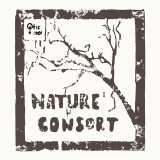
Obscure & outstanding free jazz album reissued for the first time since it’s original release in 1969. Old-style gatefold sleeve LP, with liner notes by Ed Hazell.
In the late 1960s, young jazz musician Bobby Naughton, a keyboardist and vibraphonist, faced significant challenges as he sought to record his first album. With major record labels and jazz clubs catering only to big names, Naughton and other creative musicians of his generation found themselves sidelined by the mainstream music industry. They turned to self-reliance and self-production, becoming part of a movement of independent musicians. Naughton’s debut album, Nature’s Consort, was a DIY effort in every sense—recorded on home equipment and featuring a hand-printed woodblock cover. The album was distributed independently at concerts and by mail, receiving little attention initially, but over the years it gained a reputation as a rare, sought-after artifact of the period.
Though recorded during an outdoor concert in Connecticut, Nature's Consort reflected the "loft jazz" scene in New York City. This avant-garde jazz movement centered around musicians who lived and played in loft spaces in lower Manhattan. Naughton commuted from his home in Southbury, Connecticut, to play with his bandmates Mark Whitecage, Mario Pavone, and Laurence Cook in New York's lofts. These musicians regularly performed at venues like Studio We, a key gathering spot for free-form jazz, where musicians could experiment and develop their sound, often with no audience present.
Naughton’s journey into jazz was a winding one. Originally from Boston, he played rockabilly and blues-rock before transitioning into free jazz. Inspired by avant-garde artists like Carla Bley and Paul Bley, Naughton sought to explore new forms of music that went beyond traditional jazz structures. His bandmates, Mark Whitecage and Mario Pavone, were both deeply affected by the death of John Coltrane in 1967, which prompted them to quit their day jobs, attend Coltrane’s funeral, and move to New York to pursue jazz full-time.
Nature’s Consort was a collective project, with band members sharing equally in any profits. However, Naughton was the driving force behind the group’s creative direction. He composed much of the original material and selected pieces by Ornette Coleman and Carla Bley for the band’s repertoire. Jazz critic Nat Hentoff praised the album for its “high-risk improvisation” and the musicians' ability to anticipate each other’s moves. Though Nature’s Consort received little press at the time, it has since been recognized as a significant early document of the loft jazz era, representing Naughton’s disciplined, improvisational approach to music.
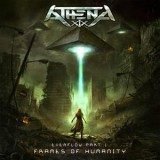
- 01: Frames Of Humanity
- 02: Legacy Of The World
- 03: The Day We Obscured The Sun
- 04: The Seed
- 05: I Wish (Feat. Roy Khan)
- 06: The Calm Before The Storm
- 07: What You Most Desire
- 08-: The Conscience Of Everything
- 09: – Where Innocence Disappears
- 10: Idle Mind
- 11: Synchrolife
- 12: Inception
- 13: The Departure
Fabio Lione has become a household name in the Metal scene over the last 25 years.
When ATHENA XIX first appeared, they released 3 critically accliamed and beloved albums before Lione had to focus his talent completely on Rhapsody and Angra. Now ATHENA XIX are back with "Everflow Part 1: Frames Of Humanity" and beckon you to follow them on a travel through the human subconcious. The album includes high ranking guests like ex-Kamelot and current Conception vocalist Roy Khan.
- A1: The May 4Th Movement Starring Doodlebug
- A2: Black Ego
- A3: Dog It
- B1: Jettin
- B2: Borough Check
- B3: Highing Fly
- B4: Dial 7 (Axioms Of Creamy Spies) (Axioms Of Creamy Spies)
- C1: The Art Of Easing (Ny 21 Theme)
- C2: Kb's Alley (Mood Dudes Groove)
- C3: Graffiti
- C4: Blowing Down
- D1: 9Th Wonder (Blackitolism) (Blackitolism)
- D2: For Corners
Clear with Purple Center Vinyl[68,28 €]
Dazed and Amazed Duo Color Vinyl[65,50 €]
CLEAR/PURPLE[52,52 €]
* Dazed and Amazed Duo Color Vinyl * Fully printed inner sleeves * Liner notes by Larry Mizell Jr. // The album is named for the combs used to maintain an Afro hairstyle, and that's significant. The group's Ishmael "Butterfly" Butler said it summed up what they wanted to do with it: "It means the utilization of the natural, a natural style," he has said. Like with 1993's debut _Reachin' (A New Refutation of Time and Space)_, 'utilizing the natural' meant creating hip hop that blended jazz with the formidable rap skills of the aforementioned Butterfly, Craig 'Doodlebug' Irving and Mary Ann 'Ladybug Mecca' Vieira. Unlike that debut, it meant broadening to include guests such as Gang Starr's Guru, Jeru the Damaja, and Jazzy Joyce. Following the gold-selling commercial success of their debut, they here set out to prove their artistic prowess. This is intelligent, alternative hip hop that sounded like party music. Its lyrics are dense with wit, social commentary and politics - and its original inner sleeve was modeled on the newspaper of the Black Panther movement.
- A1: The May 4Th Movement Starring Doodlebug
- A2: Black Ego
- A3: Dog It
- B1: Jettin
- B2: Borough Check
- B3: Highing Fly
- B4: Dial 7 (Axioms Of Creamy Spies) (Axioms Of Creamy Spies)
- C1: The Art Of Easing (Ny 21 Theme)
- C2: Kb's Alley (Mood Dudes Groove)
- C3: Graffiti
- C4: Blowing Down
- D1: 9Th Wonder (Blackitolism) (Blackitolism)
- D2: For Corners
Clear with Purple Center Vinyl[68,28 €]
Dazed and Amazed Duo Color Vinyl[65,50 €]
GOLD DUO[52,52 €]
* Dazed and Amazed Duo Color Vinyl * Fully printed inner sleeves * Liner notes by Larry Mizell Jr. // The album is named for the combs used to maintain an Afro hairstyle, and that's significant. The group's Ishmael "Butterfly" Butler said it summed up what they wanted to do with it: "It means the utilization of the natural, a natural style," he has said. Like with 1993's debut _Reachin' (A New Refutation of Time and Space)_, 'utilizing the natural' meant creating hip hop that blended jazz with the formidable rap skills of the aforementioned Butterfly, Craig 'Doodlebug' Irving and Mary Ann 'Ladybug Mecca' Vieira. Unlike that debut, it meant broadening to include guests such as Gang Starr's Guru, Jeru the Damaja, and Jazzy Joyce. Following the gold-selling commercial success of their debut, they here set out to prove their artistic prowess. This is intelligent, alternative hip hop that sounded like party music. Its lyrics are dense with wit, social commentary and politics - and its original inner sleeve was modeled on the newspaper of the Black Panther movement.
Na de comeback plaat van 2021 'Is er iets?', is Madou terug met de EP, 'Engel', net op het moment dat Vera Coomans 75 jaar wordt.
De afgelopen 3 jaar speelde Madou op vele mooie plekken en is de band ook uitgebreid: Mattijs Vanderleen (Marble Sounds, Tommigun) op drums en Marc De Maeseneer (Lady Linn etc...) maken nu ook deel uit van de band.
Hoogtepunten waren Dranouter in 2022 en de uitverkochte AB 'Rewind' show in september 2022 met de re-release na 40 jaar van de eerste Madou plaat op vinyl.
Al die concerten gaven goesting en Vera begon Wiet en Thomas naar nieuwe songs te vragen.
Die nieuwe melodieën leidden tot nieuwe verhalen die nieuwe liedjes werden. Een beetje zoals Randy Newman deed op 'Little Criminals'. Filmische verhalen, muzikale kortfilms, als je wil, een beetje zoals Randy Newman deed op 'Little Criminals'. Maar hier heeft elke song een verhaal met een vrouw als hoofdpersonage.
In november 2023 kreeg Vera telefoon van Gorik van Oudheusden, aka Zwangere Guy.
Hij was op zoek naar muziek voor de TV-serie, 'Putain' waaraan hij werkte, en hij vroeg ons of hij wat nieuw materiaal kon horen. Vera en Thomas speelden in de ICP studio in Brussel een akoestische versie van 'Engel' voor Zwangere Guy en Chuki Beats en die reageerden meteen enthousiast. 'Engel' staat ook op de soundtrack van 'Putain' in een prachtig strijkersarrangement van Wiet Van De Leest.
In mei 2024 trok Madou een paar dagen naar de Jet studio in Brussel en namen ze de EP 'Engel' op onder leiding van Peter Van Laerhoven.
De EP:
Engel:
Gaat over de onvermijdelijkheid van de dood. Vera Coomans:' Als je 75 bent, dan probeer je je in verloren uren wel eens 'de overkant' voor te stellen en wie je op een dag zal komen halen. Of je hem zal herkennen ook. En of het spannend wordt.
Waar het beter was:
Een vrouw wordt wakker uit een nachtmerrie in een nog bangelijkere realiteit.
Koude Voeten:
Waar maanziek zijn toe leiden kan, of hoe je verloren kunt lopen in je eigen hoofd.
Myanmar:
Hoe troostend en het kan zijn om verloren te lopen in je eigen hoofd.
Mooie Dag:
Een mooie dag maar met weerhaken.
Gebroken Glas:
Wat eerst 'Bovary' als titel had, werd uiteindelijk 'Gebroken Glas'.
Madou:
Vera Coomans: zang
Wiet Van De Leest: piano, viool, altviool
Thomas Devos: gitaar, bas, zang
Louis Van De Leest: keyboards, synths, beats
Mattijs Vanderleen: drums, percussie, beats
Marc De Maeseneer: saxofoon
Madou speelt ook live:
Texas born Freddie King was one of the all time great Blues guitarists. He is considered one of the "Three Kings of the Blues Guitar" (along with Albert King and B. B. King, none of whom are related). Mostly known for his soulful and powerful voice and distinctive guitar playing, King had a major influence on electric blues music and on many later blues guitarists including the likes of Eric Clapton, Jeff Beck, Peter Green, and Mick Taylor.
This selection showcases live recordings from his classic repertoire over a period from 1969 to 1975. His signature tune “Hideaway” was named after a nightclub on Chicago’s Westside; “Mel’s Hideaway lounge”.
Tommy Boy reissues exclusive limited edition pressing of Afrika Bambatta & Soulsonic Force's "Planet Rock” Considered one of founding fathers of rap, Afrika Bambaataa has long been considered a revolutionary, both within the music business and beyond. Raised in the South Bronx, Afrika Bambaataa made his name as a DJ, rapper and songwriter, eventually becoming the foremost DJ, event organizer and promoter of the large block parties that rocked the neighbourhood during the mid-to-late 70's. Leading into the 80's, Bambaataa had found acclaim for releasing countless genre-defining tracks, infusing Hip Hop and Electronic elements into a sound that would influence other artists for years to come. With the groundbreaking release of Soulsonic Force assisted, "Planet Rock," in 1982, Afrika Bambaataa forever cemented his place in the history books as one of the most revered and innovative artists of his time. Since its release, "Planet Rock" has gone on to be recognized as one of the earliest Hip Hop hits and remains one of the genres most pioneering recordings. A long-time favourite amongst break-dancers, DJ's and music lovers alike, "Planet Rock" was ranked by Rolling Stone magazine at #240 on its list of the 500 Greatest Songs of All Time and has received Gold certification by the RIAA. Originally released in 1986 as a collection of previous singles, this highly sought after record has long since been out of production, until now. Ranked at #84 by Slant Magazine on their "Best Albums of the 1980s" list and was also included in the book, "1001 Albums You Must Hear Before You Die".
Jabu return with ‘A Soft and Gatherable Star’, an LP that sees the Bristol-based trio evolve from a uniquely spectral take on trip hop to proffer a singular vision between cloudy, downered dream-pop, off-kilter ambient, and the warm, low-end throb of sound system culture. This development is aligned with contemporaries like HTRK, Dean Blunt, Tarquin Manek, YL Hooi and Rat Heart Ensemble, whilst also harkening back to the likes of AR Kane (with whom they are set to play shows and release a collaborative single), the languorous drift of 'Victorialand' era Cocteau Twins or The Cure circa ‘Disintegration’. Comprising Jasmine Butt (vocals, guitar), Alex Rendall (vocals, keys) and Amos Childs (production, bass guitar), the trio’s method may have shifted but the feel remains consistent - slow, spatial, sensuous and gently melancholic. With a career arc unlike almost any other current guitar outfit, Jabu sit within a strong lineage of off-centre Bristolian music, and a very British strain of home-spun DIY bands. Self-recorded between Jas and Amos’ home in South Bristol and Amos’ mum’s house in rural North Somerset, the album came together via a process of trial and error - learning to play on borrowed instruments, using the equipment “wrong”, staying up late recording and slipping into strange, semi-conscious sleep deprived/inebriated headspaces. Having captured over 50 tracks, they honed in on those they liked most, shaping them further, whilst carving out space to allow input from people they love and admire - Daniela Dyson’s voice and Will Memotone's clarinet on ‘Ashes Over Shute Shelve’, Birthmark's synth on ‘Gently Fade’ and ‘Sea Mills’, Rakhi Singh (Manchester Collective) and Sebastian Gainsborough (Vessel)’s strings and arrangements on ‘All Night’, Josh Horsley’s cello on ‘If I Asked You, You'd Tell Me’, and Lorenzo Prati’s sax, again on ‘Sea Mills’. The album was mastered by Amir Shoat (HTRK, ML Buch, Dean Blunt, Carla Dal Forno). Influence-wise, the guitar-based material recalls the bands Amos listened to when younger, and Jas’ more folk-leaning inspirations. Deep-lying dub, hip hop and soul influences are also evident in both the way the LP was mixed, and the space ingrained in their subconscious. Tinged with melancholy, the songs cohere as a set of soliloquies and ruminations on love and tenderness. The album’s title comes from a poem by Amos’ late father which hangs on his wall and seeped into the record. ‘Ashes Over Shute Shelve’ is formed of lines from another poem of his. Recited by longtime collaborator Daniela Dyson and with Will Yates (Memotone) playing his mother’s clarinet, the track was imagined as a conversation between his parents. Geography and location also play a big part in the record, with several significant places name-checked in songs. Shute Shelve itself is a hill near Amos’ mum’s house, who explains “There’s a tree at the top with a 360° view of the Mendips, where my dad’s ashes were scattered. We used to go up there when we could first buy booze from the petrol station down the road, get drunk, light a fire, listen to music from my little battery powered CD player and sleep out without tents.” Titled after a Bristol suburb near where Amos’ grandparents lived and where Jas would spend time as a teenager, ‘Sea Mills’ references her being abandoned by friends on the Downs while high on mushrooms, stranded and missing the bus back. ‘Kosiše Flower’ references the city in Slovakia where Amos and Jas holidayed shortly after getting together and a flower he gave her, which she pressed in a book after an argument. ‘Oceanside Spider House’ is a location in Nintendo 64 game The Legend of Zelda: Majora’s Mask, where someone seeks shelter from the falling moon. Genre: Electronic / Ambient / Dream-pop
Cameron Jack returns to Crosstown Rebels as he delivers his first EP on the label with ‘The Late Shift’. The release, set to drop on 6th December 2024, delivers a standout offering featuring two collaborations with vocalist Liz Cass and two solo productions from the fast-rising house music talent.
London-born, Ibiza-based DJ/producer Cameron Jack has quickly become a name on the up, having been championed heavily by Crosstown Rebels’ founder Damian Lazarus, as well Blond:ish and Lee Burridge. While still young in his musical journey, 2024 has seen him sharing stages with heavyweights such as Seth Troxler, Jamie Jones and DJ Tennis. His five-show residency at Hï Ibiza coupled with appearances at Extrema Outdoor, PHAEX Festival, Get Lost Mexico and Fabric London as well as an upcoming Asia tour to round off the year, has cemented his rise as one house music’s most in-demand up-and-comers. Having previously appeared on the label as part of Crosstown’s SPIRITS VA series, and adding to releases via Knee Deep In Sound, Abracadabra Music, and All Day I Dream, Cameron now returns to Lazarus’ brainchild with his first EP on the label as he unveils a refined exploration of his late-hours sound with ‘The Late Shift’.
The EP kicks off with two collaborations featuring singer/songwriter Liz Cass, whose vocal talents have graced tracks from Hot Since 82 to Nora En Pure. The opening track, ‘Dusk Till Dawn,’ pairs deep, rolling grooves with Liz's seductive spoken word vocals, setting the tone for the late-night atmospheres that define the release. ‘Move Your Body’ follows, with driving rhythms and infectious energy, inviting listeners to get lost in dancefloor moments. On the flip side, Cameron showcases his prowess further with ‘Get High And Dance’, bringing a captivating fusion of rolling percussion grooves and playful tones, before ‘Won’t You?’ rounds out the EP with another drum-led workout perfect for keeping dancers in motion.
Black[23,49 €]
Ben Lukas Boysen’s new album, Alta Ripa, signifies a seismic shift in his artistic journey. It revisits the foundational impulses of his youth, shaped amidst the serene beauty of rural Germany—a bucolic backdrop where his creative palette flourished. However, it was his move to Berlin in the early 2000s that electrified his sound, infusing it with the city’s pulsating energy and diverse cultural influences. Alta Ripa captures this transformative experience, blending the introspective melodies of his rural beginnings with the bold, experimental tones born from Berlin’s vibrant electronic music scene. This album is a testament to Boysen’s evolution, showcasing how geographical shifts can profoundly shape artistic expression.
Boysen’s fourth studio album under his own name, Alta Ripa is a nod to his beginnings as much as a hint to his future, and as a work, it’s almost contradictory in its boldness and humility. He invites the listener on a journey of self-discovery; both for himself and for them, describing the music as “something the 15-year-old in me would have liked to hear but only the grown-up version of myself can write.”
His last two albums involved working closely with other musicians, including cellist Anne Müller, flugelhorn player Steffen Zimmer, and drummer Achim Färber. However, inspired in part by a recent return to live performance, Alta Ripa sees Boysen circling back to his passion for pure computer music.
For Boysen, the return to his youthful musical language marks a major turning point in his career. It represents a departure from his roots in classical music – his mother was an opera singer and his father an actor with an appreciation for Wagner, Arvo Pärt, Keith Jarrett, and Stockhausen. Although these are still important influences, Alta Ripa encapsulates a new, exploratory interplay between Boysen’s careful craft and his ability to let go of some of the process.
The album’s title comes from the original Roman name of the town that Boysen grew up in, Altrip, where he lived until his early twenties. This formative period is central to the ideas behind this album, from Boysen’s parental ‘schooling’ in classical music through to his sonic journeys through drum and bass, Aphex Twin, and Autechre — all of which changed his idea of what music could be. The extreme energy of tracks like ‘Acperience 1’ by Hardfloor, ‘Tracks & Fragment’ by Cari Lekebusch, ‘Focus2 Implan’ by Jiri.Ceiver, and ‘Low On Ice’ by Alec Empire are also pivotal influences.
For Boysen, this time of his musical development also involved knocking down the pillars that he previously thought had carried his world. A key moment for Boysen was being given a precious (pre-internet) club cassette at school that featured artists like Source Direct, Photek and Goldie. Excited by this new discovery, he introduced his father to the song ‘Dred Bass’ by Dead Dred. After the song finished, Boysen Sr. turned off the tape and proclaimed it was “the end of all music”. This heated exchange sparked a new, and more mature dialogue between the two that involved them sharing and discussing music on a regular basis.
Boysen’s classical and jazz music upbringing might not be easily noticeable from the electronic palette that he uses. But it can be found in its bones; the structure of the tracks and their dynamic shifts. On Alta Ripa, he intentionally embraces a spirit of controlled chaos, churning out sonic ideas to see what sticks.
One of Brian Eno’s Oblique Strategy cards contains the phrase “gardening, not architecture”, and the trajectory of Boysen’s creative path reflects this metaphor. In much of his previous work he followed a sort of Brutalist architect’s approach; here, he was fully responsible for the tracks’ austere structures and planned them with deliberate care. But by sacrificing some of that control on Alta Ripa, he sets the right conditions for a dark and unpredictable, organic growth. It’s a push forward into a new world.
An extremely prolific artist, whose work encompasses composition, opera, theatre, radio plays, film or performance, Ergo Phizmiz returns in due time to the Discrepant fold long after his 'Two Quartets' and 'Disco Carousel' - under his given DW Robertson name - albums. A purveyor of the Creative Commons rights, Phizmiz has been deploying much of his work on the ever expanding Free Music Archive directed by WFMU since the early 2000's, creating a sprawling and defiant body of work that defies given and stale notions of sound hierarchies, history and copyright through a process that comprises collage, sampling, reappropriation, songwriting, covers and pretty much any available media with a playful and thoughtful approach.
For this new Discrepant entry, Phizmiz goes back in time to push into the future a number of pieces recorded more than two decades ago creating this perpetual motion outside a linear chronologic progression. Anticipating by almost 20 years the memefication of ASMR videos, 'Selected Ambient & ASMR Works 2001-2003' - itself a pun on the AFX classics - embraces the ambient tag not at its functional face value, but instead as a means to the "evocation of imaginary spaces, and correspondingly the invention of their sonic environments". Collecting recordings from a myriad of instruments - violin, xylophone, banjo, kora, found percussion and so on...-, shortwave radio and field recordings to create loops with different lengths that play with and/or against themselves continuously in a process "(dis)conjunction" not far removed from Feldman's 'Why Patterns?' or hip-hop's sampledelia. A free-floating temporal space that collapses the flashing images of Angelfire pages unto Web 2.0 sense of displacement.
2024 Repress
Johnny Clarke stands tall as one of the great vocalists that ruled the Jamaican reggae scene from the mid 1970's to the early 1980's Dancehall period. This re-issue of his 'Don't Stay Out Late' set shows his versatility to sing any song that was put in front of him and make it his own. Under producer Bunny 'Striker' Lee's guidance, Mr Clarke produced a run of singles and albums few could match.
Johnny Clarke (b 1955, Jamaica, West Indies) cut his first record 'God Made the See and Sun', after winning a local singing contest in the Bull Bay area of Jamaica. Although the single was not a hit, it led to two follow up tracks for producer Rupie Edwards, '
Everyday Wandering' and 'Julie' that fared much better, both on the island and overseas in England and Canada. These tracks also brought the singer to the attention of producer Bunny Lee and a working relationship that would go on to produce a prolific catalogue of music.
Johnny Clarke's Dread Conscious/ Love Song style were to grace many hits around this time in 1974. Such tunes as 'None Shall Escape The Judgement' , 'Move Out Of Babylon' , 'Rock With Me Baby' , 'Enter The Gates With Praise' to name but a few. All new songs added to a host of cover tunes, recommended by Bunny Lee, many taken from singer John Holt's catalogue, that suited Clarke's vocal style.
The rhythms were cut at various studios around the Island. Randy's Studio 17, Channel I, Treasure Isle, Dynamic Sounds and Harry J's by a group of musicians loosely called The Aggravators and voiced King Tubby's studio.
All great tracks backed by great rhythms, cut by Mr Johnny Clarke with a voice that few could equal.
Repress.
The Italo dance classic that Carl Craig sampled for the legendary 69 track 'Rushed'
Finally available again on Dark Entries
We are honored to announce the next 12 in Dark Entries Editions is one of the all time Italo Disco club classics: My Mine - 'Hypnotic Tango'. My Mine were the trio of Stefano Micheli (vocals, keyboards), Carlo Malatesta (vocals, keyboards), and Danilo Rosati (drums, keyboards) formed from the ashes of Italian New Wave group Ipnotico Tango in 1982. They shifted focus from the experimental post punk sounds towards something more commercial with which to try and enter the market, namely to make a record. At that time Carlo was studying in Bologna and he had heard about producer and arranger Mauro Malavasi famous at that time for the many hits produced for Macho, Peter Jacques Band, Change, Luther Vandross, Ritchie Family. The group handed Malavasi a demo tape and four days later they were invited to Fonoprint Studios to record their first single, 'Hypnotic Tango'.
Utilizing new electronic instruments like the now legendary Roland TB-303, Danilo improvised a simple but effective synthesizer bass line and passed it through the Roland Echo until something magical came out. 'Hypnotic Tango' was released on Progress Record in 1983 and became an international hit across Europe and US dance clubs in New York, Detroit and Chicago, capturing the imagination of House and Techno producers. In 1987 the legendary Frankie Knuckles remixed 'Hypnotic Tango' at Seagrape Studios in Chicago, with assistance from studio engineers Tommy White and Brett Wilcotts. Originally released on Danica Records as the 'Powerhouse Mix' paying tribute to the Windy City club atmosphere and adding his own "sighs" in the track as well. The Hypnotic Remix This reissue presents 4 mixes of 'Hypnotic Tango' including the 'Hypnotic Mix' only appearing together once before in 1990 on Rams Horn Records. All songs are remastered for vinyl by George Horn at Fantasy Studios in Berkeley. The vinyl comes housed in a jacket with original artwork and includes an insert with photos and liner notes by Stefano Micheli. 'Look on the floor and all is spinning round, Someone told me this was just a dance And take a chance I ain't met before..Do you think I really have a chance"
Alton Ellis is one the finest soulful voices to come out of Jamaica. As well as writing hit singles himself, he could make a cover version known as a foreign tune sound like a Jamaican reggae tune with the greatest of ease.
As the more upbeat rhythms of the earlier 'Ska' period began to slow down around the turn of 1966 some say due to the extreme heatwave that hit the island of Jamaica that year, slower rhythms suited the people to groove to at the various sound systems and dances. This also allowed the singers to express themselves more and allow the song to shrine through. No one did this better than Alton Ellis.
Alton Ellis (b.1944, Kingston, Jamaica) started off singing at an early stage as part of a duo with singer Eddie Perkins and recorded for both Studio One and Randy's as 'Alton and Eddy' and had a massive hit with the song 'Muriel'. The singing pair went their separate ways with Alton going solo with Studio One and being a much in demand voice also recorded with Duke Reid's Treasure Isle Studio as 'Alton Ellis and The Flames'. As we stated earlier as the beat slowed down the top singers shined through and Alton Ellis reigned supreme. One of his tunes that we feature on this set 'Get Ready(Do the Rocksteady') even gave this period in reggae's history its name 'Rocksteady'. It's this fantastic period Rocksteady 1966-1968 that we feature on this release. This set carries all the big hits 'Ain't That Loving You', 'Girl I've Got A Date', 'Cry Tuff' alongside many more classics. All the cut at Treasure Isle songs that really defined the era.
So sit back and enjoy the Rocksteady sound it's finest....
We hope you enjoy the set....
- A1: Body & Soul (Remix)
- A2: Pra Voce (Feat Toco - Extended Remix)
- A3: In The Name Of Love (Feat Laura Fedele - Extended Remix)
- A4: Blow My Mind (Feat Afra Kane - Remix)
- A5: Flying Away (Feat Afra Kane - Remix)
- B1: Rosa Da Ribeira (Feat Toco - Extended Remix)
- B2: (Got To) Move On (Got To)
- B3: No Meio Do Samba (Feat Toco - Remix)
- B4: Odoya (Feat Toco - The Invisible Session Remix)
- B5: Midnight Sun (Remix)
S-Tone Inc., one of the most acclaimed artists on Schema Records, with +300.000 monthly listeners and millions of plays on Spotify, is back with a full rework of his previous full-length "Body & Soul", a homage to the late '70s / early '80s disco music that the artist used to immerse in during those adventurous years. Early '90s British acid jazz, '70s soul, Brazilian and jazz music are here reworked in a nu-disco key, with the exception of the downbeat tracks "Flying Away" and "Midnight Sun" and the 'spacey' "Odoya", rearranged by The Invisible Session without mining the overall mood of this release.
Who is Isabelle Lewis, anyway?
What kind of music does she make? Is she an opera singer? Does she write pop songs? Does she compose ethereal ambient soundscapes? Does she play chamber music on the violin? Is she producing dark, electronic beats?
Well… yes. But Isabelle Lewis is not so much a person as a project. Isabelle’s debut album, Greetings, credits a trio of composer–performers at its heart: producer Valgeir Sigurðsson, vocalist Benjamin Abel Meirhaeghe, and violinist Elisabeth Klinck. The sound of the elusive Isabelle Lewis is heard most clearly in the push and pull between them, the three-way tension that gives the album its musical and emotional drive.
Each of the three brings more to the collaboration than those epithets might imply. Elisabeth’s solo performance practice incorporates composition, improvisation, live electronics, and a close command of bowing and fingering techniques that make her fiddle sing, whisper or whistle as required. Benjamin is a self-taught countertenor - keening, crooning, and swelling to a voluptuous sensuality—but also an interdisciplinary stage director and performer. Well known for his work as a producer and studio collaborator, and as a composer of scores for film and stage, Valgeir’s solo discography interweaves meticulously crafted electronics, drones, noise, and other digital elements with acoustic instruments and vocals recorded with naked, unflinching clarity.
But the extravagant theatricality Benjamin brings to the aptly titled “Drama”—also featuring a heroic violin solo from Elisabeth—grapples against the thudding bass of the implacable digital backdrop. On “Mother, Shelter Me” Valgeir’s austere and detailed production throws the hushed violin and vocals into stark relief. The result is an exquisitely uncanny juxtaposition of past and present, human and mechanical, like a Rococo treasure viewed under cold fluorescent lights, or an 18th-century automaton slowly opening its clockwork eyes.
Even the lyrics seem somehow out of time. On “O Solitude,” Benjamin goes so far as to quote an entire song by the first great English opera composer, Henry Purcell, verbatim. No stranger to Purcell’s music, which has made its way into Benjamin’s theatrical productions as well, here Isabelle Lewis removes Purcell’s melodies and harmonies and sets the text, Katherine Phillips’s 17th century translation of a poem by Antoine Girard de Saint-Amant, to new music whose heightened, archaic character nevertheless seems haunted by Baroque ghosts.
Throughout the album, the outsized emotions and timeless archetypes of Benjamin’s lyrics feel like relics from some half-forgotten past—from the neatly rhymed couplets of “Fisherman,” a seemingly straightforward (but still somewhat askew) character study, to the abstraction of “Moonshell,” whose words seem like the fragments of some ancient, lost lament. It is just another of many ways in which Isabelle Lewis carefully distorts the listener’s notions of time. On a more micro level, time can stop for a moment of weightless, drifting ambience, and then plunge forward as the cloud of harmonies suddenly lock into tempo with the drop of the bass or the change of a chord. Or else that weightless moment is allowed to be, as in the aptly named prologue and epilogue to these Greetings (“Voicemail”/“…and farewell”), or in the interstitial tracks that bind the album together, connecting its dramatic peaks with expanses of meditative stasis.
The album as a whole is elegantly shaped, swelling from an intimate, interpersonal statement into something deeper and more spacious. The first half of the album leans slightly towards self-contained pop songcraft and ticking beats, while side B jumps off from “O Solitude” into the almost symphonic grandeur of songs like “Moonshell” or the instrumental “Not the water, air, or the dirt.”
But as it progresses, the contrasts only grow more sublime: antique and postmodern, human and machinelike. The ominous weight of the droning sub-bass and trombone (guest player Helgi Hrafn Jónsson) only makes the interplay between vocals and violins (guest player Daniel Pioro joining Elisabeth) seem more delicate and vulnerable. The ethereal string tremolos of “Moonshell” seem to pull against the heavy, shuddering electronics and layers of crooning vocals.
And that, in short, is where you will find Isabelle Lewis. Like an ancient stone archway, or a delicate house of cards, the architecture of Greetings is held together by the tension between opposing forces. Not just in Elisabeth’s playing, Benjamin’s singing, or Valgeir’s arrangements and production but in the conflict and contrast that generates the synergy between them.
Oh—Isabelle says hi, by the way. She’s looking forward to meeting you.
Frenchie King is a veteran artist and producer from the world of Reggae music. He was born in Jamaica and moved to the UK at the age of 12, where he began singing in a church choir. In the late 1960s he formed a church band with two friends called "The Ressurectors". Their music caught the attention of Reggae star Alton Ellis. After meeting Alton a new band formed called "Black Stallion" and their first song on Venture Records was released entitled - "Love Power". Alton was mentor and guiding light for Frenchie and crew; enabling them to jam with a host of Studio One artists.
Frenchie went on to work with noteworthy Reggae arists like: Alton Ellis, Dennis Brown, Dennis Alcapone, Ken Parker, Tito Simon, Dave Barker, Bobby Davis (The Sensations), Ruff Cutt, Owen Gray and Akabu.We didn't tour with Dennis or John Holt but Alton would always call them to the stage to jam, but we did a few shows with Alton sister Hortense Ellis and few other too much to mention...
Moving into the 1980s, Frenchie started a solo career and switched to the label "M1" where he released projects like "Your Entitled" and "Poor Me Natty Dread". During this time he also worked with renowned producer Sid Buckner (Studio One), before taking a brief hiatus; returning to help produce artist Owen Gray. He also wrote the song "Blackbird" for the band Akabu which was released in 1995 on U-Sound. M1 recording produce yours truly under name countryman linkup with the man Ezekiel in Luton hence M1
Moving forward into the 2000s, along with other musical adventures the iconic album "People Had Enough" was released in 2017, along with singles, "Let Us Do Something" and "Dance Cork". On let us do something and dance (kark) is produce by Michael McNeil aka the original jah son , a good musical sou-jah.
Which brings us up to date. In 2023 Frenchie hooked up with The Blackstones. Through this came the opportunity to work with Iron Sound Records and producer Alien Dread. This is the first single on ISR, with a solid Roots vocal track backed by studio band: Alvin Davis, Asha B and Steven Wright. More to follow!
Coming off a successful transatlantic exchange, Brian Kage and his Michigander label keep the momentum, and the collaborative spirit, moving with an EP that hits closer to home. For any Detroit artist, working with Delano Smith would be on the bucket list, as one of the city's original, more influential DJs — before the D developed any of its "waves" — who would come into his own as a producer later to, once again, help mold the Techno City's sound. Make no mistakes about it, this tastemaker had a ripple effect back before techno even had a name, when it was just "progressive" music and mixing. The thing is, the feeling of admiration and respect here is mutual, from the moment Smith first stumbled across one of Kage's records and had to know who was making these sounds. This meeting of the minds happened organically and timely, with Keep 'em Movin’ as the result.
Opening the release is the title track, a driving number with pulsating synth tones and deep, call and response piano stabs. The ever so slightly pitched down vocals are modern and effortlessly cool, a style that resonates with today's dancefloors, but done tastefully, and with lyrical content that sets the record straight about what it really means to represent Detroit.
"D Spirit" takes an ancestral turn. This is spaced-out Detroit techno meets afro deep at its finest. Forward moving keys are bathed in deep, celestial pads as shuffling hats accented by light hand percussion beckon the body to move. Lively marimbas cut through the hypnotic undertones and awaken the senses with soulful appeal. A fluid bassline rumbles beneath while baroque pianos add tension and heighten the atmosphere.
The final track rounds the release out with an exclamation mark. For lovers of Delano Smith's infamous remix of "A