Powerful rave tracks by the talented Ukrainian producer Daniel Syenichkin aka Bejenec on the first vinyl release of his own label "& The Refugees" (Inspired by his artist name which translates as "Refugee"). This 4 track ep has it all! An energetic hybrid of break-beats, Acid, playful trance elements and beautiful emotions. The young and promising artist has made a big name in the eastern parts of Europe where he is known for his energetic and upbeat live performances. He now is ready to take his artistic inspirations a step further with the start of his new label project!
Поиск:no nam
Все
clear red vinyl
Stuttgart's David Lohlein has been involved in electronic music for a number of years and launched the Vision Ekstase event in his hometown of Stuttgart together with his friends before providing the inaugural release on the same titled label which picked up support from the likes of Ben Sims, Luke Slater, Efdemin and many more established names within the techno world. David now invites remixes from Mote-Evolver artist Rene Wise, Hayes producer VIL and Vision Ekstase residents Rove Ranger and Fabian Wegmeth.
The moons of Saturn are the inspiration for this brooding, often soaring and searching odyssey of dark electronica.
The second largest planet in the solar system after Jupiter, and the sixth planet from the sun, Saturn is orbited by 53 confirmed moons, with another 29 that are unnamed and still being studied.
Saturnian is a suite of thirteen choral tracks taking their names from some of Saturn's known moons; Dione, Daphnis, Phoebe, Prometheus, Rhea, Janus, Titan, Enceladus, Tethys, Telesto, Mimas, Hyperion and Iapetus, all named after figures from Greek and Roman mythology, each loaded with their own turbulent back stories. It is the debut release by Holmes + atten Ash, written, recorded and produced remotely in Edinburgh and Bristol by the duo Simon Holmes and Paul Nash.
Their project began during the 2020 lockdown. For Simon, time was spent exploring the Pentland Hills south of Edinburgh. For Paul, the Mendip Hills, south of Bristol. Both would experience the darker side of our human impact on the environment. Simon observed the wilderness as a wasteland, finding discarded, rusting metal littering the Pentland Hills while Paul witnessed the decimation of the ancient woodland of the Mendips' King's Wood due to the destructive tree fungus ash dieback.
These field trips fuelled a desire to navigate not just the landscape, but the duo's emotional place within it. Their collaboration led to a concept album that explores the outer reaches of the solar system, while simultaneously grounding them in a specific place. Looking inwards as much as outwards, theycreated soundscapes based on deeply imagined and felt connections to their surroundings.
After Simon had created a choral piece to accompany Luke Jerram's enormous, world touring artwork Museum of the Moon, Saturnian was a natural progression. When Simon was sent an initial score for the ethereal track Enceladus, composed by Paul in Bristol, he added choral arrangements recorded in Edinburgh. Their shimmering, tense opus continued to evolve from there. Just as the discarded bed springs and abandoned car parts that Simon stumbled upon in the Pentland Hills seemed to him at once "horrible but also oddly beautiful", Saturnian melds together melancholy and levity, fusing moments of dark angst with a celestial calm.
Opening with the glistening, hopeful brightness of Dione, increasingly urgent rhythms give way to digital, otherworldly calls from what might be rainforest creatures chirping into life with robotic squawks and delicate keyboard lines on Phoebe, followed by slowed down, monastic song on Rhea. Tethys is a hypnotic blur of synthesiser and soft chanting, while Rhea is a mysterious, echoing chasm, lifted by melodic, gentle male vocals. Janus has a glowing, effervescent energy, swiftly followed by a sense of tension on Titan, which throbs with driving percussive unease.
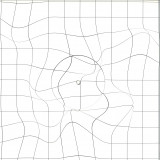
The album artwork is a pencil drawing created by Edinburgh artist Simon Kirby. It was made by a robot drawing machine, using custom algorithms that bring to life recordings of the sound of magnetic waves near Saturn's icy moon, Enceladus. The lines in the centre of the drawing are distorted by sound captured by the Cassini spacecraft which studied Saturn for over a decade.
Much like Saturn and its frozen, rocky moons, this debut album from Holmes + atten Ash is mysterious and beguiling, with a hint of foreboding in the depths of its powerful beauty and epic scale.
Josh Burke is a guitarist/keyboardist/programmer from Chicago, USA, who specialises in a music that could, perhaps, best be described as an amalgamation of drone, kosmische and ambient, all with a distinctly euphoric flavour, as though these sounds were channelled rather than thoroughly composed.
He has over 30 solo releases to his name as well as splits with Jeffrey Astin (of Xiphiidae), Spirals and Body Morph, and also - like most of his peers - operates under several additional aliases - Ocean Diamond, Futuresport, The Masque, Silk Fountain, 56K, Sky Limousine and Nehal Shah - as well as ensemble and collaborative projects including Bermuda Link, Cartoon Drips, White Prism, Practical Applications Of The Chaossphere, Starfox, Camp Crystal Lake and Holographic Communications Of The Third Sky.
BEC returns to Second State with another earth-shattering release containing four raw & atmospheric cuts.
The Berlin by way of Brighton producer BEC has been a member of the Second State family since her first release with the label in 2016. Since then, BEC has dropped 4 EP’s with the Berlin imprint, and regularly appears at the likes of Awakenings, Amnesia, Warehouse Project, Fabrik, Watergate & Burning Man to name a few.
Title track ‘Solitude’ opens with a sharp, rounded kick and crafty drumwork. Metallic swipes and rave stabs are injected to build tension, along with a choppy vocal and bubbling element. Punchy arrangements and rave stabs bring this track to rave territory at moments, before hauling back into the deepness of the cut. Next up is ‘Process Don’t Resist’, easing us in with a crackling bass and a solitary hi-hat, soon joined by buoyant claps and a muffled kick that submerges listeners into a different dimension. Darker, swiping elements are introduced with metallic textures, with the claps becoming more erratic as the track unfolds. An indiscernible vocal gives way to a jarring breakdown halfway through, sending shockwaves through the listener before submerging back into the hysteria.
‘Coming’ follows and initially appears as a break from the heaviness of the previous productions, before transforming into a high-octane stomper. A booming kick, bleeps and spiking vocal build the intensity as the track drives forward and hoover noise wavers menacingly. The vocal and kick bounce in unison towards the close, with a final cry towards the end. The finale is dark, mysterious and entrancing with ‘Fear Parade’. An authoritative female voice utters ‘not afraid’ under a myriad of shakers, howls and vicious synth swipes. The sample gradually takes over with the track building to crescendo, allowing shakers to come to the forefront along with eerie howls and a new, more robotic vocal that utters the initial phrase repeatedly until close in an effort to encourage listeners.
Originally released in 1994 on Calypso Records / Irma Records in a triple vinyl promo white label version, Don Carlos's album Aqua is the
second album by the Varese-based DJ producer, already then known for his first two singles Alone and Mediterraneo, then both included in
his first album entitled Mediterraneo and released only in Compact Disc format in 1992 for the American market printed and distributed by
IRMA U.S.A., the American subsidiary of IRMA Records Italy.
The same fate will also have the Compact Disc format of the Aqua album, again printed only on the American market.
But the triple vinyl, printed in a limited edition of 500 copies in a white generic envelope, was never reissued and has become a rare record
over the years.
After almost thirty years, after countless requests for reissues, especially in the last few years in which the name and music of Don Carlos
has made a comeback, Irma Records has decided to reissue the vinyl in exactly the same original triple version.
DJ Don Carlos (born Carlo Troja) with his productions in the 90s has become one of the cult producers for DJs around the world.
His track Alone released in 1991 for Calypso was and still is one of the classics of House Music, played by all the major American and British
DJs.
At the time of its publication it was considered an underground song and therefore did not sell very much, but over the years its myth has grown
thanks to its subsequent productions as for example his second single, the EP entitled Mediterraneo, title which it will then inspired his first CD
album printed in the USA with the same title.
Several other singles followed, another album, always printed only in the USA, entitled Aqua, from which a triple promo vinyl was extracted which
today is one of the artist's most requested rarities.
In Italy his third album was released in 2002 entitled The Music In My Mind where Kim Mazelle, Michelle Weeks, Taka Boom and Kevin Bryant
were present as vocal guests. In 2009 a collection of the first two albums released in the USA titled Mediterraneo-Club Favourite Collection '90-
98 and in 2010 his fourth album entitled The Cool Deep which reproduced the sounds closest to his first productions.
Also active as a remixer for Italian and international labels, one of his most important works is the remix of Byron Stingily of the song You Make
Me Feel of which he made a worldwide hit. As a producer he also used other pseudonyms such as Montego Bay, Aquanuts, Sotterranea and
Love 2 Love Orchestra. He has played and plays in different countries such as London, New York, Miami and at various festivals, such as the
Robot and the Stickermule Festival in an evening with Apparat, Derrick May, DJ Koze, Lil 'Louis, Young Marco and Ellen Allien, LTJ Xperience
- A1: Intro
- A2: A Moment Apart
- A3: Higher Ground (Feat Naomi Wild)
- A4: Boy
- A5: Line Of Sight (Feat Wynne & Mansionair)
- B1: Late Night
- B2: Across The Room (Feat Leon Bridges)
- B3: Meridian
- B4: Everything At Your Feet (Feat The Chamanas)
- C1: Just A Memory (Feat Regina Spektor)
- C2: Divide (Feat Kelsey Bulkin)
- C3: Thin Floors & Tall Ceilings
- C4: La Ciudad
- D1: Falls (Feat Sasha Sloan)
- D2: Show Me
- D3: Corners Of The Earth (Feat Ry X)
Das Grammy-nominierte Produzentenduo ODESZA (Harrison Mills und Clayton Knight) gelten zurecht als eine der populärsten Gruppen im Bereich der elektronischen Musik und haben den Ruf, ihre Fans auf ihren regelmäßig ausverkauften Live-Konzerten besonders glücklich zu machen. Anfang September 2017 veröffentlichen sie ihr neues, 16 Stücke langes Album "A Moment Apart" welches über das Ninja Tune-Sublabel Counter Records erscheint. Anschließend präsentieren sie ihrem Publikum das neue Material auf einer ausgedehnten Welttournee.
"A Moment Apart" präsentiert sich gereift, ein Sound, der insbesondere auf Atmosphäre setzt, auf funkelnde Synth-Lines - und auf Gefühle wie Nostalgie, Zuversicht und Hoffnung. Die namhaften Gäste auf dem Album sind u.a. Leon Bridges, Regina Sektor und Ry X.
Tiptoes makes a welcome return to SlothBoogie Records with a fresh four-track EP, entitled ‘The Akai Samurai Strikes Again’.
Glasgow’s Tiptoes has long been a respected name in the Scottish electronic music circuit, bringing his eclectic style to the table as a DJ, blending everything from jazz to jungle, house to techno, garage, broken beat and many more genres. His productions are a nod to his many influences and once again with this EP were treated to an amalgamation of sounds.
‘Techno Woo’ leads the way and see Tiptoes embracing a filter house feel, merging a number of choppy funk licks, vocal chants, and bass lines in an ever-unfolding dynamic matter, while dusty drums carry the bouncy groove throughout. ‘Brotherman’ then tips the focus on to soul drenched guitar lines, brass melodies, snaking bass grooves and hypnotic vocal lines alongside loose, swinging percussion.
Opening the flip side is ‘Mars Landings’, embracing a deeper house aesthetic courtesy of hazy Rhodes chords, swelling vocal loops and organic drums before ‘Strings’ rounds things out, as the name would suggest the composition is built around expansive string melodies, gritty bass stabs and sturdy, thunderous drums.
Welcome to Dazion’s Grooveboxxx – a maxi-sized love letter to The Hague’s 80s and 90s club scene crafted with minimal tools and loaded with vibe. It’s no coincidence it arrives on Dekmantel, a label with its own roots in the same Dutch city’s electronic music culture.
Dazion is The Hague’s Cris Kuhlen, previously spotted releasing on Second Circle, Safe Trip and Animals Dancing. He cut his teeth clubbing and working at long-since closed clubs like Eau, described in Kuhlen’s own words as, “clubs with blocks to dance on, lazers, decorations, crazy extravert sic parties.”
In capturing the spirit of Eau and the other formative parties of his youth, Kuhlen limited himself to just one machine to make his longest work to date – the Roland MC-303 Groovebox. While these entry level units from the mid-90s had stripped down functionality in the wider spectrum of studio gear, they contained all the iconic Roland sounds in a Rompler style, giving the user access to everything necessary to make raw, immediate club tracks without requiring an entire studio’s worth of hardware.
The brash gear of choice set the tone for a record of rough, ready and playful jams which end up more sophisticated than you’d expect from such limited means. ‘La DS’ jacks with a freaky, bleep techno intensity, while ‘Kimberly & Nance Backstage Rehearsal’ rides an angular groove tooled to inspire the weirdest dance moves of the night. Every track is named in reference to a particular nightspot, a hazy memory or moment from Kuhlen’s formative raving years.
This is the sound of Dazion having the time of his life. You might well hear a nod to the odd rock totem being given a re-version in irreverent new beat style or some gnarly US acid breaks vibes riding underneath helium rap licks. But for all the cheekiness, the tracks stand up both as nods to halcyon days and relevant workouts for the sweatiest parties in the here and now. As MC Paul T says in dramatic style heralding the intro of Grooveboxxx, “This movement will live on forever.”
Hot on the heels of last year's Dear Diary EP on Lobster Theremin, explosive performances on HOR and an intimate interview with celebrated German publication Groove Magazine, frequent Berlin & Leipzig DJ Narciss comes through with four deep and groovy cuts of bass-driven techno.
'Feather Boa Constrictor' features one of Copenhagen's most exciting emerging producers in recent years - Vixen - fresh off her own acclaimed release, Hard Magik For Soft Souls, on Lobster Theremin in December. Now the pair link up on the DJ Mag Breakthrough Label of the Year imprint that blends all the best elements of the Berlin and Copenhagen scenes in a highspeed trip through psy-trance, synth-wave and techno.
Narciss is on his ones as we enter the A2; 'Lovechild' (Outrun Mix) is aptly named with its reference to the 1986 arcade game Outrun, which featured some of the best video-game music to ever be created. Deep basslines, swirling synth-stabs and a soothing deepness and contemplativeness that can only come with driving a virtual car down a never-ending highway. 'Tokyo' makes use of polyrhythms and textures blended with what sounds like an old Sampha record. It's a wonderful combination of dark, deep and forward-thinking sound, before Copenhagen producer Repro comes through with a typically EBM-focused remix combining elements of every track.
Magnificent Wolof drum music, performed by an extended griot family over seven consecutive days, in the mystical setting of Lac Rose, outside Dakar.
Doudou Ndiaye Rose — who died in 2015 — is a key drummer in the musical history of the world. He developed a system of five hundred original drumming patterns, ancient and new. Amongst the modern rhythms here is Bench Mi — ‘under the Baobab tree,’ a spot where problems get solved. Also Hibar Yi — ‘passing on information’ — the theme-tune of Senegalese TV national news for decades — and Les Rosettes, the signature rhythm of Senegal’s first ever all-female percussion group, convened by Doudou, and named after his grandmother.
These original compositions sit alongside important traditional rhythms, familiar to every Sabar player, such as Farwu Jar (a courtship game sometimes resulting in a wedding), Ceebu Jin (also the name of the national dish of fish and rice), and Gumbé, often played after a successful harvest.
Recorded in joyful single takes, with no overdubs, mastered by Rashad Becker, the music is deep and thrilling, polyrhythmic to the bone, with a complex, pointillistic intensity at times evoking Jeff Mills in full flight.
Finnish Heavy Metal legends, Spiritus Mortis unveil a grand–scale epic of antique Doom on 16th of September via Svart Records.
Erecting a new monolith in the halls of Doom Metal history with their fifth album The Great Seal, Spiritus Mortis certify true classic status as one of the scene’s modern greats.
There are few modern-day bands that can be uttered under the same breath as the giants of Traditional Doom and Heavy Metal like Spiritus Mortis. Formed in 1987 as Rigor Mortis they can firmly attest to having been “the first Finnish Doom Metal band”, uncovering hallowed ground before the later imitators. Carrying the banner of powerful true Metal, the likes of which stands proudly next to the masters such as Dio era Sabbath, Solitude Aeturnus and Trouble, Spiritus Mortis have established a tradition of catchy song-writing and consummate knowledge of sacred riff-craft. The Great Seal is a collosal album which Spiritus Mortis describes as “a rite of collective suicide and an orgy of self-immolation” and plumbs the depths of epic sorrow with gargantuan slabs of igneous riffs and emotional vocals.
Synonymous with classic Finnish Doom bands like Reverend Bizarre, whose singer Albert Witchfinder intoned previous albums’ vocals, Spiritus Mortis continue to define and cement their formidable legacy. Albert’s replacement, Kimmo Perämäki is more than worthy of the consecrated robes he inherits, delivering a performance which is flawlessly dominating and instantly gratifying. Tracks like Martyrdom Operation and Visions Of Immortality see Perämäki boldly carving his own name in the stone tablets of future history, marrying the riffs of the Maijala brothers and guitarist Kari Lavila with the splendor of magnificent melancholy that Spiritus Mortis is so known and admired for.
Not only will true devotees of the Spiritus Mortis Doom church be raising their fists with full hearts, but those who seek knowledge of the faithful spirit of real Metal can surely look no further than within The Great Seal.
- A1: Ekonda Musicians - Généalogie De La Walé (Rumba Rules Edit)
- A2: Brigade Sarbati - Rando
- A3: Lumumba Ya Muana - Tozozela Ba Ancêtres
- A4: Brigade Sarbati - Edenda
- A5: Église La Résurrection - Nzambi Ya Babo
- A6: Werrason - Block Cadenas
- B1: Brigade Sarbati (Choeur) - Ma Descendance
- B2: Brigade Sarbati - Tshouna Baby
- B3: Papa Wemba - Excuse Me (Live Au New Morning, 2006, Rumba Rules Edit)
- B4: Franco Et Le Tout Puissant O K. Jazz - Kinshasa Makambo (Live From Télé Zaïre, 1982, 2022 Remaster)
- B5: Lumumba Ya Muana - La Vie Est Belle
The official soundtrack of the 2021 'Rumba Rules, New genealogies' documentary movie by Congolese artist Sammy Baloji and Quebec filmmaker David Nadeau-Bernatchez. A deep dive into Kinshasa’s vibrant Rumba scene, including remastered classics by Brigade Sarbati, Werrason, Papa Wemba, Franco & le Tout Puissant O.K. Jazz
Rumba Rules, New genealogies is about contemporary rumba in Kinshasa, but this music has deep historical roots nevertheless. Born in the interstices of the colonial world and thriving during the three decades of the Mobutu era in Zaïre, Congolese rumba has been iconic and popular all over Africa for decades. The roots of Rumba are even deeper, and the many paths it evokes trigger the imagination. The story goes that this music came with the migration of the ‘Kumba’ drum and dance in previous centuries, African slaves having carried it all around the Americas and giving birth to Cuban ’Rumba’, Colombian ‘Kumbia’ and many others. With its varied rhythms, guitars and horns, through LPs and radio stations, Rumba came back to (re)conquer Africa throughout the 20th century, paving the way for new practices. One could say this music is a sort of palimpsest, a memory in itself of Atlantic migrations and histories.
Rumba is nowadays discussed all around the world, igniting many debates among the Congolese diaspora. Being the constant talk of the town sometimes overloads public debate, and many people get tired of this broken record. Thus, over the last decade, enterprising producers have worked hard to promote Kinshasa’s musical diversity and tried to emulate new sounds to reach worldwide attention. But Kin’ locals and urban dwellers will not be fooled : new shoots cannot hide the forest. Despite some difficulties to innovate, despite the pastoralist sermons and the diaspora fighters pushing for concert cancelations, rumba is still at the core of the Congo today. Talented artists such as Fally Ipupa, Ferré Gola, Brigade Sarbati and others are leading the fifth generation, and the religious world has also proven to be a nurturing environment for the cultural and economic dynamism of this music.
Focusing on the music of Brigade Sarbati and his Orchestra, this record offers a deep dive into Kinshasa’s rumba scene. Halfway between professional studios and Zoom H4 field recordings, the rumba herein is about today’s youth: dense, full of energy and breakdowns, insights and name-dropping. The cavacha rhythm, the solo and bass guitar’s playing style, the singing style and numerous dedications all resonate with the history of Rumba. In an era where digital sound is taking over, it is interesting to highlight the instrumental and live performance compositions of this music. Digital technology is indeed used during the recording and mixing phases, but Congolese rumba still relies strongly on instrumental playing. There is all that but also, many other things to hear on this record… It’s time to let it be. A big thanks to Étienne Tron for making it possible: it is on his initiative and through his patience that this album is in your hands today. (David Nadeau-Bernatchez, december 2021)
2022 Repress
Dear Friends,
25 years of KOMPAKT is no reason to get hysterical. Then again, it's a nice occasion to have a laid back look at the situation in electronic music today. Minimal techno in all it's varieties is now established as the worlds best dance music, as you may know. So far, so good. What's next Nothing. Dance on!
I've gain two essential insights with the passage of time. First off, that music which over the years only knew 'faster, better, stronger' and 'forwards ever - backwards never' can constantly repeat, quote and loop itself without killing itself. A music that suspends the meaning of time and eventually can set a parallel, better universe of fantasy against the twisted grimaces of reality. Again and again.
And secondly, that getting older living in/with this music is a quite relative term to which ideally a serenity of age can ring a bell. This shows that 25 years after 1993 so many protagonists, enthusiasts, DJs, musicians, relentlessly rave fighters - with all personal advancement - are still there and still celebrate, play or produce this/theirs music; and compete themselves and their music just with that.
Two such heroes of the neat and tidy bass drum culture are with no doubt T.RAUMSCHMIERE aka MARCO HAAS and REINHARD VOIGT. From day one, those two figureheads have given live-techno the glam of stage-diving rock 'n' roll, long before vodka and beer prevailed as alternative lube for ecstatic dancefloors.
Even better they both now raise the glass at the longest techno-bar in the world named KOMPAKT EXTRA/SPEICHER. With DREI MILLIONEN KO¨LSCH, Reinhard Voigt continues to establish his savvy 'way into sound', which he's pursued for a few years now on his many releases. He's turning genre cliche´s into a very personal take with his defiant mix of the deepness of a lonesome cowboy and his implicit faith in the dancefloor and gives the music a very personal touch of ennnoblement of the faith in itself. Technos dignity shall be inviolable.
For me, AUGEN ZU by T.RAUMSCHMIERE is one of the most beautiful masterpieces of bass-heavy 'Umta Umta' techno. A few strikingly brilliant vocal lines from the master himself, put through the machines and combined with a relentlessly sequencer that says it all. This cheers my heart and we will always need such tracks to remind us of ourselves. And to forget about ourselves. Smash hits of unreason! Or the prettiest declaration of love to a music which gets its magical moments from what's happening between the bass drum-beats. But only by this when the bassdrum remains linear and will do so forever. Both Marco Haas and Reinhard Voigt know that. Because after techno comes always techno.
Wolfgang Voigt - May, 2018 Wolfgang Voigt - May, 2018
25 Jahre KOMPAKT sind kein Grund sich aufzuregen. Aber dennoch ein schöner Anlass, einen gelassenen Blick auf die Lage der elektronischen Musik zu werfen. Denn der globale Minimal-Techno, in seinen unterschiedlichen Spielarten, hat sich bekanntlich längst als beste Tanzmusik der Welt etabliert. Recht so. Was nun Gar nichts. Weitertanzen.
Zwei essentielle Erkenntnisse haben sich bei mir im Laufe der Zeit durchgesetzt: Erstens - dass eine Musik, die über Jahre nur ein »Höher, Schneller, Weiter« oder ein »Forwards Ever - Backwards Never« kannte, sich ständig wiederholen, selbst zitieren und loopen kann, ohne daran zu ersticken. Die Bedeutung von Zeit und Vergänglichkeit im besten Sinne außer Kraft setzen und der hässlichen Fratze der Realität eine parallele, bessere Welt der Fantasie entgegensetzen kann. Immer wieder.
Und zweitens: dass »Altern in/mit dieser Musik« ein sehr relativer Begriff ist, dem bestenfalls Altersgelassenheit etwas sagt, Alter. Das zeigt sich immer wieder im schönsten Sinne, wenn 25 Jahre nach 1993 so viele Akteure, Enthusiasten, DJs, Musikanten, unkaputtbare Kampfraver, bei aller persönlichen Weiterentwicklung, immer noch da sind und immer noch diese/ihre Musik abfeiern, auflegen oder eben produzieren und sich und ihr Tun auch nur daran messen lassen müssen.
Zwei solche Recken der gepflegten Bassdrumkultur sind zweifelsohne T.RAUMSCHMIERE aka MARCO HAAS und REINHARD VOIGT. Zwei Rampensäue der ersten Stunde, die Live-Techno den Glam des Rock'n'Roll Stagedivings gegeben haben, lange bevor Vodka und Bier sich als alternative Gleitmittel eines ektatischen Dancefloors in der Breite durchgesetzt hatten.
Umso schöner, dass sich eben diese Beiden mal wieder an der längsten Techno-Theke der Welt, genannt KOMPAKT EXTRA/SPEICHER über die beiden Seiten einer Schallplatte hinweg musikalisch zuprosten. Mit dem Track DREI MILLIONEN KÖLSCH setzt REINHARD VOIGT seinen smarten »way into sound« fort, den er schon seit ein paar Jahren auf diversen Veröffentlichungen konsequent verfolgt. Mit einer trotzigen Mischung aus lonesome cowboyhafter Deepness und dem unbedingten Bekenntnis zum Dancefloor schafft er es, den Klischees des Techno eine sehr persönliche Note der Veredelung des Glaubens an sich selbst zu geben. Die Würde des Techno ist unantastbar.
Der Track AUGEN ZU von T.RAUMSCHMIERE ist für mich eines der schönsten Meisterstücke in der Tradition des oktavbassgeschwängerten Umta-Umta Techno. Einige wenige markant brilliante Textzeilen, vom Meister selbst in deutscher Sprache durch die Maschinen geschickt, gepaart mit einem Sequenzer der keine Gefangenen macht, lassen keine Fragen offen. Da geht mir Herz und Rucksack auf. Solche Tracks werden wir immer brauchen, um uns an uns selbst zu erinnern. Um uns immer wieder selbst zu vergessen. Smash-Hits der Unvernunft! Oder die schönste Liebeserklärung an eine Musik, die ihre magischsten Momente immer aus dem gezogen hat, was zwischen den Bassdrumschlägen passiert. Das funktioniert aber nur, wenn die Bassdrum gerade ist und es für immer bleibt. Und Marco Haas und Reinhard Voigt wissen das. Denn nach Techno kommt immer noch Techno.
Wolfgang Voigt, Mai 2018
The good thing about techno is that you can reach the most diverse states. The possibilities are almost endless, the machines multifaceted and the imagination knows no boundaries. Just this joy
of experimenting with melodies and equipment is one of the specialties of Berk Offset aka Echowolf, which he brings to bear again in his latest release on Snork Enterprises "Dreieinigkeit".
Weird rhythms and twisted sounds develop in the end to a harmonic overall state.
The three new tracks, which all run under the title "Zustand" (the German word for “state” or “condition”) only with different numbering, are complemented by a brilliant rework by Headless
Horsemann. In full honor of his name, he enhances the wonderfully weird techno tunes with a mysterious ambient style that not only sounds but also feels like a mighty acoustic shadow.
Originally Re Eff (pronounced Ri Èf) was a bunch of texts. One hundred and fifty pages that Julien Gasc wrote by trying his hand at the art of cut-up: a literary and political act of counter-fiction based on William Burroughs’s method. It was also Julien Gasc’s response to the isolation of 2020, while he was seeking refuge in the Southwest of France, with time as far as the eye could see, and a piano.
For a long while, it hadn’t been about songs, but about expressing the indescribable by cutting randomly from books and his own notes, attempting to fleetingly strike a balance, find a beauty, a happy accident. Incidentally, it was almost by accident, while recycling a piece that he’d composed for steel guitar pedal, that Julien Gasc sketched the first draft of “Ce soir les bouteilles dansent” (“Tonight the Bottles Are Dancing”). This was combined with a version of “Rosario Bléfari”, recorded on an inexpensive Casio synthesizer. These were Re Eff’s baby steps.
While everything was at a standstill, in stasis, Julien Gasc wanted to send a group message to some friends, to his family, a message from a confinee to those who weren’t answering, friend or foe, imaginary or otherwise. It was this collective recipient that he nicknamed Re Eff. The name comes from “re” (re-) and “effacer” (erase), words found during a cut-up and transformed into ri èf for added euphony, like a facetious grief (grievance, reproach in French) without the “g”.
Like its title, a kind of serious joke, the album is one long interplay between humour and gravitas, sense and nonsense, shadow and light, aiming to fully describe feelings in terms of their ambiguous and contradictory elements.
Through a return to regular piano practice, calm recovered at a holiday resort town, and literary experimentations, to which he added transcribed dreams, as in “La scie de la vision modern” (“The Saw of Modern Vision”), Julien Gasc composed ten demos on his computer. These demos were then rerecorded at Syd Kemp’s Haha Sound studio in London, in December 2021. The mix was completed there again, in February 2022, by Syd and Julian.
Play to play and write to write, those are the keywords of Re Eff, in which memories are freely combined (“À travers le regard de l’indienne” / “Through the Amazon’s Eyes”), the theme of enclosure and passion (“Amour velours” / “Velvet Love”), melodrama ("Délivrance"), and romantic novella (“Tout ne peut pas nécessairement donner quelque chose” / “Not Everything Leads to Something”). Music resolutely oriented towards the piano, towards bold and filmic harmonic movements that make a successful form of lyrical poetry possible. Because all in all, by singing about current events – his own and those of the world – in an elegiac tone, like bards, Julien Gasc was gradually transformed from pop singer into poet.
Fresh from beginning his stint on Eastenders, the ridiculously multi-faceted Omar Lyefook MBE drops a new refix of 2013's The Man.
Originally forming the title track of his standout album of the same name - his first album for the Freestyle label - the infectious melodies and low-slung beats of The Man represented some of the UK icon's best work to date, not to mention some of the funkiest use of a bass clarinet ever. This fresh and contemporary take uses the final few bars of the original track as its starting point in a "part 2" style - and though retaining its gloriously sun-soaked & laid-back groove, Omar somehow manages to simultaneously pull off a speaker rattling banger to boot. It should come as no surprise that Omar continues to surprise us, and this is no exception.
Restock
Greek genius DimDJ is no stranger to a live jam, pushing his machines to produce gritty dancefloor stompers since the heady days of 2004.
Following a 2019 album of trippy arpeggiated techno – appropriately named Recurring Patterns – here he makes his Gated debut with an EP of uncompromising 303 workouts, once again driving those silver boxes to produce addictive, floor-focused DJ tools.
But it's not all heads-down squelch, with a final track squeezed onto the B-side that brings a surprisingly punk twist to an EP that's also appropriately named... Acid Tracks.
Tobias started his musical career back in 2009 on Johannes Heil´s and Daniel Schlender´s label called Metatron Recordings. After a few years as a resident DJ at Munich´s famous club Harry Klein he´s back with more melodic techno under his real name Tobias Wagner.
We are delighted to welcome him to our small `Future Romance´ family and proud to present his wonderful debut EP with three impulsive but dreamy tracks full of shimmering synths, crisp beats and epic highlights. As if these Originals were not enough we could win the cutting-edge Tel Aviv-based producer ´Stereo Underground´ as a remixer. Wellknown for his impressive releases on labels like Guy J´s Lost & Found or iconic australian imprint Balance Music, he added some more atmospheric work on "Emilia" and created a deep & melodic masterpiece in his typical unique style!
Early DJ support by Guy J, Dave Seaman, Eelke Kleijn, Nick Warren, D-Nox, Kevin De Vries, Raphael Mader, Magdalena, Markus Kavka and more.
Ewan McVicar ‘s releases his huge Trick release ‘Tell Me Something Good’ on vinyl this June.
Following releases on Shall Not Fade, Nervous, and his ‘Street Rave EP’ on Trick in 2020 as well as a pair of remixes on the label earlier this year, DJ Mag ‘Best Breakthrough Act’ nominee and Radio 1 favourite Ewan McVicar returns to Patrick Topping’s imprint with a two-track EP of summer-tinged smash hits.
‘Tell Me Something Good’ sees the Scottish DJ/producer cover Rufus & Chaka Khan’s 70s jam of the same name, twisting catchy vocals and huge synth stabs into an ecstatic peak time club weapon. ‘Delta’ brings the tempo down, but keeps the energy levels high as piano chords drift effortlessly across a chugging breakbeat and rolling basslines, making for a feel-good closing track to another standout release from Trick.