It’s been ten years since No Trigger gifted the world a full length. TEN GODDAMN YEARS. But all that is about to change with the release of 2022’s Dr. Album. They’re the first sextet on Red Scare (we think?) and the biggest thing to come outta Worcester, MA since Bob Cousy. These guys have played all over the world (Europe, Japan, South America, Austra1lia, etc.) and made their name perfecting melodic hardcore, but this new 13-song record has something for everyone. Dynamic indie-punk of all stripes can be heard on Dr. Album, and this doctor has an IV bag of hooks, choruses, melodies, and ferocious lyrics that you’ll wanna inject straight into your veins. Side note: Did you know that Emma Goldman opened an ice cream shop in Worcester (AKA Wormtown) back in the 1800’s? It’s true, and Saint Emma would be proud of these scrappy punks and this Left-Wing masterpiece. It may have taken a decade, but No Trigger is relentless, and the band is playing Riot Fest, Punk In Drublic Festival, and shows with The Lawrence Arms in support of these new songs. Onward and upward!
Tracks: 01. Antifantasy 02. Take Your Time 03. Acid Lord 04. Coffee From A Microwave 05. Too High To Die 06. No Tattoos 07. Brainwashed 08. Water By The Beer Can 09. Foggy Mountain Bus Stop 10. Northern Corner 11. Euro Coke 12. Best Friend Stuff 13. Totally Digital
Suche:no trigger
For her new and most radical album »Electroacoustic Works for Halldorophone«, Martina Bertoni used the electronic instrument at EMS Stockholm to create four pieces that are massive in scale and incredibly intimate, sonically restrained and emotionally overwhelming—almost ambient and always demanding your full attention.
Martina Bertoni returns to Karlrecords with »Electroacoustic Works for Halldorophone,« her most radical album yet. The foundation for the four electroacoustic pieces was laid during a residency at Stockholm’s legendary Elektronmusikstudion (EMS) that the Berlin-based cellist and composer used to explore the curious instrument, originally designed by Halldór Úlfarsson in 2008, as an algorithmic system in order to examine tunings and the mathematical relationships between Aiming to analyse and understand their interaction beyond the composer’s control, Bertoni sought to engage more deeply with the concepts of time, tuning, and, most importantly, control. Accordingly, her four »Electroacoustic Works for Halldorophone« seem both massive in scale and incredibly intimate, sonically restrained and emotionally overwhelming— almost ambient and always demanding your full attention.
While the halldorophone—famously used by Hildur Guðnadóttir for her »Joker« score—roughly resembles a cello and can be played like one, it is an electronic instrument. The vibration of its strings is being picked up, amplified, and then routed through a speaker. This creates a feedback loop that becomes increasingly complex depending on how much gain is added to individual strings. Úlfarsson gave Bertoni a carte blanche for how to handle the instrument, but she stresses that she relied on »minimal interventions—some string strumming and plucking« that set the interactions of different sounds and frequencies into motion. »I decided to not approach it like a cellist would,« she explains. »Instead I used it as a kind of generative organ by turning it into a feedback machine, with tuned feedback triggering more feedback depending on the tuning, which was based on tetraphonic scales that I could apply on the four main strings as well as the sympathetic group of strings.«
Bertoni recorded the material in the EMS studio, later composing and arranging the four complex pieces in her home in Berlin, after which they were mixed and mastered by Ciaran O’Shea. While this can be considered a compositional abstraction process, traces of her concrete work as a performer are firmly ingrained in the music. »The halldorophone doesn’t have a line output, just a double set of speakers, which is why I recorded all sounds with two microphones in the EMS studio,« she explains. »That’s why there’s plenty of breathing sounds here and there—label owner Thomas Herbst and I jokingly refer to the album as my ›chamber music record‹.« And indeed, there is a striking sense of intimacy to these four pieces throughout which individual sounds, harmonic frequencies, and even subtle rhythmic figures seem to move both on their own accord but also according to a underlying vision that steers their interplay.
Indeed, »Electroacoustic Works for Halldorophone« is an album built on and marked by contrasts. The soothing polylogue of single sounds in the higher register on opener »Omen in G« is counterpointed by massive bass drones, while the second piece, »Nominal in D,« plays a cunning game of repetition and difference by combining thick textures with all kinds of rhythmic elements. »Fades in C«—the longest of the four pieces, clocking in at 17 minutes—unlocks the emotional potentials of the sonic qualities of the halldorophone, sounding at once serene and anthemic, and »Organon in D« closes the album by underscoring how Bertoni’s unconventional approach allows her to seamlessly transform simple, quiet tones into complex, towering walls of sound.
A few words for the album
Moment’s Aeternity:
a 12/8 composition celebrating the raw power of the “moment”, marked by whirling improvised moments between drums, bass clarinet and Harris P’s Armenian duduk.
Pajko, fire in the forest on the mountain:
in Sokratis own words: “I have a really vivid memory as a child. I was staring at the Djena mountain from my window in Archangellos which sits on the Pajko mountain. A little beam of light shone far in the horizon; it was a fire that in my little eyes looked as if the giants of Almopia were trying to communicate with each other using phryktoria (a way of contacting through fire in Ancient Greece).”
Footprints of some Giant Steps:
While the classic compositions of two true Jazz Giants- Wayne Shorter and John Coltrane- are certainly different, they do both connect in a mystical way. Rearranged in 5/8 combining half of each melody and half of each one’s chord progression, keeping the form of the piece for improvisation, still in 5.
Oson Zeis Fainou (Seikilo’s Epitaph):
found in a tomb stone in the Northeast of Greece, this is the only melody saved from the ancient times. It is accompanied by lyrics contemplating the meaning of life:
Ὅσον ζῇς φαίνου
μηδὲν ὅλως σὺ λυποῦ πρὸς ὀλίγον ἐστὶ τὸ ζῆν τὸ τέλος ὁ xρόνος ἀπαιτεῖ.
‘’While you live, shine
don’t feel blue for anything because our life is short and time demands an end.’’
Here is to Oghene K:
’’Hey man, where is the groove?’’, he would say, just to trigger another wave of inspiration for Sokratis. Oghene was a true force of nature, a well of kindness, a masterful artist that left this world too early. This one is for him.
Balkan Riff (for Milcho Leviev):
Milcho Leviev (1936-2019), was a long-time friend and collaborator and a true inspiration for expression, creativity and colorfulness. Expressing the deep sentiments evoked by the Balkan sound and history, this is a sorrowful dialogue between bass clarinet and contrabass.
Spirits of Djena:
one of the most esoteric and personal moments of the album. Composed and recorded during the challenging times of the COVID-era, you can hear the baritone and tenor saxophone firmly grounded on a crispy, hypnotizing contrabass groove.
Sokratis Votskos Quartet
Kostas Anastasiadis / Giorgos Klountzos - Chrysidis: Drums
Leandros Pasias: Piano
Vaggelis Vrachnos: Contrabass
Sokratis Votskos: Soprano Saxophone, Bass Clarinet and Compositions
Sokratis Votskos is a jazz saxophonist, clarinetist, composer, educator, and bandleader from Greece. Deeply invested in unearthing the folk sounds and heritage music of Greece and Eastern Europe, he weaves these into modern jazz compositions though the use of melodies, polyrhythms, and his reedy, timeless tone. He leads the Sokratis Votskos Quartet, he is one half of Kolida Babo and member of the Reggetiko Project. A highly regarded sideman and ensemble player, he has worked extensively with renowned jazz musicians with several highly acclaimed releases (MiC, Jazzman, Walt Disney and now Fair Weather Friends Records).
He has performed his music in numerous venues and festivals worldwide from Vinterjazz in Copenhagen, to the EFG London Jazz Festival where he performed at the legendary Ronnie Scott’s alongside Greg Foat.
He is also an archaeoacoustics researcher and enthusiast, having completed his Master studies on the field of ancient ritualistic caves of Greece research.
Leandros Pasias was born in Thessaloniki, Greece. At age 10 was introduced to piano, continuing his studies at the Modern Conservatory of Thessaloniki and later at the Conservatorium van Amsterdam in the department of jazz piano.Ηe holds a classical harmony diploma and a BA at the Department of Music Studies at the Aristotle University of Thessaloniki. In 2020 he received jazz improvisation lessons from Aaron Parks.
With a series of appearances in multiple international jazz festivals, Leandros has collaborated with a wide range of musicians from Nicolas Masson and James Wylie to Marina Osk, Ivo Papasov and Haris Lambrakis, among others.
A member of the Yako Trio, he released “OdesSea” on Fair Weather Friends Records (2021).
Vangelis Vrachnos was born in Thessaloniki, Greece, in 1989. While he started playing the bass at the age of 12, alongside his brother, his studies would commence a few years later. Introduced to double bass at the age of 23, he undertook jazz double bass studies at the Codarts Αcademy of Rotterdam. He has participated in several festivals such as the Technopolis and Odessa international jazz festivals. Since returning to his hometown, in 2015, he has been a founding member of Mordana and Yako Trio and has collaborated with a series of musicians like James Wyllie, Sokrates Votskos and Dimitis Agelakis, among others.
Kostas Anastasiadis is a tireless researcher, that has been diligently studying Tradition and its evolution, creating a fresh amalgam of sound moods. His mature improvisational virtuosity highlights a uniquely individual artistic expression and was recognized with the ̈Unique Individual Stylist" award by the PIT (Percussion Institute of Technology) in Los Angeles, California. He has been associated with various ensembles that have garnered significant interest in the global music scene. As an educator, he is the founder of "The Harmony of Rhythm" musical method, which aims to explore and establish the elements that constitute the concept of rhythm.
Giorgos Klountzos-Chrysidis was born in Thessaloniki in 1991. Following studies at the Modern Conservatory of Thessaloniki, he moved to France and the Conservatoire de Nice. With performances at well-known festivals like Nice Jazz Festival, Nuits du Sud and Jazz à Vienne, he had the opportunity to meet the American drummer Leon Parker, who encouraged him to move to Paris, where he spent the next two years under his tutoring and guidance.
In 2016, came a defining moment in his career as he traveled to New York for the first time. He participated in the quartet of saxophonist Diego Rivera for a series of performances and attended lessons by Rodney Whitaker and Randy "Uncle G" Gelispie at Michigan's State University.
Collaborations include Xavier Davis, Ricky Ford, Nicolas Masson, Diego Rivera, Craig Bailey, Baptiste Herbin, Marc Abrams, Pantelis Stoikos, Antonis Anissegos, David Lynch, Ziad Rajab and Ivo Papasov, among others.
Audaciously innovative sound designer/producer/live artist Enrico Sangiuliano reaches #0 in his countdown from ‘NINETOZERO’ on his eponymous ephemeral imprint, triggering its built-in autodestruct by the release of provocative 3-track EP ‘Absence’, out March 19th on vinyl & digital. The digital EP will also feature an Edit of ‘Step Into The End’.
The Italian tech maestro and artistic pioneer eschews populism, yet still storms charts & wins hearts – notably/recently in his unsettling, compelling manifesto x battle cry ‘The Techno Code’. Says Enrico of his label, ‘NINETOZERO is a cycle of listening, making, and letting go. Born from silence, shaped by space, directed by reflection, altered by change, revealed by glitch, unified through interconnection, lifted toward transcendence, refined by discipline, clarified by chaos, and finally returned to absence.’
On his ‘Absence’ EP: ‘With ‘Absence’ we come full circle, back to the womb of nothingness but charged with the echo of everything we have experienced. It is an ending, yes, but also an invitation. A new kind of silence is born, shaped by the memory of every frequency we unleashed.’ Enrico Sangiuliano can thrill listeners with his music, but dares to challenge, to trust them.
Main track ‘Step Into The End’: a full-on barrage of trustworthy techno danceability & energy, bookended by soulful violin, high horns & sirens, with spoken incantations as if summoning to a sacred rite. A ten-minute timeless dance track as ‘all we’ve learned converges into a single point where presence & silence merge.’
Title track ‘Absence’: The (Techno Code-esque) Voice speaks of sound, space, absence, trace... the track’s background noise is the almost- silence of his studio ‘through a magnifying glass’.. His breathing can just be heard in the recording. Melodic, beautiful, free-form chords in the middle section act like a breakdown in reverse. ‘A provocation, a track of silence, incidental noise. A tale of a story that just finished, but also a background for a story to be shaped. No one is intentionally performing for us. Here, the responsibility and work of listening is on you, to figure out what you can hear and what to make of it, to craft your own soundtrack based on the sounds that surround you, beyond the track. You can perform your own version yourself. Close your eyes and just listen. Engage with your environment. Be present. Expand your senses. Enjoy absence.’
‘The Aftermath’: a 40-second provocative coda. A snatch of stirring conversation signing off the EP and label alike. What will be launched post-zero by Enrico Sangiuliano? Watch this space, this absence.
In a sharp-angled, fiercely inventive reflection on the nature of club culture and digital fatigue, Simo Cell and Abdullah Miniawy reunite to deliver their new album, Dying is the internet, to Dekmantel's UFO series.
French producer Simo Cell has blazed a singular path from his dubstep-influenced origins to become a leading light in contemporary leftfield club music, twisting up adventurous rhythms and flamboyant production in pursuit of a perpetual freshness for the floor. Egyptian singer, poet, producer and composer Abdullah Miniawy has become equally omnipresent in the past 10 years, straddling the arts world and leading with his piercing Arabic lyricism while maintaining an eternally curious spirit that leads into open-ended, experimental music from the abstract to the propulsive.
Following up on their 2020 EP for BFDM, Kill Me Or Negotiate, Miniawy describes their sharply focused new album as "a playful prophecy about the triggers of a new global revolution." Cell considers the title, Dying is the internet, to be a mantra about "how the internet lost its soul," becoming "less about sharing ideas and more about surviving in a digital business ecosystem." Deliberately at odds with the reel-ready two-minute attention span of the average social media surfer (i.e. everyone), the pair set out to make an album that takes its time to reveal nuanced ideas and expressions. Rather than one-note despair for the modern malaise, Cell and Miniawy offer a philosophical reminder that this present moment in the human experience is a temporary phase, no matter how overwhelming it feels.
Dying is the internet finds Miniawy experimenting with auto-tune across the record, while Cell has developed his voice design chops and compositional instincts, moving closer to fully realised song structures without losing the fundamental 'clubbiness' of each track. The result is a cohesive, wildly original kind of heavyweight dance music that slings out hooks left right and centre, from Miniawy's laconic trumpet looming through low-slung 'Reels in 360' and 'Travelling In BCC' to the persistent handclaps that bring 'Living Emojis' to life. Miniawy's poetry explores the power of insistent, repeated phrases in a break from his more typically structured form.
Kenyan powerhouse Lord Spikeheart adds extra snarl to stripped-back, slow-burn opener 'I See The Stadium', but otherwise Dying is the internet is purely the work of Miniawy and Cell casting their considerable chops out into unexplored territory. The results are electric, bound together by a consistent economy of sound that burrows into a shroud of bass-heavy minimalism barely masking Cell's incredibly detailed studio flex. Even the beatless flourish of the Miniawy-produced 'Tear Chime' comes loaded with physicality — a sensory rush at the mid-section of the album bookended by some of the most idiosyncratic club music in recent memory.
Both Simo Cell and Abdullah Miniawy have already proved themselves as fearless innovators across different fields. The strength of their partnership lies in their ability to make space for each other while letting their distinctive sonic identities ring loud and true. Dying is the internet has immediacy and physicality to translate over a soundsystem, but its intricacies are purpose-built for repeat visits and contemplation, unveiling hidden dimensions the deeper you dive into it.
Bosconi Records proudly introduces Neon Cyberwave, the first solo EP on the label by Italian electronic visionary Miguel Herrnandez, marking a milestone in the evolution of an artist who has consistently bridged Detroit-rooted aesthetics with the experimental pulse of the European underground.
Based in the Val d’Elsa region between Florence and Siena, Miguel has forged a unique sonic identity shaped by his devotion to vinyl, his deep connection to the techno capital the “Motor City”, and his passion for deeply rooted yet still futuristic electronic culture.
His productions and DJ sets—built on a seamless fusion of raw electro, deep house attitudes, new beat flavors, and timeless grooves—have appeared on respected labels such as Bosconi, Rawax, and Norm Talley’s Upstairs Asylum. With Neon Cyberwave, he now delivers his most complete and personal statement to date.
The EP opens with “Neon Cyberwave”, a powerful acid-driven stomper built around a rolling 303 bassline, warm melodies, and an emotional breakout moment that captures both the effectiveness and the sensitivity of Miguel’s approach. It flows naturally into “Italo FM”, a track infused with Italo disco spirit—choir-like harmonies, a punchy bassline, and a groovy, ecstatic progression that turns into a genuine dancefloor trigger.
The journey deepens on the flip, where “VHS Direct Drive” introduces a dystopian atmosphere characterized by constantly shifting, unusually toned bass movements—unpredictable yet catchy, fresh yet rooted in classic electro DNA. This is followed by “Electric Soul Stranger”, where Miguel navigates Drexciyan undercurrents and subtle Gigolo-era references, balancing between straight rhythmic propulsion and broken-beat twists to create a cold, mental, transportive electro experience.
The record closes with the epic “Punky Shift”, a dramatic and powerful finale echoing the spirit of artists like The Hacker. Dramatic strings, an intense acid bassline, and a massive groove come together to shape a timeless closing track—one designed for peak emotional moments, sunrise sets, and long-lasting memories.
With Neon Cyberwave, Miguel Herrnandez has crafted a work that feels fresh yet nostalgic, classic yet forward-facing, and deeply personal. It stands as a versatile DJ weapon, a tribute to electro’s past and future, and a defining chapter in the artistic evolution of one of Tuscany’s most intriguing electronic voices.
- 1: Glass House
- 2: White Walls
- 3: Last Nail
- 4: Said & Done
- 5: Waves
- 6: How Did I Lose My Mind?
- 7: A State Of Mind
- 8: Home
- 9: Remains
- 10: Sirens
With American idealism and societal unity in flames, the ethereal ambiance of Denver's ABRAMS has been permeated by vibrating, hair-trigger fury. On new album Loon, wistful melodies warp into dissonance and aggression, and crystalline beauty is inhabited by bitterness and rage. 2024's soaring and driving Blue City was a record full of arresting, nostalgic textures that Metal Hammer Magazine called "an upswell of positivity in the face of frustration that's sure to shake you from your existential slumber." But this is no longer the world of that album. The grinding hopelessness and chaos of these times have infused ABRAMS with the shattering intensity of Converge. Urgent and abrasive, Loon is acerbic, fed up, and riddled with pulverizing fury. Wistful melodies warp into dissonance and aggression. Crystalline beauty is inhabited by bitterness and rage. The band's instinctive hooks aren't gone, and hopeful moments do shine intermittently through. But it's clear that ABRAMS, like a lot of us, are pissed off. Desperate and seething, Loon is an irresistible, frenzied purge from a band refusing to give in. For fans of Torche, Converge, Cave-In, Failure, Quicksand and Hum. Coloured LP (white vinyl) & digipaked CD
- A1: Come On Then
- A2: Trigger Bang Feat Giggs
- A3: What You Waiting For?
- A4: Your Choice Feat Burna Boy
- A5: Lost My Mind
- A6: Higher
- A7: Family Man
- B1: Apples
- B2: Three
- B3: Everything To Feel Something
- B4: Waste Feat Lady Chann
- B5: My One
- B6: Pushing Up Daisies
- B7: Cake
Saxophonist, producer and composer Brian Allen Simon explores darker hues, transposing waking and altered states under his studio veil Anenon. On the deeply evocative new album 'Dream Temperature', he shifts electronic processing to the foreground, introducing digitized wind instruments and unworldly atmospherics, not heard since his innovating mid-late 2010s output.
A longtime Los Angeles resident, born and raised, Brian Allen Simon has expressively operated under the moniker Anenon, releasing the highly revered 'Petrol' (2016), 'Tongue' (2018) and the viscerally beautiful 'Moons Melt Milk Light' (2023), in a line of unwavering musical dialogues. While the penultimate album was a deliberate, reductive, entirely acoustic detour that was born out of a want to unplug, 'Dream Temperature' sees Brian primed with a newly discovered wind synthesizer as his central compositional tool, alongside acoustic piano and tenor saxophone. The entirety of the album's electronics are triggered by Brian's lungs, generating otherworldly synths modulated by expressive breath control, channelled through the laptop as the core processing chamber for added textural components and field recordings.
A free floating and heavy emotional resonance marks 'Dream Temperature' from beginning to end, invoking the feeling of waking up, still heavy from a night of half-remembered dreams, and continuing one's day in this state. Simon maps out the album's spatial voice early on the statement title track, a deep, yet compact cut, generated from digital saxophone rasps that whistle by in close proximity, along with haze filled textures and sub bass. There is a sonic oscillation of urban grit and pastoral drift throughout as tracks pass by like introspective thoughts, fueling both a tense and ethereal quality that underpins the album. Interluding solo and part-solo piano improvisations 'Last Sun 1' and '2' are positioned adjacent to the buffering digital soundscapes. Their softer, still processed timbres pierce the melancholic exterior, offering a contrasting tenderness that could echo the grace of Ry?ichi Sakamoto, the spiritualist rigor of ECM's Keith Jarrett and a touch akin to Aphex Twin's piano miniatures. 'Nulle Part 1+2' signals the first appearance of an acoustic wind instrument, as tenor saxophone flourishes are juxtaposed against noisy drones, all shouting at the void, with notes resurfacing like lost digital data.
The album was recorded at home during either sunset or nocturnal hours between September of 2024 and October of 2025, a period in which Brian found himself craving more lengthy and intimate studio time as he searched for more pronounced textural qualities amidst his new sonic ambitions. 'When The Light Appears, Boy' shows further evidence of this deeper universe, revealing a grittier edge as the album's essential blueprint is sonically inked. A sprawling expanse of wind synths rhythmically encircle the listener before a dreamy, ghostly ambience blankets 'Toyama'. The sound is evocative of the productions of post dubstep era luminaries such as Burial or the productions of HTRK's Nigel Yang. More isolating and enveloping than the previous all acoustic record, this is music both disorienting and yet warmly inviting all at once. A sonic diarist at heart, personal field recordings were also taken from Sardinia, Japan, Big Sur and LA which intersect at unexpected moments throughout the album's 31-minute play time.
'Dream Temperature' is a vital coalescence of both Simon's electronic and acoustic practices with repositioned electronics akin to earlier works, both haunting and elegant, yet still profoundly personal. Simon continuously resonates as an experimental outlier treading an enthralling, non-linear musical path. This music resolutely glows with an unknowing aura, like an untapped energy source waiting to be discharged.
You wait positively yonks for a new Amit record and what do you know, two turn up pretty much at once. Not that we're complaining, especially as this is quite a different beast to its dubby downbeat predecessor on the Slough producer's Amar label. A double sided collaboration with Bedford's Outrage, 'Trigger' showing the pair taking the most well worn of ingredients - crackling Amen breaks and disorientating synths - and turn them on their head, reshaping them into something you've never heard before. On the flip, 'Zulu' is another hardstepping big hitter with precision beats, plenty of drama, truly disgusting bass pressure and beats that evoke ancient memories of Digital at his most individual. There's drum & bass and then there's 'proper' drum & bass, and it doesn't get much more proper than this.
2026 Repress
Do you know what time it is It's debut o'clock. Emitting his first material for Pampa, it's &ME - craftsman of all things deep and sturdy, at the same time connoisseur of emotive touch and virtuoso of sure instincts, one of the scene's central characters for a good amount of years now and one of the main figures of Berlin's Keinemusik-crew. The man has been hitting the bulls eye of public perception several times in the past, meeting everything it takes to get a crowd going with an intent on the detail when it comes to his arrangements and sound. These new two cuts seem nothing less than the essence of his abilities.
There is "In Your Eyes", the name lending A side to this EP, showcasing a rather pensive mood. It's just a few bars for the compound of kickdrum, tuned hi-hat tambourine and shimmering background noise until the first chords of an improvised piano-piece are tenderly laid upon the beat. Add a synth-motive coming back and forth and you'll have the main ingredients to this - in every sense of the word - floor-moving tune. Accordingly, the arrangement won't aim for an all too obvious sensationalism and rather opts for a flowing and intertwining call and response of its elements, ultimately resulting in a staggering impact anyway.
In comparison, "As Above So Below" on the flipside is adding a fair amount of emphasis. It unfolds in a dry and dense sounding beat-architecture that's suspense-packed with shaker sounds and subtextual field recordings. Most certainly, a slip-proof ground for this tune's centre-piece, a scale-riding synthbass sparking an almost anthemic trigger for floor-ecstasy. While details like subtle reverberating tapping and sparkling ambient textures sound like recorded deep down in a dripstone cave, the overall energetic layout pushes relentlessly to the heights of peaktime-grandeur. There you have it: "As Above So Below" - this tune works on every level.
Martin Blix is BLIXX86 and his entire catalogue so far dropped back in 2021 as part of a self related run of singles. Now the lead single 'Pull The Trigger' from the last of those EPs is revisited with some new remixes. The first new version is a dark, chugging Italo cut with twinkling synth stars and gritty bass. 'Italoconnection remix 2' has a happier outlook with rueful synths hovering above the lighter low end. There's also an AP mono remix that brings a deadpan 80s vocal and taps into the synth wave sounds of that era before a Gianni Durante instrumental closes out with the tightest and most retro future Italo vibes of the lot.
Allein' by Quarks is a timeless piece of German electro-pop culture that captures the nostalgia of Berlin’s wild & spaced out 2000s like no other!
Originally released on the duo's third album "Trigger Me Happy", the single was later released as a 12" with two massive remixes that were only available on vinyl.
Whether it's Sascha Funke's haunting minimal techno masterpiece or Swayzak's colourful & electrifying banger - both remixes leave no doubt that this 12" will bring goosebumps & tears of joy to every dance floor until the end of time!
With all original masters & DATs lost, this reissue has been carefully restored & remastered from the original vinyl by Dubplates & Mastering. Sounding crystal clear & ready for the club in 2026!
goodbye.
- A1: Lex Lugor
- A2: I Was Forgotten
- A3: Kick A Dope Verse Feat Bobbito
- A4: Mommy
- A5: You're Late Feat Percee-P
- B1: Rhymes I Sniff A K.a Carlos Died
- B2: Keep On Feat Bobbito
- B3: How The Fuck You Get A Deal
- B4: Kick A Dope Verse (Battered Baby Seal Remix)
- C1: Slaves
- C2: Mc's Out To Murder The World
- C3: Return To Zero
- C4: Hawaii Feat Bobbito
- C5: Break Em Down
- C6: Hot Crib Promo Feat Cage
- D1: Cold Peein' On Em, Remix
- D2: Lazy Woman
- D3: Your Time Is Now
- D4: Pull The Trigger And Step
- D5: Hot Crib Promo Pt 2 Feat. Cage
- D6: Stretch And Bob Buggin' Out
Continuing his refraction of the rave continuum into pointedly dislocated, delicately bruising sound system meditations, Low End Activist returns to Peak Oil with a second instalment in his Airdrop series. This time around, he channels the ghosts of foundational tech-step and the quantum leaps of late-90s D&B to provide the inspirational fuel for his skeletal, astral constructions. A strong stylistic thread continues to weave through the LEA output from his earlier self-released EPs and Sneaker Social Club albums, where haunted atmospherics, blown out subs and snatches of breaks dart around each other in empty dancehalls, but the finer point of the sound design and synthesis makes very specific references to landmark moments in hardcore's evolution.
By weaving his own autobiography into the music, the Activist maintains a fundamental theme of his work to date. 'Colin's Golf', 'Smithy's Porsche,' 'Merv's Lazy Eye' and 'Brillo's Teeth' are all personal codes harking back to the formative Oxford rave scene. With the framework in place, he uses textures, timbres and studio tricks from scene-leading pioneers and local heroes of the era as ingredients in thoroughly modernist concoctions. None of the reference points are deployed as literal callbacks — they're waymarkers for the creative process and faint triggers bedded deep into Airdrop II's strange formations. Fleeting sonics might trigger latent memories for those who were there. For everyone else, Airdrop II is another step further along rave's eternally unspooling odyssey, guided by decades of precedents on a path into the future.
- A1: Lex Lugor
- A2: I Was Forgotten
- A3: Kick A Dope Verse Feat Bobbito
- A4: Mommy
- A5: You're Late Feat Percee-P
- B1: Rhymes I Sniff A K.a Carlos Died
- B2: Keep On Feat Bobbito
- B3: How The Fuck You Get A Deal
- B4: Kick A Dope Verse (Battered Baby Seal Remix)
- C1: Slaves
- C2: Mc's Out To Murder The World
- C3: Return To Zero
- C4: Hawaii Feat Bobbito
- C5: Break Em Down
- C6: Hot Crib Promo Feat Cage
- D1: Cold Peein' On Em, Remix
- D2: Lazy Woman
- D3: Your Time Is Now
- D4: Pull The Trigger And Step
- D5: Hot Crib Promo Pt 2 Feat. Cage
- D6: Stretch And Bob Buggin' Out
2025 Repress
Gregory Porter’s “1960 What?” continues to be one of Expansion’s most sought after releases and comes now in new enhanced packaging. It combines the original with the Opolopo Kick & Bass re-Rub
Gregory Porter as narrator, sounding like Amiri Baraka, declares on “1960 What?” that “the motor city is burning y’all—that ain’t right” and refers to Martin Luther King Jr.’s death and describes trigger-happy policing (supported by a trumpet that blares, jabs, rumbles, and yearns); and the song portrays how certain events turn people against the possibilities of life and light. A vision that only recognizes strength and cruelty and rage is dangerously imperfect: rather, creativity, education, intelligence, sensitivity, democratic political participation, and compassionate social work are goals and virtues that can be affirmed, if not actively pursued, in all times.
Arriving two years after the first chapter, Absurd Matter 2 isn’t just a sequel, it’s an evolution, redrawing the boundaries established by its acclaimed predecessor. The Berlin-based Italian producer tempers his confrontational sonics with rare moments of introspection, shifting seamlessly between blown-out noise, warped hip-hop, mutant club experimentation, and weightless ambience. Textures disintegrate and reassemble, rhythms flex and crumble, and every detail balances on the edge of fantasy. It’s a poetic, layered response to Nino Pedone’s changing physical reality: the gradual hearing loss and perceptual renegotiation triggered by Ménière’s disease, which struck him in 2022. At first, the experience felt like betrayal, a brutal disconnection from the very sense that had shaped his life. But over time, the disorientation turned into a strange kind of focus. The silence between sounds became as expressive as the sounds themselves.
The first Absurd Matter was a visceral reaction to trauma; the second is more reflective – an ambiguous chronicle of sensory recalibration. Pedone doesn’t represent his altered inner reality through extremes, but through depth, zooming in on illusory distortions, tense rhythmic fluctuations, and fragmented sonics. Dense, immersive, and mystical, the album mirrors Pedone’s evolving relationship with perception itself.
Tinnitus-like feedback wails and noir-ish strings introduce “Repeater”, making it immediately clear that Pedone is painting a more delicately finessed image this time around. Fleshed out by raps from cult MCs billy woods and E L U C I D, the track is marked by subtle, sophisticated contrasts: the blurred, inverted rhythms that couch Armand Hammer’s haunted back-and-forth, and the glitchy interference that offsets the lavish orchestral phrases. Backwoodz associate Fatboi Sharif lends his Lynchian drawl to “Bandage Chipped Wings”, grounding Pedone’s lysergic rhythmic distortions with syrupy, horror-inspired couplets. Pedone also invites discomfort into “Crash Landing”, with droning, metallic tones that contradict South Central rapper ICECOLDBISHOP’s elastic flow. “Bitch, I don't give a fuck about anybody,” he squawks over Pedone’s incongruous rasping textures and time-warped beats, “cash out at any party.” Working alongside London’s Loraine James on production, Pedone reunites with Moor Mother on “I Saw The Light”, blending James’ soft-focus atmospherics with soundsystem-damaging, overdriven bass hits and rusted percussive snips. Moor Mother’s assertive words hover over the wreckage, tightening Pedone’s themes of overstimulation and altered awareness as they stutter and veer off course, vanishing into the backdrop.
Contrasting his more pensive experiments, Pedone’s dancefloor deviations are more concentrated on Absurd Matter 2 than ever before. He torches a stuttering dembow structure on “X”, obfuscating the rhythm’s familiar energy with disturbing audio hallucinations. On “Splintered”, he reunites with Kenyan prodigy Slikback, mangling neon-lit trance arpeggios with dissociated trap rhythms. He sharpens his skills to a fine point on “Oblivion Step”, observing 2- step through a lens of distortion and personal abstraction, shaking blipping synth leads over neck-snapping drums and counteracting the momentum with airless sci-fi soundscapes.
Perhaps the album’s most surprising moment arrives with “Viel”, which features vocals from Los Angeles-based composer Kaitlyn Aurelia Smith. Together, Pedone and Smith chance upon their notion of dub techno, fogging synth stabs and ghostly vocal traces into eerie harmonic distortions. On some level, it’s almost pop music, a far cry from the bleak dissonance of Absurd Matter and a hopeful way to reframe turbulence as transformation. Absurd Matter 2 doesn’t simply document a process; it enacts one. It doesn’t offer clarity; it invites disorientation. It’s not a map of the labyrinth, but a foghorn piercing the darkness.
Eddie shows up to this game alone, wielding, as ever, a deft and unbeatable trigger finger on the sampler...
Reprising those beloved 7 Inches Of Pleasure and early Red Motorbike vibes on some deadly Madlib style downtempo cuts, and quick Cut 'n Paste workouts
LJ Simon, who collaborated on those killer recent Sandy B releases lends a hand too, it's a joyous Disco-House affair that reminds us of those old Tony Senghore jams from the 90's
Fruitful and fully juiced up joints for the Disko Universal !
Teasing dread atmospheres and zooming in on microscopic details that bring every beat in every bar to life, Seb Uncles returns to Samurai Music with another deep dive into his exquisitely crafted, cinematic progression of the drum & bass tradition.
Even a cursory glance at the Eusebeia back catalogue tells you Uncles is an artist committed to the storytelling promise of breakbeat culture. His work has been heavily tipped towards albums since he first broke through around 2015, and across more than 10 long-players he's cultivated a strong line in moody, evocative jungle and drum & bass more concerned with world-building and subtle detail rather than aggression and intensity.
Following up on his 2023 LP for Samurai, X, on Undertones Uncles applies his signature meditative tones to a broad expanse. There's a consistent sound palette that leans on the warm snarl of monosynth low end and aqueous pads, delicately edited breaks and crisply sculpted synth percussion, but Uncles moves with dexterity around different tempos and structures within this considered sound world. The overarching notion is one of things lurking beneath the surface - a comfortably open theme to be approached and understood from any number of angles. It certainly chimes with the upfront detail and brooding tension that gives the Eusebeia sound such depth.
There are moments of direct drum pressure, such as fierce opener 'Undertones' with its diced-up breaks and icy chords, the boisterous jungle dread of 'Uncover' and chasmic roller 'Root Out', but on the likes of 'Beneath The Surface' and 'Out In The Open' it's the mellow elements that take precedence over the deft drum science. The motion is persistent and nuanced, but it's achieved without deferring to default dancefloor tropes.
'Emergence' marks a pointed shift towards a delicate strain of techno that maintains the album's sound at a mid-paced pulse, focusing on synth shapes and textures to achieve propulsion with only the lightest of drum parts. Alongside the energetic intrigue of Uncles' sonic choices, the melodic make-up of the track is a compelling showcase for his emotionally ambiguous approach, both rousing and chilling in the same curious chord shapes.
From the half-time prowl of 'Lifting The Veil' to the creeping textures and haunted phrasing of 'Brought To Light', Undertones is another stunning exercise in widescreen jungle. It flows naturally from the rich body of work Uncles has cultivated over the past 10 years while carving out its own unique pocket - a reminder if you needed one of the profound sound bedded into the Eusebeia project.
Lee Humphreys and Evasive head honcho Rob Pearson returned to the imprint for their 2nd EP together as Lovable Rogues. This followed on from their first collaboration which launched Evasive Records : Look Into Your Eyes / Chica / Twilight Manouvres (EVA001)
For this Ep Rob travelled out to work with Lee in the depths of the German countryside at Lee’s Tofu Studios. EVA003 delivered 3 more tasty underground cuts for main floors and urban warehouse spaces and pleased all the right DJ movers and shakers in the year 2000. It now finds favour in 2024 with Tech House connoisseurs hungry for that early South London Tech sound.
Time Zones delivers some peak time twisted year 2k Tech. Swirling ear candy synths and tripped out almost acidic twangs are the order of the day. A head nodding bass combines with the filtered and sample triggered vocal phrase ‘Eternal Energy Music’. As if the production pair were indeed clairvoyants able to look ahead and prophesize the future state of underground dance floors some 20 years later! This cut has since become a classic requested early noughties gem for those in the know.
On ‘Integer’ Lee Humphreys rides solo to showcase his unique talent and slick production sound. Driving filtered percussion elements and an infectious bass combine with ‘Body Grooving’ vocal cuts and eerie reverse synths and sounds. Lee basically hit this track out of the park here so Rob had no choice but to request this cut and it was snapped up for the EP.
‘Thursday’ see’s Rob & Lee back on the joint production for some Tech Funk shenanigans that are ‘sure to get you high’. Not sure what Mr Humphreys was on to allow Rob to play the lead keyboard solo on this funk fuelled excursion but it stills sounds fresh over 2 decades later.! A very different vibe that has not been equalled or surpassed on Evasive since.
- A1: M Beat With General Levy - Incredible
- A2: Barrington Levy/Beenie Man - Under Mi Sensi (X Project Remix)
- A3: Ragga Twins - Ragga Trip
- B1: Ninjaman/Bounty Killer/Beenie Man/Ninja Ford - Bad Boy Lick A New Shot
- B2: Uk Apachi/Shy Fx - Original Nuttah
- B3: Ragga Twins - Illegal Gunshot
- C1: Shut Up & Dance - No Doubt
- C2: Asher Senator - One Bible
- C3: Poison Chang - Press The Trigger
- D1: Ben Intellect With Ragga G - Oh Jungle
- D2: Cutty Ranks - Limb By Limb
- D3: Ragga Twins - Tan So Back
Soul Jazz Records journey into early 1990s ragga, drum & bass and jungle. The album features all-time classic jungle anthems such as General Levy’s ‘Incredible’ alongside some serious Ragga heavyweight tunes like Cutty Ranks ‘Limb By Limb’ and Congo Natty’s classic re-make of Barrington Levy’s Under Me Sensi’.
The renowned album tells the story of how Jungle developed out of acid house but with its roots in the UK Dancehall scene of the 1980s and comes with extensive sleevenotes, exclusive interviews and photography.
The strange thing about the music of Anima is that it’s often considered as strange, while it’s actually very natural. It has a free spirit, analog to nature. For this release the natural spirit is strengthened by the participation of indigenous American flute player and composer R. Carlos Nakai who did a series of concerts in the US and Europe with Paul and Limpe Fuchs in the 1980’s. As with almost all Anima work, the natural feel manifests itself not only by the musical approach and sounds generated by metal, wood, stone and air, but also by the absence of electronic devices.
This LP is a reissue of a rare privately released cassette from 1988 and was recorded by the Bayerischer Rundfunk. May this slice of timeless free spirit be a trigger to more awareness concerning our decaying freedom.
“Artifact” by Novo Line makes a departure from his Atari ST fueled FM synth journeys, here reimagining the soundtrack of our collective memory. Born from a live performance at a listening festival in Berlin by the Camp Cosmic crew, this LP transforms universally recognized pop anthems, beckoning listeners into a kaleidoscopic realm of sound, where familiar melodies fracture and our brains attempt to reconstitute them.
Using era-consistent equipment – turntable, 12″ maxi singles, classic samplers, and iconic drum machines – Novo Line deconstructs and reassembles songs etched into our cultural DNA. From the soaring emotions of “I’ve Had the Time of My Life” to the disco beat of “Heart of Glass,” these are melodies that have scored countless lives, now reborn in startling new forms.
Recorded live to tape, ‘Artifact’ doesn’t just play; it unfolds like an auditory hallucination. It taps into the deep emotional reservoirs these songs have built over decades, twisting familiar refrains into new shapes. One festival goer recollected that it uncovered “the dark inner universe of Kenny G, suddenly splayed out into a whole new cosmos.”
As the needle traces its path, ‘Artifact’ peels back layers of shared musical experience. It’s an aural alchemy that transmutes the known into the profoundly strange, yet achingly familiar. Listeners may find themselves adrift in a sea of frequencies, where every warped note triggers a cascade of personal and collective memories.
Rooted in the “copyriot” tradition of 1980s punk and industrial scenes, “Artifact” challenges notions of authorship while celebrating the universal language of pop. It doesn’t merely suggest a trip – it becomes a journey through the very fabric of our shared musical consciousness.
Mastered by Rude66, cut by Helmet Erler, and pressed at Objects Manufacturing.
It is on dark and sweaty dance floors that we get inspired, connect and leave our differences away to live in the present. With this compilation of music pressed in two parts and written by a set of artists from very diverse horizons, it is Polychrome’s perspective on the rave that we want to share. One where sound and light are the only points of reference, opening the space for liberating experiences.
The dance floor is also a space of self-reflection. The A-side is catered by two artists from one of our favorite collectives, De Lichting. With “A Reflection”, RDS opens up and shares a beautifully crafted house gem, providing for a soft and introspective yet groovy “eyes closed” dance. Nathan Kofi takes on the A2 with his unique deep house sound, layering sweet and cinematic synth sounds over an Afro-induced drum sequencing, creating a warm sonic envelope. On the B-side, James Free mixes acid synthesis, roaring bass line, and breaks to create a progressive and subtly melodic dance floor track, one that leaves you positively triggered. With the final track of the record, Rotterdam’s Mata Disk offers a glowing light over polyrhythms and very electronic noises, offering this body of work a deserved radiating curtain close.
Even as a relatively new face on the scene, Boaksi, isn’t a stranger to longer format releases. The budding Zurich based producer made a splash with his first two releases “Under The Pavilion'' and "I Thought It Was Yesterday” which featured remixes from Soela, Louf and Al Zanders. Now he debuts on Seb Wildblood's all my thoughts label with a 4 track emotionally visceral EP titled Keep Movin’.
The title track, "Keep Movin'," takes a dynamic approach, layering creamy pads and impactful percussion with subtle dub techno influences that create a refreshingly deep groove, propelling a carefully positioned vocal sample into the forefront.
“Didn't I", leads with a beautiful, progressive melody that evokes a sense of yearning, and the ever-relatable Romanticism of the club. Delicately triggered chords dance off the wonderfully unpredictable drum patterns, while Boaksi's minimalist vocals add a touch of human emotion.
"Running Out Of Time" takes a more introspective turn, featuring distant, detuned textures that set the stage for a bed of soft, distorted pads. Stripped-back percussion allows the climbing arpeggios to take centre stage, building to a cleansing break that allows the atmosphereto expand before settling back into a warm, percussive groove.
The EP closes with "Wanna Be With You," another emotionally intelligent piece that showcases Boaksi's
prowess for crafting captivating soundscapes. Elemental drums and breathtaking, climatic chords provide the foundation for a beautifully free-forming synth arpeggio that flutters playfully around an unforgettable vocal hook.
Aerials live, dials tuned, Transmission Towers broadcasting. On either side of the river Mersey, transcendental communications are traded back and forth. Two late-night revellers, one firing messages filled with music, the other returning them laced with lyrics. The result, a dopamine hit of oddball machine soul, melded with a highlife, Afrofuturist touch. Wonky and murky yet deeply emotional, Transmission One, is a debut album that also marks the first release on Luke Una’s É Soul Cultura label, encompassing expertly the off-kilter atmosphere the label sets to orbit.
A synthesised landscape with a Northern charm, Transmission Towers marry the musical worlds of two artists that last collaborated over a decade ago. 10 years have passed, lives have been led, but a gravitational pull has placed Mark Kyriacou and Eleanor Mante back in each other’s spheres on opposite sides of the city of Liverpool. Energised with a newfound desire to strip it all back to the sounds that influenced their formative years in the late ‘80s and ‘90s - astral travelling, intoxicated on Motor City techno, Black Dog IDM and mystical Sun Ra.
Mark half Irish, half Greek Cypriot, Eleanor half Nigerian, half Ghanian, the music contained within is an alchemy of those roots and the pivotal acts that buried deep into their minds. A cosmic contrast, part machine-made, part distinctly human. Take the opener ‘UP’, an ESG-channelling, sci-fi punk beatdown or the polychromatic hyperspace anthem ‘Roller Skater 23’.
Transportive throughout, you ride the solar waves, pace and emotion ebbing and flowing. Tracks like ‘Go Slow Heart’ and ‘Cosmic Trigger’ step to a slower beat but hit with a punch. The former, a slo-mo blast of celestial tenderness, the latter an otherworldly, chugged-out lunar excursion, micro-dosing on whacked-out Wah Wah and Eleanor’s ethereal vocals. Beaming love letters to space and back, ‘Sparse’ marries the organic with the artificial, pianos and percussion circling around synth pads and broadcasting bleeps.
Elsewhere, vibrations move faster. ‘Mega’ strikes, fusing sonic tribalism with psychedelic swirls, as ‘Everything’ sweeps you up in its extra-terrestrial new wave grip. Synth stabs and basslines fizzing from every angle.
Demos of Transmission Towers music surfaced on Luke Una’s radar, making him stop in his tracks. Something magical was emerging, perfectly aligned with the E Soul guardian’s tastes. Guidance followed, quickly turning into conversations about Transmission One becoming the first release on Luke’s own label.
Escapist and futurist yet grounded and relatable. Transmission One is synthesis meets sentiment with a deep, spine-tingling soul at its core.
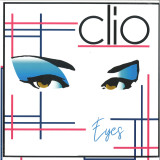
The decade of the 80s is revived through recordings like "Eyes" that allow you to travel through the music and trigger those old emotions of innocence, joy and adventure. It's possible you don't understand a word of what they're singing in the chorus, but the song is very catchy! Maybe not even Maria Chiara Perugini knows what she sings about, but she makes you hang on to every word of her like a nursery rhyme of synths, beach and bubblegum. "Eyes" is so amazing, so mesmerizing and more and more people are discovering this italo-disco masterpiece that usually satisfies and makes fun of you at the same time. If you try playing it at 75% speed gives a hypnotic vapor wave vibe! And even more, the song would have fit well in the dance club scenes from Scarface. Beyond the words - difficult to find a text that makes sense, sometimes out of context, unundestandable even for a French listener - the piece is so surprisingly likeable for the unique tone of Clio's voice, a strange cross between teenager and adult, and the part where she spoke another language, with some really cool synthesizers, are people's favorite parts. 0:31 "Je suis bien heureuse" , 0:47 "La nuit a ses merveilles", 0:57 "Il y a de quoi y perdre la tete, pour toi, sha, pour toi", 1:36 "Je n'ai plus de bulles", 1:52 "Je vous prie applaudissement". "Eyes" by Clio contains all the emotions that a dance-pop song should contain plus the essential element of mystery, a kind of magic that takes place between the chorus and the bass line, a shot in the dark drizzly night of the Italo-Disco. made by Roberto Ferrante, a guarantee for the perfect productions of the 80s, when he was only 20 years old.
SAISEI founder Junki Inoue continues his vital archival work uncovering the riches of Japan’s distinctive electronic music scene and bringing them to new audiences around the world.
The PMA EP compiles four dynamic tracks recorded around 30 years ago by the duo of Shigeru Nakamura (drums/vocals) and Mikio Kato (synths) aka B-2DEP’T.
Nakamura and Kato’s first album as B-2DEP’T, Products Plus, appeared on cassette in 1993 on Trigger Records, the predecessor label to Transonic (given a retrospective on SAIS004). Its bright yellow and blue retro-futurist artwork – which is echoed in the design for this reissue on SAISEI – matched the sounds held within: inventive, out-of-the-box dance music blending overseas influences with an idiosyncratic Japanese sensibility.
Two tracks from Products Plus appear on this EP, All tracks re-edited by Junki Inoue and regular collaborator Yuzo Iwata for vinyl extended play and available now for the first time on vinyl. ‘Clockwork Giant Panda’ appearing in a version co-produced with Yoshinori Sunahara (ex - Denki Groove), merges a breezy US house groove and bassline with twinkling, almost parodic Japanese keys that act as a kind of meta commentary on Western perceptions of Japan (a concept pioneered by Yellow Magic Orchestra). The two parts of ‘BSMH’, or Body Sonic Mental Health from ‘Products Plus’, were originally remixed by Daishi Hisakawa of Tanzmuzik, who draws on darker sounds from Europe and the UK: restless Depeche Mode synth harmonies spiral above a pacy EBM pulse, with robot vocals intoning the titular slogan. The package is completed by the unreleased track ‘PMA’, whose driving, bass-heavy mood falls somewhere between Sheffield bleep and the ambient techno of early Biosphere.
SAISEI is a Japanese word which translates to ‘reproduction’ and ‘to play’ (as in playing records). Japanese culture is widely known for its traditional nature just as much as it is for being forward into the future and this label’s concept does justice to exactly that. Having started digging for records as early as 16 years old, Inoue delved into productions from 1990s Japan to uncover these native gems. SAISEI’s core concept is to recapture and reintroduce unique pieces of Japanese electronic music onto vinyl, to an audience it never reached before as most of this music was only released in Japan.
Two decades since they formed in New York City and over ten years since their last album, Tel Aviv based quartet Shotnez are back with Dose a Nova, an album of 10 exhilarating jazz filtered jams, with vibrations indebted to tuareg desert blues, Ethiopian-jazz, 1950's Afro Cuban recordings, surf- rock and folk from across the East Mediterranean basin.
Featuring the original Balkan Beat Box producers Ori Kaplan and Tamir Muskat alongside Uri Kinrot from Boom Pam and Itamar Ziegler from The Backyard, four musicians who are all producers and share love and deep connection to hip hop and jazz, Shotnez reunited in 2020 meeting up for improvised sessions and jams, once a week over a period of about four months at a carpentry turned music studio in suburban Tel Aviv.
Downing midi cards, triggers and synths, the day to day tools for these four producers and picking up and playing their respective traditional instruments - saxophone, clarinet, guitar, bass, percussion and drums – the group was immediately liberated by the moment. In the middle of a strict lockdown, they had no preconceptions, no deadlines, no labels or managers knocking on the door. This was an opportunity to rebuild the camaraderie that developed on the other side of the world two decades back, to reconnect as brothers and seek a higher spiritual plane, all the whilst fully encouraging each other to express their diverse musical backgrounds channelled within, during their time apart.
SAISEI founder Junki Inoue continues his vital archival work uncovering the riches of Japan’s distinctive electronic music scene and bringing them to new audiences around the world. The Sounds Of Transonic compiles six tracks recorded in Tokyo between 1991 and 1995 and released by the pioneering Transonic label, founded in 1994 by Kazunao Nagata and active until 2004.
Transonic’s catalogue is a glittering roll call of the scene’s major players, whose inventive and genre-blending work established forward-thinking house and techno in Japan in a way that would shape the country’s electronic sound for years to come. Transonic was instrumental in giving exposure to the work of these artists with its emblematic series of CD compilations, released over a short couple of years in the mid 90s. Beginning with 970-1450km/h, Feedback and Range, the series also included The Roots Of Transonic, featuring music from parent label Trigger. Alongside these compilations came much sought-after solo albums each packaged with striking cover art that makes the discs a visual treat for collectors to this day.
The Sounds Of Transonic brings together six tracks from the catalogue into one breath-taking package. The influence of hi-tech jazz and machine funk from Detroit is undeniable in ‘Dream Trance’ (Mind Design) and ‘Blasting Soul’ (Interferon), while ‘Under The Ground’ (Palomatic) and ‘Chelsea’ (Suzukiski) are permeated by the artificial intelligence and trip hop emanating from the UK at the time. The compilation is bookended by two tracks by Nagata himself (as Organization): ‘Space Ball’, a Model 500-worthy chase through the cosmos, and ‘Call’, an eerie echo of Kraftwerk’s telephone, transmitting expectantly out into the void and, finally, receiving its celestial answer.
With The Sounds Of Transonic these formative pieces of music will now be available internationally and, for the first time, on vinyl.
SAISEI is a Japanese word which translates to ‘reproduction’ and ‘to play’ (as in playing records). Japanese culture is widely known for its traditional nature just as much as it is for being forward into the future and this label’s concept does justice to exactly that. Having started digging for records as early as 16 years old, Inoue delved into productions from 1990s Japan to uncover these native gems. SAISEI’s core concept is to recapture and reintroduce unique pieces of Japanese electronic music onto vinyl, to an audience it never reached before as most of this music was only released in Japan.
- A1: Ekonda Musicians - Généalogie De La Walé (Rumba Rules Edit)
- A2: Brigade Sarbati - Rando
- A3: Lumumba Ya Muana - Tozozela Ba Ancêtres
- A4: Brigade Sarbati - Edenda
- A5: Église La Résurrection - Nzambi Ya Babo
- A6: Werrason - Block Cadenas
- B1: Brigade Sarbati (Choeur) - Ma Descendance
- B2: Brigade Sarbati - Tshouna Baby
- B3: Papa Wemba - Excuse Me (Live Au New Morning, 2006, Rumba Rules Edit)
- B4: Franco Et Le Tout Puissant O K. Jazz - Kinshasa Makambo (Live From Télé Zaïre, 1982, 2022 Remaster)
- B5: Lumumba Ya Muana - La Vie Est Belle
The official soundtrack of the 2021 'Rumba Rules, New genealogies' documentary movie by Congolese artist Sammy Baloji and Quebec filmmaker David Nadeau-Bernatchez. A deep dive into Kinshasa’s vibrant Rumba scene, including remastered classics by Brigade Sarbati, Werrason, Papa Wemba, Franco & le Tout Puissant O.K. Jazz
Rumba Rules, New genealogies is about contemporary rumba in Kinshasa, but this music has deep historical roots nevertheless. Born in the interstices of the colonial world and thriving during the three decades of the Mobutu era in Zaïre, Congolese rumba has been iconic and popular all over Africa for decades. The roots of Rumba are even deeper, and the many paths it evokes trigger the imagination. The story goes that this music came with the migration of the ‘Kumba’ drum and dance in previous centuries, African slaves having carried it all around the Americas and giving birth to Cuban ’Rumba’, Colombian ‘Kumbia’ and many others. With its varied rhythms, guitars and horns, through LPs and radio stations, Rumba came back to (re)conquer Africa throughout the 20th century, paving the way for new practices. One could say this music is a sort of palimpsest, a memory in itself of Atlantic migrations and histories.
Rumba is nowadays discussed all around the world, igniting many debates among the Congolese diaspora. Being the constant talk of the town sometimes overloads public debate, and many people get tired of this broken record. Thus, over the last decade, enterprising producers have worked hard to promote Kinshasa’s musical diversity and tried to emulate new sounds to reach worldwide attention. But Kin’ locals and urban dwellers will not be fooled : new shoots cannot hide the forest. Despite some difficulties to innovate, despite the pastoralist sermons and the diaspora fighters pushing for concert cancelations, rumba is still at the core of the Congo today. Talented artists such as Fally Ipupa, Ferré Gola, Brigade Sarbati and others are leading the fifth generation, and the religious world has also proven to be a nurturing environment for the cultural and economic dynamism of this music.
Focusing on the music of Brigade Sarbati and his Orchestra, this record offers a deep dive into Kinshasa’s rumba scene. Halfway between professional studios and Zoom H4 field recordings, the rumba herein is about today’s youth: dense, full of energy and breakdowns, insights and name-dropping. The cavacha rhythm, the solo and bass guitar’s playing style, the singing style and numerous dedications all resonate with the history of Rumba. In an era where digital sound is taking over, it is interesting to highlight the instrumental and live performance compositions of this music. Digital technology is indeed used during the recording and mixing phases, but Congolese rumba still relies strongly on instrumental playing. There is all that but also, many other things to hear on this record… It’s time to let it be. A big thanks to Étienne Tron for making it possible: it is on his initiative and through his patience that this album is in your hands today. (David Nadeau-Bernatchez, december 2021)
- A1: I Was Never Really Here
- A2: Like Sunlit Threads
- A3: Last Silence
- B1: Mystery Beyond Mystery
- B2: Outwardly Attaching
- B3: Holographic Matrix Of Informational Totality
- C1: Self Aware Field Pt. 1
- C2: Birth Of The Healer
- C3: Self Aware Field Pt. 2
- D1: In The Absence Of Becoming
- D2: Logos Triggering Agent
- D3: Deeply Rooted Peace
Encounters with the ineffable.
The dormant roused.
Openness, observation, questioning, humility, sincerity.
Re-imagining the known, that which is untapped, all that was concealed.
Pathways to wholeness unearthed.
Meeting of truest self.
Temporal versus infinite.
The fallout.
Sudden disintegration, falling away, continuity shattered.
Facade ruptured, persona released, identity laid bare, history withdrawn.
Appearance of no-thing-ness.
Pregnant with possibilities, birth out of chaos, mystery unfolds.
Healing through anguish, renewal through trauma.
Newborn imaginings.
Accept the summons.
Chapters of lucidity, adventures in clarity.
Alignment in harmony.
All encompassing.
Reorientation emerges, subsequent renewal, transcendent insights, enlightened revelations.
Surrender reached, acceptance embraced, liberation appears.
Transmutation.
Solemn symbols of gratitude.
New found depth of meaning, of understanding, of moving, of seeing.
Beyond mental illusion, unifying as nature, expression of stillness.
Vision of the undivided, transmission of wisdom.
Flowering into being.
- Kas ॐ
Over the last couple of years Nandu has made quite an impact, dropping several releases both with Innervisions on their Secret Weapons compilations, his massive cut ‘Child Of A Child’ levelled dance floors across the world last year, and now he’s landed on TAU with four new cuts fresh from his lab.
Kicking off with ‘Horisont’, a bumpin’ cut with dense kicks and an energy-fueled main melody which bounces around the mid-range. Shimmering synths complement the riff, transporting us from our mortal bodies into another vibrational dimension.
Then we have ‘Outlined’, where Nandu channels his mystical aura into a rousing cut that blends arcane sounds with warped vocals and entrancing instrumentation. This one feels like an adventure in the rustic, indoor souks of a vibrant desert land.
‘Not The First’ is next up, offering more of that Nandu magic. At its essence, this one undulates way down below, growing and slowly billowing out into a smooth, serene soundscape. The track is optimistic, emotive and nourishing, taking us by the hand and leading us into a life-affirming breakdown and an equally enriching second half, full of joy and euphoric energy.
Finally ‘Telesaki’ is like a portal that transports us into a hopeful future. Gentle piano keys combine with the soothing low end as a melancholy melody triggers memories of a distant past. Towards the middle of the track a gnarly riff appears, switching up the energy of the track and ushering in a pumped up second half. When you look into the past you can see where you’re going...
The music of Hubur is full of details and small elements that trigger the big picture profoundly. You can call his music electronic. You can say he writes tracks. But then there are some song-ish moments in them - even if there is no singing at all. Not at least because his melodies are tempting. You can also find traces of hip hop. Traces of leftfield electronics. Traces of jazz without jazz. A gentle ride with a story arc that absorbs profoundly and that does not require a commercial value to exist and be meaningful.
With the Hormesis EP, Alric Aerial explores the delicate threshold between pressure and growth. The title a reference to the biological phenomenon where stress triggers a positive adaptation serves as the conceptual foundation for a sound born from deep introspection.
It is a testament to the idea that resilience is not just about enduring, but about evolving through the friction.
In his productions, Alric Aerial weaves together personal and cultural fragments, bridging the echoes of his heritage (Tales From The Desert Part II) with a conscious departure from familiar scenes and habits (Good To Be Gone). This work marks a natural evolution a shift from the noise of the outside world toward a more refined, intentional focus in the studio.
The tracks strike a balance between "dirty" authenticity and infectious, groovy basslines. From driving, straight-forward rhythms to melodic leads, the work shifts between cinematic tension and uncompromising momentum. Especially in the title track, Hormesis, Alric’s vision culminates in the transformation of fragmentation into energy. The music invites the listener to find a new kind of presence within the act of disappearing to get lost in the pulse, only to emerge more resilient.
»Low Tide, Hi Grypus!« is the new live-iteration of JC Leisure as JC Leisure Group. Documenting an encounter and a communication between human improvisers and atlantic grey seals. The record presents responsive improvisation as a form of cross-species collaboration.
The project began on Porthdinllaen, Wales, where Leisure recorded seal vocalisations from a local colony at low tide. Back in their Liverpool studio, Leisure developed a performance system that translates human musical gestures – pitch, timbre, rhythm, density, presence - into triggers for these seal expressions. The resulting system is dual-active, as in it simultaneously acts and is acted upon in the horizontal instance. It creates a new-music non-linear threshold that cannot be replicated.
»Low Tide, Hi Grypus!« was recorded live at 1210 Berlin and captures one instance of this concept. Local improvisers were invited to encounter the performance system. Recorded in one take, pedal-steel, woodwinds, strings, piano, organ, and electronics gradually learn to listen and respond to the marine voices. This interspecific group moves from intimate duets (that's human, seal) into full ensemble works (humans, seals) over the course of one night.
Rather than treating field recordings as static material, the extensive seal archive functions as an active collaborator: shaping form, pacing, and interaction in real-time. Now that’s marine biology meets human communication!
JC Leisure has previously released work on Sun Ark, Warm Winters Ltd, Not Not Fun and collaboratively with Dialect as Raft of Trash. He has composed a radio play commissioned and broadcast by BBC Radio.
Cambridge-based improv collective Concrete Gazebo present their latest collection of open-hearted, quantum splice-downs, via Goldsmiths University label NX Records.
"Acid Heath" documents the ebb and flow of a collective in flux; online and in-the-flesh improv sessions form the raw material to be welded into new and fantastic forms by the group's hive-mind. Instruments falling into the pot this time around include a heavily effected Harmonic Art Handpan, the Yamaha PortaSound PSS-50, live-triggered field recordings, and mobile phone recordings of the jams themselves.
The result is a murky, atmospheric stew, at different times suggesting a sort of Fenland psychedelia, lof-fi krautock, or a deconstructed Broadcast.
When not making music, the band have organised free, open-to-all improvisation nights, "Under The Concrete Gazebo", since 2018.
B. Chamber (Stratum A), by B. Close, is the first full length solo release by Los Angeles-based multi-disciplinary artist Brian Close. The first of two volumes assembled from some thirteen hours of music produced by Close while residing in Connecticut from 2021-2025, B. Chamber (Stratum A) offers a vivid, fractal afterimage of a prolific, specific time and space in the artist’s oeuvre.
After leaving New York City early in the pandemic to a farmhouse in the countryside with dedicated spaces for multiple sound stations, Close developed an intensive daily practice of melding with the machines. The vast, pastoral backdrop of rural CT provided inspiration and contrast for his ongoing investigations into dynamic, poly-rhythmic electronic music. The sounds on B. Chamber (Stratum A) range from the machine-modeling of acoustic instruments and natural environments to the utterly unhuman, spinning on the axis between crystalline, pointillist precision and shifty blown-cone distortion. Close’s atypical interpretations of rhythm, noise and other undefined musics land in a hybrid zone of their own.
Throughout B. Chamber (Stratum A), Close’s productions are in perpetual motion. Foxtrot’s shifting hi-hats and disembodied voices rise like cicadas propelled by glitching machines and tangled rhythms, Many Drive draws momentum from dubby stabs and twinkling atmospherics. Character Community’s nimble, drifting snares and erratic static are uplifted by swelling synths, and Mpan’s modular mining forgoes drums but is no less propulsive for it. Acre Voices’ seasick pads and deft drum patterns tap an energizing nerve, and closer 5D Bow’s ambush of pummeling machine gun fire spirals into the tryptamine palace and emerges completely rinsed and refreshed.
Equally powerful in the club as in the outdoors, in the headphones eyes closed or on the move, B. Chamber (Stratum A) grants an immersive temporary trip on B. Close’s unique wavelength, with Stratum B to complete the picture in the summer of 2026.
RIYL - Mark Fell, muay thai, Vladislav Delay, gaming, Errorsmith, modular synthesizer.
+++++
Brian Close (b. 1979, NYC) uses the cold logic of mathematics to trigger states of total sensory displacement. Close co-founded multiple AV studios to explore the "hypnotic"—a ritualistic practice of motional-graphism and improvisational sound. His work is a study in synesthesia and the architecture of trance, using geometric precision to dissolve the sense of time. It is a digital-visceral experience built on heavy logic, designed for large-scale immersion and timelessness.
Close is one half of Georgia who have released records on Palto Flats, Firecracker Recordings, Meakusma, Youth, OOH-Sounds and EM Records, and have a long-running residency on NTS.
B. Chamber was written, produced and mixed by Brian Close.
Mastered by Rashad Becker.
Artwork by Brian Close.