Search:no use for a name

Styles
All
KNOW - KNIGHTS OF PLEASURE EP

KNOW

KNIGHTS OF PLEASURE EP

12inchANNA061
Anna Logue Records
10.09.2025

The KNOW was an early 80's electronic duo, comprised of brothers Garry and Neil Todd from Stoneydelph, Tamworth (near Birmingham), UK. After playing in a conventional rock group and having to deal with the issues of too many cooks spoiling the broth, they decided to stay a two piece while the affordability of synthesisers and drum machines came in handy to replace additional human band members – shall we say for the better in the end?!

Regarding the name, Neil says: “Garry and I came up with this name in relation to the saying, oh you know he’s in “The Know” you know.“ The KNOW released only two tracks “Times Change“ and “Knights of Pleasure“ on a 7“ single in 1982, which is ultra rare now (only being sold once on Discogs for almost €300). Neil used Korg Micro Preset M-500, Moog Liberation, Roland Jupiter-8 synthesisers, and a Roland CR-8000 drum machine to create these two minimal synth pop anthems.

The original masters have been lost over the years, but the recordings have been carefully digitized from vinyl and meticulously restored and remastered and sound better than ever before. Additionally, five cover versions have been added by no less than minimal electronic synth pop heroes BLIPBLOP, doing both tracks, the THE SILICON SCIENTIST adding his dreamy synth pop melancholia signature sound, FLASHBACKS (aka Echo West, Silent Signals) with his icy cold yet playful minimal electronics, and TWINS NATALIA featuring KRIISTAL ANN delivering a rather faithful to the original yet up-to-date version while adding lots of new bits like a choir, vocoder, and one of Dave Hewson's unique synth solos.

All of this is pure and classy 80s electronic synth pop bliss!

In Stock

On Stock and ready to ship

19,12
Norman Connors - Mr. C LP

Norman Connors

Mr. C LP

12inchBEWITH181LP
Be With Records
29.08.2025

Norman Connors' Mr. C is a masterclass in sophisticated modern funk and boogie-infused soul that was way ahead of its time. Originally released in 1981, the album finds the renowned jazz drummer/producer at a creative crossroads, boldly diving deep into street-level boogie-funk without losing his soulful, jazzy touch. What once might have puzzled jazz purists now delights soul/funk aficionados; it has quietly become a cult favourite and now, nearly 45 years later, Mr. C sounds fresher than ever. Brimming with infectious heavy funk, lush arrangements and soul-stirring performances, it's an album that flirts with perfection, ensuring its enduring significance in the boogie/jazz-funk-soul canon.

From its opening moments, Mr. C makes one thing clear: this is Norman Connors at his funkiest. The majority of the album is a straight-up party: think dancefloor-ready beats complemented by punchy horn riffs and slick early-80s boogie vibes. There’s heavy use of synths and drum-machines, demonstrating Connors' gleeful embrace of contemporary funk trends. Each track shines in uniquely thrilling fashion, showcasing Connors’ versatility and happy knack for blending genres whilst crafting unforgettable melodies.

Irresistible thumper “She’s Gone” opens the album with a dyno-Rhodes electric piano groove and a seriously thick boogie-funk rhythm. Lush string accents and horn stabs weave through the funky bassline, while the vocals (handled by a young Beau Williams) soar with gospel-tinged emotion. Over four decades later, it endures as a masterpiece. Living up to its name, the shimmering “Party Town” brings deep Electro-Funk Energy by layering bubbling synth bass and shiny lead synth lines. The groove is downright addictive, a brisk, brass-kissed jam that implores you to move. Up next, the sophisticated funk of “Keep Doin’ It” is a low-slung post-disco glider, propelled by a sleek vibe, leaning into the late-night boogie sound. Funky guitar, tight drumming (with Connors’ jazz-honed chops in the pocket) and smooth vocals urge you to “keep doin'” whatever it is that's working. “Stay with Me” works a bit of island flavour into the mix, riding a thick Caribbean groove complete with tropical percussion and an upbeat tempo that could almost be calypsoul. The fusion of Caribbean rhythm elements into an R&B context demonstrates Connors’ willingness to experiment with global sounds while keeping things soulful and danceable.

Side B opens with the sassy funk-deluxe workout, "Anyway You Want" dripping with that soulful strut. Bringing a real quiet storm swagger, “Sing a Love Song” slows the tempo ever so slightly into a sexy, swaying jazz-funk gem, featuring a young Glenn Jones on lead vocals. The arrangement is elegant, built on warm keys and an undeniable groove. The celestial “Love’s In Your Corner” is all about soulful uplift. Featuring the legendary Jean Carn's powerhouse vocals soaring over a brass-kissed driving funk, it's an R&B burner. The refined, jazzy instrumental “Mr. C” is a slinky, smooth, funk-filled mid-tempo groove, with sax and warm keys gliding effortlessly. Connors combines jazzy arrangements into the post-disco/boogie framework one last time, and the result is sublime. It’s sophisticated and cool and, as a finale, “Mr. C” wraps up the album in classy style.

On release, Mr. C flew under the radar but time has been exceptionally kind to this record. DJs, collectors and soul connoisseurs alike have since rediscovered its magic. As ever, this crucial reissue has been lovingly remastered by Simon Francis, cut by engineer of the year Cicely Balston at Abbey Road Studios and pressed to perfection by Record Industry in Holland. Norman Connors was something truly extra. He was a visionary. And Mr. C is proof.

In Stock

On Stock and ready to ship

28,15
Billy Arnell - Tough Girl

Billy Arnell

Tough Girl

7"-VinylHOLLY1001
Holly Records
21.08.2025

An extremely rare Northern Soul 45 RPM single originally released in 1965 on the Holly label, Billy Arnell And The Sparkles "Tough Girl" was the product of two childhood friends that lived less than a block apart in suburban Fairlawn, New Jersey in the early 1960s - Billy Smith and Lou Hemsey.

Billy played guitar and sang; Lou played guitar and wrote songs, so they decided to form a band. They added friends Eddie Hoffman on organ and Jack Gullone on drums and began playing lots of gigs locally as Little Willie & The Sparkles. They were young, ambitious, and imagined themselves as the next Beatles. By a stroke of fate, they met Joe Martin of Apex-Martin Distributors in Newark, NJ, who caught the band's live show and was duly impressed. That meeting led to the recording session for the "Tough Girl" single. When they recorded the first version of the song, the producer wasn't happy, nor was Joe Martin - so he fired that producer and brought in the young, up and coming producer, George Kerr. Kerr didn't care much for the band, so they redid the entire thing without Hoffman and Guilone - with just Billy singing and Lou playing guitar.

The pair of old friends were buoyed by session aces Eric Gale on guitar, Bernard Purdie on drums, Bobbie Banks on organ, as well as a bass player whose name has been lost to time. In addition to those changes, they used the studio horn section that Hemsey arranged for, plus two trumpets, two saxes and two vibes players. The resulting single was an infectious amalgamation of rock and soul. Billy changed his surname to Arnell for the 45 release (because he thought it sounded more "show-biz") and the rest is pop history. Arnell later started a record company (Fire Sign Records) and purchased a recording studio (112 Greene Street Recording) in the trendy SoHo section of Manhattan with Steve Loeb.

As for the rest of The Sparkles, Hoffman became a teacher somewhere on Long Island, Guilone graduated from the Culinary Institute of America in Massachusetts and ended up living in Northern New Jersey. Hemsey became a well-known recording engineer, composer (Lou was the one who wrote "Tough Girl"), guitarist, arranger, orchestrator, editor, film director and producer for records and commercials.

In Stock

On Stock and ready to ship

15,55
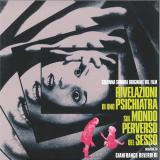
Gianfranco Reverberi - Rivelazioni Di Uno Psichiatra Sul Mondo Perverso Del Sesso LP 2x12"

Four Flies is thrilled to present the very first release of Gianfranco Reverberi's hidden masterpiece: a mind-blowing soundtrack, possibly his wildest and most daring. This Italian score is sort of a Holy Grail for fans of the spaghetti sound, especially thanks to the legendary track "Psicolimite".


In 1973, a mysterious 45 rpm single surfaced under the name 'Sharon Chatam e la sua Orchestra.' The single seemed to be a harmless cover of the theme from Last Tango in Paris, complete with a typical image from the film. But behind the innocent facade, a secret was hidden: the B-side track, "Psicolimite," was actually the main theme from Rivelazioni. When someone in the United States figured this out and realized the 'Sharon Chatam' moniker was a pseudonym for Reverberi and his team, the price of the record skyrocketed, making it a coveted collectible.


This makes the discovery of the full soundtrack even more exciting, considering that the music Reverberi composed for the infamous film by Renato Polselli - one of the most outrageous and uncompromising Italian genre cinema directors - was thought to be lost forever, perhaps vanished into the depths of some film processing lab. But thanks to the sleuths at Four Flies, this enigmatic masterpiece has been resurrected and presented in all its glory. It's available now as a luxurious gatefold double LP with original artwork by the brilliant Eric Adrian Lee.


While the film, despite some critics praising it as "psychotronic," is a bizarre mishmash of rambling pseudo-psychoanalytic theories and sexual deviance voyeurism, the music stands out as a foremost, vital element, able to exist on its own.


Reverberi's reputation as a serious, refined producer (for artists like Lucio Dalla, Gino Paoli, Luigi Tenco, and many more), however, led him to keep his distance from exploitation films like Rivelazioni. To maintain his image, he had his friend and former schoolmate Umberto Cannone take credit for the score – a tactic he also used for Polselli's next film, Mania (1974).


But this anonymity might have unexpectedly increased his creative freedom, for the score he put together and recorded is experimental, at times raw, and driven by a relentless rhythm section where bass and drums lay down the groove. The use of electronic instruments is impressive for the time, with drum machines and spacey synths creating a dark and dreamlike atmosphere. Psychedelic flutes, piano phrases, crazed percussion, filters, compressors, and jazzy improvisations on sax and vibraphone complete the mix.


The full soundtrack was recovered following the discovery of the original 1-inch, 16-track tapes, which were transferred, mixed, and mastered for optimal listening on both vinyl and digitally, with the digital version featuring 8 bonus tracks.


Available from November 22!

In Stock

On Stock and ready to ship

34,03
Coolin Out - Volume 5

Coolin Out

Volume 5

7"-VinylCOR005
Coolin Out Records
10.07.2025

Classic samples on 45. The Whatnauts, Help Is on the Way. Released as a single in 1981, this hard to find 45 is a certified Funk Disco Boogie classic! An infectious bass line over a head nodding drum groove, this is one for the steppers. Instantly recognisable as the sample source for Del La Soul’s “Ring Ring Ring (Ha Ha Hey)” Hip Hop classic, you might also recognise it for lending a riff or two for Fat Larry’s Band, “Act Like you Know”.

Isaac Hayes. Ike’s Mood. Released as the lead Single from the 1970 album “…To Be Continued” this Soul Jazz classic unwittingly became a huge source of inspiration for the sampling generation. Sampled almost 200 times, the brass section, drums and an unforgettable piano hook have been used to form the basis for classic releases by Biz Markie, Mary J. Blige, Nas and Massive Attack to name only a few.

In Stock

On Stock and ready to ship

14,24
FEX - Subways Of Your Mind (TMMS Version)

Imagine having a song go viral for 17 years - without even knowing it. That's exactly what happened to the German 1980s band FEX. And this isn't just any song - it's The Most Mysterious Song on the Internet, a track that puzzled music detectives for decades before finally being identified in November 2024. Now, it has been officially released - twice.

The Story in Brief:
Sometime around 1984, a song was broadcasted on NDR Radio. The name of the song was Subways Of Your Mind - only found out 40 years later in November 2024. Back then, a listener recorded the NDR show on cassette, a common practice at the time. Decades later, the tape resurfaced, but while most songs from the recording were identified, one remained an enigma. On March 18, 2007, the track was uploaded to the internet in an attempt to uncover its origins. Due to its now-iconic opening lyric, it was tentatively titled Like The Wind. Over time, the mystery deepened, and the song was given a nickname: The Most Mysterious Song - or simply TMMS.

Starting in 2019, a dedicated Reddit group, TheMysteriousSong, now boasting over 63,000 members, took up the search. They meticulously documented every lead, hoping to solve the riddle of the song's origins. Then, in 2024, the breakthrough: Reddit user marjin1412 reached out to musician Michael Hädrich after discovering a reference to his band FEX in an old newspaper article. Hädrich, FEX's keyboardist, provided a recording from an old demo cassette which included an alternative version of the song. On November 4, 2024, the mystery was officially solved: FEX was the band, Subways Of Your Mind was the title.

What Happened Next:
Since then, FEX has released two singles - both featuring Subways Of Your Mind - through the Berlin-based independent label The Outer Edge. First, the demo cassette version was pressed onto vinyl, as the original NDR radio recording remained lost (see EDGE-028). The Remastered Demo Mix single instantly topped Bandcamp's global charts, holding the #1 spot for several days. By then, it was clear: this was more than just an internet curiosity. A real fanbase had formed. Enthusiastic comments on the sales page ranged from "best post-punk song to ever exist" to "FEX themselves (are) perhaps the most underrated musicians of all time."

But the story didn't end there. A higher-quality version of the NDR radio recording was rediscovered in late december, remastered, and now sent for a second vinyl pressing: the TMMS Version. This new vinyl 7" is backed with Talking Hands another great and unissued song that was found on the demo cassette.

Fame Comes with a Price
Suddenly, time isn't standing still for FEX. The band had to come to terms with the fact that they had become Lostwave super stars. A FEX fan club quickly formed on Reddit, fan-hosted FEX parties are popping up, and the internet is demanding more - an album, merchandise, live performances. But how does a band prepare for a comeback after a 40-year hiatus?

For now, FEX is carefully considering their next steps. Their demo cassette contains six songs - and a few other recordings have resurfaced which probably could be restored and compiled. But foremost, a brand new re-recording of Subways Of Your Mind is in progress.

One thing is certain: The Most Mysterious Song will continue its unstoppable journey around the world. Don't miss this (second) chance to own a piece of music history!

In Stock

On Stock and ready to ship

16,85
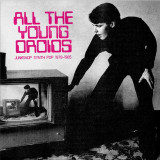
VARIOUS - ALL THE YOUNG DROIDS: JUNKSHOP SYNTH POP 1978-1985 (LP 2x12")
 
24
also available

MB Crystal Vinyl[32,73 €]

LTD Trans Pink Vinyl[32,82 €]

LTD Trans Pink Vinyl[27,69 €]


Compiled by Philip King
“And then came the rise of synth pop : blokes with dodgy haircuts hunched over keyboard-operated
machines stuffed with wires and do-it-yourself tone oscillators making sounds like a brood of geese
passing gas in a wind tunnel. Whoopee! This is the way the ‘70s ended : not with a blood-curdling bang
bang but with a cheap, synthesized, emasculating whimper.”
NICK KENT, NME.

All The Young Droids: Junkshop Synth Pop 1978-1985 is a new compilation that charts the
underbelly of the epoch-defining sound of the synthesiser in 80s popular music. Compiled by Philip
King (previously seen compiling All The Young Droogs, Glitterbest and Boobs - The Junkshop
Glam Discotheque), the music here connects the dots between DIY synth enthusiasts grappling with
new, cheap synthesisers at the tail-end of punk and wannabe, jobbing songwriters enthral to the new
music pioneered by Gary Numan, Depeche Mode and Daniel Miller’s Mute Records. Featuring rare
tracks of auto-didactic progressive pop music, proto-techno punk, shoot-for-the-stars-land-in-the-gutter
chart flops and heralded, underground synth classics, School Daze paints a picture of beautiful failure.
Complete with extensive sleeve notes written by King and never before seen imagery, all 24 tracks
were remastered by RPM in-house engineer Simon Murphy, many from vinyl copies due to lost master
tapes. The story told on All The Young Droids is one of the dawning opportunity presented by both the
emergence to the market of cheaper analog synthesisers and the distribution networks plus indie labels
that exploded with the advent of punk music in 1976. While the music that sprouted out all over the
globe in the wake of these factors was decried as fake, plastic, a refutation of punk’s guitar-led
revolution, it’s telling that much of the music on All The Young Droids.. was created in bedrooms,
ramshackle studios and home-made set ups with often borrowed equipment. In the era of record labels
jumping to capitalise on the success of The Sex Pistols, The Clash (both on major labels, of course)
these artists struggled to stand out from a new gold-rush with next to no budget or PR team. With radio
and labels desperate for the new Yazoo, what resulted was a testament to necessity being the mother
of invention.

At the time, the synthesiser was the music of the future, a shiny new machine that could paint like an
orchestra with a single finger and a 4-track. In the hands of Manchester avant-pranksters Gerry & The
Holograms it’s a pulsing, sardonic weapon.. the only instrument on the Messthetics classic lampooning
of New Wave fashion. In Hamburg, a 16 year old Andreas Dorau used it to write and record (with his
female classmates on vocals) a global smash in Fred Vom Jupiter (later licensed to Mute Records).
The hard-to-find English version (Fred From Jupiter, natch) is included here. Many artists with alreadystoried careers caught the bug and recorded synthesiser-fuelled peons to space, computers, the future
and, of course, love-interests. Harry Kakoulli, late of Squeeze, recorded a solo album in 1979 that
included the incredible power-synth-pop smash-that-never-smashed I’m On A Rocket. Similarly, Ian
North of Neo and American Power Pop stalwarts Milk ’n’ Cookies bought a Korg MS20 and used a
tape machine to record We’re Not Lonely, an absolute lost-classic of minimal synth pop. We’re Not
Lonely also features on the Junkshop Synth Pop sampler 7” twinned with John Howard unreleased
track You Will See, released April 12th 2025.

There are plenty of compilation debuts in evidence. Sole Sister were a mysterious trio who were
featured on the Scaling Triangles compilation of female-fronted, queer-adjacent post-punk /
underground music that also featured The Petticoats. Selwin Image were from San Francisco and
featured members of the recently defunct power pop/punk group The Pushups. Their stupidly catchy
The Unknown fizzes with New Wave energy - think XTC to Sparks but remains unreleased until now.
Dream Unit’s A Drop In The Ocean is an early synth wave cut, positively teaming with Joy Division
instrumentation, previously only released on a long-forgotten and super rare, self-released EP.
Incandescent Luminaire’s Famous Names belies an archetypal struggle of a small-town trying to
make it in a cruel industry but is a thrilling New Romantic-Synth Wave cross over with a OMD
gloominess that’s a joy to hear. Feminist Minimal Wave track I Am A Time Bomb by performance artist
Peta Lilly and Michael Chance is a revelation destined for new found cult status. It was released on 7”
and lost until now.

The flipside to the subterranean, never-made-it synth pop mentioned above are the ambitious, even
fruity attempts at success that have a perennial elegance to their confidence. New Jersey-ite Billy
London (real name Ed Barth) tried to cash in on the synth boom with Woman, released by a major
label, a lurching new wave track built on the Louie Louie rhythm and a wonderfully camp Lou Reedstyle sleazy vocal before exploding in the synthesised chorus. The song bombed but with a chorus like
this, you have to wonder why? Ex-Glitter Band member John Springate’s My Life is truly epic, with
doomed chord progressions and massive sounding drums turning into at least 3 different songs in the
course of the track. Before you wonder what’s going on the song resolves with a glorious return to the
main refrain.

The dry-ice-dressed dance floor is well catered for too. Design’s Premonition and Vision’s Lucifer’s
Friend are stone-cold minimal synth bangers, well loved but given a new lease of life here. The
Warlord’s The Ultimate Warlord was released in 1978, a homespun proto Hi NRG banger that was
later re-recorded by The Immortals in Canada who had a club hit with it. One-man- band Disco
Volante’s No Motion was re-issued by Synth wave label Medical in 2012 but makes its first vinyl
compilation appearance here. Close your eyes and you can imagine what Lawrence of Felt would have
sounded like with some cheap Korgs a little earlier in his career. Gibraltar-based trio The Microbes
imagined a computer programming people to dance - how prescient - and ended up with a propulsive,
robo-funk track with splendid rubbery bass playing over a tectonic drum machine. Previously picked up
by Belgian label Stroom TV, Dee Jay Bert & Eagle’s heavily Euro-accented I Am Your Master
demands the listener to “come to paradise!” In a frankly terrifying manner.
All The Young Droids is the first compilation to peel away from the narrative that dour, Minimal Synth
and Cold Wave were the only musical children of the first rush of synth pop. Philip King and School
Daze Records describe a much more complicated world: along with the austere, Brutalist children of
Daniel Miller (who produced Alan Burnham’s Bowie-Low-influenced Science Fiction here) was a
plethora of desperate cash-ins, accidental mainstream hits, ambitious pop dramas and major label
punts that went nowhere. Crucially, the compilation blurs the line between junk and treasure. What if the
two things are interchangeable. What if it’s all science fiction?

In Stock

On Stock and ready to ship

27,69
EKO - PHONE ME TONIGHT / TAKE ME AS I AM NOW

Eko, or Eko Roosevelt, is a Cameroonian composer, pianist & vocalist. He was born in Kribi in 1946, the son of a local Tribal Chief. Eko developed his love for music at church, later pursuing his growing passionwith music studies abroad, first in Dakar and then in Paris. After concluding his studies in France he went on to a recording career and between 1975 - 1982 released a number of full-length LPs, 7" singles and albums on cassette, before returning to Kribi to take over the role of Tribal Chief from his father, a role he holds to this day.

While the name "Eko" may not be immediately familiar to all, his music will be well known to many, from the DJs to the dancers, the heads to the home listeners. Evergreen classics like “Kilimandjaro My Home”, have remained a mainstay in the record bags & USB crates of disco jocks since its release in the late 70s, while numerous of his other crossover Afro-disco gems have been bootlegged, edited and remixed by a seemingly endless number of both greater & lesser-known producers who have all paid tribute to his work. Eko Roosevelt’s position in the ranks of Cameroon’s great musicians cannot be overstated. As a composer, songwriter, pianist and singer he has influenced generations of musicians both in Cameroon and France and further abroad, while he has written & arranged for many of the Cameroonian musical community.

Here Canopy, with the benediction of Eko himself, officially reissues two of his works that have not been rereleased since their first outings. Stylistically the two songs straddle the line between Afro-disco, funk and pop, with a slightly Balearic, almost AOR sensibility.

“Phone Me Tonight” is taken from a 7” record that has barely resurfaced since it was self-released in 1981 on the “Eko Music’ imprint. The song is an uplifting opus that demonstrates Eko’s deftness for creating catchy songs that succeed in their songwriting prowess and melody crafting, both on and off the dance floor. It is a stripped back composition that employs the key elements to great effect. The groovy bass line is underpinned by a tight Afro-disco beat as Eko’s unmistakeable voice draws us in and with a masterful use of repetition and hooks, creates a song that feels familiar from the outset, while being brand new to almost all listeners. As the song develops, the synth lines lift the song higher and higher, culminating in a euphoric transcendence perfect for elevating the mood of any dancefloor.

“Take Me As I am Now”, is sourced from Eko’s first album, “Nalandi” which originally came out in 1975 on Dragon Phenix. Here we have another fine example of Eko’s ability to hone compositions that blend thelines between pop song writing and more loopy dance floor orientated structures. The vocal hook repeats throughout the song, with only minor variations, making the song feel comfortingly familiar from its early bars. An instantly appealing bass line sets the stage for the sleek guitars and taut horn arrangements. The end result is a feel-good balance of melody and groove that makes for a timeless feel with a positive message!"

In Stock

On Stock and ready to ship

14,50
Thee J. Johanz - Lucy’s Electricity

From a 4x5m room stacked with vinyl, ashtrays, magazine drafts, and semifunctional synths, Stompin n Risin rises again—reincarnated but not revised.
Originally a spontaneous ritual from the days of blunted dreaming and one-eyeopen ambition, this track first snuck into the world under a different name (Jacobite Fool, courtesy of those tasteful Belgians at International Feel) and went on to become a cult curio. Now, it’s back—rebuilt with the very same machines that once hummed beside the mattress, but still left to run wild like they used to.
The rest of the EP stays close to that spirit: music as lived experience, jammed with friends, lovers, and ex-boyfriends (literally). Lucy’s Electricity is a shimmering daydream, born from a jam with Daniele Labbate, recharged by a whirlwind wedding, and soundtracked by a bittersweet guitar line courtesy of the groom’s bride’s ex. A track for walking into churches—or out of time entirely. A personal favorite of the artist, and maybe the only funeral anthem with this much static joy.
One takes things inward—made with the Moog One for open-air yoga sessions during the era of no-dancing-but-still-dreaming. It’s a sun-dappled, slow-motion dancefloor where breath and bass align. Love 2 Love closes the circle: an unearthed jam with long-time collaborator and platonic supermodel Hanne Uekermann, revived from hard drive purgatory and infused with new life. A love song to the music, the moments, and the friendship behind it.
This record isn’t just a collection of tracks. It’s a lived-in photo album, a soft pulse through oceanic memory, a reminder that all sound comes from life, and maybe all life comes from sound.

In Stock

On Stock and ready to ship

11,72
Tezeta - Seventh Place

INDEPENDENT RECORD SHOP AND LABEL KLANG TONE RECORDS RE-ISSUE DEBUT ALBUM BY 8 PIECE INSTRUMENTAL EHTIOPIAN JAZZ/AFRO-BEAT/PROG COLLECTIVE;
TEZETA

“Absolutley gorgeous from start to finish…”
- Deb Grant, BBC 6 Music

“An instant obsession. Impeccable rhythms and hypnotic melodies—Tezeta crafts a spellbinding fusion of Addis and Avon that takes you on a journey."
- Don Leisure

“Gorgeous mood music with more than a nod to Addis. Lovely tapestries and textures”
- Matt Temple, Matsuli Music


'Formed in Bristol back in2014 Tezeta were an experimental 8 piece instrumental group effortlessly combining Ethiopian jazz, Afrobeat, prog and improvisation. The band spawned out of the much loved Bloom Collective - a collective of musicians and friends from an experimental corner of the city’s buzzing music scene.

Led by composer, pianist and bandleader Daniel Inzani (Spindle Ensemble, Cosmo Sheldrake) the band also featured tenor saxophonists Andrew Neil Hayes (Run Logan Run) and Lorenzo Prati (Count Bobo, the Evil Usses, Itchigo Evil), Harriet Riley (Spindle Ensemble, Paraorchestra) on Marimba, vibraphone and percussion, Pete Gibbs (Count Bobo) on bass, Conrad Singh (Alabaster dePlume, the Evil Usses) on electric guitar and finally two(!) drummers Matthew Jones (The Brackish, Slate Trio) and Daniel Truen (Yama Warashi, The Evil Usses, Rozi Plain, Count Bobo).

They initially got together to play music from ‘The Ethiopiques Volumes’, in particular, the work of Mulatu Astatke, hence the name Tezeta (Ethiopian for nostalgia) but quickly evolved into their own style with all original material, incorporating many other influences along the way. Their much loved, debut album 'Seventh Place' was released in Sept 2016.

“We at Klang Tone have been admirers of Daniel Inzani’s work with Spindle Ensemble and I was fortunate to catch Tezeta perform before they disbanded. I bought one of the last available copies of their home released cdr at their gig at local Stroud venue The Prince Albert. It became a firm favourite - a recording I keep playing and never got tired of. It’s such a beguiling mix of styles - always evolving and resolving in different ways to what you might expect - some thrilling ensemble playing rhythmically propelled by two drummers and a percussionist with Daniel’s evocative melodies at the centre. I was convinced this was a recording that deserved a bigger audience and felt it needed to be heard on vinyl so I started a conversation with Daniel about releasing it on Klang Tone as it perfectly encapsulated the raison d'être of the shop and label. We didn’t want this recording to languish online barely listened to - I felt it was in danger of becoming a lost classic. I hope that this vinyl release is a worthy testament to this great band and helps draw attention to the creative genius of composer Daniel Inzani and the talented ensemble of players featured on the recording.” - Sean Roe, Klang Tone Records

Tezeta had a cult following among other musicians and were known for their wild group solo wig outs, virtuoso musicianship and creative use of unusual rhythm, harmony and melody. They toured across the UK at various venues and festivals including Glastonbury, Shambala and Green Man, and subsequently released an EP named ‘Curious Bubble’ in 2020.

In 2023 Tezeta performed a sold out final show at Strange Brew, Bristol as Inzani decided to pursue solo releases, notably his critically acclaimed triple vinyl album ‘Selected Worlds’ released on Hidden Notes Records which landed in the Guardian Top 10 Contemporary Albums of the Year in 20204. The third disc ‘Play’ was a clear continuation and development of the music Inzani had developed with Tezeta and featured many of the same musicians.'

The cover image is from ‘Project Rewind’, a double exposure photography collaboration between Karen Dews and Paul Blakemore.
Graphic design by Adam Hinks.

In Stock

On Stock and ready to ship

26,85
perzeptiver Dampfkessel qualmt besinnlich - Vor dem Punkt ist nach dem Punkt Cassette

Synaptic Cliffs is committed to discovering unknown and unreleased music in the future, testing it in the past, and selling it in the present. This is the only way to ensure that art is timeless. The recordings on this cassette, however, were purchased in 2073 from a beautiful woman named pdqb at the Marché aux Puces in Paris for only 0.0000000000000000001 Bitcoin, but on the condition that all the material is distributed on one cassette, namely exactly as described hereinafter: The short tracks from the years 1984 to 1989 are on the A-side, and one of these recordings must be supplemented with vocals by Max Müller, the singer of the infamous Berlin band Mutter. On the B-side, there will be a binaural 16.7-tone music composition from the year 2047. Furthermore, all recordings must be mastered by Mike Grinser. Last but not least, only high-quality chrome tape may be used for production. In August 2027, the music magazine Melody Maker, which will be published again from 2026, will write: " ' Vor dem Punkt ist nach dem Punkt' is a surprisingly singular work with a creative force of near-unprecedented degree. It is one of the most beautiful and best-sounding post-punk albums of the last 40 years, and it is certainly the main reason why we are currently experiencing a huge comeback of post-punk, shoegaze, and goth rock."

In Stock

On Stock and ready to ship

15,92
Cal-C - Bath Bomb

Cal-C

Bath Bomb

12inchBPT001
Bar Part Time
16.06.2025

2025 Repress

Bar Part Time launches its record label with none other than Toronto UFO hunter, certified bad boy DJ, and good friend Cal-C. Cal comes correct with a ripper of a 4 track EP, Bath Bomb. A deep digger and wild style DJ in his own right, Cal brings you a grip of tracks that a tasteful selector can make use of throughout all points of a night time music party. Title track "Bath Bomb" is a blissed out, downtempo joyride that would make a perfect companion for either sunset or sunrise. "Morning Dew" evokes sounds of all your favorite early 90s Italian records, with a particularly euphoric crescendo. Hey man, did you say this guy was from Toronto or Torino? Either way, molto bene! As we move on, "Blurry Moon" is a slice of dancefloor perfection that sounds like something Jose Padilla would've made if he were from San Pedro instead of San Antonio. And lastly, the aptly named "Wine 69" (nice) is an M1 organ cruiser that's practically begging to be heard in front of an azure sea in balmy temps. Vamos a la playa!

In Stock

On Stock and ready to ship

20,97
Jan Rezelman - The Full Moon EP

Two years ago he released ‘The Peak Season EP’ under his alias Flo 87, hitting all the right buttons, and now his back with ‘The Full Moon EP’ under his own name Jan Rezelman. The EP consist of three brand new tracks, all recorded in 2024. ‘Nobody’ is basically me cutting up a beautiful soul song on my MPC, and re-play it and having fun with it. I’ve put some banging drums under it, Maspaventi did the mastering, so you know it’s ready for club use! ‘Full Moon’ is an up-tempo track where I’m filtering a guitar loop and having fun with it. Anton Pieete mixed it and Sam Irl mastered it to tape, so you already know it’ sounds super phat! ‘Soul Music’ has a more experimental vibe to it, where I was messing with my new synthesizer and came up with this infectious bass-loop and those heavy hitting 808 drums. I added some strings and drum-breaks and kept the track really minimalistic. ‘The Full Moon EP’ is pressed to a limited amount so be quick! The vinyl will be in stores around spring ‘25.

In Stock

On Stock and ready to ship

11,72
G.Bri - Non Rompere

G.bri

Non Rompere

12inchBST-X104
Best Record Italy
22.05.2025

"Non Rompere" is a dark, decidedly experimental song from the disco era, a style embraced in the second half of the 70s by Amanda Lear and then in the early 80s by Italian showgirls such as Nadia Cassini, Patrizia Pellegrino, Pamela Prati, who considered disco-music the most transgressive genre of the time (which later often became ''trash''). G.Bri, namely Vanna Brosio, a seductive actress and TV presenter, follows this trend with an equally bold approach, making use of the shameless lyrics of Cristiano Malgioglio (Cristiano Facile) and the arrangement and orchestral direction of Beppe Cantarelli, one of the key figures of Italian music in the world (with over 100 million records sold). The record production of ''Non Rompere', longed for by followers for decades, nevertheless needs to be enriched. Dave Mathmos takes care of it, choosing to keep the original version intact and faithful to his style he creates two alternative versions: the ''Remix'' oriented towards High Energy, replacing the rock guitar with synthesizers that evoke the sounds of artists such as Giorgio Moroder and Patrick Cowley; the "Italo Dub", draws on the roots of Italo-Disco, highlighting the melodies of the chorus and adding another layer of melodic depth, all through the use of synthesizers (Additional instruments used: Linndrum drum machine, Roland TR-707 drum machine, Moog V - Synth, Jupiter 8V - Synth, Diva - Synth). This approach shows once again the talent of the Italian-Australian DJ in fusing and reinventing the genre, while preserving the energy and innovation, characteristics of the Italian Disco music scene of that time.

In Stock

On Stock and ready to ship

17,23
LUC-HUBERT SEJOR - MIZIK FILAMONIK: SPIRITUAL SOUND

180 G. BLACK VINYL WITH LINER NOTES IN CREOLE, FRENCH, ENGLISH

Originally released in 1979, "Spiritual Sound" lives up to its name, a soaring, triumphant album, six tracks of spirit magic from Guadeloupe.

Telluric, intense, terribly alive, the gwoka drums of Guadeloupe carry the identity of a painful and fervent island. Marked forever by the crime of slavery, Guadeloupe's créolité cherishes the ka drums and their natural environment: the low-pitched boula drum with male goatskin, the high-pitched soloist makè drum with female goatskin, the chacha, ti bwa, triangle, calabash and other percussion instruments that surround them, and the voices - the fiery, proud, timbred, urgent voices of the gwoka.


This album is also a legend for its voices: in his then dazzling youth, singer Lukuber Séjor was one of the first gwoka artists to largely feminize the chorus of répondè, who converse with his text delivered in a straight and powerful voice.

And everything here sets new standards. In 1979, Mizik Filamonik - Spiritual Sound proclaimed a spiritual patriotism of ferocious intensity. The album by Lukuber Séjor - whose spelling alone is a battle - sets out to give Guadeloupe the intangible weapons of self-respect and self-knowledge, through a singular practice of traditional music.

The genesis of gwoka music is less straightforward than one might imagine... The drums performed the servile task of accompanying the work of slaves in the fields and during the “corvées” imposed by the administration, before being freely practiced by the common people after the abolition of 1848. At the heart of the conviviality of the Guadeloupeans furthest from the cities - geographically and socially - the gwoka drums come out for carnival, funeral wakes and neighborhood celebrations, but also during strikes, fits of anger and armed vigils of the riots and revolts that have punctuated the island's history. For generations, governors of the colony and then the prefects of the overseas department of Guadeloupe have been viewing the gwoka as a potential for turbulence and a threat to public order.

But as the Beatlesmania, “chanson engagée” and rock revolutions unfolded in Europe, young people turned to the drums of mizik a vié nèg (“bad negro music”, in Creole), which Guadeloupeans had learned to despise by following the “assimilation” process advocated by the school system and most of the political class. At the end of the sixties, in a Guadeloupe mourning the deadly repression of the May 1967 social movement, they played traditional music, refusing to wrap it up in tourist prettiness and madras folk costumes. Instinctively, they played a rough and contemporary gwoka, led by the incendiary Guy Konkèt. This was the era of decisive 45 rpm records such as Robert Loyson's Kann a la richès, which brought to light the fieriest words of union rallies.

At his home in Sainte-Anne, Lukuber Séjor played with flautist Olivier Vamur and his brother Claude Vamur, who cobbled together a drum kit from tin crockery and became, a few years later, the most influential drummer in Kassav'.

These were the years of the Bumidom program, when young Guadeloupeans were encouraged to emigrate to mainland France. At the age of twenty, Lukuber Séjor embarked on the liner Irpinia, disembarking at Le Havre and taking the train to the Gare Saint-Lazare - the route taken by thousands of young West Indians who went on to study or looked for work, all the while trying to maintain a link with their homeland. In this case, it's at the Antony university residence, where Lukuber played the drum and participated in a thousand gwoka updates and aggiornamentos, while exile reinforced the need for a spiritual link with the native land.

In 1978, Guy Konkèt played at the Salle Wagram, a historic event for West Indian music. After serving as répondè - i.e. backing vocalist - on one of his home-recorded albums, Lukuber joined his live band. Little by little, he became one of the key artists on a circuit parallel to French show business. At a student party in Caen, he met a young woman from Martinique who, at the time, was more motivated by her ambitions as a visual artist than by her vocation as a musician. Her name was Jocelyne Béroard and, a few years before she plunged into the Kassav' adventure and became the greatest West Indian singer of her generation, she designed the cover of Lukuber Séjor's LP.

This ambition was obvious and imposed its will. A more or less regular band was formed, with Roger Raspail, Rudy Mompière and Éric Danquin on ka drums, Claude Vamur on ti bwa, Olivier Vamur and Françoise Lancréot on flutes and Annick Noël on keyboards. Lukuber Séjor is set on wanting to extend the gwoka palette to other instruments, as the jazz-rock revolution opens a thousand new doors. Annick Noël will play a wide range of timbres and textures on electric piano and synthesizer. Another novelty: the répondè are two men and two women, Roger Raspail, Olivier Vamur, Françoise Lancréot and Maryann Mathéus ...

Mizik Filamonik - Spiritual Sound is a self-production in which the singer and leader sank all his savings, allowing him no more than a single day in the studio. The first side is more of a musical manifesto, with the first two tracks, Éritage and Penn é plézi, being instrumentals. The third, Son, forcefully celebrates the need for Guadeloupeans to connect with the gwoka. In fact, Jocelyne Béroard's cover shows a tambouyé in the shadow of a cloudy sky, against which a radiant sun is rising and whose light will soon flood the entire landscape. The silhouette and face of this man strongly evoke the immense Vélo, master of the ka, rejected at the time on the fringes of society.

The second side of the LP is surprising. Formally, three tracks are explicitly linked like the three parts of a triptych. Primyé voyaj evokes the appalling tribulation of Africans deported as slaves to Guadeloupe; dézyèm voyaj speaks of the Bumidom program and the economic, political and social forces driving young Guadeloupeans towards the mirage of prosperity in France; twazyèm voyaj closes the cycle with the emigrants' return from Europe after years away from their island...

This gwoka, obsessed with the need to save Guadeloupe spiritually, appeals far beyond the politicized audience. Mizik Filamonik - Spiritual Sound instantly became a classic, although Lukuber Séjor never really made a career for himself as a musician.

After all, the album was released in 1980, with no promotional resources in France or Guadeloupe - and therefore no concerts. The thirty-two-year-old author, composer and performer made his own third trip back to Guadeloupe. He set up a small woodworking business, which he lost in Hurricane Hugo in 1989. His other activity, teaching in a medical-educational institute, became the core of his professional life. He continued to be an active campaigner - a campaigner for the Creole language, a campaigner for the reawakening of identity, a campaigner for special education, a campaigner for a thousand causes that he ignited with his generous and perceptive enthusiasm, such as the defense of breadfruit fries...

The echoes of his 1979 album have not died down. Of course, the use of Penn é plézi as the theme tune for Radio Guadeloupe's funeral notices from 1980 to 1992 kept him in the collective memory, but he continues to sing and compose sporadically, as with his all-female

vocal group Vwapoulouéka... Still convinced that music is a means of liberating the spirit, he continues the journey of a young man eager to deploy the power of Creole music and language.

Bertrand Dicale

In Stock

On Stock and ready to ship

19,75
Intrallazzi & Piana - 99% Stories EP

Roberto Intrallazzi and Dario Piana, two unheralded sons of Italy’s original Afro-cosmic movement of the 1980s, have joined forces in the studio for the first time. The result is the 99% Stories EP, a collaborative debut for Leng inspired by the formative years of the duo’s near 45-year friendship and their shared musical roots.

The duo both started DJing in and around Milan in 1981, drawing inspiration from pioneering contemporary Daniele Baldelli. Intrallazzi found international success following the birth of Italy’s distinctive house scene, collaborating with other like-minded producers as part of FPI Project and Cube Guys, while Piana continues to be a prolific solo artist whilst also working extensively with mentor and friend Baldelli.

The EP begins with ‘Out Of Control’, a dubbed-out cosmic disco chugger with guitar snippets, spoken word samples and sonic textures over a percussive beat and low-slung bass guitar line. Fellow long- serving Italian LTJ Xperience drops a remix that highlights the acid-flecked electronic sounds, rubbery bass and hypnotic beats in his trademark style.

Intrallazzi and Piana explore the middle ground between psychedelic, pitched down acid and cosmic- disco on ‘Lazise’, offering up a blend of percussion-enhanced beats, undulating 303 motifs and intergalactic electronics, before once more reaching for the bass guitar to drive the vibraphone, bleeps, keys and vocal enhanced midtempo shuffle of ‘Saocraffen’.

The digital version of the EP has bonus cut: ‘SP-15’. Named in honour of the Technics turntables used by Daniele Baldelli at the iconic Cosmic Club – where he first showcased his hybrid and decidedly psychedelic ‘Afro-Cosmic’ DJ style – the track is murky, immersive, trippy and picturesque in equal measure, with waves of glistening synth sounds and musical flourishes winding in an out of a charred, midtempo cosmic disco groove. We have no doubt that Baldelli approves!

In Stock

On Stock and ready to ship

18,45
Perzeptiverdampfkesselqualmtbesinnlich - Vor dem Punkt ist nach dem Punkt Cassette

Synaptic Cliffs is committed to discovering unknown and unreleased music in the future, testing it in the past, and selling it in the present. This is the only way to ensure that art is timeless. The recordings on this cassette, however, were purchased in 2073 from a beautiful woman named pdqb at the Marché aux Puces in Paris for only 0.0000000000000000001 Bitcoin, but on the condition that all the material is distributed on one cassette, namely exactly as described hereinafter: The short tracks from the years 1984 to 1989 are on the A-side, and one of these recordings must be supplemented with vocals by Max Müller, the singer of the infamous Berlin band Mutter. On the B-side, there will be a binaural 16.7-tone music composition from the year 2047. Furthermore, all recordings must be mastered by Mike Grinser. Last but not least, only high-quality chrome tape may be used for production. In August 2027, the music magazine Melody Maker, which will be published again from 2026, will write: " ' Vor dem Punkt ist nach dem Punkt' is a surprisingly singular work with a creative force of near-unprecedented degree. It is one of the most beautiful and best-sounding post-punk albums of the last 40 years, and it is certainly the main reason why we are currently experiencing a huge comeback of post-punk, shoegaze, and goth rock."

In Stock

On Stock and ready to ship

15,92
Rinder & Lewis - Seven Deadly Sins (LP)

Laurin Rinder & W. Michael Lewis's Seven Deadly Sins is a hugely influential, synth-powered, atmospheric space-disco masterpiece. It's arguably the best American Disco LP ever made. It's certainly one of the most important albums in the history of dance music. And, like its innovative producers, it's absolute genius.

During the mid to late seventies the production team of Laurin Rinder and W. Michael Lewis helped to define the Disco sound that was coming out of Los Angeles with studio projects such as El Coco, Saint Tropez, Le Pamplemousse (with vocals from The Jones Girls), In Search Of Orchestra and many others.

Like all of their work, Seven Deadly Sins comprises beautifully arranged and incredibly well produced deep disco that is revered by aficionados. A seven track, largely instrumental concept album covering each of the sins, it was recorded for AVI in 1977. It's a brilliantly conceived, groove-fuelled album that layers moogy keys and druggy synths over club-ready rhythms. The idea that this record is celebrating rather than condemning the sins is said to be another factor that made the record a big one in the underground clubs.

Opening sin “Lust” is an intense, swelling, seven minute blockbuster synth journey. An ethereal Loft/Garage classic, it's a sprawling, brooding slice of epic dancefloor dynamite that remains a firm favourite of discerning disco heads like Harvey. So ahead of its time, it still sounds ridiculously fresh today, drifting through a multitude of melodies over a smooth, lightly percussive mid-tempo beat. A slow-mo sexy killer.

Up next, the sprightly-manic “Sloth” is nothing like its title. A driving, swaggering instrumental incorporating the same Euro-disco elements as our Daft Parisian friends did a few decades on, it's certainly not for the faint-hearted.

A clear highlight, the cosmic, throbbing proto-techno of “Gluttony” gets things firmly back on track. Pure industrial vibes with dark synth bass punctuated by uplifting melodic sequences that brilliantly utilise guitar and horns, is this the sound of Wax! Trax being born? You won't be able to get enough of this.

Opening up the B-Side, “Pride” is a breezy slice of classic late seventies jazz/funk with deft Hammond and clavinet grooves and expansive horn sections. It's absolutely fantastic. The wicked leftfield vocal cut “Envy” provides more disco pump with squelchy acid synth flourishes, funky guitar and neck-snapping percussive breaks.

The dark proto-techno/house cut “Anger” is a fully on top tour de force of drums. With heavy African percussion throughout and a short Afrobeat section towards the end, it was sampled by Carl Craig and Laurent Garnier for their Tres Demented project and was also a massive Ron Hardy / Music Box favourite. The album is rounded out by the hard-grooving “Covetousness”, another driving jazz-funk workout par excellence with liberal use of the syndrum.

As Laurin Rinder recalled in an interview with Dream Chimney, the duo essentially lived in the studio: “we really had cots, beds and the whole thing, we were just pumpin’ them out. 7 days a week, 3 different projects at the same time. I played drums on everything but had to play a little differently. I had to ask the engineer ‘What’s the name of this group?‘”.

Evidently, their prolific output was the result of a crazy cocaine-fuelled production schedule: “The amount of coke we did, to do all this, you can’t even imagine. $300 a day. I had to have plastic inserts in my nose so I could do more.” Looking at the frankly terrifying cover, you'd have never known!

Be With is beyond delighted to present the first ever legit vinyl reissue of Seven Deadly Sins, carefully remastered by Be With's engineer Simon Francisco to ensure it sounds better than ever. Cicely Balston's expert skills have made sure nothing is lost in the cut whilst the records have been pressed to the highest possible standard at Record Industry in Holland. The unforgettable cover artwork has been reproduced here at Be With - dare you stare back at it for too long?

In Stock

On Stock and ready to ship

26,85
Bizzy B & Dj Zinc - Dex Flex / Gettin Down

2 tracks by Zinc and Bizzy B made in '93 or '94. Limited vinyl. Bigup Bizzy B forever!! the B side 'Gettin Down' was also released as a bizzy track years ago, but it was called 'Break of Dawn' - Zincwas in a contract at the time, so it couldn't have his name on it - but its the same tune. 

Note: btw - theres a kind of beat jump at the end of one of the tracks - its not a glitch, it's where the Amiga we were using couldn't cope with the edits! I had the same problem in the middle of 6 million ways, a few DJs used to complain to me about it loads - Zinc

In Stock

On Stock and ready to ship

18,45
USEIN BEKIROV - SATO LP 2x12"

Usein Bekirov

SATO LP 2x12"

2x12inchUPC197189749667
Tlsg Digital
25.02.2025

The album SATO was made by the Ukrainian Crimean Tatar pianist and composer Usein Bekirov.
SATO was created during the difficult wartime for Usein’s motherland Ukraine and for the author himself.
Despite circumstances, the compositions of SATO express the ideas of the beauty and revival of Ukrainian music, a part of which is Crimean Tatar folklore.
The uniqueness of the release is caused both by the concept of the album and by the performers' star crew.

The jazz sound of the compositions of SATO is directed to the stylistic course of ethno-jazz and world music.
Rhythms and melodies of colorful Crimean Tatar folk music became the main source of inspiration in the creation of the album.
We can find both Usein's original author's themes, skillfully stylized to the oriental sound,
and referenced to the classic jazz vocabulary in its juicy riffs and grooves with features of fusion and funk music.

The name of the album reflected the inheritance of generations through music.
Sato is not only a folk instrument but also the name of the first Crimean Tatar jazz band, which made the first jazz arrangements of Crimean Tatar songs.
The music of this band became the basic musical experience of Usein Bekirov, because one of the members of the group was his father Riza Bekirov, to whom the album is dedicated.

The author and producer of the album is Usein Bekirov - Ukrainian pianist, composer, arranger, sound producer, and author of music for a number of films and theater performances.
Usein Bekirov cooperates with both foreign and Ukrainian musicians of the highest rank.
This is evidenced by the participants of the album Sato: Dennis Chambers, Randy Brecker, James Genus, Mike Stern, Ada Rovatti (USA), Hadrien Feraud (France), and Cenk Erdogan (Turkey).
Each performer reinterprets the author's material of Usein Bekirov through the prism of his own experience, character, and manner of performance, which was expressed in the daring stylistic combinations within a jazz style.

A special role in the creation of the album was taken by the participants of the recordings, especially, legendary jazzmen Dennis Chambers, Randy Brecker, James Genus, Mike Stern.
Their ideological and creative support became an important part of the creativity process.
Musicians expressed their impressions in small addresses for the audience.
One of the reviews of the musicians:
"The process of recording compositions was really exciting! This music reflects Usein's national origin and sense of his native culture.
It is full of real emotions. Actually, this music is quite difficult, but it is very well written and produced!
I sincerely hope you will notice this album, which also took part in Dennis Chambers, James Genus, Mike Stern, Ada Rovatti, and others.
I think it's going to be a really special album, can't wait to hear the final version.
When you hear about the premiere, I highly recommend listening to this new album created by Usein Bekirov.
It will be great!" Randy Brecker

In Stock

On Stock and ready to ship

47,27
Items per Page:
N/ABPM
Vinyl