Ruff Kutz presents 'Found Sound', a debut solo album by Pugilist.
At a time where art has become readily reproduced and seemingly disposable, I have made something longer-form to be enjoyed as a complete piece, rather than it's single elements.
Found Sound delves into my internal monologue, which I hope results in a personal and introspective listening experience. Building on my previous discography - you can expect versatile sounds and tempos, with a washy dub-wise feel, intoxicating atmospherics, all in a genre-free structure. The album is floaty, euphoric and perhaps a surprisingly light listen compared to my normal output, but with notably huge bass and intricate percussion throughout.
The album taps into nostalgic reference points without leaning on retrograde tropes. While sculpted by contemporary production and FX, the sound remains raw and not overly polished. The album is best described as a collage of sounds that I have steadily collected over the last decade, which have inspired me, some very cheeky sampling and many a late night working on my studio tan. It is a tribute to the music I grew up with and love the most, from past to the present. It is fitting that this release marks the 10 years since I started the Pugilist alias.
This wouldn't have been possible without Umeya, who the album is dedicated to.
quête:no made
Bill Converse should be a household name in every head’s abode. He’s been DJing live with 3+ turntables since he was a teenager, always under the same name. Unfathomably envious record collection. Your favorite DJ’s as well as very likely your favorite DJ. Whether it is DJing or a live set, his presentation is head-spinning, hard-edged but hypnotic. His avalanching drum programming is as recognizable as Coltrane’s timbre. His records have been released on Dark Entries, Fit Sound, Texas Recordings Underground, Tabernacle Records, Immortal Sin, Acid Test, Feral Colony and Obsolete Future. Now Fixed Rhythms presents a 2×12” pack of Bill’s characteristically bewildering excellence.
The first 12” has four cuts. Woozy, heavy, bombastic machine workout opener “Stress Test” followed by the tension peaking sustainer “ZoneZone” on the A side. On the B side, “770” brings us to a new place of plucky bass lines and unconventionally tuned drum workouts, with “lure me” closing the first 12” with flexing low-end, percussive stabs syncopated with heavy snaredrum riffing.
Where does this music come from? Although you hear the decades of Midwest techno, jacking Chicago house, brain-tickling Warp Records cuts, and his dizzying skills as a DJ in the brew, his sound is uniquely Bill’s. The second 12” peels back the curtain a bit more, as the C and D side are two extended cuts from his live set at 2024’s Jackie O’Body Vol. 2 in Denton, Texas. We here at the label were at that gig. Pure energy. Sexy distortion. Rhythms that made you scream. After the set, the room erupted in a chant of “BILL! BILL! BILL!”. Dear reader, witness the power of Bill Converse’s raw, overdriven, drummy, jack house tech madness!
One of the most innovative and ambitious albums ever made, Genioh Yamashirogumi’s Ecophony Rinne is a sonic masterpiece featuring over 200 musicians that expanded the limits of what music and sound could do.
Before Akira there was Ecophony Rinne. Originally released in 1986, Ecophony Rinne is a four-part symphony of “ecological music” by Geinoh Yamashirogumi that married ancient tradition with technological innovation, and changed the way we listen to music in the process.
Half-speed mastered at Abbey Road by Miles Showell, Time Capsule’s high-tech analogue reissue is the first to reproduce composer Ōhashi’s ground-breaking “Hypersonic Effect” theory on vinyl, cutting frequencies beyond the realm of human hearing into wax to capture the full spectrum emotional impact of this extraordinary work.
Founded by genius polymath Tsutomu Ōhashi aka Shoji Yamashiro, Geinoh Yamashirogumi is a shapeshifting collective of over a hundred members from across disciplines. Rejecting professional musicianship, Ōhashi cultivated an ethos where neuroscientists, psychologists, doctors, journalists, engineers and students could critique society through artistic expression and pursue their research in ethnomusicological performances that spanned global traditions, Eastern spirituality and Western classical form.
Ecophony Rinne represents the pinnacle of this vision - an expansive orchestral suite made with over 200 musicians that channeled Ōhashi’s thinking about mankind’s relationship with nature, and fundamental questions of life, death and rebirth.
Here pipe organ synths made from sampled Tibetan horns sit alongside field recordings from Central African forests, Buddhist mantras circle dummy head microphones, Javanese Jegog percussion ensembles pulse like verdant ecosystems, and the acoustics of temples, caves and landscapes are conveyed in the mix. Weaving together culture, nature and technology, it is a record that vibrates with the polyphony of life on Earth.
But Ecophony Rinne was not only musically innovative. Noticing the difference between vinyl and CD versions of the album where digital reproduction limited the sound, Ōhashi developed a theory of “Hypersonic Effect”, determining that ultra-high frequencies above 20khz can impact human perception even if they are inaudible. At once a physical and a psychological experience, to listen to Ecophony Rinne is to feel music differently.
The rest is history. After its release, Ōhashi was approached by director Katsuhiro Ōtomo to produce the soundtrack for Akira, the work for which Geinoh Yamashirogumi is best known. Emerging from the shadows at last, Ecophony Rinne was its transcendental blueprint, reissued in its most complete hypersonic form on vinyl for the first time.
Rather than describe nature, Ecophony Rinne embodied it. Rather than reflect culture, Ecophony Rinne defined it. Rather than explore technology, Ecophony Rinne changed it. As a work of art, it is more relevant than ever. You won’t have heard anything like it.
- A1: Jon Hopkins - Home Station (Dj-Kicks Version)
- A2: Sofia Kourtesis, Novalima - Los Poemas No Siempre Riman
- A3: Laurence Guy - Make Me Feel Better
- A4: Sedef Adasi - Mermaids On Acid
- B1: Four Tet Alias
- B2: Sofia Kourtesis - A Brief Look In Your Eyes
- B3: Dave Dk - Lagoon 69
- B4: Aphex Twin - Flim
- C1: Sofia Kourtesis - Texas Changing
- C2: Dj Gti - Santa Teresa
- C3: Myd - You're A Star
- D1: Axel Boman - Rock Top
- D2: Sofia Kourtesis - It's You
- D3: Joy (Anonymous) - Joy (Look Up Now)
For Sofia Kourtesis, joy is a living practice. It"s evident in her effervescent stage presence and bombastic sets, which confidently traverse through house, electro-pop and melodic techno. The Peruvian DJ and producer has forged a vibrant and illustrious career that has taken her to all corners of the globe. Kourtesis"s debut DJ-Kicks mix is a potent blend of the beautiful, complex emotional soup that has made her connect so deeply with her fans.
Detroit sisters The Jones Girls were a hugely popular part of Philadelphia's PIR stable throughout the 1970's and 80's.
They cut numerous sides for the label aided by the incredible production and arrangements of the infamous Gamble and Huff hit machine.
'Night over Egypt' is surely one of their most enduring, evergreen tracks. As popular today with people as it was on it's 1981 release.
A record that truly transcended genre boundaries and touched people from all walks of life and of all taste persuasions, it is a true soul classic. Often imitated yet never bettered! It's no wonder the 12" has always been sought after, sometimes commanding collectors prices on the used vinyl marketplace. The flipside 'Love don't ever say goodbye' is a sultry, Dexter Wansell produced slow-jam that ticks all the right boxes! One for the lovers out there, pure quiet storm business.
This is a fully legit reissue, made in conjunction with Above Board distribution and Sony music, sourced from their vaults using original source material and remastered and repressed to the highest standard for 2018 and featuring all original 1981 PIR label artwork.
Here's your chance to own yet another essential stone cold classic from the archives!
Whilst considering the “Hutson Sevens” series, there was a LeRoy Hutson record that stood out like a sore thumb for us when sifting through the amazing LeRoy Hutson portfolio to identify which pieces of music had not yet been made available on 7-inch vinyl. Many of you will know the story of LeRoy Hutson and Donny Hathaway being roommates at Howard University and together writing the legendary rare groove track "The Ghetto". In 1974, LeRoy Hutson used his artistic licence and adapted the track to feature on his album "The Man!" and subtly retitled the track "The Ghetto '74".
Home of The Good Groove Records are delighted to include this magnificent track on 7-inch vinyl for the very first me.
We are always trying our best to compliment each side of the 7-inch records we are releasing in the "Hutson Sevens" series. For the A-side on our third release we have chosen an outstanding track, which again is previously unreleased. Recorded at the Curtom studios in April 1977 "Thank You" is a fabulous “easy to the ear” piece of smooth soul music that has the classic Hutson groove. One for the soul music lovers, and a possible future sing along favourite to end a night of dancing.
The long-awaited reissue of Another Song by Music Service, one of the finest Italo-Disco tracks goes to Antony Soumas, the amazing Greek DJ owner of Disco Time Records in Athens. Tony's passion for Italo-Disco style is known worldwide and is worth further amplifying. Among the spin-offs conceived by Amin-Peck (editor's note: in strict Bolognese dialect means "I hang myself!"), Another Song turns out to be the favorite of the "purists" of Italo. The synthesizers of George Fyron and Leonard Parker are excellent as always, but here we also find awesome sauce male voices! In a certain sense you have the sensation of listening to Big In Japan, but perhaps it is just a suggestion of the dee-jays who push one record after another. One last curiosity dictated by the sagacious dj-writer Antonio Stanzani, better known as Ciancio DJ: the Music Service band proposed to Luca Zanarini to sing Another Song, but the lyrics of the song did not yet existed His friend Gianni Ruberti made himself available and by isolating in a room for two hours he made the lyrics that all of us after more than 40 years enjoy.
INDUSTRIAS MEKANIKAS is back with the third instalment of the ANTIKHRIST VISIONS saga. This release is particularly symbolic: it’s the ninth in the catalogue, marked by the infernal numerology that runs right through the whole series. It’s a descent into a sonic underworld, where noise becomes ritual and pleasure is just pure agony.
The artist tasked with opening this new chapter of the saga is the mighty Óscar Mulero, an essential figure on the national electronic scene and one of our biggest international ambassadors, whose career has left a deep mark on contemporary music. Here, with Faceless, he delves into dark, precise, and devastating electro territory; a spiritual machine that dictates the pulse of chaos.
Next up, we’ve got Pressurized Modulator with Reddrum: hard, crunchy, industrial electro, absolutely buzzing with electrical tension and twisted sonic matter.
Closing out the A-side is Jacko Volvone (aka Hoax Believers) with Quieren Cerrar Las Fábricas: a track that expertly blends electro, techno, and post-punk echoes, resulting in a tense, distorted, and combative sound, like a working-class echo shouting from the abyss.
Flipping over, the B-side opens with Hanging Nuts (made up of Waje Martín, Fake Robotik, and Ruben Montesco). They unleash a murky descent of filthy, distorted, primal electro, slashed through with guitars and raw, guttural vocals: a genuine chant from beyond the grave. The second cut marks the debut of Techselektah & Phil Fork with Champagne No Potable: a raging street anthem packed with fury, energy, and social criticism, where Spanish vocals emerge amidst EBM structures that have that ‘80s spirit, reinterpreted with today’s raw edge. And the big finish is down to HBK1 alongside Rigor Mortis, with Instinto Caníbal: a full-on explosion of electro-industrial and EBM that awakens the body’s most primitive urges.
Antikhrist Visions Vol. III is a sonic summoning from the lands of Hades: ritualistic matter, organic sound, and primal force. A testament to pleasure and torment—Tormento do Gostar—etched into the vinyl as if it were molten iron.
Memento Mori.
2026 Repress
Bosconi Records, the Florence-based imprint run by Fabio Della Torre, is back with something truly special. Over the years, the label has built a reputation for pushing house, funk and electro in all their shades, always keeping a strong link between the local scene and international legends. And when it comes to legends, there are few names that shine brighter than Alexander Robotnick.
The Italian electro pioneer – aka Maurizio Dami – has already collaborated with Bosconi on The Hidden Game and Italcimenti Under Construction. Now he returns with My La(te)st EP, a vinyl-only release that pulls five standout cuts from his 2007 CD My La(te)st Album and finally makes them available on wax. All tracks have been remastered for the vinyl format, enhancing their depth and dynamics to deliver the best possible experience on wax.
The EP opens with “Jette Le Masque (Extended Version)”, driven by a pumping bassline and jagged sawtooth synths, with whispered French vocals by Robotnick himself. Stretched out and more DJ-friendly than the original, this version is tailor-made for the dancefloor.
On “We Love The Music” things get fun and funky: vocoder vocals, an electro-funk bounce and that unmistakable Robotnick irony. A killer cut to start a set on the right foot.
Flip the record and you dive into the acidic depths of “I’m Getting Lost In My Brain”. Old-school Chicago vibes, a hypnotic groove and basslines that just don’t quit – a peak-time weapon that feels raw and timeless.
Then comes “A Coffee Shop in Rotterdam”, one of those secret gems: melodic, laid-back and warm, built on a slapping bass and dreamy arpeggios. It has that Riviera house touch from the ’90s, but with Robotnick’s unmistakable twist.
Closing the EP is “Addio” – a track that wears its heart on its sleeve. Romantic, emotional, and driven by a bassline that nods back to Robotnick’s all-time classic Problèmes d’Amour. A perfect goodbye track, the kind that leaves a smile on your face as the lights come on.
This is a must-have for vinyl lovers and Robotnick fans alike – five cuts carefully remastered for the vinyl format, pressed exclusively on wax and ready to work the floor from start to finish. Don’t sleep on it: limited copies, vinyl only.
As Nathan Fake rises from the nocturnal subterranea and rave catharsis of his previous records, on Evaporator, he resurfaces into the domain of daylight, bringing a tangible sense of air rushing against your face, of big skies, and endless landscapes. The idea of pop accessibility that trickled into 2023’s Crystal Vision is refracted here through the prism of sweeping ambient, deep electronica, and trance uplift. Evaporator is Fake’s idea of “airy daytime music”, with each track a different barometer reading across the album’s varying atmospheres, which range from vibrant sunbursts, bracing rainscapes, and fine mists of clement melodics. “It’s not overtly confrontational electronic club music,” states Fake. “It’s quite pleasant, it’s accessible. As I was progressing through making the tracklist, I called it a daytime album. It doesn’t feel like an afterparty album.” For the past decade Fake has been gingerly introducing collaborations with heroes and friends alike into his lone, idiosyncratic working process. Border Community alumni Dextro AKA Ewan Mackenzie transmutes his ferocious drumming for Pigs Pigs Pigs Pigs Pigs Pigs Pigs into the blurred choral thump of ‘Baltasound’. ‘Orbiting Meadows’, meanwhile, is his second collaboration with Clark, an eerily idyllic duet where microtonal 18EDO piano clangs slowly twirl around wailing pads. Evaporator marks the junction point of old technology and ever fresh creativity for Nathan. The trusty “dinosaur” age software, particularly Cubase VST5, that has powered two decades of music is rarely updated. “I used to sort of feel a bit ashamed of using such old software, and then I kind of had an epiphany – that’s just how I work”, comments Fake. “That’s just how I play. I’m very fond of these old tools, and I get the most joy out of them, but now I’ve incorporated new technology too.” When an artist accumulates so much synergy with their instrument, music making becomes instinctual. By Fake’s account, much of Evaporator just fell into place. The album title arrived randomly in his head (“it felt completely perfect. Airy.”), ideas looped and developed until things locked into place and just felt right. ‘The Ice House’ is a fleeting glimpse of the sonic world he taps into in this creative state, its glassy FM synths built around a counterpoint between rough-hewn crystalline arpeggios and sparse yet gravitas-bearing bass. “That riff I just wrote out on the keyboard, I just played it forever and ever and ever. The original track ended up being really short. Here you go, and it’s gone!” These unplanned channellings of sound call forth records from Fake’s past while he looks ahead, perhaps getting at the very essence of his musicianship. The opener ‘Aiwa’ (“the breeziest,” he muses) reminds of the introspection that characterised Providence, excited by the fire and grit of Steam Days’ textural experiments, its chunky slams and clatters surging into a flood of harmonic buzzing as they reach out for old wisdom. ‘Hypercube’ stampedes in a similar chronological confluence, infusing an incessant synth line reminiscent of the golden age of rave with the crackling, ecstatic energy of modern festival anthems. Like the vaporisation of liquid to particles, everything that Evaporator presents has a mutant desire to be amorphous. Sounds rarely settle; the irradiated garage beat of ‘Bialystok’ is pitched downwards to driving, rebounding effect, while ‘You’ll Find a Way’ warps static into shivering energy, cinematic synth strings building anticipation into a gradual gush of chords. This translates into a more expansive stereo field than Fake has explored before. ‘Slow Yamaha’ saves the wildest, most kinetic transformations for last with a cornucopia of crispy melodies and fried drums; a sibilance of cymbals on the left, a susurrus of shakers on the right, and kaleidoscopic lasers pulsing and fizzing all around. Evaporation culminating in pure excited atoms. In a world where music has increasingly become background content, making albums remains lifeblood for Fake: “It makes me realise how long; twenty years is ages! It’s weird to see how much the world has changed. Release day back then you did fuck all, now you spend all day on socials. When I grew up the people who made the electronic music I was into were quite mysterious, and the artwork was very abstract. There was a massive distance between you and that music, and that was a key part of it, really. Now it helps to be an extrovert, and I'm just not, but the album marks the first time my face has graced the cover art. I’ve never wanted to do this before, I'm very shy, and generally I don’t like being seen,” he professes. “But, twenty years in, I supposed I could try something new. I'm very lucky that I'm somehow surviving in this world, where the media world favours extroverts and interesting looking people. It’s not my world but somehow I’m still in it.” Evaporator continues to prove Nathan’s necessary presence, with some of his most engaging, varied, and magical music yet.
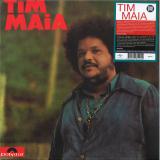
Tim Maia’s self-titled 1973 album is one of those records that hits you from the very first groove and doesn’t let go. Originally released on Polydor Brazil, this was the fourth in a series of Tim’s self-titled albums and many fans and critics still consider it the crown jewel. Packed with irresistible hooks, lush arrangements, and that unmistakable Tim Maia swagger, the album captures the singer at the peak of his creative powers.If you’re new to Tim Maia, here’s the quick story: born in Rio de Janeiro, Tim was a larger-than-life icon whose music married American soul and funk with Brazilian samba and pop long before “fusion” was a buzzword. A true musical polymath, he absorbed everything from Curtis Mayfield to Motown and translated it into a sound entirely his own, gritty, passionate, and full of groove.
He didn’t just introduce soul to Brazil; he made it Brazilian.On this 1973 release, Tim pushes everything up a notch. The arrangements are bigger, slicker, and surprisingly majestic, without losing the raw spirit that earned him a devoted following. From the moment ‘Réu Confesso’ opens the album, you know you’re in for something special—smooth, funky, and heartfelt in all the right ways. The bittersweet ‘Gostava Tanto de Você’ remains one of his most beloved classics, while ‘O Balanço’ bursts with Brazilian flavor that practically dares you not to move. And with tracks like ‘Do Your Thing, Behave Yourself’ and ‘Over Again,’ Tim shows just how naturally the soul idiom fit him, even when he switched to English.This record has everything: deep grooves, soaring strings, magnetic vocals, and that unmistakable sense of joy that Tim Maia carried into every session. It’s a front-to-back winner—one of those albums that deserves a spot not just in Brazilian music history, but in any collection that celebrates great soul, funk, and timeless grooves.If you’re a longtime fan, it’s a reminder of why Tim Maia is legendary. If you’re discovering him for the first time, this is the perfect place to start. Either way: press play, turn it up, and let Tim do his thing.
- 1: Good Man (Demo 2006)
- 2: 1996 (Demo 006)
- 3: Brother's Song (Demo 2006)
- 4: Missing You (Demo 2006)
- 5: Nobody Moves (Demo 2006)
- 6: Luca (Demo 200)
- 7: Fork And Knife (Demo 2006)
- 8: Yeah (Sowing Season) (Demo 2006)
- 9: Battalions (Demo 2006)
Brand New is an American rock band from Long Island, New York that formed in 2000. The band is made up of four members: Jesse Lacey, Vincent Accardi, Garrett Tierney, and Brian Lane. They began their journey to success by performing at local clubs and venues, which made them popular in the underground scene. Since breaking onto the scene, the rock band has released numerous hit singles. To this day, they continue to tour around the world while performing in music festivals and for sold-out shows.
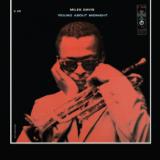
In 1955 Miles Davis played an all-star jam session at the Newport Jazz Festival with Thelonious Monk on piano, Gerry Mulligan on baritone sax and Zoot Sims on tenor sax. This performance immediately drew the attention of Columbia Records' George Avakian, who was so impressed that he immediately offered Davis a contract if he could form a regular band. The group he then assembled would go down in history as Davis' so-called "First Great Quintet", consisting of John Coltrane on tenor sax, Red Garland on piano, Philly Joe Jones on drums, Paul Chambers on bass and of course Miles himself on trumpet. 'Round Midnight is Miles Davis' first record for Columbia and also the first studio recording of the First Great Quintet. The recording sessions began on October 26 1955 but the album wasn't released until 1957 as Davis was still under contract at Prestige at the time. These respective sessions yielded Steamin', Workin', Cookin' and Relaxin'; albums that would go down in history as quintessential blueprints of late 1950s hard bop.
The record is made up of a collection of standards and one traditional song ("Dear Old Stockholm", from the 19th century). Notably, it features what may be considered the most well-known versions of Thelonious Monk's "'Round Midnight" and "Bye Bye Blackbird". That Avakian made a golden signing was sufficiently clear from the start, but no one could foresee that it would be this quintet on Columbia that would go on to change the course of modern jazz forever with Kind of Blue. 'Round Midnight is available as a limited edition of 1500 individually numbered copies on crystal clear vinyl.
- A1: A Bureaucratic Desire For Revenge Part 1 (Black Noi$E Inversion)
- A2: A Bureaucratic Desire For Revenge Part 2 (Black Noi$E Inversion)
- B1: Ouroboros Is Broken (Black Noi$E Inversion)
- C1: Geometry Of Murder (Black Noi$E Inversion)
- C2: German Dental Work (Black Noi$E Inversion)
- D1: Divine And Bright (Black Noi$E Inversion)
- D2: Dissolution I (Black Noi$E Inversion)
New “Inversions” of drone rock pioneers Earth’s debut release. A collaboration between Dylan Carlson and Black Noi$e (Armand Hammer, Danny Brown, Earl Sweatshirt) formed in mutual respect and appreciation for one another. Both artists were intrigued by the creation of vast musical landscapes and the connection of music, with its ability to transport the listener. The music of Earth was recognised and celebrated for moving at a glacial pace and yet this new collaboration surprisingly saw Black Noi$e slowing things down even further.
The debut, which originally came out in 1991, notably featured Kelly Canary and Kurt Cobain on vocals on the tracks “A Bureaucratic Desire for Revenge Part 2” and “Divine and Bright”. Black Noi$e reimagines the original recordings with his experimental sensibility and innovative multi-instrumental, cross genre exploration. Applying contemporary electronics to the heavy droning bass and guitars and languid rhythms, this inversion oscillates and reverberates with a different kind of energy whilst simultaneously highlighting the much loved low slow and distorted properties of the original.
‘Extra Capsular Extraction’ was the first music Dylan made with Earth and his first time in a recording studio, which he recalls at the time as being “terribly exciting”. It also marked the first time collaborating with others and seeing it reified into a tangible object or product, a spirit that Dylan has carried through to the present. The original album is a document of a specific period and Dylan’s creative development. These inversions of Extra Capsular Extraction are, to quote Dylan, “an exciting way to reintegrate them into the present time and with my more expanded conceptions of musical endeavours”.
"Doom-metal innovators" Pitchfork.
"With guitars ramped up to the nth degree, but tuned to gut-wrenchingly low frequencies, Earth carved out a veritable canyon of pure molten drone, one which would have a profound influence on modern metal music." The Quietus
- Casual Bunker
- Alright Javier
- After You've Gone
- Ordinary Times
- Den Den
- Field Recording
- Bone Trade
- The River Is A Scar Made Of Glass
- Maggots
- Financial Placeholder
- Better Than
- Weed King
Bei einem aktuellen Auftritt von DREAM_MEGA stand Joel Kyack allein auf der Bühne und schickte einen Soundstrom auf das Publikum los. Überwältigt von den gruseligen Frequenzen, den eindringlichen Rhythmen und den wilden, verstimmten Vocals, flüsterte ein Besucher seinem Nachbarn zu: ,Ich glaube, der Typ hat Kontakt zu Dämonen." Ob aus Angst oder Bewunderung gesagt, diese Anschuldigung ist angesichts des zweiten Albums von DREAM_MEGA, ,Control / You Are Not the Center", durchaus zutreffend. Die Platte ist voller Bedrohung. Man hört es in den mutierten Kriegsmarschen, im Dancehall-Reflux, im dröhnenden Bass. Man hört es in den kristallklaren Melodien und den sehnsüchtigen Aufstiegen. Man hört es sogar in dem Cover von Guided by Voices. Joels Beziehung zu verstörenden Klängen - dem Channeling von Dämonen - besteht nun schon seit Jahrzehnten. Seine langjährige Tätigkeit bei Landed, der Band, die er 1997 mitbegründet hat, verläuft parallel zu Joels Beiträgen zu Six Finger Satellite, Men's Recovery Project, Megafuckers, Dos Mega und Street Buddy. Diese unermüdliche Hingabe führt direkt zu dem fieberhaften Verfall seiner heutigen Arbeit, aber Dream Mega ist etwas ganz Besonderes. Entstanden aus Joels Nahtoderfahrung im Jahr 2020 - einer Woche der Schwäche, die er isoliert in Thailand verbrachte, Blut hustete und seine Bettlaken durchnässte - erobert DREAM_MEGA einen einzigartigen Raum an der Schnittstelle zwischen Konfrontation und Hingabe. Aufbauend auf seinen eigenen Erfahrungen bei Hardcore-Shows und Straßenauftritten treibt Joel DREAM_MEGA in einen antipodalen Zustand, in dem Hyperbewusstsein und befreiende Transzendenz koexistieren. Die Songs auf ,Control / You Are Not the Center" starren unerschrocken auf unsere dumme, gefährliche Welt, ähnlich wie es ein Song von Dropdead tun würde, aber gleichzeitig heben sie die Last dieser Katastrophe und drängen auf eine luftige Atempause. Ein Teil davon ist Joels kompositorischer Ansatz, bei dem er alte Holzblasinstrumente gegen digitale Synthesizer setzt und unnatürliche Schaltkreise mit menschlichem Atem kreuzt. Aber im Kern geht es um Joels dringendes Bedürfnis, mitten in der Nacht seine Angst und Traurigkeit und die Funken der Hoffnung anzusprechen und sie in etwas zu verwandeln, das sein Herz trotz allem weiter schlagen lässt. Es ist ein Akt der Klarheit und Selbsterhaltung, der so geschickt inszeniert ist, dass jeder Zuhörer die Dämonen spüren kann, die in seinem eigenen Herzen wirken. ,Control / You are Not The Center" enthält Klangbeiträge von Ryan Weinstein (Coffi n Prick), Cordey Lopez und Lisa Anne Auerbach. Es ist empfehlenswert für Fans von Hassell & Enos ,Fourth World, Vol.1: Possible Musics", Houstons Chopped-and-Screwed-Szene und Captain Beefheart.
Alice Kemp is a British artist working with noise, performance, fetish objects, installation and many other forms of media. Throughout her work, she articulates a broken and illogical syntax of the subconscious through trance states, dreams, and disturbances. She has performed extensively, occasionally as an associate to the Schimpfluch-Gruppe of Swiss extreme aktionists.
It is a rarified violence that the Kemp invokes on her 9 Dreams In Erotic Mourning. Something disfigured. Something fucked. Something left behind. The subject matter of her investigations are deliberately inscrutable as she grotesquely amplifies a moment of terror, or fear, of sadness through pockets of piano melodies broken by psychoacoustic noise, razor-cut silence, ghastly vocalizations, crushed acts of physical aggression, and buckets of high-pressure suspense. Cryptic and oblique by design Kemp's work reads perhaps as a seance gone awry, certainly as private ritual made public, and as a transfiguration of literary body horror turned into a sonic nightmare that runs parallel to the works of Rudolf Eb.Er, Puce Mary, Sewer Election, and Luc Ferrari.
9 Dreams In Erotic Mourning was originally published as part of the instantly out of print boxset, On Corrosion - a 10 cassette anthology from 2019 that was housed in a handcrafted wooden box and featuring full albums from Kleistwahr, Neutral, Pinkcourtesyphone, Alice Kemp, She Spread Sorrow, G*Park, Relay For Death, Francisco Meirino, Fossil Aerosol Mining Project, and Himukalt. The collection also stood as the 50th release for The Helen Scarsdale Agency.
- 1: Drumline (Instrumental)
- 1: 2Mágica (Instrumental)
- 1: 324 Hr Sports Theme No. (Instrumental)
- 1: 4Say Goodbye (Instrumental)
- 1: 5Oakley's Car Wash (Instrumental) Feat. Dave Guy
- 1: 6Anticipate (Instrumental)
- 1: 7Eastside (Instrumental)
- 1: 8Clean The Line (Instrumental)
- 1: 9Cortex (Instrumental)
- 1: 0Shining (Instrumental)
- 1: 24 Hr Sports Theme No. 2 (Instrumental)
- 1: 2Indifference (Instrumental)
- 1: 3Carry Me Away(Instrumental)
- 1: 4Take My Hand (Instrumental) Feat. Rahsaan Roland Kirk
- 1: 5Open Season (Instrumental)
- 1: 6Victory Lap (Instrumental)
Field Green Vinyl. Big Crown Records is proud to present the instrumental version of El Michels Affair's 2025 instant classic 24 Hr Sports. The roster of vocal features on 24 Hr Sports is amazing, Clairo, Norah Jones, Florence Adooni, Shintaro Sakamoto, two different choirs, and even some singing from the man himself, Leon Michels. The background vocals contributions are amazing; Lady Wray and Kevin Martin from Brainstory to name a few. But alas, there's a new energy that shows up in the listen when you pair it down to the impeccable musicianship and Leon's tried and true "Midas Touch" production. Leon plays a ton of instruments across the album and is joined by the regular cast of heavy hitters; Homer Steinweiss, Nick Movshon, Dave Guy, Marco Benevento, Hether, and more. There is even a saxophone solo by the late, great Rahsaan Roland Kirk.Some would argue this is some of the best music being made by some of the best musicians of our time. We wouldn't argue with anyone...we let the music do what it does.
- 1: Spirit Salient
- 2: The Rebel Duke
- 3: Wrecked
- 4: Valiant Heart
- 5: Prince Of This World
- 6: Time Is Out Of
- 7: Joint
- 8: My Throbbing Heart Shall Rock Thee
- 9: Ours Is The Fall
- 10: Sweet Remembrencer
- 11: I Am Thine
It's hard to fathom Martin Bramah's trajectory from his beginnings as a guitarist/writer behind two crazily influential postpunk albums - The Fall's Live At The Witch Trials and Blue Orchids' The Greatest Hit (Money Mountain) (vocalist on the latter too, of course) - then nearly three decades of sporadic-at-best activity, offering releases just frequently enough to remind fans of his peculiar brilliance . . . before another stay in the void. Chalk it up to what you want - Mark E. Smith's utter usurpation of The Fall, his split from partner Una Baines after Blue Orchids' debut, the vague collapse of rash experimentation in `underground' music as early `80s nu-pop and American college rock diluted any real spirit, a few failed attempts at working with with Mark again . . . and maybe just life getting in the way. A sense of lost opportunities isn't tough to justify. Inasmuch as Martin was originally the singer for The Fall - Mark began as guitarist but couldn't play! - and given that the group's mythology was born in an era before that gang of Mancunian misfits had even thought of playing, it's high irony that 49 years after The Fall began, Martin has both become wildly prolific and the leader of a band with more rights of inheritance to The Fall's credibility than any other living person could justify . . .yet the band isn't remarkable for that as it is for the range and wealth extent of their collective powers and talent: two great and original guitarists, three of the UK's most daringly-skilled drummers, a genuine bass legend, and a brilliant spare Blue Orchid guitarist. Four albums in, the HOUSE Of ALL is getting ambitious, with each album a subtle improvement on the last, forging a path away from their pasts without denying a thing. Inklings differs from the first three for not having being largely improvised at first, with sounds, rhythm, groove and melody later forged into songs. They rehearsed! They had fun doing it! They're going on an extended tour! There were even extra tracks! We'll leave it to fans and critics to sit down and analyse the specifics of it all, but Steve, Si, Pete, Phil, Karl and Martin have made a bold and powerful album unlike any other you'll hear in 2026 . . . stately, majestic, bold and worthy of a group of real survivors. In perverse form, the album will be officially announced and preceded by a song not on the album!
Music never exists in a vacuum — every scene and sound evolves from the non-stop exchange of ideas between different groups and cultures. Traditions get passed down from one generation to the next, and then individual heads take influence from their own unique perspective. Sometimes, certain people strike upon fusions that spark massive new movements, but even those rarest innovations came from somewhere.
Jon E Cash knows this more than most — the legendary beats he started putting out at the turn of the millennium had their own disparate roots and influences which he had the motivation to put together into a sound he called sublow. There wasn't any other reference point for this music — when he took the first white labels of 'Drop Top Bimmer Kid' into Blackmarket Records in Soho, London, he had to describe it to a puzzled Nicky Blackmarket and J Da Flex as being, "between garage and hip-hop."
Playing catch-up in 2004, Rephlex Records nodded to sublow when trying to introduce a wider audience to the sounds which had been tearing up the London underground. "Grime. Sublow. Dubstep... It's Music. Different people call it different things depending on when they discovered it." But Jon E Cash's sound was rooted in more than the UK garage that had dominated the clubs through the late 90s, reaching way back to his pre-teen days when the first waves of hip-hop culture crossed the Atlantic and broke in the UK.
25 years on, it's a fine time to reflect on the impact of the music Cash made at the turn of the millennium. History looks back favourably on what he and the Black Ops crew were doing with sublow in the early 00s. The timing meant it ran in parallel with what was happening over East with Pay As U Go, Roll Deep et al, and of course there was crossover. Every DJ and every MC was on the hunt for the best beats they could find. But there's a whole different swagger to sublow — a different web of influences, a different intention and so a different outcome. It's still there in the beats Cash is making more than 20 years later — his 3dom Music label is carrying upfront productions with that sublow DNA coursing through their veins. Whatever the beat or the tempo, the drums are still hard as nails, and the bass is tuned for maximum rave damage.
- Svensk Drm
- Balderdom (Tres Jolie)
- Rerun Of Forever (Stravinsky)
- Vi Er Et Kollektiv
- 5: Lidskjalv
Green Vinyl, limited to 500 copies. New album from the psychedelic, progressive folk rock band from Skien, Norway! The day belongs to the night The four songs on side A came about in November 2022 for a winter solstice celebration at Oslo Badstuforening. Our take on this was that the solstice invites reflections on the relationship between night and day. Does the day spring out of the darkness of the preceding night or does the night follow and swallow the light of the day? Is it Saturday Night or Sunday Morning? Are we running from the past or catching up with the future? Moving from A to B, Lidskjalv has existed as a demo since the 90s. Many versions have been made, but this is the first proper recording of the song. The passage of time is the future becoming the present. It moves forward in circles like a rolling wheel. Balder, Osiris and Jesus are all vegetation gods emulating the turn of the seasons in their eternal return. After the death of winter, life emerges anew. But not only this; there is also the promise of each dawn bringing a Better Day. According to Snorre, after the Fimbul Winter and Ragnarok, there is a new Earth. From the ashes emerges a better place. This holds also the idea of progress. It is at the core of being a prog band; each album is an improvement on the last, an exploration of new territory, a different perspective.