With 14 Academy Award nominations, seven Grammy awards, and an Emmy to his credit, Thomas Newman has a track record second to none among modern screen composers (and even among his family, which is saying a lot considering he is son to Alfred, brother to David, and cousin to Randy Newman)! But among all his Academy Award-nominated scores—to classics like The Shawshank Redemption, Wall-E, Finding Nemo, Saving Mr. Banks, and The Road to Perdition—his score to the 1999 Academy Award-winning Best Picture American Beauty (the first of his many collaborations with director Sam Mendes) remains his most distinctive. That’s because Newman made the bold choice of composing a score almost entirely with percussion instruments, brilliantly intuiting that the lack of melodic resolution in the film’s themes would echo and amplify what he termed the “moral ambiguity” of the script. The result was a haunting and wholly original film score that is instantly recognizable to anyone who has seen the picture. Real Gone Music is very, very proud to present this work of genius on blood red rose vinyl to match the original album art (here used for the first time on a vinyl release) and the film’s shattering conclusion!
Originally released on tape by SicSic in 2014, Aprilnacht commemorates a decade of music from Brannten Schnüre and marked the spring in a tetralogy of albums about the four seasons when it came out. Back then the Würzburg-based project consisted solely of Christian Schoppik, who later welcomed Katie Rich to take over the vocals. He used to perform as Agnes Beil, but dropped the name when, while making this album realized his music was becoming "much gentler and more fragile". Aprilnacht already captured the particular musical ideas that Schoppik would thoroughly keep exploring, delving deeper and deeper into the use and manipulation of samplers from sources so diverging as to wander between the five continents to post-war German family television and cult cinema. Heir of the ritualistic intensity of Coil, of the intricate sampler assemblies of Ghédalia Tazartès', and of the dusty, dismal old ballads from around the world, Brannten Schnüre manages to make these paths cross in a territory that is as inherent as it is uncanny; sieged by the past and intimate as a hearth. An organic approach to folk, ambient, and sound collage, where ethereal yet thoroughly textured pieces coalesce in enthralling, delicate, and innermost musical rituals.
The album cover paintings reveal the temper: dreary old towns where shadows come to dim the slow passage of crepuscular colors, a soft area of reanimation where wind and light come close and foresee the night of spring. Aprilnacht was inspired by the stories of German philosopher and writer Friedrich Alfred Schmid Noerr, whose work exhaustively examines the conflict between paganism and Christianity, safeguarding myth in a way that Schoppik describes as boldly modern, humorous and unpredictable in its variations of the Germanic folklore motifs. "I wanted to do the same with the music," he states, and the music here could as well be suitable for a night when household deities welcome wandering will-o'-the-wisps, water nymphs, and gyrovagues to discuss Perchta's leadership of The Wild Hunt, but this album is not a folk tale, it's not an elegy to worlds already gone, hidden in years; it's an intersection of routes that open mysteriously before our ears like a congregation of vapors. Aprilnacht is a gathering of voices; "There are too many children, and none of them keeps quiet," reads the last verse of «Requiem für eine Ringelnatter.»
Sensuality drips over the music to celebrate both the voluptuousness and tragic quality of nature; "It's raining on me, urine from your flowers," Schoppik sings in «Urin deiner Blüten» and later on, faced with a snake's erotic features, as if he wanted to be embraced by it: "Your quick, sharp tongue and your warm venom; that's what the pond is missing." Orality is where this profusion of contents thrives. When the voices get closer and condense, the words reveal the saliva employed to pronounce them; we feel the mouth and the tongue, but when breath envelops them in sorrow and softens their edges, they sound distant, diffused in the atmosphere, letting go of the body that held them. These two vocal facets oscillate permanently and interact naturally with the fertile assembly of samplers and instruments that develop throughout the album, which condense and disperse impersonating each other, interweaving to search for a specific syntax. Tangled whisperings of enigmatic phrases, timid voices that stick out to check the scene but hide away quickly, shivering trance chants and monastic ambiances, distant screams and clamors in between chaos and warfare swirl until bursting into subtle songs where even Mother Mary comes forth softly. Soothed by foggy atmospheres and crackling punctuations, these voices shape a vulnerable crowd, an occasion of fragility. Along this swarm of songs thrown into thin air, accordions sound like heavy-breathing lungs; clarinets sigh like curtains shaking; violin solos wander around like bees; Gjallarhorns cries distend like fleeing cattle; glockenspiels evoke remote music boxes and inherited toys; backward emanations emerge like slender waves retreating. On the banks of stretching loops and ember textures is where the songs slowly nest, collecting the words to find their tone.
A poem by Jorge Teillier says, "To talk with the dead you have to choose words that they recognize as easily as their hands recognized the fur of their dogs in the dark. To talk with the dead you have to know how to wait: they are fearful like the first steps of a child. But if we are patient one day they will answer us with a flame that suddenly revives in the fireplace." This may be Brannten Schnüre's main purpose: To find the voice to speak to those of whom we were a vision. Not in mourning, but acknowledging the obscure and volatile nature of spring's regenerative force, searching for the treasure of balance, as evidenced in the lyrics of «Requiem für ein Schwalbennest,» "Its nest was destroyed so many times before it was finished, and despite that, the shallow builds as if it is infatuated." The same idea is here in the words of Schmid Noerr, who made poetry an act of resistance to the horror of Nazism; "Since having seen the ability of a brilliant spirit to die, with a calm mouth that everyone saw, health is true again and we affirm it, even if rivers of blood flow." And as we call for the dusk's kindness, waiting to return home and eat with our kin by the stove, our ears become used to the games of the night. We feel like we're rowing on wetlands, while the "moon musick" keeps us vigilant against the slightest movement of water or sweet moan because eeriness here is imperative for survival. Do not succumb to the insipid howl of death, for nothing may last but mutability. You see, the rock has moved a little during the night; the rest is just wind fleeing from the void.
out of Stock
Last delivered 2 years ago available to reorder, subject to availability
We Release JAZZ is very happy to announce an exciting new body of work by Joseph Deenmamode aka Mo Kolours. The singular musical spirit’s new 21-track album Original Flow is available as a double LP housed in a heavy 350gsm sleeve with original artwork by Mo Kolours himself and the classic WRJ obi strip, as well as in digipack CD and digital formats.
A catalog of critically acclaimed records, including his self-titled debut (2014), ‘Texture Like Like Sun’ (2015), 2018 album ‘Inner Symbols’ and three companion EPs, established Deenmamode as a prodigious musician and vocalist. Pitchfork extolled his “hypnotic, tribal-infused dance grooves”, DJ Mag appreciated the “colourful celebration of soundsystem culture”, and Resident Advisor advocated that “no one sounds quite like Mo Kolours”. Musical analogies were drawn by The Guardian as “The best album Curtis Mayfield never made with A Tribe Called Quest and Lee Perry” and Mojo as “like Marvin Gaye produced by J Dilla”.
Five years ago, Deenmamode moved to the Japanese countryside. Far away from familiarity, he contemplated his place and further questioned his identity. “I had none of my ‘own’ people around. I had time to really find what makes me tick musically. Japan has helped me go back to those subconscious leanings, really go deep, and reflect the aspects that make up my story”.
The tracks on ‘Original Flow’ have been constructed from sessions, improvisations and soundbites captured around the world during this time; collecting contributions from musicians including Deenamode’s brothers Reginald Omas Mamode and Jeen Bassa plus Andrew Ashong, Charles Bullen, Dwaye Kilvington, Eddie Hick, Stefan Asanovic, Myele Manzanza, Ross Hughes, and Tom Dreissler. Deenamode says “I’m proud of this album’s creative process. Coming from a tradition of scouring through hours of records, I wanted to create my own samples, to find that perfect loop that no other producer could put their hands on. I decided to invite a group of friends and acquaintances, who also happen to be incredible musicians, to a studio in Crystal Palace to improvise based on some loose ideas I had. We spent all day, and recorded everything”.
‘Original Flow’ is an album of UK street-soul nouveau, future indigenous jazz fusion, Rasta Segga, Nyahbinghi jazz, Malagasy Hebrew hip hop. While retaining a spirit of exploration and improvisation, it sees Deenmamode grow and flex beyond beat tape brevity, expanding composition and stretching his musical muscle to play live with other musicians. Themes of empowerment, overcoming adversity, and mental liberation coexist with notes from ancient history, futurism, and science, as well as musings on family and togetherness.
‘Magik Momentum’ springs from a discussion that features at the start of the song, an inspiring mentor answering a question from Deenmamode about improvisation and what role it plays in life when planning and manifesting the future. ‘Rockets to Mars’ questions the lack of care for the billions of people with nothing, while governments plan to explore space. “This sparked a comparison in my mind to a Sonny Okuson song that I would reference when performing. Okuson’s song talked of the lack of resources in many communities in the world, while governments go to the moon”.
He says the music behind ‘The News These Days’ is “possibly my favourite on the album”. Looped like he would a late sixty jazz-fusion sample, there was nothing added and the track was complete within a matter of minutes. “It was the first and best moment from the entire Crystal Palace session”, he adds. The album’s contrasting title track with minimal instrumentation played solo by Deenamode. While frustratingly searching for gems in past recordings, he thought in a burst of ego, “I don’t need no-one else to make a dope beat!” picked up his ravanne, (the traditional frame drum of his fathers home-land of Mauritius), pressed record, and started to play. He says, “In my thoughts were the rhythms of the Nubians in Upper-Egypt and Sudan, the swing of the huge drums played by Mauritanian women, of-course the Sega beat of Mauritius, and the ever inspiring beat of James Yancey”.
Driven by UK broken beat, Cuban congas, Nigerian and Mauritian inflections, ‘Love Vibration’ follows the concept that all emotions carry a vibratory frequency and pays homage to the frequency of creation and the power of love. The two part ‘Tatamaka’ tells of the history of Deenmamode’s ancestors, the maroons of Mauritius. “We are people who managed to run from our oppressors and find refuge in a corner of the island called ‘Le Morne’ where they could not reach us. One bloody day they came in numbers to re-capture, to revenge. Many of us chose to jump to our deaths, rather than be taken back into subjugation. The poem by Creole Richard Sedley Assonne says; “there were hundreds of them, but my people, the maroons chose the kiss of death over the chains of slavery”. Tatamaka was the name of a famed maroon leader who was murdered for claiming his, and our people’s freedom. The song is the imagined journey of escape and freedom by an ancestor of the maroons of Le Morne”.
Born in the west midlands and raised on the traditional sega music of his father’s Indian Ocean homeland of Mauritius alongside records by the likes of Jimi Hendrix, Santana and Michael Jackson; his influences expanded with late 90s jungle and drum and bass nights in Bristol, experiments at art college in Camberwell, and the rich culture of Peckham, “at the time we called it the Afro Quarters of London” says Deenmamode, adding hip hop, dub, soul and soundsystem styles to his individual sound.
He explains, “I love drum music, from hand-drums to 808s. I love music from the ancient past, heritage music, indigenous music, traditional music passed down from the beginning of time. Music from the body, hand claps, grunts and foot stomps. Music with audible depth, busy, bustling, highly charged. Music from the soul, the music from beyond. I love music from the islands and the mountains. The music of the streets, hustle music, alleyway beats. Club music”.
He describes the creative process as thinking in images. “The visual world and the world of sound seem to intermingle in my thought process. When I play the drum with my eyes closed, a world of imagery dances and moves with beat. Improvised drumming feels like I am listening to what I want to hear, rather than trying to play what I want to hear. Following the rhythm and finding new pathways to walk within the patterns is what I experience. In this way I often feel I am just a listener, instead of the player”.
Original Flow is pressed on biovinyl, a sustainable alternative to traditional vinyl. Biovinyl replaces petroleum in S-PVC by recycling used cooking oil or industrial waste gases, resulting in 100% CO2 savings in bio-based S-PVC production. Furthermore, it is 100% recyclable and reusable, embracing the circular economy ideology.
out of Stock
Last delivered 2 years ago available to reorder, subject to availability
My Proud Mountain is proud to announce third volume of the series "Songs of Townes Van Zandt", that was started in 2012 and features various artists covering Townes Van Zandt songs. Songs of Townes Van Zandt Vol. III featuring Amenra, Cave In & Marissa Nadler and will be released on April 22, 2022. Steve Brodsky of Cave In about being part of the record: "In the winter of 2010, I did a solo tour with Scott Kelly of Neurosis and Bob Wayne. It was the 3 of us and Ansgar Glade traveling in Bob's "green machine" van around the UK and Ireland. At every show, Scott played the song "Caroline" and each time I heard it, I found myself enraptured. This was my introduction to Townes Van Zandt. Pretty cool that 10 years later, Ansgar has given me and Cave In this great opportunity to show our love for TVZ's music." Lennart Bossu of Amenra says: "Being Belgians, the very American folk and country of Townes Van Zandt is not exactly the music we grew up listening to, but upon discovering his songs in our early twenties, they immediately struck a chord with us. Even people who do not understand the lyrics can probably tell that they are listening to someone who has lived and suffered, and, oddly enough, at the same time find deep comfort in his soothing voice. It is the kind of comfort that often defines great music or art in general, and it made the prospect of trying our own hand at a few of his songs no less daunting. Nonetheless, when we were asked to be part of this collection of Townes Van Zandt cover songs, we felt excited and compelled to be part of it, as, in a way, it offered us a chance to do something in return for the great songs he has given us, and also be a part of a series of albums that are almost exclusively comprised of artists we deeply respect." Marissa Nadler about Townes Van Zandt: "I've been a fan of Townes Van Zandt's music for nearly as long as I've been writing songs. When I was starting out, a friend introduced me to Townes's music and I pretty much instantly fell in love with both the rawness of his songs as well as the intense sense of longing expressed within them. His lyrics are haunting and evocative and have inspired me endlessly. These melodies will linger with you, year after year, and hopefully keep you company along the way." Ltd red vinyl LP!
"When I moved to Minnesota from Pittsburgh in 1994 all I brought with me was a big duffle bag and an acoustic guitar. I was 19. In that bag was a Radio Shack cassette recorder. I spent that time writing and filling up a tape with new songs. A few years later I earned enough money from my restaurant jobs to buy an old reel-to-reel 4-track recorder and some other instruments which allowed me to slightly expand my production ideas. More songs kept flowing and I made my self-titled album adding drums and bass. Over the next few years, as things grew, those sparse cassette songs fell on the back burner until 2002 when I decided to re-record a bunch of them at a higher quality. To keep with their original vision, I asked engineer Tom Garneau if he could record me playing them live in his living room. We left the production minimal and rough which I think serves these particular songs well. No overdubs. Just solo acoustic guitar and vocals. I called the album Simple Life. It was originally just a limited release. Until now. I hope you enjoy it."
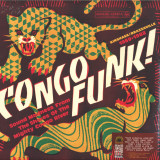
The making of Congo Funk!, our long-awaited journey to the musical heart of the African continent, took the Analog Africa Team on two journeys to Kinshasa and one to Brazzaville. Selected meticulously from around 2000 songs and boiled down to 14, this compilation aims to showcase the many facets of the funky, hypnotic and schizophrenic tunes emanating from the two Congolese capitals nestled on the banks of the Congo River.
On its south shore, the city of Kinshasa – capital of Democratic Republic of the Congo, the country formerly known as Zaïre – is often seen as Africa’s musical Mecca, the city that spawned such immortal bands as African Jazz, O.K. Jazz and African Fiesta, and the place to which aspiring musicians from throughout the continent would go to make a name for themselves.
But the city of Brazzaville on the north shore of the river – capital of the Congo Republic – played an equally important role in spreading Congolese sounds continentally. In addition to producing legendary bands such as Les Bantous de la Capital, it was the powerful transmitters of Radio Brazzaville that allowed the unmistakable groove of Congolese Rumba to be heard as far away as Nairobi, Yaoundé, Luanda and Lusaka thus turning the electric guitar into the continent’s most important instrument!
Although the musical landscape of these cities had been defined by a core group of bands in the late 1950s, the modernisation of Congolese music has been steadily evolving until the events surrounding the Muhammad Ali vs George Foreman boxing match marked a turning point. The promoter of that event known as “Rumble In The Jungle” was none other than the notorious Don King who needed 10 millions dollars to get Ali and Foreman into a boxing ring. The only candidate willing to put this kind of cash on the table was Mobutu Sese Seko, President of the Democratic Republic of the Congo.
Mobutu - the megalomaniac dictator who got to power with the support of the United States and Belgium in exchange for unlimited and affordable access to the riches of the country - had a soft spot for music and it doesn’t come as a surprise that he agreed to a three-day live music festival being organised prior to the “Rumble”. Zaïre 74 - as the festival was dubbed - was meant to hype the boxing match and many stars were invited.
Although a myriads of artists flocked in for the occasion, it was the performance of James Brown on Zairian soil that caused havoc among the younger generation, inspiring hundreds of would-be musicians to take up their electric guitars and reverbs cranked to the max in search of a new sound in which hyperactive Rumba was blended with elements of psych and funk. While the results were very different from the popular music of the three Musketeers - as Tabu Ley, Franco and Verckys were known - they weren’t a complete break with tradition.
These new sounds emerged at a time when the Congolese record industry – previously dominated by European major labels – was experiencing a period of decline due to rising production costs and needed a radical change. The void was filled by dozens of entrepreneurs willing to take chances on smaller scale releases. It was the beginning of a golden age for Congolese independent record labels, and the best of them – Cover N°1, Mondenge, Editions Moninga, Super Contact – preserved the work of some of the region’s finest artists, while launching a generation of younger musicians into the spotlight.
The movement was greatly helped by legendary radio shows but it was the dynamic productions of Télé-Zaïre that set the dynamite on fire. Legend has it that TV shows were so huge that president Mobutu himself ordered RTV du Zaïre to put on daily concerts since it halted criminal activities for the duration of the evening.
Congo Funk! is the story of these sounds and labels, but most of all it is the story of two cities, separated by water but united by an indestructible groove. The fourteen songs on this double LP showcase the many facets of the Congolese capitals, and highlight the bands and artists, famous and obscure, who pushed Rumba to new heights and ultimately influenced the musical landscape of the entire continent and beyond.
out of Stock
Last delivered 11 months ago available to reorder, subject to availability
Ondrej Zajac doesn't practice. Neither does he play his guitar with as little as a hint of striking technical prowess. Despite this, he makes music with the confidence of a master instrumentalist who doesn't let their chops get in the way. This is because Ondrej Zajac understands that the point of playing an instrument is to transcend it.
Such principles have been the source of pride for the idioms of experimental and free music, but these suffer from the chronic peddling of artistic narcissism. Ondrej Zajac works in the confines of these genres, but impressively avoids all their pitfalls. His music is almost pure content, as straight as a line, and so immediate and so fucking honest it leaves you wondering.
I Will Be Forgotten offers plenty of opportunities for such wondering, regardless of whether the composition is sixteen minutes or sixty seconds long. The structure of the whole thing, the appreciation of all properties of sound without indulgence in any of them, the playfulness and composure beyond it all, not even the beautiful sonic grain of the guitar itself, none of this does dwarf the most remarkable accomplishment of this record // its utter artistic integrity.
Recorded live at Divadlo 29 in Pardubice and co-produced and mixed by Václav Šafka, I Will Be Forgotten is the second solo release by Ondrej Zajac (Banausoi, Data Koroptev) and the 19th release by the sincere label Weltschmerzen.
"Back in the 1990s original Verve pressings of this record were hot items pushed into prominence in great part by write-ups in The Absolute Sound, particularly by my friend Frank Doris. I found a few, and even a few in pretty good condition, but none of them begin to compare to this double 45 RPM set that offers more of everything, particularly transparency and instrumental separation. ...Ella's on a microphone with a slightly rising high end but if it sounds icy, don't blame the recording or the mastering. It's your system. If it's well-balanced and your cartridge is a good tracker, the vocal transparency and clarity are spooky and the sibilant articulation is precise. These double LPs cut at Sterling Sound use the original tapes, not copies of the original tapes and the clarity and transparency coupled with QRP's drop-dead silent pressings are remarkable. The original pre-MGM buyout LP has a pleasingly nostalgic quality and the added warmth produces a bit more room sound, but in my opinion it can't compare to this reissue unless you like hearing things through rose-tinted loudspeakers. Elegantly produced, arranged and recorded and easy to recommend ..." Music = 9/11; Sound = 9/11 - Michael Fremer, February 15, 2013.
Fourteen numbers from the heyday of swing, composed sometime between 1930 and 1945 - played and sung time and time again in ballrooms, or on the radio to advertise biscuits or war bonds, were recorded by Ella in completely new and personal interpretations in 1961. No one should be put off by the rather unfortunate cover. Clap Hands... is absolutely top notch as regards musicality, perfect recording quality, superb accompaniment by a small ensemble, with room for improvisations; it offers a wonderful opportunity to discover something new in these evergreens, despite the occasionally banal lyrics. The songs of this recording conjure up bygone days, with listeners in the 21st century being offered a highly personal homage to one of the most successful periods in the 100-year history of jazz.
Stop. Breathe. Reload. And dive into "El Paso, Elsewhere: The Album". Black Screen Records, Lost In Cult Records and Strange Scaffold are teaming up to bring the original songs of RJ Lake and LAKE SAVAGE to life on glorious vinyl. "El Paso, Elsewhere: The Album" takes aim at the key songs that punctuate the game's dark and introspective journey through haunted hallways - with heavy doses of hip-hop, electronica and Trace-Wave coalescing into a pellucid vision of influences and a deeply entrenched sense of identity, akin to the works of seminal hip-hop artists such as Kendrick Lamar and Open Mike Eagle. All tied together within the beautiful gold foil cover artwork by Bri Neumann. RJ Lake shared some of their thoughts going into the creation of this album: "Months before the first thing I ever started working on with Nelson Dog Airport Game (that's not the actual title, but it might as well be) even came out, he asked me if I knew anyone who could make a horror game. I knew a guy. A few months in, we did a touch-base about the music and mutually agreed that none of it at that point was totally working. It was good (look, I'm not going to put myself down here; even back in 2020, it kicked ass) but it wasn't RIGHT. He gave me a bunch of reference materials and kept pointing to them and saying: 'Okay, but these? These are RIGHT. These have the juice we want.' The thing every single song he showed me had in common, was that every one of them had vocals. After some back and forth, we both agreed: 'El Paso, Elsewhere' had to be a rap record as much as it had to be a game. So, three and a half years later, here we are. This is probably the most lavishly mixed thing I've ever made, full of weird, intricate beats, layered vocals from both myself and Nelson, lyrics that go everywhere from bleak to so-party-that-you'll-die to totally ridiculous, loads and loads of genre switch-ups, and absolutely zero subtlety. For 'El Paso, Elsewhere', I made a full score, but that's not what this is. This vinyl is a fucking album and it's sequenced like one. Play it loud!" Alongside the LP, explore what happens after the events of "El Paso, Elsewhere" within the diaries of James Savage - an exclusive in-world archive of the thoughts and feelings directly from the heart and soul of our protagonist within the liner notes. As well as a 5-page excerpt from the "El Paso, Elsewhere" original script and never before seen concept art by Demente Animation Studio.
Snakes Don't Belong In Alaska have firmly established themselves as a prominent force in the underground UK psych scene, sharing the stage with some of the biggest names in the current generation of psych rock. Notably, they collaborated on a mesmerising album with the legendary Japanese psych artist, Junzo Suzuki, and have had the privilege of performing alongside esteemed bands like Hawklords, 10000 Russos, and The Myrrors, among others.
Originating from the vibrant city of Newcastle upon Tyne, SDBIA embraces an experimental genre non-conforming psych style, blending elements of stoner, kosmische, space rock, prog, and post rock. This captivating fusion of sounds creates a unique musical experience that continues to captivate audiences far and wide.
Their latest offering ‘Navegando Al Paraiso’ sees a slight change of pace from the band, but none less potent. As we’ve now become accustomed to with SDBIA, the band invite you on a transcendent musical journey, effortlessly blending psychedelic rock with waves of folk and post-rock. This album immerses listeners in a dreamscape where ethereal melodies ebb and flow like the tides. Each track evokes a sense of wanderlust, drawing inspiration from timeless musical traditions while pushing the boundaries of sonic exploration. Snakes Don't Belong in Alaska paint an otherworldly soundscape that invites you to lose yourself in the euphoria of musical and introspective discovery.
Available on super ltd edition green & clear vinyl, only 300 copies pressed.
out of Stock
Last delivered 2 years ago available to reorder, subject to availability
"For a long time, I'd come across these discs without really understanding what connected them, apart from a button and that famous logo designed by René Dessirier. Then, with a little more digging, I discovered the "self-production" link. For choirs, schools, folk singers, young pop groups, popular homes and even great composers who engraved unique copies of certain recording sessions...
The French equivalent of the English "Derby Service", the Kiosque d'Orphée, formerly at 7 Rue Grégoire de Tours in the 6th arrondissement, was taken over by Georges Batard in 1967 and moved to 20 Rue des Tournelles in the 4th arrondissement of Paris. The adventure lasted until 1991. Georges Batard was a sound engineer who used a Neumann tube engraver to engrave acetates from the tapes he received, before printing the precious vinyls in the press factories of the day, where he was able to produce very small runs of between 50 and 500 copies.
Of course, there were other structures for releasing his records, such as Voxigrave or, later, FLVM, but none of them had so many records in their catalog. Le Kiosque d'Orphée was neither a label nor a publisher, but a structure that allowed you to press your own vinyl, at a time when it was quite an adventure to get your first 45 rpm or 33 rpm album released!
Georges Batard was described as passionate and conscientious. His son, bassist Didier Batard, wrote of him:
"Georges was passionate about recording and reproducing the stereo sound of his great passion, music. He paid close attention to distortion rates, signal-to-noise ratios, response curves, rise times and other damping factors in audio equipment. He was looking for the exact reproduction of concert hall sound in his living room (with the same sound level, if possible...). In the late '50s/early '60s, he found other sound enthusiasts in AFDERS (Association Française pour le Développement de l'Enregistrement et de la Reproduction Sonores). He became its honorary president. Every Saturday afternoon, its members met to test au- dio equipment. Their opinions were published in the monthly Revue du Son.
All you had to do was send in your tapes and choose the number of record copies you'd like to take home with you, so you could finally share your creations and, in a way, exist. You could opt for a generic sleeve, available in several colors, directly customizable with your name and credits, or you could design your dream sleeve yourself in your living room or at a printer's.
This "Do It Yourself" temple gave birth to some superb pouches. Stencilled, hand-written, illustrated with paintings, drawings, illustrations by friends or girlfriends of the time, photo prints hastily stuck in the middle of a blank, white sleeve, on which the traces of time would leave their imprints, so that collectors and the curious would come and buy them decades later, with the promise of a musical discovery, unfortunately not always fulfilled...
What most of these records have in common is the youth of their songwriters, whether or not they've had a career. Stories of buddies, of getting by and dreams of glory made up this catalog. Most of them were amateur productions, both in terms of the level of the musicians and the quality of the recordings, made on a two-track or, the ultimate luxury, a 4-track in a teenager's bedroom or parents' living room.
It was the beginning of the home studio, thanks to the advent of the Revox portable tape recorder. A bit of a shaky DIY system, but, in return, the luxury of setting no limits: one-sided tracks, no outside censorship, no artistic director, no manager, no Barclay or EMI/Pathé Marconi logos...
When you finally had your own record, you could give it away or sell it to friends, family or after concerts. You could also drop it off at the nearest record shop, with undisguised pride.
It was also a calling card that could be sent to radio stations or music labels, in the hope of launching a career...
Many of the protagonists in this story tried to sign with labels, but in those days, bridges were not so easy to build between one's hometown, or even one's village, and the major or more specialized label that might have released these records. At the time, the advertisements published in the press by the Kiosque d'Orphée opened up the field of possibilities for provincial composers. It was now possible to make their own record, without having to go through the process of signing with a label.
Some of the composers who have gone on to make a career have used this channel to release their first record or parallel projects (Claude Engel, Dominique A, Andy Emler, Michel Deneuve, Claude Mairet, Mick Piellard, Tristan Mu- rail...) and sometimes even single or very limited pressings of work or promotional copies (Bernard Parmegiani, Jef Gilson...).
This album is the conclusion of a long investigation, begun six years ago. It took a long time to find the records, scattered all over the place, in the homes of collectors and sometimes the musicians themselves, and then to listen to them, sometimes painstakingly, to unearth these moments of grace.
From this work, 23 tracks remain, but there are dozens of others that could have been included, so we had to choose, and the choice had to be as universal as possible. This selection is obviously not objective, but I hope you'll like it.
Rock & Roll, indeed. Ruth Brown’s sizzling full-length debut — also known by its eponymous title — symbolizes what was exciting, fresh, invigorating, and raw about the burgeoning style in its halcyon days. Originally released in 1957, and reissued here in audiophile quality for the first time in partnership with Atlantic Records’ 75th anniversary, the set remains a testament to one of the most pioneering and talented vocalists to ever command a stage.
Mastered on Mobile Fidelity Sound Lab's renowned mastering system in California, pressed at RTI, housed in a Stoughton jacket, and strictly limited to 2,000 numbered copies, Mobile Fidelity’s 180g mono LP of Rock & Roll plays with an immediacy, vibrancy, and fullness that showcase the reach, power, and emotionalism of Brown’s voice. The sound of her support musicians — brassy horns, swinging rhythm combos, echoing backing vocalists, rollicking pianists, jaunty guitarists — is made clear and vivid, helping the upbeat fare to jump, juke, and jive with newfound energy and exuberance. In a related manner, Brown’s slower, more understated material crackles with an intimacy and passion that let you know you're in the presence of a woman who has lived what she sings. The longtime Rock and Roll Hall of Fame member deserves nothing less.
In an era dominated by big-throated vocalists, few — if any — came grander than Brown. The singer, whose repeat million-selling ‘50s success with Atlantic Records led many to call the then-indie label “The House That Ruth Built,” charted two dozen R&B hits in the span of a decade for the fledgling imprint. Rightly coined “Miss Rhythm,” the extroverted Brown put Atlantic on the national map, became the best-selling female musician of the ‘50s, and established a precedent that would ultimately lead to Grammy and Tony Awards. Her early works have lost none of their fire or flair.
Akin to many full-length LPs of its era, Rock & Roll doubles as a collection. Its 14 tracks comprise some of the more famous sides Brown recorded for Atlantic, beginning in 1949 with the all-time-great rendition of the ballad “So Long,” and continuing through 1956. After the song caught the public’s ear, the Virginia native briefly became known for her smoldering style with lovelorn material and torch songs, approaching them (see “Oh What a Dream,” “Old Man River”) with a combination of pained sadness and hardened resilience that had no contemporary equal. Encouraged to pursue the style by Atlantic Records co-founder Ahmt Ertegun, her R&B-driven material soon made her a constant chart presence.
Demonstrating what fellow legend Bonnie Raitt deemed “sex with class and dignity,” Brown merges blues and jazz, swing and gospel in electrifying fashion. She dares you not to move, dance, and get on your feet. A majority of Rock & Roll explodes with uptempo runs and jaunty readings of hot-blooded R&B numbers. Sweaty and sultry, bawdy and bold, Brown eclipses the anthemic blare of the saxophones and joyful clatter of the 88s, singing with a slight catch in her voice and hurricane-gale force that threatens to blow the roof off whatever room her voice occupies.
Evidence abounds. Listen to her prod the band and encourage the band members to blow a fuse on a sizzling “Hello Little Boy,” complete with cries and wails; stretch her phrasing to the heavens on the swaying “Wild Wild Young Men,” laden with romp-and-stomp beats; plead and persuade on the snaking “5-10-15 Hours,” which flips the script on the age’s notions of dominance; use her raspy tones, high notes, and breath control to mesmerizing effect on the smash “Mama He Treats Your Daughter Mean,” recorded with a group led by Ray Charles; survey the scene and take charge on the steaming “As Long as I’m Moving”; and tap a classy albeit flirtatious vein on “Lucky Lips,” which dented the pop charts as her first crossover hit.
Throughout Rock & Roll, Brown knows the lyrical connotations and spirited architecture of the songs inside-out. Her assertive voice — never harsh, strident, or false — is the epitome of the passionate desires and sonic strains that turned into nascent rock ’n’ roll. Brown played a pivotal role in helping the style develop, the record a timeless reminder of a lasting legacy that will never be forgotten.
Immerse yourself into the psychedelic electronic pop of Talee, a rising Dutch artist weaving together the tapestry of contemporary indie dance with threads of early 90s British contaminated indie rock.
A multi-instrumentalist, previously championed by Disco Halal, Talee is set to unleash his debut EP “Waiting for Tomorrow” on the esteemed Californian label Underground Pacific, promising an unforgettable sonic journey.
Talee’s music transcends the boundaries of genre, seamlessly blending the warm rhythms and catchy melodies of Watherall’s Primal Scream and the lysergic groove of Happy Mondays with contemporary electronic textures.
This debut EP serves as a powerful statement of Talee’s artistic vision, showcasing his unique neo-romantic wave songwriting and great capturing riffs. The release also features an exciting collaboration with the acclaimed Irish Sullivan brothers SX2, who lend their signature touch to a captivating remix of “How High?” recalling the early irreverent and raving Underworld energy. Joining them is none other than Cantor, the musician and producer behind Underground Pacific himself, ensuring a Burning Man sunrise-inspired remix of “Be Here Now”.
The EP’s visual identity mirrors Talee’s artistic creativity with artwork conceptualized by the artist himself, complementing the music and offering a glimpse into Talee’s vibrant inner world.
out of Stock
Last delivered 21 months ago available to reorder, subject to availability
None More Records are very proud to present 'Fictions', the third album, and debut LP for the label from Twospeak. Twospeak are band leader and saxophonist Ronan Perrett's bold and dynamic four-piece that draw inspiration equally from the world of contemporary jazz, bands like The Bad Plus and ADHD, the early 1970's Canterbury Scene of Soft Machine and Caravan, Hot Rats-era Zappa and Deerhoof-esque indie rock, putting this all together in a heady brew and sounding uniquely themselves.
Fictions is a huge step forward for the band, building on Twoism and Reflector, taking the band to new heights. Each song on their new album is based on a piece of non-musical art which include paintings, sculpture, literature and film. Each track is named after and aims to capture the character and mood of its original inspiration.
out of Stock
Last delivered 2 years ago available to reorder, subject to availability
“But into my miserable brain, always concerned with looking for noon at two o’clock" - Charles Baudelaire (1869)
The Foreign Department is the second album by Astrel K, the solo project helmed by Stockholm-based British ex-pat, Rhys Edwards. Those already familiar with Edwards’ work will likely know him for fronting the cultishly great Ulrika Spacek, and given he operates as the principal songwriter in both projects, much of the same hallmarks of his cathartic, elliptical songwriting are present in Astrel K. Nonetheless, The Foreign Department feels like a rubicon moment of sorts, and the album that Edwards has unconsciously been working towards his entire creative life.
As a title, The Foreign Department offers an instructive guide for the listener, framing a life-in-transition/artist-in-exile document that maps two impromptu moves in twelve months for its songwriter: the first from London in pursuit of a relationship, the second between homes in Stockholm as that decade long relationship then suddenly dissolved. Indeed, diffusion, dissolution and reconstitution feel like appropriate touchstones for its recurring themes. Written amidst the flux of two states, at once isolated from home and then any established emotional anchor, the resulting eleven tracks came to represent a precognitive search for shifting identity and with it forming an unwittingly biographical record. It's commendable and somewhat telling that during this shake up, Edwards somehow landed upon his most realised and original work.
With a former life stripped away, there emerged an opportunity to reinvent a sense of self through art, now not just as a writer, but a composer also. Developing the confidence to arrange songs in ways he'd previously considered off-limits, while also taking cues from the opulent string and brass arrangements of records like Mercury Rev's Deserters' Songs and Death of A Ladies Man by Leonard Cohen, Edwards enlisted a range of performers to bring to life the mini-symphonies forming in his head. Perhaps it's inevitable that an album written while facing the consequences of being alone would eventually ossify around the process of bringing people together.
For all its troubled origins, The Foreign Department is a remarkably warm sounding collection. Edwards' lyrics are typically knotty and neurotic, dancing around the poetry of quarter-life anxiety, but the music itself is often joyous and even uplifting, the combination expressing that neat duality of melancholic euphoria. Edwards sings variously of crises, "torrid pieces of art", of "houses on fire" and not "having the guts for it", yet these troubling sentiments are framed by seemingly incongruous swelling strings, chirping horns or motorik percussion, creating that sense of pushing forward or floating above, of wrapping your troubles in dreams, a salve for the moments when you get a bit too much for yourself.
Lead single, 'Darkness At Noon', likely captures this all best. Named for the French idiom "midi a quatorze heures", the maddening idea of attempting the impossible for the sake of some greater possibly pointless cause, it directly grapples with the opposing notions of wanting and not wanting, of being here and being there at the same time. The conflicting and impossible self. It’s something Edwards addresses in the song at perhaps his most open, opining, “I know I want to be seen, but I hate most of what comes out of me”. And yet here is, putting it all out in the open and on the line, the dialectics of his enlightenment up on show.
First vinyl edition of the album Rhetorical Islands, originally released by Giuseppe Ielasi in 2012 as a limited-edition CD on his Senufo Editions label, with recordings made in 2011 as a commission for l’Audible Festival, Paris.
The album’s ten tracks have neither titles nor accompanying text, standing for themselves as what Ielasi himself has called “isolated sound worlds”. They are nonetheless unparalleled in their plasticity, acoustic events with a rare degree of tangibility. Ielasi evokes physical objects, some of which seem to have been constructed out of paper and cardboard, others based on a mechanics of elastic materials. Of course these objects are hallucinations, and precisely because Ielasi constructs them so masterfully there’s no need for any further information. Here’s to everyone creating their very own sculptures while listening to Rhetorical Islands!
The front and back cover features 0.058, a work on paper by the artists Thomas & Renée Rapedius. They make sculptures whose form and artistic inspiration are defined by their materials. Like Ielasi’s acoustic islands, their impact derives from self-referentiality, resulting in paradoxical objects that embody both a detailed material study and a potential for free association.
Jesse James returns to the Soul Junction roster with a new 45 that features his own unique interpretation of a classic song that is backed with one of the more popular songs from his 1990 “Looking Back” album now brought to you for the first time as a 45 release.
Beginning with the A-side, “Everybody’s Talking At Me” which is Jesse’s unique cover of the folk rock singer Fred Neil’s penned song “Everybody’s Talkin’”. Which although recorded by Neil originally, was made internationally famous by Harry Nilsson when used as part of the theme score for the acclaimed United Artists 1969 film “Midnight Cowboy”. The song has been much covered in the style of a ballad but Jesse’s version recorded under the production skills of close friend Willie Hoskins (Wilhos Productions and Boola Boola Records) is a great up-tempo piano driven version of the song. “Everybody’s Talking At Me” is yet another find from the unissued tapes from the self- financed sessions that Jesse recorded at the Searra Sound Studios in Berkley C.A during 1971 that also has brought us SJ543 “(The Girl In) Clinton Park” and SJ544 “If A Man Ever Loved A Woman (Baby I Love You)”.
While the b-side, features the much, admired modern soul favourite “You’re More Than A Friend Of Mine” which first gained a release on the 1990 ‘Looking Back’ album (Gunsmoke Records). “You’re More Than A Friend Of Mine” was up to that point a previously unissued mid 70’s recording produced by the late song writer /producer Ron Carson. Carson the original owner of the San Francisco Soul Clock Records label remains highly respected for his work with the hit group, ‘The Whispers’ (both on Soul Clock and some of their later Janus recordings). Carson had produced and co-wrote Jesse’s 1975, 20th Century Records release “If You Want A Love Affair/I Never Meant To Love Her” now regarded worldwide as Jesse’s signature song. Carson had a follow up release in the can, which never came to fruition due to Jesse and 20th Century parting company for the second time. Carson by then had moved on and was heavily involved in the production of the Janus distributed blackploitation album “Black Fist” for Happy Fox records. “Black Fist” was a various artists compilation which also featured the Jesse James composition “The Same Thing Happens (Part1 & 2)”. The shelved, proposed 20th Century follow up release would have been “Your More Than A Friend of Mine/I Don’t Want It To End” recorded during 1976. Carson had pitched the idea of a song in a similar vein to the Jackson Sisters 1973 Prophesy Records release “(Why Can’t We Be) More Than Friends” to the songs original songwriting team William Peele Jr and Warren Sams. They duly obliged, coming up with the aforementioned “Your More Than A Friend Of Mine”. Warren Sams along with his half-sister Christine Adams Tripp and their friend Rachel Sanders were none other than the respected vocal trio “Water & Power” who recorded the acclaimed 1975 album of the same name for Fantasy Records and a solitary 45 “Mr Weatherman/If You Don’t Want Me”.
out of Stock
Last delivered 2 years ago available to reorder, subject to availability
First vinyl edition of the album »Rhetorical Islands«, originally released in 2012 as a limited-edition CD on Ielasi's Senufo Editions label. The album’s ten tracks have neither titles nor accompanying text, standing for themselves as what Ielasi himself has called ›isolated sound worlds.‹ They are nonetheless unparalleled in their plasticity, acoustic events with a rare degree of tangibility. Ielasi evokes physical objects, some of which seem to have been constructed out of paper and cardboard, others based on a mechanics of elastic materials. Of course these objects are hallucinations, and precisely because Ielasi constructs them so masterfully there’s no need for any further information. read on / listen
Happy we can introduce a new addition to our catalog THINNER005, an EP called
“ & . . “
as the title tells, it’s a joint release by our friends, KOOLMFL, Sonic Weapon &. . Lemmi Ash
“& . . “ EP includes three club tracks, which been power played by Powder over these years in many different moment.
Each track can add a distinctive touch to the night, as like completing your cocktail with lemon and/or lime.
_
KOOLMFL, fka K-LINE and Sonic Weapon is our regular suspects from Nagoya, motor city of JAPAN.
Some may know them putting out a shared EP “G” before on Thinner Groove and now they back to it again.
atonbow by KOOLMFL features words of a space traveller in state of peaceful sorrow, seemingly communicating their honest thought to the loved one who might not be hearing, Can you hear me ? … Hi astronaut, at least we can :)
KOOL’s clicky drum work pass the words to the floor, and the party breaks down with sudden synth and take all of us home.
,
On track HOMIE, Sonic Weapon shows his signature fast boogie style again in a new approach with much dubbed out, ear pleasing, filtering, minimalistic, and stylistic way. The texture keeps changing but keeping the groove.
Feels like the beauty of watching a bridge getting slowly collapsing after somehow you made it to the other side.
& . .
We also want to introduce Lemmi Ash, a Swedish duo formed by Samo DJ and Martinou, newly joining the TG spectrum,
The duo previously had a release from ESP institute and each of them countless solo appearance on various releases . . .
Nonetheless, they a good long time friend and perfect fit for this release.
The duo features comfy calming ear tickling electronic sound with some kiddish, animalistic, or primitive humor in their own balance. This track Presence grooves with a leaning forward racing gamey phrase drifting around the mini synth explosion, feels like a joyful cruise during regardless the intense highway.
out of Stock
Last delivered 21 months ago available to reorder, subject to availability
It’s a family affair. One formed almost thirty years ago, back in the mid-nineties, when the pair joined seminal French jazz combo Olympic Grammofon. For twenty-four years they have worked together as Bumcello, each complementing the other, echoing polar opposites. The Boom in Bumcello is none other than Cyril Atef, incisive drummer, relentlessly pushing beats towards new horizons. The Cello is Vincent Ségal, cellist without blinkers and extraordinary musical alchemist. Since 1999, these two die-hard music fans, coming together for mercurial results, have released one record after the other whilst conquering the hearts of their live audiences, old regulars as well as new recruits. We have all been seduced by the way their music leapfrogs categories - these two experts are much more interested in kindred spirits than pigeonholing, and this very spirit is celebrated on more than one track of this ninth record, whose concept is original to say the least.
Everything began with an idea by Cyril Atef - a soundtrack based upon drawings penned by Marin, Vincent’s son, architect and visual artist. The musicians involved then coached their reaction to these images on a score, and the pair were charged with collating and adjusting the results. These thirteen ink drawings, in a heroic fantasy vein, constituted a matrix which was then to serve as a guide, like a roadmap through a singular and multi-faceted labyrinth. The key to this sonic fresco is in Bumcello’s image – an eclectic aesthetic twinned with a great sense of contrast. Herein lies the trademark of this entity animated by the gift of musical ubiquity, gorged on scales and rhythms, capable of a slap as much as a gentle caress. From classical music to electronics, from improvised music to sophisti-pop, everything is allowed with no preconceived ideas. They can even reclaim the traditions of others, all the better to propel them towards new horizons - this is how the very history of music has always panned out.
If you listen between the lines and look at the details, more than one piece bears witness to the moments and individuals that have impacted the criss-crossing lives of Vincent and Cyril. The track Crash is the perfect excuse to create a Jamaican-style jam with New York inflections, and we can see, in capital letters, the name Hilaire Penda, playing alongside Bumcello at the Apollo Theater in the associated drawing. This bass player from Cameroon, who died on 5th November 2018, was more than just a friend for the two Frenchmen. He was one of the family. Similarly, they give a nod to another Cameroonian, and another departed friend - singer of rock band les Têtes brûlées, Zanzibar, through the vocals of fellow countryman Zanzi. The ghost of Rémi Kolpa Kopul, emblematic voice of Radio Nova, haunts the margins of Spark Av, in a vocal sample with a smattering of effects. As for I Remember Tim, it directly honours the memory of Timothy Jerome Parker, aka The Gift Of Gab, another friend who left us in 2021. Tim is depicted in a drawing with the docks of Oakland in the background, and it’s his alter ego within Blackalicious, Chief Xcel, who remotely added his signature to the track, notably by adding the words of Lateef The Truthspeaker to brass and woodwind sounds.
These are the only additions to Bumcello’s original nucleus, all the better to create a genuine musical concoction where Vincent Taurelle is in charge of production and mixing sessions recorded live and direct. He is also invited for a twinkle on the keys (piano, synths, Wurlitzer, organ), on a handful of tracks. Already at the commands of previous opus Monster Talk, always taking care over the slightest detail, the one that makes all the difference, this pianist is now also part of the family. “Everything he brings is perfect, whether added though slight touches or through very important choices”, say the two members of a combo which today, appears to us under the guise of a trio, adding an extra dimension to a far-reaching mix, in the image of the veiled or more explicit tributes making up the cornerstones of this release.
Booker, a drawing where we see the musicians enter a club, honours James Booker, great pianist from New Orleans who has always fascinated Vincent, in a genre that is off-beat and gender defying. Her Story was created by Cyril in support of the Iranian women’s movement. Aysyen Kampe evokes, even in the original drawing, a tradition that remains impactful for Bumcello – Haitian mysticism, and Ouï Khouïette Ouï conjures up the beats of the Allaoui, a war dance from Western Algeria, one they have taken part in in the past with the help of Cheikha Rabia. They deliver a metal version, original and surprising, especially as Marin Ségal’s drawing features the Nicholas Brothers, those iconic dancers of the 30s jazz scene!
Resolutely hard to pin down, Bumcello’s beats can initially take on the structure of disjointed house, though Sangre begins like a film soundtrack, “in a Mexican style” adds Vincent, who was at the origin of this track. A delicate alap on the cello can open up onto afrobeat rhythms, a well-pitched voice can enchant, like on the amazing The City Has Eyes which has everything of a hummable pop hit. Emblematic of this manner of encompassing all music without being exclusive, Le Grand Sommeil, a direct reference to the Howard Hawks movie inspired by Raymond Chandler, a precursor of David Lynch, begins nice and smooth but ends on a wild tempo, on a drum’n’bass tip, as in the good old days of Cithéa, when this Party story began in the other century.
Infinity Machine is a duo comprised of Juan MacLean - as in the Juan MacLean, longtime DFA traveler - and Gee Dee, also known as Greg Droggitis, a producer and DJ based in Brooklyn and 1/3 of the Earth Beat DJ troupe. The project name stems from a series of gatherings the two began hosting in various private spaces around New York City shortly after lockdown, though that description is a bit innocuous for the journeys traveled by its attendees. These events, billed as "psychedelic dance ceremonies" lasting 8 or 9 hours, began with a sound meditation to vibrational and acoustic instruments before eventually segueing into a "dance" soundtracked by a DJ set from Juan and Greg. Something clicked - that ceremonial tea! - and so Juan and Greg began playing and recording in their studio using the same approach: improvisation with equal attention placed on traditional acoustic (flute, guitar, gong) and more contemporary electronic (Yamaha DX-7) sounds. After awhile, there was literally three albums worth of material, each of them a voyage into the warm, liminal space between new age, ambient, drone and psychedelia. None of those genres quite fully describe what's across 001, 002, and 003 - available from DFA digitally and on a very limited run of cassettes (150 each!) - but if you've read this far then you're either the right kind of curious or just forgot what you were doing.
Infinity Machine is a duo comprised of Juan MacLean - as in the Juan MacLean, longtime DFA traveler - and Gee Dee, also known as Greg Droggitis, a producer and DJ based in Brooklyn and 1/3 of the Earth Beat DJ troupe. The project name stems from a series of gatherings the two began hosting in various private spaces around New York City shortly after lockdown, though that description is a bit innocuous for the journeys traveled by its attendees. These events, billed as "psychedelic dance ceremonies" lasting 8 or 9 hours, began with a sound meditation to vibrational and acoustic instruments before eventually segueing into a "dance" soundtracked by a DJ set from Juan and Greg. Something clicked - that ceremonial tea! - and so Juan and Greg began playing and recording in their studio using the same approach: improvisation with equal attention placed on traditional acoustic (flute, guitar, gong) and more contemporary electronic (Yamaha DX-7) sounds. After awhile, there was literally three albums worth of material, each of them a voyage into the warm, liminal space between new age, ambient, drone and psychedelia. None of those genres quite fully describe what's across 001, 002, and 003 - available from DFA digitally and on a very limited run of cassettes (150 each!) - but if you've read this far then you're either the right kind of curious or just forgot what you were doing.
Infinity Machine is a duo comprised of Juan MacLean - as in the Juan MacLean, longtime DFA traveler - and Gee Dee, also known as Greg Droggitis, a producer and DJ based in Brooklyn and 1/3 of the Earth Beat DJ troupe. The project name stems from a series of gatherings the two began hosting in various private spaces around New York City shortly after lockdown, though that description is a bit innocuous for the journeys traveled by its attendees. These events, billed as "psychedelic dance ceremonies" lasting 8 or 9 hours, began with a sound meditation to vibrational and acoustic instruments before eventually segueing into a "dance" soundtracked by a DJ set from Juan and Greg. Something clicked - that ceremonial tea! - and so Juan and Greg began playing and recording in their studio using the same approach: improvisation with equal attention placed on traditional acoustic (flute, guitar, gong) and more contemporary electronic (Yamaha DX-7) sounds. After awhile, there was literally three albums worth of material, each of them a voyage into the warm, liminal space between new age, ambient, drone and psychedelia. None of those genres quite fully describe what's across 001, 002, and 003 - available from DFA digitally and on a very limited run of cassettes (150 each!) - but if you've read this far then you're either the right kind of curious or just forgot what you were doing.
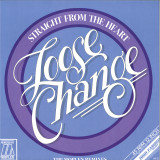
Get ready for an electrifying revelation as we delve into the mind-blowing credits of this extraordinary record! This record has an outrageous lineup as Moplen is let loose to brilliantly remix and reprise Loose Change’s timeless masterpiece, “Straight From the Heart. A track that emerged from the creative genius of none other than Tom Moulton, the legendary maestro behind legendary Donna Summer’s iconic hits. But that’s not all! Enter the realm of Thor Baldursson, the brilliant mastermind known for his groundbreaking concepts and awe-inspiring arrangements. Together, the three of them form a disco dream team!
out of Stock
Last delivered 16 months ago available to reorder, subject to availability
From the Dolls-meets-the-devil opening title track to the desperate Sister Lovers-adjacent finale "The Findings," The Interrogator is thirteen vibrant, crackling, scary and hilarious songs which taken together represent nothing less than a thorough and thrilling moral inventory of our decadent and depraved times. Following up and doubling down on the themes of last year's lionized cult favorite For Executive Meeting, Elizabeth Nelson has authored an album as politically potent and pointedly hilarious as antecedents like The Mekons' Rock 'n' Roll and Neil Young's on On the Beach and wed it to the sound of ZZ Top's Eliminator. As writers like Rob Sheffield and Robert Christgau have known for years Elizbeth Nelson has been one of our very best songwriters for going on a decade. On the charged anthem "Bad Day for the Group Chat" she reassesses the current state of affairs: "I have bested all my peers." “Elizabeth Nelson showcases the simultaneously fraught and giddy frequency of our weird, wired world. The Paranoid Style may be the bearer of bad news, but at least the band bears it smashingly.” NPR // “You’ll forgive them for being critic’s darlings because they’re also the goddamn life of the party.” SPIN // Features performances by Peter Holsapple of The dB’s, Continental Drifters & REM through out. Elizabeth Nelson writes for the Oxford American, N.Y. Times, Pitchfork, The Ringer and more. She has over 15,000 followers on Twitter. A
NERDS! Unless you were head cheerleader or captain of the football team, watching this film was a rite of passage (and indeed, sweet revenge) for any ‘80s high schooler or college matriculator; in fact, Revenge of the Nerds was such a classic that it spawned three sequels. But none of them compare to the 1984 original, which substituted the socially challenged “I.T. guy” for the slobs of Animal House in its classic underdog story complete with nerd gets girl happy ending. Along the way it offers something to offend just about everyone, especially in today’s “woke” climate, but one thing about the movie has stood the test of time: its killer new wave soundtrack! “One Foot in Front of the Other” by Bone Symphony—produced by Giorgio Moroder protégé Richie Zito—might be the highlight, but “Are You Ready for the Sex Girls” by Gleaming Spires and “Right Time for Love” by Pat Robinson & Jill Michaels have their share of devotees. And any soundtrack with two tracks by The Rubinoos is just fine in our book! For this 40th anniversary reissue, we at Real Gone Music have pressed up 500 copies in limited edition “lemonade swirl” vinyl (sans alcohol, of course)... gentlemen, start your turntables (and your slide rules)!
From the Dolls-meets-the-devil opening title track to the desperate Sister Lovers-adjacent finale "The Findings," The Interrogator is thirteen vibrant, crackling, scary and hilarious songs which taken together represent nothing less than a thorough and thrilling moral inventory of our decadent and depraved times. Following up and doubling down on the themes of last year's lionized cult favorite For Executive Meeting, Elizabeth Nelson has authored an album as politically potent and pointedly hilarious as antecedents like The Mekons' Rock `n' Roll and Neil Young's On the Beach and wed it to the sound of ZZ Top's Eliminator. As writers like Rob Sheffield and Robert Christgau have known for years, Elizabeth Nelson has been one of our very best songwriters for going on a decade. On the charged anthem "Bad Day for the Group Chat" she reassesses the current state of affairs: "I have bested all my peers.
An autumnal treasure, East Village’s Drop Out has spent the past thirty years finding new ears to bewitch and new hearts to melt. The only album from this British four-piece, recorded and released in the early nineties, it’s long been considered one of the hidden jewels of its time, and is talked of with hushed reverence by people who know. Bob Stanley of Saint Etienne once called it “an elegy for a particular brand of eighties guitar music, sweet minor chords and Dylanesque lyrics”, which captures what makes it so special; in summarising its era, though, it also effortlessly transcends it.
Like all great guitar gangs, East Village fell together as a four-piece; having relocated from High Wycombe to London in mid ‘80s, brothers Martin and Paul Kelly on bass and guitar, set on forming a group together, were joined by John Wood (guitar) and Spencer Smith (drums). Wood and the Kellys shared writing and vocal duties; it was an ideal combination, and one of the many charms of East Village is their various song writing voices, a tip of the hat, seemingly, to the 60s folk-rock groups who influenced them.
Originally influenced by garage-rock and freakbeat, the band eventually came through via the same scene as groups like Felt, The Go-Betweens, The Weather Prophets, and Primal Scream. They’d formed as Episode Four, releasing an EP, Strike Up Matches, in 1986, which has gone on to become one of most sought after releases of the C86 era. Their first two singles as East Village, ‘Cubans In The Bluefields’ (1987) and ‘Back Between Places’ (1988), were released on Jeff Barrett’s Sub Aqua label.
When it came time to record Drop Out, East Village found a supporter in Bob Stanley, who bankrolled the album sessions until Barrett re-signed the band to his new imprint Heavenly Recordings in 1990. The album that took shape is dusky, heartfelt, lamplit, full of chiming minor chords, close harmonies, rattling organs, all buoyed by a rhythm section that moves as one, steady and elegant. There’s melancholy here, certainly, on songs like ‘What Kind Of Friend Is This’, but also pleasure and freedom, on ‘When I Wake Tomorrow’ and ‘Silver Train’. The group were obsessed with Dylan’s Eat The Document at the time, and the album’s rich with references to the film; Drop Out’s character is also somehow close to the thin wild mercury sound of Blonde On Blonde, and the lambent light of the Byrds’ Notorious Byrd Brothers.
In one of life’s gentler surprises, ‘Silver Train’ became an unexpected radio hit in Australia when released there as a single in 1993. The story of East Village seems marked by such unexpected turns and surprising events. None was more surprising for their fans at the time, though, than their onstage split in 1991, leaving an unreleased album in the can. Encouraged by Jeff Barrett the band revisited the tapes two years on and while mixing the album for its posthumous release in 1993 invited Debsey Wykes (Dolly Mixture, Coming Up Roses, Saint Etienne, Birdie) to sing the quietly devastating album closer, “Everybody Knows”, a perfect, sad-eyed sign-off.
Listening now to Drop Out, its timelessness is clear. It could have been recorded by young folk-pop hopefuls in the late sixties, taking their shot at the big time; but it could just as easily have been recorded yesterday, by a group that’s both reverent to music’s past, but forward looking in spirit and temperament. It’s that kind of album. Drop Out’s pop poetry is fully formed, with a singular charm that takes in wistfulness, romance, and good times, and a clutch of deeply moving songs that are overflowing with melody and gracefulness. It’s pretty much everything you’d want from a guitar pop record.
It's also an album that’s slowly accrued its own legend. From its stunning cover art, photographed by Juergen Teller originally for a Katherine Hammett campaign, to the ten perfectly formed songs within, Drop Out’s significance in the scheme of things is such that, a decade ago, it was given a rare 10/10 rating in Uncut magazine, who called the album “the lost classic of its era”. Drop Out comes round every decade or so, each edition introducing new fans to its understated beauty, and this latest reissue is its most elegant and deluxe yet.
The 30th anniversary edition of Drop Out lands in two formats: an LP with tip-on style jacket and four-page insert, designed to partner with the 2019 vinyl reissue of their singles and rarities compilation, Hot Rod Hotel; and a double CD, featuring an extra disc compiling the group’s early singles and alternative versions. This CD edition previously has only been available in Japan, though it now features a new, superior mix of their second single, ‘Back Between Places’. Both feature new, typically eloquent liner notes from writer Jon Savage.
The members of East Village have all gone on to do inspired things: Martin Kelly joined Jeff Barrett at Heavenly and has managed label mainstays Saint Etienne since 1993; Paul Kelly formed Birdie with Debsey Wykes, and is now a renowned film director and graphic designer; both Paul and Spencer Smith played in Saint Etienne’s live band; John Wood moved to China to teach, and released a lovely, understated folk album, Quiet Storm, in Japan in 2006. But with the hazy perfection of Drop Out, they’ve all already etched their names in the firmament.
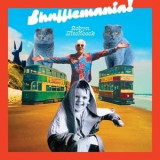
The legendary British artist’s first full-length collection in over five years, SHUFFLEMANIA!
has already been hailed on both sides of the Atlantic as one of the finest releases in his
inimitable canon. The album includes such new Hitchcockian favorites as “The Shuffle Man”
and “The Raging Muse,” both joined by official animated videos streaming now at YouTube.
Recorded in locations around the world over the pandemic era, SHUFFLEMANIA! offers up
ten gloriously ingenious new Robyn Hitchcock songs in just under 40 minutes - a “proper
pop album” as nature intended.
“Robyn Hitchcock’s first album since 2017 is thronged with actual humans - among them
Johnny Marr, Soft Boys compadres Kimberley Rew and Morris Windsor, Sean Ono Lennon
and Brendan Benson. None of them crowd out Hitchcock’s distinctive songwriting though,
nor his undimmed ability to reach through the existential murk and grasp a revelation or
two.” – MOJO
Late Night Tales reissues the classic and hard-to-find
‘Late Night Tales: Jamiroquai’, compiled by none other
than Jay Kay himself. The 10th edition of what is now
a classic series of compilations was originally released
20 years ago, and hasn’t been available on vinyl for
over 15 years. A blissful collection of soul, disco, jazz,
rare groove, and funk, this collection is an electrifying
journey through the aural influences of one of the UK’s
most seminal jazz bands.
Jay Kay showcases a wealth and breadth of inspiration
that wouldn’t be amiss on the late-night dancefloors
of the Loft (or Giant Steps, for that matter). From The
Pointer Sisters’ uplifting and soulful ‘Happiness’ and
jazz funk legend Johnny ‘Smith’ Hammond’s ‘Fantasy’
to the anthemic ‘Stay Free’ by Ashford & Simpson and
mellifluous ‘Music Of The Earth' by Patrice Rushen,
these two discs form a rite of passage into the creative
mind of a true musical legend.
out of Stock
Last delivered 87 days ago available to reorder, subject to availability
After "Il Mare Di Fronte", Flankup Recordings returns with its second album release “Sidi Bou Said” which presents another substantial 5-track EP composed and produced by Paolo Russi (Discojuice) and Marco Lanfranchi (Indy).
Harnessing both disco and Afro Balearic beats, the record will be released both on vinyl and in digital versions and will feature a dynamic remix of the track El Haouharia by none other than Byron The Aquarius titled “Late nite Dub”.
out of Stock
Last delivered 14 months ago available to reorder, subject to availability
While this may be the first release on Sheffield's Central Processing Unit from Global Goon, the one known to friends and family as Johnny Hawk brings a whole heap of experience to the Nanoclusters mini-LP.
Hawk started dropping Global Goon records on the legendary Rephlex Records back in the 1990s. The project's subsequent releases have taken in imprints as esteemed as WéMè and Balkan. Factor in a whole host of other aliases which have delivered missives via the likes of Planet Mu, and you know even before you press play on this witty, wily record that you're dealing with a master at work here.
The confidence with which Global Goon approaches Nanoclusters shines through in Hawk taking much of the mini-album at midtempo. Cuts like 'Khroxic Mould', 'Metallik' and 'Syntheseers' sound like Bochum Welt heading down a dark alleyway. The former in particular is a seasick lope, the tuned synths lurching around like sailors on deck in a storm as bass ebbs and flows underneath the mix.
The influence of Kraftwerk comes through prominently at times here, particularly in the way 'Calcula' and 'Digit Six' play pensive, slightly sombre synth chords off some simple but effective forward motion in the drum programming. That is not to say that Nanoclusters is not full of invention, though. None of the productions are overly flash, but this approach allows the little details to shine through more clearly, from cleverly panned hi-hats to hissing synth counter-melodies which flit in and out of the mix. Enthralling and packed full of ear candy, they're further evidence that Nanoclusters is the work of an expert craftsman.
While the pulse of Nanoclusters remains relatively steady throughout, it's still a rather lively record. Plenty of these tracks will get the dancefloor moving if deployed correctly - though whether they're heard at home or in the dance, it's the attention to detail which makes them stand out.
'Snapterisk' is as perfect an example of machine-funk as you're likely to find - the drum programming is razor-sharp but rubbery with bongos, the bass a lithe burble, and those wobbly stabs of keys that put a bit of wiggle in the beat? Delightful stuff. Elsewhere the ever-looping arpeggio of 'Metro Esc' has hints of Frankie Knuckles' house classic 'Your Love', though an array of interesting sonic nuggets - snippets of vocal, radar-like bloops, a gently insistent low-end pulse - soften the track's clubbier elements with a pillowy sheen. And Hawk throws us a curveball right at the end of Nanoclusters, tapping back into that old Rephlex sound for the fizzy, braindancing 'Metal Glass'.
Global Goon doesn't need to show off on Nanoclusters - from brilliantly slick machine-funk to Kraftwerkian reveries, the CPU debutant lets the music do the talking here. It makes for a confident and vivacious mini-LP, one which wears its expertise lightly.
„ The dissonance, the discord, is the tongue in the cheek of Ralf Schauff's music. Be it that the transverse flute, always underestimated as an instrument of torture, is used or slow synthesizer automations shift the tonality in an agonizingly and unnecessarily cruel way. Without this intention to challenge the listener, the music would have been there before. There are the soundscapes of NEU!, Harmonia or Cluster, the modality of Can, Afrobeat and all kinds of electronics, but also the impression of „Weltmusik" associated with folkloric instruments like the didgeridoo or the recorder. But it's none of these things. It only reminds us of them. And it reminds us listeners that music is also produced. The meta level comes into play and gets in the way of consumption. This is much more amusing, surprising and enriching than the mere description suggests. This is a must hear. It's just insanely fun. " Frank Spilker (Die Sterne)
„ Die Dissonanz, der Missklang, ist die Zunge in der Backe der Musik von Ralf Schauff. Sei es, dass die als Folterinstrument immer wieder unterschätzte Querflöte zum Einsatz kommt oder langsame Synthesizer Automationen die Tonalität qualvoll und unnötig grausam verschieben. Ohne diese Absicht den Hörer herauszufordern wäre die Musik schon mal da gewesen. Da wären die Klanglandschaften von NEU!, Harmonia oder Cluster, die Modalität von Can, Afrobeat und aller möglichen Spielarten von Elektronik, aber auch die mit folkloristischen Instrumenten wie dem Didgeridoo oder eben der Flöte verknüpfte Anmutung von „Weltmusik.“ Das alles ist es aber nicht. Es erinnert nur daran. Außerdem erinnert es uns Hörer daran, dass Musik ja auch hergestellt wird. Die Meta Ebene kommt ins Spiel und stellt sich dem Konsum in den Weg. Das alles ist viel Amüsanter, Überraschender und Bereichernder, als die bloße Beschreibung vermuten lässt. Das muss man gehört haben. Es macht einfach wahnsinnig viel Spass. " Frank Spilker (Die Sterne)
Downloads
out of Stock
Last delivered 2 years ago available to reorder, subject to availability
When Kronos plays a piece, they become fellow composers, true collaborators. Without them, we wouldn’t have the kind of string quartet playing that we find around us today. There are two kinds of string quartet playing: the ‘Before Kronos’ and the ‘After Kronos’.” – Philip Glass
‘Kronos Quartet has broken the boundaries of what string quartets can do.’ – New York Times
Nonesuch releases Kronos Quartet’s acclaimed album Kronos Quartet Performs Philip Glass on vinyl for the first time to coincide with Kronos Quartet: Five Decades, a year-long celebration marking the quartet’s 50th anniversary. Originally released in 1995, the album features David Harrington (violin), John Sherba, (violin), Hank Dutt (viola) and Joan Jeanrenaud (cello) performing Quartet No. 2 (Company) (1983), No. 3 (Mishima) (1985), No. 4 (Buczak) (1990), and No. 5 (1991), the first piece Glass wrote especially for Kronos. Recorded at Skywalker Sound in California, the album was produced by Judith Sherman, Kurt Munkacsi and Philip Glass. The cover art features Francesco Clemente’s painting The Four Corners (1985). At the time of the album’s release, the New York Times said, ‘It contains some of Glass's best music since Koyaanisqatsi. His ear for sumptuous string sonorities is undeniable,’ while the Washington Post called it ‘An ideal combination of composer and performers.’ It was a top 10 hit on Billboard’s Top Classical Albums, and spent 12 weeks on Billboard’s Classical chart.
In his original liner note, critic Mark Swed wrote, ‘Glass’ string quartets may contain his most intimate music. They are works through which a very public composer, perhaps the most important opera reformer of our age and a longstanding collaborator in large-scale music theater, holds up a mirror to himself and his way of composing. “In an odd way,” Glass explains, “string quartets have always functioned like that for composers. I don’t really know why, but it’s almost impossible to get away from it. It’s the way composers of the past have thought and that’s no less true for me. It’s almost as if we say we’re going to write a string quartet, we take a deep breath, and we wade in to try to write the most serious, significant piece that we can.” Glass says that as he sat down to write String Quartet No. 5, he had discovered that perhaps not taking a serious tone might be the most serious way to deal with it. “I was thinking that I had really gone beyond the need to write a serious string quartet and that I could write a quartet that is about musicality, which in a certain way is the most serious subject.”’
Glass’ first numbered quartet was written in 1966; however, he did not return to the string quartet medium until 1983, when he provided incidental music for a dramatization of Samuel Beckett’s prose poem, Company. During those 17 years, Glass had formed an ensemble and developed his style in a series of increasingly elaborate pieces for it. String Quartet No. 3 is also adapted to dramatic music, this time from his score to the 1985 Paul Schrader film, Mishima. It was with the music of Mishima that Kronos became associated with Glass, recording the string quartet sections of the soundtrack and subsequently working extensively with the composer on all five of his numbered quartets. Kronos also gave the first concert performances of Company and Mishima. String Quartet No. 4 was composed in remembrance of the artist Brian Buczak, who died of AIDS in 1988.
As Kronos’ anniversary season continues with further concerts around the world, Nonesuch will reissue Black Angels on vinyl on February 16. First released in 1990, the award-winning album includes George Crumb’s title piece, which inspired David Harrington to found the quartet. Called ‘an unusually elevated and searing Vietnam War protest’ by the New York Times, it sets a dark, powerful tone for this collection, which addresses the political/physical/spiritual consequences of war. Also featured are works by Charles Ives, István Márta, Thomas Tallis, and Dmitri Shostakovich. ‘Stylishly packaged, intelligently programmed, superbly recorded and brilliantly performed,’ proclaimed Gramophone. ‘In short, very much the sort of disc we’ve come to expect from the talented and imaginative Kronos Quartet.’ The Evening Standard included it among its ‘100 Definitive Classical Albums of the 20th Century’.
Born in Baltimore, Maryland, in 1937, Philip Glass is a graduate of the University of Chicago and the Juilliard School. By 1974, he had created a large collection of music for The Philip Glass Ensemble. The period culminated in the landmark opera, Einstein on the Beach. Since Einstein, Glass’s repertoire has grown to include music for opera, dance, theatre, orchestra, and film. His scores have received Academy Award nominations (including Kundun and The Hours, as well as Notes on a Scandal) and a Golden Globe (The Truman Show). Recent works include his memoir, Words Without Music, his first Piano Sonata, opera Circus Days and Nights, and Symphony No. 14. Glass received the Praemium Imperiale in 2012, the US National Medal of the Arts from President Barack Obama in 2016, and 41st Kennedy Center Honors in 2018.
Nonesuch’s relationship with Glass began in 1985, with the release of the score for Paul Schrader’s Mishima featuring Kronos Quartet. Over the years other Glass works on Nonesuch have included Einstein on the Beach (1993), Kronos Quartet Performs Philip Glass (1995), Music in Twelve Parts (1996), Glass Box (2008), as well as the soundtracks for Powaqqatsi (1988), Kundun (1997), Koyaanisqatsi (1998), and The Hours (2002), amongst others.
For 50 years, San Francisco’s Kronos Quartet – David Harrington (violin), John Sherba (violin), Hank Dutt (viola), and Paul Wiancko (cello) – has challenged and reimagined what a string quartet can be. Founded at a time when the form was largely centred on long-established, Western European traditions, Kronos has been at the forefront of revolutionizing the string quartet into a living art form that responds to the people and issues of our time. In the process, Kronos has become one of the most celebrated and influential groups of our era, performing thousands of concerts worldwide, releasing more than 70 recordings of extraordinary breadth and creativity, and collaborating with many of the world’s most accomplished composers and performers. Through its nonprofit organization, Kronos Performing Arts Association, Kronos has commissioned more than 1,000 works and arrangements for string quartet – including the Kronos Fifty for the Future library of free, educational repertoire. Kronos has received more than 40 awards, including three Grammy Awards and the Polar Music, Avery Fisher, and Edison Klassiek Oeuvre Prizes.
Kronos is prolific and wide-ranging on recordings. The ensemble’s expansive discography on Nonesuch includes three Grammy-winning albums: Terry Riley’s Sun Rings (2019), Landfall with Laurie Anderson (2018), and Alban Berg’s Lyric Suite featuring soprano Dawn Upshaw (2003); the 40th-anniversary boxed set Kronos Explorer Series; Nuevo (2002), a Grammy- and Latin Grammy–nominated celebration of Mexican culture; Pieces of Africa (1992), a showcase of African-born composers that simultaneously topped Billboard’s Classical and World Music charts; and Folk Songs (2017), Nonesuch’s 50th album with Kronos, which featured Sam Amidon, Olivia Chaney, Rhiannon Giddens, and Natalie Merchant singing traditional folk songs.
out of Stock
Last delivered 2 years ago available to reorder, subject to availability
“A piece of music never truly comes to An end. Revisiting a theme illustrates this idea that life goes on.” These are the words of Wayne Shorter, uttered in 2018 upon the release of Emanon, his final opus. On this record, the octogenarian uses dusky hues to shade in the passions of his youth - drawing and science-fiction, as well as the causes he has defended all his life - the fight against ecological upheaval and structural racism. This sentiment did not fail to resonate with Julien Lourau, who has reached a stage in life where he has begun to look back over certain pages written by the man he has always considered one of the masters of his trade. Five years later, this Parisian native has also chosen to revisit his glory days, offering reworked versions of specific tracks composed by his titular elder throughout the 80s. “When I play this music, I find myself back in my teenage bedroom. These are my standards, and they remind me of autumn in Rambouillet.” At that time, after practising his scales, Julien would also play Dungeons & dragons, and immerse himself in SF as well as heroic fantasy - epic influences which are not without a certain connection to the dreamworlds Shorter conjured up, as another fan of landscapes beyond the grasp of reality.
This album features four themes taken from Atlantis, which came out in 1985, and two from Joy Ryder, released three years later. To these, he has added a composition penned at around the same time for Sportin’ Life, the penultimate LP by Weather Report. This is rounded off by a tune taken
from Native Dancer, the record which, ten years earlier, in 1975, brought together this saxophonist who learnt his trade alongside Art Blakey, before joining Miles’ second quintet, and Brazilian Milton Nascimento.
“Between Native Dancer and Atlantis, Shorter did not release anything under his own name, but he took the time and care to really perfect his writing. Upon his return, he injected a very Brazilian form of subtlety into his compositions, especially rhythmically. And from a harmonic point of view, these themes are extremely sophisticated, and reveal truly singular colours. In fact, he decided to display the score as if it constituted the liner notes of Atlantis.”
Julien Lourau is a fan of every Wayne Shorter era, from his Blue Note days, where Mr Gone defined the bases of a truly unique repertoire, all the way to his final quartet - a reference like no other. He decided to focus on this “highly electric” period, which is not necessarily Shorter’s best known, nor his most widely appreciated - despite being a unanimous reference, Shorter has nonetheless never had a direct descendent. In Lourau’s line of sight there lies a desire to focus on typically South American tonic accents which characterise this repertoire, twinned with the ambition to switch up their actual sound “by attempting to open up onto a production highly influenced by eighties fusion". However, he admits that modifying the structures of these most unique of worlds constituted a fresh challenge. “There’s this labyrinthine harmonic system where you’ve no idea how it holds together, but where it’s actually impossible to touch the slightest element without the whole edifice wavering. It is in fact a very difficult thing to achieve!”
In order to successfully transcribe all this creativity free of obstacles, Julien Lourau once again called upon the help of Mathieu Debordes. From January 2023 onwards, Mathieu endeavoured to break down all the musical elements, on paper, before creating any actual music. The record was therefore constructed on the faith of these scores, without necessarily transiting through a creative residency - just two live gigs, to make sure the setup worked. Besides Mathieu Debordes and his synthesisers, Julien Lourau has assembled an ad hoc team by his side. On the bass, according to the track, we can hear erstwhile companion Sylvain Daniel or a new acolyte on the fretless bass, Joan Eche Puig.
Stéphane Edouard, on percussion, even dives headfirst into an unlikely proto-rap of sorts, on Pearl On The Half Shell (where, on the original version, Bobby McFerrin adjusted his interventions in a rather madcap style). Aesthete and drummer Jim Hart as well as pianist Leo Jassef also figure on this release - both were present on previous project devoted to label
CTI. “At sixteen, I wanted to sound like Michael Brecker rather than Ben Webster - that was equated with modernity in those days”, adds Julien with a smile, as for him, all this rings out a little like a logical next step, a joyful immersion into the fountain of youth. And if, for this record, he plays the soprano more than ever, the saxophone Shorter set in his sights on, he never tries to replicate an unattainable ideal note by note. What would be the point?
“Wayne Shorter is not just a saxophonist’s saxophonist. In fact, I don’t know a single person who has risen to challenge of his solos. I have not done it myself either, but on the other hand, I have retained a lot of his phraseology. His way of approaching the instrument reveals a more evanescent language, a work on colour and shape. Keeping this in mind has allowed me to gravitate towards certain elements, that in hindsight, I find echoes of in my work, even in Groove Gang.” Shorter etches out these phrases, creating a groove within which Lourau had traced subtle punctuation, managing, from a highly written base, to create fresh apertures, promises of a great escape. Emblematic of this standpoint, his regal version of Ponte de Areia, originally a wonderful dialogue between Milton Nascimento and Wayne Shorter. Here, the Frenchman takes liberties with the original melodies, without ever growing distant from the original spirit, extending one section with delicacy, offering a rubato development and then a groove “like a little suite”. Julien Lourau also renews with an accomplice from last century, Magic Malik, who lends his high-pitched vocals to the track. Though they had not recorded together for more than twenty years, the two of them got on as if they had only ceased collaborating yesterday, everything flowed naturally. The track was wrapped up in just one take, much like other themes, such as opener Who Goes There where the flautist deploys smooth, enchanted and smoky wisps.
Fundamentally, reflecting of the sleeve which features a child playing with a ball, image that could symbolise the sun just as much as the moon, Julien Lourau manages to translate the ambiguous candour which characterizes Shorter’s work - solar and crepuscular at the same time, that of a visionary and poet definitively situated outside of all chronology, but with whom Julien shares surprising and ‘timely’ coincidences. Shorter was born August 25, 1933, the same day as Julien’s father, “if we take time zones into account”, and who died on Lourau’s birthday, March 2, 2023. Should we take this as a random fact? Or could we not see here the sign of a destiny connecting the agnostic Frenchman to the man who, as a fervent Buddhist, believed in the transmission of his spiritual flow ?
On For Annette, singer-songwriter ronja summons forth a certain unbridgeable void within our existence and the acceptance of the deafening silence that comes with it. Weaving the strands of her previous release something about us with multiple openings towards more abstract territory, this 5-track EP marks her debut under the forward-thinking Unguarded label, astutely situating her music well beyond the confines of the genre.
The opening track “Nothing Makes Me Feel” beckons the listener into a discreet moment amid the early light of dawn, commencing with an up-close acoustic guitar, soon to be graced by ronja’s hushed voice, softly whispering, as if to avoid waking someone near. “Just Once”, with its weeping waltz, is about losing one’s place in the world, about choosing the imaginary over the real. Behind the strummed chords hides a soft dither of sine tones that attempts to fill the gap that cannot be filled, only to transform into quavering distortion ever after. Where language may falter, ronja turns to choral-like instrumental pieces (“Light” & “Grass from Below”), characterized by her distinctive and multi-layered flute arrangements. The absence of words here allows for a sensible stage of introspection, a fleeting and diaphanous pause, forging a passage to a more hopeful outlook. Yet, these pieces are not isolated; hints of fluttering air and cavernous depths are subtly alluded to in the earlier, more song-based tracks. In just under 18 minutes running time, the theme of loss, or the anticipation of its arrival, lingers solemnly before transcending intermediate states in “Almost There”.
Admirers of the dreamgaze band Roomer, which made waves in and around the Berlin music scene this past year, might detect faint resemblances. Nonetheless, ronja—a pivotal presence in said band—unveils a distinct effort here, striking subdued but enticing tones, a foreshadowing of what is yet to come from this luminary artist. – Luka Aron
out of Stock
Last delivered 2 years ago available to reorder, subject to availability
The late percussionist Milford Graves was one of the most unique artists the world has ever seen. Born in Jamaica, Queens in 1941, he began his career in the early '60s as a part of New York's vibrant Latin jazz scene. His focus quickly turned inward, shifting towards a practice that explored the very nature of self. From his work in the New York Art Quartet and collaborations with Albert Ayler, Sonny Sharrock and more to his important contributions during NYC's loft era – he is, simply put, free jazz royalty.
In April 1966, the duo of Graves and pianist Don Pullen played at Yale University. As John Corbett writes in the liner notes, "This performance was something of a turning point for Graves. Until then he had been working in other people's bands or collective ensembles. He was phenomenally busy. In 1965 alone, he recorded with NYAQ (two LPs), Giuseppi Logan Quartet, Paul Bley Quintet and Lowell Davidson Trio, and he made his first recording released under his own name, Percussion Ensemble. Every one of these is important in its own way, but none of them quite anticipate how radical was the music that he and Pullen would unleash that evening in New Haven."
Originally released on the artists' own Self-Reliance Program label, this legendary one-night performance would be split into two volumes: In Concert At Yale University and Nommo. While rooted in African rhythms, Graves' music has its own sense of time. As the drummer stated in a 1966 DownBeat interview, "Time was always there, and the time I see is not the same as what man says time is. It works by impulsion."
The late percussionist Milford Graves was one of the most unique artists the world has ever seen. Born in Jamaica, Queens in 1941, he began his career in the early '60s as a part of New York's vibrant Latin jazz scene. His focus quickly turned inward, shifting towards a practice that explored the very nature of self. From his work in the New York Art Quartet and collaborations with Albert Ayler, Sonny Sharrock and more to his important contributions during NYC's loft era – he is, simply put, free jazz royalty.
In April 1966, the duo of Graves and pianist Don Pullen played at Yale University. As John Corbett writes in the liner notes, "This performance was something of a turning point for Graves. Until then he had been working in other people's bands or collective ensembles. He was phenomenally busy. In 1965 alone, he recorded with NYAQ (two LPs), Giuseppi Logan Quartet, Paul Bley Quintet and Lowell Davidson Trio, and he made his first recording released under his own name, Percussion Ensemble. Every one of these is important in its own way, but none of them quite anticipate how radical was the music that he and Pullen would unleash that evening in New Haven."
Originally released on the artists' own Self-Reliance Program label, this legendary one-night performance would be split into two volumes: In Concert At Yale University and Nommo. While rooted in African rhythms, Graves' music has its own sense of time. As the drummer stated in a 1966 DownBeat interview, "Time was always there, and the time I see is not the same as what man says time is. It works by impulsion."
The Debut album from Finnish band Graven Sin is a modern classic of godly, Doom-laden Heavy Metal. Veil of The Gods is etched in granite via Svart Records on November 2023 Pristine new Finnish band Graven Sin stomp proudly on the shoulders of giants with their ravishing debut album, Veil of The Gods. Immaculate Heavy Metal, expertly delivered with stunning finesse and elegant Doom perfection, Veil of The Gods is a classic in the making. Rarely has a new band sounded so timeless, serving up a godly platter of first-class Heavy Metal, that Graven Sin seem chiselled in granite to sit side by side at a table with the greats from the very get go. From the galloping charge of opening barn-stormer Morrigan, with jaw dropping solo guitars courtesy of riff master Ville Pystynen, the epic and anthemic She Who Rules Niflheim with soaring vocals from Greek vocalist Nicholas Leptos to the formidable double bass canter of Ville Markkanen’s drums on songs like Beyond Mesopotamia, Graven Sin knows the true riddle of steel. Throughout Veil of The Gods’ eleven cast-iron tracks, we can trace veins of recent Finnish greats such as Sentenced, Amorphis, Reverend Bizarre or their nordic counterparts Grand Magus from Sweden, but there is much more at play here. Graven Sin offers up heavy, doom laden orthodox Heavy Metal in the true, chugging, monumental sense of the term. The knowledge and prowess of Heavy Metal craft on display in Veil of The Gods is second to none, from the Maidenesque command of melody to the swarthy Manowar rhythms, herculean Deep Purple keys and Messiah like Candlemass-rich voice of astonishing vocalist Leptos, these are songs to be inscribed into stone tablets. Where pitch dark mythical themes and occult leanings of the lyrics bring to mind the Heavy Metal running through Black Metal bands like Dissection, the song arrangements swing from gallop to thundering, head-banging mid-sections with such magnificence, you would think you were in the hands of a band with decades of heritage behind their backs. A “where have you been all my life moment” awaits Heavy Metal fans of all shades when Graven Sin hits the speakers, delivering a sound that cuts glass and steel. A refreshing tour–de-force through everything Heavy Metal is loved for, not shrinking from the dark but embracing it with gusto and fierce bravado. Veil of The Gods shows us that real metal lives forever, if crafted with true spirit and belief. Hear the cry of the seer of doom, by heeding Morrigan’s call now: Ville Pystynen - guitar, bass Nicholas Leptos - vocals Ville Markkanen - drums
The Debut album from Finnish band Graven Sin is a modern classic of godly, Doom-laden Heavy Metal. Veil of The Gods is etched in granite via Svart Records on November 2023 Pristine new Finnish band Graven Sin stomp proudly on the shoulders of giants with their ravishing debut album, Veil of The Gods. Immaculate Heavy Metal, expertly delivered with stunning finesse and elegant Doom perfection, Veil of The Gods is a classic in the making. Rarely has a new band sounded so timeless, serving up a godly platter of first-class Heavy Metal, that Graven Sin seem chiselled in granite to sit side by side at a table with the greats from the very get go. From the galloping charge of opening barn-stormer Morrigan, with jaw dropping solo guitars courtesy of riff master Ville Pystynen, the epic and anthemic She Who Rules Niflheim with soaring vocals from Greek vocalist Nicholas Leptos to the formidable double bass canter of Ville Markkanen’s drums on songs like Beyond Mesopotamia, Graven Sin knows the true riddle of steel. Throughout Veil of The Gods’ eleven cast-iron tracks, we can trace veins of recent Finnish greats such as Sentenced, Amorphis, Reverend Bizarre or their nordic counterparts Grand Magus from Sweden, but there is much more at play here. Graven Sin offers up heavy, doom laden orthodox Heavy Metal in the true, chugging, monumental sense of the term. The knowledge and prowess of Heavy Metal craft on display in Veil of The Gods is second to none, from the Maidenesque command of melody to the swarthy Manowar rhythms, herculean Deep Purple keys and Messiah like Candlemass-rich voice of astonishing vocalist Leptos, these are songs to be inscribed into stone tablets. Where pitch dark mythical themes and occult leanings of the lyrics bring to mind the Heavy Metal running through Black Metal bands like Dissection, the song arrangements swing from gallop to thundering, head-banging mid-sections with such magnificence, you would think you were in the hands of a band with decades of heritage behind their backs. A “where have you been all my life moment” awaits Heavy Metal fans of all shades when Graven Sin hits the speakers, delivering a sound that cuts glass and steel. A refreshing tour–de-force through everything Heavy Metal is loved for, not shrinking from the dark but embracing it with gusto and fierce bravado. Veil of The Gods shows us that real metal lives forever, if crafted with true spirit and belief. Hear the cry of the seer of doom, by heeding Morrigan’s call now: Ville Pystynen - guitar, bass Nicholas Leptos - vocals Ville Markkanen - drums