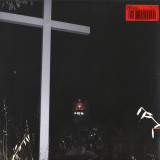
The Invisible Road: Original Recordings, 1985–1990 compiles an unheard, previously unreleased body of recordings by Sussan Deyhim and Richard Horowitz, dissidents from diametric backgrounds who met during the heady days of Downtown New York in the 1980s. This collection reveals the creative and life partners’ radical shared vision of avant-garde pop in all of its boundary pushing freedom, combining Deyhim’s singular approach to vocalization, Horowitz’s invention of new musical languages, and touchstones of traditional music from around the world, creating a new music that ultimately retains a voice entirely its own. Despite their difference in backgrounds and respective journeys, at the time of their meeting in the early 1980s in New York City, Sussan Deyhim and Richard Horowitz were both products of the search for freedom and understanding (and resultant awakenings) that swept the globe and helped culturally define the late 1960s and 70s. Deyhim, born and raised in Tehran, spent her teens dancing with Iran’s Pars National Ballet company, performing weekly on Iranian national television, and travelling her home country studying with master folk musicians and dancers, before relocating to Belgium and joining Maurice Béjart’s prestigious Béjart Ballet of the 20th Century. Horowitz, born and raised in Buffalo, New York, had spent much of the decade before abroad, first departing for Paris under the shadows of the Vietnam War, where he studied piano, Eastern philosophy, and became entrenched the city’s free jazz scene, playing with the likes of Steve Lacy, Anthony Braxton, and Alan Silva, before embarking south to Morocco where his friendship with Paul Bowles helped cultivate a deep passion for the country’s musical traditions and a shift in his musical practice.
The pair met by chance sometime in 1981 at Noise New York, a small studio on West 34th Street founded by the musician and recording engineer, Frank Eaton, as a utopian creative laboratory that beckoned artists and bands like Arthur Russell, Christian Marclay, Liquid Liquid and Butthole Surfers into its orbit. Both artists had recently relocated to the city, Horowitz having recently released his debut album, Oblique Sequences (Solo Nai Improvisations), on the legendary Paris based imprint Shandar, and fallen in with members of New York avant-garde like La Monte Young, Jon Hassell, David Byrne, and Brian Eno, and Deyhim having begun to more actively incorporate singing into her practice, notably recording a vocal score for choreography she was doing at La MaMa Experimental Theatre.
Initially bonding over a cassette tape of field recordings made by Paul Bowles that had been given to mutual friend and writer Brian Cullman (seeking answers for Ornette Coleman’s question “what is the sound of sound”), their earliest collaboration was documented on Horowitz’s 1981 album, Eros In Arabia, with Deyhim contributing vocals to the track “Queen Of Saba.” Over the coming years, their deep connection would routinely gravitate them into the studio, culminating in the body of recordings that would appear on their 1986 album for Crammed Discs, Desert Equations: Azax Attra. Unknown to nearly all but the artists, laying in wait over the decades on numerous multi-track and stereo reels, DAT tapes, and reference cassettes, were a vast array of recordings made by Deyhim and Horowitz bookending Desert Equations. The 13 pieces represented on The Invisible Road: Original Recordings, 1985–1990 were recorded largely between Noise New York and Daylight Studio in Brussels, during a period that Deyhim describes the partnership between herself and Horowitz’s as seeking a music “free of any specific cultural reference, with a personal musical signature,” blossoming into a body of sonority that embraced the energy of contemporary boundary pushing pop and the avant garde, filtered through their mutual love and study of various musical traditions from across the globe and deep engagement with the ideas and tactics of experimental music.
Undeniably rooted in Horowitz’s study of the North Africa ney and the music of the Berber and Gnawa cultures during his time in Morocco, Deyhim’s deep engagement with the folk traditions of Iran, and the couple’s immersion in the interconnected Downtown underground music scenes, each piece on The Invisible Road offers its own vision creative and cultural hybridity. Deyhim sings in both English and Farsi, as well as a composite tongue that she developed by drawing upon numerous indigenous vocal techniques from around the world, intuitively responding to Horowitz’s simultaneous sound syntax forming and combining a wide range synthetic and acoustic instrumentation, and experimental tape techniques, within a visionary series of free-standing expressions.
Cerca:not me
- A1: The Nazz - Open My Eyes
- A2: The Easybeats - Good Times
- A3: Sir Douglas Quintet - She’s About A Mover
- A4: Can - Outside Your Door
- A5: The Music Machine - People In Me
- A6: Wynder K. Frog - I’m A Man
- A7: Sharon Tandy - Hold On
- B1: The Hombres - Let It All Hang Out
- B2: The Left Banke - I’ve Got Something On My Mind
- B3: The Seeds - The Wind Blows Your Hair
- B4: The Apple - Buffalo Billycan
- B5: Dantalion’s Chariot - ‘Madman Rising Through The Fields’
- B6: The End - Shades Of Orange
- B7: Warm Sounds - Night Is A Comin’
- C1: The Velvet Underground - Foggy Notion
- C2: The Modern Lovers - She Cracked
- C3: Kim Fowley - Bubblegum
- C4: The Balloon Farm - A Question Of Temperature
- C5: Fleur De Lys - Circles **
- C6: The Starlets - You Don’t Love Me
- D1: The Turtles - Buzz Saw
- D2: Lothar And The Hand - People Machines
- D3: The Open Mind - Magic Potion
- D4: The Swinging Medallions - Double Shot Of My Baby’s Love
- D7: The Creation - How Does It Feel To Feel
- D8: The Third Eye - Pass Myself
- D5: Simon Dupree And The Big Sound - I See The Light
- D6: The Action - I’ll Keep On Holding On **
Two-Piers präsentiert die nächste Killer-Compilation: "Weird Scenes From The Hangout (Psychedelic & Freakbeat Dancefloor Anthems 1967-1982)", kuratiert von Richard Norris (The Grid, Beyond The Wizard's Sleeve, The Time And Space Machine) und zentriert um seine Liverpooler Clubnacht "The Hangout" in den 1980ern. Dort brachten er und weitere DJs bewusstseinsverändernden Wahnsinn aus Psychedelia und Freakbeat auf die Tanzfläche. Herausragende Songs wie "The Left Banke - I've Got Something On My Mind", "The Turtles - Buzzsaw" oder "Can - Outside Your Door" wurden zu echten Hangout-Hymnen. Man widmete der eher trendy Ausbeute der Spät-Sechziger ebenso viel Zeit wie angesagten Acts, solange der Groove auf dem Dancefloor funktionierte. Das Hangout kam und ging im Nu, aber sein Erbe, psychedelische Fußstampfer auf die Fläche zu bringen, lebt weiter, gemeinsam mit der Liebe zu allem, was mit Beat und Freak zu tun hat.
** Exclusive tracks to Vinyl Format
NEW ORDER continue the series of Definitive boxsets, with the band's 1986 album Brotherhood. The boxset will include the original album remastered on CD and 180g LP, plus an Extras CD with previously unreleased demos and rarities, as well as two DVDs featuring the band's performances at Festival of the Tenth at the GMex, Manchester 1986 and Live in Brixton, 1987 in support of World AIDS Day. The DVDs will additionally include live TV performances, interviews and rare band footage. The extensive hardback book will include contemporary articles and liner notes by Irish radio DJ Dave Fanning.
CD Tracks:
1. Paradise
2. Weirdo
3. As It Is When It Was
4. Broken Promise
5. Way of Life
6. Bizarre Love Triangle
7. All Day Long
8. Angel Dust
9. Every Little Counts
10. State of the Nation
CD2
1. Shellshock (AOR Version) *
2. State Of The Nation (Japan Demo) *
3. Paradise (Robert Racic Remix)
4. As It Is When It Was (Japan Demo) *
5. Broken Promise (Instrumental) *
6. Bizarre Love Triangle (Stephen Hague 12” Remix) *
7. All Day Long (Instrumental) *
8. Evil Dust
9. Every Little Counts (Full Length) *
10. Salvation Theme
11. Skullcrusher (Full Length) *
12. Touched By The Hand Of God (Salvation Version)
13. Let's Go (Salvation Version)
14. Sputnik
15. Blue Monday 1988 (Michael Johnson 12” Remix) *
(* previously unreleased)
DVD1
Live at the Academy Brixton, 1987
1. Bizarre Love Triangle
2. The Perfect Kiss
3. Ceremony
4. Dreams Never End
5. Love Vigilantes
6. Confusion
7. Age Of Consent
8. Temptation
TV Appearances
BBC Northern Ireland – Channel One 1986.
Ceremony
Love Will Tear Us Apart
The Tube 1986.
State Of The Nation
Broken Promise
Top of the Pops 1987.
True Faith
Les Enfants du Rock, Rockline 1987.
Paradise
Bizarre Love Triangle
The Roxy, 1987.
True Faith
11pm, 1987.
Bizarre Love Triangle
Extra Material
Stephen’s Fly On The Wall Documentary 1985.
Recording 'As It Is' and ‘Shame of the Nation’ at Denon Studios, Tokyo (May 1985).
DVD2
Live at the G-Mex, Manchester, 19/07/86.
1. Elegia
2. Shellshock
3. Paradise
4. Bizarre Love Triangle
5. Way Of Life
6. State Of The Nation
7. Face Up
8. The Perfect Kiss
9. Ceremony
10. Temptation
Live Extra Material
Glastonbury, 1987.
True Faith
Sister Ray
San Giovanni, 1986.
Dreams Never End
Pier 84, New York, 1987.
All Day Long
Angel Dust
Shellshock
Weirdo
Rapido, Paris 1987.
True Faith
G-Mex, Manchester, 1988.
Touched By the Hand of God
Every Little Counts
- A1: I Scream This In The Mirror Before I Interact With Anyone
- A2: Sin Miedo
- A3: I'll Be Right There
- A4: It's Dark And Hell Is Hot
- A5: New Black History Feat Vince Staples
- A6: Don't Rely On Other Men (Album)
- A7: Vulgar Display Of Power
- B1: Exmilitary
- B2: Jihad Joe
- B3: Jpegultra! Feat Denzel Curry
- B4: Either On Or Off The Drugs
- B5: Loop It And Leave It
- B6: Don't Put Anything On The Bible Feat Buzzy Lee
- B7: I Recovered From This
"JPEGMAFIA, a trailblazing force in experimental hip hop, releases his latest solo project, I LAY DOWN MY LIFE FOR YOU. This album, his first since 2021, is a complex and innovative work that showcases his meticulous production skills. Featuring collaborations with Denzel Curry, Vince Staples, and Buzzy Lee, the album explores themes like capitalism, conscription, and propaganda through some of JPEGMAFIA’s most anarchic raps to date. The release is accompanied by an extensive global tour, reinforcing his status as one of the genre’s most incendiary talents. Since his last solo release, JPEGMAFIA has continued to push boundaries in the music industry, most notably with his 2023 collaboration with Danny Brown on Scaring the Hoes, which garnered critical acclaim and chart success. With I Lay Down My Life for You, JPEGMAFIA cements his reputation as a visionary artist, delivering a powerful commentary on the world through his unique lens. The album’s release is set to make a significant impact, both in stores and on stages worldwide."
- A1: Ed Sheeran – All Of The Stars
- A2: Jake Bugg – Simple As This
- A3: Grouplove – Let Me In
- A4: Birdy – Tee Shirt
- B1: Kodaline – All I Wan
- B2: Tom Odell – Long Way Down
- B3: Charli Xcx – Boom Clap
- B4: Strfkr – While I’m Alive
- C1: Indians - Oblivion
- C2: The Radio Dept - Strange Things Will Happen
- C3: Afasi & Filthy – Boomfallarella
- C4: Ray Lamontagne – Without Words
- D1: Birdy - Not About Angels
- D2: Lykke Li – No One Ever Loved
- D3: M83 – Wait
- D4: Birdy & Jaymes Young – Best Shot
"The Original Motion Picture Soundtrack for the romantic drama, THE FAULT IN OUR STARS, features music from Ed Sheeran, Birdy, Charli XCX, Grouplove, Lykke Li and more! NO Sales Notes
In the film, Hazel (Shailene Woodley) and Gus (Ansel Elgort) are two extraordinary teenagers who share an acerbic wit, a disdain for the conventional, and a love that sweeps them -- and us – on an unforgettable journey. Their relationship is all the more miraculous, given that they met and fell in love at a cancer support group. THE FAULT IN OUR STARS, based upon the number-one bestselling novel by John Green, explores the funny, thrilling and tragic business of being alive and in love."
Before we pack away the poppers for another year, let Red Laser take you for one last spin on the waltzers.
Tried and tested at our recent road block parties in Manchester, these edits shine a light on four primo-grade Italo face melters. Fervently excavated by Bosco over countless visits to Bel Paese and streamlined for the hydrofoil, with some extra added calories for the club.
Opener 'Destiny' tweaks and shudders under analogue arpeggios, dazzling Strat chops and cosmic bass interplay before dropping into a simply glorious female vocal that, thankfully, gets plenty of airtime before Bosco calls close. A track so close to perfection we had to make it longer.
'Flavio', up next - and half sung in Italian so we only know a bit of what she's on about - is another supreme slice of Italo disco from the upper echelons that Bosco snaffled between glugs of Barolo and a face full of worm cheese. Sure to instigate group hugs, 4AM declarations of love, tears of happiness and huge pelvic thrusts dependant on environment and inebriation.
The tingles continue on side B with another supernova burning bright across the stars. 'Newsin' introduces itself with a joyous marriage of marimba and synth before yet another vocal proves Italians really do, do it better when it comes to writing some of the catchiest hooks and choruses in the universe.
'Lace', featuring the record's only male vocal appearance, has a romantic, proto-goth-new-wave vibe; like if Robert Smith and Richard Butler had a chem-sex love child after a wild night in Baia Degli Angeli.
Not sure who the woman in lace is, but we'd defo like to see her down The White Hotel one night...
Reissue of the debut full-length album by the leader of the Ukrainian band Edenian, Max Molodtsov, offers a 50-minutes long journey to the world of gloomy and hasteless, but atmospheric doom-death, where brutal elements are contrasted by melancholic interludes.The lyrics of the "Of Ruins..." album are based on the classical English poetry from the 19th century and the original author's verses. Mixed and mastered at Slow Burn Studio (When Nothing Remains, Crypt Of Silence).
"‘One of the most exciting composers alive.’ – Daily Telegraph
Nonesuch will release the original score for Ken Burns’s new two-part documentary, LEONARDO da VINCI, with new compositions by Caroline Shaw; the documentary airs on November 18 and 19 on PBS. The album features performances by the composer’s longtime collaborators Attacca Quartet, Sō Percussion, and Roomful of Teeth as well as John Patitucci. Shaw wrote and recorded new music for LEONARDO da VINCI, marking the first time a Ken Burns film has featured an entirely original score.
In celebration of LEONARDO da VINCI, New York City’s historic venue The Town Hall presents an evening of performances from Shaw’s score by Attacca Quartet, Sō Percussion, and Roomful of Teeth on October 29. The filmmakers will also preview excerpts from the four-hour film..
LEONARDO da VINCI is directed by Ken Burns, Sarah Burns, and David McMahon. The film, which explores the life and work of the fifteenth century polymath Leonardo da Vinci, is Burns’s first non-American subject. It also marks a significant change in the team’s filmmaking style, which includes using split screens with images, video, and sound from different periods to further contextualize Leonardo’s art and scientific explorations. LEONARDO da VINCI looks at how the artist influenced and inspired future generations, and it finds in his soaring imagination and profound intellect the foundation for a conversation we are still having today: what is our relationship with nature and what does it mean to be human?
“No single person can speak to our collective effort to understand the world and ourselves,” said Ken Burns. “But Leonardo had a unique genius for inquiry, aided by his extraordinary skills as an artist and scientist, that helps us better understand the natural world that we are part of and to appreciate more fully what it means to be alive and human.”
“To help give depth and dimension to Leonardo’s inner life, and to carry our viewers on his personal journey, we enlisted the composer Caroline Shaw,” McMahon says in the album’s liner note. “Caroline’s existing body of music—joyful, daring, at times transcendent, and wholly unique—seemed to speak directly to Leonardo, a seeking soul who, 500 years after his death, can come across as strikingly modern. A fully original score, we believed, would add crucial connective tissue to areas where the record of Leonardo’s life is thin and it’s possible to briefly lose his trail. The music Caroline created is dynamic, enthralling and filled with wonder.
“This soundtrack is a testament to the inspired efforts of Jennifer Dunnington, who marshaled it into being, the brilliant musicians and vocalists who, with the help of Alex Venguer, Neal Shaw, Colton Dodd and Tim Marchiafava, made it soar, and most of all Caroline Shaw, who might be Leonardo’s soulmate from across time,” he continues. “With her help, the Leonardo who emerges is no wizard shrouded in mystery, but a prideful, obsessive, at times lonely or flustered, occasionally ecstatic, and, in the end, content man who is in ways both modern and thoroughly of his time.”
“As we set out to explore Leonardo’s life, we realized that while he was very much a man of his time, he was also interested in something more universal,” said Sarah Burns. “Leonardo was uniquely focused on finding connections throughout nature, something that strikes us as very modern today, but which of course has a long history.”
Caroline Shaw is a musician who moves among roles, genres, and mediums, trying to imagine a world of sound that has never been heard before but has always existed. She is the recipient of the 2013 Pulitzer Prize in Music, several Grammy awards, an honorary doctorate from Yale, and a Thomas J. Watson Fellowship. She has worked with a range of artists including Rosalía, Renée Fleming, and Yo-Yo Ma, and she has contributed music to films and TV series including Fleishman Is in Trouble, Bombshell, Yellowjackets, Maid, Dark, and Beyoncé’s Homecoming. In addition to three albums with Sō Percussion, Narrow Sea, Let the Soil Play Its Simple Part, and Rectangles and Circumstance, Nonesuch has released her two Grammy-winning albums Orange and Evergreen, both of which feature Attacca Quartet. “Two-Step” and “Ghost,” Shaw’s songs with Ringdown, her duo with Danni Lee Parpan, are available now on Nonesuch. Caroline Shaw is Wigmore Hall’s 2024-25 Composer in Residence."
Black vinyl 180g made only in 100 numbered copies.
This record is different. It is different from what might be expected of Jan Emil Mlynarski by those who know him, from sold-out shows and platinum albums of his bands – Jazz Band Młynarski – Masecki and Warsaw Dance Combo, as an old-timer, curator and reenactor of pre-World War II Warsaw's plush dancehalls and backyards folklore. Quite likely they may not recognize him until the last song, when he removes his shaman mask and bows down: Yeah, that's really me, folks, your good ol' Jan Emil, the entertainer. They might not have even known that he ever played drums because in his flagship bands, clad in a white tux in the former or in a Peaky Blinder hat in the latter, he sings and plays mandolin banjo. In fact, Młynarski has been a drummer for a lot longer than a singer. He stands clear of the jazz mainstream but is active on the progressive scene. A record he contributed to, trumpeter Tomasz Dąbrowski's 2022 release The Individual Beings, was recognized by Downbeat magazine as "excellent" and awarded the highest rating of five stars.
However, this is the first instrumental record to bear his name. As an album by a drummer, it stands out from other records, especially as it features drums as the principal content rather than the performance by a band with a drummer as the leader. It's all about drums, there is neither an articulate melody – because the melodies that are there are only micro-linesencased in ostinato modules – nor is harmony as an intentional chord progression – because whatever harmony-wise there is, is rather a product of the counterpoint of overlapping voices. All sounds other than the drums make only a riverbed through which runs a raging stream of rhythms. And indeed, this record took off just with this stream. At first all the drums were recorded live onto an analog tape, all at once, without overdubs or editing. After that, synthesizer riffs were added, and the record was ultimately assembled on tape without the use of computers or complex postproduction, which sets it apart from most releases today.
Młynarski the drummer acknowledges that he follows the trail beaten by Art Blakey, Max Roach, Roy Haynes, and Billy Higgins, but he walks it in his own strides. He treats the jazz drumming with specific reversed engineering by decompiling the jazz drum kit originally compiled by the pioneer jazz drummers from an array of instruments that had made their way from a jungle to New Orleans, first to Congo Square and then to street brass bands.
This takes him back to the jungle, his drums don't sound like jazz drums, the snare is rare, and the hi-hat and ride aren't there at all. Instead, there are drums and bells from Nigeria, Ghana, Burkina Faso, and Côte d'Ivoire. He doesn't sound like a jazz drummer either, but like a gang of drummers, each playing their own rhythm, and it's hard to believe that all this is the work of one man.
Not only his drumware comes from the jungle, but also the software – his approach to rhythm and time. Its essence is polyrhythm and ostinato. The polyrhythmic matters were unveiled to Młynarski and Piotr Zabrodzki, his creative partner in many projects and co-composer/producer of this album, by the legendary eccentric veteran-drummer Władysław Jagiełło, who introduced them, aged thirteen, to his concept and practice of "17 Latino rhythms at once". Ostinato, an obstinate repetition of a phrase or rhythm, "arrests" time, turning its linear course into cyclical in-place rotations. This is specific not only to African music but also to cultural music of other regions and differs from Western artistic music in that it does not "run" to fulfil an aesthetic intention but "stays" to provide the framework for recurrent routines of communal proceedings.
So, this record is different. And, if you are different too, this is the record for you.
Mustapha Skandrani, a luminary of Algerian music, possessed a unique musical sense, able to transcend the borders of musical cultures to create a distinctive fusion of Arabic-Andalusian and European styles.
"Istikhbars and Improvisations", recorded in 1965 in Paris, is a solo piano album presenting a trans-Mediterranean crossover based on traditional Algerian vocal pieces known as istikhbars. Playing these istikhbars (which have roots in the Islamic Arab-Andalusian culture which flourished in Spain) on the piano - that quintessentially European instrument - Skandrani was greeted with derision by some purists. His powerful musical vision, however, perceives the European element involved in Arabic-Andalusian musical culture, a world of exchange and co-existence.
Skandrani's modus operandi on this release is to present each istikhbar, modal in nature, then to play an improvisation based on it, and its attendant mode. This A/B alternation continues throughout. The pellucid clarity of Skandrani's playing on this album may remind the listener of a modal Goldberg Variations, Bach and Glenn Gould transplanted to Andalucia. Other ears will hear the Arabic/Maghreb elements more strongly. Skandrani's precise touch and clear, symmetrical rhythmic sense links both worlds, assuring us that the Mediterranean is not a barrier, but a unifier, and that the differences between the cultures are not so vast. This is an admirable achievement, resulting in beautiful music of a rare charm.
Mustapha Skandrani was born in Algiers in 1920, and died there in 2005. He mastered a number of instruments at an early age, and his musical prowess led him to work with the great singers and ensembles of his day, in live performances, recordings, and radio broadcasts. Later in his life, he devoted much energy to education.
Originally reissued by Em Records as a limited edition of 200 in 2012, now available once again, in offset printed sleeve, with insert of Japanese and English sleeve-notes and rare photosMustapha Skandrani, a luminary of Algerian music, possessed a unique musical sense, able to transcend the borders of musical cultures to create a distinctive fusion of Arabic-Andalusian and European styles.
"Istikhbars and Improvisations", recorded in 1965 in Paris, is a solo piano album presenting a trans-Mediterranean crossover based on traditional Algerian vocal pieces known as istikhbars. Playing these istikhbars (which have roots in the Islamic Arab-Andalusian culture which flourished in Spain) on the piano - that quintessentially European instrument - Skandrani was greeted with derision by some purists. His powerful musical vision, however, perceives the European element involved in Arabic-Andalusian musical culture, a world of exchange and co-existence.
Skandrani's modus operandi on this release is to present each istikhbar, modal in nature, then to play an improvisation based on it, and its attendant mode. This A/B alternation continues throughout. The pellucid clarity of Skandrani's playing on this album may remind the listener of a modal Goldberg Variations, Bach and Glenn Gould transplanted to Andalucia. Other ears will hear the Arabic/Maghreb elements more strongly. Skandrani's precise touch and clear, symmetrical rhythmic sense links both worlds, assuring us that the Mediterranean is not a barrier, but a unifier, and that the differences between the cultures are not so vast. This is an admirable achievement, resulting in beautiful music of a rare charm.
Mustapha Skandrani was born in Algiers in 1920, and died there in 2005. He mastered a number of instruments at an early age, and his musical prowess led him to work with the great singers and ensembles of his day, in live performances, recordings, and radio broadcasts. Later in his life, he devoted much energy to education.
Originally reissued by Em Records as a limited edition of 200 in 2012, now available once again, in offset printed sleeve, with insert of Japanese and English sleeve-notes and rare photos
Gavin Vanaelst runs the space Aboli Bibelot in Antwerp where exhibitions and musical performances can happen side to side with dealings in centuries-old furniture and unique pieces of folk art or volkskunst. Gavin makes music under the aliases DJ Charme, Kassett and So Sorry. This is the first album under his birth name. Takeaway Loops cycles back to the days when Gavin was working as a courier for .
is a food delivery company. Their couriers - ehm, brand ambassadors, as the company prefers to call them - dressed in bright orange, they race their bikes around the city. They deliver meals and groceries for all sorts. Thanks to them, the privileged can stay tucked in their private spaces. Interaction between the two groups - the privileged and the brand ambassadors - is mostly kept to the bare minimum. And sparse communications are often driven by annoyances - “my Coke is warm because you kept it too close to the French Fries.” And on the streets the general public dis-approaches the brand ambassadors with pity. We tell our peers: “That’s not a good job,” and “stay away from the Sharing Economy.” Because, you know, in our capitalistic dollhouse we all stand our grounds and play our parts wholeheartedly.
During his shifts for , Gavin recorded location sounds on his phone at fast food restaurants while waiting on the orders he had to pick up and deliver. Later in his home studio Gavin added piano and electronics to this source material. The result: a gloomy soundtrack for a shadow world. Seven songs in evening blue with a bright orange glare.
A few years ago, our favorite Belgian publishing house Het Balanseer released Seizoenarbeid by Heike Geissler (available in English trough Semiotext(e)). Geissler writes about her job at Amazon in Leipzig. Because her writing and freelance work did not pay the bills any longer, she was forced towards this underprivileged shadow-world of unwanted jobs. Seizoenarbeid shed a light on freedom in an unfree world. A monument of ‘we are all in this, but not together’. Takeaway Loops gives us a similar peak in a world that is at the same time so visible, but then also very veiled for many. A world that we prefer to use, yet that most of us prefer not to see - a world that we don’t like to enter.
Last year at Harbourland subway station in Kobe i was mesmerized by its sound design, created by Hiroshi Yoshimura. For each part of the subway station he composed a short phrase. While walking trough the station, a full composition grows in your head. The looping melodies guide you trough a microworld. Trough a blue world of commuters, of the homeless, of the lonely, of the fast paced, of the tourist. Gavin creates a similar effect with Takeaway Loops. The tonality somehow corresponds to Yoshimura’s work. Yet instead of being guided trough a building, we are now taken to the after dark. You feel the concrete evening heat of the city. You hear the rain. Stiff fingers during cold winters’ nights. You are alone on the bike, cruising. Your maps app telling you where to go. You just left the fake leather bench of the well-lit pastiche interior of a fast food restaurant.
Next order, number ECN44! Please wait outside, sir?
Not at all dangerous, but no less powerful and devoted to one another, the Coppola family have loomed large in film and the arts for decades.
The head of this particular family was not a Don lurking in the shadows, but a brilliant composer arranger and conductor: Carmine Coppola.
On the face of it, this album is a bit of a curiosity, though it was surely the first recording to bring together music from both Godfather films in this way.
Its original release coincided with a high-profile television event called The Godfather: A Novel for Television (also known as The Godfather Saga).
The extended cut necessarily featured additional music and arrangements, which were overseen by Carmine Coppola.
We can safely assume that at least some of that forms part of what is included in The Godfather Suite. For it, Coppola selected and re-arranged musical highlights from the two films,
including all of Rota’s main themes and his own source music pieces, creating what is essentially a 14-part symphonic suite.
It’s all rather beautifully executed, with great romantic flourishes, and it’s a fitting tribute to Carmine Coppola’s talent, not to mention his contribution to two legendary films.
Carmine Coppola himself passed away just months after the release of The Godfather Part III. A highlight of that final score is the ‘Love Theme’,
which was the basis of Carmine Coppola and lyricist John Bettis’s Oscar-nominated original song ‘Promise Me You’ll Remember’. The instrumental arrangement is included here in addition to the Suite.
- A1: Four
- A2: Old Devil Moon
- A3: Blue Haze
- A4: Solar
- B1: You Don't Know What Love Is
- B2: Love Me Or Leave Me
- B3: I'll Remember April
- C1: Blue 'N' Boogie
- C2: Walkin
- D1: Airegin
- D2: Oleo
- D3: But Not For Me (Take 1)
- D4: But Not For Me (Take 2)
- E1: Doxy
- E2: Bags' Groove (Take 1)
- F1: Bags' Groove (Take 2)
- F2: Bemsha Swing
- G1: Swing Spring
- H1: The Man I Love (Take 1)
- H2: The Man I Love (Take 2)
Released to celebrate the 70th Anniversary of these sessions and the 75th Anniversary of Prestige Records, “Miles ’54” brings together 20 tracks recorded by the saxophone legend in 1954, across 4LPs.
Including cuts from the albums “Miles Davis with Sonny Rollins,” “Miles Davis Quintet,” “Miles Davis All Star Sextet,” and “Miles Davis Quartet” the album features Sonny Rollins, Charles Mingus, Horace Silver, Art Blakey, Thelonious Monk and more. Included are new liner notes by GRAMMY® Award-winning music historian Ashley Kahn and session notes by Dan Morgenstern, with mastering by Paul Blakemore.
Deep Inspiration Show stands for quality deep house, returning with “One More Wax” as part of their international artist series. Zarenzeit (Zürich) featuring Roger Versey (Arkansas) opens with “So Smooth,” offering rich keys, a sensual bassline, soulful loops, and dynamic vocals. Next, Melchior Sultana (Malta) delivers “Nothing Like It Seems,” featuring silky chords and a shuffling house rhythm, perfect for late-night vibes. On the B side, Jan Kincl (Zagreb) brings “Sugar,” blending house and cinematic disco over organic drums. Finally, Barcé (Spain) closes with “Stigma,” fusing Deep House and Techno into a melodic, rejuvenating experience. These 4 tracks offer deep house fans an exquisite selection, bringing them closer to perfection.
Is A Feeling ensures that their new 12" very much is with some classically inclined but not overly nostalgic deep house from Scott Featherstone. 'Plan B' is a bulky, wonky deep house cut for the pumping after party hours, then 'We Played House' taps into the early Chicago sound with Peach Boys style synths and dubbed-out vocals. 'Bad Mother Fucker's a raw, sleazy looper that DJ Sneak would love not least because of the rude-boy vocals and filtered synths, then 'Badass Breaks' spins out on just that. 'Journey' might be the best off the lot with its soulful xylophone melodies and smooth-cruising deep house beats. An eclectic and excellent EP.
J. Written has been preparing for this moment almost his entire life. From early on he has been writing. You might even say he was obsessed with writing. It did not matter what he was writing, he just felt compelled to write. Hence the name Written.
Born on January 18, 1994 (yes, he will gladly accept birthday greetings!) in the Payne Land neighborhood of Kingston, Jamaica, J. Written entered this world as Jason Rasheed Wright. Due to certain financial instability in his family they had moved around a bit to various locations within the Kingston area. His parents, wanting him to be safe, encouraged him to be at home with his two sisters and to occupy his time at home he began to write. And write and write. And write some more.
He would write daily journals and even create newspaper articles written on the walls of their home. This creative outlet gave way to writing poems, speeches and essays while a student in high school. At 16 he started a dance trope known as the ACEZ dancers who were quite popular around Kingston.
He was then drawn to music around age 18 and began to create beats at a studio in Trench Town. He became part of the Trench Town community and is still very connected with the people there. His drive to write songs became his new medium for expressing himself. And this has led to him being recorded for various producers and included in the song “Fear To Understand” with Albarosie. Other songs and music videos followed and J. Written was brought to the attention of reggae producer Doctor Dread.
“When I first saw a video with J. Written and began to listen to more of his songs I knew this was a unique artist with a special vibe and a knack for writing interesting songs” says Doctor Dread. So he came to Jamaica and produced a first album “Kaleidoscope” for J. Written which is due for release in late 2024.
“My mission is to be active and positive. Not to confirm with the norm. To sometimes make people feel uncomfortable with issues impacting our community and society at large. To give thought to what is happening in the world and presently around us”. J. Written has made his intentions clear and it is revealed through his music.
And of special note is that J. Written has a role in the Bob Marley movie “One Love” as Junior Braithwaite, a member of the early Wailers in the scene when the young Wailers first come to audition for Coxsone Dodd of Studio One.
The future is bright for J. Written. He is creating music and lyrics as a constant in his life. And now the world will be able to share in his vision of creative expression.
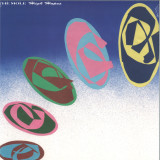
High Hopes - New album from the Mole.
High Hopes is 17 songs across 40 minutes on one slice of wax that, as advertised, sounds nothing like last month’s Ep, High Dreams. Here, rather than the long form dance form, is a continuation of the beat tape pacing from the last album, a collection of moments posing as ideas posing as a narrative stuffed with oddities and surprises that reward the close listen.
What’s heard on High Hopes is the Mole’s exploration of a love letter, from one person to a family, from the northern Pacific to the southern Atlantic, from a boy to a painted bird. Vancouver Island to Manantiales. The songs range from ambient sound bath and hip hop sludge, up to micro boogie and almost House before tumbling back down and forth again. Bubbling synths, MPCs swung out, samples chopped and chewed, bass and violins from Rick and Sophie, field recordings of birds and frogs and beaches, friends and family and fiestas. Did we mention the love ?! This album has got it all! Original collages from Antonio Carrau envelope this wax: jacket, sleeve and cookie. Antonio’s work is typified by playful combinations and bold statements about living in a embrace of analog and digital health. His co lages marry the corporeal world with an updated, digitalized age of reproduction, inducing feelings of gratitude for the simple everyday scenes we sometimes lose touch with when we forget to slow down. Good living, like breathing, requires inhaling as well as exhaling.
We can’t always produce content, make art, we must also pause, and listen. And enjoy. The Mole is joined by friends and colleagues on several songs included on High Hopes. Rick May plays bass on both Que Rico and album stand out GoinF4er. Sophie Trudeau (Godspeed You Black Emperor) plays and arranges violins on GoinF4er and Danuel Tate (Cobblestone Jazz) and Julz Chaz (Wagon Repair) both play Vibes and Emaxx throughout the album. Working with these incredible talents not only enriched this album, but fulfilled a long standing goal of the Mole’s; to work again with the musicians from whom he learned so much. People who helped inform the shape of Mole to come.
The Mole who was As High As The Sky. The Mole has been ‘recognized’ by the ‘global underground’ since his critically celebrated premiere album, As High As The Sky, but his earlier Eps (Wagon Repair, Philpot, Musique Risquee) got the attention of Top DJs, clubs, and festivals around the world first. His sound remains unique, fresh and deep: enjoying plays in a wide variety of spaces and places.
High Hopes is the Mole’s 5th solo album and his 2nd album for Circus Company (The River Widens) who have also proudly released two eps of Mole magic (Little Sunshine, High Dreams).
*Isn’t that too much time for one record? Short answer - No. Long answer - depends on the material. Due to the many quiet passages in the album, the groove spacing can be modulated and the needle can slow it’s progress towards the center/end resulting in longer sides with continued high gain and low distortion.
High Hopes - New album from the Mole.
High Hopes is 17 songs across 40 minutes on one slice of wax that, as advertised, sounds nothing like last month’s Ep, High Dreams. Here, rather than the long form dance form, is a continuation of the beat tape pacing from the last album, a collection of moments posing as ideas posing as a narrative stuffed with oddities and surprises that reward the close listen.
What’s heard on High Hopes is the Mole’s exploration of a love letter, from one person to a family, from the northern Pacific to the southern Atlantic, from a boy to a painted bird. Vancouver Island to Manantiales. The songs range from ambient sound bath and hip hop sludge, up to micro boogie and almost House before tumbling back down and forth again. Bubbling synths, MPCs swung out, samples chopped and chewed, bass and violins from Rick and Sophie, field recordings of birds and frogs and beaches, friends and family and fiestas. Did we mention the love ?! This album has got it all! Original collages from Antonio Carrau envelope this wax: jacket, sleeve and cookie. Antonio’s work is typified by playful combinations and bold statements about living in a embrace of analog and digital health. His co lages marry the corporeal world with an updated, digitalized age of reproduction, inducing feelings of gratitude for the simple everyday scenes we sometimes lose touch with when we forget to slow down. Good living, like breathing, requires inhaling as well as exhaling.
We can’t always produce content, make art, we must also pause, and listen. And enjoy. The Mole is joined by friends and colleagues on several songs included on High Hopes. Rick May plays bass on both Que Rico and album stand out GoinF4er. Sophie Trudeau (Godspeed You Black Emperor) plays and arranges violins on GoinF4er and Danuel Tate (Cobblestone Jazz) and Julz Chaz (Wagon Repair) both play Vibes and Emaxx throughout the album. Working with these incredible talents not only enriched this album, but fulfilled a long standing goal of the Mole’s; to work again with the musicians from whom he learned so much. People who helped inform the shape of Mole to come.
The Mole who was As High As The Sky. The Mole has been ‘recognized’ by the ‘global underground’ since his critically celebrated premiere album, As High As The Sky, but his earlier Eps (Wagon Repair, Philpot, Musique Risquee) got the attention of Top DJs, clubs, and festivals around the world first. His sound remains unique, fresh and deep: enjoying plays in a wide variety of spaces and places.
High Hopes is the Mole’s 5th solo album and his 2nd album for Circus Company (The River Widens) who have also proudly released two eps of Mole magic (Little Sunshine, High Dreams).
*Isn’t that too much time for one record? Short answer - No. Long answer - depends on the material. Due to the many quiet passages in the album, the groove spacing can be modulated and the needle can slow it’s progress towards the center/end resulting in longer sides with continued high gain and low distortion.
- Thank You For Talking To Me (When I Was Fat)
- Ode To Mark White
- People's Free Food Program
- Barfighter
- Rainbow Of Gloom
- Devil Tongue
The "Great Escape Artist" is back! No, not THAT one - dude"s dead! We"re talking about Papa M. And HE"s talking "bout Harry Houdini - in the album title, anyway, not sure about anywhere else. So, six years since his last LP, the all-acoustic A Broke Moon Rises, Papa M rolls into the shred zone, buns glazing, with his fifth full length in 25 years of Papa M-itude! Six fat-assed songs - a couple ballads, yeah, but mostly real all-out groovers here.
A magical and inspirational collaboration between musicians from Burkina Faso - including West African griot and balafon player Seydou "Kanazoe" Diabate and guitarist Abdoulaye "Debademba" Traore - alongside French jazz vocalist and flutist Clotilde Rullaud. In the streets of Burkina Faso, the phrase "ka nana ye" can be heard everywhere. It means "it's not easy" but also implies that things will be okay. With the album Kananaye, which takes its name from this popular saying, things can only get better. Its foundational multiculturalism, conscious lyrics, intertwined traditions, and contemporary grounding are essential qualities in these times when optimism has become a survival virtue. It's not easy, but it will get better - provided we make the effort, crossing borders where others seek to close them. Clotilde Rullaud, Abdoulaye Traore, Achille Nacoulma, Seydou Diabate and Boubacar Djiga, the creators of Kananaye, are dedicated to this cause.