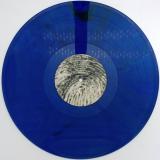
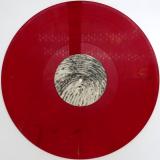
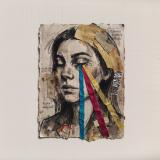
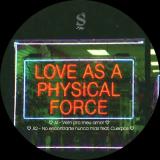
Leading voices in contemporary Organic House anchor LS001 V.A-Thunderlab Collective, the inaugural vinyl-only edition from Life Signal. This first chapter introduces Life Signal as a curated imprint dedicated to presenting standout works from modern electronic music-pieces selected for their lasting impact and now pressed exclusively for listeners who value both sound and physical format.

These tracks have earned significant attention within the digital space, and this release brings them to vinyl for the first time, giving collectors a chance to experience them in a new, tactile form.
A1-Volen Sentir & PROFF-"Luna Amazonia (PM Mix)"
The record opens with a signature blend of organic textures and melodic flow, shaping an atmosphere that sets the tone for the edition.
A2-Krasa Rosa-"
Kaftan"A refined balance of acoustic nuance and electronic drive, building toward a standout breakdown and a sharp, vocal-chopped lead.
B1-Jiminy Hop-"Cavalier (Extended)"
Marked by Jiminy Hop's characteristic phrasing and evolving percussive movement, this version extends the melodic narrative with precision.
B2-Audiense-"Winterfell (Extended)"
A steadily rising finale combining psychedelic touches and ethno-vocal textures, rounding out the collection with an expansive sense of lift.With LS001, the Life Signal vision arrives on vinyl: curated electronic works preserved for collectors who follow music not only by sound, but by legacy.
Cerca:not to
No stranger to the game, Jay Tripwire returns bringing his usual caliber of stylish, late night tales.
2 extended no-nonsense cuts combine to form his ‘Jazz is Pain’ EP. Ethereal themes bleed through a body of meticulously programmed rhythms and beats that bubble and bleep in “Jazz is Pain”. With sprinklings of deep tones and jazz notes creeping in throughout, Jay delivers some otherworldly weaponry fit for the darkest hour.
“Jazz is Life” embodies the spirit of world music as he tells the story through twisted and tweaking lenses, as a plethora of drums, calls and crashes lead the way, punctuated by a tight rhythmic section that ticks away.
Written and produced by Andu Simion in Ploieşti, Romania, Crucial Sonus EP is the second release on Rotation imprint. This B-side project of Wave Makers pushes further into a sound shaped by powerful grooves and dark vibrations. The EP explores a raw, focused energy, where deep rhythms and shadowy textures converge to create an intense and immersive listening experience.
Getting back to simple things, Homemade EP is an allegory of a DIY mentality in an era filled with complexity and uncertainty.
The A-side leans into early-2000s electro and house, with tight drums and functional grooves.
"Rue des Loubards" (A1) kicks off as a groovy cut, filled with mysterious chords and sensual French vocals, layered with tight, driving drums. "Dreams" (A2) follows as an electro piece with aggressive synth riffs and cinematic vocals.
The B-side drifts toward a late-80s palette, with warmer tones and nostalgic feelings. "Godspeed" (B1) cleverly mixes Italo and new beat elements for a chiaroscuro effect. "Antwerp" (B2) closes the EP with a true journey, starting with trancey textures and skillfully drifting toward a synthpop conclusion.
‘In Virus Times’ is an acoustic instrumental piece by Lee Ranaldo.
Composed during the pandemic, ‘In Virus Times’ is released as a onesided LP with an etching on Side B. The cover is a beautiful photo by
Lee’s friend, the great Brazilian photographer Anna Paula Bogaciovas.
Originally released as one track as part of a collaboration with Lucien
Jean for Le Presses du Reel, the music was featured on a mini CD that
accompanied a book that featured two short stories.
‘In Virus Times’, released by Mute, sees the track transformed into 4
pieces and is available on transparent turquoise vinyl with digital
download and an exclusive poster, designed, signed and individually
numbered by Lee Ranaldo. The poster design is based on an electron
microscope photo of the COVID-19 molecule.
Lee has written some of his own ‘loner notes’ for the release:
“This recording began on an evening in September 2020, stuck at home
in lower Manhattan during the dark days of the Covid-19 pandemic as
we came out of a deadly summer. A heightened sense of anxiety
stemming from the then-upcoming US Presidential elections as well as
the virus seemed to pervade all aspects of life, for myself and everyone I
knew. Its minimal quality reflects the sense of ‘motionless time’ that
many of us felt. I set up some microphones in our darkened living room
(studios being closed due to Covid restrictions), coaxing out one simple,
repetitive phrase, and then another, sounding them out into the air. The
casual home ambience - a siren or truck rumbling down the street out
the window; someone talking around the table in another part of the loft;
water running - intrudes at points. I worked to develop a few simple
thematic elements, but mostly I wanted to hear the notes and chords
ringing out, hanging in the air for a long time on that evening when the
world seemed close to stopped on its axis.
“I’d been listening closely to Morton Feldman’s catalog throughout the
pandemic. His sparse, long-duration music could often be heard playing
on repeat as we spent endless days locked inside. His willingness to do
very little, with very simple elements, and to such profound effect, has
been inspirational. I found the vast open spaces in his works thrilling,
miraculous, and comforting in those empty times. Additionally, the Drop
D guitar tuning used here has prompted my own variations on Bach’s
works for solo cello, open strings droning against melodic lines, so
simple and perfect…” - Lee Ranaldo, New York City, August 2021
Nacar02: Totem Pulse EP
Totem Pulse emerges as a coded breath slow, persistent, alive.
A rhythm not built for time, but for alignment.
The pulse does not command.It attunes.
Bodies orbit the frequency.
Thought dissolves into motion.
The totem stands invisible,
yet everything moves around it.
LIMITED EDITION 200 COPIES
- A1: Apache Talk 05 29
- A2: Jacaranda 03 49
- A3: Gentle Rain 05 18
- A4: You Or Not To Be 02 36
- A5: Strange Message 03 29
- B1: Don Quixote 03 35
- B2: Song Thoughts 03 27
- B3: Danse V 06 48
- B4: Empty Room 06 58
- B5: Sun Flower 05 24
Jacaranda is an album published in 1973 that highlights Bonfá’s refined approach to bossa nova and Brazilian instrumental music, blending Brazilian melody and rhythms with jazz-influenced harmonies. The album is cantered on Bonfá’s classical-influenced guitar technique. Indeed, rather than focusing on vocals, Jacaranda lets the guitar lead the narrative, creating a relaxed yet sophisticated atmosphere which evokes Brazilian landscapes and moods. Compared to his previous album Introspection (HE72018), Jacaranda is less restrained and inward, it does not have a meditative mood but offers warmer harmonies and a stronger melodic richness. This is the first vinyl edition of this album since its first edition in 1973.
Those not familiar with Jones' style will listen slack-jawed at the sheer anticipatory nature of his sound collage. The five extended tracks are based on hypnotic and somewhat menacing grooves: a repetitive dub bass beat, waves of Middle Eastern strings and voices, layers of building hand percussion. The washes of sound and percussion come and go, often creating a sense of motion and change. All of the tracks are similar and even share elements. Mid-East tension is so accurately captured through the use of the region's instrumentation (especially percussion), sinister electronics, samples of men chanting, women crying, sounds culled from the horrors of war, and occasional angry distortion that the listener will be transported to the belly of the beast.
»Mullah Said« displays two aspects of the work of Muslimgauze. Firstly, musically, it is in the delightful drifting ambient vein. The percussion is mainly acoustic hand drums - providing a rhythm of aural features - the trademark shimmering string sound heard on a number of releases is much in evidence, rhythms are generally slower, there are lots of samples of people speaking in conversation, markets wherever. 'Mullah said' opens the disc with the lovely mix of these sounds. »Every Grain of Palestine Sand« continues the mood, with a slightly faster tempo, and more emphasis on the beat. But it soon locks into a mesmeric lassitude as various effects echo or smear the sounds, drums come in for short moments, different string sounds enjoin the play. »Muslims Die India« follows the mood though the voices seem darker, sadder, and then comes »Every Grain of Palestinian Sand« followed by »Muslims Die India«. Yes - not a typo, these tracks are repeated. Muslimgauze trend – to remix himself. Prime Muslimgauze middle eastern ambience - if you like that side you will love this album. The final track is short and different, a crackling ground over which a singer chants a song interrupted by machine-gun percussive bursts - »An End«.
Analog Fingerprints Vol. 0 is a compilation bringing together the early 2000s works of Marco Passarani under his Analog Fingerprints alias, collecting key tracks originally released on Rome’s Plasmek and Pigna labels.
For Numbers, the story starts long before the label itself. In their formative years, digging in Glasgow’s Rubadub, Passarani’s records felt like dispatches from a future city. Releases on his own Nature Records and on labels such as Generator and Interr-Ference Communications were mind blowing: rooted in Detroit techno, Chicago house and electro, yet pushing somewhere new. Much like fellow travellers Autechre, who would remix him in 2001, Passarani’s music balanced machine funk with restless experimentation.
Information was scarce, and you would hear these records first on the dancefloor or at listening stations in shops like Rubadub. Print fanzines like Ear and early web outposts such as Forcefield offered only fragments. But there was a palpable axis forming between Detroit techno and a new European wave of record labels including Skam, Rephlex, Clone, Viewlexx and Nature itself. It was the sound that defined Saturday nights at Rubadub’s ‘69’ parties in Paisley, just outside of Glasgow.
Passarani’s records, in particular, were instrumental in bringing together the future Numbers co-founders. Richard had already booked him pre-Numbers; meanwhile Calum (Spencer) and Jack (Jackmaster), then 16/17 year olds working alternate Saturdays in Rubadub, were so enamoured with the Roman sound that they travelled to Rome for the Bitz Festival in 2003 to seek out Passarani and Lory D at their source.
The first Analog Fingerprints release landed as a 12” on Plasmek in 2001, following the fractured, IDM-leaning 6 Katun material. For Passarani, the project marked a recalibration. A DJ first and foremost, he had moved into production via early computer setups, from a Commodore Amiga through primitive PC audio, Cubase and Logic, later experimenting with Ableton. The IDM scene had offered a playground for trial and error, but there was always a tension between abstraction and the dancefloor. Analog Fingerprints became the bridge: still intelligent, but with more dance than distance. After years of broken beats and complex arrangements, he wanted directness without surrendering identity.
Working closely with Francesco de Bellis and Mario Pierro in the Pigneto district, the trio formed Pigna as a vehicle for reclaiming a more accessible dance sound, deliberately steering away from the minimal wave beginning to dominate Europe. Sessions were fast, instinctive, often stretching late into the night with friends dropping by. It was a studio as social space, production as collective energy.
“In that constant search for balance, Analog Fingerprints was my way of expressing something closer to the classic dance floor. The track 'Tribute' - a tribute to my favourite early Detroit techno track of all time, 'First Bass' by Separate Minds - came after I realised I had almost lost my connection with the dance floor. The simplest step was to take inspiration from early Chicago and Detroit and twist it in our Roman ‘Pigna’ way. My goal was to create more accessible dancefloor tracks by mixing my unconscious Italo roots with my teenage love for that early US sound, ensuring the result was as far as possible from the minimal sound that was starting to dominate everywhere.” - Marco Passarani
Technically, the Analog Fingerprints tracks span a transitional era: Roland TR-909, SH-101 and Alpha Juno hardware met early software experiments. A Novation Drumstation rack stood in for the unattainable TR-808, syncing with TB-303 and TR-606. Yet the true secret weapon was Jeskola Buzz, a tracker-style modular environment that allowed step-by-step parameter control and strange melodic constructions, later exported into the audio sequencer. Even the lead on ‘Tribute’ came from an early PPG Wave-style plugin. It was hybrid thinking at a moment when digital tools still felt unstable but full of possibility for technologists like Passarani.
Behind the music sat Finalfrontier, a loose Roman collective orbiting Nature and Plasmek. Distribution and production were intertwined; importing obscure records into Italy built connections with like-minded outsiders across Europe and the US. Expensive phone bills and fax machines forged an “electronix network” that linked Rome to Clone, Viewlexx, Skam, Rephlex, Rubadub and Detroit’s Underground Resistance. There was a shared sense of survival and resistance, of operating against commercial systems.
Passarani recalls “The first time I found a sheet of paper inside an Underground Resistance 12” with info about upcoming releases... and a huge picture of Spock on the back. Imagine that: you love the music, you love Star Trek, and there’s someone on the other side of the ocean sharing those same values and sounds. It was the perfect match. We even gave our original company the suffix ‘Finalfrontier’: that says it all.”
Feedback in that era arrived physically: distributor faxes, conversations with visiting DJs, the experience of playing abroad and meeting kids who had connected with the records. Glasgow became a key node in a scattered outlier network. Passarani personally brought the first two Nature releases to Fat Cat in London, playing them in-store. Shortly after, a fax arrived from Rubadub in Glasgow requesting copies.
“I still remember that phone buzz and the fax paper slowly sliding out, with someone I didn’t know saying they wanted 75 copies of Nature 001. Or like the time we got a fax from the Rephlex crew just saying, “Hello Nature Records, Keep up the good work.” That was how we knew the message was getting through. It was a fantastic feeling; just one piece of thermal fax paper as an analog notification - the mood for the entire week would change.” - Passarani
The connection to Glasgow has since stretched across generations. As Passarani reflects, links often fracture as scenes renew themselves, but in Glasgow something different happened. New and old mixed seamlessly. There was a visible trust in what came before, and a willingness to carry it forward rather than discard it. Observed from Rome, it was deeply encouraging.
Analog Fingerprints Vol. 0 captures that moment of exchange: Rome to Glasgow, Detroit to Europe, experiment to dancefloor. It documents an artist recalibrating his sound and a network of scenes discovering one another in real time, connected by vinyl, faxes and shared intent.
- A1: Another World
- A2: Fleeting
- A3: I’m Bored
- A4: Easy Man
- A5: Killincs
- A6: My Sister’s Loom
- B1: Mountain Song
- B2: Belljar Convenience
- B3: Fated To Pretend
- B4: Waiting Game
- B5: A Light
A Profound Non-Event, the debut album by Sydney-based three piece Daily Toll, comprises 11 songs traversing three years of forged friendships, collaborative experimentation and a shared love of growing through words and song.
Those attuned to the ever-vibrant Australian underground may already be well familiar with Daily Toll, their consistent live presence since their inception in 2021 embroidered by a handful of (mostly) home-recorded, (mostly) digital self-releases that have steadily accumulated an appreciative following. Initially the project of self taught musician, poet & artist Kata Szász-Komlós(they/them) and Jasper Craig-Adams(he/him), and expended to a three piece with the more recent addition of friend Tom Stephens(he/him), Daily Toll represents the union of three unique creative dispositions, of relationships blooming through the push and pull of creative practice. Mapping the band’s existence through their recorded output is to bear witness to the flux of three people learning to respond to one another and gently ossify into a collective vision that at once calls to mind folk song intimacy, post-punk dynamics and the artful poeticism of an adjacent Flying Nun legacy.
If those earlier recordings reflect a band imagining themselves into being in real time, A Profound Non-Event observes a clear shift in both conviction and approach. Recorded in just three days with Alex Bennett at the purely analogue Sound Recordings studio in Castlemaine and holing up at night in the century old cottage situated beside the studio, sheltering from the late-June wind and rain within walls littered with instruments and microphones, lighting fires to stay warm. Kata describes the experience as defined by “candle light and creative camaraderie”, an idyllic account of a collection of songs that glide with an undeniably warm, easy charm, evidenced in particular in the record’s second half as the tone turns increasingly introspective, the very sound of a cold evening’s drift into night. When contrasted with the moody swirl and sing-song bounce of the opening trio of tracks, there’s clear evidence of a band not simply in the process of becoming, but committed to finding their truth in that process.
Still, if Daily Toll display a reluctance to be wholly defined, then album centerpiece ‘Killincs‘ (positioned in the middle for a reason) might just be their Rosetta Stone. A verbose rumination on unsettled feelings of isolation and longing, exploring the challenges in making peace with one's decisions amidst the uncertainty of an often harsh world and the realisation that some things remain best unresolved - “I have the keys still, but I’ve buried the path”.
A label long synonymous with raw, off-centre electronics and uncompromising club tools, Bjarki’s bbbbbb recors welcomes a producer whose approach feels cut from the same cloth, London’s Henry Greenleaf. In an era where functionality often outweighs feeling, ‘Brawn’ is a record that doesn’t court approval; it insists on impact. Built for high-pressure systems and low ceilings, it channels force not as spectacle, but as design.
Greenleaf’s catalogue to date, spanning labels such as Par Avion, YUKU, and ARTS, sketches a restless trajectory between precision and collapse. His productions operate where rhythm becomes architecture: kicks land like poured concrete, subs buckle and flex beneath shifting percussive grids, and textures are stretched until they fray at the edges. Sound is treated as a physical material, layered and stress-tested, reshaped until the familiar mutates into something tactile and strange.
Across the EP, that philosophy takes full form. A1 ‘Brawn’ sets the tone with dense, piston-like drums and tightly coiled low-end pressure, balancing brute force with meticulous spatial control. ‘Jump Up To Be’ follows with a more fractured swing, percussive shards ricocheting across a framework that feels perpetually on the verge of rupture. On the flip, ‘Gawk’ strips things back to skeletal components, carving negative space between distorted pulses and menacing, warped rhythmic figures, before ‘UNTUNTUNT’ closes the record in driving fashion, delivering a raw, functional workout that reduces the groove to its bluntest, most hypnotic form.
True to the label’s ethos, ‘Brawn’ doesn’t chase trends or smooth its edges. It folds air and pressure into motion, pares club music down to its working parts, and leaves room for spontaneous chaos to erupt within the grid; moments where structure splinters, energy misbehaves, and control gives way just enough to keep things volatile. Engineered yet unpredictable, utilitarian yet unruly, the EP embodies the tension, unpredictability, and uniqueness that have long defined bbbbbb recors.
One of the most innovative and ambitious albums ever made, Genioh Yamashirogumi’s Ecophony Rinne is a sonic masterpiece featuring over 200 musicians that expanded the limits of what music and sound could do.
Before Akira there was Ecophony Rinne. Originally released in 1986, Ecophony Rinne is a four-part symphony of “ecological music” by Geinoh Yamashirogumi that married ancient tradition with technological innovation, and changed the way we listen to music in the process.
Half-speed mastered at Abbey Road by Miles Showell, Time Capsule’s high-tech analogue reissue is the first to reproduce composer Ōhashi’s ground-breaking “Hypersonic Effect” theory on vinyl, cutting frequencies beyond the realm of human hearing into wax to capture the full spectrum emotional impact of this extraordinary work.
Founded by genius polymath Tsutomu Ōhashi aka Shoji Yamashiro, Geinoh Yamashirogumi is a shapeshifting collective of over a hundred members from across disciplines. Rejecting professional musicianship, Ōhashi cultivated an ethos where neuroscientists, psychologists, doctors, journalists, engineers and students could critique society through artistic expression and pursue their research in ethnomusicological performances that spanned global traditions, Eastern spirituality and Western classical form.
Ecophony Rinne represents the pinnacle of this vision - an expansive orchestral suite made with over 200 musicians that channeled Ōhashi’s thinking about mankind’s relationship with nature, and fundamental questions of life, death and rebirth.
Here pipe organ synths made from sampled Tibetan horns sit alongside field recordings from Central African forests, Buddhist mantras circle dummy head microphones, Javanese Jegog percussion ensembles pulse like verdant ecosystems, and the acoustics of temples, caves and landscapes are conveyed in the mix. Weaving together culture, nature and technology, it is a record that vibrates with the polyphony of life on Earth.
But Ecophony Rinne was not only musically innovative. Noticing the difference between vinyl and CD versions of the album where digital reproduction limited the sound, Ōhashi developed a theory of “Hypersonic Effect”, determining that ultra-high frequencies above 20khz can impact human perception even if they are inaudible. At once a physical and a psychological experience, to listen to Ecophony Rinne is to feel music differently.
The rest is history. After its release, Ōhashi was approached by director Katsuhiro Ōtomo to produce the soundtrack for Akira, the work for which Geinoh Yamashirogumi is best known. Emerging from the shadows at last, Ecophony Rinne was its transcendental blueprint, reissued in its most complete hypersonic form on vinyl for the first time.
Rather than describe nature, Ecophony Rinne embodied it. Rather than reflect culture, Ecophony Rinne defined it. Rather than explore technology, Ecophony Rinne changed it. As a work of art, it is more relevant than ever. You won’t have heard anything like it.
For this edition, the label meets this duo of producers, that has been created by the musical synergy between Zonker and Daniel Gorziza, who go by the name – “SameSame”. This disc has been titled “Unconditional Society” and has been crafted with a mission to be brought to the worldwide dancefloors and to be foreseen by the adepts of the sound it conveys. The A side is opening with a deep trancey burner “Suspect Zero”, with time passing this side of the record is morphing into the prime-time speaker ripping sound of “Rip the Jacker. The B side will see more mellow feel to it and sometimes even could be said that the vibe turns relatively melancholic by the time the record reaches its natural conclusion. The words that have been shared do not translate the profoundness of the subject that the artists have carried through, but then again, sometimes them letters have to be present even if they are kept to the slightest. The frequencies communicate much superior to the words and by now you can stop reading this and immerse yourself into the sound.
MOVE TRAX is thrilled to unveil "Grab My Love," the eagerly awaited second release from the Tokyo-based label, curated by its founder Al Jones. This enchanting EP synthesizes the sun-soaked essence of early 90s balearic vibes with the alluring melodies of classic Italo house piano, all interwoven with the evocative sounds of traditional Japanese instruments, notably the koto. At the forefront are the irresistible vocals of Aiko Inoue, whose whimsical lyrics recount a lasagna recipe in a manner that feels like a sumptuous love letter—a blend of playful humor and sensual mystery.
Complementing the original vocal mix is the "Scarpetta Dub Mix," where delightful silence speaks volumes, symbolizing the final, indulgent moments of a culinary feast. Further enriching this sonic tapestry are two distinguished remixes from renowned Italian artists: Massimiliano Pagliara lends his ethereal touch with the "Hanami Mix," a delicately layered composition that transports listeners, while Mr. Ties delivers the vibrant "House of Matsuri Mix," infused with a raw, Chicago-inspired acid baseline that guarantees peak-time excitement.
"Grab My Love" transcends conventional dance music, showcasing the innovative spirit of its creators and promising to captivate audiences on dance floors everywhere.
theBasement Discos continue their vinyl journey with a top-notch 4-track House record highlighting the music of Vienna’s finest Jon Gravy.
„Golden Hour“ comes with the beautiful, deep and dreamy title track and the bold, piano-infused House slammer „Let‘s Gruv“ on the A-side. On the flip side, you’ll find „Everybody“ and „Feel Like You 98“, two driving, uplifting House tunes with a nostalgic, almost balearic vibe. Gourmet House music that works on any dancefloor!
INGERABLE, which means “inedible” or “unpalatable” in French, was the adjective a record label used to describe Cathy Claret when she showed them the song inspired by a Caló poem that is now part of our upcoming release, “Por el Chiben.” The piece was born in 1987 when the artist was living in Can Tunis (Barcelona), inspired by a poem she heard from Uncle Bastián. Years later, when recording her first album, she included this composition, but the artist was censored for not fitting commercial standards. Now, Alhaja Records revives it in an album with two versions: a flamenco one, featuring Emilio Caracafé on guitar, and an electronic one, produced by Wará.
Incl. Remixes by Red Axes, Roman Flügel & Abe Duque
What does it mean to exist in sound?
It does not begin with a beat, but with a choice. With the moment when someone decides not merely to inhabit the space, but to shape it – and in doing so, makes themselves visible.
Roman Flügel stands as a constant in the background. Not as an authority, but as a collective consciousness. Since the 1990s, he has moved through club music like a seeker, never content with the first answer. House, techno, experimentation – these are not genres, but states of being. His remix thinks, hesitates, opens, strikes like a surging acid wave, warping reality and demanding true presence.
New York taught him that club music is never neutral. It is body, friction, attitude. Abe Duque’s remix carries a strangely enchanting relentlessness, a resistance to smoothness – as if the dancefloor were a place where freedom is not claimed, but fought for.
Red Axes do not enter this space; they conjure it. Their sound is raw, repetitive, circular, as if deliberately refusing linearity. House, dub, and acid elements become material for a movement that is more trance than structure. Their remix does not ask where it is going; it asks why one should ever stand still.
And then there is Tim Paris. Not at the center, but as a narrator. As someone who knows that the voice is an attitude. “That Boy” is not a pose, but a mirror, ironic, direct, vulnerable. Paris moves between new wave house and club, always aware that identity is never fixed, but formed in the moment.
This remix record is not a gathering of names. It is a situation, four perspectives on the same question:
What does it mean to exist in sound?
Yet sound alone does not tell the full story: like music, the visual is a space to be shaped, felt, and deciphered. The cover of Tim Paris feat. Foremost Poets – That Boy, created by Konstantin Fürchtegott Kipfmüller, a visual artist at the Hochschule für Gestaltung in Offenbach under Heiner Blum, embodies this principle. Drawing inspiration from the urban environment, Kipfmüller transforms traces of decay, weather, and time into abstract narratives that, like the music of Tim Paris, Roman Flügel, Abe Duque and Red Axes, unfold meaning layer by layer. The result is no mere adornment, but a mirror of the sonic landscape: every line, every surface an echo of the question of what it means to exist – fully, in the moment, in sound.
- 01: Maanitus &Amp; Tšiižik
- 02: Markka
- 03: Melkutus
- 04: Letška
- 05: Kuuen Parin Hoirola
- 06: Brišatka
- 07: Tšiižik
- 08: Kirkonkellot
- 09: Kirkonkellot Korkea
- 10: Hoirola, 3 Parin
- 11: Lippa
- 12: Kyngäkiža
- 13: Ristakondra
- 14: Vanha Polkka
- 15: Viistoista
- 16: Vanha Valssi
- 17: Kiberä
- 18: Maanitus Kuokan Kanteleella
- 19: Tuuti Lasta Nukkumahe
Vinyl[22,65 €]
Death Is Not The End present a further volume of Arja Kastinen's eerie amalgamations of 110 year old wax cylinders with her own meticulously transcribed takes, this time focussing in on Armas Otto Väisänen's field recordings of kantele player Iivana Mišukka (b. 1861 d.1919).
"Ivana Mišukka (1861–1919) was one of the Karelian kantele players recorded by the folk music researcher Armas Otto Väisänen on wax cylinders in 1916 and 1917. In the early 20th century, the remote areas of Border Karelia were undergoing the final phase of a transformation in musical culture, with the ancient runo song tradition giving way to newer forms of music. This transition is reflected in Mišukka's repertoire and choice of instrument. The ancient small kantele, hollowed out of a single piece of wood, was already rare at the turn of the century. Mišukka's kantele was a new type of instrument with 26 strings, constructed of several parts, but he played it using the traditional plucking technique. Like other Border Karelian kantele players, his repertoire consisted of music rooted in runosong culture, as well as newer dances and songs from the east and west. Most of the recorded material falls into the latter category.
Ivan Bogdanov Mišukka was born out of wedlock in Suursara village, Suistamo, on 1 May 1861. He began playing the kantele at the age of five or six, quickly mastering the instrument. In adulthood, he was considered one of the area's best master players. Mišukka was landless for most of his life and lived in different parts of the Suistamo parish. His first wife, Tekla Markintytär, died in 1897 at the age of 40, and his second wife, Jevdokia Filipintytär Jeminen, died in 1907 at the age of 50. Seven children were born from the first marriage, two of whom died young. The third wife, Maria Ignatintytär Gurnan (Kuurnanen), was a well-known master of lamentations. Together with Maria, Iivana Mišukka worked as a tenant farmer in the village of Suursara. Mišukka suffered from rheumatism, which prevented him from participating in physical work like Maria. This was apparently partly the reason why Iivana Mišukka went to earn extra money by playing the kantele on gig trips. He often had other traditional artists from Suistamo as his travelling companions, such as the runosingers Konstantin Kuokka and Iivana Onoila. Iivana Mišukka died in Leppäsyrjä village, Suistamo, on 18 May 1919 at the age of 58, and his kantele was donated to Teppana Jänis.
Mišukka only used 14 of the 26 strings on his kantele, playing the same tunes either a fourth higher or lower. He tuned his kantele to the major scale using fifths, except for a low seventh scale degree on the upper strings, but not below the fundamental. Since he did not use the seventh note of the scale on the upper strings at all, he could use the major scale both lower and a fourth higher with this tuning. According to Mišukka, the sound of higher, or 'finer', strings is 'more beautiful', while that of lower ones is 'greater'. Among runosingers, the size of the thirds varied, ranging from major to minor to neutral. A similar phenomenon can be observed in kantele tunings, where the third, sixth and seventh scale degrees vary in a comparable way.
During a meeting, Väisänen suggested that Mišukka play the smaller kantele belonging to Konstantin Kuokka. The idea was to bring it closer to the horn to improve the recording quality. However, the kantele was completely out of tune, and now Mišukka tuned it to the Lydian scale (track 18).
Using the old plucking technique, Mišukka placed his right middle finger on the fundamental tone, his right index finger on the second scale degree, his left middle finger on the third scale degree and his left index finger on the fourth scale degree, and his right thumb on the fifth. The thumb also played the notes above the fifth note of the scale. As Mišukka remarked to Väisänen: 'Peigaloll' tuloo enemb ruadoa' (the thumb has to do more work). However, he did not use the seventh note of the scale on the upper strings at all. Below the fundamental note, he played the seventh and sixth notes of the scale with his right middle finger of and the fifth note of the scale with his right ring finger. This fifth scale degree below the fundamental is almost always used as a drone. Sometimes, when the melody required it, Mišukka, like other players, also varied the fingering. He would also occasionally strike the same string with the side of his fingernail after plucking it.
The wax cylinder recordings of Karelian kantele players are kept in the archives of the Finnish Literature Society in Helsinki, Finland. Copies were made of them onto reel-to-reel tapes in both the 1960s and 1980s. The 1960s copies are mono and the 1980s copies are stereo. However, not all kantele recordings from these decades have survived.
The sound of the kantele is difficult to hear in wax cylinder recordings due to its low volume, and it occasionally becomes completely obscured by noise. During the copying process, the cylinder sometimes rotates unevenly, resulting in breaks or jumps in the music. Additionally, the rotation speed of the cylinder in the copies does not correspond to the performance speed of the original music, which alters the pitch. However, since Väisänen's precise notes are available in the archive, it is possible to deduce the melodies, their speed, and the tuning level of the kantele in the recordings. Of the copies of the original recordings from the 1960s and 1980s, I have selected the one that best met the requirements of this publication and adjusted the speed of the recording to align with Väisänen's notes. To enhance the listening experience, I have replayed the songs, which now partly overlap the old recordings on this release."
— Arja Kastinen
- 01: Maanitus &Amp; Tšiižik
- 02: Markka
- 03: Melkutus
- 04: Letška
- 05: Kuuen Parin Hoirola
- 06: Brišatka
- 07: Tšiižik
- 08: Kirkonkellot
- 09: Kirkonkellot Korkea
- 10: Hoirola, 3 Parin
- 11: Lippa
- 12: Kyngäkiža
- 13: Ristakondra
- 14: Vanha Polkka
- 15: Viistoista
- 16: Vanha Valssi
- 17: Kiberä
- 18: Maanitus Kuokan Kanteleella
- 19: Tuuti Lasta Nukkumahe
Tape[16,39 €]
Death Is Not The End present a further volume of Arja Kastinen's eerie amalgamations of 110 year old wax cylinders with her own meticulously transcribed takes, this time focussing in on Armas Otto Väisänen's field recordings of kantele player Iivana Mišukka (b. 1861 d.1919).
"Ivana Mišukka (1861–1919) was one of the Karelian kantele players recorded by the folk music researcher Armas Otto Väisänen on wax cylinders in 1916 and 1917. In the early 20th century, the remote areas of Border Karelia were undergoing the final phase of a transformation in musical culture, with the ancient runo song tradition giving way to newer forms of music. This transition is reflected in Mišukka's repertoire and choice of instrument. The ancient small kantele, hollowed out of a single piece of wood, was already rare at the turn of the century. Mišukka's kantele was a new type of instrument with 26 strings, constructed of several parts, but he played it using the traditional plucking technique. Like other Border Karelian kantele players, his repertoire consisted of music rooted in runosong culture, as well as newer dances and songs from the east and west. Most of the recorded material falls into the latter category.
Ivan Bogdanov Mišukka was born out of wedlock in Suursara village, Suistamo, on 1 May 1861. He began playing the kantele at the age of five or six, quickly mastering the instrument. In adulthood, he was considered one of the area's best master players. Mišukka was landless for most of his life and lived in different parts of the Suistamo parish. His first wife, Tekla Markintytär, died in 1897 at the age of 40, and his second wife, Jevdokia Filipintytär Jeminen, died in 1907 at the age of 50. Seven children were born from the first marriage, two of whom died young. The third wife, Maria Ignatintytär Gurnan (Kuurnanen), was a well-known master of lamentations. Together with Maria, Iivana Mišukka worked as a tenant farmer in the village of Suursara. Mišukka suffered from rheumatism, which prevented him from participating in physical work like Maria. This was apparently partly the reason why Iivana Mišukka went to earn extra money by playing the kantele on gig trips. He often had other traditional artists from Suistamo as his travelling companions, such as the runosingers Konstantin Kuokka and Iivana Onoila. Iivana Mišukka died in Leppäsyrjä village, Suistamo, on 18 May 1919 at the age of 58, and his kantele was donated to Teppana Jänis.
Mišukka only used 14 of the 26 strings on his kantele, playing the same tunes either a fourth higher or lower. He tuned his kantele to the major scale using fifths, except for a low seventh scale degree on the upper strings, but not below the fundamental. Since he did not use the seventh note of the scale on the upper strings at all, he could use the major scale both lower and a fourth higher with this tuning. According to Mišukka, the sound of higher, or 'finer', strings is 'more beautiful', while that of lower ones is 'greater'. Among runosingers, the size of the thirds varied, ranging from major to minor to neutral. A similar phenomenon can be observed in kantele tunings, where the third, sixth and seventh scale degrees vary in a comparable way.
During a meeting, Väisänen suggested that Mišukka play the smaller kantele belonging to Konstantin Kuokka. The idea was to bring it closer to the horn to improve the recording quality. However, the kantele was completely out of tune, and now Mišukka tuned it to the Lydian scale (track 18).
Using the old plucking technique, Mišukka placed his right middle finger on the fundamental tone, his right index finger on the second scale degree, his left middle finger on the third scale degree and his left index finger on the fourth scale degree, and his right thumb on the fifth. The thumb also played the notes above the fifth note of the scale. As Mišukka remarked to Väisänen: 'Peigaloll' tuloo enemb ruadoa' (the thumb has to do more work). However, he did not use the seventh note of the scale on the upper strings at all. Below the fundamental note, he played the seventh and sixth notes of the scale with his right middle finger of and the fifth note of the scale with his right ring finger. This fifth scale degree below the fundamental is almost always used as a drone. Sometimes, when the melody required it, Mišukka, like other players, also varied the fingering. He would also occasionally strike the same string with the side of his fingernail after plucking it.
The wax cylinder recordings of Karelian kantele players are kept in the archives of the Finnish Literature Society in Helsinki, Finland. Copies were made of them onto reel-to-reel tapes in both the 1960s and 1980s. The 1960s copies are mono and the 1980s copies are stereo. However, not all kantele recordings from these decades have survived.
The sound of the kantele is difficult to hear in wax cylinder recordings due to its low volume, and it occasionally becomes completely obscured by noise. During the copying process, the cylinder sometimes rotates unevenly, resulting in breaks or jumps in the music. Additionally, the rotation speed of the cylinder in the copies does not correspond to the performance speed of the original music, which alters the pitch. However, since Väisänen's precise notes are available in the archive, it is possible to deduce the melodies, their speed, and the tuning level of the kantele in the recordings. Of the copies of the original recordings from the 1960s and 1980s, I have selected the one that best met the requirements of this publication and adjusted the speed of the recording to align with Väisänen's notes. To enhance the listening experience, I have replayed the songs, which now partly overlap the old recordings on this release."
— Arja Kastinen
Death Is Not The End collaborate with Uzbek label Maqom Soul to deliver an LP counterpart to last year's mixtape of the same title, compiling specially picked & fully licensed individual belters from the ex-soviet studios of Central Asian republics between 1978 and 1989 - incl. Uzbek, Tajik, Kurdish & Uyghur artists pulling traditional folk motifs together with pop & rock and psych elements.
"These recordings do not form a smooth or coherent history. They feel more like a sequence of discoveries made at different moments and in different circumstances. Songs and instrumental pieces that once lived inside specific contexts radio broadcasts, philharmonic programs, touring routes now sit side by side, revealing hidden connections as well as clear fractures between them.
Nasiba Abdullaeva appears here as a voice from the end of an era. Trained within a conservatory system, she worked inside the format of the Soviet pop song while filling it with melodic logic that did not come from Moscow or Leningrad. Her voice is soft and sustained, shaped by Eastern melisma, and it never functions as decoration. Even in tightly structured songs there is a sense of resistance, an effort to preserve a musical language rooted in Uzbek tradition rather than fully adapted to an all Union standard.
The ensemble Sintez, later renamed Navo, represents a different path. Beginning as a student rock group, the band was gradually absorbed into the official VIA system with all its limitations and compromises. Yet it was precisely within those boundaries that Sintez and Navo developed a recognizable sound. Electric guitars and jazz rock harmonies do not overpower the folk material but remain in tension with it. Their recordings feel like negotiations between what the musicians wanted to play and what they were allowed to perform.
The Tajik ensemble Gulshan reflects an institutional approach carried to a high professional level. Formed under television and radio structures, the group treated folk material almost as a written score. Carefully constructed arrangements, close attention to orchestration, and restrained use of pop techniques define their sound. There is less spontaneity here, but a strong sense of discipline and structure, where national melody becomes part of a carefully controlled sonic framework.
Koma Wetan occupies a very different space. Formed in the 1970s, this Kurdish rock group approached poetry and folklore as tools of cultural assertion. Their psychedelic rock never feels like a stylistic borrowing. Instead it functions as a contemporary vessel for language and themes that might otherwise have remained unheard. Even today these recordings sound fragile and stubborn at the same time.
The Uyghur ensemble Yashlik, closely connected to a musical drama theatre, operated somewhere between stage performance and popular music. Their songs are built on folk melodies but shaped for wide audiences. What emerges is a constant attempt to preserve the recognizability of Uyghur musical identity without freezing it in a folkloric frame. Yashlik's music exists in a state of balance between representation and development.
Digging Central Asia does not attempt to establish hierarchies or offer a single wayof listening. Names and dates matter less than the sound itself. Tape noise, abrupt transitions, and unexpected timbres remain part of the material rather than flaws to be corrected. This music existed at the crossroads of multiple routes geographic, cultural, and ideological. Heard today in a new context, it no longer feels peripheral. Instead it stands as a reminder that the history of popular music is far more fragmented, layered, and polyphonic than it is usually allowed to be."
When a Russian missile struck the ground not far from my studio in Kyiv, I vividly remember how my body reacted to the explosion, milliseconds before my mind did. That traumatic explosion reduced my essence to a primal state. There existed nothing but dread—the kind that, in scripture, accompanies the appearance of angels announcing, ’Be not afraid’.
The visions of Abbess, composer and mystic Hildegard von Bingen were preceded by bright, excruciating flashes of light. Modern medicine reduces them to cluster migraines, one symptom of which is the retinal aura, often accompanied by blurred vision and blind spots. Hildegard’s music can place great demands on the bodies of its performers, emphasizing uncomfortable intervals and the wide distance between the lowest and highest pitch. In comparison, Gregorian chant, the liturgical standard of the time, represents a tempered attempt to grasp God intellectually; indeed, Hildegard’s music was once described as a stick of dynamite thrown into a Gregorian chant.
This album is not a historically informed performance. Hildegard’s persona and music are a starting point—a distant mirror, akin to the shield of Perseus, used to reflect Medusa. It allows us to reflect, comprehend, externalise, and transcend traumatic wartime experience, reinstating the embodied origins of Christianity, which contained suffering but also offered the promise of transcendence. Andriana-Yaroslava Saienko emphasises this physical aspect of Hildegard’s music by drawing on authentic Ukrainian folk singing, a form that survived despite efforts by the Soviet occupation to replace it with a simulacrum that is naive, harmless, and devoid of contradictions—an attempt to ‘civilise’ the body by disembodying it.
The musical approach is also informed by my ongoing practice of reimagining early music in modular synthesis. I accompany Andriana-Yaroslava’s fiery singing with drones—extended sounds that also occurred in medieval music. The drones alternate with improvisations, one taking its starting point in medieval polyphony, the other working with the concept of the interchangeability of sound and light, referring both to Hildegard’s visions and the space in which we recorded the album: the Cistercian abbey of Sylvanès in Occitania, known for contemporary stained glass windows whose patterns reference the dispersion of acoustic waves inside the church.
The album features two compositions by Hildegard von Bingen: O Ignis Spiritus Paracliti (O Fire of the Spirit and Defender), dedicated to the Holy Spirit, and O Tu Suavissima Virga (O Sweetest Branch), in honour of the Virgin Mary. Both pieces are performed radically slower than usual, expanding in time and space. On vinyl, the compositions are designed to reflect one another and can be listened to in either order. In the digital edition, there is a bonus track titled Zelenaia Dubrovonka (The Green Oak Grove). Based on a Ukrainian folk song from the Polissia region, Andriana Yaroslava adapted the lyrics to reflect our contemporary reality. The green oak grove does not rustle with the wind; instead, it resonates with a different sound—perhaps the missile that struck near my Kyiv studio.
- 1: Missionary Of Mercy
- 2: Puppet Regime
- 3: Canary
- 4: Blaze Of Obscurity
- 5: Retaliate!
- 6: Hypochondriac
- 7: Enemy Within
- 8: The Brotherhood
Pariah’s cult album re-issued! “Blaze of Obscurity” brings you pure Thrash Metal fury! Satan changed their name to Pariah in 1988-1989. There’s Heavy Metal, Power Metal, Thrash Metal, Death Metal, the list seems almost endless. Sub-genres are important in metal and bands are quickly classified and labeled. Pariah (the last re-incarnation of Satan) is one of few bands that are difficult if not impossible to classify. Is it Heavy metal? NWOBHM? Thrash Metal? Pariah did not make it easy to describe their sound. It might be too sophisticated to simply label it Heavy Metal, which in its infancy was a rather simple affair.
They don’t sound like any Metal band out there, perhaps discounting some of the more aggressive and technical ones, and then the signature NWOBHM sound is added. The guitar playing by Russ Tippins and Steve Ramsey is undeniably what defines Pariah as well as Satan in the past. Undeniably, Satan has gone a long way; from humble NWOBHM beginnings, to Experimental/Melodic Mettal (in Blind Fury) and something that could be described as a NWOBHM/Thrash Metal hybrid (“The Kindred”). It’s as if they’ve been experimenting trying to find their identity, and theyfinally found it. Stylistically, “Blaze of Obscurity” could be seen a step back to “Suspended Sentence”, but this time around they got everything right, down to the last note. Those who have heard Satan know what to expect: great guitar playing.
And sure enough, “Blaze of Obscurity” is a demonstration of guitar mastery and is overall a very guitar-driven album, with plenty of mind-boggling riffs and solos are all over the place, but more importantly, it’s a demonstration of some amazing songwriting as well. This is easily Pariah/Satan’s creative peak and one of the most consistent albums I’ve ever heard, featuring eight great and conceptually perfect songs with lyrics that come across as sophisticated and thought-provoking. It is not fair to put the entire spotlight on Tippins and Ramsey though since the drumming and bass work from Sean Taylor and Graham English really shines. The rhythm is fast and tight, keeping it focused, aggressive and intense till the end. Vocalist Michael Jackson (yes, that’s his name) has to be commended too as this is easily his careers best performance.
The verdict: “Blaze of Obscurity”: the level of musical genius expressed here, along with near flawless songwriting, is more than enough to skyrocket it to heights reserved only for classics. Probably not your choice for some light listening those quiet Sunday evenings, but those who take a more serious, intellectual approach when selecting their music will find very much to appreciate here.
Tracklisting
- 1: Twisted On A Train
- 2: Stairway To Nowhere
- 3: Invisible Ink
- 4: Landline
- 5: Crosseyed Critters
- 6: Oil Change
- 7: East Of Ordinary
- 8: Unglued
- 9: Delusions
- 10: Backroads
Black Vinyl[24,16 €]
Moo is the first wide release on my new label MUP! When I decided to make a new record, it only seemed right to go back to what brings me the most joy, which is, Rock & Roll music. I got my Tascam 388 fixed, the same tape machine I had used to record my first album, King Tuff Was Dead. It had been sitting in my parent’s house in Vermont for the past 14 years, but I had finally dragged it out to LA. I stopped caring if there were mistakes. There’s not enough mistakes. I played my old, blue, Gibson SG, Jazijoo, and she spewed mangled electrified gold. For once, I sang and I didn’t hate my voice. I played the drums badly and bounced them in mono to one track and it sounded like glorious shit. I wish it sounded even worse. Rock & Roll is the music of rodents and bugs. It should sound like it crept from a decrepit trashcan or a crypt or a toilet. It is not chill or vibey, autotuned or on the grid. It is not perfect, which is why it’s perfect. And I don’t care if it’s dead or alive, cool or uncool: when I hear it, and when I play it, as a chubby and balding 43 year old punk weirdo, I FEEL ENERGIZED. All in all, MOO is a full circle moment. A return to form. A return to rock. A return to Vermont. A return to myself. Reconnecting the dots. Restarting the engine. Plugging in the stack. Finally letting King Tuff be King. Fucking. Tuff.
- 1: Twisted On A Train
- 2: Stairway To Nowhere
- 3: Invisible Ink
- 4: Landline
- 5: Crosseyed Critters
- 6: Oil Change
- 7: East Of Ordinary
- 8: Unglued
- 9: Delusions
- 10: Backroads
Indie Exclusive Vinyl[24,16 €]
Moo is the first wide release on my new label MUP! When I decided to make a new record, it only seemed right to go back to what brings me the most joy, which is, Rock & Roll music. I got my Tascam 388 fixed, the same tape machine I had used to record my first album, King Tuff Was Dead. It had been sitting in my parent’s house in Vermont for the past 14 years, but I had finally dragged it out to LA. I stopped caring if there were mistakes. There’s not enough mistakes. I played my old, blue, Gibson SG, Jazijoo, and she spewed mangled electrified gold. For once, I sang and I didn’t hate my voice. I played the drums badly and bounced them in mono to one track and it sounded like glorious shit. I wish it sounded even worse. Rock & Roll is the music of rodents and bugs. It should sound like it crept from a decrepit trashcan or a crypt or a toilet. It is not chill or vibey, autotuned or on the grid. It is not perfect, which is why it’s perfect. And I don’t care if it’s dead or alive, cool or uncool: when I hear it, and when I play it, as a chubby and balding 43 year old punk weirdo, I FEEL ENERGIZED. All in all, MOO is a full circle moment. A return to form. A return to rock. A return to Vermont. A return to myself. Reconnecting the dots. Restarting the engine. Plugging in the stack. Finally letting King Tuff be King. Fucking. Tuff.
Two jewels in the crown of the soulful electronic music scene in NYC unite for a spellbinding EP on Rhythm Section International. ”Full Circle” is a brand new body of work from Musclecars & Toribio.
To call this 12” simply epic would almost be doing it a disservice. The breadth of musicality and execution of ideas contained across 3 compositions is nothing short of miraculous. I use the word composition intentionally: these are not merely tracks - these are 3 movements making up a concerto - with a dub thrown in for good measure!
The record kicks off with a soulful house behemoth, “ That’s My Story” featuring NJ legend Roland Clark on vocals giving sweet sweet testimony. In many ways, this track feels like a coming together of the trios influences. The lyrics contextualise it, giving it this intimate, confessional feel. The latin drums shuffling amidst the 909 kick drive it forward and the organ swimming freely amongst it all takes us to church. It’s a timeless track - paying homage to the various New York traditions laid down by Louis Vega, Timmy Regisford, Joaquin Claussell , Ron Trent et al - all heroes and collaborators of the composers who - with this effort - have surely now earned their place in the pantheon of American Soul Music.
‘
Be Honest’ maintains the confessional tone with the lyrics but takes things right back down in terms of tempo. Is it a love song, an ultimatum or a cry for help? Whichever way you interpret it, this track is Toribio’s time to shine as a lead vocalist and he hits all the notes, leaving not a dry eye in the house. This is a delicate tour de force, delivered with such raw emotion and vulnerability it allows the instrumentation takes a back seat - just a gentle groove, swelling strings and some unresolved chords are all that’s required to transform us to the main character of this story. We’re left hanging, and it’s oh so relatable.
Agua De Florida serves as an uplifting, fast paced finale to the concerto and this one’s all about the trumpet - masterfully performed by Melbourne born, London based virtuoso Audrey Powne. If Herb Alpert was making house music - I imagine this is what it would sound like. Throbbing bass and noodling synths join the melee and crank the joy up to 11. If the EP is a story arc over 3 tracks, then we’re definitely not left hanging with this one. All is resolved, things are moving onwards and upwards and the circle is complete.
As Nathan Fake rises from the nocturnal subterranea and rave catharsis of his previous records, on Evaporator, he resurfaces into the domain of daylight, bringing a tangible sense of air rushing against your face, of big skies, and endless landscapes. The idea of pop accessibility that trickled into 2023’s Crystal Vision is refracted here through the prism of sweeping ambient, deep electronica, and trance uplift. Evaporator is Fake’s idea of “airy daytime music”, with each track a different barometer reading across the album’s varying atmospheres, which range from vibrant sunbursts, bracing rainscapes, and fine mists of clement melodics. “It’s not overtly confrontational electronic club music,” states Fake. “It’s quite pleasant, it’s accessible. As I was progressing through making the tracklist, I called it a daytime album. It doesn’t feel like an afterparty album.” For the past decade Fake has been gingerly introducing collaborations with heroes and friends alike into his lone, idiosyncratic working process. Border Community alumni Dextro AKA Ewan Mackenzie transmutes his ferocious drumming for Pigs Pigs Pigs Pigs Pigs Pigs Pigs into the blurred choral thump of ‘Baltasound’. ‘Orbiting Meadows’, meanwhile, is his second collaboration with Clark, an eerily idyllic duet where microtonal 18EDO piano clangs slowly twirl around wailing pads. Evaporator marks the junction point of old technology and ever fresh creativity for Nathan. The trusty “dinosaur” age software, particularly Cubase VST5, that has powered two decades of music is rarely updated. “I used to sort of feel a bit ashamed of using such old software, and then I kind of had an epiphany – that’s just how I work”, comments Fake. “That’s just how I play. I’m very fond of these old tools, and I get the most joy out of them, but now I’ve incorporated new technology too.” When an artist accumulates so much synergy with their instrument, music making becomes instinctual. By Fake’s account, much of Evaporator just fell into place. The album title arrived randomly in his head (“it felt completely perfect. Airy.”), ideas looped and developed until things locked into place and just felt right. ‘The Ice House’ is a fleeting glimpse of the sonic world he taps into in this creative state, its glassy FM synths built around a counterpoint between rough-hewn crystalline arpeggios and sparse yet gravitas-bearing bass. “That riff I just wrote out on the keyboard, I just played it forever and ever and ever. The original track ended up being really short. Here you go, and it’s gone!” These unplanned channellings of sound call forth records from Fake’s past while he looks ahead, perhaps getting at the very essence of his musicianship. The opener ‘Aiwa’ (“the breeziest,” he muses) reminds of the introspection that characterised Providence, excited by the fire and grit of Steam Days’ textural experiments, its chunky slams and clatters surging into a flood of harmonic buzzing as they reach out for old wisdom. ‘Hypercube’ stampedes in a similar chronological confluence, infusing an incessant synth line reminiscent of the golden age of rave with the crackling, ecstatic energy of modern festival anthems. Like the vaporisation of liquid to particles, everything that Evaporator presents has a mutant desire to be amorphous. Sounds rarely settle; the irradiated garage beat of ‘Bialystok’ is pitched downwards to driving, rebounding effect, while ‘You’ll Find a Way’ warps static into shivering energy, cinematic synth strings building anticipation into a gradual gush of chords. This translates into a more expansive stereo field than Fake has explored before. ‘Slow Yamaha’ saves the wildest, most kinetic transformations for last with a cornucopia of crispy melodies and fried drums; a sibilance of cymbals on the left, a susurrus of shakers on the right, and kaleidoscopic lasers pulsing and fizzing all around. Evaporation culminating in pure excited atoms. In a world where music has increasingly become background content, making albums remains lifeblood for Fake: “It makes me realise how long; twenty years is ages! It’s weird to see how much the world has changed. Release day back then you did fuck all, now you spend all day on socials. When I grew up the people who made the electronic music I was into were quite mysterious, and the artwork was very abstract. There was a massive distance between you and that music, and that was a key part of it, really. Now it helps to be an extrovert, and I'm just not, but the album marks the first time my face has graced the cover art. I’ve never wanted to do this before, I'm very shy, and generally I don’t like being seen,” he professes. “But, twenty years in, I supposed I could try something new. I'm very lucky that I'm somehow surviving in this world, where the media world favours extroverts and interesting looking people. It’s not my world but somehow I’m still in it.” Evaporator continues to prove Nathan’s necessary presence, with some of his most engaging, varied, and magical music yet.
Bristol duo Pume Orenge unspool a world of spectral electronica from cassette loops and instrumental improvisation on their debut album Angel By Milo for Odda Recordings.
It is a world that opens draped in ferric hiss. A fog of sound, dense and yet not quite there, catching the light in strange shades and ambient drifts. Looping and receding, looping and receding, as pucks of static burst like faraway fireworks on a cold winter’s night. Sound sources obscured, ambiguous, not quite what they seem.
Angel By Milo takes its lead from the analogue process and textures by which it was made. Percussive and melodic loops were established, manipulated and responded to with instrumental improvisation, in a give-and-take with the materiality of the medium.
Across these seven intricately developed tracks, the sound fluctuates between the cinematic and the introspective, at times melancholy, at others verging on a kind of restrained anger, before the calm sets in once more. It is music for the small hours, awash with the grainy stuff of memory.
Embedded within Bristol’s independent scene, Pume Orenge’s quiet debut also speaks to the duo’s shared roots in the area, and like many of Odda’s previous releases, contains a sensitivity to place and atmosphere, even when these are no more than implied.
Angel By Milo builds on the DIY ethos of Pume Orenge's 2023 self-titled debut EP, whose tracks were recorded live in single takes, now honing a more intentional, purposeful approach to music making. It is one in which layers of meaning are allowed to reveal themselves, a way of composing that makes a virtue of its labour and the chance occurrences that can arise in the process.
This is music in praise of shadows. Of the things we can’t quite see, the feelings we can’t quite grasp. Heard through the haze, or maybe not at all.
Metal up Your Ass was recorded on November 29, 1982, at the Old Waldorf in San Francisco. The support band was Exodus, featuring Metallica's soon-to-be lead guitarist Kirk Hammett. The band played all their original material (nine songs) that they had written up to that point, which included all the songs from their previous demo No Life 'Til Leather and two new songs (which were later released on the Megaforce demo). Two covers of Diamond Head songs were played: "Am I Evil?" and "The Prince". However, "The Prince" was not recorded as the tape had run out. Both the name and album cover of this demo was to be used as the band's first album name and sleeve. However, Metallica's record company did not let them use the name "Metal up your ass" for an album name. Cliff renamed the album when out of emotion, he said, "I hate the managers. Let's just Kill 'Em All".
- A1: Abay
- A2: Tew Ante Sew
- B1: Mengedegna
- B2: Kahn
- C1: Sew Argen
- C2: Nafekeñ
- D1: Abet Wubet
- D2: Guramayle
- D3: Gud Fella
- D4: Guramayle (Slight Return)
180g Heavy double vinyl LP with liner notes by Tyran Grillo. Limited Japanese Obi for the first pressing. Original artwork by Russell Mills and photography by Jean-Baptiste Mondino.
The third Time Capsule is a body of dub reinterpretations by celebrated producer Bill Laswell of Ethiopian singer Gigi. Curated by Tokyo record collector, music researcher and seasoned reissue supervisor Ken Hidaka, it is the first time Illuminated Audio is pressed to vinyl after its CD release in 2003.
Ejigayehu Shibabaw was born in 1974 in Chagni, northwestern Ethiopia and by pursuing a career as a singer, went against her father’s strict, traditional gender roles. As Gigi, she embraced the same musical freedom she had strived for in her personal life, incorporating the Ethiopian church, funk, hip-hop, West and South African music into her work. She first settled in Nairobi, then Addis Ababa, where she quickly established herself as one of the city’s leading singers. A move to San Francisco in 1998 led to a long and fruitful creative partnership with bassist and producer Bill Laswell.
Around the same time, Chris Blackwell had stepped away from Island Records to start the art house film company and label Palm Pictures. He took an interest in Gigi and together with Laswell, pulled together an all-star cast of musicians for her self-titled US debut album, including Herbie Hancock, Pharoah Sanders and Wayne Shorter. It won international critical acclaim, not just for its musicianship but for making Gigi a “defining voice for the Ethiopian expatriate community”, as journalist Tyran Grillo praises in his Time Capsule liner notes. From the nation-defining 1896 victory over Italian invaders to the quiet revolutionaries who wear simple shemma garments, Grillo believes the themes in Gigi make it “a shower of sunlight on her homeland for those ignorant of its struggles.”
After its success, Blackwell encouraged them to go back into the studio to rethink the album and Illuminated Audio was born. “Anyone can make a voice sound worldly”, Grillo remarks, “but rare are those who can make one sound inner-worldly.” Gigi was clear with Laswell to give her vocals a minor role “because it’s already been done.” Instead her Amharic verse is fleeting, exhaling through the textures like ghostly fragments; soaring yet muted. Yet the album is still titled under her name, an assertion by Laswell of her central role in the album’s creation. Not only was it a fully endorsed project by Gigi, but she would be present throughout its development, giving feedback on half-finished ideas as Laswell played them back in the studio. “It works perfectly”, she reflected after the album’s release. “We wanted to capture the whole spirit of each track, and Bill’s remixes create a different music language that really puts you in a pleasant place”.
This new vocabulary takes its lead from a technical approach that Laswell had been perfecting during a furtive creative period at the turn of the millennium. Much like his ambient interpretations of Miles Davis (Panthalassa, 1998), Bob Marley (Dreams of Freedom, 1997), and Carlos Santana (Divine Light, 2001), Laswell approached Illuminated Audio by returning to the original multitrack masters. Gigi wasn’t just reworked, but recomposed into an expansive lattice of instruments, submerged in a watery ambience of dub and trance undercurrents.
Sonically, this new language that Gigi refers to, is manifested by the original album’s more understated parts being pushed to the fore. Explaining his contrasting methods, Laswell saw Gigi as being “put together in a way that fits”. Contrastingly, in Illuminated Audio, “a lot of things that I featured in the remix weren’t as audible in the original.” Instrumentation laying near-dormant, deep in the mix, are brought to the fore: the acid rock guitar and Wayne Shorter’s saxophone on ‘Tew Ante Sew’, Graham Haynes’ flugelhorn on ‘Nafekeñ’, Laswell’s bass on ‘Kahn’, the melodica in Mengedegna or the floating synths and talking drums in ‘Gud Fella’.
Brought to his attention by mentor DJ Nori, Hidaka describes Illuminated Audio as a “masterful sonic exploration into ethereal ambience and dub” and made sure this reissue also contained a full remaster to give its “deep musicality” much better dynamics and density in the overall sound. Hidaka admits that Laswell's music “is sometimes so out-there, it is often misunderstood” and, indeed, to dub album non-believers this might seem like a prolific producer imposing himself on another artist’s work; eternally developing rearrangements that never quite get to its destination. But that’s missing its true power and triumph. This is more than the reissue of a remix, but “a wholly unique musical entity”, as Hidaka describes. Illuminated Audio refers to the illuminated manuscripts that comprise the major part of Ethiopian art and its new compositions stand in proud solitude as a rare body of reworks that both informs and enhances their originals.
- Identified Patient – The Female Medical College Of Pennsylvania (Marcel Dettmann Pitched High Version)
- Tocotronic – Bis Uns Das Licht Vertreibt (Marcel Dettman Version 2 Remix)
- Cristian Vogel – Untitled (Marcel Dettmann Cut)
- John Bender – Victims Of Victimless Crimes (Marcel Dettmann Cut)
- Clark – Dirty Pixie (Marcel Dettmann Edit)
- Junior Boys – Work (Marcel Dettmann Remix)
- Mutant Beat Dance - The Human Factor Ft. Naughty Wood (Marcel Dettmann Edit)
- Experimental Products – Who Is Kip Jones (Marcel Dettmann Cut)
- Marcel Dettmann – Water Feat. Ryan Elliott (My Own Shadow Remix)
- Severed Heads – We Come To Bless The House (Marcel Dettmann Edit)
- Albert Kuningas - Astraaliprojektio (Marcel Dettmann Edit)
- K.alexi Shelby – Season Of The Real (Marcel Dettmann Edit)
- Ian North – Sex Lust You (Marcel Dettmann Edit)
- Ford Proco – Expansión Naranja (Feat. Coil) (Marcel Dettmann Edit)
- Nitzer Ebb – Shame (Marcel Dettmann Edit)
- Frank Duval – Ogon (Marcel Dettmann Edit)
- Yello – Limbo (Marcel Dettman Version 2 Remix)
- Conrad Schnitzler – Das Tier (Marcel Dettmann Edit)
LP 3x12"[28,99 €]
A DJ, producer and significant figure in contemporary electronic music, Marcel Dettmann steps forward to contribute to Running Back’s ongoing Mastermix series. Whereas previous editions of Mastermix have taken an ear to the sound of lapsed, legendary clubs such as Wild Pitch and Front, Dettmann’s curation deftly captures the man himself in ongoing perpetual motion, raiding the vault for his own precision-tooled edits, long-employed on dancefloors to devastating effect. Alongside a continuous mix, this release arrives as a 3LP gatefold, and as a limited edition cassette.
Closely associated with Berlin’s techno landscape, Dettmann was born and raised in the former GDR, then later immersed in the bleary-eyed counter cultural landscape of post-unification Berlin. Initially oriented by post-punk, industrial and new-wave music, Dettmann has been DJing since 1993, always expanding and perfecting his repertoire. He later began working behind the counter at the city’s tastemaking rave boutique Hard Wax, and a decade after he first dropped a needle, became (and remains) resident at notable local nightspot Berghain/Panorama Bar, where his instincts have helped sculpt the signature sound of both main dancefloors.
Of course, you’re probably not asking, “Who is Marcel Dettmann?” More importantly, you might want to know; just what treats has he gifted us here? The trip begins with a simple pitch-shift skywards, transforming Identified Patient’s creeping ‘The Female Medical College of Pennsylvania’ into a peak-time freakout, before an alternate take on Toctronic’s ‘Bis uns das Licht vertreibt’ emerges from the vaults for the first time. Dating from 1995, and one of Dettmann’s all-time favourites, Cristian Vogel’s ‘Untitled’ clambers back into the box with respectable cuts, while John Bender’s ‘Victims of A Victimless Crime’ kicks off the flip sporting a new arrangement, transporting us back to the foundations of a confident, stripped-back sound.
A few subtle edits to Clark’s perilously funky ‘Dirty Pixie’ takes us to Dettmann’s remix of Junior Boys. Produced in 2010, it transposes the Canadian duo’s sophisticated pop with our curator in his minimal prime, and has since become an irresistible prize for high-minded diggers. The same can be said for Experimental Products’ explosive proto-electro anthem ‘Who Is Kip Jones?’, empowered from pricey Discogs purgatory with just the slightest of tweaks. It’s deservedly sandwiched between the guiding influences of Chicago and Detroit in the form of Mutant Beat Dance’s raw ‘The Human Factor’ and a shimmering new version of previous solo production ‘Water’, featuring close friend and Ostgut Ton ally, Ryan Elliot.
The second half of the Mastermix seamlessly connects the mechanical past and digital present of EBM and industrial in the dance, with Dettmann’s instincts as a guiding hand. Severed Heads’ iconic ‘We Have Come To Bless This House’ emerges with mere nips and tucks, while Nitzer Ebb’s ‘Shame’ is significantly reimagined as a highwire act of rhythm and tension, setting up a sensual second take on a 2017 remix of ‘Limbo’ from Swiss synth heroes, Yello.
Core musical memories are shaken and stirred with a context-shifting take on Frank Duval’s emotional classic ‘Ogon’, while Ian North’s ‘Sex Lust You’ and Ford Proco’s notable Coil collaboration ‘Expansion Naranja’ effectively throb with only minor adjustments, respectfully imagined as “shadow versions”. Meanwhile, a simple breakbeat lifts Albert Kuningas’s ‘Astraalprojektio’ in the direction of wide-eyed dancefloors, while a fresh take on K-Alexi Shelby’s ‘Season of The Real’ inexplicably emerges somehow even funkier than before.
The conclusion of the compilation leads back to Das Tier from the prolific experimentalist Conrad Schnitzler, whose swirling synths and hypnotic vocals are duly tightened by Dettmann, but only as he puts it, “in conversation with the original.” Concluding three discs and thirty years of commitment to the dancefloor, this Mastermix not only offers us the opportunity to eavesdrop on this endless exchange, but to gain some sought-after material for our own record collections.
- 1: Live From Mumbai 00:36
- 2: No Other Than 04:03
- 3: Powerman & Iron Fist (Fighting Without Fighting Version) 0:00
- 4: Sure Shot! 03:32
- 5: Fresh Like Dougie 04:42
- 6: How To Cut & Paste (Lesson 1) 04:54
- 7: Audobahn 03:56
- 8: All Out War 03:46
- 9: Break Down 03:24
- 10: Golden Crown (Feat. Oxygen) 04:52
- 11: Fashion Plate 04:13
- 12: Sister Of Phyllis Diller 04:01
- 13: Heroes Of The East (Feat. Paten Locke) 04:21
- 14: The Pack Up (Part 3) 02:44
Cassette Box Set[38,87 €]
AE Productions in association with Sure Shot Recordings and In Effect Recordings are pleased to announce a 10 Year Anniversary Edition of the critically acclaimed Phill Most Chill and Paul Nice album as the Fabreeze Brothers.
The hugely successful first edition which was pressed on colour vinyl and supplied in double fold out sleeve sold out in only 2 weeks from release date and then the 2nd pressing black vinyl edition sold out a little while later but has for years been out of print but is increasingly requested by shops, via email, social media, AE Productions website back in stock requests, etc…
As it has been 10 years since original release back in 2015 at the time of proceeding with manufacturing, it was the perfect opportunity to do a 3rd pressing to mark the anniversary but we had to pull out all the stops for a 3rd run of this incredible album and also make it subtly different again in packaging design from the 1st and 2nd pressings so that each has it’s own particular feel and quality.
With help from the original designer and all-round vinyl artwork supremo Mr Krum we have found some nice adjustments for the gatefold sleeve where the detail from the insert sheet found in the original issues is incorporated into the inside panels of the sleeve. We have also tweaked the hype sticker to mark the 10th Anniversary Edition and updated the vinyl labels so as to work better with the new Splatter vinyl which follows the original red and yellow vinyl but each splattered with the opposite colour.
For something a little extra we have compiled a Limited Expanded Edition Double Cassette Box Set that includes the original album and also a ‘Bonus Tape’ which features all of the remixes, alternate versions, Original Versions of album cuts and bonus tracks found on B-sides of the array of singles and we included for good measure 2 tracks that only appeared on the promotional only LP sampler that ended up being different on the final release. This is limited to cassette just for the non-vinyl heads as all of these tracks already appear on vinyl. The outer box is A5 card in black with gold foil Fabreeze Brothers logo and comes with discography booklet.
‘The Bonus Tape’ from the box set is also available as a standalone cassette release with alternate j-card art work so that it has it’s own flavour and so that anyone that purchased one of the original run of cassettes that sold out before we could even ship any copies, did not need to purchase the main album again unnecessarily and to make it noticeable from the Expanded Edition Box Set version.
This version also has an alternate shell design in keeping with the clear shell with dark liner that was commonplace back in the 90’s and the cassette geeks may note the red text on the spine as was also a common design back then – giving this a pseudonym of ‘the 90’s tape’ during the design process.
We couldn’t stop there so we also have an extremely low quantity Limited Edition Mini Disc version which is the main album plus 8 of the bonus tracks from The Bonus Tape – only missing the 2 least significant alternate versions but clocking in at just a few seconds under 80 minutes – the absolute maximum for the format! Mini Disc???!!! You’re probably asking – yes!
While looking into the cassette duplication options we realised that the duplicator also offers Mini Disc production so we thought that it may be worth doing a very small run just because not only are professionally manufactured Mini Disc’s rare in Hip Hop, they are rare within the entire music industry as they never really took off as a medium to purchase music but ended up as the choice for home recorded Walkman and car use. Indeed, AE boss Mr Fantastic still has his main machine, portable and old discs. Amazingly also, the sleeve artwork transferred brilliantly to the Mini Disc template. They are manufactured using high quality Sony discs using ATRAC 4.5 codec.
All releases are supplied with unique free download codes on cards that are included inside the packaging but also with the Expanded Edition cassette and Mini Disc having 2 cards – 1 for the main album and a 2nd card for ‘The Bonus Tape’. The free downloads are supplied direct from Phill Most Chill’s Bandcamp page keeping it independent.
- 1: Live From Mumbai 00:36
- 2: No Other Than 04:03
- 3: Powerman & Iron Fist (Fighting Without Fighting Version) 0:00
- 4: Sure Shot! 03:32
- 5: Fresh Like Dougie 04:42
- 6: How To Cut & Paste (Lesson 1) 04:54
- 7: Audobahn 03:56
- 8: All Out War 03:46
- 9: Break Down 03:24
- 10: Golden Crown (Feat. Oxygen) 04:52
- 11: Fashion Plate 04:13
- 12: Sister Of Phyllis Diller 04:01
- 13: Heroes Of The East (Feat. Paten Locke) 04:21
- 14: The Pack Up (Part 3) 02:44
RED & YELLOW SPLATTER Vinyl[29,20 €]
Expanded Edition Double Cassette Box Set including main album and Bonus Cassette with unique download cards
AE Productions in association with Sure Shot Recordings and In Effect Recordings are pleased to announce a 10 Year Anniversary Edition of the critically acclaimed Phill Most Chill and Paul Nice album as the Fabreeze Brothers.
The hugely successful first edition which was pressed on colour vinyl and supplied in double fold out sleeve sold out in only 2 weeks from release date and then the 2nd pressing black vinyl edition sold out a little while later but has for years been out of print but is increasingly requested by shops, via email, social media, AE Productions website back in stock requests, etc…
As it has been 10 years since original release back in 2015 at the time of proceeding with manufacturing, it was the perfect opportunity to do a 3rd pressing to mark the anniversary but we had to pull out all the stops for a 3rd run of this incredible album and also make it subtly different again in packaging design from the 1st and 2nd pressings so that each has it’s own particular feel and quality.
With help from the original designer and all-round vinyl artwork supremo Mr Krum we have found some nice adjustments for the gatefold sleeve where the detail from the insert sheet found in the original issues is incorporated into the inside panels of the sleeve. We have also tweaked the hype sticker to mark the 10th Anniversary Edition and updated the vinyl labels so as to work better with the new Splatter vinyl which follows the original red and yellow vinyl but each splattered with the opposite colour.
For something a little extra we have compiled a Limited Expanded Edition Double Cassette Box Set that includes the original album and also a ‘Bonus Tape’ which features all of the remixes, alternate versions, Original Versions of album cuts and bonus tracks found on B-sides of the array of singles and we included for good measure 2 tracks that only appeared on the promotional only LP sampler that ended up being different on the final release. This is limited to cassette just for the non-vinyl heads as all of these tracks already appear on vinyl. The outer box is A5 card in black with gold foil Fabreeze Brothers logo and comes with discography booklet.
‘The Bonus Tape’ from the box set is also available as a standalone cassette release with alternate j-card art work so that it has it’s own flavour and so that anyone that purchased one of the original run of cassettes that sold out before we could even ship any copies, did not need to purchase the main album again unnecessarily and to make it noticeable from the Expanded Edition Box Set version.
This version also has an alternate shell design in keeping with the clear shell with dark liner that was commonplace back in the 90’s and the cassette geeks may note the red text on the spine as was also a common design back then – giving this a pseudonym of ‘the 90’s tape’ during the design process.
We couldn’t stop there so we also have an extremely low quantity Limited Edition Mini Disc version which is the main album plus 8 of the bonus tracks from The Bonus Tape – only missing the 2 least significant alternate versions but clocking in at just a few seconds under 80 minutes – the absolute maximum for the format! Mini Disc???!!! You’re probably asking – yes!
While looking into the cassette duplication options we realised that the duplicator also offers Mini Disc production so we thought that it may be worth doing a very small run just because not only are professionally manufactured Mini Disc’s rare in Hip Hop, they are rare within the entire music industry as they never really took off as a medium to purchase music but ended up as the choice for home recorded Walkman and car use. Indeed, AE boss Mr Fantastic still has his main machine, portable and old discs. Amazingly also, the sleeve artwork transferred brilliantly to the Mini Disc template. They are manufactured using high quality Sony discs using ATRAC 4.5 codec.
All releases are supplied with unique free download codes on cards that are included inside the packaging but also with the Expanded Edition cassette and Mini Disc having 2 cards – 1 for the main album and a 2nd card for ‘The Bonus Tape’. The free downloads are supplied direct from Phill Most Chill’s Bandcamp page keeping it independent.
- 1: Adhd
- 2: Worry Days
- 3: Crying Song
- 4: Fuck U
- 5: Bastard State
- 6: Mania
- 7 3: Sides Touching
- 8: Canned Coffee
- 9: Babymusicc
As collaborative projects often do, 33 has in time found a more fixed form, a kind of structure that turned it from a loose collection of collaborators gravitating around founders Bill John Bultheel and Alexander Iezzi into something resembling more of a traditional band. Not that there is anything conventional in their creative process tho, nor in the music itself… Nontheless Tripolar - their second album and first for Haunter - seems to take them closer to song territory than ever before.
The (progressive) graduation of multi-instrumentalist Cem Dukkha and vocalist/clarinet player Ivan Cheng from collaborators to full-time members has brought 33 to a more refined awareness of their possibilities as a creative unit, although their compositional process has retained a high level of spontaneity and musical madness. Tripolar was in fact assembled by editing hours of improvisation that Bultheel, Iezzi and Dukkah recorded with no specific endgame in mind. The sessions saw them exchange a variety of acoustic, electronic and electric musical instruments: percussions, guitars, strings, piano, hurdy gurdy, synthesizers and even CDJs as a tool of live sampling manipulation.
By molding the pieces into what they are now, the band managed to concoct some beautiful vignettes of contradictory mental and emotional states, as sonically playful as a renaissance fair happening within a broken timestream. Cheng’s lyrical and vocal contributions helped them coalesce even further into proper songs, adding a melodic presence that’s at once seductive and uncanny. But vocal duties are often ceded to guests, namely Danish pop-neoclassicist Astrid Sonne, Kenyan metal guru Lord Spikeheart, Irish goth raconteur Olan Monk and Japanese body-poet Golin.The amount of different sounds arranged into each of the tracks produces a unique sense of awe and bewilderment, a testament to the incredible talent and craft the musicians have employed into putting together such a broad range of influences and approaches into a coherent and extremely effective musical journey.
An equally erratic thematic thread seems to run through all the tracks, one ultimately preoccupied with mental health and its ramifications. Without turning the project into a concept album, 33 and their collaborators have sprinkled it with references to personality disorders and mental conditions that are all too relevant to the contemporary age, reflecting on the lineage of human inner life. A wide display of lyrical and musical tools is employed to explore these themes, ranging from Sonne’s expressionist depiction of ADHD in the opener, to Cheng’s queer-themed reinvention of an Irish murder ballad in closing track ‘Babymusicc’. Tracing lateral trajectories for introspection, Tripolar is not only highly captivating, but it ultimately sounds esoteric in the best possible way: progressively revealing layer after layer of incredible aural magic, its true meaning living in the form and in its manic scope of energies.
The process of making this mini-album “anaiis & Grupo Cosmo” was truly life-altering for me. It changed my approach to making music and really brought me back to the roots of what creation is about. I went to Salvador for a month-long artist residency in February 2020 and during that time, I not only fell in love with Brasil’s culture and music, but I also wrote “Toda Cor” with the wonderful Luedji Luna. A few years later, I reached out Biel who’d co-produced “Estrela Acesa” with Sessa to see if they’d be interested in re-developing “Toda Cor” with me. They were enthusiastic and we fully reproduced the record in December, remotely. The connection between us all was electric and it felt like there was a collective enthusiasm for creating more together so I flew out to Brasil in April 2023 to continue this exploration. The beauty behind this record really lies in the experience of making it. We all stayed together in Biel’s house in Ilhabela for a week with Cabral, who co-produced the record with us and plays bass. We would go to the beach, eat communally, share stories, be around the kids, but then spend most of the days creating and jamming together. Each day we would record our songs live to tape, not a computer in the room. By the end of the week we had this album. It was refreshing to make music in this way. The music and approach really held us in that moment and gave us a chance to create freely, in a big moment of transition in our lives in a way that truly embraces imperfection, spontaneity, just very human.
“Onomatopeikoa II” follows on from Irazoki's 2017 Gitarra Onomatopeikoa release, and that album's sense of untethered, questing curiosity is not only carried over but expanded upon even further here. Combining a fully committed approach to the guitar with an almost egoless lightness of touch, this album builds upon the already impressively scopious range of Gitarra Onomatopeikoa to dizzying effect.
Irazoki makes full use of an impressively broad palette. Yet nothing feels forced, nothing is for show – there’s just a sense of open-hearted generosity.
In lesser hands such a whirlwind tour of style and form might risk failing to get its hooks in deep enough, yet not only does Irazoki have the imaginative scope to tackle these varying approaches to the instrument, he has the technical chops to pull it off. Each composition seems to have an openness of intent that is utterly disarming; all cards are on the table and nothing is held back, resulting in a creative tour de force that builds, piece by piece, to a unifying cohesiveness that makes the whole far greater than the sum of its parts.
Featuring contributions from long-time OTO favourites Rhodri Davies and Raphael Roginski,
“Onomatopeikoa II” is nevertheless unmistakably a work of singular craft and vision.
FFO: Jeff Parker, Loren Connors, Keiji Haino
Limited edition vinyl of 250 copies
presented by Hegoa with a cover designed by Pablo Mirón.
Geoglyph is the new duo project by Alohn and Khey Mysterio, a convergence of two deeply singular practices into a single subterranean signal. Their debut album arrives as the eighth reference on Organic Signs, not as a collection of tracks but as a carved artifact: six inscriptions pressed into vinyl, mapping a sonic territory where time, rhythm and texture are no longer linear, but layered like geological memory.
Through Geoglyph, Alohn and Khey Mysterio convey a message from below, or beyond. A pulse engraved from forgotten times in the basement of reality, reactivated by abyssal basses, vibrating layers and fractured textures. Exhumed from the subterranean strata where psychedelic dub, mineral techno and fractal dubstep fuse into raw energy, their music becomes a point of contact: every beat, every silence, every oscillation acting as a coordinate toward another perception. What unfolds is not simply sound design, but an invocation, rhythms as sigils, timbre as gnosis, signals that seem to arrive already charged with intention.
Across the album, Alohn’s guitar notes fall like cascades through the mix, dissolving at times into controlled feedback and crystallizing into melodic fragments that hover between tension and release. These organic gestures are interwoven with Khey Mysterio’s dense low-end architectures and rhythmic frameworks, creating a constantly shifting terrain: from weightless transmissions and ritualistic voices to moments of overwhelming propulsion where the music suddenly breaks open with tectonic force. The record moves fluidly between meditative suspension and explosive motion, never settling into a single state for long.
A strong undercurrent of what has come to be known as “druidstep” runs through the album, a term coined within the 95 Open Tabs universe to describe a form of dubstep untethered from genre convention, rooted instead in bass as ritual, in groove as invocation. Here it meets dub-techno pulse, psychedelic echoes and high-velocity 4×4 pressure, drawing subtle influence from underground bass cultures without ever becoming referential. The result is a body of work that feels both ancient and forward-leaning, cyclical rather than linear: a living geoglyph that reveals different meanings depending on how (and where) it is read.
As the final movement accelerates into its closing phase, the album releases its energy outward, with frequencies stretched toward their limits, leaving behind the trace of a completed ceremony. In this sense, Geoglyph’s debut stands as a defining moment within the Organic Signs continuum: a record that unfolds rather than explains, offering an experience to be entered, absorbed, and carried. With this release, the label continues to explore new sonic spaces, evolving and expanding while giving deeper meaning to its own essence. A message from beneath the surface, waiting for those willing to tune in.
Más de este género
- How To Exist
- Best Days
- Getaway Car
- La Dolce Vita
- Work In Progress
- The Actor
- Magnificent Seven
- The Double
- Well Well Wellness
- Through The Looking Glass
- True Romance
- The Entertainment
Formed in Galway City, Ireland James McGregor (vocals/ guitar), Sean Connelly (guitar) and Damian Greaney (drums) went to school together there and met Tom Freeman (bass) on the music scene. Relocating to London in 2019, the quartet signed to Alan McGee's new record label 'Creation23' almost overnight. They have since impressed audiences across Europe with live performances at festivals including Rock Werchter, Eurosonic and Electric Picnic, performing to a huge crowd at Sefton Park in Liverpool in support of Kings of Leon, as well as a head- turning televised appearance on Sky 1's Soccer AM. Media have been quick to show their support too plus previous singles, taken from their 2023 debut "Exit Strategy" received praise on BBC Radio 1's Annie Mac on her "New Names" showcase, BBC 6 Music's Steve Lamacq on his 'Recommends' show, received day-time radio play on RTE 2FM, and impressed the legendary Rodney Bingenheimer on Sirius XM.
The four-piece are drawn together by not only a mutual appreciation of music past and present but also a love of films and books, notably the ones on the more 'noir' side of the spectrum. You could say Arctic Monkeys got them into a band, The Strokes showed them how tightly you could distil it and Radiohead showed them how wide you could take it. But these days there not afraid to also put Billie Eilish and Charlie XCX into that mixture and films from director Fellini to "Drive". What matters is that from starting out playing acoustic folk, that turned into 3 minute (post-)punkish songs, they now have expanded a lot from there, taking in all the experience they have now recording and touring. Pushing the emotion by being authentic and creating what you really want despite the noise and haste around you.
- A1: Life Could Be A Cloud
- A2: Cut Glass Hammer
- A3: I Can't See A Rainbow
- A4: Dropped Down The Well
- A5: In The Weeds
- A6: Reimagined River
- A7: Mediocre Demon
- A8: Bell Miner
- A9: Lemon Trees
- A10: Watching The Moon
- A11: Wildly Remote
- A12: Holy Invisible
YELLOW VINYL[25,17 €]
MEMORIALS jump off the waterslides and head above the clouds with their stunning second album, ‘All Clouds Bring Not Rain’. The duo of Verity Susman and Matthew Simms (formerly of Electrelane and WIRE) locked themselves away in a studio in a barn secluded deep in the woods in southwestern France and re-emerged with a beautiful, unusual record that is both melodic and unconventional. For such an ambitious album it’s striking that it was written, performed, recorded and mixed solely by the two of them. Sounding like an unearthed classic, MEMORIALS twist their influences into their own unmistakable sound. Imagine Nico singing with Can produced by David Axelrod and you’re somewhere in the right ballpark.
The record draws inspiration from a wide range of music including folk, dub, post punk, experimental tape music, 60s soul, garage rock, 70s spiritual jazz and Canterbury prog. This attention to detail in their sound meant finding several other studios to get what they needed to record with, including a harpsichord at 4AD’s studio in London and a vibraphone and vintage Leslie speaker in Stereolab drummer Andy Ramsay’s studio Press Play. Verity’s distinctive, unadorned singing is a focal point of the record, moving from tender to wild. Her vocal melodies quickly become earworms, providing the tuneful heart around which the songs’ more unorthodox elements are arranged, which is where Matthew’s unconventional approach to recording and production comes to the fore. With their adventurous arrangements, classic songwriting skills and innovative production techniques, MEMORIALS have created another mesmerising listen that’s accomplished and compelling in its unique approach yet remains dizzyingly immersive - just like their acclaimed live shows.
Taking place in the Paras district, Cangallo province, in the Ayacucho region of the Central-South Sierra of Peru - this is a recording of a ritual held on February 5th 2020 for the one year anniversary of the death of Mrs. Sofía Miranda de Bellido, recorded by her grandson Hánkel Bellido.
At noon the coffin of "Mamay Sofía" was presented, so that her relatives could say goodbye for the last time. Following tributes from family members, these songs dedicated to her life and her passing were sung.
The townspeople were notified of the events by the sound of bells that produce a peculiar and powerful sound, and that can be heard in the other nearby towns of Paras. It is said that these bells were greased with human fat, and brought from the Cerro de Pasco region during colonial times. The bells must be played all morning until the change of mourning takes place.
At midnight the songs of the Almakunapaq (also known as San Gregorios) mass began. These are unique to the Andean peoples - a fusion of Andean and Christian syncretic traditions - and are said to help the dead to enter the eternal Kingdom.
It was 4am when the change of mourning took place, and in accordance with traditions, the friends & family announce the presence of harp and violin players, to liven up the proceedings with songs of joy and merriment until the next day.
"Mamay Sofia, manan wañukunkichu, kawsakuchkankim sunquykupi; sichus qunqarusqaykiku, chaymi ichaqa wañukunki!"
"I have not died, I will die on the day that you forget me!"
- 01: Nhá Zefa &Amp; Nhô Pai - We&Apos;Ll Never Forget
- 02: Leôncio &Amp; Leonel - Envious Affair
- 03: Grupo Sertanejo Do Lenço Preto - Oh I Cry
- 04: Mandi &Amp; Sorocabinha - Bad Weather
- 05: Jeca Mineiro &Amp; Bambuí - River Of Revenge
- 06: Zé Mané &Amp; Zé Pagão - White Rose
- 07: Zico Dias &Amp; Ferrinho - I Went For A Walk In The City
- 08: Mariano &Amp; Caçula - Shaved Moustache
- 09: Tonico &Amp; Tinoco - Example Of Faith
- 10: Sulino &Amp; Marrueiro - Return Of The Cowboy
- 11: Moreno &Amp; Moreninho - City Of Roses
- 12: Valdomiro &Amp; Valdemar - Old Saying
- 13: Serrinha &Amp; Caboclinho - The Crimes And Death Of Dioguinho
- 14: Raul Torres &Amp; Serrinha - Friday The 13Th
- 15: Canário &Amp; Passarinho - Goodbye
- 16: Mandi &Amp; Sorocabinha - I Dreamt I Had Died
Death Is Not The End present the first volume in a survey of a form of Brazilian country music known as música caipira ("hillbilly music") - a stripped-back forerunner to música sertaneja, the Brazilian equivalent to US country & western which in it's contemporary form has come to dominate the domestic music industry in recent decades. This collection covers some of the earliest recordings made by the pioneering folklorist Cornélio Pires at the end of the 1920s, through to records from the 30s, 40s & 50s and the beginning of the 60s.
Somewhat rooted in Portuguese troubadour folk traditions, música caipira is typically performed by a duo singing in parallel thirds and sixths, drawing upon a Portuguese-Brazilian style known as moda de viola - with the viola being the viola caipira, a Brazilian-style ten-string guitar that is the core instrument of the music. Born out of the "outback"-style region in north-eastern Brazil, these songs tell stories of pain, love, loss & betrayal - often backed by homemade guitars using invented tunings. Away from the polished pop country & western-stylings of the sertaneja, these recordings could be viewed as the Brazilian equivalent to the roots music of the American dustbowl or Appalachia.