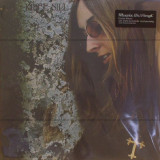
Big Joe Williams is seen by many as the ultimate incarnation of the Delta Country Blues player, and several of his songs have become standards in the Blues canon. Known for being rough on his guitars, it's one of the reasons for the ongoing tinkering that led to the construction of his first nine string instrument. This fine studio album was released in 1962 on the Folkways Label after being recorded the year before. It contains King Highway Blues, a slow and at times almost spoken track. Where as Somebody's Been Foolin' is fairly driven along by Ransom Knowling's Bass. In 1968 Downbeat Magazine, simply stated that "Big Joe Williams' Blues is a beautiful experience". Listen to this album and you'll agree.
In 1955 Connie Francis recorded a set of demos which were turned down by nearly every record label around. Skilled in mimicking contemporary femal vocalists, she had yet to develop a distinctive style of her own. Eventually, MGM Records offered her a contract and with inspiration from her father, she recorded Who's Sorry Now. The track was singled out in 58 by Dick Clark who played it on his American Bandstand show. By April it had reached #1 in the UK, and #4 in the US charts. Her career went on to flourish when the songwriters Neil Sedaka and Howard Greenfield penned Stupid Cupid which again topped the UK charts at #1. She would go on to rack-up a further seven Top 40 hits before the end of the decade while managing to fit in the recording of an Italian songs album at the iconic Abbey Road Studios in London.
‘Aloha Got Soul’ encompasses a vibrant era of contemporary music made in Hawai’i during the 1970s to the mid-1980s as jazz, rock, funk, disco and R&B co-existed alongside Hawaiian folk music. Hawai’i’s identity had undergone huge change: statehood into America in ‘59 and the Vietnam War were the backdrop as Hawai’i’s youth found inspiration in a new wave of international music led initially by The Beatles and Stones and, later, by US R&B bands like Earth Wind & Fire and Tower Of Power. Garage bands flourished during the ‘60s and, by the ‘70s, live music was at its peak. Waikiki was filled with clubs: The Point After, Infinity’s, Hawaiian Hut, Spats and more.
For the ‘70s generation of artists, some came through the talent contest ‘Home Grown’ and its accompanying compilation LP. In 1978, Hawaiian was made the official state language and a huge movement arose to revive hula and traditional music. Steve & Teresa’s ‘Kaho’olawe Song’ longs for an island long gone: the US military had used Kaho’olawe as a bombing range since Pearl Harbor. Nohelani Cypriano sang about the once sleepy town of Kailua, now a popular tourist destination: “Kailua needs no high-rise with her blue skies, not for our eyes. Can you realize?” Leading Hawaiian artists like Aura, Mike Lundy and keyboardist Kirk Thompson’s Lemuria took time in high quality facilities like Broad Recording Studio to make albums. Others grabbed studio time when they could: Tender Leaf’s Murray Compoc worked for the city bus by day and recorded an album during night sessions. Other albums were spontaneous. In 1983, Steve Maii & Teresa Bright recorded an acoustic set in just 3 hours after being invited to a studio following a gig.
For the artists of the ‘70s, the climate for music changed rapidly during the mid-‘80s as DJ culture grew and live venues shut down. Hawai’i’s R&B era shone brightly and relatively briefly but, despite brilliant musicians, regular gigs and LP releases, most of the music barely made it to the mainland. Thanks largely to Aloha Got Soul’s Roger Bong, a new interest in this fertile era of Hawaiian music has grown, culminating in this compilation of overlooked gems. ‘Aloha Got Soul’ is compiled and annotated by Bong and features rare photos and original artwork.
out of Stock
Last delivered 2 years ago available to reorder, subject to availability
"Chance" is the second album of Société Étrange, composed of 6 love
songs without words, with equivocal rhythms, glaucous turquoise
bass and melodies affectionately tinged with melancholy.
The album was recorded in July 2020 in Vaulx-en-Velin from a collection of materials and collective drift. Composed in studio, it is by the live that is shaped their pieces, several years to test them together so that these three musicians let us glimpse a possible civilization. Not fantasies that cannot beapprehended, but a future that we can hope to desire. Their hypnotic compositions, drunk with dub, iron harmonics and polymetric measures, play a music that is a bit shady, one of those that provoke the space for the dance to happen, without anesthesia. Société Étrange was formed in 2012 by Antoine Bellini (Electronics) and Romain Hervault (Bass), joined in 2015 by Jonathan Grandcollot (Percussions) after the release of their first album "Au revoir"
out of Stock
Last delivered 4 years ago available to reorder, subject to availability
Lost somewhere between the mysterious alleys of 70s Istanbul and the scorching sun and crystal blue sea of Jaffa, Tel Aviv, Şatellites self-titled debut album is set to be released on Batov Records on April 1st.
The Şatellites’ sound shimmers between traditional Turkish folk and instrumentation, ethereal psychedelic guitar leads and groovy dance floor baselines. The resulting concoction of songs draws on cross continental influence yet at its core is a desire to illuminate the vivid qualities of classic Turkish music, honouring the Anatolian folk and psych artists from this golden era of music. From the funky disco beat of Disko Arabesque to the celestial lead guitar in Yağmur Yağar Taş Üstüne, the band add fire and flair to time-honoured pieces of Turkish music giving them new meanings. Covering important tracks such as female singer Kamuran Akkor’s track Olurmu Dersin, and musician and guitarist Zafer Dilek’s Yekte, the album covers an array of original pieces of different musical styles and sounds, that once have and continue to flow out of Turkey. The band boasts six members; Ariel Harrosh (Bass) Lotan Yaish (Drums), Yuli Shafriri (Vocals), Tsuf Mishali (Keys and Synths), Tal Eyal (Percussion) and Itamar Kluger (Diwan saz, both electric and acoustic, electric baglama, Greek 4 double string bouzouki). They came together some years after band leader Itamar Kluger discovered the saz whilst travelling the Kaçkar mountains in Turkey’s eastern region. The saz being a long necked, plucked stringed instrument native to the rural areas of the country, which remains an integral part of Şatellites’ union, and plays predominance throughout the bands’ album and music.
In the same way the guitar was electrified in the 1930s, the electrification of the saz in the 1960s led to an explosion of rock music dredged in middle eastern influence, a musical genre fittingly called “Anatolian Rock” and based on the principles of Anglo-American and psychedelic rock music, yet incorporating the style, rhythm, and scales of traditional Anatolian folk music.
As such, throughout the creation of the album, the band conceived the idea of intertwining differing elements such as the groove of funk, the rhythm of disco, and reverb of psychedelic, with traditional middle-eastern rhythm and structure, opening up the wealth of Turkish music to the western world, so that anyone and everyone can relate to something from the album. With that said, Şatellites emphasise that their music is not fundamentally Turkish music, on the contrary, they merely try to sound as close to the genre as possible. Their sole aim is to honour this amazing culture and to present it to the world in a more accessible and attainable form.
out of Stock
Last delivered 4 years ago available to reorder, subject to availability
Recorded in 1991 by the quintet of vocalist Billie Ray Martin and Birmingham-based electronic musicians Brian Nordhoff, Joe Stevens, Les Fleming and Roberto Cimarosti, Electribal Soul was conceived as the sequel to the band’s 1990 debut album, Electribal Memories.
Electribal Memories had yielded the hits ‘Talking With Myself’ and ‘Tell Me When The Fever Ended’ and pushed Electribe 101 to the forefront of a crossover electronic scene that fused dance music with pop savvy. They were snapped up by Phonogram, managed by Tom Watkins and hailed as “the next band to meet the Queen” by i-D. The band took the coveted support slot for Depeche Mode on their epochal World Violation tour and supported Erasure at Milton Keynes Bowl. Seen as the next big thing, everything pointed toward enduring critical success for Electribe 101, and the band settled into putting their second album together.
“There was a degree of confidence among us when we came to write the second album,” recalls Billie Ray Martin. “To me, the songs we put down sound like some of our finest moments.” More immediately lush and warm than the dancefloor-friendly structures of Electribal Memories, the clue to the sound of Electribal Soul lies in the second word in its title: soul. Songs like the aching sensuality of opening track ‘Insatiable Love’ or the emboldened defiance of ‘Moving Downtown’ showcase Billie Ray Martin’s distinctive vocal range as it moves from haunting quiet to dramatic, euphoric rapture. Lyrics from ‘Moving Downtown’ had found their way into ‘Pimps, Pushers, Prostitutes’ by S’Express, and the song would appear as ‘Running Around Town’ on Martin’s 1996 solo album. The strikingproduction on the version of the song presented on Electribal Soul suggests classic late sixties soul influences, such as those of legendary Motown producer Norman Whitfield, with the long shadow cast by Kraftwerk never being far away.
‘Deadline For My Memories’, the song that provided the title for Martin’s first solo album, was originally intended for the second Electribe 101 album. Its lyrics document a sense of freedom and liberation from the darkness of a bad relationship, accompanied by jazzy piano and organ sounds over a quiet rhythm and discrete electronics. In contrast, ‘A Sigh Won’t Do’ finds Martin in soothing vocal mode, despite its devastating message about the final ending of a strained relationship, her lyrics framed by restrained and subtle beats and sounds.
To spend time with Martin’s voice on Electribal Soul is to find yourself moved deep into the ordinarily impenetrable emotional corners of your own psyche. “I was into big ballads at the time and listening to all kinds of US and UK singers, and I was also young enough to want to prove myself as a belter of ballads,” explains Martin of the classic soul edge the album showcased.
Electribal Soul heads into darker territory with ‘Hands Up And Amen’. Originally written by Martin in Berlin in the period before moving to London and forming Electribe 101, the song was then perfected and enhanced by the band’s production nous. ‘Hands Up And Amen’ savagely documents the mugging of a woman in Queens, NY at gunpoint, only to resolve itself with a middle section that nods reverently toward gospel tradition. The song coalesces around a regimented break and burbling synths, finally ending with layers of urgent synth sounds.
Meanwhile, a cover of Throbbing Gristle’s ‘Persuasion’ takes us into a seedy world of sexual coercion and creepy infatuation, predating Martin’s chilling version of the track with progressive house unit Spooky two years later. Supported by a minimal, nagging rhythm and barely-fluctuating sounds, Electribe 101’s take on ‘Persuasion’ makes for uneasy listening, even though Martin manages to inject a sort of twisted sympathy for the protagonist as the song progresses.
That Electribe 101 were as comfortable offering complicated, nuanced tracks like ‘Persuasion’ alongside pop house bangers like ‘Space Oasis’ – written by Billie Ray Martin with Martin King before Electribe 101 was formed – is testament to the way the band wove their way effortlessly through electronic music reference points. Framed by light, jazzy piano melodies and string sounds, the energy of ‘Space Oasis’ soars so high that it could easily reach the moon, while highlighting how well-suited Martin’s voice has always been to club music. We hear the same reminder of her dance music credentials on ‘True Memories Of My World’, finding her describing a Hollywood actress who reflects on being used by directors to sell her ‘tears’.
Hooking up with the Birmingham-based Nordhoff, Stevens, Fleming and Cimarosti after placing a Melody Maker ad in 1988 (“Soul rebel seeks musicians – genius only”), it was clear that Martin had found a group that recognised the unique power and importance of her voice. Having worked with genres as diverse as reggae, rock and R&B, the four producers proved to be perfect collaborators, presenting carefully-sculpted backdrops that emphasised the towering emotional dexterity of her voice.
“Listening back to these tracks now, I was reminded of what a bunch of great musicians they were,” says Martin. “They had a rule that if a part still sounded good after a day or two then it could stay. If it bothered the vocals, it would go.” Even more so than on Electribal Memories, Electribal Soul places Martin at the captivating centre of these pieces, surrounding her voice with everything from dubby rhythms to chunky R&B beats to nascent trip hop breaks; wiry, acid-hued synths uncoil gently without ever dominating, while horn samples and lush, disco-inflected strings provide a rich, naturalistic accompaniment for Martin’s emotional outpourings.
The band finished mixing the album at London’s Olympic Studios in 1991. They were assisted by Apollo 440’s Howard Gray on production duties for ‘Deadline For My Memories’, ‘Insatiable Love’ and ‘Space Oasis’, with Gray supported by talented engineer Al Stone. Pre-release promo tapes were issued and an enthusiastic energy started to build around the band’s anticipated second album.
It was not meant to be. Against a backdrop of a worsening relationship with Tom Watkins, and a disinterested Phonogram, instead of receiving a positive reaction to the new tracks, Electribe 101 were swiftly dropped by their label. Electribal Soul languished, unreleased, and the band yielded to pressures that had been building and split up. After collaborating with Spooky and The Grid, Billie Ray Martin went on to release her seminal debut solo album in 1996, with it securing the era-defining hit ‘Your Loving Arms’, while the other group members continued to work together as The Groove Corporation.
Thirty years after the songs were recorded, we’re now finally able to hear what the second and final chapter of Electribe 101’s story sounded like. Electribal Soul shows that the band had really only just got started when they dropped their first album in 1990. Heard only by a select and privileged few, what followed elevated the band’s music to a completely new level, making Electribal Soul musical buried treasure of the most precious and rare variety.
Electribal Soul will be released on LP, CD and digital formats on 18th February 2022 through Electribal Records. The physical formats include extensive liner notes from Billie Ray Martin, and the album sleeve features unseen archive photographs by Lewis Mulatero from the original 1990 sessions with the band that were never used in the sleeve designs for Electribal Memories.
out of Stock
Last delivered 4 years ago available to reorder, subject to availability
At the beginning of the eighties reggae music became increasingly in tune with what was happening in Kingston’s dance halls… probably more so than at any time since the sound system operators had started to make their own shuffle and boogie recordings in the late fifties. The international audience and the critics were too busy looking for a new Bob Marley to appreciate what was happening downtown and failed to acknowledge that this was a return to the real, raw roots of the music. Brash, confident, young record producers who were totally in tune with the youth audience stepped forward and seized the moment…
Oswald ‘Ossie’ Thomas began his apprenticeship in the music business at the age of fourteen and served his time as a record salesman for Bunny ‘Striker’ Lee and Winston ‘Niney The Observer’ Holness before moving on to Miss Sonia Pottinger’s Tip Top Records.
“I ended up working in three record stores on Orange Street from 1976 to 1981… Yeah man! Me deh ‘pon me bicycle till I buy my motorcycle! Them days records were coming out left, right and centre… every day!” Ossie Thomas
It was during his time with Miss Pottinger that Ossie began to produce records for himself and in 1979 Ossie and Phillip Morgan began the Black Solidarity label based deep in the Kingston ghetto on Delamere Avenue. Phillip initially inspired Ossie to start the label and soon Triston Palma, Phillip Frazer and “a youth named Gary Robertson” joined in although Gary later left for Canada.
The Soul Syndicate rehearsed in the Delamere Avenue area and Tony Chin gave Ossie a cut of a rhythm that he used for Triston Palma’s ‘A Class Girl’… the label’s inaugural release. The record was a sizeable success and paved the way for hit after hit after hit on Black Solidarity. Ossie worked with just about everybody who was anybody during this critical period of the music’s development including vocalists Robert Ffrench, Little John, Sugar Minott, Frankie Paul and most notably Triston Palma.
“But Delamere must be considered as a music street sheltering as it does such artists as Junior Byles, Don Angelo, Triston Palma, Phillip Frazer and producer Ossie of the Black Solidarity label…” Beth Lesser
And the man who had made his name in the business selling other people’s records now became one of the most important and influential record producers of the era.
With grateful thanks to: Paul Coote, Nick Hodgson & Hasse Huss
out of Stock
Last delivered 4 years ago available to reorder, subject to availability
First Word Records is very proud to welcome back Don Leisure, with a brand new 25-track album 'Shaboo Strikes Back'.
Five years have passed since the first 'Shaboo' album was released. A collection of beats and pieces that documented the road trip of Don's youth - hip hop music interspersed with Asian radio station jingles of old, dedicated to Bollywood actor, Nasser 'Shaboo' Bharwani - Don Leisure's late uncle.
This album was heralded as "the best album of its kind since J Dilla's 'Donuts'" and deemed "unmissable" by the folks at Piccadilly Records. It also had strong support from BBC 6 Music's Tom Ravenscroft ("very, very good this indeed"), Huey Morgan ("my beat of the week"), Worldwide FM's Lefto ("defo down with this"), Rob Da Bank ("this is wicked") and the likes of Mathieu Schreyer (KCRW, LA), Alex Ruder (KEXP, Seattle), Kid Fonque (5FM, South Africa), Om Unit, Jon1st, Mr Thing, Rob Luis (Tru Thoughts), Dom Servini (Wah Wah 45s), Tim Parker (NTS) and tons more from across the globe.
Don Leisure is a DJ and producer based in Cardiff, Wales, sometimes known as one half of Darkhouse Family, along with Earl Jeffers. He's been a prolific beat-maker for many years, releasing under a variety of monikers for labels such as Metalheadz, International Anthem, Fat City, Izwid, Earnest Endeavours and Group BraCil. His most recent release was a remix for Gruff Rhys, which was released on Rough Trade.
In 2020 he was nominated for the Welsh Music Prize for his 'Steel Zakusi' project, and has dropped several releases for First Word, including the acclaimed 2019 'Halal Cool J' album and various Darkhouse Family projects, including collabs with artists as diverse as Charlotte Church, Om'Mas Keith and Children of Zeus's Tyler Daley, additionally to remixes from DJ Spinna and label-mate, Kaidi Tatham. As a DJ he has provided mixes for BBC 6 Music, NTS, Rinse FM, Solid Steel and Boxout FM in India, as well as performing at The Jazz Cafe, Fabric and on Boiler Room.
'Shaboo Strikes Back' is a much-awaited sequel to the 2017 smash, and again features a modest 25 tracks. Psychedelic fuzzy samples and phat beats aplenty, Don Leisure once again takes us on a far-out trip across soundscapes. A real tapestry of flavours, from jazz to reggae, and from the soulful to the spiritual, this time round he's invited a few special guests to join him on his travels - most notably Welsh legend Gruff Rhys provides the vocals on 'Neon Drizzle (Hotel Shaboo)', whilst acclaimed multi-instrumentalist Angel Bat Dawid and Jazzman-signed harpist Amanda Whiting lend their talents to 'All Praises Due'. There is even a special cameo appearance from his young daughter, (aka Shaboo's great-niece!), Naima, on 'Naima's Dream'.
Once again, this is a journey into sound.
'Shaboo Strikes Back' is released on vinyl & digital by First Word Records, March 2022.
Dedicated to Nasser 'Shaboo' Bharwan
x 24: Neon Drizzle (Hotel Shaboo) feat. Gruff Rhys
out of Stock
Last delivered 4 years ago available to reorder, subject to availability
Dutch producer returns to Boogie Angst for instrumental sophomore LP
Rotterdam, The Netherlands - Boogie Angst proudly presents Music Ruined My Life, the brand new instrumental LP from Rotterdam-based artist and producer Moods.
Dropping in the wake of front runner singles 'Talk About It,' and 'Music Saved My Life',' the Dutchman's notorious fusion of soul, R&B, and alternative influences takes a whole new dynamic courtesy of his first fully live recorded offering.
Recorded live in the city of Leiden during the peak of the pandemic alongside a full band, the LP taps effortlessly into the balance of soulful and jazz-inspired undertones that have hallmarked the project since breakthrough single 'Love Is Real.' A tastemaker favorite and label staple, the LP shows a more intricate and uncaged spin on the Moods sound, which has been consistently hailed by tastemakers globally and sampled by the likes of Logic.
The supple guitar plucks and resonating brass of 'Deeper Water' sets the LP in motion, building towards the funkier and perkier swells of album cuts such as 'Ecstacy' and 'Push Pull.' Capped by 'Return To 4ever,' a sultry and deeply atmospheric fusion of jazz and contemporary soul sounds, the eight-track endeavour shows that for all his streaming and collaborative success, the rich musicianship of the Moods project has not waivered.
"There really wasn't a huge concept or target for this record, it was more about tapping into the pure joy of making and creating music," he explains. "The pandemic was such a weird time, there was a lot of uncertainty in all aspects of life. So it almost felt like the perfect time to try something new. Having the band together in one room was a real rush, I liked how the record came together and how each artist brought their own energy to the project.
"I enjoy working with vocals, and I think the vocalists I have worked with on projects so far have been amazing. But when you take that element out and focus more on the instrumentation and arrangement, it's a really different experience, and that's something I really enjoyed for Music Ruined My Life.
Moods garnered more than 30m+ streams globally for debut LP Zoom Out, and has continued to leap from strength-to-strength courtesy of his soulful take on the boundaries between electronic and contemporary R&B.
out of Stock
Last delivered 4 years ago available to reorder, subject to availability
Rock Steady Cool is another fine collection of Rocksteady hits. The ‘Cool’ subtitle could not be more relevant to an album, as around 1966, an extreme heatwave hit the Jamaican island. This would not stop the all night dances from going ahead but the jerky Ska Rhythms proved too strenuous of an activity to partake in, so a new slower beat to suit this extreme weather had to be found and the ever resourceful music entrepreneurs came up with the slower paced beat and Rocksteady was born.
This two-year Rocksteady period ran until 1968 and would see some of the power escape from the big three producers, Clement ‘Coxone’ Dodd, Prince Buster and Duke Reid. It was time to make room for a new wave of up-and-coming producers that also had something to offer the people. Such names as Joel Gibson (Joe Gibbs), Sonia Pottinger, Derrick Harriott and most prolific of them all, Mr Bunny Lee would step forward and add some new musical touches to the island.
Rocksteady was an inspirational and somewhat overlooked sound that provided us with some outstanding music. So, sit back and enjoy some Rocksteady straight from the dances of Jamaica.
Hope You enjoy the set….
out of Stock
Last delivered 4 years ago available to reorder, subject to availability
Remastered vinyl reissues of the two essential albums by Turkish folk singer Tülay German, starting with the self-titled release (1980) and followed by "Hommage to Nazım Hikmet" (1982) in early 2022.
Referring heavily on turkish poets and the tradition of aşıks (singer-poets and wandering bards) these two albums represent unique and modern interpretations of turkish folk songs unmatched to this day. A matured artist with full conviction at the height of her powers!
Back in the 60s Tülay German (*1935 in Istanbul, Turkey) shook the turkish music landscape with several 7" records. Most notably her first 7" record "Burçak Tarlası" (1964) is now considered the cornerstone of what was to become the Anadolu Rock/ Pop movement and underlines her rebellious nature and sense of justice.
But due to the increasing repression Tülay German and her lifelong partner and intellectual impetus Erdem Buri decided to leave Turkey a few years later. In fact, an impending prison sentence for Erdem Buri for translating Hegel's "Dialectic and Science of Logic" and
Plekhanov's "Fundamental Problems of Marxism" led the couple to emigrate to France.
In France Tülay German signs a major contract with Philips resulting in many 7" releases sung in french under her french moniker Toulaϊ. In the long run Tülay German doesn't feel quite comfortable with this major deal. And thus, despite the success and recognition she had
gained, she decides to quit the contract with Philips!
Later on she signs to independent world-music label Arion to pursue her actual artistic goals more in line with her origin and temperament. Back to her mother tongue, Tülay German records above mentioned albums for Arion under full artistic freedom, the only full-lenghths
in her 20+ years career. Alongside with double-bass virtuoso and turkophil François Rabbath (*1931 in Aleppo, Syria) the albums consist of aşık traditionals and intonated poems mainly
by Nazım Hikmet. Her passionate voice and the restrained arrangements of François Rabbath turn these centuries old melodies and poems into glowing manifestos for love and
justice. The fruitful collaboration of these artists-in-exile adds significantly to the rich heritage of turkish folk music.
The self-titled debut, which was awarded with the prestigious "Grand Prix du Disque" of Académie Charles Cros in 1981, is now seeing a vinyl reissue after 40 years.
Tülay German ended her musical career in 1987 and after the death of Erdem Buri in 1993 she retired from public life completely, leading a quiet life in Paris where she still lives to this day. In 2021 Tülay German was awarded with the Lifetime Achievement Award by the Istanbul Foundation for Culture and Arts, Turkey.
out of Stock
Last delivered 4 years ago available to reorder, subject to availability
Parallel Traces of the Jewel Voice by dj sniff is a project that takes inspiration from historical narratives and personal memories constructed around The Jewel Voice Broadcast (Gyokuon Hoso) that took place on 15th August 1945. Contrary to common belief, Emperor Hirohito did not speak live on air to announce the surrender of Japan on this day. Instead, two lathe-cut discs with his recorded voice were skilfully mixed and played by NHK engineer Shizuto Haruna. Haruna’s proto-DJ/turntablist performance was heard not only in Japan but also throughout the colonized territories in Asia, marking the end of World War II and Japanese rule.
Interested in these aspects which often have been overlooked within the Japanese narratives of this historical event, dj sniff conducted research in both Taiwan and Japan. Over the course of 3 years he collected various materials that include; interviews and field recordings, audio samples extracted from phonograph discs and recordings sessions with improvising musicians, and a re-reading of the Imperial Rescript on Surrender in Chinese. These were used to compose two compositions that are paired differently depending on their distribution format.
The vinyl release is a multi-sided disc with two parallel grooves cut on one side, which in effect plays a different composition depending on where the stylus is cued. The other side has no audio but features two silkscreened lines that refer to how Haruna played the original lathe-cut discs. For the digital release, each composition is independently assigned to the left and right channel and is heard simultaneously.
Additionally, an extensive text written by dj sniff accompanies this release. Sniff uncovers technical details of the recording and broadcasting of the emperor’s voice that took place over 75 years ago. He also reflects on his encounters with the elderly community in Taiwan who spoke fluent Japanese and shared their personal stories after listening together to records from their childhood.
DJ Sniff – Biography
dj sniff (Takuro Mizuta Lippit) is a musician, curator, and educator. His work builds upon a distinct practice that combines DJing, instrument design, and free improvisation. His collaborations include Evan Parker, Otomo Yoshihide, Paul Hubweber, Tarek Atoui, Senyawa, and Ken Ueno.
He was the Artistic Director of STEIM in Amsterdam between 2007 to 2012 and a Visiting Assistant Professor at the School of Creative Media, City University Hong Kong between 2012 to 2017. He is now based in Tokyo where he is the Co-Director of AMF (Asian Meeting Festival) and teaches at Kyoto Seika University.
out of Stock
Last delivered 4 years ago available to reorder, subject to availability
Gondwana Records sign LA bassist and composer Seth Ford-Young's Phi-Psonics project and announce a remastered deluxe-edition of The Cradle featuring bonus material
Phi-Psonics is a meditative, immersive instrumental group from Los Angeles, led by bassist Seth Ford-Young and featuring Sylvain Carton on woodwinds, Mitchell Yoshida on electric piano, and Josh Collazo on drums. Their deeply soulfulmusic draws on jazz and classical influences together with Ford-Young's own musical experiences, relationships, and his introduction to spirituality, yoga and philosophy at a young age, to create something uniquely its own. Phi-Psonics' name and ultimate aim is to find 'Phi' – the golden mean – in art, nature and self. Ford-Young explains:
"It's a bit of a cliché, but music saved my life many times and instilled in me a belief in the great power of healing through art. It is my hope and intention that this music provides healing to someone somewhere."
Originally from Washington DC area, Ford-Young moved to California in the early 90s and fell in love with the deep sounds of the upright bass and the music of Charles Mingus, John and Alice Coltrane, and Duke Ellington along with Bach, Chopin, Pärt, and Satie. He immersed himself deeply in music and keen to learn combinedintense personal study with collaborations, tours, and recordings with artists such as Tom Waits, Beats Antique, and John Vanderslice. In 2010 he moved from the San-Francisco Bay area to the Los Angeles hills and continued his explorations. But great music is rarely just about music and Ford-Young's meditative, soulful music draws on more than just the twin wellsprings of jazz and classical music:
"My mother was a yoga teacher from the early 70's until recently and taught me yoga and meditation at an early age, my stepfather is an Aikido instructor and student of the teachings of Gurdjieff. Those were all early areas of study that I came back to many times throughout my life. Phi-Psonics has been a project that unapologetically synthesizes some of these ideas into our music".
It's this mixture of influences, musical and extramusical, that gives the music of Phi-Psonics it's immersive quality and quiet power. Revealingly the music that would becomeThe Cradle, wasn't written specifically for an album, originally Ford-Young was just writing down what was coming through. As time went by and the album began to take shape, the world situation seemed to be getting darker and his compositions aim to offer hope as a response to the negative influences that abound today. Remarkably for such a beautiful sounding record, it was recorded at the composer's home, rather than in a studio, but the relaxed nature of this process gives the music an airy lightness that propels the music to some magical spaces.
Originally self-released on vinyl in a limited run just as the world went into lockdown, The Cradle reached Matthew Halsall (founder of Gondwana Records) when he aws looking for music for his Worldwide FM show and he was blown away, hearing a kindred spirit at work. Halsall explains:
"Phi-Psonics make beautiful, humble and honest music, it's not showy, but it has a deep vibe that will elevate your mind and soul if you let it. When we heard The Cradle we reached out and are really super delighted to welcome Seth and his band to our label". Whereas for Ford Young: "Connecting with Matthew and the Gondwana records family has been a light in the darkness of the last years - to have my music make connections even as we are more isolated."
Ford-Young is currently putting the finishing touches to the second Phi-Psonics record, but aware that only a select few had heard The Cradle, let alone had the chance to buy a copy, and entranced by its deceptive simplicity and elevating energy, Halsall suggested that Gondwana present the album as a remastered 'deluxe edition' with an extended running time featuring extra tracks and new artwork from Daniel Halsall.
The Cradle starts with First Step, perfectly setting the tone for the whole album, it is a beautiful, soulful slice of musical calm gently propelled by Ford-Young's resonant bass and elevated by sublime flute and Wurlitzer electric piano solos. The seductive title track The Cradle was written way back in 2011 during a time of great personal change that led the composer to a feeling of newness and nurture. The magical, winsome Desert Ride is inspired by many rides through the grandly cinematic Mojave Desert. You can experience how incredibly full of life it's harsh landscape is if you slow down to its tempo. The gentle, sublime Mama is a tribute to mothers of all kinds, beautiful and heroic. Drum Talk was largely improvised, Ford-Young and the band agreed on a topic and recorded their conversation. Choosing their notes based on how Josh's drums were tuned. Like Glass is named for the special properties of Glass. Like some music, glass is delicate, yet has structure. The first of the two bonus tracks Still Dancing was written during the early days of 2020 in response to the challenges we all were facing then. It's a reminder that the figurative dance continues and that real dancing is essential. And the second, The Searcher, also written as a response to 2020, is a gently hypnotic song about the introspection and growth that can spring from a difficult situation.
This then is The Cradle, a quiet self-contained masterpiece, life-affirming and elevating in equal measure and the first offering from a wonderful new voice in spiritual jazz and the latest members of the global Gondwana Records family.
out of Stock
Last delivered 4 years ago available to reorder, subject to availability
Judee Sill was an American singer and songwriter. She released two albums and partially completed a third album before her death in 1979. Sill encountered Graham Nash and David Crosby and toured with them for a time as their opening act, a year before the release of her debut album. She was hired by the Turtles to write songs, on which a few of them appeared on her debut album, such as 'Lady-O'. Two of Sill's biggest influences were Bach and Ray Charles.
Judee Sill's eponymous debut album of the same name was originally released in late 1971. Backing musicians include John Beck and Jim Pons from the Leaves. The majority of the album was produced by Henry Lewy, noted for his work with Joni Mitchell throughout the 70s. Graham Nash handled the duties for the single 'Jesus Was a Cross Maker' with his production designed to aim for radio airplay before the release of the album. Judee Sill featured Sill's voice in multiple overdubs, often in a four-part chorale or fugue. The songs are delivered in an acoustic style on guitar and, for 'Jesus was a Cross Maker' and 'Enchanted Sky Machines,' on piano. The songs on the album feature elements of folk, country, and gospel, but also strong classical influences.
A masterful mix of timeless American soul with vintage 1970s African samples in a most rewarding way – musical traveler Eamon teams with production duo Likeminds for No Matter The Season, his second album for Now-Again. “I’ve been singing since I was a tike, promoters used to call me ‘the boy wonder’, but with this record it felt new, almost like I was singing every note as if my life depended on it,” says Eamon from his home in Southern California, a far cry from his native Staten Island, New York City. But you wouldn’t know his birthplace from the way he sings, especially on No Matter The Season, where Eamon put a new spin on vintage samples from the Now-Again catalog, crafting beats from various African rhythms such as Amanaz’s Zamrock, the Hygrades Nigerian funk, and Ayalew Mesfin’s Ethiopian tezetas. Shortly after the release of his last Now-Again project, Captive Thoughts, he began working with the production duo on two original compositions that appear on No Matter The Season. But as time went on, he came upon the idea of completing the album by sending the duo samples from the Now-Again catalog to work with. Which were expanded upon with a multitude of live instruments. “There was something special about combing through the African records at Now-Again,” Eamon reflects. “I had never heard the variety of funk and soul that existed in places like Lagos and Addis Ababa, it was like a history lesson in Rhythm & Blues. I was hearing the godfathers of the movement here in the US. I wanted to pay my respect to that lineage. Since singing in my father’s doo-wop group as a kid, I’ve always used music from the past to create and express something new in the present. But to be able to do that across continents and get back to the roots…that was really impactful for me.” Likeminds, helmed by Chris Soper and Jesse Singer, two East Coast transplants to LA who are as comfortable chopping up samples on an MPC as they are playing classic instruments, using vintage microphones, or recording to tape, offer up what could be described as a West Coast spin on the revivalist soul sound championed by Daptone Records. “For sure, the album is soaked in an old school feel, but to still tap into the depths of my soul today is always the end goal,” Eamon states. All but two tracks are based on Now-Again samples, using the classic rhythms as accompaniment to showcase Eamon’s emotional singing style that is still as honest and raw as when he was a 16, singing about heartbreak. The end result, No Matter the Season, is a celebration of the musical relationship between Africa and America and the thrilling soul music that relationship has spawned since the 60s and 70s. “My hope is people know that I’m not leaving anything on the table in this chapter of my career,” Eamon reflects. “Only thing I can do is pour my heart out on every single line. Even though I’m writing and screaming to the heavens about my joy, my pain, my love…these are songs for everyone, everywhere, anytime. You’re gonna walk away feeling something. This is why I titled the album No Matter The Season.”
out of Stock
Last delivered 4 years ago available to reorder, subject to availability
Born in Norfolk, Virginia on 11 February 1935. At the age of 12 Vincent
was given his first guitar by a schoolfriend. There was no generosity
involved in the gift because it wasn’t his friend’s guitar. It belonged to his sister, who was learning how to play. He couldn’t stand the racket she was making so he gave her guitar away. But unwittingly, this cruel act was a crucial moment in Gene’s life as he soon began to entertain with the blues, gospel and country from his porch. ‘Be-Bop-A-Lula’ was to be the first single by Gene Vincent & the Blue Caps. Selling 3 million copies, it opened the door to national fame and untold riches. Followed by the release of the album ‘Bluejean Bop‘ on Capitol Records. He was the ultimate greaser, the genuine article and the authentic voice of his generation.
In January 1958, Elvis was officially drafted by the U.S. government for a two-year term of Military Service. Many assumed he would enter the U.S. Special Service as an entertainer, but the Colonel didn't feel that the proposed arrangements suggested by both the Army and Navy were in Elvis' best interest. So Elvis remained as an ordinary G.I. Upon completion, he returned to civilian life in the March of 1960 and shot the musical-comedy G.I. Blues in Hollywood. The soundtrack was then released in October, and stayed at Number 1 in the American charts for ten weeks. Musically, it was a move away from the Rock'n'Roll genre, with the exception of Carl Perkins' Blue Suede Shoes. Definitely an LP for true fans, movie buffs and collectors.
Bringing together therapeutic frequencies, forest bathing
(shinrin-yoku) and binaural sound, Hinako Omori's ‘a journey...’
combines inner healing and natural landscapes into in an
immersive cartography of the mind in ambient electronics. The
album progresses not track by track but as a continuous
journey, a stream of consciousness tracing hills and valleys with
the warmth of analogue synthesis and Omori’s voice always
close at hand. Omori detuned oscillators to create binaural
beats, syncing to the Hz of our brainwaves so that listeners
might further find themselves calmed by and immersed in these
soundscapes
‘a journey...’ was recorded at Omori’s home studio and Real
World Studios, when Omori was an invited to perform at the
immersive online festival WOMAD At Home. Spatial 3D
recordings are woven throughout the album, and situate each
track in different environments, from waterways to forests in and
around the Mendip Hills.
It is Hinako’s work in sound engineering that provides the
bedrock of skills that manifest her vision for ‘a journey...’,
articulating a whole world in binaural field recordings, analogue
synthesisers, and augmented vocals.
The album sits within a rich lineage of electronic musicians who
have looked to music for its healing properties, from
Venezuelan musician Miguel Noya to Pauline Anna Strom’s
ambient soundscapes; Pauline Oliveros’ deep listening
meditations and the augmented field recordings of Irv Teibel’s
‘Environments’ series.
Mastered and cut by Matt Colton at Metropolis.
LP pressed on white vinyl.
out of Stock
Last delivered 4 years ago available to reorder, subject to availability
First Ever Release Outside Of The African Continent.
Comes With Insert/Liner Notes.
180g BLACK vinyl limited to 500 copies (w/obi strip) - Non-Returnable.
THE FRIIMEN MUZIK COMPANY (also known as FRIIMEN) was formed after the Biafran war in 1973-1974 in the town of ABA in the eastern part of Nigeria. Aba was the Number 1 Music Hub in the entire Eastern Region of Nigeria. While bands and artists like ‘Ofege’ and ‘Fela Kuti’ ruled the LAGOS scene, bands like ‘Friimen’ and ‘The Apostles’ were ruling the ABA scene.
Before forming the band, most of its members were already working together as freelance session musicians backing up solo artists on several recordings and concerts (or were playing in military bands that gradually became civilian bands because the war had just ended). FRIIMEN members’ credits were numerous and they played, wrote or performed on recordings from well-known acts like The Funkees, The Jets, The Apostles…and countless others.
When they started concentrating on writing their own songs, the group instantly took off and became an overnight hit that resulted in them doing multiple successful nationwide tours. FRIIMEN would go on to record three albums: Free Man (1976), We Can Get It On (1978) and Merry Man (1979). All three albums were released on the Aba based label Anodisc Records (THE key label to be on if you wanted your music heard and out there), Anodisc also released hit records by ‘Sweet Unit’ and ‘Voice Of The Cross’ but The Friimen Muzik Company was the label’s signature band.
The Friimen Muzik Company was so solid that every new group or artist wanted the Friimen to back them up in the recording studio. As a result, Anodisc Records received tons of demo cassettes from aspiring artists…the label would then first consult the Friimen members to see if these new acts were worthy of giving a chance to record and release an album for Anodisc. Over the course of the years the band went through several line-up changes…but in 1980 the band finally broke up and their story came to an end.
The album we are presenting you today (Free Man from 1976) was recorded at the famous Decca Studios in Lagos and comes swinging right out of the gate with a set of no less than EIGHT monster tunes. Expect nothing less than crazy afrobeat and over the top melodic funk influenced by a wide array of artists (both local and international). Mesmerizing solos, captivating grooves, impeccable sequences that turned many heads…everything you need to get a dancehall into a complete uproar. The musicians’ skills are just plain incredible! FREE MAN is a quintessential record that every serious collector or fan needs to have in his/her collection.
This reissue also comes with an insert featuring pictures of the band and extensive liner notes from band-member Arthur Freds.
Tracklist:
Release Yourself , Free Man , My Dreams , Funky Workshop , Word of the Lord , We'll Get Our Share , You Can't Change Anything , Gimme Some Time
Back in the late 80s label owner Olivier Ducret entered 11 Wardour Street in London, home of the mighty Brain Club, a gallery · club · bar owned by Sean McLusky and Mark Wigan, where many (acid) house and techno visionaries played their early live on Thursday night to less than 50 people, that was quite intimate: Orbital, Simon Lovejoy, Mr Monday, If?, Doi-Oing, Nexus 21, Funtopia, Hi-Ryze, Adamski, 808 State, Ultramarine and of course, Mixmaster Morris's Irresistible Force and Irdial's RAMJAC Corporation. The energy and the creativity was incredible, at its peak, everything was fresh, innocent, naïve, new and oh so exciting. Boundaries in genre did not exist, and everyone was welcome aboard, no superstar, no business, just pure great fun. The crowd was eclectic, you could bump into Mark Moore or Neneh Cherry while the oung guns Andrew Weatherall or Steve Bicknell were spinning. This is most possibly where it all started for me & the label and this unique recording captures it all like no other, like a time capsule, impressively, and amazingly, a classic slice of British rave history unearthed via Switzerland. Just close your eyes and go back to the phuture.
out of Stock
Last delivered 8 months ago available to reorder, subject to availability
'Legacy: A Tribute to Leslie West' will be released on CD, Silver vinyl and digitally.When Leslie West passed away in December of 2020, he left behind a towering legacy of epic recordings that few rock guitarists can match
But there was more to West than great songs (although, to be sure, he created a ton of them); there was his brilliant, idiosyncratic sound, a gargantuan earthmover that razed arenas and stadiums across the globe. More than just paralyzing tone, though, he also had a touch nobody could beat. Stinging, swooning and sensual melodies leapt from his fingertips – with a deft flick of his wrist, he sounded like a Delta bluesman had picked up a violin. These elements and more helped to make West one of the most significant, influential and
irreplaceable guitarists of the rock era.Originally, the album was intended to be a retrospective celebration of West's music on which the guitarist himself would perform some of his best-loved cuts with notable guests, along with a collection of new tracks. Two weeks before recording was set to commence, however, the guitarist passed away. While grieving the loss of her husband, Jenni was comforted by the constant stream of phone calls from famous musicians who
expressed their condolences, and without fail, each one said the same thing: "If you do any kind of tribute to Leslie, please let me know."An astonishing array of West's admirers – who also happened to be friends and peers – came together to celebrate the trailblazing musician on the aptly titled 'Legacy: A Tribute to Leslie
West'. Executive produced by Jenni West, Bob Ringe and John Lappen, the album features dizzying, heartfelt performances by Slash, Zakk Wylde, Dee Snider, Bachman & Bachman, Martin Barre, Joe Lynn Turner, Charlie Starr, Elliot Easton, Robbie Krieger, Mike Portnoy, Eddie Ojeda, George Lynch, Marty Friedman, Steve Morse and Yngwie Malmsteen, among others. Each track on its own is a corker,
but taken together the 12 cuts on 'Legacy: A Tribute to Leslie West' are a stunning and heartfelt testament to the true impact the guitarist had on musicians of all stripes, and as such, it's essential listening for both longtime fans and newbies.
Print coverage in Guitar Techniques, Rock Candy, Record Collector
Håvard Nordberg Funderud - guitar and 12-string guitar Lauritz Heitmann Skeidsvoll - saxophone Martin Heggli Mellem - drums Karl Erik Hornsdalsveen - double bass Henriette Eilertsen - flute Back in 2020, Kafé Hærverk, Oslo's live hotspot for a wide range of jazz and experimental music invited Master Oogway to do monthly concerts from August to December, bringing along a guest for each occasion. Two had to be moved to 2021 due to Covid restrictions, but the other three were recorded for possible use later. Initially we thought about doing a "best of" from all of the recordings, but after further listening it soon dawned on us that the concert with Henriette was nothing less than magical. To make room for the 45 minute vinyl edition, we had to drop one of the five pieces that were played on the night, and also make two minor edits. Other than that, this is what was played, there are no overdubs or cosmetic treatments. The album was brilliantly mixed in Athletic Sound by Dag Erik Johansen. Henriette Eilertsen (28) is part of the fertile and exciting environment around the Motvind label, and a member of Billy Meier and Andreas Roysum Ensemble. She released her solo debut "Poems For Flute" on Motvind in 2021.Håvard Nordberg Funderud (28) finished his bachelor at the Norwegian Academy of Music in 2018 and also studied in Gothenburg and Copenhagen. He is involved in several projects, Master Oogway being his priority. Lauritz Lyster Skeidsvoll (28) and Karl Erik Horndalsveen (27) are both educated from the same academy in Oslo as Håvard, while Martin Heggli Mellem (25) is educated from the jazz program at NTNU in Trondheim."Happy Village" is Master Oogway's third album, their second on Rune Grammofon. The music on the previous outing two years ago ("Earth And Other Worlds") was all written by Håvard, while the music on "Happy Village" is written by Karl Erik, one track co-written with Håvard. "Happy Village" finds the band in a more lyrical and exuberant mood than before, in no small part due to Henriette's beautiful contributions.
Limited edition 2LP set comprising of both stereo & mono versions of
Etta James' classic album 'At Last!', plus 2 bonus tracks
It was during the Sixties when Etta James truly found her musical direction and made a lasting mark as a soulful pop and blues diva. Presented here in both its Stereo and Mono versions, her debut album 'At Last!' was released in 1960 and noted for its varied choice in music from jazz standards to blues numbers to doowop and rhythm & blues. It ranked #119 on Rolling Stone's 2012 list of the 500 Greatest Albums of All Time.
After turning heads with the densely orchestrated Riddles, produced by Dan Deacon, the Baltimore-based duo Ed Schrader’s Music Beat have given us another giant leap forward with their fourth record Nightclub Daydreaming. The whiplash-inducing stylistic shifts between aggressive noise rock and operatic gloom pop that have become the band’s trademark have given way to a single aesthetic that fuses both impulses. On Nightclub Daydreaming, menace teems just below the surface as propulsive, stark arrangements leave space that Schrader fills with strident, reverb-soaked narration.
LIMITED GOLD VINYL w/ Download Card
When Ed Schrader and Devlin Rice began writing the record in 2019, the idea was to make a fun, danceable album, but an underlying moodiness proved unshakeable. As Schrader puts it, “The cave followed us into the discotheque.”
The duo road-tested the songs “This Thirst,” “Echo Base” and “Black Pearl” with drummer Kevin O’Meara on tour with Dan Deacon in February 2020. COVID restrictions cut the tour short, squashed plans to go immediately into the studio and sent the touring party on a sprint from LA to Baltimore. “We broke down outside Roswell,” Schrader recalls. “And these cops laughed at our dumb asses as we used all our pent-up stress and fear to propel our half-submerged bus out of the muck, yelling epithets to the sky.”
It was one of the last experiences they had with O’Meara, whose death in October 2020 weighed heavily on Rice and Schrader’s minds as they worked on the record. It was also a cathartic moment that presaged the aesthetic that would permeate the songs on Nightclub Daydreaming: “mad euphoria in the face of doom,” as Schrader puts it.
“This Thirst” is an alienation-fueled barn burner barely restraining itself through musically sparse, lyrically dense verses to culminate in a howling, synth-saturated chorus that beats horror punk at its own game. “Came from the north with a twisted planetarium, rock salt, nervous tic and novocaine,” Schrader sings, assuming the guise of a vagrant whose irresistible urges lead him through a fever dream of chemicals, back-alley bartering and existential threats.
The hyperactive “Echo Base” exudes agitated-cool, with breakneck drum fills and a relentless bass line. The narrator is stranded in a frozen landscape and running out of options. “She is just a night train away,” we are assured, and yet we sense that may not be an altogether good thing.
The band recorded and mixed Nightclub Daydreaming over a two-week period with Craig Bowen at Tempo House in Baltimore with David Jacober on drums, turning demos with artificial sounds and placeholder melodies into fully realized songs playable by a live band. The end result is not the album of “sunny disco bangers” that Rice says the band set out for, but something deeper, darker and more rewarding.
RIYL: Japanese Breakfast, Clairo, Perfume Genius, Sufjan Stevens. Follow up to 2019’s breakout debut ‘Happy To Be Here’, which ranked #21 on Billboard Heatseekers Chart upon release. Early singles “Frankie” and “Dig” praised by Stereogum, The Line Of Best Fit, Billboard, Consequence, and Under The Radar. Radio support from SiriusXMU, KCRW, KEXP, BBC 1, BBC 6 & Triple J. Headline dates in NYC, London, Paris and Los Angeles. Tour dates supporting Sunflower Bean down to Texas, where Barrie will be showcasing as an official artist at SXSW 2022. Release week instore performances at record shops across the UK. On Barbara, the sophomore album from Brooklyn-based songwriter and producer Barrie, she battles the loss of a parent, the start of a new relationship, and the impulse to separate herself from her music. This result is a beautifully peculiar, and quietly ambitious collection of synth-pop, art-pop, indie rock and folk songs that reflect a new willing- ness to let listeners into her world. Two events redefined Barrie Lindsay’s life and shaped the direction of Barbara. In the summer of 2019, she met her now-wife, the musician Gabby Smith. Simultaneously, Lindsay’s father learned that his lung cancer had worsened. In January of 2020, she moved home to Ipswich to spend time with family and begin work on her album. Three months became nine, thanks to the pandemic. Lindsay wrote Barbara while quarantining with Smith in Maine, while her father was dying, and while she was falling in love. Lindsay finds catharsis from the ambivalent desperation of losing a parent on the album’s centerpiece, “Dig.” You can hear her newfound boldness as she wails the song’s central refrain, giving herself over to emotion: “I can’t get enough of you / Where did you come from?” Despite the grief, personal and collective on Lindsay’s mind while making Barbara, she often pauses to embrace joy. “Jenny,” is a simple, acoustic guitar ode to meeting Smith. Similarly, her fantasy of a roman- tic but bloodied afternoon, “Quarry,” sounds eerie and aque- ous, before erupting into a euphoric geyser of synth and drums. “Barbara isn’t an album specifically about grief or love. It’s just an album where I let myself actually feel my emotions,” Lind- say says. “That was something I’d never done before in music.” UK Dates – 24th March Portsmouth, UK @ Pie & Vinyl, 25th Brighton, UK @ Resident, 26th London, UK @ Banquet, 28th Nottingham, UK @ Rough Trade Nottingham, 29th Bristol, UK @ Rough Trade Bristol, 30th Leeds, UK @ Jumbo Records, 31st London, UK @ Rough Trade East. Track listing: A side 01. Jersey 02. Frankie 03. Jenny 04. Concrete 05. Dig 06. Bully B side 07. Harp 2 Interlude 08. Harp 2 09. Quarry 10. Basketball 11. Bloodline
Lucia H. Chung is a Taiwanese experimental artist based in London. She performs and releases music under the alias 'en creux'.
Under this alias, Lucia is interested in the underlying structures of what we call noise and is examining the effects of human interventions into its complex web of tones. Repetition and chance operations are fundamental to Lucia‘s music. It is not built on the dionysian maximalism and symbolic harshness of lots of noise artists; catharsis is not reached via an explosion of sound, but via concentration on sound phenomena and small changes, which, not unlike some minimal disco night your usual mind-altering drone ritual, sucks you in more with every tiny alteration. This music is as intense as it is sensitive.
„The Liberated Mind“, in Lucia‘s own words, „is a sort of split release between two no-input configurations“. For „Wyldside“, she tuned two different feedback mixers with identical routings as close possible, as much as tuning is possible at all on these highly volatile instruments. „The two channels naturally phased in and out from each other. I guess the process was actually akin to Steve Reich's tape techniques on Come Out and It's Gonna Rain. The whole release extrapolated from that point onwards...“ Finding and replicating similar routings/settings on no input mixing desks is the nightmare of every control freak and a task doomed to failure, but in letting go and embracing these failures, patterns emerge. And thanks to Lucia‘s careful work, these patterns become hypnotic as she carves out the essence of each feedback loop, or, as she puts it: „Actually, I did remember the setting for the final track „Earthrise“, but for whatever reasons, I just cannot reproduce the sounds and it's forever lost (at least for this point in time, maybe when the conditions are primed again for the machine, the same sounds will emerge again...). I guess that's really the essences of improvised NIMB setup. Every single sound was the effect of the previous iteration and the cause of the next iteration... (Wait... isn't it just like a Blockchain? Ha!)“
A collection of no-input studio sessions improvised with Mackie 1202-VLZ Pro, TAPCO MIX260FX, MXR Phase 90 and Electro-Harmonix Bad Stone Phase Shifter. All tracks recorded live, no overdubs. Recorded in London in February 2020. Mastered by causeandcondition
Lucia also works as independent curator, producer and broadcaster at Happened. Check out Lucia‘s other albums on Hard Return, Falt and SM-LL.
Iiro Rantala plays the piano with “emotional magnetism and musical intelligence.”
He has a “virtuosic prowess as an improviser capable of enormous idiomatic and emotional range.” This praise from the American magazine Downbeat’s review of the Finnish pianist’s third studio-recorded solo album for ACT, ‘My Finnish Calendar’ (2019), sums up the astonishing variety which people who know his playing well might almost start to take for granted.
The citation for the 2016 JTI Jazz Prize in Trier also does well to define the way audiences take him to their heart: “Rantala can sweep listeners off their feet, he can be clown and magician, charmer and virtuoso, maverick and humorist.”
This is the emotional and stylistic versatility which Ranta-la brings to the live solo recital. It is a form he is drawn to strongly; there can be very few pianists who have explored the art of solo playing quite as intensively and consistently as Rantala. A typical recital will contain, among other things, pieces from his previous solo albums for ACT - ‘Lost Heroes’, ‘My Working Class Hero’ and ‘My Finnish Calendar’. As he explains, “I like the form of the solo recital because of the freedom and responsibility I have. Freedom comes from the fact of being alone on stage and responsibility from the fact that I can’t really rely on anything, except myself.”
‘Potsdam’, recorded live in concert at Nikolaisaal in Potsdam on 27 November 2021 is, however, the first time that one of Rantala’s many live solo recitals has been released as an album by ACT. It is a very fine exposition indeed of the contrast and the continuity of which he is capable, not just in the shape of the recital as a whole, but also within individual tunes. After a beautiful and welcoming ‘Twentytwentyone’, Rantala launches into ‘Time for Rag’, which sounds like the accompaniment for a madcap Buster Keaton film. The central section of John Lennon’s ‘Woman’ is quite clearly inspired by the driving R&B style of Richard Tee, a pianist whom Rantala particularly admires, but this leads masterfully into an ending which is at first wistful and calm, but then troubled by the Finn leaning into the piano and creating a dark and discomforting mood by plucking a low string.
There is a beautiful inevitability about the final two tunes on the album. The exuberance and brashness which inflect Bernstein’s ‘Candide’ overture right from the first fanfare are irresistible. Rantala follows this, by way of complete contrast, with ‘Somewhere’ from ‘West Side Story’. Potsdam was recorded the day after the passing of Stephen Sondheim. Rantala explains how deeply this affected
him: “Sondheim was magical. As a writer and composer. ‘West Side Story’ is one of the greatest achievements of mankind. And he was so young, when he wrote all those lines: ‘Say it loud and there’s music playing. Say it soft and it’s almost like praying, Maria’.
Stripped down to the core duo of Robert Görl and
Gabi Delgado and with Conny Plank again behind
the boards with crisp, focused production, with
‘Alles ist Gut (Everything Is Fine)’ DAF turned into
an honest-to-goodness German hit machine.
Even more important and impressive was how
they did it - keeping the electronic brutality that
characterized them, but stripped down to nothing
but Görl’s massive drumming, electronic bass and
synth tones, and Delgado's deep, commanding
singing. The result was and remains massively
influential. A must have for all fans of electronic
music.
out of Stock
Last delivered 4 years ago available to reorder, subject to availability
Released in 1983 on a miniscule run of 300-self-financed LP’s, Dennis Taylor’s ‘Dayspring’ remains a lost masterwork of transcendental instrumental guitar. An important missing link between the 60’s folkloric experimentalism of John Fahey and Robbie Basho, and the new age atmospherics mined by William Ackerman and Michael Hedges in the early 80’s. Though Taylor’s guitar playing remains crisply unadorned on these 10 tracks, his technique and his compositions stretch beyond the folk roots of the genre. He crafts a soundworld that is both immersive and familiar. His pastoralism has a spaciousness - a pianistic drift - that feels truly timeless.
Taylor cut his musical teeth through the 60’s and 70’s playing with garage rock bands, and later finding his footing in the world of jazz/folk fusion. Sometime in the early 70’s, Taylor found his most profound inspiration to date when he witnessed a live performance from Takoma Records luminary, Leo Kottke. Enraptured by Kottke’s ability to fill the room so completely, with the sound of just one instrument, Taylor was determined to follow a similar path. Thus, he began composing music for solo guitar. He spent nearly a decade writing and honing his pieces, finally entering a studio in 1982 to commit them to tape. Taylor likened the recording experience to “a living room concert.” He recorded each song in a single take, in the order they appear on the album. Paying out of pocket for the recording sessions, studio time was at a premium, so Taylor had arrived prepared. And the results speak for themselves.
Dennis Taylor’s guitar playing is clean, precise, and masterfully proficient. And yet, ‘Dayspring’ is not merely a document of technical ability. His compositions are deeply
expressive. Taylor’s deft fingerpicking is married to achingly beautiful melodicism. His arpeggios chime and roll with painterly expression. Across the breadth of ‘Dayspring’, Dennis Taylor strikes a perfect balance between wistful nostalgia and bold expansion. Though Taylor initially hoped to release his album with new age progenitors Windham Hill, he ultimately decided to release the album on his own. He self-financed a pressing of 300 LP’s, which were largely distributed locally in his hometown of Lincoln, Nebraska. And now, Morning Trip is supremely proud to bring this album back to light. An important missing piece in the expansive tapestry of instrumental guitar music, finally restored.
out of Stock
Last delivered 4 years ago available to reorder, subject to availability
Previous album released on Dead Oceans. Previous album was a collaboration with Brian Eno. Past press coverage from Pitchfork, SPIN, The Guardian, Drowned in Sound, Dusted, The Quietus, and many more. Since the release of his last album 2017’s Finding Shore, a collaboration with Brian Eno pianist and singer-songwriter Tom Rogerson’s life has undergone a number of dramatic transformations. While writing his new album Retreat to Bliss, Rogerson had a child, lost a parent, and received his own diagnosis of a rare form of blood cancer. The new decade brought him from Berlin to the Suffolk of his childhood, composing profound pieces of minimal songwriting in the church next to his parents’ home. Rogerson studied composition at the Royal Academy of Music under mentors like Harrison Birtwistle, and he made his live debut as an improvising pianist in 2002, before releasing an improvised record with Reid Anderson (Bad Plus) and Mike Lewis (Happy Apple, Bon Iver) in 2004. He formed the band Three Trapped Tigers in 2007, expertly blending elements of electronic, jazz and noise rock into a cohesive whole. The band earned a reputation for innovative live shows and went on to perform and collaborate with artists like Brian Eno, Deftones, and the Dillinger Escape Plan. It was working with Eno, another Suffolk native, that eventually led Rogerson back to his roots and back to a place where he could write Retreat to Bliss, his solo debut album. “All my life, the piano has been my constant companion, my confessor, my best friend, and my worst enemy,” Rogerson explains. “I’ve always written music on and for the piano, but it felt too personal, too private to release.” Indeed, listening to Retreat to Bliss feels almost like eavesdropping, as though you’re crouched in the belfry of a Suffolk church, bearing witness to a form of musical bloodletting. For the first time in his noteworthy career, Rogerson has combined masterful piano playing and subtle electronics with the texture of his own voice, an attempt to express deeply private emotions that were difficult to articulate using instrumental music alone. “The last few years have brought some struggle, some joy, and a lot of change. My response has been to retreat to what I trust the most: the piano, my voice, and the landscape I grew up in. That’s how the album got its title, and how I came to be ready finally to release a solo record.” The eleven tracks that make up Retreat to Bliss were recorded by Leo Abrahams (Brian Eno, David Byrne, Grace Jones) over the course of just a few days, a process that emphasized spontaneity and the artist’s own commitment to improvisation. Secular yet devotional, intensely personal yet profound, the experience of listening to Retreat to Bliss seems to evade characterization. It’s physical and emotional, a glimpse into the mind of an artist who has chosen exposure over withdrawal, who uses his command of the piano to chart an unflinching path forward, never looking back. UK press campaign by Someone Great. Press Quotes "A meeting of minds that is full of rewarding surprises, challenging and surprising one another, and their listeners, with music that feels alive and wondrous…” Pitchfork // "Both mournful and dazzlingly optimistic, a taste of the conflict found so ofen in nature and reflected so elegantly across the course of the record.” The Line of Best Fit // "Many avant-garde instrumental albums exist to craf a mood; Rogerson and Eno merge these moods, sounds and themes together efortlessly and radiantly on Finding Shore” Exclaim // Track List 01 Descent 02 Oath 03 Buried Deep 04 Toumani 05 Drone Finder part 2 06 Chant 07 Rapture 1 08 Open Out Span Wide View 09 A Clearing 10 Retreat To 11 Coda
First Fragment was founded in 2007 by Phil Tougas (Chthe'ilist, Atramentus, Funebrarum) & brothers Gabriel Brault-Pilon and David AB. From day one, the trio sought to create a brand of extreme technical death metal that combined counterpoint-based riffing, neoclassical lead guitar work, power metal-inspired passages as well as flamenco & swing sections in a desire to branch out and establish their own unique voice in the Quebec scene. Their critically-acclaimed 2016 debut album "Dasein", released through Unique Leader, built upon the foundation established with the band's notorious EP "The Afterthought Ecstasy", self-released in 2010, Dasein was the culmination of almost 10 years of hard work and dedication to their craft. First Fragment have since honed their craft and perfected their sound through expanding upon their extensive musical influences, further blurring the line between flamenco-inspired technical death metal and neoclassical power metal. The result is "Gloire Éternelle" - an ambitious conceptual album that is unmistakably First Fragment, yet at the same time, impossible to categorize and pigeonhole. Boasting baroque-influenced guitar counterpoint, flamenco sections, unique slap-bass-driven swing grooves (which the band trademarked by name as "swingdowns"), face-ripping lead guitar work and bombastic drumming. Add a highly aggressive dual vocal approach and a lyrical approach soaked in abstract poetry (sung all in french), sprinkle with a ton of fretless bass solos and the result is the ultimate shredfest. A word which may be perceived positively or negatively depending of the listener, but nevertheless, a shredfest with soul, memorability, identity, purpose and conviction. For fans of : Yngwie Malmsteen, Cacophony, Racer X, Spawn of Possession, Capharnaum, Theory In Practice & Necrophagist
First Fragment was founded in 2007 by Phil Tougas (Chthe'ilist, Atramentus, Funebrarum) & brothers Gabriel Brault-Pilon and David AB. From day one, the trio sought to create a brand of extreme technical death metal that combined counterpoint-based riffing, neoclassical lead guitar work, power metal-inspired passages as well as flamenco & swing sections in a desire to branch out and establish their own unique voice in the Quebec scene. Their critically-acclaimed 2016 debut album "Dasein", released through Unique Leader, built upon the foundation established with the band's notorious EP "The Afterthought Ecstasy", self-released in 2010, Dasein was the culmination of almost 10 years of hard work and dedication to their craft. First Fragment have since honed their craft and perfected their sound through expanding upon their extensive musical influences, further blurring the line between flamenco-inspired technical death metal and neoclassical power metal. The result is "Gloire Éternelle" - an ambitious conceptual album that is unmistakably First Fragment, yet at the same time, impossible to categorize and pigeonhole. Boasting baroque-influenced guitar counterpoint, flamenco sections, unique slap-bass-driven swing grooves (which the band trademarked by name as "swingdowns"), face-ripping lead guitar work and bombastic drumming. Add a highly aggressive dual vocal approach and a lyrical approach soaked in abstract poetry (sung all in french), sprinkle with a ton of fretless bass solos and the result is the ultimate shredfest. A word which may be perceived positively or negatively depending of the listener, but nevertheless, a shredfest with soul, memorability, identity, purpose and conviction. For fans of : Yngwie Malmsteen, Cacophony, Racer X, Spawn of Possession, Capharnaum, Theory In Practice & Necrophagist
First Fragment was founded in 2007 by Phil Tougas (Chthe'ilist, Atramentus, Funebrarum) & brothers Gabriel Brault-Pilon and David AB. From day one, the trio sought to create a brand of extreme technical death metal that combined counterpoint-based riffing, neoclassical lead guitar work, power metal-inspired passages as well as flamenco & swing sections in a desire to branch out and establish their own unique voice in the Quebec scene. Their critically-acclaimed 2016 debut album "Dasein", released through Unique Leader, built upon the foundation established with the band's notorious EP "The Afterthought Ecstasy", self-released in 2010, Dasein was the culmination of almost 10 years of hard work and dedication to their craft. First Fragment have since honed their craft and perfected their sound through expanding upon their extensive musical influences, further blurring the line between flamenco-inspired technical death metal and neoclassical power metal. The result is "Gloire Éternelle" - an ambitious conceptual album that is unmistakably First Fragment, yet at the same time, impossible to categorize and pigeonhole. Boasting baroque-influenced guitar counterpoint, flamenco sections, unique slap-bass-driven swing grooves (which the band trademarked by name as "swingdowns"), face-ripping lead guitar work and bombastic drumming. Add a highly aggressive dual vocal approach and a lyrical approach soaked in abstract poetry (sung all in french), sprinkle with a ton of fretless bass solos and the result is the ultimate shredfest. A word which may be perceived positively or negatively depending of the listener, but nevertheless, a shredfest with soul, memorability, identity, purpose and conviction. For fans of : Yngwie Malmsteen, Cacophony, Racer X, Spawn of Possession, Capharnaum, Theory In Practice & Necrophagist
"Sonny Stitt & The Top Brass" - Sonny Stitt (as); Jimmy Cleveland, Matthew Gee (tb); Blue Mitchell, Dick Vance, Reunald Jones (tp); Willie Ruff (frh); Duke Jordan (p); Perri Lee (org); Joe Benjamin (b); Philly Joe Jones, Frank Brown (dr)
General opinion has it that Sonny Stitt always stood in Charlie Parker’s shadow. That, however, is unjustifiable. The legendary jazz critic Nat Hentoff wrote, for example: »Sonny has been one of the wholly involved players, well known and admired for his soul and the earthiness of his message only by musicians who feel and play like he does and by that part of the jazz audience that is most moved by naked, open emotion. He has made his mark with them as an honest yea-sayer who can’t help but play what he knows and feels.« The present recording is proof of this – a session which shouldn’t really have worked out so well. Sonny Stitt’s alto saxophone presides over a seven-man-strong brass group, and although the prospect of a Sonny Stitt big band does not sound too promising initially, this rendezvous is really enjoyable, thanks in part to Stitt’s superb solos. At this time he was on the top of his form and he plays freely over the basis provided by the brass section consisting of Blue Mitchell, Jimmy Cleveland and Willie Ruff. The arrangements by Tadd Dameron and Jimmy Mundy are closely-knit yet offer enough room for swing and a generous pinch of soul. Special highlights are contributed by the unknown, female organist Perri Lee –, little groovy additions that are really successful and infuse the arrangements with a slender sound and sparkle. Although "Sonny Stitt & The Top Brass" may not stand in the limelight like "Boss Tenors" or "Salt And Pepper", it is certainly on a par with these from an artistic point of view.
EVEN THE CHIMERA is the debut album by Wild Terrier Orchestra, a new project by Dimitris Papadatos, aka Jay Glass Dubs, based on interchangeability and open improvisation. A newer, freer incarnation of Papadatos’ creative intent, the project acts more like an open container of disparate and idiosyncratic contributions from a mutable cast of musicians and artists. Often times not provided according to a pre-planned structure, these contributions are actually more likely to arrive in the form of free improvisations, unconnected musical segments and fragmented splinters of sound. This allows Papadatos to aggregate all the constituent parts according to an intuitive process that bridges between the detailed craft of electronic music production and surrealist techniques such as the Cadavre Exquis and the Cut-Up. It’s both a harmonization of contrasting tones and a research for commonality within difference, although none of the wild terriers are ever nearly tamed. Unsurprisingly, the main inspiration for this new chapter came from a a pinnacle of avantgarde literature: poet Andreas Embirikos’, considered Greece’s first surrealist and all-out paradoxical figure. Specifically, this release is guided and instigated by his poem OKTANA, in which Embirikos inscribes a manifesto for a hedonistic utopia years ahead of any accelerationist theories, bursting with contradicting presences and mutating identities. Written in the aftermath of the Greek civil war, the poem calls for a time of eternal poetry and spiritual intoxication that can only be reached through a painful process of violent deconstruction. Thus, EVEN THE CHIMERA was born: a culmination of Papadatos’ decades long research on traditional Greek and Byzantine music, free jazz and free improvisation. Firmly spread between two side-long tracks, the contributions of American singer and musician Cruel Diagonals on vocal duties as well as Greek artist and musician Fotini Korre on ney suggest the existence of a filament that connects the west and the east through the creation of ‘’possible musics’’. This happens in accordance to Papadatos’ practice of a counterfactual approach to the process of what music history dictates. It is also directly shaped by the musician’s frequent dwellings in the isle of Cyprus, a land in which the clash of worlds and culture has often taken both violent and beautiful shapes. The long drones, acoustic ghosts and unbalanced choirs that form the album seem to call from the Mediterranean itself, not only from its history but also from its possible futures and unreal narrations, invoking it as a nexus of diversity and possibility.
All Away Lou is the new band from Lou Hanman; a 40 something, queer, English woman living in Philadelphia, PA, still playing punk rock three decades in because it's fun and she needs it! The force behind UK punk favourites Caves & Flamingo 50. Lou emigrated to the US 6 years ago to pursue music full time, touring & recording drums, bass, guitar for the likes of RVIVR, Mikey Erg, Thin Lips, Katie Ellen, Queen of Jeans, Worriers. After a significant songwriting drought, the pandemic and a break from touring gave Lou the space to focus on her own musical output and spend some time recording at Headroom Studios in her current hometown of Philadelphia, PA with Kyle Pulley and Jackie Milestone. While she records everything herself, All Away Lou is very much a band, and an opportunity to get loud, sweaty and rock out as soon as the possibility arises. The name simply comes from never feeling at home, always away. She had felt the culture shock of moving to the states from the UK (especially of the political landscape after November 2016) and a breakup that underpinned the realization that life was not turning out the way she had hoped. Lyrics on the record reflect this point in Lou’s life: the need to return to a feeling of “home” and have the courage to change her mind, take a new path and not settle for things that didn’t feel right. All Away Lou will be taking the album on the road with dates in the UK & Ireland supporting Jeff Rosenstock & Fresh in April 2022.
Suzanne Santo has never been afraid to blur the lines. A tireless creator, she's built her sound in the grey area between Americana, Southern-gothic soul, and forward-thinking rock & roll. It's a sound that nods to her past — a childhood spent in the Rust Belt; a decade logged as a member of the L.A.-based duo HoneyHoney; the acclaimed solo album, Ruby Red, that launched a new phase of her career in 2017; and the world tour that took her from Greece to Glastonbury as a member of Hozier's band — while still exploring new territory. With Yard Sale, Santo boldly moves forward, staking her claim once again as an Americana innovator. It's an album inspired by the past, written by an artist who's only interested in the here-and-now. And for Suzanne Santo, the here-and-now sounds pretty good. Yard Sale, her second release as a solo artist, finds Santo in transition. She began writing the album while touring the globe with Hozier — a gig that utilized her strengths not only as a vocalist and multi-instrumentalist, but as a road warrior, too. "We never stopped," she says of the year-long trek, which often found her pulling double-duty as Hozier's opening act and bandmate. "Looking back, I can recognize how much of a game-changer it was. It raised my musicianship to a new level. It truly reshaped my career." “Defiant” - American Songwriter “a bluesy ripper that gets its sizzle not just from her dynamic vocals but from a dirty, undulating guitar line from Gary Clark Jr” - Buzzbands “On “Fall For That,” she digs deep to sing about the push and pull between needing human connection and solitude, chaos and calm” - Buzzbands “bold storytelling and introspective reflection” - CMT “Catchy-as-hell” - Glide “she digs deep” - KCRW “Suzanne Santo is one of those musicians that come along every once in a blue moon.” - National Rock Review “Santo takes ownership and power back with crass and candor, introducing shameless, self aware dialogue that opens the door for conversation that leads to real healing.” - Paste "spunky" - Premier Guitar “Southern-gothic soul” - Rolling Stone Country “vivid musical portraits” - San Diego Union-Tribune
Lieve is the long-awaited second LP by British electronic music producer Holy Other, the first new music since 2012. Emerging from an extended stay at Bidston Observatory on the Wirral, Lieve was recorded throughout 2020 in the North West of England. Using the acoustics of the observatory — the cavernous basement and the geometrically-perfect wooden domes — Holy Other recorded and resampled material that would become the bedrock of Lieve.
A marker in the sand as his first output since 2012’s critically acclaimed Held, these recordings — including the voice of NYX’s Sian O’Gorman, violin from Simmy Singh and saxophone from Daniel Thorne — were cut, manipulated and pieced together to form Lieve.
“How do you break up with a place?”
Have you ever tried to leave your problems behind? No matter how hard you try to reshape yourself, your past remains. This is an album about L(i)eaving, coming to terms with the past, and trying to live in the present.
Much like his past work, Holy Other leaves the listener to draw their own semantic conclusions from the record. The lyrics are ambiguous — ghostly voices, whispers and stutters interwoven with his signature sound palette.
Still, the expressive mood from prior releases remains intact, even if these intimate textures and deft rhythms pick up more mature questions about false starts and failed escapes.
The title track single Lieve breaks almost a decade of silence, finding the language to articulate painful feelings, exhaling, and moving forward.
out of Stock
Last delivered 4 years ago available to reorder, subject to availability
Critically acclaimed artist, producer and NTS radio host Kit Grill is set to release his new album 'Spirit' on the 18th February 2022 via his own imprint Primary Colours.
Having received glowing praise from electronic music tastemakers including Boiler Room, Resident Advisor, Electronic Sound, The Ransom Note, Headphone Commute, Inverted Audio and more, Grill's endless enthusiasm to write and produce music has seen him amass a rich and varied catalogue taking in influences including acid house, new wave, post-punk, ambient, electronica and techno.
Kit Grill's new album Spirit is a reflective collection of songs written and produced at the same time as 2020's Fragile. "The aim was to write an album completely different to Fragile, something much slower and open. I wanted to have a real distinction between the 2 records and producing them at the same time helped create this difference in sound and pace. Where Fragile is about maintaining an energy, Spirit is about creating a sparse uncluttered world." Spirit moves between hope and grief, transforming Grills personal experiences into a stillness of shimmering beauty.
Written and produced by Kit Grill
Mastering by Ryan Schwabe
Cover photography by Kit Grill
Zone 6 Agege - the album title, K.O.G. shares, refers to a little coastal suburb in Accra the capital of Ghana, where he “grew up and the vibe, culture and social structures enhanced and developed my creativity and love for art,” adding that the album is his “ode or a tribute to my nature, nurture and future” – is his first solo release for Heavenly Sweetness. It was recorded in November, 2020 at Yellow Arch studios (Sheffield) by David Haynes and produced by Tom Excell and Guts. Two years ago, K.O.G. released Wahala, Wahala (the album title, Swahili for trouble, or problem, also on Heavenly Sweetness) with The Zongo Brigade. Zone 6 Agege is a dramatic development: as much homage to the Accra-born artist’s musical roots, as an expansive engagement with music of the Black Atlantic, most notably hip-hop and dub/reggae.