Cerca:not was

Generi
Tutto
RSD - DUBPLATE ARCHIVE

Rob Smith, RSD is not only a successful dubstep producer and pioneer of the Bristol sound, but also a very popular deejay travelling the world sharing his music. Coming from a reggae background and well-versed in sound system culture, Rob kept some of his best productions for his exclusive use when deejaying, the only way you would hear these gems was being played in one of Rob's sets. Fortunately, we've managed to persuade Rob to let Reggae Archive Records share these dubplate specials with a wider audience on a limited-edition vinyl LP. Compiled and sequenced in conjunction with Rob, the LP features nine tracks newly edited and mastered by Rob to enhance the bass playback on vinyl - it's cut heavy!
The tracks were recorded between 2006 and 2011, a time when one strand of dubstep heavilyembraced reggae and dub. Rob calls these tracks reggae infused dubstep and that's what they are, but Reggae Archive Records is a reggae label and this selection of dubstep tracks will most certainly appeal just as much to reggae and dub fans. Fusing dubstep beats, reggae samples, and seriously heavy basslines, this is a joyous celebration of musical cross fertilisation that has been tried and tested in clubs worldwide. In keeping with the dubplate origins of the tracks, we have designed the labels to replicate an old school acetate, while the sleeve pays tribute to seventies pre-releases albums with a replica stamp giving just the artist and title on a plain white sleeve with aged effect.

non in magazzino

Ordina ora e ordineremo l'articolo per te presso il nostro fornitore.

25,00

Last In: 6 months ago
Oneothrix Point Never - Tranquilizer LP 2x12"

"Tranquilizer is, Ambience by force" - Oneohtrix Point Never

"Tranquilizer" klingt nicht nach Beruhigung, sondern nach Wiederauftauchen. Daniel Lopatin verurteilt nicht unser Bedürfnis nach Flucht, sondern erkundet vielmehr, was danach passiert. Sein neues Album zeichnet eine Bewegung von schwereloser Ruhe hin zu etwas Bodenständigerem nach – keine Heldenreise, sondern der notwendige Kreislauf von Rückzug und Rückkehr, der uns in einer ebenso überwältigenden wie banalen Welt den Verstand bewahrt.

Wir stürzen aus der triefenden Glückseligkeit von "Lifeworld" in die traurige Melancholie von "Cherry Blue" und die spastischen Grooves von "Rodl Glide". Wie immer bei OPN kollidiert das Reale mit dem Unwirklichen. Wer genau hinhört, hört das Kratzen von Fingern auf einem Griffbrett, einen Stein, der über einen Kerkerboden gleitet, das Quietschen einer sich öffnenden Tür. Lopatins Musik war nie ein abstraktes Farbfeld; sie hat Gewicht, Kanten, Schatten. Während "R Plus Seven" nur aus kristallinen Arpeggiatoren bestand und "Garden Of Delete" ein fieberhaftes Erbrechen gurgelnder Synthesizer war, fühlt sich "Tranquilizer" an, als würde man aus einem Traum fallen, den man noch berühren kann.

non in magazzino

Ordina ora e ordineremo l'articolo per te presso il nostro fornitore.

34,41

Last In: 3 months ago
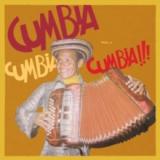
Various Artists - Cumbia Cumbia Cumbia!!! 2x12"
  • Cumbia Ma
  • Cumbiambera
  • Mi Sendero
  • Amores Conmigo
  • Cumbia De Valledupar
  • Dame Un Besito Manuela
  • Yolanda
  • El Clarn De La Montaña
  • Cumbia Pachanga
  • Tiburn Con Pelo
  • Cumbia Panormica
  • La Tormenta
  • Satans
  • Leobigilda
  • Suéltale La Trenza
  • Cumbia Bogotana
  • La Amanecedora
  • El Indio Fiestero
  • La Serrana
  • Cumbia Que Me Alegras
  • La Democracia
  • Cumbia Marina
  • Cuando Te Vayas
  • Sal Con Limn
  • El Mundo Se Va A Acaba
  • Cumbia Casino
  • La Palma
  • Cumbia Continental

After digging deep into the overwhelming archives of Discos Fuentes, Codiscos and Discos MAG in our previous volumes, this fourth instalment in the series "Cumbia Cumbia Cumbia!!!" comprises 28 Colombian cumbia bangers for the dance floor from the deep vaults of Discos Tropical, all of them originally released between 1960 and 1984. The historical origins of cumbia are nebulous and imprecise. The mythology surrounding it suggests an ancient past when Amerindian, African and European musical sounds were mixed together. Discos Tropical was a Barranquilla-based label founded in the mid-1940s by Luis Emilio Fortou Pereira, a visionary who helped define Colombian dancing habits and tastes from the previous century. Until the late '50s, most cumbias were orchestral-based. However, even though formats and styles diversified from the following decade onward, these highly popular big bands spectacularly defined the sound of Discos Tropical and livened up the most cosmopolitan dances in the major coastal cities. After the mid-'60s, the big bands gradually fell into decline, but the popular demand for tropical music did not. Facing this situation, the major record companies created smaller-format groups with one particular feature: they mixed accordion music with brass bands. This new volume of "Cumbia Cumbia Cumbia!!!" combines well-known classics and rarities that are difficult to find in their original formats. An invitation to enjoy and be amazed, above and beyond ethnographic and academic concerns. Double Vinylalbum

pre-ordina ora06.02.2026

dovrebbe essere pubblicato su 06.02.2026

29,20
INDIANA MANDY - URGH

INDIANA MANDY

URGH

12inchSBRLPC3373
Sacred Bones Records
06.02.2026

Für Mandy, Indiana, ist die Wahrheit der einzige Weg. Auf "URGH", ihrem ersten Album bei Sacred Bones präsentiert, sich das Quartett - bestehend aus Sängerin Valentine Caulfield, Gitarrist und Produzent Scott Fair, Synthesizer-Spieler Simon Catling und Schlagzeuger Alex Macdougall - als eine Kraft von unheimlicher Natur, die ein Album geschaffen hat, das ebenso sehr ein Aufruf zum Handeln ist wie eine Reise in die Vergessenheit und Transzendenz. In den zehn Tracks verwebt die Band ihre eigene unkonventionelle Sprache zu einem Mantra für Selbstbestimmung und Widerstandsfähigkeit und schafft so eine Vorlage für eine bessere Zukunft, bevor alles in Dunkelheit versinkt. Ein Großteil des Albums wurde während eines Aufenthalts in einem unheimlichen Studiohaus am Stadtrand von Leeds geschrieben und anschließend in Berlin und Greater Manchester aufgenommen. Es war eine intensive Umgebung, was zum Teil auf die gesundheitlichen Probleme zurückzuführen war, mit denen Caulfield und Macdougall während des Schreib- und Aufnahmeprozesses zu kämpfen hatten. Dennoch bleiben Mandy, Indiana kompromisslos. Caulfield setzt ihre Stimme als verzerrtes Instrument und Waffe ein, die zwischen verspielt und vernichtend oszilliert. Der pulsierende Sirenenton von ,Magazine" steht neben dem zerhackten Vocal Fry von ,try saying" und der sich wandelnden Wildheit von ,ist halt so", das die Dringlichkeit von Protestbewegungen kanalisiert, auf den Widerstand gegen den Völkermord in Gaza verweist und gleichzeitig allgemeinere Kämpfe thematisiert, während der letzte Track ,I'll Ask Her" eine bewusste Direktheit ist, die die toxische Boy-Club-Kultur anprangert, und eine hartnäckige Abrechnung, die über dem gesamten Album schwebt. Obwohl es immer noch unbestreitbare ,Knaller" gibt (wie der zerfetzte Rap von ,Sicko!" mit Billy Woods), wirkt "URGH" oft wie präzise geschnitztes Kino. Vom sprühenden Techno von ,Cursive" bis zu den dekonstruierten Feedback-Loops von ,Life Hex" bewegt sich das Album zwischen industrieller Katharsis und filmischer Unruhe und spinnt eine Spannung, die Fair als ,Remix seiner selbst" beschreibt. Diese kontrastreiche Palette ist sowohl ein notwendiger Aspekt des Albums als auch das zugrunde liegende Bindeglied. Obwohl "URGH" sehr persönlich ist, spiegelt es den gewalttätigen, zerbrochenen Zustand der Welt wider. Caulfields Texte setzen sich mit Gewalt, systemischer Gleichgültigkeit und der Allgegenwart von Schmerz auseinander, betonen aber auch Momente der Schönheit und Solidarität. URGH gehört in die physische Welt, und das Artwork von Carnovsky mit einer anatomischen Illustration von Andreas Vesalius unterstreicht die viszerale Auseinandersetzung des Albums mit dem Körper und seinen Grenzen. URGH ist sowohl jenseitig als auch physisch und kathartisch, sowohl ein erster Schritt zur Heilung als auch eine Weigerung, das Gespräch sterben zu lassen.

non in magazzino

Ordina ora e ordineremo l'articolo per te presso il nostro fornitore.

23,49

Last In: 4 months ago
Dead Man's Chest & Tim Reaper - LOREFR001

When I first started Future Retro London, primarily as a club night, the first event was meant to take place in April 2020, but due to the coronavirus pandemic, the date got pushed to June 2020 in the hopes that venues in the UK would have re-opened by that time. They very much were not re-opened by then and navigating the various lockdown periods that occurred meant the first event didn't actually happen until December 2021.

Dead Man's Chest was part of the original lineup intended for the first event but by the time it was actually able to happen, he had temporarily relocated to Portugal & it meant he wasn't able to make it for it. Various attempts were made afterwards to try & include him in events I was doing but nothing came together until I finally had him play the 2nd joint event I did with Distant Planet in December 2024.

He runs a label called Western Lore which I've featured on previously, with 2 different remixes I did of Plastic Face by Response & Pliskin, as well as a track featured on the first Blunted Breaks compilation. It only made sense to eventually work on a joint label project as his label is a key figure in the current wave of jungle music, plus I hadn't put any music from him on Future Retro London yet so now I can finally tick him off the list!

Big up to Dead Man's Chest for his work on the collaborations & for his involvement in making this release a reality.

non in magazzino

Ordina ora e ordineremo l'articolo per te presso il nostro fornitore.

16,39

Last In: 3 months ago
Sam Slater - Lunng LP

Sam Slater

Lunng LP

12inchMBD_LP003V
MT. BRINGS DEATH
05.02.2026
  • 1: Heatsick (Feat. Hilary Jeffery)
  • 2: Plastic Fascist
  • 3: Praya (Feat. Bendik Giske, Maria W.horn)
  • 4: Past Blast
  • 5: Mancini Sighs
  • 6: Black Metal Rewind (Night Drive Astra, 200)
  • 7: Death By Nostalgia, 1688
  • 8: Passengers (Feat. Bendik Giske, Maria W Horn, Adam Betts)

Loaded with tension and anchored by bold textural and stylistic contrasts, Sam Slater’s third solo full-length finds the British sound artist, composer, and engineer grappling with his creative contradictions head-on.

Having spent a life time in bands and producing records, Sam transitioned somewhat by accident through his work with Johan Johansson into working as a composer on high profile projects such as his collaboration with Hildur Guðnadóttir on the Grammy Award-winning Joker and Chernobyl, and with Pulitzer Prize-winning journalist Mstyslav Chernov on the soundtrack to the lauded 2000 Meters to Andriivka. Having a vast set of interests and influences is an asset when helping realise a directors vision for a soundtrack, but one's own musical voice can end up being constrained. In Lunng, Slater has gone back to his wildly divergent range of influences and rather than shy away from the extremes, he's used them to create a singular vision.

Take the opening track “Heatsick”: Slater imagines an extravagant fusion of 2000s drone metal and vintage British brass, welding ear-splitting overdriven drones and blown-out choral vocals to stirring trombone swells from veteran player Hilary Jeffery. On paper, it’s hard to imagine—but Slater’s intentionality conducts these polarizing elements into a surreal blur of sonic extremes, with the guitars’ relative harshness softened by Jeffery’s eerily nostalgic colliery echoes.

His last solo album, I do not wish to be known as a Vandal (Bedroom Community, 2022), showcased this breadth by assembling a team of collaborators including Sam Dunscombe and Yair Elazar Glotman. On this record he’s linking up with acclaimed multi-instrumentalist Maria W. Horn, idiosyncratic sax virtuoso Bendik Giske, versatile percussionist Adam Betts, and the aforementioned Jeffery, Slater ushers these players toward a lattice of calculated confutations.

Working to explore the tension between the divergent practices of his collaborators—Lunng was meant to be challenging. On “Praya”, Giske’s familiar overblown horn phrases are almost vaporized, vanishing among Slater’s weightless synths and Horn’s chillingly hoarse vocals. There are traces of Horn’s Funeral Folk project, but Slater shifts the emphasis, letting her voice brush past the other elements like a hallucination.

Slater’s use of extremes isn’t just in the micro; dynamics drive the album’s overall flow. “Praya” sets the stage for the record’s heaviest, most prickly moment: “Passengers”. Here, Horn’s voice cracks, rasps, and gurgles over serrated synths and Betts’ ritualistic drums. Slater turns an industrial symphony into a folk opera—dark, dramatic, and strangely beautiful—etched with Giske’s fluttering phrases.

But the mood soon shifts. Slater careens toward chaos, unleashing double-time rhythms and piercing textures familiar to anyone with a soft spot for classic black metal. These grotesque incongruities are deliberate; Slater surveys years of musical conflict and leans in, using dissent as fuel to build kinetic energy.

The weight of sentimentality bears down on “Black Metal Rewind (Night Drive Astra, 2006)”, melting teenage memories into hypnagogic ambience—shoegaze dreams whirled with angelic choral delusions. On “Death by Nostalgia, 1688”, he ventures further into polarizing territory, distorting AutoTuned voices with cryptic strings and medieval tonalities, unsettling any stable sense of past or present.

In this record Slater focuses on pure energy, color, and mood. Lunng distills years of listening into a bracing brew—boiling each sound down to its essence, then serving it with unflinching intent.

John Twells, 2025

pre-ordina ora05.02.2026

dovrebbe essere pubblicato su 05.02.2026

26,01
Van Der Wiese - Vestiges EP

Following his acclaimed releases on Violent Cases 006 VC006 and “Arriving In Nebula” VC10.2, as well as the magnificent launch of the sublabel Mysteries with his track “Ether” on Mysteries #1 [MSTR1], Austrian producer Van Der Wiese returns to Violent Cases with a new chapter in his sonic explorations. “Vestiges” unfolds as a deeply atmospheric EP with four tracks that balance melancholic introspection with subtle euphoria.
Each track feels like a fragment of a memory - traces of rhythm and emotion woven together in a delicate balance. Layered sound textures, immersive basslines, and shimmering harmonies create a mood that is both physical and reflective, inviting the listener to float between pulse and perception.
The release is designed - once again very impressively - by Darkam, who was inspired by the track “Haniwa.”
Her illustration captures the mysterious and organic spirit of the EP and offers a visual counterpart to its haunting emotional depth.
With “Vestiges,” Van Der Wiese defines his unique position within the contemporary Tekno scene - precise yet emotional, restrained yet resonant.
A release that lingers long after the last note has faded away.
And above all, this is because Pozek, as mastering engineer, has succeeded in delivering a very balanced EP.
A must-have for all good collections.
Each EP comes with 2 posters, a digital download code, and 2 artwork stickers.

non in magazzino

Ordina ora e ordineremo l'articolo per te presso il nostro fornitore.

21,43

Last In: 85 days ago
MARCO BENEVENTO - FRIZZANTE

Supercoole Debüt-7"-Single von Marco Benevento, einem echten Klaviervirtuosen, der schon seit seinem siebten Lebensjahr spielt. Seine Karriere hat ihn schon oft um die ganze Welt geführt, wodurch er eine umfangreiche Diskografie und einen Ruf als gefragter Session-Musiker aufgebaut hat. Leon Michels, Mitbegründer von Big Crown und Grammy-Gewinner, hat Marco zum ersten Mal während der Aufnahmen zum Album ,Adult Themes" von El Michels Affair ins Boot geholt. Seitdem hat er sein Talent in unzähligen Big Crown-Projekten eingebracht. Außerhalb des Labels ist Marcos unverwechselbarer Stil unter anderem auf Alben von Clairo, Kevin Morby und Freddie Gibbs zu hören. Aber genug davon, was er für andere gemacht hat - diese Veröffentlichung zeigt Marco von seiner besten Seite: Er macht sein eigenes Ding und das richtig gut. Die A-Seite ,Frizzante" ist pure Feierlichkeit, eingefangen auf Vinyl, die darauf wartet, von der Nadel befreit zu werden. Es ist ein energiegeladener, gut gelaunter Kracher, bei dem Marco Melodien mit sich selbst über einem unerbittlichen Groove austauscht. Von der ersten Note an zieht dich der mitreißende Topline-Riff in seinen Bann und macht Platz für kaskadenartige Klavierläufe, üppige Bläserarrangements und Schichten von E-Piano und Synthesizern, die die Energie immer weiter steigen lassen. Es gibt keine Pause, keine Entspannung - nur einen richtigen Soul-Jazz-Tanz. Auf der 2. Seite zeigt Marco mit ,Turnadot" eine ganz andere Seite seines Sounds, zusammen mit der italienischen Sängerin Marianne Mirage. Der Song ist eindringlich schön und filmisch und passt perfekt zwischen Portishead und Serge Gainsbourg. Mariannes Gesang schwebt über Marcos perfekt ausgewogenem Arrangement - seine Produktion ist sowohl zurückhaltend als auch ausdrucksstark und macht den Song universell fesselnd, unabhängig davon, ob man Italienisch spricht oder nicht.

non in magazzino

Ordina ora e ordineremo l'articolo per te presso il nostro fornitore.

10,71

Last In: 45 days ago
PHILLY ALL STARS - REIMAGINED  CLASSICS FROM THE CITY OF BROTHERLY LOVE   ERIC KUPPER REMIXES  LP 3x12"
 
9

Remixer extraordinaire Eric Kupper takes a set of epic, lost recordings from 1982, that feature the cream of the crop session musicians behind the soulful sound of Philadelphia - Earl Young (Drums), Ronnie Baker (Bass), Norman Harris (Guitar), Lenny Pakula (Organ), Larry Washington (Percussion), Vince Montana, Jr (Vibes, Keyboards), John Bonnie (Saxophone) - along with powerhouse vocalists Joe Freeman, David Simmons, Bobby Love and Ron Tyson, and lovingly applies his own modern sheen, spinning them into ear candy for today’s listener as well as those who were there from the very beginning. These incredible remixes, which have individually been topping the charts on Traxsource, can now be had in one place - this exclusive 3-LP vinyl collection that is not just a tribute to the past, but a vibrant continuation of the legacy these legendary musicians helped create.

non in magazzino

Ordina ora e ordineremo l'articolo per te presso il nostro fornitore.

34,24

Last In: 3 months ago
The Emotions - Untouched LP

The Emotions

Untouched LP

12inchLPRGM2051C
REAL GONE MUSIC
03.02.2026
  • 1: Take Me Back
  • 2: Nothing Seems Impossible
  • 3: Boss Love Maker
  • 4: It’s Been Fun
  • 5: Love Ain’t Easy Onesided
  • 6: Blind Alley
  • 7: Show Me How
  • 8: If You Think It (You May As Well Do It)
  • 9: Love Is The Hardest Thing To Find
  • 10: Tricks Are Made For Kids
  • 11: Boy. I Need You
disponibile anche

black vinyl[32,14 €]


Girl group greatness, courtesy of the Chicago-based Hutchinson Sisters (with Theresa Davis on this record) and co-producers Isaac Hayes, David Porter and Ronnie Williams! Recording at Muscle Shoals and Stax studios seems to have added a little grit to The Emotions' sound, too; this 1971 classic on the Volt label offers the perfect blend of sweet and sassy. ''Show Me How'' was the hit, but it's ''Blind Alley'' that made Untouched one of the most collectible albums of its kind: that track's one of the most sampled in all of pop and hip hop, most notably by Big Daddy Kane (''Ain't No Half-Steppin''') and Mariah Carey (''Dreamlover''). Pressed in black and clearwater blue vinyl editions, and cut ALL-ANALOG from the original two-track master!
A1. Take Me Back A2. Nothing Seems Impossible A3. Boss Love Maker A4. It's Been Fun A5. Love Ain't Easy Onesided B1. Blind Alley B2. Show Me How B3. If You Think It (You May as Well Do It) B4. Love Is the Hardest Thing to Find B5. Tricks Are Made for Kids B6. Boy. I Need You

pre-ordina ora03.02.2026

dovrebbe essere pubblicato su 03.02.2026

32,14
The Sample Choir - Feelin' Lonely

Now universally recognized as one the great ambassadors of House Music around the globe, Todd Edwards first built his reputation in the early 90’s with a string of 12" releases from some of New York’s more prominent independent labels. This was an era when on any given week you would have up to 100 new 12" releases from New York based producers, all vying for space on the 12" shop walls. In this hypercompetitive environment it was not easy for a new producer to garner a reputation. But Todd’s releases did not sound like anything else. Using an innovative blend of rhythmic, cut-and-paste vocal samples, rubbery basslines, and slapping percussion, he created a 4 track EP for Nervous in 1994 under the production acronym The Sample Choir. This 12" created such a massive buzz in the UK that it is now considered instrumental in helping to propel Britain’s Sunday clubscene into the genuine cultural phenomenon of speed garage.

In stock dal19.06.2026

13,66

Last In: 36 days ago
Various - ANTENA/ATENAS LP

In 2017, at Documenta Kassel (but in Athens), I invited José Jiménez Bobote, a remarkable gitano artist from the Tres Mil Viviendas neighbourhood in Seville, to record a series of actions in specific locations in the Greek capital. Ancient Greece and modern Greece. I wanted him to draw sound from the city, to strike it as only a flamenco artist can, with his feet. To hit the ground and make it moan, ring out with noises evoking significant moments in history: from Diogenes the Cynic and the Apostle Paul’s sermon at the Areopagus to Rosa Eskenazi’s resistance to the Nazi-German occupation, and the ups and downs of police Inspector Costas Haritos’s survival at the European Bank during the PIGS crisis. Bobote struck the ground and Athens responded, sending back echoes of the past, in an exceptional anachronistic exercise. In flamenco it is possible for several times to sound simultaneously.

We took seventeen hours of footage, and water from many wells.

I then shut away producer, musician, and friend Raül Refree with this material so that he could take the long titles and use them as scores, turning them into mere songs. It was very important to think in terms of songs. The tracks had to have the capacity to be songs, the kind of thing one whistles while absent-mindedly walking down the street. Generally speaking, the scores—that is, the texts—defended the use and abuse of the loose coins that people carry around in their pockets. Loose change as a kind of everyday fetishism against big financial capital. Pistis! Refree managed to coax that distinctive unity of songs, their bright catchiness, from the amalgamation of sounds that would, in other hands, end up being labelled concrete music. Peter Szendy would be pleased and grateful. Being able to sing under one’s breath something that others consider simply noise.

Seven songs, yes. And if you get the chance, take a stroll through Athens with them: the locations are clearly defined. If not, then let Athens fill your home with all its ancient wisdom, boring into your ears like worms, making holes in history.

Listen, and, as people used to say, turn up the volume!

Pedro G. Romero, Santa Marta, Colombia, November 2025

Comes with booklet with song lyrics written by Pedro G. Romero. Limited edition of 250 vinyl records.

pre-ordina ora02.02.2026

dovrebbe essere pubblicato su 02.02.2026

26,47
ATABASCA - Cacopoulos / Kundela Mawedi 7"

Killer Groove Records proudly presents the debut 45 by Italian cinematic funk trio Atabasca. A syncopated journey where funk, psychedelia, and cinematic groove merge into a timeless narrative suspended between rhythm and vision.


"Cacopoulos" and "Kundela Mawedi" mark the birth of Atabasca's sonic universe: the first two singles from the upcoming self-titled debut album,which will be released on March 27 in limited-edition LP, CD digipack, and digital formats.

On the A-side, "Cacopoulos" is an impetuous, visionary ride that fuses the power of instrumental groove with the evocative imagery of library music and Italian golden-age soundtracks. From the first beat, listeners are drawn into a dry, dusty landscape driven by a primal drum groove and the acid twang of a guitar that evokes the spirit of classic Westerns. Indeed, "Cacopoulos" pays homage to I Quattro dell'Ave Maria (Ace High) and to the legendary Eli Wallach, the sly outlaw who turns deception into revenge, a subtle yet powerful nod that ties the trio's sound to imagery steeped in dust, dreams, and redemption.


On the flip side, the sound of an old lap steel guitar evokes the gentle waves of the sea, opening the doors to "Kundela Mawedi", a dreamy track with exotic tones and heavenly atmospheres. The sonic journey unfolds through hypnotic rhythms and echoes of ancient cultures, where ethereal voices and warm, entrancing bass lines intertwine with psychedelic riffs and evocative guitar melodies, merging into a soundscape rich in warmth and mystery. The chorus, with its unexpected choral chant, adds a spark of magic. An elegant twist that gently stirs the dreamlike mood and transports the listener into a new sonic dimension, steeped in mysticism and tribal vibrations. "Kundela Mawedi" is more than just a song: it's a sensory experience, a musical ritual where tradition meets psychedelia, sand meets sea, and the soul dances upon the waves of time.


Recorded in a single take, the session captures the raw energy and natural atmosphere of the performance. Artistic production was handled by the trio alongside Andrea Fabrizii (digger, musician, producer, and catalogue curator for CAM Sugar), while Riccardo Ricci mastered the tracks at Velvet Room Mastering Studio in Brighton.


A killer double-sider, blending psychedelic and funk moods with percussive, jazzy textures. A must-have gem for every groove-loving DJ.


Like a desert blooming within the evergreen forests of the planet's far north, a unique, alien, disruptive environment: this is the vision behind Atabasca, the project of Luca Mongia (guitars, lap steel, keyboards, vocals), Paolo Mazziotti (bass, keyboards, vocals), and Valerio Pompei (drums, percussion, vocals). Individually active for over twenty years on both national and international scenes, the three musicians came together in 2023 to create a project that merges experience, experimentation, and creative freedom. Their music is imaginative and at times dreamlike, blending the classic concept of the instrumental trio with the worlds of film scoring and sound design.


Atabasca's sound moves through jazz-funk, world, and cinematic territories, weaving together afrobeat, desert, and psychedelic influences into a personal and timeless language. Each piece is a scene; each sound, a fragment of a world, a journey between reality and imagination where groove, texture, and organic timbre merge into a singular sonic ecosystem: a perpetually shifting balance that generates new inner landscapes.


Fans of Khruangbin, Surprise Chef, and instrumental psych-funk, take note!

non in magazzino

Ordina ora e ordineremo l'articolo per te presso il nostro fornitore.

13,87

Last In: 4 months ago
Various - Wizzz! French Psychorama Volume 5 (67-75)

The journey through French-speaking pop archives continues with this fifth volume, packed with fuzz, gimmicks, and dissent. Far from the charts, the selected tracks display a great creative freedom, often backed by corrosive humor. Welcome to the surprising, kaleidoscopic, and colorful world of the late sixties and early seventies, Wizzz!
Born in Montauban, Robert Pico stumbled into music by chance when he met René Vaneste, then artistic director at Pathé-Marconi. René brought him to Paris to record his first 45 RPM EP in 1964. A year later, Pierre Perret introduced him to Vogue, where he recorded his second album with Claude Nougaro’s orchestra. Sylvie Vartan then introduced him to RCA, where he recorded four singles, including the astonishing "Chien Fidèle," a track backed by a hair-rising fuzz guitar. Alongside his solo career, he also composed for other artists like Alain Delon (the song was recorded but remains unreleased), Magali Noël, Bourvil, and Georges Guétary. In the Paris of the sixties, he mingled with Mireille Darc, Elsa Martinelli, Marie Laforêt, France Gall, Françoise Hardy, Petula Clark, Régine, Dani, Serge Gainsbourg, Joe Dassin, Franck Fernandel, Charles Level, and Roland Vincent. Despite his efforts and winning a Grand Prix Sacem for his final record, Robert Pico didn’t achieve the expected success in show business and decided to leave Paris and return to the Southwest, where he devoted himself to writing. He is the author of 23 books (including Delon et Compagnie, Jean-Marc Savary Editions 2025, a memoir about his youth and his many encounters). Today, he is relieved to never have become a celebrity and devotes himself to his work with passion.
In 1969, the Franco-Italian movie Erotissimo was released, directed by Gérard Pirès (who later directed Taxi in 1998, written and produced by Luc Besson). This pop comedy features Annie Girardot, Jean Yanne, Francis Blanche, Serge Gainsbourg, Nicole Croisille, Jacques Martin, and Patrick Topaloff. The soundtrack was written by Michel Polnareff and William Sheller, with lyrics by Jean-Lou Dabadie. "La Femme Faux-cils," performed by Annie Girardot. It recounts the feelings of a rich CEO's wife who seeks to develop her sex appeal under the influence of advertisement and magazines. Groovy, sparkling and light, this track, with ITS lush arrangements humorously critiques consumer society and feminine beauty standards.
“Je suis l’Etat” (1967) is the flagship track of the first EP by singer-songwriter Spauv Georges, aka Georges Larriaga, better known as Jim Larriaga (1941-2022). Born into a family of bakers, the young man was initially planning to become a hairdresser when he discovered English-speaking music through Elvis Presley and the Beatles. After this revelation, he decided he would become a songwriter and gave himself five years to succeed. He recorded his first two EP’s independently for RCA under the pseudonym Spauv Georges; meaning “that poor George”, a nickname given to him by the mother of her friend Jean-Pierre Prévotat (future drummer of the Players, Triangle, or Johnny Hallyday). Portraying a depressed and eccentric young man, Spauv Georges created corrosive and amusing songs that didn’t reach a wide audience, despite a TV appearance with Jean-Christophe Averty.
Supported by his loyal friend and fellow songwriter Jean-Max Rivière, Georges Larriaga met the future singer Carlos in the early '70s, then Sylvie Vartan’s assistant. He wrote songs for Carlos, including the popular "La vie est belle," "Y’a des indiens partout," and "La cantine", which went onto become a huge hit in 1972. He also composed for Claude François (“Anne-Marie”, 1971), Charlotte Julian (“Fleur de province”, 1972), helped launch child singer Roméo (who sold 4 million records), and later wrote the hit "Pas besoin d’éducation sexuelle" (1975) for the young Julie Bataille. In 1971, Jim recorded an album for Disc'Az: “L’univers étrange et fou de Jim Larriaga”, which featured pop gems like “La maison de mon père”.
The story of the song "Zoé" began when Pierre Dorsay, artistic director at Vogue Records, asked Swiss singer and musician Pierre Alain to write a song for a new female singer. The inspiration came when he realized that Zoé (the artist's name) was also the name of France's first atomic battery, created in 1948, which consisted of uranium oxide immersed in heavy water! The lyrics reflect a bubbling energy that must be handled with caution, while the instrumentation echoes this atomic theme, notably with the use of a theremin.
Zoé’s career lasted only as long as a single 45 RPM, but it seems Christine Fontane was the vocalist behind this pseudonym, who is known for several EPs, a good "popcorn" album in 1964, and a handful of children’s singles in the '70s. Regardless, the photograph on the cover is of a different girl entirely.
Later, Pierre Alain continued his career, writing songs for himself, Marie Laforêt, Danièle Licari, Alice Dona, Arlette Zola (3rd place in Eurovision 1982), and achieving multiple gold and platinum records in Canada. Also an inventor with several patents, president of the Romande Academy, and head of the French Alliance in Geneva, he now composes atonal music, books, and poetry. Moreover, he is also the host of "Les Mardis de Pierre Alain" at "Le P'tit Music'Hohl" in Geneva.
Filled with oriental choruses and fuzz guitar, "Fou" is from Jacques Da Sylva's only EP released by Vogue in 1967. Despite the quality of this recording, all traces of this singer disappear after this first effort.
Valentin is a baroque pop singer born in Belgium. He is the songwriter and composer of most of the tracks on his three singles released in the late 60s in Canada. A legend says that he reincarnated himself as Jacky Valentin during the 1970s for a rock'n'roll revival career in Belgium, but his older brother sadly debunked this story. Valentin's first two singles were arranged by Claude Rogen, a Parisian session pianist who had come to Canada to promote the song “Mister A Gogo”, a cover of David Bowie’s “Laughing Gnome”, adapted by singer Delphine, his wife at the time. Far from his usual network, Claude Rogen arranged music for Polydor, including the arrangements for “Je suis un vagabond” in 1969, a jerk tune with string arrangements and a furious optimism.
Jacques Malia wrote, composed, and recorded his only 45 EP for Festival in 1966. “Histoire de gitan” is an incredible beat track with bohemian scat that tells the story of a gypsy musician who came to Paris to make it in the Music-Hall, to no avail. The hero of the song and its author probably shared a similar fate, as Jacques Malia faded into anonymity after this remarkable attempt.
Bernard Jamet recorded two EPs for Barclay in the late sixties and co-wrote several songs with Christine Pilzer, Pascal Danel, and prolific songwriters Michel Delancray and Mya Simile. The track “Raison Légale” (1968), his masterpiece, immerses the listener in a courtroom right when a murderer is being judged, with jerk rhythm and free arrangements. A unique, paranoid, judicial, and psychedelic oddity.
Jean-Pierre Lebrot-Millers started his career in show business in 1967 as a singer and songwriter for the Philips label. After three singles, he wrote several songs of a new kind with his friend Pierre Halioche, in the midst of the sexual liberation movement and the democratization of drugs. With provocative lyrics, “Les filles du hasard” and “Barbara au Chapeau Rose” were released on a Philips singles in 1968. The character of Barbara was inspired by a queen of Parisian nightlife during the psychedelic years: model Charlotte Martin, who dated Eric Clapton from 1965 to 1968, then Jimmy Page from 1970 to 1983. Jean-Claude Petit’s arrangements, with a table-filled intro, soul brass, and Hendrixian guitar, emphasize the flamboyance of a hedonistic and sexy character, whose dog is named Junkie because “Junkie est un nom exquis”! The track was recorded live in three takes with a full orchestra.
Upon its release, the record was censored by Europe 1 and RTL due to its references to drug use. Jean-Pierre Lebrot was then banned from the airwaves and later dismissed by his record label. He changed his artist name to Jean-Pierre Millers, while his companion Pierre Halioche became D. Dolby for a new dreamy composition, “Chilla”, which Jean-Pierre produced himself with arrangements by Jean Musy. Once again, the song was immediately censored everywhere. After this setback, he decided to stop singing and started taking on odd jobs to support his Swedish wife and their son until the day he met Jean-Pierre Martin, then production manager at Decca, who had worked with Manu Dibango. Martin offered Jean-Pierre Lebrot-Millers, then employed at Rank Xerox, the position of artistic director at Decca. He accepted and became, a year later, promotion director (radio, press, TV). He worked on Julio Iglesias’s first album for Decca, which became a massive hit and allowed him to meet Claude Carrère. The latter asked him to write new songs and find their performers, much like a “talent scout.” It’s through him that Jean-Pierre discovered Julie Pietri and Corinne Hermès. He composed “Ma Pompadour” for Ringo, Sheila’s husband, and took the microphone again for the syncope hit “Rendez-Vous” in 1982.
That same year, Jean-Pierre Lebrot-Millers tried to release a track for which he had heavily gone into debt: “Si la vie est un cadeau”. Having recorded it in London, he presented it to numerous professionals, all of whom refused to get involved. The same thing happened with Antenne 2 and the Sacem when he proposed the song as France’s entry for Eurovision. He then met Haïm Saban, who was producing cartoon soundtracks and had just launched the Goldorak theme song. Saban, having listened to the song, declared it had the potential to become a hit. He sent Jean-Pierre and Corinne Hermès to meet the CEO of the Luxembourg radio and television network. The latter received them, asked to hear a verse and chorus a cappella in his office, and immediately hired them to represent Luxembourg at Eurovision 1983. They reworked the arrangements and recorded a new version with Haïm Saban as co-producer. The song ended up winning Eurovision 1983, a great comeback for our hero. He continued producing and hung out with the band Nacash in Belgium when a couple came to introduce their daughter for an impromptu audition in a hotel room. The girl sang “Les démons de minuit” while dancing to a radio cassette. Impressed, he had her take singing lessons for a year and composed a song for her (for which he had the melody and title, but no lyrics). This required him to go on the hunt for a lyricist, who ended up being Guy Carlier. They recorded the song, which was initially a ballad, at Bernard Estardy’s CBE studio, and gave the singer a new name: Melody. They showed the song around their industry network without success. Later, Estardy called Jean-Pierre to suggest changing the rhythm and making it pop-rock. Orlando, Dalida’s brother, liked the result and decided to co-produce the track. “Y’a pas que les grands qui rêvent » became a classic hit. The song has since been covered by Juliette Armanet (as a ballad, like the original) and Valentina.

Born into an aristocratic Breton family, Hervé Mettais-Cartier worked as a DJ at Queen Kiss, a nightclub in Poitiers, where he formed the band Les Concentrés with Michel (an actor) and Christian (a radio technician). Together, they created a repertoire of whimsical songs (“Ma bique est morte”, “J’suis un salaud”, “Fils de dégénéré”...) that they performed on stage dressed in white (in homage to “concentrated milk”). They performed at Bliboquet and Olympia in 1968 for the 10th edition of the “Relais de la chanson Française” organized by L’Humanité-Dimanche and Nous les Garçons et les Filles, sponsored by Pepsi Cola. Winners in the author-composer category, alongside Danish singer Dorte, their visibility allowed them to record a 45, and appear on television in Jean-Christophe Averty’s show. The A-side of the disc features Bruno le ravageur, a casatchok dedicated to Bruno Caquatrix, the director of Olympia, nicknamed in the song “Coq Atroce” or “croque-actrices”. The B-side is dedicated to “Fils de dégénéré”, a quirky tribute to Hervé's aristocratic roots, mixing absurdity with sophisticated vocal harmonies.
After Les Concentrés, Hervé Mettais-Cartier formed the duo La Paire et sa Bêtise with his friend Olivier Robert. They performed in Parisian cabarets and toured with Pierre Vassiliu. In the late 1970s, Hervé began a solo career. He recorded two albums for the Motors label in 1978 and 1979, which did not achieve their anticipated success due to lack of promotion. In 1980, he met Bernadette, with whom he started a family and created a “Chansons à voir” (songs to see) show that he performed until his death at the end of 2024.

Publicité comes from the final EP by the Missiles (Ducretet Thomson, 1966), a disc that also includes “La (nouvelle) guerre de cent ans”, featured on Volume 4 of our Wizzz! series. Please refer to the booklet for the story of the band.

“He’s 1.82 meters tall, 28 years old, weighs 135 kg, is black and Belgian”: this is the description of singer Hegesippe on the back of his sole single (Decca, 1967). He appears on the album cover wearing a Greek toga, like a hippie gag – we are at the end of the year 1967. In “Le crédo d’Hegesippe”, this former bodyguard of Antoine and the Charlots plays the delightful card of the thick brute converted to Flower-Power and non-violence, with arrangements by Jean-Daniel Mercier, aka Paul Mille.
“Ethéro-disco” was released on a promotional record for clients of the Maréchal company (Liège, Belgium) for the New Year 1979. Over a funky rhythm, celebrity impersonations (Brigitte Bardot, Jacques Dutronc, Fernandel…) deliver an enigmatic text about pharmaceutical products like ether, bismuth, and aspartate. The track was composed by Dan Sarravah (responsible for Joanna's “Hold-up inusité” featured on Wizzz! Volume 3) and Tony Talado, who was also a singer (one 45 in 1967), songwriter (with over a dozen credits between 1964 and 1985 in various styles from surf music to disco), author (Devenez Végétarien, Dricot Editions, 1985), ad designer, and psychologist.

Décollez-les is on the A-side of Mamlouk's only single, a pseudonym for Marsel Hurten, who is known for his work on several EPs in the late sixties, as well as composing music for Hervé Vilard’s “Capri, c’est fini”, Claude Channes' “La Haine”, Annie Philippe’s “On m’a toujours dit”, and Nancy Holloway’s “Panne de Cœur”.
This strange song, with Afrobeat horns and absurd dialogues between a chef and his kitchen staff, is the result of a collaboration between Marsel Hurten and one of his neighbors, a photographer from Pavillon-sous-Bois (93), where the musician settled after returning from the Algerian War. A music video was shot to promote the record.
Marsel Hurten was born in Tourcoing (59) into a musical family. At a young age, he joined the brass band founded by his grandfather, playing the piston before studying trumpet at the conservatory, as well as teaching himself how to play the guitar. As an orchestra musician, he toured in France, Belgium, Germany, and England. He released a series of solo 45’s between 1965 and 1968 for the DMF and Az labels before stopping recording to focus on working for other artists (Gilles Olivier, Noëlle Cordier…).
“L’amour nu” (Vogue, 1971) is the work of the short-lived Belgian band Mozaïque. The track, written by singer Jacques Albin, closely resembles another of his compositions, “Carré Blanc”, which he recorded in 1969 for Disc’AZ.
Represented by the Lumi Son micro-label based in Marignane (Côte d'Azur), Jean-Marc Garrigues released two 45 RPMs in the late sixties, defending the French jerk sound. The song “Je dis Non” is a short, joyful ode to youth, pop music, and rebellion.
Songwriter and performer Jacques Penuel released three singles. The first one, “Astronef 328” (Fontana, 1969), features a dizzying series of chords punctuated by sound effects, a sci-fi story, and arrangements by Jean-Claude Vannier.

We would like to sincerely thank Pierre Alain, Moon Blaha, Marsel Hurten, Bastien Larriaga, Jean-Pierre Lebrot-Millers, Bernadette Mettais-Cartier, Robert Pico, Olivier Robert, Claude Rogen, Micky Segura.

non in magazzino

Ordina ora e ordineremo l'articolo per te presso il nostro fornitore.

23,11

Last In: 4 months ago
Anar Band with E.M. de Melo e Castro - Dou Dou Doudo: Ao Vivo Na Cooperativa Árvore

Audio taken from a live performance by Anar Band (Jorge Lima Barreto and Rui Reininho) with E.M. de Melo e Castro in November of 1978 at Cooperativa Árvore, Porto. The performance was filmed. A segment was included in »Obrigatório Não Ver«, a weekly programme presented by Ana Hatherly on Public Television’s Second Channel. It was not possible to determine the exact date of the event, and no documentation seems to be available in the relevant archives.

»Encontro que Tenho« and »Profissões«: these titles are specific to this release. Having failed to locate the respective poems after a thorough search in E.M. de Melo e Castro’s body of work, it was deduced both texts were created for the occasion.

Even without a full contextualisation, the sound transmits the spirit of cultural agitation proper to these sessions. When this show happened, Anar Band were Jorge Lima Barreto (ARP Odyssey synthesizer) and Rui Reininho (Ibanez double-neck guitar), with the addition of E.M. de Melo e Castro, whom we shall call a poet but whose creative intervention was far reaching. Besides poetry, also continued his efforts in linking up diverse artistic areas (painting, drawing, collage, performance, video) and his official training in textile engineering. He was one of the artists featured in Henri Chopin's »OU Revue« in 1966, establishing his natural connection to the European concrete/visual/sound-poetry avant-garde. Melo e Castro was also proficient in the agitation of minds and political awareness. A good example in »Profissões«, where initially separate professionals (an intellectual, a fisherman, a soldier, a factory worker) are gradually mixed in a show of interdependency. Symbolically, through his words one listens to a transformation of society, although the same conclusion arises twice: surplus always finds its way to the hands of the capitalists.

That was the state of affairs many were looking to change, an economic and social malaise that the 1974 Revolution in Portugal fully uncovered, when dissident voices could finally be heard in public. Each in his own way, all three participants in this recording were non-believers in the structure of society such as it was presented. Through his books and press writings, mainly concerned with Jazz, Jorge Lima Barreto pushed his way into Portuguese artistic and critical circles since the late 1960s. Consciously and unwittingly, he collected enemies and pointed them by name, people he labelled as reactionary, people who delayed progress, social and cultural mixes, the avant-garde; they even delayed the chaos from which new forms and attitudes arise.

Rui Reininho, a non-conformist by heart, experienced incomprehension from an early age. His anarchic ways, a tendency to baffle others, were revealed through the choice of clothes and accessories, public behaviour, and »real life« performances. Just as Lima Barreto, and even together with him, he enjoyed provoking the extremes: Maoists on one side, right-wing conservatives on the other. He translated leftist books and joined Anar Band precisely on the day a duck or swan or goose (one of them) was thrown on stage in Porto, 1976.

This record documents a concrete action, a snapshot of the agitation, something we have no problem calling punk activism, something which allowed two people with little to no musical training to play and record music. By then, Anar Band had managed to release their only LP in 1977. It’s this performance, however, that reveals the naked rawness of the music: improvisation, mutual listening, and choice of intervention between both musicians and Melo e Castro, clearly sensing when the synth has to change tone, the voice has to make pauses, the guitar punctuates both and finds the space to… scream. The sound was captured by the film crew, adding to the rawness: the instruments are palpable, the voice often too close to the mic. Everything was preserved. First time on disc.

pre-ordina ora30.01.2026

dovrebbe essere pubblicato su 30.01.2026

23,95
DMZ - LOST STUDIO SESSIONS 1978
  • Mighty Idy #1
  • Bad Attitude
  • Baby Boom
  • Out Of Our Tree
  • From Home
  • Shirt Loop (Not Recorded For Sire Lp)
  • Boy From Nowhere (Not Recorded For Sire Lp)
  • When I Get Off (Not Recorded For Sire Lp)/Destroyer
  • He's Waitin' (Not Recorded For Sire Lp)
  • Do Not Enter
  • I Don't Know When To Stop (Not Recorded For Sire Lp)
  • Mighty Idy #2

*13 ripping songs totalling 33 minutes from the original 20-song 65 minute master reel tapes, recorded in early February 1978 for producers Flo & Eddie, the night before DMZ (the raw-assed pre-Lyres outfit that never made it!) spent 3 days trapped by a blizzard recording their Sire album. **4 page insert with info, pics and Rick Coraccio's ultra-detailed journal on how it all went down! ***LP includes DOWNLOAD CODE Kapital Ink zine: "In the annals of R&R history, as far as local American rock'n'roll scenes go, Boston is hardly ever looked upon in the same shining light as, say, NY, Detroit, San Francisco or even Austin or Seattle. Unlike those other towns, there's never even been a definitive book about the scene. Maybe it's because Boston is a perennial hard-luck place (just witness the Red Sox) with a serious New York inferiority complex hanging over its head. Boston is ignored by the industry at large, despite the fact that the city has spawned countless heavyweights in both a commercial (Aerosmith, Boston, the Cars) and aesthetic (Modern Lovers, Real Kids, Mission Of Burma) (Crypt editor note: and DMZ!! and LYRES!!) sense. Boston was the first US city to directly reflect the influence of the Velvet Underground, as epitomized by the Modern Lovers, who've proven to be almost as influential in their own right. Fast forward to the days of hardcore, and Boston was one of the pre-eminent strongholds of shave-head mania, shoring up its rep as an angry, intolerant New England outpost. Naturally the town has produced more than its share of local legends: Willie Alexander (who actually was in the Velvet Underground, albeit when the band was on its Lou Reed-less last legs); Jonathan Richman (geekus supremus no small thing considering the subsequent indie hordes, to whom he's a savior); and most of all, the great Real Kids, (Crypt editor note: and DMZ!! and LYRES!!) who could've been the equivalent of the MC5, Stooges or Flamin' Groovies in the annals of American rock if it hadn't been for a series of bad breaks but let's not get into that because it'll only reinforce Boston's eternal self-pitying plight. The fact is, the scene in Boston was more or less built by a string of bands who are so organically-interconnected that it seems like an act of God."

pre-ordina ora30.01.2026

dovrebbe essere pubblicato su 30.01.2026

22,27
BLACKWATER HOLYLIGHT - NOT HERE NOT GONE
  • How Will You Feel
  • Involuntary Haze
  • Bodies
  • Heavy, Why?
  • Giraffe
  • Spades
  • Void To Be
  • Fade
  • Mourning After
  • Poppyfields

Als Blackwater Holylight vor drei Jahren ihre Heimatstadt Portland, Oregon, verließen, war es ihr Ziel, der Tristesse des pazifischen Nordwestens und dem beruhigenden Komfort des Vertrauten zu entfliehen. Mit dem Ziel, das sonnigere Klima von Los Angeles zu genießen, fand sich die Band nicht nur in einer wärmeren Umgebung wieder, sondern auch in einer völlig neuen Landschaft - einer ohne Arbeitsplätze, langjährige Freundeskreise und die bequeme Zuflucht alter Gewohnheiten. Und genau hier, unbelastet von der Zufriedenheit der Sicherheit, begann Blackwater Holylight fleißig an ihrem vierten Album ,Not Here Not Gone" zu arbeiten. Wie schon ihre früheren Werke beschäftigt sich ,Not Here Not Gone" mit der Dualität von Licht und Dunkelheit - bedrohliche Riffs bilden das Fundament für betörende Melodien, dichte Wände aus Shoegaze-Gitarren paaren sich mit luftig-leichten Synthesizern, und schwere Themen werden durch sirenenhafte Gesänge vermittelt. Im Laufe des Albums verspürt der Zuhörer mal ein Gefühl der Stärke, mal ein Gefühl der Verletzlichkeit. Wie Schlagzeugerin Eliese Dorsay es beschreibt: ,In einigen Songs sind wir die Raubtiere, in anderen die Beute." Die Gegenüberstellung von Selbstvertrauen und Unsicherheit ist nirgendwo so deutlich zu spüren wie bei einer lebensverändernden Entscheidung, was vielleicht erklärt, warum der Umzug der Band ihr Studium der Kontraste auf ,Not Here Not Gone" zu neuen Höhenflügen intensiviert hat . ,Not Here Not Gone" wurde im Sonic Ranch außerhalb von El Paso, Texas, von Sonny Diperri (Narrow Head, DIIV, Emma Ruth Rundle) aufgenommen, wodurch die Band erneut ihre Komfortzone verlassen und sich an einem Ort isolieren konnte, an dem sie sich ausschließlich auf ihre Kunst konzentrieren konnte. Das Ergebnis ist das Kronjuwel von Blackwater Holylights Diskografie - eine reichhaltige und eindringliche Studie in tonalen Hell-Dunkel-Kontrasten, in der das Licht seinen Weg aus den Schatten findet.

pre-ordina ora30.01.2026

dovrebbe essere pubblicato su 30.01.2026

23,49
Joe SATRIANI - Not Of This Earth

Not of This Earth is the first studio album by guitarist Joe Satriani. Originally released in 1986, this all-instrumental album was making ripples in the guitar-playing community not long after it was issued. It’s easy to see why: superior compositions, a signature style, a unique tone, and playing that’s out of this world. The fiery sound of “Not of This Earth” and “Hordes of Locusts” is tempered by the cool, dark tone of “Driving at Night”. There isn’t a weak track on this disc, even though the world’s most commercially successful solo guitar performer was still maturing when he released it.

Available as a limited edition of 1500 numbered copies on transparent blue vinyl.

pre-ordina ora30.01.2026

dovrebbe essere pubblicato su 30.01.2026

33,19
Bert Jansch - Bert at the BBC (4x12")

Bert At the BBC is a comprehensive collection of Jansch’s appearances at the BBC, featuring over eight hours of rare and unreleased recordings, including live-on-air spots, studio sessions and full concerts straight from the BBC vaults, delving further into this legendary performer’s canon. Bert Jansch was the very essence of folk music, providing inspiration for everyone from Paul Simon and Neil Young to Led Zeppelin and countless folk revivalists. This unparalleled limited-edition compendium is available as a 4xLP and 8xCD set, housed in a coffee-table book set with a lavish 40-page book tracing the recordings from Bert’s earliest moments at the BBC. It includes interviews and insights from Lauren Laverne, Jools Holland, Johnny Marr, Jacqui McShee, Bob Harris, Bernard Butler, Mark Radcliffe and many more. Twenty broadcasters, producers and collaborators contribute at length to the booklet, with great affection for this gentle, maverick genius. Bert’s BBC legacy remains the most significant and exciting untapped reservoir of his music. The undeniable advantage of recordings made for broadcast is that they were, by their nature, created for public consumption and, barring live-on-air appearances – which might go well or go badly, but were going out either way – were explicitly signed-off by the artist as representations of his art that were good enough to be heard. The set is compiled by Colin Harper, author of Dazzling Stranger: Bert Jansch and the British folk and blues revival (Bloomsbury, 2000), who contributes detailed liner notes to the package. The release is mastered by IFTA award-winning engineer Cormac O’Kane. The vinyl release features 48 tracks on LP and is accompanied by a download card with over six hours of extras spanning 1966–2009, including BBC4’s St Luke’s concert (2003), and a complete Queen’s Hall, Edinburgh concert (2004) for BBC Radio Scotland. It is also available as a special 8xCD set containing all 147 tracks and encased within a coffee-table book. Bert Jansch At The BBC is an epic and enduring trail, 45 years in the making. “He was that rarity, a musician who really did deserve to be regarded as a legend.” The Guardian // “As a guitar player there was no one like him. He was jazz and blues and folk but there was a whole world in there that was just him, esoteric”

pre-ordina ora30.01.2026

dovrebbe essere pubblicato su 30.01.2026

64,08
GRUPO UM - NINETEEN SEVENTY SEVEN

Grupo um celebrate 50 years with release of lost dictatorship-era album nineteen seventy seven!

First time release - vinyl comes with printed innersleeves

Brazilian avant-jazz vanguardists Grupo Um celebrate their 50th anniversary, sharing a second previously lost 1970s album from the vaults. Nineteen Seventy Seven (titled after the year it was recorded) is another rip-roaring instrumental fusion treasure from the band which spawned from within Hermeto Pascoal’s famed mid-1970s São Paulo collective.

Like their debut album Starting Point, Grupo Um’s Nineteen Seventy Seven was recorded when Brazil's military dictatorship was at its most repressive. “There were no open doors to those who dreamt to be protagonists in creative instrumental music”, remembers drummer Zé Eduardo Nazario, “even popular composers and singers had to submit their songs to censors and many records were banned and confiscated from the stores.”

Just like Hermeto Pascoal's Viajando Com O Som (1977) and Grupo Um's previous album Starting Point (1975), both of which remained unreleased until the 21st century, Zé Eduardo asserts that the 1977 album was flatly 'without any chance to be released at that time."

Recorded at Rogério Duprat’s Vice-Versa Studios in São Paulo, the group were under both time and space restraints, “we chose the small Studio B,” Lelo Nazario recalls, “which had a Tascam (TE AC) 12x8 console and a 4-channel AMPEX AG 440 machine. Therefore, we had to record without overdubs, everything straight to tape.”

Expanding from a trio to a quintet, original Grupo Um members Lelo Nazario (keys), Zé Eduardo Nazario (drums), and Zeca Assumpção (bass) were joined by saxophonist Roberto Sion and percussionist Carlinhos Gonçalves. Carlinhos, Zé and Zeca had already played together in the group Mandala, while brothers Lelo and Zé had just finished a stint backing Hermeto Pascoal during his years in São Paulo.

Lelo was deeply immersed in modular synthesizer experimentation during this period, working extensively with the ARP2600 and EMS Synthi AKS. These electroacoustic explorations formed the sonic foundation for "Mobile/Stabile," one of his first compositions to merge modular synthesis with Brazilian music, a fusion that would ripple throughout the Brazilian jazz scene. The piece premiered at the first São Paulo International Jazz Festival in 1978, performed by Grupo Um with guest trumpeter Márcio Montarroyos. In a shocking moment, festival organizers interrupted the show mid-performance, sparking fierce backlash from both audience members and journalists who denounced the incident as artistic censorship during Brazil's era of political and cultural repression. The version on Nineteen Seventy Seven is the first recording of the composition.

Nineteen Seventy Seven combines Afro-Brazilian rhythm, modular synthesis and a plethora of whistles, percussion and effects pedals. Album opener “Absurdo Mudo” - so titled for the absurd difficulty it poses to the musicians performing it - starts out in a cloud of mysterious dissonance, before the haze breaks for a glorious keyboard and saxophone interplay atop an uptempo samba groove. “Cortejo dos Reis Negros (Version 2)” (Procession of the Black Kings), based on the maracatu rhythm, inverts the traditional jazz song structure by beginning with improvisations, which are followed by the theme and a final coda. “The studio also had two Parasound electronic reverb units,” Lelo notes, “and the timbre is very audible on the soprano sax and percussion.”

Grupo Um’s daring music represents a manifesto of resistance during the dictatorship years, but it’s one which remains just as relevant today. As Lelo puts it: “For me, the aesthetic issue has always been about combining contemporary avant-garde languages with Brazilian music, independent of categories and commercial interests. The result of this fusion takes music to a new level.”

Recording credits (1977)
Recorded at Vice-Versa B Studio, São Paulo, November 9, 1977
Produced by Lelo Nazario and Zé Eduardo Nazario
Engineered by Ricardo “Franja” Carvalheira


Lelo Nazario – Wurlitzer electric piano, acoustic piano, signal generator, percussion

Zé Eduardo Nazario – drums, percussion

Zeca Assumpção – electric bass

Carlinhos Gonçalves – percussion

Roberto Sion – soprano sax, clarinet

Release credits (2025)
Produced by UTOPIA Studio, São Paulo
Project Coordination in Brazil by Irati Antonio (Utopia Studio)
Tape Restoration and Digital Mastering by Lelo Nazario at Utopia Studio, July 2025
Liner Notes by Lelo Nazario and Zé Eduardo Nazario
Photography by Jorge Las Heras, Lelo Nazario, and artists' personal archives
Photo Restoration by Lelo Nazario
Artwork and Design by Alessandro Renaldin

pre-ordina ora30.01.2026

dovrebbe essere pubblicato su 30.01.2026

23,11
Articoli per pagina:
N/ABPM
Vinyl