Way back when, Upgrade & Afterlife was the umpteenth release from the individual and collective forces of David Grubbs (known then for Bastro, The Red Krayola, Codeine, Squirrel Bait) and Jim O"Rourke (known for O"Rourke), whose further history has since numbered at least another umpteen or so essential listens. What is it though, wrapped up in delectable sonic amber here, that defines this Upgrade? To be sure, we hear these young men dashing through the joys of youth-their actual young youth-as well as a version captured in memory and relived with a performative touch. Time remembered as tones, with gravity gained via perceptions. The stuff of memory and sentiment as selective and potentially deceptive in their nature. Who needed "em? As part of its time-traveling function, Upgrade & Afterlife is a return to roots, but not always necessarily Gastr"s. They were more than happy to stand on branches up above other folks in order to see any next thing worth leaping for. In addition to the elder-statesman Conrad, Gastr del Sol drew upon a memorable spectrum of players for the sounds of Upgrade & Afterlife, including Anthony Burr, Steve Braack, Gene Coleman, Mats Gustafsson, Terri Kapsalis, John McEntire, Günter Müller, Jerry Ruthrauff, Ralf Wehowsky and Sue Wolf. When issued, this combination of players, parts and play - packaged in an impressively broad tip-on Stoughton gatefold sleeve emblazoned with Roman Signer"s instantly iconic "Wasserstiefel" image - became the fastest-moving Gastr del Sol record to date. A delightful result, to our way of thinking, of the band"s ability to push at the far boundaries of their music while consolidating upon pleasure points within sounds and songs. Gastr used these polarities to compulsively draw the listener intimately close with sudden injections of g-force and an uncanny interpolation of space.
out of Stock
Last delivered 15 months ago available to reorder, subject to availability
Allen Toussaint’s debut as a solo artist, “The Wild Sound Of New Orleans” was released in 1958 under the name of Tousan. In the 60s, he established himself as a songwriter, producer and arranger for a number of labels and generated hits like ‘Working In The Coal Mine’ for Lee Dorsey that got to #8 in the Billboard Hot 100 in 1966. Other classic tracks that Toussaint either wrote, produced or arranged included ‘Fortune Teller’, Lipstick Traces’ and ‘Ooh Poo Pah Do’
It was only in 1970 that he found time to record another solo album, aptly entitled “Toussaint”. As well as serving up his own version Of ‘Working In The Coal Mine’, Toussaint recorded other originals like ‘From A Whisper To A Scream’ and ‘Everything I Do Is Gonna Be Funky’. There were also four instrumental tracks – ‘Pickles’, ‘Louie’, ‘Either’ and a sublime version of ‘Cast Your Fate To The Wind’ listed as ‘Allen Toussaint at the piano’.
The original version of Toussaint was released in 1970 on Scepter records and is now hailed as a soulful classic. Ace were delighted to first reissue it in 1985 as “From A Whisper To A Scream” with the addition of a bonus track and with a slightly different running order.
On “Toussaint” we present the original album as Allen Toussaint intended it to be heard. Remastered to perfection this is an essential purchase
California mail-order mystic Master Wilburn Burchette was first known from his ads, hidden in the back pages of Fate Magazine, Beyond Reality, and Gnostica News. On his 1972 sophomore album, Burchette channels dreamy early music, druid folk, electric fingerstyle, psychedelic balladry, and new age ontology to create a visionary guitar technique all his own. This faithful reproduction includes the original 12-page full color instruction book for the secret method of piercing the psychic heart.
out of Stock
Last delivered 15 months ago available to reorder, subject to availability
Senselessness 1/2 is the very first solo issue of the Swiss electronic composer Robin Félix, on his own label De l’Aube (Of Dawn), the occasion for him to prove that field recordings can be (or should be?) an integral part of the global matter, when so often they are just something hovering in the background because it’s “nice” or reminds the artist of a place he loves.
Throughout the length of these four tracks, they are litterally central; moreover, they are electronically transformed, manipulated, skewed and twisted in order to form some sort of framework, a backbone on to which sounds and genres intertwine. On Cluster, violins and cellos (recorded in the gardens of the Venice Biennale) are soon transmuted into the abrasions of the electroacoustic realm, until the pulse of a relentless bass introduces a pure and pristine electronic music that knows and uses the roots of dub, drum’n’bass and the meticulousness of Jan Jelinek’s Glitch aesthetics. A tad “housy”, Chi comes as a second pulse where a modified didgeridoo and African percussions (recorded in a Swiss forest) lead the listener to a sort of tribal mode, as suited to dancers than to those who prefer inner journeys; here, the spatial dub of King Tubby moves from background to foreground.
The more abstract Boiler verges on the IDM and the heady, elegant and spartan Detroit techno – headphones reveal its numerous minute and delicate details. Based on the recording of insects, of which one can hear the actual rubbing of elytras, the closing Swarm ends the record with and intricate blend of ambient, which in some way winks to the Aphex Twin and The Future Sound Of London. Overall Senselessness 1/2 is a mesmerising and concise update of the famous Deutsche elektronische musik of old, that gathered on its way the other genres that made Robin Félix tick. Since field recordings have hardly been that meaningful, one wonders where Senselessness 2/2 will lead us to
out of Stock
Last delivered 15 months ago available to reorder, subject to availability
Nach einer 14-jährigen Karriere, in der Calum Hood als Teil der international erfolgreichen Band 5 Second of Summer weltweit Konzerte gab, veröffentlicht er nun sein erstes Soloalbum. Die 10-Track-Sammlun thematisiert den Prozess des Innehaltens und der persönlichen Weiterentwicklung.
Neugierig und introspektiv betrachtet Calum Hood das Wunder in allem: Liebe, Sehnsucht, Trauer, Trauma ein Sonnenuntergang, die komplexe und unvorhersehbare Maschinerie des Lebens. Dieser Ansatz manifestiert sich im Debütalbum ORDER CHAOS ORDER, das einen charakteristischen Stilmix aus beina rauschendem, ursprünglichem Indierock mit einem Hauch Intensität und Emotionalität präsentiert.
Opaque Red Standard LP. Aufgrund des Effekts ist jede Vinyl ein Unikat und kann sich leicht von der Abbildung unterscheiden.
Repress of 2018’s classic compilation from Brownswood.
A primer on London’s bright-burning young jazz scene, this new compilation brings together a collection of some of its sharpest talents. A set of nine newly-recorded tracks, We Out Here captures a moment where genre markers matter less than raw, focused energy. Looking at the album’s running order, it could easily serve as a name-checking exercise for some of London’s most-tipped and hardworking bands of the past couple of years. Recorded across three long, fruitful days in a North West London studio, the crossover between each of the groups speaks to the close-knit circles which make up the scene.
Surveying the way that London’s jazz-influenced music had spread outside of its usual spaces in recent years, this album bottles up some of the vital ideas emanating from that burgeoning movement. Giving a platform to a scene where mutual cooperation and a DIY spirit are second-nature, it’s a window into the wide-eyed future of London’s musical underground.
Ubiquitous, much-lauded saxophonist Shabaka Hutchings is the project’s musical director. His own recent projects span from South Africa-connected, spiritually-minded jazz players Shabaka and the Ancestors to Sons of Kemet, who match diasporically-connected compositions with viscerally-direct live shows. His entry on the album, ‘Black Skin, Black Masks’, is typically difficult-to-define: with an off-kilter, shifting rhythmic backbone, repeated phrases – mirrored between clarinet and bass clarinet – shape the track with an alluring hue. His input ties together a deft, genre-agnostic sensibility that’s shared through all the players on the record.
Theon Cross – who’s also part of Sons of Kemet with Hutchings – starts his track, ‘Brockley’, with the solo, distinctive low rumble of his tuba. Winding and mesmeric, it sees tuba and sax lines winding together in rhythmic and melodic parallels. Ezra Collective – whose drummer and bandleader Femi Koleoso has toured with Pharaohe Monch – run a tight, Afrobeat-tipped rhythm on ‘Pure Shade’, with the final third changing gear into a melodic, momentous closing stretch.
Joe Armon-Jones, whose ludicrous chops on the piano have seen him touring with the likes of Ata Kak, showcases earworm-like, insistent motifs on ‘Go See’, balanced with a playful, improvisatory approach with room for ad-libbing and solos a-plenty. Taking a softer tact than many of the other entries, Kokoroko – whose guitarist Oscar Jerome has been making waves with his solo material – spin a lyrical, steady-paced meditation on ‘Abusey Junction’, matching chanted vocals with gently-played guitar.
Nodding to spiritual jazz influences, Maisha’s ‘Inside The Acorn’ is a wandering, explorative rumination, balancing delicate washes of piano and percussion with sharp interplay between flute and bass clarinet. In contrast, Nubya Garcia’s ‘Once’ is taut and carefully-poised, her tenor sax guiding a carefully-built energy to an explosive conclusion. And finally, Triforce’s ‘Walls’ is a performance in two parts: starting with Mansur Brown’s languorous, lyrical guitar, the second half switches up to a low-slung, g-funk-tipped groove.
out of Stock
Last delivered 8 months ago available to reorder, subject to availability
Corrosiv, the sophomore album from Orchestroll, reveals the duo at their most mature and vulnerable. Originally conceived as a reflection on hybridity and bastardization, the album deploys New Age and ambient compositional tropes as a launchpad, exposing their trite sanctity to the realities of corrosion. Having come of age in the 1970s and 1980s, the New Age movement perdures today as a domain of contradictions; its promise of transcendence riddled with the very commercialized dogma from which its adherents claim to flee. Healing modalities such as reiki, crystal therapy, and sound baths are simultaneously pathways to solace and sites of exploitation; their sonic counterparts—ethereal synth pads, shimmering textures, celestial drones—claim to facilitate meditation and enlightenment while devolving into empty signifiers of vitality. With Corrosiv, Orchestroll displays neither reverence nor disdain toward New Age: they exhume it instead, revealing the saccharine effervescence and commodified murk undergirding its aesthetics. The result is intoxicating—disquieting.
Born from a two-week residency at EMS Studios and expanded through a performance at MUTEK Montreal’s 25th anniversary, Corrosiv has since outgrown its original conceptual nucleus, taking on a broader scope. Its inquiry into New Age ideology’s voided rhetoric and aesthetic mysticism now informs a broader interrogation of cultural mediocrity, anti-authoritarianism, gatekeeping, music industry toxicity, and the crumbling edifice of late capitalism and techno-feudalism—all the mechanisms by which meaning is stripped from ceremony, and once-potent forms of knowledge are subsumed into the machinery of economic extraction, severed from their original essence, and transformed into hollow simulacra. Corrosiv distills these themes through a loose narrative: a soul, fixated on wellness as dictated by cosmetic economism, becomes ensnared in an endless afterlife, unable to transcend and shed its dilapidated consciousness.
Framed as an act of audio dissolution, the album thus engages in an alchemical process, whereby complex waveshaping, morphing synthesis, and distortion enact a ritual of fragmentation. There is also friction: between the rigid, mechanical imposition of systematized order and the untamed, chaotic force of organic metamorphosis. Here corrosion and confinement are not solely conceptual motifs; they are enacted in real time, sculpting the album’s terrain. Scraping, tarnishing, degradation—the languid wear of form and substance—become instruments in their own right: buffing as abrasion, entrapment as transformation, corrosion as a means of reconfiguration. The ‘protagonist,’ if there must be one, is the listener, caught within the throes of structural determinism and the potential for emancipation, unable to pass into something greater as the specters of collapsed futures accumulate in the margins.
Corrosiv extends its reach through collaborations with familiar voices: Heith (PAN), VISIO (Haunter), Femminielli (Drowned by Locals), Habib Bardi (Interzone), and Jiyoung Wi (Enmossed, Psychic Liberation, Doyenne) each leave their imprint on its sprawling landscape. At 1h16m, it is a procession, dense with earworms that burrow into the listener’s unconscious.
Misshapen, broken-down metals leach copper into blood, acid reflux burning through the core. Psyche disaggregates into cosmic turmoil, drifting between planes—tongue on rustline, gullet laced with solvent hymns, molars unlatching, bitcrushed to marrowspill. A spasm of brine, ferrous scripture, venomtext blooming in leaden rivulets, cartilage smoldering in phosphor decomposition, synapses drowning in a quicksilver choir. Crest of bile, churning ore, breath clotting into arsenic mist, vein-thread cinched, a corrosive gospel, limb by limb, oxidized to silence.
Ultimately, as the music exhales its final breath, its residue refuses to dissipate—and stillness alone remains. There are no conclusions here—no resolution, no collapse—only the slow drift outward of a vessel unmoored, lost in the sea of symbolic souring. Corrosiv sings the song of a world barren of prophecy, littered with aesthetic detritus. Whether this magic has been transfigured or simply worn away is unclear: the last breath dissipates, but the oxidation does not stop. The silence, too, will decay.
Conceptualized, composed, performed, recorded, mixed, engineered and produced by Jesse Osborne-Lanthier, and Asaël Richard-Robitaille in 2023 and 2024 at Elektron Musik Studion (EMS) - Stockholm, Sweden and Landsc8pe Studio - Montréal, QC, Canada.
Artwork by Jesse Osborne-Lanthier.
Mastered by Stephan Mathieu @ Schwebung Mastering.
Fit for Consequences: Original Recordings, 1984–1987 is the first ever archival release from Repetition Repetition, the “two-man electric minimalist band” consisting of Ruben Garcia and Steve Caton hailing from Los Angeles in the mid 1980’s. Repetition Repetition’s unique blend of cosmic art-rock minimalism / maximalism was self-released across a series of cassettes produced in micro editions, and while garnering the attention and participation of luminaries such as Harold Budd, remained under the radar during the band’s existence. Fit for Consequences: Original Recordings, 1984–1987 collects select material from across the duo’s catalog.
It was over a plate of Mexican breakfast food when Ruben Garcia and Steve Caton first told Harold Budd of Repetition Repetition and the worlds they intended to explore by respective way of synthesizers and guitars --- a rendezvous instigated by the former’s fan mail to the legendary composer. If the upstarts entered this restaurant from a one-way street of admiration, they would leave with not only Budd’s interest but, sometime later, a blessing in the wake of many hours shared by the three in Garcia’s Los Angeles home recording studio: “This is going to be difficult, but God help them, I think they’re great,” noted Budd in a USC lecture in 1985. Now several degrees removed from prior rock music aspirations, the real game was afoot.
Between 1984 and 1988, Repetition Repetition operated within something akin to the underground of the experimental underground, although even that designation perhaps overstates the case. The duo’s sparse output consisted of three cassettes self-released on Garcia’s Third Stone Music label: Repetition Repetition (1985), Lakeland (1987), and The Machinist (1987). Their songs would also be included during this period on Trance Port Tapes’ vital scene-scanning compilations assembled by A Produce. Live performances occurred with similar infrequency, but Garcia and Caton counted converts in quality over quantity, numbering among them the aforementioned Budd, a Chambers Brother, and, judging by a memorably drop-jawed reaction following a rare Repetition Repetition gig, Jackson Browne.
Likewise, critical support materialized in the form of KCRW deejays Brent Wilcox and Dean Suzuki, whose steady airplay positioned Repetition Repetition’s music amidst fearless company like Jon Hassell, Hiroshi Yoshimura, and Richard Horowitz. Yet, to hear fellow Trance Port featured players like Tom Recchion and Bruce Licher of Savage Republic tell it, Garcia and Caton moved as ghosts --- a notion more vexingly endorsed by the silence of record companies that failed to come knocking --- and therein lies an overarching truth to the work itself.
Journey to the heart of Repetition Repetition and one discovers a collective ear impossibly attuned to the hypnotic possibilities of stylistic convergence, the resulting music possessed of seamless multimodalities which beckon to a glimmering plane of the disembodied. Where Caton sought his artistic fixes at an intersection of popular genres, Garcia zoned in on the sonically spare, drawing from the same wellspring as the Enos and Rileys of his personal avant-garde pantheon, and in their coming together the two tapped into a deeper cosmic source. Synthetic walls of keyboard sound in forever states of reprise met waves of shimmering --- and at times even punishing --- guitar in reply, their soundscapes hovering convincingly between, as suggested in fittingly dualistic fashion in a press kit assembled by Garcia, such disparate sensations as bird flight in one song and oil drilling in the next.
But don’t call it a push-pull dynamic, as this was a creative partnership founded upon fluidity and organicism by way of, naturally, repetition. In contrast to, say, the Bressonian ideal of repetitive motion as a great stripping away, the concept in the hands of Garcia and Caton equated to ascendancy via continuous unfolding, a maximal route to minimalism. To be sure, their recording philosophy morphed over the course of the act’s short history, and what started as a process defined by consistent in-person interplay developed into a more isolated method formulated by Garcia, who eventually took to his own one-man bedroom-studio sessions in order to fully chart any and all potential ostinato-loaded paths which he could travel down, the Tascam-captured resonances subsequently provided to Caton as blueprints from which to take flight himself, adding layer upon layer of steel to the proceedings.
If the practice and execution changed, however, the evidence certainly didn’t rest in the results: The seamlessness remained, and, despite the brevity of their time together, so has Repetition Repetition. With this finely calibrated collection of songs in Fit for Consequences: Original Recordings, 1984–1987, Freedom To Spend sees to it that the private worlds of Garcia and Caton can now be visited by all rather than just the count-‘em-on-both-hands lucky few whose musical endeavors or collector vocations carried them into this once-distant dimension.
Repetition Repetition’s Fit for Consequences: Original Recordings, 1984–1987 will be released on Freedom To Spend in vinyl and digital editions on May 30, 2025. The collection includes extensive liner notes from Bill Perrine, and wil be offered alongside Over & Over, a supplemental collection of music available exclusively as a mail order cassette from Freedom To Spend and RVNG Intl.
Monaco (originally released in 2000) is the self-titled second and final studio album
by Monaco, following their debut album Music for Pleasure (1997).
Now 25 years after its original release, the album is finally available, for the first time ever, on vinyl.
Monaco was a side project (1995–2000) of Joy Division and New Order bass player Peter Hook, alongside David Potts,
the sole remaining member of Revenge. The album reflects Hook and Potts’ shared passion for blending rock with electronic and dance music. The album features the single I’ve Got A Feeling.
For vinyl enthusiasts, this 25th-anniversary expanded edition comes as a deluxe gatefold 2LP set, pressed on Crystal Clear vinyl
This version includes a 4-page booklet and five bonus tracks and is limited to 500 individually numbered copies.
Monaco (originally released in 2000) is the self-titled second and final studio album
by Monaco, following their debut album Music for Pleasure (1997).
Now 25 years after its original release, the album is finally available, for the first time ever, on vinyl.
Monaco was a side project (1995–2000) of Joy Division and New Order bass player Peter Hook, alongside David Potts,
the sole remaining member of Revenge. The album reflects Hook and Potts’ shared passion for blending rock with electronic and dance music. The album features the single I’ve Got A Feeling.
For vinyl enthusiasts, this 25th-anniversary expanded edition comes as a deluxe gatefold 2LP set, pressed on Crystal Clear vinyl
This version includes a 4-page booklet and five bonus tracks and is limited to 500 individually numbered copies.
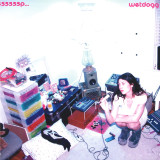
wetdogg was born in a grotto in Detroit, Michigan with a mission to information to the masses. Through sonic awakening, wetdoggs mission is to enlighten the subconscious and shine light on the deepest crevices of the human psyche. Allowing pathways back into animalistic intuition and away from the technocracy, dig a hole, plant a seed, run in circles and free your mind.
Coming out of Detroit based label Hold Me Records started by Detroit Techno aficionado MGUN and Underground don of all dons Ryan Spencer, wetdogg releases her first Album pssssssp…
From the artist:
"When a dog runs into a river and comes out and shakes itself dry, there is no data collected, technology does not aim to control those that it cannot. Numbers are definite and infinite, a linear path to doomsday. With every move we make, we are tracked and traced and categorized in order to sell ourselves into data hell. Intimacy used to have meaning, the present moment, truth and love but so much of it has been taken captive by technology that seeks to psychologically manipulate and control. A dog runs into the water because that is what dogs do, but it seems these days we are starved from our natural instincts, instead relying on someone else's answer that we of course seek online. "
Using the primitive technology of the password journal (often marketed to little girls to keep their secrets) wetdogg uses the idea of the password journal to imagine a utopia free of the surveillance state in her upcoming album pssssssp…
Founded in 2022, Hold Me Recordings is an independent record label based in southwest Detroit, MI. It is run by Manuel Gonzales (MGUN) & Ryan Spencer, who with a deep-rooted connection to the city's musical history, showcase innovative sounds that challenge the status quo and push the boundaries of contemporary electronic music. Focused on promoting both emerging and established artists, Hold Me is releasing genre-defying tracks that blend unconventional productions with the sincerity of Detroit's legacy. From experimental techno, to downtempo and ambient, Hold Me is committed to offering music that sounds fresh, exciting, and unlike anything you've heard before.
out of Stock
Last delivered 16 months ago available to reorder, subject to availability
‘Zeitgeist’, the debut LP from celebrated Italian electronic music producer Dukwa, begins with a timeless dancefloor equation; swung drums, a clattering cobwell and flickering hi-hats lurch forward into a serious bassline. Within seconds, dancers are flung into the house anthem ‘You Don’t Want It’ that’s equally raw and charismatic, sensual and powerful. For the next forty-five minutes of rhythm, melody and studio trickery, ‘Zeitgeist’ continues to bend time, eras and bodies.
Having released EPs on respected labels including Numbers, Gudu and Diynamic Records, invariably with the support of Jackmaster, Peggy Gou and Solomun, Dukwa folds into the Slacker85 philosophy with ease, laying down a statement of intent that’s squarely for the dancers. Indebted to a youth digging in Florence’s record stores, embracing the peerless Italian rave scene, as well as his recent appearances at Circoloco and Kappa Future, ‘Zeitgeist’ subverts it’s knowing title to dance between styles with an urgency you can feel in your heels.
Before long, Dukwa is smoothly oscillating between acid overdrive and weightless house on ‘Catch All’, while the balance between softness and severity is refined even further on ‘Show Me’, showcasing the record’s first euphoric breakdown, a heads down, hands up moment that sacrifices none of his organic flow. Ably mastering many corners of his record box, ‘Avec Moi’ makes a confident left turn into tunneling trance, interspersed with a sensual french vocal.
‘All You Need’ provides the record’s beating heart, Dukwa’s overarching philosophy front and center around layers of synthesised groove, build and release: “The world is full of fighting, ignorance and greed, but right here on the dancefloor - the rhythm’s all you need”. Meanwhile, ‘My Turn’ channels more cinematic instincts, zoning in on an elegant piano riff in order to unravel a quietly epic deep house trip.
As ‘Zeitgeist’ heads toward its conclusion, Dukwa effortlessly squeezes the most emotive juice from his well-oiled studio. ‘Sad Eyes’ possesses the emotional punch of many vintage end-of-night anthems, still driving yet touched with a wistful ecstasy. Finally, for closing passage ‘Stck1’, Dukwa truly lets the machines sing, capturing a brief symphony of harmonising modulations that dip into weirdo electronica, without ever skipping his signature beats.
out of Stock
Last delivered 12 months ago available to reorder, subject to availability
GEP are very excited to announce the release of ‘Dominion’, the longawaited new album from IQ.
Peter Nicholls: “Hot on the heels of ‘Resistance’ six years ago! Yes, it’s been
a long time coming (we couldn’t be accused of rushing these things!) but
we‘re confident this album is really strong and has been worth the wait. To
be releasing a new IQ album in our 44th year feels genuinely exciting”.
Mike Holmes: “We did actually write a lot more material for Dominion, but
this choice of songs (and the running order) feels like a cohesive album to
me. Even in this age of streaming individual songs I still approach a new
album with a ‘side one’ and ‘side two’ thing in my head and the selection and
placement of songs for Dominion just feels like a classic album should (I
know, I’m using ‘old people’ speak!).
The original intention was to have a second disc of other material but that
would have taken a lot longer to put together and we figured six years was
quite enough. It does mean that there’s already quite a bit of stuff ready for
the next one”.
With a 44-year history, IQ are widely regarded as one of the world’s most
highly respected progressive rock bands. 2025 sees the release of
‘Dominion’, IQ’s 13th studio album and one of which the band are justifiably
proud. The year will see them promoting the album by playing an
unprecedented number of live shows around the world, including UK,
Europe, Canada and the prestigious Cruise To The Edge in the USA.
Jess Sah Bi is well-known as half of the legendary duo Jess Sah Bi & Peter One who brought homegrown Country-Americana to the West African masses with their smash debut Our Garden Needs Its Flowers in the mid-1980s. Touring stadiums and reaching listeners worldwide, their music has racked up millions of spins on YouTube and remains imprinted in the hearts of Ivorians of a certain age. ATFA reissued their album in 2018, garnering critical acclaim from publications including Pitchfork and Rolling Stone and reaching a new generation of listeners outside Ivory Coast (Cote d'Ivoire). Sometime in the early 90s, Die Sahbi - or Jesse, as he known to friends-became gravely ill with an unknown ailment and almost died. He visited various doctors and all kinds of religious healers and nothing helped. One day he went down to an Evangelical Christian revival in his neighborhood. They prayed over him and he was delivered. He says, "Their prayers helped chase out whatever demons and unhealthy spirits were inside me. After that my illness went away. When I went to the United States a few months later on an exchange program I wanted to make music to thank God because I was saved." He recorded an album of music praising God in order to honor a promise he made to himself at the depths of his desperation in the hospital. The album Jesus-Christ Ne Deçoit Pas Jesus Christ Does Not Let Us Down came out in 1991 and sold around 3000 cassettes in Ivory Coast. The master tape was lost along the way so the recording has never been on digital platforms until now. Jesse didn't have much time to record while visiting South Carolina, hence the relatively short album, 6 songs including two reprises for filler. A local pastor connected him with a studio and some American musicians (Robert Fortner and Gary Davis) to help. They added acoustic guitar, percussion and keyboard accompaniment to Jesse's soaring French and Gouro vocals, harmonica and finger-picked acoustic. The resulting recording is deeply soothing and contemplative music that perfectly compliments the songs already embraced by millions. But he had to find the rest of the studio expenses-$600 total-which he secured drawing cartoons for UNICEF. Jesse is Ivory Coast's first political cartoonist, a vocation for which he was widely celebrated at the time. It also made him a few enemies which lead to him leaving the country permanently a few years later. Jesus-Christ Ne Deçoit Pas is Jess Sah Bi's first and only gospel album. Fortunately, fans responded with enthusiasm: widespread radio airplay and concerts followed, along with a growing solo profile in the country. The first big gospel artists in Ivory Coast were the duo Mathieu et Constance, who emerged in 1989. There was a bigger gospel music movement in English-speaking counties like Ghana and Nigeria (Christians make up roughly 40% of the population in Ivory Coast, slightly less than Muslims). Jesse didn't have any intention of working in Christian music but he realized, "You don't make music to make money-you want to send a message." In the years since Jesus-Christ's release, gospel music in Ivory Coast has grown to become a key part of music culture in the country. Spiritual music appears in community actives across the public and private spectrum from religious gatherings and parties to television broadcasts and music festivals. And, as it has evolved and indigenized locally, gospel music has picked up elements of traditional Ivorian music, reggae and soul. The album ultimately precipitated the demise of the duo, who were soon separated geographically as Peter One relocated to Nashville. He went on to become a nurse and release a successful solo album on Verve following the ATFA collaboration. Nowadays Jesse lives in the Bay Area and continues to record and perform music wherever and whenever he has the chance. He is publishing a new book of humorous cartoons in 2025 and his most recent album Never Give Up came out in 2020
out of Stock
Last delivered 17 months ago available to reorder, subject to availability
“My introduction to “noise” came from a record shop in Lake Worth, Florida ran by a musician named Kenny 5. Kenny had left Detroit sometime in the mid nineties and had begun selling used records and CD’s from the downtown strip of this tiny southern Florida city in a humble shop sandwiched between a deli and a dog grooming business. Kenny previously was on labels like Amphetamine Reptile and timeSTEREO, and the records and videotapes that would be on repeat at his shop were a vast sonic expanse that spoke to the eclecticism of his experience as a touring musician participating and adjacent to American noise culture through the early to late 90’s. In 1998, I was eleven years old and I would order a pizza with him and watch VHS tapes of Japanese noise and deathmatch bootlegs, as well as any other sonic and subcultural rarities that far outstripped my age to comprehend (notably the RRR “Journey Into Pain” compilation and various Vanilla Tapes videos). This widecast net of information formed an introduction to a reality that did not fall deaf on me, but it took many years later for me to reorient the specific freedoms of what this dense and cathartic sound culture had imparted on my life and would continue onward to.
What does this have to do with this selection of choice recordings from the Secret Boyfriend catalog for the enmossed label? For the uninitiated, Secret Boyfriend is the long running moniker of Ryan Martin, North Carolina musician and label proprietor of the Hot Releases imprint. For over a decade from this writing I have watched Secret Boyfriend, and Hot Releases by extension as a curatorial and archival effort, embodying the multiplanal capacity that noise loosely functions from as an umbrella ideology and formalist avenue for sound creation. For anecdotal purposes, from (before) 2006 until roughly 2023 the East Coast of the United States showcased a vibrant network of eclectic regional festivals that saw wide swaths of artists addressing and negotiating the notion of what qualified “noise” from a conceptual and ideological perspective. Some festivals honed in on particularities in aesthetics and tropes, and others had a kind of “catch-all” implementation that allowed for a salvation of the sort of alienated and singular artistry that was amassing throughout these territories. While clear guidelines had been set from regional predecessors as to how noise with a capital “N” should maneuver, Secret Boyfriend is emblematic in the spirit of fluidity that was either implicitly coupled to the notion of the genre, or grew to evolve towards or devolve from.
Within Secret Boyfriend performances, I have seen and admired a mirroring from a ravenous appreciator of this culture at large back towards itself. Typical of a Secret Boyfriend set is an interchangeable narrative arc wherein blistering feedback laden scrap metal improvisations are forayed into naive ambient or “pop” songs, or skipping CDs, or mixer feedback play, or delayed Roland 707 drum workouts all at once and in a unique hegemony. Secret Boyfriend's stylistic mastery of each endeavor is at once an homage to a history of loving listening and enacting, while a brave step into the realm of actualizing the unique fluidity of his own practice. In performance and the action of network engagement, Secret Boyfriend operates a survey of that which he sought to hear and that which he cultivates around his work. His operations are mirrors, and the project (alongside his other peers) is a reflection on the ethos of his time.
Conversely his recording practice narrows in on these moments and allows for a different kind of intimacy or alienation for the non live listener. This record of selected “pop songs” (let's call them that) is particularly poignant at a time when the culture Martin mirrors is at a strange crossroads with itself. The aforementioned festival networks necessarily change and shift. The onlookers become the artists, the artists find new horizons, and the spaces for these cycles fade into locales of a distant memory. It seems, from my perspective, that audiences currently yearn for a more bottlenecked experience, searching for some ontologically vetted manifestation of an idea, of a sound and less for an experience that functions in opposition to our collective banalities. This makes sense in the face of general global catastrophism that plagues us. We need certainty of what something is somewhere, don’t we? Noise as an idea has expanded and contracted to so many iterations of itself it is hard to tell what it even is, and it is particularly difficult to identify in the absence of solid network activations a moment to reflect on its own complexities and nuances. In the face of so much change, I argue that the language of noise culture at large has on one hand become increasingly didactic and predictable, and laughably inclusive and non linear on the other. Probably has always been this way, but now we are in the midst of a moment of extreme access and indexicality, which somehow cauterizes expansion and naivety and chance.
This record highlights the Secret Boyfriend that obscures didacticism by highlighting output that opens up for more challenging catharsis and emotive signal processing. It provides an entry to the materialism of a cultural field full of ecstatic complexity and beautiful inconsistency. In these muted moments Secret Boyfriend has given us over his career we have an argument for evolving languages that further challenge our notions of what is supposed to happen and how it is supposed to be presented. In his more song oriented expansiveness, we can punctuate the ability to think in new modalities. Listening to these recordings reminds me of the polarity of sitting in the record store as a kid and understanding that His Name Is Alive is on 4AD and (gasp!) timeSTEREO. This trite early impression that nothing is really as different as our imaginations might want them to be, and that we can do whatever we want mostly within the creative realms we work through is an important filter to look through Secret Boyfriend as a project and a vessel. If we can achieve abandon and vulnerability through our artistic endeavors, then we have a sound model for, maybe, new potentialities. If that’s too much projection, or just complete liberal bullshit, I am fine with that. Secret Boyfriend's oeuvre at best offers us moments of reprieve to ponder these complexities, or at least a moment to zone out on a drive through North Carolina Highway 54.
You have one pocket of life that you must do whatever you want to inside of. Secret Boyfriend does it affectionately, in a variety of forms, and always with deep sentimentality. These recordings are a wonderful set of songs to begin further investigation from. Thank you Ryan for allowing as many avenues as possible to continue a broad cultural exchange and conversation that intersect and refract while being the kind of artist that is brave enough to not phone in the effort.”
Compilation of 80s Turkish-Swiss band Café Türk, featuring selected works from their discography as well as previously unreleased recordings!
Café Türk's unrestrained sonic palette explores new wave, psych, disco and reggae with influences from Anatolia and Azerbaijan.2xLP includes a 4-page booklet with extensive liner notes and photos.
Café Türk are an inimitable Turkish-Swiss band formed in the 1980s, whose genre-bending sonic palette draws from Anatolia, the Caucasus and Western Europe. The group’s frantic trajectory connects Switzerland and the Turkish city of Kars with a background story as rich and unexpected as their sound. After three decades since they disbanded, Zel Zele Records have collaborated with Turkish crate-digger Grup Ses to give the music of Café Türk a new lease of life. This eponym compilation features original album tracks, singles and previously unreleased takes that trace the outline of the group’s history. From the rolling disco of the group’s debut recording “Haydi Yallah”; to the previously unreleased kosmiche of “Yıldızlar”, “Ali Baba From Istanbul”s Azeri grooves and German language vocals, to the psyched-out interpretation of Causaccian folk tune “Şamil”, Café Türk showcases the endless stream of ideas the band had during their time together between 1983 and 1989. Tracks come with an unrestrained spirit, weaving in the crackling energy of new wave, rock, disco and reggae with influences from Turkey and Azerbaijan.
This fascination in pulling different worlds together goes right back to the formative days of Metin Demiral, founder of Café Türk. Metin grew up in Kars, a provincial town in the Northeastern part of Turkey. Kars was once known for its multicultural communities; where you could hear locals speaking a range of languages, from Turkish to Azeri, Russian and Kurdish. In 1983 Café Türk won a contest set for Turkish groups based in Europe, organised by the label Türküola, home to Turkish stars like Cem Karaca, Selda Bağcan and Barış Manço. The resultant recording sessions gave birth to his new band and debut LP, Pizza Funghi. But Metin turned down Türküola’s offer to put the record out and instead self-pressed 1000 copies on his own Sound Concept label - driving as far as Berlin to sell them face-to-face to record shops. The record was picked up by a member of the German city of Nuremburg’s Cultural Department and soon Café Türk were invited to play for the local workers’ unions, many of whom represented immigrants from Turkey. These events only grew in popularity, the group ultimately spending five years touring similar shows in Europe, alongside more conventional tours and festivals. Metin had hoped to bring his new record to audiences in Turkey again, however, he found it impossible to get any of his songs played on state-sponsored radio, something he attributed to the infamously strict supervisory board of TRT, Turkey’s state-funded broadcaster. TRT tended to not accept songs that blended both western and traditional Turkish music in order to avoid “degenerating” Turkish folk music. Cafe Türk tried to fight this conservative mindset, but progressively resigned themselves to the political restrictions of the time
out of Stock
Last delivered 5 years ago available to reorder, subject to availability
The Linkin Park & Jay Z collaborative EP “Collision Course” is now back in stock at Atton. This will be available in next Friday, September 27th. There is no pre-order for this release, so feel free to place orders.
out of Stock
Last delivered 18 months ago available to reorder, subject to availability
INTEGRAL RECORDS—SEVENTEEN YEARS OF FORWARD THINKING D&B
London, August 2024 ––Integral Records, a leading independent record label synonymous with forward
thinking Drum & Bass music is announcing ‘Seventeen’ ––a new Various Artists LP in celebration of 17 years.
Fast approaching their second decade in the business of DNB, Integral Records has left an indelible mark on the underground scene, consistently delivering quality releases that continually push the boundaries of drum and bass music.
Since its inception in 2007, the label has been at the forefront of innovation within the underground scene globally, and is renowned for continually discovering, nurturing and developing exceptional talent; breaking a number of new artists through its 17-year journey.
Consistently delivering high-quality music with crossover radio appeal and with a consistent release schedule maintaining quality over quantity and dedicated to keeping the vinyl community alive.
Founded by the visionary Artificial Intelligence back in 2007 and with Emma G at the helm over the past decade, the label has remained dedicated to its core values of musical integrity, cutting edge sound
With a back catalogue of who’s who in the soulful world of the spectrum; the archive includes the likes of
Calibre, DRS, Alix Perez and Lenzman; more recently, Dawn Wall, Mohican Sun, Satl and currently the new
wave of D&B’s rising stars––Thread, TZ and Tatora to name a few.
Seventeen – the LP will showcase 8 tracks carefully curated from the label's impressive camp
of talent, capturing the essence of the Integral Records sound––featuring legendary artists and rising stars alike. Track features will include (in alphabetical order) Artificial Intelligence, Lenzman, Phil Tangent, Redeyes, Satl, Steo, Tatora, Thread, and Zero T and more.
From soulful liquid future classics to heavier-hitting tech rollers and everything in between, this compilation encapsulates the diverse and ever-evolving nature of Drum & Bass that will always remain dear and will certainly never die.
out of Stock
Last delivered 21 months ago available to reorder, subject to availability
Iconic UK punk band X-Ray Spex co-founder Lora Logic was unexpectedly ousted before the recording of their debut album 'Germ Free Adolescents' in 1977. Undeterred, Lora went on to form and front the post-punk band Essential Logic. With trademark angular sax lines and her unmistakable vocal stylings, she went on to create some of the most liberating and exciting music of the early post-punk era, not only as Essential Logic, but also as a solo artist. 'Beat Rhythm News (Waddle Ya Play?)' is the band's debut studio album. Originally released in December 1979 on the Rough Trade Records label, whose founder Geoff Travis provided enthusiastic encouragement. The album reached number 11 in the UK Indie chart. Lora's solo album 'Pedigree Charm' followed in 1982. Lora and Poly Styrene would later reform X-Ray Spex for the band's sophomore and final studio album 'Conscious Consumer' in 1995. Essential Logic returned from an extended hiatus in 2022 with the 5 x LP boxset 'Logically Yours', including the new studio album 'Land of Kali', co-produced by Lora and Youth (Killing Joke), followed by 2024's remix album thereof - 'Rekalibrated', which enlisted the talents of an ambitious and diverse set, including Grammy Award winner - Dave Audé, Rave-pop legend - Adamski and Scottish Kandy-poppers - bis, amongst others on remixer duties. This 45th Anniversary 'Deluxe' edition compiles the original studio album together with a bonus album containing the complete Essential Logic studio recordings from 1978 - 1983, including the iconic Cells Records debut single 'Aerosol Burns' (1978), the 'Wake Up' EP (1979), included here for the first time on any physical release since its original pressing, together with the non-album b-side 'Flora Force' and 3 post album Rough Trade Records single releases: 'Eugene' (1980), 1981's 'Music Is A Better Noise' and 'Fanfare In The Garden', and their respective b-sides. Repackaged in a high gloss accented, spot varnished sleeve, on 2 x black and white splatter vinyl, foiler stickered, with inner-sleeves including full lyrics and new sleeve notes by Lora. This release also marks the long overdue and highly championed CD debut of the original album and bonus tracks. Following their recent UK tour with fellow punk legends Penetration, featuring Pauline Murray, in November 2024, Essential Logic show no signs of stopping or slowing down as they plan extensive live celebrations of the album throughout 2025 as well as the recording and release of their next studio album. Press Quotes : "Lora's voice is always doing the right, thrilling things...she frets and somersaults in such an intoxicating way" - NME // "A stunning record that remains a benchmark of the punk era" - AllMusic // "Beat Rhythm News suggests an impromptu brainstorming session between Kate Bush, Talking Heads and Captain Beefheart" - Louder Sound // "An intelligent and fluid benchmark for any band willing to dabble in both punk and dance music at the same time" - PopMatters
"It's a game of hopscotch while drunk on sleep deprivation. It's a dance based on inaudible, but irrepressible rhythms. It's interaction dressed up like a call & response game wrapped up in a sparring match full of agitation and confusion. It's a manic pursuit over wobbly scaffolding, broken roof tiles or a creaking suspension bridge. It's an irregular movement that snaps, roars, drips, defies, tumbles, slithers, cajoles, interrupts, sizzles, triples, dodges, throws curveballs, causes panic, restores order, well kinda, and stutters and mutters. It's like Jaap Blonk's invented Onderlands: a language that sounds familiar, but that ultimately defies comprehension. It's part application and part imagination, it's a mystery and a trap. It's a system, perhaps, and an attempt at something, probably, but it's not, definitely not, a holiday. The idea!" - Guy Peters Ken Vandermark (US) and Terrie `Ex' Hessels (NL) have been playing together for years. For example, the Chicago reed player has been a guest with The Ex almost 100 times and the two are also part of Lean Left, an explosive improvising quartet with Andy Moor and Paal Nilssen-Love. It took them until 2014 before they went on stage for the first time as a duo. A dozen concerts followed on various international stages and resulted in their first LP `Scaffolding' recorded upstairs in the Witte Villa, Wormer. Released in 2019. This new release is the result of an blasting tour in Poland, 2021. Recorded live in the SARP Social Club in Poznan. `This is not a holiday!' Eight improvisations; eight musical adventures!