43°C, the debut LP by French electronic producer Basile3, is the result of a decade of cultivating a musical identity that focuses on hybridization, sonic recycling, and playfulness. The enigmatic title "43°C" signifies a haze of bliss (4+3=7, the producer's lucky number) backdropped by the ecological state of a world that’s grown slightly but surely warmer.
In this anticipation fiction, Basile3 offers a soundtrack that is an exploration of club music, electronica infused with r&b and ambient synths. The French producer warmly invites listeners to his state of mind, blooming with genre-bending floating soundscapes.
Featuring Telma Cappelo, Daisy Ray, Loydfears, Lucy Sissi Miller and Minor Science.
Поиск:nu stereo
Все
A cult classic reborn for a new generation.
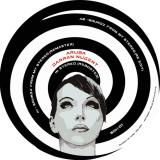
Originally released in 2002 on the short‑lived US imprint Square Room Records, the In Stereo EP by Aruba (Darran Nugent) has long been a prized gem for vinyl collectors of quality underground house and techno.
Now, two decades later, Darran brings In Stereo back to life on his new Sleight of Hand label, with ‘Soundz From My Stereo’ completely re‑recorded and sounding hotter than ever. This special edition also features a brand‑new Re‑edit plus a standout remix from UK DJ and producer Man Power (Geoffrey Kirkwood), who delivers a bold, imaginative re‑interpretation that elevates the release into something truly special.
Also returning is ‘Body Groove’, freshly reimagined for today’s floors. The original’s slap‑bass funk remains gloriously intact, now paired with a more modern, refined house sensibility that gives the track a whole new swagger.
The duo of DJ producers DJ Marrrtin and Deheb reunite after a five-year hiatus, during which they each pursued solo
projects. Deheb released the LP Jazz Mirrors, while Marrrtin put out a Disco Funk EP titled Aktshun, a hip-hop album La
Pie Bavarde in collaboration with Dayton, Ohio rapper Tino, and his third solo project Cyclothymix.
They return with a new 11-track album steeped in Jazz-Funk flavor, blending heavy breakbeats—recalling their earlier
albums that have been featured at major international breakdance events—with nods to their shared influences: Jazz, Latin
Funk, Hip Hop, Psychedelic Groove, Library Music, and Blaxploitation soundtracks. The record plays like an imaginary film
score, a sonic illustration of a relentless chase scene—picture The J.B.'s jamming with Piero Piccioni, accompanied by
Mongo Santamaria.
The album features a lineup of international collaborators, including:
Saucy Lady (USA) on Tambourine,
Felix (Fusik, USA) on Payback Run,
Roma Scotch (True Flavas Band, Russia),
Leo Debroise (Namas Trio, France),
Medline (My Bags, France),
Louise Chavanon, an incredible 18-year-old flutist from France,
and Antoine Laloux (The Selenites Band).
This album further develops the duo’s signature sound—a perfect blend of powerful grooves and deeply soulful musicality.
500 Copies , Covers hand made screenprinted and Hand Numbered
400 white with Black ink
100 with various colours
Greville returns to Mad Habitat, consorting with the enigmatic Lonely Voices to realize a four-song suite steeped in vivid acoustic psychotomimesis. Each track is underpinned by Greville’s unerring sensitivity to sonic texture and atmosphere. The snappy, febrile drum programming of “I Miss Terry” is a deft counterpoint to the thrumming bassline. The chords of “Purgatory” swirl around the stereo field like hypnopompic hallucinations. On the flip side, vocals bleed in and out of the mix, spectral and elusive, threading through both tracks. “Electric Push” follows the monologue of “Dad’s Folk,” nudging it into even more surreal territory. It evokes a chance encounter between Ifach-era Baby Ford & the occult industrialism of late-period Coil.
- A1: Intro
- A2: Schizophrenia
- A3: Tom Violence
- A4: White Kross
- A5: Kotton Krown
- B1: Stereo Sanctity
- B2: Brother James
- B3: Pipeline_Kill Time
- B4: (I Got A) Catholic Block
- C1: Tuff Gnarl
- C2: Death Valley '69
- C3: Beauty Lies In The Eye
- C4: Expressway To Yr Skull
- D1: Pacific Coast Highway
- D2: Loudmouth
- D3: I Don’t Wanna Walk Around With You
- D4: Today Your Love, Tomorrow The World
- D5: Beat On The Brat
In October 1987, four months after the release of their critically acclaimed Sister LP, Sonic Youth showcased their latest work in a blistering set at Cabaret Metro, Chicago. The concert was introduced by Big Black's Steve Albini (who at the time was banned from the venue) and subsequently released as a semi-official bootleg under the title Hold That Tiger on writer/provocateur Byron Coley's impishly Geffen-baiting label Goofin' (years later the band would use this nom de guerre for their own imprint).
Hold That Tiger's sterling reputation among the Sonic Youth faithful is well deserved. In fact, it isn't a stretch to suggest that the album is to the first handful of SY releases what It's Alive is to the first three Ramones LPs – a feral and liberatory public snapshot of a band's blossoming imperial phase. Indeed, HTT is the sound of a group at the peak of their powers, presenting new songs alongside a handful of older ones with the kind of wild, cathartic enthusiasm common to rock 'n' roll's most revered live albums.
Taking nothing away from Sister – inarguably one of indie rock's first true masterpieces – it is reasonable that many fans prefer the live versions heard on Hold That Tiger to their studio counterparts. On HTT, Sonic Youth is a spiky, pummeling and confident force, alternately mammoth and meditative. Sister and its predecessor EVOL notably added an airy, dreamlike reverie to the band's turbulent doom-lurch, a stylistic evolution that seems to crystallize on HTT. Throughout, Kim Gordon's sinewy, sumptuous bass and Steve Shelley's propulsive, tom-heavy percussion provide the bedrock groove for Thurston Moore and Lee Ranaldo's ferocious barrages of noise-guitar crunch.
By 1987, the band was confidently articulating their dual lexicon of punk-noir dissonance and supernal, psychedelic sonic calligraphy – bending their jagged, streetwise gnarl into balloon animals of dazzling and beautiful songs. This collision of splendor and chaos would become a hallmark of the group's singular alchemy as well as provide a blueprint for the post-SST American underground they would help invent and ultimately nurture.
Hold That Tiger's encore – four songs by the band's beloved Ramones, which Thurston would later astutely compare to "the perfect pudding after a hearty meal" – serves as a reminder that, like any true punks, Sonic Youth never could resist a good, rousing anthem to send the kids home with their ears ringing, their hearts hot-wired.
This first-time reissue with speed-corrected master comes in a gatefold tip-on jacket. Mastered by Bob Weston from the original tapes. Recorded by Aadam Jacobs. Audio repair/editing by Aaron Mullan.
- A1: Sunrise (Featuring Deadbundy & Chemical Codex)
- A2: Night Funk
- A3: Moment Of Joy
- A4: Chill On A Lotus
- B1: Jazz Addict, Pt 2
- B2: Howling 2 You
- B3: Walker
- B4: Eeels
- B5: Early Morning
- C1: Gaff
- C2: Jazz Addict, Pt 3
- C3: Jazz Addict, Pt 4
- C4: Cogburn
- D1: Jubilee (Featuring Q-Tik)
- D2: Natalie (Featuring Deadbundy & Chemical Codex)
- D3: Rooftop
- D4: Afiona
After forming a friendship with Japanese hip-hop talent DJ Motive, Hell Yeah is releasing his previously CD-only album Sunset Sunrise. After initially being released as a promo to support the 7 inch lead single 'Sunrise,' it now comes on 2 x 12 inch for the first time with fresh mastering by Justin Drake. DJ Motive hails from Gifu, a small and charming city 30 minutes from Nagoya. From there he has built up a cult following for his blend of Latin, jazz and hip-hop beats over a number of albums and EPs in the last 20 years. He is also the producer behind the DeadBundy outfit that was previously remixed by countryman Calm on this label's Calm Reworks EP back in 2020. Thanks to a link from Calm, Hell Yeah founder Marco first hooked up with Motive in the pre-Covid days, twice playing his Alffo event in Gifu and hanging out to chat music. One of the many things that came up was a CD of Sunset Sunrise which has remained on firm rotation on Marco's stereo ever since and is a worldly trip into sample-heavy sounds, indie rock, hip-hop and jazz. Opener 'Sunrise' ft. Deadbundy & Chemical Codex opens with drums that lap like gentle waves on a beach as thoughtful strings and filtered vocals add to the sense of bliss. From there, DJ Motive lays down lazy broken beats and twinkling melodies that take your head above the clouds amongst lush pads and nostalgic samples. 'Chill On A Lotus' sounds like a damaged old tape as vocals, chords and strings all get smudged and smeared into a heavenly ambient soundscape, and there are plenty of loose mixes of dusty drums and jazzy keys, 'Howling 2 You' is a fusion of jazz drums and Balearic energy that slowly sweeps you off your feet and 'Walker' has squelch synth bass and heat damaged keys.
This escapist trip carries on through more broken beats and yacht rock, inquisitive jazz interludes and sunset grooves that all come with a heavy sense of inward reflection. The fragments of vocal are like half-remembered dreams, and the hooks remind of a forgotten lover while the louche beats move things forward with subtle optimism. Sunset Sunrise takes you through a full day in the life of DJ Motive and it makes for a vibrant collage of sound that reveals something new with every listen.
Oversized custom cut LP jackets (13” / 33.02 cm width)
Silkscreened with bespoke iridescent citrus green ink by Mark Rice
Short story by Natalia Zuluaga
Flexi 7”:
steaming mescaline (extended mix by bad lsd trips)
Citrus green metallic foil stamp
Pressed in full stereo
Edition of 150
I.
bad lsd trips is the collaborative duo of makers doris dana and domingo castillo flores. Respectively the two have fostered practices that have sprawled out through various approaches and, whether in the lanes of the musical or the contemporary arts, the phenomenology of the social and inclusive prevails. On ultrafest, this motif continues through the psychedelia of its eight time-defying recordings, welcoming the listener into an open temporal architecture of the stereo field as a signifier of environment. It is worth noting that the group began collaborating in Miami, Florida with longer form improvisations recorded to a stereo cassette deck. In these recordings, the paved geographical sprawl and oceanic view permeated the approach to amassing long swaths of sound material. Listening back on that work at the time of this writing, each track feels as though one is walking into an active space, arriving to an event already in full swing and finding your place inside of it. On ultrafest (this album) something different occurs. The space and events are built around you as you move through the record.
II.
The name of the album is ultrafest, which should effectively provoke your mind's eye the imagery of young people dancing, salivating, grinding, and imbibing chemical compounds to the perversely formalized musical genres of “Electronic Dance Music” and latter-era Dubstep often heard in European Uber rides and energy drink commercials. A far distance from the icy and machinic reverie of Techno’s finest rave eras or the notable historical contributions of Miami’s cerebral producers to IDM’s global output, ultrafest is a libidinal catharsis as festival scaled to a multinational corporation of hedonistic excess. The festival has been a hallmark of Miami cultural industry production and optical enticement for tourism, purportedly bringing in nearly a billion dollars in revenue to the city since 2012. Scores of documentation exist wherein this decadent escapism leaves the concertgoer, usually in some neon garment on a near nude body potentially adorned with fluffy faux fur leg warmers, facing a comedown from the combination of volume, sun, dehydration, and methylenedioxy-methylamphetamine. This MDMA experience characterizes an aspect of the way bad lsd trips employs vocals and pitch on this album. The detached, high octaved longing of a high pitched vocal is decoupled from its typical auditory body of song. High-pass clicks and pops touch the (h)air on the back of the neck, promising goosebumps and teasing towards euphoric rushes of dopamine, yet also exist decoupled from the body of song. As the dopamine depletes and the sun imposes itself, Miami’s downtown of skeleton real estate is your company as you meander towards your parked vehicle to rest your fatigued senses, elevated heart rate, and quench the need for air conditioning on your skin. The immediacy of bombastic social immersion to architectural alienation palpable here.
III...
- Nick Klein
- A1: Yves Deruyter – Back To Earth (Dimitri Vegas Remix)
- A2: Dj Furax – Big Orgus (Junkie Kid Remix)
- A3: Dimitri Vegas & Like Mike X Maddix X Da Hool – Meet Her At The Love Parade (Ft Kiki Solvej)
- A4: Dimitri Vegas & Like Mike, Armin Van Buuren, Vini Vici, Push – Universal Nation
- A5: Cherrymoon Trax – The House Of House (Yves Deruyter & Byørn Remix)
- B1: The Darkman – Illegale (Dimitri Vegas Remix)
- B2: Byorn – Adagio For Strings (Vip Remix)
- B3: Dimitri Vegas & Like Mike, Marc Acardipane, Bassjackers – Stereo Murder
- B4: Dimitri Vegas & Like Mike, Vini Vici, Mattn – Cafe Del Mar (Mondello’g Remix)
- B5: Cherrymoon Trax, Dj Ghost – Needle Destruction (Dimitri Vegas & Per Pleks Remix)
- C1: Tranceball – Calyptus ( Dimitri Vegas Remix)
- C2: Dimitri Vegas & Like Mike – Heroine
- C3: Cherrymoon Trax – Acid Dream (Dimitri Vegas & Like Mike Remix)
- C4: Dimitri Vegas & Like Mike, The Moon, Robert Armani, Dj Ghost – Blow Up The Speaker Vs. Hard One
- C5: Warp Brothers – Phat Bass (Luca Agnelli Remix)
- C6: Bountyhunter – Woops (Dimitri Vegas & Junkie Kid Remix)
- D1: Systematic Parts, Marco Joosten – Violin De La Nuit (Dimitri Vegas & Like Mike Remix)
- D2: Age Of Love – The Age Of Love (Dimitri Vegas Remix)
- D3: Thunderball – Bonzai Channel One (Creeds Remix)
- D4: Ben Nicky, Distorted Dreams – We Come 1 (Per Pleks Remix)
- D5: Dimitri Vegas & Like Mike X Loic D X Ronald-V – Melody Of The World
(2LP gatefold vinyl, 21 unmixed tracks) Dimitri Vegas, half of the world-renowned DJ duo & brother pair Dimitri Vegas & Like Mike, went “solo” at Tomorrowland last summer. He played an exceptional 'vinyl only' set there. It was greatly enjoyed, which is why Mostiko and Smash The House have teamed up and immortalized this historic set.
DJ support: Tim Sweeney, Make A Dance, Parris, Pleasure Voyage, Camillo Miranda
Back yard - Back yard is the first single from the new Teen Daze album, Elegant rhythms, and features singer-songwriter Andy Shauf on drums, and LA jazz staple, Sam Wilkes, on bass. This is a stark change in sound for Teen Daze, who’s last album Interior was an exploration of neon-lit House music. Back yard is a mellow groover, conjuring up images of Laurel Canyon in the 70s, yet still with its flourishes of contemporary sounds.
We’re out of phase again - We’re out of phase again is another vulnerable glimpse into the inner world of Teen Daze, and marks the release of his most personal album to date, Elegant rhythms. In contrast to the synthesized, digital world of his prior album, Interior, here we’ve been brought into a lush, organic arrangement, brought to you in large part to the stunning bass playing by Sam Wilkes. While the verses pulse forward, the chorus slows things down, and evokes the sophisti-pop sounds of The Blue Nile. This track is a stunning showcase of the world of Elegant rhythms.
Nothing’s gonna change my love - Teen Daze returns with his second single of the year, Nothing’s gonna change my love. The stark change in sound, as heard on previous single Back yard, is on display here again: a smouldering, 2 and a half minutes of slow jazz-pop, indebted to the great Sade, or perhaps the feeling of leaving downtown LA at 2 AM. Lyrically, we hear a story of a love, challenged by the unpredictable nature of our lives. This may be Teen Daze’s smoothest song to date.
Neighbourhood - Neighbourhood is the third single from the recently announced LP from Teen Daze, Elegant Rhythms. Along with Andy Shauf on the drums, and Sam Wilkes on the bass, Teen Daze gives us a languid tour of his quiet neighbourhood. The sun has set on the pleasant, tree-lined streets, and a stranger, more surreal environment presents itself. The song plods forward at an extremely comfortable pace, held down by the paradoxically loose-yet-tight rhythm section. Lyrically, we walk around the Neighbourhood at night, and while the chorus reveals a type of sobriety, the vibe of the song makes it easy to feel a little…effected.
Fade away - Fade away sets the tone for Elegant Rhythm’s side B: a deeply personal, though somewhat veiled, confession of loss. How does it feel to grieve something that was never really here? A smouldering, slowly progressing first half erupts in synthetic noise, and then fades into the ether with it’s repeating refrain, “I can feel you / feel you fade away / when there’s nothing / nothing left to say”.
Fall ahead - A sweet piano tune which serves as a quiet break in the record, intended to help the listener reflect and take a moment of pause before we reach the final two songs on the album.
HST underwater - The penultimate track on the record tells a story where the narrator finds themself in an alien, yet oddly familiar place. Arpeggios soaked in crystal blue water flow through the stereo field, while the narrator, vocoded and drenched in autotune, searches for meaning and purpose in a confusing world. This is one of Teen Daze’s most cinematic, emotional songs yet.
In the rain - It’s never really made explicitly clear on this record, but a lot of these songs find Teen Daze wrestling with life as a new father, and this song, the final on the album, expresses the fears of generational trauma. A touching, tender ode to his children, we hear Teen Daze at his most personal and vulnerable. The falling rain surrounds some absolutely breathtaking bass playing from Sam Wilkes, and Teen Daze’s signature ambient keyboard sounds.
Radio Support: Ruf Dug (Soup To Nuts on NTS)
Bellissimi Dischi di Ornavasso open the doors of the Archivio once again!
The tracks on this album, meticulously chosen from their vast, almost boundless collection, maintain the warm and dance-like nature that distinguishes the sound of Somar Records. The captivating rhythms and velvety bass are processed in the celebrated audio department, unsurpassed in the creation and melodic mixing, providing a finished product of a quality established by many professionals in the sector. The selection is obviously 100% italian, certified by officer T. Campanat.
Optimal reproduction on a stereo system guarantees increasing undulations and hand clapping, with extended influence on other peripheral joints. To date, no adverse effects have been observed in the administration in a protected environment (dance hall).
Technics' EAH-DJ1200 DJ headphones have run with the RP-DJ1200 concept and taken it to new heights with more advanced functionality, a better design and superior sound quality that meets all the demands of today's DJs. You'll be able to monitor your beats like never before, even at the biggest clubs and gigs. Extra-large 40mm drivers with CCAW voice-coils deliver clear, detailed sound that stays free of interference thanks to the durable 2,500 mW input and, to match the looks of the SL1200MK7, this robust pair of EAH-DJ1200 headphones are similarly cloaked in black.
For Both Carefree and Careless DJs
Blessed with a lightweight, on-ear design, the Technics EAH-DJ1200 headphones are equipped with a lockable rotating mechanism to suit the style of all DJs, including one-ear monitoring. Because they can be folded up, they won't take up much storage space and Technics agreeably throw in two TRS mini-jack cables plus a TRS jack adapter. It's worth mentioning that these removable cables can be locked into place to prevent them from accidentally coming loose during the set; perfect for both carefree and, dare we say, slightly more careless DJs.
Driver Unit
40 mm
Impedance (with Detachable Coiled Cord)
45 Ω
Sensitivity
106 db / mW
Power Handling (IEC)
2500 mW (IEC)
Frequency Information - Frequency Response (with cord)
8 Hz - 30000 Hz
Operating Temperature Range
0 °C to 40 °C
Weight (without cord)
Approx. 233 g
Weight (with Detachable Straight Cord)
Approx. 251 g
Supplied Accessory
Detachable Straight Cord: Approx. 1.2 m, Detachable Coiled
Cord: Approx. 1.5 m (Extended Length 2.2 mm), Carrying
Pouch, Plug Adaptor (6.3 mm)
Plug
3-Pole 3.5 mm Stereo Plug
Cord - Cord Length (detachable straight cord)
1.2 m
Der DJ1200 begeistert mit einem natürlichen, detaillierten und harmonischen Klang. Auch bei hohem Eingangspegel und den damit verbunden extremen Lautstärken ist der Ton stets verzerrungsfrei. Unabhängig von der Lautstärke sorgt der On-Ear für eine rauschfreie und komfortable Sound-Kontrolle. Der Technics EAH-DJ1200 verfügt über ein sehr geringes Gewicht und ist mit einem 270-Grad-Schwenkmechanismus für beide Ohrmuscheln ausgestattet. Diese sind unabhängig voneinander wegklappbar und variabel arretierbar. Somit kann der EAH-DJ1200 zur Sound-Überwachung auch mit nur einem Ohr verwendet werden und ist flexibel einsatzbereit.Für perfekten Sitz sorgen das gepolsterte Kopfband und die schweißabweisende Kunstleder-Ohrmuschel-Polsterung, welche sich angenehm auf der Haut anfühlt. Darüber hinaus kann der DJ-Kopfhörer für den Transport kompakt zusammengeklappt werden. Zum Lieferumfang gehören ein 1,5 Meter Spiralkabel, ein 1,2 Meter langes gerades Kabel sowie ein 6,3-mm Klinkenstecker-Adapter. Beide Kabel verfügen über einen praktischen Verriegelungsmechanismus, welcher ein versehentliches Ablösen des Kabels effektiv verhindert. Mit seinem modernen Design und der Verwendung hochwertiger Materialien überzeugt der Technics DJ1200 auf ganzer Linie. Durch die matt-schwarze Optik passt der Kopfhörer perfekt zum Technics DJ-Plattenspieler SL-1200MK7 und fügt sich bestens in die Technics DJ-Welt ein.
Treiber
40 mm
Impedanz (mit abnehmbarem Spiralkabel)
45 Ω
Empfindlichkeit
106 db / mW
Frequenzgang
2500 mW (IEC)
Frequenzwerte – Frequenzgang (mit Kabel)
8 Hz – 30.000 Hz
Betriebstemperaturbereich
0 °C bis 40 °C
Gewicht (ohne Kabel)
Ca. 233 g
Gewicht (mit abnehmbarem Spiralkabel)
Ca. 251 g
Mitgeliefertes Zubehör
1,5m Spiralkabel, 1,2m gerades Kabel, 6,3-mm Adapter, Transporttasche
Stecker
3,5-mm-Stereostecker, 3-polig
Kabellänge
1,2m; 1,5m
Numbers hold the key to unlock the universe. So, a six-pack can either consist of six bottles of beer, very well developed stomach muscles or in our case: a string of smash hits. To take it even further, it’s exactly six tracks for the sixth part of the VA-series that is One Swallow Doesn’t Make A Summer.
Hit men include friends new and old: Llewellyn, Stereocalypse, Zillas On Acid, Storken & Hammer, Ede, Señor Chugger & Count Van Delicious. The pace is cool and hot at the same time. Rave signals by Ede foil the nouveau disco by Stereocalypse or Storken & Hammer, Llewellyn does a classic house piano hop, Zilles On Acid deliver, well. mid-tempo acid, and last, but not least, Señor Chugger & Count Van Delicious strike a delicious pose.
One for almost everyone! And if not, let your body go with the flow!
- A1: Approach 1' 52
- A2: Omaggio A Fellini 1' 50
- A3: Pipes 4' 05
- A4: Orgal 3' 38
- A5: Babbel 3' 54
- A6: Yaya 4' 21
- B1: Ba Loon 3' 17
- B2: Clocking 3' 37
- B3: Wail 8' 34
- B4: Bottom 3' 34
- B5: Feeder 1' 36
- C1: Spindrift 3' 35
- C2: Surfer 4' 00
- C3: Low Roller 3' 24
- C4: Still 4' 56
- C5: Beating 3' 51
- D1: Picolo 5' 41
- D2: Wire 2' 07
- D3: Knock 6' 21
- D4: Wah 3' 02
- D5: Aah 1' 40
Tod Dockstader's Aerial series, an electronic/drone masterpiece, is cherished among fans of the artist's work and this second volume is available in an audiophile quality double LP edition.
Tod Dockstader's Aerial series is sourced from his life long passion for shortwave radio. Dockstader collected over 90 hours of recordings, made at night, and comprised of cross signals and fragments plucked from the atmosphere.
Opening with airwave drones, Dockstader gradually allows elements to slowly come and go, summoning an ominous atmosphere of ethereal cloud clouds. Malignant placidity continues, giving the feeling of eavesdropping upon late-night audio activity not unlike discovering number stations while sweeping the dials. These sounds pull you in as their density and rhythms come and go.
Backward voices, deep echoing choruses of conversations flowing under the surface, ocean sounds, pulsing electro-rhythms, all seem to be created via the collaging of many hours of source recordings. A masterwork of collage and juxtaposition by an overlooked pioneer of American electronic music.
Artwork by John Brien (Imprec) is inspired by the propagation of shortwave radio signals throughout the earth's atmosphere.
"This return of Dockstader is something to cherish, not just because his output has been so limited and scarce but because what we do have is so intriguing, persuasive and cliche-free; the music of an inspired explorer who trails in nobody's slipstream." The Wire
"One of the great figures of musique concrete composition." Dusted
The Aerial project
I've written before of my interest in shortwave radio, in the notes to the Quatermass CD. Also, in the notes to the Omniphony CD (which has my first "Aerial" mix, "Past Prelude," in it), I mentioned "The Aerial Etudes," which was my working title for what became the three CDs you have. And, at the end of an interview with Chris Cutler (which can be found in the "Unofficial TD Website"), the piece I mentioned I was starting to work on at the time became Aerial.) When I was very young, people got most of their entertainment from radio. They called it "playing the radio," as if it were a musical instrument. That's what I've tried to do in this piece. About this time, a few people encouraged me to look into using a computer for this work.
I'd never used one, but I saw it would allow me to keep my mixes digital - no more transfer losses. So, at the end of 2001, I got a computer and an editing program for it, and spent what seemed a long time learning it. I began selecting mixes and loading them into the computer in late March, 2002. Out of the 580, I selected 90 "best" mixes - eventually reduced to 59, the ones on the CDs. Finally, in assembling the CDs, I followed David Myers' suggestion to allow each piece to flow into the next - making a continuous journey to the end. Tod Dockstader, 14 september 2003
About Tod Dockstader: Dockstader moved to New York in 1958 and became a self-taught sound engineer and sound effects specialist and apprenticed as a recording engineer at Gotham Recording Studios. It was around this time that he started to use his off-work hours to experiment with mixing and manipulating sounds on magnetic tape (musique concrète). By 1960 he had amassed enough material to assemble his first record Eight Electronic Pieces which was released on the Folkways label in 1961 (this would later be used in the soundtrack of Fellini’s Satyricon). The last of the eight pieces was later re-worked into his first stereo piece. In 1961 he applied to use the facilities at the Columbia-Princeton Electronic Music Center and was denied access by Vladimir Ussachevsky. Ussachevsky’s official reason was the “overstrained” scheduling of the studios, although many suspect that Dockstader’s lack of academic training was a factor in the decision. He continued to create music throughout the first half of the 60s, working principally with tape manipulation effects. His last piece at Gotham was Four Telemetry Tapes in 1965, after which he left to work as an audio-visual designer on the Air Canada Pavillion at Montreal’s Expo ‘67. It was around this time in 1966 that some of Dockstader’s pieces were released on three Owl L.P.s, and his work became known to a larger audience. He achieved modest recognition and radio play alongside the likes of Karlheinz Stockhausen, Edgard Varèse, and John Cage.
It’s time for the label founders to take control over our spaceship. Clusterhead offers four slices of proper abstract techno for those who know.
Release starts with Alteración del orden: a broken kick spiced with elastic synth washes and microdrones sets the pace while the rest of the percussive elements appear softly in the arrangement. The main sequence grows and mutates as minutes go by, reverb and stereo treatment goes heavier until repetition makes the desired effect on the virtual dancefloor.
Second cut Resiliencia Incesante again relies on broken kicks and processed synth lines. The BPM rate is higher here and the percussive elements are snapper and tighter. Sounds twist and change over time as the frequency range grows. An industrial ode to obscurity.
On the flip side, Automutilación creativa brings us again into oblivion, shuffled grooves obsessive sequences continuously moving and high pitched synthetic drums running through the stereo field.
Closing the release we have Notzing on board, still recovering from his amazing experimental work on our label, we give him again the commands of our spaceship to translate his mental obsessions in this superb rework of Automutilación creativa.
One more time we push the sound boundaries on behalf of timeless futuristic music in touchable format.
ESPAÑOL
Es hora de que los fundadores del sello tomen el control de nuestra nave
espacial. Clusterhead ofrece cuatro rebanadas de techno abstracto para aquellos que saben de lo que hablamos.
El disco comienza con Alteración del orden: ritmos rotos condimentados con sonidos elásticos de sintetizador y microdrones marcando el ritmo, mientras que el resto de los elementos percusivos aparecen suavemente en el arreglo. La secuencia principal crece y muta a medida que pasan los minutos, la reverberación y el tratamiento estéreo se vuelven más presentes hasta que la repetición produce el efecto deseado en la pista de baile virtual.
Como segundo corte Resiliencia Incesante nuevamente se basa en bombos rotos y líneas de sintetizador procesadas. La tasa de BPM es más alta aquí y los elementos de percusión son más rápidos y ajustados.
Los sonidos se retuercen y cambian con el tiempo a medida que aumenta el rango de frecuencia. Una oda industrial a la oscuridad.
En la cara B, Automutilación creativa nos trae de nuevo al lado oscuro, grooves mezclados, secuencias obsesivas en continuo movimiento y percusiones sintéticas de alto rango recorriendo el campo estéreo.
Cerrando el lanzamiento tenemos a Notzing a bordo, todavía recuperándonos de su asombroso trabajo experimental en nuestro sello, le damos de nuevo los comandos de nuestra nave espacial para plasmar sus obsesiones mentales en esta soberbia reelaboración de Automutilación creativa.
Una vez más empujamos los límites del sonido en nombre de la música futurista atemporal en formato táctil.
Megastar Bruno Mars has unveiled his new album 24K Magic (pronounced twenty-four karat magic), with lead single of the same title. Written and produced by Shampoo Press & Curl, with additional production by The Stereotypes.
The last time Mars dropped an album was December 2012 - four years ago, an eternity for a pop star. He's surfed the intervening years like a pro, with two Super Bowl halftime performances (headlining in 2014, and a cameo last February with Coldplay and Beyoncé), not to mention the biggest-selling song of the past few years, his collaboration with Mark Ronson, "Uptown Funk", spending 14 weeks at Number One - tying for the second-longest run in chart history - and winning the Grammy for Record of the Year. To date, it's sold more than 12 million copies, been streamed nearly 2 billion times and made several dragons want to retire.
This is Bruno Mars. Six Number One singles. Thirty combined weeks at the top of the chart (44 if you count "Uptown"). Two albums, 26 million in sales worldwide, four Grammys and counting.
Throughout 24K Magic , Bruno Mars re-creates the R&B he fell in love with as a child - the likes of Jimmy Jam, Terry Lewis, New Edition, Bobby Brown, Jodeci, Boyz II Men, Teddy Riley, and Babyface.
BCUC – Bantu Continua Uhuru Consciousness – have been channeling the spirit of Soweto for over twenty years. Indigenous funk, hip-hop consciousness, and punk rock energy fused into something utterly original and deeply rooted. Their mantra: Music for the people, by the people, with the people. From humble beginnings rehearsing in a shipping container, a stone's throw from the church where Desmond Tutu organized the escape of the most wanted anti-Apartheid activists, they kept believing in their dream of self-empowerment. Today they command festival stages worldwide: Glastonbury West Holts, Roskilde, Afropunk Brooklyn, WOMAD, Fusion, Sziget, FMM Sines, Beaches Brew, Boomtown, Colours of Ostrava, Couleur Café – to name just a few. In 2023, BCUC were honoured with the prestigious WOMEX Artist Award, an accolade usually reserved for more established artists, in recognition of their fearless work and transcendent live performances.
THE ROAD IS NEVER EASY
The Road Is Never Easy is BCUC's fifth album and their debut on Outhere Records. On this new offering, BCUC take listeners on another Afro-psychedelic journey into the soul of Soweto. It feels like a gospel sermon colliding with a punk concert, "guaranteed to touch untapped corners of your soul" (OkayAfrica). BCUC's music is deeply rooted in history and echoes the voices of the ones who came before. The road was never easy for the people of Soweto who originally came to work in the mines of Egoli, the City of Gold, Johannesburg. When apartheid finally ended after a long struggle, it was hoped that life would improve. But more than 30 years later, many of those initial hopes and dreams are still waiting to be fulfilled. This album is about that struggle. The album contains 10 brand new songs – a record for BCUC, whose previous albums featured an average of 3 songs. It represents the culmination of more than two decades of performing together and building a reputation as a powerful live act. These ten songs encapsulate that same live energy, each one building gradually and drawing you into BCUC's Afro-psychedelic stream of consciousness. It's a seismic tour de force through life in Soweto today. Songs like Amakhandela (Breaking All the Chains) connect history to daily life: "How is this precious metal inflicting so much pain in us," sing BCUC, "this government has been telling us we are free, but we don't benefit from being free." The album also talks about all the hopes and dreams that remain: "I have too many wishes and dreams in my head," BCUC sing in Um duma khanda, "I think I am losing my mind". The album ends with the soothing Matla a rona ke Bophelo, "our strength is life", praising the spirits and thanking the elders for protection. The Road Is Never Easy is about the harsh reality of life in Soweto, where "people always carry heavy loads". BCUC are street poets trying to deal with that burden: sometimes revolutionary, sometimes soothing, but always hopeful and compassionate. "When you are from Soweto you can't retreat nor surrender." (Sebenzela)
RECORDING
The album was largely recorded in Munich, Germany during tour breaks over two sessions, each three days long. It took place in a small studio located in a German WW II bunker converted into rehearsal spaces. The songs were recorded in one take altogether in one room, with only a few overdubs added, mainly backing vocals, by BCUC at Fourways studio in Johannesburg. BCUC have created their own distinctive way of writing, or rather, finding and creating their songs. The recording process is like an improvised live performance. They bring their ideas into a zone where the music, the rhythm and the spirits take over until the song starts to form. In this Afro-psychedelic zone BCUC create their unique poetry that feeds on the dreams still dreamt, the hopes, the fears and the temptations lingering everywhere. BCUC's songs need to breathe and time to build. The right take was the one when the song took over, and just like their live performances, no one knew beforehand where the song would take them. During the recording, BCUC just let it all flow out: inner turmoil, cries of rebellion, but also resilience and a search for healing, love, unity and compassion. You don't have to be from Soweto to feel the deep meaning and impact of this music. In these times of so much hate and division, BCUC are like a campfire for people to gather around.
PRODUCTION & ARTWORK
"BCUC have a unique magic," says Outhere's Jay Rutledge, who produced the album. "It blew our minds. It's like punk and pure gospel at the same time. Their music can make you dance and it can make you cry, all at the same time. And when the song is over, you feel you're not alone in this world anymore. We felt compelled to do this." The album cover is based on a matchbox design, matches being a common household item in South Africa even today. "These were the matches people used to burn government buildings and cars," explain BCUC. Little messages, addresses, or phone numbers used to be scribbled on the back of these boxes; each one a reminder of the strength, resilience, and resistance that once drove the struggle for freedom in Soweto. BCUC keep this flame burning. The Road Is Never Easy is a heavy spiritual road trip, a deep dive into the subconscious of Soweto and a quest for truth, justice and sanity in this crazy world. BCUC tackle the harsh realities of the voiceless, guided by the spirit world of their ancestors. Rather than reinforcing stereotypes of poverty, BCUC's portrayal of Africa is one rich in tradition, rituals and beliefs. "We bring fun and Afro-psychedelic fire from the hood," says vocalist Kgomotso Mokone.
- A1: The Awakening - Mode For D.d
- A2: Doug Carn - Higher Ground
- A3: Calvin Keys - Aunt Lovey
- B1: Roland Haynes - Eglise
- B2: The Awakening - Slinky
- B3: Walter Bishop Jr. - Coral Keys
- B4: Rudolph Johnson - Diswa
- C1: Henry Franklin - Blue Lights
- C2: Kellee Patterson - Maiden Voyage
- C3: Chester Thompson - Powerhouse
- D1: The Awakening - March On
- D2: Walter Bishop Jr. - Soul Village
- D3: Rudolph Johnson - The Highest Pleasure
This album brings together some of the finest music ever released on Black Jazz Records which in its short four-year history, between 1971 and 1975, released over 20 superlative albums which all successfully blending spiritual jazz, funk and soul jazz of the highest calibre. Similar to other independent jazz labels at the time, including Strata-East Records and Tribe Records, Black Jazz focussed on a number of key artists, most of whom first established their career during this period, and all of whom are featured here. Featuring The Awakening, Doug Carn, Walter Bishop, Chester Thompson, Kellee Patterson and more. Black Jazz Records was founded in Oakland, California, by pianist Gene Russell and percussionist Dick Schory.
The label released twenty albums between 1971 and 1975. Artists who recorded for Black Jazz Records included Cleveland Eaton (bassist for Ramsey Lewis), keyboardists Doug Carn and Chester Thompson, vocalist Kellee Patterson, saxophonist Rudolph Johnson, bassist Henry Franklin, and spiritual fusion group The Awakening. The label was distributed and financed by Ovation Records, based in Chicago. Schory founded Ovation in 1969, shortly after leaving RCA. Schory was a Grammy-nominated percussionist who was also known for his development of the stereo recording techniques including Dynagroove and RCA Victor’s Stereo Action. Schory also pioneered quadrophonic sound, and a number of Black Jazz Records were in quadrophonic and other formats such as ¼” tape and 8-track.
Black Jazz launched in 1971 with Gene Russell’s ‘New Direction’. Russell was the creative force behind the label, acting as producer, engineer and A&R and focussed on developing new solo artists. The most successful of these was Doug Carn, who released four albums featuring his wife, Jean Carn, as vocalist. She later changed her name to Jean Carne and became a successful soul singer signed to Gamble and Huff’s Philadelphia International empire.
Für seinen monumentalen „Ring“-Zyklus versammelte Karajan ein Weltklasse-Ensemble von Sängerinnen
und Sängern, die über einen neutralen Stimmklang verfügten und eine klare Deklamation des Textes boten.
Seine Berliner Philharmoniker waren mehr als fähig, dieser Herausforderung gerecht zu werden. Karajans
„Ring“-Zyklus hebt sich von anderen Einspielungen durch seinen geradezu überirdischen Ansatz ab, der auf
Schönheit, Lyrik und Struktur ausgerichtet ist.
Dieses außergewöhnliche Aufnahmeprojekt erscheint nun in der Original Source Series für höchsten audiophilen Klang; erstmals verwendet OSS als Quelle das originale Stereo-Masterband, ein Zweispur-Tonband.
Die audiophile Vinyl-Serie The Original Source präsentiert herausragende Aufnahmen in ganz neuer Klangqualität. Dafür haben die renommierten Emil Berliner Studios die originalen Mehrspurbänder mit eigens für
die Produktion der Serie entwickelten Technologien in 100% analoger Qualität (AAA) neu gemastert und
geschnitten. Die klanglichen Unterschiede zu den Originalveröffentlichungen sind beträchtlich: Größere
Klarheit, mehr Feinheiten und Verbesserungen im Frequenzgang, zugleich weniger Nebengeräusche, Verzerrungen und Komprimierungen ermöglichen ein audiophiles Hörerlebnis wie nie zuvor.
Veröffentlicht auf 180g-Vinyl und präsentiert in einer 3-LP-Box-Edition mit den originalen Covern und
Liedtexten, umfasst diese limitierte und nummerierte Ausgabe zusätzliche Fotos sowie Faksimiles der Aufnahmeprotokolle und Bandkartons.
- Fire Back About Your New Baby's Sex
- The Peter Criss Jazz
- Haven't Lived
- Afro Pop
- You Drink A Lot Of Coffee For A Teenager
- Ones All Over The Place
- I Never Liked You
- Details On How To Get Iceman On Your License Plate
- A Lot Of People Tell Me I Have A Fake British Accent
- Lets Face It Pal, You Didn't Need That Eye Surgery
- Fire Back About Your New Baby's Sex
- Haven't Lived
- Afro Pop
- The Peter Criss Jazz
- Ones All Over The Place
- I Never Liked You
- Details On How To Get Iceman On Your License Plate
- Let's Face It Pal, You Didn't Need That Eye Surgery
Maui Blue & Orchid Vinyl. Nachdem wir American Don mit (Steve) Albini fertiggestellt hatten, waren wir kurz davor, dass die Spannungen zwischen uns so groß wurden, dass wir uns trennen mussten. Ich (Eric) war überzeugt, dass wir bei den Aufnahmen die wahre Essenz der Songs verloren hatten. Es war keine einstimmige Entscheidung, mit Steve aufzunehmen. Wir haben das Album komplett mit Gitarrenloops geschrieben, und Team Storm & Stress wollte im Studio mit Pro Tools weitermachen, was sowohl zu dem passte, was wir machten, als auch zu dem, was wir erreichen wollten. Steve hatte gerade den großartigen A-Raum bei Electrical fertiggestellt, und Damon bestand darauf, dass wir dort die Drums aufnehmen würden. Er gab in dieser Frage nicht nach. Sobald wir dort ankamen, wurde uns klar, dass alle Songs, die wir mit unseren Pedalen in mehreren Overdubs geschrieben hatten, nur Mono-Gitarrenaufnahmen zuließen. Wir haben das Problem gelöst, indem wir die Songs zu einem einzigen Loop gespielt und alle Gitarren später überlagert haben, sodass ein volles Stereofeld entstand, das zu den grandiosen Drum-Aufnahmen von Steve passte. Dieser Ansatz hat unsere Spielweise total verändert. Das hat zwar magische Momente der Improvisation ermöglicht (Peter Criss Intro), aber als das Album fertig war, klang es aufgebläht und die Darbietungen waren träge. Ich war mir immer sicherer, dass der Sound des Akai Headrush und die Tempi, die er für Damon vorgab, das Herzstück dieser Songs waren. Ian stimmte mir zu. In einem gewagten letzten Versuch hatte ich die Idee, Greg Norman (der für Steve arbeitete!) anzurufen und ihn zu fragen, ob wir nach unseren nächsten Shows heimlich in sein Studio in S. Chicago kommen und das Album LIVE neu aufnehmen könnten. Es war ein riesiger Schritt, der niemals hätte funktionieren können, aber wie durch ein Wunder waren alle einverstanden, und wir versuchten es. Greg hat uns persönlich und professionell in unserer heißesten Phase eingefangen. Die Tempi sind schneller, und niemand hält sich zurück. Diese echten Live-Bänder zeigen die Songs genau so, wie wir sie auf Tour gespielt haben, wo sie zwischen Juni 1999 und Juli 2000 entstanden sind. Jetzt, 25 Jahre später, wurden die Greg-Norman-Aufnahmen entstaubt und digitalisiert. Mit Hilfe moderner Restaurierungswerkzeuge und dem Fachwissen von Sir Bob Weston konnten wir diese Aufnahmen zum ersten Mal neu abmischen und mastern. - Eric Emm, Bassist
- 01: Maanitus &Amp; Tšiižik
- 02: Markka
- 03: Melkutus
- 04: Letška
- 05: Kuuen Parin Hoirola
- 06: Brišatka
- 07: Tšiižik
- 08: Kirkonkellot
- 09: Kirkonkellot Korkea
- 10: Hoirola, 3 Parin
- 11: Lippa
- 12: Kyngäkiža
- 13: Ristakondra
- 14: Vanha Polkka
- 15: Viistoista
- 16: Vanha Valssi
- 17: Kiberä
- 18: Maanitus Kuokan Kanteleella
- 19: Tuuti Lasta Nukkumahe
Vinyl[22,65 €]
Death Is Not The End present a further volume of Arja Kastinen's eerie amalgamations of 110 year old wax cylinders with her own meticulously transcribed takes, this time focussing in on Armas Otto Väisänen's field recordings of kantele player Iivana Mišukka (b. 1861 d.1919).
"Ivana Mišukka (1861–1919) was one of the Karelian kantele players recorded by the folk music researcher Armas Otto Väisänen on wax cylinders in 1916 and 1917. In the early 20th century, the remote areas of Border Karelia were undergoing the final phase of a transformation in musical culture, with the ancient runo song tradition giving way to newer forms of music. This transition is reflected in Mišukka's repertoire and choice of instrument. The ancient small kantele, hollowed out of a single piece of wood, was already rare at the turn of the century. Mišukka's kantele was a new type of instrument with 26 strings, constructed of several parts, but he played it using the traditional plucking technique. Like other Border Karelian kantele players, his repertoire consisted of music rooted in runosong culture, as well as newer dances and songs from the east and west. Most of the recorded material falls into the latter category.
Ivan Bogdanov Mišukka was born out of wedlock in Suursara village, Suistamo, on 1 May 1861. He began playing the kantele at the age of five or six, quickly mastering the instrument. In adulthood, he was considered one of the area's best master players. Mišukka was landless for most of his life and lived in different parts of the Suistamo parish. His first wife, Tekla Markintytär, died in 1897 at the age of 40, and his second wife, Jevdokia Filipintytär Jeminen, died in 1907 at the age of 50. Seven children were born from the first marriage, two of whom died young. The third wife, Maria Ignatintytär Gurnan (Kuurnanen), was a well-known master of lamentations. Together with Maria, Iivana Mišukka worked as a tenant farmer in the village of Suursara. Mišukka suffered from rheumatism, which prevented him from participating in physical work like Maria. This was apparently partly the reason why Iivana Mišukka went to earn extra money by playing the kantele on gig trips. He often had other traditional artists from Suistamo as his travelling companions, such as the runosingers Konstantin Kuokka and Iivana Onoila. Iivana Mišukka died in Leppäsyrjä village, Suistamo, on 18 May 1919 at the age of 58, and his kantele was donated to Teppana Jänis.
Mišukka only used 14 of the 26 strings on his kantele, playing the same tunes either a fourth higher or lower. He tuned his kantele to the major scale using fifths, except for a low seventh scale degree on the upper strings, but not below the fundamental. Since he did not use the seventh note of the scale on the upper strings at all, he could use the major scale both lower and a fourth higher with this tuning. According to Mišukka, the sound of higher, or 'finer', strings is 'more beautiful', while that of lower ones is 'greater'. Among runosingers, the size of the thirds varied, ranging from major to minor to neutral. A similar phenomenon can be observed in kantele tunings, where the third, sixth and seventh scale degrees vary in a comparable way.
During a meeting, Väisänen suggested that Mišukka play the smaller kantele belonging to Konstantin Kuokka. The idea was to bring it closer to the horn to improve the recording quality. However, the kantele was completely out of tune, and now Mišukka tuned it to the Lydian scale (track 18).
Using the old plucking technique, Mišukka placed his right middle finger on the fundamental tone, his right index finger on the second scale degree, his left middle finger on the third scale degree and his left index finger on the fourth scale degree, and his right thumb on the fifth. The thumb also played the notes above the fifth note of the scale. As Mišukka remarked to Väisänen: 'Peigaloll' tuloo enemb ruadoa' (the thumb has to do more work). However, he did not use the seventh note of the scale on the upper strings at all. Below the fundamental note, he played the seventh and sixth notes of the scale with his right middle finger of and the fifth note of the scale with his right ring finger. This fifth scale degree below the fundamental is almost always used as a drone. Sometimes, when the melody required it, Mišukka, like other players, also varied the fingering. He would also occasionally strike the same string with the side of his fingernail after plucking it.
The wax cylinder recordings of Karelian kantele players are kept in the archives of the Finnish Literature Society in Helsinki, Finland. Copies were made of them onto reel-to-reel tapes in both the 1960s and 1980s. The 1960s copies are mono and the 1980s copies are stereo. However, not all kantele recordings from these decades have survived.
The sound of the kantele is difficult to hear in wax cylinder recordings due to its low volume, and it occasionally becomes completely obscured by noise. During the copying process, the cylinder sometimes rotates unevenly, resulting in breaks or jumps in the music. Additionally, the rotation speed of the cylinder in the copies does not correspond to the performance speed of the original music, which alters the pitch. However, since Väisänen's precise notes are available in the archive, it is possible to deduce the melodies, their speed, and the tuning level of the kantele in the recordings. Of the copies of the original recordings from the 1960s and 1980s, I have selected the one that best met the requirements of this publication and adjusted the speed of the recording to align with Väisänen's notes. To enhance the listening experience, I have replayed the songs, which now partly overlap the old recordings on this release."
— Arja Kastinen