Kicking off 2020 – Great Circles takes a step away from the dance floor with the release of the monolithic new work from Philadelphia-based artist Radere, ‘I Do Not Want What I Have.’ This long-in-gestation set of slow burning electronics and shadowy drones is part of the label’s growing selection of releases dedicated to deep listening, following on from the 2017 Prefix Moniker LP.
Radere is the ongoing project of Carl Ritger, who has worked under the nom de plume since 2009 and has deep ties to the Great Circles family. He played some of his earliest shows at Inciting HQ, the recently shuttered, label-affiliated venue, and invited Justin Gibbon AKA Westov Temple and Great Circles label founder to contribute to some of his earlier recordings. While he started out as a more straightforward ambient guitarist, Ritger’s work developed into more experimental textures as he explored modular synthesis and processed found sounds.
Ritger’s releases from his time spent living in Denver, CO c. 2011-2018 are marked by a particular strain of east coast nihilism and an angular aesthetic that keeps the listener off balance. Now back in his native Philadelphia, the two long-form pieces that comprise ‘I Do Not Want What I Have’ represent a perhaps more nuanced meditation on pain and loss. “Spitty Kisses,” the 15-minute album opener, takes aim at the listener with a brutal salvo. It is almost sadistic in its sonic intentions – acerbic modular sound and abrupt stuttering in the material leave a listener personally affected. “You’ve Been A Ghost Your Whole Life,” on the flip, delivers a salve for the A-side’s wounds and resolves its masochistic tones.
Written through a period of intense personal trauma as a means to seek comfort and solace through creative action, it’s clear that the puerile humor of nihilism is gone and grown out of in Ritger’s work.
FFO: taking long walks off of short piers, the legend of the monk Kelpius living among the trees of the Wissahickon, traditional creation and destruction stories in polytheistic faiths, and John Coltrane.
The record is accompanied by a digital-only series of remixes by friends of the artist and regular collaborators, including new works from Borne and Shivers, as well as Great Circles alums Westov Temple, Chaperone, and WOLF DEM.
out of Stock
Last delivered 6 years ago available to reorder, subject to availability
For the first release of the new decade we are honoured to introduce LA-based Oxóssi who has conjured a captivatingly sinister sonic palette for his debut EP on the label.
Sama
A scorching 8-bar intro catapults us straight into 'Sama', the first track of the release, where abandoned-jungle-ruins atmospheres meet threatening wooden flutes and weighty wobs - Oxóssi is not messing about. The narration proceeds with a melody sung by a penetrating laser-beam-like synth, which adds a space layer to this organic banger, getting more and more detuned throughout the track while kickstarting a call-and-answer march between the flute and synth-wob melodies. Don't expect to uncover the secrets of 'Sama' at a first listen, this intricate creation will keep revealing itself listen after listen.
Saut Dans Le Vide
An alluring pad harmony and a hidden inspirational message from the artist introduce the fascinatingly titled 'Saut Dans Le Vide', a masterful arrangement of unrelenting piano chords, subtle choir stabs, dreamy flute leads and compellingly staggering drums. Elements keep artfully alternating throughout this convoluted composition which arouses a pensive, melancholy-nuanced hopefulness.
Undead
It's time to get glitchy here, as 'Undead' makes its entrance. Shimmering melodies rain down in a glittery shower of eerie purple confetti, surrounded by rattling white noise strikes and playful-yet-mighty bass hits. As the story evolves, an 8-bit synth lead briefly takes us to a post-apocalyptic landscape before we momentarily wake up from this psychedelic daydream, just in time to take a breath and dive back in for round two.
out of Stock
Last delivered 6 years ago available to reorder, subject to availability
Mavericks of the musical landscape, Brooklyn’s finest genre-defying duo Dave + Sam release their anticipated debut album ‘No Shade’ on Classic Music Company this spring, a thirteen-track narration of the 21st century experience, told through the eyes of vocalist Dave Giles II and production maestro Sam O.B. With the aim to package love, empowerment and socio-political commentary into a collection of tracks that never compromise on groove or soul, this enchanting album never loses sight of its message as it journeys from deep Chicago house and otherworldly melodies to funk-laden jams and adventurous studio experimentation.
Hinged tightly by the soulful nuances of Moodymann, Mos Def and Gil Scott Heron, Dave’s captivating spoken word delivery is purposeful and considered, as Sam weaves rhythms and grooves so deep you can get lost in them – the two musical narratives working in perfect harmony. Impassioned cuts like ‘Facts’, ‘Worth It’ and ‘Sauce’ leverage hip-hop’s tradition of battle rap against white supremacist rhetoric, a message that remains ever more relevant in today’s political climate. Title track ‘No Shade’, ‘Day One (Oh Baby)’ and ‘Can’t Get Enough’ allow stories of love and loss to unfold to the listener, while the stripped-back grooves of ‘Round The Way’ and ‘You Da Shit Girl’ add another dimension to the album. Featuring a number of collaborators such as Chicago legend Mike Dunn, powerhouse vocalist Ramona Renea and fellow Brooklyn natives Cor.Ece and LATASHÁ, ‘No Shade’ is an evocative, powerful and joyful experience when played in its entirety.
Recorded in Brooklyn’s Bedford Stuyvesant, a neighbourhood bearing the scars of over-policing and encroaching gentrification, the vibrancy of the community and its unyielding history of creative expression shines through on the album’s entirety. As products of such environments, Dave + Sam’s music is resilient, revolutionary and organic in equal parts. An homage to their mutual reverence for early Chicago house and the golden era of underground parties in New York, ‘No Shade’ is a riveting body of work ready for you to lose yourself in.
out of Stock
Last delivered 6 years ago available to reorder, subject to availability
After an intensive 2019, which saw Michal Wolski release a number of EPs, he’s starting 2020 with a return to Boddika’s Nonplus Records with ‘Chant’ - a 12 filled with deep, driving, detailed Techno. This new release, explores more nuanced and hypnotic territories of electronic music, placing off-beat and ambient structures alongside 4x4 Techno rhythms.
‘Chant’ is a sonic experimentation with modular synthesizers and a plethora of modern, digital-era tools.
In addition to Wolski’s original work, is a remix from one of the most visionary modern Techno producers of our time, Anthony Linell, co-founder of the Northern Electronics record label.
out of Stock
Last delivered 6 years ago available to reorder, subject to availability
Die Cut Sleeve with download. It’s a strange betweenworld, bookended by sleep and the jolt of being wide awake in a place where you wonder how you got there. You know the feeling… It seems familiar but the colours are, well, unreal. In a high-ceilinged room, a grand piano plays lush melodies as, meanwhile, somewhere, an Alice In Wonderland clock ticks, cellos are bowed, a swarm of something vibrates and the hallucinatory crowd around Rosemary’s Baby babble. An echoey electronic hum builds and falls like a 50s refrigerator passed through and effects board, things run backwards, staccato strings are plucked… and that’s not the half of it. “I’ve never been happy staying in one particular school of musical thought. The fun has been turning things on their heads, to try something you were not supposed to do.” We’re on an immersive and adventurous travelogue with the former member of the legendary Tangerine Dream, Paul Haslinger - this is a man who knows how to build tension, hold moods, illustrate contempt, lies, passion and pleasure; He can create fear, loathing and love - he’s been unlocking the nuances of such emotions in a hugely successful career as a TV and film soundtrack composer (Halt And Catch Fire, Underworld and the Golden Globe-nominated Sleeper Cell). ‘Exit Ghost’ is his long thought out opus, a moment caught in time, flicking through reference points, taking an ethereal excursion that permeates musical genres as it becomes awash with intricate sounds and cross-pollinating rhythms. Built originally from the warmth of his grand piano ‘Exit Ghost’ resonates with purity and power, from an eerie and evocative betweenworld, that’s at once expansive and rolling, then intoxicating and suffocating in equal measures; modern composition at its most uplifting; cerebral, celebratory, intense and beautiful. “The soul searching in connection with this record was extensive. Finding places of resonance, giving a colour to your memories. It was more challenging because it’s not somebody else’s narrative. Finding the core of your own story can be the most difficult task of all.” Created over the span of eight years and filled with literal and personal references, the album itself is a testament to the search - a quest filled with hints, particles and suggestions.
Since 2000 Mapstation has been the moniker for the solo work of TAL Label founder Stefan Schneider. Schneider has won international acclaim as a founding member of KREIDLER and to rococo rot as well as through unique collaborational works with artists such as Joachim Roedelius (Cluster/Harmonia), Bill Wells, Katharina Grosse, Dieter Moebius (Cluster/Harmonia) Sofia Jernberg or Jochen Irmler (Faust). There has not been a new Mapstation release since 2009's THE AFRICA CHAMBER which had former FELA KUTI member NICHOLAS ADDO-NETTEY on percussion.
The new album PRESENT UNMETRICS, is not entirely a stand-alone creation either. There are guest appearances by THOMAS KLEIN (KREIDLER) on percussion, MICHAEL ACHER (THE NOTWIST) on Sousaphone and an outstanding vocal contribution from japanese singer HACO, all deeply woven into the digital topographics of the music.
PRESENT UNMETRICS offers a collection of radically subtle music. The guiding principle of the album was to construct direct and nuanced tracks which embody a sense of open-ended incompleteness and heterogenous dynamics.
Out of sync bass arpeggios, infused with uneven rythms, fractured synth stabs and intimate melodies, frequently created here with a Schlumberg sine wave generator, are continuously engage with experimentation, both on sound and structure.
Expertly pieced-together and produced in timeless fashio, PRESENT UNMETRICS displays all the coherence and artistic authority of an album on a constant quest so vital to the music of Mapstation. An album that couldn't have been made by any other than Mapstation.
out of Stock
Last delivered 6 years ago available to reorder, subject to availability
The On Board Music imprint returns with its third release this October, a five- track various artist package featuring material from Lanoche, Yugen, Serena Butler, Estrato Aurora and Vera Logdanidi.
Laura BCR’s On Board Music delivers its third release here, following two mini LP projects from Healing Force Project and Mesak. The ‘Point A’ project marks the beginning of a series of VA’s coming on the imprint focusing on both established and up and coming talents from different origins, stylistically ranging from ambient to techno and all meeting together on the dance floor. French painter Natacha Mankowski provided the artwork once again, and mastering was taken care of by Carsten Dämbkes.
Taking the lead is Lanoche’s ‘Love Fall’, an ethereal opener fuelled by hypnotic pads, wandering bass tones and heavily reverberated, shuffled percussion before Yugen’s ‘Phantom’ lays focus on pulsating arpeggios, choppy bass stabs and swirling atmospherics. Serena Butler’s ‘Fertile Fancy’ follows next, a cinematic four minute ambient cut employing subtly nuanced pads and bright voice like tones throughout.
Estrato Aurora’s ‘Icnita’ opens the flips side with murky, oscillating bass tones, gritty, off-kilter drums and an ever-present underlying tension before Vera Logdanini’s ‘VPlanet’ rounds out the package perfectly, delivering a reduced Techno cut fuelled by cavernous atmospherics, arpeggio bleeps and swirling low-end pulses.
out of Stock
Last delivered 6 years ago available to reorder, subject to availability
Vinyl only imprint DMK (sub-label of Dogmatik Records) returns this November with the ‘Future Funk’ EP from Alex Jann.
Alex Jann’s material has amassed a wide array of supporters over the years, from Solid Blake and Alienata to Dave Clarke, Afrodeutsche and Posthuman his strictly hardware and modular synth workouts perfectly weave emotional synthesis with raw, gritty aesthetics. He’s released several EP’s over the years on labels such as his own Censor imprint with remixes of his work by such artists as Marco Bernardi & Animistic Beliefs, multiple EP’s with Clive Henry and shared label space on Rhythm Cult alongside Deadbeat, Barem, & Aquarius Heaven.
Title-cut ‘Future Funk’ leads with crunchy 808 style bumpy drums, tension building strings and squelchy acid licks at its core, while ethereal pad swells and wandering sub bass tones wander within the groove. ‘Robotic Prayer’ follows next, with shuffled percussion, soft atmospherics and a choppy bass line smoothly carried across five and a half minutes all subtly nuanced throughout.
Opening the flip side is ‘The Return’ which employs robust drums and murky synth flutters alongside cinematic string melodies before ‘Liberation Of Mass’ rounds out the release, fusing a broken rhythm and intricately programmed oscillating synth effects to create a hypnotic end to the EP.
out of Stock
Last delivered 6 years ago available to reorder, subject to availability
When acclaimed South African musician Guy Buttery first sought out Dr. Kanada Narahari in late 2016, it was as his patient.
“It was a dark time.” Buttery recalls, “I had been bedridden for months and had been suffering from debilitating bouts of fatigue which no diagnosis or medication could help me get to the bottom of. When I first met Kanada, I was at the stage where even picking up my guitar to make music had become a joyless and taxing exercise.”
As Buttery’s searched for a cure, a family member recommended he see Kanada an Ayurvedic doctor who had relocated to South Africa from India and set up a practice in Durban. It was during this consultation, that the musician first experienced how Narahari infused the healing properties of Indian Classical music into his practice. Rather than treating him with a smorgasbord of pharmaceuticals, Narahari played his sitar and set Buttery on a strict daily diet of Raga’s to fast track his recovery.
Buttery was not only struck by his doctor’s musical talents but by the powerful healing properties inherent in his sitar compositions. When he left Narahari’s doctors room that afternoon, he asserts he was feeling decidedly clearer, lighter and stronger.
“Diving into Kanada’s music was definitely one of the reasons I'm still here today.” he admits. “The consistent tonal centre at the heart of Indian Classical Music, literally became my support pillar over this period. A central core of sorts in which to fall back on, strengthen and discover.”
Narahari as it turned out, was not only a prominent music therapist (and one of the only Ayurvedic doctors practicing in South Africa) but like Buttery, a highly accomplished musician with a devoted following back in his homeland.
Born in a small village along the Western Ghats in Karnataka, India, Narahari, at the age of nine, had enrolled to study Carnatic classical vocal and developed an interest in Hindustani Classical music with a particular passion for the sitar. While Buttery had secured his reputation as one of South Africa’s musical treasures, a multi-instrumentalist who commands sold-out performances both locally and internationally and more recently had been awarded the prestigious 2018 Standard Bank Young Artist for Music.
From this consultation, a friendship developed between the two musicians with Buttery soon inviting Narahari to join him in his studio. But it wasn’t all plain sailing in the beginning. While Buttery and Narahari’s sensibilities were very much aligned, there were a range of cultural and musical influences, nuances and inflections that first needed to be navigated and understood.
“I suppose we had to find a common ground.” Buttery says, before adding, “Which in the end turned out to be pretty "uncommon ground" for the both of us.”
It was after a few intensive sessions together that something exhilarating began to emerge. What began as a few idle improvisations soon evolved into feverish and lengthier jams. Whenever time permitted, the musicians would meet, descending deeper into the emerging sounds, while reimagining the realms that existed between their African and Indian heritages.
Over the next few months, the duo would rack up over fifteen hours of recordings in studio, and it was up to Buttery to shape the material into an album which they collectively titled Nāḍī, which Narahari translates from the Sanskrit as "The Channel" or "An Internal River".
During this period, Narahari bestowed upon Buttery, the moniker Guruji while Guy would refer to him, in affectionate return, as Panditji. Each time the musicians would meet, the studio space would be cleared by an impromptu ritual, with Guruji burning African Imphepho while Panditji would chant a Sanskrit mantra dusting Indian Agarbatti clouds over their instruments.
Once the room had been made hazy with this aromatic alchemy (with the ancestors welcomed in) the musicians would pick up their instruments and plunge into shimmering tides of sound. Reflecting on these sessions, Narahari recalls the immense creative freedom he felt throughout: “Guy and I tried to wander as much as possible, without any speculative, preoccupied ideologies or limitations. Love remained at the forefront of our journey together.”
“Those evenings we spent together in the studio” adds Buttery, “felt incredibly rich with purpose and a profound sense of freedom. While improvising, anything could happen and mostly did.”
On a first listen, the tracks on Nāḍī emerge as salty, humid invocations to the inscrutable depths and misty myths of the Indian ocean-- that vast body of water that stretches between, and laps the shorelines, of the artists’ respective homelands.
When asked to describe the sound him and Narahari refined, Buttery prefers to relay a series of evocative images.
“For me” he explains, “Nāḍī is a lighthouse, a beacon that resides at the bottom of the ocean.” As Buttery envisions it, “what once offered light to guide ships to safety, has been submerged and re-purposed by marine life as a coral-reef temple. Similarly, this sunken lighthouse exists as a concealed cenotaph, memorializing the ancient sea-routes and passages that once connected the two distant lands.”
On paper this may sound obscure but listening to the songs, it serves as an apt metaphor.
Across each meditative movement, listeners are able to relive the journey, immersing themselves in a series of incantations, replete with high dynamics, delicate African-Indian inflections and virtuoso string playing of an entirely new order. Further complimenting the fusion of musical dialects are a range of guest artists including Shane Cooper on bass, Thandi Ntuli on vocals, Chris Letcher on organ, Ronan Skillen on tabla and percussion and Julian Redpath on guitar, synth and backing vocals.
Now like the submerged lighthouse, the recordings stand as a monument, a marker and snapshot of this fortuitous meeting, a tribute to the healing gifts of Guruji and Panditji in performance. It’s a process that already, both musicians look back on with reverence and nostalgia.
Buttery ruminates in closing, that when he first met Kanada his illness correlated with the biggest drought South Africa had experienced in many years “…for whatever reason, whenever we would connect and make music together, the sky would tend to open. Even if it was just a few drops. This went on for months, until finally the drought dissipated and my health had been restored.”
By the time the heavens did open across the East Coast, a deep friendship had been forged and with it abundant musical offerings poured down. A treasured sample of which we able to share in every time we press play and immerse ourselves in the sacrosanct musical universe that is Nāḍī.
out of Stock
Last delivered 6 years ago available to reorder, subject to availability
Carla dal Forno announces her second full-length album, Look Up Sharp , on her own Kallista records.
Dal Forno beckons a bold new era in her peerless output pushing her dub-damaged DIY dispatches to the limits of flawless dream-pop. In a transformative move towards crystal clear vocals and sharpened production, Look Up Sharp is an evolutionary leap from the thick fog and pastoral stillness of her Blackest Ever Black missives, You Know What It’s Like (2016) and The Garden EP (2017). Three years since her plain-speaking debut album, the Melbourne-via-Berlin artist finds herself absorbed in London’s sprawling mess. The small-town dreams and inertia that preoccupied dal Forno’s first album have dissolved into the chaotic city, its shifting identities, far-flung surroundings and blank faces. Look Up Sharp is the story of this life in flux, longing for intimacy, falling short and embracing the unfamiliar. Dal Forno connects with kindred spirits and finds refuge in darkened alleys, secret gardens and wherever else she dares to look.
In her own territory between plaintive pop, folk and post-punk dal Forno conjures the ghosts of AC Marias, Virginia Astley and Broadcast through her brushwork of art-damaged fx and spectral atmospheres. The first half of the record is filled with dubbed-out humid bass lines, which tether stoned hazes of psychedelic synth work as on ‘Took A Long Time’ and ‘No Trace.’ These are contrasted with songs like ‘I’m Conscious and ‘So Much better’ that channel the lilting power of YMG and are clear sequels-in-waiting to dead-eyed classics like ‘Fast Moving Cars.’
The B-side begins with the feverish bass and meandering melody of ‘Don’t Follow Me,’ which takes The Cure’s ‘A Forest’ as its conceptual springboard. It’s the clearest lyrical example since ‘The Garden’ of dal Forno’s unmatched ability to unpick the masculine void of post-punk and new wave nostalgia to reflect contemporary nuance. Look Up Sharp reaches its satisfying conclusion with ‘Push On’ - dal Forno’s most explicit foray into an undiscovered trip hop universe between Massive Attack and Tracey Thorn. The album’s last gasp finds personal validation in fragility: ‘I push on / I’m the Place I’m Going,’ a self discovery lifted by reverberant broken beats and glass-blown vocals.
Adding further depth to Look Up Sharp are the instrumentals, which flow seamlessly between the vocal-led pieces. ‘Hype Sleep’ and ‘Heart of Hearts’ drink from the same stream as The Flying Lizard’s dubbed-out madness and the vivid purple sunsets of Eno’s Another Green World. While ‘Creep Out of Bed’ and ‘Leaving for Japan’ funnel the fourth-world psychedelia of Cyclobe’s industrial-folk into the vortex of Nico’s The Marble Index.
Conceived as a whole, Look Up Sharp is a singular prism in which light, sound and concept bend at all angles. A deeply personal but infinitely relatable album its many surfaces are complex but authentic, enduring but imperfect, hard-edged but delicate. A diamond. Look up sharp or you’ll miss it.
out of Stock
Last delivered 6 years ago available to reorder, subject to availability
Coming off last year's acclaimed electronic soul release fleet.magic on Andrew Morgan's PPU Records, Baskets of Gold highlights producer fleet.dreams' percussive exchange into the world of dance.
The nuanced artist now calls Detroit home, and the latest work evokes the spirit of the regions deep musical history. It's a little later in the night, still soulful, but the palette has shifted.
After locating the errant poet àj magic wandering the high deserts of the southern US, the longtime collaborator arrived to narrate the journey. The result is an album that sparkles.
out of Stock
Last delivered 6 years ago available to reorder, subject to availability
Few albums have treated human voice and drone as a whole entity like ABoneCroneDrone, the third in a trilogy for Real World Records that this record closed back in 1996. In Sheila Chandra’s own words “it was about the gateways between vocal techniques from different cultures and how it was possible to cross between them within a single word or phrase.”
Indipop Recordings founder Steve Coe, probably best known for helping to popularise the term World Music in the early eighties, produced and worked with extreme accuracy along with Chandra on all drones and set a new industry standard of what was possible in the treatment of voice. With the help of bagpipes, didgeridoos and guitars, ABoneCroneDrone puts drones under the microscope and encourages listeners to retrain their ears to hear the nuances that musicians have always heard in them. Emitting low, chantlike waves, Chandra sings deep spaced atonal words while haunting chord sounds flow and drones slowly interact with listener.
This is the first vinyl pressing. It includes a fold-out insert with a new Sheila Chandra interview, original sleeve notes edited by Chandra herself and unseen pictures taken from the 1996 sessions. Limited to 500 copies, no digital release this time.
“The artistry of ABoneCroneDrone is in the attention to detail. The album is beautifully performed, mixed and compiled with intelligence and strong sense of structure. It makes good use of a listener’s valuable time while issuing a challenge to hear in a fresh way.” John L. Walters, The Wire issue 150.
out of Stock
Last delivered 7 years ago available to reorder, subject to availability
Like a fine 40-year old whisky, the layers on this record and influences are complex, nuanced & Layered. You might taste something different but here are my tasting notes...
The Nose - Notes of Bobby Cauldwell, Steely Dan, David Crosby a definite Sun Drenched yacht folk dram.
The Body - I can taste strong notes of Jimmy Webb and Aztec Camera not present on the nose, this a much deeper dram than initially nosed, I can see myself enjoying this in front of a warm fire.
Finish - Long finish on this one, I can taste the Miami tarmac, the Beach and salt water, the nightclubs and linen clothing, Don Johnson's dirty washing.
Whisky tasting over, both the albums this LP was compiled from were recorded at Coconuts recording Studio in Miami, notable for Miami Sound Machine recordings and Blood, Sweat and Tears. I have been into these for a long time and whilst not the rarest AOTN re-issue to date (although that may change now the words out) they deserve to be recognised for the solid LPs that they are. Just buy it and float away.
out of Stock
Last delivered 7 years ago available to reorder, subject to availability
Since completing his two-decade-long hip-hop trilogy as Dabrye in 2018, Ann Arbor-based artist and Bopside label head Tadd Mullinix has engaged his arsenal of aliases with renewed heat. First came the debut of X-Altera, a new project flexing a wildstyle hybrid of drum & bass and deep techno. Now, he returns to James T. Cotton, a moniker which dates back as far as Dabrye and helped define Spectral Sound, the dance imprint of Ghostly International. While historically tagged as Mullinix’s acid house alias, JTC has always expressed with a more pliable sense of genre, freely fusing an eclectic blend of classic electronic sounds; helpings of Chicago acid, Belgian New Beat, and the leftfield techno stylings popularized both in Berlin and Detroit. With Indigo, Flesh and Fire, Mullinix moves closer to the latter city, adopting a bright, optimistic tone informed by minimalism and futurism.
"I have been more withdrawn and introspective on a personal level, in a positive sense, and I think that fact has made my creativity reach toward feelings about peace, positivity, fantasy, wonder, and openness,” says Mullinix.
The EP is packed, but still playfully ambiguous; a club-ready set built to max out mixing boards with spacious and nuanced melodies and motorized percussion. Five tracks, each with roughly five-minute run-times, offering all but a few breaths in a quest for highly operative dancefloor hypnosis. The record wastes little time locking in; on the first track, “Innerloire Rendezvous,” a dense square kick plows through a brisk four-on-the-floor routine phasing over harmonious synth stacks of rubbery fifths and sevenths. The title track splatters a lenticular static spray between thumping kick, billowy melodic swells, and staticky clicks, snaps, and claps.
Mullinix’s distilled musical vocabulary, developed by his many years in the game, gives the set a misty-eyed quality without compromising its contemporary merit. This is music, inspired by history but fiercely forward-thinking, that feels both subterranean and airborne; in the grind on the ground and soaring above in an iridescent super-charged fog.
key selling points: - Debut release on Spectral Sound - Past releases on Firm Tracks, Nite Owl Diner, Sweat Equity, FCR, Clave - Limited to 300 copies worldwide.
out of Stock
Last delivered 6 years ago available to reorder, subject to availability
Karen Gwyer returns to Don't Be Afraid with her first new work since 2017's Rembo LP, which gained critical acclaim for its powerful body music and melancholic melody led pieces. Man On Mountain EP is a further evolvement of the duality and nuances in moods and emotions that make Gwyer's music so impactful. Resetting, rebuilding and subverting atmospheres and rhythms is a constant in her music and Gwyer builds on that more in this latest instalment.
The low swung weight of opener Faces On Ankles' bassline is full of suspense, alternating between rolling fluidity and unpredictable kick patterns, while a dubby melody dances alongside glossy, introspective arpeggios. The EP then weaves suddenly into cosmic drone that snarls with tension and desolation on Ian On Fire. You can sense contrasts between these two musical spaces – luscious, bouncing techno that nods directly to Gwyer's Midwest upbringing (Faces on Ankles, Cherries On Shoulders) and darker drone experiments where light peeks through the composition that adds balance to the mood, (Ian On Fire, Ribbon on Neck). Gwyer's music takes a different path with each record while holding onto elements of previous incarnations of her sound and Man On Mountain adds new dimensions to the bold and open minded spirit she embodies.
out of Stock
Last delivered 7 years ago available to reorder, subject to availability
DJ Haram is a producer & DJ who distinctively ties her New Jersey musical history with more recent involvement in the Philadelphia DIY noise scene, whilst paying homage to her Middle Eastern roots. A close affiliate of New York's Discwoman collective, she is also one half of 700 Bliss with rapper & poet Moor Mother, who features on this EP. Haram’s non-traditional understanding of Islam, paired with a nuanced perspective on folk tradition and mythology, underpins the EP, bringing fantasy and colour to this in-between place. On opener ‘No Idol’, a darbuka rhythm pairs with offbeat claps around a dark synth and a contrasting airy flute melody, illustrating the theme of duality running through the music. The melodies of ‘No Idol’ are revisited in the final track remix, sped up with a classic Baltimore club beat and energetic bedsprings samples.‘Interlude’ is a combination of the sounds and patterns from each song. ‘Gemini Rising's synth is reminiscent of John Carpenter, paired with a darbuka rhythm and war drums that transmit a religious sci -fi horror aesthetic. ‘Body Count’ is propelled by Jersey Club kicks with a distorted drum crunch and ticking rim shot in triplets, and an ethereal melody. ‘Grace (K.O.D.)’ has menacing cinematic stabs that feel like acid raining on the scattered percussion. On the 700 Bliss track ‘Candle Light’, Moor Mother's distorted and doubled up vocal chorus evokes a frantic yet solemn energy as she speaks on themes of life and death.‘Grace’ is an EP constructed through deep feeling, transmitting vital dancefloor energy. It’s music is versatile, imbued with a strong will, personality, and colour.
out of Stock
Last delivered 6 years ago available to reorder, subject to availability
Pelican, the instrumental quartet whose singular vision of heavy music eschews classification, have announced their first full length in six years, Nighttime Stories, is due June 7th via Southern Lord Recordings.
The eight-song set marks the band’s first release written front to back with guitarist Dallas Thomas, who took over guitar duties upon founding member Laurent Schroeder-Lebec’s departure in 2012. In the process of writing the album the quartet endured a slew of realisations, tragedies, and glimmers of optimism that guided the creative process to the most potent work of their nineteen-year career.
Though the new material veers towards the darker tone characteristic of Pelican’s early songwriting, it’s hard to imagine a previous incarnation of the band writing songs as meticulously crafted and detail-oriented as those within Nighttime Stories, where the compositions recall everything from the triumphant call-to-arms of classic Dischord, to the vicious troglodyte battery of the Melvins, to the dynamic interwoven melodies of bottom-heavy indie cult heroes Chavez.
Nighttime Stories was an album title initially proposed for Tusk, the hallucinatory art-grind band that included Pelican members Trevor Shelley de Brauw, Larry Herweg, and Schroeder-Lebec, in addition to vocalist Jody Minnoch. The writing of Nighttime Stories was instigated shortly after Minnoch’s unexpected death in 2014, and some of the dissonant viscera and dark psychedelic structures that were characteristic of Tusk’s sound began to unconsciously inform the album’s direction. In homage to their departed colleague, Pelican applied the previously discarded title and pulled many of the song titles from notes Minnoch had sent to inspire the direction of the unrealized album. As the writing of Nighttime Stories progressed Thomas also experienced a heavy loss with the passing of his father, to whom the album pays tribute on opening track “W.S.T.” (on which Dallas performed his guitar parts on his father’s Yamaha acoustic).
Pelican have always excelled at vacillating between the savage sounds of various niches of metal underground and the more delicate and nuanced sounds of Midwest’s cerebral indie community, proving that they can make either end of the spectrum more vibrant and compelling through the art of contrast. With Nighttime Stories, the pendulum has swung back to the angst and ire of their younger years while delivering it with the nuance and wisdom that’s come with nearly two decades of writing and performing. Pelican head out on a ten date US tour in June with more dates in the works for later in the year (see dates below).
Initially a duo formed in Berlin, FITH have since multiplied and expanded to become a revolving collective of musicians and poets spread out across a Paris/Manchester/Berlin axis. The project, currently comprised of members Dice Miller, Enir Da, Rachel Margetts, ChrIs Lmx, & Arnaud Mathé gesture towards notions of the literary salon, expanded cinema happenings, and the ancient traditions of Greek oratory and religious sermons. Driven by the spell of the spoken word, minimal percussive refrains, oneiric textures & deep melodic synths, FITH channel cinematic imagery, enigmatic narratives & spiritual frenzy.
Their self-titled debut 12' album was released via their collectively run imprint Wanda Portal in November 2016, a 'quietly alluring debut of post punk tempered avant-pop songs' (Boomkat) that laid out the project's foreboding mystique and intoxicating dream sequences with a lurking, devastating sense of purpose and (mis)direction. Other outings have included myriad solo collections of poetry, a two-track release of lurid dissonance and elegiac elevation (Signs / Cornerstone, December 2016) and an extraordinary reinterpretation of the soundtrack for cult film & iconic document of modern alienation Wanda (1971, dir. By Barbara Loden)
With Swamp, their sequel to this activity and their first appearance on Outer Reaches, FITH become a refined force, on a record where all their compelling pluralities and attributes are honed and augmented; everything dilated to delirium. The atmosphere here is one of veiled dread and psychic disturbance, a haunting and macabre psychedelia strewn with echo and dub FX, fragmentary fever dream poetics, elemental drum patterns and volatile synthetic interference. Although the collective conserve the raw crux of their earlier material their execution is, in this special instance, heightened by an intent to broaden and prolong their unique strain of intensity.
Emphatically sinister openers like Forest and Pound present sidereal sequences before building to barrelling, corrosively processed percussion, paroxysmal free jazz and a baleful, concrète-inflected score of electronics, while Swamp introduces phasing currents and a vocal evocative of a chorale from some forgotten giallo film. Elsewhere l'au delà (the beyond) presents a stunning, sombre passage to another state entirely, like some desolate new inflection on Coil's Going Up, before Bialystok shifts into a finale of transportive and meditative evaporation. Together these tracks make for an incredibly immersive and congruous conception; an utterly complete and mesmerising document.
In Swamp's various dimensions perhaps there's comparisons to be drawn with the ritualistic krautrock of Conny Plank and Holger Czukay's Les Vampyrettes, with the hallucinatory, tribal rhythm cycles of Shackleton & Anika's Behind The Glass collaboration, with the primeval drone of Jeremie Sauvage, Mathieu Tilly and Yann Gourdon's France project, with the echoic, disquieting chamber intimacies of Tuxedomoon's Pink Narcissus material and with Lucrecia Dalt's eerie free verse abstractions. But really, we've not heard anything like this before.
Discussing their own inspirations and touchstones the collective cites Franz Kafka, Dario Argento, Lucrecia Martel's La Ciénaga (The Swamp - the film the record is named after) and Yiddish ghost theatre as figures, works and artforms that were prominently drawn upon during the making of Swamp. Yet whilst their imprints could be traced by some, they resemble more of a covert presence within a nuanced whole rather than obvious aspects which moor this record to any familiar setting.
Instead, the acutely unsettling yet poignant spoken word of Miller and the mercurial nocturnes and visitations produced by Margetts, Lmx, Mathé and Da make for a record of strange, novel and striking energies. In revealing the remarkable location and period in which Swamp was recorded Margetts and Miller give a vivid indication as to how these energies are so potently invoked:
'The record was mostly recorded in a caretaker's wing of a 17th century castle in Normandy. It was early March 2018, and our first encounter with the Spring. We had no idea how everything would unfold. There was a lot of tension. Some of us felt compelled to get out the attic room where we had set up our makeshift recording studio and just walk and walk down the vast flat meadows and explore the relics of the wartime barracks, others wanted to keep recording. The outside was serene and inviting, and even though we had been cooped up indoors recording for long stretches of time, we could see from the corner of our eyes, the branches of the trees quivering; an impersonal energy blew through us and then things just happened.'
French modern-classical quartet astrïd return on May 10th with the first part of a new release entitled A Porthole.
Conceptually the two records work in unison, focusing on portholes into the abyss, with part one delving into the depths of the deep sea. The tracks are named after various strains of seaweed, the artwork depicting dark waves and uncertainty. Part two will follow in a years time and will turn its attention to the night sky and constellations.
A Porthole continues astrïd’s signature style of billowing guitars, strings and woodwind. Each element intertwined with another, linked perfectly together through restrained jazz-tinged percussion. 2017’s highly-acclaimed release ‘Through the Sparkle’ with renowned pianist Rachel Grimes (of Rachels) set the bar extremely high for this release but astrïd have matched the depth, melody and quality of that record here.
Part one of this journey features some sublime compositions with Cyril Secq’s expressive and bold guitar playing carrying the pieces into chamber music territory, joined seamlessly by a variety of other instruments that swell and soar and fit perfectly into the story being told. Everything seems to have its place, nothing is overplayed or out of step here, there is an organic nature to the way this quartet plays and interacts with one another as melodies circle back and fade away in the same beautiful breath.
A Porthole is a deeply charming record, exercising glorious, nuanced refrain and offering a sort of hope rarely found in music these days.
• Aqua blue vinyl - limited to 300 copies w/ download code
• The album was mastered by Harris Newman (Godspeed You! Black Emperor, Tindersticks etc)
• The artwork is extracted from an original one of a kind monotype print by Gizeh overlord Richard Knox.
out of Stock
Last delivered 7 years ago available to reorder, subject to availability
The collective Beste Modus Cinthie, Diego Krause, stevn.aint.leavn, Ed Herbst and Albert Vogt launched the label in 2012 as a platform for their own material, not long after came the realisation that many other artists around them were keen to be involved with the imprints burgeoning success and this led to the birth of Beste Fruende, a home for music from friends and affiliates of the label. Kevin Over’s ‘Butchers’ leads on the package with a swinging drum groove, emotive piano chords and a garage sub-tinged sub bass line alongside resonant synth licks and infectious vocals. Rindeau follows with ‘Wax On The Moon’, taking things deeper via twinkling Rhodes lines, dusty robust drums and modulating percussion. Cuartero’s ‘Floor Paca’ opens the flip side with choppy bass stabs, soft chord hits and a subtly nuanced rhythmic drive before ‘Slow Motion’ rounds out the package, employing classic deep house tropes with airy ethereal pads, vocal chops and shuffled, strippedback drums at its core.
out of Stock
Last delivered 52 days ago available to reorder, subject to availability
Two Sided Agency's third release delivers four rolling techno and acid work outs for sweaty basements and concrete dance floors. The full sleeve artwork expertly executed by New York artist Alex Heir completes the release after a one year hiatus. Two Sided Agency consistently maintains the quality of it's nuanced output. Direct and full of energy, acid lines and pure groove instantly captured the listeners attention. We are excited to present you our most recent four track EP and hope you enjoy the fruits of our hard labour. Thank you for listening!
out of Stock
Last delivered 5 years ago available to reorder, subject to availability
Shape-shifting left
coast producer Sage Caswell likens his latest full-length to a surrealist
architectural space: "I walk up to a building and Evil Twin is playing. A copy of
me is at the door and I let myself in. Inside the house is inside my head; each
room is a different song and emotion." A distinct dream sequence logic threads
together these nine nuanced tracks, which swerve from vaporous melancholy to
ecstatic motion to nocturnal wanderlust, alternately lucid and opaque.
Last year's relocation
from his beloved home base of Los Angeles to Madison, Wisconsin certainly played
a role, as pulling up roots inevitably does: "I love L.A. more than I can
properly articulate, but I saw an opportunity to leave so I took it." The
experience prompted an exploratory set of recordings inspired by notions of separation,
vulnerability, and "how it feels to identify the things in your life that don't
feel like you." Evil Twin captures
Caswell at his most fluid and dualistic, mapping a multi-hued maze of twisted rhythms
and refracted textures, fluctuating between beatific expanse and amniotic
bangers.
Previous releases for
Spring Theory and Far Away showcased Caswell's capacity for innerspace club
voyaging but here his vision skews even more vividly elusive, immersive and
immaterial, lost and found. The record's contradictions were deliberate and,
most importantly, therapeutic: "Evil Twin was intended to be as much a visual idea
as a soundtrack to feeling out of control. I didn't really want to talk about
it, so I made this album."
out of Stock
Last delivered 7 years ago available to reorder, subject to availability
Over two years in the making, 'Talisman' is a retrospective and re-interpretative celebration of the work of American musician Robert ÆOLUS Myers. Touched first by the emotional depth of the music, and subsequently by the warmth and wisdom of the man, Origin Peoples sought to capture a snapshot on this special vinyl release.
This newest chapter of the ÆOLUS myth seen for the first time on vinyl are five of his most expressive pieces, alongside a quartet of remixes by kindred spirits from all corners of the globe. This is the first time his music has been interpreted by others, and Robert's delight at the result speaks volumes of his adventurous and open-minded attitude. Approaching the often intangible new age genre with a humanist approach, Robert creates immersive and expansive pieces which connect with the listener on a spiritual and emotional level.
Archetypal narratives are retold through nuanced electronics, evocative motifs and empathetic flute, the varied compositions informed by Myers' classical training, spiritual pursuits and study of ethnomusicology. Part retrospective, part remix project, 'Talisman' is the perfect reflection of Robert ÆOLUS Myers, a musician whose timeless expression of theme and emotion has enriched minds, bodies and souls for almost 40 years.
out of Stock
Last delivered 7 years ago available to reorder, subject to availability
As a musical act, Xeno & Oaklander (Sean McBride and Liz Wendelbo) conflate a rich love of analog synths, melody, and mythology with eloquent nuance and a nod to the heritage they draw from. While that construct is the duo's immediate kiss and crush, there's a deeper importance to their collaboration which began in 2004. As evidenced in their debut Vigils (2004), McBride and Wendelbo's artistic dynamic is more than just a mutual love for electronics but a contrast between architectural precision and painterly expression. From the film scores to the traditional albums they've recorded in their Brooklyn studio, they've both spurred and fostered the global synth wave revival through a commitment to analog-only production and performance as well as a strident respect for the medium.
On their latest album Hypnos and first for the Dais imprint, the duo leveraged the talents of visual artist and live sound engineer Egan Frantz to mix the album. It's a touch that adds both punch and balance, allowing their inherent conceptual voices to converge into a collage with defined edges and warm, synapses of frequency and beat.
'Musically, Hypnos is a return to polyphony after several years of using strictly monophonic synthesizers,' McBride says about the album's ethos. 'This has brought dense harmonies and a more complex counterpoint to the composition. Staying with the same equipment and processes without the inveterate compulsion to update and refashion allows for a clearly perceivable genealogy with our previous work.'
'I felt the desire to tell mythical stories, I also wanted my voice to sit strongly in the mix,' Wendelbo explains. 'I channeled the spirits of 60s French Pop chanteuse Françoise Hardy and 80s New Wave New York icon Tina Weymouth.' Her intentions are best evidenced on the tracks 'Angelique,'and 'Insomnia,' the former a spry track sung in French, against a springy rhythm. Laden with expanding and contrasting frequency and a penchant for strategic rhythm, Hypnos juxtaposes dance with distance, creating an immersive oeuvre that exudes contrast and control.
It is time for the fifth release of Discos Nutabe, the creator of the three tracks that make up "Niebla" is Lunate, a Bogota born and raised, who in this decade has been the emerging producers that the city has given moving in artistic circles where it reigns self-management.
Discos Nutabe returns to the House with Lunate, this is how he feels Bogotá, where he dedicates this complete EP to his city.
"A La Sombra de los Cerros" is the first track, composed with a jam of synthesizers and rhythm machines where Lunate evokes certain nuances of the past, as a tribute to his life as an artist in the great city of Colombia.
"Bogotá Adentro" is based on the narrative of the book "Toño Ciruelo" by Evelio Rosero, who describes the diverse reality of a city like Bogotá, city of brutal contrasts. Lunate describes this track as an ocean of sensations, a markedly atmospheric and serene track, a mental interlude for the dance floor.
"Luz de Domingo" marks acid and atmospheric textures where Lunate wants to reflect the calm of Sunday in the big city. A breath, a recharge, a change of reality, a truce agreed by the city and the calendar before the incessant evolution of the frantic days that follow.
Tourist Kid's first release for Melody As Truth. Recorded in Perth and Melbourne between 2016 and 2017. Though the idea of movement between two places could be a somewhat romantic afterthought, a more palpable sense of dislocated unease creeps up on the listener throughout the album.
.
On "Discourse II", stutters of digital trash segue seamlessly into a plateau of serene, glassy ambience - and on "Bacterial", the hiss and sting of rehashed foley seems to dance around a plaintive, oh-so delicate piano solo. These striking contrasts are deftly managed, playing upon notions of digital noise and ambient, while never feeling weighed down by the limits of reference or gesture. Indeed, numerous touchstones to Tourist Kid's earlier work - and to that of contemporaries - are synthesised and expanded upon to great detail and atmosphere. "Crude Tracer" sits in its own adeptly nuanced and assured space.
Tourist Kid's production encompasses all manner of tangible and otherworldly sounds as a vehicle to explore something far more intriguing than a simple instrumental fetish - so much so that the
overwhelming sting of blasted detritus or a broken and bent vocal is capable of eliciting such delicate impulses as glistening, heart-wrenching piano chords. It's a unique - and very special - kind of beauty that Tourist Kid gracefully achieves with "Crude Tracer'.
Jonny Rock is somewhat of a sorcerer, an omnipresent eye that gathers secret ingredients from far and wide—old school House oddities, hypnotic melodies of the Orient, the furthest reaches of Disco, the easy pace of Turkish psychedelic funk—fusing it all into his own shrouded code, a string of immaterial messages, both subliminal and lucid, that highlight his eccentric sense of storytelling and nuance. He imbues a sense of familiarity in his music, implying history that might not be studied but still feels learned, a quality inherent to productions born from a vast catalog of influence (and the inseparable sample material). Jonny conjures euphoric acid flashbacks, herds of crowds through Istanbul alleys, the misty morning residue from raves of yore, orchestral winds blown across the Aegean riviera, and he manages to concentrate their essence into singular details such as a snare drum. Both sides of his eternally-awaited ESP debut lean toward his dark arts—'Tye Die Techno' drives a relentless hard-edged drum kit that could throw an otherwise self-respecting Goth into a heated breakdance battle, while the title track and theme, 'Ode To A Happening On Earth,' plays with the imagery of ritual, fantasy and role-playing—but throughout this malevolent stew, there is a sustained hint of the artist's playful nature. No matter how murky the trip becomes, Jonny is always there, a light at the end of the tunnel, with a big hug to reassure that everyone will be OK. He is one clever bastard—if you know, you know.
Utopia Cloak arrives on FILM with six track EP, Marina Gardens. Utilising both electronic & acoustic components, the British producer crafts hazy, dynamic electronica with a decidedly emotive bent. The music explores a curious production aesthetic - at once half sunk and at the same time gloriously crisp and direct. Caustic drum machine hits underpin the majority of the work, compete with polyrhythmic rolls & glitches, while softly warping synth lines occupy the majority of the remaining sonic space. Rather than working explicitly with nostalgia, Utopia Cloak makes more subtle references to the classic sounds of yore - riffing on Downtempo & IDM with gentle and considered nuance, eking out arcane hooks & rich melodies with a pleasing focus on compositional structure & songcraft. Contrast is the key here, though - and Utopia Cloak works hard to find the balance between metallic per-cussion strikes and wide-angle instrumental elements, avoiding chaos in favour of a lush, rewarding lis-tening experience. FUTURE.IS.LISTENING.MUSIC
Leifur James will release his debut album in October through Late Night Tales' artist label Night Time Stories.
A Louder Silence is the London-based producer and multi-instrumentalist's first proper release; his two earlier singles feature on the record, after gaining support from Gilles Peterson's Worldwide FM with a live airing and interview in 2017, plus continued backing from XLR8R, Stamp the Wax, and BBC Radio 6 Music DJ's.
The album is both spacious and thought-provoking, energetic yet restrained, brimming with nuanced electronic instrumentals, dubby synths, and jazz breaks — creating an array of rich textures, complemented occasionally by James' own soulful vocals.
While James' early unreleased work was singularly electronic, A Louder Silence focuses on analog synths and warm acoustic instruments, all played by his own hand. It's the product of a two-year spell in James' home studio, with additional live drums recorded with Jim Macrae at London's Old Paradise Audio.
James' rich musical influences are laced through the release. Encouraged by his mother, a classically trained pianist, he learned to play the cello and developed adeep understanding of rhythm and melody that informs his approach to writing electronic music. James playsthe piano he grew up listening to in 'Mumma Don't Tell' and samples an indefinable percussive element to drive forward 'Suns Of Gold.' 'Night and Day' sees cello plucks and long melodic strokes interlink with a grooving synth line. He also field records the atmospheric Moroccan sea in 'Red Sea.' Inspiration stems from the experimentation of modern day electronic producers, fused with the Jazz, Classical, Blues, and Soul music that soundtracked his youth.
Central to the album is the idea of space. James recalls the early advice of his uncle, a jazz guitarist, who features on 'Uncle Blue': 'I remember him saying to me: "What goes in comes out' James says. 'Every detail should be a worthy detail; sometimes nothing is better than something.' Moments of blissful, structured intensity are juxtaposed with stillness and near silence — dark and light; loud and quiet. This also forms the foundation for the album title: A Louder Silence reflects the dichotomy of finding pockets of stillness in a noisy world.
The result is 10 distinct tracks delivered as one coherent and well-structured long-player debut, set for release on LP, CD, and digital, on 5th October 2018.
Live dates follow a debut live show earlier this year at the Jazz Café with Yazz Ahmed, including an album launch at London's Ghost Notes in October.
out of Stock
Last delivered 4 years ago available to reorder, subject to availability
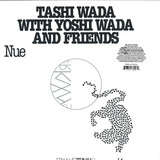
Composer Tashi Wada has performed for years with his father Yoshi Wada—artist, composer, and early member of the Fluxus movement. However, they have rarely appeared together in studio settings. Nue, the fourteenth entry in RVNG Intl.'s intergenerational FRKWYS series, finally brings Tashi and Yoshi, along with an eclectic group of close friends and extended family, together on tape.
Nue draws on aspects of Tashi's background for his widest vision to date—among them the minimalist bagpipe music of Yoshi, who co-composed three of the tracks, the psychoacoustic and perceptual explorations of his mentor, composer James Tenney, and reimagined forms of ancient and devotional music. The album, however, is not a tribute to the past or a recapitulation of familiar sounds. Instead, Nue is an intertwining of people and ideas as a means of growing, of looking inward to move outward, and of looking back to move forward.
To achieve this growth, Tashi assembled a core group of fellow travelers, including Yoshi, composer Julia Holter, producer Cole MGN, and percussionist Corey Fogel, to give life to this multifaceted suite. As an experience, Nue subtly navigates the interactions, intimacy and spaciousness of this group.
The album's title itself is a nod to Tashi's abiding interest in duality and the unknown: nue is a mythological Japanese chimera with the face of a monkey, the legs of a tiger, and a snake for a tail, a composite form, at once disturbing and otherworldly. But, as the composer points out, nue is also French for naked—stripped of complexity, bare and exposed, but also raw and essential.
From the doubling of tones—and the world of harmonic nuances such an action produces—to the rich interplay between individual musicians, all baring their own personalities and experiences through shared performance, Tashi's compositions allow space for these elements to join and grow. The multipartite creature that is an ensemble melds in the simplicity and purity of the music itself.
As explained by Tashi, each part was written with an individual in mind, not simply an instrument. And each individual performer makes their mark, from Holter's vocal performances on the cresting, oceanic 'Mutable Signs' and 'Ondine' with guest vocalists Simone Forti, Jessika Kenney and Laura Steenberge, to Fogel's resonant, precise percussion on 'Bottom of the Sky.' Producer Cole MGN, who has worked extensively with artists like Beck and Ariel Pink, helped to create a world of sound with minimal yet multi-dimensional materials. Like many of its influences, Nue uses deceivingly simple means to create complex, coherent worlds and narratives.
Tashi notes the influence of legendary Brazilian writer Clarice Lispector, whose work looked inward, investigating memory and emotion and dream, to understand the often overwhelming world outside the self. Like Lispector's classic novel Near to the Wild Heart, Nue cleaves these archetypal dualities—world/self, old/new, complex/simple—to create a work that allows them to coalesce into something singular.
As Tashi states in his liner notes: 'My desire was to create something both old and new sounding—ancient and futuristic—and ultimately something of its own world and other. Nue is a vision, an endless night of dreams, and a personal history of sorts, full of joys and demons.'
07042016 (live at St.Paul's Anglican Church, Athens) is the debut album of Modal Analysis, brought by the Greek experimental band of MMMD (also known as Mohammad). Nikos Veliotis and Ilios are currently performing as the MMMD duo, with further focus on deep monolithic sounds, low frequencies, inter-modulations, dark textures, and distant folk nuances through custom made instruments (Cello & Electronic Bass) and software.
The release carries parts of the MMMD live performance at St.Paul's Anglican Church in Athens, recorded on the 7th of April 2016. The concert was hosted by Fasma Festival, on the opening day of its 2016 edition.
Building on the already incredible collection of music so far released on Francis Harris' Kingdoms imprint, Emil Abramyan returns with the stunning 'Movement' album. Abramyan is a Brooklyn based composer, musician, and producer, whose work traverses various styles and disciplines. In this release Emil shares his unique perspective by bringing together his conservatory training as a cellist and his love of electronic music and sound design. Having played the cello on every Francis Harris album, Abramyan now expands his repertoire by playing every instrument, including cello, piano, and electronics. Beginning with 'Flightplan', the album lifts off in sublime fashion. Brooding cellos combine with pianos before subtle rhythms unfold and introduce themselves. 'Winter's' skittering rhythm is combined with pizzicato melodies, clicks and modular synth flurries. Showcasing his versatility, 'Foolky' is a more dance floor oriented cut - a highly percussive groove unfolds and carries along a variety of instrumentation. 4_24 also makes use of shuffling, percussive grooves layered with drone sounds, and more of Abramyan's signature cello.'Fever' sees the brooklynite heading in a more obviously ambient direction, building atmosphere with a mixture of close mic'd experimentation, and beautiful choral fragments.Rounding off this release, label boss Francis Harris reworks 'Flightplan', finding new nuances in the sublime atmosphere, and slowly building up to a subtle, understated groove that takes the track to a different place entirely.
Brooklyn trio Forma's latest LP continues their mission to 'broaden the idea of what an electronic music ensemble can sound like.' Semblance emerged from exploratory sessions at The Schoolhouse, the Bushwick loft where members Mark Dwinell and John Also Bennett live, then was tracked at Gary's Electric studios, where their previous album Physicalist was also recorded.
Inspired by polyrhythmic composition, the human voice, and conceptual improvisation strategies, the songs are striking in their textural detail and emotional nuance, alternately synthetic and sentient, futuristic and intuitive. Incorporating flute, piano, guitar, saxophone, acoustic drums and cymbals alongside an array of synthesizers, the record persuasively demonstrates the group's unique playing abilities and fluid chemistry - attributes they credit to 'techniques we've developed to trick our electronic machines into mimicking the spontaneous character of live instruments.'
Members George and John Also Bennett also cite as an influence their recent stint in minimalist composer Jon Gibson's ensemble, performing his 1973 proto-ambient masterwork Visitations. The long- form modal piece requires restraint and deep listening to execute, qualities especially apparent in the more muted moments of Semblance, such as 'Rebreather' and 'New City.'
The group states the intent of the new album as 'to be more direct and exacting', which it is. Over half a decade spent writing and recording together has distilled Forma's hybrid electro-acoustic interplay into an attuned and astounding language, capable of articulating impossible symmetries and reflective states.
The stunning visuals of the artwork are by frequent collaborator of the group Peter Burr.
Deadbeat graced ZamZam with a release in our very first year of operation. Lending his name & gravitas to our young effort with ZamZam06 meant a lot to us at the time, and is something we never forgot, so we couldn't be happier to have him back for a second outing. Canadian by birth, now residing in Berlin, Scott Monteith is known the world over as one of the most adventurous and reliable producers in the areas of techno and dub-inflected electronic music. Extremely tight quality control over multiple full length albums and countless singles on seminal labels including ~scape, Echochord, and his own flawless BLKRTZ have made him a household name in dub techno and beyond.
Deadbeat's second ZamZam sets aside obvious techno constraints for a mid-tempo reggae scorcher that sounds like it was beamed straight from the humid & heady glory days of the Black Ark studio. Anchored by a tar-thick bassline recalling Lee Perry's 'Dub Organizer,' 'Wail Ball and Cry' leans hard into its rockstone drum kit, with whip-sharp turnarounds, clattering Binghi drums, melodica stabs and restrained yet ever-present flange and reverb keeping the atmosphere swampy and sparkling. A sweet falsetto intones on the loneliness and alienation we all navigate in these times of political debasement and (social) media spectacle.
'Dub Ball and Flange' mutes the vocal for a traditional version focused on nuance rather than over-the-top effects; high hats take the spotlight through expert filter & phaser work, as the heat inches up in the room with a stew of bubbling reverb & delicate echo trails adding to the already simmering & shimmering vibe.
"Oozing.. oozing soul, oozing feel, oozing the essence of rhythm and the body. This is what Elbee Bad is about. A native New Yorker who has long since transplanted himself in Berlin, Elbee Bad AKA The Prince of Dance is back on Thema Recordings with a masterclass mini album that will resonate for years to come. "Crossing Dimensions" is more than just a record, it is a philosophy on turntablism and what it means to be engaged in this culture. Sitting comfortably on the shelf next to artists like Mr. G, Moodymann, and DJ Sprinkles, Elbee recalls this genuine house feeling while adding a spice that could only be summoned out of his creative nuance. From the anthemic knowledge of "Request Monster" to the bass blistering sonnets of "Crossing Dimensions", Elbee showcases the sound of an artist who is deeply in touch with himself, the crowd, and the history of this music. No filler, no bullshit, just truth, love, and HOUSE.
Text by: Nathan Levenson"
It's been over 10 years since the release of Gui Boratto's breakthrough full length debut 'Chromophobia'. As to what its title suggests, he shook up the techno game with a contrast of lushly coloured minimal grooves and melody, whilst many will recall that the album included the highlight single Beautiful Life' which became a dance floor anthem for that era. Four albums in and countless EPs and remixes under his belt, the Brazilian producer's unique savoir-faire in carving out a functional album out of diversely routed singles and features is back at it on his fifth studio LP, 'Pentagram'. Here Gui Boratto lays down a nuanced 12-track narrative that reinvigorates his signature sound into a refreshingly different perspective that feels all too familiar - including the return of Beautiful Life' vocalist (and Gui Boratto's wife) Luciana Villanova on the single "Overload".
Through his signature kaleidoscopic approach, Boratto delivers an album built as a far-reaching hub-and-spoke system, broadly inclusive as can be. From the opening cut, 'The Walker' - hot on the trail of Tears For Fears 'Elemental' (one of Boratto's "favourite 80's bands") - to the hi-NRG euphoria of 'Forgotten' and its pounding tech alter ego 'Forgive Me'. "I was going into 2 different directions", Boratto says, "the typical indie- electronic-rock' Boratto kind of production like It's Majik' or Like You' and a much more techno approach." He goes on, "I decided to split them into two twin sister songs. When I play live I always put these two songs together."
The Brazilian Producer further embraces the pop-friendly essence of his past work on tracks like 'The Phoenix', featuring vocalist Nathan Berger, and 'Overload', both melding acidulous synthlines with laser-precise breaks, vox hooks and drops calibrated for extended radio and club use, although sieved through his distinctive rainbow-hued musical prism. For the symbolists out there, the album's pared-down closer '618' duration accidentally happens to equate the proportions of the said pentagram. "Coincidence" Boratto questions, and capsulises, "not so ufanista and supporter of Brazilian neo-concretism, but I guess the brazilian sculptor Lygia Clark also inspired me a lot. Not the meaning of her sculptures, but the shape of the hinge of most of her work. I've wanted to transmit the scientific pentagram's point of view. It's not a religious kind of thing."
Whereas 'Spur' (a field-tested 808 and 909-heavy "purist track", "very, very old school" Boratto insists) and 'Alcazar' are sheer smooth-edged four-to- the-floor epics, the album also shares its lot of startling moments, such as with the John Barry'esque 'Scene 2' (with a hint of Amon Tobin, 'Easy Muffin' style, throw in) and its refined string-laden buildup, 100% fitted for a 007 opening credit sequence, or with 'Hallucination' (feat B.T.) and the further James Holden-ish title-track 'Pentagram' (think 'The Idiots Are Winning'), "one of those exercises I did when I got my Buchla modular synth" Boratto analyses, "I think I've used more then 30 different snares, with different delays and reverbs. The whole song is alive". And so is 'Pentagram' in its entirety: alive and definitely just as manifold and hopeful as its architectonics are the stuff of science and dreams all at once.
Es ist zehn Jahre her seit der Veröffentlichung von Gui Borattos bahnbrechendem Debütalbum - Chromophobia . So wie der Titel vermuten ließ, war das Album mit seinen kontrastreichen Minimalgrooves und den üppig gefärbten Melodien ein Schocker im besten Sinne. Ihr erinnert euch sicher noch an die Hit-Single - Beautiful Life , eine Dancefloor-Hymne aus dieser Zeit. Nach vier Alben und unzähligen EPs und Remixen ist das einmalige Savoir-faire des brasilianischen Produzenten, aus vielfältigen Singles und Features stimmige Alben zu schaffen, auch auf seinem fünften Studioalbum - Pentagram zu hören. Hier legt Gui Boratto ein Zwölf-Track-Narrativ vor, das seine Handschrift auf erquickende Weise wiederbelebt. Wiederbelebt wird auch die Stimme von - Beautiful Life (die der Frau Gui Borattos gehört) auf dem Stück - Overload .
Durch seinen charakteristisch kaleidoskopischen Ansatz liefert Boratto ein Album, das gebaut ist wie die Speichen deines Fahrrads, von dem Opener - The Walker - direkt auf der Spur von Tears For Fears - Elemental (einer von Borattos - favourite 80's bands ) - zur Hi-NRG-Euphorie von - Forgotten und seinem stampfenden Counterpart - Forgive Me . - Ich bin in zwei unterschiedlichen Richtungen gegangen , sagt Boratto: - den typischen ,Indie-Electronic-Rock'-Weg wie in - It's Majik oder - Like You und den Techno-Weg. Er fügt hinzu: - Ich hab mich entschieden jedem Track seinen Zwillings-Track an die Seite zu stellen. Immer wenn ich live spiele lege ich die zwei Stücke zusammen.
Der brasilianische Produzent erschließt weiter die Pop-Essenz seiner vergangenen Arbeit auf Tracks wie - The Phoenix (feat. Nathan Berger) und - Overload . Beide kombinieren zwitschernde Synthi-Melodien mit lasergenauen Breaks, Hooklines, Drops und sind wie gemacht für die Rotation und den Club. Und für die Symbolisten da draußen: die Länge des reduzierten Closers - 618 beträgt zufälliger Weise genau die Proportionen des besagten Pentagramms. - Fügung , fragt Boratto und fasst zusammen: - Ich bin kein Anhänger des brasilianische Neo-Konkretismus , aber ich glaube die brasilianische Künstlerin Lygia Clark hat mich sehr inspiriert. Nicht die Bedeutung ihre Skulpturen aber die Form der meisten ihrer Arbeiten. Ich wollte den wissenschaftlichen Blickwinkel auf das Pentagramm übersetzen. Nicht im religiösen Sinne oder so."
Während - Spur (ein erprobter - purist track auf der Basis von 808 und 909, - sehr, sehr old school , wie Boratto betont) und - Alcazar glatte Vierviertel-Epen sind, hält das Album auch Überraschungsmomente bereit. Z.B. das John Barryschen - Scene 2 (auch eine Spur von Amon Tobins - Easy Muffin ist darin zu hören) und seinem Streicher-Aufbau, der hundertprozentig geeignet wär für eine Eröffnungssequenz in einem Bond-Film. Auch - Hallucination (feat. B.T.) oder der James-Holden-hafte Titeltrack - Pentagram (wir denken da an - The Idiots Are Winning ) wäre da zu nennen. - Einer dieser Übungen, die ich gemacht habe, als ich meinen Buchla-Modular-Synthesizer bekommen habe, war , erinnert sich Boratto, - mehr als 30 verschiedene Snares, Delays und Reverbs zu verwenden. Der ganze Song sollte am Leben sein. Und so ist - Pentagram im Ganzen: lebendig und sicher genau so vielfältig wie sein Bauplan, der auch der Wissenschaft und den Träumen zugrundeliegt.
out of Stock
Last delivered 3 years ago available to reorder, subject to availability
Combo Lulo is that rare possibility of true magic moments manifested. Embodying the classic sentiment of a New York supergroup with an ensemble of friends and like-minded musicians whose resume is too full of credits and accolades to grasp in one shot, the band is a testament to what can happen when locked together for a two-day session in a Brooklyn studio.
Drawing inspiration and direction from band leader, composer and multi-instrumentalist Mike Sarason, Combo Lulo moves side to side from effortless Jamaican foundation rhythms into the further reaches of Caribbean influence...incorporating a natural transition between Jamaican classics and the essence of Afro-Latin ritmo. It's a musical match made in heaven and, more importantly, it's carried out with the gentle and deft touch of veteran studio musicians with deep appreciation and nuanced understanding. Together with Names You Can Trust, it's a locked in groove that is a perfect slice of roots, collaboration & present day experimentation that is sure to have any listener feeling nice.
One of the most exciting artists to emerge in techno circles in recent times, Drumcode is excited to present the label's first EP from Boxia. Over the last 12 months the UK artist has impressed with his classy take on techno that mines two decades of rave.
Last year's 'Colour Sequence' EP on We Are The Brave marked one of 2017's standout releases, before being tapped by Maya Jane Coles to remix a track from her latest album 'Take Flight', while B.Traits also shone the spotlight on him for a Future 12 residency on BBC Radio 1 throughout September.
Boxia first came into contact with Adam Beyer when he opened the Car Park at Tobacco Dock for LWE's NYD event in 2016, and since then the pair have spoken regularly sharing similar tastes in music and DJing. He dropped his first cut on DC during the summer of '16, with 'Revolution' that featured on A-Sides Vol. 5, making him primed and ready for his first full length EP in 2018.
The four-track work lives up to his growing reputation for crafting beautiful, nuanced and ultimately very powerful electronic music. The EP opens with 'No World Order', a deep transcendental slice of techno propelled by a wicked acid line and vocal that leads to a galloping finish.
'Only Human' is drenched in atmosphere and old skool wonder, a brilliant composition of punchy multi-layered drum work, catchy synth lines and cutting acid that reveals its tender side with emotive broken beat interludes. 'Unreal' is a big peak time belter, raising the tempo to sweaty palms level, as a propulsion of acid and a memorable riff fill the techno sphere.
The title track 'Ethereal Education' closes out the work, a beautiful chord-driven vocal cut that evokes images of the classic dance that characterised Boxia's earlier years and makes a fitting outro to this outstanding EP.
out of Stock
Last delivered 4 months ago available to reorder, subject to availability
Following on from their 'Ususmood' EP in February, Finnish duo Shuffless return to Paris based record store and distribution company Synchrophone this May to deliver the enigmatic 'Puoliaskel'.
Taking inspiration from music, nature and the elements that surround them, Jukka Hänninen and Mika Hanka aka Shuffless have quickly garnered the attention of many within house and techno since making their production debut in 2016. Written at the Vislampi Studio, located in Ruutana City, Finland, using a combination of hardware gear from the likes of Roland, Korg and Arturia, here we see the duo reveal their latest work with four diverse and expansive cuts set for release this Spring as they return to Syncrophone's in-house imprint. Opening up the EP, Hänninen and Hanka fluently introduce 'Chi', a complex and evolving cut that effortlessly fuses deep, rich chords, and delicate, skipping hi-hats, before easing into the flowing groove of 'Lahti' with its jazz-tinged melodies and heady tones guiding the production into lighter territories.
On the flip, 'Nime Ñvailla' introduces a matrix of hazy textures amongst crunchy percussion licks and dubbed out atmospherics as the duo return to deeper, darker realms, before title cut 'Puollaskel' punctuates the package in classy fashion, laying down gritty analog percussion, resounding kicks and subtly programmed nuances to conclude an excellently worked EP.
Ryuji Takeuchi provides Instruments Of Discipline with an EP of noisy, hypnotic tracks, ranging from giddy, stomping, left-field techno to melancholic ambience; the EP's title 'One's Sentiment' provides a thoughtful angle to this at times cacophonous collection, for while they are bristling with noise there is something contemplative about the pieces, expressed in a way that suggests more than one thought trying to take life at the same moment, Ryuji finds space for conflicting voices both spatially and in terms of mood, the first three tracks, 'Ambivalence', 'Sadness' & 'Sorrow' crawl with competing elements, synth lines drool over and meld with throbbing kick patterns, anxiety & excitement are tightly wound in focus as tracks build and develop, leaving the listener to navigate these abstract planes, intoxicated; while the final track 'Regret' is a compelling piece of noisy, ambient minimalism that allows for an austere pause after the eruption of the initial works. It becomes evident that Ryuji's journey as a producer, through periods of hard-techno, deep-minimalism and the more abrasive ventures on HueHelix, has created a powerful and nuanced voice that is fully on display in 'One's Sentiment'.
Ryuji Takeuchi - Artist Bio
Ryuji Takeuchi (Local Sound Network / LSN, HueHelix) was born in Osaka, in the late 90s, he moved to the United States where he discovered Techno, House and Electro Music, influencing his desire to produce & DJ. His first wave of releases on LK Records, Arms, Mastertraxx, FK Records, SWR, Innervate, I.CNTRL, Impact Mechanics, Silent Steps, GSR & Brood Audio to name a few, were straight-up, hard techno,
In 2011, Ryuji started his own imprint, 'Local Sound Network / LSN', a platform for a new generation of both Japanese & global electronic music & later on, in collaboration with Tomohiko Sagae, Go Hiyama & Kazuya Kawakami, the label, 'HueHelix / HHX', developing further the voice of Japanese techno & experimental electronics, with a focus on distorted, industrial sounds.
In 2012, Ryuji launched the 'Local Sound Network Digital Solutions / LSNDS' series born from a desire to both discover and introduce a wider range of electronic music to the world.
Ryuji Takeuchi provides us with an EP of noisy, hypnotic tracks, ranging from giddy, stomping, left-field techno to melancholic ambience; the EP's title 'One's Sentiment' provides a thoughtful angle to this at times cacophonous collection, for while they are bristling with noise there is something contemplative about the pieces, expressed in a way that suggests more than one thought trying to take life at the same moment, Ryuji seems to find space for conflicting voices both spatially and in terms of mood, the first three tracks, 'Ambivalence', 'Sadness' & 'Sorrow' seem to crawl with competing elements, synth lines drool over and meld with throbbing kick patterns, anxiety & excitement are tightly wound in focus as tracks build and develop, leaving the listener to navigate these abstract planes, intoxicated; while the final track 'Regret' is a compelling piece of noisy, ambient minimalism that allows for a pause after the . It is testament to Ryuji's journey as a producer through periods of hard-techno, electronic minimalism