Change Everything is an apposite title for this album, the first since Waking
Hours, their breakthrough record which had appeared in 1989. Starting off as a
janglesome Scottish indie group, Del Amitri had developed into a west- coast
influenced leftfield pop act, and now with the wind of success in their hair (after
the protracted build of Waking Hours), the group – Justin Currie, Iain Harvie,
David Cummings, Andy Alston and Brian McDermott – paired up with producer Gil
Norton and crafted a handsome rock album to capitalise on their success.
It's a varied, expansive selection. Ballads are represented by the delightful First
Rule Of Love and Be My Downfall, but it is the uptempo numbers that shine,
typified by Change Everything's lead single, Always The Last To Know, a No 11 hit
in the UK and a No 30 stateside. All 12 tracks emphasise just how important Del
Amitri were to 'the other 90s': straightforward, intelligent music, away from the
headline fads
quête:number
Following their contribution to the 2022 International Women’s Day compilation, and a co-production credit on “Dreaming is Essential” by Byron Yeates, Eoin DJ drops their first release on Radiant Records, Total Body. The 4-track EP is replete with mind-bending, lustrous tracks waiting to be spun out to sweatbox dancefloors.
“Total Body” invites movement from its first seconds. Layers and layers of snares, shakers and rhythmic synth stabs build tension before the pulse of a rolling bassline cements the elements into a cohesive hard house groove. Fragments and chops of sensx’s vocals wrap in and around the sonic field, leaving wisps of reverb and echo in their wake before repeating the track’s Total Body mantra in the breakdown. The result is a lushly-scored density of sound, with a relentless stomp that never feels overcrowded or too heavy.
Angel D’lite’s remix takes a more skeletal approach to “Total Body”: a snare and clap march beneath chiming vocal stabs, rumbling low end and rolling breakbeats, flipping the original into a modern bass-heavy hybrid number. The rhythmic synth from the original, reversed and efex’d, ushers us in, and then out of the track, around extra bass stabs and pitch shifted “Total Body” chops.
On the B side, “Ultra Soft” lifts off with a firm kick and a rolling 3-note bassline. Despite the title, the track hits harder than “Total Body” and sings with Eoin DJ signatures: swirling funnels of processed vocals, rich, ear-itching textures, stripped back percussion and rave-ready samples are sprinkled with 303s, to create a track that sits comfortably with both classic trance and techno and contemporary “Progressive” dance music.
The EP’s closer, a remix of “Ultra Soft” by Byron Yeates, compresses the astrally-inclined scale of the original track into shining slices of sound. A playful, chiming melody starts off the track alongside the kick, working through precise grooves, knife-sharp snares, a throbbing bass and chopped-up, smokey vocals. The result: 6 minutes of total embodiment from the Radiant Records boss.
Number 4 in the Bad Timin' series is here, featuring a quartet of shovel-ready tunes perfect for ur club set, radio show or gym session. Let the gains begin... Six months in the making, the "Sound Man" (aka Jex Opolis) spent the extended winter slumped in his studio crafting these tunes... "Pneumatic" builds pressure with crunchy synth riffs, while "Molecools" drops slide guitar over some proggy breaks. Filling out the EP are two mixes of "Catalytic," a tune that came to life after the muffler on Jexy's 2003 Toyota went kaput.
- A1: Big L– Put It On
- A2: Danger Mouse And Jemini*– What You Sittin' On? (Dm's 26" Remix)
- A3: Danger Mouse And Murs– To A Black Boy
- B1: Super Furry Animals– Lazer Beam (Danger Mouse Remix)
- B2: John Robinson (3)– Jr Dm
- B3: Zero 7– Somersault
- C1: Nas– It Ain't Hard To Tell
- C2: Dinah Washington– Baby Did You Hear
- C3: Danger Mouse And Jemini*– Take Care Of Business
- D1: Pelican City– Chestnut Park
- D2: Tha Alkaholiks– Choas
- D3: Danger Mouse And Jemini*– Ghetto Pop Life
"Collector’s numbered very limited edition box set album ""L'autre"" Including the CD, the LP, the 4 picture 45 rpm 7 inch singles and the Instrumentals from the album
Driving weirdo techno, warm melodic acid and daring sound experiments - Killekill welcomes a new duo on board: SKEW & SATIRIST are Max Cooper and Gareth Williams who met in the Not- tingham, UK club scene in the early 00s, living together for a number of years, leading to an effec- tive collaboration.
Max learnt production from sitting and watching Gareth in the studio, Max helped show Gareth the way with his DJing. Both became successful in their solo projects, Max as a regular guest
on stages all over the world, Gareth starting a music technology business with partners such as Richie Hawtin, John Acquaviva or Daniel Miller.
Over the years the musical collaboration between the two friends has continued in the background and they've finally found the time to bring it to fruition and start this project for their darker, more extreme and twisted techno which has been lying dormant over the years.
Walter “JUNIE” Morrison was a former member of the OHIO PLAYERS and responsible for writing and arranging their early 1970s hit singles “Pain”, “Pleasure”, “Ecstasy” and most notably, the group’s first Billboard R&B Number One “Funky Worm”. In 1978 he joined George Clinton’s Funk Mob PARLIAMENT FUNKADELIC and, as their musical director, played a key role during the creation of the hit albums “One Nation Under A Groove”, “Motor Booty Affair”, “Gloryhallastoopid” and their R&B Number Ones, “One Nation Under A Groove” and "(Not Just) Knee Deep". In between acts he released three solo albums for Westbound Records that showcased his unique take on the funk. “The Funky Worm – Live at Dooley’s 1976” is a one of kind live recording from his mid-70s Westbound solo period that was only recently discovered.
Regrooved Records is proud to present the very first live album of funk icon JUNIE MORRISON.
Repress!
For those who know, Bambooman is one of the most sought-after, probing, and distinctive voices in UK electronic music right now.
The Yorkshire-born producer's catalogue builds into an aural mosaic, comprising everything from scrunched up hip-hop to techno deviance, all delivered with an impish sense of individuality.
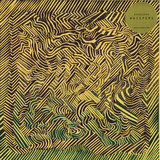
'Whispers' certainly resonates. It's a lengthy, bucolic work, an album of great breadth but also one of sustained mood – think those hazy summer evenings when shadows stretch out across the road, and autumn lingers around the corner.
This new album has a dusty, organic, and decidedly personal feel, much more at home with Jon Hassel's 'fourth world' aesthetic than the club.
The results are also imbued with an incredible sense of mystery, with Bambooman's productions frequently being shot through with a hallucinatory sense of the uncanny. Entirely self-composed, 'Whispers' utilises "lots of field recordings that I've collected over the last few years, while within the tracks you can find lots of the instruments, percussion, bells and whistles that have been gathered throughout my life."
In certain ways 'Whispers' is entirely autobiographical: Bambooman reaches back to his varied alter egos, to the ambient releases, art commissions, and soundtrack projects that litter his discography. The cover art was even pieced together by Oliver Pitt – of Glasgow group Golden Teacher – who was an early ally in the producer's sonic quest.
Stylistically 'Whispers' veers from avant hip-hop of Flying Lotus to the theoried composition of Terry Riley, from the future-forward percussive energy of Battles to the ever-evolving electronics of Mark Pritchard. It's a record marks by a fiercely independent spirit, but also by a close-knit cast of collaborators.
King Kashmere takes a starring turn, following the pair's collision on the recent 'SUPERGOD' EP.
Each vocal is recorded, chopped up and then spliced across the album, with Elsa Hewitt also making a number of appearances and re-appearances.
credits
The Drip EP brings together four distinctive producers and one set of sounds - The Drips. The result is a compilation of 4 tracks that bring the swing and sampling of some of Accidental Jnr's finest to produce a soaking wet dancefloor.
First up is label boss Matthew Herbert with a trademark groove that harks back to his Wishmountain moniker albeit found lurking in the swamp. Cosmo Sheldrake takes a slight departure from his usual multi-instrumentaling live-looping avant-folk to deliver a track that could only be described as travelling circus aqua-techno. Bahraini born, French / US bred and now Edinburgh dwelling video game builder, sound designer and sometime Scottish league football referee Yann Seznec opens the B-side with an absolute stormer of a rain drenched club hook. Sussex based producer Crewdson and builder of such electronic instruments as the Eggiophone and Concertronica closes proceedings with a drizzling evolving 2-step number.
The official new edition from this rare and great Afrobeat & Soukous masterpiece from Nigeria !
"Vibro Success Intercontinental Orchestra was an extraordinary group from the Central African Republic, founded by the sax player Rodolphe 'Beckers' Bekpa, also known as Master Békers, in the late 60's. The band achieved surprising domestic success after Beckers introduced the first drums to the Congolese Rumba rhythm. His innovation proved to be wildly popular so they were hired as the resident band of “ciel d’Afrique au Km5”, a night club in Bangui. The club was renowned as the temple of the Olympic Réal football team's fans and that visibility propelled them into becoming the official national orchestra.
1970 marked beginning of the band's international fame . Their fame spread beyond national borders until they became so popular that invitations began to arrive from nearby countries like Cameroon and Chad, the former of which the band would then tour that same year. The success of their performances prompted a further tour in 1972. According to Rodolphe Bépka, the audience enthusiasm Vibro encountered was bewildering. "We filled the old military stadium in Yaoundé in 1970, in 1972 the new Amadou Haïdjo stadium ... We are running with great success in the cities.” Their popularity was also growing in Chad, where they would tour several times through the early and mid 70's.
Towards the end of 1976, Vibro Success decided to take their music global and introduce Central African music to listeners worldwide. It worked. The turning point came in Nigeria. There the group achieved extraordinary success, with live performances followed by contracts with local labels like Scottie and Ben/Clover resulting in hit releases. Most of their LP's were originally released on this later label, Ben Limited, owned by Ben Okonkwo.
Ben, also known as Clover Sounds, brought a great number of the biggest bands from the country to market, bands like The Apostles, Akwassa,The Doves, Aktion, The Visitors, Mansion, Folk 77 and many others. Nearly all those groups started their recording careers in the label's studios based in the commercial heart of Aba, Abia State, one of Southeastern Nigeria’s largest cities. Aba at that time was a flourishing city, an important crossroads of people and culture with an intensive and active and cutting edge live music and nightlife.
But after that golden era the group began to lose its popularity. In the 1980's they returned to Bangui and resumed their old-time gigs in dance halls there - only to realize that their music didn't have the appeal it used to. Making matters worse, the domestic economic downturn accelerated, forcing the orchestra to slowly end its activities . Vibro Succès Intercontinental Orchestra disappeared at the end of the 80s and most of its members died in the 90s.
We discovered this LP during our first trip to Nigeria in 2016. While traveling in the east to meet up with a musician, we stopped for a night in a village. As often happens in Nigeria, information has a way of traveling fast. The news that a couple of white guys looking for records had arrived in the village the day before spread like light. When we awoke, we found a couple of elderly music lovers in the hall of our hotel with a little pile of records for sale. The nice cover of the “Drunkard” album was right on top!
At first we thought it was just another really good soukous album made by Vibro Success but after we heard “Drunkard” - we knew we had stumbled onto something very special. That was the “easy” part. Soon after, we had the idea of reissuing this LP and that was a bit harder. There were no credits on the cover and not much information about Vibro Succès. We started to ask to our friends to ask around, see if somebody knew them or the producer. That's when sadly we discovered that Ben Okonkwo had passed. So with no leads to follow and seemingly without any possibility of making progress on the matter, we "gave up" and returned to Italy.
A couple years later, in the summer of 2019, we found ourselves again in Aba. This time we had the chance to meet Nnamdi Okonkwo, the eldest son of the late Ben Okonkwo. After Nnamdi's mother and family agreed, he was glad to cooperate with us for the re-release of this special album."
Telephone Explosion proudly presents the self-titled debut LP from Toronto’s UH HUH, out physically and digitally on April 14, 2023. The album features eight tracks of dub-damaged art rock which conjure a potent vision of spaced-out 1980s post-punks feeding their angular rhythms and bass-heavy grooves through layer upon layer of grime-spattered spring reverb.
There is a palpable sense of discovery and exploration throughout UH HUH’s 37 heady minutes. Elastic basslines and serpentine guitar phrases throb and glide, cutting through dubwise reverberations like hands moving through an opaque cloud of reefer smoke.
Formerly known as Teenanger, the reconfigured (and reinvigorated) group’s newfound sense of sonic identity is put on display the moment the door kicks open. The percolating spaciousness of opener “Somewhere Beyond” is followed by the cyclical grooves of “Redemption Pause.” Vocalists Christopher Swimmings and Melissa Ball each take respective turns at lead vocal duties, showcasing their contrasting yet complimentary styles.
“Babylon”, a slab of overcast, loping funk features both singers on the same track, alternating between Swimmings’ stoned syncopation and Ball’s saccharine melancholy. This juxtaposition leans against a backdrop of reverb-soaked drums, watery guitar chords and rippling trumpet.
The slinking, fractured grooves of “Rain (In The Afternoon)” and “Citrus Song” call to mind the deranged minimal dub-wave of Naffi or Vivien Goldman. Both songs feature lyrical content heavily inspired by the Florida swamplands, although the aural landscape on these tracks is decidedly more brutalist than Boca Raton. Two of the songs included here are reworkings of previously released Teenanger numbers. “Blinds Drawn” is reduced to its core elements of bottom-heavy rhythm, spliced guitar shanks and Swimmings’ murmured ruminations. “Good, You”, on the other hand, is completely re-imagined as a blissed-out melt of opiated bossa nova.
After countless hours of experimentation during the album’s recording sessions at Toronto’s Studio Z, the band decided to send their drum machines, snare drums and percussion through an obscure 1960’s Japanese Guyatone guitar amp with a notoriously ecstatic spring reverb sound. The result was immediately inspiring.
The dank, busted and clanking tones produced by the Guyatone evoke a muggy, humid atmosphere that mimics the photo on UH HUH’s cover. The process of re-amping is literally the means through which UH HUH found the sound of this record. UH HUH is a record that asks more questions than it does provide answers. This is searching music that requires that the listener lean into it, the more time you spend in between the beats, bars, notes contained within, the more vivid the picture becomes.
- A1: Shoulder Move
- A2: Red Eye
- A3: Hard To Get
- A4: Dance With Me
- A5: New Dress Style
- B1: Nuff Boy A Imitate
- B2: Lyrics For Sale
- B3: When Yuh Poor
- B4: She Nuh Ready
This is a superior Jah Thomas record with all the great midnight rock Rub A Rub riddims. A big album that represents Jah Thomas, packed full of early dancehall numbers that let you fully enjoy the wonderful atmosphere of the time, including the big hit title track!!
Hot Apple Band’s long-awaited debut album, So Long, Noodle House is a collection of 11 tracks recorded between 2019-2022, mostly at Jack Kinder’s home studio in Strathfield, Sydney. Once the pandemic hit, Jack and Lewis Mosley had ample time to give birth to the songs, allowing for this body of work so it could become all that it deserved to be. The resulting album will no doubt please long-time fans, with a number of songs being staples from the band’s live repertoire. So Long, Noodle House is symbolic sign-off on the band’s past and an exciting peek into what’s to come. The record covers broad ground, from 70s imbued alt-country and catchy Beatles-era pop, through to emotive folk and soft rock. Coming-of-age themes run deep in the album, as Jack Kinder's lyrics touch on life changes, friendship, shitty jobs and of course, love. With Kinder's smooth vocals, clever arrangements and gorgeous vintage production, and Lewis Mosley’s unforgettable lead guitar, slide and keyboard performance, Hot Apple Band’s debut has the same charm of some of the best records from the early 1970s, radiating George Harrison, Crosby, Stills, Nash & Young, Harry Nilsson and Fanny in a similar style to modern counterparts such as Drugdealer, Weyes Blood, Daniel Romano and The Lemon Twigs.
There can be no doubt about it, when it comes to making speakers move, Leo Cap is something of a scientist; lurking around the Deep, Dark & Dangerous realms. Following a number of EPs and track features on DDD, ‘Underground Business’ is his debut full-length album. 11 slices of audio genius, the kind of tracks that make you question your very sanity when they drop.
Leo Cap’s style is well represented across this release, and as an album is the perfect showcase of his sound. One which is known for pushing the physical boundaries to which you can exert sound systems and speakers. Literally pushing insane amounts of air when these basslines drop.
The album tells the story of Leo Cap the artist, creating beautiful things only to destroy and break them. Not only is the music a parallel for his life, it is also a form of armour, pieces collected from here and there. A protection from a paranoid existence in the dark and murky underground.
This music is his kind of Undergound Business, “it’s really deep, it’s really dark and it’s really fucking dangerous man”. All the demons, all the darkness, and also all the fun. But there are no mistakes, this is how things are meant to be, life is is both dark and light, with music as it’s abstraction.
You can turn on the music and feel these things, this is real, this is Underground Business
Originally released as a hand-numbered CD on New Year's Eve of 2004, Last Light captures Tor Lundvall 's hushed songcraft at its most ghostly and grayscale, stripped bare like branches bracing for winter. Initially conceived of as "a piano album with sparse electronics" (with the working title November), Lundvall's palette steadily expanded, incorporating synthesizer, samples, bass, metronomes, and his signature spectral vocals. A journal entry from the spring of 2002 proved formative to his evolving vision: "I remember watching the blueish-grey light shimmering outside and hearing distant sounds echoing far away, eventually sinking into silence and stillness." The album's 12 tracks are steeped in this sense of autumnal transience, of bearing witness to what fades. The music moves in whispered swells, between dirge, drift, and devotional. Synths chime like slow-tolling bells; percussion shuffles and shivers, icy and isolated; bass traces a low-lidded plod - it's a mode both austere and seductive, lulling the listener into its landscapes of deepening dusk. Lyrically, Lundvall's language skews observational and depressive ("through lace curtains / grey light falls / dark clouds gather / in my soul" ), with each song like a gauzy glimpse into a different tableau framing winter's descent: rust - colored leaves, frozen ponds, cold crescent moons. Lundvall has long considered Last Light a "personal favorite" in his discography, and it's easy to hear why. In texture, finesse, and pacing, it vividly evokes the rare mood of fragile, frosty pastoral noir depicted in his iconic oil paintings. His is an art of the half-seen and half-remembered, of fleeting figures, shapes and shadows, and gathering darkness. Of all that disappears, and the ghosts that never leave: "So I wait / as the years / slowly drain the magic and the light / and the girl / I never loved / haunts me through the dark roads of my life."
repress !
Eighteen years ago, Oppenheimer Analysis made its indelible mark with the iconic track ‘The Devil’s Dancers,’ heralding the birth of the Minimal Wave label. Founded with a singular mission, the label set out to share this musical gem with the world. The inaugural release was the self-titled Oppenheimer Analysis EP, meticulously pressed onto high-quality 180-gram black vinyl, accompanied by a striking 18” x 24” poster adorned with captivating photos and lyrics. This historic release graced the world on December 6th, 2005. Remarkably, this EP has been elusive for a decade now.
In an exciting development, the fifth edition of the Oppenheimer Analysis self-titled EP is set to debut in December 2023, featuring the original remastered version of ‘The Devil’s Dancers.’ This EP is presented as a loving tribute to Martin Lloyd (1950-2013 R.I.P.), one half of Oppenheimer Analysis. The EP showcases select tracks from the 1982 Oppenheimer Analysis cassette titled “New Mexico,” along with two previously unreleased gems. The story behind Oppenheimer Analysis began when Andy Oppenheimer, a nuclear weapons consultant, and Martin Lloyd, also known for his work with the Survival Label and the project “Analysis,” crossed paths at a Science Fiction Convention in London in 1979. They shared the stage with notable bands like Hawkwind and Spizz Energi and garnered attention in the pages of Melody Maker.
This fifth edition release consists of 999 meticulously hand-numbered 180-gram black vinyl copies, each accompanied by the first edition poster insert. Notably, the spot color on the sleeve distinguishes each edition: green for the first, deep blue-green for the second, light powder blue for the third, mint green for the fourth, and a brighter aqua mint for this current fifth edition.
- A1: Part I ( Work Song')
- A2: Part Ii ( Come Sunday')
- A3: Part Iii (Aka Light')
- B1: Part Iv ( Come Sunday') Featuring Mahalia Jackson
- B2: Part V ( Come Sunday Interlude') Featuring Ray Nance
- B3: Part Vi (23Rd Psalm) Featuring Mahalia Jackson
- B4: Part Iv ( Come Sunday') Featuring Mahalia Jackson (Alt Tk)
- B5: Part V ( Come Sunday Interlude') Featuring Ray Nance (Alt Tk)
- B6: Part Vi (23Rd Psalm) Featuring Mahalia Jackson (Alt Tk)
The history of Black, Brown & Beige began on June 23, 1943, when Duke Ellington premiered this extended work at Carnegie Hall. It wasn't Ellington's first attempt to create an extended work, which was longer than a typical jazz song and more related to the classical forms than to popular music.
While the soundtrack he made for the short 1929 movie Black & Tan Fantasy included works from a number of previously recorded songs, it was presented in a kind of suite form, with the themes from these songs coming and going and presenting a dialogue with the images on screen. His 1931 Creole Rhapsody' was a composition that went beyond the usual three-and -a-half-minute duration of a standard 78 r.p.m disc, and thus had to be divided onto two sides. A few years later, in 1935, his Reminiscing in Tempo' would occupy four sides and had to be divided onto two discs.
However, those were never his best selling records, and the reception of his 1943 suite Black, Brown & Beige was cold at best. This is due to the fact that apart from being an ambitious extended composition, it was thematically related to racial issues regarding the history of Afro-American people. Most critics could not accept the idea of Ellington composing long musical works
and preferred to confine him to simple jazz songs (even though Ellington's songs were never simple).
Bring back my Bass Butches! They’re bossy & they mean business. Rag-tag rhythm riders Maara and Roza Terenzi come together for a freaky friday sound swap; trading auditory secrets only a mixologist would know to conjure up a 2 track tek-trailblazer. Not for the faint hearted deejay, the record flaunts their distinct signature sounds as they reincarnate the status quo of experimental club music one snare at a time.
Percussively penetrating the core ethics of composition, the A side flirts and squirts all over a rhythm so raucous, the bass battens down the hatches. Stir the pot, rock the boat, roll the dice and ride the bass, surrender to the unruly structure as the groove gets full custody.
The bareback B side breaks rules and regulations; leading you to high-tech temptation, fast and furious with an explosive temper that can’t be tamed.
Tickling the rim of electro and bass yet ditching the doctrine, Loose Lips Sink Ships is a take-no-prisoners secret source of dancefloor dopamine, the sleek modern rendition of a ritualistic beatdown destined to weave motifs together and breed atmosphere.
It takes 2 to techno, but these are the number 1 drum degenerates of the future wave party starters.
Van Halen did more than announce to the world the earthshaking arrival of a revolutionary guitarist. Performed by an enterprising California quartet that took its name from two of its principal members, the 1978 debut ripped headlines away from punk, injected fresh energy into a then-moribund rock 'n' roll scene, reimagined how heavy music and throwback pop could coexist, and invited everyone to experience the top-down pleasures of a beach-front Saturday night every day of the week no matter where they lived. Painstakingly restored by Mobile Fidelity Sound Lab, and the first of a multi-album series in an exciting partnership between the famous reissue label and Van Halen, Van Halen delivers feel-good thrills and hormonally charged desires like never before.
Limited to 12,000 numbered copies, pressed on dead-quiet MoFi SuperVinyl at RTI, and mastered from the original analogue master tapes, Mobile Fidelity's ultra-hi-fi UltraDisc One-Step 180g 45RPM 2LP collector's edition pays tribute to the record's merit and allows fans to experience Van Halen's original blend of raw power, Hollywood flair, and vaudeville fun for generations to come. Playing with reference-setting sonics that elevate a 10-times-platinum landmark whose importance cannot be quantitatively measured, this definitive version provides a clear, clean, transparent, balanced, and turn-the-volume-up-to-11 view of an album that birthed entirely new styles. Since MoFi's unique SuperVinyl compound allows you to crank the decibels to your wildest desires without risking noise-floor interference, prepare to not only hear but feel Van Halen in your chest, no fifth-row concert seat necessary.
The premium packaging and gorgeous presentation of the UD1S Van Halen pressing befit its extremely select status. Housed in a deluxe box, it features special foil-stamped jackets and faithful-to-the-original graphics that illuminate the splendor of the recording. No expense has been spared. Aurally and visually, this UD1S reissue exists as a curatorial artefact meant to be preserved, touched, and examined. It is made for discerning listeners that prize sound quality and production, and who desire to fully immerse themselves in the art – and everything involved with the album, from the iconic cover art to the meticulous finishes and, yes, of course, Eddie Van Halen's pioneering fretwork and his brother Alex's double-bass percussion.
Indeed, could a piece of music that transformed how countless guitarists approached their instrument be more fittingly named than "Eruption"? Likely not, and in just 102 seconds, Eddie Van Halen rewrote, reimagined, and reconfigured a vocabulary last significantly updated a decade earlier by fellow six-string wizard Jimi Hendrix. Akin to the Washington State legend, Eddie Van Halen developed his own techniques and tones all the while making his seismic accomplishments seem effortless. Devoid of the pretence, ego, and showiness that infected many of his imitators, the Dutch native sticks to a straightforward approach that underlines the authority, prowess, and visionary scope of his playing and then-unheard-of finger-tapping skills. Throughout Van Halen, he establishes himself as an instant idol – a savant whose otherworldly combination of breadth, poise, feel, speed, force, and melody seems beamed in from another galaxy.
As does nearly every song on the record, whose cohesiveness and dynamic put into perspective the advanced chemistry and one-for-all spirit the youthful band had out of the gates. Having paid its dues for years in bars and clubs – going as far as recording a 24-track demo for Kiss bassist Gene Simmons at Village Recorders only to be spurned by management companies that felt its music wouldn't go anywhere – Van Halen finally got a deserved break when Warner Bros. executives signed the group in 1977. The subsequent recording sessions further testify on behalf of the band's synergy and alignment. Completed in just a few weeks with producer Ted Templeman, Van Halen was primarily cut live in the studio with minimal overdubs and edits. The explosiveness, energy, and electricity remain definitive, and as heard on this UD1S set, put the group on a private stage – humming amplifiers, Frankenstrat guitar, bright spotlights, sweaty headbands, and then some.
Van Halen yielded just one hit in the form of a Top 40 single (a breathless cover of the Kinks' "You Really Got Me") but practically every song on the revered LP has become a staple. Named the 202nd Greatest Album of All Time by Rolling Stone and considered by countless experts as one of the best debuts in history, the record displays what can happen with four distinct talents gel and strive for the same purposes. In Van Halen's case, the latter almost always involved partying, freedom, sex, and, in the immortal words of singer David Lee Roth, living "life like there's no tomorrow." The celebration manifests from the opening notes of the strutting "Runnin' with the Devil" – announced with the blare of droning car horns, Michael Anthony's robust bass line, and Alex Van Halen's thumping drumming – and continues through the conclusion of the white-hot "On Fire," goosed by Eddie Van Halen's race-track-ready lines, Roth's flamboyant deliveries, and the rhythm section's cat-like pounce.
Picking out individual highlights on Van Halen is akin to trying to count all the stars in a clear nighttime desert sky: There are far too many to identify, once you see one you notice another dozen you didn't spot before, and the cluster is best enjoyed as a whole. What's evident over repeat listens is the sheer diversity, a fact that's often overlooked: The high harmonies and background funk of "Jamie's Cryin'"; the insistent cane-and-a-tophat shuffle and doo-wop shoo-bop vocal break on "I'm the One"; the throwback acoustic blues that spreads into fast-paced, single-entendre wildfire on the Roth-led standout interpretation of John Brim's "Ice Cream Man." Like the man says, on Van Halen, all the flavours are guaranteed to satisfy.
More About Mobile Fidelity UltraDisc One-Step and Why It Is Superior
Instead of utilizing the industry-standard three-step lacquer process, Mobile Fidelity Sound Lab's new UltraDisc One-Step (UD1S) uses only one step, bypassing two processes of generational loss. While three-step processing is designed for optimum yield and efficiency, UD1S is created for the ultimate in sound quality. Just as Mobile Fidelity pioneered the UHQR (Ultra High-Quality Record) with JVC in the 1980s, UD1S again represents another state-of-the-art advance in the record-manufacturing process. MFSL engineers begin with the original master recordings, painstakingly transfer them to DSD 256, and meticulously cut a set of lacquers. These lacquers are used to create a very fragile, pristine UD1S stamper called a "convert." Delicate "converts" are then formed into the actual record stampers, producing a final product that literally and figuratively brings you closer to the music. By skipping the additional steps of pulling another positive and an additional negative, as done in the three-step process used in standard pressings, UD1S produces a final LP with the lowest noise floor possible today. The removal of the additional two steps of generational loss in the plating process reveals tremendous amounts of extra musical detail and dynamics, which are otherwise lost due to the standard copying process. Every conceivable aspect of vinyl production is optimized to produce the most perfect record album available today.
MoFi SuperVinyl
Developed by NEOTECH and RTI, MoFi SuperVinyl is the most exacting-to-specification vinyl compound ever devised. Analogue lovers have never seen (or heard) anything like it. Extraordinarily expensive and extremely painstaking to produce, the special proprietary compound addresses two specific areas of improvement: noise floor reduction and enhanced groove definition. The vinyl composition features a new carbonless dye (hold the disc up to the light and see) and produces the world's quietest surfaces. This high-definition formula also allows for the creation of cleaner grooves that are indistinguishable from the original lacquer. MoFi SuperVinyl provides the closest approximation of what the label's engineers hear in the mastering lab.