Search:o grupo

Styles
All
Various - Tardigrados - Kunda 08

Various

Tardigrados - Kunda 08

12inchKUNDA08
Kunda
01.07.2024

Nueva referecia del sello kunda, elegancia, contundencia y diversidad sonora.


Para esta ocasion contamos en Cara A con una colavoracion de dos artistas de alto calibre Sexual Relates y Vikks.Nos traen "Tormento", un track potente y oscuro con la voz original del grupo guatemalteco Obsolescencia programada de su tema Repulsion.


A continuacion tenemos una nueva formacion BLACKOUTband , con un tema electro e.b.m ,rompe pistas bajo el titulo postapocliptico " No Hay Salida" .

En la cara B contamos con R1D productor Madrileño que nos trae un viaje astral que nos trasporta a edades antiguas de la tierra atraves de puro tekno tribe.


Por ultimo Hiry un viejo conocido en la esecena free party manchega. Nos trae un track epico lleno de sonido Hardcore a 140 bpms para pistas duras y nostalgicos de los viejos tiempos.

out of Stock

Order now and we will order the item for you at our supplier.

15,08

Last In: 22 months ago
INDUS - NEGRA LP

Indus

NEGRA LP

12inchZZKLP58
ZZK Records
21.06.2024

Four years after releasing their debut record, Indus are back in 2024 with Negra, their second album. This record explores the essence of the night through dance, seduction and mystery, while paying homage to Colombian amphibious cultures and the land as that place that has seen us moving and that we always return to. With these ten songs Barranquilla producer Oscar Alford, along with Andres Mercado and a select group of collaborators, builds a bridge between the sounds and histories of the Pacific and the Caribbean, bringing together territories like a river running through them and connecting them. Oscar says that on this record "there's this confluence of various cultural universes, on the one hand there's the traditional music of the coast and river areas, there are various maestros who collaborated on the record and they brought that, also there's electronica which is a universal language, and even hip hop and more urban genres like dembow." The record kicks off with "Deja," a ritual of initiation, a galactic, synthetic entrance into a place of plenty, a journey to the ethereal and the night. It's followed, like light and guide, by the song "Alfa Indi," with Gamero singer Nelda Piña, a release of electronic sounds evoking creation in all its senses. The night is an excuse for and a generator of desire, seduction and flirting in "Candela tu Trá," in collaboration with Tomás Llerena, grandson of the legendary Petrona Martínez. The earth is evident in tracks like "Canción del muerto," homage to the marimba maestro Gualajo, with his brother Pacho Torres and Bogotá rapper N. Hardem, a song that could be a farewell ritual and tribute to the land as the place to which we always return, one that holds the history of those who walked that land and left their mark on it. We hear this in "Corre Cimarrón" with Ka Oddun, portraying the journeys of fleeing enslaved ancestors as they tried to survive until they reached the palenque, a place of freedom. Negra explores the mysticism of the night and the cosmos within the Colombian musical tradition. A dialog between root rhythms, voices and synths with bases oscillating between techno-champeta, afro-tech and future-dembow. With this record Indus comes across as one of the most versatile acts on the Latin American scene, especially in the way they reinterpret ancestral music and resignify its sound.

pre-order now21.06.2024

expected to be published on 21.06.2024

22,27
VARIOUS - CUMBIA CUMBIA CUMBIA!!! VOL.2 LP 2x12"
 
28
also available

Vol.1[29,37 €]

Vol.3[30,46 €]


A selection of 28 Colombian cumbia bangers for the dance floor from the deep vaults of Codiscos and associated labels Costeño, Zeida and Famoso, all of them originally released between 1962 and 1983.

“Cumbia Cumbia Cumbia!!!” combines well-known classics and rarities that are difficult to find in their original formats. An invitation to enjoy and be amazed, above and beyond ethnographic and academic concerns.

The historical origins of cumbia in Colombia are nebulous and imprecise. The mythology surrounding it suggests an ancient past when Amerindian, African and European musical sounds were mixed together.

The main record companies in Colombia such as Discos Fuentes, Discos Tropical, Sonolux, Zeida-Codiscos, Silver, Ondina, Discos Atlantic, Vergara and Curro were created between Barranquilla, Medellín, Cartagena and Bogotá from 1936 to 1954. All of them, without exception, recorded Colombian tropical music that over the years was given different names such as porro, gaita, fandango, paseaito, merecumbé, mapalé, bullerengue or, of course, cumbia.

After digging deep into the overwhelming archive of Discos Fuentes in our previous volume, this second instalment in the series “Cumbia Cumbia Cumbia!!!” comprises 28 Colombian cumbia bangers for the dance floor from the deep vaults of Codiscos and associated labels Costeño, Zeida and Famoso, all of them originally released between 1962 and 1983. Legally established on July 1, 1950, Zeida (later Codiscos) was one of the companies that consolidated Medellín as the epicenter of the Colombian recording industry in the central decade of the last century.

“Cumbia Cumbia Cumbia!!!” combines well-known classics and rarities that are difficult to find in their original formats. An invitation to enjoy and be amazed, above and beyond ethnographic and academic concerns.

out of Stock

Order now and we will order the item for you at our supplier.

29,37

Last In: 20 months ago
Shakira - Las Mujeres Ya No Lloran 2x12" (Indie-Store-Vinyl Version)

Shakiras 12. Studioalbum "Las Mujeres Ya No Lloran" wird am 22. März veröffentlicht! "Las Mujeres Ya No Lloran" ist ihr erstes Album seit sieben Jahren und zeugt von der Macht der Musik, die es Shakira ermöglicht hat, ihre schwierigsten Erfahrungen in kostbare Momente zu verwandeln. "Dieses Album zu machen, war ein alchemistischer Prozess. Während ich jeden Song schrieb, baute ich mich selbst wieder auf. Als ich sie sang, verwandelten sich meine Tränen in Diamanten und meine Verletzlichkeit in Stärke". Das neue Album wird 16 Songs enthalten, darunter 8 bisher unveröffentlichte Titel, einen Remix und 7 Hits, darunter "Music Sessions Vol. 53" mit Bizarrap, "TQG" mit Karol G, "Te Felicito" mit Rauw Alejandro, "Copa Vacía" mit Manuel Turizo und viele andere. Die sieben bereits veröffentlichten Songs vereinen insgesamt beeindruckende 3,7 Milliarden Streams auf sich

pre-order now22.03.2024

expected to be published on 22.03.2024

35,50
Shakira - Las Mujeres Ya No Lloran 2x12"
  • A1: Shakira & Cardi B - Puntería 3:10
  • A2: Shakira & Bizarrap - La Fuerte 2:47
  • A3: Shakira - Tiempo Sin Verte 3:15
  • A4: Shakira & Rauw Alejandro - Cohete 2:52
  • B1: Shakira & Grupo Frontera - (Entre Paréntesis) 2:48
  • B2: Shakira - Cómo Dónde Y Cuándo 2:58
  • B3: Shakira - Nassau 2:36
  • B4: Shakira - Última 3:00
  • C1: Shakira & Rauw Alejandro - Te Felicito 2:52
  • C2: Shakira & Ozuna - Monotonía 2:41
  • C3: Bizarrap & Shakira - Shakira: Bzrp Music Sessions, Vol. 53 3:38
  • C4: Karol G & Shakira - Tqg 3:19
  • D1: Shakira - Acróstico 2:50
  • D2: Shakira & Manuel Turizo - Copa Vacía 2:49
  • D3: Shakira & Fuerza Regida - El Jefe 2:49
  • D4: Bizarrap & Shakira - Bzrp Music Sessions, Vol. 53 3:39
also available

Ruby Red Vinyl[35,50 €]


Shakiras 12. Studioalbum "Las Mujeres Ya No Lloran" wird am 22. März veröffentlicht! "Las Mujeres Ya No Lloran" ist ihr erstes Album seit sieben Jahren und zeugt von der Macht der Musik, die es Shakira ermöglicht hat, ihre schwierigsten Erfahrungen in kostbare Momente zu verwandeln. "Dieses Album zu machen, war ein alchemistischer Prozess. Während ich jeden Song schrieb, baute ich mich selbst wieder auf. Als ich sie sang, verwandelten sich meine Tränen in Diamanten und meine Verletzlichkeit in Stärke". Das neue Album wird 16 Songs enthalten, darunter 8 bisher unveröffentlichte Titel, einen Remix und 7 Hits, darunter "Music Sessions Vol. 53" mit Bizarrap, "TQG" mit Karol G, "Te Felicito" mit Rauw Alejandro, "Copa Vacía" mit Manuel Turizo und viele andere. Die sieben bereits veröffentlichten Songs vereinen insgesamt beeindruckende 3,7 Milliarden Streams auf sich

pre-order now22.03.2024

expected to be published on 22.03.2024

33,07
Various - Discomoda Salsa De Venezuela 1964-1977
 
21

Established in 1948 by César Roldán, Discomoda is one of the earliest record labels of Venezuela and the oldest family operated label in the country. Home to one of the most complete folkloric and popular music catalogues of Venezuela, the label also invested heavily in Afro-Caribbean and tropical rhythms that became popular in the 60s and 70s.

In the 1960s and before the Salsa era truly kicked off, Venezuela had a significant dance orchestra and big band movement. Unlike local record competitors dedicated to selling foreign productions, Discomoda achieved its leading position by recording the most important national bands, including Los Megatones de Lucho, Orquesta Sonoramica and Super Combo Los Tropicales; all featured in this compilation.

Later on, surrounding the festivities for the 400th anniversary of Caracas in 1967, the word "Salsa", which had been recently coined by famed radio host Phidias Danilo Escalona, was formalized to identify an Afro-Caribbean musical style with growing popularity in Venezuela and beyond. By then, the country was among the top 20 music markets in the world, with the local label Discomoda leading the way, responsible for one out of every five records sold in the country.

With the prolonged celebrations approaching due to the 400 years of the city, Discomoda and other labels began to capitalize on this new musical style by betting on both established and new local bands, such as Nelson y sus Estrellas, Los Kenya, Principe y su Sexteto and Los Satélites. As a result, this would kick off what could be considered a golden era of Salsa in Venezuela and which lasted until the mid-70s.

As we approach the 80s and with the emergence of new musical styles and bigger multi-national record labels funded by larger pockets, a lot of the previously popular bands begin to disband or choose to leave the country. Nonetheless, a few artists, like Rodrigo Mendoza, La Renovación and Grupo Yakambu, were still pushing out quality music.

We are thrilled and honored to celebrate one of Venezuela's and, equally, Latin America's most significant record labels, and to share a slice of their enduring influence in advancing Venezuelan-made Salsa music.

out of Stock

Order now and we will order the item for you at our supplier.

23,49

Last In: 23 months ago
JARBAS MARIZ - Transas Do Futuro

Jarbas Mariz

Transas Do Futuro

7"-VinylMRB7218
Mr Bongo
02.02.2024

1000 miles away from the beating musical hearts of Rio and São Paulo in the late ‘70s, the Brazilian city of Belém gave rise to a little-known record label called Erla - Estudio Rauland. Though not prolific in its output, the label made up for it in quality and experimental offerings, with several records on the label now becoming sought-after pieces among collectors. One such release is the sublime four-track psych, MPB, rock EP by singer-songwriter Jarbas Mariz.

They say never judge a book by its cover, though on this occasion you pretty much can. The wonderful tripped-out ‘70s artwork by Baby is a sure-fire indication of the music lying within. Though the EP was recorded in ‘77, it clearly gained inspiration from the psychedelic hippy idols of the previous decade and could easily have been a soundtrack to an acid trip scene in an obscure Brazilian movie.

Low-fi and quirky, there are moments of beauty and splendour but also hints of darkness; with a sublime balance of music and styles throughout. At points Jarbas will have you drifting through a folk flute daydream, the next moment a growling, psych-distorted guitar breaks and parts the calm. An ability to make those elements blend cohesively is where Jarbas’ true brilliance shines through.

Jarbas played, and still plays, with some of the key figures in Brazil's musical underground. Guilherme Coutinho (whose Guilherme Coutinho - E O Grupo Stalo album from ‘78 was also re-issued on Mr Bongo) features on electric piano for this release, with fans of his work being able to pick out his tones and playing style. Elsewhere, Jarbas also collaborated with the late great Lula Côrtes on the 'Bom Shankar Bolenath' album from 1988 and 'Rosa De Sange' from 1980. He was a member of the wonderful Cátia de França band and is a regular in the legendary Tom Zé group.

'Transas Do Futuro' is a special record and one we are honoured to be reissuing.

pre-order now02.02.2024

expected to be published on 02.02.2024

19,54
LOS PROBLEMAS - EL ULTIMO DE SU ESPECIE LP

Punk Rock Isn't Dead... It Lives in South America! Das schreiben sich Los Problemas selbst auf die Fahne! Die chilenische Punk-Rock- und Oi!-Band "Los Problemas" hat ihr mit Spannung erwartetes Debütalbum herausgebracht. Die LP mit dem Titel "El Ultimo de su Especie" markiert einen Meilenstein in der Karriere der Band und festigt, was sie über mehrere Jahre hinweg, von der Veröffentlichung von Singles bis hin zu ihrer ersten EP "Malos Vecinos" (2020), gezeigt haben. Es ist ein energiegeladenes Album geworden, das Einflüsse von Punk und Oi! mit deutlichen Anklängen an Bands wie The Crack, Cock Sparrer, Sex Pistols und andere verwandte Gruppen vermischt. Das Album ist sehr melodisch, macht Spaß und ist durchzogen von scharfen Gitarren, die manchmal an den Glam-Rock der 1970er Jahre erinnern, aber mit einer Essenz und Haltung, die eng mit dem Punk verbunden ist, besonders im Bereich des Oi! oder "Reality Punk". Das Album enthält 11 neue Originalsongs und eine kühne Interpretation von David Bowies ikonischem Song "Héroes", in dem die Band ihr erzählerisches Können und ihre einzigartige Herangehensweise an den vergangenen Ruhm unter Beweis stellt. 180 gr. schwarz/grün marmoriert, weltweit 500 handnumerierte Exemplare. SPA "El Ultimo de su Especie" es un álbum enérgico, que fusiona influencias del punk y el Oi!, con claras resonancias de bandas como The Crack, Cock Sparrer, Sex Pistols y otros grupos afines. Este disco es altamente melódico, fácil de escuchar y está impregnado de guitarras afiladas que en momentos nos recuerdan al glam rock de los años 70, pero con una esencia y actitud ligada al punk y especialmente a la rama del Oi! o "reality punk."

pre-order now26.01.2024

expected to be published on 26.01.2024

21,22
Pablo Schneider - Sobre La Hierba Virgen LP

Mega rare soundtrack to the obscure Venezuelan sexploitation film “Sobre la Hierba… Virgen” originally released in 1976 and almost impossible to find in any condition. The album includes a wide variety of music to enjoy, from thrilling psychedelic jazz-funk to spacey experimental tracks, killer drum-breaks or romantic instrumental tunes. Composer and keyboard player Schneider had an outstanding body of work for the TV/film industry and recorded with the likes of Baby Bell, Grupo Syma, Vytas Brenner as well as huge mainstream artists like José Luis Rodríguez and Pecos Kanvas. He was also producer to Phirpo Y Sus Caribes’s highly collectable only LP, a brilliant Afro-Latin funk masterpiece. His much sought-after 1975 solo album on Polydor anticipated the sounds comprised on “Sobre la Hierba… Virgen”, featuring a variety of exotic arrangements ranging from Latin mood to jazz funk to electronic psychedelic. “Sobre la Hierba… Virgen” is one of the best recordings of Pablo Schneider at the peak of his career.

pre-order now29.12.2023

expected to be published on 29.12.2023

24,79
Various - The Rough Guide to Capoeira

This Rough Guide features both the guardians of this musical tradition as well as some of today's key innovators who continue to push the boundaries of the genre. * An album which unlocks the mysterious and intriguing rhythms behind Capoeira * Following on from the success of other Brazilian-themed albums in the Rough Guide LP range * Capoeira combines dance and combat to the distinctive sound of the berimbau and other traditional instruments * Includes tracks by the legendary Grupo Muzenza & Capoeira Nago * A remarkable living-tradition originally developed by enslaved Africans inBrazil at the beginning of the 16th century * A seamless collection of tracks which provides a unique insight into today's vibrant scene * Featuring trailblazing artists who have taken the musical genre into a whole new electronic dimension * The music of Capoeira continues to serve as a major inspiration for Brazilian artists to this day * Music is the driving force behind capoeira which makes it so distinctive and captivating * Half-dance, half-combat, capoeira has become synonymous with the beaches of Brazil.

pre-order now30.11.2023

expected to be published on 30.11.2023

16,77
Turbo Q 3000 - Ke Suene Machin / Chikas De Kristal

Repress!

Debut single by 'TURBO Q 3000', a project by Turbo Sonidero (Grupo Jejeje / Kumbia Net) & Principe Q (Kumbia All Stars / Royal Highness)

Turbo Sonidero is a music producer and record collector from San Jose, CA who blends Cumbia Sonidera (sound system) with Rap. He is a co-founder of Grupo Jejeje and also the-founder of Kumbia Net/Kumbia Obscura, a collective that promotes new and up-and-coming cumbia producers from Mexico and beyond. Turbo Sonidero is a pioneer who continues to lead the reemergence of cumbia globally. He has been featured in Vogue MX, The New Yorker, Fader, Vice MX, Afropop Worldwide, KQED, and XLR8R, among others.

Music producer/DJ Svani Quintanilla (aka Principe Q) is noted as the creator of "Screwmbia", pioneered by his duo Royal Highness (with DJ King Louie). "Screwmbia" is his modern take on cumbia, blending trap drums with slowed down cumbia rhythms. Bringing cumbia in to the modern times is an homage to his aunt, Selena Quintanilla-Perez, who also did so in the 80's and 90's. He is the oldest son of Kumbia All Star founder A.B. Quintanilla III and has recently joined the band as a percussionist.

Limited to 500 7" copies
Exclusive artwork by Jaime Ruelas

out of Stock

Order now and we will order the item for you at our supplier.

13,03

Last In: 19 months ago
VARIOUS (¡NAINO! QUEENS) - Flamenco Groovy Beats On The Verge Of A Nervous Breakdown 1971-1979 LP

A Dream Team of folclóricas covering the wide spectrum of African-American influenced 1970s dance music spiced with flamenco. The hits of Isaac Hayes, Billy Preston or The Temptations in the charts showed the way to go. An almanac for 20th Century Rosalías headed by Lola Flores, Isabel Pantoja, Rocío Jurado and a bunch of female singers, copleras, cantaoras and rumberas. A black and white lysergic dream amidst post-Franco’s Spain. Stick your ears to the speakers. Here comes an emotional rollercoaster!


Antes de presentarte esta novedad, hay que entender que en la segunda mitad de los años setenta, algo estaba cambiando en la escena musical. Los grupos musicales estaban en su auge hasta que llegó la llamada al servicio militar obligatorio. Entonces, todo el mundo volvía de él sin sus largas melenas y sin dinero. Los baladistas sin personalidad tomaban el control de la música, según lo dictado por las discográficas. Es entonces cuando las copleras, cantaoras y rumberas se convierten en la respuesta necesaria para combatir la insípida melosidad. A pesar de un contexto sociocultural desfavorable, arreglistas y productores invertían horas de sueño para revivir un sonido que estaba al borde de la extinción. A pesar de los cambios que haya podido haber desde entonces, el más significativo es que ahora la inmediatez digital dicta el rumbo.


Es por toda esta importancia que finalmente ha llegado un álbum que reúne a un elenco de folclóricas en una combinación única, fusionando el concepto del groovy funk; con canciones que abarcan todo el espectro afroamericano de la música de baile de los setenta, con toques de gritos y susurros aflamencados que le dan un giro impresionante. Podríamos considerarlo el álbum destacado de las Rosalias del siglo XX, una especie de viaje lisérgico en blanco y negro a la España de la posfranquista. Con su hiperrealismo revolucionario, este disco nos ofrece a una una estirpe de artistas sin igual.

En este encontrarás las joyas ocultas de artistas como Flores, Pantoja, Jurado, Polaca, entre otras. Aunque se mantuvieron fieles a sus estilos, todas ellas fueron famosas por otras facetas de sus extensas discografías, y muchas incluso aparecieron en la portada de Interviú en más del cincuenta por ciento de los casos, como las feministas de los años setenta según Francisco Umbral.

pre-order now

This item has not yet been released. You can pre-order the product now.

26,01
Various - Glücklich VI 2x12"

Die mega-erfolgreiche Compost-Compilation Serie erfährt eine Fortsetzung. Nach 20 Jahren eine neue Glücklich! Rainer Trüby hat tief in brasilianisch, lateinamerikanisch angehauchter Musik gefischt und macht uns damit mehr als glücklich.

Zurück im ganz großen Stil – denn eine Pause von zwei Jahrzehnten bedeutet ja auch, dass man besser stark zurückkommt, wenn man denn zurückkommt. Aber wir reden hier ja auch von Rainer Trüby, und er hat einen ganzen Sack voller brasilianischer und brasilianisch angehauchter Leckerbissen mitgebracht! Einige dieser Leckerbissen waren auf obskuren, von Vinylsammlern ignorierten CDs vergraben, andere sind bisher noch auf keiner Compilation zu finden aber alle werden uns den Sommer über auf‘s angenehmste begleiten und „Glücklich“ machen. Nebenbei bemerkt: Das Auto ist ein VW SP2, der zwischen 1972 und 1976 von Volkswagen do Brasil hergestellt wurde.

out of Stock

Order now and we will order the item for you at our supplier.

27,69

Last In: 2 years ago
Various - Glücklich VI 2x12"

Various

Glücklich VI 2x12"

2x12inchCPT617-4LTD
Compost Records
14.07.2023

Clear Vinyl

Die mega-erfolgreiche Compost-Compilation Serie erfährt eine Fortsetzung. Nach 20 Jahren eine neue Glücklich! Rainer Trüby hat tief in brasilianisch, lateinamerikanisch angehauchter Musik gefischt und macht uns damit mehr als glücklich.

Zurück im ganz großen Stil – denn eine Pause von zwei Jahrzehnten bedeutet ja auch, dass man besser stark zurückkommt, wenn man denn zurückkommt. Aber wir reden hier ja auch von Rainer Trüby, und er hat einen ganzen Sack voller brasilianischer und brasilianisch angehauchter Leckerbissen mitgebracht! Einige dieser Leckerbissen waren auf obskuren, von Vinylsammlern ignorierten CDs vergraben, andere sind bisher noch auf keiner Compilation zu finden aber alle werden uns den Sommer über auf‘s angenehmste begleiten und „Glücklich“ machen. Nebenbei bemerkt: Das Auto ist ein VW SP2, der zwischen 1972 und 1976 von Volkswagen do Brasil hergestellt wurde.

out of Stock

Order now and we will order the item for you at our supplier.

28,15

Last In: 23 months ago
VARIOUS - SAOCO VOL. 1 (2x12")
out of Stock

Order now and we will order the item for you at our supplier.

37,40

Last In: 2 years ago
Una Luz Y El Zigui - Buenos Días Juventud

First time reissue of mega rare 1972 psych-folk album from Venezuela.
180g LP.
One of the most obscure records ever released in Venezuela that was originally distributed in tiny quantities as a promo-only album.

A magic blend of protest songwriting, with a strong environmentalist statement, and folky pop with psych ingredients —such as the use of sitar sounds— recorded by the collective of artists “Una Luz”, and “El Zigui” who was once described as the local Bob Dylan.

The late ‘60s was a short period of time, long enough to turn the world upside down.

Music, paying attention to the ancient Greeks who said that changes in society are also reflected in it, also undergoes violent transformations in its structure. The turbulent joy of rock and roll and twist gives way to the meditative sounds of the waves of the sea contained in surf to finally welcome music of soft and delicate harmonies with songs full of references in their lyrics to the state of society and their relationships with the environment.

On the other hand, in Venezuela, although the expansive wave of May 68 had not reached it, a certain degree of dissatisfaction began to be perceived, especially through the music of a singer-songwriter from the countryside of Venezuela known as Ali Primera, El Cantor del Pueblo. Thanks to a scholarship from the German government, he studied for a few years in that country, and it was there that he recorded his first album, with songs whose lyrics reflect the essence of authors such as Bob Dylan and Atahualpa Yupanqui. And Ali Primera becomes one of the greatest influences of our artist: El Zigui.

Guillermo Sánchez Corao —known as El Zigui for some strange reason— was born in the Venezuelan city of Maracay, capital of the State of Aragua, on January 13, 1948. From a very young age he began to study guitar playing and, already in his teens, we can find him as part of the duo El Zigui & Franklin together with Franklin Laudelino Mejías, another young man with a great musical pedigree.

It is during his bohemian phase as a troubadour, in the surroundings of the Ateneo de Caracas, when his music caught the attention of producer Mario Tepedino, the most important youth music producer at the time. Mario takes him to his TV show “2001 Juvenil”. With the incorporation of other musicians such as Rubén "Micho" Correa —who would later become a great arranger and record producer— he created the group El Zigui y Una Luz, which would later be joined by musicians such as Carlos "Nene" Quintero and Alfredo Padilla, members of the amazing Grupo Pan. Later on, another outstanding singer would also join Una Luz: Guillermo Carrasco.

With this formation they made it into a recording studio in 1972 where they managed to record, in just 30 hours, a long-playing album of which only 60 copies were pressed and has therefore gained cult status among collectors. As expected, the strong content of the lyrics was not supported by the media, making the promotion of the album impossible to accomplish. However, it was with the help of Mario Tepedino that they made it to television, with appearances on “2001 Juvenil” and “Antesala Lunar”, a show that was especially produced for the broadcast of the arrival of man on the Moon.

That was probably one of the main reasons for El Zigui to move to Canada and then France until 1978 when he returns to Venezuela. He would then join bands like Xabañón, Fogón and De Vuelta al Futuro, a 12-member super group. The former members of Una Luz had become well known musicians in the country, especially Guillermo Carrasco who was one of the greatest ballad artists in the ‘80s and targeted by the biggest record companies at the time. El Zigui died in a traffic accident on June 22, 1999. If he had lived through these crazy times... where would he have gone?

pre-order now31.05.2023

expected to be published on 31.05.2023

24,79
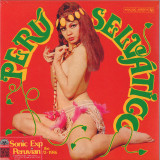
Various - Perú Selvático LP 2x12"
 
18

Less than a hundred miles inland from the capital city of Lima lies the great Peruvian jungle, an untamed land of impenetrable forests and endless winding rivers. In its isolated cities, cut off from the fashions of the capital, a unique style of music began to develop, inspired equally by the sounds of the surrounding forests, the roll of the mighty Amazon and Ucayali Rivers, and the rhythms of cumbia picked up from distant stations on transistor radios. With the arrival of electricity, a new generation of young musicians started plugging in their guitars and trading in their accordions for synthesizers: Amazonian cumbia was born.

Powered by fast-paced timbale rhythms, driven by spidery, treble-damaged guitar lines, and drenched in bright splashes of organ, Amazonian cumbia was like a hyperactive distant cousin of surf music crossed with an all-night dance party in the heart of the forest. While many of the genre’s greatest tracks were instrumental, and others were simple celebrations of life in the jungle, the goal of every song was to keep the party going.

Radio stations in Lima remained unaware of the new electric sounds emanating from the jungle, but a handful of pioneering
record producers ventured over the mountain passes to the cities of Tarapoto, Moyobamba, Pucallpa – even Iquitos, a city
reachable only by boat or plane – and lured dozens of bands to the recording studios of the capital to lay down their best
tracks. Although many became local hits, few were ever heard outside the Amazonian region … until now.
With eighteen tracks from some of the greatest names in Amazonian cumbia, Perú Selvatico is both the improbable soundtrack
to a beach party on a banks of the Amazon and a psychedelic safari into the sylvan mysteries of the Peruvian jungle.

out of Stock

Order now and we will order the item for you at our supplier.

29,37

Last In: 3 years ago
Matías Pizarro - Pelo de Rata LP

"Hey, there's this new guy around that plays like Herbie Hancock!!". When Chilean pianist Matías Pizarro arrived in Argentina fleeing Pinochet's dictatorship, word spread like wildfire in the local jazz scene.

In the two short years that Pizarro spent in Buenos Aires, he became one third of the Viejas Raíces project alongside local jazz heroes Jorge López Ruiz and Pocho Lapouble, recorded with famed Italian trumpeter Enrico Rava and released his own solo album, Pelo de Rata ("Rat's hair").

Pizarro was no beginner though. Whilst in Chile he had already participated in several music projects and worked as a producer and arranger for the IRT label, and was connected to influential bands such as Los Jaivas and Blops. He had also studied in the Berklee School of Music where he not only met and lived with the cream of an emerging new wave of musicians, but he also had the chance to attend live performances of giants such as Miles Davis or Thelonious Monk.

In the recording of Pelo de Rata Pizarro is joined by fellow Chilean Alejandro Rivera (Sacros, Grupo Sol) on quena and charango, Swedish bassist Bo Gathu on bass, Uruguayan saxophonist Finito Bingert and an impressive percussion team featuring Pocho Lapouble, "El Zurdo" Roizner and the mighty Domingo Cura. The album draws from the US jazz fusion currents of the time (think Chick Corea and Miles Davies), adding an undeniable Latin American character, all projected through Pizarro's own musical prism which displays his acute sense of harmony and a musical intimacy that reminds of those sincere, dreamy moments in Viejas Raíces.

The 8-page booklet that accompanies the vinyl edition will give you a deeper insight into the story of Matías Pizarro, with previously unseen pictures and liner notes by Argentinean journalist Humphrey Hinzillo (La Nación , Rolling Stone Argentina).

pre-order now18.11.2022

expected to be published on 18.11.2022

24,33
Various - CUMBIA BEAT VOL 3. (2x12")
out of Stock

Order now and we will order the item for you at our supplier.

39,45

Last In: 3 years ago
Milton Nascimento - Maria Maria

Repress incoming...

Far Out Recordings proudly presents Milton Nascimento's Maria Maria. Recorded in 1974 and unreleased until almost thirty years later, the album was written as the soundtrack to a ballet which dealt with the legacy of slavery in Brazil. Raw, atmospheric and emotionally charged, Maria Maria reveals one of Brazil's greatest ever songwriters at his creative peak. Featuring an all-star cast of fellow Brazilian legends including Nana Vasconcelos, Joao Donato, Paulinho Jobim, and members of Som Imaginario, Maria Maria holds what Milton considers to be the definitive versions of some of his classic songs, including 'Os Escravos De Jó' and 'Maria Maria'.

Originally released in 2003 as a double CD package, with Milton Nascimento's 1984 follow up ballet soundtrack Ultimo Trem, Maria Maria will be available on vinyl for the very first time from December 2019, with Ultimo Trem set for vinyl release early 2020.

Milton Nascimento possesses one of the most immediately recognizable voices in Brazilian music: high and sweet and as breathtakingly sublime as that of any soul singer. It was this voice that the legendary Brazilian singer Elis Regina fell in love with back in 1964, having heard Milton perform his song 'Canção do Sal (Sultry Song)' at a private party in Sao Paulo. Ellis went on to record the song in 1967 -giving Milton his first hit in Brazil and beginning a career that has spanned over 50 years.

Born in Rio on the 26th October 1942, Milton moved with his adoptive parents at the age of 18 months to Tres Pontas, a rural town in the state of Minas Gerais, 500 miles north of Rio. He began his musical career as a young teenager, singing in a crooner style he learnt from listening to Brazilian singers and US groups such as The Platters on the radio. Hungry for more opportunities to perform, Milton moved to Belo Horizonte, the capital of Minas Gerais, at the age of twenty. By the beginning of the 60s Milton had made a name for himself both as an accomplished singer and guitarist.

Milton became part of a local network of musicians, film makers, dancers, theatre directors and writers that included the journalist and song writer Fernando Brant as well as lyricist Marcio Borges and his younger brother Lo Borges. Together these four wrote and produced what would become Milton's milestone album, 'Clube da Esquina (Club on the Corner)'. The originality of 'Club da Esquina' shaped the local scene, and it reflects the essence of 'the Nascimento Sound'. Milton's religious upbringing as an Afro-Brazilian Catholic saw him exposed to church choral music from an early age. His love of this genre of music is apparent in both his celestial falsetto and vocal choral arrangements. This collection also displays his early fascination with evocative, non-verbal, scat-style singing, spare, harmonic guitar work and local folk music, jazz and rock.

In 1976, Milton and Fernando Brant teamed up with a new contemporary dance company called Grupo Corpo, whose Argentinian choreographer Oscar Araiz, would become a collaborator with the two musicians. Together, they conceived a show based on the composite life story of the daughter of a black slave called Maria. Nascimento wrote music to Brant's lyrics and "Maria Maria" was premiered in the main theatre of the Belo Horizonte Palacio das Artes that year. "Fernando wrote the lyrics for the ballet, but there were originally no lyrics for the theme song, "Maria Maria'". Milton and Fernando worked on the lyrics together, basing them on folk stories about black women of the countryside. Adds Milton "These memories are mostly things that we witnessed – Fernando and I – rather than what we experienced ourselves.

Milton's music is impressionistic, emotional and romantic. Relying on songs without lyrics as well as evocative vocalizing and choruses, Milton experimented heavily with Afro-Brazilian percussion and taped jungle sounds. His composing method for these recordings was highly unconventional: "I wrote the music for 'Maria Maria' in a tiny Rio apartment with friends and their kids running around and having fun! I love to be in noisy places, surrounded by people", he says.
The music on 'Maria Maria' was performed by an impressive group of young musicians who are today household names in Brazilian music, including Naná Vasconcelos (percussion and effects), Toninho Horta (guitars) and Paulo Moura (sax). Several vocalist including Naná Caymmi, Fafá de Belém, Beto Guedes, and Milton himself, had hits in years to come with reworkings of these songs.

Milton says his compositions follow his visions "like a movie", and he believes that reflects his long love affair with cinema. "I only began composing because of enjoying the movies so much," he says. "I wrote my first song "Peace for the Coming Love" after seeing 'Jules et Jim' (the cult 60s French film directed by François Truffaut), with my friend Marcio Borges. We went early in the morning and watched it four or five times in a row, then went to Márcio's home and wrote the song."

The songs also include solo spoken passages set to music, clearly influenced by this style of French art cinema. On the title track, Maria's story is narrated and translated to music through the use of African Percussion, drums and metal signifying the field slave tools of the day. 'Trabalhos (Works)' runs to work rhythms and whipcracks: no words, just pain. 'Lília' documents the beating of the slave woman. After 'A Chamada (The call)' and the triumphant 'Era Rei e Sou Escravo (I was a king now I am a slave' things begin to turn and Milton employs tropical jungle cries to symbolize freedom. 'Santos Catholicos x Candomble (Catholic Saints vs Candomble)' represents the battle between African and European religions through the music of both sides. Milton's heavenly falsetto pours into 'Francisco' and 'Pai Grande (Great Father)' and the outstanding 'Eu Sou Uma Preta Velha Aqui Sentada no Sol (I'm an old black lady, sitting under the sun)' conjures images of an old woman sitting deep in the forest, her memories painted in drums, piano and voices.

out of Stock

Order now and we will order the item for you at our supplier.

31,05

Last In: 6 years ago
Items per Page:
N/ABPM
Vinyl