Before he turned 20, Lô Borges released one of the most captivating albums to come out of Brazil's rich musical landscape - a record that somehow flew under the radar at the time but has since become a cult favorite for listeners around the world. Recorded in the same whirlwind year as the legendary "Clube da Esquina" - the groundbreaking collaboration with Milton Nascimento and Beto Guedes - this self-titled solo debut finds Lô Borges in full creative flight. Pressured by Odeon Records to deliver a solo project, Borges responded with a burst of youthful brilliance, sometimes writing a song in the morning and laying it down in the studio that very night. The result? An album that's spontaneous, heartfelt, and sonically stunning. From the shimmering guitars of 'Você Fica Melhor Assim' to the dreamy melodies of 'Cançao Postal' and the jazz-infused groove of 'Calibre,' the album blends Brazilian popular music with rock, soul, and subtle psychedelic touches. It's got the intimate spirit of a bedroom recording, but with the musical sophistication of legends - with collaborators like Toninho Horta, Tenorio Jr., Nelson Angelo, and of course, Beto Guedes helping bring Borges' vision to life. Fans of Caetano Veloso, Gilberto Gil, or early Nascimento will feel right at home here - but Lô Borges brings his own voice, at once tender and electrifying, to every track. The guitars are fuzzy, the harmonies rich, and the songwriting nothing short of magical. Though it didn't make a splash in 1972, "Lô Borges" has only grown in stature over the years. It's the kind of album you discover once, then return to again and again - a timeless treasure from a young artist who helped redefine Brazilian music from the ground up. If you're into warm, soulful songwriting with a touch of experimental edge, this record is waiting for you. Give it a listen - and see why "Lô Borges" is considered one of Brazil's most underrated masterpieces. Reissue on 180g vinyl.
Suche:o k jazz
PRESTO's followup beat tape showcasing 12 instrumentals, including some unreleased beats from 2009-2010. This album features a blend of jazz and soul inspired beats to vibe out to or use as DJ tool. Limited edition on light violet vinyl. Full pirc sleeve. Out on his TOP SECRET PRODUCTIONS label.
PRESTO (MUKATSUKU, GROOVIA, CONCRETE GROOVES, is back from the (beat) lab with this new 10 track instrumental album. This beat tape was mixed while living in NYC and is a tribute to 90s hip hop with a blend of jazz and soul. 2 tracks were previously released on a 7" from MUKATSUKU. For fans of “MUSHROOM JAZZâ€-styled downtempo. These are some serious head nodders, ‘nuff said. Pressed on limited edition blue vinyl. Full pic sleeve.
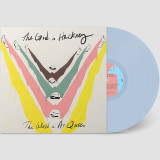
'The World in Air Quotes' is a genre-shifting style-melting kaleidoscope of art-rock, jazz, techno, folk & industrial. The God In Hackney sound like very little else from the early 2020's and whilst 'The World In Air Quotes' innovative progenitors are manifold - Eno, Coil, The Durutti Column, 1980s ECM jazz to name a few - it sounds beholden to none of them.
The God In Hackney's first album 'Cave Moderne' was Andrew Weatherall's album of the year for NTS Radio.
The God In Hackney's second LP, 'Small Country Eclipse', was album of 2020 for critic Sukhdev Sandhu of The Colloquium for Unpopular Culture: "Mordant music: stuttering, dread, black humour. A record that felt truly independent, beholden to no genre, out of step with all centres and signposted nodes."
'The World In Air Quotes' is The God In Hackney's 3rd album and their most musically emotive and lyrically inventive to date. It's an album that resonates with feelings about climate change, isolation, extinction, the social impact of technology, the flattening of history—and illuminates the darkness with imaginative rhythm, melody, noise & poetry. Songs range from widescreen, anthemic rock, to strange intricately arranged jazz-influenced songs, to abstract, textural electronic pieces. There's a strain of dark and surreal comedy too that runs through the lyrics and some of the choices the band makes in their sounds and arrangements.
The core God in Hackney quartet of Andy Cooke, Dan Fox, Ashley Marlowe and Nathaniel Mellors has expanded to include American multi-instrumentalists and composers Eve Essex (Eve Essex & The Fabulous Truth, Das Audit, Peter Gordon & Love of Life Orchestra, Peter Zummo, Liturgy) and Kelly Pratt (Father John Misty, David Byrne/St Vincent, Beirut, and Lonnie Holley among many others), signalling a new and ambitious direction for the band.
The album cover features original artwork by Iranian-American artist Tala Madani, recently the subject of a career survey exhibition at the Museum of Contemporary Art, Los Angeles.
Advertising:
The Wire, Maggot Brain
Reviews & features:
Maggot Brain - forthcoming feature
Hi-Fi+ Magazine - album review in April 2023 issue
Dereck Higgins (You Tube review)
Sonosphere - interview / feature
Weirdo Shrine - interview
It's Psychedelic Baby - interview
Spettacolo (Italy) - feature.
Ghettoblaster Magtazine (USA) - feature
Airplay:
Gilles Peterson - BBC Radio 6 Music
Steve Lamacq - BBC Radio 6 Music
Dublab - playlisted & featured in Dublab Recommends (Los Angeles)
Cian Ó Cíobháin - RTE Raidió na Gaeltachta (Ireland)
WFMU - playlisted
Resonance FM - The Wire presents Adventures In Sound & Music
Human Pleasure Radio (New Zealand)
Pete Wiggs & James Papademetie - The Seance (Repeater Radio, Sine FM & others)
Peter Hollo's Utility Fog - FBI Radio (Australia)
Jonathan Lethem & Sam Sousa on Radio Free Aftermath (KSP Claremont 88.7)
Life Elsewhere
WRPB Princeton
In Memory of John Peel
Mike Watt's Watt from Pedro Show
- A1: Arsen Dedić - Onaj Dan
- A2: Zdenka Vučković - Bosonoga
- A3: Bogdan Dimitrijević - O Barquinho
- A4: Nino Robić - Jedna Nota (Samba De Uma Nota Só)
- A5: Milan Bačić - Hō-Bá-Lá-Lá
- B1: Beti Jurković - Ljuljačka
- B2: Elda Viler - Senca Tvojega Nasmeha (The Shadow Of Your Smile)
- B3: Arsen Dedić - Često Te Sretnem
- B4: Bogdan Dimitrijević - Hershey Bar
- B5: Zdenka Vučković - Izgubljeno (Desafinado)
- C1: Drago Diklić - Moja Draga
- C2: Krunoslav Kićo Slabinac - Tko Si Ti
- C3: Plesni Orkestar Rtz - Plava Krizantema
- C4: Gabi Novak I Radojka Šverko - Za Mene Je Sreća (Samba Da Rosa)
- C5: Dubrovački Trubaduri - Ljuven Zov
- D1: Vikica Brešer - Sunčano Ljeto
- D2: Drago Diklić - Nitko Na Svijetu
- D3: Višnja Korbar - Subotnje Veče
- D4: Arsen Dedić - Večeras
- D5: Jimmy Stanić & Glenn Rich Orchestra - The Girl From Ipanema
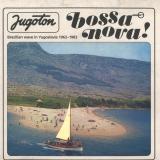
Rich musical history of Yugoslavia reveals a long-lasting love for the music of Latin America.
Entwined in Afro-Cuban rhythms, ballrooms were shakin', swayin' and swingin', gathering musicians who were heavily into jazz bands and orchestras, most notably in Ljubljana, Zagreb, and Belgrade. Jazz could be heard on the streets of Split way back in 1919 when dancing became a symbol of freedom. Radio was the most loved household item, newest sheet music was in demand and collecting records was hip like today. In the aftermath of Second World War, jazz went underground but little by little, things changed and Ella, Satchmo, Dizzy and Miles came to visit, among others. Music festivals shaped the music for entertainment and variety of popular styles showed influences from all over the world. In the early sixties, one particular rhythm crashed on the coast of the Adriatic Sea: the rhythm of bossa nova!
In the whirlwind of various musical styles, Latin American music still played important part of the scene in the early sixties Yugoslavia. Beguine, tango, rhumba, samba, calypso, mambo and cha-cha-cha all found their place on the festivals inspired by famous Sanremo, festival of Italian popular song that largely shaped the musical taste of Europe. It was the era of instrumental rock, R & B and rock'n'roll - sounds of "imperialist America" now played freely on imported and hand-made electric guitars. While dancing halls had been turning into concert venues, bossa nova has come! Eydie Gorme with Blame It on the Bossa Nova and Paul Anka with Eso Besso (That Kiss!) tried to make us learn some new dance moves but it was Joao Gilberto's gentle singing and his new way of playing samba songs, along with Tom Jobim's modern dissonant harmonies and poetry of Vinicius de Moraes that created the magic. When American alto saxophonist and flautist Bud Shank visited Zagreb and Ljubljana in 1963 (with Boško Petrović in his quintet) "it was the first time we heard bossa nova!" remembers Stjepan Braco Fučkar. Jugoton, the biggest record company in Yugoslavia, released 4-track EP Bossa Nova by Bogdan Dimitrijević and his ensemble that same year! While not being fully accepted or understood completely, the archives of Jugoton reveal to us various interpretations of this new trend from their vast catalogue.
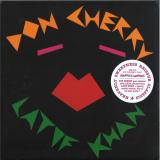
Don Cherry, armed with a voracious musical appetite and boundless imagination, first made a name for himself - though not always fully understood - alongside Ornette Coleman, playing trumpet or cornet. In Los Angeles and then New York, he stood at the heart of a revolutionary approach to improvisation based on melody rather than harmony, later baptized "Free Jazz," the final structural development of American jazz. Over time, he became a champion of improbable fusions - gradually integrating into his style a whole array of "exotic" instruments, and more importantly, the cultures from which they originated. Among them: India, Brazil, Africa, Indonesia, and even China. The time had come for the emergence of "world music": in hindsight, a patchwork rich in imagination and seduction, but once the novelty wore off, often lacking in substance.
In Don Cherry's case, however, the commitment ran deep - tied to his personal engagement with a global vision of art and the human condition. Ustad Ahmed Latif Khan, from the Delhi gharana (a musical lineage), was part of a new generation of accompanists - percussionists, sarangi players, flutists, etc. - who had extended both the technical and conceptual possibilities of their predecessors to gain recognition as soloists and soon to venture onto the international scene. Among them, Latif stood out for his taste for irregular, highly syncopated rhythmic patterns - rich in variety and originality. Don and Latif had never met before the recording session, but the two quickly recognised one another as kindred spirits - calm, focused... and full of laughter. Don clearly knew what he wanted to create, and nothing seemed to pose a challenge for Latif, who grasped the American's intentions immediately, warmed up his fingers at astonishing speed, and with his perfect pitch, naturally took on the role of tuning Don's diverse instrument collection to match whatever was found in the studio - from concert piano and Hammond B3 organ to chromatic orchestral timpani.
At a time when Hawaiians were reclaiming their language and most new music was written in Hawaiian, Teresa boldly revisited the largely forgotten hapa-haole style - Hawaiian-themed songs in English that once dominated American radio in the early 20th century.
From her earliest work in the 1980s, she treated the genre as serious art, not nostalgia, reviving classics like “My Little Grass Shack,” “Sadie, The South Seas Lady,” and her own modern hit “Uwehe, ‘Ami, and Slide,” which won Song of the Year at the 1988 Na Hoku Hanohano Awards. Her voice brought sophistication and sensuality to songs once considered dated, giving them new life.
With Tropic Rhapsody (2008), created alongside arranger Kit Ebersbach, she perfected that vision. Blending Hawaiian warmth with jazz and Latin rhythms, the album moved gracefully from the shimmering “Lei of Stars” to the lively “Pagan Love Song” and the tender closing of “Aloha ‘Oe.”
In an era dominated by Hawaiian-language releases, Teresa’s decision to make a primarily English-language album was both confident and heartfelt. Tropic Rhapsody remains a modern classic - elegant, adventurous, and unmistakably Hawaiian, just like Teresa herself.
Deep, fragile, rhythmic, dubby and funny - the album Tremor by Silva is a collaboration between Moa Franzen, artist and performer, and Magnus Dahl, artist and music producer. With clarinet as the leading instrument, backed by cello, synths and drum machines, they build a world at the intersection of different genres, influenced by dance music, jazz and ambient.
Known for their exhilarating live-to-record albums such as last year's critically acclaimed Wood Blues and Giant Beauty, سماع Sama'a (Audition) is the first of two releases that will surface after أحمدAhmed’s first studio recording sessions at North London’s The Fish Factory in early 2025.
Since 2014, Ahmed أحمد have excavated and re-imagined the music of Ahmed Abdul-Malik, in an ever ongoing search for future music. Over a decade on, the group were given the opportunity to set up in the studio for the first time and, with the aid of meticulous engineer Benedic Lamdin, سماع Sama'a (Audition) is the quartet's most detailed work to date.
Fastidious fans may recognise the album's tracklisting as that of Ahmed Abdul-Malik’s Jazz Sahara. After his success collaborating with the pianists Thelonious Monk and Randy Weston, Jazz Sahara was the first record Abdul-Malik made as a leader and was released in 1958. It used the flame of late Fifties jazz to light the wick of North African folk music and acted as a reminder of the Arabic origins of jazz, creating a distinct, unique sound that was far beyond its time. In Malik’s Jazz Sahara, there is no piano. The ongoing work of each member of [Ahmed] then is to think differently, to wonder how the music will work and to take a risk on trying it out - an extraordinarily compelling feat of imagination. Using group improvisation strategies and recording in single takes, سماع [Sama'a] (Audition) tackled the full suite of Jazz Sahara in just one session, with ‘Ya Annas [Oh, People’] and ‘Isma'a [Listen’] being previously unrecorded. 'Farah 'Alaiyna’, also released on 2019’s Super Majnoon, sounds unrecognisable - the slow, heady stomp and repeated phrasing of 2019’s embryonic [Ahmed] having been blast furnaced and sped up four-fold. The result is four kaleidoscopic, relative miniatures that move, unfold and re-imagine at a very different scale and proportion than [Ahmed]’s previous records. It’s a dizzying, euphoric music and an extraordinary record of a group moving through space-time like no other.
[b] Isma'a [Listen]
[c] El Haris [Anxious]
[d] Farah 'Alaiyna [Joy Upon Us]
[b] b1 Isma'a [Listen]
[c] c1 El Haris [Anxious]
[d] d1 Farah 'Alaiyna [Joy Upon Us]
[b] b1 | Isma'a [Listen]
[c] c1 | El Haris [Anxious]
[d] d1 | Farah 'Alaiyna [Joy Upon Us]
- A1: Sous Le Pont
- A2: Belleville Rendez-Vous - Version Française
- A3: Générique D'ouverture
- A4: Cabaret D'ouverture
- A5: Tour De France
- A6: Attila Marcel
- A7: Thème Bruno
- A8: Tout Doux Bruno - Easy, Bruno, Easy
- A9: Belleville Rendez-Vous - Demo
- B1: Thème De La French Mafia
- B2: Bach À La Jazz
- B3: Cabaret Aspirateur
- B4: La Jungle De Belleville
- B5: Barbier "Cieco, Cieco
- B6: Pa Pa Pa Palavas
- B7: Retour De La French Mafia
- B8: Filature
- B9: Poursuite
- B10: Belleville Rendez-Vous Version Anglaise
A true gem of French animated cinema, Sylvain Chomet's Les Triplettes de Belleville (2003) left a lasting impression with its quirky universe, tender humor, and unforgettable musical score.
Composed by Benoît Charest, this cult soundtrack blends retro swing, gypsy jazz, ramshackle brass bands, and cycling rhythms to create a unique atmosphere that is both nostalgic and fiercely modern.
This vinyl edition finally celebrates the soundscape of Belleville as it deserves to be celebrated: unusual percussion instruments made from bicycle parts, mischievous orchestrations, and the playful voice of the cult song “Belleville Rendez-vous,” performed by M - Matthieu Chedid in its French version.
Carefully remastered for analog format, the record captures all the warmth and vitality of this timeless music, a vibrant tribute to the creativity and audacity of the film.
A must-have for lovers of cinema, jazz, and beautiful vinyl editions.
- A1: Yamame
- A2: Memories Through Thick Glasses
- A3: Fly Casting
- A4: Like Someone In Love
- B1: Out Of Nowhere
- B2: Le Crepuscule Embaume
- B3: Like Sonny
'Yamame' (the Japanese name for a kind of freshwater salmon) was recorded in 1962 and was Miyazawa’s first album, but the sharpness and avant-garde modernity of the music creates a completely timeless quality. Miyazawa is one of a group of musicians who laid the foundation of the Japanese jazz scene. He wanted to express his cultural heritage by doing something he felt “only someone Japanese” could do, and so he dedicated himself to a pursuit of “Japanese jazz”. Incidentally, the album was originally simply titled “Akira Miyazawa”, but perhaps due to the impression the cover art and the track titles made, it was reissued in 1977 as “Yamame”, and has gone by that title ever since. This is an historic masterpiece of Japanese jazz.
Tenor Saxophone – Akira Miyazawa
Alto Saxophone, Flute – Sadao Watanabe (tracks: B1 to B3)
Baritone Saxophone, Clarinet – Tadayuki Harada (tracks: B1 to B3)
Trombone – Mitsuhiko Matsumoto (tracks: B1 to B3), Yasuhiro Tomoto (tracks: B1 to B3)
Trumpet – Akira Nakano (tracks: B1 to B3)
Piano – Masahiko Sato
Bass – Masanaga Harada
Bass Trombone – Takeshi Aoki (tracks: B1 to B3)
Drums – Kanji Harada, Takeshi Inomata
Supervised By – Jiro Kubota
- 01: Joy (Reprise)
- 02: Keep You Close
- 03: Hebron
- 04: Axis (Feat. Saul Williams)
- 05: Day&Apos;S Gon&Apos; Come
- 06: Listen
- 07: The Honourable
- 08: Hollows &Amp; Grooves
- 09: Wishful Thinking (Feat. Michael King)
- 10: Giving Thanks
- 11: Peace. Love. Life
- 12: After Home (Feat. Tony Kofi)
- 13: Sea Song
- 14: With Care
- 15: Faith (Feat. Deschanel Gordon)
MidnightRoba is the solo project of vocalist, songwriter and producer Roba El-Essawy. The voice of Attica Blues (Mo Wax 1997, Sony 2000), Raise A Symphony is MidnightRoba's second solo album. Her first album, Golden Seams, very much rooted in jazz, received support, airplay and features from DJs such as Gilles Peterson (BBC Radio 6), Tony Minvielle and China Moses (Jazz FM), Robert Elms (BBC London Live) and Kevin Le Gendre on J to Z (BBC Radio 3). Single releases from this second album have been played by Gilles Peterson (WorldWideFM & BBC Radio 6), Kate Hutchinson (Soho Radio), Marshmello (NTS), Rob Luis (Tru Thoughts), Kev Beadle, Patrick Steele, DJ Amazon, and more.
'Raise A Symphony' is music of our time. A 15-track electronic offering, it comments on topics ranging from colonialism to complicity of silence; from compromised politicians to the power of protest and gratitude to those on the frontlines of change; from displacement and sea migration to the desire to protect our loved ones and the need for kindness; to have faith in the future and the importance of searching for joy in the meantime. The self-produced album 'Raise A Symphony' sees contributions from Saul Williams, Deschanel Gordon, Michael King and Tony Kofi, amongst others. The album title takes it's name from Martin Luther King's 'I Have A Dream' speech where King calls for the nation to rise to gather together and form a 'beautiful symphony of brotherhood'.
"..in Raise A Symphony, Midnight Roba has transmuted talent into something more powerful, where bridges built from her exquisite, unique harmonies, soaring songs and percussive productions allow competing emotions to co-exist and feed into each other. This album itself is a form of community; voices in unison, reaching outwards and offering restoration and upliftment throughout this remarkable work of love and fury." Emma Warren
a 01: Joy (Reprise) [feat. Deschanel Gordon]
- A1: Scala!!! (Opening Title)
- A2: Timelines
- A3: Scala Posters (Mondo Bongo)
- A4: As Steve Woolley Sees It
- A5: Babs Johnson Is Divine
- A6: Iggy And Lou And Mick Rock Too
- A7: Latex Gloves
- A8: Acid Celluloid
- A9: Scala Cats
- A10: Sodom And Tomorrow
- A11: Barry's Iranian Embassy Blues
- B1: Spandau Politics
- B2: Another All Nighter
- B3: One Of Us / Sticky Floors Atmos
- B4: Pink Narcissus
- B5: Black Leather Lovers
- B6: Back To The Cats
- B7: Jane's Day Out In Court
- B8: King's Cross Skyline
- B9: The Party's Over
- B10: Scala!!! (End Title)
- B11: Scalarama (Outtake)
Barry Adamsons Original-Soundtrack versetzt uns in die Unterwelt des nächtlichen Londons – ein lebhafter Soundtrack zum Underground-Kino und zur kulturellen Rebellion.
Barry Adamson, Gründungsmitglied von Magazine und Nick Cave and the Bad Seeds sowie gefeierter Solokünstler und Komponist, kehrt mit dem Soundtrack zu „SCALA!!!“ zurück, dem vielgelobten Dokumentarfilm über die Geschichte des berüchtigtsten Independent-Kinos Londons. Adamson, bekannt für seine Filmarbeiten, darunter Kooperationen mit David Lynch, bringt seine charakteristische Mischung aus Noir, Jazz, Funk und Atmosphäre in eine Filmmusik ein, die ebenso bewegend ist wie das Scala selbst.
Das Album fängt den Geist des Kinos ein: lange Nächte, klebrige Böden, schäbige Underground-Vorführungen und die berauschende Welt subversiver Kunst. In den 22 Titeln zaubert Adamson Stimmungen, die von grüblerisch und cineastisch bis verspielt und chaotisch reichen und die wilde Programmgestaltung und kulturelle Rebellion widerspiegeln, für die das Scala stand.
Der Film unter der Regie von Jane Giles und Ali Catterall erzählt die Geschichte des legendären Repertoirekinos King's Cross (1978–1993). Mit Interviews mit Mitarbeitern, Stammgästen und Ikonen wie John Waters, Mark Moore, Mary Harron, Isaac Julien und Ben Wheatley sowie seltenem Archivmaterial feiert er einen Ort, der zu einem Schmelztiegel für Gegenkultur, Sexploitation, Horror, Kung-Fu, LGBTQ+-Kino, Live-Musik und Kult-Doppelvorstellungen wurde.
Barry Adamson’s original score plunges us into the underworld of late-night London - a vivid soundtrack to underground cinema and cultural rebellion, available on vinyl and CD via Mute.
Barry Adamson, original member of Magazine and Nick Cave and the Bad Seeds, and a celebrated solo artist and composer, returns with the soundtrack to SCALA!!!, the acclaimed documentary chronicling the history of London’s most infamous independent cinema. Known for his film work, including collaborations with David Lynch, Adamson brings his trademark blend of noir, jazz, funk and atmosphere to a score that’s as evocative as the Scala itself.
The album captures the cinema’s spirit: late nights, sticky floors, sleazy underground screenings, and the intoxicating world of subversive art. Across its 22 tracks, Adamson conjures moods that shift from brooding and cinematic to playful and chaotic, echoing the wild programming and cultural rebellion the Scala embodied.
The film, directed by Jane Giles and Ali Catterall, tells the story of the legendary King’s Cross repertory cinema (1978–1993). Featuring interviews with staff, regulars and icons including John Waters, Mark Moore, Mary Harron, Isaac Julien and Ben Wheatley, alongside rare archival footage it celebrates a venue that became a crucible for counterculture, sexploitation, horror, kung-fu, LGBTQ+ cinema, live music, and cult double bills.
- A1: The Kettle
- A2: Elegy
- A3: Butty's Blues
- A4: The Machine Demands A Sacrifice
- B1: The Valentyne Suite A. January's Search
- B2: B. February's Valentyne
- B3: C. The Grass Is Always Greener
Colosseum was one of England's prime rock-jazz outfits. Most of the members of Colosseum had apprenticed in blues bands and it shows very strongly on some of the material on their second album. Valentyne Suite takes the band out of their bluesy comfort zone into something closer to prog rock. The album is generally seen as their best album and still extremely enjoyable.
Repress
R&S proudly presents brand new signing Felix Manuel AKA Djrum.
Djrum is a perennially acclaimed underground artist, since his first release in 2010 who's quietly built a list of fans that reads like a who's who of contemporary dance music.
As an artist, Djrum has formed a reputation for his unique fusion of a range of genres ranging from jazz, hip hop and dubstep to ambient and techno. His music swells with oceanic bass laded beats, cavernous atmospherics and deeply emotive melodies. An accomplished DJ his compositional approach feels like a natural collage of his influences which has seen him release for the likes of the Zenker Brothers Ilian Tape imprint as well as the influential 2nd Drop label, plus remixes for Ninja Tune and Domino.
Felix now steps up to the plate at R&S with one of his most visionary releases to date. Deeply meditative melodies twist and turn through stuttering rhythms and pulsing low bass, hypnotic pads and woozy atmospherics. Manuel's music somehow manages to retains the urgency and dynamic pressure of the dance floor with the intimacy and elegant detailing of the best headphone music.
A natural fit for R&S, there is a full length Djrum album in the pipeline in 2018 - looks like it's going to be an exciting year ahead.
Vinyl release of the album from 2023. Black vinyl in a standard sleeve. “out of love in the face of a shadow” is the new album from Credit Electric. Exploring the human unconscious through impressionistic pop vignettes, the album represents a significant evolution of the band’s sound that originally stemmed from limitations put in place by the global pandemic, before blossoming into something altogether new and unexpected. What started to emerge was a body of work that drew upon lo-fi jazz, dub, post-rock, ambient music, 70’s studio experimentation, and 90’s indie rock as much as the rustic folk of their past releases. The resulting album “out of love in face of a shadow” calls to mind influences as disparate as Hiroshi Yoshimura, American Football, Scientist, and Magnolia Electric Co, all the while inhabiting a world completely of their own design. Highly anticipated sophomore album from Credit Electric. Press coverage on recent releases includes reviews and features in New Commute (Albums of the Year), Various Small Flames, Raven Sings the Blues, Psychedelic Baby Magazine, and more. UK/EU Publicity handled by Chris Carr & Mal Smith. “…the band crafts American hymns that peer through fogged glass, tracing the lines of lament in hazy relief…” - Raven Sings the Blues // Albums of the Year - New Commute
Having established himself as one of the most exciting contemporary dance producers with a string of stellar releases, Japanese producer boys be kko returns triumphantly with the Nagasawa EP, four floor cuts bursting with emotion, shimmering in Tokyo technicolor, and perfectly at home on Bliss Point.
Nagasawa kicks off with a bang. “ChuKii” is a peak time heater: breaks, chopped vocals and punchy toms sear over a low end groove that proves body music can funk. Melodic acid explodes like a firework mid-track, taking the dance floor to psychedelic new heights.
The club psychedelia continues with “Mold Mold”, a minimal, subterranean system roller adorned with swells, bells, and deep, guttural growls dubbed to the vanishing point.
“Sant Esteve (kko Edit)” is melancholic and contemplative jazz house, eschewing cliché and twinging with nostalgia for that moment you felt most free.
“Humor is an important part of my music”, boys be kko reflected over lunch as Izakaya smoke billowed past his face. “Oignon”, the fourth and final track on Nagasawa, is an airy and joyful slice of sampledelia that makes good on this promise. An enormous smile of a track sending listeners off with a slice of sonic sunshine and, dare we say, hope.
- Kris P. (The Christmas Elf)
- Hitch A Ride With Santa
- Everytime When Christmas Comes Around
- (Will You Be) Gone By Christmas Night
- Hang Your Lights
- The Old Songs
- Stay For Christmas (Ft. Lucy Woodward)
- Last Christmas
- Driving Home For Christmas
- Santa’s Crazy North Pole Orchestra
- The Joy That’s In Your Heart
- Christmas When You’re Here
- Wonderful Christmastime
- This Time Of Year
- Until Next Christmas
„Weihnachten ist wirklich die schönste Zeit des Jahres“! „Im Laufe der Jahre habe ich viele originelle Weihnachtslieder geschrieben und ich hatte das Gefühl, dass es jetzt an der Zeit ist, die besten davon auf einem Album zu bündeln. Und hier ist es: Ein wundervolles Weihnachtsalbum mit einer Vielzahl von Liedern, von denen jedes ein wesentliches Element der Weihnachtsstimmung enthält, jetzt in einer Deluxe-Edition. 15 Songs, die ich sorgfältig ausgewählt habe. Ich habe 9 der 11 Originale mit den Amerikanern Jeff Franzel und Maria Christensen geschrieben und die anderen 2 Originalsongs mit den niederländischen Songwritern Simon Gitsels und Karel Schepers. Die Cover auf diesem Album sind Songs, die ich so sehr liebe, dass ich ihnen meine eigene Note geben und ihnen einen Platz auf dem Album geben wollte.“ Vier erfolgreiche Studioalben, mehreren Theatertourneen in den Niederlanden und erste internationale Shows, die allesamt ausverkauft waren. Es folgten bereits zahlreiche Auszeichnungen, darunter eine Goldene Schallplatte und bereits zweimal der renommierte Edison Jazz Award (der Holländische Grammy). Keine alltägliche Errungenschaft im Jazzbereich oder wie „Crooner“ Dennis es lieber nennt, im Swing, einem Stil, der für ihn unvergleichlich ist.
- A1: Tshau
- A2: Lonely (Feat. Giaa)
- A3: Mortal Minds (Feat. Laiz & Pachakuti)
- A4: New Stuff Love Song
- A5: Figures Of Past Tense (Feat. Rosa Landers)
- A6: Bae47 (Arabesque)
- B1: We Do (Feat. Aka Kelzz)
- B2: The Good Life (Feat. Coco Elane)
- B3: Rough Time
- B4: Garden Studio
- B5: Take Me Home (Feat. Laiz)
- B6: Your Safety Is Too Big An Effort (Feat. Garrrog)
- B7: Like The Leaves
„Deadline Season“ ist das Debütalbum von Lucy Liebe. Einigen könnte sie bereits als Gründungsmitglied von Bokoya sowie durch Konzerte mit douniah und Gianni Brezzo bekannt sein. Lucy ist Multiinstrumentalistin: Sie spielt Schlagzeug, Keys, Flöte, Trompete, Gitarre und Bass – und singt. Unterstützung erhält Lucy zudem von Sänger*innen AKA Kelzz, Coco Elane, garrrog, Giaa, Laíz und Rosa Landers sowie Trompeter Pachakuti.
Das Album entstand nach Lucys Umzug von Köln nach Berlin. „Ich war neu in der Stadt und wusste, dass ich nicht einfach weitermachen wollte wie zuvor", erinnert sie sich. „Also wurde ich sehr aktiv: habe Leute angeschrieben, Ordner mit Beats verschickt, Kontakte geknüpft. Parallel bewarb ich mich bei verschiedenen queeren Organisationen auf Forschungsstellen – ohne Erfolg. Was aber klappte, war eine Albumförderung. Und ich hatte ohnehin schon viel Material in Arbeit. Die meisten Songs sind während Sessions von Grund auf entstanden, mit Gästen, mit denen ich mich einfach treffen und gemeinsam etwas Neues schaffen wollte."
Musikalisch bewegt sich Deadline Season in viele Richtungen, bleibt dabei aber immer punktgenau und zu 100 Prozent Lucy Liebe. „Ich nenne es gerne Alternative R&B – vielleicht die 2025er-Version von Neo-Soul? Meine Jazz-Einflüsse sind auf jeden Fall noch da."


![حمد [Ahmed] - سماع [Sama'a] (Audition) LP 2x12"](https://www.deejay.de/images/l/7/3/1192273.jpg)