When you mix Guinea, Mali, Senegal, Cuba and Australia, you find yourself with many cultures. We represent Africa, sure, but also we represent diversity. That is the essence of Ausecuma Beats. We want to come together, to bring all people together to share the knowledge of what we have learnt.
We all see the hard work that lies ahead in the future. It’s not easy, and we all have different ways of thinking. But there is also something we all share, and that is humanity, and family. We have to teach our children, to help them on their journey.
This album can be defined by the song Tombo. It’s about giving respect to your teacher. All the knowledge we bring to this album has come from someone who in their turn gave it to us. If you like the music, you hear it, you dance, great! But remember, someone created this, they gave it to us, and now Ausecuma Beats are giving it to you. So we dedicate this album to our teachers.
The name of this album is Musso; it means woman. We want to dedicate this album to those who gave us life. It doesn’t matter how strong we are, how tough we are, or how lucky we are in the chances we have been given. There is always someone who is worrying about us; there is no-one who can be thinking about us more than our own mother. So this album especially is dedicated to the women in our lives, and is sending respect to all women around the world. - Boubacar Gaye, Melbourne, July 2021
out of Stock
Last delivered 4 years ago available to reorder, subject to availability
Philly’s Universal Cave crew have been putting out top notch edits and mixes on their own imprint for nearly a decade, including the beloved Soft Rock for Hard Times series.
For the first time, Universal Cave teams up with another label, Pleasure of Love, for a release of reworks, delivering 4 stitched up dance floor heaters. Variety pack of choice cuts here - reggae proto house, lo-fi 80s digi funk, peak-time piano charged house de salsa, and driving atmospheric italo. All expertly re-rubbed, from the vaults of the Universal Cave.
out of Stock
Last delivered 3 months ago available to reorder, subject to availability
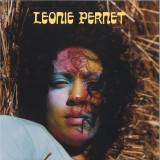
Léonie Pernet's second album Le Cirque de Consolation, to be released November 19th on InFiné & CryBaby, inhabits a world where borders dissolve and everyone makes their own unique and singular utopia. Hereby, the record questions the links between pop music, African cultures and electronic music, neo-classical music or the role of voice, whether human or synthetic. Sophomore albums can be a painful process for an artist - how refreshing it is to hear one so decidedly optimistic.
Textextext - (add your write up)
The sought after whirlwind of French Pop that exploded onto the scene with her debut "Crave", Leonie Pernet, returns with her second album, "Le Circque de Consolation", a sort of double negative of her first. While the yearning that sat at the center of "Crave"might not have been resolved, the young multi-instrumentalist and singer has found a new perspective - a more open and positive outlook on her own life and work. Perhaps telling, then, that the title was the first element of the album to exist: as it is and has always been a journey of personal (and collective) consolation first, a musical confrontation with the self.
"This record parallels my life's journey," confirms Léonie, "it reflects what has happened in my life since 'Crave' came out and how I feel today. There's still a lot of melancholy, but a lot more sunshine and light. In four years, I've become sober, which has saved me; I've worked a lot on my voice, which is a part of a desire to speak, to address my audience more directly, and also a more pronounced pop desire." In line with her new-found "openness", Leonie invites another musician into her creative process for the first time on "Le Cirque de Consolation": Jean Sylvain le Gouic, who lended his coproduction and perspective to her, while Leonie still plays almost all instruments herself with an astounding prowess.
Leonie's voice oozes with a new-found self-confidence and takes center stage amidst eclectic, distinctively fun and open-minded production. Sometimes she sings in English, mostly in French: "I worked a lot on my voice," confirms Léonie, "I didn't dare to sing before, neither live, nor on record, nor in the studio." Surrounding her astounding, intoxicating voice are forays into any direction imaginable: from harsh, experimental electronics to the more sombre, organic and quiet moments - and everywhere, there is the vision of Africa, (also Middle East) it's many sonic gifts and cultures.
Leonie has found a universal utopia that she craves for - a musical, cultural amalgamation that is decidedly non-western, political and poetic, rooted in self-discovery and the connection with other humans: African and oriental percussion, synthesizers, drum-machines; Léonie mixes genres and instruments with ease and precision. The French novelist and philosopher Édouard Glissant - whose work and writing had a big influence on Pernet - coined the term "Creolization ", the "bringing together of several cultures or at least several elements of distinct cultures, in one part of the world, resulting in new data, totally unpredictable in relation to the sum or the simple synthesis of these elements."
From "Hard Billy ", a techno-influenced rebellious anthem, to "Les Chants de Maldoror," a club and dance song propelled forward by feverish derboukas, to the deeply moving "A rebours" and its Afro-electronic rock. Léonie Pernet inhabits a world where borders dissolve and everyone makes their own unique and singular utopia. Hereby, the record questions the links between pop music, African cultures and electronic music (Intérieur Négro), neo-classical music (Le Cirque de consolation, Dandelion), or the place of the voice, whether human or synthetic as in the atmospheric "Vowel". Sophomore albums can be a painful process for an artist - how refreshing it is to hear one so decidedly optimistic.
out of Stock
Last delivered 4 years ago available to reorder, subject to availability
nown for her delicate compositions, soaked in dream-like surrealism, Icelandic musician Sóley has attracted a huge following since launching her solo career back in 2010. Her 2012 single ‘Pretty Face’ went on to generate an enormous amount of buzz, and quickly became a viral sensation. Now, with three solo LPs under her belt, Sóley is preparing to debut a completely new sound via the release of her new concept album, Mother Melancholia, on October 22nd.
Described by the artist as "Nosferatu meets Thelma and Louise in a vampire church under the watchful eye of David Lynch", Mother Melancholia is the soundtrack to the end of the world as we know it. As a self-confessed news addict, Sóley became obsessed with the idea that the world is ending. Having surrounded herself with real-life stories of global warming and patriarchal politics she couldn’t shake the feeling that she was going to die. This feeling was so all encompassing that it sparked the idea for a new project. Could there be a soundtrack for the last days of humans on earth? How would that sound?
“I read books about possible dystopian worlds and started writing poems about irrational and in love characters who live in gray and cold imaginary loneliness. In each other’s burning arms. Walking in circles with no way out” she explains. “After all, the album reflects our life here and now. Our life and reality is a kind of dystopian world.”
Whilst writing the album, which serves as a tongue-in-cheek eulogy to our planet, Sóley began reading about ecofeminism, a branch of feminism which uses the concept of gender to analyse the relationship between humans and the natural world. Ecofeminism emphasizes that both women and nature must be respected but also separated. Since the beginning of time, the natural world has been synonymous with female identity, phrases like Mother Nature are commonplace. “The patriarchy views women as volatile and hysterical. Earth and women are either our saviours or our destroyers,” explains Sóley. “It’s so easy to abuse the earth, like the patriarchy has abused women since the dawn of time, then ask for forgiveness afterwards and promise they´ll never do it again”.
The new album sees Sóley move away from the indie-pop of her previous releases. She began by experimenting with writing songs on the accordion, allowing her a new sense of freedom in her writing. The process allowed her to broaden her horizons even further and experiment with a whole range of new and exciting sounds. “I bought myself a theremin as I was really excited about the unpitched sound and there is no perfect pitch during the end of days,” she laughs. “I also bought a mellotron, my first moog and a cello and taught myself how to play each of them. All of these new instruments are particularly suitable for the kinds of aesthetic inconveniences which I have learned to embrace.”
Album opener ‘Sunrise Skulls’, one of the most cinematic moments on the album, was inspired by the Me Too and SlutWalk movements and tells the story of a group of women who rise up and fight the patriarchy. ‘Blows Up’, a track that would be at home on any horror soundtrack, is a sarcastic love letter from the Earth to humans. Standout track ‘Desert’ is an incredibly moving song dedicated to the next generation. “It’s about the guilt you feel, as a mother, for having children and leaving them on the frontline. My daughter, for example, will take over this inevitable war” explains Sóley.
In true soundtrack style, the album flows through the end of the world in chronological order, closing with the Earth’s final moments. ‘Sundown’ is a dark piano ballad detailing human kind’s final day on Earth. “And everyday, I dig my own grave, and as I dive in you´ll hold my hand” she sings, over twinkling piano and swirling synths. We then hear the world end on ‘XXX’, a dark and swirling soundscape that swells before fading to silence. On ‘Elegía’ the silence then turns to the sound of the ocean, as we hear the Earth, like a woman finally free from a violent relationship, healing on her own.
Mother Melancholia is the mark of an artist confidently striding into more experimental territory. With a lengthy and successful career behind her, Sóley felt compelled to try something new and express the real her. The music might be shrouded in darkness but it’s a move that fills her with joy and freedom. “I hope that people not only enjoy the new sound, but also that Mother Melancholia might raise some questions in people, particularly women,” she says. “I’m under no illusions that this album will change the world but I hope that people can connect with the idea”.
out of Stock
Last delivered 4 years ago available to reorder, subject to availability
Seattle-born preacher’s son Luther James Rabb played sax with Jimi Hendrix in the Velvetones and after forming popular horns-based rock act Ballin’ Jack, moved to Los
Angeles, where soul harmony trio West Coast Revival was born. Early singles for United Artists were produced by Howard Scott and Lonnie Jordan of War, and their sole LP, released in 1977, is an exceedingly rare soul-funk gem, with solid vocal harmony, hard funk breaks, and a touch of sophisticated strings. ‘My Mind Is At Ease’ is a breakbeat special and ‘Feelin’ Allright’ rides a meaty bass groove, both underlining the War connection; our edition comes with bonus love song ‘Beautiful Girl,’ an early single B-side. Overall, this is prime soul-funk with uncommon elements, ripe for rediscovery by all discerning funk fans.
out of Stock
Last delivered 4 years ago available to reorder, subject to availability
AUF TOGO is the long-time collaboration of Sasa Crnobrnja
(from In Flagranti and Mytron & Ofofo) and Clement Cachot-Coulom
(from The Fabulous Penetrators and Big Girls).
After multiple singles and EPs on Leng Records and SaS Recordings, including two collaborative EPs with the tentacular outfit Becker & Mukai, acclaimed by fans and DJs alike, most of their time has been spent writing, recording and bringing to life the 8 amazing tracks that form their debut album “Movements”.
“Movements” follows in the steps of Auf Togo’s previous releases and won’t disappoint the early fans, but it also offers a completely new proposition. Their signature blend of slamming percussion, driving bass lines, psychedelic guitar hooks, fat analogue synths are expertly mixed with new musical ventures across the tracks: from the louche Hawaiian jazz of Along The Dotted Line to the psych-funk of Pan Con Tomate, the electronic wanderings of Mexico to the cinematic intensity of Radical Departures.
The result is a spell-binding summer album, one to listen to on a coastline somewhere under the Mediterranean sun, and one that is not afraid to wear its many influences on its sleeve, from 70s psych-rock to Balearic Beat, Space Disco and Afro Beat. The scope of “Movements” is wide and proves a captivating and gratifying listen.
Debut album from supergroup with members of In Flagranti and Mytron & Ofofo Pressed on 12” vinyl with artwork drawn and designed by Award winning animator Erica Russell UK/EU marketing campaign led by Neighborhood and specialist press/DJ by Your Army, with previous support from Mixmag, Trax, Ransom Note, NTS, Bill
Brewster, Andrew Weatherall and more.
out of Stock
Last delivered 4 years ago available to reorder, subject to availability
Back in 2018, previously unheard artist James Infiltrate impressed via a punchy EP of club-focused electro numbers. It later emerged that the mysterious producer was none other than Constant Sound founder Burnski. Here he dons the alias once more for a full-length excursion three years in the making. It's a fine album, too, with the long-serving producer delivering a winning combination of punchy, club-ready beats, sci-fi fired synth sounds, moody Michigan bass and the kind of authentically spacey atmosphere that has long been associated with the greatest electro records. There's also enough subtle variety in terms of tempo and style to guarantee that you'll not get bored of it any time soon. Highly impressive, but did we really expect anything less?
out of Stock
Last delivered 2 years ago available to reorder, subject to availability
Does returning to a place have a sound? Can the ear have a memory? And what if places which we return to are just empty shells? Choreographed rooms which we need to play, fill from scratch each time with fragments from the past and present, layer upon layer, familiar and still somehow always new and differently assembled. Paula Schopf’s Espacios en Soledad are acoustic walks around present day Santiago de Chile, the city where she was born - which she always left, had to leave and to which she always returns - but more than anything also through her own memories which resonate throughout the public places, squares, streets though still in their own way remain strange.
„Every immigrant in the world has a piece like this - a kind of missing link, something which is incomplete. And every time one returns to the home country you are looking for it. For me it was a matter of sound.“ (Paula 2019).
In the mid 70s leaving Santiago was a flight of exile as a child with her family. Leaving in 1990 was an autonomous decision to head for Europe, Berlin, where the wall fell, where the heavens opened up all at once and electronic music became a kind of new home to so many. Paula Schopf belonged there. For her the Ocean Club at Tresor club was a central place where friends and mentors like Gudrun Gut and Thomas Fehlmann made it possible for her to get really into it. Dancing, being and feeling your body, forgetting oneself in the bass and beats, who one is and where one’s from, to becoming the DJ Chica Paula. Chile was very far away during this time, Latin America was more just a code, a musical and habitual cliche to be cautious of. This was especially true for the culture of the Chilean exile, the pathos of the “Canto Nuevo”, the sound and ideologically charged instruments of the „música andina“, for example the Zampoña, Quena or Charango. Techno was the greatest thinkable alternative to this even if or perhaps because so many kids exiled from Chile became key figures in the German and European scene: Ricardo Villalobos, Dandy Jack, Cristian Vogel, Matias Aguayo and many more.
How does returning to a place sound? Does the ear have its own memory? The field recordings which were recorded in Santiago de Chile in 2016 and form the central sonic material for Espacios en Soledad represent the paradox for Schopf’s return to her home country after emigrating: the inevitable drifting apart of her own lived time from that of her former home. Already the Venezuelan and Colombian hawkers are unmistakable signs of the deep change in Chilean society which has happened in recent years due to immigration. Which is in contrast to the old lady who sits on the floor in a pedestrian zone and without break sings the same three songs by Violeta Parra and then keeps falling asleep while doing so. The fragile presence of her voice is joined with a repertoire which is almost mythologically timeless in Chile in a particularly moving way.
By layering, ordering and conjoining such found sounds from modern day Santiago this piece become about the urban sound of Chile’s present. But more than anything by doing this Paula Schopf becomes an arranger of her own sonic memory or sound-triggered memories of returning to this city. Just as techno and Berlin helped her for such a long time to get away from too strong of an identification as a Chilean in exil, now with Espacios en Soledad she has found a way to bring these two seemingly disparate lives and remembered worlds together.
Matthias Pasdzierny
out of Stock
Last delivered 16 months ago available to reorder, subject to availability
Hot off the heels of double track release 'Safe In My Arms / YourLove' released in July, Logic1000 isn't one to keep us fans waiting. « In The Sweetness Of You » , her 5 new Track Vinyl EP will be released November 19.
Includes the new single 'What You Like' featuring brand new artist yunè pinku, an 18-year-old South London artist/producer. Despite not yet putting any music out, yunè has already seen support from the likes of Joy Orbison who asked her to do a special guest mix on Radio 1, and has been working with the likes of Leon Vynehall. This new single is the first official original vocal performance track from Logic1000 - this year's most exciting underground female electronic and dance music producer.
out of Stock
Last delivered 16 months ago available to reorder, subject to availability
Muscle Shoals singer-songwriter Dylan LeBlanc releases his new EP,
‘Pastimes’, a self-produced collection of covers of songs from Glen
Campbell, Bob Dylan, the Rolling Stones, Led Zeppelin, Buffalo
Springfield and JJ Cale that inspired him to create his own acclaimed altcountry sound.
‘Pastimes’ is released on orange coloured vinyl.
LeBlanc shared his thoughts about his cover of Led Zeppelin’s ‘Going to
California’: “When I was 15 years old I got my first paying gig at a local
coffee shop called Juri’s,” says LeBlanc. “I remembered this girl that sat
behind me in class and I bonded over Led Zeppelin ‘IV’. I remember I
had gotten a Led Zeppelin box set that year for Christmas, and her
favorite song was ‘Going to California’. I rushed home to learn that song
for her and spent hours in my room at my grandmother’s house where I
lived at the time so I could play it for her and impress her. This song will
always hold a special place in my heart. I love this record and this era of
music that I think will always remain untouchable forever and always.”
Each song was chosen for its deeply personal impact: JJ Cale’s
‘Sensitive Kind’ takes LeBlanc back to the smoky dive bars his father
would bring him along to as a child. Buffalo Springfield’s ‘Expecting to
Fly’ reminds him of teenage joyrides, speeding through the country and
listening to music to escape life’s harsh realities. He learned the art of
storytelling through songs with the Rolling Stones’ haunting ‘Play With
Fire’ and Bob Dylan’s ‘Blind Willie McTell’ - a track that he compares to
reading a Southern Gothic Faulkner novel. And Glen Campbell’s ‘Gentle
on My Mind’ is a song he remembers from his early childhood, when his
grandfather, also a guitarist, would throw parties where friends would
gather to drink and sing and forget their troubles.
‘Pastimes’ was recorded at Fame Recording Studios in Muscle Shoals,
live and with as few takes as possible in order to capture a sense of
authenticity. Says LeBlanc, “I feel like music is nothing more than a
spiritual endeavour to widen the horizons and heighten the senses of the
things inside of everyone that sometimes feel unreachable.”
Dylan LeBlanc has spent the last decade releasing four acclaimed
albums, winning praise for his arresting alt-country style, collaborating
with the likes of Emmylou Harris and Brittany Howard, and sharing
stages with heavyweights like Bruce Springsteen and Lucinda Williams.
“One of modern country’s most interesting voices, in both senses of the
term.” - Uncut
“Sublime voice and evocative songwriting.” - Nashville Scene
Ltd White vinyl LP w/ printed inner sleeve lyric insert (1000 copies ww)! Emma Ruth Rundle's forthcoming Engine of Hell is stark, intimate, and unflinching. For anyone that's endured trauma and grief, there's a beautiful solace in hearing Rundle articulate and humanize that particular type of pain not only with her words, but with her particular mysterious language of melody and timbre. The album captures a moment where a masterful songwriter strips away all flourishes and embellishments in order to make every note and word hit with maximum impact, leaving little to hide behind. "I really wanted to capture imperfection and the vulnerability of my humanity," Rundle says of the album's sonic approach. "Here are some very personal songs; here are my memories; here is me teetering on the very edge of sanity dipping my toe into the outer reaches of space and I'm taking you with me and it's very fucked up and imperfect.'" Emma Ruth Rundle has always been a multifaceted musician, equally capable of dreamy abstraction (as heard on her album Electric Guitar: One), maximalist textural explorations (see her work in Marriages, Red Sparowes, Nocturnes or collaborations with Chelsea Wolfe and Thou), and the classic singer-songwriter tradition (exemplified by Some Heavy Ocean). But on Engine of Hell, Rundle has opted to forego the full-band arrangements of her previous albums in favor of the austerity of a lone piano or guitar and her voice, which creates a kind of intimacy, as if we're sitting beside Rundle on a bench, or perhaps even playing the songs ourselves. It's an extremely up-close and personal confessional with a focus on the rich subtleties and timbre of Rundle's graceful performances. "For me this album is the end of an era to the end of a decade of making records. Things DO have to change and have changed for me since I finished recording it." In essence, Engine of Hell signifies a major turning point for Rundle as both an artist and as a person. The catharsis of this type of songwriting has effectively served its purpose, and to continue ruminating on the past going forward is less of a healing process and more like picking at a scab and refusing to let it heal. This may help explain why Rundle is less than enthusiastic about divulging the details about her muses, but it doesn't alter the fact that these songs served a purpose in their creation, and that they may continue to bring comfort to others.
A true psychedelic masterpiece!
Black vinyl LP in black and white jacket with miniature two color booklet. Limited second pressing.
Blind Owl Wilson was a truly great guitarist and vocalist whose deep well of psychedelic blues songs were buried amongst the catalog of major label rockin’ blues band Canned Heat. Blind Owl served as Canned Heat’s guitarist and would chip in a song here and there as a front man. A couple of those songs became huge hits in the 60’s – “Going Up The Country” and “On The Road Again”.
Blind Owl’s songs for Canned Heat stood in stark contrast to the bands blustery blues rock – his was a gentle and nuanced voice and the themes of his song were all about personal heartbreak, grasp- ing for cosmic understanding, and ecological justice.
Here we have an LP of Blind Owl’s songs from Canned Heat’s records – left to sit alone and take you somewhere unexpected. Blind Owl’s personal vision quest can be heard throughout these songs. “Poor Moon’ tells the tale of Alan’s heartbreak as he watches the moon being misguidedly bombed by man, ‘My time ain’t long’ confronts death, “Parthenogen in 3 Blind Owls’ and ‘Parthenogen childs end’ take you to the psychedelic limits, and oh yes, we have the hit tunes on here too. Co-release with Sutro Park records.
This is a special one. Very much indeed. I was on a train on my way to Galicia earlier this year when my phone started off. It was Mike. Me and him exchange a call every now and then, so I thought it was the classic how-you-doing thing, which of course was. Only that this time the call ended with him saying “I’ve emailed you something, a couple of vocal takes plus the only music line that survived that session which is some great drumming by Gad”. Nothing more. Gad (scratches head)? Who the hell is Gad? When I arrived at destination and found some steady wifi connection I downloaded the stuff and found out “who the hell” Gad was. Nothing less than the “most recorded drummer in the history of soul music” aka James “Big Foot” Gadson who, beside the Kirklands, in his career has been drumming for the likes of Marvin Gaye, Charles Wright, Bill Withers, The Temptations, Martha Reeves, Quincy Jones, you name a Soul Star or a famous album, or a legendary recording session, he was there beating snares and kicks. Having been much satisfied by our work on the “Love Scenario” release Mike wanted us, and I quote him literally, “to do our magic”. We did our best of course, but you just can imagine the pressure. This time we went the extra mile though because at some point, listening again and again to the verses and choruses I figured out it would have been a great experiment to give an ultra retro feel to an original recording of 1980. So, while we were doing our thing I’ve asked my mate Paul from Blue Lotus Recordings in Saint Louis, if they could “do their magic” themselves. They gladly accepted the challenge, I handed them over the vocal takes and Gad’s drumming and the result is this 4 tracks 7”/33 rpm biscuit which we hope you will enjoy as much as we all have enjoyed producing it.
SPICE singer Ross Farrar speaks of the band’s ambition to forge a sort of aesthetic patois: a mode of expression as strikingly regional as it is recognizable. Last year’s self-titled debut, released in the depths of the pandemic, fully achieved this goal, distilling decades of North Bay punk and post-hardcore into an urgent, artful set of emotive unrest. Their latest single, A Better Treatment b/w Everyone Gets In, further refines the group’s singular mix of weathered melody and abrasive poetics, equal parts bracing, bruised, and cryptic.
“A Better Treatment” began as a song about a friend who died but through the turmoil of collaboration transformed into something more macroscopic and opaque, blurring the boundary between hopeful and defeated (“I thought loving someone would cure my self-hatred”). Bass and drums build against walls of guitar while the violin threads its own melancholy within the noise; Farrar is blunt about the intention: “The violin is an instrument of death you know.”
“Everyone Gets In” is both poppier and more pained, an anthem for angst aging into the reverie of regret: “We lose our strength / along the way / we lose each other / the funeral sways.” The tempo sways too, gradually slowing to an anxious crawl before finally revving back into a storm of shimmering guitar and splashing drums, fighting against the dying of the light. It’s music of raw truths and
rejected pedestals, storied but unswerving, a revolt against the great regress: “and my / my time is spent / adoring seasons / that I / I never should’ve.”
Born in 1999, Charlie Hickey grew up in South Pasadena,
just minutes from Downtown Los Angeles. Raised by two
singer-songwriter parents, Charlie’s second language was
music since day one. As early as grade school, he was
making sense of the world through songwriting, and by
middle school he was writing, recording and performing
songs that attracted a community of collaborators and could
silence a room.
A turning point for Charlie came at around the age of
thirteen, when he covered a song by then up-and-coming
artist Phoebe Bridgers, who was still in high school herself.
The two quickly became friends and collaborators, setting
Charlie on an exciting new musical path. Years later,
Bridgers introduced Charlie to songwriter, drummer, producer
and her bandmate Marshall Vore, who noticed something
special about Charlie. The two began writing and recording
songs together, and soon Charlie dropped out of school to
work on his music full-time.
Charlie Hickey’s first proper single was ‘No Good at Lying’
and it’s the first track on ‘Count The Stairs’. The Marshall
Vore-produced track introduces us to Charlie’s evocative
storytelling and features Phoebe Bridgers on backing vocals.
“I’m no good at lying / on my back or through my teeth / but
I’m good at dreaming / I can do it in my sleep,” he sings over
hushed guitars and a whimsical banjo, searching for truth as
his unconscious mind runs wild and bleeds into reality. It’s a
slow, quiet, and understated peek to the world of Charlie
Hickey, who is barely of legal drinking age, but taps into such
universal themes that showcase a wisdom beyond his years
and exudes promise for what’s to come.
Reunited after some fourteen years, following the historic success of their first collaboration Raising Sand (2007), which reached #2 on the UK album chart, generated multi-platinum sales, and earned six Grammy Awards including Album and Record of the Year.
Like its predecessor, Raise The Roof was produced by T Bone Burnett, who worked with Plant and Krauss to expand their collaboration in thrilling new directions, accompanied by drummer Jay Bellerose, guitarists Marc Ribot, David Hidalgo, Bill Frisell, and Buddy Miller, bassists Dennis Crouch and Viktor Krauss, along with pedal steel guitarist Russ Pahl among others.
The album features twelve new recordings of songs by legends and unsung heroes including Merle Haggard, Allen Toussaint, The Everly Brothers, Anne Briggs, Geeshie Wiley, Bert Jansch and more. Other highlights include a Plant-Burnett original, “High and Lonesome,” and the Lucinda Williams classic “Can’t Let Go”.
Restlessly awakening from the depths of a feverish slumber, doomed heavy metal masters KHEMMIS return to reveal their fourth full length studio album, DECEIVER, arriving via Nuclear Blast Records in November 2021. Six tracks of desolate, soul-awakening heaviness encapsulate a project that has been nearly three years in the making. With a title that reflects the internal struggles that many of us battle in our daily lives, DECEIVER is a ferociously honest and appetizingly raw piece of musical artistry.
The first single LIVING PYRE signifies far more than just the beginning of another musical endeavour for the band; it is a substantial benchmark for emotional struggle and growth. “When it comes to my own mental health, when I’m in a bad place, I can’t access the part of me that creates art. After reaching that understanding of myself, the bulk of this song came out in one sitting. I was feeling stable. I was feeling hopeful–even though so much outside in the world was not exactly inspiring. All of us needed a reason to feel a glimmer of hope,” recounts Hutcherson. With a big, quintessentially KHEMMIS chorus embellished by a swampy sorrow, this song incorporates familiar elements of the band’s sound with a touch of Swedish death metal in its latter half. “The reason that this was the song that came first lyrically was because I was juggling all the things that were happening with the inside and outside world intersecting. All the lyrics for me feel very ‘of the time.’ So much was happening in this world, and they were just my efforts to contend with it,” explains Pendergast. “Like Ben, this was a breakthrough moment for me. Once I got the song out, it allowed me to write other songs for the album. It’s less about the fire metaphor implied by the title than about the fact that in order to escape fire you have to find water. You find the deepest, darkest cavern…you just want to stay there forever. It slowly fills up and you eventually drown.”
HOUSE OF CADMUS was another deeply collaborative writing effort between all three members of KHEMMIS. “I thought the opening riff had this cool almost-swing to it...but evil,” recalls drummer Zach Coleman. “I was drawn to the atmosphere of that first riff, and it felt like it needed to be a song that was dark the whole way through. Ben and I discussed getting some New Orleans-style sounds somewhere on the album, and I think this is where we were able to sneak some in to tie together other aspects of the song.”
“I knew that I wanted the lead guitar line in the second half of the song to tie two very different parts together,” explains Hutcherson, “but the idea was all really abstract until we were in a room together. It wasn't until we jammed out that big funeral/death doom bridge and the slow, sad coda that we found out what we wanted that lead line to be: memorable and emotive. It was a very honest musical moment together.” The writing and recording processes of HOUSE OF CADMUS were so emotionally driven that even producer Dave Otero of Flatline Audio (Cephalic Carnage, Cattle Decapitation, Act Of Defiance) encountered his own deeply personal and intense connection with the song. “With the lyric turn at the end, I was inspired by Dave’s imagery,” says Pendergast. “This idea of a person leaving some important part of themselves behind as they float away and leave the thing they love on the shore. The sound of this song is like a lighthouse beam cutting through the fog in a dark night on the ocean.”
While the lyrical themes of DECEIVER;sorrow, pain, longing for hope, will no doubt be familiar to longtime fans, these six songs display a broader collection of musical influences than on any other KHEMMIS record to date. “It being our 4th album, especially after the transition between the last two albums, it felt really freeing. We felt that we could really do anything on this record,” explains Coleman. “There’s a lot here that we’ve never done before,” adds Pendergast. “In some areas it gets darkly psychedelic. I think we found a cool way to mutate things using transitions that feel really natural. There is a subtle symmetry between the first and last songs which is one of the things that makes listening to the full album a satisfying holistic experience. It builds from almost nothing, becomes very dark, and then you slowly crawl out of that lowest circle of hell.” KHEMMIS’s DECEIVER is a beautiful, musically ambitious journey from beginning to end drenched in impassioned melody and complex, unrestrained variations of sonic savagery adorned with chilling, intensely tragic cover art by frequent collaborator Sam Turner.
Reunited after some fourteen years, following the historic success of their first collaboration Raising Sand (2007), which reached #2 on the UK album chart, generated multi-platinum sales, and earned six Grammy Awards including Album and Record of the Year.
Like its predecessor, Raise The Roof was produced by T Bone Burnett, who worked with Plant and Krauss to expand their collaboration in thrilling new directions, accompanied by drummer Jay Bellerose, guitarists Marc Ribot, David Hidalgo, Bill Frisell, and Buddy Miller, bassists Dennis Crouch and Viktor Krauss, along with pedal steel guitarist Russ Pahl among others.
The album features twelve new recordings of songs by legends and unsung heroes including Merle Haggard, Allen Toussaint, The Everly Brothers, Anne Briggs, Geeshie Wiley, Bert Jansch and more. Other highlights include a Plant-Burnett original, “High and Lonesome,” and the Lucinda Williams classic “Can’t Let Go,”.
Operating on a plane between avant-garde indie, bubbling electronica and cosmic psychedelia, London group Voka Gentle have an addictive, amorphous sound. A three limbed beast made up of twins Ellie and Imogen Mason, and William J. Stokes, each is a multi-instrumentalist, songwriter and producer with an imperious understanding of three dimensional sound.
The newest single ‘Necrofauna / The Garden of Eden’ - features Wayne Coyne from The Flaming Lips.
The hallucinatory mix of squelching synth bass and rhythmic samples, three-tiered harmonies playing off against William’s sprechgesang, and a cutting, full-bodied drum beat is reflected in the oneiric themes.
“This song is a dream sequence about the narrator entering the Garden of Eden, the emblem of an idealised pastoral relationship with the natural world, and realising they can’t stand it and want t o consume and bring destruction to it (I see a deer pass me by and I break its neck / Rip off its hind leg and take a bite through fur, sinew and bone).”
‘Necrofauna / The Garden of Eden’ - recorded with neo - metal battalion Pigsx7 guitarist and producer Sam Grant - is the first release in earnest since 2019’s acclaimed debut album ‘Start Clanging Cymbals’, released via Nude Records. Having come through the dues - paying gestation period that leads up to a debut record, there’s a sense of liberation around this new phase for Voka Gentle - a subtle confidence in their craft. It’s well earned too - with high praise from the likes of UNCUT, MOJO and The Line of Best Fit at press. Support comes too from BBC 6 Music - including presenting an edition of Stuart Maconie’s Freak Zone - and Radio 1. Tracks from that album also featured on FIFA 19 and The Sims 2020, aiding in recognition.
A live set at the prestigious Pitchfork Avant Garde festival, as well as a clutch of tastemaker festivals in the UK (Dot to Dot , Live At Leeds, The Great Escape, Kendall Calling, Bluedot, Neighbourhood), alongside the serendipit ous shows with The Flaming Lips and
[l] d2 [When We Go, We’re Taking You All With Us!]
Five years after the release of "Je vous dis" in 2018, Geins't Naït and L.Petitgand's second album from the "Mind Travel" and "Make Dogs Sing" collection on the German label "Offen", the duo are now writing a new chapter in their story with this fascinating poetic tale. The same mysterious and heady atmosphere which characterises the two musicians is present in this new work but clearly they have never ceased refining and polishing their sounds to give their compositions even more power and depth. Geins't Naït and L.Petitgand here offer twelve new tracks with names as enigmatic as the title "Like this maybe or This" itself and the record's whole universe. In reality, these mysterious names lead us to let ourselves be taken to the deep meaning of their creation. The subject matter is certainly difficult to grasp and invites us on an inner journey while leading us to doubt and question ourselves incessantly. There is a perfect alchemy between these two artists though this was far from self-evident as they come from two very different schools. Thierry Merigout, who is now the only representative left from the late 80's experimental project Geins't Naït in Nancy, comes from the post-industrial scene. As for Laurent Petitgand, he is a pure melodist who is best known for his work as a composer of music for films and live shows and has collaborated with Wim Wenders and Paul Auster in particular. "Like this maybe or This" is a fully accomplished symbiosis between Geinst Nait's industrial and experimental tonalities and the celestial melodies of Laurent Petitgand. "Shape of the storie" starts the album with a bewildering atmosphere which mixes a sample of a guttural voice with cavernous resonances thus prefiguring the album's general atmosphere. However, while some tracks like "HAC" fuel our existential anguish, other tracks have a poetic and melancholic tonality which touches our deepest humanity. This is the case of "Dustil" whose subtle piano notes combined with the melancholy violin show us a sublimated world. This fascinating blend of violence and gentleness makes this record an atypical work which enables listeners to lose themselves in an emotional nebula where they can perceive the turbulence and also the intensity of our inner life.
Following March’s 9696 Dream mixtape and July’s Flex Time EP, this new album sees 96 Back shine the spotlight on his own vocals for the first time, at points (such as on lead single ‘9 To Find 6’) operating fully in the realms of experimental pop. At other times, such as on ‘Teach Me Tenderness’ and ‘Feel Hard’, 96 Back stretches and processes his vocals to almost breaking point, while album closer ‘Melt You’ sees him duet with past collaborator Iceboy Violet, ending Love Letters on a sombre but romantic note. That’s not to say Love Letters is fully removed from the dancefloor, however: tracks like ‘Don’t Die’ and ‘Love Compact’ are precision-tooled for the club, while the likes of ‘Felzin’ and ‘Vibrant Colours’ continue to explore the intricate but emotive electronics that 96 Back has been so successful with in the past. More varied and vivid than any of 96 Back’s releases to date, Love Letters feels like a coming of age moment. It casts its net incredibly wide at points, and it’s an album full of ambition, but it meets every challenge it sets itself — as affecting in its quieter, tender moments as during its dramatic peaks. In 96 Back’s words: “This is a record I feel like I’ve been trying to write for years, it feels like the most accurate body of work to match the ideas in my mind. Trying to project a lot of the records I hold very dear to me through this lens, interpreting how they sound to me and merging them with ideas of finding the drama and excitement in the full spectrum of emotions on the tip of my tongue, that’s what ended up being Love Letters, Nine Through Six.”
ALTER- : A REACTION TO THE ALTERMODERNISM IN SOUND ART
For the Automatisme - Alter- album. I am inspired by how the art historian Nicolas Bourriaud defines the Altermodernism. Bourriaud understands the term "Alter" as a way to mean "other". The altermodernism would be another modernity that is different from the avant-garde modernism and post-modernism. More precisely, this is a new paradigm from the XXIe century with alternative ways to motivate artists to be more radical in art by traveling in the physical and digital world, by cutting the frontiers and by creating other time lines. I apply the "alter" subject to time and to landscape and those, to the rhythmic and the ambient glitch music.
1- THE ALBUM HAS A RHYTHMIC SIDE AND A LANDSCAPE SIDE.
1- a : The rhythmic tracks are named Alter-Rate. That means that I offer other types of rhythms by calculating beats with time rate experimentations. The form of the rhytmic tracks, expresses a course, a wandering, which, in the altermodern life, is not just in a standard 4/4 , or just grid based or non-grid based, but it's in a complex hybrid of all of those.
1- b : The ambient tracks are named Alter-Scape. That means that I offer another type of landScapes by a paused temporality and not by a random time or by the time of the nature. Alter-Scape tracks mimic the saturated globalized soundscapes of the XXIe century.
2- THE GLOBALISED AND SATURATED TIME
For Bourriaud, the artists respond to a new globalised perception. They traverse a cultural landscape saturated with signs and create new pathways between multiple formats of expressions and communications1. The Alter- album tracks have saturated rhythms Rates and static ambient soundScapes. The specific context within which we live is the age of globalisation2. In this album, it means that globalised or always evolving rhythm Rates are in constant movements and are also different every time an Alter-Rate track is exported or performed. On the other hand, a globalised landScape is an ambient track with a motionless temporality. In the era of the altermodern, displacement has become a method of depiction3. The movement of the sound in the Alter- album is two sound spaces. The first is the rhythms that make time movement become apparent and the second is an ambient paused or static time that makes possible to feel and to analyze the movement effect of our surroundings.
3- THE CONSTANT TENSION STATE OF ART
For Gilles Deleuze, art is in a constant state of tension, in as much as it oscillates between the poles of chaos and order4. The Alter- album is a tension between chaos and order in rhythmic beat tracks and ambient soundscapes tracks. It is a deterritorialization of the rhythms and the ambiences of today's natural and digital landscapes and it brings them into the computer glitch music format.
By pushing new softwares to their limits, I push at the extreme the software capacity to calculate and to generate sounds. The Alter-Rate tracks are experimentations with time rates and rhythms with the use of probability and artificial intelligence based sequencers. The partition signal starts from a master sequencer that gets into all instruments on a track. Each instrument receives this signal and modulates it with other sequencers that are each programmed differently for every instrument. Finally, all the instruments signals return to a master output that contains a stutter effect. This master channel is sequencing all other channels into one single rhythm. In short, a single rate merges and expands into a vast archipelago of rates and the transformed signal becomes a new single rate. The Alter-Scape tracks are experimentations with midi triggers that give the sensation of a timelessness. Multiple reverb effects are also routed into each other to create soundscapes of continuity. About the type of sounds created in this album, I do experimentations with deep frequency modulation synthesises (FM) on all Alter-Rate and Alter-Scape tracks.
I put a few layers in the tracks to be able to focus on the time space and perception. The tracks are generative and every parameter uses probabilities to be programmed. This is something that was not possible some years ago. The computers are enough powerful to generate that now. I export many times the tracks and i push the computers to their limits by making hard for them to calculate and to generate the tracks with a deep, a pointillist and an extreme software programming. These techniques do different versions every time that I export or perform a track and in my opinion, that opens a fresh and innovative way to do new experimental club music and ambient music. The computer has its own limits too.
Reviews in The Wire, Gonzo, A Closer Listen, Datacide, African Paper, Silent and Sound, and more
out of Stock
Last delivered 6 years ago available to reorder, subject to availability
Enterprising composer and musician Eddie Suzuki made his own path throughout his lifetime. Born on October 4, 1929, Suzuki worked as a young shoeshiner in 1940s Honolulu, saving enough money to take piano lessons. In high school, he lead a big band orchestra of 16, and sometimes up to 40 members. By the age of 18, he owned a piano shop that pivoted to become Honolulu’s top guitar store.
For Eddie Suzuki, music always came first. In 1973, after performing and composing songs for many years, Eddie Suzuki and his group, New Hawaii, recorded the now impossibly rare album, High Tide.
The LP is “not a rock-out”, local music journalist Wayne Harada ruminated in a 1973 review. “Rather, it’s one man’s vision — and version — of the now Hawaii.” A seasoned mix of psych, Hawaiian, and pop sensibilities, the music on High Tide gave the listener a look into Eddie’s singular vision celebrating the sights and sounds (and spirit) of Hawaii.
Eddie Suzuki’s New Hawaii:
Laurence Harada, guitar
John Schulmeister, bass
Gary Fittro, drums
Nani Kuaiwa, vocals
Eddie Suzuki, vocals, Hammond organ, Arp synthesizer.
"A beautiful album celebrating Hawaii’s warmth and spirit. The personal story here is that I reached out for a license just 1 week too late — Eddie Suzuki had died the week prior to my initial phone call. It took a couple years until I was able to connect with his son and get his permission to reissue Eddie's music." – Roger Bong, Aloha Got Soul
LA based composer/sound designer duoHeliochrysumannounce the release of their visceral, deep and exploratory debut albumWe Become Mist.The album has beenmixed by Ben Frost and mastered by Valgeir Sigurdsson.
Heliochrysumis the world building meeting of Michael Deragon and Daniel Lea
( L A N D, Important Records), in which a collaboration becomes a sculpted journey into new aural and imaginative cosmology.We Become Mistuses analogue and digital processes to mine the depths of industrial and science fictional, psychedelic soundscapes, often cinematic in tone and texture.
Taking their cue from a shared palette of sounds, textures and rhythms,Heliochrysumcreate a unifying score that is at once improvisatory and sonically certain.We Become Mist is nothing short of the progression from a souterrain awakening to the terraformed sound of a new world coming into existence.
These tracks overlay analog sound sources, digital hard wrought processing and visual sound design, constantly morphing and turning on their own searching torque. Mixed by Ben Frost and mastered by Valgeir Sigurdsson, the accumulation of sheer vision and depth is transportative, if not outright mind wrenching. In between this melding of the analogue and digital was mixed another element: the album istinged with psilocybin technology. As a listener you can hear as you move through a psychedelic passage, like out of a state of lockdown into one of alien otherworldliness.
The piano, industrial crescendo of ˜We Remain Beneath is evidence of this, sounds modified into careful, lush arrangements. A Future Unfolds sounds like a burnished unfurling, a resplendent distortion bringing to mind some epic revelation while tracks such as ˜Infinite Dark or ˜Pre Dawn bristle with chrome pulses that burn with alarm and dulcet drama.
Just as they did with their palette of sounds,Heliochrysumtaps into a wide range of emotions from hope to devastation, growth and contagion.
The name Heliochrysum evokes the Latin for sunflower but also a healing tincture: in the overlaid orchestration and distorted lightness, the roiling, life-giving pour of the sun can be heard. Simplicity washed with emotional intensity, the remembered dreams of far-off, science-fictive discoveries.
This year marks 25 years since Oasis’ two iconic record breaking live concerts at Knebworth Park in Hertfordshire on the 10th and 11th August 1996. The shows were both the pinnacle of the band’s success and a landmark gathering for a generation of young people. Released alongside the cinema debut of the feature length documentary film of the event, ‘Oasis Knebworth 1996’ is the definitive live recording featuring a setlist packed with stone cold classics album taken from across both nights of the concert, from the opening salvoes of ‘Columbia’ and ‘Acquiesce’, to ‘Champagne Supernova’, ‘Don’t Look Back In Anger’, ‘Live Forever’, an orchestra backed ‘I Am The Walrus’, and ‘Wonderwall’ the first song from the 1990’s to reach over one billion streams on Spotify and universally loved anthem.
Oak Corridor is the second full-length album from Newcastle, Australian duo Troth (Amelia Besseny & Cooper Bowman). It follows 2020’s warmly received album, Flaws In The Glass (Altered States Tapes) and 2021’s Small Movements In Radiance mini-album (Not Not Fun). While the same themes and intentions remain, this time Troth channel their ambient experiments into an environ located somewhere closer to minimal-wave and synth-pop.
While Oak Corridor is their most ‘song-based’ album to date, it continues the respectful treatment of natural themes found in their previous releases, further tying in elements of balance, truth, justice, humility, strains of mysticism from varied origins and an opposition to the encroachment of ill-advised development surrounding them in Newcastle (and Australia more broadly). The album is a truly collaborative affair and offers something of a sound-diary of the two’s relationship.
out of Stock
Last delivered 4 years ago available to reorder, subject to availability
"To make this concept a cohesive whole, Hybrids took a couple of years to compile. It reflects a certain shift in my sound, where I've try to maintain a constant balance between experimentation and efficiency - surprise, technique and playability... It's a highly functional object crafted from a subversive standpoint, breaking the rules while following them all. Auto-referential musical artifacts blend into composite shapes, and ultimately manifests into five exercises in style, trespassing traditional boundaries of genre, tempo, and (good) taste. While this record probably expresses an inner conflict at the intersection of hypermodernity and conservatism, I hope it accomplishes, at least, its primitive function-to put the body in motion."
- TENEBRE
out of Stock
Last delivered 4 years ago available to reorder, subject to availability
Over the course of the decade, Meatbodies’ Chad Ubovich has been
a perennial candidate for MVP of West Coast’s fertile rock scene. The
LA native could be seen peeling off guitar solos in Mikal Cronin’s
backing band, supplying the Sabbath-sized low end for Ty Segall and
Charlie Moothart as the bassist for Fuzz, and, of course, fronting his
own Meatbodies. Today the recently dormant experimental noise /
freak-rock outfit has announced their return with 333—a corrosive
stew of guitar scuzz, raw acoustic rave-ups, and primitive
electronics that charts Ubovich’s journey from drug-induced darkness
to clear-eyed sobriety. 333 simultaneously reflects on how the world
he re-entered was still pretty messed up—if not more so. “These lyrics
are dark, but I think these are things that a lot of people are feeling
and going through” he says. “Here in America, we’re watching the
fall of U.S. capitalism, and 333 is a cartoonish representation of that
decline.”
In mid to late 2019, the band—Ubovich and drummer Dylan
Fujioka—had a new album in the can, ready to be mixed. But
when COVID hit, like so many other artists, they put their release
on hold as they rode out the pandemic’s first wave. During that idle
time, Ubovich discovered a cache of demos that he and Fujioka had
recorded in a bedroom back in the summer of 2018, and he really liked
what he heard. In contrast to Meatbodies’ typical full-band attack, it
was deliriously disordered. “It sounded gross, like a scary Magical
Mystery Tour,” he recalls proudly. After subjecting them to some
mixing-board freakery, Ubovich fast-tracked the songs into becoming
this third release of theirs, 333. It proves Meatbodies have greatly
expanded their palette, opening new portals to explore. And for an
album that wasn’t supposed to exist, 333 is the ultimate testament to
Meatbodies’ renewed vitality.
When we think of the phrase Bonded By Blood, we think of two things: a brotherhood that is meant to outlast the trials of war, pain, and time... and the almighty EXODUS. With a bond forged in youth and decades-old friendship, the undisputed masters of thrash metal return with their eleventh studio album: PERSONA NON GRATA. Literally translating to “an unwelcome” or “unacceptable” person, PERSONA NON GRATA touches on themes of modern societal disgust and degradation. “The people that disgust you - cut ‘em out like cancer,” explains guitarist Gary Holt. “Who is that person? It could be anybody. That’s up to the listener. Who is ‘Persona Non Grata’ to them?”
For decades, EXODUS has impressed us with the ability to attract opposing factions to their music because of its intensity and versatility. A track like “The Beatings Will Continue Until Morale Improves” was inspired by the riots both in theme, and sound. “Without seeming insensitive to the riots, the song is tongue in cheek about what the people beating on the rioters were expecting to happen. Did you think you would beat a smile onto their face? At 3 minutes in length, it’s probably the shortest EXODUS song we’ve ever done. It gets in, gets out, and is just crushing,” describes Holt. While most of the songs do run on the shorter side, this album also comes equipped with crushing, epic tracks.
Whether it’s the music industry gossip sites, or the big players like CNN and FOX, we’re all aware of how news outlets love to set little rat traps; “Clickbait” discusses their methods of picking things out of context to grab your attention, add to their page views, and increase their revenue all while riling up your emotions. “It’s all journalistic dishonesty,” explains Holt, “it’s a modern-day version of Al Capone’s vault, everyone tunes in, and then there’s NOTHING.“ Evenly balanced with extraordinary speed and tremendous, catchy choruses, “Clickbait” is a song that explodes with vigorous energy. “As heavy as this album is, and it’s heavy as fuck, if times were different and there was still metal radio, this song, and probably over half the album, has single capabilities.”
Sitting as the second to last song on the album, “The Fires of Division” keeps PERSONA NON GRATA strong all the way through. “This album doesn’t operate on the normal parameters,” describes Holt, “we didn’t frontload this one, it’s strong right through to the end. It’s supposed to be a musical journey as the songs segway together.”
For the third time in the band’s history, EXODUS returned to Swedish artist Par Olofsson to create the album artwork PERSONA NON GRATA. “After this album, I feel like we probably won’t work with anyone else again, Par just gets it,” states Holt. A three-faced, winged creature sits atop a bloody pile of diseased and rotting humans as they scream in pain and reach their hands up desperately towards the beast. Undead riot cops beat mercilessly, and senselessly upon this pile of the dying and the world is red with fresh, sopping blood. “Is it an angel, a demon? Is the world being created or destroyed,” asks Holt, “you don’t really know.”
EXODUS don’t fall into the usual recording slump that most bands get stuck in. Gathering at Tom Hunting’s house up in the mountains, they avoided the need to book studio time or adhere to a certain schedule. “At first it was just Tom, myself, a half stack, and a drum kit; we call it jam camp. We lived there. We built the studio, we immersed ourselves in it. Number one, because we still enjoy each other’s company enough to do it. When we’re not actively rehearsing or recording, we’re still sitting there talking about the songs, working on them, plucking on acoustics until things really work,” explains Holt, “we’re not settling.” Working from three home-built studios, the band recorded PERSONA NON GRATA themselves with the help of Andy Sneap on mixing and mastering and with Steve Lagudi at the helm of engineering.
“As a band, I’m super grateful. I’ve seen a lot of things around the world and we’re still a band that loves each other, have each other’s back, and we genuinely like to hang out with each other,” explains Holt. “Take it how you will, but I’m this band’s biggest fan. We write songs that are designed to make us feel fired up - that’s why it’s still heavy.”
THERION have always been a band that have challenged themselves to explore new paths, while remaining true to their musical core values. For their 17th studio album, mastermind Christofer Johnsson and his collaborator Thomas Vikström have created something that has been previously unthinkable to the guitarist and the singer. "We have done the only thing that was left of all the different angles to explore", explains Christofer. "We have decided to give the people what they kept asking for. 'Leviathan' is the first album that we have deliberately packed with THERION hit songs."
True to the Swede's words, the album opens with the catchy and swift tune 'The Leaf Of The Oak Of Far' featuring female and male antiphonal singing as well as a choir that seems to have evolved straight out of THERION's breakthrough full-length "Theli" (1996). This is immediately followed by the obvious highlight 'Tuonela', in which Christofer cleverly underscores this hit-track's Finnish vibe by employing NIGHTWISH’s "metal voice" Marko Hietala. Next up in this parade of future fan-favourites is the title track 'Leviathan' that offers classic THERION material with operatic female vocals and a massive choir.
Christofer Johnsson's passion for classic voices, choirs, and orchestral elements as well as his penchant for epic melodies in combination with rock and metal shines clearly through the following sing-along ballad 'Die Wellen Der Zeit', which indicates another nod to German romantic composer Richard Wagner. "Ever since 'Theli', Wagner has been and will always be at the core of THERION", emphasises Christofer. "When we started to combine metal and opera, it was something new and original. Today, symphonic metal has long been a firmly established genre." When THERION came into being in 1988 by changing name from the already existing band BLITZKRIEG, which was founded a year earlier, Christofer had rather taken inspiration from SLAYER's "Reign In Blood" among other classic metal albums.
At the beginning, the Swedes were firmly rooted in death metal, a genre which they helped to define, as witnessed by their debut album "Of Darkness...." (1991). Yet even back then, there were hints of "something else" lurking beneath the rough surface. The use of female vocals is another core ingredient of THERION today, which developed gradually. CELTIC FROST had basically introduced the female element to extreme metal on "To Mega Therion" in 1985. THERION began with both a female and male vocalist emulating a church like choir already in their sophomore full-length 'Beyond Sanctorum' (1992). With Symphony "Masses: Ho Drakon Ho Megas" (1993) and "Lepaca Kliffoth" (1995), Christofer continued to developed his trademark sound by gradually drifting towards cleaner vocals and more keyboards.
With "Theli", the Swedes had firmly established a reputation of pushing the boundaries of metal in the 90s –among such acts as their compatriots TIAMAT, THE GATHERING, and MOONSPELL that were often referred to as "gothic metal" at the time. THERION continued to break new ground leaving inspiration for others to follow in their wake: On "A'arab Zaraq -Lucid Dreaming" (1997), Christofer further explored the use of Near Eastern music in metal which he had already begun in 1992, while "Secret Of The Runes" (2001) dared to have Swedish lyrics in some songs.
While critics were left confused and fans challenged, THERION were often ahead of their times and vindicated in hindsight. Even the band's 25th anniversary excursion "Les Fleurs Du Mal" has by now overcome the initial shock the album caused and is only beaten in terms of streaming by the classic "Vovin" (1998). When Christofer faced the question of where to go next after the dramatic "Beloved Antichrist" (2018) had finally fulfilled his musical mission, his answer is "Leviathan" named after a giant sea monster from Judeo-Christian myth that has roots in Babylonic lore: THERION have created a giant hit album –and for the first time in the history of the Swedes, their fans are not asked to explore something new, but simply to lean back and enjoy the best from their band!
Have we ever needed great storytellers so badly? Voices to snap us out of our collective grey funk, to pull us out of our narrow, hemmed-in worlds and to lighten our days and enlighten us with their perspectives, Immersing us in their worldview and history. People who can make us laugh, cry, gasp or nod sagely, to see our world anew and not feel so alone. We need stories, vignettes, new windows to look out of, and narrators to help those new visions make sense.
In short, we need Scott Lavene. Born and raised in Essex, but a man of the world who has wandered far and wide, Lavene’s a storyteller who can capture all the madness, joy and frustration of life while singing about worms writhing in the ground. Lavene’s been in bands since his teens, but only really located the voice that makes his new album Milk City Sweethearts so remarkable – that combination of wry observation, humble wisdom, unguarded vulnerability and unpredictable humour – in a music workshop for alcoholics and addicts, long after he’d bid farewell to childhood dreams of pop stardom, and the ghosts and demons that accompany those dreams.
He released an album as Big Top Heartbreak, 2016’s Deadbeat Ballads, and followed it with his first album under his own name, 2019’s droll and marvellous Broke. “I was signed to a little label in Bristol, but then they went skint,” he remembers. This time, however, the disappointment didn’t shake his confidence or his resolve. “I started writing prose, like ‘flash fiction’, and I’ve begun a novel,” he says. “And I’ve started some creative writing workshops for people who’ve come out of my situation.”
Amid all this activity, the songs that became Milk City Sweethearts began to take shape. Lavene noticed the border between his prose and his songwriting beginning to become porous, and the album feels like a clutch of excellent short stories set to music. Without a label, he recorded the album at home, and assembled it in a week in his mum’s garage during lockdown’s heavy manners. It’s a warm, witty, charismatic record with a dark heart at the centre, Lavene sounding dislocated and therefore able to write his everyday stories with a left-handed brilliance and blunt honesty that keeps them so fresh, like classic Kinks, or David Bowie if he’d never had to go to space to feel otherworldly. His songs are talking blues, set to loose and minimal and excellent art-rock with a pop sensibility, the honk of Roxy sax and the guttural weird-funk of Ian Dury’s Blockheads haunting their grooves.