2023 Repress
Voices From the Lake (consisting of Donato Dozzy and Neel) mark the 10th anniversary of their influential self-titled album with a fully remastered reissue on Spazio Disponibile. It arrives in full on vinyl for the first time, as well as on digital formats, first quarter of 2023 as the pair continues to play select live shows around the world. The release will see the light of day as a 4-set vinyl LP release, including download. Italians Dozzy and Neel have been friends united by a shared vision of music since their teenage years. They are immaculate sculptors of sound who fuse evocative ambient and leftfield techno into multi-layered soundscapes. For many years they worked as established solo artists but came together in 2011 to craft what is now regarded as one of techno's most pure and absorbing listening experiences. It's often said that the best music comes about as a happy accident, and that is certainly true of Voices From the Lake. The career-defining album first arose in the thoughts of Dozzy and Neel when the latter was preparing a mix for the former's wedding and named it Voices From The Lake. It was a pertinent title that stuck in the mind: both grew up by waters around the coast of Italy, and in their early days the pair even held private parties on the shores of a lake. Fittingly, Japan's celebrated Labyrinth festival at that time was also held by a river and a lake in the middle of a forest on a serene mountainside. It was that exact setting the pair envisaged when making music to play live on stage. During preparations, they "accidentally" wrote an entire album. It has only ever been performed live a few times - once at Japan's Labyrinth festival in 2011, at London's Barbican, Barcelona's Mira Festival, Paris' Marathon Festival and once during 2022's Amsterdam Dance Event. Those shows saw the pair using banks of analogue and digital equipment to improvise in the moment and essentially remix the album live on stage. That spontaneity is captured in the original Voices From the Lake recordings and on later LPs such as Live at Maxxi in 2015, and the most recent EP Quarto Freddo from 2020. But the debut album remains a standout achievement. A decade on, it's quiet intensity, musical storytelling and slowly unfolding tension remain in a class of one. Each sound is meticulously designed and placed, and the spaces left behind are just as important in conveying such a captivating mood and emotion. Rather than traditional kick drums, hi-hats or snares, this is music crafted from layers of real-world sound - dripping water, chirping birds, rustling leaves or a distant breeze - and it's that which defines the album's organic allure. From deeply contemplative to cautiously optimistic, pastoral organic scenes to more underwater worlds, Voices From the Lake is a cohesive collection of tracks that add up to one inseparable whole.
Search:o rem
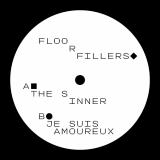
Jolene Cuts delivers a stunning 5-track vinyl-only release that reinvents the spirit of 90s French Touch for today’s dancefloors. No edits here—these are 100% original productions crafted by Danny & Mike, masters of filtered house grooves. From the funk-drenched “Without,” a Kool & The Gang-inspired house monster, to “Fall,” a euphoric blast reminiscent of the best Daft Punk moments, every cut is designed for maximum floor impact. “Mon ami Julien” dives deeper with a warm and hypnotic Scott Grooves vibe, while “Ready for Love” feels like Cerrone remixed by early Bob Sinclar at his peak—pure disco magic reimagined. The record closes with “Burning,” a banging, feel-good anthem built to ignite any set. This is a true celebration of filtered house, disco energy, and feel-good music—strictly vinyl, strictly limited, and packed with five undeniable club weapons. Perfect for DJs who want to tear the club apart, vinyl purists, and anyone who knows that real French Touch doesn’t need gimmicks—just groove, soul, and timeless dancefloor power. Once it’s gone, it’s gone.
Jeff Mills does the dance a favour with remastered and unreleased cuts of some all-time classic.
Mills presents a previously unreleased version of the savage “Suspense” from his Drama EP AX006, 1993, alongside the haunting synth pads and fizzing 909 hustle of “Gamma Player” from Millsart’s Humana AX012, 1995 on the A-side.
The flipside features a fresh cut of the bleeping, intrepid deep-space sound design of “Transformation B (Rotwang’s Revenge)” from his Metropolis soundtrack, and the hypnotic energy of “Hydra and Synergy,” as used in his Exhibitionist 2 (2015) mix.
- 1: Private Symphony (Feat. Stuart Murdoch)
- 2: The Cold Collar (Feat. Gruff Rhys)
- 3: Love Is A Life That Lasts Forever (Feat. Molly Linen)
- 4: First Moonbeams Of Adulthood
- 5: Road To The Amber Room
- 6: Hachi No Su (Feat. Saya From Tenniscoats)
- 7: In Portmanteau (Feat. Field Music)
- 8: Irreparable Parables
- 9: Spectators In The Absence Of God (Feat. Kathryn Joseph)
- 10: Soul Enters The Ocean Sun Climbs Out The Sea
Pink Vinyl[26,26 €]
Very limited numbers, orders will need to be confirmed.
For his new album, Irreparable Parables, Andrew Wasylyk felt a strong desire to write a set of songs featuring an element hitherto rare in his work: the human voice. Equally strong was the conviction that he did not want to sing them himself.
The Scottish multi-instrumentalist and composer set about assembling a group of guest singers, sending out the songs to wherever they were in the world. The vocals were recorded remotely and then, like migrating birds, winged their way back to Scotland. The result is an album of great beauty which, perhaps preeminently in Wasylyk’s work, expresses the vulnerability and resilience of the human spirit.
Six singers appear on the record, represented by six songbirds illustrated on the sleeve by Clay Pipe Music’s Frances Castle. The cuckoo is a nod to Belle and Sebastian’s 2004 single ‘I’m A Cuckoo’, that band’s Stuart Murdoch being the first voice you hear on the new album. When the vocal for ‘Private Symphony #2’ arrived, says Wasylyk, “it was everything that I was looking for and more. But this is Stuart Murdoch. Of course he’s going to make something incredibly beautiful and thoughtful.”
The song lyrics were, for the most part, written by the singers. The music is Wasylyk’s creation. He navigates a sound world that lies somewhere beyond the borders of classical and jazz, ambient and abstract. It is difficult to describe, but easy to understand, which is to say to feel. That is the way Wasylyk’s work is experienced: as a feeling. It takes you back to childhood, perhaps, to feelings of comfort and safety, or to memories of walks at sunrise and sunset, or to the way a shadow falls on a particular field in a particular place at a particular time in your life. This is consoling music. That is why, though pretty, it is not merely pretty. These are songs to shore up the soul.
Wasylyk writes in a room, in his native Dundee, full of “half broken” instruments. He picks these up, plays a little, seeking an idea, a feeling, a door that lies ajar. The musical palette of Irreparable Parables includes brass and woodwind, a six-piece string section, guitar, bass, drums, vibraphone, Mellotron, Fender Rhodes, tape loops, synthesisers and percussion. The strings were arranged by the cellist Pete Harvey, a long-term collaborator.
Among the other guest vocalists are Gruff Rhys of the Super Furry Animals, Saya Ueno from Japan’s Tenniscoats and Peter Brewis from Field Music. Wasylyk himself takes the lead vocal on the title track, though a throat infection and touch of pitch-shifting have altered his singing in a way that even he, having fallen out of love with his own voice, finds acceptable.
The heart of the record can, arguably, be found in two tracks, ‘Love Is A Life That Lasts Forever’ and ‘Spectators In The Absence of God’, sung respectively by Molly Linen and Kathryn Joseph. The former, bright with trumpets, was inspired by the writing of Derek Jarman. “I was feeling deeply upset about the world and wanted to try and write some- thing that was obviously hopeful,” Wasylyk says.
‘Spectators …’ offers an emotional counterpoint. It is an “apocalyptic hymn” that seems to grapple with watching human suffering from afar, too distant to be at physical risk, but experiencing the psychological wounding, and feelings of helplessness, even complicity, that come with constant awareness of other people’s pain. “Kathryn’s a pal, I love her dearly, and she’s a brilliant artist who really feels what she writes,” Wasylyk says. “The cracked tenderness of her voice is spellbinding.”
The album closes with an instrumental piece, ‘Soul Enters The Ocean Sun Climbs Out Of The Sea’, all piano and strings, that offers a sense of resolution and ascension. A good moment, too, for Wasylyk to reflect upon the artistic companionship that he enjoyed while making this record – the songbirds that answered his call: “These humans are incredible at what they do. I’m deeply grateful and feel so lucky. It blows my mind.”
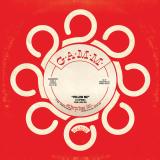
Our very first release was a beautiful gem from Red Astaire titled 'Follow Me' - a track that defined GAMM's identity and helped pave the way for everything we've achieved since.
Now, 24 years later, GAMM has reached its landmark 200th release.
To celebrate this anniversary and honoor our dear friend Fredrik Lager (aka Red Astaire), who sadly and unexpectedly passed away three years ago, we are re-releasing 'Follow Me' alongside remixes from some of our favourite producers.
The third and final edition in the 'Follow Me' series comes from Brooklyn's finest, DJ Spinna.
With his trademark hip hop-soul sound, Spinna transforms this classic into a bumpy, park jam tune. Very NY, very uplifting...very much a spring tune. Oh btw, check that classic EWF sample ;)
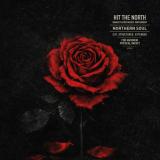
Hit the North is a DJs’ movement
Not a label. Not a revival. A discipline.
Over the years, the collective travelled across multiple states in the US and parts of the UK, digging deep into private collections, basements, garages, storage rooms and forgotten boxes.
They weren’t looking for classics.
They weren’t looking for hits.
They were looking for attempts.
Artists chasing something bigger than themselves.
Trying to sound like Motown.
Trying to sound like Detroit.
Trying to sound like the records that saved them.
Many of them dreamed — at best — of becoming a one hit wonder.
Most never got that far.
Some never crossed a state line.
Some never crossed the street at the end of their block.
Some never played outside their hometown.
Some never played at all.
What they left behind were fragments.
Raw versions.
Unfinished recordings.
Alternate takes.
Rejected mixes.
Test pressings.
Acetates passed quietly from hand to hand.
Sometimes with real credits.
Sometimes with fake ones.
Sometimes with handwritten labels leading nowhere.
Titles that didn’t match the music.
Stories that changed every time you asked.
Often, the trail simply disappeared.
What remained was intention.
Energy.
Urgency.
Hope pressed into sound.
So the collective worked on it.
They edited certain parts.
Extended others.
Cut what didn’t serve the floor.
Not to modernise.
Not to rewrite history.
But to unlock the power that was already there.
The result sounds like Northern Soul pushed to its breaking point.
Fast. Physical. Emotional.
Built for movement.
Some circulated privately.
Others were never pressed at all.
Recorded in personal studios, borrowed studios, friends’ rooms, temporary spaces.
Always outside the system.
This is not nostalgia.
This is unfinished business.
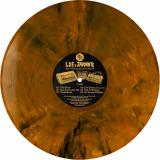
Inner City Sound Archives returns with its second chapter — digging deeper into the forgotten vaults of New York’s underground disco culture.
This new volume brings to light another cache of mysterious acetate recordings: no titles, no credits, just cryptic handwriting, tape hiss, and the unmistakable pulse of a bygone era. Painstakingly transferred and fully remastered through analog processes, these raw and extended cuts preserve the full emotional weight of the original sessions — dusty, physical, and made to move bodies in the dark.
These are tracks that once passed hand-to-hand among a tight circle of selectors, whispered about and played just once or twice at legendary loft parties between 1978 and 1983. Then, silence. Until now. Once championed in the shadows by the likes of Larry Levan, Francis Grasso, Steve D’Acquisto, but also by more elusive selectors like Bobby Guttadaro, Michael Cappello, Roy Thode, and Mark Paul Simon — these grooves return to tell their story, the way they were meant to be heard. Each piece is a sonic time capsule — hypnotic, unpolished, and intimate. Pressed loud and with care, for those who still believe in the ritual of vinyl.
Pure house vibes straight outta the warehouse. Six track journey mixed by legends Lello Di Franco and Brian Garrett, with a fire Fred P interpretation that flips "2720 Street" into something next level. From deep underground heat to pure dancefloor gold Ð this one's got everything. House Express, The Warehouse, and the title track taking you back to where it all started. That's the blueprint, fam.
Simoncino returns to Skylax Records with Traxxx EP, a raw and hypnotic five-track collection built for the dancefloor. Known for his unmistakable analog approach and deep connection to the legacy of Chicago house and underground European club culture, the Italian producer delivers a set of stripped-down, highly functional DJ tools. Tight drum machine programming, rolling basslines and subtle synth movements drive each track forward with precision and efficiency. No gimmicks, no excess — just pure club energy designed for long mixes and late-night sessions. True to the Skylax philosophy, Traxxx EP focuses on timeless groove architecture rather than trends, offering DJs and collectors a record that will remain effective in the bag for years. Raw, hypnotic and direct, this is underground house music in its most essential form.
After debuting on Delsin in 2023 as Reeko, Spanish techno icon Juan Rico now steps up as Architectural to present his second EP on the Amsterdam based label. Where Reeko is known for his adventurous, highly energized, broken techno bangers, his approach as Architectural is more fine-drawn. Over the course of four tracks, his tracks build slowly into immersive pulsations, pushing deep frequencies into captivating rhythm grooves layered with mesmerizing atmospheres.
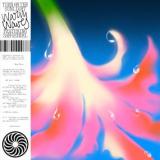
‘Warm Waves’ first appeared in 2020, ten years after Turn On The Sunlight’s debut self-titled album was first released in Japan. During that decade, Turn On The Sunlight’s Jesse Peterson and Mia Doi Todd welcomed their first child and co-founded a music venue in Los Angeles. When performance spaces were required to close at the start of the pandemic, Jesse’s focus shifted back towards home recording. Since ‘Warm Waves,’ five more Turn On The Sunlight albums have followed (including ‘Drives To The Beach,’ also on Tokonoma Records), all of which can be seen as an expansion of the musical direction set forth on this album.
The group heard on ‘Warm Waves’ consists of musicians who Mia and Jesse were regularly playing with at the time - Sam Gendel, Mitchell Brown, Andres Renteria & Gabe Noel - joined by Laraaji, Arji & Luis Pérez Ixoneztli, making their first recordings together.
The group’s blended signal was routed through Mitchell’s tape loops and modular synthesizer, which contributed to the unique communal sound of these recordings. Further extending this approach, Carlos Niño then reprocessed and reimagined ‘Passing Rain’ with Jamael Dean for his Elemental Beat Mix.
Originally released one week into the official lockdown period, some listeners found the warm, collective sound well-suited for the time of introspection and shifting priorities that followed. Now, in 2026, ‘Warm Waves’ returns on vinyl to once again encourage peaceful contemplation and open-hearted togetherness, in echo of the spirit of its creation.
Credits
Sam Gendel: Saxophone & Electronics on A1, A2, A3, B1, B2, B3
Laraaji: Voice & Zither on A3
Luis Pérez Ixoneztli: Bird Sounds on A1, Aerophones & Water Drums on B2
Mia Doi Todd: Voice on A1, A2, B2, B3; Piano on A3
Jesse Peterson: Guitar, Bass, Organ & Bird Sounds on A1; Organ on A2; Guitar & Bass on A3; Wooden Whistles, Guitar, Ukulele & Piano on B1; Ice Breaking on B3
Andres Renteria: Percussion on A1, A2, B1, B2, B3; Marimba & Percussion on A3
Mitchell Brown: Synthesizers & Magnetic Tape on A1, A2, A3, B2, B4
Gabe Noel: Bass on A2, A3, B1
Arji: Bells & Shells on A3
Carlos Niño: Production / Remix on B4
Jamael Dean: Additional Keyboards on B4
Produced, mixed & recorded by Jesse Peterson
Except B4, produced by Carlos Niño
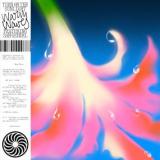
‘Warm Waves’ first appeared in 2020, ten years after Turn On The Sunlight’s debut self-titled album was first released in Japan. During that decade, Turn On The Sunlight’s Jesse Peterson and Mia Doi Todd welcomed their first child and co-founded a music venue in Los Angeles. When performance spaces were required to close at the start of the pandemic, Jesse’s focus shifted back towards home recording. Since ‘Warm Waves,’ five more Turn On The Sunlight albums have followed (including ‘Drives To The Beach,’ also on Tokonoma Records), all of which can be seen as an expansion of the musical direction set forth on this album.
The group heard on ‘Warm Waves’ consists of musicians who Mia and Jesse were regularly playing with at the time - Sam Gendel, Mitchell Brown, Andres Renteria & Gabe Noel - joined by Laraaji, Arji & Luis Pérez Ixoneztli, making their first recordings together.
The group’s blended signal was routed through Mitchell’s tape loops and modular synthesizer, which contributed to the unique communal sound of these recordings. Further extending this approach, Carlos Niño then reprocessed and reimagined ‘Passing Rain’ with Jamael Dean for his Elemental Beat Mix.
Originally released one week into the official lockdown period, some listeners found the warm, collective sound well-suited for the time of introspection and shifting priorities that followed. Now, in 2026, ‘Warm Waves’ returns on vinyl to once again encourage peaceful contemplation and open-hearted togetherness, in echo of the spirit of its creation.
Credits
Sam Gendel: Saxophone & Electronics on A1, A2, A3, B1, B2, B3
Laraaji: Voice & Zither on A3
Luis Pérez Ixoneztli: Bird Sounds on A1, Aerophones & Water Drums on B2
Mia Doi Todd: Voice on A1, A2, B2, B3; Piano on A3
Jesse Peterson: Guitar, Bass, Organ & Bird Sounds on A1; Organ on A2; Guitar & Bass on A3; Wooden Whistles, Guitar, Ukulele & Piano on B1; Ice Breaking on B3
Andres Renteria: Percussion on A1, A2, B1, B2, B3; Marimba & Percussion on A3
Mitchell Brown: Synthesizers & Magnetic Tape on A1, A2, A3, B2, B4
Gabe Noel: Bass on A2, A3, B1
Arji: Bells & Shells on A3
Carlos Niño: Production / Remix on B4
Jamael Dean: Additional Keyboards on B4
Produced, mixed & recorded by Jesse Peterson
Except B4, produced by Carlos Niño
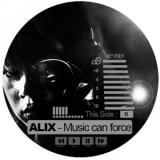
For this vinyl release of the label Atelier Electronique, Alix, a survivor of the first techno era, remembers with this title, kicks and melodies that made the great moments of american electronic music scene. "Technasia" is remixed on the B side by Madben, who was discovered by Laurent Garnier on his show "It Is What It Is", already playlisted and played by top DJs and adopted by the Atelier Electronique label.
DJ Sprinkles & Hardrock Striker feat. Move D
SKYLAX HOUSE EXPLOSION IV – After The Dancefloor
A defining transmission in the history of Skylax Records. Originally released across different moments of the Skylax catalogue, these recordings are now assembled as the final chapter of the Skylax House Explosion series — a project exploring the architecture, memory and survival mechanisms embedded within house music culture. The record opens with Move D’s “Outer Rim 64”, originally released in 2018 as part of the Skylax House Explosion narrative. Suspended between motion and distance, the track establishes the conceptual perimeter of this final chapter — a space where rhythm no longer functions only as propulsion, but as orientation. Here the listener stands at the outer edge of the dancefloor’s architecture, where structure persists even as its original social conditions begin to disappear. The sequence continues with Hardrock Striker’s “Motorik Life (DJ Sprinkles Dub)”, originally released in 2011. Rather than operating as a conventional remix, the Dub reinforces the motorik continuum of the original composition, transforming repetition into endurance. DJ Sprinkles preserves the infrastructural skeleton of the dancefloor — its capacity to sustain bodies through duration alone, without narrative resolution or emotional release. The record culminates with “Motorik Life (DJ Sprinkles Mountain Of Despair Remix)”, one of the most politically explicit works ever associated with Skylax Records. Through the relentless repetition of the phrase “mountain of despair,” Terre Thaemlitz dismantles the traditional function of dance music, transforming remix culture into structural critique. Referencing Martin Luther King Jr.’s famous metaphor, the remix removes the promise of redemption and leaves only the architecture of struggle. The dancefloor is no longer presented as escape, but as a temporary condition of survival. Together these recordings reveal house music’s true function: not to resolve despair, but to create temporary conditions in which bodies can continue to exist despite it.
AFTER THE DANCEFLOOR
you cannot preserve a dancefloor
by archiving its sound
because the dancefloor was never sound
it was bodies
finding temporary protection
inside systems designed to erase them
house music was never a genre
it was a survival strategy
when the lights disappeared
the structures remained
and so did we