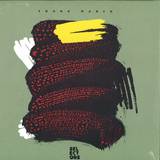
Rain&Shine proudly present Steve Elliott's first album -True Image (1981). After failing to find musicians with the same direction and devotion to music he had acquired, Steve taught himself to play eleven different instruments and move from hometown of Pasadena, California to Denver Colorado.
Eager to express his musical ability, Steve became a DJ on KDKO radio, and would then go on to compose, arrange and perform True Image on September 20th 1981 with a collection of drum machines, synthesizers, and contributing musicians on rhodes, flute, guitar and vocals.
Mr. Elliott's philosophy is 'You hold in your hand a dream, a dream come true by a man whose only objective was to express the love he contains, the love we all contain within through music.'
On many collectors want lists, passing for a median price of $450 online.
Cerca:object collection
Sometimes, - despite today's high-octane, fast-track and hyper-hysteric music business - you come across things that seem so pure, perfect and poetic that it almost hurts. "Socialo Blanco" is one of these objects.
It appears understated at a first listen, startling at the second and totally enamouring by the third run. To lay it all out on the table: it sounds like a Music from Memory re-issue, looks like a Growing Bins Records discovery and feels like a flea-market-hippie-uncle-record-collection find.
Based on the language (coincidences and misbehaviour included) and direction of the classic EMS Synthi AKS and recorded by hand and directly to tape (no midi, no sync, no computer), it is at once out of time and out of touch with current sound aesthetics, but that only makes it even more contemporary (vintage) - like a great piece of furniture.
Unsurprising, if you know that Feater is helmed by Daniel Meuzard. Hailing from Vienna and having made a name for himself as a trustworthy and skilled studio equipment dealer and working closely with producer and studio engineer Sam Irl, the man has a knack for turning yesterday into today.
Already is his project's second album, "Socialo Blanco" is the result of all of this and some magical and effortless sessions. The voice of Vilja Larjosto from Finland and Ghana's Eric Owusu (Pat Thomas, Ebo Taylor) on percussion, spontaneously invited to the recording sessions by fellow Viennese Giuseppe Leonardi, are the icing on the cake. All of that and especially the non-conformist pop song "Time Million" symbolizes the heart and soul of an album that deserves to be billed as such. And that is no mean feat.
To happiness through simplicity. Rendering a very personal tribute to well understood minimalism, the same that is based on simplicity and conceptual refinement and that is adapted to the creation and musical production -respecting that electronic maximum canonical of "less is more" - in terms of its compositional process, instrumentation, mixing, effects, etc. 'Simple Things' can be danced throughout the night. It is a collection of tracks with punch, made from the clarity and personality that characterize Nacho Marco, susceptible to being played at very different times and places. Exhale, from beginning to end, a natural love towards the dancefloor. From the simplicity of the search for this objective, its author -in his Warm Studio in Valencia- has used different rhythm boxes -programmed internally- for each track in order to, also based on a raw mix - especially in percussion and basses - to provide the tracklist with a varied air -between digital and analogue- through which to enjoy traveling through deep-house, nu-disco, acid, etc. and, therefore, in funk, soul, jazz, etc. From Chicago to Valencia, passing through N.Y. and Detroit. And all this avoiding arguments and essays of style. From a maximum freedom of creation and enjoyment. Yes, we are facing a "100% Nacho Marco" job.
White Shadows In The South Seas is the title of a book written in 1919 by Frederick O'Brien as part of a trilogy he wrote based on his experiences living in the Pacific islands in the early part of the 20th century. His book was taken as the starting point for a film to be directed, initially, by Robert Flaherty (famous at the time for his groundbreaking documentary / fiction film Nanook Of The North) with W.S.Van Dyke as his support. The film, ultimately, apart from the title, had little to do with O'Brien's book and Flaherty left the film after a few months leaving Van Dyke to finish it.
I purchased O'Brien's book, along with many others, from Basement Books, a secondhand bookstore in Melbourne/Australia. Part of my 'Islomania' and on going fascination with all things Pacific. When I discovered there was a 1929 silent film based on the book I sought it out and started to present it as part of my 'Live Music/Silent films' repertoire. Tabu by Frederick Murnau, which coincidently also had Flaherty as co-director originally, was the first film I ever wrote / improvised a score for and presented as a live film/music performance. My repertoire extends to over 23 films now.
My eclectic and diverse musical and artistic interests extend into 'Hawaiian', 'Exotica', 'Ambient' and 'Electronic' Music. I have produced several volumes of so called 'Electronic, Ambient, Exotica' on CD and Vinyl, including Kiribati, Globe Notes, Rayon Hula ( on Vinyl, CD and digital format ) and most recently, New Globe Note on Vinyl and White Shadows In The South Seas on CD.
White Shadows In The South Seas features some of the music presented in my live screenings of the 1929 silent film.
The film is the story of Dr. Matthew Lloyd, an alcoholic doctor who is disgusted by the exploitation by white people of the natives on a Polynesian island. The natives dive for pearls, however, numerous accidents occur and one diver dies. In anger, Dr. Lloyd punches Sebastian, the employer. As revenge and to prevent further interruption of his activities, he tricks Dr. Lloyd onto a ship with a diseased crew (thinking they are ill) and his men rough him up and send the ship off into a storm. Dr. Lloyd survives and is washed ashore on an island where none of the natives have ever seen a white man before. Lloyd is rescued and ultimately falls in love with the chief's daughter, who is Taboo, hence Lloyd is prevented from pursuing his love for her. An incident occurs and a young boy is thought to have drowned but Lloyd is able to revive him, earning him points and permission with the chief's daughter. Lloyd begins to realise that the local islanders have no sense of the value of the black pearls which grow in abundance around their island and he starts to dive for them and collect them. One morning the white man Sebastian unexpectedly turns up on a scooner and starts to offer the islanders trade for their pearls. Llloyd tries to interrupt the encounter and is shot and dies. His wife and the islanders morn for his dead body and, symbolically, the passing of a way of life.
Mike Cooper plays - Electric and acoustic lap steel guitars / electronics / Zoom Sampletrack / Kaos Pad / Casio SK1 / Korg Drum Machine / Self Made Instruments.
It also features field recordings made on Pulau Ubin by Mike Cooper during a month as Artist In Residence for The Artist Village / Singapore.
I would like to acknowledge and thank Lawrence English (Room40 Records) for his assistance and encouragement with the original recordings and the CD version of White Shadows In The South Seas.
All music written and played by Mike Cooper PRS/MCPS - except Po Mahina (trad. Arr. Cooper) and Hilo Hanakahi (trad. Arr. Cooper)
Recorded and Mixed at the Steelworks in Rome 2012/2013.
A White Shadow In The South Seas
In February 2014 'A White Shadow In The South Seas' was the title of an audio-visual installation I made at the Teatro In Scatola in Rome, Italy, presented as part of a series of sound installations titled 'Visitazioni' produced by Proposte Sonore.
The essay below, as well as our collection of Hawaiian shirts, Exotica and Hawaiian vinyl records, was an inspiration for this installation.
'..the transformation and reconstitution of the souvenir commodity as an indigenous ethnic art form and a scarce relic of Hawai'i's romanticized past...' from - Clothing and Textile Reasearch Journal - From Kitsch to Chic by Marcia A. Morgado.
And....
Michael Thompson's Rubbish Theory (1979)
' ...a critical aspect of Western culture is the pre-disposition to see objects in terms of two overt categories: the transient and the durable. Objects identified as transient have finite life spans and lose value over time, whereas those identified as durable have infinite lives and over time increae in value....category assignments are arbitrary, but once assigned a category membership determines relative value. Fashion apparel-by defenition-is assigned to the transient category; paintings commonly are designated durables....how is it that transient objects.. ( e.g. Hawaiian shirts and vinyl records ) ..sometimes become durables.
Objects assigned to the rubbish category are largely invisible, have no value and, ideally, no life span. Fashion for example, no longer worn and relegated to the back of the wardrobe has fallen into the covert rubbish category. But rubbish can be rescued and transformed. Thompson says ' What I believe happens is a transient object gradually declining in value and in expected life span may slide across into rubbish. Here it exists in a timeless and valueless limbo where it has a chance to be re-discovered and be successfully transformed to a durable. Such transferes are radical: objects gradually slide from transcience to rubbish, but the transformation from rubbish to durable involves an all-or-nothing leap across two boundaries, that separating the worthless from the valuable and that between the covert and the overt. Things drift into obscurity but they leap into prominence.
The delightful consequence of this hypothesis is that in order to study the social control of value we must study rubbish.
The rubbish-to-durable transformation is accompanied by the development of highly specialized knowledge derived from the discovery of subtle variations and complex details that went unnoticed in the objects transient stage. The discoveries initiate renewed interest in the object and its market value begins to climb. As prices soar beyond the reach of ordinary people, the object becomes available only in high priced collectors' markets. Furthermore, as market values rise, the aesthetic value of the object undergoes a reassessment as well, and it becomes increasingly apparent that the objects intrinsic beauty has been overlooked. Ultimately the object is re -assigned as a durable and becomes recognized as a timeless classic.
Exotica, Ambience and Pacificism - A dialogue with Mike Cooper & Professor Philip Hayward Deputy Pro Vice Chancellor of Research Southern Cross University, Lismore, Australia.
Duckett returns to Wisdom Teeth with another otherworldly four-tracker of melodic, trippin' house-n-techno. While recent outings on Berceuse Heroique and Solar Phenomena have showcased the more abstract edges of his sound, Corde Raide Vers Nulle Part comprises a collection of the Welsh producer's most melodious work to date. Throughout, the tracks are driven by snaking FM basslines, shimmering video game synths and tonal drums, creating a record that will appeal equally to fans of golden era Night Slugs, bleeping minimal techno, and the compositional electronica of labels like RVNG International and Latency.
After the solo album Paths Of The Errant Gaze in 2016 Reinier van Houdt returns to Hallow Ground with Igitur Carbon Copies - an album based on the unfinished gothic tale Igitur, a collection of texts that eventually was abandoned by its author Stéphane Mallarmé in 1869.
Connecting with Mallarmé's obsessions about chance and destiny, Igitur Carbon Copies is the fragmentation of all the roots that ran under its predecessor Paths Of The Errant Gaze and brings these to a provisional close: guided by David Tibet's voice reading the reworked text we descend through spheres of deserted anthems, disembodied voices, morse signals, crank calls, corroded tapes, radio statics, stones, while doing counting games. Here the acoustical spaces are manifold, blended or shifted in a heartbeat, where far and near, up and down are relative, where Riemann's god is pointless and angels are enjoying their space. Here perception is a vice that constantly hallucinates realities.
Reinier van Houdt started experimenting with taperecorders, radio's and objects at a young age. Later he studied piano at the Liszt Academy in Budapest and the Royal Conservatory in The Hague. He developed a fascination for all matters that defy notation: sound, timing, space, physicality, memory, noise, environment - points beyond composition, interpretation and improvisation. He has built himself an unusual repertoire that consistently resulted from personal quests; from composing with non-musical sources, from collaborations with composers and musicians, from research in archives or from unorthodox studies of classical music. He has collaborated with artists like Francisco López, Maria de Alvear, Robert Ashley, Luc Ferrari, Annea Lockwood, Alvin Curran, John Cage, Christian Marclay, Walter Marchetti, Charlemagne Palestine and joined the legendary outsider-collective Current 93 in 2012.
Her Majesty's Ship is proud to present 'This Never Happened', the latest album from hugely talented French-American singer and producer Yan Wagner.
This always inventive and off kilter artist has had many top releases on labels like Kitsune and has worked with the likes of the legendary Arnaud Rebotini and Etienne Daho. He also has a side project, The Populists, is producing the first album of Calypso Valois and wrote the soundtrack for the short film 'Victoria' by Mathilde Marc. Someone who plays events like SXSW and Montreux Jazz Festival, Wagner's playful disco-pop tunes always find their way into the emotions of those who hear them.
For his second album, the artist wondered what to do: surprise everyone with a selection of ballads or serve up the electronic sounds that defined his last effort Forty Eight Hours. The answer lies somewhere in between, with covers of Frank Sinatra and Lee Hazlewood mixed in with fresh and catchy disco production. Unlike the last record produced by Arnaud Rebotini, this record is producer by Yan himself with a triple objective: to favour the first takes, the heat of the sound and to reduce the post- production to a minimum. It makes for something authentic and real, and is an album of artistic self-questioning, tenacious dreaming and overcoming doubt.
Says the artist, "The songs on this record are a series of lies; views of the mind. 'This Never Happened' is a collection of stories that never happened. Ten tracks talking of vain loves, of nocturnal experiences and of life and truth, which are all so short.'
Starting with the retro synths and shiny arpeggios of the title track, ensuing cuts like 'Blacker' are real chuggers with almost de-humanised vocals over the robot beats. 'SlamDunk Cha-Cha' is descended from Bowie with its camp synth wiggles and sung- spoken vocals. Switching up the tempo, slower tracks like 'Grenades' are perfectly glowing and frazzled with their pixelated melodies and cold chords. More upbeat affairs like 'No Love' are like lighter and cheerier versions of Depeche Mode, and the Sinatra cover 'It Was A Very Good Year' is a stirring, synth heavy version that is every bit as tender as the original.
This is a fantastic album of timeless electronic songs and is sure to be one of the standout releases of the year.
Granny13 opens with Nicola Ratti's 'Odd Doubt'. With the use of a modular system and tape loops, a broken rhythm is obtained by parallelism between single sound signals as LFO one or processed tapes.On the second side, Giovanni Lami's 'Johnny Leech' is made with a small bunch of equipment, just a chaotic hand-made synth (cacophonator) and a memoryman, working mainly on static electricity and leakage current in the synth used without any kind of power supply.
Reviews
The Wire
''Two Italian mucisians share a split single of glitchy fun and everyone goes some happy. Lami s piece uses a defective unplugged synthesizer to make huzzing chitters that have a kind of rhythm in spots. Ratti s contribution is a bit more structured it sounds like a record of accordion miniatures broken into pieces, then glued back together with little pieces of felt stuck onto it. Which would definitely be a pretty hep thing to hear.''
Textura
''Some releases qualify as art objects as much as musical collections, a case in point this recent seven-inch vinyl outing featuring material by Nicola Ratti on one side and Giovanni Lami on the other. That shouldn't be interpreted to mean that the musical content isn't worthy of one's time, as it assuredly is, but more to emphasize how striking the sleeve artwork by Opora is and how effectively it complements the musical content.Mastered by Giuseppe Ielasi and issued in an edition of 150 copies, the release opens with Odd Doubt, a concise experimental setting by the Milan-born Ratti, who's issued material on labels such as Anticipate, Preservation, Die Schachtel, and Entr'acte and who's presently working with Ielasi in the project Bellows, with Attila Faravelli as Faravelliratti, and with Enrico Malatesta and Faravelli in ~Tilde. Though Ratti started out as a guitar player, his current focus is more on beat-analog experimentation and sound installation. In Odd Doubt, Ratti's modular system and tape loops generate broken rhythms that varyingly call to mind dub-techno, even if dub-techno of an extremely wonky variety. Off-beat chords, crackle, and snare strikes add to the dubwise flavour of the material, though ultimately it registers as more of an experimental exploration than straight-up dub exercise.The flip side features Johnny Leech by Lami, a one-time photographer now known as both a field recordist and a musician focusing on soundscaping and sound-ecology. In his contribution to the seven-inch, Lami's chaotic hand-made synth (cacophonator) and memoryman give birth to blustery smears of static electricity that ultimately mutate into an Oval-like array of ripples and scratches. Johnny Leech is so removed from anything conventionally musical, it makes Odd Doubt sound like a Top 40 pop song. Like Ratti's piece, Lami's is short, so short, in fact, it gives the impression of being an excerpt from a larger sound art work. Here's a release where the abstract nature of the musical content matches its visual presentation.December 2014''
Vital Weekly 951
''Granny Records is from Greece, but the two musicians here are from Italy, of which I don't I heard from Giovanni Lami before. His piece is called 'Johnny Leech' and he uses a hand-made synth known as the cacophonator and a memory man (a delay machine), 'working mainly on static electricity and leakage current in the synth used without any kind of power supply'. It makes up for a nice piece of chaotic lo-fi sound, which is put forward through methods of improvisation. Quite a nice piece and it fits the format very well. The crackling of vinyl surely adds an extra layer. Nicola Ratti uses a modular synth and tape loops, of what seems to be percussive material, but the rhythm is broken down and the whole thing has a nice gentle feel to it, even when it bumps, clicks and glides, but the synth makes it more subtle. Here too one could say this perfect for a 7": one doesn't have the idea that this is cut from a longer part as is not unusual with this kind music. Especially Ratti seems to have worked out his music as a composition, which is very nice. (FdW)''Vital Weekly 951''Granny Records is from Greece, but the two musicians here are from Italy, of which I don't I heard from Giovanni Lami before. His piece is called 'Johnny Leech' and he uses a hand-made synth known as the cacophonator and a memory man (a delay machine), 'working mainly on static electricity and leakage current in the synth used without any kind of power supply'. It makes up for a nice piece of chaotic lo-fi sound, which is put forward through methods of improvisation. Quite a nice piece and it fits the format very well. The crackling of vinyl surely adds an extra layer. Nicola Ratti uses a modular synth and tape loops, of what seems to be percussive material, but the rhythm is broken down and the whole thing has a nice gentle feel to it, even when it bumps, clicks and glides, but the synth makes it more subtle. Here too one could say this perfect for a 7": one doesn't have the idea that this is cut from a longer part as is not unusual with this kind music. Especially Ratti seems to have worked out his music as a composition, which is very nice. (FdW)''Vital Weekly 951''Granny Records is from Greece, but the two musicians here are from Italy, of which I don't I heard from Giovanni Lami before. His piece is called 'Johnny Leech' and he uses a hand-made synth known as the cacophonator and a memory man (a delay machine), 'working mainly on static electricity and leakage current in the synth used without any kind of power supply'. It makes up for a nice piece of chaotic lo-fi sound, which is put forward through methods of improvisation. Quite a nice piece and it fits the format very well. The crackling of vinyl surely adds an extra layer. Nicola Ratti uses a modular synth and tape loops, of what seems to be percussive material, but the rhythm is broken down and the whole thing has a nice gentle feel to it, even when it bumps, clicks and glides, but the synth makes it more subtle. Here too one could say this perfect for a 7": one doesn't have the idea that this is cut from a longer part as is not unusual with this kind music. Especially Ratti seems to have worked out his music as a composition, which is very nice. (FdW)''
Autotomy is a collaboration between Belgium's Sleeperhold Publications, Brooklyn-based musician Patricia (Max Ravitz) and the Dutch artist Louis Reith. This output is the result of a long process of contemplation, discussion and elimination which gave us a record that encapsulates both Patricia's sense for hardware production and dance floor rawness. Describing this release is not a simple task. So we'll just tell it like it is: it's a record that slows down and, in this process, reveals its mystery. Referencing the title of this release, wunderkind Max Ravitz seems to provide the listener with the possibility of transformation, a way to shed part of your own being.When running though the tracks, one discovers the essentials of Patricia's sound architecture: the presence of lightness, of longing, mixed with the ability to deny it in the next instant. Sonically, there's a careful balance in these productions that belies their fundamental function as body music. It's ambient yet danceable, approachable despite it's often deconstructed layout, and ultimately warm and inviting.The entire record is made using Ravitz collection of hardware, which gives it its uncompromising texture. The presence of kicks, beats and soundscapes does not originate from a clean digital source but from a physical action, an excerpt of movement, a tick of the human hand. It is floating versus rhythmical movement, visceral versus strict. But above all, it is alive.The artwork used for Autotomy's sleeve design and the etching on the B-side was provided by Louis Reith. (All three tracks feature on the record's A-side.) Just as Patricia, Reith tries to resist technology in favour of physical and craft-based media, though the contrast between digital and analog is always present.Dutch artist Louis Reith produces works through a variety of different media, ranging from collages to wood sculptures, to paper objects and ink on paper works, always keeping an interest in simple abstract shapes and their combination. With an interest in materiality Louis resurrects found footage and creates new landscapes of shape and color, celebrating the human hand at work. Deliberate compositions form an illegible visual language where hidden words are portrayed as abstract sculptures.Reith also co-runs Jordskred, an independent publishing company worth checking out.Ravitz certainly is unstoppable and releases in a relentless and uncompromising fashion.Besides many collaborative projects with an array of artists (released under monikers such as Masks, Pulpo, Inhalants, DSR.MR...) he's released music on labels like Opal Tapes, L.I.E.S., Russian Torrent Versions, Ghostly Intl.,... 2017 has been quite a year for him so far. He not only founded his own imprint, Active Cultures, but also released a triple LP. Ghostly Intl. describes the release as a 'kaleidoscopic, a multi-faceted techno trip' and we couldn't agree more.
- A1: Danny Boy - Diskomix (Disko Version)
- A2: Gerrit Hoekema - Televisiewereld
- A3: Ghostwriters - Swizzle
- B1: Larry Heard - Dolphin Dream
- B2: Wolf Müller - Pfad Des Windes
- C1: The Force Dimension - 200 Fa (Extended Mix)
- C2: Frank Youngwerth - Whirr (Original Mix)
- C3: Greene Baize - Spick And Span
- D1: Ray Tracing - Mariopaint
- D2: Personal Fx - Objects In Mirrors
Repress
After last years slick selection for the series from MCDE, Young Marco steps up with a great set of obscurities. Top Tip!
.
Born Marco Sterk, he certainly doesn't come from a standard DJ background. A former skate rat who grew up loving American post-hardcore and '90s hip-hop as much as early Warp Records, he's been affiliated over the years with Amsterdam institutions such as Rush Hour, Red Light Records (where you'll find him most weekdays!) and, of course, Dekmantel itself. Still, there's no question that he's always followed his own path, even during the years that playing his favorite records meant that he was occasionally clearing dancefloors.
Things are different these days, of course, as Sterk now regularly plays around the globe and has been widely hailed not just for his DJ talents, but also for his digging prowess and uncanny ability to pluck jams out of genres, eras and geographies that even veteran DJs will often ignore.
Still, Marco's entry in the Selectors series isn't some soulless collection of 'Holy Grail' rarities. 'Where's the fun in that' he explains. 'Anybody with an internet connection can check what flavor-of-the-month records are in demand.'
Just like the first Selectors compilation, this is not a mix CD, but a collection of hand-picked, unmixed tracks that Sterk has personally chosen from his own vinyl archives. Moreover, Marco has put together a collection of tracks that represent not only how he plays music, but also how he makes music himself. The songs here are melodic, electronic and bound together by a refreshing sense of naiveté. Nothing sounds overly calculated; the tunes here span several decades and include dollar-bin records, avant-garde records, club records and yes, a few things that collector types have likely been looking to get their hands on. It's not meant to be a grand statement, as Marco would rather provide an honest snapshot of his musical tastes and share a few of his favorite tracks and artists in the proc
Jam Money is the shared musical vision of Kevin Cormack and Mathew Fowler. Mathew (Bons) and Kevin (Half Cousin, Harry Deerness) first began collaborating as part of the Blank Tape Spillage Fete, an ongoing collective project of art and music which focuses on the creation and perpetuation of small DIY exhibitions, related events and limited releases that celebrates the hobbyist nature of home recording.
Jam Money revolves around a passion for the simple and sometimes restrictive nature of four-track cassette recording. Using old half-broken guitars, clarinets, charity shop keyboards, toys, family heirlooms, zithers, home-made percussion, and household objects a shared dialogue appears, involving both mark making and musical mishaps, allowing the makers to be carried along as the music finds its own way.
Genre definitions melt away in Jam Money's music as ambient dissolves into lo-fi rock, noise into fragile naive classroom melodies. Creativity beyond easy categorisation.The first recordings titled 'Blowing Stones' were self-released in 2014. The cover and insert artwork for this record featured abstract paintings by the artist Aimée Henderson whose work and process is a great influence on their music. Having played gigs alongside kindred spirits National Bedtime and Plinth, the tail end of 2015 saw the the band travel to Germany to play with the Notwist and Le Millipede for a series of 'Alien Disko' nights organised by Alien Transistor, a label with a shared kinship of both the weird and wonderful.
'A Gathering Kind' is the second album by Jam Money: a journey of sound and colour, subliminal images and narrative. The roots of this collection found Fowler and Cormack using an earthier, more instinctive language, making it a rougher-edged sibling to their other recordings, with parallels to the home-spun worlds of Flaming Tunes, Pumice, Maher Shalal Hash Baz and World Standard. Aimée's artwork features again, both paintings and music forming a collective language of dream-like adventure.
"Poignant and exploratory. Melting together acoustic and electronic elements, the narrative throughout is one of a ghostly world heading for winter. A firm fan favourite Stephen Pastel (The Pastels & Monorail Music) on Blowing Stones.
"Created in question and answer form, their songs exist like little sculptures - wayward and peaceful, sometimes whirring into automatic life under the pair's combined attention."