On her debut album, Lucy Gooch stays true to her electronic foundations, while incorporating more acoustic instrumentation and digging deeper into her folk roots through songwriting. But at the heart of Lucy's music is her rapturous vocal, with which she has experimented more than ever over the course of her first full-length. Many of the pieces on 'Desert Window' started out as vocal improvisations from which she pulled a narrative. Taking cues from the incantatory chanting found in middle English poetry such as 'The Names of the Hare', as well as the prescient imagery in contemporary works like 'The Hearing Trumpet' by Leonora Carrington (1974). "To a larger extent, this became an experiment in placing my voice in a more narrative way, while remaining oblique," Gooch explains. While her previous work could be compared to drawn-out landscapes punctuated with moments of romance and radiance, this album feels grounded in materiality and the everyday. Gooch's voice is at times strident, while elsewhere restrained and broken. "I lost connection to my voice and then had to rediscover it, which was exhilarating. There were these bursts of energy where I'd be messing around and occasionally stumble upon something". There are hushed melodies and exhausted squalls, creating dissonance and space. The result is an atmospheric balance between Kate Bush and Cocteau Twins harmonies, Vangelis major chords, and a juxtaposition of folk ambience reminiscent of the offset madrigals of The Third Ear Band and Italian cult film composers Goblin. It is a complex and elegant album, an all-consuming series of songs that reach into jazz, electronica and classical song construction.
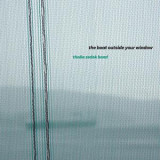
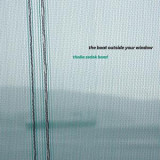
The band is guitarist and vocalist Zedek, bassist Winston Braman, and drummer Gavin McCarthy (Karate), now joined by newest member, pedal steel guitarist Karen Sarkisian. On The Boat Outside Your Window, Sarkisian"s counter melodies and oblique augmentations created with non-traditional tools like an ebow, add an otherworldly quality to songs. The grit of Zedek"s guitar and drive of Braman and McCarthy are met with synth-like swells and more harmonic density. The album features guests Nancy Asch (percussion) and Beth Heinberg (piano) whose subtle touches are added to "Shoes" and "Aliyah". The record was recorded with Andy Hong, mixed by Seth Manchester, and mastered by Sarah Register. Zedek"s mastery of songwriting is on full display on The Boat Outside Your Window. Her unique musical voice remains potent and pointed. Cultivating her sound with purpose and an unflinching view of humanity, Zedek"s words and music are both invigorating, and capable of deep emotional complexities. The Boat Outside Your Window is Thalia Zedek reaching new heights, reinforcing her status as a peerless songwriter and voice.
The band is guitarist and vocalist Zedek, bassist Winston Braman, and drummer Gavin McCarthy (Karate), now joined by newest member, pedal steel guitarist Karen Sarkisian. On The Boat Outside Your Window, Sarkisian"s counter melodies and oblique augmentations created with non-traditional tools like an ebow, add an otherworldly quality to songs. The grit of Zedek"s guitar and drive of Braman and McCarthy are met with synth-like swells and more harmonic density. The album features guests Nancy Asch (percussion) and Beth Heinberg (piano) whose subtle touches are added to "Shoes" and "Aliyah". The record was recorded with Andy Hong, mixed by Seth Manchester, and mastered by Sarah Register. Zedek"s mastery of songwriting is on full display on The Boat Outside Your Window. Her unique musical voice remains potent and pointed. Cultivating her sound with purpose and an unflinching view of humanity, Zedek"s words and music are both invigorating, and capable of deep emotional complexities. The Boat Outside Your Window is Thalia Zedek reaching new heights, reinforcing her status as a peerless songwriter and voice.
Goldstar takes perennial New Yorkers, IMPERIAL TRIUMPHANT's exploration of the extreme and arcane and delivers the band’s most focused, authentic and accessible work to date. While the triumvirate has expanded the language of extreme music with albums including Alphaville (2021) and Spirit of Ecstasy (2023) via musical improvisation and a visual obliqueness that extends to their haunting masked performances, this is their defining moment. Also joining the Decibel magazine vaunted ensemble are Meshuggah drummer Thomas Haake and legendary drummer, Dave Lombardo, both of whose presence makes it clear that musically, IMPERIAL TRIUMPHANT are in a class by themselves. From album opener “Eye of Mars” to the stirring “Hotel Sphinx” and the death metal scraping “Rot Moderne”, this is the sound of IMPERIAL capitalizing on months of churning up the road in the company of Behemoth, Carcass and Zeal & Ardor. In their vision of urban disorder, IMPERIAL TRIUMPHANT's monolithic cityscapes are dark as any of their extreme or black metal brethren.
out of Stock
Last delivered 18 months ago available to reorder, subject to availability
As the leader of new outfit Sarter Kit, saxophonist Tara Sarter is creating a unique form of minimal, experimental jazz drawing on humanist principles and shared experiences. Her uncluttered and emotionally heavy debut album 'What I am and What I'm Not' creates an open, instrumental soundworld, where breaks and silences command equal gravitas as the notes and beats.
The masterful drumming of Lukas Akintaya dances between oblique patterns in odd meters, into rolling grooves and afrobeat inspired rhythms. On keys and synth, Elias Stemeseder creates tension and releases, with lingering chords and fragile melodies. Stemeseder's synthesizer work throughout the album is subtle yet masterful. Stalking the silence between the sax, drums and piano, creating a haze of digital textures within the margins of the music. Much of the album was recorded live, preserving the raw, unedited energy of their performances.
Beyond its musical qualities, 'What I am and What I'm Not' is a reflection of Sarter's belief in the power of music as a form of human connection. For Sarter, music is not about proving technical prowess but about creating something meaningful, something that transcends barriers and speaks to the shared experience of being human.
AIR 's Jean-Benoît Dunckel & Jonathan Fitoussi have joined forces to release Mirages II, a sonic exploration of analogue synthesis, moving from the minimal to the cinematic.
"After their first album as a duo, released in 2019, JB & Jonathan have gone back together to build another work, in which their two personalities unfold even more surreptitiously, always very attentive to each other.
At their heart, an electronic spirit, anchored to a very mineral rhythm.
There are glimpses and echoes of the great German musicians of the 70s, with their infallible metronome.
There are also ghosts of Detroit's hypnotic machines.
Above all, this album moves forward as if it were running slowly, its rhythms giving a cadence that calms and radiates, in sparkling harmony...
These mirages, second chapter of that name, are at their zenith."
J. Ghosn
out of Stock
Last delivered 15 months ago available to reorder, subject to availability
After the iconic Musica da Discoteca series, l’oggetto returns with DANCE, a new 12” continuing his exploration of the rooted electronic music interplay between his native Italy and his adopted home, the US.
With his signature deep vibes and iconoclastic style, these four new tracks deliver a sonic journey through oblique electronic textures: raw and sharp yet smooth and uplifting; leftfield and trippy, percussive and bouncy, hypnotic and transcendental.
l’oggetto is the moniker of NY-based Italian multidisciplinary artist Marco Scozzaro. With roots in the Italian hardcore/punk subcultures of the ’90s, he quickly embraced electronic music production and club culture. True to his DIY ethos, in 2020 he co-founded MKDF Records to release and distribute his uncompromising sound.
out of Stock
Last delivered 19 months ago available to reorder, subject to availability
Jacob Long’s fourth full-length for Kranky began as a notion to reimagine Earthen Sea as a “piano trio,” inspired by a year-long immersion in the ECM label catalog, but the compositions soon grew more complex.
Elements were chopped and resampled, then layered with bass, drums, percussion, and additional keys. The result is a fusion of live band acoustics and downtempo loops, sculpted into nine smoke-and-mirror dubs of fractured jazz, soft-focus noir, and trip-hop dust: Recollection.
Like the title implies, Long’s playing and production share a mood of pensive movement, shuffling and rippling like uncertain memories at strange hours.
From looming fog (“Present Day,” “Neon Ruins”) and shadowy breaks (“Another Space,” “Cloudy Vagueness”) to rosy glows (“Clear Photograph”) and smeared reverie (“White Sky”), Recollection deftly wields its palette of gradient color and subdued states of beauty.
His is a music of reduction and reflection, kinetic but oblique, attuned to the silhouettes of sound.
out of Stock
Last delivered 20 months ago available to reorder, subject to availability
Ben Lukas Boysen’s new album, Alta Ripa, signifies a seismic shift in his artistic journey. It revisits the foundational impulses of his youth, shaped amidst the serene beauty of rural Germany—a bucolic backdrop where his creative palette flourished. However, it was his move to Berlin in the early 2000s that electrified his sound, infusing it with the city’s pulsating energy and diverse cultural influences. Alta Ripa captures this transformative experience, blending the introspective melodies of his rural beginnings with the bold, experimental tones born from Berlin’s vibrant electronic music scene. This album is a testament to Boysen’s evolution, showcasing how geographical shifts can profoundly shape artistic expression.
Boysen’s fourth studio album under his own name, Alta Ripa is a nod to his beginnings as much as a hint to his future, and as a work, it’s almost contradictory in its boldness and humility. He invites the listener on a journey of self-discovery; both for himself and for them, describing the music as “something the 15-year-old in me would have liked to hear but only the grown-up version of myself can write.”
His last two albums involved working closely with other musicians, including cellist Anne Müller, flugelhorn player Steffen Zimmer, and drummer Achim Färber. However, inspired in part by a recent return to live performance, Alta Ripa sees Boysen circling back to his passion for pure computer music.
For Boysen, the return to his youthful musical language marks a major turning point in his career. It represents a departure from his roots in classical music – his mother was an opera singer and his father an actor with an appreciation for Wagner, Arvo Pärt, Keith Jarrett, and Stockhausen. Although these are still important influences, Alta Ripa encapsulates a new, exploratory interplay between Boysen’s careful craft and his ability to let go of some of the process.
The album’s title comes from the original Roman name of the town that Boysen grew up in, Altrip, where he lived until his early twenties. This formative period is central to the ideas behind this album, from Boysen’s parental ‘schooling’ in classical music through to his sonic journeys through drum and bass, Aphex Twin, and Autechre — all of which changed his idea of what music could be. The extreme energy of tracks like ‘Acperience 1’ by Hardfloor, ‘Tracks & Fragment’ by Cari Lekebusch, ‘Focus2 Implan’ by Jiri.Ceiver, and ‘Low On Ice’ by Alec Empire are also pivotal influences.
For Boysen, this time of his musical development also involved knocking down the pillars that he previously thought had carried his world. A key moment for Boysen was being given a precious (pre-internet) club cassette at school that featured artists like Source Direct, Photek and Goldie. Excited by this new discovery, he introduced his father to the song ‘Dred Bass’ by Dead Dred. After the song finished, Boysen Sr. turned off the tape and proclaimed it was “the end of all music”. This heated exchange sparked a new, and more mature dialogue between the two that involved them sharing and discussing music on a regular basis.
Boysen’s classical and jazz music upbringing might not be easily noticeable from the electronic palette that he uses. But it can be found in its bones; the structure of the tracks and their dynamic shifts. On Alta Ripa, he intentionally embraces a spirit of controlled chaos, churning out sonic ideas to see what sticks.
One of Brian Eno’s Oblique Strategy cards contains the phrase “gardening, not architecture”, and the trajectory of Boysen’s creative path reflects this metaphor. In much of his previous work he followed a sort of Brutalist architect’s approach; here, he was fully responsible for the tracks’ austere structures and planned them with deliberate care. But by sacrificing some of that control on Alta Ripa, he sets the right conditions for a dark and unpredictable, organic growth. It’s a push forward into a new world.
out of Stock
Last delivered 22 months ago available to reorder, subject to availability
Ben Lukas Boysen’s new album, Alta Ripa, signifies a seismic shift in his artistic journey. It revisits the foundational impulses of his youth, shaped amidst the serene beauty of rural Germany—a bucolic backdrop where his creative palette flourished. However, it was his move to Berlin in the early 2000s that electrified his sound, infusing it with the city’s pulsating energy and diverse cultural influences. Alta Ripa captures this transformative experience, blending the introspective melodies of his rural beginnings with the bold, experimental tones born from Berlin’s vibrant electronic music scene. This album is a testament to Boysen’s evolution, showcasing how geographical shifts can profoundly shape artistic expression.
Boysen’s fourth studio album under his own name, Alta Ripa is a nod to his beginnings as much as a hint to his future, and as a work, it’s almost contradictory in its boldness and humility. He invites the listener on a journey of self-discovery; both for himself and for them, describing the music as “something the 15-year-old in me would have liked to hear but only the grown-up version of myself can write.”
His last two albums involved working closely with other musicians, including cellist Anne Müller, flugelhorn player Steffen Zimmer, and drummer Achim Färber. However, inspired in part by a recent return to live performance, Alta Ripa sees Boysen circling back to his passion for pure computer music.
For Boysen, the return to his youthful musical language marks a major turning point in his career. It represents a departure from his roots in classical music – his mother was an opera singer and his father an actor with an appreciation for Wagner, Arvo Pärt, Keith Jarrett, and Stockhausen. Although these are still important influences, Alta Ripa encapsulates a new, exploratory interplay between Boysen’s careful craft and his ability to let go of some of the process.
The album’s title comes from the original Roman name of the town that Boysen grew up in, Altrip, where he lived until his early twenties. This formative period is central to the ideas behind this album, from Boysen’s parental ‘schooling’ in classical music through to his sonic journeys through drum and bass, Aphex Twin, and Autechre — all of which changed his idea of what music could be. The extreme energy of tracks like ‘Acperience 1’ by Hardfloor, ‘Tracks & Fragment’ by Cari Lekebusch, ‘Focus2 Implan’ by Jiri.Ceiver, and ‘Low On Ice’ by Alec Empire are also pivotal influences.
For Boysen, this time of his musical development also involved knocking down the pillars that he previously thought had carried his world. A key moment for Boysen was being given a precious (pre-internet) club cassette at school that featured artists like Source Direct, Photek and Goldie. Excited by this new discovery, he introduced his father to the song ‘Dred Bass’ by Dead Dred. After the song finished, Boysen Sr. turned off the tape and proclaimed it was “the end of all music”. This heated exchange sparked a new, and more mature dialogue between the two that involved them sharing and discussing music on a regular basis.
Boysen’s classical and jazz music upbringing might not be easily noticeable from the electronic palette that he uses. But it can be found in its bones; the structure of the tracks and their dynamic shifts. On Alta Ripa, he intentionally embraces a spirit of controlled chaos, churning out sonic ideas to see what sticks.
One of Brian Eno’s Oblique Strategy cards contains the phrase “gardening, not architecture”, and the trajectory of Boysen’s creative path reflects this metaphor. In much of his previous work he followed a sort of Brutalist architect’s approach; here, he was fully responsible for the tracks’ austere structures and planned them with deliberate care. But by sacrificing some of that control on Alta Ripa, he sets the right conditions for a dark and unpredictable, organic growth. It’s a push forward into a new world.
out of Stock
Last delivered 22 months ago available to reorder, subject to availability
cLOUDDEAD's debut album, compiling six 10" EPs that appeared between 2000-2001, is aurally dense and obscured. A sprawling mass of miniature beat-suites and Dadaist lyrics, this strange and beautiful 3xLP would influence a myriad of sub-genres (cloud rap, hauntology, lo-fi hip-hop, etc.) in the two decades since its initial release.
Only the three members of cLOUDDEAD – Why?, Doseone and Odd Nosdam – can speak to the group's origins, but in the context of underground hip-hop towards the end of the 20th century, their arrival makes perfect sense. Cincinnati had a vital scene; home to Scribble Jam, an annual confluence of MCs, DJs, B-boys and graffiti artists. While the trio soon relocated to the Bay Area where they co-founded the Anticon collective, their Midwestern roots – in ramshackle basements of off-campus hovels, as the "cerberus of Southern Ohio" – would remain the atomic heart of their early recordings.
As Chris Martins writes in the liner notes, "The only reason we know their names today is because of how loudly and curiously they aired their insularity. They rewrote the entire world as they knew it through their own fucked perspective, and when those mysterious 10-inches started popping up in record shops, it wasn't just a puzzle to investigate: there seemed to be a whole cosmology hidden in those grooves."
Each side of the album represents one of those elusive 10-inches, each embodying a universe unto itself. Opening salvo "Apt. A" and "And All You Can Do Is Laugh" are perhaps most emblematic of the cLOUDDEAD experience. Why? and Dose create a new language through boundless non-sequiturs, sing-song non-choruses and call-and-response hooks, while Nosdam's dexterous production shifts from crackling ambience of Flying Saucer Attack to tight Ohio Players drum breaks and oblique film samples.
Taken all together, cLOUDDEAD is an original interpretation of hip-hop in the surreal Y2K glow – a bizarre meeting point between William Basinski's Disintegration Loops and MF DOOM's Operation: Doomsday. All it took was a Dr. Sample SP-202, Tascam cassette eight-track and cheap RadioShack mic. There's truly nothing like it.
This edition has been faithfully restored by Nosdam. European exclusive version comes on clear vinyl, incl. fold-out poster and liner notes insert.
out of Stock
Last delivered 7 months ago available to reorder, subject to availability
The Invisible Road: Original Recordings, 1985–1990 compiles an unheard, previously unreleased body of recordings by Sussan Deyhim and Richard Horowitz, dissidents from diametric backgrounds who met during the heady days of Downtown New York in the 1980s. This collection reveals the creative and life partners’ radical shared vision of avant-garde pop in all of its boundary pushing freedom, combining Deyhim’s singular approach to vocalization, Horowitz’s invention of new musical languages, and touchstones of traditional music from around the world, creating a new music that ultimately retains a voice entirely its own. Despite their difference in backgrounds and respective journeys, at the time of their meeting in the early 1980s in New York City, Sussan Deyhim and Richard Horowitz were both products of the search for freedom and understanding (and resultant awakenings) that swept the globe and helped culturally define the late 1960s and 70s. Deyhim, born and raised in Tehran, spent her teens dancing with Iran’s Pars National Ballet company, performing weekly on Iranian national television, and travelling her home country studying with master folk musicians and dancers, before relocating to Belgium and joining Maurice Béjart’s prestigious Béjart Ballet of the 20th Century. Horowitz, born and raised in Buffalo, New York, had spent much of the decade before abroad, first departing for Paris under the shadows of the Vietnam War, where he studied piano, Eastern philosophy, and became entrenched the city’s free jazz scene, playing with the likes of Steve Lacy, Anthony Braxton, and Alan Silva, before embarking south to Morocco where his friendship with Paul Bowles helped cultivate a deep passion for the country’s musical traditions and a shift in his musical practice.
The pair met by chance sometime in 1981 at Noise New York, a small studio on West 34th Street founded by the musician and recording engineer, Frank Eaton, as a utopian creative laboratory that beckoned artists and bands like Arthur Russell, Christian Marclay, Liquid Liquid and Butthole Surfers into its orbit. Both artists had recently relocated to the city, Horowitz having recently released his debut album, Oblique Sequences (Solo Nai Improvisations), on the legendary Paris based imprint Shandar, and fallen in with members of New York avant-garde like La Monte Young, Jon Hassell, David Byrne, and Brian Eno, and Deyhim having begun to more actively incorporate singing into her practice, notably recording a vocal score for choreography she was doing at La MaMa Experimental Theatre.
Initially bonding over a cassette tape of field recordings made by Paul Bowles that had been given to mutual friend and writer Brian Cullman (seeking answers for Ornette Coleman’s question “what is the sound of sound”), their earliest collaboration was documented on Horowitz’s 1981 album, Eros In Arabia, with Deyhim contributing vocals to the track “Queen Of Saba.” Over the coming years, their deep connection would routinely gravitate them into the studio, culminating in the body of recordings that would appear on their 1986 album for Crammed Discs, Desert Equations: Azax Attra. Unknown to nearly all but the artists, laying in wait over the decades on numerous multi-track and stereo reels, DAT tapes, and reference cassettes, were a vast array of recordings made by Deyhim and Horowitz bookending Desert Equations. The 13 pieces represented on The Invisible Road: Original Recordings, 1985–1990 were recorded largely between Noise New York and Daylight Studio in Brussels, during a period that Deyhim describes the partnership between herself and Horowitz’s as seeking a music “free of any specific cultural reference, with a personal musical signature,” blossoming into a body of sonority that embraced the energy of contemporary boundary pushing pop and the avant garde, filtered through their mutual love and study of various musical traditions from across the globe and deep engagement with the ideas and tactics of experimental music.
Undeniably rooted in Horowitz’s study of the North Africa ney and the music of the Berber and Gnawa cultures during his time in Morocco, Deyhim’s deep engagement with the folk traditions of Iran, and the couple’s immersion in the interconnected Downtown underground music scenes, each piece on The Invisible Road offers its own vision creative and cultural hybridity. Deyhim sings in both English and Farsi, as well as a composite tongue that she developed by drawing upon numerous indigenous vocal techniques from around the world, intuitively responding to Horowitz’s simultaneous sound syntax forming and combining a wide range synthetic and acoustic instrumentation, and experimental tape techniques, within a visionary series of free-standing expressions.
out of Stock
Last delivered 19 months ago available to reorder, subject to availability
Ruby Wine Vinyl. Manchester UK's Space Afrika make music of what they term "overlapping moments" - oblique mosaics of dialogue, rhythm, texture, and shadow, half-heard through a bus window on a rainy night. Honest Labour, the group's first full-length since 2020's landmark hybtwibt? (have you been through what i've been through?) mixtape, expands the project's palette with classical strings, shimmering guitar, and visionary vocal cameos, leaning further into their enigmatic fusion of ambient unrest and cosmic downtempo. It's a sound both fogged and fragmented, at the axis of song craft and sound design, born from and for the yearning solitudes of life under lockdown.The album title is tiered, alluding to a legendary patriarch from co-founder Joshua Inyang's Nigerian family tree (who was lovingly called "Honest Labour" for his loyalty and resilience) as well as the nature of self-designated work, such as Space Afrika's music - a "labor of love" in its truest sense. With fellow co-founder Joshua Reid recently relocated to Berlin, the pair began sharing files last fall, piecing together poetic vignettes of looping haze and found sound, inspired by the notion of "records that leave an impression, and help the listener deal with their life." As the isolation of Covid compounded with the worsening winter, the songs skewed increasingly introspective and emotive, reflecting a mood of dissipating futures and the infinite nocturnal unknown.The artists cite two core motivations for Honest Labour: to transcend the sum of their influences, and "to show what we're capable of." Both ambitions are entirely realized. The collection's 19 tracks flow with a synergy and sophistication as rare as they are radical, untethered to the dusty dub-techno templates of Space Afrika's early years. These are interstitial anthems, expressionistic and open-ended, delirious but deliberate, attuned to the drift and dreamstate of the present moment: "Ultimately this is an homage to U.K. energy, and an album about love and loss."
On their seventh long player The Breaks - their second for Joyful Noise Recordings - SUUNS are lost in limbo. For some artists, being caught in flux may result in songs that are either naive, out of touch or both, simply as a consequence of being cut off from human civilization. But for SUUNS, a band who have grown more than comfortable in the oblique and the intermediate, it actually had the opposite effect. The Breaks marks the Montreal experimental rock outfit's most emotionally resonant and tonally rich collection of music to date. The trio of Ben Shemie, Joseph Yarmush and Liam O' Neill leans more zealously than ever into their pop instincts. Yet remarkably enough, with that same dauntless abandon, SUUNS have mined a more extreme sonic palette this time around, one that stretches far beyond their core fundamentals as a band. The Breaks finds Shemie, O'Neill and Yarmush gleefully experimenting with loops, synths, samples and MIDI-instruments like a post-millennial Tangerine Dream messing with downtempo triphop beats. O' Neill took point in the producer's chair for The Breaks, arranging, structuring and editing many of Shemie and Yarmush's ideas from sporadic rehearsal sessions into Pro Tools, reimagining the songs over and over during a two-year time frame. Forged between countless plane rides, road trips, van tours and text threads, The Breaks became a product of endurance and a lot of trial-and-error. It's a record forged in tight fissions of freedom, where spells of whispered intimacy - like on the stunning ballad "Doreen" - are allowed to branch out into the vast glacial dreamscapes of the album's majestic title track. It captures SUUNS at their most panoramic, curious and exuberant: a constant relay of being adrift and enlightened anew, geared up to eleven. And guess what: the wheels keep on spinning.
Acid-washed motorik drone with buried vocals from experimental duo.
Follows up, thirteen years later, from critically acclaimed album Common Era.
Realistic IX, the third full-length by the duo of Michael Jones and Turk Dietrich aka Belong, is both an expansion and excavation of their signature acid-washed songcraft.
Bleached guitars, metronomic drums, and buried voices rev, swirl, and seethe across shifting gradients of haze and hypnosis, alternately driving and diffuse. Melodies surge closer to the surface, flexing their form before resubmerging into quickening currents of feedback. Elsewhere the elements dissipate into a dusk of murk and microtonalities, electricity liberated back into infinite night.
Although it’s been thirteen years since Belong’s prior Kranky offering, Common Era, none of the duo’s rare synergy has decayed in the interim. Jones and Dietrich’s commitment to oblique states of motorik drone and liminal emotion continues to evolve and unfold, increasingly tactile and unreal, an alluring glow glimpsed through fogged windows at witching hours.
out of Stock
Last delivered 2 years ago available to reorder, subject to availability
Gregory T.S. Walker’s Minstrels & Minimoogs was self-published by a young, nomadic composer and virtuoso in 1988 to accompany an immersive multimedia performance at the University of Colorado Boulder’s Fiske Planetarium. Created with this outer, and other, world setting in mind, the four tracks find Walker stretching toward an ancient-to-future vision where Egyptian myths and Hieronymus Bosch-ian tableaus are rendered in a screaming three dimensional circuitry of electronic drums, synth guitars, and, of course, Minimoog. Given the musical terrains and outmoded topics traversed, and that this entirely DIY effort was originally released as a micro one-sided 12” edition, Minstrels & Minimoogs is as perplexing and euphoric a document lost-to-time as it is now found.
Born in 1961 into an intensely musical family spanning four generations, Gregory’s mother Helen Walker-Hill was a noted musicologist specializing in the rediscovery and work of historical Black female composers, while his father, George Walker, was the first African American composer to win the Pulitzer Prize for music. Both parents studied with the famed (and famously strict) Nadia Boulanger in Paris in the 1950s, and held to lofty aesthetic standards in their home life. Walker began studying the violin as a child, but when a burgeoning interest in the electric guitar and rock music as a teen manifested, it was largely verboten in the household. The rule was that the music played in the home was to be acoustic and classical. Although the elder Walkers eventually relented and allowed Gregory’s guitar to be plugged in for a brief interval on the weekends, the remaining days he settled for strumming it sans amplification.
Gregory, conditioned and eager for a life in music but looking to get out from under the influence and yoke of his famous composer father, ultimately chose to study computer music at the University of California at San Diego, where he earned a Master of Arts. This was followed by another MA in electronic music composition at that hotbed of West Coast experimental music, Mills College. Intermedia and multimedia in the arts was the rage in the 1980s, and Mills was one of the centers for it; audacious spectacle meeting visionary performance, such as one of the realizations for Anthony Braxton’s music for multiple orchestras a young Gregory performed in with his violin.
After a series of solo synthesizer concerts around California, Gregory followed a girlfriend on a mid-country move to Boulder, Colorado. After picking up yet another composition degree at University of Colorado Boulder, his life as a composer really started, writing a piece for extended technique for guitar, a passacaglia for vocoder and orchestra, as well as Minstrels & Minimoogs.
Envisioned as a multimedia performance such as the kind he’d experienced at Mills (which was all but unknown in Boulder at the time), Gregory roped in a number of college going or aged friends of varying skill levels and musical sympathies to accompany him with distorted sax or oblique spoken interludes. Confronted with a lack of finances, but driven to get his ideas captured in a complete musical package, the album was recorded in his brother’s apartment. If not every player assembled was on Gregory’s virtuosic level, so be it; it was more about capturing the spirit of his intentions and embracing the serendipity of mistakes.
An inspired attempt at world building, Minstrels & Minimoogs draws on the deep well of musical knowledge Gregory gathered from his parents and teachers, but all the while subverting that historical basis by incorporating mutant strains of prog and pop music. The work accumulated is not unlike the playful 1980s work of Gregorio Paniagua, where medieval estampies and rondeaus are wrenched into an anachronistic present where Hildegard Von Bingen and Kate Bush are contemporaries. Ars nova, new art, a 20th century minimalist jester and troubadour.
A one sided LP was the cheapest option Gregory found to have Minstrels & Minimoogs memorialized on vinyl, so somewhere between 50 to 100 copies were pressed. There was no distribution, outside of copies that were handed out to friends or sold at the performances at the planetarium. Gregory T.S. Walker’s cosmic-futuristic forays into oblique pop and baroque subversion could forever reside perfectly in both the domed simulacrum of our universe for which it was composed, in the formats it is being reintoduced now, and our own biblical firmament. For in the words of Gregory, straight from the original liner notes: “God Is A Minimoog”
Gregory T.S. Walker’s Minstrels & Minimoogs arrives again August 23, 2024 on vinyl and digitally as part of uncommon¢ (“uncommon sense”), an open-ended, serialized endeavor from Freedom to Spend that provides new meaning for rarefied recordings from music's outermost fringe.
From the furnaces of Stoke-On-Trent comes the super-limited debut EP from Formal Sppeedwear, a wonky new wave teacup ready to be sipped.
Taking creative cues from Brian Eno’s Oblique Strategies and Conny Plank’s experimental recording techniques to flesh out synthpop-oriented melodies, the EP stomps along with Scary Monsters-era Bowie guitar lines, early 80s Numan basslines and surreal lyrics - “Ready, set on my mark: Tesco Extra, Marks and Sparks” cries Clewlow on 6 Lofty Ash. There’s a versatility to the tracks; with the jolting staccato of The Line counter punched by EP closer and highlight Dismount’s soaring synth slow burn.
Defying the seas of young musicians moving to London and Manchester to find their path, Beck Clewlow (Bass, Vocals, Synthesisers) Charlie Ball (Guitar, synthesisers), and Connor Wells (Drums, Guitar, Synthesisers) stuck it out in Stoke, using the city as a blank canvas - devoting their spare time to writing and experimenting, building their own studio out of charity shop finds and cash-converter synths and recording equipment.
Out in the creative wilderness of Staffordshire there’s a healthy DIY scene brewing with bands waiting to make their mark; fly posting their own shows, making one-off merch for each gig, sharing lineups with one another. “There is no sense of geographical confinement here, there’s a wealth of talent who act indifferently to their surroundings. It’s particularly nice that some of our friends from here are starting to receive attention from elsewhere” say the band. As fellow locals University and Christian Music start to garner attention from the rest of the UK, it’s time for Formal Sppeedwear to follow suit.
Stoke-on-Trent might not be the first place you’d look to find your favourite new band - The Bootleg Beatles are one of its finest exports if you ask Google - but Formal Sppeedwear are here to show you the kilns are alright.
out of Stock
Last delivered 2 years ago available to reorder, subject to availability
Darren Hayman New Starts are a spikey, fresh sounding band recalling the poppier ends of new wave and angular guitar rock. Their influences include The Cars, Breeders, Bay City Rollers, The Velvet Underground and ZZ Top. Lead singer Darren Hayman has his own long career running from the late 90s with John Peel faves Hefner to his more recent thematic and historical albums dealing with the English Civil War, William Morris and forgotten rural idylls. “I wanted a band again,” says Hayman, “and not a band that just backed me up and played my old songs. When we form our first bands in our teens we just find some friends and work through the musical differences. I usually look for players who play in a way I’m used to. This time I looked for variance and was led by people’s personality.” Guitarist Joely Smith of South London’s noise-pop adults and recently DIY-punks Fresh was recommended by a mutual friend who said, ‘She makes everything better’. Hayman and Smith shared a coffee and agreed on the correct number of guitar pedals and decided to proceed without an audition. “There is a tendency for me to make my chords too pretty. Joely cuts against that and plays in the opposite direction.” Hayman is a fan of rules and constraints and employed a new, oblique strategy on this record. “Even though I wrote all the songs, I wanted the songs to belong to everyone during arrangement. I decided that I would say ‘yes’ to every suggestion from the band, regardless of my instinct.” This made the songs warp and bend into new shapes and ensured that the record was the product of four individuals. Bassist Giles Barrett and drummer Will Connor come from funky afro beat influenced band Tigercats. “Pretty much the only rhythm I use, left to my own devices, is the ‘road runner’ rhythm. Will takes to care to find where the drum beat can be and we always end up somewhere I didn’t expect.” More Break Up Songs is a collection of 12 Break Up songs because Darren broke up with someone. Again. “I suck’, he says, “But it’s never anyone’s fault. It makes me very sad but I do have to work through these things in song and there’s always something to learn. I try to make songs about breakups that could be understood by both parties. I’m not interested in nasty songs.” Opening song ‘Little Stone in my Heart’ blisters along with Joely’s wildest guitars. The protagonist will do anything to make things right, but nothing ever is. ‘Under the Striplights’ has driving, choppy, incessant riffs, and is about the need to be anywhere but somewhere other than here. We could be under the moon or under the strip lights as long as we have each other. Another barely kept rule that Darren instigated on this album was that each song would be a tonal equivalent to one from The Velvet Underground’s third album. To that end ‘Don’t Need Persuading’ is this record’s ‘Pale Blue Eyes’ with the narrator being unable to break free of a vortex, knowing they will stay the night against all better judgment. ‘I’ve had a long standing distrust of the guitar,’ says Darren, ‘despite it being my primary instrument for twenty years. I thought it was time I made a record with two guitars and drums and bass. I wanted it to be bright, immediate and young sounding, despite the fact I’m old. We recorded it in four days and I think this might be the record a lot of my audience has wanted me to make for a long time.’ “bold and unique" The Sunday Times. // “Hayman has hit a creative purple patch… a treat” Mojo // “uniquely intimate and very satisfying”
Fourth Drawer Down is a compilation album by the Scottish post-punk and new wave band the Associates, released in October 1981. It compiles the A- and B-sides from the six singles the band released that year. The songs that appeared on Fourth Drawer Down had a notably darker and more experimental edge than their debut studio album The Affectionate Punch. The album was well received by music critics, with reviewers commenting on the band's increased experimentalism. Alastair McKay of Uncut called Fourth Drawer Down ""an extraordinary document on which the sense of mystery deepens, and the commitment to sonic experiment becomes more pronounced."" Fourth Drawer Down is available as a limited edition of 750 individually numbered copies on translucent blue coloured vinyl and is housed in a gatefold sleeve.
Fera’s trajectory sticks out like a sore thumb, you need to invest time, carefully divided between body & mind, to truly take a deep dive into his audacious output. After the acclaimed ‘Stupidamutaforma’ and ‘Corpo Senza Carne’, Fera is back with ‘Psiche Liberata’, an oblique, imperfect and broken record, in other words, exactly the type of magical voyage you want to be on. The mind, finally liberated.
Fera is Andrea De Franco, electronic composer from Southern Italy now residing in Bologna, also known for his work as visual artist/designer and member of the Undicesimacasa collective. His musical cosmos is profound and imaginative, intergalactic atmospheres that condense fragmented IDM, scintillating textures, distorted synthscapes, crunchy technoid rhythms and swirling abstractions that weave gently, sometimes moody and stark, more often celestial and awe-inspiring.
Mixed in Berlin by Steve Scanu ‘Psiche Liberata’ encapsulates Fera’s dense and intricate thought process in contrast with his simple and direct approach to writing and recording that finds its more natural output in his rapturous live sets where a mono signal runs through a few analog pedals transforming instantly into menacing alien grooves and fluid ecstasis.
Like ‘Psiche Liberata’s artwork, hand-drawn by Fera, every detailed miniature leads to a single cell of sound, tracks collide against each other in a psychotic kaleidoscope where every safe space is confronted with subsequent noise, alterations or interruptions. The black terror of ‘Celestial Anacusma’ is followed by the space-jazz banquet of ‘Milk Tears In The Hug Chamber’ doped up cyber Sun Ra extravaganza featuring Laura Agnusdei and Luigi Monteanni (Artetetra) on saxophones and flutes; ‘Silenzio Solare’ sprinkles Mille Plateaux era minimalism all over hallucinations, while ‘Diluvia’ crosses industrial acid with perpetual motion; title track ‘Psiche Liberata’ murmurs mechanically, a downtempo drifter for the wide-eyed 7AM comedown: ‘Simulacrima’ melts Boards Of Canada’s mellow pastoralism with dystopian meta-level dreamland and ‘Riposa’ showcases an overwhelming melancholy executed with elegance in a slo-mo world where the ineffable transcends notions of ambient and becomes a warm embrace.
Created on a Monotribe, MS20 & Volca Sample/fm, ‘Psiche Liberata’s velvet heaviness was achieved by re-amping many of the instruments through a Leslie Rotary Speaker and a reel-to-reel Telefunken. Fera’s sonic tapestry is in constant flux, underlying themes of love longing and affection run through the record but in a turbulent, volcanic, unleashed fashion, almost on the brink of utter noise or complete silence, reminding us that this is an artist like no other amidst the ever changing electronic scene. These are transmissions from the gutter, where the inevitable meets the unattainable and collapses.
"Fera’s tarnished materials are destined for ruin; “Stupida,” full of longing and regret, sounds like an elegy for a fallen world." Pitchfork
"A cut of dark magic that fits like a glove to overcast days, wild winds and lashing rains. Insistent, the treacle-thick bassline oozes out, soaking the space between the melancholic synth lines." Inverted Audio
"The songs on Stupidamutaforma feel hypnotizing...it establishes De Franco as a composer who uses space and time to create a set of rich, immersive works." Bandcamp 'Album Of The Day'
French saxophonist Musina Ebobissé unveils ARMAUN, his third release under the Blendreed name. ARMAUN – Ambient Resistance Music Against Urban Noise – takes a stand against the interference of invasive irritants with sublime slow motion music. Its four pieces evoke an ecstatic peace, allowing both artist and listener to breathe deeply. As the compositions unfold, each exhalation resonates at the frequency of the human mind in repose.
Layers of treated and reverberant saxophone fuse into a hypnagogic whole, as elongated melodies interact with their own fragmented and transformed echoes. In a semi dream state, existence is experienced at a languid pace, as each phrase decays into a haze of crosscurrents.
If ARMAUN recalls the fourth world music of Jon Hassell and Eno, it equally finds oblique kinship with André 3000's "New Blue Sun". Likewise, it shares essential DNA with vaporwave and the tape-loop experiments of Terry Riley. Conceived as a confluence of acoustic and electronic elements, Blendreed explores the intersection of jazz, ambient, post-rock and experimental music.
This is work of exquisite beauty with a direct function. It provides an antidote to the bombardment of our senses. After unhooking your mind from temporal entanglements, ARMAUN will absorb your soul.
Pål Waaktaar-Savoy has explained that much of the atmosphere and the lyrical themes of Savoy’s seventh album “Under” are drawn from his move with his fellow songwriter and wife Lauren Savoy to Los Angeles, where they found themselves surrounded by loneliness.
Waaktaar-Savoy is one of the most prolific and impressive songwriters of the twentieth century and beyond, and having been working at the very top of the music industry for as long as he has, it is no surprise that the record is well-crafted. The production is good, with careful arrangements and instrumentation. Every instrument’s voice is given room and there is space in the mix. Only occasionally does this slip over into over-production, as with the treated strings on the opening track “Lonely Surfer” or the treatment of Lauren’s vocals, which sound overly processed.
It is also true that the record exhibits a fair measure of melancholy. The chords and melody lines are dark in places, and there is a hint of sadness in the lyrics, many of which have a retrospective quality, describing moments in the past. However, beyond this, the understated feel of the record is just that – understated. Many of songs feel a few RPM too slow and the delivery of the vocal lines too underplayed to give them any emotional authority. At times, it also seems like the arrangement has to step in to bolster the songwriting or lyrics, by filling space with strings or brass, or the counterpoint of the instrumentation on “Camden Palace Chronicles” which distracts from some fairly mediocre words. It is important to emphasise that this is a joint songwriting exercise for Pål and Lauren, so we should not compare the output to the work of a-ha, but still, the themes lean in the direction of suburban banality, far from Pål’s more oblique or allegorical writing.
There are other moments of real quality beyond the production and arrangement. The title track has an excellent Bowie-esque chorus (and there are echoes of his work and sound throughout, along with Beatles and Beck), “The Life and Times of a Wannabe” has some first-rate guitar work on it, edgy riffs and some good textures. Likewise, “Coming Down”, which also exemplifies Frode Unneland’s drumming on the record, which is generally prominent in the mix, and with good reason, as it carries the record along well.
out of Stock
Last delivered 2 years ago available to reorder, subject to availability
With two critically acclaimed albums and a swathe of award-winning production turns under their belt, Ana Frango Elétrico present their most confident and accomplished work to date: Me Chama De Gato Que Eu Sou Sua / Call Me They That I’m Yours. Gesturing to a tradition of Brazilian boogie music, but bouncing with modern pop ebullience, the album sees the Rio artist evolve from a captivating upstart into a surefooted scene leader in full stride.
At just 25, the prolific artist and producer has already garnered worldwide admirers. Ana’s sophomore Little Electric Chicken Heart was nominated at the 2020 Latin Grammys. Since then, standalone singles have received the WME ‘Best Music Producer’ Award, recognising Ana’s deep passion for music production – a passion which has led to collaborations with nascent Brazilian stars Dora Morelenbaum, Illy and Sophia Chablau. Most recently, Ana was hailed for their co-production of Bala Desejo’s 2022 Latin Grammy-winning album Sim Sim Sim.
The new album finds Ana at their most assured and full voiced. Album opener “Electric Fish”, with funky bass and shimmering backing vocals, sets a buoyant tone. “Boy of Stranger Things” is its bombastic counterpart. It’s the grooviest Ana has ever sounded. And the most brazen. Lyrically, where Ana was once oblique on personal matters, they are now forthright – lucidly exploring their gender identity, citing accessible cultural references, and often singing in English.
“I started this album in 2021 with the intention of showing, in means of sound, understandings and feelings about queer love, subjectively exposing myself,” the non-binary artist states – before qualifying that though “feeling was its driving force, the album is really about musical production.”
“There’s so many references to different decades,” Ana explains. “Seventies drums with eighties processing … Going back, getting beyond … Testing the limits of organic sounds”. Characteristically playful, on Me Chama, Ana takes vivid and rewarding detours through funk-inflected R&B (“Dela”) and art pop (“Dr. Sabe Tudo”). “Nuvem Vermelha” is a cinematic chanson with lush strings that recalls Arthur Verocai. Then, “Coisa Maluca” loafs with the indie insouciance of Canadian slacker Mac Demarco. Later, “Let's Go Before Again”, is a full-on drum machine workout evocative of Stereolab.
out of Stock
Last delivered 2 years ago available to reorder, subject to availability
Pål Waaktaar-Savoy has explained that much of the atmosphere and the lyrical themes of Savoy’s seventh album “Under” are drawn from his move with his fellow songwriter and wife Lauren Savoy to Los Angeles, where they found themselves surrounded by loneliness.
Waaktaar-Savoy is one of the most prolific and impressive songwriters of the twentieth century and beyond, and having been working at the very top of the music industry for as long as he has, it is no surprise that the record is well-crafted. The production is good, with careful arrangements and instrumentation. Every instrument’s voice is given room and there is space in the mix. Only occasionally does this slip over into over-production, as with the treated strings on the opening track “Lonely Surfer” or the treatment of Lauren’s vocals, which sound overly processed.
It is also true that the record exhibits a fair measure of melancholy. The chords and melody lines are dark in places, and there is a hint of sadness in the lyrics, many of which have a retrospective quality, describing moments in the past. However, beyond this, the understated feel of the record is just that – understated. Many of songs feel a few RPM too slow and the delivery of the vocal lines too underplayed to give them any emotional authority. At times, it also seems like the arrangement has to step in to bolster the songwriting or lyrics, by filling space with strings or brass, or the counterpoint of the instrumentation on “Camden Palace Chronicles” which distracts from some fairly mediocre words. It is important to emphasise that this is a joint songwriting exercise for Pål and Lauren, so we should not compare the output to the work of a-ha, but still, the themes lean in the direction of suburban banality, far from Pål’s more oblique or allegorical writing.
There are other moments of real quality beyond the production and arrangement. The title track has an excellent Bowie-esque chorus (and there are echoes of his work and sound throughout, along with Beatles and Beck), “The Life and Times of a Wannabe” has some first-rate guitar work on it, edgy riffs and some good textures. Likewise, “Coming Down”, which also exemplifies Frode Unneland’s drumming on the record, which is generally prominent in the mix, and with good reason, as it carries the record along well.
Pål Waaktaar-Savoy has explained that much of the atmosphere and the lyrical themes of Savoy’s seventh album “Under” are drawn from his move with his fellow songwriter and wife Lauren Savoy to Los Angeles, where they found themselves surrounded by loneliness.
Waaktaar-Savoy is one of the most prolific and impressive songwriters of the twentieth century and beyond, and having been working at the very top of the music industry for as long as he has, it is no surprise that the record is well-crafted. The production is good, with careful arrangements and instrumentation. Every instrument’s voice is given room and there is space in the mix. Only occasionally does this slip over into over-production, as with the treated strings on the opening track “Lonely Surfer” or the treatment of Lauren’s vocals, which sound overly processed.
It is also true that the record exhibits a fair measure of melancholy. The chords and melody lines are dark in places, and there is a hint of sadness in the lyrics, many of which have a retrospective quality, describing moments in the past. However, beyond this, the understated feel of the record is just that – understated. Many of songs feel a few RPM too slow and the delivery of the vocal lines too underplayed to give them any emotional authority. At times, it also seems like the arrangement has to step in to bolster the songwriting or lyrics, by filling space with strings or brass, or the counterpoint of the instrumentation on “Camden Palace Chronicles” which distracts from some fairly mediocre words. It is important to emphasise that this is a joint songwriting exercise for Pål and Lauren, so we should not compare the output to the work of a-ha, but still, the themes lean in the direction of suburban banality, far from Pål’s more oblique or allegorical writing.
There are other moments of real quality beyond the production and arrangement. The title track has an excellent Bowie-esque chorus (and there are echoes of his work and sound throughout, along with Beatles and Beck), “The Life and Times of a Wannabe” has some first-rate guitar work on it, edgy riffs and some good textures. Likewise, “Coming Down”, which also exemplifies Frode Unneland’s drumming on the record, which is generally prominent in the mix, and with good reason, as it carries the record along well.
Nick Llobet (they/them) was ready to throw in the towel. Llobet, who grew up in South Florida, learned to play guitar at a very young age, dabbling in everything from classical, blues, classic rock, and flamenco. They'd spent much of their early 20s searching for their voice as an artist and as an individual, as well as for a musical community Llobet would eventually move to Brooklyn, but after three years of looking for a hopeful artistic breakthrough, they spent much of their time in seclusion, consumed by social anxiety and imposter syndrome-and they were considering abandoning songwriting completely. One day, while commuting through Penn Station en route to their partner's family home in Virginia (that would also lead to the crucial purchase of a secondhand Tascam cassette recorder), they noticed Patti Smith sitting alone, waiting for a train. The typically shy Llobet decided to approach the icon, who was, in turn, delighted to see that Llobet was carrying a guitar. At the end of their interaction, Smith offered some parting wisdom: "She wished me luck and said, 'Practice hard, Nick.'" Llobet took her advice to heart, and this chance encounter kicked off a personal and artistic rebirth. They started performing as youbet, a play on their last name, and began "changing their vision for what a song could be." youbet's debut, Compare & Despair, a delightful gem of a record that showcases Llobet's propensity for freewheeling whimsy and emotional intensity. In May 2019, inspired by a song-a-week writing group that produced Compare & Despair, Llobet started a second club in which contributors would upload that week's song to a private Bandcamp. Invigorated by this small musical collaboration, the feedback, and the accountability, Llobet wrote 18 songs throughout the duration of the club, twelve of which became Way To Be. After this songwriting marathon, Llobet spent 2020 focusing on instrumental guitar work and political engagement. By the summer of 2021, they were ready to revisit the Way To Be tracks. Over the next year-and-a-half, Llobet worked on the record relentlessly, refining the lyrics, recording, and arrangements from their apartment. Llobet self-produced Way To Be and describes the process as an enormous, labor-intensive undertaking that felt akin to "making a whole film." Along the way, Llobet was joined by collaborators, including Julian Fader (Ava Luna), Adam Brisbin (Buck Meek), and Daniel Siles. Across Way To Be's 12 delightfully off-kilter tunes, Llobet uses wordplay and tongue-in-cheek humor to obliquely explore dysfunctional relationships, regret, self-confidence or the lack thereof, queerness, and self-discovery. Fuzzy at the edges and filled with playful, kinetic arrangements, Way To Be is a bridge into the entrancing world of youbet. You won't want to leave.
Nick Llobet (they/them) was ready to throw in the towel. Llobet, who grew up in South Florida, learned to play guitar at a very young age, dabbling in everything from classical, blues, classic rock, and flamenco. They’d spent much of their early 20s searching for their voice as an artist and as an individual, as well as for a musical community. Llobet would eventually move to Brooklyn, but after three years of looking for a hopeful artistic breakthrough, they spent much of their time in seclusion, consumed by social anxiety and imposter syndrome—and they were considering abandoning songwriting completely. One day, while commuting through Penn Station en route to their partner’s family home in Virginia (that would also lead to the crucial purchase of a secondhand Tascam cassette recorder), they noticed Patti Smith sitting alone, waiting for a train. The typically shy Llobet decided to approach the icon, who was, in turn, delighted to see that Llobet was carrying a guitar. At the end of their interaction, Smith offered some parting wisdom: “She wished me luck and said, ‘Practice hard, Nick.’” Llobet took her advice to heart, and this chance encounter kicked off a personal and artistic rebirth. They started performing as youbet, a play on their last name, and began “changing their vision for what a song could be.” youbet’s debut, Compare & Despair, a delightful gem of a record that showcases Llobet’s propensity for freewheeling whimsy and emotional intensity. In May 2019, inspired by a song-a-week writing group that produced Compare & Despair, Llobet started a second club in which contributors would upload that week’s song to a private Bandcamp. Invigorated by this small musical collaboration, the feedback, and the accountability, Llobet wrote 18 songs throughout the duration of the club, twelve of which became Way To Be. After this songwriting marathon, Llobet spent 2020 focusing on instrumental guitar work and political engagement. By the summer of 2021, they were ready to revisit the Way To Be tracks. Over the next year-and-a-half, Llobet worked on the record relentlessly, refining the lyrics, recording, and arrangements from their apartment. Llobet self-produced Way To Be and describes the process as an enormous, labor-intensive undertaking that felt akin to “making a whole film.” Along the way, Llobet was joined by collaborators, including Julian Fader (Ava Luna), Adam Brisbin (Buck Meek), and Daniel Siles. Across Way To Be’s 12 delightfully off-kilter tunes, Llobet uses wordplay and tongue-in-cheek humor to obliquely explore dysfunctional relationships, regret, self-confidence or the lack thereof, queerness, and self-discovery. Fuzzy at the edges and filled with playful, kinetic arrangements, Way To Be is a bridge into the entrancing world of youbet. You won’t want to leave.
Turbo Recordings is proud to present the label debut of Anastasia Kristenen, with her Moments of Inertia EP. As we enter our 26th year of existence, Turbo is constantly and violently shocked that exciting techno music is still being made. After a certain point, you expect yourself to look a genre square in the face and say “Enough!” But we consider ourselves the luckiest vanity imprint on the planet to be able to harness the talent of artists like Copenhagen-based DJ-producer Anastasia Kristensen and serve it up to you in this - your darkest hour.
Escaping the massive shadow of Norway’s hip-hop scene, ‘Moments of Inertia’ captures a sound that evokes nothing but itself, as though Kristenen were recording sub-rosa dimensional machinery at oblique angles and arranging the best parts with the kind of narrative grandeur most techno artists would never dare interrogate. It should also be noted that the track “Paradox & Puzzle" shares a name with Tiga’s moderately successful escape room gastropub.
The A1 ‘I’d Love To Do It’ leads with vivacious drum programming and Kristensen’s enigmatic vocals setting the stage for 'Paradox & Puzzle’ which shares a name with Tiga’s moderately successful escape room gastropub. The title track closes the show with slamming industrial tones, summarizing Anastasia’s bespoke futuristic flow.
If you think Turbo might start slowing down in its mid-20s, we respectfully ask you to get real. And while you’re at it, get a clue. ‘Cause we know in our heart of hearts that music can and will save the day, even if it’s just for just one day.
out of Stock
Last delivered 2 years ago available to reorder, subject to availability
The latest suite by composer (and Stars Of The Lid co-founder) Adam Wiltzie took shape following a move north from Brussels into the Flemish countryside, although it was initially inspired by a recurring dream wherein “if someone listened to the music I created, then they would die.”
The album uniquely evokes and evades the allure of oblivion, keening between beauty and ruin, forever unresolved. Wiltzie cites the barbiturate of the title as both muse and sacred escape: “When you are sitting face forward on the daily emotional meat grinder of life, I always wished I could have some, so I could just fall asleep automatically and the feeling would not be there anymore.”
Recorded at Wilzie’s home studio, with strings added in Budapest at the old Hungarian National radio facility (Magyar Radio), the tracks feel simultaneously intimate and infinite, unfolding vistas glimpsed in an inner space.
Robert Hampson of English drone rock icons Loop mixed the album, further lending the music a sense of cinematic expanse and oblique hypnosis.
These are fugue states as much as fugues in a literal classical music sense—smeared epiphanies of uncertain memory and spatial dislocation, coaxed from the unconscious and set aloft.
out of Stock
Last delivered 8 months ago available to reorder, subject to availability
With two critically acclaimed albums and a swathe of award-winning production turns under their belt, Ana Frango Elétrico present their most confident and accomplished work to date: Me Chama De Gato Que Eu Sou Sua / Call Me They That I’m Yours. Gesturing to a tradition of Brazilian boogie music, but bouncing with modern pop ebullience, the album sees the Rio artist evolve from a captivating upstart into a surefooted scene leader in full stride.
At just 25, the prolific artist and producer has already garnered worldwide admirers. Ana’s sophomore Little Electric Chicken Heart was nominated at the 2020 Latin Grammys. Since then, standalone singles have received the WME ‘Best Music Producer’ Award, recognising Ana’s deep passion for music production – a passion which has led to collaborations with nascent Brazilian stars Dora Morelenbaum, Illy and Sophia Chablau. Most recently, Ana was hailed for their co-production of Bala Desejo’s 2022 Latin Grammy-winning album Sim Sim Sim.
The new album finds Ana at their most assured and full voiced. Album opener “Electric Fish”, with funky bass and shimmering backing vocals, sets a buoyant tone. “Boy of Stranger Things” is its bombastic counterpart. It’s the grooviest Ana has ever sounded. And the most brazen. Lyrically, where Ana was once oblique on personal matters, they are now forthright – lucidly exploring their gender identity, citing accessible cultural references, and often singing in English.
“I started this album in 2021 with the intention of showing, in means of sound, understandings and feelings about queer love, subjectively exposing myself,” the non-binary artist states – before qualifying that though “feeling was its driving force, the album is really about musical production.”
“There’s so many references to different decades,” Ana explains. “Seventies drums with eighties processing … Going back, getting beyond … Testing the limits of organic sounds”. Characteristically playful, on Me Chama, Ana takes vivid and rewarding detours through funk-inflected R&B (“Dela”) and art pop (“Dr. Sabe Tudo”). “Nuvem Vermelha” is a cinematic chanson with lush strings that recalls Arthur Verocai. Then, “Coisa Maluca” loafs with the indie insouciance of Canadian slacker Mac Demarco. Later, “Let's Go Before Again”, is a full-on drum machine workout evocative of Stereolab.
“Even if people don't find my own references here, they'll find theirs,” observes Ana. “Maybe that’s this record’s biggest goal.”
The fourth installment of the 'Tracks From The Alley' series continues to explore the oblique edges of the jackin zone, dragging recognizable primitive elements of dance music through narcotic madness; a possible soundtrack for sleepless nights at the skate park.
Involved in this 4 tracker mini-compilation are the Greek dj/producer DimDj, the Berlin-based Italian producer and part of Sons Of Traders, TANS, the Portugal-based Brazilian Unrealistic Expectations label owner Nothing Was There, and the ALLEY VERSION's brothers FLML.
Limited to 200 copies.
out of Stock
Last delivered 18 months ago available to reorder, subject to availability
The oblique and annihilating transmissions emanating from the workshop of Polar Inertia have been issued intently and surely over the last decade and more. Environment Control grants access to the biggest consignment to date, with eight tracks of mesmeric play that are fraught with clinical impulsiveness and astringent rushes.
Opening with a didactic panegyric to transmutation, Polar Inertia swiftly counter our recoil with an ominous display of pressure on 'Smothering Dreams'. The intensity is sustained—as if to suggest that there's now no way back—until the menace relents on 'Artic Horizon', its shimmering gravitational pull amounting to an idealism after the unease that delivered us here.
out of Stock
Last delivered 43 days ago available to reorder, subject to availability
Up the mountains, deep in the forest, I found these plants that live on sound and water. They don’t need light and therefore are unlike any other plants on this planet. Their peek of activity is during the night, when they are covered with a thin, black layer of nocturnal light. Night lies on these plants like a thin membrane. Their roots absorb drops, waves of sound and its vibrational intonation. When humans eat this plant they fall asleep and start dreaming instantly.
In this dream they become these plants, who are unnamed, and are able to feel the pulsation of their — now own — roots. Many years ago, when language was more sounds than codes, these plants were everywhere to be found in the planetary landscape. Nobody knows yet why these plants are only to be found in the high mountain in its deep forest. It is said that once you enter this forest it will not be easy to find your way out. Like in a dream, you need to be guided by a strong wave of consciousness to find your way out and back to the ground.
out of Stock
Last delivered 2 years ago available to reorder, subject to availability
FOLLOWING THEIR RECENT REUNION, THE DELGADOS REISSUE THEIR FOURTH STUDIO ALBUM HATE ON COLOURED VINYL AND CD TO MARK ITS 21st ANNIVERSARY
Ushering in a new era of emotionally vulnerable and cinematic songwriting for celebrated Glasgow group The Delgados, 2002’s Hate is the group’s most ambitious recorded statement to date. Recorded amidst a backdrop of personal change and international crisis, Hate’s internal alchemy transmogrifies darkness into light. It’s an enclosed universe full of tragedy and magic, a swirling galaxy of lush orchestration, misanthropy dealt with kindness and black humour. Above all it showed a band coming to terms with their fragility with a new power and grace.
In Hate, the band’s ambition saw them striving to reflect the breadth of human experience, both the joy and tragedy of living in tumultuous times. Initially commissioned by The Barbican in London to compose music for a film about artist Joe Coleman, the instrumental music that instigated Hate was laden with darkness from the outset. The Delgados’ worldview has always been informed by nuance, an oblique but incisive lyrical perspective but on Hate a new rawness is woven throughout the songs. Coleman’s original subject matter - portraits of troubled historical figures like Ed Gein, Mary Bell and Jayne Mansfield - influenced the tonality of the music but the songs were written against a backdrop of international tumult and personal life changes for the band members. Beginning writing sessions following a family bereavement in drummer Paul Savage’s family, Hate was then recorded while both Alun Woodward and co-singer/guitarist Emma Pollock were expecting new additions to their young families, the latter with drummer Paul Savage. In the background to the recording process were the attacks on the World Trade Center of September 2001 and their aftermath. In this context, it’s remarkable that an album was made at all, let alone one so grand and compassionate. It’s a masterclass in restraint and imagination.
Hate sounds like the world in all its ugly glory. Recorded in Glasgow and New York with Tony Doogan, Dave Fridmann and the band as producers and using over 20 additional musicians, Hate grabs the baton from the group’s breakthrough critical and commercial success The Great Eastern. Bolder, broader and more all-encompassing than anything the band had previously attempted, the album’s palette is furnished by a string section, brass and reed instrumentation, a choir and electronic elements augmenting the core group of Emma Pollock, Alun Woodward, Paul Savage and Stewart Henderson. Far from being over the top, the group’s skill is in attention to detail, in honing and refining each arrangement, allowing each element its space.
It’s a fine balancing act that pays massive dividends. Woodward’s new lyrical vulnerability is spotlighted on tracks like The Drowning Years, which throws elegiac string arrangements against the narrative of characters living in darkness, punctuated by couplets that bring a real-life documentary feel to the narrative. All Rise brings a black comedy to the idea of a confessional before a transcendent, choir-led refrain brings ecstatic resolution to Woodward’s vocal in its highest register. On the single All You Need Is Hate, Woodward’s trick of subverting the Beatles standard showcases the dark humour at the centre of Hate. Here The Delgados’ perversity is in full flow, nurturing a glowing light from darkness, the resolving melody and Fridmann production recalling contemporaries The Flaming Lips (whose Michael Ivins assisted in mixing) or Mercury Rev. The perversity is the surging serotonin induced by the group while singing the lines “Hate is everywhere, inside your mother’s heart and you will find it there. You ask me what you need? Hate is all you need.”
It’s a dark magic that pervades Hate, indeed it’s almost the driving force throughout the album. Flipping minor to major and back again, Favours is fuelled by fear and violence before blasting into the heavens with the gauche line “and you’re feeling fine,” operating in stark contrast to the verses’ tone. Album opener The Light Before We Land finds Emma Pollock in the aftermath of recent family trauma. Her vocal is effortless; a study in steady restraint against the massive, Fridmann-patented drum sound powering Savage’s playing and Henderson’s instantly recognisable melodic basslines. Coming In from the Cold is Pollock in full flight, lifted to the heavens by wide-screen, instrumental texture. Her presence on Hate highlights her knack for lyrical impressionism, the timbre of her voice lending itself to drama while always retaining a mystique. Never Look At The Sun, inspired by the Coleman painting The Big Bang Theory (itself an explosives-themed study), revels in paranoia, her performance ringing out in the eye of the storm conjured by the swirling arrangements. It reaches the peak of a redemptive arc while seemingly parodying the very idea of redemption.
Hate was the sound of The Delgados completely fulfilling their potential, a fully realised vision buoyed by the weight of coming through a darkness into light. For its 21st anniversary, the album is being reissued on the band’s own Chemikal Underground on coloured vinyl and CD. Hate is all you need
Obliques and Atmospheric are very happy to present their new album “Golden Apples of the Sun”. It is the result of a close cooperation between Suzanne Ciani and Jonathan Fitoussi. The American electronic music pioneer (5 time Grammy award-nominated) has joined the French composer to sign a four-hand album around mythical synthesizers like Buchla, Moog and Ems...
Mainly recorded in California, facing the Pacific Ocean, the white sound of synthesizers mixes constantly with the sound of the waves and wind.The music generated is directly blended with the surrounding elements of nature.It is both organic and live, hypnotic and rhythmical, powerful and dreamlike.
Suzanne is a five-time Grammy award-nominated composer, electronic music pioneer, and neo-classical recording artist who has released over 20 solo albums. Her work has been featured in films, games, and countless commercials as well. She was inducted into the first class of Keyboard Magazine's Hall of Fame alongside other synthluminaries. Most recently, she is the recipient of the Independent Icon Award from A2IM. Suzanne has provided the voice and sounds for Bally's groundbreaking "Xenon" pinball machine, created Coca-Cola’s pop-and-pour sound, designed logos for Fortune 500 companies, and carved out a niche as one of the most creatively successful female composers in the world.
out of Stock
Last delivered 2 years ago available to reorder, subject to availability
Jake Muir's latest set of soft-focus, sensual electro-concrète, dissolves X-rated gay sleaze flick soundtracks into a shimmering suite of subdued orchestral flourishes and surreal cosmic psychedelia.
Back in 2020, Muir put together a 90-minute mix for Honey Soundsystem, blending tracks from Kelman Duran, DJ Olive, Daniel Lanois and Terre Thaemlitz with obliquely camp dialog samples from vintage gay porn. The idea was to represent queer sexuality in a looser, more experimental manner, grazing the super-sensory pleasure of the bathhouse experience and the illicit joy of cruising without getting too self-serious while doing it. The mix was so popular that Muir followed it up with a weightless sequel two years later, and began developing the concept into a proper album, using more samples of music and dialogue, eventually performing the piece at the esteemed GRM as part of their FOCUS #4 concerts alongside work by Eliane Radigue, Folke Rabe and Chris Watson.
Bathhouse Blues is split into two side-long pieces that wash and ripple with nervous tension and discreet salaciousness. Opening with a familiar theatre sting, there are echoes here of kosmische and experimental electronics on 'Cruisin’ 87', fashioned into puddles of syrupy, back-room ambience. Occasionally we hear lascivious words thru the fog, men mumbling to each other before sex. "That's beautiful," a voice mutters over a dusky cricket chirp on 'Pipe Dream'. "It is," another replies.
Muir's sonic treatment is suitably explicit, like a 1950s Hollywood jump-cut to a train going into a tunnel; he takes the whole-body, mutual release of queer sex and interprets it with heady gestures, peppering jazzy rhythmic frostings into basins of skewered drone and gurgling synths. His sound is coloured by the pleasure of physical touch, a mussy flux of high frequency scrapes and caresses juxtaposed with woozy, dubbed-out fondles and thrusts. Who said the GRM was buttoned up?
out of Stock
Last delivered 2 years ago available to reorder, subject to availability
Over the course of 20 years, German artist Black To Comm (Marc Richter) has pushed the limits of / and merged the aesthetics of art, conceptual installations, and music, coming in a wave of innovation alongside his peers Pita, Fennesz, and later Sarah Davachi to name a few. Through it all Richter as Black to Comm has challenged assumptions, explored identity, and confronted the concept of authorship itself. At Zeenath Parallel Heavens finds Black to Comm contemplating the hybridity within each and every one of us, be it sexual, racial, cultural, or linguistic. Richter mirrors personal dualities musically with a combination of sounds he created and manipulated samples, blurring their boundaries. "I always try to blur the line between sampling and my own recordings, also between "real" instruments,MIDI, electronics, editing, between authenticity and theatrics/artificiality," says Richter. When recording he became aware of how AI text programs processing resembles his own methods. "I had the realization recently that the way I compose is not too dissimilar to what AI software is doing nowadays - especially when the AI is hallucinating (this is the term used when the AI is overloaded/overcharged/inundated and comes up with made-up results)." Human behavior reflected in a computer facsimile of human intelligence appealed to the ethos of Black to Comm, whose titles and concepts are often oblique and tongue-in-cheek.
Over the course of 20 years, German artist Black To Comm (Marc Richter) has pushed the limits of / and merged the aesthetics of art, conceptual installations, and music, coming in a wave of innovation alongside his peers Pita, Fennesz, and later Sarah Davachi to name a few. Through it all Richter as Black to Comm has challenged assumptions, explored identity, and confronted the concept of authorship itself. At Zeenath Parallel Heavens finds Black to Comm contemplating the hybridity within each and every one of us, be it sexual, racial, cultural, or linguistic. Richter mirrors personal dualities musically with a combination of sounds he created and manipulated samples, blurring their boundaries. "I always try to blur the line between sampling and my own recordings, also between "real" instruments,MIDI, electronics, editing, between authenticity and theatrics/artificiality," says Richter. When recording he became aware of how AI text programs processing resembles his own methods. "I had the realization recently that the way I compose is not too dissimilar to what AI software is doing nowadays - especially when the AI is hallucinating (this is the term used when the AI is overloaded/overcharged/inundated and comes up with made-up results)." Human behavior reflected in a computer facsimile of human intelligence appealed to the ethos of Black to Comm, whose titles and concepts are often oblique and tongue-in-cheek.