California's James Bernard is a much-loved regular on this label as well as being a veteran of the wider ambient scene who has been hard at it for more than three decades. His latest outing on Past Inside The Present with Anthene (aka Brad Deschamps of Toronto) is Soft Octaves, an album that finds them crafting a series of sounds using electric six-string bass.
It has a huge range from the deepest depths to the wispiest of highs and each of the tracks here was recorded in one single take. The results are spellbinding indeed and the range of the bass's sonic ability is astonishing as it sounds at times like a cello, at others woodwind and is always intriguing.
Buscar:octave
This four track EP features the LA band’s single’s Blame and the EP’s title track Bloodline,
Quickly finding fans in the likes of Elton John, Celeste, Paul Weller, Benji B, and Gilles Peterson, the band should soon find plenty more on a record that could soundtrack a David Lynch epic such is its drama and suspenseful, late-night orchestral ruminations. Capped by Lusk’s voice, a weapon that swoops through the octaves breathlessly, Gabriels have that rare ability to make you re-evaluate music, and what it can do, in a heartbeat.
Whilst Lusk provides the wow factor with that ridiculous larynx, Gabriels are very much a close-knit trio. Producer, keyboardist (and full-time video director) Ryan Hope hails from Sunderland but calls LA home. Fellow producer-composer and violinist Ari Balouzian, a man with endless musical projects on the go at any one time, gives Gabriels’ songs a real ‘feel’ to them.
Sultry, soulful mood music certainly isn’t the band’s modus operandi, with debut track If Love & Hate In A Different Time having originally identified Gabriels as a loose-limbed, soul-stirring funk and gospel-flecked odyssey. But this experimental EP should paint an altogether more rounded idea of where Gabriels are at… !
IZIPHO SOUL are totally stoked to collaborate with prolific independent soul artist CARMICHAEL MUSICLOVER!
With a colossal body of work - twelve album’s to date, the choice of songs is vast. For this vinyl release we have hand picked two gems for your musical delectation.
BRING IT HOME from last year’s ‘Black Elvis - Volume One’ is a steppers delight - immerse yourself in the pulsating bass line, soaring strings and of course the man’s supreme vocals which intersperse between the octaves. On the flip, KNOW YOU BETTER taken from the 2021 ‘Slow Motion’ album - a scintillating 80s flavoured groove.
This new released is dedicated to fans of minimal house and rominimal. Mihai Popoviciu, Christian Burkhardt, Octave and Nicolas Duvoisin are worthy representatives of these musical currents. On the A side, Christian Burkhardt brings with "Buto" a jazzy, happy orientation mixing funny keyboard, catchy bass and repetitive sound whereas "The Message" by Octave is a romantic and hypnotic ballad that will enchant you with its languorous atmosphere. On the other side, Nicolas Duvoisin's "Kempin" is a trippy dancefloor track as it has the secret of production. And finally, enter the acidulous mood of Mihai Popoviciu's "Fast Forward" with its rhythm always calibrated and like no other.
The heat is rising with our 5th instalment coming from the volt of Meister Bert Ashra veteran from Berlin's 90s underground scene and active still in the city with his Mastering & Sound Design Studio and experimental audio production and studies.
The solo project B. Ashra has existed since 1993. B. Ashra is a live act, DJ, composer, sound designer and mastering engineer. The style is pretty cross-genre and ranges from ambient, experimental, soundscapes and trance techno to deep house and electronic jazz.
For his pure techno and house productions he uses the pseudonym Robert Templa and for the extremely experimental music, trash and gabba he calls himself Hackbert.
Furthermore, B. Ashra is active in several music projects and bands, including: Psychotikum, Cosmic Octave Orchestra, 70db, Morphon and Brain Entertainment Laboratory.
The collection is a double LP With a variety of sounds spacing between Ambient and Minimal - Techno vibes with deep bass-lines and layered melodic progressions written with special care to the evolution of the harmonies such to maintain those hypnotic feeling until the structure comes back together and releases a powerful groove.
A rich Album and a landmark in the growing of the label.
Waiting is the essence of travel. Patience is its own reward.
Two people. A Telecaster guitar with a few effect pedals. A drum machine. An audio interface is connected to a laptop. The ingredients are simple yet effective.
But any suggestion of four-track cassette machines and vintage bedsit productions is quickly dispelled by digital dubbiness and refined arrangements. A tail of reversed echos. The crystalline flourish of octave-pitched delays. Riddled hi-hats tickle and taunt. A bass drum asserts its space.
Winkler's guitar patterns have a fragmented, almost haphazard connotation. Searching in a shimmer of reverb. Until the beat, the framework, sets in to reveal structure. Intentionality. Reihse's programmed rhythms go just to the point of a groove, holding the moment of tension, knowingly delaying the gratification. Beats that have scratchy patina anda subtly playful edge; their crispness stands in contrast to the contemplative drift of the guitar. Is it a trance? Or a dance? Yes.
There are some apparent references here: a good portion of Les Disques du Crépuscule, some kraut-esque electronica, even a smidgen of Morricone / Spaghetti Western, blending into a kind of Musique Noir – yet these serve as a set of orientational coordinates, rather than quotations.
This is so far the most assured release by Periode, perhaps eschewing some of the naiveté that was wilfully cultivated in earlier output – there is no cheeky cover version this time. And no singing either. The nine pieces have the quality of a series, a variation on a mood, or a subset of moods. What emerges is an inviting swagger in the face of bleakness. There is a profound melancholy, but it is not the darker kind, and does not exclude humour.
First impressions may suggest that this is purely nocturnal music. Yet it equally evokes the harsh sunlight and baking summer heat. Or a rainy day. And transportation: the music suggests the motion of travel, even if that travel only happens within the mind. And waiting. Waiting while doing nothing much. Because that's all you can do. (Alexander Paulick)
- A1: Rikard From - Saw It On The Radio (2 50)
- A2: Robert Gromotka - No Jive (2 27)
- A3: Becky Ainge - Cut The Jazz (2 01)
- A4: Rainer Oleak - Dummes Spiel (3 49)
- A5: Dennis Korn - Kartoji Man (2 32)
- A6: Sarah Watson - The Mambo Craze (2 11)
- A7: Isaac Alstad - North West (2 27)
- A8: Leonard Lehmann - You Stayed (2 27)
- A9: Eckes Malz - Time Slips (2 38)
- B1: Bugge Wesseltoft - Jeunesse Doree (4 01)
- B2: Jonas Hain - When No Words Come (2 20)
- B3: Ulf Kleiner - Anchorless (2 46)
- B4: Ana Rebekah - My Society (2 55)
- B5: Stein Austrud - Lettre Au Pere Noel (3 16)
- B6: Cristian Vivaldi - Jazz Music (2 15)
- B7: Martin Bohmer - Our Relationship (3 38)
- B8: Lera Palyarush - Back From Where I Started (2 45)
GATEFOLD DOUBLE VINYL WITH SPOT UV FRONT COVER
Following the skewed-unself-help-brilliance of ‘Sus Dog’ (which marked his first full foray into songs, abetted by Thom Yorke), and its companion piece ‘Cave Dog’, Chris Clark returns to the dancefloor’s simple, but no less affecting pleasures, with ‘Steep Stims’.
“I found it hard to pull away from listening to this record, hard to stop making it, I had to remove myself from the Stims and stop enjoying it at some point. The album feels like nature to me. I love it when electronic music feels more naturalistic than acoustic music, more potent, that’s the devil’s trick, the promise of electronic music.” comments Chris.
“I used an old synth - the Virus on all of the tracks. I used it at Mess in Melbourne - run by my friend Robin Fox - I loved it so much I had to buy one when I got back to the UK, it took a while to find. They’re a bit clunky to program but make some of my most favourite sounds.”
‘Steep Stims’ marks a back-to-basics approach, invoking the early years of gung-ho creativity enforced by limitations in technology at the time. “Most of the tracks on this album capture the spirit of making music on old samplers, which don’t have much memory time”, explains Clark. “It reminds me of making ‘Clarence Park’, my first album, where I would have to finish tunes in the session, as they would be saved on floppy disks and I couldn’t easily go between tracks. This new record is just a few synths and a few choice sounds; the writing is the important thing.”
Made quickly, ‘Steep Stims’ reflects the immediate rave energy of his live show, but that’s not to say it’s basic floor fodder, as it’s rife with personality, synth magic, and knack for melody. Although swift and impressionistically captured rather than laboured over, it’s still formidably deft, with plenty of oddball weirdness lurking beneath the dancefloor.
Soft, orange, scorched, brutal, the opening track ‘Gift and Wound’ captures the classic dance music dread / awe / euphoria combo perfectly, before ‘Infinite Roller’ merges sparkly-minimalism with snarling bass and soft sines, which turn more dense and metallic as it progresses.
The melancholic smoke belch of ‘No Pills U’ gives strong classic vibrations, which is belied by its creation, made in just 20 minutes. “I love working quickly sometimes”, comments Clark. “Inspiration hits, rough and ready. It’s off the cuff but also screams ‘don’t gild the lily with nonsense, keep it simple keep it clean’”. Segueing into its elder brother, the piece becomes bigger and beatier on ‘Janus Modal’, where it permutates for over 7 minutes of fluttering, beatific club majesty.
At ‘18EDO Bailiff’ you inexplicably find yourself at a clearing, things have suddenly got much quieter. You enter a decrepit and eerie old house, and as you move through its unsettling interior, you arrive at ‘Globecore Flats’. A real piano tuned to 18 notes per octave gives the pair of tracks a haunted, olde worlde feel, which promptly gets eaten by a huge tech step tearout monster, birthing a strange but exotic beast.
The white hot ‘Blowtorch Thimble’ is all hooktasm-rave-hyper-amen-energy, whilst acidic flute leaps around like Ian Anderson on pingers throughout the catchily simple jump-up lurch of ‘Civilians’.
“‘In Patient’s Day Out’ is like some sort of Morricone-does-kraut-rock-with-drum-machines, but that’s probably just in my head” says Clark. “I made several versions of this then went with the early mix but cranked through some choice outboard because it just had something.”
Drumless, yet still full of exhilarating-big-trance-drama, ‘Who Booed The Goose’ flashes by in stroboscopic fast forward, then ‘5 Millionth Cave Painting’ gives a palate cleanser, letting “the virus with its delicious broken, luxurious reverb have a moment”, before ‘Negation Loop’ swoops down in all its glory, with Clark’s tweaked vocals leading deconstructed trance breakdowns, tape edits and brutal noisebursts.
An antidote to the bombast of its predecessor is ‘Micro Lyf’, which closes the set on a poignant note, of sorts. Muted staccato gives way to field recordings “that gradually put it in this outside space; alien in a meadow somewhere nameless. It feels like a sinkhole. The record kinda swallows itself up and then is gone”, ends Chris.
Kosh joins Craigie Knowes for his label debut record ‘Back on Track’. Kosh delivers 4 tracks packed to the brim with Detroit heritage merged with his own original style and signature Casablanca take on the origins of house, techno and the space between. Title track ‘Back on Track’ is an ever-building acid-journey guaranteed to rock in the clubs. ‘Breaksit’ gives us a chance to breathe as we embark on a trip that melds the signature Kosh and Craigie Knowes sounds into a pure and emotive composition. ‘Ridge Racer’ returns us to our feet with bounce, rhythm and octave changes to elevate your next DJ-set. ‘Digital Dilemma’ takes us from North Africa across the Atlantic to the Motor City and reminds us of everything we love about club-focussed, Detroit inspired, techno. It’s pure Kosh and it’s pure Craigie Knowes, enjoy!
I envision this music as emanating from a moon inhabited by otherworldly life forms and ecosystems; these sounds as evoking the moon’s topographies, beings, lunar rivers, and strands of light — as if this moon’s essence were itself sonic, vibrational matter.
Musically and acoustically, Strands Of Lunar Light departs from a set of tones corresponding to a confined harmonic series segment of a very low fundamental frequency: 5.15 hertz. Through twelve continuous sections, each employing various methods of activating openly tuned guitar strings, the music is sculpted from the twenty-four pitches corresponding to harmonics 24 through 47 of this fundamental frequency.
At times, the natural second (octave) harmonics of the open strings are activated and introduce a secondary, octave transposed version of the original harmonic series segment, doubling the fundamental frequency to 10.30 hertz, and thereby revealing a brighter vibrational realm.
As a consequence of the rational pitch relationships integral to harmonic series of tones, these two sub-audio fundamental frequencies (pitch wise existing two and three octaves below the E-string of a double bass, respectively) can be heard in the music as the frequencies of the interference patterns produced by the simultaneous sounding of any pair of adjacent tones in the respective sets of tones.
These interference patterns, of 5.15 or 10.30 hertz (depending on the octave of the tones produced), are perceived as even pulsations occurring with varying degrees of clarity over the course of the piece.
I imagine these fundamental frequencies and their related harmonic tones as the elemental components of a moon, and this music as offering a glimpse into its vast lunar-sonic existence.
Fredrik Rasten, August 2024
- All I Really Want
- You Oughta Know
- Perfect
- Hand In My Pocket
- Right Through You
- Forgiven
- You Learn
- Head Over Feet
- Mary Jane
- Ironic
- Not The Doctor
- Wake Up
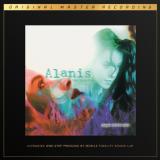
When Alanis Morissette took direct aim at an ex who wronged her on the eviscerating “You Oughta Know” in 1995, everything about the Top 10 song communicated it wasn’t the usual narrative about love gone south. Or the typical wounded singer wallowing in self pity. Morissette, and both the lead single from and her entire American major-label debut — the profoundly personal Jagged Little Pill — represented a sea change. They kickstarted a movement, one whose impact continues to echo throughout the mainstream nearly three decades later.
Ranked the 69th Greatest Album of All Time by Rolling Stone, included on the Rock and Roll Hall of Fame’s list of 200 Definitive Albums, and featured in several books about essential albums, Jagged Little Pill remains more than a blockbuster that has sold more than 17 million copies in the U.S. and 33 million units worldwide. It’s a statement, an attitude, a soundtrack for anyone seeking inspiration, an outlet, or permission to be themselves.
Sourced from the original master tapes, pressed at Fidelity Record Pressing on MoFi SuperVinyl, and strictly limited to 4,000 numbered copies, Mobile Fidelity’s UltraDisc One-Step 180g 45RPM 2LP box set of Jagged Little Pill presents the landmark effort in audiophile-grade sound for the first time. A key part of the record’s appeal and accessibility — Glen Ballard’s smooth production, touches that help Morissette’s exposed-nerve fare seem more accessible and melodic — comes through on this special 30th anniversary edition with an openness, presence, and dynamic explosiveness that make the vocalist’s songs that much more real and visceral.
The singer’s distinctive mezzo-soprano deliveries — the octave-rippling highs, dark-hued lows, dramatic crescendos, belted choruses, wispy reflections, occasional yodels — resonate with full-range ardor and depth. As crucial as anything on the record, Morissette’s confessional words take center stage like never before. Ditto the instrumentation and atmospherics that form the magnetic backgrounds of the songs. Key in on the contributions from Red Hot Chili Peppers Dave Navarro and Flea on “You Oughta Know” to Tom Petty & the Heartbreakers' co-founder Benmont Tench’s organ playing on six tracks.
The deluxe packaging of Mobile Fidelity’s Jagged Little Pill UD1S set underscores the work’s distinguished status. Housed in a slipcase, the LPs come in special foil-stamped jackets with faithful-to-the-original graphics that illuminate the splendor of the recording. Benefitting from an ultra-low noise floor, superior groove definition, and dead-quiet surfaces, this UD1S reissue is for listeners who prize sound quality and desire to engage themselves in everything involved with the album, including the now-iconic cover art that juxtaposes two portraits of the then-21-year-old singer-songwriter and features typewriter font.
That script — which suggests a raw, blood-on-the-floor document created without modern aids like spell check or language correction — hints at the heightened level of unvarnished intimacy, honesty, and catharsis Morissette offers throughout Jagged Little Pill. Named after a phrase uttered on the astute “You Learn,” the album explores the frank emotions, inherent contradictions, and wishful desires people feel everyday but are often too afraid to express. Morissette displays no such fear or shyness.
Akin to a woman reading from a diary, Morissette leaves nothing to the imagination as she skewers hypocrisy during the poignant “Forgiven,” seeks recompense on the vengeful “You Oughta Know,” and spills her guts on the soul-purging “All I Really Want.” For all the anger and bile ascribed to the singer and record, Jagged Little Pill is incredibly healthy and upbeat. Morissette uses the catchy pop-rock frameworks and moody ambience to suss out situations, to learn, to give hope. There’s the clever yearning of “Hand in My Pocket”; wry contrarianism of “Ironic”; kind-heartedness of “Hand over Feet”; the live-and-let-live spirit of “You Learn” – all positive and amiable.
Throughout Jagged Little Pill, the ever-approachable Morissette connects with listeners who recognize themselves in her — and has an intelligent conversation with anyone who wants to participate. It seemed almost everyone did. In addition to the mammoth sales that make the effort the 17th-best-selling album in American history, Jagged Little Pill collected four Grammy Awards, two American Music Awards, three Billboard Music Awards, and eight Juno Awards. In 2018, the record became the basis for a musical that netted 15 Tony nominations on Broadway.
Ironic? Anything but. Jagged Little Pill transcends generations, gender, and trends. As Morissette sings on the opening “All I Really Want,”, the album represents “deliverance” — “a place to find common ground.”
In "Horror Vacui", Paris-based, Iran-born 9T Antiope use a sparse palette of octave mandolin, violin and octave violin, synthesizer and vocals, to build a dynamic world that seems to exist outside of the bounds of time and place. Cinematic, spare, heavy, gossamer, and informed by the band’s work as sound designers and composers for theatre, film and performance art, Horror Vacui is a concept album that explores what sounds have been, what they’ll become, and the nature of memory, dementia and decay. As 9T Antiope attempt to reconcile different worlds, they create the sound of arriving in a new world all your own.
Fully remastered Detroit classic incl. 3 extra tracks from the CD version that were never released on vinyl before. This album has a unique blend of raw, warm and futuristic Detroit sounding electro and techno. Originally released on 430 West back in 1999.. We cant recommend it enough, big tip!
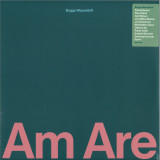
Bugge Wesseltoft has long been a shaper of his own jazz idioms, through his diverse solo albums, his group projects such as New Conception of Jazz, OKWorld! and RYMDEN, and collaborations with artists such as Sidsel Endresen, Henning Kraggerud or Henrik Schwarz.
"Am Are" features special constellations of superb musicians that spans both generations and styles, and is an exploration of sonic textures, dynamic contrasts of mood and style, and ranges from sparse arrangements through to complex layers of dubs and loops and improvisational interplay.
The album begins with Bugge alone on "How?" with layers of undulating atmospheric synth, brought into focus by Bugge's piano at the forefront, creating a minimalist miniature that is both emotive and serene. For "Villrein" Bugge is joined by Elias Tafjord on drums, beginning with a santur-like synth figure, floating over ominous formant sci-fi bass synths bubbling and pulsing, and overlaid by phrenetic piano that only stops to lock into the santur figure before relaunching on its own journeys, all underpinned by Elias Tafjord's expressive drumming. "Is Anyone Listening?" demonstrate's Bugge's songcraft, layering muted percussive piano behind Rohey's distinctive and beautiful vocals punctuated by Martin Myhre Olsen's tenor saxophone, creating a soulful mood tinged with desperation.
"BAG" presents the first classic piano trio of the album - Bugge on piano and synths, Arild Andersen on bass, and Gard Nilssen on drums - announcing itself with an insistent riff, chattering drums, breaking into a progressive rock-style passage of bass and piano in unison. "Reel", the second track from this trio, is a mellow soundscape that evolves to become hazy urban downbeat jazz.
The second piano trio of Bugge (Rhodes and Korg MS20 synth), Sveinung Hovensjø (Electric Bass), and Jon Christensen (Drums and Bells) offers a completely different perspective. The first track "Render" features Bugge's Zawinul-esque Rhodes and monosynth leads, Sveinung's fuzz bass in something of a leading role, all carried with chattering gusto by Jon Christensen's dynamic drumming that brings texture and space as well as rhythm to the piece. "Vender" begins as an atmospheric piece, with reed organ-like synth washes, and octave-processed bass with a somewhat sitar-like tone, meandering until the track breaks down into drums and bass weaving around an insistent drum machine loop, dripping with synth pads and monosynth lead.
"JazzBasill" introduces the third piano trio - featuring Bugge (Piano), Jens Mikkel Madsen (Acoustic Bass) and Øyunn (Drums) - and offers a classic piano trio style with urban sophistication, that is lyrical, and interspersed with staccato cadences, giving a feeling of broken swing, slightly staggered yet driving forwards. The title track "AM ARE" is late night jazz, with baroque whispers, and distinctly melodic.
The final track, "Think Ahead" features the non-standard trio of Bugge (Piano/Organ), Oddrun Lilja (Guitar) and Sanskriti Shrestha (Tablas/Harp). Beginning with a minimalist piano figure, table, and sustained guitar, the track breaks down to a noise surge and ambient windscape, with guitar birds and abstract grinding, before returning to minimalist melodicism.
The shifting personnel across the album, as well as the three different studios in which it was recorded - Village Recording in Copenhagen, Rainbow Studios in Oslo, and his own Buggesroom Studio - creates a feeling of dynamic change and musical variety that is unified by Bugge's piano and keyboards. His playing moves between foreground, where he allows the music to elevate him, and background, where he move gently like a beneficent presence, tending to the demands of the spirit of the musical moments he has captured. It is an album powered by restless exploration and shaped by distinctive musical personalities; it is a journey through different moods, illuminated and brought into focus by Bugge's measured approach and guiding hand.
- Dwell Like A Ghost
- My Spirit
- Arise And Shine
- Blue In Green
- Trance Dance
- Search For The New Land
- New Moon
Of all the artists who recorded for the Black Jazz label, keyboardist and composer Doug Carn was the most prolific, releasing four albums for the imprint. 1972’s Spirit of the New Land was his second Black Jazz release, but the first one (of two) to co-feature his wife, vocalist Jean Carn. It’s the most collectible of the bunch, showcasing Carn’s innovative approach of adding lyrics to jazz standards like Miles Davis’ “Blue in Green” and Lee Morgan’s “Search for the New Land,” while originals like “Arise and Shine” and “My Spirit” soar with spiritual fervor on the wings of his wife’s five-octave range.
Along for the ride are a stellar cast of players, including trumpeter Charles Tolliver, co-founder of the Strata-East label; saxophonist George Harper, who played with Herbie Hancock and Jimmy Smith among others; trombonist Garnett Brown, who appears on albums by Roland Kirk, Albert Ayler, and Art Blakey among his hundreds of album credits; tuba player Earl McIntyre, whose discography spans from Carla Bley to the Band; and drummer Alphonse Mouzon, founding member of Weather Report. This beautiful, uplifting album also comes with liner notes by Pat Thomas, author of Listen, Whitey! The Sights and Sounds of Black Power 1965-1975, that feature excerpts from a freewheeling interview conducted with Doug Carn himself. Pressed in blue with black swirl vinyl limited to 750 copies!
- A1: Silent Night (3:39)
- A2: All I Want For Christmas Is You (4:01)
- A3: O Holy Night (4:27)
- A4: Christmas (Baby Please Come Home) (2:33)
- A5: Miss You Most (At Christmas Time) (4:32)
- B1: Joy To The World (4:18)
- B2: Jesus Born On This Day (3:41)
- B3: Santa Claus Is Comin' To Town (3:24)
- B4: Hark! The Herald Angels Sing/Gloria (In Excelsis Deo) (2:59)
- B5: Jesus Oh What A Wonderful Child (4:26)
- B6: God Rest Ye Merry Gentlemen (1:18)
LP 2x12"[46,18 €]
LP[26,68 €]
LP[26,68 €]
7" single[15,92 €]
12" single[15,92 €]
12" single[17,61 €]
LP[19,75 €]
2LP[90,34 €]
The Holiday Album That Turned Mariah Carey into the Queen of Christmas: Featuring the Standard “All I Want for Christmas Is You,” the Singer’s Blockbuster Merry Christmas Exudes Joy, Spirituality, and Conviction
Sourced from the Original Master Tapes, Presented in Audiophile Sound for the First Time, and Strictly Limited to 3,000 Numbered Copies:
Mobile Fidelity’s UltraDisc One-Step 180g 33RPM LP Set Plays with Superb Detail, Openness, and Definition
1/2" / 30 IPS / Dolby SR analogue master to DSD 256 to analogue console to lathe
Mariah Carey didn’t become the Queen of Christmas just because of her fervent love of the holiday. Or as the result of a brilliant marketing plan. The iconic singer earned her title by way of her blockbuster Merry Christmas, a 1994 album that quickly joined the likes of Bing Crosby’s White Christmas, A Jolly Christmas from Frank Sinatra, and Nat King Cole’s The Christmas Song as an all-time holiday vocal classic. Featuring a balanced mix of inspired originals and well-chosen covers, Carey’s fourth studio record has only grown in stature as new generations discover its magic. Mobile Fidelity’s 30th anniversary edition reissue of Merry Christmas makes her spellbinding performances and upper-tier register come alive like never before.
Sourced from the original master tapes, pressed at Fidelity Record Pressing, and strictly limited to 3,000 numbered copies, the pioneering label’s UltraDisc One-Step 180g 33RPM LP set of Merry Christmas plays with superb detail, depth, and dimensionality. Available in audiophile quality for the first time since its original release three decades ago, and featuring the bonus track “God Rest Ye Merry, Gentlemen,” the nine-times-platinum set breathes with a newfound openness and transparency that enhance the spirituality, passion, and festive tenor of Carey’s singing.
Benefitting from superb groove definition, a nearly inaudible noise floor, and dead-quiet vinyl surfaces, the music takes on a heightened energy and anticipatory emotion synonymous with the holiday season. Carey’s signature vocals explode with liveliness and dynamics, the full scope of her acrobatic range presented in clear, transparent sound that practically places her on a small stage in your listening room. This collectible version also breathes with the kind of warmth, intimacy, and coziness you want from a landmark vocal album.
Recorded when Carey helped put “diva” back into everyone’s vocabulary, Merry Christmas gave the New York native another smash right out of the box. What nobody knew at the time was the degree of the album’s staying power — and how, many years removed from its initial promotion cycle, its legend would still grow and even spark a 2010 sequel. Having re-entered the Top 200 charts every year since 2019, Merry Christmas ranks as one of the three most commercially successful holiday LPs ever made and, in due time, will likely earn the top distinction in that class. A global blockbuster, it seamlessly ties together Christian, gospel, and secular threads and speaks to a boundless audience, independent of denomination.
Most obviously, the record remains inescapably connected to “All I Want for Christmas Is You,” an uptempo anthem that towers as a holiday standard and one of the biggest-selling singles in history. Punctuated with celesta chimes, sleigh bells, springy keyboards, and joyous beats, the song echoes the simple albeit engaging melodies and doo-wop style of beloved holiday classics of yore — and blends such elements with contagious dance-pop rhythms to create an atmosphere rich in joy, wonder, and excitement. Radiant with golden soulfulness and sincere conviction, Carey’s exuberant singing and on-point phrasing put it all over the top. And how.
The song stands as the only effort in Billboard history to top the Hot 100 chart during at least three separate runs. Carey’s blockbuster has already hit No. 1 during five runs, spanning every year between 2019 and 2024. That’s just one of the many records the singer holds — and only one of the multiple highlights from Merry Christmas, which includes two other Carey-penned originals, “Miss You Most (At Christmas Time)” and “Jesus Born on This Day.”
Though slightly lesser known, Carey’s remarkable rendition of Darlene Love’s “Christmas (Baby Please Come Home)” further links her album with the big, lush, Wall of Sound heritage that helped inspire its production. Carey’s heartfelt take and transformation of the traditional “Santa Claus Is Coming to Town” into an animated tune that even adults can believe, as well as her clairon reading of “Joy to the World” — cleverly augmented with bits of Three Dog Night’s 1971 hit of the same name — further reinforce her status as Queen of Christmas.
At the peak of her powers, Carey finds equivalent success when tapping more spiritual veins. Witness the reverence she brings to the timeless carol “Silent Night,” the piousness she invests in “Jesus Oh What a Wonderful Child,” and the sacred feeling she conveys throughout “O Holy Night.” You’ll also never think of “Hark! The Herald Angels Sing” and “Gloria (In Excelsis Deo)” the same way again after hearing Mimi pour her heart and soul into them, and pair the songs together.
Indeed, it’s Carey’s pliable voice, melismatic technique, and five-octave range — on display here in definitive fashion — coupled with her undeniable love for Christmas and understanding of the religious significance of the season that make Merry Christmas a must-have holiday staple. And on Mobile Fidelity’s LP, something you better add to your wish list.
Lisbon's Para?so is back with its 14th release 'Crossroads' by local legend-in-the-making Salbany and remixes from portuguese dance music pioneer Cisco Ferreira a.k.a. The Advent and Detroit's own AMX otherwise known as The AM. The record opens with 'My Life', a warm yet propulsive detroit-referencing techno cut with pad washes, shuffling hi hats, an introspective vocal sample, cascading organ solos and arpeggios to a blissful effect. A2 'Crossroads' brings us a raw, bouncy, jam-like rhythmic section with syncopated toms and snares offset by a piano stab motif and emotive strings. 'Next Morning' closes side A, a hypnotic, curveball roller featuring a warm, rolling bass, offbeat drum hits glued together by immersive pads and UR-esque strings. Side B opener 'Mito' delves into trippier territories with admirable skill - not losing an inch in dancefloor potential - fusing bleeps and bells, beautiful chord progressions and hyper groovy drum machine programming. Techno icon Cisco Ferreira steps in with his 'Lisbon Dub' remix, transforming 'Crossroads' into a sparser, delay-infused slow-burner held together by a dope bass line. AMX brings the lead synth of 'Mito' to a lower octave, mutating it into a swingy midwestern experimental cut that inspires urgency and life force. A restless mantra emerges via the digital bonus track, an alternate 'Elevated' remix of 'Crossroads' that superbly merges original detroitian leanings and industrial textures in a no-frills peaktime banger. This is one of those records that lovingly reminds us techno is about emotion, swing, energy. As in life, nothing here sits still: movement, physical and metaphysical, is the messenger of progress.
- Screenwriting An Apology
- Life On Standby
- Dissolve And Decay
- Ohio Is For Lovers
- Niki Fm
- Wake Up Call
- Sandpaper And Silk
- The Transition
- Speeding Up The Octaves
- Blue Burns Orange
- Silver Bullet
- The Transition
- Silver Bullet
- Niki Fm
- Silver Bullet
- Speeding Up The Octaves
Limitierte Neuauflage zum 20-jährigen Jubiläum des mit Gold ausgezeichneten Debütalbums von Hawthorne
Heights, The Silence in Black and White.
Dieses 2-LP-Set ist in einem Klappcover mit zwei bedruckten Innenhüllen und alternativem Artwork untergebracht. Die Band reflektiert das 20-jährige Jubiläum des Albums auch in erweiterten Liner Notes. Das elektrisierende Debütalbum der Hardcore-Giganten enthält den Gold-zertifizierten Track „Ohio is for Lovers“ und Fan-Favoriten wie „Niki FM“, „Silver Bullet“ und mehr.
The album SABABU is a vibrant ode to the quest for the opportunities that shape our existence. We are invited to seize the infinite chances open to us, capable of leading us to unsuspected horizons if we know how to recognize them. SABABU is a captivating blend of haunting rhythms and deep ballads, combining traditional heritage with contemporary sounds.
Aboubakar Traoré's heartfelt cries are both passionate and demanding, and he takes on universal themes of injustice, love, heritage and the quest for freedom. Through powerful lyrics, he denounces the exploitation of African resources, political and economic domination, while celebrating the resilience of peoples and the richness of traditions.
But SABABU is also an ode to life, love and the strength of family and community ties. Carried along by a deep groove, the album takes the listener on a musical journey where intimate emotions and collective reflections mingle, creating a bridge between past and present where each rhythm resonates as an invitation to move, to come together, and to celebrate life.
Debut album "Tama Tama" was nomitad by Octaves de la Musique 2021 and the band was selected to showcase at Visa For Music (2023) in Morocco and Belgian Worldwide Music Night (2023) in Brussels.
"Can machines sing? With his Synthetic album cycle, Rich Aucoin answers that question with a resounding, exuberant ""yes."" The four-part project sweeps listeners through a gallery tour of synthesis history, giving voice to a chorus of specimens from the past century of electronic sound. On Season 3, Aucoin deepens his dive into the variegated genealogy of dance music, charting a joyful course through the many flavors of rave euphoria.
From March 2020 through February 2024, Aucoin recorded Synthetic: Season 3 during a series of visits to the National Music Centre in Calgary and the Vintage Synthesizer Museum in Los Angeles. Among these collections, he found historic synthesizers ranging from the ubiquitous to the esoteric, each with its own voice just waiting to be jolted to life. During these sessions, Aucoin took the opportunity to air out some of synth history's most iconic instruments.
From the mass-produced to the bespoke, each synthesizer on Synthetic: Season 3 sends a transmission from its makers' own historical vision of the future. The instruments' tactile interfaces -- from fields of patch jacks to 50-year-old optical discs to rows and rows of voltage dials -- all lend embodied dimension to the practice of shaping sound from raw electricity. Each of them carries a story about what might have tumbled into being from the moment of their creation. In awakening these machines, Aucoin cross-pollinates a choir of futures into an ecstatic, reverential present."
The Heads’ Simon Price returns to his kandodo project with 'theendisinpsych'; "primitive pieces of psychedelic tuneage+years of wasted time=43 minutes of headphone bliss." It's the follow up to the 2019 collaboration with Wayne Maskell and Hugo Morgan, Kandodo 3 – K3, but this time back in solo-mode. He is now relocated in Northumbria, and has recorded the album himself in his home studio, drawing on his wide collection of music/instruments and the rural environment for inspiration. The new album fizzes and crackles with a verve that will activate the “turn on, tune in, drop out” sense in all listeners… Simon explained the album in a focused/out of focus track by track way… is this Price’s paean to his obsession with Bowie? chamba7 - octave mandolin through fuzz, tambo beat, in praise of Bowie compilations. chamba is malawian weed theendisinpsych - bought a reel to reel tape off ebay in 2005, ('Bowie radio interview tape, USA, 1970, 3 minutes?') then bought a machine to play it on in 2015. Heard the words and laid them onto a fuzzy break bed. Thought it all too relevant to today, prophetic David from his 'hippy' days (not a prophet or a stone age man) fuzzy oceans - played on 1 string spamjo, bouncing echo over 70's drum machine, 'we've fucked the oceans' freefalling - rolling cello and hissing cymbals with vocoder dreams comes with african/stationtostation artwork stylings for the sleeve..pre-apocalypse blues (and pinks), the world isn't going a good way a sumptuous 4 course sonic supper, tuck in.
- A1: Jóhann Jóhannsson The Theory Of Everything: Cambridge 1963
- A2: Olivia Belli Sapias
- A3: Nils Frahm Hammers
- A4: Ludovico Einaudi Dna
- A5: Mário Laginha Coisas Da Terra
- A6: Bryce Dessner Aheym
- B1: Franz Schubert Piano Quintet In A Major, D 667, Op. 114
- B2: Hania Rani Glass
- B3: Max Richter She Remembers (From The Leftovers)
- B4: Steve Reich Duet
- B5: Bryce Dessner Song For Octave
Das Erlebnis, Mutter zu werden, prägte LIFE, die neue farb- und kontrastreiche Aufnahme der norwegischen
Geigerin. Samuelsen ist bekannt für ihre fantasievolle Programmgestaltung. Hier reflektiert sie musikalisch
in virtuosen Interpretationen über die unterschiedlichen Gefühle, die mit Elternschaft einhergehen können. Das Album präsentiert Musik von Olivia Belli, Bryce Dessner, Ludovico Einaudi, Nils Frahm, Jóhann
Jóhannsson, Mário Laginha, Hania Rani, Max Richter sowie Steve Reich, und auch Schubert findet sich
im Mix. Samuelsen wird auf dem Album von Musikerkollegen begleitet, darunter die Streicher von Scoring
Berlin unter der Leitung von Jonathan Stockhammer.
Die Idee zu LIFE kam Samuelsen nach der Geburt ihres ersten Kindes. Als sie mit ihrem zweiten Kind
schwanger wurde, nahm der Gedanke Gestalt an. Die Magie ihres leidenschaftlichen Spiels verbindet die
elf Titel, die junge Eltern ebenso ansprechen wie Menschen, die sich an die eigene Kindheit erinnern. »Ich
mache Musik, weil ich Geschichten erzählen will«, sagt Samuelsen. »Zwar sind es persönliche Geschichten,
aber ich möchte, dass sich so viele Menschen wie möglich darin wiederfinden.«
This album was a self imposed ambitious project for us. Something to kick in the creative flow. The last few years, having been a challenging time in general, felt like a good time for a pivot. The last two albums were so guitar and keyboard centric, I wanted a weird and fun set of parameters for us to work with. I demo’d everything at home on cassette 4 track (harkening back to simpler times) using drum loops, and just had at it 'til I had a pile of “songs”. Tom and I chose one sound each using synths and created a range of 3 octaves of that sample, then loaded them into Roland SPD-SX samplers and learned the transcribed songs using drum sticks. The idea was to change the way we wrote and to have 4 people along the front of the stage essentially playing percussion. So no guitar, no keys. As we were recording I kept thinking how the sounds, when paired up, sounded a bit like brass. So, we added a saxophone horn section to round out the horniness of the sound with a bit of reedy bell tones. Thanks to Cansfis Foote & Brad Caulkins on tenor and Baritone saxophones :) Sort of a Dexy’s Midnight Runners meets Von LMO meets The Flesh Eaters meets the Screamers kinda punk junk. Poppy and hooky, heavy at times.. Sort of vacuous and maybe a bit sci-fi in sound. Boneheaded in riff and heady in lyrics. Recorded at Stu-Stu-Studio by me on 8 track 1/4” tape . So pretty hot and raw. Lots to write about today. A lot of these lyrics were taken from things people said in passing about taking on life right now that stuck with me. Things that made me reflect. Things that made me laugh. Things that made me WTF. Some folks are kind, genuine & give you love and energy. Some are greedy manipulative ghouls who hang off your veins. You must be strong, composed and take care of yourself. Be self aware and check your mind for cracks. Learn to relax and be well. There are moments of beauty and redemption. Its not all bad news and there’s always hope. People continue to surprise me one way or another. Anyhow, Hope you enjoy and good luck out there. — John Dwyer
Lebanon oud master Rabih Abou-Khalil's stunning 1996 album 'Arabian
Waltz' is appearing here on vinyl for the first time."Arabian Waltz is the
pinnacle of Rabih Abou-Khalil's achievement as a composer and arranger
It is a sublime fusion of jazz, Middle Eastern traditional music, and Western
classical. In addition to Abou-Khalil on oud (the Arabic lute), Michel Godard on the
tuba and the serpent (the tuba's antique kinsman), and Nabil Khaiat on frame
drums, the album also features the Balanescu String Quartet instead of the usual
trumpet or sax. The presence of the Balanescu might seem to pose a dilemma
for the composer: traditional Middle Eastern music uses no harmony but a string
quartet is all about harmony. Abou- Khalil achieves a compromise by generally
writing the string parts in unison (or in octaves), in effect using the quartet as a
single voice, but also letting the quartet split up to play parts in unison with the
other instruments or to provide ornamentation. Without surrendering jazziness at
all, the presence of the strings makes possible a wondrous atmosphere, almost
as if one is listening to the soundtrack of a classy movie set in Beirut or
Damascus during the '40s. This feeling is greatest on "Dreams of a Dying City"
with its brooding tuba and cello motifs and grave, repeated rhythms. "The Pain
After" starts with an impressive tuba solo that turns into a long interlude for tuba
and string quartet; sad, slow music that sounds like one of Beethoven 's late
quartets. Then Abou- Khalil finally enters on oud, bringing a sustained note of
wistfulness. Fortunately, beside the darker numbers lie the propulsive drama of
"Arabian Waltz" and the bobbing and weaving quirkiness of "Ornette Never
Sleeps." Abou- Khalil is known for experimenting with the possibilities his guest
musicians bring to his style. In this case, the guests have inspired the host to
reach a new height and maybe even a new style. This recording suits every fan of
world music, jazz, classical, or just good music." - Kurt Keefner
This album was a self imposed ambitious project for us. Something to kick in the creative flow. The last few years, having been a challenging time in general, felt like a good time for a pivot. The last two albums were so guitar and keyboard centric, I wanted a weird and fun set of parameters for us to work with. I demo’d everything at home on cassette 4 track (harkening back to simpler times) using drum loops, and just had at it 'til I had a pile of “songs”. Tom and I chose one sound each using synths and created a range of 3 octaves of that sample, then loaded them into Roland SPD-SX samplers and learned the transcribed songs using drum sticks. The idea was to change the way we wrote and to have 4 people along the front of the stage essentially playing percussion. So no guitar, no keys. As we were recording I kept thinking how the sounds, when paired up, sounded a bit like brass. So, we added a saxophone horn section to round out the horniness of the sound with a bit of reedy bell tones. Thanks to Cansfis Foote & Brad Caulkins on tenor and Baritone saxophones :) Sort of a Dexy’s Midnight Runners meets Von LMO meets The Flesh Eaters meets the Screamers kinda punk junk. Poppy and hooky, heavy at times.. Sort of vacuous and maybe a bit sci-fi in sound. Boneheaded in riff and heady in lyrics. Recorded at Stu-Stu-Studio by me on 8 track 1/4” tape . So pretty hot and raw. Lots to write about today. A lot of these lyrics were taken from things people said in passing about taking on life right now that stuck with me. Things that made me reflect. Things that made me laugh. Things that made me WTF. Some folks are kind, genuine & give you love and energy. Some are greedy manipulative ghouls who hang off your veins. You must be strong, composed and take care of yourself. Be self aware and check your mind for cracks. Learn to relax and be well. There are moments of beauty and redemption. Its not all bad news and there’s always hope. People continue to surprise me one way or another. Anyhow, Hope you enjoy and good luck out there. — John Dwyer
KEYS has just completed their second album, “The Grand Seduction”. This all-keyboard band is the brainchild of singer Jake E (Cyhra, Amaranthe and others) and keyboardist Mark Mangold (Touch, Drive, She Said, Michael Bolton, Cher, Paul Rogers and others) with Emanuel Bagge (Sweden’s Got Talent Finalist) on additional vocals and keys, Irwan Fabrien (noted keyboard guitar sound designer) with help of drum gurus Alex Landenburg (Kamelot, Cyhra and others).
Featuring live performances with three keyboardists and a huge battery of keyboards, this ambitious band brings keyboard and instrumental prowess to new heights while playing songs that run the gamut from scathing progressive melodic forays to catchy and melodic rock anthems …and Jake’s award-winning voice (Burrn Vocalist of the year 2020). Previous KEYS album also featured guest keyboard additions by Charlie Calv of Angel and others.
Though songs are first and foremost, this band shows the versatility of keyboards in this day and age. These artfully crafted songs are ripe with scathing synth, organ and “guitar” pyrotechnics, dazzling time signatures and drumming, bombastic choruses and “guitar” riffs (played on keyboards with the now available plug in’s that perfectly emulate guitars). As Mark and Jake are first and foremost award winning songwriters, they never lose sight of the composition and melodies, though couched in the very signature and hard to pigeon hole sound (isn’t that the whole point?) of this band and Jake's 4 octave vocal range.
Repress!
Vocal powerhouse Izo FitzRoy exploded on to the scene in 2017 with her debut LP 'Skyline', the album incorporating a stunning fusion of styles spanning gospel, funk and soul as Izo's raw bluesy tone and direct lyricism took centre stage.
Her new album 'How The Mighty Fall' builds further on the soul foundations of her debut. Recorded between Paris, London and Sheffield, it sees her collaborating with three stellar producers and a host of talented musicians.
Disco royalty – Dimitri From Paris (Glitterbox, BBE) directs fellow Parisians Cotonete on her smash single 'I Want Magic'. Studio wizard Shawn Lee (BBE, Ubiquity) brings the funky AOR vibes on 'Slim Pickings' and the Mercury Prize nominated - Colin Elliott (Richard Hawley, Jarvis Cocker, Paul Weller) who produced the bulk of the album, completes the trio. Guesting on the record are the UK's most in demand brass section – The Haggis Horns and Izo's long-time collaborators - Soul Sanctuary Gospel Choir.
Conceived during the aftermath of the breakdown of her long-term relationship, Izo looked to this personal experience for inspiration for the album as well as casting further afield at the wider themes of mental, societal and communication breakdowns.
Despite the strong material, at one point it seemed the record might never materialise. Just as the world was getting on board with her debut LP and international touring was taking off, Izo lost the use of her voice and required surgery on her vocal chords in the second part of 2018. A long schedule of vocal rehabilitation was necessary to get back to a position where she could first talk, then sing regularly enough to get back to work.
Thankfully after this difficult personal period for her, the silver lining from the experience was that post-recovery she gained a whole new octave at the top of her vocal range! This in turn has influenced her song writing on the album & allowed her to enhance her compositions with more vocal light and shade from this unexpected gift.
Limited edition "Coke Bottle Cloud" color vinyl with etched b-side. Australian duo Armlock make music for having your head in the clouds. On new album Seashell Angel Lucky Charm, Simon Lam and Hamish Mitchell bring you on a steady ascension through compressed and heavenly sonic realms. The band's second proper release, and first for Run For Cover Records, showcases the songwriters' experimental electronic roots through an indie rock lens. Free from distortion or overindulgence, Seashell Angel Lucky Charm is a collection of consistent rhythms decorated with clean guitar tones and eccentricities. Through playful layers of vocal harmony and minimal arrangements, Armlock capture the inventive and uncomplicated essence of Pinback or Alex G. Self-described as "indie rock with a touch of spirituality and emo", Armlock's journey into a higher realm is seeped with the looming confusion that comes with exploring the unknown. With an introverted demeanor, Armlock explores the human desire to find guidance in a world much bigger than its people. Every sound on Seashell Angel Lucky Charm feels precise and intentional, making the anthemic choruses on tracks like "Fear" and "El Oh Ve Ee'' feel expertly placed and pop-oriented. These two songs show Armlock's savvy with harmony as they use octaves of angelic sounds to stretch a simple one-word chorus until it soars with meaning. Unlike most indie rockers, Armlock use guitar as a tool in their belt rather than a vessel for songwriting. Where their 2021 EP Trust set foundations in downtempo acoustic guitar, Lam and Mitchell's evolved songwriting is a testament to where an electric guitar can amplify a song's groove, or usher in sonic space.
Part 2[14,50 €]
Incredible Techno and dub techno by now legendary Conforce (aka Versalife) that will Take You on a Sonic journey with Commute "Part 1" on Syncrophone. No need to introduce Conforce anymore... The Dutch producer blasts off with "Commuting Part 1," a 4-track EP on Syncrophone Records. Buckle up for a sonic adventure that electrifies your daily routine. "
Two years after the release of the Polarius EP Inner Voices Of A Clown, Danny Wolfers returns to Altered Circuits, this time under his best-known alias Legowelt, for Ruins Of Cracktopolis: a collection of "hymns to survive the dystopian circus of today's techno scene" in the artist's own words. On Do You Know Who You Never Be, a short staccato lead and dark chords revolve around a monolithic kick drum pattern that takes care of the cadence and bass. A mysterious vocoder and a laser sequence that gets torn and twisted to the max join, but the track never loses its steady pace - it gets help from shakers so much mixed to the front they could be lifted from a B'more track.
Amidst the effervescing 303 lines and bold drum sequences of In A Trance Dance All Night" Wolfers finds a canvas for a stretched synthesizer jam with eighties breaking allure. This melody, together with the pads and vocal, are drenched in reverb - they float like mist ascending from the The Hague dunes. Throughout Ruins Of Cracktopolis, more vintage Dutch West Coast, the hiss-laden broken beat that guides the bass sequences and ominous blippy synth patterns switches to a 4/4 structure and back. These make for captivating shifts in pace while the minor progressions continue unfolding. Like Twin Peaks targets prime energy once the arpeggiator sequence present from the start lowers an octave. The track runs smooth like a pomade slick-back; it's only tempered slightly when the crunchy kick and tom change place for a moody chord sequence break. Even if these four tracks target the club, they are equally suited for - quoting Wolfers again - "leisurely home listening". Their greatest strengths are, as so often, their melodic aspects.
The artist is known to be a synthesizer aficionado, but his unique personal touch immediately shines through no matter which gear he works with. The machines never seem to dominate the composing process; quite the opposite: it's as if he isn't programming or registering as much as trying to teach them his take on electronic music.
‘Empires into Sand’ is the first album of new material from Normil Hawaiians in 40 years. The group first refined their sound during the early 80s, hitting on a pastoral experimentalism that drew on ambient drone, motorik impulse and post-punk pep.
‘Empires into Sand’ came together in the familiar manner of their original three albums, with improvisation and nuance informing the blueprint of the tracks. It was with the official release of this last record ‘Return of the Ranters’ (originally recorded in 1984/85, but then unconsciously shelved) in 2015 by Upset The Rhythm that led to the group reconnecting with the intention of playing music together again. Normil Hawaiians played a launch show for that ‘lost album’ and followed that up with more concerts, including an appearance at Supernormal, a residency at the Edinburgh Festival, gigs at Cafe OTO. They were even chosen by Richard Dawson to perform with him in London.
Throughout this time, Normil Hawaiians revisited their original songs for live performance. However for a group always so interested in evolving their sound, it came as no surprise that they shirked at the idea of a faithful retread. The band pushed their songs into new inventive dimensions, still progressive at core, but now imbued with a cosmic uncanny. A cinematic approach that was always quietly present has come to the fore. The quaint weirdness of folk song, the humanity of communal practice and the group’s ecological mindedness have all found a place in Normil Hawaiians’ current sound world.
When Normil Hawaiians write and record music they prefer to gather in a remote location and live together for a while, such is their communal ethos. Being far-flung across the UK, the Family Hawaii (numbering seven key members) decided to encamp to Tayinloan, a small village on the west coast of the Kintyre peninsula in Scotland. They set up their own studio in an isolated, windswept house overlooking the sea and started the tape rolling. Noel Blanden from the band explains the process neatly: “we set up and began playing, slowly and patiently, allowing the music to take its own shape based on where we were staying and our ongoing friendship. We recorded for days, capturing everything. A lot of new and rich ideas began to emerge”.
Normil Hawaiians took their time to develop these threads at their own pace, allowing songs to mutate and settle over months. Simon Marchant deftly produced and recorded the album whilst also performing in the band, this marked the first time the band had total control of their own sound. The last few years has seen the band reconvene in Herne Bay, Faversham, London and Leith to record new parts, constantly responding to the changing form of these quietly spectral songs of defiance.
‘Empires into Sand’ incorporates samples from old rehearsals and live music into the new finished pieces, this is in continuum with their previous records. Snippets of sound from the static of short wave radio and satellite transmissions also embellish the work. In fact the whole album is stitched together with interludes, creating an acutely immersive 45 minutes. ‘Exiles’ opens the album amid swirling atmospheres, synth flights and recordings of Vilnis Egle (father of Zinta Egle from the band) retelling his experience of fleeing his home in Latvia during Soviet occupation in 1942. George Bikandy also features on this track talking about his flight from Syria in 2014. ‘Ghosts of Ballochroy’ is a winding river of a song featuring a lively discourse in Scots courtesy of Rodney Relax. There’s a commitment to truth telling present across this hopeful album populated with angels, incoming tides, long shadows and the rose-washed sun. “From our broken windscreen, we feel the breeze” soars Guy Smith triumphantly over the driving beat of ‘Waterfalls : Bedford 330’. ‘Big City Sky’ flutters and sparkles with rapid synth runs, tape-looped drums and Jimmy Miller’s commanding vocal. With ‘In The Stone’ Zinta’s melody is deliberately jagged and blunt, exaggerated by octave-layered vocals and interjections from Guy.
This is thought-provoking, boundary-bothering music. Honest in intent, a solidarity of vision. The album’s title is derived from a poem by band member Mark Tyler, who sadly passed away during the recording process and the transience of life is felt heavily throughout. Noel best coins the group’s wish for the album: “we wanted to create an album that acknowledges our history and also reflects who we are today. We remained true to ourselves and we wanted to make something beautiful without removing the edges.” ‘Empires into Sand’ certainly does that, it’s an echo from the past, an echo from the future.
Halocline - a visible layer of water that forms between saltwater and freshwater when there is a rapid change in salinity; they are found in colder oceans, caves, fjords and estuaries.
Malin Lewis is a queer bagpiper, fiddler, instrument maker and award winning composer. One of Scotland's most exciting innovators, Malin melds west coast tradition with a newly invented, self-made bagpipe. Hair tingling, philosophical and dance inducing melodies inspired by European folk traditions, humans, queerness and the universe. Having played in Canada, Europe and across the UK, Malin will release their long awaited debut album Halocline on the 3rd May 2024 with Hudson Records. Halocline began as a New Voices commission for Celtic Connections and was premiered to a sold out Strathclyde Suite, Glasgow Royal Concert Hall in 2023.
"I saw my first Halocline aged fourteen whilst swimming in an estuary in the Isle of Skye. I didn't know what it was at the time but the image has stayed with me ever since. Appearing like a hazy layer of cloud under the water; it floats between two worlds and provides an environment which is home to a unique microbial ecosystem. As a trans person I live in a space in between; this beautiful space between a binary with its own colourful and unique culture."
Malin's unique sound is born from the deep connection that comes with making and composing for their own instrument. Alongside whistle and fiddle, Malin plays a newly invented two octave bagpipe that, when combined with guitar FX pedals, creates a whole new world of sound which is as lively, thought provoking and sensitive.
Halocline - a visible layer of water that forms between saltwater and freshwater when there is a rapid change in salinity; they are found in colder oceans, caves, fjords and estuaries.
Malin Lewis is a queer bagpiper, fiddler, instrument maker and award winning composer. One of Scotland's most exciting innovators, Malin melds west coast tradition with a newly invented, self-made bagpipe. Hair tingling, philosophical and dance inducing melodies inspired by European folk traditions, humans, queerness and the universe. Having played in Canada, Europe and across the UK, Malin will release their long awaited debut album Halocline on the 3rd May 2024 with Hudson Records. Halocline began as a New Voices commission for Celtic Connections and was premiered to a sold out Strathclyde Suite, Glasgow Royal Concert Hall in 2023.
"I saw my first Halocline aged fourteen whilst swimming in an estuary in the Isle of Skye. I didn't know what it was at the time but the image has stayed with me ever since. Appearing like a hazy layer of cloud under the water; it floats between two worlds and provides an environment which is home to a unique microbial ecosystem. As a trans person I live in a space in between; this beautiful space between a binary with its own colourful and unique culture."
Malin's unique sound is born from the deep connection that comes with making and composing for their own instrument. Alongside whistle and fiddle, Malin plays a newly invented two octave bagpipe that, when combined with guitar FX pedals, creates a whole new world of sound which is as lively, thought provoking and sensitive.
Following 2020’s 'Point Vacancies', the debut EP from Jamie Paton and Mike Bourne’s collaborative act Metal, the duo return with a trio of dubwise remixes from Mr Paton himself as well as a peak-time stormer from fellow Bristolian artist, Hodge. The latter immediately sets the record ablaze with a driving-tempo kick thump, a duo of grain-textured 16th note hi-hats and chalky clap. He layers an anthemic three-chord pad progression with layered octaves, peppering in arpeggiated bleeps and articulate lead melodies, then tops it off with a few modular elements that retain the character of the original, before climaxing in true rave fashion. Proper. The following three mixes by Metal’s own Jamie Paton make clear his sonic obsession, the type of infinite tweaking that sees some artists/producers to the edge of madness, or at the very least satisfies some dragon-chasing addiction. There’s a successive deconstruction from 'Remix' to 'Dubwise' to 'Dubwise II', most notably in the reduction of rhythm and drum machinery, but also in the general tonality. The melody remains central but is gradually obscured, taking on a less and less recognizable form, and by the end we’re left with a skeleton of the track, quips and cranks, an assembly line of aluminum sheeting punctuated by an array of demented nuts and bolts. As with the previous EP, the sparsity of elements illustrates just how far one can twist an aesthetic, proving that self-imposed limitations can often propel an artist’s process and land them somewhere unfamiliar, somewhere foreign, somewhere enchanted.
The fourth leg on the early emo table of Rites of Spring, Moss Icon, and Cap'n Jazz, Indian Summer's Giving Birth To Thunder compiles their complete discography. Emo's second wave crashed into the Bay Area in the summer of 1994 in a rage-filled capsule of quiet and loud, octave chords, angry sons, Spock haircuts, and screaming. At the eye of this pissed-for-the-hell-of-it storm were Indian Summer. In the quartet's 12-month existence they wrote ten songs, appeared on a dozen singles and comps, and played over 100 gigs across the U.S. and Canada before burning out, passing out, and moving out of their Blue House in Oakland. Their hand-screened aesthetic is replicated in alarming detail in the accompanying by 24- page book with detailed liner notes, flyers, and miscellaneous propaganda.
A quietly influential figure among electronic and experimental circles since the late 90s, Berlin based sound artist Hanno Leichtmann has been developing a sprawling and idiosyncratic vision both as a creator and curator.
With a keen sense for charting new territories, Leichtmann's work spawns a multitude of languages that go from deli-cate ambient excursions to techno explorations or abstract sceneries on numerous sound installations, releases on such esteemed labels like Entr'acte or The Tapeworm and collaborations with artists like Valerio Tricoli or Jan Jelinek. A reflection of his keen sense of discovery.
Centered around the Villa Aurora Organ, an intriguing and mostly unknown instrument built in 1928/29 by the Artcraft Organ Company in Santa Monica, California, 'Outerlands' presents a deeply personal approach to the instrument's particular properties, very much in line with Discrepant's ethos. Consisting of a pipe organ, a wall mounted marimba and a two octave tubular bells/chimes ensemble, remotely controllable by MIDI, the Villa Aurora Organ's rich palette of sounds is translated into 12 short tracks capable of conveying the mesmerising spirits of minimalism, exotica and de-votional music.
Starting with the ecstatic sound of the pipe organ, 'Lucero' sets up the hypnotic mood for 'Outerland's excursions through moments of spiralling repetition - 'Tramonto' -, blissful contemplation - 'Sunset' or 'Notteargenta' - or underly-ing tension - ‘Coperto’. 'Espera' amps up the unease, with queasy organ tones lurking beneath marimba harmonic motifs that wouldn't sound out of of place on some survival horror movie, while 'Miramar' or 'Revello' bring an uncanny sense of familiarity through its repetitive melodies.
Drifting seamlessly through a variety of moods that somehow feel connected - the outerlands are within you, if you allow yourself to let go.
- A1: I Am Missing You
- A2: Kahān Gayelavā Shyām Saloné
- A3: Supané Mé Āyé Preetam Sainyā
- A4: I Am Missing You (Reprise)
- A5: Jaya Jagadish Haré
- B1: Overture
- B2: Festivity & Joy
- B3: Love - Dance Ecstasy
- B4: Lust (Rāga Chandrakauns)
- B5: Dispute & Violence
- B6: Disillusionment & Frustration
- B7: Despair & Sorrow (Rāga Marwā)
- B8: Awakening
- B9: Peace & Hope (Rāga Bhatiyār)
Purple Vinyl[27,52 €]
Out of print as a stand-alone release for decades since its original 1974 issue. Produced by George Harrison, Shankar Family & Friends is an almost-forgotten masterwork – an emotional and sonic pact between two like-minded souls to both advance their spiritually minded bond and unite musical styles, cultures, and sounds in wondrous fashion Contributions from Ringo Starr, David Bromberg, Billy Preston, Nicky Hopkins, Jim Keltner, Klaus Voorman, and a host of virtuosic Indian musicians add to a diverse album that melds Eastern and Western traditions; encompasses jazz, funk, bhajan, Indian, and pop; and represents the spirit and breadth of Harrison's Dark Horse Records imprint.
Memorable contributions from an A-list of American and English musicians — Ringo Starr (drums), David Bromberg (electric guitar), Billy Preston (organ), Nicky Hopkins (piano), Jim Keltner (drums), Klaus Voorman (bass), Robert Margouleff (Moog), Malcolm Cecil (Moog), Tom Scott (saxophone) included — add to the richness of a set that melds Eastern and Western traditions. These “names” mesh with a host of Indian virtuosos — Alla Rakha, Ashish Khan, Kamala Chakravarty, Hariprasad Chaurasia included — who turn Shankar Family & Friends into a journey laced with percussive, string, and vocal components that aren’t soon forgotten.
Throughout, Shankar Family & Friends remains true to its title — a mesmerizing record named to reflect the group participation approach of its creators. The idea started when Shankar told Harrison about a ballet he wrote. The Beatle, who first met Shankar in June 1966 — roughly a year after Harrison became interested in Indian music after overhearing it in a restaurant while filming Help! — immediately was convinced they needed to record it. Harrison’s staunch admiration of Shankar and serious approach to Eastern styles are reflected throughout the album.
Indeed, for Harrison, Shankar Family & Friends marks the culmination of a years-long effort to master the sitar, study Hinduism, and incorporate elements such as drones, unusual chords, and expressive picking into his own songs. The seeds of this unique collaboration can be heard in Beatles works such as “Norwegian Wood,” “Love to You,” and “Within You Without You.” Both musicians were also fresh from performing at the 1971 Concert for Bangladesh shows. Yet Shankar Family & Friends remains entirely unique in each visionary artist’s history — and ultimately, led to a collaborative tour Harrison and Shankar staged across North America.
Encompassing jazz, funk, bhajan, Indian, and pop, Shankar Family & Friends is thematically split into halves. Side One reveals Shankar’s uncanny ear for melody — even when applied to Western forms. The lead-off “I Am Missing You,” the first single ever released by Dark Horse Records and reportedly the first pop composition Shankar completed, underscores his skills as a composer and global ambassador. Beautifully sung across three octaves by his sister-in-law, Lakshmi Shankar, the devotional song features multiple drummers and production that mirrors Phil Spector’s Wall of Sound approach. Harrison plays autoharp and guitar; Starr sits in on drums; Scott handles flute and soprano saxophone. It’s the inviting start of a musical adventure teeming with color, majesty, and mysticism.
A second version of the track — designated with a “(Reprise)” tag — appears minutes later. Unfolding in different ways, it follows a folk ballad structure stitched together with Indian instrumentation. Here, according to Shankar, the musicians “attempted to convey the sounds and atmosphere of Vrindavan, the ancient holy place where Krishna grew up.” Both renditions speak to the cross-continental fusion that came so naturally to Harrison and Shankar, whose oversight on the side’s other vocal tracks ensures listeners familiar with Western methods gain easy access to the hypnotic allure of his native country’s music.
Nowhere is this more evident than on Dream, Nightmare & Dawn (Music for a Ballet), the side-long piece that served as the genesis for Shankar Family & Friends. Launched with an airy overture and unfolding across three movements, the mostly wordless suite features everything from call-and-response interplay and classical lyricism to uptempo dance figures, stacked rhythms, and intoxicating grooves. Blurring the lines between contemporary and traditional, and Western and Eastern, the inspirational work is the exclamation point on a record that defined “world music” well before the term became co-opted as a catch-all genre.
Whitney Houston’s self-titled debut album has few parallels. Viewed solely through the lens of sales numbers, Whitney Houston is a watershed statement on par with the most commercially successful and culturally dominant LPs ever released. Having sold more than 14 million copies in the U.S. and upwards of 25 million units worldwide, the 1985 LP became the equivalent of the television show or blockbuster film that everyone collectively experiences and discusses. Nearly four decades later, it’s lost none of its appeal or magnetism — and its artistic significance and historical import have only grown.
Sourced from the original master tapes, pressed at RTI on MoFi SuperVinyl, and strictly limited to 4,000 numbered copies, Mobile Fidelity's 180g SuperVinyl LP of Whitney Houston presents the breakthrough in audiophile sound for the first time. The signature traits Houston exhibits on every song — her three-octave range, radiant warmth, personal conviction, impossibly controlled register — come across with exceptional clarity, focus, and presence. Free of artificial ceilings and constricted dynamics, this reissue plays with an openness, airiness, and balance that put the singer’s once-in-a-lifetime instrument and immortal artistry into proper perspective.
It does the same for the songs’ cascading melodies and captivating arrangements. Individually produced by one of four renowned industry veterans — Kashif, Micheal Masser, Jermaine Jackson, and Narada Michael Walden — each composition feels grander, closer, more genuine. A vocal spectacular, Whitney Houston benefits from the high-end characteristics of SuperVinyl, which include a nearly inaudible noise floor, superb groove definition, and dead-quiet surfaces. This is how an album that changed the direction of popular music — opening previously inaccessible doors for Black artists; bringing smooth-singing vocalists back into the mainstream; kickstarting a movement that soon included several “divas” who would command the charts through the early 21st century — should look and sound.
Though Houston’s seemingly effortless performances suggest otherwise, creating the record Rolling Stone ranks as the 257th Greatest Album of All Time wasn’t easy. Nearly 18 months were required to identify songs suitable for a still-unknown singer who did not fit into the conventional frameworks of the mid ‘80s. Confident, powerful, and prodigiously talented, Houston would forge her own parameters with Whitney Houston. In the process, she obliterated the stubborn lines between R&B and pop, Black and white radio. She dared to reimagine who could be a superstar and then went out and defined the role. Recorded for nearly $400,000 and released on Valentine’s Day, the LP exceeded the wildest expectations of those most closely associated with it — save for Houston and her family.
Having made her first public appearance at the age of 11 singing at a Baptist church, Houston understood pressure and knew her way around, inside, and through a song. The invaluable guidance and support she received from her mother, Cissy, an accomplished gospel vocalist who backed Aretha Franklin and Elvis Presley, are on display throughout Whitney Houston. They arrive in the types of authoritativeness, discipline, and diction rare for even most seasoned veterans — and unheard-of for a 21-year-old newcomer. Houston brings a soulful elegance, understated glamour, and in-the-moment rapture to every note. Moving up, down, or staying in the middle of the vocal ladder; channelling softness or sweetness; showing restraint or increasing the volume, she is a marvel of emotionalism, a dynamo who can seamlessly transition from one mood to another within a verse.
Though the 10-track LP largely concerns itself with the ballad tradition, Houston covers the bases, getting into an R&B groove on the fleet “Thinking About You,” turning up the heat on the duet “Take Good Care of My Heart,” and investing the contagious dance-pop confection “How Will I Know” with all the anxiety, hope, energy, and enthusiasm its lyrics demand. Featuring her mom on background vocals and Houston’s pitch-perfect tone, uncanny precision, and skyscraper highs (no AutoTune here, friends), the synth-based anthem propelled Whitney Houston into the stratosphere, the vocalist into regular MTV rotation, and the term “crossover” into popular parlance. The double-platinum single reached No. 1 on the Hot 100, Hot R&B, and Adult Contemporary charts — a trifecta that foreshadowed accomplishments that would ultimately crown Houston as the most-awarded female artist of all time.
Whitney Houston became the first album by a Black female performer to top the Billboard charts. It remained there for 14 non-consecutive weeks en route to claiming the title of the best-selling LP of 1986. It stands as the first debut and first album by a solo female artist to spawn three No. Hits, as well as the first album by a Black female artist to top the year-end charts in Australia and Canada. These are just a handful of the accolades — along with four Grammy nominations — that surround a set that also contains the unforgettable ballad “Saving All My Love,” string-accompanied “Greatest Love of All,” and sensual “You Give Good Love.”
As TIME observed in an article written two years after the album took the world by storm: “This is infectious, can't-sit-down music, and her performance dares the listener not to smile right back.” We’re still smiling.