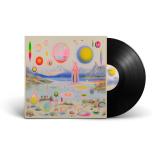
Starting their 2020 with a bang, OdD swiftly follow up their D Construction EP with another trio of reductionist sure shots for adventurous travelers in the minimal realm. "Pythagorean" lives up to its name with an intricately arranged pattern of percussive threads creating a kind of geometry that crystalises around a sturdy minimal groove. "Do Re Me" features plenty of tripped out FX sweeps and swishy pads that give this roller a dubbed out flavour perfect for the after hours. "Solfegio" switches things up with a crooked broken beat template and some pointed chord drops that really lift the track into an intriguing new realm - this is classy minimal with personality so don't sleep on it!
pas en stock
Dernière livraison il y a 5 ans réapprovisionnement sans garantie
"This release is pure sundown pressure from the start. Just like the Waxing Gibbous moonrise the namesake EP transforms you ready for the descent into the dark night. A1 'Zero Gravity' launches into takeoff with a trajectory course aimed straight for the dancefloor. Sub bass and crisp percs put this track firmly in driving seat. A.2 'Tidal Wave' is flooded with 'Dub' influence. With a tape delay in full effect the low end modulates warm and easy from edge to edge. B1 'Lunar Blueprint' shifts gears and closed the EP in the Dub Techno arena. The hollow melody haunts the track and progresses through each section while spooky samples laced with reverb orbit a tepid bassline produced especially for
those dark hours.
Tunisian oud player and vocalist Dhafer Youssef is at the vanguard of a movement in contemporary music that brings East and West together. He is one of the most inventive oud players in the world and has succeeded in freeing the instrument from its traditional role and bringing it into jazz.
In 2016, he released his solo album Diwan Of Beauty And Odd, which he recorded together with Aaron Parks, Ben Williams, Mark Giuliana and Ambrose Akinmusire. The album was received with critical acclaim and fuses Arabic and Western culture. It features the popular tracks “Fly Shadow Fly” and “Diving In The Air”.
Diwan Of Beauty And Odd is available as a limited edition of 500 individually numbered copies on translucent magenta coloured vinyl, housed in gatefold sleeve and includes an insert.
For over 25 years, David Madson (aka Odd Nosdam) has been stationed away from the light of the mainstream, diligently working the nightshift. Every so often, we awake to find another of his bleary and beautiful missives slung into the waking world – albums whose assemblages of sampled grooves, atmospheres and voices are unified by a hallucinatory sense of melody, like disparate visions strung together through ribbons of sleep-talk. From his earliest days as a member of the seminal group cLOUDDEAD, through his remixes for artists such as Boards of Canada and Black Moth Super Rainbow, Nosdam has been reporting back from his rounds upon the perimeters of culture and consciousness, forging a musical language all of his own.
On Patrol is the second Odd Nosdam LP to be released on The Notwist’s imprint Alien Transistor – following on from the 2019 album Mirrors – and continues a collaborative history that begun with a 2008 remix of The Notwist song, “Sleep”. It’s a love letter to the vinyl format, produced with the aim of optimizing for a single LP. This objective permeated every aspect of the album’s production, from the duration of each side through to the vinyl mastering (Jessica Thompson) and lacquer-cutting (Dubplates & Mastering, Berlin). As we've come to expect, the album is built almost entirely from found sounds, many of which were taken from obscure and second-hand vinyl gathered during Nosdam’s ceaseless crate-digging escapades. Other sources include field recordings made in 2022 at the Catalonia summer home of artist Salvador Dalí, which are baked into the swirling sci-fi glide of “Here to Know (Adéu Mix)”, and a sumptuous clunking bass line courtesy of Organi’s Mike Walti, which runs like an infinite highway through the fuzzy, sunbaked sprawl of “Deepsimple”.
Odd Nosdam’s work has always swept the entire atmospheric spectrum, from rhythmic vigour to levitational beauty. On Patrol is perhaps his finest assimilation of these extremes. “Sgt. Pepsi” is the perfect case in point: a formidable slow groove capsizes into vinyl crackle after a mere minute, before the song resurrects itself through sweeping strings and vocal harmonies, sliding against each other like the overlain romantic denouements to a dozen Hollywood films from the 1940s. Elsewhere, “Get You In (Belong Mix)” drapes shoegaze guitar over a trundling funk backbeat, straddling the physical world and the outer realms, while hushed voices point toward the song's implied themes of cultural cliques, critical consensus and the plight of the eternal outsider: “Sure, I can get you in... these people are my friends, I’m one of them - I belong.”
This is music that both endures and disappears. Odd Nosdam has always wielded a strange relationship with time, scrambling association with any specific era, weaving together numerous tempos simultaneously. There is no master clock. Each track could happily hold up as an infinite loop, yet Nosdam clearly favours the potency of the gone-too-soon, applying the fadeout just as hypnosis starts to crest. Indeed, the songs are both the product of meticulous long-term construction and spontaneity. While the foundations of On Patrol have come together over several years, the recording process involved channeling vibes through a vintage Roland Space Echo and bouncing song fragments back and forth from hard disk to cassette 8-track, gifting a phased permanence to creative decisions made on the fly – a hat-tip to the production processes of Nosdam's longtime hero, Lee ‘Scratch’ Perry. Like a recurring dream, On Patrol appeals to both the plains of momentary ephemera and the long-established backchannels of the unconscious, equal parts revelation and deja vu.
Rich Oddie (Orphx) and Dave Foster (Huren/Teste) reunite for their electronic-industrial punk project, O/H.
NO CONTACT LP - is a live compilation that captures the raw energy of their performances between 2011 and 2019. This intense anthology distills the essence of their sound: noise driven electronic power, relentless rhythms, and obsessive vocals. For the first time, this fury is preserved on a double vinyl with a special edition.
Fosters gritty vocals clash with Oddies dark sound
manipulations, reflecting a world on the edge of collapse a bleak view of modern civilization embodied in their
uncompromising music.
Let's dive into the third act of the KR3 Fifth Anniversary
celebration
Tears|Ov are Terces Wale (aka D. Wale), L.E. Allen and Lottie Lou Poulet. For real money and in no particular order, they also work odd jobs as digital caterers, shrinking heads, doing laundry and looking up stuff online.
Tears|Ov write: ‘A life on hold! The corporate apology embedded in bad quality, insincere, trashy, patronising hold music it can have no meaning in this stage of Capitalism. There isn’t time - and humility is a waste of money. Still they joke and try to keep us calm, patient and satisfied. This was the starting point for “A Life on Hold” by Tears|Ov - Which quickly drifted into further musings on a collective life that feels forever two steps forward and x-steps back. We wait on hold and reach the top of the queue only for the line to go dead.
Tears|Ov are interested in the ready-made of mainstream media, particularly, the lies, the rub, the promises and the taken for granted. We are the blood plasma of the I in the screens embrace. We seek to find ourselves in that reflection, our real selves – if they even exist – just because it’s kinda fun. You may have seen us on TV, in the bargain basement music section, or some venue in your local area. We take the opportunities the Universe provides.” – Tears|Ov, London, 20 June 2026
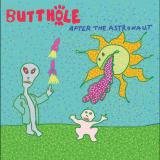
Riding the least likely commercial success of the 90s with Modern Rock chart topper "Pepper," Austin odd rockers Butthole Surfers returned to the studio in 1998 for the followup, After The Astronaut. Leaning further into experiments with electronics, hip-hop, acid grooves, and the otherwise unusual, the result is a dizzying orbital trip expanding the idea of what's possible in rock music.
Disputes between the Butthole Surfers and Capitol Records left the album unreleased, while the band regrouped and re-recorded some of the material for 2001's Weird Revolution, released through Hollywood Records. After The Astronaut collected dust, eventually developing a mythic status.
A quarter century later, Butthole Surfers are realizing their vision for After The Astronaut. Newly mixed by guitarist/producer Paul Leary, After The Astronaut corrects the record on the band's activity in the late 90s with a bold, idiosyncratic evolution of their sun-fried psychedelia.
Following the success of the inaugural all-Jiri Jiri edition, Batov Records returns with the second instalment of its Give Me Disco series, once again curated by label co-founder and globe-trotting selector DJ Kobayashi. Rather than revisiting familiar disco classics, Give Me Disco Vol. 02 digs deeper, bringing together four dancefloor discoveries from across Europe and Asia, including two previously unreleased tracks available here for the first time.
Spanning Portuguese jazz-funk, Norwegian cosmic oddities, Japanese-inspired psychedelic disco and cinematic groove, the EP reflects the breadth of Kobayashi's record bag - a carefully assembled selection of tracks that have soundtracked his DJ sets for years alongside exclusive material rescued from the vaults.
Opening the record is The Bam Jam Band's brilliantly understated "Theme", a soaring slice of jazz-infused disco from Portuguese musicians Sérgio Alves and Pedro Tenreiro. Originally released only as a now long-sold-out 7 inch on Mad About Records, the track has become one of Kobayashi's trusted secret weapons, championed by discerning selectors including Darryn Jones and Red Greg. Built around Alves' dazzling synthesiser work, "Theme" finally gets the wider audience it deserves. The EP's first exclusive arrives courtesy of D. Apal, instrumentalist and member of Norway's Flammer Dance Band. His only solo release, issued on the band's Lysketrekk Records, has become a cult favourite among adventurous record collectors. Batov now unveils the previously unreleased "60 Meter'n (Rytme)", an extended instrumental dub that strips away the vocals to let the handclaps, cavernous bassline, dub effects and wonderfully eccentric synthesisers breathe, transforming an underground favourite into an irresistible dancefloor weapon.
Side B opens with YĪN YĪN's "Tokyo Disco", taken from the band's acclaimed third album Mount Matsu on Glitterbeat Records. Long-time admirers of the Dutch quartet, Kobayashi has championed them since first hearing the breakthrough pairing of "Dis ̄ kô Dis ̄ kô" and "Dion Ysiusk" on Bongo Joe. Since then, he has hosted the band twice on Soho Radio and supported them live in London. "Tokyo Disco" perfectly captures YĪN YĪN's distinctive blend of Japanese-inspired psychedelia, Southeast Asian influences, post-punk funk and shimmering disco grooves, making it a natural fit for the Give Me Disco series.
Closing the EP is another exclusive from Jiri Jiri, whose contribution helped launch the series on Vol. 01. Ahead of their forthcoming album later this year, the duo unveil the previously unreleased "Spaghetti Western", a wonderfully off-kilter fusion of Morricone-esque cinematic atmosphere, taut funk rhythms and the soulful modern groove of SAULT. Equal parts soundtrack and dancefloor curveball, it provides a fitting finale while offering another tantalising glimpse of what's still to come. With two exclusive cuts sitting alongside two carefully chosen modern classics, Give Me Disco Vol. 02 is another lovingly curated snapshot of DJ Kobayashi's musical universe: borderless, groove-driven and unapologetically built for adventurous DJs, discerning collectors and open minded dancefloors alike.
Delsin is pleased to announce the second volume of their extensive compilation series combing through the catalogue of landmark Dutch techno label Djax-Up-Beats. The series, curated by Rush Hour co-founder Christiaan Macdonald, continues with a look at the label's legacy in the development of Dutch techno through the early 90s. This second volume in the Djax-Up-Beats 1990-2005 series comprises 25 tracks, presented again as a main triple-vinyl album plus three additional 12" EPs. The compilation also features again all-new illustration from Alan Oldham, design by Lost Communication and liner notes from music journalist Oli Warwick. Crucially, every track featured on the series has been carefully mastered by Johanz Westerman, bringing the best out of tracks that often had very little post-production treatment before they were originally pressed to wax. Volume 2 - The NL Connection takes a deep dive in the development of Dutch techno. Saskia Slegers didn't run her label with a specific focus on any one place, but she naturally connected with artists close to home. Emergent producers from across the Netherlands found a vital outlet in Djax-Up whether they were short-lived dabblers or dance music devotees on their way to lifelong careers. Volume 2 - The NL Connection looks at the first outings in Dutch techno by originators such as Stefan Robbers as Terrace, Dylan Hermelijn as Planet Gong and Edge Of Motion (with Gert-Jan Schonewille) and Sander Friedeman as Random XS. Whether it was sensitive, melodious machine dreaming, gnarly acid tweaking, jackhammer techno or oddball outliers, you could count on Slegers' label to point you to the best underground club music coming out of the Netherlands. With four more, equally extensive, volumes to come in this series, Djax-Up-Beats 1990-2005 is a thorough exploration of a true totem of techno culture -- a renegade label that operated on its own terms and carried surprises and slammers in equal measure.
DALGA – A Selection of ’80s Pop Oddities from Turkey is the first compilation to bring together rare Turkish pop oddities from the 1980s, and the first compilation to explore how new studio technologies shaped the sound of 1980s Turkish pop and dance music. Features six tracks that were released only on rare cassette tapes.
In the aftermath of Turkey’s 1980 military coup, collective music-making gradually gave way to studio-based production, as drum machines, samplers, and synthesisers took centre stage. From the early 1980s onwards, these technologies became increasingly popular among Turkish musicians and producers. While some sought to emulate the global pop sound of the era, like Neriman’s “Sever Gibi” and Füsun Önal’s “Takma Kafana” others experimented by blending electronic elements with Arabesque, as heard in Mehmet Pekün’s “Anca Gidersin” and Zorbeyler’s “Bir Mumdur” or with Anatolian pop influences, such as the studio project Tele Tempo’s “Şu Samsunun Evleri” and “Havada Bulut”.
Let these waves carry you through the electrified tides of 1980s Turkey.
DALGA is compiled by Istanbul-based beat maker and digger extraordinaire Grup Ses.
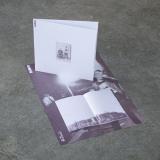
Tooflie's anonymous archivists return for another trip through the past, this time leaving geography behind for the unruly musical landscape of the 1980s. Four edits bring together the creme de la creme of Polish rock, Danish new wave, Soviet avant-garde and Georgian synth-pop, giving each source a fresh dancefloor angle while keeping what made the original so distinctive. A Balearic rework, an Hi-NRG treatment and two more leftfield interventions turn these unlikely archival finds into records that work just as well at home as they do on a larger system. The original records behind these edits are notoriously hard to find, making Tooflie 008 a rather useful detour for diggers and collectors, as well as anyone with a soft spot for overlooked musical oddities.
Repress of since last 2025 sold out box set. Ltd edition Gold vinyl, 4 X 140g LP Box set, 24pp booklet, DL card. or Ltd edition 4xCD Bookback. Trees classic albums, beautifully packaged as a four-disc anniversary edition includes 12" book with liner notes from founder member David Costa and comedian Stewart Lee - Features two new discs of alternate mixes, early demos, BBC session tracks and 2018 live recordings in London - Includes lost demos of 'Polly On The Shore' and 'Streets Of Derry' It's now over fifty years since Trees' formation and, although 'Acid Folk' has now become a sub-category in the lexicon of record dealers and music critics, and although founder member David Costa feels the original noughties reissue helped consolidate a gathering wave of curiosity, they themselves remain in the shadows. Earth's new Trees collection brings together both albums adding shiny alternate mixes of key tracks along with a selection of radio sessions and demos, all sounding brighter and cleaner than ever before. Trees first album, 'The Garden of Jane Delawney' (1970) snuggles nicely into contemporary nu-folkies' idea of the genre, and shares some of the pastoral-whimsy that characterised The Incredible String Band or Donovan, offset by some stunning interpretations of traditional material and Bias' own songs, which were somehow part of the tradition Trees had adopted. Readings of 'Lady Margaret', 'Glasgerion' and the old standard 'She Moved Thro' The Fair', and the extended fade of the group's own 'Road', presage the explosive instrumental duelling that would come to characterise the follow up album, 'On The Shore'. There's a definite shift between the records, the second being darker and more ambivalent. Here Trees don't tell you what to think. You're left to formulate your own response to this odd, opaque music. The 'Streets of Derry' session version leans into the brain vibrating drone-groove they somehow found at the traditional tune's centre. 'Polly On The Shore', another traditional tune, is one of the definitive moments of English folk rock. This special expansive collector's edition celebrates the bands 50th anniversary. "A beautiful hybrid, Trees found a unique space between intimate folk and freewheeling psychedelia. Musically ambitious yet brilliantly balanced, they have left an enduring legacy for those lucky enough to be in on the secret" - Edd Gibson, Friendly Fires
After a three year break, Blawan and Pariah’s Voam is back with “Piranha Pop”, a new EP from Rhyw. From the teeth rattling madness of “Suppli Crush” to the slinky oddness of the title track, these four tracks explore and push up against the outer fringes of techno music and mark a worthy follow up to his previous release on the label, 2022’s acclaimed “Honey Badger”.
In a cultural landscape trending toward mindless diversion, Your Old Droog has defied the odds, building a thriving career through musical depth and captivating songwriting. In pursuit of hip-hop immortality, the Brooklyn artist engages listeners with inventive metaphors, genuine reflections, and sophisticated rhyme architecture. Now, Your Old Droog is back with his tenth full length album, Bread & Butter. Recalling his humble immigrant family stretching caviar across slices of bread shortly after arriving from Ukraine, YOD has crafted a testament to making the best of any situation. This philosophy runs throughout Bread & Butter, as Droog chronicles the turbulence of rap success, ruminates on youthful memories, and dismisses unworthy challengers with clever precision. The project’s rich sonic texture is shaped by beats from Flying Lotus, Conductor Williams, Ohbliv, and more, while hip-hop luminaries Evidence, Oddisee, and Masta Ace make memorable appearances, along with South African star A-Reece and acclaimed singer Georgia Anne Muldrow. Grounded in resilience, perspective, and self-determination, Bread & Butter is an inspired statement from a truly distinct talent. Transforming personal history into universal truth, the album reaffirms Your Old Droog's place among the most thoughtful and compelling voices in modern hip hop.
Faitiche presents the debut solo album by cellist, sound artist, and composer Topu Lyo: “quiet scenes from tokyo” brings together sixteen miniatures for solo cello and tape echo that oscillate between abstracts drones and rhythmic pizzicato sketches – all recorded at Topu’s Tokyo apartment. The constant traffic noise from a nearby highway has become an accompanying soundtrack for his compositions and can be heard on the recordings. Topu’s playing is marked by a distinctive idiom oriented more towards abstract electronic studio effects than classical technique.
The artist spoke to Jan Jelinek about his work:
JJ: A solo cello album may seem like an odd fit for a label that has to date released only music that is electronic in the broadest sense. But I think “quiet scenes from tokyo” complements the Faitiche repertoire exceptionally well. Its sixteen miniatures showcase the cello in all its complexity: the bowed passages sometimes recall a tape feedback drone; the pizzicato playing conjures up the percussion recordings of Moondog; and the abstract textures might be mistaken for the product of a granular sampler rather than rapid finger work on the cello. I’m constantly surprised by just how rich and varied this album is – without ever losing the charm of its sketch-like quality. Could you say a few words about the making of your album – first of all, from a rather technical perspective: what production tools did you use, and why?
TL: My production tools were very sparse. Just a solo cello and my Roland 301 Space Echo, which I only used at the end, running everything through it during mixing, tape only. After years of working with electronics, pedals, and synthesizers, moving to Tokyo pushed me toward minimizing my setup. But my aesthetics shifted too, toward simplicity. I wanted to strip everything back to just the acoustic cello and see how far I could push it — replicating some of my favorite electronic effects through extended technique: slow portamento, LFOs, filters, detune, noise. I’d also been listening to a cassette of ocean sounds for years. When I moved to Tokyo I was horrified to find myself living directly across from a freeway. Eventually the freeway started sounding almost identical to the ocean — and that ended up playing a prominent part in the recording.
JJ: That’s super interesting: mimicking electronic production as a compositional idea for the cello! You say the sound of the freeway is crucial to the album: I, too, tend to interpret steady traffic noise as a positive soundscape – do we hear the freeway on the album? I can also hear other field recordings, for example on “a street car with announcements”. Can you say a bit about how these field recordings influence your playing?
TL: Yes, you can hear the freeway on the album! The freeway is most prominent in “old trees in lonely spring”, “yuyake koyake”, and “the moon” (you can clearly hear individual cars). When I first began recording I had my balcony door shut tightly, but after a while I began leaning into the highway sound and slowly opening the door little by little to control the amount of noise. “streetcar with announcements” was a moment I was recording and a car passed by making announcements in the background. I loved how it sounded! Same thing with “yuyake koyake”, and later I realized that every day at 5pm the same song plays to mark sunset, telling children it’s time to go home. Having this bedrock of sound puts less pressure on me to put music on top or to play more notes.
JJ: It’s astonishing how much this differs from what I’d imagined: I’d been picturing peaceful landscape recordings, but had never thought of a freeway. Which goes to show how open to interpretation traffic noises are. So the room by the freeway had a major influence on the album – how are you going to perform it live?
TL: The contrast between the freeway and the beautiful landscape in my head couldn’t have been starker. I too was imagining a beautiful landscape in which to create the album, but somehow it still worked out. I've been going back and forth a lot on live shows and I think the most honest way is to have it the most stripped down. I was thinking of using traffic samples etc., but I think the duet really comes from the background sounds from every unique venue/environment. So as it stands, I’ll just be doing acoustic solo cello.
Rocco Universal presents four cuts of cosmic machine funk on Cosmic Tiger.
Lovingly recorded using analogue synthesis, the floor-focused music favours feeling over control, with saturated drums, thick bass notes and slow-burning melodies loosely entwined over intuitive arrangements. Shaped patiently amid Rocco’s long-running residency at Potato Head Bali, the tracks meander through cosmic disco, proto-house, electro-funk and psychedelic chug, each finding its place beneath evolving twilight skies.
Rocco Universal is the alter-ego of Patrizio Cavaliere — DJ, producer and journalist serving the roots of music from the space in between. His cultured turntable curation alongside years in conversation with some of the scene’s architects and ambassadors inform freeform productions that have previously arrived on labels including Leng, Soul Clap and Adeen Detroit.
Originally launched as a blog, Cosmic Tiger now surfaces only occasionally through interviews and original releases, operating as a slow-moving but trusted archive of influences, conversations and dancefloor oddities.
Rich Oddie of Orphx and Alex Pi of Pi Electronics introduce Anaxia, a new project arriving on Veyl with the 7-track LP “Maska”.
Built from raw electronics, stripped-down drum machines and a stark post-punk pulse, the record sits somewhere between industrial pressure and the ghostly minimalism of Suicide. It is direct but shadowed, physical but restrained, with vocals from Oddie and Pi cutting through the machinery rather than sitting on
top of it. Oddie’s background in Canada’s industrial underground and Pi’s long-running connection to the Greek electronic scene meet in a sound that feels tense, reduced and fully intentional. KAOSMOS and Florian Engerling add additional vocals, while remixes from In Trance 95 and Veyl regulars Years of Denial extend
the material into darker, more hypnotic territory. With “Maska”, Anaxia deliver a debut that feels fully formed: nocturnal, focused and stripped to its essentials. A natural fit for Veyl, the record draws a line between post-punk, industrial electronics and body music without overexplaining itself.
Tara Cunningham’s guitar glitch miniatures draw patterns in negative space on new mini-album Warm Ground. Operating predominantly within improvisational and experimental music, guitarist Tara Cunningham has developed a discrete sonic language that reveals the full textural and timbral range of her instrument.
Marking a new chapter for Cunningham that builds on her solo debut, Almost – Not Exactly, released on Non Classical in 2025, Warm Ground unfolds across seven compelling instrumental dialogues - each a conversation of rhythms and found sounds, syncopated and juxtaposed, open to encounter.
Implied by the title of first single ‘Following a Thought’, Cunningham weaves an exploratory melody into the spaces between field recordings. At once introspective and highly relational, each track ushers the listener into a world of different scales, seeking beauty and meaning in the everyday, from the discrete mechanisms of ‘Fridgelight’ to the delicately unhinged organism of ‘Flying Ant Day’.
Cunningham finds a natural home on Odda’s roster of artists sensitive to the details of their materials and surroundings, finding kinship alongside the intimate songcraft of Kirk Barley and Fohn in the gaps between composition and improvisation.
In 2026 she released a self-titled LP as The Sleeves with Jack Cooper, performing at Cafe Oto ahead of a US tour in the autumn. She continues to pursue a range of projects as collaborator and side person with Modern Nature, Sebastian Rochford, Red Snapper, Liam Noble, Laura Jurd and Caius Williams.
UK underground heavyweight Ploy unleashes his second release on Dekmantel with a brand new four track EP. The release sees the dynamic producer continue to push the envelope with his own flavour of driving, sexy, Ploy house. Putting every ounce of his production prowess on show while proving yet again that Ploy is a force to be reckoned with both in the studio alike. Making tracks for DJs has always been the source of inspiration for Ploy and this is no different with each offering carrying its weight and then some. Straight up, no frills house music that oozes quality by doing the simple things well.
Kicking off the record is title track 'Glizzy', an arpeggiated tech house tool built for the hours that you lose yourself on the dancefloor. From the off Ploy puts his ear for percussive dynamism on show with the understated subtleties of this opener. Thematic sampling, nuanced arrangement and odd ball melodies combine to set Glizzy apart with a gentle nod to hot dog lovers worldwide.
The EP follows suit with A2 'Global Underground'. A contemporary progressive house roller, which rips through the atmosphere with melodic blasts, unrelenting groove, and a powerful bassline.
Offering an equally effective double B-side, B1 is 'Yesterday Now Tomorrow', which sees Ploy lean on his production mastery with entangled percussion and expertly dosed sampling. The result is a swinging heavy house burner that is truly greater than the sum of its parts.
Lastly on the EP is ‘SlowanDip’. A heavily swung, percussive chugger to warm up a dancefloor, paired with a bassline to test the system, this B2 closes out a stellar second showing on Dekmantel for Ploy.
The record arrives at the crest of festival season and is primed to soundtrack dancefloors around the world under the glistening Summer sun. Ploy has quickly carved out a reputation for his unmistakable, drum driven take on house music, and Glizzy only sharpens that identity further. Focused, effective and built with DJs firmly in mind, the EP captures an artist operating with total confidence, delivering four tracks that prove Ploy isn’t just part of the conversation, he’s pushing it forward.
Metabolising 20-plus years gorging on the hardcore continuum, Luke J Murray returns to Sneaker Social Club with the first album under his Liquid DnB-Like Ambient Grime 2 alias. As the first self-titled EP in 2024 demonstrated, with this project Murray applies a hauntological supplement to his life-long diet of rave's codes and signals. These 11 tracks could be embraced as dank bangers in their own right, but the ghostly shroud that lingers is no accident. It's an evocative expression of the hinterland places that frame the pursuit of the dance as much as the energy spikes in front of the bass bins — a diaristic reflection on trudging puddle-peppered streets to find little black doors or staggering home, ears ringing, as dawn comes to chase down the street lights.
Haunted House, Garage & Grime walks the line between atmospheric scene building and straight-up beatdowns with a relaxed swagger. 'The Ginnel In SK4' paints a vivid picture of urban malaise with its bleak synth warps and punk-dub splashes, not a drum sequence in earshot. It's flanked by the Caustic Window-meets-Mark One 'The Flats On Belmont Way' on one side, and low-slung electro-creeper 'Hollywood Park' on the other. As the titles hint, this is music tangibly attached to very specific places locked in Murray's memory — unmistakably UK locations that reflect back the half-hollowed out echoes of late night soundtracks, glancing off red brick and pebble dash concrete at odd angles.
There is space on the album for full-chested amen tear-outs like 'Pete's Gone Mad With The Axe' , but for the most part the mood remains downcast and pensive. The sparse approach affords you space to tangibly hear the (not-so-silent) name-checked rain pattering in the background of 'The Crown Under The Viaduct, While Rainfalls Silently Into The River Mersey' , or imagine the crunch of litter and dead leaves underfoot that snakes its way through minimalist stepper 'Bowerfield Lane, After Dark'.
Murray's vision is sharply realised, and his stated inspirations slot logically into his shelves of ordered ideas drawn from disorderly memories. From Mark Leckey's O' Magic Power Of Bleakness to the Ghost Box records alumni, Hatcha's seminal Dubstep Allstars Vol. 1 and Laura Grace Ford's Savage Messiah book, Haunted House, Garage & Grime is the logical product of a deep thinker making tracks with decades of rave in his bones and the sense that it all means something, even if it's not always clear what.
'Within the current Finnish jazz scene’s colourful embrace of ear pleasing and spiritual-leaning ensembles, Fågelbörs have felt a bit like an anomaly. They’re a lean quartet adhered to a virtuosic puritanism and a stern belief that every gesture serves the whole.
'A combo composed entirely of underground veterans, they belong to what could be described as the third wave of Finnish improvised music; several of whom helped shape that movement in the early 2000s. Elsewhere their collective lineage wends a bendy path through recent years of Finnish free jazz, experimental music, and dub. They’ve been alternately affiliated with projects such as Rauhan Orkersteri, Jooklo Quartet, Mohel, Kemialliset Ystävät, Odd Funk Records, Muumiot, Pascal & Baya Rays, and more.
'As Fågelbörs they’re configured like the four cardinal directions, a dynamic and cosmos-scaled unit capable of summoning elemental blasts of chaos and ecstatic, life-affirming joy. On Bagelfårs, they expand the unique vision of entropy and melody they introduced with their brilliant debut Marjassa (Ultraääni, 2022). Together, Matti Luokkanen (sax), Jaakko Tolvi (percussion), Tuure Tammi (trumpet), and Tero Kemppainen (bass) lock as an Aylerian helix, where effervescent free improv is always counterbalanced with key moments of gleeful, marching band-like reverie and mournful dissolves into passages of narcotic blues.'
Balaise was the original title of Vers le Nord’s debut album. In French slang, balaise means something in between badass and flamboyant. The word keeps popping up throughout the record, like a teenager’s graffiti scrawled on a bus shelter after a few drinks. Balaise robots. Balaise ghosts lurking in the shadows. Balaise is the barfly who fantasies about becoming a street vigilante. In many ways, Matthieu Pellerin's new solo project is entirely contained within that word: a gigantic piece one man against the world cobbled together, a monument shaped by hand using layers of synthesizers sounding like cathedral organs cast in concrete.
Stitching this type of freak together took time. Five years, or what sounds like forever in an age obsessed with career trajectories and content strategies. But for Matthieu Pellerin, it was never about career plans or taking the easy road. Or he would have dug up the rotting corpse of Oi Boys, his now-defunct band, whose brief existence and explosive popularity once united sullen skinheads, gothic street punks, and old school punks alike. Or he would have fully embraced the Metz scene, now that the Great International Triple Alliance of the East (Noir Boy George, The Dreams, The Feeling Of Love...) and rising solo acts like Tune Zitoune, Josy Bazar, Fantôme Josepha, and Tony Gerrano have somehow transformed this sprawling open-air heroin camp into an unlikely capital of cool. But Vers le Nord doesn't point East, and it is as a lone rider that Matthieu Pellerin can fully reveal his songwriting scope.
With Le Seul Élément, his first solo project, the Lorraine native had already shown a rare gift for crafting worlds. Picture vast sonic masses stretching like industrial zones, noise-filled fog pierced by pale neon lights and landscapes caught somewhere between the gnarliest dive bar and a doomsday bunker. And slipping through the soul-crushing slowness and fractured blackened atmospheres, one could perceive a throwback to his years plotting in black metal-tinged Loth and Bishop.
Vers le Nord populates those landscapes that once were rough sketches. Damaged characters reign supreme, with a plethora of exquisite mutts brought to life, rather than outcasts committed to the cause. Where Nuits Blanches —his new supergroup featuring members of Rixe, Lion's Law, Headbussa and La Femme— pulls no punches with raw confessions, Pellerin switches gear for tales of robot apocalypses, vagrants and fam-seeking school shooters, delivered with William Sheller-esque rhymes and striking images. Yet even within fiction, he manages to create something deeply intimate, almost defining, showing very little effort: he is a natural. All in all, à l’aise (at ease). Songs resonate deeply with the listener, perhaps because of Pellerin’s odd way or always addressing someone without ever really naming them, a floating, obsessive and inescapable “you” calling us out.
Despite all of the darkness, Vers le Nord stirs deep emotions. There is something of Type O Negative or Anna von Hausswolff in its constant collision of the ludicrous and the epic gothic, its bleak romanticism that never tells a sordid tale. While the vocals remain rooted in a distinctly French punk lineage—think No Class, La Souris Déglinguée and OG Bérurier Noir—the reactor core is hidden somewhere else. Oneohtrix Point Never feels like a closer relative with his ultra-emotional music made of cold synths and disembodied anthems, swallowing and regurgitating forty years of icy, contemplative new wave across ten songs. It comes as no surprise that Lila Ehjä and Aimable, two rising specialists in lowering the temperature below seasonal norms, appear on “Enterrez-moi bordel” (“Bury Me, for fuck's sake”), a grandiose, spectral and magnificently arrogant finale. And in the end, Vers le Nord starts where the original idea was hiding all along: somewhere amid the ruins, definitely balaise and yet somehow, completely à l'aise.
Mehr als 50 Jahre dauerte die Karriere von David Bowie, dennoch war es ein Schock, als er Anfang des Jahres 2016 plötzlich verstarb. Der Musiker, Sänger und Produzent hinterlässt der Welt ein beeindruckendes Gesamtwerk mit 25 Soloalben und vielen weiteren Livealben, Kompilationen, Soundtracks und Gastauftritten. »Legacy (The Very Best Of David Bowie)« heißt der neue Best-of-Sampler, der jetzt noch einmal einen Blick auf die größten Hits seines Lebens wirft – von Klassikern bis hin zu seinen letzten Aufnahmen. Natürlich darf die Sammlung dabei auch nicht auf seine größten Hits verzichten, darunter »Let’s Dance«, »Space Oddity«, »Starman«, »Ziggy Stardust« und viele weitere. Mit »Lazarus« hat es auch ein Song von seinem letzten Album »Blackstar« auf die Kompilation geschafft. Zu den weiteren Highlights auf »Legacy (The Very Best Of David Bowie)« gehört unter anderem eine neue Version von »Live On Mars?«, die von Produzent Ken Scott gemixt wurde. 20 Songs haben es auf das Album geschafft.
"Lofi Girl x Secret Lair: beats to cast to" brings two worlds together, matching the distinct rhythm of Magic: The Gathering and soothing lofi study music. Soft card shuffles, land taps, and double-sleeved ASMR blend naturally into warm, lofi beats engineered for deep focus. Smooth down the tension of a complex stack, keep your heart rate cool during a tough topdeck, and let every turn flow naturally.
Join Lofi Girl's dad as he shares his passion with his daughter, letting her peek into the art of deck building one card at a time.
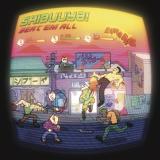
BEAT'EM ALL is french hip-hop/jazz instrumental trio SHIBUUYA!'s latest LP release. A blend of nu-jazz, fusion, hip-hop and future beats, all in original compisitions from the band's keyboardist and drummer, the album goes against the polished image we usually have of jazz music to deliver a raspy, energic and groovy sound that shakes the listener instead of nurturing him. With prestigious featurings such as CHiLi GiRL aka Shinobu Kawasihma, a Tokyo-raised Shamisen (a traditional japanese guitar) player, Melbourne rapper Nelson Dialect, french virtuoso saxophonist Hugo Afettouche, or the "french problem kid of jazz" trumpetist Daoud, SHIBUUYA! pushes forward its identity with references to japanese pop-culture through anime samples, powerful hip-hop beats, progressive broken-beat grooves and crazy deliveries on all three instruments (keys, drums and bass), all of it served by an original manga-inspired cover art by the band's keyboardist and leader. A reference to the japan-popular videogame genre (Shibuya being a neighborhood of tokyo centered around fashion and pop culture), BEAT'EM ALL tries to beat the odds on what we expect from a jazz album and to make it sound more like a garage-produced LP rather than a million-dollar studio album, to make as authentic and as generational as possible, a true product of today's young jazz scene.
Polished and forward-looking even 40-odd years on from its initial release, Bourbon Suite captures Japanese female keyboard trio Cosmos at a time when fusion leaned into pop accessibility without losing technical finesse. Built around layered keys and crisp studio musicianship, the album moves with a sleek, late-night feel. 'Midnight Shuffle' stands out for reworking earlier material into a smoother, instrumental-led groove, while 'Cosmic Cosmos' drifts into more spacey territory and is driven by elastic bass and shimmering synth lines. There's a clarity to the arrangements that keeps things light on their feet and means this remains a refined example of early 80s crossover fusion.
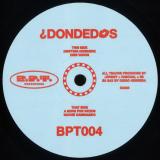
¿DONDEDOS is young dude/unc duo hailing from the Mission. Pascual Martinez (young dude) and BPT head honcho Jeremy Castillo (unc) have spent the last few years in the stu, cooking up this deep fried, groovin' 4 tracker. Fans of 2011-16 LIES and Future Times releases, “Biology" era Young Marco, Juju and Jordash, and the Wah Wah Wino crew are in for a treat.
In an era where literally every aspect of dance music is overly programmed and manicured, ¿DONDEDOS take a massively refreshing approach marked by true experimentation. All drums were recorded on the Roland R8, and the melodies were live played with a loose, jammy feel not felt on many electronic 12" releases in 2026. They're a jam band baby!!!!!
The fun starts with "Drifting Nowhere," a fried oddball deep house record with one of the year's most infectious basslines. Be ready for it to be on a loop in your brain long after the track has stopped playing.
2nd track "Dies Varos" was described by BPT fam Izaak from Loveshadow as sounding like "part of the Mediterranean touching Mexico." Ahhhhhhhhhhhhhhhhhhhhhh. (that was a deep relaxed sigh, not a scream for once!!!)
"Music for Patios" sounded pretty good on a walk and not on a patio so, just FYI, only a suggestion not a requirement.
Ender Noche Caminando features Diego Herrera (AKA Suzanne Kraft) on sax. In Jeremy's own words, this track features "oddball dancehall drums on the R8 with 80s synth pop dub melodic sensibilities."
Gold Panda returns with TON UP, a brilliantly stubborn new album for Studio Barnhus: eight rough-hewn dance tracks and two cozy little service-station interludes, all crafted with the robust determination of a producer who knows that 140 bpm is not so much a tempo as a way of life.
Made with Derwin Dicker’s unmistakable sampler-bashing touch, the tracks on Ton Up carry the raw knock of old-school hip-hop instrumentals, pushed through pumping house-music machinery and ready to cause absolute trouble on any half-decent sound system.
Here you’ll find zero of that dreaded, over-explained “maturity” usually demanded of beloved electronic artists several albums deep into the game. Instead, Gold Panda just sounds as happily locked in as ever, carelessly chasing the physical joys of pressure, swing and repetition.
TON UP is functional, funny and oddly tender club music, arriving just when the world needed it the most (June 26 that is.)
Pep Jam are back with a new series launching Mint Condition Vol. 1—analogue textures, global flavours, and dancefloor weapons. Built for timeless house music with a bit of dirt under the nails.
The series will feature artists from all over the world bring their own flavour, character, and the odd curveball.
Made for the dancefloor, so you better move your feet!
WRWTFWW Records presents the first ever vinyl release for the Startled Insects’ 1984-1985 abstract/synth-pop/post-punk/electronic run compiled into one album : The Antenna Years. The Bristol music must-have comes as a limited edition LP with astonishing artwork, liner notes and a heavyweight sleeve.
The Antenna Years compiles the independent EPs/mini-LPs the Startled Insects released in 1984 (self-titled) and 1985 (Underworld/Black Spring), with two bonus unreleased tracks that were only ever played in their live shows (W.W.W and What A Waste, both amazing).
Astonishingly futuristic when they landed in 1984, the Startled Insects sounded like they came from another planet while staying rooted in Bristol’s underground. Abstract electronic, leftfield synth-pop, dub science, gamelan heat, post-punk edge, cinematic atmosphere : The Antenna Years delivers one beautifully odd voyage into the sonic unknown.
In the 90s, the band released two albums, including the classic Curse Of The Pheromones via Antilles New Directions (Island Records), then evolved into The Insects: film composers for BBC/National Geographic, Emmy winners, and key architects of the 90s Bristol orbit, working with Massive Attack, Goldfrapp, Tricky, and members of Portishead.
Four decades on, The Antenna Years still hits like a transmission from the future. Dive in with no fear.
The Reloved series – Four Flies Records’ ongoing project where today’s producers reimagine select gems from the golden age of Italian library music and soundtracks – welcomes a new chapter from the formidable pairing of Nicola Conte and Nico Lahs.
The tracks reworked in this vinyl EP all originate from the first half of the 1970s, a period when a fascination with African imagery and sounds was so pervasive among Italian composers that it became a prominent cultural and aesthetic trend. Applying their refined touch, Conte and Lahs have expanded the rhythmic and atmospheric potential of the original recordings without the need for invasive overwriting. Instead, they have emphasized the unique identity of each piece, adding a contemporary club energy that remains entirely respectful of the original spirit, structure, and essence.
The EP opens with Piero Umiliani’s “Nel Villaggio” (originally found on the 1975 library album Continente Nero), which Conte and Lahs have filtered through a hypnotic, sensual tribal-house lens. Side A continues with “Orgiastic Ritual”, a reimagining of Gianfranco Reverberi’s main theme for Black Magic Rites (Renato Polselli’s 1973 erotic-horror film), which elevates the original percussive groove, amplifying its ritualistic dimension and drawing the listener into a mesmeric sonic spiral.
On side B, “Oasi nella Giungla” – from Giuliano Sorgini’s Africa Oscura (recorded in 1974) – takes a more minimalist, electronic approach: the original material remains front and centre, enveloped in delays and subtle rhythmic touches. Closing the EP is Romolo Grano and Gianni Oddi’s “Kilimangiaro”, originally composed for the 1974 documentary Le Montagne della Luce; through the use of sampling and loops, Conte and Lahs transform it into an elegant afro-house cut, at once sleekly restrained and irresistibly magnetic.
This is undoubtedly the most club-oriented instalment of the Reloved series to date, propelling Italy’s library music heritage from the flickering screens and analogue airwaves of the past onto the dancefloors of the present.
In an engrossing lattice of polyrhythmic beat science and deep atmospheric meditation, Samurai Music is thrilled to welcome Marco Shuttle to the fold for the Sumud EP.
Since his early years locked into the 00s London techno scene, Marco Sartorelli has developed as an artist entirely on his own terms. Through the rush of new ideas and cross-pollination that has characterised cutting-edge techno over the past 20-odd years, Sartorelli has travelled as Marco Shuttle from one considered stylistic concept to the next. On his own Eerie label and across expansive releases for respected outposts such as Spazio Disponibile, Incensio and Astral Industries, he's taken an exploratory approach to rhythm and spatial design while always drawing on intentional thematic frameworks, creating distinctive and immersive dance music in the process.
As Samurai Music continues to celebrate the rich seams of inspiration where deep techno and drum & bass intersect, Sartorelli's malleable, mysterious strain of drum work fits right in and sets a captivating tone for the label's operations in 2026. 'Sumud' is a steely drum mantra dealing in fractured patterns with the primal patina of the early Artificial Intelligence era, while 'Las Dunas de Taroa' leans on gently pulsing melancholia undulating at a half-time pace. 'Iso 50' taps into raw, analogue minimalism once more, evoking the sound of Roman Flugel's Ro70 records in their icy, alien formation. Completing the set, we're guided towards the tense electronica of 'Polylayering What I've Got', where uneasy melodic chimes interlock with intricately programmed drum machines.
There's a distinct sense of golden-era, mid-90s electronica coursing through Sumud EP, but Sartorelli shrouds the classic tools at his disposal in his subtle signature atmospherics, pushing towards a plain of expression that transcends time.
If – in some parallel universe (or perhaps a not-so-distant-future version of the one we’re already sentenced to living in) – the evil overloads of artificial intelligence were actually successful in their attempts to create convincingly enjoyable “original music,” more specifically tasked with wholly encapsulating my own personal tastes by data-chugging some cocktail of – oh, I don’t know – the posters on my wall, the records in my “most listened to” pile, the mixtapes I made for others, intensive physical scans of my auditory cortex, amygdala, hippocampus, heart strings, whatever else they have splayed out on their autopsy table with the intention of generating one all-encompassing “perfect band” based on the fruitful sum of their findings – that band, for me, would be (or would at least sound exactly like) the Tara Clerkin Trio. It is, quite simply, without exception, the music I wish to hear.
Formed in Bristol UK (where none of them are from yet all of whom are deeply engrained) in 2020, the Tara Clerkin Trio – as it somewhat democratically exists today, despite the singular authority implied by its name – consists of the titular Tara Clerkin, her partner Sunny Joe Paradisos, and Sunny’s brother, Patrick Benjamin. I’ll confess, I don’t know what their respective roles are within the operation and there’s only a very small part of me that cares to learn, as one of my favorite qualities in an objective listening experience is the mystery of who is playing what, which sounds are “authentic” versus synthesized, which chunks are performed “live” in a room together versus meticulously Frankenstein’ed from measure to measure, or how exactly the overall sound is so (seemingly) effortlessly achieved. Though, I suspect, if and when I do witness a live performance by this band at any point, my enjoyment of the music will not be lost in my better understanding of it.
With two extraordinary mini-albums – In Spring (2021) and On The Turning Ground (2023) – making a splash on London’s formidable World of Echo label in wake of their self-titled 2020 debut, this upcoming Somewhere Good LP is, in many ways, the band’s most realised work. In running their usual gauntlet of idiosyncratic (*an overused adjective for which here there is regrettably no sufficient alternative) approaches, Clerkin & co. colour in and outside of compositional lines over the course of 40+ celebratory minutes - never wallowing, despite inherently somber subject matters of self-defeat, disease, displacement, restlessness, gentrification - allowing their arrangements and improvisations ample space and time to situate, stretch out, breathe, cross-pollinate, and ultimately take deeper hold on the listener’s imagination – all while somehow sounding more like themselves than ever before.
Of course, there are traceable influences herein, if one felt that such comparisons were necessary to properly examine and enjoy this music (they aren’t)… Being the big dumb American from the small boring town that I am, cornfed on ‘90s alternative radio with the enchantingly exotic sounds of Maxinquaye and Mezzanine emanating from my chunky tube television, I can’t help but to make a blatantly obvious reference to a “Bristol sound”, ie the whole trip-hop trip, the pastoral crooning over the suggestive urban grime of cracked electro/piano treatments, the digitally-yet-primitively reconstructed James Bond soundtrack string-beats, etc.. But the Tara Clerkin Trio is so infinitely much more than that. There are elements of avant-pop, modern classical, kraut-folk, audio verité, dare I say indie rock (and not of the beer guzzling, masturbatory fuzz-flex variety but perhaps more like a Trish Keenan-fronted Faust, Adrian Sherwood at the mixing desk of If You’re Feeling Sinister, or – in expanding on our alternate reality – a world in which High Llamas cut a full-length for Warp Records with Andrew Weatherall on coffee duty).
The hazy, unmappable skyline-mirage of droning harmonium, upright bass, peculiarly accentuated wind instruments, acoustic guitar, hushed yet literally mighty keys combine to hypnotizing effect. The band may make underlying nods to jazz, sure, but it’s not appropriation, it’s that they have the actual chops to build it out. Beneath the janky samples and oddball percussive embellishment lies actually great drumming. Beyond the manipulated vocal witchery and woefully reflective plain-spoke moments are Tara’s subtly inspired melodies, sung with what might honestly be the glue to the whole crazy equation. A calming consistency throughout the otherwise unpredictably dynamic, boldly intuitive, uniquely British exploration of this (their own) universe in song. – Ryan Davis (Chicago, February 2026)
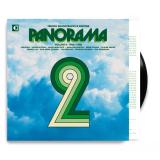
Transversales Disques proudly presents PANORAMA Vol. 2, another deep dive into rare French soundtracks, Library music, and instrumental oddities that have largely remained untouched by reissues or compilations.
This curated selection features 11 forgotten gems recorded between 1968 and 1980. It showcases the brilliance of celebrated maestros like Francis Lai, Karl-Heinz Schäfer, Eric Demarsan and Jean-Claude Petit, standing shoulder-to-shoulder with unsung composers such as Oswald d'Andréa, and Jean-Louis Bucchi.
Embark on a cinematic journey brimming with moody string arrangements, funky flanged drums, signature French basslines, and deeply dramatic atmospheres.
Deluxe Tip-On jacket LP with printed innersleeves
Including exclusive and extensive liner notes.
Vinyl Only / No Digital
Despite the thousands of kilometers between them, Monterrey and Medellín have always seemed to move in parallel. Both cities rise around guardian hills that watch over their people, and if you look closer, even the concrete that forms the backbone of each city traces back to these rugged metropolises.
The list of coincidences could go on—small, almost conspiratorial links that chance has woven between the two places. Adding another chapter to this unlikely connection is Regal86, who had already crossed the bridge once before to dive into the depths of Colombia’s “city of eternal spring.”
Doble Filo, his first full-length cut to vinyl, now becomes his latest calling card. The eighth release on Discos Nutabe’s catalog arrives with six tracks—six sharp-edged pieces that lay bare Regal86’s sonic marginality.
It’s a form of exclusion that isn’t imposed but chosen, a deliberate stance to sidestep the demand for exotica that still shapes much of Latin America’s electronic landscape. This is spicy, rough-edged techno—ruleless and unruly—driven by dense, clipped progressions that plunge you into a vortex masquerading as a rayado ritual.
There’s no overload of concept here, nor any caricature of the extravagant. This album simply delivers music built to tear through any club or dive, without false promises or unnecessary labels. If there’s one thing worth highlighting about Doble Filo as a whole, it’s the way it consistently—and almost implicitly—reasserts its core premise from start to finish: these techno tracks are meant to be played wherever the hell you want.
In a moment when oddities tend to be rewarded more than usual, Doble Filo doubles down on fundamentals, reclaiming the spirit of early electronic music and carrying it into an era where immediacy seems intent on blurring the honesty of those who shape the sound.
For Regal86, sonic hustle is the only thing that keeps his spirit steady.
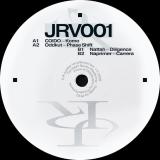
JUDDER opens a new chapter in its history with its first 12-inch vinyl release As part of a new mini-album series, the label brings together artists from diverse backgrounds and musical perspectives. What unites them all is an openness to experimentation and a deep affinity for sub-frequencies. Side A is driven by a bold, high-impact sound with references to techno, grime, and baile funk. The release opens with Komo by Italian producer Coido. The track unfolds in unpredictable ways, its rebellious character maintaining tension from start to finish and refusing to let go of the dancefloor. This energy is carried forward by Oddkut. His Phase Shift is a pure body-mover, where the core bassline and rhythms awaken a raw, primal energy. Side B shifts the focus toward more minimalist, rhythm-centered forms of bass music. In Diligence by Nattah, breakbeat and UK techno merge into a hybrid where atmospheric reverbs are expertly balanced with the drive of sub-bass pressure. Inspired by racing games, Naprimer closes the release with Carrera. This new 100 BPM experiment brings together the best elements of the Bristol and Manchester scenes. Tracklist: A1 Coido – Komo A2 Oddkut – Phase Shift B1 Nattah – Diligence B2 Naprimer – Carrera
Selection of IKIGAI Album by Nadia Struiwigh. IKIGAI was born in the quiet space between grief and remembering... Made entirely on hardware, from my living room in Berlin near Hermannplatz (my dad's name is Herman -- the odds), in the months my father passed away. Every sound, every sequence, every texture carries his fingerprint. Not because he made music, but because he made me love gadgets. Circuits, signals, blinking lights. He was the man who opened me up to machines and taught me how, eventually, to listen to them and use them for my craft. The name IKIGAI, a Japanese word for ''reason for being,'' found me when I was at a crossroads. The kind where you ask yourself: Why am I still here? What am I still creating for? What part of me still believes in beauty when everything feels like it's falling apart? These pieces came through slowly, on Japanese gear like Yamaha SEQTRAK, KORG, Roland -- like threads weaving a tapestry I didn't know I was making. Each track is a kind of purge... to him, to myself, to the listeners who find themselves in the in-between. The space where you're not who you were, and not yet who you're becoming. I found myself back into soundscapes and Ambient with a touch of Electronica. I weaved in sounds I captured from daily life, memories -- like the laugh of my sister. I built in silence and let the machines cry for me and let them tell the story I couldn't find the words for. IKIGAI is spacious. It's not trying to impress anyone. It's trying to just be, and hold space for all kinds of emotions. It moves like memory... slow, sacred, shifting. This release needs to be close to home, and will be released on my own imprint Distorted Waves, on the day 11.11 -- which refers to my first album that my dad had hanging up in his shed. For my father. Nadia
En Route is Oddisee’s latest EP—a soulful snapshot of motion and meaning. Each track is a reflection of movement—physical, emotional, and spiritual. Its music for the journey, wherever you're headed. One time pressing on CD
In September 2024, Nacho Piek, Rapha Mundi, Odd Signals and Ibai Machín gathered for four days in a beautiful house in Etxeberri, a small village in Navarre with barely 50 inhabitants. Isolated from everyday rhythm and surrounded by nature, the goal was clear: to create a production camp dedicated exclusively to club music.
The result is Etxeberri EP, the debut of Buenobueno Soundsystem — a work that captures that coexistence in the form of direct and timeless music, designed for the dancefloor. An organic crossing of influences ranging from House, Techno and late-90s Minimal Trance to contemporary UK Bass.
Etxeberri EP will be released on March 13 exclusively on vinyl, in a limited edition of 200 copies. Each record includes an inlay with photographs of the creative process and private access to an audiovisual piece shot by Jesús Iriarte documenting the experience and the spirit behind the project







![Unknown Artist - Tooflie Edits 008 [Hand Stamped,Colored Vinyl]](https://www.deejay.de/images/l/9/5/1270195.jpg)