Behind the deceptive veneer of the demure monotone artwork, something unassuming lies within this long-play waiting to be explored. Intrigued by the ironic title, enticed by the elegant text positioned alone on the beautifully tactile matte canvas, the listener will experience musical wonderment at odds with the presentation and discover that the 1976 album Colours is a powerful yet sophisticated set of electric soul-jazz. An inspired recording that bursts with warmth and texture, the pivotal recording from an exceptional jazz musician. HER name - Judy Bailey.
Over the course of a 70 year career, the pianist and composer established herself as one of the central figures of Australian jazz. Her crowning achievement Colours is a spirited and ambitious recording that captured the maturation and shifting jazz landscape of the mid 1970s Australia. Alongside other notable albums recorded mid decade including the 1975 self titled album by Melbourne's Arena (see Roundtable SIR014)) and Jackie Orszaczky's Beramiada (1975), the album signalled the countries transition from semi-acoustic jazz to electric jazz-funk. Regularly compared to the albums released on Creed Taylor's CTI label, Colours parallel these recordings with their clean production and spacious soul-jazz arrangements. In particular the crisp drums and processed bass heard on Bob James and Joe Farrell albums, the sprightly flute of Hubert Laws or perhaps the more sensual side of Flora Purim's vocals could all be suggested as a source of influence.
Continuing to celebrate and re-document Australia's jazz music legacy, The Roundtable are pleased to offer the first vinyl reissue of this seminal Australian Jazz recording. Presented in a replica gatefold sleeve with new liner notes, the full palette can once again be appreciated including the moody funk of Fall Down Dead, the Iberian Waltz Toledo, the Jazz-Dance anthem Colours Of My Dream and the spacey impressionist piece The Eleven Eight Song.
quête:odd music 4
Somewhat of an oddity in Chet Baker’s catalogue, Blood, Chet & Tears is a record of Chet’s efforts to adapt to the changing musical landscape around him in 1970. Baker leans into light and easy-listening territory. His renditions of the Beatles’ “Something” and The Archies’ “Sugar, Sugar” gives some indication as to who he was intending to appeal to. On a different note, Baker’s rendition of “Come Saturday Morning”, a song that received an Oscar nomination for Best Original Song, is moving and highlights his unique vocal approach.
CECILIA is a nomadic soul. Like in an existentialist epic that traverses different ages on a phantom thread of love, spirituality, desire and rage. She inhabits different bodies, inserts herself in a whole array of different characters. Some are fictional, some are as real as the artists that inspired her, and whose influence appears in CHOEUR under the guise of tiny fragments, direct quotes, dedications and spectral presences. Cecilia channels the poetry of different lives that might have been her own or might have only existed in dreams, and does so within a collection of songs that twist the path of traditional French and Italian songwriting into the inmost recesses of electronic mysticism. The composition of CHOEUR took place mostly around January 2023, a pretty precarious time in the artist life, and happened in a spontaneous and ritualistic manner that could appear as somewhat odd in the realm of electronic music production. Birthing out of ego-free solo jams in hyphened states of consciousness and audience-less performances, these moments of do-or-die energy intake served to funnel the wilderness of her emotions into extremely tight arrangements, ultimately allowing a dramaturgy of fierce and beautiful songs into existence. Striving for the sublime, CECILIA trained her whole body for a paradoxical procedure of disconnection and reconnection. A crucial pin in Melissa Gagné’s system of 7-year creative cycles, CHOEUR marks her debut on Haunter Record as much as the first step towards the possibility of a new artistic identity. A labour of love if there ever was one. CHOEUR is made of Awe, Chants and Ravishment, of Pain until Vision. CHOEUR prays Earth, Water, Stars, Sea. CHOEUR feels Spirits, Lightning, Thunder, Dawn, Dusk, Blood, Flowers. CHOEUR invokes a Return, to Grace. CHOEUR loves Mud and longs to Play. CHOEUR lives in a Dream created by a Dream. CHOEUR lives in a Body created by Love. CHOEUR is about a broken heart, open and ecstatic, about the beauty and the sadness that all is not what could be, about wandering and wondering why were the stars made so beautiful?
“I am OBSESSED with the 80s. I love the loud neon colours and fashion and the kinetic energy of the music. It’s uplifting and bittersweet with a ton of keyboards, what’s not to like?” reasons Morgane when asked what it is she likes about the decade. This exuberance is brightly reflected in the mirror ball synthpop of her third album released at the end of September. It is her second long player to appear on vinyl after the release of Between The Funk And The Fear debut on the Polytechnic Youth label.
Morgane was the keyboard player in Stereolab between 1995 and 2001 during which time they released Emperor Tomato Ketchup (her favourite) and Dots And Loops. As a teenager though she first played the drums, then guitar and bass. She only learnt the keyboards one month before joining the group. “They gave me 40 songs to learn, it was a baptism of fire”.
After leaving Stereolab, Morgane first moved to New York for nine years; she’d always planned to move to America having spent a lot of time there with her parents and of course those space-pop pioneers. The warmer weather of LA enticed her though and you can hear its pulse in Day-Glo Chaos. The album’s thumping heart is pumped by the city’s night sky and when asked she cites three particular albums as her favourites: the oddball analogue electro of Jacno’s 1979 debut; John Carpenter’s ‘Escape From New York’ and The B-52’s ‘Cosmic Thing’. There’s also a strong nod to the playful computerised harmonies of Yellow Magic Orchestra whilst she’s somewhat partial to the synth prog of Yes and Soft Machine. “I actually created a synth on Ableton Live named after Rick Wakeman’. I should create one after Mike Ratledge next!”
Throughout her work (but especially on this record) you can hear the influence of computer games. “I’m an avid gamer and have been one since I was a teenager and fell in love with my Commodore 64”. Though not a fan of Hotline Miami or the GTA series (“too violent”) she liked Hang On and loved Outrun which she used to play a lot on her Sega Master System. “I just got the soundtrack reissue from Data Disc and it is beautiful” she enthuses.
You’ll see and hear such influences on the lead single from the album ‘Midnite Rogue’ the video to which pays (im)perfect juddering homage to such arcade culture. Car tyres glued to sticky tarmac, French pop music lost in the air. The title was inspired by a Fighting Fantasy book which she adored as a kid. “I love the idea of this entity causing mischief during night time”, she beams. It’s not hard to see why.
REISSUED!!! Received an 8.1 rating from Pitchfork. "Sadly, many will hear Chris Corsano & Bill Orcutt's latest LP, Made Out of Sound, as 'not-jazz,' though it would be more aptly described as 'not-not-jazz.' In a better world, it would warrant above-the-fold reviews in Downbeat, or an appearance on David Sanborn's late-night show (if someone would only give it back to him). More likely, we can hope for a haiku review on Byron Coley's Twitter timeline to sufficiently connect the various improvised terrains trodden by this long-time duo—but if you've been able to listen past the overmodulated icepick fidelity of Harry Pussy, it should surprise you not an iota that Orcutt's style is rooted as much in the fractal melodies of Trane and Taylor as it is in Delta syrup or Tin Pan Alley glitz. As for Corsano, well, it may seem daft to call this particular record 'jazz' (because duh, it has a drummer), but to me Corsano is beyond jazz, almost beyond music, his ambidextrous, octopoid technique grappling many stylistic levers and spraying a torrent of light from every direction. Corsano's ferocity has elevated many 'mere' improv records to transcendence, but here he's crafted his polyrhythms within more narrative channels, bringing to mind his 'mannered' playing in the lamented Flower-Corsano duo. It's not 'groove' playing precisely, but it follows many grooves simultaneously, much like Orcutt's own melodic musings—which is why they're so naturally lock-in-key here. Which maybe makes it all the more surprising that Made Out of Sound was in fact recorded in different rooms on different coasts at different times, and stitched together by Orcutt on his desktop. Corsano recorded the drums in Ithaca, NY, and (as Orcutt states), 'I didn't edit them at all. I overdubbed two guitar tracks, panned left/right. I'd listen to the drums a couple times, pick a tuning, then improvise a part, thinking of the first track as backing and the second as the 'lead', though those are pretty fluid terms. I was watching the waveforms as I was recording, so I could see when a crescendo was coming or when to bring it down.' Fluidity ties the tracks together. With a little more groove and a little less around-the-beat maneuvering, one could almost hear the boiling harmonic layers as Miles-oid in 'Man Carrying Thing,' but with new-found Sharrockian modalities, Corsano accentuating the tumbling nature of the falling notes. The Sharrock vein continues with 'How to Cook a Wolf,' its Blind Willie-esque melodic simplicity and repetition extrapolated 360-style in a repetitive descending riff that falls into Cippolina-isms (by way of Verlaine ) until the end crashes upon the shore. Much like Orcutt's last solo album, Odds Against Tomorrow, there's a gentler, almost pastoral flow to some tracks ('Some Tennessee Jar,' 'A Port in Air,' 'Thirteen Ways of Looking') that calls to mind the mixolydian swamplands of Lonnie Liston Smith—but unlike Odds , other tracks ('The Thing Itself') smash that same lyricism into overdriven, multi-dimensional melodic clumps that push several vector envelopes at once in an Interstellar Space vein. With the help of Corsano, Orcutt has managed to slither even further out of the noise/improv pigeonhole lazy listeners/writers keep trying to shove him into. Looking at the back cover of Made Out of Sound , we should not see Orcutt hurling a guitar into the air with post-punk bravado, Corsano toiling behind him in the engine room—we should witness an instrument levitating from his hands, rising on invisible major-key tendrils of melody, fired by percussion, spiraling into an invisible event horizon..."—Tom Carter
Hassan Abou Alam is next to step up to the unconventional Nerve Collect label with six tracks of futuristic club-ready chaos. The finely crafted EP arrives in August and comes on 12" vinyl and via all digital platforms.
Hassan Abou Alam has established himself as one of Egypt's most innovative underground musicians over the last 10+ years. His music is a meeting of disparate worlds - organic and synthetic designs, digital and analogue tools, the traditional and the futuristic, and it has come on the likes of YUKU, Rhythm Section, Banoffee Pies and Casa Voyager. His versatile sound pulls apart existing genres and reconstructs them as something entirely new.
Opener '3asabi' is a stylish sonic assault with thumping rhythms and trippy oscillations that will get any dance floor bouncing. It's fun yet functional, serious yet seductive and 'Basha' Ft. ZIAD ZAZA, Ismail Nosrat & Aly B is another kinetic fusion of hand claps and complex drum funk, Egyptian vocal gymnastics and punchy bass. 'Ghalat' has lurching drums and plunging bass driving on beneath mangled synths, odd vocalisations and percussive splatters drawn from a unique sound palette. The drilling low ends of 'Khalsana' Ft ZIAD ZAZA are offset by fluttering percussive details up top while spare but booming kicks shake every bone in your body and the bassline devastates.
There is no let up on 'Mesh Mafhoom' which is a ritualistic workout with moments of melancholic synth soul shining through the jumble of tin-pot percussion and crashing hits. Closer 'Zein' is more body-popping brilliance that channels ancient spirits into warped synths and rhythms so complex they melt the mind.
Hassan Abou Alam's blurring of the lines between the real and the imagined is second to none on this EP. It's a sub-heavy mix of the human voice, machine-made sounds and inventive rhythms that make for something new, weird and wonderful.
Civilistjävel! returns with »Brödföda«, the successor to 2022’s »Järnnätter« and his fourth release for FELT. The record features collaborations with Laila Sakini, Mayssa Jallad, Thommy Wahlström, ELDON, and Withdrawn.
Tomas Bodén is a revered figure of the aural murk, known primarily for his work as Civilistjävel. It’s an alias that has spawned a catalogue of self-released peculiarities, featuring music that scorns traditional form, instead opting for unfussed symphonies of ice-hued minimalism; soft murmurs that emanate from his studio in the High Coast of Sweden.
On »Brödföda«, his latest album for Fergus Jones’s FELT imprint, subtle new developments in mood prevail. Across its 75 minutes, Civilistjävel! unveils a breadth of emotions that on previous releases seemed distant. He also invites collaborators on record for the first time: Beirut-based singer Mayssa Jallad mournfully croons on »IV«, »VIII« hosts Coldlight’s ELDON & Withdrawn for an abstracted session of dub-hop murk, Laila Sakini offers a hallucinogenic monologue amidst melodica, sticks & bells playing on »IX« and Thommy Wahlström floats scant acid dub stylings on »VI«. These additions and developments bring a forlorn intimacy to the music, and suggest an ambition that few artists of his ilk strive for.
FELT’s (un)reliable cast of audio ghouls routinely summon the odd, with Civilistjävel! often its primary culprit; »Brödföda« gently modifies this path to pursue some of his and the label’s most quaintly beautiful music yet.
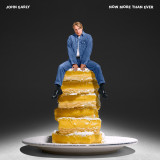
Expanding upon his critically acclaimed MAX comedy special of the same name, John Early’s long-awaited first comedy album Now More Than Ever features four brand new cover songs from John Early and The Lemon Squares, along with an exclusive, album-only set from Early’s beloved alter ego, Vicky with a ‘V.’ In the album's oddly stirring climax, Early delivers a sermon on the emptiness of millennial culture, pleading to the Brooklyn crowd, “We have to get serious! Before it’s too late! And our gravestones read: Because Cancer.” Now More Than Ever is Early’s sincere and abundant offering back to the culture of thoughtful critique, heartfelt music, and infectious joy, firmly cementing his place as the godfather of millennial alt-comedy.
- A1: Raul Seixas, Sérgio Sampaio - Ta Vida
- A2: Edy - Sess–O Das
- A3: Sérgio Sampaio, Raul Seixas
- A4: Sérgio Sampaio - Eu Acho Graça
- A5: Miriam Batucada - Chorinho Inconsequente
- A6: Raul Seixas, Sérgio Sampaio - Quero
- B1: Miriam Batucada - Soul Tabarôa
- B2: Sérgio Sampaio - Todo Mundo Está Feliz
- B3: Raul Seixas - Aos Trancos E Barrancos
- B4: Edy - Eu N–O Quero Dizer Nada
- B5: Raul Seixas - Dr. Paxeco
- B6: Sociedade Da Gr–-Ordem Kavernista - Finale
A wonderfully wild album - every bit as much as you'd guess from the cover - by a group that provided an early showcase for the talents of Raul Seixas and Sergio Sampaio - both artists who'd later have a big impact on Brazilian music in the 70s! The cover might look as trippy as a Tropicalia album, but these guys are maybe lightly looser overall - still with a talent for mixing together odd and offbeat elements, often with a nice degree of wit - but also groovy enough to make some of their songs swing nicely, with a very catchy vibe! The group also features the lovely Miriam Batucada and Edy -- who both get a chance to sing too - and titles include "Eta Vida", "Quero Ir", "Eu Acho Graca", "Sessao Das 10", "Dr Paxeco", "Finale", "Todo Mondo Esta Feliz", and a great version of the Antonio Carlos E Jocafi tune "Soul Tabaroa"
- A1: Bernard Fevre - Dali
- A2: Bernard Fevre - Space Team
- A3: Black Devil Disco Club - Follow Me Instrumental
- A4: Bernard Fevre - That Is To Be
- A5: Bernard Fevre - Restless
- A6: Old Gang Jah - Rasta
- A7: Bernard Fevre - Foxy Spleen
- A8: Bernard Fevre - Sunshine On March
- B1: Milpatte - Cruzer
- B2: Bernard Fevre - Odyssee
- B3: Bernard Fevre - Central Way
- B4: Suspense - Weekee Way
- B5: Bernard Fevre - Earth Message
- B6: Bernard Fevre - Cosmic Rays
- B7: Black Devil Disco Club - No Regrets
- B8: Bernard Fevre - Cimes Eternelles
- B9: Milpatte - Livel
- B10: Bernard Fevre - 2043
Unter den Galionsfiguren der französischen Disco hatte Bernard Fèvre, besser bekannt als Black Devil, wahrscheinlich die kürzeste Karriere, aber er war der brillanteste und einzigartigste Kopf von allen. Sein erstes Album Disco Club, das 1978 erschien, blieb zwar zunächst unbeachtet, ist aber inzwischen ein Muss, ein Sammlerstück, das viele Hörer dazu veranlasst hat, sich mit seinem umfangreichen Werk zu beschäftigen. Von Rockmusik bis Music Hall, von Sound-Illustration bis Disco, von Pop bis Reggae, von Filmmusik bis Werbung - Bernard Fèvre hat mit so vielen Genres experimentiert, dass es schwer war, den Überblick nicht zu verlieren. Eines seiner besten Alben trägt sogar einen so eindeutigen Titel wie The Strange World of Bernard Fèvre. Machen Sie sich auf den Weg in eine kosmische Dimension, die an das Unbekannte grenzt. BERNARD FEVRE (BLACK DEVIL DISCO / MILLPATTE / SUSPENSE) SPACE ODDITIES ist eine Reihe, die sich der Library-Music französischer (und anderer) Elektronik-Pioniere widmet. Das Projekt wird von Alexis Le-Tan & Jess initiiert und kuratiert und von Born Bad Records veröffentlicht.
The next album in our Cuban Classics series is a hard one to pigeonhole. It’s a real oddity, unique and not in keeping with the majority of Cuban albums we know, but it's all the better for this. Coming courtesy of Juan Almeida, the Fantasia LP is an eclectic and epic, instrumental ride through Latin jazz-funk, trippy electronics and orchestrated classical music. Sounding at points like a full-blown orchestrated score to a dusty animated film extravaganza, with phrases and passages repeating like the appearance of ghostly spectres throughout the recording. At others, it busts into exotic funk, psychedelic-trippiness and Afro-Cuban percussion.
As rich and varied as the record, so too was Juan Almeida's (Juan Almeida Bosque) life. A descendant of African slaves born in a poor neighbourhood in Havana in 1927, Almeida went from bricklayer to university law student, through which he would meet Fidel Castro. He played a key role in the Cuban revolution, becoming the only black commander and famously voicing “Aqui no se rinde nadie!” (“Nobody here surrenders!”) when outnumbered at the start of the offensive. Castro would later make him one of his vice presidents, but Almeida’s legacy does not stop there. He also became the composer of over 300 popular Cuban songs, many of them recounting his days as a guerrilla.
Produced, orchestrated and conducted by Rafael Somavilla, who worked on a vast array of Cuban recordings including Raúl Gómez's 'Instrumental' which we also reissued on Mr Bongo, the feel of Fantasia is big, luscious, grand and pop-classical. It has become a highly sought-after, cult Cuban rarity amongst collectors and like many great albums, every repeat listen brings with it new elements previously unnoticed. Such is its richness and depth. A truly mesmerising, off-the-beaten-track instrumental record.
- A1: Peaks & Ferns
- A2: Sit In Your Discomfort
- A3: The People's Changes
- A4: The People's Shadow
- A5: To The Before Time
- A6: When We Could Dance Together
- A7: African Folk Song
- B1: Back In The Days
- B2: A Night In Berlin
- B3: Two Chords & The Truth
- B4: Quinnies For The Boys
- B5: Ancestral Mathematics
- B6: Crisis & Oppprtunity
Having gathered up praise from Mary Anne Hobbs, Cerys Matthews, Jamie Cullum, Gilles Peterson, Huey Morgan, The Guardian, Jazzwise and more, for his lauded ‘Crisis & Opportunity’, drummer and composer Myele Manzanza returns with the fourth instalment of his series, titled ‘Meditations’.
On ‘Meditations’, we see Myele revert to a purely acoustic line-up, channeling a focused and razor-sharp return to his Jazz roots. Showcasing an incredible level of musicianship between three musicians at the top of their game - including Matthew Sheens (Ross McHenry, John Patitucci) on piano and Matt Penman (Joshua Redman, Sfjazz Collective) on double bass - the trio exchange motifs over the length of 7 tracks.
Opening proceedings with frenetic rhythmic improvisation, complimented by melancholic and cinematic layers of sound, ‘Crayford’s Room’ is a tribute to Myele’s musical mentor back in New Zealand. Remembering his time as a student in Wellington, Myele shows his deep connection to his origins, manifesting itself as lament on ‘Winter’ and ‘Homesick’. Introducing hypnotic, contemplative melodies take centre stage on ‘Something Old Something New’ (the first single to be released from the project)’ It maintains a sense of tension and intrigue throughout, and intensity rises to a crescendo sending sonic particles sprawling into space.
Intuitive, darker and deeply contemplative, Myele shares his innermost thoughts on ‘Crisis and Opportunities Vol.4 - Meditations’. He divulges:
‘The personal angst and existential frustration I was going through across 2020 - 2022 I believe is well reflected here. The album is deeply informed by the musicianship and sound of my trio, Matthew Sheens on piano and Matt Penman on double bass. Knowing that musicians of their calibre were going to be involved gave me licence to go further in my writing, deploying odd time signatures, sharing the melody roles across the piano and the bass, and delving deeper into the nuances of what the acoustic piano / bass / drums trio can do. The compositions present a challenge even to the best musicians, and I knew that it was essential to have a team on this level to really move the music beyond an academic exercise and draw out the emotion and colour from the material.’
The French-Mauritanian conductor, pianist and composer Leila Olivesi presents her sixth album ASTRAL - a brilliant opus with the best musicians on the French jazz scene. The albumis also her second with a large ensemble, the first being the acclaimed Suite Andamane,which received a coveted "Coup de Coeur" from the Academie Charles Cros.
A gifted composer, Leila was inspired by the great jazz masters, including Duke Ellington, and Mary Lou Williams. 'ASTRAL'demonstrates their influence and her talent for creating harmonic and melodious original music, full of modernity.
"Leila's music has compositional and conceptual integrity - recurring themes intertwine and morph through the title track 'ASTRAL', the trippy interlude 'Interstellaire' and the song 'Au Feu Des Reves'. There are surprises waiting around every corner, and she deftly avoids any hint of that tired old "head insolo-solo-solo-head out" formula. Odd meters dance effortlessly, and she's not afraid to swing! While her original music is the focus of this album, Leila's fresh arrangement of Mary Lou Williams' classic 'Scorpio' is a lovely bonus. This is fully contemporary acoustic jazz on a high level, with brilliant musicians that interpret and breathe her musical visions to life." - Geoffrey Keezer
- Various Organs
- Crow, Crow
- Night By Night (V3)
- Angelic Aye Are
- Last Summer (Ilkeston Version)
- Shark Attacks
- Two Minute Warning
- Suburban Monochrome
- Suburban Monochrome (Instrumental)
- My Mouth Is Bored
- No One Road (Early Version)
- In A Room 13 Blue Loop (Demo)
- The Long Run (Demo)
- Immaculate Mistake
- Unused Ymg Organ Riff
Young Marble Giants' "Colossal Youth" has mystified and beguiled audiences since its 1980 release. Seen by primary songwriter Stuart Moxham as "a last gasp" at making a record, Stuart insisted the one-off 7" deal offered by Rough Trade be altered to allow an entire album . . . that paid off when with a big seller which produces cover versions even from bands whose members were a decade or two away from being born on the album's release. When YMG disbanded, Stuart was at a loss; he'd never envisioned a follow-up. A series of experimental recordings made with pal Phil Legg (Essential Logic) and supported by other YMG members, musicians from This Heat and Swell Maps, old Cardiffian pals, and new friends like Vivien Goldman resulted in an album, "Embrace The Herd", as The Gist. Released just before Rough Trade made bold moves toward pop charts with Scritti Politti, The Smiths and others, the album was odd for its time, but has since taken on the lustre of genius. Years of silence followed, thereafter intermittently broken by the odd release from small labels. Stuart delved into family life, though he never stopped writing and recording. In more recent years, two retrospective compilation of lost recordings by The Gist have been released, as well as a superb collaboration with French arranger Louis Philippe, "The Devil Laughs". "Fabstract" is the final gathering of Stuart's lost recordings. Compiling long-lost YMG-era tracks with the recent brilliance of "Crow, Crow" and "Suburban Monochrome", through bits of whimsy and vastly alternate versions of fan faves, this diverse album shouldn't work . . . but it does, telling a satisfying story of an underrated talent whose mistake was following his muse, not the charts. This album precedes a new recording, years in the making, produced by Dave Trumfio, which promises to be Stuart's most complete - and original - work since "Colossal Youth". Tracks:
“Dreaming With Alice” by British folk musician MARK FRY was released only in Italy in 1972.
This album has been quite an obscurity already by the time of its release. Recorded by 19 year old Mark Fry for an Italian sub label of RCA it presented a beautifully naive kind of psychedelic folk similar to what the INCREDIBLE STRING BAND laid down at the same time just a bit more straight forwarded. We saw originals in good condition go for about 1600 Euros already, therefore such a reissue is always welcome among fans of totally psyched out music ,done by mostly acoustic instrumentation and vocals. Young Mark enchants his listeners with dreamy vocal melodies of utter beauty which create an outmost peaceful atmosphere. The picturesque tunes take you onto a trip out to the English countryside on a gentle and warm spring morning and into a fairytale world. You might get lost within this colorful dream and not be willing to return to grey reality anymore but this music indeed burns on as the flame of love within your heart. The direction despite all psychedelic elements is definitely determined by British folk music of the 60's and 70's. One charmingly odd aspect of the album is that the title track has been split up over the whole album as short sections flanking the longer tunes. I cannot recall anybody else ever doing that, so this is making this nifty little record a unique effort. If you are a fan of PERRY LEOPOLD or the above mentioned INCREDIBLE STRING BAND this record will fulfill your wildest dreams but will also please those into STEELEYE SPAN, WOODS BAND or PENTANGLE. Mark Fry plays his acid folk from the bottom of his soul without thinking about satisfying the demands of the mainstream audience. This is a must have for all fans of acid folk from the late 60s to the early 70s era. This music is intriguing, keen and absolutely one of a kind with a mood changing from rainy days to sunny mornings out in the meadows.
Finland has long had a uniquely progressive underground, with thriving punk, avant, jazz, and rock scenes with oversized output and impact. Jussi Lehtisalo’s (Circle, Pharaoh Overlord, Mahti, etc) label Ektro has been at the center of this activity for the last three decades, with a stream of excellent and conceptually bonkers releases covering music of all types. Here Lehtisalo joins up with Jan Anderzén (of Kemialliset Ystävät among others) for an album of absolutely fun and unusual miniature duets that sound like alien Library music beamed in from the outerlands. Tracks like “Luukku Yksi” and “Puistossa” use a charmingly retro synth-y sound palate and Cluster-like melodic sensibility to make accessible some deceptively “out” music. Some cuts (like “Kylpy”) have a vague hint of early ’80s post-punk / new wave vibes, bouncing along in a friendly way with odd interjections of sample debris and electronics jumping out of the mix to keep it weird. The surging “Hymy yössä” could be music for the credits of the world’s hippest newscast. Beautiful jacket by renown Helsinki-based artist Dylan Ray Arnold, bringing the die-cut techniques of their gallery pieces like “Growth of the Night Plants” to LP form.
Over the past decade, Kasra V has blossomed as a prominent figure in the music industry, particularly through his renowned residency on NTS Radio which has expanded his profound knowledge and expertise in music. Since landing his radio residency in January 2014 he has successfully broadcast over 200 radio shows, making use of the format to explore a wide array of sonic attitudes, styles and systems. To celebrate his achievement Kasra V launches his own imprint V-Sion which he will not only use for his own release output but also to propel his vision of contemporary dance music. To kick things off he presents a stunning 9-track compilation '10:10 Kasra V presents 10 years on NTS Radio' featuring unreleased tracks from some of his most revered guests who have graced his show throughout the years. Each contribution is wholly in line with Kasra V's genre-spanning approach. Over the years some periods have seen him playing straightforward club music, others featuring an extended notion of listening music. One hears a whole breadth of influences in his releases on acclaimed labels such as Radiant Records and Shaytoon Records: collected strands of rave, acid house, San Francisco breakbeat, new beat, ambient, oddball pop from 90s and 80s, UK bleep and so on. The regularity of a broadcasting residency pushed him to carry out a constant study of the history of dance music, and he envisions V-Sion as an output to curate musical output, contributing to the ongoing dialogue between past, future and the ever-changing fulcrum of the sonic present. The tracks presented on 10:10 are also emblematic of this historically-informed approach to dance music. They are all tuned for the floor, but present a range of possible floors to conjure: Fantastic Man's progressive opener, "Neural Filter", is airy and laced with delicate breakbeats, while "Archangel Waltz" by Sepehr presents a shadowy drama of string samples and throbbing bass swells."Qadak" by 500SEC lays an anthemic Arabic melody over bubbling electro; 2 tracks prior, Angel D'Lite circulates a whisper and moan through the mix of a euphoric, rave-stabbed anthem. The latter encouraged Kasra to put out this very compilation, which is just a testament to the value of the company we keep.
January 2023, Dorset. Snow is piled at the door, icy roads are closed, and Emily Cross is in a coffin. Not a setting typical for a rebirth. But for Loma, this is where they bring their band back from the brink. "It's like a demon enters the room, whenever we get together", writer, singer and instrumentalist Cross says of the struggle to bring new Loma music into the world. Following the release of their 2020 second album Don't Shy Away, Loma's three members were cast around the globe and the band-not for the first time-entered a deep sleep. Multi-instrumentalist and recording engineer Dan Duszynski remained in his studio in Don't Shy Away's central Texas heart, but Cross, a UK citizen, moved to Dorset, and writer and instrumentalist Jonathan Meiburg left the US for Germany to research a book. In the pandemic years, even being in the same room was impossible, and attempts to start a new record faltered. The following winter, in an attempt to salvage the record and the band, Cross suggested they regroup in the UK, in the tiny stone house-once a coffin-maker's workshop-where she works as an end-of-life doula. With minimal recording gear and few instruments, Loma turned two whitewashed rooms into a makeshift studio, using a padded coffin as a vocal booth. It was a turning point. They scrapped much of what they'd made, letting a new place set a new course. The one-lane roads, hedgerows and dark skies of Dorset gave the new songs an ineffable but unmistakable Englishness. The band used the ruin of a 12th-century chapel as a reverb chamber-surprising hillwalkers who peeked in to find them singing to no one-and the sounds of Cross's chilly workshop wormed their way into the recording: a leaky pipe, a drummer's brushes on a metal lampshade, the voices left on an ancient answering machine. What emerged was How Will I Live Without A Body?: a gorgeous, unique, and oddly comforting album about partnership, loss, regeneration, and fighting the feeling that we're all in this alone. Many of its songs have a feeling of restless motion; faceless characters drift through meetings and partings, tangling together and slipping away. "I Swallowed A Stone" is like a nightmare with a happy ending; "How It Starts" and "Broken Doorbell" reflect on the challenge (and necessity) of wrestling with agoraphobia. Though the record nods to the trio's separate lives- a German percussion ensemble, a pair of Texan owls, and the surf at Chesil Beach make guest appearances-the core of Loma's sound remains intact: earthy, organic and deeply human, anchored by Cross's cool, clear voice. Loma's previous album, Don't Shy Away, was galvanized by the unexpected encouragement and contributions of Brian Eno. This time, they found inspiration in another hero, Laurie Anderson, who offered a chance to work with an AI trained on her entire body of work. Meiburg sent her a photo from his book-in-progress about the once and future life of Antarctica; Anderson's AI responded with two haunting poems. "We used parts of them in a few songs," he says. "And then Dan noticed that one of its lines, 'How will I live without a body?' would be a perfect name for the album, since we nearly lost sight of each other in the recording process." In the end, Loma's efforts to reconnect with one another are the album's central focus: what do you owe a shared past, when everyone and everything has changed? "Making this record tested us all," says Duszynski. "I think that feeling was alchemized through the music." Alchemized, because How Will I Live Without A Body? is by no means a stressed-out record: an undercurrent of deep calm runs through it. But maybe 'relaxed' isn't the right word. It's more like a feeling of relief, of making it through a tough journey together.
"Light Up The Sky" ist die zweite Veröffentlichung von SUNBOMB, der musikalischen Allianz zwischen zwei unerschütterlichen Vertretern der
amerikanischen Hard Rock/Metal Szene, Tracii Guns und Michael Sweet.
Es ist eine Hommage an den klassischen Heavy Metal der 80er Jahre und vereint Einflüsse klassischer Metal-Bands wie Black Sabbath, Ozzy Osbourne,
Dio und Judas Priest. Die Musik ist sehr heavy und fest in der Kategorie 'Metal' verankert, mit einem Augenzwinkern zu einem traditionellen Ansatz
des Genres. Während Tracii die Musik für das Album schrieb, machte die Tatsache, dass Michael Sweet auf den letzten Stryper-Alben einen
zunehmend härteren Stil verwendete, ihn zur perfekten Wahl für den Gesang auf dem Album.
Tracii ließ die Neuigkeiten über das neue Projekt in einem Tweet im März 2019 durchsickern, in dem er die Debüt-LP des Projekts als "die
Metal-Platte, die ich mit 17 Jahren gemacht hätte" beschrieb. Tracii hat auf dem Album alle Gitarren und den Bass gespielt, die Drums wurden von
Traciis altem L.A. Guns-Bandkollegen Adam Hamilton übernommen.
The new album from Lebanese-American musician Solpara, Melancholy Sabotage, marks his full length debut and return to Nicolas Jaar's Other People label. While it was recorded over Covid lockdowns, Jaar had been talking about wanting to back a Solpara full-length since he put out Swing. The album came to life while Solpara was living alone in a Brooklyn loft, collecting unemployment checks and viewing ample free time as the artist residency he'd dreamed of; he'd previously been forced to make music in odd windows between numerous jobs and the unmerciful pace of city life. Free from obligations, he would wake up early to take Arabic lessons online, read Tracey Thorn's autobiography, and skateboard the deserted streets, then come home and design sounds until he had a track that felt like it needed to be released. While this easy going lifestyle was peaceful in many ways, Solpara found more complex inspiration in the emotion that stemmed from participation in Black Lives Matter protests and the 2020 Beirut Port explosion, which rocked all of his extended family members in Lebanon.
Melancholy Sabotage explores the theme of sabotaging melancholy. Echoing sounds from the post-punk, trip-hop, and ambient genres, it is about sabotaging the cycle of melancholy and looking at this process without ignoring the sources that put it into motion. It may be compared to a rattling breaking free from retention, reaching states of dreamy euphoria while simultaneously acknowledging the sources of retention, viewed from above. The sources can be personal, political, or socio-economic. They are to be apprehended post-melancholy, after the sabotaging of the initial cycle of melancholy. In other words, it is about transcending melancholy and understanding where it came from with some distance. It may be beautiful and healthy to feel for a while, but how may one sabotage this cycle when it becomes paralyzing? Ultimately, this album is about feeling melancholy but also resisting it and naming the sources that initiated it.
"Time To Hold Better" points to neglect on both personal and group levels. "This Time Last Year" is a personal time capsule. "We Keep Us Safe" is about solidarity, autonomy, and care witnessed within protest groups. "Melancholy Sabotage" is a sonic exploration of the album concept illustrating anger and sadness, but finally, resistance and liberation from these feelings. "Measures" is a more fluid exploration of the latter after the initial storm has passed. "We Don't Owe" points to bigger bodies inflicting harm on populations that we owe nothing to. "Breaking Points" harkens the times that we may lose focus while pushing to transcend melancholy. "Eviction" is about being pushed out of a space unwillingly while simultaneously being forced to move forward.
Melancholy Sabotage pulls from a range of genres, uniting electronic sounds under the same post-punky glow. It pulls from complex, heavy themes including damage and injustice, presenting Solpara's most moving body of work to date. It highlights the poignance that has always been at the heart of his fluid sound, which caters to dancefloors and avant-garde spaces in equal measure. Working with a mix of dissonant guitars, distorted drum machines, and distant, reverb-washed vocals, Melancholy Sabotage is Solpara's uneasiest outing to date. The record pinpoints the duality at the heart of Solpara's sound, which is as plaintive as it is searing.