Going Up, originally released in 1983, is one of the most curious and enduring records from British studio mavericks The RAH Band. Long out of print, it now sees its first ever vinyl reissue courtesy of Shocking Music and Rush Hour.
Led by super-producer, arranger, and multi-instrumentalist Richard Anthony Hewson, The RAH Band has always existed just outside the mainstream. Blending jazz-funk, sci-fi synth pop, and cosmic lounge, their sound never quite fit the mould. That might explain the cult status they’ve held ever since. Beloved by Balearic heads, rare groove collectors, and adventurous synth diggers, Going Up is perhaps their most influential record.
At the centre of it all is the intro track “Messages From The Stars”, the band’s runaway cosmic hit. A spacey, retro-futurist groove that has become a viral favourite in recent years, it now boasts hundreds of millions of streams, with a new generation discovering it through TikTok and YouTube. But it was originally just one track on this understated 1983 album.
The rest of Going Up is just as compelling, filled with dusty drum machines, off-kilter instrumentals, woozy vocals, and that unmistakable early '80s charm. It is a snapshot of a band in transition, blurring the lines between leftfield pop, sci-fi funk, and home-brewed synth experiments.
Out of print for over 40 years, Going Up finally gets the reissue treatment it deserves. Restored and remastered, and still sounding like nothing else.
out of Stock
Last delivered 26 days ago available to reorder, subject to availability
Später, in den Tagen der funkelnden weißen Overalls, erreichte Elvis einen Höhepunkt, als die Musik ihn so tief bewegte, ihn in solche Höhen hob, dass es nur noch eines zu tun gab: "die umgekehrte Klaue". Wenn Musik dich dazu bringt, ist das ein wirklich großartiges Gefühl. "Die umgekehrte Klaue" ist das, worum es bei Deerhoof geht. Ihre jubelnde Musik zieht dich in den Moment hinein, und dort freust du dich. Auf dem transzendenten Album ,Friend Opportunity" überrascht die Musik immer wieder: Songs wie ,Perfect Me" haben drei oder vier Abschnitte mit atemberaubenden Offenbarungen des Erhabenen; ,Matchbook Seeks Maniac" zieht in der Mitte einen ,99 Luftballoons"-Breakdown-Move durch, rockt ein Brahms-Intervall im pop-narkotischen Refrain, und die Beach Boys und The Who sind überall im Mix zu hören - es ist eines der glorreichsten Dinge, die man je hören wird. Auf früheren Alben war eine der Hauptwaffen von Deerhoof der negative Raum - die atemberaubenden Stille zwischen den Beats und Akkorden schlugen härter zu als jedes Klirren und Klirren von Gitarren und Becken. Deerhoof waren wie Maler, die leere Stellen auf der Leinwand ließen, um ihre Pinselstriche hervorzuheben; jetzt neigen sie dazu, jeden Quadratzentimeter auszufüllen und laden uns ein, jeden brillanten Winkel zu genießen. Und Songs wie ,Perfect Me", ,Believe in E.S.P." und ,Choco Fight" sind weitaus groove-orientierter - und ja, auch sexier - als alles, was sie bisher gemacht haben. Das alles ist in Gegenüberstellungen integriert, die eigentlich irritierend sein müssten, aber einfach nur erstaunlich klingen. ,Believe E.S.P." beginnt mit Deerhoofs Interpretation von funkiger Slinkopation, aber der nächste Abschnitt klingt wie etwas aus Palestrina; wie so viele dieser Songs ist es eine malerische Fahrt, die von einer erstaunlichen Aussicht zur nächsten führt, von weiten, schimmernden Wüsten über neblige Schluchten bis hin zu atemberaubenden, schneebedeckten Berggipfeln. Wie Mike Watt einmal über seine Band The Minutemen sagte, schreiben Deerhoof keine Songs, sondern Flüsse. Woher kommt dieses Zeug? Da ist das hoch aufragende, ungerade getaktete Gitarrenriffarama von Chavez, der Heavy-Metal-Donner von Strawinsky, die beschädigten Schnörkel von Gastr del Sol, der Klang und Stomp von Led Zeppelin, Japans illustre Reihe atemberaubend innovativer, von Frauen dominierter Bands wie Ex-Girl und Melt Banana. Und jetzt gibt es diese Mensch-Maschine-Beatbox-Rhythmen, bei denen der titanische Schlagzeuger Greg Saunier die Technologie übertrifft wie ein John Henry mit zwei Holzstiften in den Händen anstelle eines Vorschlaghammers. Manchmal erinnern sie an The Who - wie ,Underture" aus Tommy oder die großartige Live-Version von ,A Quick One", eine Rockband, die die Arbeit eines Orchesters leistet, fesselnde Träumereien im Wechsel mit kraftvollen Ausbrüchen gewundener Melodien, lyrischen Machtspielen und Inverted Claws, die überwältigende Freude hervorrufen. Aber es gibt noch eine weitere wichtige Quelle: Seit mindestens 20 Jahren hat der Hip-Hop die ausgefallenste und experimentellste Musik hervorgebracht, die die Popmusik je gesehen hat. Warum kann Rockmusik nicht das Gleiche tun, auf ihre eigene Weise? Während ,Friend Opportunity" also tangential den Hip-Hop (und verschiedene Epochen des Rock in seiner abenteuerlichsten Form) zitiert, wendet es meist nur die gleiche Denkweise an - was wäre, wenn wir einfach unserer Fantasie freien Lauf lassen würden? ,Friend Opportunity" ist eine Meisterleistung der Neuerfindung, die nur von Künstlern kommen konnte, die bereit waren, alles zu überdenken. ,Es ist, als wäre man wieder ein Kind", sagte Saunier einmal zu Pitchfork, ,denn das ist es, was Kinder die ganze Zeit tun. Jeden Tag lernen sie neue Dinge, von denen sie nicht wussten, dass sie sie tun können." Mann, wenn man von Sonic Youth spricht - Deerhoofs Frühling ist ewig. - Michael Azerrad
Das Cover von ,Liquorice", dem dritten Album der australischen Indie-Pop-Künstlerin Hatchie, zeigt ein Nahporträt von Harriette Pilbeam, die lächelt, wobei ihr verschmierter roter Lippenstift auf die glorreiche Folge eines Kusses hindeutet. Das Bild wurde während eines spontanen Fotoshootings im Hinterhof mit einer einfachen Digitalkamera aufgenommen und fängt eine Erinnerung ein, die etwas unvollkommen ist und von Sehnsucht, Begierde und Bedauern geprägt ist Das Bild wurde während eines spontanen Fotoshootings im Hinterhof mit einer kleinen Digitalkamera aufgenommen und verkörpert ein Album, das rau und voller Freude ist und sich mit Themen wie Sehnsucht, Begierde und Reue befasst. Pilbeam begann ernsthaft mit dem Schreiben von ,Liquorice", während sie von 2022 bis 2023 in Brisbane lebte, und später in einem gemeinsamen Haus mit Agius in Melbourne, wo sie die Demos schließlich Mitte 2024 fertigstellte. Als Musikerin, die ihre Einflüsse bisher offen zur Schau gestellt hat, bemühte sich Pilbeam, von Grund auf neu zu schreiben, ohne bestimmte musikalische Einflüsse im Hinterkopf zu haben. Pilbeam begann ernsthaft mit dem Schreiben von ,Liquorice", während sie von 2022 bis 2023 in Brisbane lebte, und später in einem gemeinsamen Haus mit Agius in Melbourne, wo sie die Demos schließlich , und stellte die Demos schließlich Mitte 2024 fertig. Als Musikerin, die ihre Einflüsse bisher offen zur Schau gestellt hatte, bemühte sich Pilbeam, ganz von vorne anzufangen, ohne bestimmte musikalische Einflüsse im Hinterkopf zu haben, und ließ den Songs wochenlang Zeit zum Atmen, anstatt Ideen zu überstürzen. Sie fühlte sich von der melodischen Einfachheit ihrer frühen Songs angezogen und akzeptierte ihre musikalischen Unsicherheiten: ,Ich wollte meine Grenzen als Stärken betrachten, die meinen Stil prägen." Nachdem sie mit den Produzenten Jorge Elbrecht (Caroline Polachek, Japanese Breakfast, Sky Ferreira) und Dan Nigro (Olivia Rodrigo, Chappell Roan) an ,Giving the World Away" gearbeitet hatte, wollte Pilbeam ,Liquorice" mit einem einzigen Kollaborateur fertigstellen, idealerweise einem nicht-männlichen Produzenten, der auch sein eigenes Musikprojekt vorantreibt. Im September 2024 kehrten Pilbeam und Agius nach Los Angeles zurück, um mit Melina Duterte zusammenzuarbeiten, die unter dem Namen Jay Som Indie-Rock aufnimmt und an einer Reihe von Projekten mitgewirkt hat, darunter das mit einem Grammy ausgezeichnete Album ,The Record" von boygenius. ,Mein letztes Album ist sehr düster und introspektiv geworden, und das ist zwar ein Teil von mir, aber es gab noch eine ganz andere Seite, die ich nicht zum Ausdruck gebracht habe", sagt Pilbeam. ,Ich bin eine hoffnungslose Romantikerin und eine sehr alberne Person, manchmal sogar bis zum Äußersten." Die heute 32-jährige, verheiratete Pilbeam stellte fest, dass ,ewige Gefühle" der Sehnsucht und des Herzschmerzes schnell zurückkehrten, als sie über ihre Erfahrungen als jüngere Frau nachdachte. Gleichzeitig ließ sie ihre Vorliebe für tragische Liebesfilme einfließen, in denen die Figuren nicht unbedingt ein gemeinsames Happy End finden. Liquorice beschäftigt sich mit der Endlichkeit des Ewigen. Diese Songs fangen die überwältigenden, berauschenden und transformierenden Nebenwirkungen der Verliebtheit ein, auch wenn die gesamte Liebesgeschichte nur eine einzige magische Nacht dauert. Wie die reichhaltigen Aromen der gewundenen, titelgebenden Süßigkeit - süß, salzig und bitter in einem Bissen - bestätigt Liquorice, wie Sehnsucht und Besessenheit in der Selbstfindung einer jungen Frau miteinander verflochten sind.
Neuauflage zum Jubiläum, welches vor 20 Jahren ! Eine Sammlung seltener Köstlichkeiten und böser Leckereien aus den Anfängen der Supersuckers bis zum Jahr 2005! Devil's Food ist eine Sammlung schwer zu findender, vergriffener Singles und bisher unveröffentlichter Titel der Supersuckers, die nun in einem praktischen und attraktiven Paket kompiliert sind, sodass man nicht Millionen von Bitcoins bei irgendwelchen Sammler-Nerds im Internet ausgeben muss, um an diese Schätze zu kommen. Insgesamt 16 Songs, darunter Coverversionen von "Hey Ya" von OutKast, "Teenage Shutdown" von Electric Frankenstein, "Rubber Biscuit" von The Chips, "Sail On" von The Commodores und "Eastbound & Down" von Jerry Reed. Außerdem gibt es Country-Versionen von Songs, die ursprünglich auf dem 1995 erschienenen Supersuckers-Album "The Sacrilicious Sounds of the Supersuckers" zu finden waren (das derzeit ebenfalls von Sub Pop zum 30-jährigen Jubiläum neu aufgelegt wurde). 2025 gibt es das Album auf klassischem schwarzem Vinyl!
Ata Kak schuf mit seinem Debütalbum **,Obaa Sima"** ein eigenwilliges Stück ghanaischer Musikgeschichte. Bei seiner Veröffentlichung im Jahr 1994 blieb es zunächst weitgehend unbeachtet, doch 2006 erlebte die Kassette online ein neues Leben. Als erster Beitrag auf dem Blog *Awesome Tapes From Africa* avancierte sie zu einer Art Manifest für das gesamte Projekt - und löste eine ungewöhnliche, aber nicht gerade leise Kultbegeisterung aus. Seine fesselnde Mischung aus experimenteller elektronischer Musik und Twi-sprachigem Hiplife erreichte ein überraschend breites Publikum unter Musikfans unterschiedlichster Couleur. Das Rätsel um die Identität des Musikers wuchs. Schließlich trat Yaw Atta-Owusu aus dem Schatten - aus seinem ruhigen Zuhause in Kumasi - und tourte um die Welt, spielte energiegeladene, schweißtreibende Auftritte auf großen Festivals wie Glastonbury, Sónar und Pop Montreal. Nun veröffentlicht Ata Kak erstmals seit 1994 neue Musik. Über mehrere Jahre hinweg in Studios rund um Kumasi entwickelt, präsentieren die Songs den akrobatischen Rap und das charakteristische Scatting des Sängers-Rappers, dramatische Drums und sogar die traditionelle Akan-Harfe. Die Kompositionen sind ambitionierter als seine frühen Werke, mit komplexeren Arrangements und vielschichtigen Harmonien. Die neuen Stücke sind auch Ausdruck eines ruhelosen Künstlers - Ata Kak ist ein produktiver Dichter und Autor von rund einem halben Dutzend Büchern, zudem passionierter Gärtner und fleißiger Maler. Geboren 1960 in Ghana, war Ata Kak nicht immer in der Musik aktiv. Seine Reisen und seine Offenheit für die Welt führten ihn jedoch in die Musikszene. Während seines Aufenthalts in Deutschland wurde er eingeladen, in einer Reggae-Band Schlagzeug zu spielen, und trat später in Highlife-Bands in Ontario auf, nachdem er in die Gegend um Toronto gezogen war. Dort nahm er **,Obaa Sima"** in seinem Heimstudio auf und veröffentlichte es 1994 in Ghana. In den Jahren danach war er nur wenig musikalisch aktiv, bis ,Obaa Sima" 2015 neu aufgelegt wurde. Seitdem spielt er seine Songs live - unterstützt von einer brillanten Gruppe Londoner Musiker - und hat auf drei Kontinenten getourt, vor Tausenden von Fans in den unterschiedlichsten Locations.
out of Stock
Last delivered 10 months ago available to reorder, subject to availability
Ata Kak schuf mit seinem Debütalbum **,Obaa Sima"** ein eigenwilliges Stück ghanaischer Musikgeschichte. Bei seiner Veröffentlichung im Jahr 1994 blieb es zunächst weitgehend unbeachtet, doch 2006 erlebte die Kassette online ein neues Leben. Als erster Beitrag auf dem Blog *Awesome Tapes From Africa* avancierte sie zu einer Art Manifest für das gesamte Projekt - und löste eine ungewöhnliche, aber nicht gerade leise Kultbegeisterung aus. Seine fesselnde Mischung aus experimenteller elektronischer Musik und Twi-sprachigem Hiplife erreichte ein überraschend breites Publikum unter Musikfans unterschiedlichster Couleur. Das Rätsel um die Identität des Musikers wuchs. Schließlich trat Yaw Atta-Owusu aus dem Schatten - aus seinem ruhigen Zuhause in Kumasi - und tourte um die Welt, spielte energiegeladene, schweißtreibende Auftritte auf großen Festivals wie Glastonbury, Sónar und Pop Montreal. Nun veröffentlicht Ata Kak erstmals seit 1994 neue Musik. Über mehrere Jahre hinweg in Studios rund um Kumasi entwickelt, präsentieren die Songs den akrobatischen Rap und das charakteristische Scatting des Sängers-Rappers, dramatische Drums und sogar die traditionelle Akan-Harfe. Die Kompositionen sind ambitionierter als seine frühen Werke, mit komplexeren Arrangements und vielschichtigen Harmonien. Die neuen Stücke sind auch Ausdruck eines ruhelosen Künstlers - Ata Kak ist ein produktiver Dichter und Autor von rund einem halben Dutzend Büchern, zudem passionierter Gärtner und fleißiger Maler. Geboren 1960 in Ghana, war Ata Kak nicht immer in der Musik aktiv. Seine Reisen und seine Offenheit für die Welt führten ihn jedoch in die Musikszene. Während seines Aufenthalts in Deutschland wurde er eingeladen, in einer Reggae-Band Schlagzeug zu spielen, und trat später in Highlife-Bands in Ontario auf, nachdem er in die Gegend um Toronto gezogen war. Dort nahm er **,Obaa Sima"** in seinem Heimstudio auf und veröffentlichte es 1994 in Ghana. In den Jahren danach war er nur wenig musikalisch aktiv, bis ,Obaa Sima" 2015 neu aufgelegt wurde. Seitdem spielt er seine Songs live - unterstützt von einer brillanten Gruppe Londoner Musiker - und hat auf drei Kontinenten getourt, vor Tausenden von Fans in den unterschiedlichsten Locations.
out of Stock
Last delivered 11 months ago available to reorder, subject to availability
Ata Kak schuf mit seinem Debütalbum **,Obaa Sima"** ein eigenwilliges Stück ghanaischer Musikgeschichte. Bei seiner Veröffentlichung im Jahr 1994 blieb es zunächst weitgehend unbeachtet, doch 2006 erlebte die Kassette online ein neues Leben. Als erster Beitrag auf dem Blog *Awesome Tapes From Africa* avancierte sie zu einer Art Manifest für das gesamte Projekt - und löste eine ungewöhnliche, aber nicht gerade leise Kultbegeisterung aus. Seine fesselnde Mischung aus experimenteller elektronischer Musik und Twi-sprachigem Hiplife erreichte ein überraschend breites Publikum unter Musikfans unterschiedlichster Couleur. Das Rätsel um die Identität des Musikers wuchs. Schließlich trat Yaw Atta-Owusu aus dem Schatten - aus seinem ruhigen Zuhause in Kumasi - und tourte um die Welt, spielte energiegeladene, schweißtreibende Auftritte auf großen Festivals wie Glastonbury, Sónar und Pop Montreal. Nun veröffentlicht Ata Kak erstmals seit 1994 neue Musik. Über mehrere Jahre hinweg in Studios rund um Kumasi entwickelt, präsentieren die Songs den akrobatischen Rap und das charakteristische Scatting des Sängers-Rappers, dramatische Drums und sogar die traditionelle Akan-Harfe. Die Kompositionen sind ambitionierter als seine frühen Werke, mit komplexeren Arrangements und vielschichtigen Harmonien. Die neuen Stücke sind auch Ausdruck eines ruhelosen Künstlers - Ata Kak ist ein produktiver Dichter und Autor von rund einem halben Dutzend Büchern, zudem passionierter Gärtner und fleißiger Maler. Geboren 1960 in Ghana, war Ata Kak nicht immer in der Musik aktiv. Seine Reisen und seine Offenheit für die Welt führten ihn jedoch in die Musikszene. Während seines Aufenthalts in Deutschland wurde er eingeladen, in einer Reggae-Band Schlagzeug zu spielen, und trat später in Highlife-Bands in Ontario auf, nachdem er in die Gegend um Toronto gezogen war. Dort nahm er **,Obaa Sima"** in seinem Heimstudio auf und veröffentlichte es 1994 in Ghana. In den Jahren danach war er nur wenig musikalisch aktiv, bis ,Obaa Sima" 2015 neu aufgelegt wurde. Seitdem spielt er seine Songs live - unterstützt von einer brillanten Gruppe Londoner Musiker - und hat auf drei Kontinenten getourt, vor Tausenden von Fans in den unterschiedlichsten Locations.
out of Stock
Last delivered 11 months ago available to reorder, subject to availability
Limitiertes "26 Highlighter Yellow" Vinyl. Hayley Williams ist eine dreifache GRAMMY-Gewinnerin, Sängerin, Songwriterin und Musikerin, die vor allem als Frontfrau der legendären Rockband Paramore bekannt ist. Nachdem Paramore mehr als 20 Jahre lang ihren Vertrag mit Atlantic Records erfüllt hatten - einen Vertrag, den Williams als Teenager unterzeichnet hatte -, gaben sie im Dezember 2023 bekannt, dass sie nun endlich eine unabhängige Band seien. Diese Überraschungssammlung wird von Hayley Williams auf ihrem neuen Label Post Atlantic selbst veröffentlicht und zeigt sie in ihrer ganzen Bandbreite. Williams hat eine Reihe von verschiedenen Instrumental-Parts geschrieben, gespielt und aufgenommen, wobei langjährige Kollaborateure wie Brian Robert Jones und Joey Howard projektübergreifend mitgewirkt haben und Jim-E Stack bei "True Believer" mitgewirkt hat. "Mirtazapine" ist eine Liebeserklärung an Antidepressiva im Stile des Alternative Rock der späten 90er Jahre, während sie in "Glum" ihre eigene Stimme mit beeindruckenden Effekten durch Vocal-Presets untergräbt, während der Track über Einsamkeit meditiert. Weitere Höhepunkte sind "Whim", ein eingängiger Americana-Ohrwurm, dessen Songwriting an ihre Wurzeln in Nashville anknüpft, und "Ice in My OJ", ein durch und durch moderner Track, der eine scharfe Produktion mit einigen der bis heute bissigsten und humorvollsten Texte von Williams verbindet. Langjährige Paramore-Fans werden den Refrain von "Ice In My OJ" möglicherweise schnell wiedererkennen, da Williams diesen erstmals 2004 auf "Jumping Inside" von den Mammoth City Messengers gesungen hatte. Die Sammlung fängt die ganze Dynamik ein, die Williams bereits im Laufe ihrer Karriere und ihrer Kollaborationen gezeigt hat. Im Kern sind diese Songs das Werk einer äußerst begabten Künstlerin mit einem unersättlichen, genreübergreifenden Appetit auf Musik und kreative Entdeckungen. Diese Songs sind die dritte Veröffentlichung von Williams als Solokünstlerin. In der COVID-Ära veröffentlichte sie zwei außergewöhnliche Alben - ,Petals For Armor" (2020) und ,Flowers for Vases" (2021). Beide Alben waren wunderschöne und eindringliche Meditationen über den Verlust und standen im Kontrast zu der energiegeladenen und temporeichen Kraft, die sie bei Paramore zeigt. ,Das Album - das Verletzlichkeit und transformatives Wachstum verkörpert - offenbart eine reifere und introspektive Seite von Williams", schrieb Pitchfork über ,Petals" und fuhr fort: ,Ihre Stimme ist zweifellos das herausragende Merkmal ... rau und sanft, gefährlich und doch warm", und erklärte, dass die minimalistische Produktion ,dies zu einem bewussten Neuanfang macht".
The Klezmaticsare thrilled to announce the re-issue of their seminal 1990 album, "Rhythm & Jews Revisited", set for release on limited-edition vinyl LP pressed on Bio Vinyl. In 2026, The Klezmatics will be celebrating their 40th anniversary. This milestone will include the re-issue of many of their landmark recordings which will include previously unpublished material. Originally released in the pre-digital era, this groundbreaking album never made its way to modern platforms, until now. The re-issue features alternate versions of the album"s iconic tracks, unearthed from recently discovered master files, offering fans and new listeners alike a fresh perspective on this klezmer masterpiece.
Fin" is the fourth album by Spanish band Exnovios, a group that has been described as a blend of Spacemen 3 influences and the best of Spanish '60s pop. The new dozen songs that make up their fourth LP happily shifts away a bit from to the usual unbeatable formula of this Pamplona-based quartet (garage reverbcore as if sung by Spanish legends Juan y Junior) and add new and fascinating layers-at once fresh yet entirely logical in the evolution of such a unique band within the local scene. Exnovios' new collection of songs wasn't created in a rehearsal space or recorded in a single week in the studio. Rather, it was composed and rehearsed slowly in bedrooms and living rooms-songs that were later brought into the studio with the idea of finishing building them there. Over the course of nearly a year, the band approached each song one by one, in a handcrafted manner, alongside their trusted ally, producer Guillermo Mutiloa. The result is a treasure trove of songs, perhaps more psych-folk than ever, as acoustic pieces abound-full of exquisite melodies without abandoning the consciousness-expanding journeys that have made Exnovios a cult favorite: from the instant classic 'Nubes' (with its very Byrds-like harmonies and gorgeous twelve-string acoustic guitar), to the delightful Big Star-style fiction of 'El cine se queda en silencio', or even the fabulous cover of Stephin Merritt's 'Tú tú tú tú.' These are often drumless tracks, perhaps with some light percussion, always featuring detailed and exquisite arrangements of guitar, electronics, percussion, and even touches of strings. And despite the reduced presence of drums (which, along with the laid-back recording approach, makes this almost Exnovios' "White Album"), fans of the band's legendary fuzz-guitar reverbcore sound won't be disappointed: there's the psychedelic 'Viaje Alucinante', full of their classic riffs; their brutal cover of Psychic TV's 'Godstar' (drenched in echo and eccentric vocal effects); and the perfectly crafted 'Naves Misteriosas', which pulls off the impossible feat of sounding like 'Cerca de las Estrellas'-era Los Pekenikes in the verses, Phil Spector in the chorus, and the Ramones in the post-chorus. And there's much more: percussion reminiscent of the most 'baggy' Primal Scream on the brilliant 'Aún no es tarde'; love lyrics wrapped in an exquisite drum machine soaked in reverb and Suicide-style Farfisa on 'Ha venido a quedarse'; the beautiful two-chord electronic Christmas carol 'Ya es Navidad'; and that lysergic waltz that sings of the peace brought by karmic revenge, carried along by waves of fuzz and delay, titled 'El día del juicio final.' "Fin" reveals more sides and nuances of Exnovios than ever before-a festival of eclectic styles that all remain true to the musical vision that has defined them over the past decade, with their melodic powers at the peak of their talent.
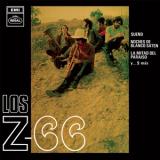
For the first time ever, the only full-length album by Spanish soul and garage legends Z-66 is being reissued. Z-66's signature blend of powerful soul, psychedelia, and pop-clearly influenced by bands like The Move, Stones, Vanilla Fudge, and Blood, Sweat & Tears delivers a bold, modern sound that remains fresh and compelling. Unlike other Spanish bands of the time, Los Z-66 enjoyed unique conditions that allowed their sound to stand out as one of the most advanced on the local scene in the late 1960s. As was the case with many other groups, their repertoire for entertaining discotheques had to include the hits of the moment and was not always open to the songs of the most daring international bands, which was the sound that most stimulated the musicians. In the case of Los Z-66, being based in Mallorca meant they had privileged access to hard to-find records, imported by foreign tourists, and to a much more modern atmosphere than in other parts of the country. Songs in Italian and French soon gave way to English hits by the Animals, the Stones, and the Beatles. But it was the offer received from Mike Jeffries, manager of Jimi Hendrix, the Animals, and others, to serve as the house band at the newly opened club Sgt. Pepper's that allowed the group to raise their live performances to a level rarely seen in these parts... They even soon incorporated the distorted sound of fuzz into their guitar when they received a fuzz face pedal as a gift from Jimi Hendrix himself, who was invited to play at the club's opening! Their excellent blend of stunning soul, psychedelia, and pop became their hallmark, not only in the band's concerts but also in the handful of singles and EPs they released on the Regal label. We are now re-releasing for the first time their only full-length album, originally published in 1969, which is actually a compilation of songs previously released in 45 rpm format, complete with two bonus tracks not included on the original LP plus a booklet with liner notes and rare photos.
Martin Denny returns with his loyal crew of multi-instrumentalists that had previously performed on
Forbidden Island, Primitiva, Hypnotique & Quiet Village: stand up bass player Harvey Ragsdale, vibe player Julius Wechter (also a member of the legendary recording unit The Wrecking Crew) and percussionist Augie Colon who was called the “Grandfather of Hawaii Percussion”. And of course, the famous cover girl on Martin Denny’s albums, Sandy Warner, otherwise known as “The Exotica Girl”, returns as well. Although Denny was recording his output at an astonishingly brisk rate, there’s something about Exotica Vol. III, which makes it one of his best and most sought-after with collectors and listeners. Of course, the brilliance of the lead-off track of Les Baxter’s “Jungle River Boat”, with its tight vibe-and-percussion workout intertwined with Colon’s iconic bird calls and other worldly sounds, only makes the sweet, lazy water sounds of the following track “Harbor Lights” all the more delightfully mysterious. So pour your drink of choice, dim the lights, open the windows, and let Exotica Vol. III roll across you.
“His last volume is a no-brainer. The material is simply too good to avoid.” – AMBIENT EXOTICA
Compiled of interviews, features, opinion pieces and contributions from
across the local independent Brighton scene, this magazine offers an
accessible new perspective into the incredible music and art present in the
city
Featuring local staples such as: Bones Ate Arfa, Cordelia Gartside, Trip Westerns,
Hutch, Big Long Sun and many more; as well as containing unique insight into the
multidisciplinary art scene inside the city through pieces with local promoters, poets,
record labels and venues. The magazine also contains a digital download for a
compilation of Brighton indie music that features in the back pages.
Dark Entries release 'A Boy Alone', a double LP set from Manchester electronic music pioneer Eric Random. Best known for his early recordings for New Hormones and Les Disques du Crépuscule and collaborations with Pete Shelley (Buzzcocks), Cabaret Voltaire and Nico.
As an original member of The Tiller Boys with Shelley, Random injected a healthy dose of Krautrock into the dour Manchester post-punk scene in 1978/79 before going solo the following year. Random's first 7' 'Subliminal'/'23 Skidoo' was released in 1981 via Les Disques du Crépuscule and explored ominous sonic surrounds. That same year also saw the release of a second 7" single on New Hormones, 'Dow Chemical Company'/ 'Skin Deep'. Both tracks offered bubbling, rhythmic sound patterns, and were the first to feature other musicians that would become know as The Bedlamites. Consisting of Lynn Walton on vocals, Ian Runacres and Andy Diagram of Dislocation Dance, and bassist Wayne Worm, aka Wayne Sedgeman. Their debut 12' single 'Subliminal Seduction'/'Bedlam-a-Go-Go' was released in 1982 through Plurex, mixing arid funk textures and sparse melodies. That same year the group contributed proto chill-out track '6.55' to Plurex compilation 'Hours' and the highly filmic track 'In Cassette Conference' to the Touch cassette package 'Feature Mist'. In 1983, Random spent several months in the Himalayas with a group of musicians from the Kulu Valley and studied non-Western instruments such as tabla. On returning to Manchester, Random convened a new group of Belamites including Walton, Sedgeman and drummer Graham Dowdall aka Dids of Ludus. They released the 12' single 'Mad As Mankind'/'Dream Web Of Maya' in 1984 on Cabaret Voltaire's Doublevision, embracing electronic, industrial and dub styles. In 1985 they contributed the soothing 'Pure Power' to Food Records' 'Imminent Episode One' compilation.
Our reissue also includes 4 unreleased bonus tracks from Eric's archives recorded between 1981-1984. The whole set adds up to 115 minutes of sinister, somnambulant Random music. All songs have been remastered by George Horn at Fantasy Studios. Each copy is housed in a gatefold jacket designed by Eloise Leigh featuring a spread of ephemera, photos with liner notes by James Nice of LTM.
Acclaimed electronic musicians, producers and sound architects Max Cooper and Rob Clouth team up for a new collaborative EP; a dark, playful four-track dive into ambient, breakbeat and techno’s subconscious flow, featuring a standout vocal performance from South London rapper FLOHIO.
Recorded over a series of spontaneous London sessions, “8 Billion Realities” channels years of creative exchange between two of the genre’s most quietly innovative artists and is a result of a decision between the longtime friends to refrain from conceptual overthinking in favour of instinct and joy.
As long-time admirers of each other’s audio/visual work, Cooper and Clouth collaborated in London together after both emerging from intense, idea-heavy album cycles. What followed was a series of exploratory sessions, half-improvised, half-built around half-formed thoughts.
The result is a club-ready EP that feels alive and human: imperfect and hypnotically rich.
“Rob Clouth has been one of my favourite electronic music producers since I first heard his work in 2011,” says Cooper. “His work is more full of ideas and structure than anyone else.” “We were both coming from extensive conceptual studio albums and both in the mood for simplifying things and having some fun with the music, so that’s what we did”.
For Clouth, no stranger to Max Coopers Mesh label having previously released an array of EP’s plus his 2020 debut album “Zero Point” this record marks a new chapter, both creatively and personally.“Something pretty new for me is collaborating,” he says. “You kind of have to when to stop, because if you develop an idea all the way to its endpoint, the other person has nowhere to jump in.”
The first “A Moment Set Aside” began as a break from another idea, a live, unplanned improvisation based around arps and ambience. “The track was written in about as long as it took to play it,” says Cooper. “It was pulled from a 1 hour recording session, more or less as you hear it… the energy and excitement grew as the unplanned moment bore some magic.”
“The lesson being that sometimes it’s helpful to set aside a moment without forcing results, and let the subconscious have something to say.” What followed was darker, heavier. “Asymptote” is detuned techno. Subversive and euphoric in its descent. “We found a sort of brain mangling, half consonant, half wandering detuned techno pulse, which we started chatting about being a sort of pit of spiralling body parts we were falling into,” says Cooper. “It was a lot of fun to work on and let loose with bigger kicks than I usually ever get to unleash.”
Then came “8 Billion Realities”, featuring a standout rap performance from FLOHIO; an emerging figure in the UK grime and rap scene. The track was inspired by conversations about algorithmic echo chambers and hyper-personalised online worlds. Frantic, direct, and South London to the core, FLOHIO brings this tension to life. Her sharp, intense flow cuts through distortion and rhythm, landing the track somewhere between chaos and control instantly making it one of the most striking moments in either artist’s catalogue. “A different reality for all 8 billion of us,” says Cooper. “We weren’t sure if it would work… but there was something about the energy of the percussive idea and the story which felt like it might fit.” “Then FLOHIO had a play with it and straight off the bat absolutely killed it, not just with the lyrics and energy, but the harmonising too, it was a beautiful process.”
The final piece on the EP “Candeleda” originated from Clouth’s solo experiments with a live rig made entirely of vocals and keys, using his self-developed “cheatbox” system. “He put forward a beautiful stumbling melodic sequence which we bounced back and forth adding harmonies and synth layers,” says Cooper. “It rounds off a collection covering some of the breadth of music that we both love.”
out of Stock
Last delivered 10 months ago available to reorder, subject to availability
In May, fans were treated to the first new music from Trentemøller since 2022. A new single, "A Different Light," showcased a stunning blend of prismatic space rock and folk. For anyone wondering if it foreshadowed the release of a full-length, Dreamweaver will drop in September, on Friday the 13th.
Featuring 10 tracks that traverse Trentemøller's many musical strengths, Dreamweaver also represents an obvious artistic leap, treading new ground while retaining the overall plot. Tracks featuring vocals come courtesy of of Iceland's Disa, who has been in Trentemøller's fold since the Memoria tour.
Dreamweaver's nylon string-led opening track, and first single from the album, "A Different Light," contains many of Trentemøller's trademarks: exploring dichotomies, musical shadowplay, Nordic frigidity, and warm waves. It opens the door for the steady, hypnotic "Nightfall," with its tetherless vocal, wistful guitars, and early morning desert chill. The third track in the opening trifecta, "Dreamweavers" finds its footing with a percussive soft trot, which starts after what feels like a shortwave radio scan in search of the right chords, eventually dialing in a weightless voice. Ostensibly keeping a ruminative pace with the previous two tracks, the song and, by extension, album soon opens up as the rest of the elements drop into place with a grand, luxurious burst.
Dreamweaver is about to enter its next phase. With the hatch blown off of the portal, the noisy "I Give My Tears," driven by its glissed and fuzzy bass line, pours into the void. It's followed by its sibling, the most chaotic track on Dreamweaver, "Behind My Eyes." Arriving as a piece of noise rock pandemonium, "Behind My Eyes," can't be contained in its plush vault. A whip-crack snare and convulsing guitars smash against each other in the song's verse chamber. The tension builds, as the particles collide, pushing past the point of critical mass, kicking off the chain reaction which is the chorus. At times it harkens back to the proto-gaze tracks that gave birth to dream pop, at others it newly defines what that is. There's no time to contemplate it, though, as the song disintegrates in a microphonic feedback instant.
A respite follows with the somnambulistic pair of "Hollow" and "Empty Beaches." Then, a moment of intensity returns as the soaring textures and tribal drum bursts of "In A Storm" take control, before being taken out with the ambient slo-core of "Winter's Ghost" and "Closure." This diptych wraps up an album which certainly feels on-script for Trentemøller, but is also much more psychedelic than previous offerings.
Dreamweaver will be released on Trentemøller's own In My Room label. It is an exceedingly immersive experience, bound to release any dormant hallucinations you may be harboring.
out of Stock
Last delivered 11 months ago available to reorder, subject to availability
The word "amateur" originates from the Latin word "amator," meaning "lover" or "admirer". This Latin term is derived from "amare," which means "to love". The French adopted "amateur" from Latin, and the English then borrowed it from French, initially retaining the sense of someone who loves or is devoted to something. Over time, the English usage of "amateur" also developed a meaning related to a lack of professional skill or experience. How did a word derived from love become a slur? Is love really so defenseless? They say love conquers all, but in reality isn’t love quite ridiculous? It has no intention, no motive, no agenda. How could it possibly prevail? It can’t be bought or sold, or so they say.Its mere existence can't be proven or even measured. What an impossible thing. Trying and failing, time and time again, no wonder cynicism always seems to win. I see “amateurism” as a delighted, even foolish, protest. Protest against everything. Of what’s expected of someone, or expected of someone to desire or strive for. To be elite, to be expert, to be professional, to be a master, to excel and succeed. Where’s the joy in that? I just want to have fun. I want to want. I want to love. And keep doing it, forever. I want to have fun, even when it’s tiring and sometimes even heaven is boring as hell. I want to be bad. I want to do my own thing. “I vant to be alone”. I want to be someone so dedicated to their passion that it starts to seem like there’s something wrong with them. All the way. We can take it all the way, and never get it back. ” - Molly Nilsson Amateur is the 12th studio album by Molly Nilsson. Deep in the teeth of a career that threatens to tip into something resembling a “legacy,” Molly Nilsson celebrates with an album recorded instinctively, quickly and bursting with so many moments of emotional brilliance and clarity it may be her greatest yet. Hers has been a career spent reaching out, perennially powerful in her earnestness, a warrior ridiculously defenceless and armed with a glittering sincerity. Shearing herself of the machinations of the music industry, recording at home, writing direct to the heart. Amateur is a jubilee for losers. A treatise in 13 songs, Amateur states clearly that we should live our life with eternal curiosity, offers us an open hand of comradeship out of the rat race. The songs on the album are both some of the most personal of Nilsson’s career and the most anthemic. First single How Much Is The World asks us to re-evaluate value in the face of a Neo-liberal system squeezing the life out of our loves. Pulsing opener Die Cry Lie satirises the commercialisation of emotion in the form of a shout-along diss-track. With a pounding rhythm track held down by gorgeous chord changes, heartbreaker Valhalla carries the torch for the main themes of the album: never growing up, making mistakes with kindness, moving on. When the drums crash in on the line “It’s going to get better now, you’ll see, going to be much better off without me” there is a world of feeling swirling about in the vocal delivery. One reading of the track might be that it’s a break up song but the subtext is classic Molly Nilsson: by living truthfully, making mistakes, we’re active agents against the myriad oppressions of the world. All The Way takes the theme for a run into the eternal sunset. It’s a manifesto for living fully. “Take it all the way, and never get it back” - it’s the process that’s the important point. The journey not the destination. Big Life, follows on like a part 2: An ode not only to Molly Nilsson’s career of endless gigs, endless connections with people, it’s a massive ode for following your dreams, doing it yourself. Closer The Bitter End is a powerful anthem for friendship, another definition of love infused in Nilsson’s work, A beautifully poignant ode to comradeship til the end, it seems to be the songwriter approaching aging, approaching life’s inevitability with the same vigour and earnestness, the same love of life she enjoyed at the onset of her career. There are moments on Amateur shrouded in reverb, slightly out of focus, forcing the listener to step deeper into the Mollyverse.. Nilsson’s open-armed beseeching to the world permeates every beat, every chord. These are songs exploding with life: the chunky, aggressive bassline on the punker Get A Life can’t hide its massive, catchy chorus. The sweeping Swedish Nightmare might be a tongue-in-cheek self-reference, but at its heart it’s a song about the duality of living life large, what is a dream, what is a nightmare? Molly Nilsson says you can’t have one without the other, and why would you want to? Here’s to making mistakes.
out of Stock
Last delivered 11 months ago available to reorder, subject to availability
In between the folds of ceremony and commonality lies a perennial spring of musical expression.
A statement along the time continuum, or a testament to the resilient resourcefulness embedded in that truth, forms the philosophical approach of this album – the first outing of Dídac.
Studying an extensive archive of instruments, artifacts, and field recordings at the Musée d’ethnographie de Genève—a space steeped in folkloric gesture – Dídac encountered a cosmos of liturgical music and folk song. Anchored in reverance for tradition and transformation alike, this album navigates the old-world Mediterranean lore through a post-modern ambient lens, threading drone, gentle rhythm, electroacoustic textures and the crude tactility of archival material into one woven tapestry.
Under the guidance of Dr. Madeleine Leclair, Dídac was invited to work within one of the world’s most extensive ethno- musicological archives—L’AIMP. In the saturated basements and tape-lined backrooms of the museum, he submerged himself in the sounds of ritual and rural life: wax cylinders from the Eastern Mediterranean, tapes of liturgical hymn, the worn edges of communal song.
In a makeshift studio on the fourth floor of the museum, he sifted through the hours of material he collected, gradually discovering that the archive was no static source – It did not dictate; rather, it served as a companion—offering not answers, but questions. Not a beaten track, but a cluster of sonic clues and riddles. Samples do appear occasionally, tenderly interwoven into the dialogue of the songs. In Dídac’s self-titled debut, the past is not worn as ornament or kitsch; it is listened to and responded to. The museum, its archives, and the visit to Geneva became a foundational culisse of sorts, igniting a myriad of rough cuts and improvisational outtakes.
Dídac, or Diego Ocejo Muñoz, was born in Madrid in 1994 to a family of both Catalan and Castilian origin.
Brought up in a religious household, the influence of the Catholic Church innately shaped the social fabric, schooling and daily life. This lingering dominance led the adolescent Diego into a path of rejection of everything sacramental, promptly resorting to subversion in the shape of grafitti, skateboarding and underground music. Only later in life, after a rigorous venture as an acid and electro producer, the Church re-emerged before him in new light, invoking a deep fascination for its mysticism, iconography and choral tradition.
Spain in general and Catalonia in particular, has long served as a crossroads of the eastern–western Mediterranean continuum, with many of its cultures sharing aspects of way of life and ceremony. At the MEG, Diego found himself puzzled with this realization, resulting in a sonic amalgamation that reaches farther away from the rugged mountains of Catalonia than you might perceive at first encounter.
The deeply embedded memory of rite and public ceremony, religious hymn and landscape—sieved through the undercurrent of personal re-emergence, forms the emotional topography of this album. The record does not trace this landscape; it inhabits it. Its repetitive mysticism and ambient, wide-eyed gaze could possibly evoke (perhaps redundant) comparisons to artists such as Dimitris Petsetakis, or Popol Vuh’s late 70’s cinema scores.
The delicate lines between the sacred and the secular – between memory and re-invention – serve as a cipher to understanding this album in its entirety. Titles like Malpàs Mines or Pantocrator’s Portal Outro nudge toward a folkloric and devotional bedrock—places where labor and spirituality coexist, where names preserve both dust and veneration.
Nevertheless, this is far from mere nostalgia. It is a reclamation — singing alongside the spirits of the past, nurturing what still hums beneath the soil. It is an intimate reflection on tradition, rebellion, adolescence, ceremony and fantasy – a pastoral contemplation on what once was and what is to be.
out of Stock
Last delivered 10 months ago available to reorder, subject to availability
An electrified meeting of minds, Candy Girl is a lost 1975 session by jazz pianist Mal Waldron, recorded in Paris with core members of the mighty Lafayette Afro Rock Band, the American funk unit who had made France their home and whose deep grooves would later be mined by generations of hip-hop producers.
By 1975, Waldron was a decade into his self-imposed exile from the United States—a transformed musician who had reassembled his sound in Europe and Japan after a devastating breakdown in the early '60s. His post-1969 output had stripped jazz down to its core elements: modal intensity, locked grooves, and hypnotic repetition. Candy Girl doesn’t interrupt this trajectory—it extends it, wrapping Waldron’s minimalist mantras around the funked-up chassis of the Lafayette rhythm section.
Originally released in microscopic quantities on the Calumet label and long shrouded in obscurity, Candy Girl was recorded spontaneously in the studio of French producer Pierre Jaubert, whose Paris HQ had become the workshop for both avant-garde jazz (Archie Shepp, Art Ensemble of Chicago, Steve Lacy) and psychedelic funk (Lafayette Afro Rock Band AKA Ice). This session finds Waldron jamming freely with bassist Lafayette Hudson, drummer Donny Donable, and keyboardist Frank Abel on clavinet, Moog and more—laying down raw, unfiltered instrumental funk with an experimental edge.
Highlights include the low-slung vamp of “Home Again”, the crisp, break-laden groove of “Red Match Box”, and the mesmeric swirl of the title track “Candy Girl” —a minor-key electric piano waltz with hints of cosmic soul. There's even a deep cut for the crate diggers: the somber yet meditative “Dedication to Brahms”, where Waldron deconstructs the Romantic composer’s third symphony into a sparse jazz reverie.
Unlike his polished sessions for Japanese labels or the avant-garde swing of his earlier Prestige work, Candy Girl feels more spontaneous, even accidental — and that’s part of its power. It’s a document of Waldron as bandleader, collaborator, and explorer, captured in the midst of a vibrant, cross-cultural scene in mid-70s Paris. Never officially issued with a cover and barely released at all, Candy Girl is a rare convergence of two underground traditions: Waldron’s Euro-exile electric jazz and the raw, sampled-future funk of the Lafayette Afro Rock Band. Now finally resurfaced, it deserves its rightful place in both stories.
out of Stock
Last delivered 11 months ago available to reorder, subject to availability
Chris Menist pares his sound right back for A book of imaginary beings, his fourth Awkward Corners outing with a project of electronic and abstracted global grooves. Experimenting with simple melodies and uncluttered arrangements, as well as taking inspiration from the Borges' short stories alluded to in the title, the project took shape in the early part of 2025, in the shorter days and dark evenings of January.
The initial challenge was to knock a basic track into shape each evening after work, then refine it later. There's a melancholy in the air in late winter, compounded by the creeping threat of national and geopolitical instability. Ulla, Natural Information Society, Jabu, Torso and Dawuna formed some of the background soundtrack as each tune took shape.
The track titles came after sitting with the sounds for a while, giving shape to images of people, creatures and their stories for a book that is yet to be written.
Two former friends sets the tone for the album perfectly as a minimal electronic piece with a slowly simmering synth bassline underpinning the groove whilst the trademark Awkward sound of the Shahi Baaja enters drenched in effects. It's the first demonstration of Chris' unique ability to create a world from apparently very little.
Dance of the silver beetles is completely unique in that we can hear chopped up Illimba samples seemingly playing backwards and forewords sometimes alone, sometimes together in duet with Chris' conga rhythms. Add to that a more conventional Illimba melody and added shaker percussion and you have one of A book of imaginary beings most curious chapters.
Anxious shadow puppets is closer to the Awkward Corners sound from previous albums as electronic pulses move around the arrangement with the urgency that the track title suggests. Chris' percussive roots move to the fore with the congas that tie down the Paradise Bangkok Molam International Band's sound. Here, the bassline is more playful and works together with one of Chris' many African Illimbas.
Fans of Chris' adventures on his Roland 808 will dig A leopard with no spots, although the minimal mood continues to flow through on this track. The lolloping, but hard-hitting rhythm track provides the grounding for strange and twisting feedback-sounding tones to work the soundscape.
Abandoned boy (left in charge of the family business) is Awkward Corners at his atmospheric best. Drift off to the sublime sounds of Chris exploring the Shahi Baaja, whilst a soft, repetitive synth line and abstracted pads give the listener that feeling of meditation and peace.
Flamingo with bandaged neck is A book of imaginary beings' perfect coda and is exclusively Shahi Baaja draped in reverbs and delays. It feels like the resolution and the closing of a book that – as of yet – remains unwritten.
Awkward Corners is Chris Menist, a musician, DJ and writer. It started life as a small project in Islamabad, where Chris was living at the time. Initial recordings were made with local musicians in Pakistan and then subsequently in Thailand. This culminated in the Sweet Decay LP that came out on Finders Keepers' Disposable Music in 2014, and in turn led to a limited tape release on Boomkat/Reel Torque of original compositions and re-edits of Thai 45s the same year. Chris released – Dislocation Songs – his second LP proper with Shapes of Rhythm in May 2020, collaborating on many of the tracks with award-winning performer Sarathy Korwar. The LP was picked up by many radio stations including NTS, Resonance FM, BBC 6 Music, Balamii and many more. It made Tom Ravenscroft's LPs of 2020. Amateur Dramatics, Chris' second LP arrived just a year later in 2021 and was a more ambitious project featuring more jazz-focussed compositions and featuring Tamar Osborn and Kitty Whitelaw. Shortly after that came another pivot with the heavier, dancefloor-friendly EP Somebody Somewhere. Somebody Somewhere is Dancing in a Field brought the House (yes House!) vibes, whilst Hector Plimmer turned in a remix of No Words in the same club mood.
As one of NTS Radio's longest-standing presenters, Chris continues to hold down the Paradise Bangkok show. Playing drums and percussion since he was a kid, Chris is the percussionist for The Paradise Bangkok Molam International Band as well as co-founding the record label of the same name. Chris has curated compilations for labels such as Finders Keepers, Soundway and Dust-To-Digital. He has been featured on the Boiler Room, Vinyl Factory Collections, played at the Four Tet curated Nuits Sonores festival, and has put together an edition of Volumes which featured unreleased Awkward Corners compositions.
[d] 04: All the Goodbyes (You Tried to Defer) [Original]
[j] 10: Abandoned Boy (Left in Charge of the Family Business) [Original]
Knucks’ upcoming album 'A Fine African Man' marks his first full-length project since the breakthrough 'Alpha Place', which soared to #3 on the OCC charts. Across 13 tracks, 'A Fine African Man' delves into themes of duality, reflecting his experience as a British‑Nigerian navigating both cultures and identities. The album’s title underscores that bicultural journey. Expect a compelling evolution from the sound that defined 'Alpha Place. Knucks’ acclaimed album Alpha Place marked a major milestone in UK rap, debuting at No. 3 on the Official UK Albums Chart and topping both the UK Hip-Hop & R&B and Independent Albums Charts. The album was certified Silver by the BPI and has amassed over 480 million streams to date, with the deluxe version adding another 490 million. Praised for its sharp lyricism and rich production, Alpha Place received strong editorial backing from outlets like Complex UK and GRM Daily, while fan response on platforms like Reddit cemented its status as one of the year’s standout releases. Tracks like “Three Musketeers” and “Alpha House” became immediate fan favourites. Knucks’ MOBO win for Best Grime Act in 2022 further reflected his cultural impact, and his live shows—bolstered by previous EP runs—have built him a reputation as one of the most compelling voices in the UK scene.
Jessika Kenney ist Sängerin, Komponistin, Autorin, Klangkünstlerin und Lehrerin, deren Engagement für Improvisation, Poesie und Klangforschung eine einzigartige Perspektive hervorgebracht hat. Ihre Erkundungen von Klang, Raum und der Metaphysik des Klangs wurden in vielen Kontexten und an vielen Orten präsentiert, darunter in der Seattle Public Library, im Nottingham Contemporary und im Benton Museum. Zu ihren Kollaborationen und Projekten gehören eine umfangreiche Diskografie mit Eyvind Kang, das letzte aufgezeichnete Vokalwerk von Alvin Lucier, Auftritte mit Melati Suryodarmo, die Komposition der Vokalmusik für A24s Midsommar und die Chorleitung für SUNN O)))'s Monoliths and Dimensions. Jessika Kenney, bekannt für ihren einzigartigen Umgang mit der Stimme, hat in den letzten zwei Jahrzehnten neue Klangwelten geschaffen, die auf intensiven Studien, rituellen Praktiken und einer ungezähmten Ausdruckskraft beruhen. Von ihren gefeierten Kollaborationen mit Eyvind Kang bis zu ihrer Vokalkomposition für A24s ,Midsommar" bewegen sich Kenneys Arbeiten an der Schnittstelle zwischen dem Heiligen, dem Klangvollen und dem Unsichtbaren. Auf Uranian Void wendet sich Kenney nach innen und spürt den Konturen von Erinnerung, Resonanz und Wahrnehmung nach. Mit verschwommenen Sinuswellen, Hydrofonaufnahmen, einem Ghazal von Hafez und Originaltexten ist das Album eine Meditation über Liminalität, in der Schimmer und Schatten gleichermaßen vibrieren. Kenneys Stimme webt sich durch alles hindurch: manchmal flüsternd, manchmal strahlend , immer präzise. ,Dieses Album ist eine Übung in Transparenz innerhalb der Dunkelheit", erklärt Kenney. ,Es geht darum, offen zu bleiben für Zweifel , für Nachhall, für das, was jenseits unserer Wahrnehmung liegt." ,Uranian Void" wurde von Randall Dunn (SU NN O))), Kali Malone, Annea Lockwood) produziert und aufgenommen, dessen charakteristische räumliche Details und Tiefe dem Album seine immersive Klangarchitektur verleihen. Jeder Ton, jeder Atemzug und jede Resonanz wird mit Intimität und Dimension wiedergegeben und verstärkt Kenneys Erforschung von Präsenz und Abwesenheit. Fragmente, die während Besuchen in Spokane, ihrem Elternhaus, aufgenommen wurden, bilden die Grundlage des Albums. Im Studio transformiert, werden diese zu beschwörenden Vierzeilern - leise, aber eindringlich - die den subtilen Puls von Ort, Zeit und Körper offenbaren. Echos der Vergangenheit verschmelzen mit der Gegenwart , als ob die Wände selbst sich erinnern und mitschwingen würden. Uranian Void ist Musik für Schwellenbereiche - eine Einladung, sich mit dem Unsichtbaren und Kaum hörbar. Mit dieser kraftvollen und poetischen Aussage bestätigt sich Kenney als eine der visionärsten Vokalistinnen der Gegenwart.
Eines der größten Talente der britischen Blues-Szene. Er wurde bei den UK Blues Awards in den letzten drei Jahren in Folge (2020, 2021, 2022) zum „Young Artist of the Year” gewählt.
Als Teenager verschlang er die Musik von Eric Clapton und Ray Charles – „Ray hat mich als Person und meine Einstellung zur Musik völlig verändert.” Von alten Delta-Platten über Soul-Künstler wie Sam Cooke, Bill Withers und den Stax-Sound bis hin zu Jazz-Sängern wie Billie Holiday und Frank Sinatra sowie Singer-Songwritern wie Van Morrison, Townes van Zandt, Bob Dylan, Nick Drake und zeitgenössischen Künstlern wie Ray LaMontagne, Norah Jones und Foy Vance.
Seine Musik hat eine zeitlose melancholische Qualität. Mit seiner Ehrlichkeit und Offenheit, die jeden ansprechen, schöpft er aus Angst und Verletzlichkeit, vermittelt dies jedoch mit einer weltgewandten Eleganz. Für Connor Selby sind keine Grenzen gesetzt. Das ist leicht zu verstehen, wenn man seine gefühlvolle Mischung aus Blues und seinen emotional introspektiven Songtexten betrachtet, die sein beeindruckendes Gitarrenspiel ergänzen. Die Songs auf „Connor Selby“ sind kleine Vignetten der verschiedenen Musikstile, die ihn inspirieren.
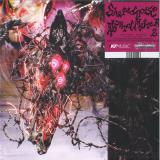
Arriving two years after the first chapter, Absurd Matter 2 isn’t just a sequel, it’s an evolution, redrawing the boundaries established by its acclaimed predecessor. The Berlin-based Italian producer tempers his confrontational sonics with rare moments of introspection, shifting seamlessly between blown-out noise, warped hip-hop, mutant club experimentation, and weightless ambience. Textures disintegrate and reassemble, rhythms flex and crumble, and every detail balances on the edge of fantasy. It’s a poetic, layered response to Nino Pedone’s changing physical reality: the gradual hearing loss and perceptual renegotiation triggered by Ménière’s disease, which struck him in 2022. At first, the experience felt like betrayal, a brutal disconnection from the very sense that had shaped his life. But over time, the disorientation turned into a strange kind of focus. The silence between sounds became as expressive as the sounds themselves.
The first Absurd Matter was a visceral reaction to trauma; the second is more reflective – an ambiguous chronicle of sensory recalibration. Pedone doesn’t represent his altered inner reality through extremes, but through depth, zooming in on illusory distortions, tense rhythmic fluctuations, and fragmented sonics. Dense, immersive, and mystical, the album mirrors Pedone’s evolving relationship with perception itself.
Tinnitus-like feedback wails and noir-ish strings introduce “Repeater”, making it immediately clear that Pedone is painting a more delicately finessed image this time around. Fleshed out by raps from cult MCs billy woods and E L U C I D, the track is marked by subtle, sophisticated contrasts: the blurred, inverted rhythms that couch Armand Hammer’s haunted back-and-forth, and the glitchy interference that offsets the lavish orchestral phrases. Backwoodz associate Fatboi Sharif lends his Lynchian drawl to “Bandage Chipped Wings”, grounding Pedone’s lysergic rhythmic distortions with syrupy, horror-inspired couplets. Pedone also invites discomfort into “Crash Landing”, with droning, metallic tones that contradict South Central rapper ICECOLDBISHOP’s elastic flow. “Bitch, I don't give a fuck about anybody,” he squawks over Pedone’s incongruous rasping textures and time-warped beats, “cash out at any party.” Working alongside London’s Loraine James on production, Pedone reunites with Moor Mother on “I Saw The Light”, blending James’ soft-focus atmospherics with soundsystem-damaging, overdriven bass hits and rusted percussive snips. Moor Mother’s assertive words hover over the wreckage, tightening Pedone’s themes of overstimulation and altered awareness as they stutter and veer off course, vanishing into the backdrop.
Contrasting his more pensive experiments, Pedone’s dancefloor deviations are more concentrated on Absurd Matter 2 than ever before. He torches a stuttering dembow structure on “X”, obfuscating the rhythm’s familiar energy with disturbing audio hallucinations. On “Splintered”, he reunites with Kenyan prodigy Slikback, mangling neon-lit trance arpeggios with dissociated trap rhythms. He sharpens his skills to a fine point on “Oblivion Step”, observing 2- step through a lens of distortion and personal abstraction, shaking blipping synth leads over neck-snapping drums and counteracting the momentum with airless sci-fi soundscapes.
Perhaps the album’s most surprising moment arrives with “Viel”, which features vocals from Los Angeles-based composer Kaitlyn Aurelia Smith. Together, Pedone and Smith chance upon their notion of dub techno, fogging synth stabs and ghostly vocal traces into eerie harmonic distortions. On some level, it’s almost pop music, a far cry from the bleak dissonance of Absurd Matter and a hopeful way to reframe turbulence as transformation. Absurd Matter 2 doesn’t simply document a process; it enacts one. It doesn’t offer clarity; it invites disorientation. It’s not a map of the labyrinth, but a foghorn piercing the darkness.
out of Stock
Last delivered 10 months ago available to reorder, subject to availability
A Place In My Memory Is All I Have To Claim is the new album by Australian atmospheric pop trio Hydroplane, the storied 'offshoot' formed by three quarters of independent pop group, The Cat's Miaow. On this, their first music after two decades plus of radio silence, Andrew Withycombe, Kerrie Bolton and Bart Cummings return to the gentle, close-quarters musical world they shared around the turn of the century.
Recorded during 2024 in Melbourne and Ballarat, A Place In My Memory… picks up the thread Hydroplane set down with its precursor, 2001's The Sound Of Changing Places, though you can hear echoes of their other releases, too, with Withycombe noting a through-line from the group's 1998 "Failed Adventure" single. There's little quite like A Place In My Memory…, then or now, though. Maybe you can draw some connections between Hydroplane and their sister group, The Cat's Miaow, while fellow travellers might include Empress, The Ah Club, and further back, Young Marble Giants, Veronique Vincent (the muffled, ticking drum machine also makes me think of Robin Gibb's Robin's Reign).
There's also an umbilical to the bedroom-crafted electronica doing the rounds in the late nineties and early noughties. Hydroplane hint at this through their approach to songwriting, which often builds creatively around loops as structural devices. Through all this, the trio achieve an effortless, organic weightlessness across these nine lovely songs. Many feature Bolton's clear singing voice, drifting along, while guitars, keyboards, drum machines and loops tickertape away. The constituent parts fit together, but they also have a curiously detached quality - think of abstract cloud formations sharing the same sky.
Hydroplane and The Cat's Miaow often dealt in emotional ambiguity and uncertainty, and the uncertainty of the nostalgic. This was always one of the most appealing facets of their music, and A Place In My Memory… is thus named perfectly. I couldn't dream up a better title for the album and its reflections on history, lived experience, and the inevitable tangle between these two phenomena. These reflections variously address such concerns as human cruelty, flight, space travel, adventurism and spiritualism. There's also "To the Lighthouse", not a direct reference to the Virginia Woolf book, but a great title, nonetheless. (They've always had excellent titles, often borrowed, for songs and albums.)
A beautiful collection of drowsy, sleepy pop, humble and quiet, but resolute in its craft, A Place In My Memory Is All I Have To Claim is dream work in practice; a lovely reintroduction. Welcome back, then.
out of Stock
Last delivered 11 months ago available to reorder, subject to availability
High Roller Records, transparent beer colored vinyl, ltd 450, 425gsm heavy cardboard cover, lyric sheet, download code Starlight Ritual wurden 2013 in Montréal, Québec, geboren, gegründet von den beiden Gitarristen J.F. Bertrand und Dan Toupin. Bertrand schwebte ursprünglich ein Doom/Psychedelic-Projekt vor, zu dem er Bassist Mat Forge und Schlagzeuger Louis Lecomte anheuern ließ. Dan und J.F. schreiben einen Haufen instrumentaler Doom-Heavy-Prog-Nummern, von denen einige 2015 auf dem ersten selbstbetitelten sowie selbstproduzierten Album landen (technisch gesehen mit vier Songs eine EP, allerdings mit einer Spielzeit von nahezu 40 Minuten). 2014 stößt Sänger Damien Ritual zur Band. Mit »Age Of The Universe« folgt zwei Jahre später eine weitere EP, gefolgt vom ersten offiziellen Album »Sealed In Starlight« auf Temple Of Mystery (2021). Starlight Rituals erste Veröffentlichung auf High Roller Records ist das neue Album »Rogue Angels« (auf dem Damien Ritual nicht nur singt, sondern auch Bass spielt). Seit den frühen Tagen hat sich der Stil der Band seiner Meinung nach doch recht nachhaltig verändert: Bei »Sealed In Starlight« war die Identität dann gefunden: traditioneller Heavy Metal mit Epic-Flair, ein Mix aus Manowar und Running Wild sowie alten Helden wie Thin Lizzy und Rainbow‘, Epic Hard Rocking Traditional Metal’
NIKS steps further into her own sonic world with 'Moves Like 2', a powerful statement of intent that blends groove-heavy percussion and hypnotic club energy. The release offers a deeper glimpse into her identity as a producer.
The lead track 'Moves Like 2' is a pretty raw and direct UK club cut, the sound at the core which has influenced and set the tone of the more ‘heads down’ side of this release.
Sub Glow touches on the fun and playful side of the EP, providing softer textures through elongated pads, growing synths and an overall brightness.
Moves Like 2 receives a rework from one of the most tasteful and timeless producers, rRoxymore - who provides a deeper percussive and rhythmic touch to the feature track.
241 rounds off the EP with a slappy and ballsy tone, which features NIKS’ manipulated vocals, concluding the release on a succinct high and buzz.
Debuting on her new imprint, ‘Bloom Tone’, will serve as a self-directed outlet for NIKS’ own productions and friends, providing a platform for her creative autonomy and musical exploration.
out of Stock
Last delivered 11 months ago available to reorder, subject to availability
Dissonans marks a new chapter in a longer story and is the second album in an announced trilogy, following last year's Norwegian Grammy-nominated Resonans. For those who have been following Seigmen, the first thing they might notice about Dissonans is the album cover. Where their earlier covers have been simple, symmetrical, and minimalist, Dissonans instead offers a stripped-down, almost punk-like aesthetic. And, as the title suggests, this album is not what you might usually expect - even though the sound is still unmistakably Seigmen to the avid listener. The album's ten tracks range from majestic, drone-like sounds made on homemade equipment to high-tempo songs with drum riffs borrowed from a 35-year-old demo. It even leads the band into uncharted territory with the airy ballad Så Nært, which also serves as the third and final single ahead of the album release. All in all, Dissonans is a new album from a band that has, in a remarkable way, rediscovered fresh energy, creativity, and playfulness many years after once being Norway's leading rock band.
Blondies „No Exit“ war ihr erstes Studioalbum seit 17 Jahren und erschien im Februar 1999 nach „The
Hunter“ (1982). Das Album enthält den britischen Nummer-eins-Hit „Maria“ sowie „Nothing Is Real
But The Girl“ und „No Exit“. Die Originalveröffentlichung wurde in den Electric Lady Studios, bei Red
Night Recording und im Chung King House of Metal in New York aufgenommen und enthielt 14 Titel.
Spätere CD- und Kassettenversionen enthielten Bonusmaterial von Blondies Lyceum-Auftritt 1998 sowie
den zusätzlichen Titel „Hot Shot“.
Die Neuauflage von 2025 enthält alle Originaltitel in remasterter Form sowie eine Auswahl seltener und
bisher unveröffentlichter Bonus-Mixe. Es handelt sich um die erste offzielle Vinyl-Veröffentlichung des
Albums mit seltenen und unveröffentlichten Fotos sowie ausführlichen Linernotes.
• Blondies klassisches Album von 1999 mit der Hitsingle „Maria“ wurde erstmals offziell auf kristallklarem
Doppelvinyl (140G)und 180G Black Doppelvinyl veröffentlicht und enthält neue Remixe
"The Bad Seeds and Zakary Thaks were mid ‘60s Texas garage rock bands formed in the wake of the British Invasion, influenced by The Rolling Stones, Kinks, Yardbirds and others, becoming top local live attractions at a time when the 13th Floor Elevators and Moving Sidewalks were leading the way into psychedelia. In late 1966 Rod Prince on guitar and Roy Cox on bass from Bad Seeds joined up with David Fore from Zakary Thaks on drums to create a new band out of San Antonio featuring two lead guitarists. Todd Potter filled out the quartet on second guitar and they chose the name Bubble Puppy, taken from Aldous Huxley’s 1932 dystopian novel Brave New World. Huxley was an early advocate of LSD, appropriately. In 1969 Bubble Puppy scored a top 20 hit single with “Hot Smoke & Sasafrass” which led to their LP “A Gathering Of Promises”. International Artists, the legendary Texas label that previously had unleashed mind expanding classics by the Elevators, Red Crayola, Golden Dawn and others was a perfect fit. After the LP and additional 45s didn’t repeat the success of “Hot Smoke & Sasafrass” the band hooked up with Nick St. Nicholas of Steppenwolf as their new manager and moved to Los Angeles. A new band name was in order, Nick St. Nicholas chose Demian, title of the 1919 novel by Herman Hesse. His books were popular with the counterculture at the time and had provided Steppenwolf with their new name after they changed it from the Sparrow and hit it big. Demian recorded the LP live in the studio at the Record Plant in one midnight to six session. They had their arrangements fully realized, allowing them to combine live show energy and economy with to-the-point delivery suitable for repeated listening. No doubt they were aiming for pop hit success, using proto hard rock skills in a radio friendly way without compromising the heavy guitar moves. The vocals have echoes of the earlier Bubble Puppy style in spots but are more melodic with vibrant harmonies reminiscent of Moby Grape, Buffalo Springfield, James Gang… at times flashing on Steve Stills/Richie Furay westcoast without being too sweet about it. It works terrifically when the radio friendly voices top off killer hard guitar ensemble action. Early hard rock that is too bluesy flashy can get tiresome with repeat listening, especially if overdosing on guitar solos with the band relegated to the background… Demian keep it interesting with inventive song structures allowing all four players to integrate constantly into an ever changing but focused whole. This LP is a grower, despite the basic two guitars, bass and drums lineup and no frills production you reach a lot of different places during the ride. Demian is deadly hard rock, a perfectly organized vibe straddling live energy and crafted itinerary, amongst the first obscure major label killers that commanded premium $$ with collectors even way back in the late ‘70s. It gets you there every time, even half a century later!"
The first-ever best of of Nim Vind is called Anthology 1 and is released by Sunny Bastards Records! This collection of audio medicinals created in a UFO vibrating in the Key of NV is guaranteed to blow your mind. Experience the energy and indulge in some Halloween candy with Nim Vind's 180-gram Vinyl album. This collection includes Nim Vind's most popular tracks from regular albums Fashion Of Fear, Stillness Illness & Saturday Night Seance Songs, along with some special versions or tracks that have never been released before. Nim Vind was introduced to Europe through Zillo Magazine and the Goth club "Pagan Love Songs". This led to the release of his first album, "Fashion of Fear", on Fiendforce Records Germany. The album was recognized by Metal Hammer UK, Maximum Rock n Roll and many other magazines that support underground artists. Rue Morgue Magazine (the world's biggest Horror Entertainment Print magazine) selected Nim's album "Saturday Night Seance Songs" as the Album of the Year. He has shared stages with the likes of Gary Numan, Filter, Blitzkid, The 69 Eyes, Todd Kerns (Slash with Miles Kennedy and the Conspirators), Peter Murphy of Bauhaus, and many more. The album kicks off with NV classic "Killing Saturday Night", which has garnered 1.7 million plays on Spotify and more than 330,000 views on YouTube. The collection attempts to showcase some of the songs that have been a part of his story, bringing us up-to-date with his current work. If you're a Horrorpunk, Goth, Post-Punk, Rock N Roll or Alternative collector, this collection is a must-have! Vinyl only compilation, for fans of MISFITS, JERRY ONLY, CHRIMSON GHOSTS, BLITZKID, THE OTHER.
New single by Romperayo on 7-inch vinyl spinning at 45 rpm, released by the Austrian label discos
elgozo.
This record is a tribute to the sound of Cumbia Sabanera de Acordeón from Colombia, in dialogue with
Mexico’s Cumbia Sonidera. It also pays homage to the melodic line of the first generation of
Colombian accordion masters of Cumbia Sabanera such as Joaquín Betín, Emiro Caicedo, and
Policarpo Calle.
The two tracks are built on a solid rhythmic foundation of bass and percussion, accompanying a
melodic interplay between accordion and analog synthesizer.Mixed and produced by Pedro Ojeda Acosta at Romperayo Studios, both songs were recorded live, in
quartet format, at Mambo Negro Studios in Bogotá, Colombia, by Daniel Michel, featuring Iván
Medellín on accordion, Nicolás Eckardt on electric bass, Juan Manuel Toro on analog synth, and Pedro
Ojeda on percussion.
This single offers a first taste of Romperayo’s upcoming LP, set for release in early 2026 — once again
on discos elgozo.
Belgian pop superstar Max Colombie, aka Oscar and the Wolf, announces new
album ‘The Shimmr’, on PIAS Recordings.
Enter Colombie’s world and you’ll discover a uniquely dazzling and shimmering
fusion of contemporary R&B and a more European electro-pop sensibility, uniting
shivery melody, shifting beats and vocals steeped in drama, sensuality and yearning.
Colombie hears, “a twilight zone where it doesn’t sound dark nor happy. It’s like the
name Oscar and the Wolf; it’s a balance between light and dark, this perfect
combination between the sun and the moon. It’s beautiful and scary at the same
time.”
Oscar and the Wolf’s official debut, the 2012 EP ‘Summer Skin’, showed his gifts
arrived virtually fully formed, but he truly came of age in 2014 with his debut album
‘Entity’. Balanced between dancefloor anthems and slow jams, ‘Entity’ went 4 times
Platinum in his native Belgium and quickly jettisoned Colombie to superstar status.
He sold out arenas in Belgium and the Netherlands, taking the penultimate
headlining slot (behind Muse) at 2016’s Lowlands festival before headlining
Belgium’s Pukkelpop festival, sharing the bill with Rihanna and LCD Soundsystem.
Released in 2017, the second Oscar and the Wolf album, ‘Infinity’, went Platinum at
home, whilst amassing a huge Middle Eastern fanbase across Turkey (where his
2018 tour sold out in minutes), Egypt, Israel and Iran. On stage, Colombie cut a
commanding and lithe performer, often garbed in shimmering outfits that interacted
with the dynamic lighting.
The new Oscar and the Wolf album, ‘The Shimmer’, distils the essence of Colombie’s
sound and vision in its title and the image of Colombie on the album cover, bathed in
starry light. The album is a benchmark of his transformation on record; whereas
‘Entity’ was recorded in a barn, “very lo-fi with no access to gear,” he recalls.
‘The Shimmer’’s bold, rich and layered dynamics were captured at ICP Studios in
Brussels, home to, “one of the best live rooms in Europe, with all this vintage gear.”
More intimate moments were added at Colombie’s house outside the city, “those
magic takes we made just after we’d written something, which are so hard to capture
again.”
By ‘we’, Colombie includes producer Jeroen De Pessemier and multi-instrumentalist
Ozan Bozdag, who had both worked on ‘Infinity’ (and Bozdag on ‘Entity’ too). “It’s a
magical trio,” Colombie says. “Everyone is allowed to be themselves, and to explore
themselves. I’m really happy with ‘The Shimmer’ because I hear a more mature
version of myself. I always want things to grow, and I’m proud that I allowed myself to
not follow people’s expectations and reproduce what had been successful before.
There are no four-to-the-floor clubby pop songs this time.”
Instead, ‘The Shimmer’ more accurately reflects Colombie’s personality. “My
emotions run from super-happy to super-melancholic in a split second,” he says. “To
me, ‘The Shimmer’ feels like the soundtrack to a blockbuster, with many types of
tracks and themes. It’s always changing."
out of Stock
Last delivered 11 months ago available to reorder, subject to availability
"It may surprise some that, after two decades of silent films, when Alam Ara broke the silence in 1931, it and every South Asian talkie that followed was what we in the West think of as a "musical." Music had been integral to the culture's staged drama going back to the Gupta Dynasty — sometime between the 4 th and 6 th Century CE. Since its inception, South Asian cinema drew heavily from Marathi, Parsi, and Bengali musical theatre and silent film screenings were often accompanied by live music to mimic a live staged experience.
When sound films arrived, actors with serious singing skills became the next wave of stars. Songs were performed live while shooting, with musicians hidden off-camera, to the side or sometimes even in trees. Playback singing — the practice of dubbing a real singer's voice over a lip-syncing actor — didn't become standard until the 1940s.
Thus, the biggest stars of the 1930s were also the greatest singers, with some, like Govindrao Tembe and Pankaj Mullick, excelling as both composers and vocalists. None, however, were more beloved than K.L. Saigal, whose emotional, untrained crooning captivated audiences across the subcontinent. Saigal's voice inspired a young Lata Mangeshkar, who vowed to become India's greatest filmi singer to win his heart. Sadly, Saigal grew increasingly addicted to alcohol, unable to perform without it, and passed away at age 42, seven months before the Partition. Lata never married.
This collection features some of the earliest songs from South Asian cinema, sourced from CDs and LPs found in Jackson Heights, Queens, Coney Island Avenue in Brooklyn, Lexington Avenue in Manhattan, and Oak Tree Road in Iselin, New Jersey — areas home to vibrant immigrant communities. South Asian immigration to New York and New Jersey surged after the 1965 Immigration and Nationality Act, which lifted non-European quotas. By the 1990s and 2000s, the region's Indian, Pakistani, and Bangladeshi media outlets flourished, especially in Jackson Heights, where such stores outnumbered the total number of regular record shops throughout the five boroughs.
The nascent period of sound film featured a limited palette of musical styles, predominantly Marathi Bhagveet, like the Ghazal, but with greater flexibility of subject matter and rhythm, and Rabindra Sangeet, the approximately 2,000 songs and poems composed by Bengali Nobel laureate Rabindranath Tagore. But there was some evolution as well, with the success of South Asian cinema's first woman composer, the classically trained Saraswati Devi, and the introduction of Western instruments including the piano and Hawaiian guitar.
While much of the music was dark and brooding, perhaps exemplified best by Devika Rani's interpretation of Saraswati Devi's "Udi Hawa Mein" from 1936's Achhut Kannya (Untouchable Maiden), there were moments of brightness, such as R.C. Boral's "Lachhmi Murat Daras Dikhaye" sung by Kanan Devi in Street Singer, an otherwise thoroughly depressing film from 1938 that cemented Devi's and co-star K.L. Saigal's superstardom.
This selection was chosen to emphasise a range of expressivity, instrumentation and style achieved even within the decade's relatively limited scope, setting the listener up for the relative explosion of possibility in the 1940s, to be covered in the next installment of this series."
out of Stock
Last delivered 11 months ago available to reorder, subject to availability
fabric presents salute features music from pioneers and contemporaries alike, including Kerri Chandler, Bodhi, Dorian Concept, Junior Sanchez, Redhead and more, alongside two originals from salute. More than a collection of tracks, it’s a cultural statement: a journey through club culture, personal identity, and global roots. To celebrate the release, salute will headline fabric’s Room 2 on 10th October, joined by a handpicked lineup (TBA), bringing their vision full circle from mix to dancefloor.
Lead single ‘double luxury’ sets the tone for the project, capturing salute’s signature blend of soulful energy, deep groove, and euphoric release. Built on spacious low-end and an undercurrent of euphoria, warped vocals twist through sleek, propulsive drums to form a house cut that channels the emotional intensity and groove at the heart of their sound. Arriving off the back of a huge summer, with standout sets at Coachella, Glastonbury, a North American tour and All Points East, ‘double luxury’ provides a fitting entry into a milestone chapter for one of the most vital voices in club culture.
salute says:
“my contribution to the fabric presents compilation series is my way of contextualising the music i've been writing over the last couple of years. i wanted to include bits of all the things that make up the salute sonic palette: loopy, sample based house music, dense and soulful chords and beautiful synths, slick and groovy drum work. it's an exercise in beautiful house and techno music, or my definition of it anyway.”
Launched in 2019, fabric presents has become one of electronic music’s most respected mix platforms, with contributions from Andrew Weatherall, Laurent Garnier, The Martinez Brothers, SHERELLE, Bonobo, Overmono, Confidence Man, The Streets, and more. Rooted in the legacy of fabric’s monthly CD mixes, the series now embraces a wider range of releases across digital, CD, and vinyl, each paired with a performance at the iconic London venue. With fabric presents: salute, they take their place in this lineage, joining the dots between underground heritage and the future of club culture.
Vienna-born salute has become more than a producer: they are a cultural innovator representing a club scene that is diverse, queer, and community-driven. Since emerging as one of the UK’s most exciting electronic voices, they have built a reputation for balancing raw emotion with dancefloor ecstasy, weaving grime, UK garage, electro, French house, jazz, gospel, R&B and hip hop into a singular, unmistakable vision.
Their music channels as much emotional resonance as physical release, tracks that turn longing into euphoria, intimacy into collective celebration. This ability has not only won over audiences worldwide but also earned praise from heavyweights including Four Tet, DJ Seinfeld, Floating Points, Skrillex, Fred again.., Annie Mac and Benji B. Their now-legendary Melbourne Boiler Room set, one of the platform’s most-watched, further cemented salute’s reputation as a defining force in the global underground.
The release of their 2024 debut album True Magic on Ninja Tune solidified salute as one of dance music’s most vital voices, its success confirming what the underground had long known. With fabric presents, they mark another milestone, bringing their curatorial vision and boundary-pushing sound to one of electronic music’s most iconic platforms.
out of Stock
Last delivered 6 months ago available to reorder, subject to availability
“Tubby did three original dub albums, ‘Dub From The Roots’. ‘The Roots of Dub’ and the third is ‘Brass Rockers’ with Tommy McCook ‘pon the flying cymbals. Where he mixed it with the horn going in and out in a dub way and one named ‘Shalom Dub’ you can call Tubby’s too because he mixed the versions as they were off forty fives’’
Bunny ‘Striker‘ Lee
King Tubby and Producer Bunny ‘Striker’ Lee are intertwined in the birth of Dub Music. After discovering a mistake that made a ‘serious joke’ ( more of which later...) they went on to release the first pressings of this new musical genre namely ‘Dub Music’. Tubby’s vast knowledge of electronics and Bunny’s vast catalogue of rhythms would lay the foundations of what today is taken as a standard... the Remix / Version cuts to an existing vocal tune.
Osbourne ‘King Tubby’ Ruddock was born in Kingston, Jamaica on 28th January 1941 and grew up in the High Holborn Street area of downtown Kingston. He studied electronics at Kingston’s National Technical College and also on two correspondence courses from the U.S.A... When he had qualified Tubby began repairing radios and other electrical appliances in a shack in the back yard of his mother’s home. His work in the early days included winding transformers and building amplifiers for Kingston’s Sound Systems. Tubby built his first Sound System in 1957 playing jazz and Rhythm & Blues at local weddings and birthday parties. His reputation as a man who knew and understood both electronics and music grew steadily and as the sixties drew to a close. Tubby purchased his own basic two track equipment. He installed this alongside his dub cutting machine, a home made mixing console and his impressive collection of Jazz albums in the back bedroom of his home at 18 Dromilly Avenue which he christened his music room.
Tubby and Striker were at Treasure Isle Studio’s one day while Ruddy from Spanish Town was working with the engineer Byron Smith....
“Tubby and myself was talking when Ruddy was cutting some dub but Smithy (engineer) made a mistake through we were talking and forgot to put in the voice. It was two track recording in those days. Ruddy said ‘No Man! Make it stay! and so they cut the rhythm. When I went over to Ruddy’s that Saturday night a dance was in progress and when they played the vocal to the tune... then he said we’re going to play ‘Part Two’. They never called it ‘Version’..and then he played the rhythm track. The song was a catchy song and everybody started to sing along and the deejay started to toast so everything went down well. On Monday morning I went up and I said ‘Tubbs the mistake we made was a serious joke.It mash up Spanish Town! The people went wild. So you have to start to do that now ‘cause when the man put on the ‘Part Two’ everyone start singing this song. It played about twenty times. I said you try Tubbs!’...Well the next Saturday night now when Tubby strung up down the farm U Roy said he’s going to play ‘Part Two’ but Tubby did it different now. He started with the voice then dropped it out and let the rhythm run and then he brought in the voice in the middle and from there Tubby started to get really popular.’’
Bunny ‘Striker’ Lee
Dynamic Sounds upgraded to sixteen track recording in 1972 and Tubby purchased, again with the help of a deal brokered by Bunny Lee. The old four track equipment and the MCI console from their Studio B. The four tracks now gave him far wider scope to work with and he began to create a new musical form where the bass and drum parts were brought up while the faders allowed Tubby to ease the vocal and rhythm in and out of the mix. It was only a matter of time before Tubby’s dub plate experiments began to make it on to vinyl and the first ever long playing King Tubby releases would feature a collection of his mixes to a selection of Strikers rhythms. So please sit back and enjoy this historic set of sounds. Lovingly restored and with a few extra gems added to the CD Editions. These releases were the first to carry the name of King Tubby and the first to credit the great musicians that contributed so much to the rhythms that made these albums possible.
out of Stock
Last delivered 11 months ago available to reorder, subject to availability
OOOOH! by Alex Bad Baby Lukashevsky with Cocoa Corner (2025)
Celebrated veteran of Toronto’s music scene, known for his boundary-pushing approach to folk and avant-garde music, twists rock music into strange and brilliant new shapes with the help of young jazz players, U.S. Girls, and his own immensely talented son.
OOOOH! is hard on the outside and soft on the inside. Made in the spirit of unity,
humanity, and poetry — disobediently renouncing the glory of personal triumph for the
generosity of an honest experiment. On the last track of the album you’ll hear “Or do you only ever never want to make a single enemy? / That’s not freedom or humility / It’s nothing, honestly.” Oooh, that's a bad baby!
A celebrated Toronto songwriter and performer, Alex Lukashevsky has always been disobedient. Which simply means, nothing is off the table when he’s looking for his
poetic voice; when trying to find the realest I of the teller. As he sings on the lead track “that musician that’s dead” The musician is radical/ it’s the world that’s demented/ listening with their eyes, the music looks dented/ they’re over-represented.
OOOOH! was recorded in January 2024 at Sound Department in Toronto, engineered by Patrick Lefler (ROY), mixed by Grammy-nominated producer Matt Smith. All the songs were tracked live off the floor in two days, with one extra day for recording vocals, to keep the recording fully alive and breathing. As leader of Deep Dark United, as a solo performer, and a sideman in Brodie Wests’ Eucalyptus and Luka Kuplowsky’s Ryokan Band, Alex has been an outsized influence on the Toronto music scene that spawned acts like Broken Social Scene and Owen Pallett. (Pallett, who has toured with Lukashevsky, went so far as to record an entire album’s worth of Alex’s songs, backed
by a full orchestra.)
Lukashevsky has approached each of his albums and projects as something completely new, using only the musical boundaries he creates with each song. Even when he
has recorded songs with nothing but his voice and his own acoustic guitar accompaniment, the results are never “stripped down” or “back to basics,”
Gong! How do you get to heaven / have fun! have fun!
It’s cool to approach music as a game of “spot the influence”; Burt Bacharach-meets-Black Flag; Lana Del Rey-meets-LCD Soundsystem etc. Glorified mash-ups are promising because of their conversational nature. But they can turn us into hyperboreans; blowing cold air beyond ourselves while doing what we can to remain warm. To devise a game or a narrative is to have a winner and a loser, but we all know that just as you win/ so you lose. And does anything really change? Alex Lukashevsky and Cocoa Corner are more at ease drawing blind contours or playing an old game like consequences. They let things add up without knowing particularly how. Cognition is recognition.
Lukashevsky, in addition to writing all the songs, plays guitar and sings on OOOOH!, doing both in ways that are soulful and spikey at the same time. Joining him on guitar and vocals is his oldest child, Charlie Lukashevsky, who, at 23, is already a talented performer and songwriter in his own right. Cocoa Corner also includes Aidan McConnell, an in-demand drummer and composer, Jack Johnston, a jazz bassist and Barry Harris acolyte, and percussionist Evan Cartwright (The Weather Station, U.S. Girls, Cola, Tasseomancy), who plays steel pan and marching drum.
Working with his son and with other younger musicians is central to the album’s
unpredictable aesthetic. It reinvigorated the sound in unexpected ways. Lukashevsky says, “I had to reconsider my own instincts. I had to deal with being 99 years old.”
In addition to these performers, the album includes a tasty contribution from Meg
Remy, the visionary musician and producer who is the leader of the critically acclaimed
project U.S. Girls. Remy duets with Lukashevsky on the imagistic and sprawling album
closer “things keep happening.”
About that album title: OOOOH! is taken straight from “that musician that’s dead” an
arch and unhinged comment on the exertion required to navigate a lifetime of music making.
Lukashevsky’s delivery of that one emotive word is a kind of cultural posture, but also a
hundred percent primitive expression. The impact is never less than visceral. His vocal
delivery ranges through rich baritone blues to keening falsettos to a kind of sprechstimme that periodically steps out from the music to grab the listener’s shirt. He
doesn’t sound too nice, but he is sincere. When life gives you lemons lament.
For OOOOH! his first official full-length album since 2012’s Too Late Blues, (a collection of knotty-yet-effervescent tunes built upon the enchantingly serpentine harmonies of Lukashevsky and his vocal collaborators, Felicity Williams (Bahamas, Bernice) and Daniela Gesundheit (Snowblink, HYDRA)), Alex has once again broken apart and rebuilt his own approach to music. Or rather (because that sounds too over-determined), he
has allowed his music to build itself into strange new shapes that only fleetingly and
coincidentally, but happily, resemble anything that might be called rock and roll. There is some editorializing within the song’s lyrics— Lukashevsky even cheekily contributes to the “spot the influence” game with the line “Muddy Waters, Rite of Spring!” a funny preemptive strike against anyone already reaching for some variation of avant-blues to describe what the song is up to here. In fact there are many names checked on this record (literally and in spirit); they are the lily pads that trace the path of this expression! Palestrina, Peter Pears and Benjamin Brittain, Andrés Segovia, Stravinsky, Lotte Lenya, Alice Coltrane, Skip James, Chuck Berry, D’Gary, Betty Carter, Mukhtiyar Ali, Chuck D, Yoko Ono, Hailu Mergia, David Bowie, Jane Siberry. rhythm is a skeleton mansion / haunted by melody / feckless prodigy / the world is under a spell / cast by some demon angel / Practice day and night / Try as hard as hell / no one can sing that well Musicians are often worried by the way in which they are prepared to fail rather
than how they would like to succeed; it’s such a deep concern that it tempers their creativity and shackles their process. Current cultural proclivities, tend to comfort a certain kind of artistic failure and abnegate another kind. How many testimonials, full of heartfelt care and investment, have you heard for Taylor Swift, and yet a craftsman like Chris Weisman is often dismissed easily as though he’s doing something anti-social. what’s throwing itself in my ears and my eyes / arrogant devil ad hominem christ.
The music you will hear on this recording veers off in multiple directions at once,
and features a rock and roll spirit with a divergent heart. This is no sclerotic clomp of the Average Rock Song, but in fact a flood of humanity in all its darkness and moodiness and unpredictability. If most performers make songs that are like sports cars or pickup trucks to drive around, Lukashevsky has built something more akin to a rowboat in a tree: it’s weird and beautiful.
Introducing OBI02 – Plight of the Gifted EP by TB Shine, the second release on
Dutch-label OBI Trackz.
Operating under various aliases since the early 2000s, TB Shine is one of the many expressions of Norwegian artist Terje Bakke. Plight of the Gifted EP holds five tracks that drift between hypnotic minimalism and raw percussive workouts, told through disjointed rhythms, haunting atmospheres, and layered tension.
The A side kicks off with Dopamine Dungeon—a slippery, low-end-driven roller wrapped in hazy textures and unstable euphoria. The track traps the listener in a quirky haunt, like the title describes accordingly. Red Army Moody Troopers follows with a tougher edge: straight drums, spectral pads, and an undercurrent of unrest. It’s a track that marches forward but never fully lands, suspended in an unresolved urgency.
On the B side, Plight of the Gifted appears in two versions. The original leans into emotional melodic motifs and fragmented structures, evoking both vulnerability and defiance. The Haunted Version strips things back further—bleeding with space, odd grooves, and a kind of post-club phychosis that lingers long after. Closing the EP is Plague Doctor, a slow-burning piece where a hopeful melody echoes and distant percussion round off the release with a sense of closure while being wrapped in a warm blanket.
With Plight of the Gifted EP, TB Shine offers a layered and personal collection— one that walks the tightrope between control and collapse, rhythm and mood. A fitting next step for Obi Trackz: cryptic, cinematic, and carved with intent.
out of Stock
Last delivered 3 months ago available to reorder, subject to availability