Yosuke Yamashita, Itaru Oki, Yuji Ohno, and Kimiko Kasai. An astonishing jazz workshop with a never-before-seen encounter. Japanese jazz was so sharp and original.
Yosuke Yamashita Trio, Itaru Oki Trio, Yuji Ohno Trio, and Kimiko Kasai. Three trios and one vocalist, Trio by Trio Plus One. This is a live recording of a jazz workshop held in 1970, and the original was released as part of Victor's "Japanese Jazz" series. Just looking at the lineup of musicians gives off an extraordinary atmosphere, making this a special work.
Yamashita was a leading figure in the scene as the darling of the times. Oki came to Tokyo from Osaka in the mid-1960s and attracted attention. Ohno was a man of supple musicality who played everything from modern jazz to new jazz. And Kasai is just about to blossom. Needless to say, each performance is powerful and fascinating, but this album also features a performance by a unique seven-person group consisting of the Oki Trio, Ohno Trio, and Kasai. This is a two-disc set of super-class that reminds us once again just how original Japanese jazz was.
Text by Yusuke Ogawa (UNIVERSOUNDS / DEEP JAZZ REALITY
Specs: Wrapped in shrink, DL code, insert with liner notes
"Music in DNA" is an album recorded in the early 1980s in New York City by Yasuhito Ohno, a young Japanese man breaking free from the constraints of his homeland. The album is a naive burst of outsider DIY enthusiasm, inspired by the multiple avant-garde movements of the era, in music, painting and performance, as well as the native energy of 80s NYC. Ohno channeled his youthful “edge” and zeal into open-minded lo-fi musical explorations using a mere two machines: the then-new technological glories of a four-track cassette recorder and that polyphonic synthesizer masterpiece, the Roland Juno-60; on several pieces he vocalizes. These seven tracks have a zestful, innocent, anything-goes charm, free from preciousness and self-consciousness: a raw and youthful human spirit at play in a new world. Ohno was also inspired by the humanistic promise of the general technological developments of the day, including DNA research, personal computing, and early computer graphics, an example of which can be found on the cover. Ohno later returned to Japan, becoming a renowned composer/producer. In an era of jaded cynicism, "Music in DNA" is a welcome taste of big-hearted innocence, a revival of a raw self. Available on CD/LP/Digital, with E/J liner notes.
When you notice the cheerful mystery playing with the synths, the edges of this small world start to look slightly distorted. In any era, someone is always creating mysterious music on their own. (7FO)
----------------------------
Music in DNA is an album recorded in the early 1980s in New York City by Yasuhito Ohno, a young Japanese man breaking free from the constraints of his homeland. The album is a naive burst of outsider DIY enthusiasm, inspired by the multiple avant-garde movements of the era, in music, painting and performance, as well as the native energy of 80s NYC. Ohno channeled his youthful "edge" and zeal into open-minded lo-fi musical explorations using a mere two machines: the then-new technological glories of a four-track cassette recorder and that polyphonic synthesizer masterpiece, the Roland Juno-60; on several pieces he vocalizes. These seven tracks have a zestful, innocent, anything-goes charm, free from preciousness and self-consciousness: a raw and youthful human spirit at play in a new world. Ohno was also inspired by the humanistic promise of the general technological developments of the day, including DNA research, personal computing, and early computer graphics, an example of which can be found on the cover. Ohno later returned to Japan, becoming a renowned composer/producer. In an era of jaded cynicism, Music in DNA is a welcome taste of big-hearted innocence, a revival of a raw self. Available on CD/LP/Digital, with E/J liner notes.
Anne Young sings emotionally and lively. The Yuji Ohno Trio that draws out and enhances its charm to the fullest. I am fascinated by the absolute masterpiece “Speak Low”
American club singer Anne Young’s first album recorded when she came to Japan in 1975. Backed by a trio of Yuji Ohno, Yoshio Ikeda and Yasuyoshi Okayama. It is a masterpiece that has been sought after for a long time both in Japan and overseas, with the recording of the absolute masterpiece “Speak Low”, which is glossy and full of dynamism. Eyes and eyes tend to be attracted to the same song, but this work has an emotional singing such as the light and neat “Old Devil Moon”, the graceful and beautiful “Autumn In New York”, and the earnest appeal “Don’t Explain”. The charm of young people is packed. And the arrangement and performance that draws out and enhances its charm to the fullest is also excellent. This work is also attracting attention as one of Yuji Ohno’s valuable piano trio works.
Wewantsounds is delighted to announce the release of "TOUCH," a selection of sought-after tracks produced by Yuji Ohno, one of the most revered producers and arrangers on the Nippon music scene. His blend of Jazz, Space Funk and Disco have long been highly sought-after by DJs around the world and we've been given unique access to the Nippon Columbia vaults and to Mr. Ohno himself to come with a versatile selection from his 70s body of work, all bearing his uniquely recognisable sound. The set includes works with singers Nanako Sato, Hatsumi Shibata and Ken Tanaka alongside tracks from his cult anime soundtracks for "Lupin III" and "Captain Future." Approved by Yuji Ohno himself, "Touch" was remastered in Tokyo by Nippon Columbia and features liner notes by Nick Luscombe in conversation with the maestro and artwork by Optigram's Manuel Sepulveda.
Born in Atami in 1941, Yuji Ohno started learning the piano at a young age and formed his own band during his teenage years, getting into Jazz in the process. After high school, he entered the prestigious Keio University in Tokyo and played in the revered university big band alongside two other pianists, Masahiko Sato and Hirosama Suzuki, who would have an illustrious career in their own right. After University, Ohno became a professional musician and started playing with the new wave of Japanese Jazz musicians forming his own trio and recording with the likes of Hideo Shiraki, Terumasa Hino and Masahiko Togashi from 1967 onwards.
At the turn of the 60s, Ohno started to veer away from the Jazz scene as he realised, as told to Nick Luscombe that "the jazz music being played by the Japanese at the time was only chasing the cutting edge, and was ignoring the roots and origins of jazz." Ohno therefore shifted his efforts to film and TV and also to producing artists for various Japanese labels, becoming one of the most in-demand composers, arrangers and producers in Japan. This is when Ohno developed his unique sound across a wide variety of styles. More than anything else, he got renowned for his anime soundtracks, particularly with the Lupin III series - represented here by the superbly funky "Silhouette" - which made his fame in Japan
Whether it's jazz, funk, disco or Pop, the "Ohno Sound" is unmissable both in terms of melodies and arrangements, on a par with those of such legends as Quincy Jones and Michel Legrand. Ohno's melodies are sophisticated yet accessible and there's a great sense of space in his productions especially when it comes to slow-burning grooves as heard on "Kirameku Inner Space" from the cult anime soundtrack "Captain Future" or "The Soaring Seagull" from the sought-after 1975 album "Electro Keyboard Orchestra." This album was recorded with seven fellow musicians including Kentaro Haneda and Ohno's old friend, Masahiko Sato and using twenty Korg synths to create a unique blend of futuristic jazz funk. "The Soaring Seagull" could be the perfect embodiment of Ohno's signature sound when it comes to instrumentals. The producer was however equally at ease with producing lush disco extravaganzas such as "Subterranean Futari Botchi" by Nanako Sato or "I Wish You Love" by Hatsumi Shibata, a revamp of Charles Trenet classic, both colourful and glitzy.
Ohno's versatility is on display here with a couple of jazz vocal tracks, "Speak Low" by Ann Young accompanied by the Yuji Ohno Trio and Mieko Hirota's fast and furious "I Want to Be Happy" while he also excelled at crafting gorgeous mellow songs such as Ken Tanaka's "Lilac-gai No Aki" and Hatsumi Shibata's "Mouichido Kikasete" closing the selection on a perfect note. "Touch" is just a tiny selection from Yuji Ohno's immense body of work and it will hopefully open the ears of Japanese music lovers to one of the most important musician, producer and arrangers of his generation.
Yuji Ohno is a Japanese jazz musician born in 1941. He's principally known for his musical scoring of Japanese anime-television series, of which Lupin III and the feature film The Castle of Cagliostro are his most well known works. Ohno is also well-known as a member of a jazz trio with bassist Miroslav Vitous and drummer Lenny White. The tracks collected here for Lupin The Third: TV Special are oozing with seventies cool, exemplified by opener 'Theme From Lupin III': the snares shuffle, the pianos tease and the upright bass walks with all the swagger of a French master thief. Great funky tunes from the Japanese jazz master!
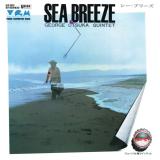
George Otsuka (or Ohtsuka), sadly passed away in March 2020, was one of Japan’s most renowned jazz drummers. ‘Sea Breeze’, released in 1971on the Union label, is his first record in quintet formation and is reissued here on a single LP housed in a gatefold sleeve.
And we can say that George Otsuka knew how to surround himself: Shunzo Ohno is on trumpet and Flugelhorn, Takao Uematsu on tenor sax and soprano, Takashi Mizuhashi on bass and Hideo Ichikawa on electric piano.
If all the tracks on this album are solid, included the astonishing cover of “Fool on the Hill”, it is especially “Sea Breeze”, the eponymous track opening the album that will make an impression. A super and long jazz-funk track where the five musicians, in perfect osmosis, leave each other enough space to express the full extent of their talent.
Recent copies of the original vinyl,which were only released in Japan have sold for £200-300.
Intersecting sharpness and passion. An innovative work born from the collision of two rare and extraordinary talents.
On one side was Hiroshi Suzuki, a trombonist in such demand that people said, “If you want to record a good work, secure his schedule.” On the other hand was Masahiko Togashi, a drummer who rose to prominence at a young age and dominated the jazz world, from modern jazz to free jazz. The collision of these two personalities and talents created a new current in the Japanese jazz scene. From "Castle Cats," which moves between jazz rock and free jazz, to "Suzu No Uta," where Yuji Ohno’s piano spins a beautiful melody amid the sound of bells falling like rain, and "Passion," where each musician cuts in with sharp intensity, the entire work is filled with creativity and passion. Recorded in 1969, this is said to be the first work in Japan in which new jazz and free jazz were recorded and released as an album. From this turning point, Japanese jazz began to move in a major way.
Nippon Psychedelic Soul 1970-1979 is Time Capsule’s continuation of the deep dive into Japan’s rich history of folk and psychedelic soul music.
Vinyl LP with 4 page insert, original artwork and photos
The kaleidoscopic psychedelia of 1970s Japan captured a fragile and fertile moment as the country sought its future in funk grooves, heavy reverb and lyrical hallucinations.
The follow-up compilation to Time Capsule’s Nippon Acid Folk, Nippon Psychedelic Soul takes myriad pathways into the tripped-out undergrowth of 1970s Japan. Finding their feet at home and looking for inspiration abroad, the musicians featured here were engaged in the communal soul-searching that followed the breakdown of the 1960s protest movements. Some made it big, others drifted into oblivion. The music they left behind shimmers with intensity.
At the core was Happy End, the first project of YMO’s Haroumi Hosono, whose distortion-heavy guitar and crisp back-beat laid the foundations for Japanese lyrics that flipped the paradigm of Japanese rock music on its head. With it came a new found sonic ambition, such as in the bold Philly-soul style arrangements of producer Yuji Ohno, whose work with occult wandered Yoshiko Sai shares some of the bittersweet grandeur of Rotary Connection or David Axelrod.
Then there was Jun Fukamachi, a pioneer of Japanese synthesis, whose debut album was a carnival of orchestral funk, euphoric horn lines and rich production, complete with soaring guitar solos, psychedelic organ and a truly cinematic finale. The first and only time Fukamachi would sing on record, ‘Omae’ rips like the ultimate end-of-nighter.
Influenced by giants of the US soul scene, maverick composer Hiroshi “Monsieur” Kamayatsu (otherwise known as ‘the Brian Wilson of Japan’) went one step further, enlisting Tower of Power to play on ‘Have You Smoked Gauloises?’ The B-side to Monsieur’s biggest-selling single, it coasts with sophisticated cool - a liquid bassline and suave keys comping under a roaring trademark ToP sax solo. No surprise it found favour once more on the Acid Jazz dance floors of ‘90s London.
Such was the spirit of experimentation that big studio productions and private press releases sat side-by-side, with the likes of Momotaro Pink and Kazushi Inamura, taking their hopes of success into their own hands with the resources available to them. More reflective but no less robust, theirs was a heavy, fat-backed drum sound, soaked in dramatic, soulful psychedelia.
If some were dreamers and others space cadets, none were further out than sci-fi writer, musician, activist and self-made scientist Tadashi Goino, who transformed his own fantasy novel Messenger from the Seventh Dimension into an operatic prog odyssey with few discernible musical reference points – a majestic and completely bonkers outlier even among company as strange and brilliant as that which is collected here.
Less a compilation of a scene, as a compilation of a sentiment, Nippon Psychedelic Soul is a wild ride from start to finish, shattering the narratives of the Japanese folk and rock tradition into a million tiny pieces.
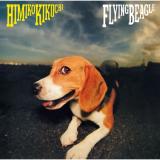
One of Japan’s most world-renowned female keyboardists, Himiko Kikuchi released "Flying Beagle" in 1987, and this classic album now returns on vinyl. Having collaborated with artists such as Takuro Yoshida and Junko Ohashi, and performed as a member of prestigious bands like Nobuo Hara’s Sharps & Flats and Minoya Central Station, Kikuchi — along with guitarist Masatsugu Matsumoto — became a key figure in Japan’s live fusion scene. From the 1980s onward, she consistently released solo albums, including several recorded overseas, establishing herself as a legend in the crossover and fusion genres.
Featuring Kikuchi (piano, keyboards, synthesizer, organ), Matsumoto (guitar), Akira Okazawa (bass), Naoki Watanabe (bass), Katsuo Okamoto (drums), Yasushi Ichihara (drums), Yuichi Tokashiki (drums), Keiichi Ishibashi (bass), Yoshikazu Kishi (trumpet), Kenji Yoshida (trumpet, flugelhorn), Michio Kaguwada (trombone), Jake H. Concepcion (alto saxophone, flute), Hirofumi Kinjo (tenor saxophone, flute), Masamichi Takano (baritone saxophone), and Yoshinori Nomimi (percussion), the album assembles top-tier musicians — including members from Spectrum, AB’S, Yuji Ohno’s You & The Explosion Band, and Toshiyuki Miyama’s Inner Galaxy Orchestra.
A masterpiece of Japanese fusion, reissued as a 180g heavyweight, limited-edition analog pressing. Originally released on October 21, 1987.
Released in 1971 by drummer George Otsuka, a leading figure in the Japanese jazz scene, "Sea Breeze" incorporates a wide range of styles, from waltzes and bluesy numbers to more pop-oriented sounds. The fiery performances by a quintet featuring some of the era's most exciting musicians, including Hideo Ichikawa, Takao Uematsu, and Shunzo Ohno, are not to be missed.
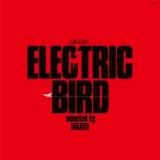
Muro (DJ/producer known as the king of diggin') has selected tracks from the Japanese Jazz/Fusion label 'Electric Bird'
From their extensive catalog carefully selected and it shines a light on another charm of Electric Bird that transcends the boundaries of jazz and fusion, encompassing groove, mellow-funk.
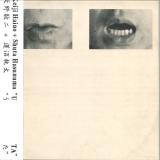
Haino sings. Hasunuma plays. It’s a minimal framework, but what emerges is a boundary-blurring sonic exploration. Across the album, Haino’s voice threads through Hasunuma’s layered soundscapes built from analog synths, electric guitar, piano, field recordings, and more. Haino entered the studio with only lyrics in hand, improvising melodies in response to Hasunuma’s evolving arrangements. The result is a work of deep trust, intuition, and sonic tension.
Keiji Haino and Shuta Hasunuma’’s creative connection began in 2017 with an impromptu performance in Shibuya—Hasunuma on a Buchla modular synthesizer, Haino responding with the Japanese national anthem, “Kimigayo.” That moment sparked their unlikely collaboration.
In 2018 Haino appeared at the Hasunuma-organized event “MUSIC TODAY IN KYOTO” at Rohm Theater, alongside Nobukazu Takemura, Manami Kakudo, Elena Tutatchikova, Kukangendai among others. In September 2021 during the pandemic, the two performed "U TA" for the first time at in Shibuya. They began planning the album soon afterwards.
For the recording of U TA, Haino entered the studio with only the lyrics in hand, with no knowledge of what sounds Hasunuma would produce. Responding to Hasunuma’s music in real time, Haino composed the melodies and layered in his voice on the spot. With additional sessions at Hasunuma’s private studio and Haino’s preferred studio, the album was completed.
All melody and vocals by Keiji Haino
All instrument, written, played, arranged, mixed and produced by Shuta Hasunuma
Recorded by zak at st-robo studio, Shuta Hasunuma at Studio i.M.O and windandwindows
Mastered by Rashad Becker at clunk
Production Management: Eishin Yoshida, Kento Ono (windandwindows)
For Temporal Drift: Yosuke Kitazawa, Patrick McCarthy
Art Direction: Aiko Koike
Special Thanks to Toshihiko Kasai, Ryoichi Kiyomiya, zAk, Yumiko Ohno
license
‘ИМА (Ima)’ is a work by KiMiMi, the solo project of a musician Shin-ya Ohno, which captures the layers of time and the presence of people inhabiting ‘Arimasuton Building’―a self-built structure created over 20 years by architect Keisuke Oka, located in Mita, Tokyo, and reconstructs them into music.
A multi-instrumentalist who masterfully handles a diverse range of instruments, with the gaida (an ancestor of the bagpipes) – which he studied in Bulgaria – at the core of his sound, KiMiMi has previously brought traces of daily life and folk melodies recorded during his travels back to the scale of home recording, weaving fantastical folk soundscapes through cassette tape works and stage music.
Alongside his musical activities, he has participated in the construction work for ‘Arimasuton Building’, recording the sounds of hammers and steel beams echoing on site, lunchtime chatter, the melodies of instruments played by others, and the sound of cars passing by. From the end of 2022, a zine titled ‘Monthly Arimasuton Building Urimasu’, based on this construction project, was launched. KiMiMi incorporates these recordings into the musical works he contributes to each issue, layering sounds from live instruments―including the gaida, accordion, guitar, flute, ukulele, piano, foot-pump organ, melodica and xylophone―alongside a few synthesiser tones, to shape a soundscape imbued with the humidity and breath of the site.
KiMiMi’s creative process is characterised not by planned construction, but by an attitude of entrusting the work to chance, intuition and the passage of time. Fragmented recordings are layered, set aside for a time, and then unearthed again. Through this repetition, the music naturally takes shape. This resonates perfectly with the process of ‘Arimasuton Building’, which was built up improvisationally, layer by layer, without any pre-prepared blueprints.
‘ИМА (Ima)’ marks the current stage of KiMiMi’s sonic journey and represents an attempt to gracefully transcend the boundaries between architecture and music, documentation and creation, and the individual and the community. The clamour of the city, the tranquillity of manual labour, laughter, and every sound resonating at the Arimasuton Building site blend with KiMiMi’s music, reflecting the very passage of time in which people live.
This new volume in the “City Music Tokyo” series, curated by Kunimond Takiguchi (Ryusenkei), focuses on Jazz Funk. From among crossover, Japanese jazz,
and soundtrack works released by Nippon Columbia, Takiguchi has carefully selected urban and sophisticated tracks that resonate with his musical sensibility.
Each piece carries a faint scent of the Showa era, evoking words like “night,” “drive,” “dandyism,” “car chase,” “city,” “hard-boiled,” and “man and woman.”
Selected, supervised, and annotated by Kunimond Takiguchi (Ryusenkei).
Soul Visions is an instrumental journey into the world of Deheb, who, after several years of continuous sound research, continues to draw inspiration from jazz, soul, funk, and progressive rock records, first discovered through his father and then through his fellow collectors and DJs, including his partner DJ Marrrtin from Funky Bijou.
The Breton artist is renowned in the beatmaking world for his collaborations in New York in the mid-2000s (Moka Only, Sean Price, Torae, Tye Phoenix, Apani B, etc.) and for his album “LEAF”, released in 2015 with Swiss producer Chief. He is best known for producing classic Funky Breaks in the global breakdance scene with Marrrtin under the name Funky Bijou, whose tracks have been played at the world's biggest breakdance events since 2011 (Battle Of The Year, Red Bull BC One, etc.). All their tracks have been listened to more than 30 million times on various platforms and social networks.
A prolific artist who draws much of his inspiration from funk and jazz, he is based in Nantes and has collaborated with groups from the French Neo Soul scene, such as J-Silk from Bordeaux, Jo Wedin from Sweden, and Keysuna from Nantes. Close to the dance scene, he has also collaborated with dancer and choreographer Mackenzy Bergile, which led him to join the CCNRB's choreographic project “Earthbound” by choreographers Saïdo Lehlouh and Johanna Faye in 2023.
Deheb has also been composing for documentary projects since his first collaboration with director Shyaka Kagamé in 2015 for “Bounty”. In 2024 and 2025, he worked on two critically acclaimed projects: “Boulevard du village noir”, produced by Radio Television Suisse, and “IMIHIGO, le pacte rwandais”.
This year, 2025, he brings us “Soul Visions”, a journey through the cinematic sound of the early 1970s to the soul funk and jazz funk of the late 1970s, a pivotal period in his own musical identity that contributed to the funk sound of his guitars and the texture of his synthesizers and electric pianos.
Soul Visions is first and foremost a tribute to the artists and composers, the geniuses of that era, such as the Mizell brothers in “Larry and Fonce”, the Bell brothers in “Ron and Don”, and giants of the genre such as Isaac Hayes, Yuji Ohno, Roy Ayers, and Clarence Reid. All these masters of the genre had their own distinctive sound and arrangements, which were easily recognizable and which are among Deheb's major inspirations.
nicht am Lager
Zuletzt vor 7 Monaten geliefert unverbindlich nachbestellbar
Japanese detective drama theme song by Yuji Ohno, who composed music for "Lupin the Third" and others, is reissued on 7"!
Composer Yuji Ohno has composed music for many TV series and films, including the "Lupin the Third" series and "Inugamike no Ichizoku" (The Inugami Clan). The theme song for the 1978 TV drama "The Great Chase," for which he was also in charge of music, is being reissued in analog form for the first time in 47 years since its original release.
Shortly after the breakup of Flower Travellin’ Band, guitarist Hideki Ishima released his first and only solo album in 1973—a hauntingly beautiful work that stands apart in the landscape of ’70s Japanese rock. Known for his later work as a sitar player, Ishima showcases a signature floating guitar sound throughout the album, blending psychedelic rock, acid folk, and introspective singer-songwriter elements into a deeply personal and atmospheric record.
Contributing to this richly textured sound are some of the most notable names from the era: fellow Flower Travellin’ Band member George Wada (drums), future Transam collaborators Chito Kawachi (drums) and Nobuhiko Shinohara (keyboards), and Katsuo Ohno (keyboards) of PYG.
Now reissued with a bold, powerful remaster by Makoto Kubota, this overlooked gem captures a vital moment in Japan’s underground rock evolution and demands a fresh listen from those exploring the outer edges of the genre.
Strong groove and sharp guitar sound
Yamauchi Tetsu's first solo album recorded in Japan while still in Free
Yamauchi Tetsu, who became the bassist for the British band Free after playing for Mickey Curtis & Samurai, recorded his first solo album during a temporary return to Japan in 1972.
This is a full album with plenty to listen to, including the edgy guitars on "Wiki Wiki," the groovy funk rock on "First Time," "How To Cook," and "Orange Dog," and Eleanor's languid vocals
on "Alexander Stone," "Why," and "Baby Blue." Reissued with remastering by Makoto Kubota.
Segawa Hiroshi's solo album, pursuing country rock and southern rock in Japanese
A treasure of Japanese rock, bringing together members of Flower Travellin' Band, Samurai, and PYG
After the GS boom subsided and New Rock was in full swing, Segawa Hiroshi was one of the few bands pursuing country rock and southern rock in Japanese, while most bands were aiming for British rock.
The album "Pierrot," one of the culminations of this endeavor, was produced with the help of a lineup of representative Japanese new rock artists, including Ishihama Hideki and Kozuki Jun from
Flower Travellin' Band, Yamauchi Tetsu and Harada Yushin from Samurai, and Ohno Katsuo from PYG.
The album has been reissued with the additional recording of the single "The White Room Where You Were," released the year after "Pierrot," and remastered by Kubota Makoto.
While most Japanese bands in the early ’70s were chasing British rock trends, Hiroshi Segawa took a bold, singular path—crafting country rock and Southern rock, sung entirely in Japanese. His masterpiece Pierrot stands as a rare and beautiful outlier, brought to life by a dream team of legendary musicians from Japan’s New Rock scene: Hideki Ishima and Jun Kozuki (Flower Travellin’ Band), Tetsu Yamauchi (Samurai), Yuushin Harada, and Katsuo Ohno (PYG).
Now lovingly reissued with a fresh remaster by Makoto Kubota, this edition also includes the haunting single “Kimi ga Ita Shiroi Heya”, originally released the year after Pierrot. A must-have for fans of Japanese rock history, obscure country rock gems, and boundary-breaking musical vision.
Veteran Drummer Ken Serio has been a staple on the New York
studio scene for over 30 years
and has appeared on over 70 CDs,
as well as 18 as a leader. His new release Brooklyn Oasis is his most ambitious release to date and features Jazz Legend Ron Carter
on Bass as well as Tomoko Ohno
on Piano, and Saxophist Dave Mullen. Recorded October
24th at The Acoustic Studio in Brooklyn NY, and produced by
Bob Cowley, it features two
originals The title track
“Brooklyn Oasis” penned
by Ohno, as well as "For Micheal
" a heartfelt tribute to the late
Micheal Brecker by Dave Mullen
. Liner notes by Jazz journalist
Bill Millkowski, and also Hammond great Brian Charette. Other songs include the McCoy Tyner burner “
Changes”, “Dindi”, the Jobim classic,“Hard Eights” by Lyle Mays
, “In Your Own Sweet Way”, by
Dave Brubeck, and the lovely “
Skylark” by Hoagie Carmicheal.
Renowned DJ and selector MURO is a Jedi-level compiler and this new collection of his delves into Victor's extensive archives to spotlight a world of Japanese jazz, fusion and AOR. It take sin plenty of internationally known names like Yasuko Agawa on the sunset sounds of 'L.A. Night', Sadistics who offers the more psyched out guitar leans of 'On the Seashore', Yuji Ohno's neo-Balaeric bliss-out 'The Dawn of Seychells' and Hiroshi Fukumura's soul soothing Ry Ayres-style melodies on 'White Clouds.' These are luxurious sounds and timeless tracks with MURO's signature funky perspective making this a brillaint choice for brighter, warmer days.
nicht am Lager
Zuletzt vor 6 Monaten geliefert unverbindlich nachbestellbar
Demonstrating the poignant power of experience + human connection + innate musicality + operating in the present moment, Jeff Mills' Spiral Deluxe collective unveil their second album - The Love Pretender. Driven by the free expression and creativity of improvised performance, Spiral Deluxe is an electronic jazz fusion project comprised electronic music visionary Jeff, along with legendary keyboardist Gerald Mitchell (Underground Resistance/ Los Hermanos), Japanese rocker Yumiko Ohno (Buffalo Daughter/Cornelius) on Moog synthesizer and the Japanese bassist, adopted New Yorker, Kenji "Jino" Hino - son of Terumasa Hino, the world famous jazz trumpeter. Together, the four key players formed a band centred around completely improvised journeys through sound.
During their unrestrained performances, what Jeff describes as sonic "conversations" arose between the musicians, as they each contributed to full-length live shows, and studio sessions. Within the boundless parameters of freeform spontaneity, they developed an unspoken understanding of one another, finding balance and poise within the unplanned performances. The resulting recordings have been used for three releases so far: Two EPs, Kobe Session (2016) and Tathata (2017), and their debut album Voodoo Magic in 2018. With The Love Pretender, we're presented with another stunning collection of "tracks" extracted from one long improv session.
With each musician proficient in their specialism and, of course, an all-out music lover, the communication between the group members became almost telepathic. Very little preparation was needed, and their performances flowed naturally and organically. This can be heard, and felt, throughout The Love Pretender. Tracks like 'The Soloist' evolve effortlessly, each new shift subtly influenced by one of the musicians nudging the conversation into a different phase, and the rest responding accordingly, or vice versa. It's music that embodies the true nature of mindfulness and letting go of fear. In their unstructured, liberated cocoon the artists thrive and create musical moments that have, fortunately, been captured for us all to immerse ourselves in. Jazzy notes fill the air, combined with electronic bass, synthesised beats, sparkling keys and an all-round warm and welcoming atmosphere, with the slight edge you can only get from improvised performance.
Sylvain Luc's posthumous appearance on the album is of significance too. The French guitarist died in March 2024 at the age of 59. His natural flair adds another dimension to the album, bringing a touch of that laid back 1980s American California Coast feeling to tracks such as 'Society's Man'. These contributions to the LP, recorded separately, add character - a final sprinkling of humanity to complement the aliveness and presence of this body of work. Three other musicians also added their creative energy to the project. They were; TOKU, a Japanese jazz musician who specialises in wind instruments, especially the cornet, trumpet and flugel horn. And there's Masa Shimizu, who also has wide-ranging with the guitar, as well as being a producer.
Themes on the album include the optimism one can have by simply trusting the process and trusting that everything will work out in the end. By playing together in the way they do, Spiral Deluxe place their trust in the mystery of what will happen next. Getting comfortable with not knowing is key to a sense of peace with regard to the future and this energy is vital to their collective musical output. By embracing the notion of the unknown, you become an eternal optimist, living in the moment, rather than projecting into the future. This cultivates excitement, an antidote to anxiety.
Meanwhile, the title alludes to the shifts and changes that have occurred in today's society, whereby it's possible to achieve success through pretending. The superficiality, and falsehood, that can often be presented via social media, can lead to questions about what's real and what's not. From AI to the fake personas that populate the dominant platforms, The Love Pretender speaks to a process that is symbolic of the time we're living in. Behaviour that has become acceptable in today's world, which may not have been as welcomed a few decades ago. But this is part of the cycle of life...
Jeff's intention with this music is to present it in high-fidelity, to be listened to over and over and over again. In post-recording he worked for hours to ensure the audio quality was as high as it could be. The goal is to create music that people can live with their entire lives, from his solo work to these masterful improvisations. Music that comes to life, music that has a voice we can replicate with our own vocals. Expressive, unstructured, and alive...
With The Love Pretender Jeff Mills continues his mission to experiment with music outside the bounds of what is typically expected. It's freeing, enlivening, vibrant and uniquely human. As ever, Jeff's visionary outlook and bold approach to musical performance and recording has produced a body of work that epitomises his often revolutionary capabilities. There's no pretending here, just pure unadulterated sonic transmissions from a wonderfully daring, inspiring and optimistic ensemble...
nicht am Lager
Zuletzt vor 9 Monaten geliefert unverbindlich nachbestellbar
Original soundtrack for the Nippon Television drama "Matsuribayashi ga Kikoeru" starring Kenichi Hagiwara (Shoken) aired in 1977. The album features two theme songs, "Dream Racer" and "Stranger", arranged in various arrangements.
Written and arranged by Katsuo Ohno, who has worked with The Spiders, PYG, Takayuki Inoue Band, and has provided music for "Taiyo ni Hoero!", "Kizudarake no Tenshi", and the popular anime "Meitantei Conan" which began in 1996. The music is performed by George Yanagi and the NADJA Band, known for backing Shoken, and this pinnacle of Japanese groove is finally being reissued on vinyl.
Liner notes written by lyricist Ryo Shoji (summer 2024) for this reissue are included.
The drums of fire scorch the age. With his young and talented Sound Limited, Takeshi Inomata heralds the arrival of the golden age of jazz rock in high spirits. Drummer Takeshi Inomata, who led the Japanese jazz scene with his precise stick work and musicality with an eye on the times, formed Sound Limited at the end of the 1960s, influenced by the brass rock music that was flourishing at the time. He said, “I wanted to fuse jazz and rock and bring together young musicians to play music with vitality. I want this group to be a group with a large scale that is not confined to the small frame of modern jazz,” he said, launching a new axis. Their first album, “The Sound of Sound Limited” (1970), became their masterpiece. It is a masterpiece that is full of energy and enthusiasm throughout the album, starting with “Theme~Mustache,” which has become one of the most beloved and iconic songs of the band.
Drums, Music Director – Takeshi Inomata
Electric Bass – Jun Suzuki
Electric Guitar – Ryo Kawasaki, Shigenori Kamiya
Flute – Toshiaki Yokota
Mixed By – Eiji Uemura
Organ – Yusuke Hoguchi
Tenor Saxophone – Takao Uematsu
Trombone – Shigemichi Domoto, Takashi Imai
Trumpet – Shunzo Ohno, Takashi Kumagai
nicht am Lager
Zuletzt vor 22 Monaten geliefert unverbindlich nachbestellbar
Wewantsounds is delighted to announce the release of one of Japan's most coveted albums of the 70s, "Mangekyou" by singer-songwriter Yoshiko Sai. Produced in 1975 by Master musician Yuji Ohno, the album features Yoshiko Sai's superbly crafted songs and crystal clear voice over Ohno's lush, funky sound and breezy arrangements. A strong buzz has been growing around the album over the years and original copies now change hands for large sums of money. This is the first time "Mangekyou" is available outside of Japan, featuring remastered audio, original artwork and a 4 page insert including new liner notes by Paul Bowler.
nicht am Lager
Zuletzt vor 21 Monaten geliefert unverbindlich nachbestellbar
Exact Repro OF THE Original With 4 Bonus Tracks. Japanese country rock act Gypsy Blood must be heard to be believed. Released on Vertigo in 1971, their sole LP showed the group simply bursting with talent, Kiyoshi Hayami’s mandolin exceptional and the masterful soft-rock production courtesy of Miki Curtis; drummer Eiichi Tsukasa had earlier been in the Helpful Soul, organist Katsuo Ohno had been in the Spiders, and guitarist/vocalist Hiroaki Nakamura later played in Buzz with future YMO member Yukihiro Takahashi, while none other than Alan Merrill of ‘I Love R‘n’R’ fame completes the picture on piano. A beautiful album, and a very rare beast!
Wewantsounds is delighted to announce the reissue of Norio Maeda's cult classic "Rock Communication Yagibushi" released in Japan in 1970. The album has since become a Japanese Jazz Funk cornerstone and is now highly sought-after on the international DJ scene. The album reinterprets 14 traditional Japanese folk songs into jaw-dropping Jazz Funk instrumentals featuring killer arrangements by Maeda that would fit perfectly between David Axelrod and Lalo Schifrin. One of the most prolific Nippon arrangers, Norio Maeda on a par with Yuji Ohno and Kentaro Haneda and this album has long been on many collectors' wantlist. "Rock Communication Yagibushi" is reissued internationally for the first time, with newly remastered audio, original gatefold artwork and new liner notes by Paul Bowler
nicht am Lager
Zuletzt vor 2 Jahren geliefert unverbindlich nachbestellbar
The drums of fire scorch the age. With his young and talented Sound Limited, Takeshi Inomata heralds the arrival of the golden age of jazz rock in high spirits. Drummer Takeshi Inomata, who led the Japanese jazz scene with his precise stick work and musicality with an eye on the times, formed Sound Limited at the end of the 1960s, influenced by the brass rock music that was flourishing at the time. He said, “I wanted to fuse jazz and rock and bring together young musicians to play music with vitality. I want this group to be a group with a large scale that is not confined to the small frame of modern jazz,” he said, launching a new axis. Their first album, “The Sound of Sound Limited” (1970), became their masterpiece. It is a masterpiece that is full of energy and enthusiasm throughout the album, starting with “Theme~Mustache,” which has become one of the most beloved and iconic songs of the band.
Le Très Jazz Club keeps on exploring Japanese jazz and Three Blind Mice catalog with the reissue of this amazing 1976 record by drummer George Otsuka. This LP is reissued for the first time since 1976. Reissued for the first time outside of Japan, “Physical Structure” by Japanese drummer George Otsuka is an amazing jazz-fusion album, featuring Fumio Karashima on the piano and Fender Rhodes and Shozo Sasaki on tenor sax. Check the surprising and sublime cover of “Naima” which alone justifies to get this record! With : George Ostuka (drums), Shozo Sasaki (tenor & soprano sax), Fumio Karashima (piano, electric piano, synthesizer), Mitsuako Furuno (bass), Norio Ohno (percussion). Recorded on February 11, 1976
"From Nishinari Osaka Japan Weird Wild Obscure Spooky exotica burlesque toy junk Muzak Trash One Man Band music made with broken cassette desks and fucked up record players feat members of (Acid Mother Temple)" - VRR 20202 Vinyl LP, starker Karton, bedruckte Innenhülle, Download inklusive. Willkommen in der wilden obskuren und seltsamen Welt von DEGURUTIENI und seiner ONE MAN BAND. teuflisch exotischer Striptease Kinder Spielzeug Krach mit ausgedientes Tonbandgerät und zerbrochenen Plattenspielern mit Mitgliedern von ua Acid Mother Temple in einigen Songs. Dies hier ist eine Zusammenstellung mit älteren Songs (selbst Veröffentlichungen und auf kleinst Labels) und viele neue Songs die noch nie vorher veröffentlicht wurden. Ich dachte, es ist an der Zeit, dass die Welt etwas über DEGURUTIENI erfährt (ich hatte Wochen, bis ich seinen Namen richtig buchstabieren konnte, hahaha ) Er tourt ständig durch die ganze Welt (pre Covid-19) und tritt in regulären Konzertsälen sowie in Theatern, Kunstgalerien oder sogar auf der Straße auf. wenn man ihn zum ersten mal sieht ist es eine Lebens Erfahrung die man nicht wider vergisst und es bleibt ein großes Lächeln im Gesicht und ein verzerrtes Fragezeichen in deinem Gehirn. Alco Degurutieni wurde Ende der 60er Jahre im Nishinari Ghetto von Osaka geboren (Alco Degurutieni: Diese Zeit in den 1970er Jahren war eine harte Zeit für alle, einmal im Monat Unruhen auf den Straßen. Rot Licht viertel Prostitution und die Yakuza-Mafia waren uns vertraut. Diese Erinnerungen an ein jugendliches Chaos sind seitdem ein Katalysator für mein Peter-Pan-Syndrom.) Degurutieni schafft Harmonie durch Gegenüberstellung, indem er ihnen Melodie aus Chaos und Dekadenz aus Abfall extrahiert. Mit 13 Jahren bekam er seine erste Boombox und wurde der beste Kunde in seinem örtlichen Leih-Platten und Trödler laden. Er arbeitete sich durch alle Genres von den Beach Boys bis zum Black Sabbath. Ab 16 Jahren begann er, seine eigenen Songs mit den einzigen Dingen zu kreieren, zu denen er Zugang hatte; Müll, umgebaute Kinderspielzeuge und ein ausgedientes Tonbandgerät. All dies spielt noch heute eine wichtige Rolle in seiner Musik. Auf diesem Album findest du ,Acme in the afternoon, ein komplett Hit, Tom Waits Blues Jazz Burlesque, dann mit ,Blur Blur Blur, hörst du ihn super minimalistisch und verloren im All Blues, oder den unglaublichen ,Midnight Express' mit einem orientalischen Trash-Flair der dich in einen neuen Blade Runner film katapultiert, und Zigeuner Fanafare und Rock'n'roll in ,13th Floor City ' zusammen mit: Orchester du Belgistan (aus Belgien) oder mein favorit ,Dreaming party' das wie ein psychedelischer horror film Soundtrack daher kommt LINE UP Alco Degurutieni (mostly all instuments) aditional Musissians on the Album Jyonson Tsu (ACID MOTHERS TEMPLE) Machiko Kuniki (Sujiko Sumoguri) Akiyoshi Kajitani (MOHIKAN FAMILIES) Atsushi Sekitani Watanbe (BRO TÜRK,PATO LOL MAN) Naoya Takami (Ichibanboshi Crue) Kwandae Park (UMA UMA UMA) Akira Ohno Tadahiro Ishihara Keigo Matsunaga (Rock'n'TASUKE'Roll & THE CAPTAIN SWING,MOHIKAN FAMILY'S) Tom Manoury (Orchestre du Belgistan) Mbengue Ndiaga Jordi Grognard (YOKAI) Akiko Igaki (TAYUTAU,COLLOID) Kiri Mochida Takeo Touyama (PATO LOL MAN) Shuichi Hirose (HUMNED) Takeo Touyama (PATO LOL MAN)