Buscar:ol jungle tv

Estilos
Todo
  • 1
FAIXA - FAIXA

Faixa

FAIXA

12inchECCO006
ECCO RECORDS
13.01.2025

‘FAIXA’ is the eponymous debut LP from rural Valencian group FAIXA, emerging from a desire to fuse their curiosity for electronic sounds with experiences of living immersed in the folklore that resonates through the Valencian regions of l’Alcoià and el Comtat.

This atmospheric album speaks to a sound not often heard in the wider Spanish electronic music scene, but reminiscent of other modern revivals of traditional music fused with electronic sounds across Spain right now.

The sound of the album is a constant dialogue between the roots and the future of Valencian generations; traditional vocalists play an essential role in connecting oral traditions such as the “cant de batre” and marches of the “moros i cristians” with leftfield electronic, influenced by sounds typical of dubstep, jungle, or footwork. This historical quality resonates profoundly through songs where vocalists Noelia Llorens “Titana”, Carles Dénia, and Josep Aparicio “Apa” act as channels to a new sonic dimension of traditional music, where the classical and the modern intertwine.

Receiving great feedback across the country in a short period of time, FAIXA’s unique approach to electronic music has gained them mentions and interviews on national and local radio & TV.

Disponible

En el almacen y preparando para el envío

23,74
Chocolate Hills, The Orb - Yarns From The Chocolate Triangle LP

On June 16th momentum continues apace for Alex Paterson’s Orbscure records, with the new album by Chocolate Hills – his duo project with Paul Conboy. Purveying world class melodic ambience and plenty beyond, colours in this high-fidelity-headphone-wonderland range from languid chill, kitsch exotica, library music, space age pop, ye olde folk and even drum and bass – all seasoned with (in)appropriately random plunderphonics from Paterson’s infinite goodie bag. Loosely based around a nautical journey to the Bermuda triangle and back, this is a fantastic voyage, but seas remain calm – more ‘Life Aquatic’ than ‘Moby Dick’. Tracks gently bob and float on bass which is roomy and buoyant like the hull of a ship, whilst luxuriously fluffy clouds meander overhead, before their vessel dives deep below to marvel at aquatic delights, guided by sonar. Paul Conboy’s approach as a member of cult analogue tinkerers Metamono – who use no computers, only old pre-digital gear – has carried over into his new joint venture. Both groups write, record and perform at same time, then later edit for release. For ‘Yarns from the Chocolate Triangle’ Paul set himself and Alex up with assorted gear, including a record deck, synths and drum machines, then the pair recorded the raw version of the album on the fly. These long live jams where then then discreetly augmented, embellished and edited, with a nip and tuck in Logic. As well as releases as A.P.E. on Dorado and Far Out recordings, TV and film scores plus his ongoing membership in Metamono, Conboy recorded three albums as part of Bomb The Bass, with whom he also toured Australia jointly with The Orb. On a boat trip over to Bali, Paul made Paterson pancakes, and their friendship was sealed. Having stayed in contact, many years later the duo began an exploration of ideas with their 2019 debut ‘A Pail Of Air’ on Painted World records (who’ve also released records by Nik Turner from Hawkwind, Youth, Roger Eno and Jaz Coleman). So far the duo have performed a low key gig at Paterson’s unofficial lair The Book And Record Bar, plus a bigger stage at the Roundhouse, alongside Leftfield, GAS, Ulrich Schnauss and System 7. Clearly making a lasting impression on Alex, the duo’s name was first referenced on The Orb’s own ‘Chocolate Hills Of Bohol’ remix of their single ‘Assassin’ in 1992, which was the same year Alex got blown away when visiting the prehistoric geological formations and enchanting jungles of the Bohol province in the Philippines.

Disponible

En el almacen y preparando para el envío

22,48
Bow Wow Wow - Love, Peace and Harmony (Best Of Bow Wow Wow) LP
  • I Want Candy
  • Go Wild In The Country
  • Do You Wanna Hold Me?
  • Cowboy
  • Aphrodisiac
  • Chihuahua
  • Baby, Oh No
  • The Man Mountain
  • Lonesome Tonight
  • Love, Peace And Harmony
  • See Jungle! (Jungle Boy)
  • Rikki Dee
  • (I'm A) Tv Savage
  • Elimination Dancing
  • Mile High Club
  • Prince Of Darkness (Sinner, Sinner)

"Love, Peace & Harmony - The Best of Bow Wow Wow is a compilation of the iconic new wave group Bow Wow Wow, released in 2008. The band was formed by Malcolm McLaren, the manager of the Sex Pistols. McLaren recruited members of Adam and the Ants to form the band, featuring 13-year-old Annabella Lwin on lead vocals. Over the next four years, the band dominated the British charts, with nine singles entering the UK Top 100. ""Go Wild in the Country"" and ""I Want Candy"" even made it into the top 10. Their success didn't stop in the UK; they also enjoyed success in Australia, the US and the rest of Europe. This version of the compilation includes the song “The Man Mountain”, which reached the top 10 in Belgium and the Netherlands. Love, Peace & Harmony - The Best of Bow Wow Wow is available as a limited edition of 1000 individually numbered copies on slightly gold coloured vinyl. "

Reservar20.03.2026

debe ser publicado en 20.03.2026

35,50
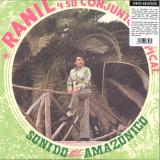
RANIL Y SU CONJUNTO TROPICAL - SONIDO AMAZóNICO

RANIL Y SU CONJUNTO TROPICAL

SONIDO AMAZóNICO

12inchVAMPI328
Vampisoul
27.08.2025

Ranil is undoubtedly the most unconventional figure among the greats of Amazonian cumbia, earning a well-deserved place alongside iconic bands like Los Mirlos, Los Wembler's, and Juaneco y su Combo. This compilation offers a glimpse into the vast musical output Ranil created in the late 1970s and early 1980s. Psychedelia, rock fusion, cumbia, salsa, mambo, Amazonian folk_ you'll find all these flavors blended into the vibrant, jungle-rich sound Ranil crafted. DESCRIPTION Ranil is undoubtedly the most unconventional figure among the greats of Amazonian cumbia, earning a well-deserved place alongside all the better-known iconic bands. He worked as a teacher, criollo guitarist, radio host, TV entrepreneur, and politician, but gained lasting fame as the founder of Ranil y Su Conjunto Tropical in the 1970s. By 1968, around the same time Los Destellos were making waves in Lima, groups like Los Wembler's de Iquitos and Juaneco y su Combo began electrifying cumbia in Iquitos. This new genre, dubbed Amazonian cumbia, exploded nationwide in 1973, thanks to hits by Juaneco y su Combo, Los Mirlos, and Los Wembler's. The success these bands achieved spawned dozens of other groups from the Amazon. Ranil, always a visionary, recognized the movement's potential and joined forces through his first single recorded on the Dinsa label in 1974. Unhappy with the contractual terms, he went on to found Producciones Llerena, the label on which he would release the rest of his discography. Over the years, Ranil y su Conjunto Tropical featured guitarists like Límber Zumba and Luis Nigro, while Ranil remained the lead vocalist and bassist for group. Zumba and Nigro had already played with other regional bands and written songs for groups like Los Destellos and Los Mirlos. This compilation offers a glimpse into the vast musical output Ranil created in the late 1970s and early 1980s, bringing together 14 tracks from the band's 10 LPs. These records have always been hard to come by as, despite being recorded in Lima, they were distributed by Ranil from Iquitos. Psychedelia, rock fusion, cumbia, salsa, mambo, Amazonian folk_ you'll find all these flavors blended into the vibrant, jungle-rich sound Ranil crafted.

No en stock

Haga su pedido ahora y le encargaremos el artículo en nuestro proveedor.

22,27

Ültimo hace: 9 Meses
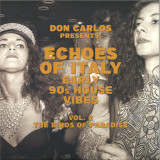
Various - ECHOES OF ITALY – THE BIRDS OF PARADISE – EARLY 90S HOUSE VIBES VOL.2 (2x12")

Googling “paradise house”, the first results to pop up are an endless list of European b&b’s with whitewashed lime façades, all of them promising “…an unmatched travel experience a few steps from the sea”. Next, a little further down, are the institutional websites of a few select semi-luxury retirement homes (no photos shown, but lots of stock images of smiling nurses with reassuring looks). To find the “paradise house” we’re after, we have to scroll even further down. Much further down.

It feels like yesterday, and at the same time it seems like a million years ago. The Eighties had just ended, and it was still unclear what to expect from the Nineties. Mobile phones that were not the size of a briefcase and did not cost as much as a car? A frightening economic crisis? The guitar-rock revival?! Certainly, the best place to observe that moment of transition was the dancefloor. Truly epochal transformations were happening there. From America, within a short distance one from the other, two revolutionary new musical styles had arrived: the first one sounded a bit like an “on a budget” version of the best Seventies disco-music – Philly sound made with a set of piano-bar keyboards! – the other was even more sparse, futuristic and extraterrestrial. It was a music with a quite distinct “physical” component, which at the same time, to be fully grasped, seemed to call for the knotty theories of certain French post-modern philosophers: Gilles Deleuze, Félix Guattari, Paul Virilio... Both those genres – we would learn shortly after – were born in the black communities of Chicago and Detroit, although listening to those vinyl 12” (often wrapped in generic white covers, and with little indication in the label) you could not easily guess whether behind them there was a black boy from somewhere in the Usa, or a girl from Berlin, or a pale kid from a Cornish coastal town.

Quickly, similar sounds began to show up from all corners of Europe. A thousand variations of the same intuition: leaner, less lean, happier, slightly less intoxicated, more broken, slower, faster, much faster... Boom! From the dancefloors – the London ones at least, whose chronicles we eagerly read every month in the pages of The Face and i-D – came tales of a new generation of clubbers who had completely stopped “dressing up” to go dancing; of hot tempered hooligans bursting into tears and hugging everyone under the strobe lights as the notes of Strings of Life rose up through the fumes of dry ice (certain “smiling” pills were also involved, sure). At this point, however, we must move on to Switzerland.

In Switzerland, in the quiet and diligent town of Lugano, between the 1980s and 1990s there was a club called “Morandi”. Its hot night was on Wednesdays, when the audience also came from Milan, Como, Varese and Zurich. Legend goes that, one night, none less than Prince and Sheila E were spotted hiding among the sofas, on a day-off of the Italian dates of the Nude Tour… The Wednesday resident and superstar was an Italian dj with an exotic name: Don Carlos. The soundtrack he devised was a mixture of Chicago, Detroit, the most progressive R&B and certain forgotten classics of old disco music: practically, what the Paradise Garage in New York might have sounded like had it not closed in 1987. In between, Don Carlos also managed to squeeze in some tracks he had worked on in his studio on Lago Maggiore. One in particular: a track that was rather slow compared to the BPM in fashion at the time, but which was a perfect bridge between house and R&B. The title was Alone: Don Carlos would explain years later that it had to be intended both in the English meaning of “by itself” and like the Italian word meaning “halo”. That wasn’t the only double entendre about the song, anyway. Its own very deep nature was, indeed, double. On the one hand, Alone was built around an angelic keyboard pattern and a romantic piano riff that took you straight to heaven; on the other, it showcased enough electronic squelches (plus a sax part that sounded like it had been dissolved by acid rain) to pigeonhole the tune into the “junk modernity” section, aka the hallmark of all the most innovative sounds of the time: music that sounded like it was hand-crafted from the scraps of glittering overground pop.

No one knows who was the first to call it “paradise house”, nor when it happened. Alternative definitions on the same topic one happened to hear included “ambient house”, “dream house”, “Mediterranean progressive”… but of course none were as good (and alluring) as “paradise house”. What is certain is that such inclination for sounds that were in equal measure angelic and neurotic, romantic and unaffective, quickly became the trademark of the second generation of Italian house. Music that seemed shyly equidistant from all the rhythmic and electronic revolutions that had happened up to that moment (“Music perfectly adept at going nowhere slowly” as noted by English journalist Craig McLean in a legendary field report for Blah Blah Blah magazine). Music that to a inattentive ear might have sounded as anonymous as a snapshot of a random group of passers-by at 10AM in the centre of any major city, but perfectly described the (slow) awakening in the real world after the universal love binge of the so-called Second Summer of Love.

For a brief but unforgettable season, in Italy “paradise house” was the official soundtrack of interminable weekends spent inside the car, darting from one club to another, cutting the peninsula from North to centre, from East to West coast in pursuit of the latest after-hours disco, trading kilometres per hour with beats per minute: practically, a new New Year’s Eve every Friday and Saturday night. This too was no small transformation, as well as a shock for an adult Italy that was encountering for the first time – thanks to its sons and daughters – the wild side of industrial modernity. The clubbers of the so-called “fuoriorario” scene were the balls gone mad in the pinball machine most feared by newspapers, magazines and TV pundits. What they did each and every weekend, apart from going crazy to the sound of the current white labels, was linking distant geographical points and non-places (thank you Marc Augé!) – old dance halls, farmhouses and business centres – transformed for one night into house music heaven. As Marco D’Eramo wrote in his 1995 essay on Chicago, Il maiale e il grattacielo: “Four-wheeled capitalism distorts our age-old image of the city, it allows the suburbs to be connected to each other, whereas before they were connected only by the centre (…) It makes possible a metropolitan area without a metropolis, without a city centre, without downtown. The periphery is no longer a periphery of any centre, but is self-centred”.

“Paradise house” perfectly understood all of this and turned it into a sort of cyber-blues that didn’t even need words, and unexpectedly brought back a drop of melancholic (post?)-humanity within a world that by then – as we would wholly realise in the decades to come – was fully inhuman and heartless. A world where we were all alone, and surrounded by a sinister yellowish halo, like a neon at the end of its life cycle. But, for one night at least, happy."

No en stock

Haga su pedido ahora y le encargaremos el artículo en nuestro proveedor.

28,99

Ültimo hace: 37 Días
Various - ECHOES OF ITALY - ARTISTS IN WONDERLAND – EARLY 90S HOUSE VIBES VOL.1 LP 2x12"

Volume 1 of this expertly curated project of 90s Italian House - put together by Don Carlos.

If Paradise was half as nice… by Fabio De Luca.

Googling “paradise house”, the first results to pop up are an endless list of European b&b’s with whitewashed lime façades, all of them promising “…an unmatched travel experience a few steps from the sea”. Next, a little further down, are the institutional websites of a few select semi-luxury retirement homes (no photos shown, but lots of stock images of smiling nurses with reassuring looks). To find the “paradise house” we’re after, we have to scroll even further down. Much further down.

It feels like yesterday, and at the same time it seems like a million years ago. The Eighties had just ended, and it was still unclear what to expect from the Nineties. Mobile phones that were not the size of a briefcase and did not cost as much as a car? A frightening economic crisis? The guitar-rock revival?! Certainly, the best place to observe that moment of transition was the dancefloor. Truly epochal transformations were happening there. From America, within a short distance one from the other, two revolutionary new musical styles had arrived: the first one sounded a bit like an “on a budget” version of the best Seventies disco-music – Philly sound made with a set of piano-bar keyboards! – the other was even more sparse, futuristic and extraterrestrial. It was a music with a quite distinct “physical” component, which at the same time, to be fully grasped, seemed to call for the knotty theories of certain French post-modern philosophers: Gilles Deleuze, Félix Guattari, Paul Virilio... Both those genres – we would learn shortly after – were born in the black communities of Chicago and Detroit, although listening to those vinyl 12” (often wrapped in generic white covers, and with little indication in the label) you could not easily guess whether behind them there was a black boy from somewhere in the Usa, or a girl from Berlin, or a pale kid from a Cornish coastal town.

Quickly, similar sounds began to show up from all corners of Europe. A thousand variations of the same intuition: leaner, less lean, happier, slightly less intoxicated, more broken, slower, faster, much faster... Boom! From the dancefloors – the London ones at least, whose chronicles we eagerly read every month in the pages of The Face and i-D – came tales of a new generation of clubbers who had completely stopped “dressing up” to go dancing; of hot tempered hooligans bursting into tears and hugging everyone under the strobe lights as the notes of Strings of Life rose up through the fumes of dry ice (certain “smiling” pills were also involved, sure). At this point, however, we must move on to Switzerland.

In Switzerland, in the quiet and diligent town of Lugano, between the 1980s and 1990s there was a club called “Morandi”. Its hot night was on Wednesdays, when the audience also came from Milan, Como, Varese and Zurich. Legend goes that, one night, none less than Prince and Sheila E were spotted hiding among the sofas, on a day-off of the Italian dates of the Nude Tour… The Wednesday resident and superstar was an Italian dj with an exotic name: Don Carlos. The soundtrack he devised was a mixture of Chicago, Detroit, the most progressive R&B and certain forgotten classics of old disco music: practically, what the Paradise Garage in New York might have sounded like had it not closed in 1987. In between, Don Carlos also managed to squeeze in some tracks he had worked on in his studio on Lago Maggiore. One in particular: a track that was rather slow compared to the BPM in fashion at the time, but which was a perfect bridge between house and R&B. The title was Alone: Don Carlos would explain years later that it had to be intended both in the English meaning of “by itself” and like the Italian word meaning “halo”. That wasn’t the only double entendre about the song, anyway. Its own very deep nature was, indeed, double. On the one hand, Alone was built around an angelic keyboard pattern and a romantic piano riff that took you straight to heaven; on the other, it showcased enough electronic squelches (plus a sax part that sounded like it had been dissolved by acid rain) to pigeonhole the tune into the “junk modernity” section, aka the hallmark of all the most innovative sounds of the time: music that sounded like it was hand-crafted from the scraps of glittering overground pop.

No one knows who was the first to call it “paradise house”, nor when it happened. Alternative definitions on the same topic one happened to hear included “ambient house”, “dream house”, “Mediterranean progressive”… but of course none were as good (and alluring) as “paradise house”. What is certain is that such inclination for sounds that were in equal measure angelic and neurotic, romantic and unaffective, quickly became the trademark of the second generation of Italian house. Music that seemed shyly equidistant from all the rhythmic and electronic revolutions that had happened up to that moment (“Music perfectly adept at going nowhere slowly” as noted by English journalist Craig McLean in a legendary field report for Blah Blah Blah magazine). Music that to a inattentive ear might have sounded as anonymous as a snapshot of a random group of passers-by at 10AM in the centre of any major city, but perfectly described the (slow) awakening in the real world after the universal love binge of the so-called Second Summer of Love.

For a brief but unforgettable season, in Italy “paradise house” was the official soundtrack of interminable weekends spent inside the car, darting from one club to another, cutting the peninsula from North to centre, from East to West coast in pursuit of the latest after-hours disco, trading kilometres per hour with beats per minute: practically, a new New Year’s Eve every Friday and Saturday night. This too was no small transformation, as well as a shock for an adult Italy that was encountering for the first time – thanks to its sons and daughters – the wild side of industrial modernity. The clubbers of the so-called “fuoriorario” scene were the balls gone mad in the pinball machine most feared by newspapers, magazines and TV pundits. What they did each and every weekend, apart from going crazy to the sound of the current white labels, was linking distant geographical points and non-places (thank you Marc Augé!) – old dance halls, farmhouses and business centres – transformed for one night into house music heaven. As Marco D’Eramo wrote in his 1995 essay on Chicago, Il maiale e il grattacielo: “Four-wheeled capitalism distorts our age-old image of the city, it allows the suburbs to be connected to each other, whereas before they were connected only by the centre (…) It makes possible a metropolitan area without a metropolis, without a city centre, without downtown. The periphery is no longer a periphery of any centre, but is self-centred”.

“Paradise house” perfectly understood all of this and turned it into a sort of cyber-blues that didn’t even need words, and unexpectedly brought back a drop of melancholic (post?)-humanity within a world that by then – as we would wholly realise in the decades to come – was fully inhuman and heartless. A world where we were all alone, and surrounded by a sinister yellowish halo, like a neon at the end of its life cycle. But, for one night at least, happy.

No en stock

Haga su pedido ahora y le encargaremos el artículo en nuestro proveedor.

28,99

Ültimo hace: 37 Días
DJ ABSOLUTELY SHIT - THIS EP IS NOT CALLED MEMOIRS OF A CRUST MONSTER

It's the one all the massive have been waiting for! Part 2 of the Salford sage - DJ Absolutely Shit's 'Memoirs Of A Crust Monster'. More hyped up tear outs, soundsystem ruffage, and bass 'n breaks love songs from our Hell's Angel-dodging beat freak.

Kicking things off with glowing neons and super-charged subs is 'Higher', a modern jungle monster decorated with classic hip-hop samples and a well known diva vox squealing through the melee.
A serious 'watch your bassbins' track - RL HQ have safety tested this on the most robust car stereo systems and so far have yet to avoid any cabinet damage - proceed with caution!

'Lost In Space' rolls outta the speaker stacks with a b-boy swagger and loose breaks. A tribute to classic breakdance electro galvanized with Ab Shit's intricate trademark production chops. You'll want to crack out your finest red Puma classics and a slick tracksuit for this one.

Onto 'Out On Love' and between you and me, someone needs to call the social service for samples - as it's unlikely you'll ever witness a more blatant case of sample molestation. Squeezing every last drop out of a catchy piano lick, TV snippet and drum break; the track really does highlight the unrivaled programming prowess of our Irlam renegade who's taken SP1000 trickery to its absolute zenith.

'Money Talks' sees our cheeky ragamuffin dictate a life affirming sunrise over Pomona - pre-gentrification of course; a thousand smiles and memories of old Mancunia shimmering in the early morning industrial haze. And an abject slight at those who put profits above people - another poignant ode to our changing cityscape driven by the most addictive boogie-based groove and clattering Linn drums.

Spine-tingles and fanny flutters guaranteed ALL DAY on this one cru!
Look out for the full 16 track album due on C90 cassette and digi download coming very soon...

RL x

No en stock

Haga su pedido ahora y le encargaremos el artículo en nuestro proveedor.

14,92

Ültimo hace: 14 Meses
BOW WOW WOW - SEE JUNGLE! SEE JUNGLE! GO JOIN YOUR GANG YEAH! CITY ALL OVER! GO APE CRAZY! LP

The English new wave band Bow Wow Wow was created by Malcolm McLaren in 1980. McLaren was an impresario and best known as the manager of the New York Dolls and the Sex Pistols. He recruited members of Adam and the Ants to support the 13 year old vocalist Annabella Lwin. A year after, they released their debut album on RCA Records, titled See Jungle! See Jungle! Go Join Your Gang Yeah, City All Over! Go Ape Crazy! In support of the album, the band opened for The Pretenders and The Police in the US, in Europe for Queen and in Japan for Madness. Vive Le Rock named it one of the 50 greatest new wave albums and the featured single “Go Wild In The Country” was their first UK top 10 hit single.

The cover photograph depicts the band recreating Édouard Manet’s Le Déjeuner sur l’herbe, on which the 14-year-old Annabella posed nude. It caused quite an outrage, but the initiated Scotland Yard investigation led nowhere eventually.

See Jungle! See Jungle! Go Join Your Gang Yeah! CityAll Over! GoApe Crazy! is available as a limited edition of 2000 individually numbered copies on green & yellow marbled vinyl.

Reservar31.05.2022

debe ser publicado en 31.05.2022

30,46
Clive From Accounts - Alan EP

Lockdown took its toll on Clive. Not the isolation or sense of impending doom - that was normal - but specifically the worldwide marmite shortage in April. On the verge of a 'Driving to Dundee barefoot' style meltdown, Clive found solace in his 20 year obsession with Alan 'foot on a spike' Partridge.

Taking Musique Concrete to its textbook conclusion, Clive has made music only using sounds from TV series 'I'm Alan Partridge'. Over 100, mainly foley samples were repurposed into the two title tracks of the Alan EP.

Alan A is a raw yet melodic, big plate of House. Containing everything from drawer slams to air bass, cereal destruction to Black Beauty, this orchestra of found sound makes for some unique and exciting rhythmic textures. Grab a cup of beans and enjoy.

Things take a dubby turn for Alan B. Late night broken beats and sultry bass worthy of Alan's Deep Bath. Featuring Lynn on jungle time-stretched vocals.

The EP is bought to a close by off-kilter acid-tinged synthwave nugget, Linton TT. It doesn't fol-low the Partridge sampling rules but needless to say has the last laugh.

Bonus Easter egg for the vinyl heads is a "Dan!" locked groove at the end of side A. Cook a cat!

Label info:
Income Trax is Clive from Accounts' filing cabinet of curiosities. Home for his more eccentric and exotic ideas.

Artist Bio:
Regional tiddlywinks champion, stationary cupboard loiterer and all-round beige sky thinker, Clive From Accounts likes two things; pens and music. But mainly pens. Using springs, tape and old synths with fonts he admires, Clive creates the musical equivalent of warm photocopies. If it's going to be that kind of party, Clive's going to put his Filofax in the mashed potato.

It's been an interesting couple of years for Clive. After being picked up by keen-eared funk wizards Fouk, Clive's vinyl debut hit the shelves perfectly to coincide with the largest record shop and club closure in living memory. Undeterred and with a fire in his belly no amount of pepto-bismol could squash, he pressed on.
A string of releases on highly respected labels On The Corner in London (making the Guardian's best tracks of 2020) and Dirt Crew Recordings in Berlin have led him nicely into the second half of 2021 with an EP on New York disco colossus Razor n Tape and the debut release of his own label: Income Trax.

No en stock

Haga su pedido ahora y le encargaremos el artículo en nuestro proveedor.

10,04

Ültimo hace: 4 Años
SACBÉ - SACBÉ LP

Sacbé

SACBÉ LP

12inchFVR169LP
Favorite
08.12.2020

Favorite Recordings presents an exclusive reissue of the first private press eponymous LP by Sacbé, a Mexican Jazz Fusion masterpiece from 1977. Unique and beautifully recorded, with a breezy feel brought by the synthesizers, Sacbé could be likened to what Azymuth was doing at the same time in Brazil. Available as a vinyl-only limited pressing Deluxe Tip-On LP, coming with its original printed innersleeve, remastered by The Carvery.

Sacbé was composed of Eugenio (keyboards), Enrique (electric bass) & Fernando Toussaint (drums), three brothers hailing from the huge Mexico city, and their friend and sax player Alejandro Campos. Growing up in a family of musicians, they quickly became familiar with jazz music. However they were mostly self-taught, most of them choosing at first to work and study outside the music industry, but somehow, Eugenio had the opportunity to start studies at the Berklee Music University. Before leaving, he deeply wanted to play jazz with his brothers. That’s how Sacbé was created on a hot day of October 1976.

The band then built step by step a challenging repertoire including Chick Corea, Herbie Hancock, Weather Report, Milton Nascimento, Focus, Passport, and many more… Gradually, Eugenio started to compose more tracks, and through a cooperative work of arrangement, Sacbé ended up playing only their own compositions. That was not an easy choice for the band, resulting in a lot fewer opportunities to play in bars and clubs at night, while they were cumulating small jobs during the daytime. But their dedication, tightness, and integrity started to attract a wider audience thanks to their sessions at the Musicafé and helped Sacbé to assert its imprint within Mexico’s creative artistic circles. A group of artists with similar attitudes was created and they began working almost as a team, holding live shows, exhibitions, and dance performances, all with a very unique and creative proposal. It’s at this period that the band met Luis Gil, a young designer and recording engineer, who had access to one of the best studios of the city called LAGAB. Recording at nights and weekends for free, the Toussaint brothers had, therefore, the chance to really put their band quite literally under the microscope.

With tenacity, they explored all the possibilities of interpretations, structures and improvisations, collaborating with great musicians and finding themselves in the position of being their own producers, despite being only around 20 years old! This album is the result of this perfectionism ethics, shared by everyone involved. “Sacbé” means white road in the Mayan culture, it was the name for the roads connecting the main ceremonial centres with the jungle, made of roughly three feet of coral limestone. They were sacred roads used by high priests and warriors, which echoed the musical path of the three brothers. Putting the pieces together, they managed to create their own label and pressed 1000 copies of their reunited recordings in 1977. The artwork was painted by Enrique, inspired by the work of Le Douanier Rousseau and the Mayan jungle. Hopefully, the LP met some success in Mexico and California, opening many radio and TV doors for them. It was the starting point for a whole career of recordings, with a total of seven albums including various guests.

No en stock

Haga su pedido ahora y le encargaremos el artículo en nuestro proveedor.

18,53

Ültimo hace: 2 Años
  • 1
Artículos por página
N/ABPM
Vinyl