DJ Support: Laurent Garnier, Dennis Cruz, Girls Of The Internet, Horse Meat Disco, Stacey Pullen, Elliot Schooling, Solomun,Marco Carola, Joseph Capriati, The Martinez Brothers, Dam Swindle, Soul Clap, Luke Solomon, Riva Starr, Franky Rizardo, Archie Hamilton, Silvie Loto, Fouk, Austin Ato, Salomé Le Chat, Blackchild, Jean Pierre, Black Loops, Kassian, Seamus Haji, Melvo Baptiste, Rimarkable, Sophie Lloyd
In-demand Amsterdam-based duo Makèz step into new ground with the release of their album ‘Arriving Home Elsewhere’, via ANOTR’s No Art label. A kaleidoscopic project that moves between deep house, cosmic jazz, R&B, broken beat, and club-ready energy, the record is both a declaration of identity and a dissolution of boundaries - proof of the duo’s rare ability to merge worlds without diluting or compromising their true essence.
Where most albums that span electronic realms lean on functionality, ‘Arriving Home Elsewhere’ reaches for something much more expansive. The project is a true hybrid: half shaped for the intimacy of a headphone listen, half designed for the electricity of the dancefloor. together forming a seamless continuum between reflection and release. Tracks like ‘REARRANGE YOURSELF’, ‘BE REAL’, and ‘LOOKS LIKE IT (SPACE TALK)’ are stripped to the core of house music’s driving pulse, made for bigger systems and peak-time release. In contrast, ‘Dreams’, ‘Fruits of the Universe’ (with douniah), and ‘Without The Sun’ (with Oliver Night) explore lush, textured arrangements where live instrumentation and improvisation carry equal weight to rhythm and groove.
Collaboration is at the heart of the LP, with Makèz inviting a constellation of voices who each expand the project’s palette. Ben Westbeech, Liv East, and SANITY bring soulful intensity; 30/70 and dreamcastmoe connect Amsterdam to Melbourne and DC; Cor.Ece and Oliver Night weave delicate threads of emotion; Goya Gumbani and Javonntte guide the production with their vibey, groove-led performances; while Life on Planets reprises his role as a core creative partner, appearing across the album on tracks including the standout ‘BE REAL’ and the previously released ‘ILLUSIONS’ alongside rising Amsterdam talent AVA LAVÁ. Together, these contributions shape an album that feels less like a singular statement and more like a living, breathing ecosystem.
For Makèz, ‘Arriving Home Elsewhere’ is as much about philosophy as it is about music. The title encapsulates a tension central to their art: the feeling of belonging to multiple worlds without ever being confined to one. Jazz, house, soul, and experimental club sounds are not separate influences but parallel languages, and in merging them, the duo has created a record that mirrors the fluidity of contemporary identity and expression. And while it may speak in many voices, the LP tells one clear story - that of Makèz, arriving, again and again, home elsewhere.
Souffle Continu records presents Byard Lancaster – The Complete Palm Recordings 1973-1974, the definitive package of Philadelphia-born jazz wizard Byard Lancaster including his 4 legendary albums released on Jef Gilson’s Palm Records in the 1970s, Us, Mother Africa, Exactement and Funny Funky Rib Crib, along with the first ever standalone edition of Love Always, a fifteen minute modal jazz beauty plus a 20 page booklet with rare photos and in-depth article about Byard Lancaster’s Parisian years by Pierre Crépon.
At the beginning of the 1960s, at the Berklee College of Music, Byard Lancaster met some feisty friends: Sonny Sharrock, Dave Burrell and Ted Daniel. It is easy to see why he rapidly became involved in free jazz. Once he was settled in New York, he appeared on Sunny Murray Quintet, recorded under the leadership of the drum crazy colleague of Albert Ayler.
In 1968, the saxophonist and flutist recorded his first album under his own name: It’s Not Up To Us. The following year he came to Paris in the wake of... Sunny Murray. He would come back to France in 1971 (again with Murray) and in 1973 (without Murray for a change). This is when he met Jef Gilson, the pianist and producer who encouraged him to record under his own name again. On Palm Records (Gilson’s label), he would release four albums: Us, Mother Africa, Exactement and Funny Funky Rib Crib.
“Us”, the first of the four records was recorded on November 24th, 1973 with Sylvin Marc on electric bass (a Fender... Lancaster?) and the evergreen Steve McCall on drums.
On the album, the trio works from the John Coltrane model; free jazz shook up by the timely contributions of the bassist, followed by a mesmerizing atmospheric music. Then, Lancaster delivers a sinuous solo path, which is a reminder of his unique tone. On the album’s companion single, the trio launches into great black music of a different genre which would lead the clairvoyant François Tusques to claim that Byard Lancaster is an “authentic representative of soul/free jazz”, to sum up this is Great Black Music! A few months after recording “Us”, Lancaster recorded “Mother Africa” along with Clint Jackson III, a trumpeter, partner of Khan Jamal or Noah Howard on other recordings.
On march 8th, 1974, Lancaster and Jackson headed up a group composed of Jean-François Catoire (electric and double bass), Keno Speller (percussion) and Jonathan Dickinson (drums). Together, they create an immediate impression. From the first seconds of “We The Blessed”, they develop a free jazz which rapidly abandons any virulence under the effect of blues and soul based interventions. When Gilson’s composition “Mother Africa” begins, listeners are transported into the studio, listening to the musicians setting up: chatting and joking... Then comes the melody: a dozen or so notes of a repeated theme which is accelerated and deformed according to their whims... The jazz played by the association Byard Lancaster / Clint Jackson III is rare: creative AND recreational. “We the blessed”, is apt listening to this again today!
The recording of “Exactement” required two sessions in the studio: February 1st and May 18th 1974 – in between the two dates, Lancaster recorded, alongside Clint Jackson, the excellent Mother Africa.
Two names appear on the cover of “Exactement”: Lancaster (Byard) and Speller (Keno). Byard Lancaster wanted to be precise, moving regularly from one instrument to another: first on piano, which was the first instrument he learned. On “Sweet Evil Miss Kisianga”, his inspiration is first and foremost Coltrane (even if leaning more towards Alice than John), this announces the storm to follow.
It is Lancaster’s horn-playing which really stands out: on alto (the sound of which is transformed by an octavoice on one track, "Dr. Oliver W. Lancaster") or soprano saxophones, as well as on flute or bass clarinet, the musician walks a tightrope making the most of all the risks he takes. Using the full register of his instruments, he has fun with the possibilities.
Then, Lancaster invokes or evokes Ornette Coleman, Eric Dolphy and even Prokofiev, before going into a danse alongside Keno Speller on percussion. Above all, he has a unique sound. Byard Lancaster, on whatever instrument he plays and by continually seeking, always ends up hitting the right note... ends up by playing exactement the note he had to play.
“Funny Funky Rib Crib” is an unforgettable recording (made up of several sessions dating from the middle of 1974) of creative jazz overwhelmed by funk and soul. If Lancaster had already made successful albums in the same genre – notably New Horizons, under the name Sounds Of Liberation which he co-led with Khan Jamal –, this one is an homage to James Brown and Sammy Davis enjoying the company of a host of guests including François Tusques (electric piano), Clint Jackson III (trumpet), François Nyombo (guitar), Joseph Traindl (trombone)...
Funny Funky Rib Crib’s cover is a three-quarter profile portrait of the saxophonist (who can also be heard on flute, piano and even vocals), however, on the record, it is the whole group, inspired and frenetic, that tests the melodies of “Just Test”, “Dogtown” or “Rib Crib” – the two versions of which display leader Lancaster’s art of nuance. On both sides of the album, the group also moves into a calmer groove, infused by blues and soul, “Work And Pray” and “Loving Kindness” are meditative tracks where listeners can lay back and relax before asking for more: Funny Funky Rib Crib!
The magnificent “Love Always” was originally released on the fourth (and last) volume of the Jef Gilson Anthology series released in 1975.
Recorded on 8th March 1974, it is a beautiful 15-minute-long modal jazz piece. Four notes from the bass (the relentless Jean-François Catoire, who makes up the rhythm section alongside drummer Jonathan Dickinson and percussionist Keno Speller), and the group is up and running!
On piano, Gilson shows the subtle tact of a sideman, leaving the lions’ share of the place to the horns. This allows us to hear the trumpet of Clint Jackson III and the alto (which sometimes sounds almost flute-like) of Byard Lancaster each staking their claim in a long hallucinatory march which moves from moments of direct exaltation to profoundly sensitive collective playing. And if further proof was required of the confidence that Byard Lancaster and Jef Gilson inspire, “Love Always” provides it on this one sided release exclusive to the box set.
A collection of music for the various films and theatre plays by Mirko Krsticevic, Croatian and Yugoslavian composer and musician active since 1970s. All and Nothing at All (Film and Theatre Music 1978 - 1988) focuses on his work for the underground and avantgarde cinema from the era: directors Ivan Martinac, Svemir Pavic, Lordan Zafranovic, Aleksandar F. Stasenko and Vanca Kljakovic are all part of the Split Cinema Club association; their work explores art, death, sexuality and eroticism. Pavic's portrait of surrealist painter Ljuba Popovic, made in the same year as its counterpart by Walerian Borowczyk, features scenes form Beaubourg Gallery in Paris and Udo Kier as a guest. Side B of the record is all about theatre: plays by Sam Shepard, Rainer Werner Fassbinder and Jean Giraudoux were all produced in Sarajevo and Split in the 1980s, with the rare electronic takes by Mirko Krsticevic and his subtle minimalist soundings of the themes from the Cold War era. This unique and diverse compositions by founder of the rock band Metak and sound studio Tetrapak from Split, are document of the time that is, especially in the closing Chernobyl theme, relevant again. Composer, musician and musical arranger Mirko Krsticevic was born in 1948 in Sibenik. He graduated in music theory at the Pedagogical Academy in Split and then at the Music Academy in Sarajevo. He studied composition with Josip Magdic, Mladen Pozajic and Miroslav Spiler. He is the co-founder of the Tetrapak music studio in Split, where numerous performers and musicians have recorded (Animatori, D'Boys, Haustor, Oliver Mandic, Gibonni, Srdjan Marjanovic, Stil, Trotakt Projekt and others). The first group he founded was the rock group Che, which performed his own songs, in which he played bass guitar. It was founded in the summer of 1969. Together with Ranko Boban and Momcilo Popadic, he founded the Metak group in the spring of 1978 in Prigradica on Korcula. In the group, he is the author of songs and lyrics, and he also plays the bass guitar. "Da mi je biti morski pas" is the group's most successful single, which in 1980 became one of the most played songs on radio and television. Metak performed in Belgrade in front of 70,000 people, and the media declared them the best group along with Macedonian Leb i sol. In compositional work and arrangements for other pop and rock artists, Krsticevic had high commercial success with Tutti Frutti Balkan Band, Biljana Petrovic, Seid Memic Vajta, Pepel in kri, Osmi putnik, Oliver Dragojevic , Djordji Peruzovic, Henda and others. Parallel to his pop and rock career, Krsticevic composed stage and film music for 45 films, mostly collaborating with the circle of experimental and amateur directors of the Split Cinema Club (Kino klub Split) as well as the rest of the local underground scene. He is the author of stage music for 130 theatre plays, and also records his own compositions in the field of contemporary music. He wrote over 30 works for solo instruments, chamber and symphonic music. At the end of 2007, he founded the Split society for contemporary music and the contemporary music ensemble Splithesis. In 2015, he founded his own orchestra The Highway to Well Family, composed of fourteen musicians and three singers. In 2021, he founded Arthesis, an artistic organization for contemporary music and visual arts. He is the author of four operas: "Krvava svadba" (1997), "Halugica" (1999), "Atlantida - Legenda o Dan'zoru" (2018) i "Atlantida II - Lu'blis Kaoamos" (2020). He is the winner of numerous awards, lives and works in Split. Gatefold LP with extensive liner notes, Direct Metal Mastering (DMM) from original tapes, pressed at Record Industry. File under: Soundtrack, Stage, Electronica
“Sainen Hildo” is an album based on Miguel’s original compositions, recomposed and rearranged for accordion and voice by the two composers. Using the natural resonance and harmonics of these two instruments to influence their introspective interactions, resulting in evolving drones and tones and puzzling percussive outbursts. Unusual and at times unsettling, they manage to create a calibrated, deep and complex exploratory universe of ambience and drone where listening becomes a ritual. Highest recommendation for fans of Pauline Oliveros, Eliane Radigue or Phill Niblock.
Garazi Navas (accordion + voice). Original compositions by Miguel A. García. Recomposed and rearranged by Garazi Navas & Miguel A. García. Recorded by Ibon Rg at Azkuna Zentroa (Contemporary Art Centre in Bilbao) in June 2022, as part of the associated artists program. Mixing and mastering by Juan Carlos Blancas. Compiled by Mikel Acosta.
Acrylic painting on heavyweight paper by Maite Mugerza Ronse. Limited edition of 300 black vinyl LP’s housed in a coloured matt laminated cover. Released by Hegoa Diskak.
Dopelganger is the project in collaboration between classically trained accordion player and singer Garazi Navas (Usansolo, Bizkaia-Biscay, 1995) and Miguel A. Garcia (Vitoria-Gasteiz), an artist living in Bilbao with an extensive career in the fields of experimental music and sound art.
Garazi Navas / Classically trained at Musikene School of Music in San Sebastian with a masters in traditional music, Garazi, is a restless accordionist who, despite her young age, has taken part in a multitude of projects in theater, poetry, ballet, art installations and even playing with the Bilbao Symphony Orchestra. Her works are a personal interpretation of the close relationship which she feels exists between cutting-edge and traditional music.
Miguel A. García / Has performed extensively in Europe, America and Asia, both as a solo artist, improvising and in multiple ensembles. He has collaborated with dozens of artists (Al Karpenter, Jean Luc Guionnet, Sébastien Branche...) in studio and live, and appeared in more than a hundred albums. At the same time, he is organizer and curator of events, being founder of Club Le Larraskito, director of Zarata Fest, and part of the coordination of the cycle Hotsetan at Azkuna Zentroa itself
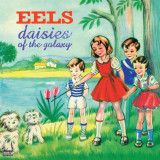
Ursprünglich veröffentlicht im Februar 2000, handelt es sich bei 'Daisies Of The Galaxy' um das dritte Studioalbum der amerikanischen Rockband Eels um Mastermind Mark Oliver Everett.
War der Vorgänger - aufgrund schwerer persönlicher Schicksalsschläge des Sängers - noch düster und verzweifelt, so ist das neue Album das komplette Gegenteil - größtenteils fröhlich-freundliche Songs, die sich alle im drei-Minuten-Format bewegen.
Wenn Sie von Hillsborough, North Carolina, auf der 1-85 nach Norden fahren und die Ausfahrt zur 58 East nehmen, erreichen Sie in fünfzehn Minuten Diamond Grove, ein kleines, nicht eingemeindetes Gebiet im Brunswick County, Virginia, am Meherrin River. Für die meisten Besucher gibt es dort nicht viel zu sehen - für Lebensmittel müssen Sie nach Lawrenceville und für Baumaterial nach South Hill fahren. Doch versteckt in diesem Fleckchen Virginia-Piedmont liegen die Überreste einer Milchfarm aus den 1740er Jahren, deren Haupthaus ein wunderschönes altes Gebäude mit zwei Etagen ist, das noch immer mit Seilbetten und allem Drum und Dran ausgestattet ist. Wenn man heute dorthin fährt, hört man in der Ferne Geräusche von jemandem, der in den vermieteten Nebengebäuden Sojabohnen und Baumwolle verarbeitet, von landwirtschaftlichen Reifen, die über Schotterstraßen knirschen, von quakenden Fröschen und von singenden Meisen: chick-a-dee, chick-a-dee. Aber wenn Sie zufällig im September 2023 vorbeigekommen sind, konnten Sie vielleicht Fiddle-Melodien hören, die von den Kiefern widerhallen, BBS-Geräusche in leeren Räumen und die Klänge von Weirs, die ihr zweites Album und ihr Debüt bei Dear Life Records aufnahmen: Diamond Grove. Weirs ist ein experimentelles Kollektiv, das aus der Musikszene im Zentrum von North Carolina hervorgegangen ist und zu gleichen Teilen aus Oldtime-Folk und DIY-Noise besteht. Die Auftritte von Weirs sind hierarchielos und umfassen zwischen zwei und zwölf Personen. Im September 2023 reisten neun von ihnen die US-58 hinauf, um sich im Wohn- und Esszimmer des Hauptgebäudes einer Milchfarm einzufinden, die noch immer im Besitz der Familie des Bandmitglieds und Organisators Oliver Child-Lanning ist, deren Verwandte seit Jahrhunderten dort leben. Die Besetzung von Weirs - weder endgültig noch besonders wertvoll - umfasst Child-Lanning, Justin Morris und Libby Rodenbough (seine Mitstreiter bei Sluice); Evan Morgan, Courtney Werner und Mike DeVito von Magic Tuber Stringband; sowie die treuen Andy McLeod, Alli Rogers und Oriana Messer, die bis tief in die Spätsommernächte spielten. Das Ergebnis sind die neun Tracks von Diamond Grove, aufgenommen mit einer provisorischen Signalkette, die aus geliehenem Equipment der gesamten Community zusammengestellt wurde. Das Weirs-Projekt begann als Tape-Experimente mit traditionellen Melodien, die Child-Lanning im Winter 2019 unter dem Namen Pluviöse aufgenommen hatte. Daraus entstand das erste Weirs-Album Prepare to Meet God, das im Juli 2020 in Eigenregie veröffentlicht wurde und eine Zusammenarbeit zwischen Child-Lanning und Morris während der COVID-Pandemie war. Die seltsamen Umstände dieses Debüts - eine gemeinschaftliche Tradition von Live-Songs, die isoliert voneinander aufgenommen wurden - werden durch Diamond Grove aufgehoben, ein Album, das in der unwiederholbaren Konvergenz von Menschen, Ort und Zeit verwurzelt ist. Auf dem neuen Album setzen Weirs ihre Suche nach dem besten Weg fort, sogenannte ,traditionelle" Musik weiterzuentwickeln, zu bewahren und zu befreien. Sie sind Songfänger, die Melodien sammeln, die kurz vor dem Vergessen stehen. Ihr wildes, Jahrhunderte umspannendes Repertoire klingt wie eine avantgardistische Jam-Session - eine Art Real Book für eine Szene, die sich mit Porch Jams, Big Blood, Amps for Christ und Jean Ritchie auskennt. Weirs fangen Songs ein, deren Interpretationskanon noch offen genug ist, um neben denen zu stehen, die sie zuvor gesungen haben, aber niemals über ihnen. Dies sind keine Versuche, definitive Versionen zu schaffen. Die Aufnahmen auf Diamond Grove fühlen sich eher wie Besuche als wie Überarbeitungen an. Und die Frage, die Weirs auf diesem Album stellen, ist nicht, wie sie einfach die Tradition ihrer Vorfahren fortsetzen können, sondern wie traditionelle Musik heute klingen könnte. Für Weirs könnte die Geschichte dieser Tradition weniger aus dem Folk-Revival stammen als aus der Musique concrète, weniger aus makellosen alten Meisteraufnahmen als aus etwas wie The Shadow Ring, wenn diese aus dem evangelikalen Süden kämen. Wenn man ,(A Still, Small Voice)" hört, spürt man, wie die Kraft der Hymne etwas Gleichwertigem weicht: den Dielen, dem Knistern des Feuers, dem Zubereiten und Essen von Mahlzeiten. Diese Spannung zwischen Bewahrung und Verfall ist das innere Leuchten von Diamond Grove. Nehmen wir ,Doxology l": Die Melodie von ,Old Hundred", einer Hymne aus der Sacred-Harp-Tradition, wird in MIDI umgewandelt, über iPhone-Lautsprecher abgespielt und in der Septemberluft neu aufgenommen. Für manche Revivalisten mag diese Hymne, gesungen mit der ganzen Pracht gefälschter Auto-Tune-Stimmen, blasphemisch klingen. Aber Ohren, die beispielsweise auf die Hyperpop-Produktionen der letzten Jahrzehnte eingestellt sind, werden sofort die spannungsgeladene Schönheit des digital verfremdeten Shape-Note-Gesangs verstehen. Dieselbe Spannung belebt ,l Want to Die Easy". Weirs' Version basiert auf der Aufnahme von A Golden Ring of Gospel, die in der Folkways-Sammlung Sharon Mountain Harmony verewigt ist. Die Melodien, Texte und Strukturen sind weitgehend unverändert geblieben. Aber die ,reine" Klarheit der Stimmen der frühen Aufnahme ist verschwunden. An ihre Stelle tritt der distanzierte Klang des Silos der Milchfarm, in dem Weirs ihre Version aufgenommen hat, dessen natürlicher Nachhall von zwei Sekunden die ursprüngliche Nähe ersetzt. Auf diese Weise wird der Klang des Aufnahmeortes selbst zu einem Teil der traditionellen Darbietung. Das Herzstück von Diamond Grove ist Weirs' Interpretation von ,Lord Bateman", einer Melodie, die Jean Ritchie als ,große Ballade" bezeichnete: Sie wurde gespielt, wenn die Arbeit getan war und der Tanzabend zu Ende war. Es ist ein Lied aus dem 18. Jahrhundert - so alt wie die Diamond Grove Farm - über einen gefangenen Abenteurer, der laut Nic Jones den Geist eines Errol-Flynn-Films verkörpert. Wie viele großartige und oft a cappella gesungene Interpretationen steht auch bei diesem ,Lord Bateman" die Stimme im Vordergrund und unterstreicht die Bedeutung des Geschichtenerzählens für das Zusammenkommen der Kinder. Neu ist hier der immense Bordun, der die Erzählung in ein unaufhörliches Gewebe elementarer Kräfte verwandelt. Es ist ein verschwommenes Murmeln kollektiver Saiten, das den Kanon von Ritchie und June Tabor ebenso bereichert wie Pelt's Ayahuasca oder Henry Flynt's Hillbilly Tape Music. Obwohl Diamond Grove nicht explizit von der alten Milchfarm handelt, auf der es aufgenommen wurde, kann es nicht umhin, ihr zu ähneln. Alte englische Balladen wie ,Lord Bateman" und ,Lord Randall" ergießen sich über Felder, die einst von der britischen Krone ,vergeben" wurden. Tragische Lieder wie ,Edward" taumeln über Tuscarora-Pfade und Baumwollfelder nach dem Bürgerkrieg. Hymnen wie ,Everlasting l" und ,Everlasting Il" fangen das Mondlicht ein, das seit Lord Bacons Rebellion durch doppelt gehängte Fenster fällt. Und die Nachtvögel trillern noch immer, und die Pflüge pflügen noch immer eine unkomponierte Musik, die darauf wartet, von zufälligen Ohren entdeckt zu werden. Diamond Grove ist in dieser Hinsicht Geschichte. Es ist ein Ort. Es ist Zeit. Es ist das Einfangen von Liedern, Lebendigkeit, Tonbandmanipulation. Wie der niedrige Damm, den das Wort ,Weir" andeutet, ist es eine Verteidigung gegen die Strömung. Es ist eine Verteidigung regionaler Lexika gegen massenproduzierte Umgangssprachen; eine Verteidigung gegen den Glauben, dass wir einfach zu einer einfacheren Zeit zurückkehren können; eine Verteidigung gegen die Vorstellung, dass Volksmusik ,rein" bleiben muss; eine Verteidigung gegen die Behauptung, dass ein Traum von der Zukunft, der in verlorenen Geschichten schlummert, unwiederbringlich verloren ist. Gegen all das verteidigt Diamond Grove traditionelle Musik, indem es sie so klingen lässt, wie die Komplexität der heutigen Zeit - weil es weiß, dass solche Musik und all die Geschichten, die in ihr stecken, auch in Zukunft eine Rolle spielen werden.
Hal Singer – Tenor Sax
Alain Jean-Marie – Piano
August “Gus” Nemeth – Bass
Oliver Johnson – Drums
When the U.S. State Department announced in the mid-1970s that they were sponsoring a South African tour for the Oklahoma-born, Paris-based saxophonist Hal Singer, producer Rashid Vally took note. Even though his nascent record label As-Shams/The Sun (established in 1974) was making waves on the local scene, the idea of commissioning a recording from an international artist was a ballsy idea. With a discography that stretched back to the 1950s, Hal Singer was already somewhat of a legacy artist by 1976. Vally was well-versed on Singer’s accomplishments and specifically enamoured by his composition “Blue Stompin’,” which appeared on a Prestige album from 1959 that had struck a chord in South Africa.
With his irresistible charm, Vally managed to coax Singer into a studio in Johannesburg, South Africa, to record a new version of “Blue Stompin’” with South African sax star Kippie Moeketsi, which became the title track of a 1977 album by Moeketsi. The recording session also yielded an album’s worth of new material by Hal Singer and his quartet that took its name from a track inspired by Singer’s trip to South Africa entitled “Soweto to Harlem.” Released in 1976 and only available in South Africa, Soweto to Harlem captures a laid-back, cheeky and nostalgic rhythm and blues set from the Hal Singer Quartet that is unlikely to have emerged for a different target market.
With her irresistible charm, Vally was able to convince Singer to enter a Johannesburg studio. The recording session produced this album of new material by Hal Singer and his quartet named after a song inspired by Singer’s trip to South Africa, entitled “Soweto to Harlem.” Released in 1976 and available only in South Africa, “Soweto to Harlem” captures a laid-back, unabashed and nostalgic rhythm and blues of Hal Singer’s quartet that would hardly have been born for a different market.
Cinedelic’s 2024 edition of this rare album is sourced from the original tape masters and presents it on vinyl internationally for the very first time. The reissue follows Singer’s passing at the 100 in August 2020 as we contemplate and celebrate his extraordinary contribution to jazz in the United States and beyond.
нет на складе
Последняя поставка 2 года назад доступно для дозаказа без гарантии
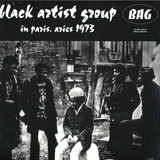
Outstanding free jazz session recorded in 1973 in Paris by Chicago outfit BAG.
It was Lester Bowie, trumpeter with the Art Ensemble of Chicago, who suggested that the Black Artists' Group (BAG) should head for Paris. In 1972 several members of BAG took his advice and flew to France for an extended stay. The following year a concert featuring saxophonist Oliver Lake, trumpeters Baikida Carroll and Floyd LeFlore, drummer Charles Bobo Shaw and trombonist Joseph Bowie (Lester's younger brother) was recorded and subsequently issued as In Paris, Aries 1973, a strictly limited edition LP on the group's own label.
Since the formation of Black Artists' Group in 1968, the home of this multidisciplinary arts collective had been St Louis, Missouri, the city where the Bowie brothers had grown up. It was there that Lester Bowie had started to investigate the expanding horizons of jazz before moving, in 1966, to Chicago where he joined the recently established Association for the Advancement of Creative Musicians (AACM). His close friend Oliver Lake visited Bowie, attended AACM concerts and meetings and was inspired not only by their artistic vision and integrity but also by their efficient organisation. In Chicago musicians were making things happen for themselves, taking control of their own destinies and giving shape to their lives as creative artists.
In June 1969, the Art Ensemble of Chicago had taken their music to France. During the preceding decade Paris had established a reputation for audiences that were unusually well-informed and open-minded, receptive to the uncompromising music of black American innovators such as Cecil Taylor, Ornette Coleman, Albert Ayler and Sun Ra. The city that had nurtured not only Cubism and Surrealism, but also Jean-Luc Godard and contemporary cinema's Nouvelle Vague was well prepared for the sonic collage forms and stylistic dislocations of the Art Ensemble. During that same month violinist Leroy Jenkins, trumpeter Leo Smith and saxophonist Anthony Braxton also arrived in Paris, three further emissaries from the AACM.
The adventure of collective improvisation resonated with the Parisian zeitgeist. Enthusiastic audiences attended their concerts and coverage in the media. In Paris, Aries 1973 offers an isolated and fascinating glimpse into that phase of the group's existence. The album is dedicated to the memory of Kada Kayan, a bassist who had hoped to make the trip from St Louis to France but, tragically, had grown ill and died. His absence adds special poignancy to the sound of the bass when it appears on this recording, played by Baikida Carroll. Listeners keen to hear Kayan himself in the company of Lake, Bowie, Shaw, LeFlore and Carroll should seek out Red, Black and Green by the 10-piece Solidarity Unit, Inc. That album, recorded on 18th September 1970 and dedicated to Jimi Hendrix, who died on that day, features an earlier version of Shaw's composition 'Something to Play On.'
In Paris, Aries 1973 reveals BAG's musical affinities with the Art Ensemble of Chicago. Both groups preserved an independently minded approach to the notion of free jazz and a carefully filtered awareness of pan-African musical practices, while their creative interest in space, mobile structure, chance occurrences and simultaneity also suggests parallels with the concerns of leading experimental composers working at that time. These performances in Paris of Shaw's 'Something to Play On' and Lake's 'Re-Cre-A-Tion,' plus two collective compositions/improvisations, display the dedication to structural fluency and sensitivity to coloration that accompanied BAG's unorthodox group dynamics and their unconventional instrumental combinations. In this case the musicians embrace congas, log drums, marimbas, woodblocks, cowbells and gongs. This is not a showcase for solos, but a shape-shifting and multi-centred statement of togetherness, quest and discovery. Removed from BAG's original multidisciplinary context the music still exudes an exhilarating spirit of collaborative exploration and shared excitement.
Split remix record with Visitor strictly limited to 200 copies. Remixers include Kontravoid, Morah, Xarah Dion, Sarin, Qual, Visitor, Filmmaker, and Oliver. Mastering at Dadub Studio Distributed by ReadyMade Distribution Side A Graphic Design by Jean Lorenzo Side B Graphic Design by Nicolas Zupfer Braid Records 2022
нет на складе
Последняя поставка 3 года назад доступно для дозаказа без гарантии
t’s September 1981 and it’s matter of weeks away from the release of ‘I’M A RAINBOW’, the second album
Donna Summer had recorded for Geffen Records, which had also been produced by Giorgio Moroder and
Pete Bellotte.
• At the time that the album was being recorded, the musical landscape had changed and production
techniques were developing further. Geffen also wanted a more R&B-influenced album, despite the album
having a more R&B feel than ‘The Wanderer’ had done. The songs and their lyrical content were very strong
and Donna’s voice had never sounded better, which was always a tough comparison against previous
albums.
• A decision was taken by the label to withdraw ‘I’M A RAINBOW’ just prior to its release. David Geffen then
brought-in Quincy Jones to produce the next new album; 1982’s ‘Donna Summer’.
a a1. I'm A Rainbow Junior’s Shiny Rainbow Edit
[b] a2. I Believe (In You) (duet with Joe “Bean” Esposito) [Figo Sound Version]
[c] a3. Back Where You Belong [Jean Tonique Remix]
[d] a4. You To Me [Oliver Nelson Remix]
[e] a5. Don't Cry For Me Argentina [Ladies On Mars ‘Buenos Aires’ Remix]
[f] b1. Sweet Emotion [Le Flex Remix]
[g] b2. Brooklyn [Ladies On Mars ‘Child Of Rhythm’ Remix]
[h] b3. Romeo [Ladies On Mars ‘Luv-NRG’ Remix]
[i] b4. Highway Runner [Ladies On Mars ‘Street Race’ Remix]
[Ladies On Mars ‘Independence’ Remix]
- Dritter Teil in LITAs hochgelobter Country Funk Serie! - Mit Dolly Parton, J.J. Cale, Conway Twitty, Larry Jon Wilson und Billy Swan, unter vielen anderen - Inklusive eines bisher unveröffentlichten Tracks von Tony Joe White - Alle Tracks neu gemastert - Neues Original-Artwork des renommierten Künstlers J. William Myers (der für Robert Altmans "Nashville", Waylon Jennings und Willie Nelsons "Waylon & Willie"-Album und die LP-Cover für die Charlie Daniels Band verantwortlich zeichnet) // Im Sommer 2012 wehte ein neuer Sound aus der staubigen Wüste herein. Es war ein Sound, der schwer zu fassen war, schwer zu kodifizieren; ein Sound, der sich wie ein wildes Pferd dem Zugriff entzog. Aber dies war kein Trend, keine Eintagsfliege, keine Vermischung von Stilen. Dieser Sound reichte Jahrzehnte zurück, in die zweite Hälfte der 1960er und frühen 1970er Jahre, als abenteuerlustige Künstler begannen, Country-Harmonien mit dem Hochgefühl des Gospels, dem sexuellen Schub des Blues und einem Hauch von Großstadt-Härte zu vermischen. Dies war ein neuer Sound mit einem einfachen Namen: Country Funk. Country Funk 1969-1975, erstmals 2012 veröffentlicht, brachte eine disparate Gruppe von Künstlern zusammen, die durch das einfache Gefühl ihrer Songs verbunden waren. Country Funk ist abwechselnd verspielt und melancholisch, slow jammin' und booty-shakin'. Es ist ein Sound, der sich sowohl im Studio als auch in der Bar durchsetzt, wie die auf Volume I vertretenen Künstler beweisen: Johnny Adams, Mac Davis, Dale Hawkins, Tony Joe White, Bobbie Gentry, Larry Jon Wilson, und viele andere. Nur zwei Jahre später wurde Volume I mit einer neuen Sammlung von Songs für Country Funk 1967-1974 (LITA 116, 2014) fortgesetzt. Volume II ließ nicht locker und bot alles, was man an Loose Talking und Lap-Steel Twangin' vertragen konnte. Schwergewichte wie Willie Nelson, Townes Van Zandt, Kenny Rogers, Dolly Parton und J.J. Cale teilen sich die Barhocker mit den weniger bekannten Stimmen von Bill Wilson, Donnie Fritts und Thomas Jefferson Kaye. Mit Country Funk Volume III 1975-1982 wird noch mehr Funk aus dem Kofferraum geholt. Diesmal sind die Jeans enger, die Haare größer und die Discokugel dreht sich zu einem Country-Synthie-Beat. Produziert und zusammengestellt von Jason Morgan (DJ/Sammler aus der Bay Area) und Patrick McCarthy (Co-Produzent/Compiler von Volume I & II), enthält die Trackliste neben den Stammgästen Dolly Parton, J.J. Cale, Larry Jon Wilson und Tony Joe White (dessen Track hier zum ersten Mal veröffentlicht wird) auch neue Gesichter wie Steven Soles, Gary & Sandy, Conway Twitty, Travis Wammack, Billy Swan, Rob Galbraith, Brian Hyland und viele mehr. Als die 1970er Jahre abebbten und sich die 1980er Jahre näherten, erweiterte sich die Palette des Country-Funks um Disco-Beats, schwere Moog-Synthesizer-Bässe und Clavinet. Volume III zeigt Künstler, die sich weiterhin gegen traditionelle Country-Tropen und -Produktionen wehren, während sie modernen Soul, Disco und verkorksten 80er-Jahre-Synthie-Pop in sich aufnehmen. Dies ist der wahre Soundtrack des Urban Cowboys. Aufsatteln, Partner.
- Transparentes Vinyl mit roten und blauen Schlieren - Dritter Teil in LITAs hochgelobter Country Funk Serie! - Mit Dolly Parton, J.J. Cale, Conway Twitty, Larry Jon Wilson und Billy Swan, unter vielen anderen - Inklusive eines bisher unveröffentlichten Tracks von Tony Joe White - Alle Tracks neu gemastert - Neues Original-Artwork des renommierten Künstlers J. William Myers (der für Robert Altmans "Nashville", Waylon Jennings und Willie Nelsons "Waylon & Willie"-Album und die LP-Cover für die Charlie Daniels Band verantwortlich zeichnet) // Im Sommer 2012 wehte ein neuer Sound aus der staubigen Wüste herein. Es war ein Sound, der schwer zu fassen war, schwer zu kodifizieren; ein Sound, der sich wie ein wildes Pferd dem Zugriff entzog. Aber dies war kein Trend, keine Eintagsfliege, keine Vermischung von Stilen. Dieser Sound reichte Jahrzehnte zurück, in die zweite Hälfte der 1960er und frühen 1970er Jahre, als abenteuerlustige Künstler begannen, Country-Harmonien mit dem Hochgefühl des Gospels, dem sexuellen Schub des Blues und einem Hauch von Großstadt-Härte zu vermischen. Dies war ein neuer Sound mit einem einfachen Namen: Country Funk. Country Funk 1969-1975, erstmals 2012 veröffentlicht, brachte eine disparate Gruppe von Künstlern zusammen, die durch das einfache Gefühl ihrer Songs verbunden waren. Country Funk ist abwechselnd verspielt und melancholisch, slow jammin' und booty-shakin'. Es ist ein Sound, der sich sowohl im Studio als auch in der Bar durchsetzt, wie die auf Volume I vertretenen Künstler beweisen: Johnny Adams, Mac Davis, Dale Hawkins, Tony Joe White, Bobbie Gentry, Larry Jon Wilson, und viele andere. Nur zwei Jahre später wurde Volume I mit einer neuen Sammlung von Songs für Country Funk 1967-1974 (LITA 116, 2014) fortgesetzt. Volume II ließ nicht locker und bot alles, was man an Loose Talking und Lap-Steel Twangin' vertragen konnte. Schwergewichte wie Willie Nelson, Townes Van Zandt, Kenny Rogers, Dolly Parton und J.J. Cale teilen sich die Barhocker mit den weniger bekannten Stimmen von Bill Wilson, Donnie Fritts und Thomas Jefferson Kaye. Mit Country Funk Volume III 1975-1982 wird noch mehr Funk aus dem Kofferraum geholt. Diesmal sind die Jeans enger, die Haare größer und die Discokugel dreht sich zu einem Country-Synthie-Beat. Produziert und zusammengestellt von Jason Morgan (DJ/Sammler aus der Bay Area) und Patrick McCarthy (Co-Produzent/Compiler von Volume I & II), enthält die Trackliste neben den Stammgästen Dolly Parton, J.J. Cale, Larry Jon Wilson und Tony Joe White (dessen Track hier zum ersten Mal veröffentlicht wird) auch neue Gesichter wie Steven Soles, Gary & Sandy, Conway Twitty, Travis Wammack, Billy Swan, Rob Galbraith, Brian Hyland und viele mehr. Als die 1970er Jahre abebbten und sich die 1980er Jahre näherten, erweiterte sich die Palette des Country-Funks um Disco-Beats, schwere Moog-Synthesizer-Bässe und Clavinet. Volume III zeigt Künstler, die sich weiterhin gegen traditionelle Country-Tropen und -Produktionen wehren, während sie modernen Soul, Disco und verkorksten 80er-Jahre-Synthie-Pop in sich aufnehmen. Dies ist der wahre Soundtrack des Urban Cowboys. Aufsatteln, Partner.
SHAZZer Project created by Shazz and Jean-Marie K on their respective labels : Batignolles Square & Electronic Griot. These long-standing friends were left with an ambitious project to reissue Shazz's most outstanding titles over the past 25 years!
The SHAZZer Project was born out of the desire of these two enthusiasts to help discover or rediscover Shazz's emblematic titles from his albums or F Communications releases remixed by big players of the electronic music scene. The "A" EP is composed of remixes by French rising stars Folamour & Tour-Maubourg as long as established artists such as Ian Pooley & Oliver Dolar.
"SHAZZer Project" you're back from the future!
нет на складе
Последняя поставка 6 лет назад доступно для дозаказа без гарантии
After decades in the making Finders Keepers Records present the first-ever pressing of Serge Gainsbourg's most elusive and coveted soundtrack studio recordings - co-written, arranged and orchestrated by the genius Jean-Claude Vannier (Histoire De Melody Nelson) during what many consider to be the dynamic duo's most definitive creative period.Believed to have been lost in a studio fire by Gainsbourg enthusiasts for over forty years (a myth that also shrouds Morricone's lost Danger Diabolik soundtrack) the misplaced master-tapes for the drug-fuelled/Mai 68 cash-in/road-movie Les Chemins De Katmandou have been widely considered the final audio jigsaw piece in an immaculate discography/filmography thus earning this soundtrack bone-fide Holy Grail status amongst the most avid disc detectives.Featuring the original crack team of Paris based players now recognised as French library music royalty, this LP epitomises the inimitable musical direction and expert psychedelic pop musicianship that graced classic Gainsbourg/Vannier soundtracks like La Horse, Cannabis and Sex Shop. Laying the stylistic, future-proof foundations for subsequent decades of forward-thinking Gallic funk mastery. Comprising Vannier's signature recipe of thick plucked bass lines, close-micced drums, biting Clavinet and Eastern influenced strings and percussion (and a sprinkling of subtle traditional French instrumentation) the soundtrack to Les Chemins De Katmandou (aka The Road To Katmandu or The Pleasure Pit) captures Vannier and Gainsbourg in the first year of their creative partnership capturing their unique embryonic energy.