Second Lp From French Electronic Talent Thylacine
Regardless Of Whether Or Not The Thylacine, A Species Of Marsupial With A Tiger-striped Back, Still Lives
In Tasmania Or Not, It Is In Argentina That This Young Star Of The French Electro Scene Decided To
Record His Second Album. To Create A Follow Up To Transsiberian, His Brilliant First Album That He
Recorded In 2015 Aboard The Train That Links Moscow To Vladivostok, William Rezé, Aka Thylacine,
Bought A 1972 Trailer, One Of The Famous All-aluminum Airstreams.
After Painstakingly Transforming The Trailer Into A Recording Studio, He Put His Beautiful American On
A Freighter Across The Atlantic And Got It Back A Month Later In Buenos Aires.
He Was Drawn To South America By The Pull Of The Unknown, The Absolute Absence Of Reference. He
Wanted To Immerse Himself In Desert And Lunar Landscapes, Explore Multicolored Canyons, Sand
Dunes, Giant Cacti Forests, Snow-capped Peaks... And Write, Alone, In The Intimacy Of His Nomadic
Studio.
After Making Stops In The Middle Of Nowhere, He Returned With Ten Tracks That Marvelously Combine
Moderat's Aerial Melodies, The Solar Touch Of Nicola Cruz, And The Techno Power Of Paul Kalkbrenner.
His Electronica Is Often Laden With Saxophonehis Instrument Of Choice, Which He Started Playing At
The Age Of 6 At A Conservatoryand Features Vocals From Julia Minkin (of Kid Francescoli), Clara
Trucco (a Member Of The Trio Femina), And Juana Molina, "considered The Argentinian Björk," Says
Thylacine.
Mission Accomplished: The Young Angevin's Vaporous Layers Are Tinged With Charango, A Local
Instrument, And Melodies Inspired By Traditional Argentinian Songs. "i Wanted To Go Back To A Music
With A More Acoustic Sound."
And The Tracks Follow One Another, Telling The Story Of His Extraordinary Odyssey: The Hypnotizing the
Road Expresses The Miles Of Road Traveled; The Captivating Tale Of santa Barbara Evokes The Close
Ties Between Inhabitants Of A Tiny Village In The Andes; And The Rhythm Of 4500 M, Cut By The Flow Of
The American Rapper J. Medeiros, Recalls The High Desert Where Thylacine Once Had To Sleep, Forced To
Stop For The Night By Storms Of A Rare Intensity.
Three Months And Ten Thousand Kilometers Later, This "concept Album" Is Ready; It's Called Roads Vol.
1, And Its The First Installment Of A Collection That The 26-year-old Thylacine Expects To Add To As He
Continues His Travels. His Itinerant Studio, Ingeniously Equipped With Solar Panels, Will Take Him,
Hopefully, Very Far.
Поиск:on land
Все
anded Records is delighted to welcome back the legendary Norm Talley with a very special, limited edition 12″ vinyl masterpiece from one of the originators and true players of the Detroit House music scene! This release, as with all his releases, is written and produced through Norm’s fully analogue set-up. NO computers, NO digital limiters, No gimmicks. Just pure, warm, deep Detroit goodness. LTD edition 180g vinyl.
A world premiere of AI-generated symphonic music!
All three audio files are compiled from two live recordings with different microphone settings. The cover image is generated by algorithms trained with the following image searches: migration, mediterranean, boat, Libyan coast, EU. Different search engines were used. »Land der Musik« celebrated its world premiere on 7 October 2018 at steirischer herbst '18 - volksfronten in Graz, Austria. Commissioned and produced by steirischer herbst in cooperation with ORF Musikprotokoll.
A1. soundalikeStrauss (an audio reverse-engineering tool is used after the initial cross-fade) A2. AIstrauss (algorithms are trained with midi-files of Johann Strauss waltzes) B1. AImahler (algorithms trained with midi-files of Gustav Mahler symphonies) B2. (untitled)
A new standard of beauty. Artificial intelligence (AI) algorithms can now group photo pixels or audio waves into meaningful categories. This is similar to how our brain operates, yet the outcome seems distinctively non-human. At the same time it appears that the sphere of our appreciation and imagination may just have expanded. The question of whether we are still able to see and hear the difference between automated and so-called autonomous artifacts should be left to historians. On the other hand, producing this analog audio record with this image on the front cover really is an antagonism. A more appropriate medium might be a tracking chip of your online and offline activities generating customized results in real time—be it images, music, or whatever.
If AI is communist (to quote the libertarian Silicon Valley entrepreneur Peter Thiel), then this statistics-based technology might actually reinforce centralized monopoly capitalism and the coming crisis of inequality, just as it might accelerate into Deleuze's notion of the Society of Control. But it might also be seen and heard as a demo, a new standard of beauty, for the redistribution of wealth and for solidarity; in short as a utopia freed from exploitation, nationalism, and racism, liberating us from our own perception of this world. »Land der musik - The Graz AI Score« demonstrates how machine learning might help us to finally create the perfect Austrian national music identity. Yet in doing so, our ultimate aim is to get rid of the construction of national identities all together.
»God created man because he dreamed him. / But man forgot God and created the machine because he dreamed it. / At the end of the twentieth century, however, the machine has forgotten man. / Who could predict who or what she dreams of« (Friedrich Kittler)
serenitatem, the fifteenth installment of FRKWYS, RVNG Intl.'s collaboration series pairing intergenerational artists in creative conversation, joins Visible Cloaks with Yoshio Ojima and Satsuki Shibano, two trailblazers of the Japanese avantgarde music and visual arts scenes of the 1980s and 90s.
Yoshio Ojima began his career as a composer of environmental and ambient music, with a particular interest, and optimism, in the possibilities of generative software. His compositional pursuit of human synthesis with computerized forms was realized in its fullest potential alongside Satsuki Shibano, a pianist renowned for her interpretations of Erik Satie and Claude Debussy. Together, they were among a handful of influential Japanese artists whose innovations still resonate, if not more vibrantly than ever, well beyond the tightly-knit scene's original core. In the early 90s, Ojima was among the programmers of the influential satellite radio experiment St. Giga, a constantly-evolving sonic landscape that combined field recordings and sound collage with occasional readings of Japanese poetry. Satsuki was a regular reader for the station. This musical terrarium bloomed out of sight in a small Tokyo studio, a greenhouse of sound with no set start or finish time that audiences could tune into, absorb, and immerse.
The perpetual flow state of St. Giga — recordings of which Ojima shared with Visible Cloaks — would be highly influential to serenitatem's constitution. As Visible Cloaks, the Portland, Oregon duo of Spencer Doran and Ryan Carlile have developed their own set of creative strategies that form an aesthetic fuse point between human intention, aleatoric composition, and improvisation.
These are notions most recently reflected in 2017's Reassemblage and Lex, a respective album and EP in which the duo combined generative software and virtual representations of global instruments into lacy, interlocking patterns. Long time admirers of Ojima's work on albums like 1988's Une Collection Des Chainons, Doran and Carlile discovered after an online introduction that they shared with Yoshio and Satsuki an abiding interest in pre-classical composers, the Lovely Music, Ltd. label, and the British avant-garde, as well as a mutual respect for one another's techniques and processes.
The four musicians met in Tokyo, Japan at Sounduno Studios in December 2017, at the tail end of Visible Cloaks' first Japanese tour, to commence work on serenitatem. Leading up to the studio sessions, Doran and Carlile sent Ojima processed sound sketches recorded while on a European tour, which Yoshio would add to and return. Visible Cloaks would then fold Yoshio's edits back into the original compositions, which Doran and Carlile brought to the exploratory recording session. During that week together in Tokyo, the quartet made use of a number of creative strategies — 'echoing sound together,' as Yoshio puts it. Among the strategies, MIDI randomization gave the quartet melodic lines and what Doran calls 'randomized clouds,' or 'tightly grouped notes that become smeared tonal clusters functioning more like chords in themselves.' Carlile would also feed Ojima and Satsuki's text into Wotja, a generative music software which produced a MIDI language around which the quartet expanded their compositions.
'The aim,' Doran says of serenitatem, 'was to make a work that was not specifically ambient (or environmental), but something more multi-hued, weaving these deconstructive concepts into an album that has a deeper architecture underpinning it.' Accordingly, serenitatem is a marvelously sharp record, its sutures between human and machine virtually impossible to find but suggested everywhere you turn. The collaboration among Ojima, Satsuki, and Visible Cloaks is both musically and conceptually inseparable from the technology that made it possible. Throughout the album, Shibano's playing resonates like Satie's, her rhythms cascading like drops from leaves an hour after the rain. Overtones are stretched and warped like modeling clay, then spun around and shown off from multiple angles.
A single soaring note might seem to be suddenly plunged underwater, its richness of sound made shallow and its sharp edges blunted. Pittering chimes and rapidly warping vocal samples hang in the luxuriously glossy space, water trickles from ear-toear, familiar melodies rise from nothing and dissolve before they can be traced. With the depth of its emotional charge, serenitatem burns away the easy cynicism of the day, presenting itself as the kind of delocalized work of art the internet promised us decades ago — a synthesis of artistic visions, technological sophistication, futurist ambition, and, occasionally, ancient polyphony. Listening to it can feel a bit like tuning in to a 21st Century version of St. Giga: It's a place where the future still grows.
Visible Cloaks, Yoshio Ojima, and Satsuki Shibano's serenitatem, FRKWYS Vol. 15, will be available across LP, CD, and digital formats on April 5, 2019. The quartet will perform select live shows throughout 2019.
moogmemory is the latest album from multi-award winning pianist and composer Matthew Bourne, who has turned his considerable talents to the world of analogue synthesizers.
Very much in demand as a collaborator and co-conspirator, Bourne has his fingerprints on a huge number of projects, having worked with artists as diverse as John Zorn, Annette Peacock, Nils Frahm, Nostalgia 77, Amon Tobin and Broadway Project.
Growing from spontaneous improvised live performances, the album took shape in the studio as Bourne explored and moulded the vast sonic possibilities of voltage-controlled oscillators, creating beautiful, brooding landscapes of thick impasto and translucent sunbursts.
The seed for this project was planted when Bourne acquired an uncooperative 1982 Memorymoog, having it painstakingly modified and upgraded by Rudi Linhard in Germany .
Created without the use of computers or sequencers,Moogmemory is the first album to be recorded using only the Lintronics Advanced Memorymoog.
Bourne will tour moogmemory in collaboration with brilliant visual artist Michael England, who has worked with Autechre, Bola, Leila, Demdike Stare and many more.
The album will be available on CD and as a limited edition LP (with CD) in an intricate embossed sleeve designed by England.
Album press release written by Bourne fan Graham Massey (808 State).
The album follows the critical success of Radioland: Radio-Activity Revisited, a visceral live audio/visual experience created to mark the 40th anniversary of Kraftwerk's seminal album, with Franck Vigroux and video artist Antoine Schmitt.
Bourne's first solo studio album, Montauk Variations (The Sunday Times' Leftfield Album of the Year in 2012), was celebrated for its sense of stillness and serenity, marking an important musical turning point in his career and the beginning of a new creative direction.
Tracks from Montauk Variations have appeared on compilations by Bonobo and Needwant.
- A1: Ken Parker - True, True, True
- A2: Techniques - Run Come Celebrate
- A3: Techniques - Sweet Soul Music
- A4: Joya Landis - Kansas City
- A5: Termites - Love Up, Kiss Up
- A6: Soul Lads - Funny
- B1: Supersonics - Regay
- B2: Supersonics - Second Fiddle
- B3: Danny Simpson - Mary Poppins
- B4: Tommy Mccook - Soul Remedy
- B5: I Techniques- 'M In The Mood For Love
- B6: Soul Lads - I'm Yours Forever
- 180 GRAM AUDIOPHILE VINYL
- LIMITED EDITION OF 750 INDIVIDUALLY NUMBERED COPIES ON ORANGE COLOURED VINYL
The famous Jamaican record producer Duke Reid founded record label Treasure Isle in the 1960s. Some of his best production skills can be found on the compilation album Here Comes The Duke. Showcasing the talents of some of the giants of the rock steady era, the recordings, all issued during the latter half of '68, demonstrate just why the Duke is widely regarded as the king of the rock steady sound. The grooves are thoughtful and the brass section adds the right attitude to the different songs.
Here Comes The Duke is available as a limited edition of 750 individually numbered copies on orange coloured vinyl.
- A1: Rain Of Terror (Prince Fatty Dub)
- A2: We Must Be Sacred (Prince Fatty Dub)
- A3: How Many Bullets (Prince Fatty Dub)
- A4: Certain Images (Prince Fatty Dub)
- B1: The Music (Prince Fatty Dub)
- B2: Understand What Black Is (Prince Fatty Dub)
- B3: What I Want To See (Prince Fatty Dub)
- B4: North, East, West, South (Prince Fatty Dub)
Last year saw The Last Poets celebrate their 50-year anniversary with the righteous, politically-charged poetic record, "Understand What Black Is". Now to continue the party, Brighton production-maestro Prince Fatty has reworked the album with a fresh twist and blend of smooth, dub-delights. Set to land on the 29th March, the revolution marches on - this is "Understand What Dub Is".
After Prince Fatty's involvement in the production of the original project, he was the perfect person to help update the record with five decades of experience for a new audience to enjoy. The ten tracks of "Understand What Black Is" depict a relevant, historical philosophy of identity and race that has followed The Poets over the last 50 years. Since the origins of the civil rights movements back in the late 60's, Abiodun Oyewole and Umar Bin Hassan (two of the longest-standing group members) have provided social commentaries and a voice to African-American consciousness that has now been heard on a global scale.
Their raps, exploitations and insights quickly evolved into the origins of hip-hop in Harlem, New York back in 1968, and now in 2019 they continue to voice their dedication to the cause with the backing of slick rock-steady infused beats to keep things moving. Having had their work sampled by the likes of NWA, Dr Dre, Kanye West, Snoop Dogg and countless others is just a testament to the timeless sounds and prophecy they have created, and now Prince Fatty has stepped up to put his stamp on it.
Prince Fatty's ever-reliable work gives "Understand What Black Is" another lease of life as he maintains an undeniably slick groove throughout. Both therapeutic and warm, the soulful rhythms of "Understand What Dub Is" provide the perfect platform for The Last Poets to delve into everything from Trump's inauguration, nods to Biggie Smalls and respect to Prince. The calm, collective and downright thought-provoking words go hand-in-hand with the roots-driven reggae medleys with ease - this is dub in its rawest form.
Not only do these songs explore personal struggles and individual endeavours, they also represent a collective of deprived aspects of humanity and socialism, that perhaps now need to be pointed out more than ever. Although there is a variation of sound, the overlying topics remain a constant - it is time to "Understand What Black Is" once more.
Although Itta (Vocals, Harmonium) and Marqido (Analog Synthesizers) have been regular fixtures in Seoul's experimental music community for years, the vinyl release of Spiritual reflects the growing international recognition of their singular sound, described by The Wire as 'meditative synthesized vistas.' Spiritual certainly embodies the meditative element of their music, layering hypnotic modular synth with Indian harmonium drone and Itta's transcendental vocals. This is more than functional music for the metaphysically curious, however. Perhaps more than any of their previous releases, Spiritual offers an open accessibility, owing at least partly to the channeling of krautrock-influenced rhythms. Tracks like 'Luft' and 'Morgen Tempel' wouldn't sound out of place in any DJ set with kraut or psychedelic leanings, while 'Barabonda' and 'Dodeuri' dig deep into a more meditative place, serving as perfect expressions of the album's title and intent. Fans of Neu!, Kraftwerk, Laraaji or Klaus Schulze might find themselves in a comfortable yet unexplored place.
Spiritual was originally released in 2017 as a limited-edition cassette of 250 copies, produced in collaboration with Seendosi, an arts enterprise in Seoul Euljiro district, the city's heart of printing, packaging and electronics manufacturing. The cassette sold out within a year of its production, prompting Extra Noir, who had previously released Tengger's 'Breathe In, Breathe Out' on their Extra Noir Vol. 1 compilation, to propose reissuing Spiritual on vinyl. Working with Seendosi once again, the result is a beautifully produced piece of work. Closely attentive to the band's vision, the gatefold sleeve features rich landscape motifs that evoke Tengger's commitment to earthly travel and the less accessible places beyond. Pressed onto clear vinyl, the design of Spiritual has been carefully constructed to reflect the entirely unique music within: heavy ephemerality, dense transcendence and grounded wanderlust.
In support of their forthcoming documentary 'Subotnick - Portrait of an Electronic Music Pioneer', Waveshaper Media — the same team behind the wildly-popular, acclaimed modular synthesizer documentary 'I Dream Of Wires' — presents a special reissue: a deluxe, 50th-anniversary-edition vinyl LP of Morton Subotnick's landmark 1967 debut electronic release, "Silver Apples of the Moon." Here are some of the features that make this 50th-anniversary-edition vinyl LP special:
All-new, full-colour gatefold jacket.
Vinyl edition is strictly limited to 1,000 copies.
Audio has been REMASTERED from the original, pre-mastered digital tape transfers. Unlike previous reissues of this LP (both vinyl and CD), remastered for Wergo's 1994 CD edition and narrowing the recording's stereo field, our reissue has been remastered maintaining the full stereo field of the original recording.
Brand new liner notes by Morton Subotnick.
The original, iconic liquid-light cover artwork by Tony Martin has been re-scanned for full-resolution clarity.
Featuring rarely-seen, newly-scanned photos of Morton Subotnick in his Bleecker Street studio where "Silver Apples..." was recorded.
Also includes a scan of the LP's original Nonesuch-edition liner notes
- A1: Síria (Diana Combo): Por Riba (Beira Baixa)
- A2: Random Gods: Gazulo À Estronca Da Santosa (Beira Alta E Trás Os Montes)
- A3: Ondness: Malta Inquieta (Beira Litoral)
- A4: Filho Da Mãe: Manta (Outras Regiões)
- B1: Live Low: Montemor (Baixo Alentejo)
- B2: Banha Da Cobra - Asylo (Alto Alentejo)
- B3: Fantasma: Lamento Das Beiras (Beiras)
- B4: Gonzo - Tromba Rota
- B5: Luis Natero - Pastagens Sonoroas Ii
In 1959 Michel Giacometti moved to Portugal and dedicated the following thirty years of his life recording traditional music all over the country. In the present decade Portuguese music has been thriving and finally travelling abroad, long gone are the days those hidden gems were kept in secret in this distant corner of Europe. The discovery of current Portuguese music sparked an interest to Portuguese music, past and present.
With both of those ideas in mind, Giacometti and the interest in Portuguese music, 'Antologia de Música Atípica Portuguesa' creates an anthology of current sounds to the future. You can see it as history being made or a broad catalog of sounds that live and breathe the experimental and electronic that is happening in Portugal. The first step happened two years ago with the releasing of the first volume on this anthology, 'O Trabalho' ('The Labour') and we now move onto Vol. 2, 'Regiões' ('Regions'), with each track connecting with a different province from Portugal.
Some names return to this volume, like Live Low with the beautifully haunting 'Montemor' or Gonzo (our own Gonçalo F. Cardoso), affirming his path in building detailed and processed field recordings music. More than a list of names, or songs, this second volume of 'Antologia de Música Atípica Portuguesa' recreates a passage throughout different landscapes of Portugal, constantly leaving a trail of past, present and future. The trail doesn't limit itself to the music, but to the traditions contained in the sounds and the stories spelled by the words.
The beautifully slowed haunting-waltz 'Por Riba', by Síria (Diana Combo), sets everything in motion and builds the way to Random Gods' upbeat march 'Gazulo à Estronca da Santosa'. 'Malta Inquieta' (Ondness) embraces the most modern/contemporary side of this volume, proving that 'Regiões' goes beyond the idea of catalog or even its own concept of 'anthology' and provides music that's hard to categorize or even judge by modern standards. We are not afraid to say it: 'Malta Inquieta' is an experimental jazz-electronic modern gem.
It's followed by the guitar of Rui Carvalho, aka Filho da Mãe, with 'Manta', closing the A side with one of his enchantments. B side strikes with the aforementioned 'Montemor', setting the tone for a different trip, building up on more abstract and freeform music by Banha da Cobra ('Asylo'), Fantama ('Lamento das Beiras') and the track by Gonzo. 'Regiões' finishes with the right tone, fields recordings worked by Luís Antero, that tie the connection between Giacometti and the now - with the now still happening and building up on the story of the future 'Antologia de Música Atípica Portuguesa'.
Robert Steenkamer is known as a purveyor of exquisite house music. Under his Roberto S guise, the Torontonian has released several landmark records. Besides this, he is known as a valued selector in his native Canada. The collaborative releases with Jex Opolis under their "Conga Radio" moniker have received worldwide praise throughout the house community. For his Pulp debut, Steenkamer has created a diverse body of music that touches different moods and genres.
On the A-side, the opening track "Inner Rhythm" is a orchestrated piece of work that uses an uplifting vocal cut and ethereal flute sounds to create a calm and positive dancefloor experience. Also on the A-side "Swizik" is a melody-heavy work where Steenkamer uses fun sequences, euphoric pads and well balanced drum patterns.
The title track is placed on the A3 position and is a genre-transcending cut. The tempo is is low and the beats are dragging along with the well-executed pads and synth riffs. On the B-side, the title track is being remixed by fellow Canadian "Florist". On this remix, Florist turns the slow vibe of the original into a soul touching dancefloor creeper that will definitely gain a lot of support in melodic circles. "Remember When" is a positive work with a snappy bassline and oozing synth sounds. Glass Road EP will be available from all specialized retailers in early 2019.
Time Horizon's second episode enlists another team of dancefloor snipers delivering 5 brain-dancing tunes crafted appositively for late night use.
After his appearance on the first XCPT record, Andrea is back on the label with his unmistakable shuffling drums and a heavy square bassline followed by Anybody Anytime covering the uptempo-zone with a rotative junglistic tool dressed with celestial pads, closing the A side TANS reveals his new robot alias The Sympathizer' providing a neurotic electro progression fully based on his modular system.
Flipping the records you will find two XCPT homies bringing the audience straight into Matera landscapes: Farron gets a 909 unceasing toms orchestra surrounded by his atmospheric leads while Kreggo illustrates clearly his hypnotic mid-low vision of breakbeat locked by a mystic bass for the whole track.
ltd 250 hand-numbered units (12' + insert)
mastered by Marco Pellegrino at Analogcut Mastering Studio, Berlin
Emotional Rescue and Mountains In The Sea are thrilled to team up to revive a lost rarity of American ambient music: Chris Spheeris and Paul Voudouris' 1982 album 'Passage'.
Living and recording in Milwaukee, Wisconsin, Chris and Paul composed and released several albums of folk-rock and album-oriented synthpop before their attentions turned towards sound healing music in the early 1980s. The duo was approached by a company doing biofeedback therapy and asked to create an aural component for patients looking to regain control of nervous disorders. After extensive preparations and just one day of studio time, 'Passage' was the result, recorded live with no additional overdubs.
The LP consists of 3 long tracks which flow together as a single piece. Opener 'Prism' contains the album's most frenetic moments, glittering guitar and synth tones designed to draw the listener out of their distressed state. Next comes the soaring 'Mosaic', a renewing sunrise of warm chords that beckons slowly towards the album's summit, the over-20 minute title track which contains a sonic ecosystem of it's own. The album concludes in a state of pure serenity, in which the passage of time has seemed to slow to a halt, and the outside stresses of the world eradicated.
Over 3 decades since its initial conception, 'Passage' still retains all of its inestimable healing power, but remains incredibly difficult to find. It's an album that belongs in discussions of landmark early American ambient works, alongside names like Michael Stearns, Constance Demby, Kerry Leimer and Pauline Anna Strom. ER and MITS have worked with original cover artist Vinayak to render the album artwork as originally intended, in even greater detail than on its first release. We're overjoyed to be able to share this
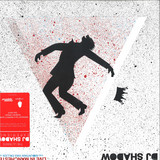
DJ Shadow has shared the artwork for his anticipated live album and film, Live In Manchester: The Mountain Has Fallen Tour. Recorded at a sold out Albert Hall in Manchester, England, the release (out 13th July on Mass Appeal Records) is now on vinyl, CD, and digitally.
Live In Manchester: The Mountain Has Fallen Tour, documents DJ Shadow's most ambitious, extensive worldwide tour yet - surrounded by stunning visuals, he blasts through classics and more obscure cuts from his discography. Watch the trailer here.
The release will be available on gatefold 12' vinyl, CD / DVD double pack, digital audio and digital video formats.
The news follows the recent announcement of DJ Shadow's podcast, DJ Shadow Presents Find, Share, Rewind, broadcast on Manchester-based radio station and music platform, MCR Live. Episodes are online here, and the first instalment hit number 1 in Apple's music podcasts chart.
Bay Area producer DJ Shadow (Josh Davis) was catapulted to prominence thanks to his landmark debut album, Endtroducing, acknowledged by Guinness World Records as the first LP created entirely from samples. Since then, Shadow has continually moved forward releasing innovative albums and collaborating with the likes of Thom Yorke, Massive Attack, Jason Newsted (Metallica), Mike D (Beastie Boys), Zack de la Rocha and several others. Live In Manchester: The Mountain Has Fallen Tour continues an exceptional couple of years for the producer: in 2016 he unleashed innovate new album The Mountain Will Fall, which birthed his biggest single yet, Nobody Speak featuring Run The Jewels; a massive worldwide tour followed - The Mountain Has Fallen Tour - plus an EP featuring collaborations with Oscar-winning film composer Steven Price, rap maverick Danny Brown and hip-hop hero Nas.
A third of Italian production act Agents Of Time, Sharp Felon loops out of the trio's orbit to land his debut solo EP on Maceo Plex's Lone Romantic, 'Let The Game Begin' - featuring three stunt-driving cosmonautical bangers that aim to abolish all sense of gravity in the club and beyond. Breaking in at fierce speed, 'Devil Trail' attacks pedal to the metal and leaves prismatic wisps of vapor in its wake. A proper electro-magnetic dasher, the track alternates steady shooting sequences of 303-marinated bass with eloquent kosmische-indebted synth maneuvers and laser-precise breaks, all joining forces to have your feet shuffling and mind drifting up into higher spheres of consciousness in one potent backhanded caress.
A more straightforward affair, B-side opener 'Telework Titan' lifts its listener off to a further compelling state of meditative balance through a nonetheless muscular groove and epic-sized sub-bass moves. Cruising in the upper layers of the stratosphere, Sharp Felon's stamps on the accelerator of his shark-mouthed spaceship and hedgehops across craggy alien reliefs with personal hands-on skills. Intergalactic transmissions announce an imminent extra-terrestrial invasion, it's time to tune out and enter the melee. Laser guns blazing and acid stabs smoking, 'Cyber Fex' nose-dives in an enemy-occupied territory and washes over the ground brawl like a hi-tech tsunami. Purebred Donald-ian face-melter in sheer Dopplereffekt meets Arpanet fashion, this one lacks no oomph.
Koehler was hurled headlong flaming from the ethereal sky. This is his first offering for the ESP Institute. Side A recalls the hazy memory of an ear-worm chant heard over a decade ago on the streets of Thailand, a melody that since haunted the artist and has finally been exorcised by his own hand in the shape of 'Melencolia V'. Somewhere between an enchanted bashment and a sailor's watering hole, Koehler found a gargantuan kick drum that lands solely on the 4, slammed it together with a wide pulsing bassline and brutalized Dancehall snare, then laced it all up with his elusive synth melody. Add to this a generous sprinkle of finely-ground cosmic dust and we're all tripping the light fantastic. On the flip side, the artist buckles up for a rough and rapid-paced journey with 'Invidiosa' — a relentless snare scrapes, gouges and corrodes over 7 minutes, coupling with a simplistic bass loop and swiftly marauding through a demented assembly line, accumulating various nuts and bolts of instrumentation along the way — an undeniable dancefloor exciter for those hours when the club becomes unhinged, dancing becomes raving, and slightly more audacious folk can channel their inner truth. These two songs will have you question your existence.
Stefan Smith has channeled an elevated reverence for process, texture and synth-extrapolation with the forthcoming release of his self-titled LP on the Sapiens imprint. A relative new-comer to the land of rapid fire releases and dance floor formulae, Smith is deeply steeped in the art of music creation, performance and theory.
As a graduate of Mills College's revered music department, Smith's prosaic understanding of music partially explains his migration to Sapiens, a label headquartered in Paris, France, which, under the direction of techno luminary, Agoria, has been expanding the realm of possibility for what a techno label can become. Collaborating with musicians, visual artists, film directors, shamans and sound designers, the young Sapiens platform releases may include political speeches, radio hits, dance floor tunes, sensorial or cognitive music or a gentle computer
virus'. Smith's LP contribution will definitely fall on the more delicious end of this spectrum, having woven a synth-lovers dream tapestry.
The nine tracks composing the album, Stefan Smith', draw the listener in on a river of oscillators, which push just past the banks of perceptible sound with with flawless production and loving sound treatment. The idea behind the album is very raw and organic. Stefan Smith focuses on atmosphere, mood, tones, and frequencies, rather than melodies. His productions are a response to the subliminal, and about feeling.
This album came together from a natural flow of working with computers and synthesisers, and also from the musical connection fostered Sebastien Devaud (Agoria). His approach to the album's production was to edit as little as possible, keeping the original feeling of chance and temporality intact. We can sense here Smith's intuition as sound designer, a role which has enabled him to work with artist Nicolas Becker and through this association further contribute work to the Philippe Parreno 'Anywhen' exhibition in Tate Modern Turbine Hall. The feedback
generated by studio experimentation gives birth to new ideas for aural shapes and textures. If one were only to lie back and identify the various wave forms, like butterflies and birds flittering through dappled sunlight, in each track's canopy of bountiful synth elements the mind's eye would dance with the steady intervals of Smith's real-time probe of his machinery, however, deep tracts of emotion and effortless grooves won't allow for a purely sensory listen. In the spirit of exploration, enjoy the ride.
Cologne is Danny Lane and Vasilios Manoudakis - a photographer and a ship captain who make songs together. Vasilios works as a boats captain in New York while Danny stays landlocked, producing tracks and hustling work as a photographer/actor in Los Angeles.
The two communicate with one another through music, sending loops and snippets from wherever they happen to be, independently writing pieces of songs that smoothly snap into
place. Throughout this, the two share a thing for synths and classic pop, creating songs that are warm, relaxed, and inescapably catchy. Though their influences range from 80s dance music to minimal house and ambient music, they see Cologne as something new and have a very pure idea of success: If people like it, we are happy. Vinyl tastes better...
° +
Under pseudonym "Jean Eon,' Johnny Quinn Alston is the artist behind the project _ - / _ EON, a performance endeavor born out of an intense personal and familial experience in 2011.
_ - / _ EON is a portrait of the various manifestations of energy throughout the wide span of time and space we inhabit, from human experience to multidimensional mystery, as well as a peek into the many emanations that eternal power can create.
Jean Eon is merely a human form attempting to channel what bits of existential mystery he can interpret into sensual experiential form. He aspires to be as comfortable as possible with existence as a flawed, but striving, human being, and is not to be confused with the immortal and cosmically balanced EON itself.
_ - / _ EON is larger than Jean, and the EON is also you, we, and everything in between. We are all already avatars of the EON, and this project makes an attempt to shape truths of the great æther from which we are carved and will presumably* return to, however bittersweet or glorious that eternal promise may be.
+ °
* do we ever really die
+ °
The music released under NEW YORK TRAX 08 results from physical expression as . _ - / _ . EON focuses on channeling physiognomy over dictation. The EP explores pre-existing textural combinations discovered and rescued from stone as opposed to built step by step.
The initial inspiration for this EP arose from driving past randomly unfolding rural scenes. A majority of . _ - / _ . EON's resulting work similarly gravitates towards a series of landscapes discovering each other rather than 'arrangements' played on repeat.
In the back of your head, you know those blinking aircraft warning lights on towers, but how mysterious and ominous they look before you discover what they really are On the surface, this project represents the sound of being struck by the sight of something for the first time, and the ominous, transfixing, thrill of not knowing what it is.