By now Nicola Loporchio aka Nico Lahs has a discography that has become respected and sought after among DJs and music lovers in dance music across the globe.
Whether it be deep, atmospheric, jackin' or jazz-flecked deep house, it's all firmly rooted in house music tradition, something that Nico Lahs masters with ease.
With releases on labels like Moods & Grooves, Delusions Of Grandeur, Ovum, HotMix, Adeem plus many more, he shows no sign in slowing down either.
Ancestors Call is a musical story told in two parts. Filled with melodic and spiritual deep house, sitting somewhere between classic deep house and the spiritual end of house royalty Ron Trent's output.
Just like his previous releases Nico is a producer that has both the confidence to blend late night deep house vibes with soulful dance floor magic. It's house music that is very honest.
Part 2 dives deeper and adds additional layers of melody that tie the whole release firmly together. With Nico Lahs talented songwriting, his evolution is endless and bright...
Ancestors Call is something you listen to from start to finish, each song building a musically expansive story.
out of Stock
Last delivered 3 years ago available to reorder, subject to availability
A1/I'm Waiting ForThe Man 2/Berlin 3/The Black Angel's Death Song B 1/Wild Child 2/Heroin 3/Ghost Story4/The Biggest, Loudest, Hairiest Group Of All C 1/Empty Bottles 2/Femme Fatale 3/No One Is There 4/Frozen Warnings D 1/Janitor Of Lunacy 2/I'll Be Your Mirror 3/All Tomorrow's Parties 4/Pale Blues Eyes (Rehearsal) - Bonus track 5/Candy Says (Rehearsal) - Bonus track.
• Complete iconic concert of the former Velvet Underground members
• Fully remastered and speed corrected
• Extra tracks
• Gatefold sleeve
• Full colour printed inner bags with photos from the concert.
In the midst of a wave of hybridizing ambient, drone, folklore and experimental electroacoustic music, Roxane Métayer has gained a cult following with only a couple of releases to date. Following her debut album (Éclipse Des Ocelles) for Morc with a split EP and a limited cassette for Wabi-Sabi, Roxane now turns to Marionette with her intimate narrative based multi-instrumental recordings, a match made in the heavens if you ask us. With her violin, woodwind, voice and various effect pedals, Métayer takes the listener on a newfound journey into the ancient, medieval, and primordial.
Perlée de sève is Métayer’s second full length, a sophomore to the critically acclaimed Éclipse Des Ocelles, where Métayer continues to sonically realize the map of the fictional habitats that inhabit her mind. Coming from a background of studying narration and different animation mediums, it’s no surprise that her recordings evoke vivid imagery and carry a trace of the environment they were conceived in. The instruments morph as extensions of her body and ultimately become new organs, a means of communicating these bio-memetic stories and creating a dialogue between herself and her surroundings. Meandering melodies intertwine with accompanying drones, mantra-like fragments and a handfeel percussion lend themselves as living and breathing elements in Roxane’s beguiling and spellbinding anecdotes.
Roxane is an observer of the world, her projects conceived from elements that inform her reality, such as the organic imagery and sounds of nature, then transforming that into a strangely familiar parallel universe that would not exist otherwise. Whether it's active research or taking her instruments to the forest, Métayer opens up her imagination by taking this mental journey to discover locations, creatures, and time periods then channeling that into her own fairy tales. The album and track titles act as a portal into those worlds, like chapters in a book where the protagonists are animalia, plantae, and fungi. As Métayer wrote in an interview: “Stories are a privileged way to create an awareness of a specific subject.”
During this period Hassell was inspired by the increasingly innovative production techniques being used in hip-hop, in particular the hyper-collaged sampledelic barrage of the Bomb Squad’s work with Public Enemy, hearing it as a kind of extension of the tape splicing that Teo Macero brought to his work with Miles Davis.
He began to incorporate more of this aesthetic into his own music, playing over loops of his own performances and riffing on angular juxtapositions of noise, rhythm and melody.
The resulting sonic stew is a kind of futuristic sci-fi funk with an appropriately melted production aesthetic - instruments and samples jumping to the forefront then disappearing in the manner of the best dub records.
‘The Living City’ captures the Jon Hassell Group in September 1989, performing as part of an audio-visual installation inside the World Financial Center Winter Garden in New York City, with Brian Eno mixing the band live.
out of Stock
Last delivered 3 years ago available to reorder, subject to availability
During this period Hassell was inspired by the increasingly innovative production techniques being used in hip-hop, in particular the hyper-collaged sampledelic barrage of the Bomb Squad’s work with Public Enemy, hearing it as a kind of extension of the tape splicing that Teo Macero brought to his work with Miles Davis.
He began to incorporate more of this aesthetic into his own music, playing over loops of his own performances and riffing on angular juxtapositions of noise, rhythm and melody.
The resulting sonic stew is a kind of futuristic sci-fi funk with an appropriately melted production aesthetic - instruments and samples jumping to the forefront then disappearing in the manner of the best dub records.
‘Psychogeography’ is a situationist re-thinking of the 1990 ‘City: Works Of Fiction’ album, a carefully edited sequence of alternate takes, demos and studio jams put together by Jon Hassell in 2014 using Debordian philosophy as his guide.
out of Stock
Last delivered 3 years ago available to reorder, subject to availability
"Deining" is the first full album by bassist and composer Dries Laheye. We know Dries as a composer and bass player for bands such as STUFF., Hoera. and Lucid Lucia. He is widely referred to as one of the better Belgian bass players of his generation and now comes forward with a solo-repertoire on this debut-EP.
His intention was to create music that feels like it keeps moving. The result is a dreamy universe that flows through concrete elements and improvised passages. The compositions of this repertoire were written for solo bass guitar with effects as tools. The tracks are recorded live in the studio and some overdubs with voice, bansuri flute and synthesizer were added to create a more layered sound.
Recommended to people who love Taylor Deupree, Bibio, Bill Frisell, Skuli Sverrisson, etc.
Pals FM: Floor Materials Vol.2 is the second dance music compilation from WALLS AND PALS. The aim is to share various ideas of dance floors instead of lingering on a certain genre or style, and while being DJ Friendly, it also serves as an exchange ground where production techniques of artists co-exist. All four tracks in Vol.2 correspond with the common purpose of bringing out ‘Floor Materials’, keeping distinct identity from each musician. In ‘Cofrica’, rapper and producer Simo of Y2K92 injects his long-time affection of Detroit flavor into a minimalistic form. Conversely, DOTT from the Thai label More Rice brings intricate and complex rhythms centered around the step sequencer in ‘Antibody Movement’, walking a fine line between House and Techno while the essence of Tech House is preserved . And in ‘Pump It Up’, ACIDWORK demonstrates what the outcome would be when Electro runs through digital instruments and samplers. Last but not least, Seo John, who put out his first EP DIVE last year from the label GODDEZZ, follows up with ‘miQro’, creating a different side of Trance that is more adequate for clubs or concrete spaces rather than outdoor raves or festivals. In the same manner with the preceding release Pals FM: Floor Materials Vol.1, Vol.2 is a compilation executed by fellow Asian musicians across the region. Beyond the reopened borders, and just like the excitement and stimulus at unusual events, this compilation serves to contribute to the dancefloor as an interesting ‘Material’ than simply as a ‘Tool’.
out of Stock
Last delivered 3 years ago available to reorder, subject to availability
This latest release from Discos Resaca is a 14 song tribute to East Side San Jose.
East Side San Jose is the newest by Flores, a San Jose accordionist and producer, with collaborations from many of the musicians on the record label he runs, Discos Resaca. Partially funded through a grant from downtown arts org/museum MACLA, the album reaches beyond genre to incorporate cumbia, freestyle, Chicano soul, hip hop, funk and lowrider classics.
But more than just a throwback to a bygone era, East Side San Jose is the spiritual successor to an earlier album, another kaleidoscopic record titled East Side San Jose, the 1970 album by the multitalented Clifford Coulter. Once considered the greatest musician in San Jose, Coulter was a lightning rod in the South Bay scene for decades.
Gordon is a great advertisement for live jazz. When he really starts “stretchin’ out” on a number, and his long, firmly anchored legs begin vibrating rapidly from side to side, the intense swing of his music has a natural visual counterpart. It’s true that you cannot see him in this album but you can feel the impact of his personality as it is poured into his music. This session was not recorded in a nightclub performance but in its informal symmetry, it matches the relaxed atmosphere that the best of those made in that manner engender. Everyone was really together, in all the most positive meanings of that word. It was so good that Blue Note put these four men in the studio again, two days later. We’ll be hearing that one in the near future. Meanwhile, proceed directly to Go! You won’t collect $200.00, but you will get a monopoly of Melody Avenue, Swing Street and Inspiration Place.
Last month, nigh-on the 30th Anniversary of their debut album ‘Dad Man Cat’, Acid Jazz titans Corduroy returned with a brand-new double-sider: No More Me Me Me / Hypnotoad.
We’re honoured to still be working with the band, and today we present a special edition 7” single to mark the release. Limited to 500 copies. Available to pre-order now!
'No More Me Me Me' steps into to the atmosphere of Dad Man Cat’s vocal track, ‘Ponytail’, recalling the likes of Ramsey Lewis or Les McCann. 'Hypnotoad' is a sharp shock of instrumental funk - classic Corduroy.
A hot 45 for sure from the Fabric Four. Pre-order yours now! Limited release of 500 copies.
out of Stock
Last delivered 3 years ago available to reorder, subject to availability
The debut studio album of American hip hop group Grandmaster Flash and the Furious Five, originally released in October 1982 on Sugar Hill Records and featuring arguably the most influential hip-hop single of all time in “The Message”, together with “Scorpio” - one of the greatest electro recordings ever produced.
A gritty, plain-spoken and vividly cinematic portrait of black street life in New York circa ‘82 and a fascinating time capsule of rap's early attempts with the album format - this album earned respect on its own terms.
Out of print for many years, we are very pleased to make this iconic and revered hip-hop album available again for fans old and new to enjoy.
out of Stock
Last delivered 3 years ago available to reorder, subject to availability
Frontline is the 9th studio album by Dub Pistols. Chief rabble-rousers & festival favourites, the band are known for their veritable feast of jump-up party-starting sounds, melding dub, reggae, dancehall, ska & DnB into an irresistible tonic that has seen them amass a merry band of Pistoleros across the world.
For this chapter, they are joined by a stellar band of featured artists including both legendary & award-winning collaborators such as Horseman, Top Cat, The Freestylers, Myki Tuff and Chezidek alongside long-term Posse members The Ragga Twins, Lindy Layton, Natty Campbell, King Yoof and Cheshire Cat, and regular Dub Pistol frontman Seanie T.
So, saddle up and join the gang, it's time to ride to the Frontline!
out of Stock
Last delivered 13 months ago available to reorder, subject to availability
Firmly entrenched in techno's haziest alcoves, every new record from Denise Rabe is as punishingly hypnotic an experience as it aims to penetrate the deepest laid of your cerebral zones. Having plied her trade on Arts' sub-division Arts Collective before moving on to establish her own dedicated label, Rabe, in 2017, the Berlin-based DJ and producer steps up with her much anticipated debut platter for Stroboscopic Artefacts, as she takes the helm for the fifth sortie of the Totem series. True to her love for all things droney and psychoactive, this time Rabe has us descending into rugged, hostile sonic terrains with just a headlamp and the thick mantle of darkness for closest companions. Ahead’s a demented safari across nightmare-prone visions and thunderstruck vistas.
Hosing off the loud, churning 909 kicks and passive-aggressive machine talk straightaway, 'Manifesto' sets the tone for the warehouse-sized hammering to come. Evil-minded swashes of hyper-delayed percs and criss-crossing chimes lash out in successive waves, further subjugating the dancers as bars fly by. A more spacious and atmospheric number, B-side opener 'Clouds' heads for quieter high-altitude spheres as the dubbed-out drums beat an off-kilter, leftfield friendly pulse and ominous synth stabs and pads envelop the listener in entrancing textural folds and interplays. Back to floor-ready dynamics, the adrenaline booster 'Don't Leave' caps it off on a truly mind-bending tip. Primed for unrelenting peak time action with its angry buzzard-like drones, pacey 4/4 swing and refined palette of eerie circuit noises and click-y minimalism, this one's a high-impact steamroller, sure to get maximum response when things start getting muscular.
out of Stock
Last delivered 18 months ago available to reorder, subject to availability
The long-awaited reissue of the best ever album of rare Eastern and psychedelic Jazz music by this famous Hungarian guitarist
Gabor Szabo, originally released in 1968. For the first time as extended edition with 2 bonus tracks: radio versions of Fire Dance
/ Ferris Wheel from the 1969 7” single 7”. Deluxe 8-sided Digipak CD and Gatefold Vinyl come with long, exclusively written
inner notes by the famous researcher and biographer Douglas Payne. Remastered by Martin Bowes at Cage Studios (UK).
Gabor Szabo was one of the most original guitarists to emerge in the 1960s, mixing his Hungarian folk music heritage with a deep
love of jazz and crafting a distinctive, largely self-taught sound. Born in Budapest, on March 8, 1936, Szabo was inspired by a Roy
Rogers cowboy movie to begin playing guitar when he was 14 and often played in dinner clubs and covert jam sessions while still
living in his hometown. He escaped from his country at age 20 on the eve of the Communist uprising and eventually made his way
to America, settling with his family in California.
He attended Berklee College (1958-1960) and in 1961 joined Chico Hamilton's innovative quintet featuring Charles Lloyd. Urged
by Hamilton, Szabo crafted a most distinctive sound; as agile on intricate, nearly-free runs as he was able to sound inspired during
melodic passages. Szabo left the Hamilton group in 1965 to leave his mark on the pop-jazz of the Gary McFarland quintet and the
energy music of Charles Lloyd's fiery and underrated quartet featuring Ron Carter and Tony Williams.
Szabo initiated a solo career in 1966, recording the exceptional album, Spellbinder, which yielded many inspired moments and
"Gypsy Queen," the song Santana turned into a huge hit in 1970. Szabo formed an innovative quintet (1967-1969) featuring the
brilliant, classically trained guitarist Jimmy Stewart and recorded many notable albums during the late '60s. The emergence of
rock music (especially George Harrison, Eric Clapton, and Jimi Hendrix) found Szabo experimenting with feedback and more
commercially oriented forms of jazz.
During the '70s, Szabo regularly performed along the West Coast, hypnotizing audiences with his enchanting, spellbinding style.
From 1970, he locked into a commercial groove, even though records like Mizrab occasionally revealed his seamless jazz, pop,
Gypsy, Indian, and Asian fusions. Szabo had revisited his homeland several times during the '70s, finding opportunities to perform
brilliantly with native talents. He was hospitalized during his final visit and died in 1982, just short of his 46th birthday.
out of Stock
Last delivered 3 years ago available to reorder, subject to availability
Shooting stars is the new single from the acid house american specialist Tin Man. A slow acid pop song that will drive you high for sure. The single comes with two different remixes of « Electric blue » from the frenchies Monkey Nenufar (Leiris & Ben Vedren). Non-standard Tobias Freund suggests a new vision of « Love sickness ». Both original tracks were released on salon records in 2011.
out of Stock
Last delivered 2 years ago available to reorder, subject to availability
Originally released in May 2006 through the German label Karaoke Kalk, »Osaka Bridge« was an album that captured the joyful amateurism of Tori Kudo's free-spirited Japanese collective Maher Shalal Hash Baz and Bill Wells’ rich, wistful and easy sense of melody. Approaching brass band and jazz music with a knack for making playing imperfectly feel perfectly right, »Osaka Bridge« became nothing short of groundbreaking when it was released to critical acclaim, becoming an instant classic among musicians and fans alike. Coinciding with the release of the second LP of Wells’ on-going collaboration with Danielle Price on tuba, »The Sensory Illusions«, Karaoke Kalk makes this highly sought-after record available again on vinyl for the first time in 16 years.
The pairing of the prolific Scottish pianist and composer and the fluctuating collective active since the mid-1980s was an easy, natural one—a union particularly apt and complementary. But this is not to say that the 15 recordings which made up »Osaka Bridge« were in any way seamless. The horns played by these self-taught musicians strain and struggle with Wells’ luscious arrangements; each note is given all the stiff emphasis that you’d expect of a high school brass band at its first rehearsal. Songs fall in and out of rhythm, and a track like »Poxy« misses its intended swing feel by a country mile. Of course, this is all part of the magic. Maher Shalal Hash Baz take Wells’ melodies and strip them back to their emotional core, disallowing all artifice and revealing a stark, serene beauty.
Particularly affecting are »On The Beach Boys Bus«—described by colleague Jens Lekman as the »the most beautiful melody I’ve ever heard«—and »Time Takes Me So Back«, the two tracks sung by Kudo’s wife Reiko. Inspiration for both pieces came to Wells in dreams. The former was sung by a group of tanned Californians on the way to a Beach Boys convention, the latter by his grandmother shortly before she passed away. Reiko’s voice gives each song a haunting fragility that enhances their phantasmagoric character. »Cowtail Calypso«, on the other hand, was born when Wells asked Tori Kudo to sing Roger Miller’s »King Of The Road« over a syncopated, propulsive melody. Kudo’s ambiguous response (»maybe,« which according to Wells usually translated to »forget it«) resulted in a brief, idiosyncratic track that nevertheless exceeded all of Wells’ expectations.
Of the instrumental tracks, »Liquorice Tics« stands out for its rolling rhythms and circular melody, while »Family Sighs« creates a brooding atmosphere which perfectly encapsulates the conflicting feelings many people have for their immediate family. For the most part, the instrumentals are concise—a melody stated once and then dispensed with—but their brevity only heightens the impact. Even (or especially) 16 years later, »Osaka Bridge« continues to be an almost accidentally timeless document that captured fleeting moments and personal revelations at their most spontaneous and unaffected. As someone put it so aptly in a Discogs comment a few years back, »this is the album which is able to make aliens understand what humankind is about.« You better turn up the volume so that everyone can hear it everywhere.
out of Stock
Last delivered 3 years ago available to reorder, subject to availability
Dublin-based producer Moving Still further blends both his Saudi Arabian and Irish heritage on 'Kalam Hub', a triumphant new EP that marks the fifth release on CWPT/Cooking With Palms Trax. Following a series of 12” edits and original productions that have put his sounds in the record bags of DJs including Hunee, Nabihah Iqbal and Esa Williams, 'Kalam Hub' presents an ambitious expansion of the Moving Still sound, delving into his identity and background to open up imaginative, universal new corners for club culture.
This potent musicality is immediately evident from the first notes of 'Kunafa King'. Taking its title from a traditional Arabic dessert, analogue midi sounds deliver a skewed take on the traditional Saudi rhythms of the artist's youth, before expanding into a wistful diversion for any self-respecting dance floor. It's a trick Moving Still pulls off again on the pulsing 'Hayati 89', which transforms from a traditional aesthetic into a blistering, neon-tinted Italo banger, the kind of track designed to compliment an accelerated spin in the car gracing the eye-catching cover of ‘Kalam Hub’, a collaboration with the artist alongside Manchester-based graphic design studio, Dr. Me.
Concluding the record's A-side, the rhythms take a trippier turn for the duration of 'La Titasil Feeya'. Translating to “don't call me!” and making sonic reference to teenage years immersed in rock, metal and general angst, it unfolds as something akin to Middle East-tinted techno with a formidable kick drum, before exploding in colourful, organic breakbeats. Immediately on the flip, the sense of wonder returns in a sonic mirage for 'My Bosa Is For You', weightless rhythms blending with an electric organ and charming, lightly psychedelic breakdowns.
Further sonic tricks fall from Moving Still's delicately-tailored sleeves on 'Haram Odyssey', where an almost impossibly tight bass line provides the function for contrasting synthesis and unpredictable percussion, drawing parallels between the sometimes confusing aspects of the artist's dual-cultural life as a child, through to the music he makes as an adult. Fittingly, the record concludes with ‘Kalam Hub', a triumph of minimalist percussion and traditional instrumentation that pays tender tribute to the Moving Still's grandmother, translating simply to “Love Talk”.
out of Stock
Last delivered 8 months ago available to reorder, subject to availability
Prayer returns to Hooversound once again creating a melting pot of his influences. From classical, to jungle and breaks to ambient, Prayer has doubled down on his refusal to be pigeonholed into a stereotype.
#HOO11/06 is a release combining this EP with his previous release on Hoover - putting it on vinyl form for the first time!
Prayer has always been one to push hard on the emotional front, and definitely brings this energy to this release. Having recorded original piano music from the age of 16, he’s been able to create a distinctive sound that still yet blows expectations out of the park, with previous releases on Grade 10 and Black Acre as well as debuting on Hooversound in 2021.
This EP continues in a run of amazing releases from Hooversound Recordings - the London-based label founded by NAINA and SHERELLE in 2020 - including the likes of Chrissy, Mani Festo, Special Request x Tim Reaper and Sinistarr to name a few.
out of Stock
Last delivered 2 years ago available to reorder, subject to availability
Not much is really known about the production process behind the sprawling works of Japanese composer Yosuke Tokunaga, nor about the artist himself.
Whatever the process may be, its outcome yields unique soundscapes that lunge and retreat in near mechanical movement, while warm volleys of low flung claps and thumps disperse over a bed of textural hums and lingering chords.
At times, Yosuke’s work manages to somehow form an atmosphere that can both feel airy and yet dense simultaneously; it is this juxtaposed mélange of sonic fabric that is at the core of his unique creations, and once again it is beautifully displayed on Yosuke’s latest outing, »8 Quadrants«, where he continues his unique practice of figuratively interpreting language through a sequence of delicate sonic sculptures.
»8 Quadrants« follows 2021’s »9 Mezzotints« and will be available digitally, as well as on vinyl, via the Berlin based Vaagner label, and its offshoot Vaknar.
out of Stock
Last delivered 3 years ago available to reorder, subject to availability
The long-awaited reissue of the best ever album of rare Eastern and psychedelic Jazz music by this famous Hungarian guitarist
Gabor Szabo, originally released in 1968. For the first time as extended edition with 2 bonus tracks: radio versions of Fire Dance
/ Ferris Wheel from the 1969 7” single 7”. Deluxe 8-sided Digipak CD and Gatefold Vinyl come with long, exclusively written
inner notes by the famous researcher and biographer Douglas Payne. Remastered by Martin Bowes at Cage Studios (UK).
Gabor Szabo was one of the most original guitarists to emerge in the 1960s, mixing his Hungarian folk music heritage with a deep
love of jazz and crafting a distinctive, largely self-taught sound. Born in Budapest, on March 8, 1936, Szabo was inspired by a Roy
Rogers cowboy movie to begin playing guitar when he was 14 and often played in dinner clubs and covert jam sessions while still
living in his hometown. He escaped from his country at age 20 on the eve of the Communist uprising and eventually made his way
to America, settling with his family in California.
He attended Berklee College (1958-1960) and in 1961 joined Chico Hamilton's innovative quintet featuring Charles Lloyd. Urged
by Hamilton, Szabo crafted a most distinctive sound; as agile on intricate, nearly-free runs as he was able to sound inspired during
melodic passages. Szabo left the Hamilton group in 1965 to leave his mark on the pop-jazz of the Gary McFarland quintet and the
energy music of Charles Lloyd's fiery and underrated quartet featuring Ron Carter and Tony Williams.
Szabo initiated a solo career in 1966, recording the exceptional album, Spellbinder, which yielded many inspired moments and
"Gypsy Queen," the song Santana turned into a huge hit in 1970. Szabo formed an innovative quintet (1967-1969) featuring the
brilliant, classically trained guitarist Jimmy Stewart and recorded many notable albums during the late '60s. The emergence of
rock music (especially George Harrison, Eric Clapton, and Jimi Hendrix) found Szabo experimenting with feedback and more
commercially oriented forms of jazz.
During the '70s, Szabo regularly performed along the West Coast, hypnotizing audiences with his enchanting, spellbinding style.
From 1970, he locked into a commercial groove, even though records like Mizrab occasionally revealed his seamless jazz, pop,
Gypsy, Indian, and Asian fusions. Szabo had revisited his homeland several times during the '70s, finding opportunities to perform
brilliantly with native talents. He was hospitalized during his final visit and died in 1982, just short of his 46th birthday.
out of Stock
Last delivered 3 years ago available to reorder, subject to availability
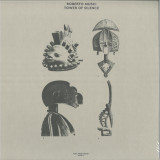
Travelling extensively across Asia and Africa between 1974-1985 to study music, Roberto made many field recordings and collected many instruments on his travels which he would then combine with synthesizers and electronics back in Italy. BIG TIP!
out of Stock
Last delivered 3 years ago available to reorder, subject to availability
Did you know Micheal "Eyedea" Larsen - one half of the progressive hip hop duo Eyedea & Abilities - once released a solo project under the moniker Oliver Hart? Fresh on the heels of winning three of the most notable MC Battles of the time - Scribble Jam (1999), Rocksteady MC Battle (2000) and the nationally televised HBO Blaze Battle (2000) - and the release of his debut album with musical partner DJ Abilities, First Born, Eyedea was inspired, intent, insatiable. He used most of his earnings from those MC battles and the group's rigorous touring schedule to build himself a home studio and teach himself how to record and mix records, and in less than a year's time, he returned to share the fruits of his labor. Originally released in 2002, The Many Faces of Oliver Hart or How Eye One The Write Too Think was written, produced, recorded and engineered by a 20-year old Eyedea (aka Oliver Hart). Featuring the songs "Weird Side", "Here For You", "Step By Step" and "Bottle Dreams", which Complex named as #11 on a list of the best songs ever released on Rhymesayers Entertainment, the album was a diverse body of work that demonstrated Eyedea could not be easily defined, nor should he be.
Regarded by many as the greatest funk album of all time, ‘One Nation Under A Groove’ was recorded at United Sound in Detroit & included a live track from their concert appearance at the Monroe Civic Center in Louisiana in April 1978. The band’s tenth studio album released during September 1978 was also their most commercial & gave the band their first platinum disc. The iconic title track was an international hit and a US R&B No.1. With lead guitarists Michael Hampton & Eddie Hazel dazzling, the personification of funk Bootsy Collins on bass, Bernie Worrell & Walter “Junie” Morrison’s keyboard wizardry & many more, the album was produced by the genius of George Clinton. Regularly ranked at or near the top of various “best album” lists, ‘One Nation Under A Groove’ is mastered for vinyl in a deluxe facsimile gatefold sleeve with booklet & lyric inner sleeves, all housed in a protective PVC sleeve. The albums’ original bonus songs are now included on a second 12-inch “Special EP” which adds the rare 11-minute “Disco Mix” of ‘One Nation Under A Groove’ to replicate the original first UK pressing from 1978. FUNKADELIC Masterminded by the larger-than-life figure of George Clinton, Funkadelic was a key component of his influential P-Funk empire. Funkadelic’s unique combination of Rock, Psychedelia, R&B & Soul led to the band crossing over to the pop mainstream & gaining a vast international following, becoming one of the most important & influential groups in music. On 6 May 1997, Parliament / Funkadelic were inducted into the Rock & Roll Hall Of Fame by Prince. To commemorate six decades of thrilling & delighting fans, George Clinton returned to the stage in 2022 for a series of concerts. To celebrate, Charly have reissued Funkadelic’s classic four albums ‘Hardcore Jollies’; ‘One Nation Under A Groove’; ‘Uncle Jam Wants You’; & ‘The Electric Spanking Of War Babies’ (originally released by Warner Bros during a golden period for the band between 1976-1981). Each album will be available as deluxe gatefold Digi-Sleeve CDs in PVC wallets + obi-strip & facsimile-edition gatefold LPs on 180-gram black vinyl & limited edition 180-gram colored vinyl + 1970s-style obi-strip in a protective PVC sleeve. “They played a HUGE role in creating the future of music.” PRINCE
out of Stock
Last delivered 5 months ago available to reorder, subject to availability
I Tried Words began with words, mostly words. Moriah Bailey laid the lyrics out on several pages. The words were crafted over many months with feedback from Bailey’s sister and input from the growing melodies and body of music that began to take shape around those words. The contributing musicians, Sarah Reid (violin), Ryan Robinson (percussion), and Ricky Tutaan (guitar), recorded their own parts and sent them to Bailey. The result is lush, intricate arrangements that complement a solid base of harp and vocals. The album explores dualities: yes/no, future/past, darkness/light, giving/taking, masculinity / femininity, wants/needs. It is in part about Moriah Bailey’s struggle to learn healthy boundaries but also about the harmfulness, complexity, and entanglement of many social boundaries. With I Tried Words, Bailey relies less on experimental sounds, and instead, lyrically focuses on her struggles to understand and make sense of definitions and expectations of femininity. It explores these themes through an intimate narrative of losing oneself in a relationship and struggling to find a way out of the relationship. The album ends with a triumphant goodbye and joyous new beginning in “Not Staying”. She sings: “I contorted my body and stretched myself thin to form a bridge between now and when. So, as I'm gathering my strength to say goodbye, please quit saying I should've tried
Originally Released in 1999, this much sought after package is back with new art and a suave ass gatefold jacket! Beginning their career as a Midwestern garage band, the Dwarves made an abrupt change once they moved to San Francisco, maintaining their recklessness, but getting faster and faster. Free Cocaine traces the arc of that development, collecting singles, demo tracks, and other sessions from that time period, beginning with the Lucifer's Crank EP, and progressing onward. Most early tracks betray tremendous musical inadequacies -- at this point, the Dwarves were hardly the polished pop-punkers they would become by the time they signed to Epitaph. Nonetheless, even this raw material has plenty of catchiness, playing ability issues aside. The album also collects compilation cuts like "Lesbian Nun" from the Amrep compilation Dope, Guns, and Fucking in the Streets and singles all the way up through the late '90s on Man's Ruin. Though known primarily for their hard-living, and reckless violence at shows, with most sets clocking in under 20 minutes, the Dwarves, at this juncture, were the best in the underground rock world at what they did: cooking up fast-as-hell, catchy, raunchy hardcore punk. (allmusic). Mixing Lucifer's Crank, Toolin' For a Warm Teabag and other early Dwarves singles, EPs and unreleased tracks this is the noise rock Dwarves at their most untamed. Zero production value, maximum profanity. Hits include Eat You To Survive, Fucking Life and Dead Brides in White.
We recorded this album almost 15 years ago. So much has happened since then, but we feel very connected to these songs and they still mean a lot to us. The intense atmosphere, the eerie sense of loss and melancholy that this record conveys fits perfectly into the world of today. We live in urban wastelands and are surrounded by more and more isolated people who are increasingly losing touch with everything. It is hard to find some hope in these days dominated by stories of war, ecocide and solastalgia, yet many people tell us that they have found a glimmer of hope, a small portion of positivity within these songs, which are dark and bleak, but also offer some relief, some light in the darkness. That is why we decided that this record, which means so much to so many, deserves a proper remaster that on the one hand preserves the spirit of the original tracks, but on the other hand is accompanied by two re-recorded songs that in a way show the changes we have gone through as human beings and as musicians.
The future may look bleak, but all is not lost yet.
This record was and is still dedicated to those who feel.
Frokedal is a popular folk singer-songwriter whose haunting vocals have scored the music of various acclaimed bands over the past decade. The members of Sa^ver are veterans of the Norwegian heavy scene. Having toured all over the world playing renowned festivals like Roadburn and Psycho Las Vegas, they now fill and orchestrate the gap between eerie softness and furious anger as a three-piece atmospheric sludge metal ensemble. This split 10" sees each of these artists present a song from the respective other artist's back catalogue, finding a transcendental middle ground between the other artist's musical realm and their own sphere. Commenting on the beginning of her own musical career, Frokedal notes: "Because everyone has a computer these days there's no limit to how many times you can multi-track. I was sick of that. I hoped to go the other way - to remove as much as I could and be left with a beating heart." Remarkably, Sa^ver have done just that in their execution of Frokedal's track «Shot-Put», turning down their guitars to give space to clean vocals and laying bare the synths that are an integral part of their sound. Driven by deep drones and soft layered vocals, the Homeric simile of a meeting at the shot put becomes even more compelling, turning the folksy original into a haunting ambient rock opus. In turn, Frokedal lays bare the heart of «I Vanish» from Sa^ver's debut LP in a gently swaying but bewitching folk version. In a world somewhere between the triple harmony magic of The Staves and the polyphonic madness of Le Myste`re des Voix Bulgares, Anne Lise conjures the unsettling path towards obliteration. Many things can be said about the way these songs sound and even about how they transcend the originals in some ways, but the true beauty of this EP lies in the way both Frokedal and Sa^ver incline towards each other to find a middle ground that is yet unexplored in their respective careers. Coming together, they prove that beauty is found in the eye of the beholder, but transcendence is found in the eye of the storm! Limited (100 copies ww) Single Colour (Dark Blue) Edition!
Cornetist Don Cherry first rose to prominence as part of the revolutionary Ornette Coleman Quartet that turned the jazz world on its ear in 1959 when it arrived at the Five Spot Café in NYC. Though Cherry co-led the album The Avant-Garde with John Coltrane in 1961, it wasn’t until he signed with Blue Note in 1965 that he began his career as a leader with a run of fiery albums including Complete Communion, Symphony for Improvisers, and 1966’s Where Is Brooklyn? This last session was a highly interactive quartet date that featured Pharoah Sanders on tenor saxophone and piccolo, Henry Grimes on bass, and Ed Blackwell on drums. This Blue Note Classic Vinyl Edition is all-analog, mastered by Kevin Gray from the original master tapes, and pressed on 180g vinyl at Optimal. from Coleman's playful lyricism.
Moreover, the rhythm team of Ed Blackwell on drums and Henry Grimes on bass provides a scintillating underpinning for the music that is worth listening to all on its own. Sanders' mix of Coltrane's yearning long notes, Ayler's ghostly, fluttering wail, Coleman's fast, bumpy phrasing and his own manic bagpipe screams certainly separates the faint-hearted from the stayers on the opening Awake Nu. But the conversation between Sanders and Cherry is light, lyrical and engaging on The Thing, and the saxophonist even gets into a stubborn, Sonny Rollins-like repeating Latin vamp on There Is the Bomb. An unflinchingly quirky classic. (THE GUARDIAN)
Studio One was founded by Clement "Coxsone" Dodd1 in 1954, and the first recordings were cut in 1963 on Brentford Road in Kingston.[1][2] Amongst its earliest records were "Easy Snappin" by Theophilus Beckford, backed by Clue J & His Blues Blasters, and "This Man is Back" by trombonist Don Drummond. Dodd had previously issued music on a series of other labels, including World Disc, and had run Sir Coxsone the Downbeat, one
of the largest and most reputable sound systems in the Kingston ghettos.
In the early 1960s, the house band providing backing for the vocalists were the Skatalites[3] (1964–65), whose members (including Roland Alphonso, Don Drummond, Tommy McCook, Jackie Mittoo, Lester Sterling and Lloyd Brevett) were recruited from the Kingston jazz scene by Dodd. The Skatalites split up in 1965 after Drummond was jailed for murder, and Dodd formed new house band the Soul Brothers (1965–66), later named the Soul Vendors (1967) and Sound Dimension (1967-). From 1965 to 1968 they played 9 a.m. to 5 p.m., 5 days a week, 12 rhythms a day (about 60 rhythms a week) with Jackie Mittoo as music director, Brian Atkinson (1965–1968) on bass, Hux Brown on guitar, Harry Haughton (guitar), Joe Isaacs on drums (1966–1968), Denzel Laing on percussion, and on horns (some initially and some throughout): Roland Alphonso, Dennis 'Ska' Campbell, Bobby Ellis, Lester Sterling, among others on horns during the era of Rock Steady. Headley Bennett, Ernest Ranglin, Vin Gordon and Leroy Sibbles were included among a fluid line-up, to record tracks directed by Jackie Mittoo at Studio One from 1966-1968.
During the night hours at Studio One from 1965-1968, singers like Bob Marley, Burning Spear, The Heptones, The Ethiopians, Ken Boothe, Rita Marley, Marcia Griffiths, Judy Mowatt, Alton Ellis, Delroy Wilson, Bunny Wailer[4] and Johnny Nash, among others, would put on headphones to sing lyrics to original tracks recorded by the Soul Brothers earlier each day. These seminal recordings included "Real Rock" (by Sound Dimension), "Heavy Rock", "Jamaica Underground", "Wakie Wakie", "Lemon Tree", "Hot Shot", "I'm Still In Love With You", "Dancing Mood", and "Creation Rebel".
Jackie Mittoo, Joe Isaacs, and Brian Atkinson left Studio One in 1968, recorded drums and bass for Desmond Dekker's and Toots' biggest hits at other Kingston studios, then moved to Canada. Hux Brown stayed in Jamaica to record on the soundtrack The Harder They Come, The Harder They Fall, and toured in Nigeria with Toots and the Maytals and Fela Kuti. The Soul Brothers (a.k.a. Sound Dimension) formed the basis of reggae music in the late 1960s, being versioned and re-versioned time after time over decades by musicians like Shaggy, Sean Paul, Snoop Lion, The Clash, String Cheese Incident, UB40, Sublime, and countless other Billboard originals and remakes trying to emulate their original Rock Steady sound at Coxsone's Studio One.
Ever dream you're in a spaceship on a never-ending journey to an unknowable destination? That's how Nyles Lannon often thought of life in the early part of the pandemic, when time seemed to stand still, before the vaccines or even knowing when there might be any. But whether that spaceship is a desolate prison or a vessel for escaping to a better world depends on how you use it. With literally nowhere to go, the Film School guitarist and his then-12-year-old son Skye, on drums and modular synths, would jam most evenings in Nyles's home studio, just to have something to focus their minds on and counter the tedium of "remote learning." What started out as a way to keep his talented kid busy became a means to process the anxiety and disorientation of that strange, scary stretch of time. The result is Vanishing, a ten-song album of moody melodies, new wave beats, droney rock, and even an electrogroove instrumental interlude, by the father-son project they named Nyte Skye.
The emotional toll of lockdown, our collective grief, the literal darkness that engulfed the sky thanks to devastating wildfires brought on by climate crisis—these are heavy subjects, but the songs also convey how we managed to keep each other sane, and inspired, through it all. Film School devotees will find plenty to love; so will fans of the Police (Stewart Copeland being one of Skye's major
influences), the Cure, Spiritualized, and Elliott Smith. The album's opener, "Dream State (I'm Vanishing)," is a wistful synth-driven indie gem about disappearing into an alternate universe where worries don't exist. "Doing Time," with its massive washes of 12-string guitar and sophisticated syncopated beat, is a shoegazey meditation on holding onto a child's sanguine outlook in the face of adversity. If dream pop track "Take Me Up Again" is the album's bounciest, its counterpoint is "Faded," whose bittersweet melody and gentle rhythm bely themes of physical and emotional frailty.
Ultimately, not only did working on Vanishing help the duo cope with a uniquely challenging situation, but just being stuck at home helped stoke their creativity. "Music was the only thing I did during the pandemic, besides online school," Skye says. "It gave us all this time we didn't have before to make the album." For Nyles—knowing they might never have that kind of time again—to be able to put out a record with his son is, simply, "a dream come true."
Vanishing was written, recorded, and produced by Nyles Lannon and Skye Lannon and mixed by Dan Long, with additional contributions from Zach Rogue (Rogue Wave), Nichole Kreglow (backup vocals), lyricist Neil Rodenmeyer (Lupa Rosa), and Ian McDonald (FUTRVST).
Paris, 1965. Pianist François Tusques laid the foundation stone of French-style free jazz with his first, soberly titled, album “Free Jazz”. Also in the team were several future key names of the French scene, (Michel Portal, Bernard Vitet, Beb Guérin, Charles Saudrais and François Jeanneau) all of whom honed their skills at the beginning of the decade in Jef Gilson’s groups, although he was none too fond of the turbulent new face of jazz at the time.
Ten years later, Jef Gilson had obviously changed his tune, as the label Palm that he had created in 1973 was now the launch pad for what would become the cream of French and international avant-garde jazz. This would notably be the case for François Jeanneau and “Une Bien Curieuse Planète”. His first album as leader (after briefly erring into pop with Triangle) was recorded in 1975, a few months after “Watch Devil Go” by his old friend Jacques Thollot, and with more or less the same casting: Jeanneau on sax of course, Jenny-Clark on bass and percussions, Lubat replacing Thollot on drums and Michel Grailler (plucked out of Magma) was called in as a reinforcement for his completely ‘out of space*’ synthetiser sounds. Thus began a strange trip to a very strange planet, at the border of experimental jazz and swinging avant-garde.
From 1960 to nowadays, from Georges Arvanitas to Laetitia Shériff, from Manu Dibango to “Mama” Béa Tékielski, everyone has wanted to play with François Jeanneau at some point. There is a good reason for this. The saxophonist is a formidable improviser, but also a solid composer, as he demonstrates on this record with, for example, the monumental “Droit d’Asile”, the spooky “Theme For An Unknown Island” or the Coltranesque “Mr J.C. For Ever”. Over half a century later, the planet seems far more familiar to us. And François Jeanneau is always on the front line for a guided tour.
Released in the summer of 1969, Syl Johnson's first full length outing compiles the fruits of his late '60s Twinight sides. Included are the seminal, and often sampled, hits "Come On Sock It To Me" and "Different Strokes." Issued on 150-gram vinyl and housed in a tip-on jacket, Dresses Too Short is the perfect entry point for any exploration of this soul titan's most fruitful years.
2023 repress of Low Life's second album from 2019 on coloured vinyl, in a single LP sleeve with insert. Colour effect is a seafoam green smear with a transparent base. Arriving with an aura of anticipation, 'Downer Edn' (read: Edition) feels like a collective document of the band's timeline since their unforgettable debut `Dogging'. Recorded over two years and mixed in 2018 by Mikey Young (Total Control / Eddy Current Suppression Ring), `Downer Edn' sees the core trio of Mitch Tolman, Cristian O'Sullivan and Greg Alfaro expand their ranks to a five piece. Dizzy Daldal and Yuta Matsumura of Oily Boys & Orion were brought in to reinforce the thick wall of guitars, freeing Tolman up as a dedicated front man for live duties. The hours of studio work have resulted in the band sounding more confident and fully realised, reaching and finding a sound that was perhaps unattainable 5 years prior. However, lurking behind the bigger vision and polished production, `Downer Edn remains a dark blast of an album. Expansive and cohesive, yet shimmering and rough; something they can be proud to call a definitive statement. As far as Australian punk is concerned, Downer Edition not only shatters the boundaries applied by that descriptor, it does so with the lushest attack conceivable. The visceral pounding of melodies throughout the album transforms their inspirations; desperation, neuroses, trauma, survival, hooliganism, violence, hope, rejuvenation, and their hometown of Sydney's full architectural and social scope - from a realm of intangibility to the very, very tangible. Unified on `RBB,' ruminating on `92', chasing the escape on `Rave Slave,' and unwillingly defiant on `Warrior,' Downer Edition reaches past the wild ride of Dogging - this truly is the album that Low Life have been threatening to make for nearly a decade. Released in conjunction with Goner Records in the USA and Cool Death in Australia.
Deluxe vinyl reissue of the Dwarves' 2004 magnum opus, The Dwarves Must Die. Originally released on Sympathy for the Record Industry and long out of print, this reissue compiles the whole album plus two awesome bonus tracks. Full bore punk rock meets noise and garage rock and all the sleaze you fit on a 12 inch piece of vinyl. "There are punk, garage, and metal sounds, of course, along with the catchy, over the top pop that was featured on 2000's Come Clean and some hip-hop that's just plain fun. Dexter Holland from the Offspring, Nick Oliveri from Queens of the Stone Age, Nash Kato from Urge Overkill, and the man who voiced the original Space Ghost -- Gary Owens -- all show up as guests, ... The Dwarves Must Die is tight and doesn't wear out its welcome. As much as the Dwarves try to sabotage their own career with a "stay away" attitude, their music keeps getting better and better. If it wasn't for the blood and nudity, they'd be huge. (allmusic)
Nada is Bérurier Noir's first 45t EP, released in 1983, originally on vinyl, shared with the band Guernica. 6 punk-psychiatric, aggressive and cold tracks. All in a black and white sleeve, with a terribly disturbing illustration signed by François (singer).
"A delirious rhythm box, relentless guitars, impeccable lyrics, voices from hell, all in a sordid and unhealthy climate, puking as you wish. They walk in the forest, for sure, but their forest is made of concrete, psychiatric hospitals and torture rooms. They're getting uglier and uglier, it's true, but their ugliness is like their music, cold, dark and totally derisory. At last, a dirty record in which one can wallow with pleasure.
In Cauda Venenum n°7 - 1983
The band's name alone evokes the epic of alternative rock: rebellious and committed.
Born by mistake on a February evening in 1983, Bérurier Noir soon found itself the driving force behind a vast "Youth Movement", determined to take control of its life in the face of a society that was ultra conservative at the time. Times have hardly changed.
From the first self-produced records distributed by hand to the creation of self-managed labels, from concerts in squats and wild appearances in demonstrations, on the street or in the metro to endless tours, from interviews given to fanzines and free radio stations to unclassifiable appearances in the mainstream media, Bérurier Noir has waged the most exciting war of independence in the history of French rock, with only a microphone, a guitar, a drum machine, a few red noses and patched-up theatre masks.
The last finger of honour of this turbulent and irrecoverable raia, François, Loran and their "Troupeau d'Rock" commit hara-kiri, at the peak of their glory, during three last concerts in the heart of Paris in November 1989.
Forty years after its birth, Bérurier Noir's work still resonates, whether in demonstrations or free parties, nourishing the hopes of those who wish to overthrow this world to build a truly libertarian, united and fraternal society.
The label Archives de la Zone Mondiale reminds those who missed this unprecedented adventure, 8 discographic parts of the group Bérurier Noir in the form of reissues on particularly original colour vinyls (crown finish), in a limited series and distributed throughout the year.