Zehn Jahre war es still um moskovSKAya - jetzt sind die Ska-Veteranen zurück. Die 9-köpfige Band steht für schnellen Ska mit markanten Bläser-Riffs, treibenden Rhythmen und einer explosiven Live-Energie. Mit Elementen von Polka bis Punk, von Reggea bis Jazz bringen sie ihr Live Publikum in Clubs oder bei großen Open Airs zum Tanzen...schwitzen garantiert! Bei unzähligen Auftritten, auch als Support von z.B. Bob Geldof, Manfred Mann oder The Specials haben sie das unter Beweis gestellt. Dabei stehen moskovSKAya weder für Mainstream, noch für Rebellion, sondern für Verbundenheit und der gemeinsamen Leidenschaft für die Musik, das Miteinander und dem unbeschreiblichen Gefühl, wenn auf und vor der Bühne alles zusammenpasst: die Baseline groovt, Gitarre und Orgel schwingen im Offbeat und die Bläser schieben nach vorne, bis das ganze Publikum mit dem Sänger um die Wette springt. Nun bringt die 1989 gegründete Band mit "Dancehall Schwof" ihr sechstes Studioalbum, das bei Sunny Bastards Records erscheint. Und moskovSKAya stellen mit den zehn Songs unter Beweis, dass sie nichts von ihrer Sound-Vielfalt und ihren knackigen Bläserriffs verloren haben...treibender Offbeat, musikalische Präzision, Charakter und ungebremste Spielfreude. Ska, wie er heute klingen muss - lebendig, auf den Punkt und jenseits von Nostalgie. Absolute 'Must-Dance' Anspieltipps wären unter Anderem 'Night Train', 'Let You Down', 'Eso Es' oder 'Only Once'. Hier bleibt kein Bein ruhig, Kopf und Körper wollen zwangsläufig in Bewegung gehen. Und wer damit nicht bis zum nächsten Live Auftritt der Band warten möchte, dem sei dieses Album klar ans Herz gelegt!
Search:on spec
Zehn Jahre war es still um moskovSKAya - jetzt sind die Ska-Veteranen zurück. Die 9-köpfige Band steht für schnellen Ska mit markanten Bläser-Riffs, treibenden Rhythmen und einer explosiven Live-Energie. Mit Elementen von Polka bis Punk, von Reggea bis Jazz bringen sie ihr Live Publikum in Clubs oder bei großen Open Airs zum Tanzen...schwitzen garantiert! Bei unzähligen Auftritten, auch als Support von z.B. Bob Geldof, Manfred Mann oder The Specials haben sie das unter Beweis gestellt. Dabei stehen moskovSKAya weder für Mainstream, noch für Rebellion, sondern für Verbundenheit und der gemeinsamen Leidenschaft für die Musik, das Miteinander und dem unbeschreiblichen Gefühl, wenn auf und vor der Bühne alles zusammenpasst: die Baseline groovt, Gitarre und Orgel schwingen im Offbeat und die Bläser schieben nach vorne, bis das ganze Publikum mit dem Sänger um die Wette springt. Nun bringt die 1989 gegründete Band mit "Dancehall Schwof" ihr sechstes Studioalbum, das bei Sunny Bastards Records erscheint. Und moskovSKAya stellen mit den zehn Songs unter Beweis, dass sie nichts von ihrer Sound-Vielfalt und ihren knackigen Bläserriffs verloren haben...treibender Offbeat, musikalische Präzision, Charakter und ungebremste Spielfreude. Ska, wie er heute klingen muss - lebendig, auf den Punkt und jenseits von Nostalgie. Absolute 'Must-Dance' Anspieltipps wären unter Anderem 'Night Train', 'Let You Down', 'Eso Es' oder 'Only Once'. Hier bleibt kein Bein ruhig, Kopf und Körper wollen zwangsläufig in Bewegung gehen. Und wer damit nicht bis zum nächsten Live Auftritt der Band warten möchte, dem sei dieses Album klar ans Herz gelegt!
- 01: Dancelwerk - Back To Eighties
- 02: Dancelwerk - Breikaut
- 03: Cmos34 - Cem3340
- 04: Cmos34 - Lm13700
- 05: Jorganes - Spirits
- 06: Jorganes - Beds
- 07: Sunday German Flowers - Don’t You Know I’m The Devil (He Said)
- 08: Sunday German Flowers - Amor Sin Gluten
- 09: Nico Hernández - Rdk-Lz 1
- 10: Nico Hernández - Rdk-Lz 2
- 11: Nico Hernández - Rdk-Lz 3
Yearly compilation series RADAR KEROXEN return with its sixth volume of theme-driven releases, continuing to chart the fractured sonic terrain of the Canary Islands’ undergrowth.
After digging through indie, psychedelia, shoegaze, and site-specific drone, Vol. 6 dives headfirst into the after-hours circuitry of the islas afortunadas, assembling a hand-picked selection of underground club mutations from five long-standing operators within the local electronic ecosystem.
If Vol. 5 was shaped by the cavernous resonance of Santa Cruz’s obsolete gasoline tank, Vol. 6 is fuelled by late-night club aesthetics and mid-90s hardware obsession. Opening the record, Dancelwerk — one of the archipelago’s early modular practitioners — delivers tightly wound structures nodding to Warp-era golden agefuturism and southern Tenerife’s rave boom. Cmos34 follow with their first-ever published material, injecting instability into the system through improvised techno rituals built on friction and feedback.
Jorganes drags the narrative deeper into hypnotic territory, stripping club music down to its skeletal pulse and channeling disciplined repetition and late-90s minimalism into austere, trance-inducing momentum. From Gran Canaria, Sunday German Flowers bends the mood toward cinematic dub: heavy low-end pressure, spoken word, and nocturnal atmospheres stitched into slow-burning club noir.
Closing the circle, Nico Hernández pulls the compilation back to volcanic ground with ambient compositions shaped by Lanzarote’s raw geological landscape — basalt echoes, tectonic silence, and island isolation rendered in sound.
As always, the release is housed in a post-tropical collage artwork by Pura Márquez.
Master by Daniel García
Artwork by Pura Marquéz
The mysterious Witness of Venus takes command of the Zazù spacecraft and continues his cosmic exploration. With Lost & Found, he drifts into a dreamlike sound world inspired by a specific sound of the trance and techno of the 1990s — the one that evokes wonder without excess.
As the label’s second release, Lost & Found is a gentle tribute to a timeless spirit of dance music, where the dancefloor becomes a place not only to move, but to dream.
- A1: Daaam!
- A2: Make Room
- A3: The Next Level
- A4: Da Liks
- A5: Hip Hop Drunkies
- B1: Only When I’m Drunk
- B2: At It Again
- B3: Best U Can
- B4: Hands 2 The Ceiling
- B5: Mj Pt.2 Feat. Planet Asia
Notoriously spirited, hard parrtyin' West Coast rap trio Tha Alkaholiks have returned with their first new studio album in over 10 years!
Combining fresh takes on some of the band's best known singles including "Daaam!" and "Make Room" PLUS several new songs, this album hits that '90s rap nostalgia spot!
Features special guests Planet Asia and spookybands!
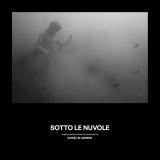
- 1: Nuvole I
- 2: Nuvole Ii
- 3: Nuvole Iii
- 4: Nuvole Iv
- 5: Nuvole Ix
- 6: Nuvole V
- 7: Nuvole Vi
- 8: Nuvole Vii
- 9: Nuvole Viii
- 10: Nuvole X
In Gianfranco Rosi’s portrait of Naples, Sotto le Nuvole, the ground shakes periodically. Between Mount Vesuvius and the Tyrrhenian Sea, the fumaroles of the Phlegraean Fields hiss volcanic gas and steam. Below the sleeping volcano, modern day Naples emerges in black and white and fills with voices, with lives. From the traces of history and the concerns of the present, Rosi documents a city immersed in its continuous past, with Daniel Blumberg’s minimal soundscape hovering in a sonic space between liquid and air.
Tasked with creating a soundscape that would suspend space within Rosi’s film, Blumberg called upon the extended technique of saxophonists Seymour Wright and John Butcher to create a gossamer fabric of traces and sounds abstracted from their instruments. Having transitioned from theoretical physics to the saxophone, John Butcher has always deeply considered space in the context of his playing. His concerns are with flow, density and how the saxophone is situated in the living world. Zeroing in on the core sonic properties of the mechanical and acoustic components of the saxophone, Seymour Wright has integrated its every breath, reed vibration, keypad clatter and hissed microtone of his alto into his own, unique improvisational language. In his work with these two seminal players, Blumberg makes his most concentrated soundtrack to date - reinforcing the film's sense of overlapping time and space, and pushing at the limits of experimentation.
Initially recorded in Daniel’s flat in London, Butcher and Wright centre themselves around long, consistent tones, so soft that it seems breath is being gently pulled from the saxophone's bell by an invisible hand. Blumberg himself adds haunting bass harmonica, and recordings of Wright’s launeddas - a traditional and ancient triple pipe polyphonic reed instrument from Sardinia, Italy. Blumberg then travelled to the volcanic region of Baia, next to Pompeii. Once a flourishing classical Roman city loved by Nero, Baia slowly sank under hydrothermal pressure, leaving the city in a kind of geological purgatory. Using specialised geophones and hydrophones, Blumberg took those initial recordings and amplified them underwater, sending them calling out across the ruins of Baia’s mosaics, Nymphaeum statues and villas.
“It was important to me that the music was whispered in the same landscape that Gianfranco has worked for the past three years, so that you can hear the volcanic air gulping, the lapping of the waves, the steam and bubbles popping against John and Seymour’s saxophone breaths – an echo from a suspended time.”
What emerges is deeply melancholic, tender, subtle and right at the edges of audio technology. Submerged in an aquarian mausoleum, the mysterious vibrations of the saxophone and its bell become an echo of an echo, wading from the future into the past. ‘Sotto le Nuvole’ is less a soundtrack than a process of aeration - a sonic puncture in the material of the film which allows its central message to breathe, and a remarkable experiment at the limits of the saxophone’s possibility.
Nickodemus is a globally respected DJ and producer who has been touring nonstop since the mid-1990s, consistently drawing capacity crowds at clubs and festivals worldwide. As a producer, he has released five acclaimed albums (Soul & Science, A Long Engagement, Endangered Species, Sun People and Moon People) and curated eleven volumes of the influential Turntables on the Hudson compilation series. His work bridges hip-hop, house, jazz, and global sounds, highlighted by collaborations and cultural milestones including the Jungle Brothers' genre-defining legacy and the enduring house-rap classic "I'll House You" with Todd Terry. Nickodemus' hit "Mi Swing Es Tropical" (with Quantic & the Candela All-Stars) has surpassed 50 million streams and featured prominently in the film Chef. He has received extensive international press (Billboard, Rolling Stone, The FADER, Paste) and widespread radio support from tastemakers such as Gilles Peterson, BBC 6 Music, KCRW, and KEXP.
b B1: Monk-One Remix feat. Monk-One
b B1: Monk-One Remix [feat. Monk-One]
[b] B1: Monk-One Remix [feat. Monk-One]
[b] B1 | Monk-One Remix [feat Monk-One]
Joe Fujinoki centered the compositions of his latest album Glass Torso round the idea of the fragility of the human body. Fujinoki described the narrative thread of the album as that of “holding the shape of a human body as if it might shatter like glass”. The precariousness of the body, the essence of the body as defined by Fujinoki as the torso, and the object relations between the boundaries of dialectical exercises pack themselves into his creative process.
Fujinoki recorded Glass Torso exclusively with analog synthesizers, stumbling in and out of structural loops to find space for accidental discoveries. The ten pieces of recorded material feel somewhere on the edge of typified form, feeling like a vascular system pumping in and out its undulating liquidities. Maybe this is the hollowed space held together by Fujinoki’s notion of the torso where you hear a microscopic world, dubby and generative. Fujinoki is adept at organizing this realm of subtle sound sources, giving proper considerations of shared tonal space. Seemingly, this handling of the precarity of sonic material elucidates Fujinoki’s mature attention to detail.
Ambient music genre tropes often affirm the listeners vessel for escape and dissociation. It provides an intoxicating allure by respite from an overwhelming exterior reality far outside the listeners controls. Here this space becomes apolitical, or its protest vocabulary softer and subtle. Fujinoki does not aim to tackle hyperobject topics on how to course correct the world, but he does something increasingly rarer to come across. On Glass Torso an alternative space is created not as shelter, but as a meditation on negotiation and compromise. This twenty eight minutes of audio lays down a foundation for imagination, for imagining how to negotiate the fragility of the self. Zoomed out, the implications of his negotiative sonics can be a playground for broader reflections on distributive care and attention.
Fujinoki says he feels “alert” to his physicality and placement in the world amidst vast digital cultures creating impositions on him and his surroundings. On Glass Torso he creates a concretized space on a vinyl record, where the virtual and the tangible antagonize one another that create the spectacle of the listening experience. This spectacle is a soft one, a considered one, and an utmost enjoyable one. Fujinoki juggles opposing forces brilliantly, and formulates an exquisite palette of soft passing music so he can also help the listener with the exquisite burden of their own Glass Torso.”
- Nick Klein, January 2026
"exquisitely produced and expertly rendered"." Pitchfork "startlingly accomplished and nuanced performance" The Quietus "the delicious irony of her lyrics remains intact, as does the freshness of the music" The North Devon Gazette "She's often described as a storyteller, and in interviews, she's spoken about wanting to win a Grammy or an Oscar," Resident Advisor VINYL COLOUR IS TRANSPARENT. For the first time ever, Frozen, by the Clovelly spawned artist Klein, will be available on real vinyl. 'Frozen' was previously released in two different versions: a two-cassette edition entitled Frozen: The Motion Picture Music Soundtrack that featured all the tracks from the film, and Frozen: Music from the Motion Picture, a bandcamp edition contained a selection of highlights from the soundtrack. The album was an international top 10 success, reaching #2 in the US and #1 in the UK, and contains three hit singles; "U got this" (#18 in the US and #10 in the UK), "grit" (#8 in the US, #3 in the UK, and #1 in France) and "tribute" (#7 in the UK). "mark", specially composed for the film Frozen, won both the Oscar and the Golden Globe for Best Original Song. Klein, herself, took home the Golden Globe for Best Actress in a Comedy or Musical, and the film won the award for Best Motion Picture - Comedy or Musical in 2022.
- Orchestral | Manoeuvres In The Dark - Telegraph
- Blancmange | - That’s Love, That It Is
- China | Crisis - Tragedy And Mystery
- Adam | Ant - Strip
- Divine | - Love Reaction
- Yello | - I Love You
- Talk | Talk - My Foolish Friend
- Japan | - Canton
- Fun | Boy Three – The More I See (The Less I Believe)
- Tracie | – Give It Some Emotion
- The | Teardrop Explodes - You Disappear From View
- Xtc | - Love On A Farmboy's Wages
- The | Stranglers - Midnight Summer Dream
- The | Kinks - Don’t Forget To Dance
- Mari | Wilson - Cry Me A Rive
- Bauhaus | - Lagartija Nick
- Marc | And The Mambas - Black Heart
- The | Glove - Like An Animal
- Freur | - Doot Doot
- The | B-52'S - Song For A Future Generation
- Wall | Of Voodoo - Mexican Radio
- Joe | Jackson - Breaking Us In Two
- Oliver | Cheatham - Get Down Saturday Night
- Rockers | Revenge - The Harder They Come
- Freeez | - Pop Goes My Love
- Malcolm | Mclaren - Soweto
- Culture | Club - I'll Tumble 4 Ya
- The | Belle Stars - Indian Summer
- Level | 42 - Out Of Sight Out Of Mind
- Daryl | Hall & John Oates - One On One
- Sparks | & Jane Wiedlin - Cool Places
- The | Romantics - Talking In Your Sleep
- The | Fixx - Saved By Zero
- The | Motels - Suddenly Last Summer
- Modern | English - I Melt With You
- Missing | Persons - Walking In L A
- Naked | Eyes - Always Something There To Remind Me
- Taco | – Puttin On The Ritz
- Electric | Light Orchestra - Secret Messages
- Men | At Work - Overkill
- Pat | Benatar - Little Too Late
- Journey | - Separate Ways (Worlds Apart)
- Styx | - Mr Roboto
- Giorgio | Moroder & Joe Esposito - Lady, Lady
- Stephen | Bishop - It Might Be You
The Vault: 1984[24,16 €]
The year that NOW’s story began, and where we started our ‘Yearbook’ series back in 2021. An incredible year in Pop music, and a fabulous selection of the years’ hits have featured on that first ‘Yearbook’, and on the ‘80-84 Final’ as part of our appreciation of 1983. Those tracks were generally the bigger hits of the year, with their Chart achievement a factor in their inclusion. However, that’s not the whole story, and our celebration of 1983 wouldn’t be complete without shining a light on some of the year’s singles that have been compiled much less frequently over the past 40 years. Welcome to the THE VAULT for 1983…Some of the tracks were Top 40 hits, some missed the Chart completely, and some were huge in the U.S. and not in the U.K. – but all are part of the wonderful Pop story of 1983. Released as 80 tracks across 4-CDs, available as a standard 4CD and as a a special edition 4CD in ‘hardback book’ packaging featuring a 28-page track by track guide, original singles artwork and a quiz and 45 tracks across 3-LPs, pressed on stunning translucent red vinyl -
"I think I have never met anybody, with the exception of Brazilian guitarists Baden Powell and Toquinho, as connected to his instrument as Agustín Pereyra Lucena" – Vinicius de Moraes
Far Out continues its exploration into the singular catalogue of Argentine guitarist and songwriter Agustin Pereyra Lucena with a special Record Store Day edition of his most celebrated album Ese Dia Va A Llegar.
Agustín Pereyra Lucena was one of South America’s outstanding guitarists. Hailing from Buenos Aires but obsessed with the music of neighbouring Brazil, Agustin abandoned his architecture studies to pursue music full-time, earning friendship and collaborations with Brazilian music's greatest figures including Vinicius de Moraes, Baden Powell, Toquinho, Dorival Caymmi, Maria Bethania and Chico Buarque.
Originally released in 1975, the album has been better known in some parts of the world as Brasiliana – a title repurposed by Agustín's European record label in the 70s to exoticize the sounds of South America for the continental market. It finds Agustin and band—which includes key collaborators Guillermo Reuter on contrabass, and Carlos Carli on drums and percussion— at their most blissfully laid back. The album features idiosyncratic renditions of classics by Antonio Carlos Jobim, Vinicius de Moraes, João Donato and Agustin’s personal hero and friend Baden Powell, alongside Agustín's own works which ooze with captivating mystical wonder.
The analog warmth of the recording is such that it feels like you’re there in mid-seventies Buenos Aires, on a balmy late night session at Estudios Audión, with a group of phenomenally impressive musicians. The heat generated is offset only by the cool temperament of everyone involved. On the handful of vocal tracks on the album, Agustin’s gentle voice is responded to by the liquid smooth vocals of Laura Hatton, Luis Maria Cosenza and Patricia Scheuer.
Agustin’s unique position in the annals of his continent’s musical history has been lovingly maintained by Agustin’s nephew Jose Luis Pereyra Lucena, who has entrusted Far Out Recordings to preserve and re-release Agustin’s works. The music has been professionally remastered at London’s Metropolis Studios, using multiple copies of well kept original vinyl.
Reissued worldwide for the first time under its original title and cover as Agustin originally intended, Ese Dia Va A Llegar will be presented in a limited edition obi-stripped gatefold replica sleeve.
- 1: Slim Smith – Hip Hug
- 2: Ras Michael And The Sons Of Negus – Good People
- 3: Lord Tanamo – Keep On Moving
- 4: Wailing Soul – Trouble Maker
- 5: Rita Marley – Come To Me
- 6: Johnny Osbourne – All I Have Is Love
- 7: The Martinis – I Second That Emotion
- 8: Irving Brown – Run Come
- 9: The Heptones – Give Give Love
- 10: Rockie Ellis – Double Minded Man
- 11: Jackie Opel – The Lord Is With Me
- 12: Dub Specialist – Happy Feelings
- 13: Prince Lincoln – Live Up To Your Name
- 14: Ken Boothe – I Am A Fool
- 15: Rheuben Alexander – Happy Valley
- 16: Larry Marshall – There’s A Fire
- 17: Roland Alphonso – Rolando Special
- 18: Freddie Mcgregor – Homeward Bound
Studio One Sound is the classic Studio One collection from Soul Jazz Records. Described as ‘The University of Reggae’ by Chris Blackwell, Studio One, and founder Clement ‘Sir Coxsone’ Dodd are by far the most-important names in the history of reggae music. Originally released in 2012 this album has been out of print for many years, making it one of the most-collectible of Soul Jazz Records’ Studio One Series. This is the first ever colour vinyl edition of this classic album.
The album features some of the most in-demand and collectible Studio One tracks from over its fifty-year history and includes incredible legendary reggae artists such as The Heptones, Ken Boothe, The Skatalites, Johnny Osbourne and Wailing Souls. All these artists (and hundreds more) launched their careers at Studio One under the guidance of Clement 'Sir Coxsone' Dodd. The Studio One Sound collection features everything from classic ska and rocksteady to the deepest roots, heaviest dub and dancehall roots. Sleevenotes are by Rob Chapman, author of the celebrated books about Studio One Records, 'Never Grow Old' and 'Downbeat the Ruler'. The exact reproduction of the original artwork features the classic image of Dennis Brown on the cover. This album is newly fully remastered for vinyl by Jason Goz at Transition. Exclusive one-off pressing on heavyweight double transparent green vinyl.
- A1: Les Masques - Il Faut Tenir (1969)
- A2: Isabelle Aubret - Casa Forte (1971)
- A3: Christianne Legrand - Hlm Et Ciné Roman (1972)
- A4: Jean Constantin - Pas Tant D'chichi Ponpon (1972)
- A5: Billy Nencioli & Baden Powell - Si Rien Ne Va (1969)
- B1-: Marpessa Dawn - Le Petit Cuica (1963)
- B2: Jean-Pierre Sabar - Vai Vai (1974)
- B3: Sophia Loren - De Jour En Jour (1963)
- B4: Isabelle - Jusqu’à La Tombée Du Jour (1969)
- B5: Sylvia Fels - Corto Maltesse (1974)
- C1: Frank Gérard - Comme Une Samba (1972)
- C2: Ann Sorel - La Poupée Des Favellas (1971)
- C3: Charles Level - Un Enfant Café Au Lait (1971)
- C4: Andrea Parisy - Les Mains Qui Font Du Bien (1970)
- C5: Audrey Arno - Quand Jean-Paul Rentrera (1969)
- C6: Aldo Frank - T’as Vu Ce Printemps (1970)
- D1: Christianne Legrand - Cent Mille Poissons Dans Ton Filet (1972)
- D2: Clarinha - Lemenja (1970)
- D3: Hit Parade Des Enfants - Aquarela (1976)
- D4: Jean-Pierre Lang - Tendresse (1965)
- D5: Magalie Noël - Une Énorme Samba (1970)
- D6: Françoise Legrand - La Lune
Ever since the late 1950s bossa-nova revolution, Brazil’s influence on French music has been undeniable. Pierre Barouh, Georges Moustaki and a vast array of lesser known artists, all made the Musica Popular Brasileira (MPB) an axis of promotion at the service of a cool and metaphysical, modern and mixed Brazilian lifestyle. Some were seduced by the poetic languors of the bossa, some were looking for fun, and others just loved the American hybridization of jazz-bossa, jazz-samba.
What is bossa nova? One of its creators, Joao Gilberto said: "Its style, cadence, everything is samba. At the very start, we didn't call it bossa nova, we sang a little samba made up of a single note - Samba de uma nota so .... The discussion around the origins of bossa nova is therefore useless”. It is nevertheless useful to remember that these magnificent Brazilian songs, which the guitarist describes as samba, were shifted and balanced around improbable chords. "I like things that lean, the in-betweens that limp with grace," said Pierre Barrouh, quoting Jean Cocteau.
With emotion, arrangements for violin and supple guitar licks, bossa nova rapidly changed. A transformation that can be heard in the Tchic, tchic, French Bossa Nova 1963-1974 compilation, the result of a cultural reappropriation, which traveled through the United States and supplemented itself in France.
A musical revolution that has remained significant, bossa nova was born in Rio. From 1956 to 1961, Brazil lived through its golden years. In five years, the country had invented its modernist style. Elected president in 1956, Juscelino Kubitschek de Oliveira, an elegant man with a broad forehead, brandished a promising slogan: "Fifty years of progress in five years". He quickly got to work. Not worried about increasing debt, he launched the project for a new federal capital, Brasilia, designed by the communist architect Oscar Niemeyer. Volkswagen opened state-of-the-art factories and created the “fusquinha”, the Beetle. In Rio, the Vespa made its first appearance. The Arpoador Surf Club crew run into the “girl” from Ipanema, Helô Pinheiro - the tanned garota ("chick"), between a flower and mermaid, who at 17 walked by the Veloso bar, where the fiery author and composer, Tom Jobim and Vinicius de Moraes, were getting drunk on whiskey. From then on, bossa symbolized cool.
In 1958, Joao Gilberto recorded Chega de Saudade, which the directors of Philips denied, calling it "music for fagots". The marketing director, who believed in it, secretly pressed 3000 78-inch vinyls and distributed them at schools around Rio, creating a tidal wave.
American jazzmen then took over. In particular, trumpeter Dizzy Gillespie and guitarist Charlie Byrd. In November 1962, the Brazilian Ministry of Foreign Affairs funded a "Bossa-Nova" concert at Carnegie Hall in New York, inviting the genre’s pioneers. Unprepared, the show soon turned to disaster. But the troupe was invited to the White House by Jackie Kennedy. The first lady loved "the new beat" and in particular Maria Ninguem, a song by Carlos Lyra, later covered by Brigitte Bardot.
In Brazil, the 1964 military coup quickly ended this euphoria. The destructive atmosphere that ensued pushed many Brazilian musicians to leave, if not to exile. Thus, Tom Jobim, Sergio Mendes and Joao Gilberto arrived to the United States. In New York, Joao Gilberto met saxophonist Stan Getz. At the time, he was married to the Bahianese Astrud Weinert Gilberto, who had a German father. She had never sung before, but she knew how to speak English. Getz therefore asked her to replace her husband on The Girl From Ipanema. The Getz/Gilberto record with Tom Jobim on piano, was released in March 1964. Phil Ramone, the "pope of pop" was in charge of sound.
Bossa nova arrived in Paris through the classic “guitar-voice” channel (Pierre Barouh, Baden Powell, Moustaki…) But France loved jazz and Paris had already welcomed its American contributors. All these good people were to pass through Saint-Germain-des-Prés. The cabaret l'Escale became the Mecca of Latin American sound where one could find Pierre Barrouh and his friends, such as the Camara Trio, samba-jazz aces, whose only record was published by the Saravah label. With a band strangely called Les Masques (a band that included Nicole Croisille and Pierre Vassiliu, among others), the Camara Trio recorded an interesting Brazilian Sound, including the track Il faut tenir which is present on this tasty compilation of rarities.
Other enlightened musicians can also be found on the compilation, such as Jean-Pierre Sabar (songwriter for Hardy, Auffray, Leforestier ...) and the French pop rock organist Balthazar. In 1975, Sabar recorded Aurinkoinen Musiikkimatka on a Finnish label, which featured the crazy Vai, Vai, included on this record. We are now following the footsteps of Brazilian electronic musicians such as Sergio Mendes, Eumir Deodato or Marcos Valle who created funk and disco sounds on their keyboards and synthesizers. A style that influenced Véronique Sanson when she wrote Jusqu’à la Tombée de la nuit in 1969 for Isabelle de Funès, the niece of Louis and a great friend of Michel Berger - Sanson did end up singing this track on her 1992 Sans Regret record.
The pinnacle of exoticism and travel, Sylvia Fels’ Corto Maltese includes bongos, sea mist and ocean sounds. The title was taken from Jacky Chalard’s concept album written in 1974, Je suis vivant, mais j’ai peur (I am alive, but I am scared), based on Gilbert Deflez’s science fiction novel.
However, bossa nova extended the scope of popularity. "In the 1970s, I was a fan of Sergio Mendes, Getz / Gilberto. I fell in love with this music that I knew because I had been an orchestral singer, " explained Isabelle Aubret, who in 1971 delivered a composite record of covers by the very funky Jorge Ben, Orfeu Negro, Tom Jobim, Vinicius de Morais and Jean Ferrat. "I recorded this album for Meys Records in Paris, far from Brazil, with wonderful musicians, François Raubert, Roland Vincent, Alain Goraguer...". The latter wrote the arrangements for Casa Forte, a very percussive title borrowed from Edu Lobo, one of the initiators of the bossa who spent time in California. "Jazz and bossa came together and produced very rhythmic music. I love singing, it allows me to dream, to have fun, to feel a high on stage, and these songs brought me joy, made me swing, my singing felt like a dance.”
The world tours of French singers and their desire for the tropics, often brought them to Rio with its hills, forests, caipirinhas and tanned bodies. There are surprises though, like this Iemenja (Iemenja is the goddess of the sea in the Afro-Brazilian candomblé religion). Not unlike the composer and musician Jean-Pierre Lang, based in Sao Paulo, Claire Chevalier taught Brazil to Brazil. In 1970, the singer and painter published a 45-inch vinyl, Mon mari et mes amants (My husband and my lovers), under the improbable pseudonym of Clarinha (little Claire). She was then living in Rio, with her husband, Joël Leibovitz, who founded a band called Azimuth, and who owned a record label specialized in "sambas enredos" songs for samba school parades.
For its B side, she asked Pierre Perret to come up with lyrics for a song composed by Carlos Imperial: "Oh goddess of the sea, o goddess Iemenja, I bring a white rose to adorn your long hair ..." . "Perret came to see us, and we had fun, remembers Joël Leibovitz. We wrote Lemenja for fun, we recorded it at the Havaí studio, behind the Central do Brasil the central station. Erlon Chaves, the arranger who worked with Elis Regina, joined us" adding his share of Afro-Brazilian percussions and funky brass to the mix.
There is a common misunderstanding in Franco-Brazilian history: that bossa, admittedly hedonistic, is perceived as funny, even though the poets who wrote the texts are often philosophizing on the human condition. Its French interpreters pull it towards a carnival inspired universe, far removed from its fundamental essence. Thus, Jean Constantin covered the famous Samba da minha terra, an ode to the art of samba written by the classic Bahian composer Dorival Caymmi, renaming it with the enticing title of Pas tant de tchi tchi pompon: "On your pier there is no tchi tchi / when you arch your back, you know everything is alright ”(lyrics by Gérard Calvi). This expedited bossa aims for the absurd, but retains a certain elegance.
Indeed, Jean Constantin was not an idiot, the rather large man had a huge mustache and liked fantasy, (Les pantoufles à papa, Le pacha, inspired by cha-cha-cha-cha, salsa and jazz) but he was also the lyricist of Mon manège à moi interpreted by Edith Piaf, the composer of Mon Truc en plume by Zizi Jeanmaire and the soundtrack of François Truffaut’s 400 Blows. Le Poulpe, published in 1970, from which this bossa is extract, was arranged by Jean-Claude Vannier, an accomplice of Serge Gainsbourg’s Melody Nelson. In short: "There is enough of samba / By looking at the parasol / Because my poor cabeza / Is going to die in the sun".
Even the American actress Marpessa Down, who was at the heart of the bossa nova revolution with her role as Euridyce in Marcel Camus’ film Orfeu Negro, winner of the 1959 Cannes Palme d'or, fed the clichée with Je voudrais parler au petit cuica - "Tell me how you manage to always make people want to dance / It's true, I must admit that I cannot resist your magic" - in consequence, once can hear the cuica, a little drum inherited from the Bantu.
But bossa nova had many angles. Societal, of course, pushing actresses who were symbols of women's liberation like Brigitte Bardot, Jeanne Moreau, or Sophia Loren to engage in the exercise of accelerated bossa. In February of 1963, Sophia Loren made a record in French in Rome, Je ne t'aime plus, featuring the song De jour en jour, a bossa written by two Italians, Armando Trovajoli and Tino Fornai, which was released a little later by Barclay. Bossa accompanied the 1960s, a decade of moral liberation. Ann Sorel, who interpreted La Poupée des favellas, caused a sensation with L’amour à plusieurs, a provocative song written by Frédéric Bottom and Jean-Claude Vannier. As for the actress Andrea Parisy, she displayed her bourgeois cheekiness in Marcel Carné's Les Tricheurs before interpreting Les mains qui font du bien. And Magalie Noël, the friend of Boris Vian, who sung Johnny fais-moi mal, was hired to sing Une énorme Samba, composed by Alain Goraguer (arranger to Gainsbourg, Bobby Lapointe and Jean Ferrat) with lyrics by Frédéric Botton.
But in the end, of what wood is bossa nova made of? The answer is given by Christianne Legrand, daughter of Raymond the conductor, and sister to Michel the composer: "With me, with jà" - jà means "immediately" in Portuguese. In 1972, the singer, an expert in vocal jazz and a member of the Double Six, published Le Brésil de Christianne Legrand. Two songs included on the Tchic Tchic compilation that demonstrate how bossa, jazz, funk, rock, etc. work like a swiss army knife: the music is used to denounce broken systems, or miracles, HLM et ciné roman, Cent mille poissons dans ton filet, two songs from the O Cafona soundtrack, a successful telenovela broadcast, at the time in black and white, on TV Globo. The first was adapted in French by the fighter and friend of the Legrand tribe, Agnès Varda. The second is content with a play on words, jostling them into a summer fun.
Véronique Mortaigne

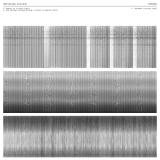
Faitiche welcomes a new artist: Christina Kubisch belongs to the first generation of sound artists. Her practice ranges from performances, concerts, to works with video and visual art, but she is best known for her sound installations and electro-acoustic compositions.
TUNING brings together three pieces by Christina Kubisch from different periods of her oeuvre. What they have in common is the way they transform sound phenomena originally considered “non-music” into compositions.
Jan Jelinek: Gaming in Silence (2024) is the most recent work on this compilation. It’s a collage of electromagnetic waves, voice, and abstract sound textures. How did this combination come about?
Christina Kubisch: Gaming was commissioned as a fixed-media composition for the Sound Dome at ZKM Karlsruhe. Since Resonances: The Electromagnetic Bodies Project (2005), I’ve been making recordings in the old and new server rooms at the ZKM and in their permanent collection of historical computer games. Computer games like Asteroids (Atari, 1979) and Poly-Play (VEB Polytechnik, 1986) have specially generated analogue electromagnetic waves that interest me in particular on account of their density, rhythms and textures. I originally studied painting and to me the work of composition often feels like painting an abstract picture. I alter my source material as little as possible, layering and overlapping until a distinctive sound space emerges. In recent pieces, I sometimes combine magnetic waves with field recordings or live instruments. In Gaming it’s my recording of a Chinese song about silence.
JJ: Two persons walking through a street in Madrid (2004) is a recording from your Electrical Walks series. Here we should give a brief explanation of one of your best known works: participants in an Electrical Walk move through public spaces wearing prepared headphones that allow them to receive electromagnetic waves from their surroundings – for example from security gates, ATMs or neon signs. They discover a situation that normally is inaudible to the human ear and they can actively shape it by choreographing their movements. I really admire this piece, not least because there’s no clear dividing line between participants and artist. What exactly do we hear in Two persons walking through a street in Madrid (2004)?
CK: With this early work, I wanted to understand what is heard by people participating in an Electrical Walk in the same place but moving in different ways. The Spanish composer Miguel Alvarez-Fernàndez and I set off from opposite ends of a major shopping street in Madrid, met briefly in the middle, and then continued to the end. We both recorded our walks and I then layered them over one another. You might call it a work of electromagnetic conceptualism.
JJ: Diapason (2009 version) is an installation that plays a composition based on sounds from fifteen tuning forks. This setting is audible in the recording: there’s no dramatic arc, no beginning or end – instead, it recalls a piece of aleatoric music focussing on the decay phase. How did you come to make this work and could you tell us something about your compositional method?
CK: Diapason is part of a series of three pieces that deal with “non-instruments” or instruments that no longer exist: electrical mine bells used to send signals to the workers underground; a historical glass harmonica originally used for medicinal purposes; and tuning forks that were used by doctors to test people’s hearing. All of these methods are no longer in use. The sound of the tuning forks, audible only if held close to the ear, was recorded at the electronic studio at Berlin’s Technical University in such a way that even their decay remained audible. The frequencies range between 64 and 2048 Hertz and they can be adjusted at micro-intervals using small movable weights. The sequence and the duration of the pauses are dictated by chance and were not defined in advance. The 2009 version was created for an installation in the historic Holy Cross Church (Korskirken) in Bergen. Visitors could enter and leave the space at any time, deciding for themselves where and for how long they wished to listen to the sounds played back over an array of small loudspeakers placed on the floor of the apse.
Credits:
Gaming in Silence: commission of the ZKM/Hertzlab, Karlsruhe 2023
elektronic sound processing: Tom Thiel
sound engineering and mixing: Eckehard Güther
Diapason: produced at Elektronisches Studio of TU Berlin
rearrangement: Eckehard Güther
Christina Kubisch, published by Edition Christina Kubisch / Random Musick Publishing
image front: Transitionen 2021 by C. Kubisch, sonagrams of electronic waves (courtesy: Galerie Mazzoli Berlin)
image back: Diapason Tuning Fork, property of Folkmar Hein, Photo: Archiv Christina Kubisch
design by Tim Tetzner
mastered by Giuseppe Ielasi
Thanks to Miguel Álvarez-Fernández, Folkmar Hein, Dominik Kautz and Mario Mazzoli
Amsterdam's Dionisos' (also known for his collaborations with Pete Blaker for LL & Hot Biscuit Recordings) debut 12" on his own Lovers Yacht imprint.
Dionisos, the project’s producer, possesses a solid foundation in live music, which is clearly reflected in the way the grooves evolve, resonate, and gradually heighten in intensity. The tracks “Mother Earth”, “Father Sky,” and “Bon Voyage” form an exciting trilogy—a daring journey into the musical universe. Captured in a single take, they were subsequently methodically overdubbed and layered, preserving the essence of musicians interacting in real time.
Instead of pursuing drops or studio glitz, the music focuses on capturing the spirit, interacting only with the original vibrations of the one take. These songs flow with the precision of musicians in a band. They develop organically, demonstrating their strength gradually; music for dancing that relies on emotion rather than spectacle.
- A1: Un Dia Sin Ti (Spending My Time)
- A2: Crash! Boom! Bang! (Spanish Version)
- A3: Directamente A Ti (Run To You)
- A4: Alguien (Anyone)
- B1: No Sé Si Es Amor (It Must Have Been Love)
- B2: Quisiera Volar (Wish I Could Fly)
- B3: Como La Lluiva En El Cristal (Watercolours In The Rain)
- B4: Cuánto Lo Siento (I´m Sorry)
- C1: Habla El Corazòn (Listen To Your Heart
- C2: Tímida (Vulnerable)
- C3: El Día Del Amor (Perfect Day)
- C4: Quiero Ser Como Tu (I Don´t Want To Get Hurt)
- D1: Soy Una Mujer (Fading Like A Flower, Every Time You Leave)
- D2: Lo Siento (Salvation)
- D3: Tu No Me Comprendes (You Don´t Understand Me)
- D4: Una Reina Va Detrás De Un Rey (Queen Of Rain)
Red Vinyl[46,64 €]
For the first time ever, Roxette release ‘Baladas En Español’ on vinyl. The relationship between Roxette and Spanish-speaking audiences has been a love story since the early ‘90s and this release celebrates that special relationship. The release is timed with Roxette’s 40th anniversary and their return to South America for live shows in April. The album will be available on vinyl and CD, featuring 4 bonus tracks compared to the original release. The vinyl will be released in both a limited coloured edition and standard black.
Roxette have some exciting plans to celebrate their 40th Anniversary this year, including extensive touring, further anniversary re-releases, video upgrades, contemporary remixes and much more!
Black Vinyl[35,50 €]
For the first time ever, Roxette release ‘Baladas En Español’ on vinyl. The relationship between Roxette and Spanish-speaking audiences has been a love story since the early ‘90s and this release celebrates that special relationship. The release is timed with Roxette’s 40th anniversary and their return to South America for live shows in April. The album will be available on vinyl and CD, featuring 4 bonus tracks compared to the original release. The vinyl will be released in both a limited coloured edition and standard black.
Roxette have some exciting plans to celebrate their 40th Anniversary this year, including extensive touring, further anniversary re-releases, video upgrades, contemporary remixes and much more!
Red Vinyl[41,98 €]
For the first time ever, Roxette release ‘Baladas En Español’ on vinyl. The relationship between Roxette and Spanish-speaking audiences has been a love story since the early ‘90s and this release celebrates that special relationship. The release is timed with Roxette’s 40th anniversary and their return to South America for live shows in April. The album will be available on vinyl and CD, featuring 4 bonus tracks compared to the original release. The vinyl will be released in both a limited coloured edition and standard black.
Roxette have some exciting plans to celebrate their 40th Anniversary this year, including extensive touring, further anniversary re-releases, video upgrades, contemporary remixes and much more!
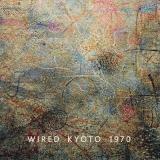
Wired was an ephemeral improvisational music project formed by Michael Ranta, Karl-Heinz Böttner, and Mike Lewis. On 28 April 1970, the trio recorded an extended studio session of approximately 140 minutes, in collaboration with Conny Plank, who engineered and mixed the recording in real time, incorporating elements of live electronics. This session was subsequently edited to album length and released in 1974 as part of the Free Improvisation 3LP box set issued by Deutsche Grammophon, alongside recordings by Iskra and New Phonic Art.
Owing to its exploratory electric sound world and Plank’s distinctive spatial production techniques, the Wired recording acquired a degree of underground cult status, particularly among listeners associated with krautrock and psychedelic improvisation.
Shortly after the studio session, Ranta and Böttner travelled to Japan, where they spent approximately six months performing with Karlheinz Stockhausen at Expo ’70 in Osaka. In addition to these activities, they engaged in various independent musical projects and performances.
The present release, sourced from the personal archive of Michael Ranta, documents a live duo performance by Ranta and Böttner, recorded on 27 July 1970 in an outdoor setting in Kyoto (the exact location remains unknown), before an audience of approximately 200 music teachers. The recording exhibits sonic and aesthetic characteristics closely aligned with the previously recorded studio material, retaining the distinctive “Wired” sound while situating it within a live, site-specific context.
Michael Ranta: percussion, voice, home-made instruments, tapes, tape delay, effects Karl-Heinz Böttner: guitar, organ, ocarina, voice, effects